Israeli group storms al-Aqsa as settlers attack 3 Palestinians in Jerusalem

Al-Akhbar | December 8, 2014
A group of right-wing Israelis toured the al-Aqsa mosque compound in Jerusalem on Monday under police escort, a mosque official said.
The storming of the mosque compound came as Israeli settlers attacked three Palestinians in Jerusalem, and Israeli forces detained 19 in the West Bank.
Al-Aqsa director Omar al-Kiswani told Ma’an that groups of Israeli right-wingers “stormed the compound and toured its squares under the so-called foreign tourism program.”
A group of Israeli intelligence officers also toured the compounds, he added.
The Palestinian Ministry of Endowments and Religious Affairs complained to Israeli police, expressing their objection to the visits, Kiswani said.
Meanwhile, Israeli police detained a woman identified as Umm Radwan Omar at one of the gates leading to al-Aqsa. Omar usually gives religious lectures inside the compound.
Israeli police collected the identity cards of all Palestinian men and women who entered the compound on Monday.
The al-Aqsa mosque is sensitive for Palestinians due to its status as the third holiest site in Islam and its location in the heart of the Old City of Israeli-occupied East Jerusalem.
The al-Aqsa mosque compound, referred to by Jews as the Temple Mount, is also the holiest site in Judaism.
Tensions have been running high in occupied East Jerusalem after months of Israeli pressure on the region, including through a massive arrest campaign and a major military offensive on Gaza that left more than 2,100 dead and provoked outrage across Palestine.
They have also been stoked by Israeli authorities’ decision to hold a vote on splitting the al-Aqsa compound despite the existence of a Jewish prayer area at the Western Wall immediately next door.
Since Israel occupied East Jerusalem in 1967, an agreement with Jordan has maintained that Jewish prayer be allowed at the Western Wall plaza – built on the site of a Palestinian neighborhood of 800 that was destroyed immediately following the conquest – but not inside the al-Aqsa mosque compound itself.
Israeli forces have long restricted Palestinians’ access to the al-Aqsa compound based on age and gender, but have further prevented Muslim worshipers from entering the mosque for more than a month while facilitating the entrance for Zionist extremists.
Settlers attack Palestinians in Jerusalem
Meanwhile, Israeli settlers attacked three Palestinians in two separate incidents in Jerusalem, leaving the latter with bruises and injuries, an Israeli news channel reported Sunday night.
On Sunday evening, Israeli police arrested an Israeli who – along with several other settlers – attacked a Palestinian bus driver, leaving him with injuries, Israel’s Channel 2 reported.
The settlers chanted “death to Arabs” while attacking the bus driver and threatened to kill him, the channel added.
Meanwhile, eyewitnesses told Anadolu news agency that a group of Israeli settlers assaulted two Palestinians from Jerusalem while working in a petrol station in the neighborhood of Ein Karem on Sunday night.
One of the Palestinians sustained injuries that required his transfer to a hospital, the witnesses added.
Israeli forces arrest 19 across West Bank
The Israeli army detained 19 Palestinians in the West Bank on Monday, a Palestinian NGO has said.
Israeli forces searched scores of homes in the southern West Bank city of Hebron and arrested nine Palestinians, the Palestinian Prisoners’ Society said in a statement.
Three more Palestinians were detained in Nablus, two in Jenin, two in Ramallah and one in Bateen village, the NGO added.
Israeli police detained another two Palestinians in East Jerusalem, according to a statement issued by the NGO.
Israeli forces routinely conduct arrest campaigns against Palestinians in the occupied West Bank on claims they are “wanted” by Israeli authorities.
Over 7,000 Palestinians are currently languishing in Israeli prisons, according to the Palestinian Ministry of Prisoners’ Affairs.
On Saturday, Issa Qaraqe, the head of the Palestinian Authority Department of Prisoner Affairs, said that 2014 has been “the most difficult year” for prisoners.
Qaraqe said in a statement that prisoners in 2014 have been victims of “Israeli revenge policies,” adding that Israel’s move to re-arrest prisoners who were released in the Gilad Shalit prisoner exchange deal in 2011 was a dangerous political action.
Qaraqe also decried Israel’s policy of detaining minors, saying some 1,500 minors were detained in 2014, mostly in Jerusalem.
According to Qaraqe, there were 550 new Palestinian prisoners held under administrative detention without charge or trial this year, and Israel renewed administrative detention orders for 63 percent of administrative prisoners. Excessive use of administrative detention is considered illegal under international law.
(Ma’an, Anadolu, Al-Akhbar)
Israeli Occupation Authorities re-impose female detainee’s previous sentence
Palestine Information Center – December 8, 2014
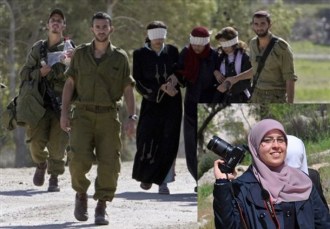 RAMALLAH — The Israeli Occupation Authorities re-imposed the previous sentence of the re-jailed female ex-detainee Bushra al-Tawil after being released in the Wafa al-Ahrar swap deal in 2011, human rights sources said.
Ahrar center for prisoners’ studies recalled that al-Tawil was released in 2011, after spending five months of her 16-month sentence, in the swap deal. However, she was re-arrested following the kidnapping and killing of three Israeli soldiers in June.
Al-Tawil is a university student at Ramallah Media College and an activist in prisoners’ issue. Her parents were also arrested by the Israeli occupation forces more than once.
Israeli official: Strategic cooperation with Riyadh is growing

Director of Institute for Policy and Strategy, and Chair of Atlantic Forum of Israel Prof. Uzi Arad
MEMO | December 8, 2014
Strategic and security cooperation between Saudi Arabia and Israel is growing at an unprecedented rate, Israel’s former National Security Adviser Uzi Arad said.
During his participation at the Energy 2015 Conference, Arad said that Israel takes advantage of Saudi Arabia’s role as a counterweight in the face of Iran which makes it play a central and effective role in Israel’s strategic plans.
Arad warned of the consequences of betting on the survival of an allied regime in Egypt, pointing out that Egypt is going through a very sensitive stage and things could turn upside down at any moment.
With regards to Jordan, Arad said: “About Jordan, we cross our fingers. No one knows what will happen there in five years. One must hope that things there will be stable. Who says the wave sweeping Iraq and Syria will not arrive to Jordan?”
Arad said the Palestinian Authority currently represents a partner for Israel in the face of many challenges.
Israel will not tolerate Iran turning into a state with nuclear capabilities, he stressed, pointing out that if the world and regional powers accept this, Israel will turn to the military option. He said: “For a long time now, there have been plans in Mossad about a situation in which another country around us has nuclear weapons. Such discussions begun in the 80s. Responses were prepared in advance. If you see a new submarine enter the port of Haifa, it does not take a genius to figure out what it signifies.”
Commenting on the relationship with Turkey, Arad said the most important research centre in Israel said the reality and the future of these relations do not bode well.
Israel is facing growing international isolation which, he warned, will affect the Israeli military and the country’s economic interests.
Arad noted that Israel benefits from the EU funded research projects, pointing out that they have strengthened the position of Israel as a great technological power.
He warned that the upcoming early elections in Israel will only contribute to the decline in Israel’s status.
Berri: Israel is stealing Lebanese gas
Al-Akhbar | December 8, 2014
While political factions are distracted with the upcoming dialogue between Hezbollah and the Future Movement, and the Lebanese government is struggling to resolve the issue of the kidnapped soldiers and counter the threat of terrorist groups on the Syrian border, Israel is stealing Lebanese gas from the deep sea off the Lebanese southern coast, Al-Akhbar reported on Monday.
Parliament speaker Nabih Berri told Al-Akhbar that he received information a few days ago confirming that Israel has started stealing Lebanese gas, expressing his surprise over the government’s lack of interest in the matter.
Berri said “he will personally push the pressing issue early next year,” adding that the Israeli move will force Lebanon to sign two designated decrees that would allow it to start digging for gas and ensure new revenues for the Lebanese economy.
Lebanon is located in the heart of the Levant basin, where seismic surveys indicate the presence of huge oil and gas reserves, but has so far failed to impose itself as a regional player in this area, as neighboring states greedily fight for its resources.
In July 2013, an Israeli company found Karish, a gas field 75 kilometers from the coast of Haifa. The new field is sufficiently close to Lebanon’s maritime borders to allow Israel access to Lebanon’s own reserves. It is evident that Israel is pressing ahead with exploration and production while Lebanon’s own energy plans falter.
At the time, then-Energy and Water Minister Gebran Bassil addressed these concerns in a press conference. “Theoretically…Israel is now able to reach Lebanese gas and that is a very grave situation,” he said.
“We cannot yet say that a disaster has happened, but the new Israeli discovery may indeed lead to one, especially if Lebanon’s efforts continue to be plagued by delays.”
“If Israel drills horizontally in Karish – made possible thanks to US technology – it may be able to reach up to 10 kilometers north into Lebanon’s reservoirs. If Israel drills vertically, it would still be possible for Israel to syphon off Lebanese oil and gas, if the Israeli and Lebanese fields overlap,” Bassil added.
After the discovery of large deposits of oil and gas in the eastern Mediterranean, the main struggle for Lebanon remains with both Cyprus and Israel to prevent encroachment on its maritime boundaries.
Cyprus breached its agreement with Lebanon and signed a deal in 2010 with the Zionist state, which attempted to gobble up 860 square kilometers of Lebanon’s maritime zone.
This incident revealed the need for Lebanon to assert the integrity of its maritime boundaries and to recover all of its Exclusive Economic Zone (EEZ) – currently being disputed by Israel following its agreement with Cyprus.
In theory, there was no dispute over maritime boundaries between Israel and Cyprus. But when the opportunity arose, Israel encroached on Lebanon’s zones as a result of the latter’s failure to quickly ratify its agreement with Cyprus.
The Cypriot-Israeli agreement enabled Israel to foray into Lebanon’s EEZ, although Israel had so far observed the same boundaries adopted by Lebanon in all its operations.
Reports indicate that Israel found a loophole in the agreement between Lebanon and Cyprus which stipulates that the triple point can only be determined through trilateral negotiations.
Since there are no contacts between Lebanon and Israel, the determination of this point is pending negotiations.
Israel’s interpretation of this, however, is that Lebanon has lost 860 square kilometers.
Lebanon managed to recover 500 out of 860 square kilometers of its EEZ according to international community laws, while 360 square kilometers remain effectively under Israeli control.
In November 2013, Israel rejected a proposal for a settlement made by the US administration to resolve the “dispute” between the Zionist state and Lebanon over the boundaries of each side’s EEZ. The proposal concerned the disputed area of Block 9 in the Mediterranean, which Israel claims sovereignty over.
Israel claims that this block – one of the richest areas in terms of commercial gas deposits recently discovered in the Mediterranean – extends into its EEZ.
In September, Director of the Research and Strategic Studies Center General Khaled Hamada said “the expected quantities (of oil and gas) are relatively small, compared to those discovered in the Arabian Gulf, Russia, and the Caspian Sea, but they are enough to make a significant impact on the energy security of Mediterranean countries, and contribute to a lesser extent to Europe’s energy security.”
Hamada pointed out that Israel had already begun commercial gas production, while Cyprus had started exploration in more than one location.
In a conversation with Al-Akhbar, Hamada warned that any further delays in Lebanon’s efforts to implement gas projects would force it to deal with these projects and security arrangements as a fait accompli down the road.
While Lebanon is busy with endless debates, Israel is rushing to put the final touches on its bid to export gas to Europe.
Four years ago, Al-Akhbar published a statement by Israeli Minister Yossi Peled on September 25, 2010 that highlighted the Israeli stance on Lebanon becoming a gas producer country.
Peled, appearing before the Knesset Economic Committee at a special hearing on the oil and gas sector, said that Lebanon had large gas fields similar to the ones Israel had discovered. He cautioned that the Europeans, who were looking for alternatives to Russian gas, had initiated negotiations with Lebanon, saying, “Imagine what it would mean if this country became a gas producer,” something he claimed had equally alarming economic and security implications.
Although Israel managed to pinpoint the challenges it faced, it did predict at the time – and wager on – Lebanon’s complacency. In response to Peled’s warnings in the Knesset, Israeli daily Globes, in a front-page editorial on October 5, 2010, stated:
“Israeli sources who follow events in Lebanon are convinced that, at the current rate of progress, the Lebanese will award the first licenses this year [2010], and will start exploratory drilling within a year. The same sources believe that Lebanon will quickly be able to close the gap between it and Israel, and become a real competitor.
“Past experience shows that Israel has no immediate reason for fear. Lebanon’s natural resources will arouse internal (and external) conflicts no less severe than Israel’s natural resources have provoked here …
“The oil giants will not rush to invest billions in a country where it is not clear who is in control, and where so many other countries openly interfere.”
Israel was proven right. Nothing in Lebanon is exempt from being the object of division and polarization, and thus, obstruction, including the oil and gas sector.
Meanwhile, Turkey is also trying to expand in the eastern basin through northern Cyprus, with a view to reduce its dependence on oil imports from Iran and gas imports from Russia.
Ankara is seeking to build a network of onshore and offshore gas pipelines, to act as an energy transit hub between East and West.
(Al-Akhbar)
Israel tightens economic stranglehold on 1948 Palestinians
By Zouheir Andraos | Al-Akhbar | December 8, 2014
Occupied Haifa – As Israel increases its economic stranglehold on 1948 Palestinians, its racist policies extended to banning them from raising chickens and growing potatoes. This was after the closure of clothes workshops, which were transferred to Jordan, and other similar actions.
As the economic persecution against Palestinians continues, the Israeli Agriculture Ministry recently decided to prevent 1948 Palestinians from raising chickens and thus producing eggs, claiming this department as an exclusive right for Jews in cooperative villages (moshav). Eggs produced by Palestinian establishments disappeared from the market in a matter of days and were replaced by Israeli eggs produced at moshavs (Israeli agricultural settlements) built on the ruins of Palestinian villages destroyed in the Nakba, or the Catastrophe.
Authorities in Tel Aviv also issued a decree banning “Arabs” from growing potatoes, succumbing to the pressure of Israeli potato farmers. The authorities had discovered that growing potatoes is cheap and was an important source of income for Palestinians. These two steps are further proof of the extent of the occupation’s institutional racism.
Palestine is famous for having fertile land, rich in all sorts of plants used by Palestinians as food (such as thyme and mallow), but which are not known or eaten by Jews. This led the Israeli government to instruct its so-called environmental protection authority to prosecute “plant thieves.” It officially announced those plants as “protected species and those who pick them shall be sent to court.”
Environmental protection authorities started fining Palestinians who pick “protected plants.” In the meantime, Jewish traders, who just discovered the importance of such plants for Palestinians, began requesting necessary licenses from the Israeli Agriculture Ministry to grow them and sell them in Arab markets. Palestinians in the interior became a target of a lucrative and popular “Israeli” trade.
In the same context, occupation authorities found another channel to increase the economic stranglehold on Palestinians, with Dubek cigarettes company (the only Israeli cigarette company) announcing it would stop buying tobacco from Arab farmers. Tobacco is one of the main cash crops for Palestinians, especially in the Galilee, inside what is known as the green line. Thus, Israel would have destroyed one of the most important Arab crops in Palestine, and began importing tobacco from its Turkish ally.
Persisting in its economic war and in collaboration with Jordan, Israel recently shut down the small sewing and knitting factories in Galilee, the Triangle, and Negev, the main source of income for many Palestinian families. The occupation authorities plan to relocate them to Jordan, under the pretext of cheap labor. However, the move was rumored to be an attempt to prop up the fragile Jordanian economy, in addition to the occupation’s determination to cut off sources of income for 1948 Palestinians.
The economic stranglehold policies adopted by Israel resulted in the unemployment of one third of the workforce in Negev and Umm al-Fahm. It widened the gap between Palestinian and Israeli unemployment, with a 25 percent unemployment rate for Palestinians and 6.5 percent for Israelis. The same statistics indicated that half of Palestinian children in the 1948 territories currently live below the poverty line.
Israel claims prevented ‘bad deal’ on Iran nuclear issue

Press TV – December 8, 2014
Irked by the ongoing nuclear negotiations between Iran and six world powers, Israeli Prime Minister Benjamin Netanyahu claims Tel Aviv has prevented what he calls a “bad deal” on Tehran’s civilian nuclear work.
In a recorded speech for a Washington think-tank released on Sunday, Netanyahu said the Israeli regime’s “voice” and “concerns” had played a key role in stopping a “bad deal” on Iran’s nuclear energy program before the November 24 deadline.
The Israeli premier further said the new extension of the nuclear negotiations must be used by the Tel Aviv regime and its allies to pile more pressure on the Islamic Republic over its nuclear energy program.
After they signed a landmark interim agreement last year, Iran and the six powers – Russia, China, Britain, France, the US and Germany — are now working to reach a final accord aimed at putting an end to the longstanding dispute over Tehran’s nuclear issue.
Last month, the two sides failed to meet the November 24 deadline to sign a permanent nuclear deal and agreed to extend their discussions until June 2015 so that they could resolve their differences and clinch a permanent accord.
Angered by the historic interim deal between Iran and its negotiating partners, the Israeli regime has been lobbying over the past months to thwart a final accord.
Tel Aviv has accused Iran of pursuing non-civilian objectives in its nuclear activities. However, Tehran has categorically denied the allegation, vowing that it will not back down an iota from its peaceful nuclear rights and will not buckle under any pressure.
Israeli air strike near Damacus – Syrian officials
The BRICS Post | December 7, 2014
A Syrian military statement has accused Israel of launching two air strikes near the capital Damascus.
“This afternoon, the Israeli enemy targeted two safe areas in Damascus province, namely the Dimas area and the Damascus International Airport,” the statement said.
Although the Syrian government did not provide details on damage or loss of life, opposition groups said that a number of explosions were heard near the airport and the town of Dimas.
Earlier, Israeli jets were reported to have crossed into Lebanon.
The Israeli military has not commented on the attacks. But the Syrian News Agency SANA accused Tel Aviv of carrying out air raids to help the opposition fighting the government of President Bashar Al-Assad.
Israel has carried out a number of air raids against Syrian positions since the civil war erupted in February 2011.
In May, Israeli fighter jets were reported to have struck a convoy of trucks allegedly carrying advanced missile components to the Lebanese Hezbollah faction.
The strike, the second in a year, appears to conform to an Israeli policy of preventing the transfer of “game-changing weaponry” from Syria to its allies in Lebanon.
The reported Israeli air strike comes amid fierce fighting between the Syrian Army and the Islamic State of Iraq and Syria (ISIL) for control of the town of Deir Ezzor near the Iraqi border.
The Dirty Little Secret behind the “Global Terrorism Index” (GTI)
The Omission of Israeli Terrorism in the Occupied Palestinian Territories
By Karin Brothers | Global Research | December 6, 2014
The Global Terrorism Index from 2000 – 2013[1] was launched on December 5, 2014, endorsed by such luminaries as the Dalai Lama, Bishop Tutu and Jane Goodall; it describes itself as ”a comprehensive study that accounts for the direct and indirect impact of terrorism in 162 countries.” The GTI not only lists the countries most affected by terrorism (Iraq, Pakistan and Afghanistan), and the major terrorists (Muslims: Al Qaeda, the Taliban, Boko Haram and ISIS), but also advises on the most effective ways of dealing with it, noting that terrorism is connected more to injustice than to poverty.
Produced by the Institute for Economics and Peace (IEP), which also produces the Global Peace Index, the Global Terrorism Index (GTI) is based on data from the Global Terrorism Database (GTD) which is collected and collated by the National Consortium for the Study of Terrorism and Responses to Terrorism (START), which is supported by the Department of Homeland Security.
A Self-Serving Definition of Terror Incidents?
The Global Terrorism Index uses data from START’s Global Terrorism Database (GTD) which includes incidents meeting the following criteria:
1. The incident must be intentional – the result of a conscious calculation on the part of a perpetrator.
2. The incident must entail some level of violence or threat of violence — including property violence, as well as violence against people
3. The perpetrators of the incidents must be sub-national actors. This database does not include acts of state terrorism.
In addition to this baseline definition, two of the following three criteria have to be met in order to be included in the START database from 1997:
… The violent act was aimed at attaining a political, economic, religious, or social goal.
… The violent act included evidence of an intention to coerce, intimidate, or convey some other message to a larger audience (or audiences) other than the immediate victims.
… The violent act was outside the precepts of international humanitarian law.
There is a contradiction in the definition of terrorist incidents in the study. While the GTI claims that their database only includes acts which are contrary to international humanitarian law, the “two out of three” criteria allows for legal actions to be included. Legal actions included in the GTD database are Palestinian resistance attacks on the Israeli military. [2]
A unique feature of the GTI is described as a “lagged scoring”, or replicating a terror event for up to five years to weight the estimated psychological impact of a terror event. Examples of such scoring were given as the bombing of a marketplace or the 2011 massacre in Norway of 77 youth.
Global Terror Database Notes and Anomalies
A cursory look at the Global Terror Database[2] for Israel indicates various problems. Some of the listed incidents are inadequately documented, with “unknown” location. Actions attributed to Hamas are counted despite what should have been its state exclusion and the exclusion for legal actions. The “West Bank and Gaza Strip” is listed but the incidents involving Palestinians are far from complete.
The Terror Omission
It is only in Appendix C that the Global Terrorism Index mentions that despite a “notable amount of terrorism” in the occupied Palestinian territories (oPt), this region is excluded “by Global Peace Index convention”. Since the GTI was supposed to be using the START Global Terrorism Database, it is not clear why the Global Peace Index “convention” was relevant; also, the GPI’s source, the Economist Intelligence Unit, does include the Palestinian Territories. By excluding the occupied West Bank, East Jerusalem, and pre-2006 Gaza Strip from the survey, the attacks by Israeli settlers are omitted.
It becomes apparent why the occupied Palestinian territories were excluded when the incidence of Israeli settler violence is examined. According to their definition of terrorism, the Israeli settlers’ violence not only qualifies as terrorism, but puts them near the top of the listing of the most violent terrorists. With over 1,750 violent settler attacks fully documented from 2006 – 2013[3], the only group credited with more terror attacks was the Taliban, with 2,757 incidents from 2002 – 2013. Al Qaeda’s 1,089, Boko Haram’s 750 and ISIL’s 492 attacks aren’t even close.[4] When the numbers of settler attacks on Palestinians are combined with the number of non-military Israeli attacks on the Arabs within Israel, the problem of Israeli violence within the tiny state can be seen to be one of staggering proportions. Yet, according to the GTI, Israel was not in the 20 worst states for terrorism.
Moreover, the number of violent incidents, as the report points out, should be weighted by factors reflecting the psychological impact on a victim community. About half of the incidents listed in the GTI report were from explosions, which typically aim for a broader, less personal, target community. The settler attacks on Palestinians tend to be of a more personal nature: shootings, running down civilians with vehicles, beatings, and damage or destruction of civilian property, such as razing agricultural land and raiding houses. Children have been frequent targets, as are Palestinian farmers and workers. Because settlers are allowed to attack Palestinians with impunity from prosecution and often target those whose neighbouring lands they want, settler attacks tend to be more traumatic and should be accorded the full psychological weighting factor.
Are Israeli Settlers Comparable to Muslim terrorists?
Although the actions of Israeli settlers fit the definition of terrorism, can they be considered as comparable to the organizations accused of terrorism? The Muslim organizations accused of being terrorist are a variety of political and/or religious ideological movements that typically arose as a reaction to western power. Israeli settlers are by definition people who have chosen to violate international humanitarian laws by living on territory they have no right to; the settler movement is led by right-wing, religious extremists. That some settlers make the choice for economic motives is similar to the ISIS or Taliban fighters who join because they need the wages.
Additionally, settler attackers are doubly guilty of terrorism: the act of living illegally on Palestinian land fits this definition of terrorism; subsequent attacks on Palestinians are further acts of terrorism.
The Global Implications of Not Naming Settler Attacks as “Terrorism”
The Israeli settlements — all of which are illegal – have been identified as a major impediment to peace. The refusal of a major “global” terrorism report to name the Israeli settlers as one of the groups most responsible for terrorism not only misrepresents a major source of regional violence but exposes the Global Terrorism Index as a propaganda tool that supports a U.S. agenda.
In recent years, governments have been attempting to thwart terrorism by blocking supportive fund-raising. When it comes to Israeli settlements, however, the US and Canada actually encourage fund-raising by giving organizations (such as Christian Friends of Israeli Communities (CFOIC) and the Jewish National Fund) financial support in the form of donor tax-deductions.
Charities which provide funds for the Israeli settlements should be regarded as terror-financing organizations. They should not only lose their tax-deductible status, but they should be banned because they support the violation of international humanitarian law. The terror-financing laws that are being strictly enforced for Muslim charities should be applied to Christian and Jewish charities as well. Governments that do not recognize settler violence as terrorism are feeding what Naomi Klein once termed “the engine that keeps the War on Terror running”: injustice in Israel.
Notes
1. The Global Terrorism Index is at: http://www.visionofhumanity.org/sites/default/files/Global%20Terrorism%20Index%20Report%202014_0.pdf
2. Global Terror Database on Israel: http://www.start.umd.edu/gtd/search/Results.aspx?search=israel&sa.x=0&sa.y=0
3. Annual reports of the Palestinians Center for Human Rights Gaza (PCHRGaza) at: http://www.pchrgaza.org/portal/en/index.php?option=com_content&view=category&layout=blog&id=40&Itemid=172,
Israeli settler attacks from 2000-2013 accounted for 63 deaths, and from 2006 – 2013 at least 1766 violent attacks. (From 2002 – 2013, there were 35 deaths and over 1750 attacks documented.)
While PCHRGaza has published weekly reports that have included settler violence since 1997, it only started to compile the total number of settler attacks in their annual reports from 2006 onwards. One would have to examine the weekly reports for 2000 to 2005 to obtain the annual totals that should have been used for the Global Terrorism Index’s 2000 – 2013 study.
The PCHRGaza noted on at least some of their annual reports that their totals for Israeli settler attacks were not complete because they included only those for which they had documentation. Al Haq and the UN also kept documentation of settler attacks, only some of which overlap PCHRGaza’s.
4. Global Terrorism Index “Targets and Tactics, 2000 – 2013″: totals of incidents by group p. 51
Thug life in Edmonton
By J. Baglow | Rabble | December 5, 2014
Officer Darren Wilson of Ferguson, MO, has reportedly made his first million by gunning down an unarmed Black kid. In Edmonton, AB, Constable Mike Wasylyshen has just become a Sergeant.
Who is Mike Wasylyshen?
He’s the son of a former Edmonton police chief. He’s also a convicted criminal with a history of violence.
In 2002, he Tasered an unconscious Aboriginal youth eight times. It took ten years for the young man’s family even to get a disciplinary hearing for what a judge called “cruel and unusual punishment.” Wasylyshen was docked 120 hours of pay.
Then, in 2005, he beat up a man on crutches, seemingly just for the hell of it. It took eighteen months before the Edmonton police bothered to lay charges. He eventually received a whopping $500 fine for that one, but at least earned himself a criminal record.
Between times, in 2003, Wasylyshen was dressed down by a provincial court judge for lying to obtain a search warrant. Evidence in a drug case had to be tossed out due to Mike’s “carelessness bordering on indifference.” There was another one of those “internal investigation” thingies. No discipline.
The man is not without chutzpah. Before he was disciplined for the Tasering incident, he sued the CBC for “defamation” for reporting on it.
Now this sterling model of professional policing has received a promotion.
Hey, says the Edmonton Police Service. That was then. This is now.
Does crime pay after all? You decide.
Maimed American activist’s civil trial against Israeli military to begin
International Solidarity Movement| December 5, 2014
 Occupied Palestine – Tristan Anderson’s civil trial against the Israeli Military will begin on Sunday 7 December at 10:00, Jerusalem District Court.
Tristan Anderson was critically injured after being shot in the head with a high velocity tear gas grenade by Israeli Border Police following a protest against the construction of the “Separation Wall” in March of 2009 in the West Bank village of Ni’ilin.
Anderson, an international solidarity activist from Oakland, California, had arrived in the region a few weeks earlier with his American Jewish girlfriend who also attended demonstrations opposing the seizure of Palestinian land and freedoms for the building of the Wall.
According to its manufacturer, Combined Systems Inc (of the USA), High Velocity Tear Gas grenades are intended as “barricade penetrators” and have a range of several hundred meters. Tristan was shot in the face from about 60 meters away, crushing his skull, blinding him in one of his eyes, and sending shards of bone penetrating deep into his brain.
Years later Tristan continues to require around the clock care because of cognitive impairment and physical disability. He is also paralyzed on half his body and uses a wheelchair.
No criminal charges were ever filed against the officers who shot Tristan Anderson and the investigation into his shooting has been widely regarded as a sham.
The family of Tristan Anderson, represented by Israeli human rights attorney Lea Tsemel, have been waiting for years for their day in court. On the witness stand this week (Sunday 7 Dec and Thurs 11 December) will be other international activists who were with Tristan at the time of his shooting. They will give testimony about the shooting itself, their involvement in the protest movement, and about the checkpoint where Tristan’s ambulance was delayed by Israeli soldiers. Several Palestinian activists also witnessed the shooting, but have been banned from participating in the trial because they are West Bank residents and the court is in Jerusalem.
Additional court dates (in addition to 7 Dec and 11 Dec) are set for 25 December, 28 December, and 4 January.
Ni’lin continues to hold weekly demonstrations against the Wall.
“Why Did Police Kill Our Son?”
By Carl Finamore | CounterPunch | December 5, 2014
The parents of 28-year old Alex Nieto are tired of police refusing to release information explaining why their son was killed by San Francisco police on March 21, 2014. “The police have been stonewalling us by withholding basic information. It can only be considered a cover up,” family attorney Adante Pointer told me.
It’s true. The police have not released a witness list, not released a pertinent 911 call, not released the police reports and not released the names of officers involved.
This makes an independent investigation impossible. As a result, Pointer filed a federal wrongful death civil lawsuit in August that would require police to stop withholding pertinent information.
“Alex’s community deserves to know who killed him. Officers are public servants, not a secret force in a neighborhood,” community activist Adriana Camarena emphasized to me.
Nobody is interested in where they live or other private personal information “but we do want to know their record of interaction with the community and their role in the homicide of Alex Nieto.”
Police accountability begins with transparency, she added.
Naming the officers involved is truly extremely relevant. For example, the named chokehold murderer of Eric Garner had two recent civil rights lawsuits filed against him – according to a CNN legal analyst, one was settled by the city for $30,000 in 2013 and the other is still pending.
Fortunately, a Dec. 3 “Justice for Alex” community picket line at San Francisco’s Federal Courthouse received their first good news when a judge agreed with the family by denying a request from the City for an unusually restrictive protective order that would further conceal from the public the names of all officers at the homicide scene.
Attorney Pointer expects the police to resort to delaying legal procedures but the family will not stop, he says, until the relevant information is made public.
Case Facts
Nieto was surrounded by a small army of police officers and met with a hail of bullets while walking down a hill after treating himself to an early evening sunset dinner while leisurely sitting on a neighborhood park bench.
Supporters insist there is absolutely no evidence Alex posed any threat. He was dressed for his security guard shift and just about to leave for his job when his body was riddled by 15 bullet wounds in two separate volleys.
Police Chief Greg Suhr explained at a Town Hall meeting in late March that Alex was first shot down to the ground but still alive. Only then did officers release the fatal second volley of shots.
The Medical Examiner’s autopsy report also states that eleven out of the fifteen bullet wounds are downward trajectory shots.
Supporter’s believe, therefore, that the four upward trajectory wounds were the first to be delivered by officer’s facing uphill where Alex was located, whereas the second round of shots are all fired in a downward trajectory when Alex would have been on the ground, wounded and defenseless.
Clearly, the family deserves an explanation.
Does Alex Fit the Police Profile of an Aggressor?
Nieto was a well-regarded Latino community organizer who very publicly urged peaceful resolution of conflicts to troubled neighborhood youth consistent with his Buddhist beliefs and practices.
“Alex was humble and peaceful and wanted to be one with everyone. He sure helped me when I was going through my teenage troublemaking episodes,” his good friend and fellow Buddhist Ely Flores recalled.
Given Alex’s character, police claims that he was the aggressor has shocked the Latino community who “are also up in arms over police mistreatment of the family,” as attorney Pointer describes.
For example, Alex’s parents were not informed of his death until the next day and only after being interrogated by police who also wanted to search their home without a warrant. The parents refused to allow the search but were peppered by numerous personal questions about Alex until they were rather summarily informed at the last moment that their son was dead.
Ignoring the family once again, police officers on the following day used the keys taken from Alex’s body to drive away with his car, without notifying the family and without a warrant. They stripped searched the vehicle and took Alex’s iPad, returning the damaged property only after community uproar at the Town Hall meeting in March.
Such callous disregard for the family has not gone down well and, along with the stonewalling of vital information, explains widespread community suspicions.
Class, Race & Excessive Force
There is an alternative to the police scenario painting Nieto as the aggressor. It is a storyline where, once again, the toxic triad of race, class and excessive force seems to have colluded.
For example, Alex’s Bernal Heights’ neighborhood is changing rapidly and considerably. Redfin, a national real estate brokerage firm, just voted it the number one sought-after neighborhood in the entire country.
Formerly part of the working-class Latino district of San Francisco, millionaires are rapidly buying up properties.
Did a young, large, working class Latino man eating his dinner on the hills of Bernal Heights, with one of the most “sought-after” city views in the nation, stand out as a troubling figure for the so-far anonymous 911 caller?
This is not so far-fetched.
Episcopal priest, Father Richard Smith, Ph.D., serves the neighborhood Latino community and has seen these forces at work. What I am seeing is eerily similar to what I saw during my recent visit to Ferguson, he told me.
And, he added, just as with Michael Brown, San Francisco police released misleading information on Alex’s character even as they refused to disclose information on the officers involved.
But there are also some factors distinct to San Francisco where “displacement and gentrification is a big deal,” he said. “For example, I have seen police ramp up their presence and hassle and shoo away impoverished residents from public spaces that are currently being considered for big condominium developments.”
Bernal Heights is at the center of these changes. It is ground zero for displacement and gentrification. Perhaps traditional Latino residents of Bernal Heights like Alex now stand out as suspicious troublemakers to be shooed away.
Police Version Doesn’t Add Up
Did the police also rush to judgment when they came upon Alex who was dressed for work as a security guard with his holstered and licensed Taser? Why didn’t the police see the Taser’s distinctive black and yellow coloring?
Police dispatch informed officers to look for a man with a holstered weapon “at his hip” who is “eating sunflower seeds or chips.” The Taser is never described as drawn, nor Alex as threatening.
Police claim they never saw the Taser’s labeled coloring. Well, the bright coloring on the Taser would certainly have been more difficult for the police to see from their reported 75 feet distance, if the Taser was indeed holstered.
This is precisely the witness testimony in the family lawsuit – Alex at no time posed a threat according to this witness. He at no time took the Taser from his holster, at no time pointed it at police and at no time made any move to grab it.
Of course, pointing a Taser at dozens of police aiming guns at you would have not only been truly irrational but also out of character for Alex. In addition, a Taser is only effective within 15 feet and the police claim to have fired their first rounds at 75 feet.
It doesn’t make any sense.
Civil Rights’ attorney Pointer doesn’t expect police misconduct to change anytime soon. This makes more sense.
There are ingrained and deeply entrenched race and class prejudices that permeate our whole society. More than personal change is required such behavioral training of individual cops and cameras on their chest.
One such institutional transformation that hopefully makes it into the very important national conversation would be Black and Latino community control of police in their communities. Local democratically elected boards would replace downtown control by the 1% establishment.
It’s a revival of a still very relevant idea from the Black Panther Party platform of the 1960s.
In the meantime, Pointer tells me, “I don’t want anyone to be above the law, police included.”
Carl Finamore is a delegate to the San Francisco Labor Council, AFL-CIO. He can be reached at local1781@yahoo.com
Stop Police Officers from Killing Our Children
Bring the Murderers to Justice
By JERALYNN BLUFORD | CounterPunch | December 3, 2014
After the Grand Jury decision in Ferguson, I couldn’t watch the news. I couldn’t bear to see Lesley McSpadden’s—Michael Brown’s mother’s—face. Her eyes were my eyes. I remember when I looked like that; when I felt like that.
My son, Alan Blueford, was shot by an Oakland police officer on May 6, 2012. He had just turned 18. Officer Miguel Masso and his partner had stopped Alan and two friends as they were walking down 90th St. The boys were racially profiled; the officers never arrested them, but they tossed one of Alan’s friends against a fence, twisting his arm behind his back; they threw the other friend onto the curb. Alan saw this abuse and knew he was not under arrest, so he ran. Officer Masso had on a lapel camera, but he turned it off and chased my Alan for about five city blocks, then took out his gun. Accounts diverge here: either Alan was shot once, stumbled into a driveway, and was shot twice more while lying on his back, or he stumbled into a gate, fell into the driveway and was then shot three times. Either way, the officer stood over him and shot him, center mass. According to multiple witnesses, Alan screamed “I didn’t do anything!” One of the bullets went through his armpit, proving his hands were up at the time. His last words were “Why did you shoot me?”
After Alan died, people said I was strong; they didn’t see how broken I really was. They didn’t see how I couldn’t eat, how I could barely stand. People had to hold me up because my knees would buckle. The only time I could even speak was when I spoke about my son. And I realized how important it was to speak, and to keep speaking.
Members of the community formed the Justice 4 Alan Blueford Coalition to help us obtain the truth. We shut down the Oakland City Council to demand answers; we filed a federal civil rights lawsuit against the city of Oakland to seek justice for my boy. We later founded the Alan Blueford Center for Justice in Oakland, a place where people can come together to raise awareness about police brutality and heal as a community. It’s a lively, healthy environment where we share music, art, food and stories, and talk about how to take action. OnDecember 20th, Alan’s birthday, we have a canned food and toy drive to serve our community. We have also started the Alan Blueford Foundation where we will eventually offer scholarships, healthcare outreach, and support groups. Oakland is suffering, and we want to make a difference. We want to give our children hope. Everyone deserves hope.
That’s why we must use this moment, when the nation’s attention is focused on police violence, to make real changes. That’s why I’ll be traveling to Washington, DC December 9 and 10 with a group of mothers to share our stories—our sons’ stories—with legislators and the Department of Justice. Together, we will be loud and forceful. Together, we will tell our lawmakers that the system has to change, that we have to stop protecting these officers who are killing our children without cause.
I’ll never get my son back, but if I raise my voice along with the voices of other mothers who have experienced unbearable loss, perhaps we’ll be able to help save the lives of other mothers’ children, and bring our children’s murderers to justice.
JERALYNN BLUFORD from Oakland, California started the Justice4AlanBlueford Coalition on May 6,2012 after her 18 year-old son Alan Blueford was shot and killed by a police officer in East Oakland. From there The Alan Blueford Center 4 Justice was established in Oakland, California, as a place to help heal the community. They offer our resources to help restore the community as they struggle against police brutality. She also organized Helping Heart 2 Heal, a conference to inspire, empower, and restore healing for mothers that are suffering with the pain of losing their children and loved ones.
Featured Video

or go to
Aletho News Archives – Video-Images
New Documentary
“Inside Gaza” wins best documentary at Montreal’s Cinemania film festival
Palestine Information Center – November 16, 2026
MONTREAL – The documentary “Inside Gaza,” which chronicles the experiences of Palestinian journalists working with Agence France-Presse (AFP) while covering the Israeli war on the Gaza Strip, won the Best Documentary Award at the 32nd Cinemania International Francophone Film Festival held in Montreal, Canada.
Directed by Helene Lam Trong, the 72-minute film follows the daily lives of four AFP journalists who bear witness to the difficulties of reporting in a war-torn territory largely closed off to international media.
The film is compiled from material produced by the team on the ground, as well as from interviews conducted after they left.
The film also won the People’s Choice Award at the festival on Saturday. … continue
Blog Roll
 Aletho News
- How The Jensen Huang Chinese Spy Hoax Is Russiagate 2.0
- Austria seeks to strip former foreign minister of citizenship over Russia ties
- “Inside Gaza” wins best documentary at Montreal’s Cinemania film festival
- Activists block German munitions plant over arms exports to ‘Israel’
- The Nasser Hospital attack and Israel’s relentless lies
- Could it be satan? No, Huckabee, just the Americans you work for
- AIPAC and more: Network of pro-Israel influence in US Congress
- Putin aide reveals Moscow’s stance on Europe at peace talks
- Imran Khan warns Pakistani judges he may die in prison
- IOF used Amazon facial recognition to track millions of Palestinians
- If Americans Knew
- An error has occurred; the feed is probably down. Try again later.
- No Tricks Zone
- Argentina’s Perito Moreno Glacier Joins Antarctica and Arctic In Defying Doomsday Melt Claims
- New Study: Barents Sea Temperatures Were Warmer And Sea Ice Less Extensive In The 1700s Than Today
- German Authorities Start Initiative To Evaluate Public Register For Climate “Disinformation” Spreaders!
- Zonal Asymmetry of Temperature Change in the Antarctic Circumpolar Current
- New Study: The Net Fossil Fuel Contribution To Rising Atmospheric CO2 Has Been Zero For 500 Years
- Germany’s Green Energy Transition Becoming Increasingly Expensive…Another 6 Trillion Euros!
- Sudden Stratospheric Warming, Powerful El Niño Combination May Lead To Extreme Europe Cold, Energy Crisis!
- Two New Studies Find Thwaites Glacier Melt Cannot Be Driven By Human Activity Or A Warming Ocean
- E-Cars Reduce CO2 Emissions By Only 41% Compared To Internal Combustion Engine Vehicles
- Predictions Made By Renowned Climate Professor Over Past Decades Have Been Proven To Be Poor

