Former top Israeli diplomat Alon Liel threw his backing behind renowned author Alice Walker’s decision to shun an Israeli publishing house, citing an international boycott against Israel for its oppression of Palestinians, the Times of Israel reported.
Liel, who served as Israel’s ambassador to South Africa between 1992 and 1994 and was also the director of Israel’s foreign ministry, said he supported the international campaign against Israel, adding that he too boycotted goods from illegal Jewish settlements in the occupied West Bank.
“If nobody speaks about the [Israeli-Palestinian] conflict, nothing will happen. I think that such a move, boycotting products from Israeli factories in the settlements, is a kind of wake-up call,” he wrote in South Africa’s Business Day paper published on Sunday.
“I can understand the desire, by people of conscience, to reassert an agenda of justice, to remind Israelis that Palestinians exist. I can understand small but symbolic acts of protest that hold a mirror up to Israeli society,” he said
Liel went on to back Walker’s refusal to allow her best-selling novel “The Color Purple” be translated into Hebrew by an Israeli publishing firm to highlight the plight of the Palestinian people.
“I think it’s needed, yes. Unfortunately, I don’t see Israeli politicians waking up from these calls. But it’s better than nothing,” he said.
The former Israeli diplomat also defended South Africa’s decision to ban “Made in Israel” labels on products from the occupied West Bank.
“I cannot condemn the move to prevent goods made in the occupied Palestinian territory from being falsely classified as ‘Made in Israel.’ I support the South African government’s insistence on this distinction between Israel and its occupation,” he wrote in his column.
Palestinian children tortured
Britain is preparing to challenge Israel over alleged malpractices by the Jewish state of Palestinian children, which could amount to torture, The Independent newspaper reported on Wednesday.
An investigation by senior British lawyers – funded by the Foreign Office – included shocking acts of cruelty against detained Palestinian children, including solitary confinement, blindfolding and being forced to wear leg irons.
The findings, based largely on testimonies by Palestinian children from the West Bank, were published in Children in Military Custody.
“We were sitting in court and saw a section of a preliminary hearing when a very young looking child, a boy, was brought in wearing a brown uniform with leg irons on. We were shocked by that. This was a situation where we had been invited into the military courts for briefings from senior judges,” Greg Davies, a human rights barrister involved in the investigation wrote.
“To hold children routinely and for substantial periods in solitary confinement would, if it occurred, be capable of amounting to torture,” the report said.
The report also found Palestinian children were often dragged from the beds in the middle of the night, and subjected to verbal and physical abuse in jail in a bid to have them sign confessions they were not permitted to read, The Independent said.
Britain’s Foreign Office said it would “lobby” Israel “for further improvements” without clarifying.
“The UK government has had long-standing concerns about the treatment of Palestinian children in Israeli detention, and as a result decided to fund this independent report. While recognizing that some positive recent steps have been made by the Israeli authorities, we share many of the report’s concerns, and will continue to lobby for further improvements,” The Independent quoted the Foreign Office as saying.
Israel maintains a military occupation of the West Bank, and a siege on Gaza, subjecting the indigenous Palestinian population to extremely harsh measures that many activists have dubbed apartheid.
In 1967, Israel illegally annexed East Jerusalem and surrounding areas, including the land of Al-Nu’man village. However, the inhabitants of the village were not recorded in the 1967 census of Jerusalem and many were given West Bank IDs. Villagers are considered by Israel to be illegally residing in Jerusalem simply by being in their homes.
In 2002 al-Nu’man’s residents were informed that the village lay adjacent to the planned route of the Wall and, with the settler bypass road passing through the village, they would have no access to Jerusalem or the West Bank. In 2006 a military checkpoint was established at the entrance to the village allowing only al-Nu’man residents to pass through.
The stunting of Al-Nu’man’s natural growth, the gradual enforced transfer of residents and the obstruction of any incoming residents can all be attributed to Israel’s systematic campaign to ultimately rid the area of its Palestinian inhabitants. This is a clear example of a policy of indirect forcible transfer, which is a war crime under international humanitarian law.
Last week the Canadian Jewish Independent decided to look into the notion of “choseness” only to find that Jewish supremacy is actually “kosher” since everyone else also wants to be chosen. “Is there any religion on earth that does claim its adherents are chosen as God’s special children?” asks this Jewish outlet. So, rather than look into the mirror, the Jewish Independent simply blames the Goyim for wanting to be Jews “Our (Jewish) ancient ancestors may have trademarked the term, but when we look at the theology and behavior of other major religions, it is they, as much or more so than Jews, who behave as if they are God’s chosen.”
The Jewish Independent writes: “In both Islam and Christianity, entrance to heaven is available only to those who adhere to the word of the earthly messengers of the divine.” But for some reason, the Jewish outlet fails to inform its readership that unlike Judaism that is tribal, uniquely nationalist and racially exclusive, Christianity and Islam are inclusive, universal and open to all.
But it isn’t just Judaism that the Jewish Independent is there to vindicate. After all, the Jewish Independent is also a devoted Zionist outlet. For the sake of defending Israel, the Jewish paper would slander every nation on the face of our planet. “Nations too, are founded on a form of chosenness, a chauvinism that manifests in forms ranging from harmless football rivalries to war. And yet, who gets the guff for being uppity? Oh yeah, this century, like others, it’s still the Jews.”
It seems as if, for some peculiar reason, the Jewish Independent has failed to notice that the Zionism and the ‘Jews-only state’ have been celebrating Jewish choseness at the expense of the Palestinians and Arabs for more than a century. However, In case independent Canadian Jews fail to notice, I must remind them that seven million Palestinian refugees are still waiting for the Jewish state to allow them to return to their homes, villages, cities and land.
The Jewish outlet doesn’t even attempt any new or original analysis of choseness. Instead, it offers the same, old, recycled explanation – everybody is equally bad, but the Goyim always ‘pick on us’, the Jews. “Everyone else might exhibit the same characteristic, but the world notices it most in Jews. The basis of stereotyping is the application to one people of an exaggerated version of a human characteristic.” There you go – the Jews are picked out only because they are actually ‘uniquely human’. It continues: “Jews, it has been said, are like everyone else only more so. In other words, characteristics that are innately human are perceived by others to be exaggerated in Jews.”
But is this true? Is the Jewish state that enjoys the support of the vast majority of world Jewry ‘innately human’? Is AIPAC, that is pushing us into a new global conflict ‘innately human’? Is ethnic cleansing uniquely or ‘innately human’? Does shelling a UN refugee post with white phosphorous just one more Jewish experiment in universal compassion? And most importantly, does the Jewish Independent expect the Goyim to buy this nonsense? The answer is yes! Interestingly enough, the Goyim have been known to buy into this clumsy Judeo-centric narrative. But then for some (tragic) reason they always wake up. Recent BBC polls show that in spite of relentless Hasbara, Jewish controlled media and extensive lobbying, Israel is already one of the most despised states on earth.
The Jewish Independent has to appease its devoted tribal followers. Though it initially tried to claim that Jews are ‘as special as anyone else’, it ends up admitting that the ‘Jews-only state’ is somehow after all, superior. “Because of all its technological innovation and for creating a world-leading economy out of little more than sand and ideas, Israel is the envy of its neighbors. But despite this, there is little to celebrate, since Jews throughout the centuries have known only the dangers of envious neighbors.” Seemingly, it is not Israeli criminality but rather Jewish greatness and proactive choseness that puts Jews and their beloved state at constant risk.
Seemingly, the Jewish Independent doesn’t even try to disguise its supremacist inclinations. It is there to support Israel and Jewish tribalism and to defy any criticism of the ‘chosen’. “At anti-Israel protests in this city, we have heard the chant ‘No more Chosen People’! In countless online screeds against Israel and against Jews, there is a sneering invocation of the term. Even in mainstream moderate contexts, the idea of chosenness is raised, only to be left hanging for the observer to decipher.”
I may as well admit that the Jewish Independent makes me feel proud. It is no secret that, along with a few others, I am one of those who argue that political condemnation of Israel must be expanded into a vast criticism of Jewishness* and choseness. Zionism and Israel are, obviously, just symptoms of choseness.
In my latest book The Wandering Who I offer a conclusive criticism of Jewishness, Jewish identity politics and choseness. I have been subject to some relentless but futile Zionist and ‘anti’ Zionist harassment. Last March I was even criticized by a few Palestinians for exposing their Jewish backers. However, it seems that against all odds, truth has again prevailed. The message is clearly filtering through: ‘choseness is once again at the core of the discussion. As much as Anti Zionist Zionists (AZZ) are determined to silence this crucial discourse, the Jewish Independent and other Zionists seem to grasp that we are heading towards criticism of Jewish identity politics, its exclusive tendency and its inherent supremacist characteristics.
* Jewishness –Jewish ideology (as opposed to Judaism) is defined as different ideologies, tactics and practices celebrating Jewish tribal choseness.
Leading Liberal Zionists have come out in impressive numbers calling for the boycott of settlements. But I have to warn you there is something to dread; they want you to buy Israeli products instead. They say they want to save Israel from a dangerous extremist threat. Namely: the Israeli gov’t and the BDS! Yes, they’ve lumped us together as two extreme versions calling for one state. Both? Extreme?
In other words, liberal Zionists are telling us that Palestinian resistance, boycott sanctions and divestments that calls for equality between Palestinians and Jews is as extreme as Netanyahu’s plan for erasing the green line and colonizing all of historic Palestine.
In such deranged twisted views, Palestinians demanding to be equal to Jews are perceived to be as extreme as the Jews who uproot olive trees, scorch Palestinian fields and demolish Palestinian homes forcing entire families to live in fear of being exiled.
In this absurd reality BDS’s call for equality is apparently as extreme as ethnic cleansing. In what world is this convincing?
They demand we, the Palestinians support a two state solution. Too little! Too late! Where were they for 45 years as their democratically elected governments destroyed any prospects of a Palestinian state? Where are they today as Palestinian prisoners fight for their lives as they try to end the policy of Administrative detention? Is it beyond their comprehension? They have never taken any decisive action because ending this dichotomy between oppressed and oppressor does not fall within their agenda of fulfilling their aspiration for a Jewish nation. This is their priority.
In their grand hypocrisy they want us to fortify the Green line that supposedly separates a Jewish state from a future Palestine but without ever supporting Palestinian resistance. Is it then a matter of a state of mind? If we think it, the settlements will go? What tools can we use and where are these liberal Zionists when nonviolent protestors are shot in the face with gas canisters? They want us to be as delusional as they are. They want us to be docile. They want us to exonerate Israel of all its past crime or God forbid, we would be accused of clinging to victimhood.
They want us to march alongside the spin doctors and bleeding hearts and to chant ‘The settlers are to blame for the erosion of Israel’s democracy. The settlers are to blame! The settlers are to blame for the erosion of Israel’s democracy. ‘The settlers are to blame’ for the destruction of a Zionist fantasy! As if settlers exist in a vacuum. As if settlers have come from some far away planet, landed on a hill in the West Bank and without any help from congress, the Knesset or the senate, they began to build their colonies on our land.
‘The settlers are to blame’ as if Israel was not built on the ruins of Palestinian villages long before the settlers came to the West Bank. Long before the checkpoints and the wall, long before it all, long before there was an occupation, there was a total devastation, a ruthless destruction of an entire nation.
‘The settlers are to blame’ but as far back as 1948 villages were erased, Palestinians were massacred, to make way for the establishment of this state.
‘The settlers are to blame’ but go on and ask this soil you tread, whose ancestral flesh has fed this earth for centuries? Whose blood runs in the sap of the olive trees? Whose stories are written between the cracks of these old stones?
‘The settlers are to blame’. Close your eyes and search your soul. Dig deep. Those nightmares in your sleep are the voices that once filled this Arab home you have occupied with laughter. Look beneath your bed. Did they leave their slippers when they ran barefoot down the street and into exile? Did they leave behind the tea-kettle warm on the kitchen table before they wore an eternal label ‘refugees’?
‘The settlers are to blame’ but who shoots the gas canisters and live bullets at the protestors in the West Bank? Who enables these settlers to steal Palestinian land?
‘The settlers are to blame’. Who is responsible for the death of thousands in Gaza?
Was it settlers riding on their F16 fighter jets who dropped the phosphorus bombs on schools, houses and mosques? Or was it a state army, your army, wearing a uniform that supposedly represents all of Israel that killed and maimed at will?
The best part is when Liberal Zionists like Beinart suggest calling the West Bank ‘undemocratic Israel’. ‘Undemocratic’ as opposed to what? The democratic Israel on the other side of the Green line where Palestinians who survived the Nakba and hold Israeli citizenships have dozens of laws that single them out and discriminate against them?
‘The settlers are to blame’ but how are the settlers alone responsible for the systematic racism of a state that defines all non-Jews as second-class citizens? And pray tell, who set the Eritrean migrants’ house on fire in Jerusalem and demanded the deportation of Africans seeking asylum? If we boycott settlements and buy Israeli goods will the Jews in Israel become more accepting of non-Jews in their neighborhoods?
Let’s put an end to this grand deviation. Settlers wouldn’t exist if not for the support of an ethnocentric nation, dedicated by any means necessary to driving out the indigenous population.
Yes, Boycott the settlements, but don’t stop at the green line because they did not. Boycott the settlements but also boycott ethnic superiority. Boycott discrimination against Palestinians who are second-class citizens in their own country. Boycott Israel’s academic institutions for their complicity. Boycott Israel’s culture for its duplicity.
Boycott Israeli industries. Boycott Israeli institutions for supporting war crimes. Boycott Israel’s apartheid policies on both sides of the green line until all of this changes and we are all free, living together Palestinians and Jews in equality.
Boycott Israel and I promise you, this day will come.
On Thursday, June 21, Israeli forces confiscated a water tank from a Bedouin Palestinian family in the Jordan Valley, leaving them with no access to water. Three Swedish women were arrested for standing in solidarity with Palestinian women and children who peacefully protested by standing in between the Israeli military and the water tank at risk of theft.
Israeli soldiers deal violently with a Palestinian woman peacefully protesting the theft of her water tank
The Jordan valley is a fertile area ideal for agricultural production. When Israel took control of the West Bank, it immediately took hold of water resources and began to target Palestinian communities and empty them from the Jordan Valley. The villages left are isolated from each other not only by distance but by Israeli checkpoints, closed military zones, and other restrictions on movement. The Israeli military performs military training in proximity to many communities, putting them at constant risk.
The illegal occupation of water resources has made water access an urgent problem. The United Nations declares water a basic human right. The World Health Organization has declared that each individual needs access to 100 litres of water per day, but Palestinians use on average between 50 to 70 litres per day. Many Palestinians in the Jordan Valley however, receive as little as 10-20 litres per day. This is a figure lower than the absolute minimum daily consumption required to avoid ‘mass health epidemics.’ Families in the Jordan Valley are forced to buy water at incredibly inflated prices. Some households spend 40-50% of their income to buy water from Israeli companies.
“When we came to the Bedouin camp, children were crying and there were a lot of soldiers trying to drag them away from the tractor that they tried to block. There were no men, only women and children, and around 60 soldiers and policemen. The Bedouin men were scared to show any resistance because of the risk of administrative detention,” says Rosa Andersson, one of the women who was later arrested.
The Swedish women were released after 30 hours of arrest and they are now prohibited from being in the West Bank. No one, Palestinian or International, showed any violence. The Palestinian family dependent on the confiscated water tank now has no access to water as the driest season of the year has just begun.
The North Carolina Supreme Court decided in conference on June 13 to deny a Petition for Discretionary Review filed last December by film scholar Terri Ginsberg. The Petition asked the Court to reconsider a North Carolina Court of Appeals decision affirming a November 2010 lower court dismissal of Dr. Ginsberg’s lawsuit against North Carolina State University (NCSU). In October 2009, Dr. Ginsberg filed a complaint alleging violation of her right to academic freedom under the North Carolina constitution. Dr. Ginsberg had been denied a tenure-track position because of the University’s discomfort with her scholarly speech and writing critical of Israeli policy and Zionism and favoring Palestinian rights and self-determination. The Court’s Order to deny Dr. Ginsberg’s Petition offers neither an opinion nor a reason for the decision.
Dr. Ginsberg’s Petition was supported by an Open Letter sponsored by several national and international human rights organizations and delivered on February 7, 2012 to both the North Carolina Supreme Court and NCSU Chancellor Randy Woodson. As of its closure on June 22, the Open Letter had accrued 1274 signatures. Dr. Ginsberg states in both of these documents that by ignoring her voluminous evidence of an academic freedom violation, the Court of Appeals set a dangerous precedent by which academic employers have been given carte blanche to suppress the politically unpopular speech of their faculty, to the detriment of North Carolina students and to public discourse generally.
Dr. Ginsberg’s appeal was rejected despite direct and circumstantial evidence that NCSU took employment actions against her for unconstitutional reasons. During depositions held in June 2010, NCSU’s witnesses, including Prof. Marsha Orgeron, director of the Film Studies Program, and Prof. Akram Khater, director of the Middle East Studies Program, admitted to having reacted negatively to Ginsberg’s supportive statements at a screening of a Palestinian film, Ticket to Jerusalem, during which she thanked the audience for attending and thereby supporting the airing of Palestinian liberation perspectives such as the views displayed in the film. Profs. Orgeron and Khater stated that Dr. Ginsberg’s comments caused them to worry that members of the audience would perceive the Film Studies and Middle East Studies programs as “biased.” Shortly thereafter, Dr. Ginsberg was forced to resign from the Middle East screening series that she had helped curate; NCSU then chose not to interview or hire her for a tenure-track position for which she had previously been ranked as the top candidate. She was rejected despite NCSU’s admission that she was more qualified than the candidate NCSU eventually hired, because her scholarship had “too much focus on Jewish/Israel,” in the words of one search committee member. The Film Studies Program did not purchase Palestinian films for her Spring 2008 course on Israeli–Palestinian conflict cinema, and she was shunned from further extra-curricular and departmental activities until her termination that May.
The Court’s dismissal is particularly troubling in the wake of Arizona’s recent outlawing of Chicano/a studies curricula in that state’s educational system, and as pro-Zionist groups in California are attempting to force California State University–Northridge to forbid mathematics professor David Klein from posting to his faculty website information about the Boycott, Divestment and Sanctions (BDS) movement in support of human rights for Palestinians.
Dr. Ginsberg says she has not given up on her quest for justice from North Carolina State University and encourages supporters to e-mail letters of protest to Chancellor Woodson (see sample letter) requesting that she be permitted a long-overdue campus grievance hearing (mail to: chancellor@ncsu.edu). Dr. Ginsberg also plans to approach BDS about issuing a boycott of NCSU. For more information about Dr. Ginsberg’s case, please visit the website Ginsberg vs. NCSU.
For more information, contact:
Rima Najjar Kapitan, Esq.
Kapitan Law Office, Ltd.
+1 (312) 566-9590
rima@kapitanlaw.net
Last year, 2011, marked the twentieth anniversary of the largest mass transfer of Ethiopian Jews from Africa to Israel. In a series of covert operations in the late 1980s and early 1990s, thousands of Ethiopian Jews – also known as Beta Israel (House of Israel) or Falasha (literally ‘immigrant’ in Hebrew) – were airlifted secretly out of famine-stricken and war-torn Ethiopia and neighbouring Sudan and taken to the Holy Land. At the time, these ‘rescue’ missions were mired in controversy. Hailed by some Zionists as the inevitable homecoming of African Jews to the ‘birthplace’ of Judaism, to others it was a cynical ploy by the Israeli government to alter the demographics of Palestine. The airlifts were, literally, a means of importing Jews to the contested land en masse, no matter where they were from, in an effort to ‘improve’ the ratio of immigrant Israelis to native Palestinians. But now, twenty years on, how well have Ethiopian Jews assimilated into Israeli society? Has their communal story been one of success and full integration or have they been used primarily to boost Israel’s policy of colonising more of Palestine; to provide a ready pool of conscripts for the Israel Defence Forces (IDF); to provide a workforce for low-status manual labour; and to be treated like relative outcasts in the principally white Jewish community of Israel? The latter seems to have been the predominant outcome, with the promises of brotherhood and unity failing to materialise.
Although there are undoubtedly some individual success stories, the picture is pretty grim for many, if not most, Falasha in Israel. According to a report in Newsweek :
Poverty is three times higher among Ethiopians than among other Jewish Israelis, and unemployment is twice as high. Ethiopian youngsters are much more likely to drop out of school and are vastly under-represented at the country’s universities. One place they are over-represented is in jail: juvenile delinquency runs four times higher in the community than among Israelis overall.1
In addition, of the more than 120,000 Ethiopian Jews living in Israel today (half of whom were born in Africa and all of whom account for less than 2 per cent of its 7.7 million population), many are consigned to live either in ghettos or illegal settlements. Hundreds of complaints of racism are made by the Ethiopian community to charities and organisations like Tebeka every year and there is clearly a huge imbalance in the treatment of black Jews and non-black Jews. Despite hundreds of millions of dollars being spent by American and Israeli donors specifically to help the Falasha to ‘integrate’ into Israeli society, a black underclass has essentially been created in Israel, in which 65 per cent of Ethiopian children in Israel live below the poverty line.
Given that the largest Ethiopian diaspora community in the world is to be found in Israel, its treatment should be a matter of great concern to all Ethiopians. It should also be a matter of concern and interest to anyone trying to understand the true nature of Israeli culture and society. There is irrefutable evidence of endemic racism within Israeli society. If Israeli Jews discriminate so badly against other Jews simply because they are black, it should be no surprise that their treatment of Palestinians – whether Christian or Muslim – is many times worse.
Arrival of Ethiopian Jews in Israel
Many Ethiopian Jews consider themselves to be direct descendants of King Solomon and the Queen of Sheba and, as such, believe that they practise the purest form of Judaism. Ethiopian Jews have lived in Africa for millennia and have practised Judaism in their own language and according to their own customs for generations. However, when Israel was founded in 1948, they were prohibited from going to live there because they were not recognised as ‘true’ Jews by Israel’s rabbinical authorities. That changed in 1975, when the Israeli government of Prime Minister Yitzhak Rabin gave official recognition to the Falasha as Jews. This was crucial for the community, as it finally gave its members the ‘right’ to make Aliyah (immigration) to the Holy Land with their families under the Israeli Law of Return.
This controversial rabbinical recognition led to a mass exodus of Jews from Ethiopia to Israel in the 1980s and 1990s, and their numbers have gone from just 100 Ethiopian Jews in Israel in 1977 to over 120,000 today. While some people will say that the Ethiopian impetus for this transfer was purely a religious desire to return to the ‘homeland’, in reality there are many other practical, non-religious reasons that can explain why Ethiopian Jews were so desperate to flee to Israel, such as the extreme droughts and famines that plagued Ethiopia, leading to the deaths of hundreds of thousands of people.
Another reason to leave was the huge political turmoil in Ethiopia during this period. Emperor Haile Selassie was toppled in 1974 and Colonel Mengistu Haile Mariam took his place. Backed by Cuba and the Soviet Union, communism took hold with accompanying anti-religious sentiment and anti-Semitic tendencies. Mengistu agreed to the transfer of a small number of Jews to Israel as part of an arms deal under which Israel would supply him with weapons, but, for the most part, Jews were prohibited from going to Israel. It is no wonder, therefore, that the sudden recognition of Falasha as ‘real’ Jews was seen as a golden ticket by many Ethiopians and that they put their lives on the line to get their families to Israel. A move from war-torn, famine-ravaged Ethiopia, with the promise of a warm welcome in the land of milk and honey, must have been hugely tempting.
Operations Moses (1984), Joshua (1985) and Solomon (1991) In order to escape the political turmoil in Ethiopia in the early 1980s, thousands of people fled on foot to the relative safety of refugee camps in Sudan. The journey was perilous and approximately 4,000 people died en route. It was from here that Operation Moses really began. Over a six-week period, as part of a covert operation co-ordinated by the Israeli Army and the CIA, 8,000 Ethiopian Jews were transported from Sudan to Israel. The airlift came to a sudden halt, however, when news of the mission was made public. Many families were subsequently divided, with some family members newly arrived in Israel, some stranded in Sudan and others left behind in Ethiopia.
In a follow-up operation in 1985, around 800 Jews were flown from Sudan to Israel as part of a CIA mission (Operation Joshua, arranged by the then vice-president George Bush). The last and largest of the mass transfer missions was Operation Solomon. A series of non-stop flights took place over a thirty-six-hour period, involving thirty-four El-Al jumbo jets, with an estimated 14,324 Ethiopian Jews being transferred to Israel.
An uneasy ‘homecoming’
The whole spate of ‘rescues’ was very controversial. Questions were asked about Israel’s motives. Was this ‘rescue’ mission really inspired by a religious desire to bring Judaism’s followers to the ‘promised land’ or was it a more nefarious scheme to import Jews in order to shift the demographics of Israel and the occupied Palestinian territories in favour of Jewish settlers over Palestinians? Whatever the primary motive – religious, pragmatic or political – once the Ethiopians were there, after an epic struggle to get to Israel, it was clear that there would be major difficulties in integrating into Israeli society.
As soon as they arrived, all Ethiopians were sent to ‘absorption centres’. These housing/training/educational facilities were, and still are, said to be a necessary stepping stone into Israeli society. It is here that immigrants are taught Hebrew and the Israeli ‘way of life’. As many of the Ethiopians came from drought-ravaged villages, where they had no running water or electricity, it was felt, by some, that this was necessary to introduce them gradually to life in Israel. However, there have been concerns about the living conditions in the centres and some people have observed that they look more like prisons than ‘welcome’ centres. Many protests have been staged by Ethiopian residents over the years, complaining about the ‘economic distress and harsh living conditions’2 within these facilities.
Furthermore, instead of these being the temporary halfway house that many envisaged, many people have spent years living there in poor conditions. It is common to hear statements such as:
When I was in Ethiopia, I thought I would be happy in Israel … but I’ve suffered in an absorption centre for six years. I asked for a house in Tel Aviv, but there is nothing to be done. I’m not happy in Israel. I think in Ethiopia I could find good work and in the future I think I will go to Canada or Ethiopia.3
It is not uncommon to read reports in the press with headlines such as, ‘Ethiopian Jews fail to integrate into Israeli life’.4 Sadly, over the years, the situation has become so dire for some that it has led to depression and suicide.
So what is life like for Falasha in Israel? To start with, the standard of living among the Falasha community is one of the lowest in the country, apart from that of Arabs. For example, according to the most up-to-date information from the Ministry of Welfare and Social Services, ‘two-thirds of all Ethiopian immigrants are in need of assistance and in some towns, close to 90 per cent require such care. Research has also shown that close to 75 per cent of Ethiopian families live below the poverty line.’5 Unemployment is around 70 per cent.
According to statistics by the Israel Association for Ethiopian Jews: ‘65% of Ethiopian Israeli children live in poverty and a third are at risk; only 21% of Ethiopian Israelis receive high school matriculations at a university entry level; and unemployment among Ethiopian Israelis is double the rate of the general Jewish population.’ In one Al-Jazeera report, a Falasha man described the Ethiopian-only neighbourhoods in Israel as ‘ghettos’.6
Overt racism
Racism in Israel towards non-white Jews is not subtle. There is abundant evidence of blatant institutionalised racism in schools, hospitals, housing associations and within the workforce. This racism and open discrimination also pervade Israeli society at a grassroots level. From a bus driver in 2009 refusing to let a black woman on the bus, saying: ‘I don’t allow Kushim [derogatory term for black people] on board. Were there buses in Ethiopia? In Ethiopia you didn’t even have shoes and here you do, so why don’t you walk?’;7 to reports of settlers becoming hostile if arrested by a black IDF soldier; Israeli children throwing stones at Ethiopian soldiers; and ethnic slurs being directed at Ethiopians, including frequent reports of jeers such as, ‘You are just niggers’.8
A spokesperson for the Israel Association for Ethiopian Jews (IAEJ), Avi Maspin, said that: racism is a word that I have feared using until now, because I did not believe that it could exist in Israel in 2007, but the time has come to call a spade a spade. Israeli society is profoundly infected by racism and unfortunately there is no suitable punishment for racism in Israel.9
According to a report in Ynet News, ‘The facts seem to show that these attitudes are not confined to specific areas of the country but rather represent a collective phenomenon within Israeli society.’10 The racism that has infected many in Israel can be seen in YouTube videos such as ‘South Tel Aviv Is on Fire‘.
Instead of embracing the ethnic diversity of Jews in Israel and allowing the Falasha to stay true to their African heritage, it seems that many are being forced to leave behind any traces of their Ethiopian legacy. According to one young woman, Yuvi Tashome, who came to Israel during Operation Moses in 1984:
As an Ethiopian immigrant in Israel, you have to erase everything Ethiopian in order to be Israeli. For example, when you first get here they erase your name and give you a new one. When we arrived they asked me my name and I replied ‘Yuvnot’. The girl didn’t understand what I said, so she said ‘Okay, from now on you’re going to be Rahel’. So I was Rahel until after my army service.11
But even this is not enough; try as they might to become fully-fledged Israeli citizens, the mere colour of their skin is enough to ensure that Ethiopians are always seen as outsiders and inferior to non-black Jews. According to one report, this discrimination even carries on after death; some ‘graves in a Jewish cemetery are separated according to the colour of the corpses; a fence has been built between the graves of Ethiopian Jews and the others in the graveyard’.12
The racism extends to such basic issues as where the Falasha can and cannot live. Some areas have a ‘policy’ of not selling apartments to non-white Jews. In 2009, one estate agent looking for accommodation for his newly arrived clients was shocked to be told by the owner of a building in Ashkelon:
There are no Ethiopians in this area at all, and there won’t be any. This is our policy. I have no problem with them living somewhere else … Anyone can come, but not Ethiopians. This is how it is in the entire building; at least I hope it is, in order to preserve the apartment’s value and the building’s value … We’ve kept this rule of not selling to Ethiopians for 16 years. I can’t speak for the entire house, but this is how I feel … It immediately drops the apartment’s value … their apartments drop 30% in value … I’m no expert in the details, but the price goes down if Ethiopians come. I don’t care who lives here, I’m not racist. But when I leave the building where I have lived for the past 16 years, the rest of the tenants will look at me as a traitor because I sold to Ethiopians. I don’t want to ruin my relations with my friends.’13
Health: the blood scandal and birth control
One of the most shocking scandals illustrating the treatment of Ethiopian Jews in Israel was the discovery, in 1996, that blood donated by them was being thrown out by the hospitals. When it was revealed that this had been going on secretly for years, apparently due to irrational fears that their blood would be contaminated with HIV, thousands of Ethiopian Jews demonstrated and clashed with police outside Prime Minister Shimon Peres’s office. This act of deception and racial profiling marked a new low point in the relationship between Ethiopian Jews and Israelis. As one protester said:
We fight and die in the army, go on to study, but that is not enough. It’s inconceivable that a person comes to donate blood and is tricked into thinking that he is saving another life … He sits, a needle enters his body, a considerable amount of blood is drawn from him, and yet the minute he turns his head they toss his blood in the garbage.14
What is even more surprising, however, is that, despite the outcry in the 1990s, this insult was repeated again ten years later. In November 2006, over 200 people took part in a protest outside government offices in Israel to protest against the ‘decision by the Health Ministry to discard donated Ethiopian blood. “We won’t allow our blood to be spilled like this. The Torah says that blood is the soul. How can this country treat us, fellow Jews, this way?” asked Gadi Yabarken, one of the protest’s organizers.’15
In another health-related controversy, it was reported by Jonathan Cook in 2010 that:
‘Health officials in Israel are subjecting many female Ethiopian immigrants to a controversial long-term birth control drug in what Israeli women’s groups allege is a racist policy to reduce the number of black babies.’16
Figures showed that 57 per cent of those prescribed Depo Provera in Israel were Ethiopian women, despite the fact that Falasha represent only around 2 per cent of the entire Israeli population.
‘This is about reducing the number of births in a community that is black and mostly poor,’ said Hedva Eyal, the author of the report by Woman to Woman, a feminist organization based in Haifa, in northern Israel. ‘The unspoken policy is that only children who are white and Ashkenazi are wanted in Israel,’ she said … The contraceptive’s reputation has also been tarnished by its association with South Africa, where the apartheid government had used it, often coercively, to limit the fertility of black women … ‘The answers we received from officials demonstrated overt racism’, Ms Eyal added. ‘They suggested that Ethiopian women should be treated not as individuals, but as a collective group whose reproduction needs controlling.’17
Segregation in education
Ethiopians suffer from discrimination at every stage of the education system. From nursery onwards, they are frequently faced with the blatant racism of teachers and Israeli educational institutions as a whole. Very few Ethiopian high school students go on to get places at university. For example, the parents of one supposedly disruptive student were told by his teacher that the appropriate punishment was his removal from the class, claiming that, ‘this Ethiopian boy is a nuisance not only to other Ethiopians but to the Israelis in the class as well’.18 In another case, ‘in a kindergarten in southern Israel Ethiopian children were removed from the school after other children’s parents protested that there were too many of them.’19
In an elementary school in Petah Tikva in 2007, four Ethiopian students were put in a separate classroom and kept segregated from the other students. The father of one student said, ‘We are being discriminated against for being black and powerless.’ Ynet News reported that:
Ethiopian immigrants were consequently placed in a separate classroom at the very end of the school corridor. One teacher alone was allotted for teaching them all of the various academic subjects. Moreover, the girls were assigned different recess hours to their peers, and given cab fare home so that they would not ‘overly socialize’ with the rest of the girls.20
Racial slurs are also common within the education system. One student, 18-year-old Asher Balata, was expelled just a few months shy of his high school graduation after hitting his principal ‘because he called me a nigger’.21 While many schools try to justify discrimination against Ethiopian students on the grounds that they are behind educationally, many Falasha parents feel that racism is the true basis for their children’s mistreatment. As one father put it, unsure whether or not his son would be allowed to enrol in school for the new term, if ‘they won’t accept the boy … it’s because he’s black’.22
That so many Falasha children live in poverty also has an impact on their education. For instance, most Falasha children do not register for any sort of nursery or pre-school programmes before the age of 4, primarily because their parents cannot afford the places, the fees for which can be as much as $350 per child per month. This inevitably places them at an educational disadvantage compared to their white Israeli peers who can afford to pay. A disproportionately high number of Falasha children drop out of high school before graduation in order to try to enter the workforce as early as possible, in an attempt to subsidise their families’ already paltry incomes.
Discrimination in the workforce and the army
Discrimination against Ethiopian Jews in the workforce is also rampant. According to a report in the Telegraph, a recent study revealed that ’53 percent of employers preferred not to hire Ethiopians, who nevertheless still fared better than Arabs with an 83 percent rejection rate. The study also found that 70 percent of employers tended not to promote Ethiopians.’23 According to another study, out of 4,500 Falasha who graduated with degrees, only 15 per cent managed to find work in their field, with others finding primarily temporary, unrelated work.24 ‘It boils down to racism’, said Adam Baruch, a Falasha activist. ‘I have applied for jobs and when the employer hears my voice over the phone there is no problem. But when I turn up for the interview with my black skin, suddenly the job is no longer available.’25 There is also said to be an ‘unfair testing system used by the Civil Service, with culturally biased tests automatically disqualifying Ethiopian-born candidates from qualifying for certain government positions.’26
While Palestinians are on the receiving end of the bulk of the Israeli Army’s venom and blood lust, within the ranks of the army itself, it is Ethiopian Jews who are being subjected to degrading treatment and humiliation on a regular basis. Over the years, there have been many reports of Ethiopian army personnel who have committed suicide27 as a direct result of their treatment. Examples of racist treatment include one soldier being ‘thrown out of an army clinic by a major who told subordinates to post a sign saying “No Kushis [blacks] allowed”. “I went to my room and cried for an hour and a half”‘, the humiliated soldier said.28
According to Max Blumenthal, ‘by 1997, six years after an airlift brought the second wave of Ethiopian immigrants to Israel, Ethiopian soldiers accounted for 10 percent of army suicides – but comprised only four tenths of a percent of the army. Racism was a key factor in the epidemic.’29 One 22-year-old soldier killed himself after telling his niece, ‘Every morning when I get to the base, six soldiers are waiting for me who clap their hands and yell: the Kushi is here!’30
Pawns in a political game
As Ethiopian immigration continued into the 1990s, another controversy that has received relatively little attention is the way that many new immigrants have been used to flesh out the number of settlers in the West Bank. Israeli settlements are illegal. The UK’s minister for the Middle East, Alistair Burt, reaffirmed this on 20 May 2011, when he said of settlement activity, ‘it is illegal under international law and should stop’. Thus, the practice of sending new immigrants to live in illegal settlements clearly puts them in an invidious position. Adisu Massala, the first Ethiopian-born Knesset member, said: ‘Netanyahu is exploiting the Ethiopians. He is using them to encourage settlers, to show that he wants settlements more than peace.’31 Many do not know anything about the settlement controversy and are just happy to be in ‘Israel’ and, for others, even if they wanted to object to living in a settlement, as Adisu says, ‘They are afraid to say anything … some are afraid they’ll be sent back’. Dedi Zucker, another legislator, said that he ‘would not object if the Ethiopians chose to live in the settlements of their own accord, but they had no choice in this. They were taken to Ofra, not knowing where they were going … from their first day in Israel, they are settlers. And they don’t even know what that is.’32
Religious insensitivities
Another major area of sensitivity has been the way the Falasha have been made to feel that they are in some way lesser Jews in relation to their faith and practice. Upon their arrival, Beta Israel have been forced to undergo a renewed ‘conversion’. Among other things, this consisted of symbolic circumcision (now no longer required) and a ritual bath (immersion in a Mikveh) as a symbolic renewal of their Jewish identity. This was understandably taken as a clear insult, given that many Ethiopians consider themselves to be direct descendants of King Solomon and the Queen of Sheba and, therefore, of a purer bloodline than many of the European Jews who were calling for their ‘conversion’. However, under the Law of Return, ‘the Ethiopian Jews must undergo a process of conversion to Judaism in order to receive all the financial benefits of new immigrants’33 and, thus, must concede, however degrading the process may be.
Even when the Falasha have fulfilled the initial requirements, they are still not left to practise freely in the way that they would if they were truly free and equal in Israel. In some areas, for example, there are no Ethiopian synagogues at all. In an interview, one Falasha, Kess Hadane, said:
I go to the Israeli synagogue and we pray in Hebrew, not Ge’ez. I was a respected religious leader and in charge of twenty-five synagogues in Ambover. Here I am only allowed to assist a rabbi in one synagogue. There is not even an Ethiopian synagogue in Bet Shemesh, where there are more than a hundred families.34
Even beyond that, some of Israel’s stronger orthodox groups, such as Habad, do not ‘recognize Ethiopians as Jews or allow their children into its kindergartens’.35 The Ashkenazi Jews of European descent regard themselves as being at the top, with Sephardic or Mizrahi and Ethiopian Jews being at the bottom of the scale – if they are considered as being on it at all. There has never been a Mizrahi or Sephardic prime minister, for example, and the vast majority of Knesset members are Ashkenazi.
Conclusion
Increasingly, Israel is being seen as a racist and exclusionist state. Its subjugation and abuse of Palestinians living within Israel (20 per cent of the population), as well as those living under the Israeli military occupation of the Occupied Palestinian Territories, are well documented and have led to it being called an apartheid state. What is less well known, however, is just how ingrained and insidious racism in Israel actually is, in that it not only extends to Palestinian Christians and Muslims, but also to Jews who come from ethnic minority backgrounds. Jews who were once supposedly welcomed into Israel as brothers and sisters in faith now find themselves relegated to the underclass in Israel. While they may be placed far above Palestinians, they are nonetheless far below non-black Jews.
In Ethiopia, it is true that the Falasha had to contend with poverty, famine and drought, but, in Israel, people who once had strong familial and societal ties are finding their community plagued with high levels of unemployment, a shift in social hierarchies, an erosion of their traditions, an increased level of criminalisation of their youth and other social ills. They are finding themselves confined to ghettos, discriminated against in the workplace, insulted by scandals such as the blood donation fiasco and subjected to interracial attacks, which appear increasingly prevalent. It appears that elements of Israeli society are crumbling from within, and endemic and institutionalised racism is certainly a contributing factor.
References
1 Joanna Chen, Newsweek (20 March 2011).
2 Yael Branovsky, ‘Ethiopian immigrants protest dire absorption conditions’, Ynet News
(9 November 2008).
3 Linda Gradstein, ‘Ethiopian Jews fail to integrate into Israeli life’, Sun-Sentinel (24 September 1989).
4 Ibid.
5 Ruth Eglash, ‘Two Ethiopians enter Knesset, Israel’s parliament’, Jerusalem Post (20 May 2008).
6 See: ‘Israel’s Ethiopian migrants struggle to integrate’, available at: http://www.youtube.com/watch?v=jdnLCfAddiA&NR=1&feature=fvwp (visited 5 November 2009).
7 Daniel Edelson, ‘Egged bus driver to Ethiopian: no blacks allowed’, Ynet News (11 August 2009).
8 See: http://www.blackpresence.co.uk/2009/03/ethiopians-discover-what-israelis-really-think/
9 Yael Branovsky, ‘Ethiopian community hit hard by discrimination’, Ynet News (7 December 2007).
10 Ibid.
11 James Horrox, ‘Beta Israel: orphans of circumstance’, Jewcy (30 June 2008).
12 ‘Even in death, Ethiopian Jews face racism from other Jews’, Middle East Monitor (28 December 2010).
13 Shmulik Hadad, ‘Ethiopian tenants? Out of the question’, Ynet News (13 February 2009).
14 Meital Yasur-Beit Or, ‘Ethiopians outraged over blood disposal’, Ynet News (1 November 2006).
15 Sheera Claire Frenkel, ‘Israeli Black-African Jews complain against racism’, Jerusalem Post (26 November 2006).
16 Jonathan Cook, ‘Israel’s treatment of Ethiopians “racist”‘, National (6 January 2010).
17 Ibid.
18 Branovsky, ‘Ethiopian community hit hard’, op. cit.
19 Ibid.
20 Ibid.
21 Allyn Fisher-Ilan, ‘Ethiopian Jews battle poverty, prejudice in Israel’ (15 March 2005).
22 Joshua Mitnick, ‘Why Jews see racism in Israel’, Christian Science Monitor (2 September 2009).
23 Michael Blum, ‘Ethiopian Jews in Israel still await the promised land’, Telegraph
(20 November 2009).
24 Dina Kraft, ‘Despite diplomas, Ethiopian Israelis can’t find jobs’, available at: http://www.jewishjournal.com (visited 25 December 2008).
25 Tim Butcher, ‘From Israeli slum to the pages of Vogue’, Telegraph (4 November 2005).
26 Eglash, op. cit.
27 John Daniszewski, ‘Ethiopian Jews see soldiers’ suicides as symptom of racism’, Los Angeles Times (5 April 1997).
28 Ibid.
29 Max Blumenthal, ‘On Israeli Memorial Day, suicide, fratricide and accidents remain top causes of soldier deaths’, available at: http://maxblumenthal.com (visited 5 September 2011).
30 Ibid.
31 Rebecca Trounson, ‘Ethiopians in W. Bank called pawns in tussle over land’, Los Angeles Times (9 July 1998).
32 Ibid.
33 Gemeda Humnasa, ‘Anti-Israel sentiment growing in Ethiopia’, American Chronicle
(16 February 2007).
34 For interview, see Len Lyons, The Ethiopian Jews of Israel: personal stories of life in the promised land (Woodstock, VT, Jewish Lights, 2007).
35 Ben Lynfield, ‘Ethiopian Jews find Israel to be a racist state’, Christian Science Monitor (22 May 2002).
On 13 July 2009, Jameel (16) and two electricians were to his home when they heard the sound of weapons being cocked and an Israeli soldier saying stop, you mother***r. The four Israeli soldiers verbally abused Jameel, took his ID and broke his mobile phone. Family members soon arrived as they had heard the bews. After several minutes the soldiers marched Jameel toward Ramat Yeshai settlement and told his mother and cousin that it was a closed area and they would be shot at if they followed them, after telling them moments before “go back you whores.”
At a checkpoint near the settlement. Jameel was blindfolded and had his hands tied with plastic cords. He was forced to stand near the checkpoint as 40-50 settlers threw stones and brutally beat him, including punching him in the neck, causing the boy extreme pain and nausea. They also verbally abused him calling him a son of a whore and a motherf***er. Soldiers also brutally beat him. His head was smashed into the ground knocking him unconscious. Jameels family witnessed some of the abuse and his father captured part of the incident on a camera given to him by BTselem. A BTselem fieldworker was also present.
Eventually an officer cut the plastic ties and told Jameel that he could go. He walked away and then was ordered to stop. Grabbing Jameels chin, the officer said: “If you tell the Israeli police or the press or human rights organizations about what happened, I’ll kill you or shoot you from a distance if I can’t reach you.” Jameel went to Ahlia hospital for medical treatment. After leaving the hospital he and his father went to file a complaint at the police station in Kiryat Arba settlement. They were told to come back the next day which they did. They met with an interrogator and signed a paper in Hebrew that allegedly contained what they had said. Following the attack, Jameel suffered from insomnia and feels scared and unsafe around his neighbourhood.
Conservative minister Jason Kenney is to receive an award for “diversity” from the Jewish National Fund (JNF) in London, Ontario this Sunday. It is hard to say which does more harm to the true values of diversity: the “honouring” organization or the politician being “honoured.”
The JNF covenant reserves the 13 per cent of Israeli land it owns for the exclusive benefit of Jews. It plays the same discriminatory role in the Israeli Lands Authority: together, these two interlocking institutions control 93 per cent of land in Israel, which (with a few short-lease exceptions) is not available to Palestinians. Many of these lands, originally belonging to Palestinians expelled in 1948, were expropriated and then sold to the JNF.
In 1998, the United Nations Committee on Economic, Social and Cultural Rights reported that the “large-scale and systematic confiscation of Palestinian land and property by the State and the transfer of that property to these agencies constitute an institutionalized form of discrimination because these agencies by definition would deny the use of these properties by non-Jews.”
Segregation and exclusion are incompatible with diversity, but fine with Minister Kenney. Since the robo-call election of 2011, Ottawa Conservatives have pushed through measures that discriminate against migrants and refugees. Last November they completely halted applications for immigration sponsorships of parents and grandparents until 2014.
The JNF creates forests and parks on the ruins of destroyed Palestinian villages to hide the ethnic cleansing of the Palestinians and to prevent Palestinian refugees from returning. Canada Park, built on top of the ruins of the Palestinian villages of Imwas, Yalu and Beit Nuba (deliberately destroyed by Israel in 1967), was funded through Canadian tax-deductible donations to the JNF Canada.
The destruction of the Palestinian villages and the denial of the villagers’ right to return to their homes are grave violations of the 4th Geneva Convention. Former Israeli Knesset member Uri Avnery calls this destruction a “war crime under international law.”
War crimes (even those subsidized through our tax system) do not promote diversity but they are OK with Kenney and other Conservatives, whose unconditional support for Israeli crimes matches their complete disdain for our own national obligations under international humanitarian law. Just last week, they passed Bill C-31, a law that will result in the arbitrary detention, intimidation and re-victimization of highly vulnerable asylum-seekers in Canada, especially women and children. As of next week, refugees in this country will be denied vital medical services by the same Conservative government.
Like Indigenous peoples elsewhere, Palestinians Bedouins in the Negev have been and continue to be dispossessed of their land, their resources and their livelihoods by occupying populations. While countries like Canada move slowly towards reconciliation with aboriginal peoples through land settlements and compensation, funds raised through JNF dinners and Canadian tax deductions contribute to further dispossession of Bedouins and other Palestinians.
Indigenous dispossession does not help foster diversity, but that doesn’t bother Conservatives like Kenney. In April 2012, they pushed through a policy allowing employers pay “temporary” foreign workers up to 15 per cent less than the prevailing local wage.
The JNF’s exclusionary practices and policies in Israel and the occupied Palestinian territories are not well known in North America, but recently in the U.K. major political party leaders (including the current Prime Minister) have begun distancing themselves from this discriminatory organization.
It is time more Canadians demanded the JNF’s charitable status be revoked – in the name of diversity (and international law), while we work to reverse the damage done to vulnerable migrants by Kenney and other Conservatives.
We may not get any awards for “diversity,” but we will be helping build a more just world for all.
UWO Faculty for Palestine member David Heap is a Steering Committee member of works with community groups including People for Peace and No One is Illegal in London. He gratefully acknowledges help from allies and colleagues in preparing this column.
There are people who insist that Israel is an overseas battleship for the United States. What about the relationship between Israel and Canada?
Documents have come to light, through a Queen’s University researcher using the federal access-to-information law, that say Canadian defence minister Peter MacKay told Israel’s top military commander, major-general Gabi Ashkenazi, while in the Middle East, that “a threat to Israel is a threat to Canada.”1
It is nothing new. Mackay’s boss, prime minister Stephen Harper previously stated, “Those who threaten Israel also threaten Canada.”2
First, who is the primary threat in the Middle East? Is Lebanon attacking Israel or is it Israel attacking Lebanon? Is Syria attacking Israel or is it Israel attacking Syria? Is Gaza attacking Israel or is it Israel attacking Gaza? Did Iraq attack Israel or did Israel attack Iraq? Has Iran ever attacked Israel, or is it just Israel that has attacked Iran?
It appears the threat is an Israeli attack on nearby countries, not another Middle Eastern country attacking Israel.
If an attack on Israel is an attack on Canada, then what is an attack by Israel? If Canada is so aligned with Israel, does it then consider that it is in an attack posture along with Israel?
Or is there a semblance of fairness to Canadian foreign policy under the Conservative Party government?3 Would Canada declare that a threat against another Middle Eastern country from Israel is a threat to Canada? Does Canada wish to be a peace-loving country (hardly credible nowadays after its role in the imperialist debacle against Iraq and in war-torn Afghanistan) or will it condone threats and violence by Israel against neighbors?
When talking about threats, is it not important to consider what might be prompting a threat? Would occupation of another state’s territory not be provocative? Is anyone occupying Israeli territory? (Just what is Israeli territory anyway?) How about vice versa? Israel is in longstanding occupation of Palestine, Lebanon, and Syria. So just who is the threat and who is engaged in provocative behavior?
Former prime minister, Paul Martin, said: “Israel’s values are Canada’s values — shared values — democracy, the rule of law, and the protection of human rights.”4
If Israel’s values are Canada’s values, on democracy is this expressed by Canada’s freezing aid to Palestine after Hamas won the 2006 election? On the rule of law, is this expressed by Israel’s violation of numerous United Nations Security Council resolutions and the 2005 International Court of Justice decision that the apartheid wall must be dismantled from within the West Bank and compensation paid to Palestinians? On the protection of human rights can this exist within an apartheid regime; can it exist under occupation?5
So what exactly are these shared values between Canada and Israel?
Does Canada value becoming an undeclared nuclear power? Will Canada therefore withdraw from the NPT and develop its own nuclear weapons arsenal in line with Israeli values?
Should Canada not then support Iran’s nuclear research since they only do what Israel has done, and even less, and even Canada does nuclear research and sends its uranium to nuclear-armed states?
How does Canada avoid charges of hypocrisy? How does Canada elude charges of bias?
Harper had defended Israel by saying: “But when Israel, the only country in the world whose very existence is under attack, is consistently and conspicuously singled out for condemnation, I believe we are morally obligated to take a stand.”
Is there not a moral obligation to take a stand against apartheid, to take a stand against occupation, to take a stand against serial violations of international law, to take a stand against human rights abuses, and to take a stand against warring?
Are Israeli’s values not a threat to any nation state professing respect for human rights and justice?
It does not really matter in Canada’s current political landscape because Canada’s New Democratic Party and the Liberal Party are more-or-less equally obsequious to Israel.
Visit, for example, the website of B’Tselem — the Israeli Information Center for Human Rights in the Occupied Territories for a glimpse at Israeli activists acknowledge as Israel’s abuse of human rights.
There was once a time not so long ago when the world seemed to be full of revolutionary heroes. These heroes were both men and women. The actions and accompanying commitment of these individuals inspired millions of others to join movements and organizations dedicated to a vision of social justice and freedom that understood colonialism and racism to be their primary opposition. From Martin Luther King, Jr. to Rosa Parks; from Huey Newton to Assata Shakur; and Che Guevara to Leila Khaled, the list of such individuals is too great to recount here. Their enemies included secret and not-so-secret police, intelligence agencies dedicated to their murder, and governments both liberal and reactionary whose lot lay with the imperial powers in Washington, London and elsewhere in the North. The presence of such men and women made them targets for those opposed to their vision. Simultaneously, the fact of their stature provided them with a media presence created a public awareness of their cause which helped recruit adherents and supporters.
During the first Gulf war I worked with an antiwar group in Olympia, WA. There was a young woman named Leila of Syrian heritage in the group. It was during a conversation about the Palestinians that the subject of Leila Khaled came up. After five minutes of conversation or so, Leila mentioned that she was named after Khaled. I knew that Khaled’s youth, beauty and media savvy had made her a media favorite during the hijackings and other actions she had participated in. I also remembered the spray painted silhouettes of Khaled that appeared on the walls of squats and at the Goethe Universitat in Frankfurt. However, this young woman was the first person I had met who was named in her honor.
Recently, Pluto Press published a small biography of Leila Khaled as part of its Revolutionary Lives Series. It is titled Leila Khaled: Icon of Palestinian Liberation. Authored by Sarah Irving, a freelancer who has written about environmental and Palestinian issues, this biography looks at Khaled’s life from its beginnings in a Palestinian village occupied by the Israelis to her current activism. Culling information from her biography My People Shall Live, newspaper and journal articles spanning her life and recent interviews, Irving’s book takes a comprehensive look at a life fully-lived.
For those who remember the hijackings Khaled participated in, Leila Khaled: Icon of Palestinian Liberation brings those events back to life. In addition, she provides the reader with Khaled’s insights and descriptions of how those hijackings unfolded. Khaled also touches briefly on her emotions during those actions. Irving describes the determination of Khaled’s enemies to kill her, a determination that resulted in her sister and sister’s fiancée being murdered by mistake. She also describes the life of Khaled’s family as refugees and relatives of a revolutionary wanted by Israel and a myriad of other governments. The Palestinian movement Khaled first entered was quite different than that which exists now. Religious elements had minimal influence. Indeed, the primary divisions in the movement arose in the political/economic arena. The primary organization, Al Fatah, was what was then termed a bourgeois nationalist movement, while the Popular Front for the Liberation of Palestine (PFLP) defined itself as a Marxist one. Khaled was (and is) a member of the latter, but seems to have been only minimally involved in the internecine warfare that occasionally erupted between the factions. Her discussion of the influence of Muslim culture in the Palestinian movement and how it effects the role of women in the Palestinian struggle is an important part of this book and worthy of further exploration. This is especially true given Khaled’s long history in the movement and her lifelong insistence on the need for women to be involved. A sidebar to this discussion is her telling about incidents where some of the men pretending to be strict enforcers of the hijab in Gaza following Hamas’ victory turned out to be informers for the Israeli military. This story points out the potentially reactionary nature of a nationalism that depends on cultural elements to define it while rejecting anticapitalist economic analyses.
Khaled discusses the current situation in Palestine. In her opinion, the Oslo accords should never have been signed. The continued control of Palestinian economic, social and daily life by Israelis and their paid police insures the perpetuation of the Occupation. Her opposition to the Accords is often characterized by her enemies as being an opposition to peace. Khaled’s response is simple. When there are no more Israeli soldiers, police, and other agents of the Tel Aviv government occupying the territories, then there will be peace. Until then, the struggle continues. As if to emphasize this, some events arranged by Irving’s publisher to announce the book to the British reading public have been cancelled because of threats of violence. This fact proves Khaled’s continuing relevance, while also intensifying the need to publicize the book.
The struggle of the Palestinians is a different looking struggle than it was when Leila Khaled’s name first became known to the world. Yet, it is the same struggle. Heroic figures like those mentioned above do not seem to be part of that struggle right now. However, their stories are important and need to be told. Leila Khaled: Icon of Palestinian Liberation does a great job of telling one such story.
BETHLEHEM – A group of veteran Israeli soldiers who served in the West Bank and Gaza Strip have spoken out on camera about their experiences in the army.
The Israeli organization Breaking the Silence has collected testimonies from 800 veteran Israeli soldiers who served in the West Bank and Gaza. In a new campaign, it has released video testimonies of six former soldiers describing their experiences.
Amit served in Ramallah, Hebron and the northern West Bank during the second intifada. He describes an incident in which an Israeli commander swung his rifle at the jaw of a Palestinian during a tense situation at a roadblock near Jerusalem.
“Beyond the fact that the guy fell to the ground, bleeding and screaming in pain, and of course all of the other Palestinians only grew angrier, it took us a long time to gain control of the mess and, of course, we had to more aggressive, cocking our weapons and such.”
He says witnessing first hand what goes on the West Bank shattered his worldview.
“Going from a place where I was sure that we are the scapegoat, the miserable ones being killed, I saw a reality that, most of the time, was the opposite.
“I saw me running after people, I saw myself pointing a gun at a 3-year-old girl, I saw me and my friends cuffing people, checking people, detaining people, questioning people, arresting people. In most cases, it was for nothing.”
Yehuda Shaul, one of the founders of Breaking the Silence, says he did everything he was required to as a fighter — and later a commander — in the Israeli army.
“If the mission right now is to keep the kids out of school, then the kids won’t go to school. If the mission is to disperse a funeral because of the curfew, then the family … will not finish burying their dead relative. It will leave the corpse there and leave. And if they don’t do it, they’ll get stun grenades and gas.”
“Can you even imagine a situation of an Israeli family at a funeral and the police comes to disperse them?”
Yehuda says he talks about his service because “if we don’t talk … none of us will know what goes on there.”
He says the most memorable part of his service was watching Palestinians getting beaten up by settlers in Hebron, while under orders not to touch them.
Another soldier, Sagi, who also served in Hebron, recalls a procession of Israeli children burning an effigy of a member of the anti-settlement organization Peace Now.
“I understood that all of the things that I thought — that there are boundaries, that at the end of the day we’re on the same side — that, from my point of view, is no longer the case. And from their point of view I’m not legitimate, and if they knew my political opinions they could replace the doll with me.”
Sagi says he finds people prefer not to listen to his experiences of the army, and those that do listen think that his experience was isolated, and perhaps he was “a soldier who transgressed” and should be put on trial.
“Maybe I really should be put on trial – but if I need to be tried, as one of the humane soldiers who served in the territories, I guess we should try all Israeli soldiers,” he says.
‘We’re ruining people’s lives on a daily basis’
Yael served as a scout in Gaza, monitoring a live video feed of the Gaza border.
“We’re kneaded and molded to see something suspicious in everything we see. I look into the cameras and I don’t see a donkey, a dog or a cart. I see a vehicle that can get a charge across, a vehicle that can get weapons across … It’s always suspicious.”
She explained: “There’s no routine there, it’s not someone throwing his garbage out, it’s an explosive.”
She recalls seeing an elderly shepherd, “a grandpa, a really old man with his sheep,” too close to the fence. She reported him to the combat engineering force. “I was conditioned to see shepherds and sheep herds as intelligence scouts.”
Israeli forces fired in the air, startling the sheep, but the shepherd remained. Soldiers then shot the ground near the sheep “and they were startled again but the shepherd was determined to stay there. He didn’t want to leave, he wanted to stay there.”
The soldiers shot a sheep.
“(The shepherd) went to the sheep and tried to pick it up and it was full of blood and he tried to pick it up and take it back and they continued to shoot.”
“The sheep didn’t die but he had to leave it there and run away, they would’ve shot him and the rest of the sheep. He ran back and the sheep stayed there until it died.”
“Seeing it from the other side, it was like a video game, so detached from reality. So what if we shoot animals.
“(For the Palestinians) it’s the exact opposite … people just come and shoot your animals, your livelihood, you. And it’s fine. It’s like it’s fine.”
She added: “We’re ruining people’s lives on a daily basis.”
Yael said she was testifying because she thought “people should know what’s happening there.”
“It’s not the Israeli Defense Force defending us against horrible terrorists who want to destroy the Jewish people. They are people who live here and who have lived here when we weren’t here and they’re trying to live and we’re the stronger power. And we use that power full on, without any problem. I think people should know that.”
In other testimonies, a soldier describes an incident in which a company of soldiers, including the battalion commander, assaulted a detained Palestinian.
A soldier in an elite unit recalls an officer being ridiculed for not following an order to shoot an elderly, sick Palestinian who had gone back into his home to get his medication during an arrest raid.
With the blockbuster cholesterol-lowering class of drugs known as statins being widely promoted for the primary prevention of cardiovascular disease, despite their having over 300 documented adverse health effects (including heart failure!), how does chocolate sound as a viable, heart-friendly alternative?
We already connect amorously with chocolate (to the tune of 6 billion lbs of cocoa consumed annually worldwide), revealing in heart-felt expressions like “I love it,” and “this is to die for!” how comfortable we are with publicly declaring our affection. But did you know that while it makes our emotional hearts sing, it may actually keep our physical hearts happy, alive and ticking longer, as well?
Indeed, back in 2006, researchers found that for elderly men, eating cocoa was inversely associated with blood pressure and 15-year cardiovascular and all-cause mortality. … continue
This site is provided as a research and reference tool. Although we make every reasonable effort to ensure that the information and data provided at this site are useful, accurate, and current, we cannot guarantee that the information and data provided here will be error-free. By using this site, you assume all responsibility for and risk arising from your use of and reliance upon the contents of this site.
This site and the information available through it do not, and are not intended to constitute legal advice. Should you require legal advice, you should consult your own attorney.
Nothing within this site or linked to by this site constitutes investment advice or medical advice.
Materials accessible from or added to this site by third parties, such as comments posted, are strictly the responsibility of the third party who added such materials or made them accessible and we neither endorse nor undertake to control, monitor, edit or assume responsibility for any such third-party material.
The posting of stories, commentaries, reports, documents and links (embedded or otherwise) on this site does not in any way, shape or form, implied or otherwise, necessarily express or suggest endorsement or support of any of such posted material or parts therein.
The word “alleged” is deemed to occur before the word “fraud.” Since the rule of law still applies. To peasants, at least.
Fair Use
This site contains copyrighted material the use of which has not always been specifically authorized by the copyright owner. We are making such material available in our efforts to advance understanding of environmental, political, human rights, economic, democracy, scientific, and social justice issues, etc. We believe this constitutes a ‘fair use’ of any such copyrighted material as provided for in section 107 of the US Copyright Law. In accordance with Title 17 U.S.C. Section 107, the material on this site is distributed without profit to those who have expressed a prior interest in receiving the included information for research and educational purposes. For more info go to: http://www.law.cornell.edu/uscode/17/107.shtml. If you wish to use copyrighted material from this site for purposes of your own that go beyond ‘fair use’, you must obtain permission from the copyright owner.
DMCA Contact
This is information for anyone that wishes to challenge our “fair use” of copyrighted material.
If you are a legal copyright holder or a designated agent for such and you believe that content residing on or accessible through our website infringes a copyright and falls outside the boundaries of “Fair Use”, please send a notice of infringement by contacting atheonews@gmail.com.
We will respond and take necessary action immediately.
If notice is given of an alleged copyright violation we will act expeditiously to remove or disable access to the material(s) in question.
All 3rd party material posted on this website is copyright the respective owners / authors. Aletho News makes no claim of copyright on such material.

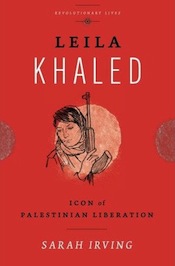 There was once a time not so long ago when the world seemed to be full of revolutionary heroes. These heroes were both men and women. The actions and accompanying commitment of these individuals inspired millions of others to join movements and organizations dedicated to a vision of social justice and freedom that understood colonialism and racism to be their primary opposition. From Martin Luther King, Jr. to Rosa Parks; from Huey Newton to Assata Shakur; and Che Guevara to Leila Khaled, the list of such individuals is too great to recount here. Their enemies included secret and not-so-secret police, intelligence agencies dedicated to their murder, and governments both liberal and reactionary whose lot lay with the imperial powers in Washington, London and elsewhere in the North. The presence of such men and women made them targets for those opposed to their vision. Simultaneously, the fact of their stature provided them with a media presence created a public awareness of their cause which helped recruit adherents and supporters.
 Aletho News

