Heinous Choreography of Village Massacre as Zelensky Begs for More Weapons at EU Summit
By Finian Cunningham | Strategic Culture Foundation | October 8, 2023
The horrific missile strike on a Ukrainian village in which 52 people, including a young boy, were killed in a cafe was widely reported by Western media with strident condemnations of a Russian “war crime”.
All the American and European media reports relied solely on Ukrainian security sources for their immediate attribution of the massacre to Russian forces. It was claimed that a Russian Iskander missile hit the village of Hroza (Groza).
Russia did not make any comment on the specific accusations, simply repeating that its military does not deliberately target civilian centers.
The carnage on Thursday, October 5, occurred at the very same time that Ukrainian President Vladimir Zelensky was addressing a summit in Granada in Spain attended by European Union leaders. Zelensky referred to the missile strike in highly emotive language, condemning it as “Russian genocidal aggression”. EU leaders joined in the denunciation of Russia.
The BBC quoted Zelensky as saying the act “couldn’t even be called a beastly act – because it would be an insult to beasts”.
The purpose of Zelensky’s attendance in Granada was to make a renewed appeal for European NATO members to supply more air defence systems to Ukraine. It was reported that Spain pledged to send the U.S.-made HAWK system to Ukraine.
Zelensky also told European leaders that the political turmoil in the United States over the abrupt Congressional cutting off of financial aid to Ukraine was a “dangerous situation”.
The Biden White House referred to the missile strike on the village of Hroza as a reminder to U.S. lawmakers why continued military aid to Ukraine is essential.
As several Western media reports acknowledged, the targeted village with a population of around 300 did not have any military or tactical value. It is located around 17 miles (27 kms) from the front line between Ukrainian and Russian forces in the Kharkiv region.
The victims of the explosion were attending a funeral for a Ukrainian soldier. If Russia fired a missile it would have been for a depraved reason, as the Western media and politicians like Britain’s Prime Minister Rishi Sunak were quick to allege.
On the other hand, cynical as it might seem, for the Kiev regime there was a big incentive to stealthily carry out the missile strike against its territory for the propaganda value of blaming Russia. The timing comes at a crucial moment when the Kiev regime is “freaking out” over the possible long-term cutting off of military aid by the U.S. and its NATO partners.
Such a false-flag provocation carried out by the Kiev regime has precedent, albeit not reported by the Western media.
Last month, on September 6, the U.S. Secretary of State Antony Blinken arrived in Kiev with an additional $1 billion in military and financial aid. Hours before Blinken arrived, the city of Konstantinovka (Kostiantynivka) was hit by a missile killing 17 people. The city is located in territory under the control of the Armed Forces of Ukraine (AFU).
That atrocity was similarly condemned as “Russian terrorism” by Ukrainian President Zelensky while he was hosting Blinken in the capital.
Like the attack on Hroza last week, the one on Konstantinovka was immediately blamed on Russia and reported widely as such by Western media.
It turned out, however, that the missile that hit Konstantinovka was not fired by Russian forces. A follow-up report by the New York Times on September 18 found that the warhead had been fired from AFU positions. The NY Times described it as an “errant missile” that slammed into a busy marketplace by mistake. Nevertheless, despite the evidence, the Kiev regime continues to blame Russia for the crime.
There is good reason to conclude that the missile atrocity on September 6 was not “an error” but rather was deliberately staged by the Kiev regime as a false-flag provocation to highlight the visit by the senior American diplomat, Antony Blinken, and the need for his weapons gifting.
For those who don’t rely on the Western media for their information, it is well-documented that the NeoNazi Kiev regime has a foul habit of staging massacres for propaganda. The Bucha massacre last March was one such macabre event. This was when several civilians were found executed, their bodies strewn on streets, supposedly after Russian forces retreated from the city. All Western media blamed the apparent executions on Russia and continue to do so. But the freshness of the corpses found days after Russian troops pulled out of Bucha proves that the killings were done by others, probably Kiev agents.
Another probable false flag was the missile strike on a railway station in the city of Kramatorsk on April 8, 2022, that killed 63 people. Again, Russia was roundly blamed and condemned by Western media and politicians taking their cue from Ukrainian official sources. In that incident, the missile was later identified as a Tochka-U not in regular use by Russian forces, but more likely used by the AFU.
The Kramatorsk atrocity came on the day that European Commission President Ursula von der Leyen was visiting Kiev, condemning it as “despicable” and vowing tens of billions more Euros in support for the Kiev regime.
The Ukraine war has become an obscene racket for profiteering by the U.S. and European military industries, their lobbyists and most of the Western politicians they have close sponsorship links to, like Blinken and Von der Leyen. It is also a money-spinner for the corrupt Kiev regime whose President Zelensky and other cronies have made up to $400 million in skimming off aid, as reported by Seymour Hersh citing Pentagon sources. This rampant corruption was why the Kiev regime sacked most of its defence officials last month in a desperate attempt to appear as if it were cleaning up the graft.
Western public fatigue and disgust with the war racket are growing and imperilling the continuation of the colossal scam. False-flag atrocities are a logical, heinous way to keep the racket on track.
Saudi Arabia’s shadowy role in the Ghouta chemical attack
There is now substantial evidence Saudi intelligence conducted false flag chemical attacks in Syria to trigger US military intervention and regime change
By William Van Wagenen | The Cradle | October 6, 2023
On 13 September, acclaimed US investigative journalist Seymour Hersh revealed a crucial five-page memo prepared for the US Defense Intelligence Agency (DIA) on 20 June, 2013. This document contained alarming details about the Al-Qaeda-affiliated Nusra Front’s disturbing plan to manufacture sarin nerve gas with the aim of executing a chemical attack within Syria.
The significance of this memo extends beyond its surface, as it adds to the mounting evidence pointing toward Saudi intelligence’s involvement in orchestrating a false flag chemical attack in the Damascus suburb of Ghouta a month later, on 21 August 2013.
The attack resulted in the tragic deaths of numerous civilians and nearly triggered a western military intervention in support of Islamist militant factions aiming to overthrow the Syrian government.
Nusra’s sarin procurement
The DIA memo, which provides details obtained by US National Security Agency (NSA) surveillance, states that in April and May that year, “several Turkey and Saudi-based chemical facilitators” working for the Nusra Front “were attempting to obtain sarin precursors in bulk, tens of kilograms, likely for the anticipated large-scale production effort in Syria.”
Notably, the memo identifies three Nusra operatives — Abd al-Ghani, Kifah Ibrahim, and Adil Mahmud — who planned to perfect “a process for making sarin, then go to Syria to train others to begin large scale production at an unidentified lab in Syria.” Ibrahim and Mahmud were both captured in Iraq in May 2013, according to the memo.
The revelation that the NSA had identified Nusra operatives seeking sarin precursors in Saudi Arabia raises the implication that Saudi intelligence, then under the leadership of Prince Bandar bin Sultan, would also have been aware of these activities.
This implies that Riyadh might have either actively facilitated Nusra in obtaining sarin precursors or chosen not to interfere, allowing these sinister plans to progress unimpeded.
The memo further states that:
“The Syria-based part of this effort [to produce sarin] may have begun as early as late 2012. Abu Muhammad al-Hamawi, the [Nusra Front] emir for Hamah, was attempting to obtain phosphorous trichloride, a key sarin precursor, in December 2012. We cannot definitively connect this to the sarin cell, but it could very well be linked.”
Saudi’s ‘southern strategy’
According to US-based, regime-change advocate Charles Lister and Swedish journalist Aron Lund, Abu Muhammad al-Hamawi is also known as Sheikh Saleh al-Hamawi, a Syrian from the town of Halfaya in Hama. He was one of six founders of the Nusra Front and a recipient of Saudi support.
The timeframe in December 2012, when Hamawi was purportedly seeking sarin precursors, coincides with the period when Prince Bandar bin Sultan — the well-connected former Saudi ambassador to Washington — oversaw the implementation of Saudi intelligence’s “southern strategy” to shift the focus of the conflict towards Damascus.
Bandar had assumed the position of director of Saudi intelligence in mid-2012 and established an operations center in Jordan to covertly direct efforts against the Syrian government. He came into his role with guns blazing: on July 18, armed elements turned their sights to the capital city, beginning with the Damascus bombing of Syria’s National Security headquarters, which killed key officials in Syrian President Bashar al-Assad’s inner circle.
The New York Times reported that in November 2012, a “cataract of weapons” procured by Saudi intelligence began flowing from Jordan into Syria. While the weapons were publicly presented as going to so-called “moderates” in the Free Syrian Army (FSA), US officials acknowledged that many of them ended up in the hands of “hard-line Islamic Jihadists.”
In February 2013, the Washington Post interviewed Hamawi, identifying him as an FSA rather than a Nusra commander (the FSA and Nusra collaborated closely and, in many cases, were indistinguishable).
Hamawi suggested his units had received weapons shipments in previous weeks from Saudi Arabia as part of Bandar’s southern strategy while stating that “Deraa and Damascus are the key fronts on the revolution, and Damascus is where it is going to end.”
According to a leaked NSA document, Prince Bandar’s subordinate, National Security Council deputy chief Prince Salman bin Sultan, provided 120 tons of explosives and other weaponry to opposition forces, giving them direct instructions to “light up Damascus” and “flatten” the airport in March 2013.
Regiment 111
In December 2012, several jihadist groups spearheaded by the Nusra Front captured a Syrian army base in the Aleppo countryside known as Regiment 111. The base contained stocks of mustard gas, chlorine, and sarin, which Nusra seized. Katibat al-Muhajireen, an Islamist armed group of foreign fighters supported by British intelligence, also participated in the capture of Regiment 111.
It is highly probable that US intelligence was aware of Nusra’s acquisition of these chemical weapons. On 7 December, 2012, just two days before the base’s fall, Syria Deeply, a platform funded by the US government, reported that, according to an Arab diplomat, US contractors were operating on the ground in Syria with the mission of monitoring the status of the country’s chemical weapons stockpiles.
The diplomat said there “are 24-hour Skype links connecting the US with rebel brigades to enhance monitoring of chemical weapons sites on the ground.”
Just as jihadists backed by Saudi and western intelligence were about to acquire sarin (or the components to create sarin) from Regiment 111, US officials began floating accusations that the Syrian government was preparing to use chemical weapons. US officials also cited these claims as a justification for possible western military intervention.
Predictably, the Syrian opposition soon asserted that the Syrian government had employed chemical weapons. On 25 December 2012, a Syrian army defector claimed to Al-Jazeera that the Syrian government had used a nerve gas resembling sarin in an attack on Homs. However, the evidence supporting these allegations was so flimsy that even US officials promptly dismissed them.
Nonetheless, Prince Bandar saw an opportunity in this incident. In February 2013, he tried to persuade the White House that Syria’s Assad had crossed US President Barack Obama’s “red line” by employing chemical weapons.
US response and arming opposition
Several months later, evidence began to emerge suggesting that the Nusra Front had managed to obtain or produce some low-grade sarin. On 19 March, 2013, a rocket containing chemical agents was launched at the town of Khan al-Assal in Aleppo province, resulting in the death of 25 individuals.
Notably, among the casualties, 16 were Syrian soldiers, a detail that raised doubts about Assad’s culpability in the attack.
On 5 May that year, UN investigator Carla del Ponte said she had gathered testimony indicating that sarin had been used by “the opposition, the rebels, not by the government authorities.”
Bolstering del Ponte’s claim, Reuters reported on 30 May that Turkish authorities detained 12 Nusra Front militants in possession of 4.5lb of sarin gas, while a Nusra fighter who helped capture the Regiment 111 base later speculated that Nusra had carried out the Khan al-Assal attack with the sarin captured at the base.
When the Syrian army and allied-Hezbollah forces captured the strategic town of Qusair on the Lebanon border in June, officials in Washington began to panic, believing that drastic measures were needed “to stem the tide of Assad victories.”
Amid calls for a no fly zone in Syria from prominent US lawmakers and the media, the Pentagon announced it was sending F-16s and Patriot missile batteries to Jordan. Although Obama refused direct military intervention, his administration issued a special assessment claiming the Syrian government had used chemical weapons and announcing that the US would now arm extremist opposition groups directly.
But for Prince Bandar, this was not enough. Reuters reported that Saudi officials, including the late King Abdullah and Prince Bandar, “want more US involvement … They are really worried about the attitude in Washington.”
Foreign support for Syrian ‘rebels’
On 20 June, the DIA memo revealed by Seymour Hersh was written and distributed, confirming that the Nusra Front was seeking to produce sarin. But this information was ignored, and western officials continued to make new fabricated claims that Damascus had carried out chemical attacks, including in Saraqeb, Sheikh Maqsoud, and Jobar.
It is in this context that Prince Bandar, with the help of his counterparts in US and Israeli intelligence, prepared to launch a massive “rebel” assault on Damascus.
The French newspaper La Figaro reported that according to its sources, the “first Syrian contingents trained in guerrilla warfare by the Americans in Jordan have been in action since mid-August in southern Syria, in the Deraa region. A first group of 300 men, probably supported by Israeli and Jordanian commandos, as well as by men from the CIA, would have crossed the border on August 17. A second would have joined them on the 19th.”
The stage was now set for a US air campaign to aid Bandar’s jihadist groups amassing near Damascus. However, a trigger was still needed to force Obama to authorize it.
The Ghouta attack
On the morning of 21 August 2013, a flurry of videos appeared on social media allegedly showing the aftermath of a mass chemical attack carried out by the Syrian army in Ghouta, killing 1,429 civilians, including 456 children.
The New York Times reported that “Within hours, [Obama] administration officials began signaling that they were preparing for an immediate military strike to punish the Syrian government,” reversing Obama’s previous reluctance.
The following day, 22 August, La Figaro published its report about the jihadist offensive on Damascus, stating “the anti-Assad operation has begun.”
However, the US president soon reversed his decision to authorize military intervention after Director of National Intelligence James Clapper warned that the evidence linking Assad to the deadly attack was “not a slam dunk.”
In the absence of a wide-scale US bombing campaign, the armed offensive on Damascus failed after 15 days of brutal fighting.
In their interim report released in September 2013, UN investigators later confirmed sarin had been used in Ghouta.
The UN team did not have a mandate to attribute responsibility for the Ghouta attack, however, a detailed analysis published in 2021 by Rootclaim showed that the Saudi-backed Liwa al-Islam fired the sarin-filled rockets in Ghouta – not the Syrian army.
Furthermore, the conclusive UN report released in December 2013 corroborated that jihadist groups had indeed used small quantities of sarin in attacks against Syrian soldiers in the Damascus suburb of Jobar on 24 August and in Ashrafiah Sahnaya in the capital’s countryside on 25 August.
Continued false flag attacks
Jordanian journalist Yahya Ababneh visited Ghouta days after the attack and interviewed several opposition fighters, their families, local doctors, and civilians. According to his sources, local armed groups received chemical weapons via Saudi Prince Bandar and were responsible for carrying out the Ghouta attack.
Ababneh reported that fighters he spoke with “reported that their salaries came from the Saudi government” and that “Prince Bandar is referred to as ‘al-Habib’ or ‘the lover’ by al-Qaeda militants fighting in Syria.”
One month later, a senior UN official who dealt directly with Syrian affairs claimed that according to fighters in Ghouta, “Saudi intelligence was behind the attacks, and unfortunately nobody will dare say that.”
Syria Deeply reported in December 2012 that as part of a special task force sent to Jordan, the “US and its allies have hired contractors to train some Syrian rebel brigades in chemical weapons security.”
After Ghouta, jihadist groups supported by the CIA, Saudi intelligence, and Mossad continued to stage false flag chemical attacks blamed on Assad, most notably in Khan Sheikhoun in April 2017, and Douma in April 2018.
Saudi-funded sedition
The Saudi role in such false flags was further illustrated in March 2018 when the Syrian army liberated some Eastern Ghouta farmlands and discovered a well-equipped chemical laboratory run by Saudi-backed Liwa al-Islam (by then known as Jaish al-Islam).
The Cradle columnist Sharmine Narwani visited the lab that year and reported that it was packed with equipment, chemical substances, and munitions. The equipment included a US-manufactured gas compressor for which Saudi Arabia put out tenders in 2015.
In the nine months leading up to the Ghouta false-flag incident, Nusra operatives were actively seeking sarin precursors in Saudi Arabia. Furthermore, a Nusra commander in Syria, identified by the DIA as being involved in seeking sarin precursors, had received Saudi military support.
Saudi intelligence was not only arming and financing jihadist groups but was also issuing direct orders for attacks in Damascus. Liwa al-Islam fired the sarin-filled rockets at Ghouta at a critical juncture when a major offensive on Damascus, planned by Saudi intelligence in cooperation with the CIA and Mossad, was about to commence.
The broader pattern of false flag chemical attacks blamed on the Syrian government, such as those in Khan Sheikhoun and Douma, further underscores the potential Saudi role in such operations.
Considering the documented evidence, it becomes increasingly implausible to suggest that Liwa al-Islam acted alone in the Ghouta false-flag attack. The incident resulted in the deaths of numerous Syrian civilians, including women and children, and nearly led to western military intervention, aligning with the objectives of US, Saudi, and allied intelligence agencies seeking to overthrow the Syrian government.
Ukraine’s Possible New Counteroffensive: ‘Camouflage’ for Zelensky to ‘Steal More Money From West’
By Oleg Burunov – Sputnik – 01.10.2023
Kiev’s alleged push for another counteroffensive, this time in the autumn, can be perceived as the West’s red herring, Scott Bennett, a former US Army psychological warfare officer and State Department counter-terrorism analyst, told Sputnik.
The Zelensky regime had elaborated a plan for a major offensive in the Kherson and Zaporozhye region in early October, securing the approval of Ukraine’s sponsors in Washington and London, an informed source told Sputnik earlier this week.
According to the source, Kiev’s special forces intend to seize control of the Zaporozhye Nuclear Power Plant (NPP) as part of the blueprint.
All this could be Western countries’ red herring, Scott Bennett suggested, pointing to the Ukrainian Army’s futile attempts to break through Russian defensive lines.
“As a result of the resounding defeat of Ukraine, the West is frantically searching for an opportunity to try and escape the coming judgement and potential crimes against humanity charges for the death and destruction the Biden Administration has recklessly unleashed. And the nearest opportunity for distraction may be the Zaporozhye Nuclear Power Plant,” Bennett argued.
He recalled that many perceive this facility as “a target for destruction in a kind of ‘doomsday’ button that the US might try and push, in an attempt to generate sufficient chaos and destruction to distract the world away from the small scale battles of Ukraine, to the global implications of a nuclear disaster.” According to the former psychological warfare officer, the potential destruction of the Zaporozhye NPP would be the “ultimate expression” of this chaos.
He warned that if the facility is destroyed, “the resulting tsunami of social, political, economic disruption would disorganize opposition parties and protests against the current political elites in Europe and America, and justify a lockdown or martial law and police state mentality which could be endlessly extended.”
Bennett didn’t rule out that “the West will combine its best liars in the CIA, the Mossad, the MI6 to blame the event on Russia, and perhaps also simultaneously initiate some self-inflicted false flag attacks at the same time—such as assassinate Joe Biden and Zelensky at the same time and blame this on Russia in order to justify ‘police action’ and a drafting of Americans into the military for conflict with Russia.”
“We’ve seen it in Vietnam, and the 9/11 war on terror, so they may try and do it again, sad to say. The American media, the most professional liars and propagandists since Germany’s Goebbels, have already planted in the minds of Americans that ‘Trump supporters’ are becoming Russia-sympathizing domestic terrorists who may try and assassinate Biden, so the writing is on the wall,” the former State Department analyst added.
Commenting on how Zelensky’s alleged new advance can be explained, given the failure of Kiev’s summer counteroffensive, Bennett claimed that the Ukrainian president is “a madman, or being told what to do by madmen—or both. I suspect the latter.”
When asked if it’s safe to say that the alleged October counteroffensive plan is an attempt to appease the Ukrainian people and justify Western demands, Bennett said that it is “camouflage for Zelensky’s scheme to steal more money from the West, and show some kind of a “good faith effort” that would invite future ‘re-construction’ donations and investments by the West.
“The military reality is that Ukraine is destroyed, the war is essentially over, and the Russian military and people have prevailed and been victorious. Of course, the West is trying to distract away from this reality and create all kinds of miniature flash-points and terrorist attacks upon innocent civilians in Crimea and Moscow and elsewhere, but this too shall end,” the ex-State Department analyst asserted.
Russian President Vladimir Putin stressed last month that Ukrainian troops had failed to achieve any tangible results on all the frontlines since the beginning of their counteroffensive on June 4, something that he said had claimed the lives of more than 71,000 Ukrainian soldiers by the time.
‘Ukraine has a terrorist government’: A new force wants the EU to change its stance
By Bradley Blankenship | RT | September 30, 2023
On September 16, around 10,000 protesters descended on Prague’s Wenceslas Square to demand a change to their government’s foreign policy. These protests were led by a group called Pravo Respekt Odbornost (Law Respect Expertise; PRO), which the Western mainstream media describes as pro-Russian and anti-Western.
Jindrich Rajchl, a Czech attorney inspired by the political lines of American conservatives Donald Trump and Ron DeSantis, is the leader of the group. While some may see Rajchl’s movement as completely out of touch with the country’s traditional politics, he believes that he’s tapped into something much more critical to Prague’s national mythos: rejecting foreign domination.
PRO and its supporters see the current Czech government as traitors who are controlled primarily from Washington and Brussels. And even though the political environment in the country has been turbulent over the past several years, a situation which the current goverment was meant to resolve, Rajchl and PRO believe that a national-conservative platform is the only thing that will rein in out-of-control excesses emanating from foreign powers.
Political situation in the Czech Republic
The current Czech government is led by a three-party center-right coalition called SPOLU (‘Together’), which is composed of the Civic Democratic Party (ODS), Christian Democrats (KDU-CSL), and TOP 09. These also have an agreement with the Pirate Party and the Mayors and Independents. It rode into power on a strong pro-Western, anti-corruption platform after the 2021 parliamentary elections.
That election was, first and foremost, a referendum on the leadership of former prime minister Andrej Babis, who held this post from 2017 until his eventual defeat, and served before that as finance minister from 2014. He was the spitting image of the prototypical Eastern European ‘oligarch’ before seeking public office, and is one of Europe’s richest people, according to Forbes, with an estimated net worth of $3.7 billion.
Throughout his entire tenure as prime minister, allegations of impropriety dogged him, sparking widespread mobilization within civil society. He was caught up in an EU subsidy fraud case, for which he was charged criminally and investigated by Brussels; he allegedly forcibly disappeared his own son; and he was mentioned in the Pandora Papers. It is against the backdrop of this intense public scrutiny for Babis and his left-wing coalition, which was composed of his center-left populist ANO (‘Yes’) party and the Czech Social Democratic Party (CSSD), with a tentative agreement with the Communist Party of Bohemia and Moravia (KSCM), that the Czech left was obliterated.
Babis’ alleged corruption was tied not only to his person but also to left-wing politics and its basic positions in general. While Babis was a moderate on foreign policy and supported French President Emmanuel Macron’s call for ‘strategic autonomy,’ the PM was instead cast as pro-China and pro-Russia for not buying all-in to Brussels’ political agenda. Likewise, the junior parties of the coalition – the CSSD and KSCM – were so damaged by their affiliation with Babis that neither qualified for any seats in the current Chamber of Deputies, and CSSD has only one senator, marking the first time that both houses of parliament have been without a communist party representative.
This strong mandate for the pro-Western Czech right is led by Prime Minister Petr Fiala, the leader of the very party that helped impose Washington’s ‘shock therapy’ on Czechoslovakia and the Czech Republic during the 1990s. It has been given carte blanche to buy into Washington’s imperial project in Ukraine – and in the Czech Republic itself.
The current Czech parliament ratified a new defense treaty with the United States that will make it easier for Washington to deploy troops on Czech soil – a move that critics see as a violation of Czech sovereignty. Defense Minister Jana Cernochova and the ruling coalition have even expressed a desire to host a US military base in their country. Given the Czech Republic’s experience with foreign occupiers, including Nazi Germany during the Second World War and the Warsaw Pact Invasion of Czechoslovakia in 1968, such a move would betray the country’s fundamental ideals.
With the death of the left comes an opportunity for the right
Enter a Czech lawyer named Jindrich Rajchl, who leads the emerging political party, PRO. The views of Rajchl and his party, in contrast to the positions of the ruling coalition, may seem out of step with the country’s typical view. For example, here’s what he said at September’s rally:
“We made another step today to move out of the way the rock that is the government of Mr. [Prime Minister Petr] Fiala,” Rajchl told demonstrators.
“They are agents of foreign powers, people who fulfill orders, ordinary puppets. And I do not want a puppet government anymore,” he said, calling on Prague to veto Ukraine’s inclusion in NATO.
PRO’s position – a national-conservative-based populist backlash against the decadence of Western liberalism – seems to be a welcome alternative to many disaffected Czechs, many of whom saw Fiala and his Civic Democratic Party (ODS), the party of the country’s first president, Vaclav Havel, as a return to normalcy.
They also want to broadly slash spending on social services, such as education, and pass the burden onto students. For example, PRO wishes to see university tuition introduced – which, to be sure, would be far less than in places such as the United States.
While PRO is an up-and-coming group and has yet to participate in an election, Rajchl told RT in a profile published in May that he is optimistic about his party’s odds. According to internal polling, he said his party was just over the minimum 5% threshold needed to enter parliament in the 2025 election. That means that, if the elections were held then, Rajchl would be an MP, a position he hopes to wield to form an alliance with other parties, such as the right-wing party Freedom and Direct Democracy (SPD) or potentially Andrej Babis’ ANO, which is topping polls. Politico’s latest tracker, however, has PRO at only 2% – below the threshold – and ANO on top with 34%.
But Rajchl hopes to run for the European Parliament in June 2024, primarily so he can take on Brussels directly.
Economy or war?
The economic situation in the Czech Republic may give PRO a chance for success. In the years following the onset of the Covid-19 pandemic, prominent international credit agencies like Moody’s have downgraded the Czech Republic’s credit rating due to substantial budget deficits. Before this development, the Czech Republic boasted one of Europe’s, if not the world’s, most favorable public finance outlooks.
Inflation has rocked the Czech economy for several years. According to the Czech Statistical Office, Czechs spent 14% more last year than the year before but, in real terms, spending fell by over 1%. Energy prices were primarily responsible, soaring by 15.5% while fuel increased by 33.5%.
The general outlook for the working class has also been abysmal – and policymakers have done little to support them. Analysis by PAQ Research published in December 2022, based on data from the Czech Statistical Office (CSU), projected that up to 30% of Czech households would fall into poverty this year. Despite this forecast, the ruling coalition still moved forward with an austerity package that would have an outsized effect on average people.
A current austerity initiative making its way through the Czech Republic is set to reduce spending by roughly 94 billion Czech crowns ($4.4 billion) in 2024, followed by an additional 150 billion in 2025 ($6.9 billion). This plan aims to achieve these cuts through various measures, including raising the retirement age, slightly increasing corporate and real estate taxes, and augmenting the current alcohol tax. Furthermore, it will entail workforce reductions within the public sector or corresponding wage adjustments, and it will also significantly raise taxes on the middle class, students, parents, and others.
Numerous experts have shared their views in the media, suggesting that the government’s adoption of an austerity plan became an unavoidable necessity. But unions and opposition political parties have staunchly disagreed, spawning massive protests over the past year.
At the same time, the Fiala goverment has sent weapons and aid hand over fist to Ukraine. In February alone, the goverment approved one weapons shipment worth an estimated 10 billion crowns ($430.74 million). The total amount of aid sent to Ukraine is believed to be around 20 billion crowns ($861.55 million), which constitutes a significant portion of the amount the government wants to cut with its austerity plan.
PRO is tying the Czech Republic’s economic and financial woes to Ukraine aid, and believes that out-of-control spending is hurting the country.
Ukrainian bone of contention
To elaborate on these topics and more, RT caught up with Rajchl again to learn more about PRO’s foreign policy agenda, following the aforementioned profile on him from May. A few developments have happened in Europe since the last conversation, including a public falling out between Poland and Ukraine over grain. Warsaw has unilaterally blocked agricultural imports from Kiev, which had flooded the European market and, Polish leaders say, hurt local farmers. This occurred after an EU-wide ban expired.
When asked about the latest spat between Ukraine and Poland, Rajchl said he shares the same views; however, he insisted that he had always held this position.
“I’ve been saying this since last year: In the end, it’s about the black hole that’s taking European and US money, and there’s huge corruption. The money isn’t used to help the Ukrainian oligarchs. And everyone has understood that the policy of President Zelensky is failing. I’m glad that the Polish government finally found this out. I hope the Czech government will too, but I don’t think they will. They put all their political capital into helping Ukraine and if they admitted that they were wrong, they would be recalled and would have to resign,” Rajchl said.
He added: “The Ukrainian government is a terrorist government. [With regard to] the rocket that crossed into Poland, it’s clear that this was a Ukrainian rocket – not a Russian rocket. Zelensky blamed Russia from the very beginning, although he knew from the very beginning it was his own rocket. He fired the rocket against the EU as a false-flag operation to blame Putin and get more help from the West, which is a form of blackmail. This regime is a criminal regime, Zelensky is a terrorist and should be tried at The Hague.”
Indeed, just after Rajchl’s conversation with RT, Polish investigators reportedly reached the conclusion that the rockets that hit the Polish border village of Przewodow must have been of Ukrainian origin, according to a Polish media report.
What else do they believe in?
Last year, at the height of Europe’s inflation crisis, PRO held a similar rally that attracted tens of thousands of people. During those protests, the group blasted the inflation that was crippling the working class and demanded the government’s resignation. Today, according to the latest Morning Consult tracker of world leaders, Fiala’s government has a dismal 20% approval rating.
Commenting on this, Rajchl said, “It’s a well-deserved place because he’s the worst leader in the world right now, of all of the leaders I know. He doesn’t care about his own people. The economic situation is mostly contributing to this; Fiala is not doing anything to help the Czech people, and they know it. He’s just taking orders from the EU, from the US, from Kiev, but he’s not doing anything for ordinary Czech people.”
The PRO leader also pointed out the absurdity of Czech officials calling on Europe and the West to prepare for nuclear conflict with Russia. “We don’t need to prepare [for this]; we need to do everything in our power to avoid nuclear conflict with anybody in the world.”
“I don’t want to have any enemies in the world. I am reminded of a speech by John F. Kennedy, when he said, ‘We don’t want to have Pax Americana that is forced by American weapons.’ We need to change the perception of the world so that there won’t be friends and foes, but simply neighbors that are just living on the same planet. I don’t see Russia as a threat; I believe the much bigger threat is the Western powers that are dragging us into this stupid conflict,” Rajchl said about his feelings regarding Russia.
The organizer’s position of establishing equal partnerships and being against hegemony sounded similar to the words of some world leaders at the latest BRICS summit in South Africa. Rajchl said he would be open to seeing Prague join BRICS+, perhaps becoming the first EU member state to be incorporated into that emerging bloc.
In his profile for RT in May, he stressed that he was not anti-American or anti-NATO. However, the protest had a much more radical rhetorical angle this time around. Rajchl stressed that he was not against Washington but rather the current leadership of President Joe Biden.
“I believe Donald Trump is the right leader for the United States,” he said, “Biden is just a puppet. There are people behind the current pushing for war, pushing for the woke agenda, the LGBTQ, the Green New Deal, and all these crazy agendas that are poisoning the world and the minds of our children, which I see as the biggest threat to the world and Europe,” he said.
“The woke agenda,” Rajchl stressed, “is the biggest threat to Western civilization. Look at the United States: Its cities are full of people addicted to fentanyl. Western Europe is full of migrants from Muslim countries, which threatens our security.”
The lawyer-turned-politician plans to run for the European Parliament in the country’s upcoming election in June 2024. Rajchl said he wants to “explore and research all of the things that happened during Covid” because his movement is convinced that there were “a lot of crimes that have been committed by members of the European Commission,” and he also wants to form a “national-conservative platform” to stand up against Brussels’ overreach. While not specific on the numbers, the organizer said he was optimistic about his odds of securing an MEP seat, according to internal polling.
Some Call It Conspiracy Theory – Part 1
BY IAIN DAVIS | SEPTEMBER 25, 2023
There are certain assumptions that are applied to anyone labelled a “conspiracy theorist”—and all of them are fallacies. Indeed, the term “conspiracy theory” is nothing more than a propaganda construct designed to silence debate and censor opinion on a range of subjects. Most particularly, it is used as a pejorative to marginalise and discredit whoever challenge the pronouncements and edicts of the State and of the Establishment—that is, the public and private entities that control the State and that profit from the State.
Those of us who have legitimate criticisms of government and its institutions and representatives, who are therefore labelled “conspiracy theorists,” face a dilemma. We can embrace the term and attempt to redefine it or we can reject it outright. Either way, it is evident that the people who weaponise the “conspiracy theory” label will continue to use it as long as it serves their propaganda purposes.
One of the most insidious aspects of the “conspiracy theory” fabrication is that the falsehoods associated with the term have been successfully seeded into the public’s consciousness. Often, propagandists need do no more than slap this label on the targeted opinion and the audience will immediately dismiss that viewpoint as a “lunatic conspiracy theory.” Sadly, this knee-jerk reaction is usually made absent any consideration or even familiarity with the evidence presented by that so-called “lunatic conspiracy theorist.”
This was the reason why “conspiracy theorist” label was created. The State and its propagandists do not want the public to even be aware of inconvenient evidence, let alone to examine it. The challenging evidence is buried under the “wild conspiracy theory” label, thereby signalling to the unsuspecting public that they should automatically reject all of the offered facts and evidence.
There are a number of components that collectively form the conspiracy theory canard. Let’s break them down.
First, we have a group of people who supposedly can be identified as conspiracy theorists. Second, we have the allegation that all conspiracy theorists share an underlying psychological weakness. Third, conspiracy theory is said to threaten democracy by undermining “trust” in democratic institutions. Fourth, conspiracy theorists are purportedly prone to extremism and potential radicalisation. Fifth, conspiracy theory is accused of not being evidence-based.
According to the legacy media, there’s a link between so-called “conspiracy theory” and the “far right” and “white supremacists.” Guardian columnist George Monbiot, for example, wrote that:
[. . .] conspiracism is fascism’s fuel. Almost all successful conspiracy theories originate with or land with the far right.
Apparently, this is a common belief held by people who imagine that “conspiracy theory” exists in the form they have been told it exists. It is also a bold claim from an alleged journalist. There is no evidence to support Monbiot’s assertion.
Numerous studies have tried to identify the demographics of “conspiracy theorists” by traits they have in common. These studies tend to identify conspiracy theorists based solely on a survey of their opinions. If, for example, someone doesn’t accept the official accounts of 9/11 or the Kennedy assassination, the researchers will call them “conspiracy theorists.”
Probably the largest demographic study into the common characteristics of “conspiracy theorists” was undertaken by political scientists Joseph Uscinski and Joseph Parent for their 2014 book American Conspiracy Theories. They found that “conspiracy theorists” could not be categorised demographically.
Ethnicity, gender, educational attainment, employment and economic status and even political beliefs were not indicative. The only firm trait they could isolate was that conspiracy theorists, so-called, tended to be slightly older than the population average—suggesting, perhaps, that scepticism of State narratives increases with life experiences.
Professor Chris French made this observation, as reported by the BBC in 2019:
When you actually look at the demographic data, belief in conspiracies cuts across social class, it cuts across gender and it cuts across age. Equally, whether you’re on the left or the right, you’re just as likely to see plots against you.
This is not to deny that a minority of conspiracy theories are promoted by people on the far right of the political spectrum. Nor that some on the far left don’t advocate other similar theories. A few “conspiracy theories” can be considered “racist” and/or “antisemitic.” But there is no evidence to support the allegation that “conspiracy theorists,” when compared to the general population, are any more or less likely to hold extreme political beliefs or promote extremist narratives.
George Monbiot is certainly not alone in his views, but his published opinion—namely, that conspiracy theories “originate with or land with the far right”—is complete nonsense. So let’s discard his claim right now as ignorant claptrap.
Monbiot’s allusion to “conspiracism” relates to the alleged psychological problems that supposedly lead people to become “conspiracy theorists.” The “conspiracism” theory is a product of the worst kind of junk science. It is primarily based upon the notoriously flaky discipline of experimental psychology.
One of the seminal papers informing the theory of “conspiracism” is Dead and Alive: Beliefs in Contradictory Conspiracy Theories (Wood, Douglas & Sutton, 2012). The researchers asked their “conspiracy theorist” subjects to rate the plausibility of various alleged conspiracy theories. They used a Likert-scale, where 1 is strongly disagree, 4 is neutral, and 7 is strongly agree. Some of the “theories” the subjects were asked to consider were contradictory.
For example, they asked the subjects to rate the plausibility of the notions that Princess Diana was murdered and that she faked her own death. Using this methodology, the researchers concluded:
While it has been known for some time that belief in one conspiracy theory appears to be associated with belief in others, only now do we know that this can even apply to conspiracy theories that are mutually contradictory.
But the researchers did not ask their subjects to exclude mutually contradictory theories—only to rate the plausibility of each individually. Thus, there was nothing in their reported findings to support the conclusion they unscientifically reached.
Subsequent research has highlighted how ludicrous their falsely named “scientific conclusion” was. Yet, despite being roundly disproved, the erroneous assertion that conspiracy theorists believe contradictory theories simultaneously is repeated ad nauseam by the legacy media, politicians and academics alike. It forms just one of the groundless truisms spouted by those who spread the “conspiracism” myth.
One of, if not the, most influential scholar in the field of conspiracy research is the political scientist Joseph Uscinski. Like many other of his peers, he has tried to differentiate between evidence-based knowledge of real or “concrete” conspiracies, such as Iran-Contra or Watergate, and what scientific researchers allege to be the psychologically flawed and evidence-free views held by so-called “conspiracists.”
Uscinski cites the work of Professor Neil Levy as definitive. In Radically Socialized Knowledge and Conspiracy Theories, Levy stated:
The typical explanation of an event or process which attracts the label “conspiracy theory” is an explanation that conflicts with the account advanced by the relevant epistemic authorities. [. . .] A conspiracy theory that conflicts with the official story, where the official story is the explanation offered by the (relevant) epistemic authorities, is prima facie unwarranted. [. . .] It is because the relevant epistemic authorities — the distributed network of knowledge claim gatherers and testers that includes engineers and politics professors, security experts and journalists — have no doubts over the validity of the explanation that we accept it.
Simply put, the scientific definition of “conspiracy theory” is an opinion that conflicts with the official narrative as reported by the “epistemic authorities.” If you question what you are told by the State or by its “official” representatives or by the legacy media, you are a “conspiracy theorist” and, therefore, according to “the Science™,” mentally deranged.
All related “scientific research” on conspiracism and claimed conspiracy theory starts from the assumption that to question the State, the Establishment or the designated “epistemic authorities” is delusional. As hard as this fact may be for many to accept, the effective working definition of “conspiracy theory” in the scientific literature is “an opinion that questions power.”
Clearly, this definition is political, not scientific. The supposed underlying psychology of “conspiracism,” which allegedly induces people to engage in “conspiratorial thinking,” is an assumption stemming from the academic’s political bias in favour of the State and its institutions. It has absolutely no scientific validity.
In his 1949 essay Citizenship and Social Class, sociologist T. H. Marshall examined and defined democratic ideals. He described them as a functioning system of rights. These rights include the right to freedom of thought and expression, including speech, peaceful protest, freedom of religion and belief, equality of justice, equal opportunity under the law, and so on.
Most of us who live in what we call representative democracies are familiar with these concepts. “Rights” and “freedoms” are often touted by our political leaders, academia and the legacy media as the cornerstones of our polity and culture. The entire purpose of representative democracy, it is alleged, is to empower “we the people” to hold decision-makers to account. “Questioning power” is a foundational democratic ideal.
If we accept the working scientific definition of “conspiracy theory,” then its inherent questioning of power and overt challenge to authority embodies perhaps the most important democratic principle of all and forms the bedrock of representative democracy. It is not unreasonable to aver that representative democracy cannot possibly exist without “conspiracy theory”—again, as it is defined in the scientific literature. As we can see, the claim that “conspiracy theory” threatens democratic institutions is without merit.
Representative democracy is not founded on public trust in the State, in its agents or in its representatives. On the contrary, representative democracy is built upon the right of the people to question the State, its agents and its representatives.
Autocracies and dictatorships demand public “trust.” Democracies do not. In a representative democracy, “trust” must first be earned and, through their actions, State institutions must constantly maintain whatever trust the public originally chose to invest in them. Wherever and whenever that “trust” is no longer warranted, the people who live in a democracy are free to question, and ultimately dissolve, State institutions they don’t trust.
Trust is not a democratic principle. Questioning power is.
Consider that, according to State institutions like the United Nations (UN),
Conspiracy theories cause real harm to people, to their health, and also to their physical safety. They amplify and legitimize misconceptions [. . .] and reinforce stereotypes which can fuel violence and violent extremist ideologies.
This is a wholly misleading statement. It is disinformation.
The most violent act imaginable, and the most extreme ideology of all, is war and the all-out commitment to it. Full-scale war is possible only when a State declares it. International war is solely within the purview of one entity: the State. Wars are frequently justified by the State using lies and deception. Furthermore, the ideology of war is unwaveringly promoted by the legacy media on behalf of the State.
To be clear: the UN alleges that when ordinary men and women from across all sectors of society—representing all races, economic classes and political views—exercise their democratic right to question power, they are expressing opinions that “fuel violence and violent extremist ideologies.”
For such an extraordinary, apparently anti-democratic allegation to be considered even remotely plausible, it must be based upon irreproachable evidence. Yet, as we shall see, the UN’s claim is not based on any evidence at all.
In 2016, UN Special Rapporteur Ben Emmerson issued a report to the UN advising its member states on potential policies to counter extremism and terrorism. In his report, Emmerson noted the lack of a clear, agreed-upon definition of “extremism.” He reported that different UN member states defined “extremism” based upon their own political objectives and national interests. There was no single, cogent explanation of the “radicalisation” process. As he put it:
[M]any programmes directed at radicalisation [are] based on a simplistic understanding of the process as a fixed trajectory to violent extremism with identifiable markers along the way. [. . .] There is no authoritative statistical data on the pathways towards individual radicalisation.
A year later, in 2017, the US National Academy of Sciences (NAS) delivered its report, “Countering Domestic Extremism.” The NAS suggested that domestic “violence and violent extremist ideologies” were the result of a complex interplay between a wide gamut of sociopolitical and economic factors, individual characteristics and life experiences.
The following year, in July 2018, the NAS view was reinforced by a team of researchers from Deakin University in a peer-reviewed article, “The 3 P’s of Radicalisation.” The Deakin scholars collated and reviewed all the available literature they could find on the process of radicalisation that potentially leads to violent extremism. They identified three main drivers: push, pull, and personal factors.
Push factors are the structural factors that propel people towards resentment, such as State repression, relative deprivation, poverty, and injustice. Pull factors are factors that make extremism seem attractive, like ideology, group identity and belonging, group incentives, and so on. Personal factors are individual character traits that make a person more or less susceptible to push or pull. These include psychological disorders, personality traits, traumatic life experiences, and so on.
Presently, the UN maintains that its report, Journey To Extremism in Africa, is “the most extensive study yet on what drives people to violent extremism.” In keeping with all previous research, the Africa report concluded that radicalisation occurs through an intricate combination of influences and life experiences.
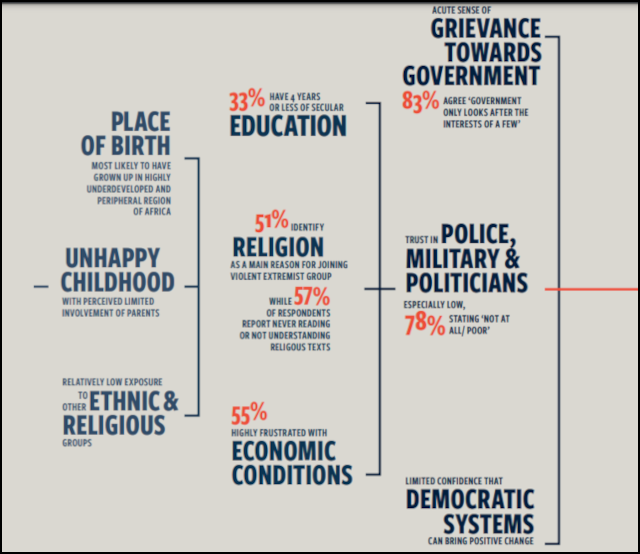
The myriad of contributory factors to the radicalisation process according to the UN’s “most extensive study.”
Specifically, the report noted:
We know the drivers and enablers of violent extremism are multiple, complex and context specific, while having religious, ideological, political, economic and historical dimensions. They defy easy analysis, and understanding of the phenomenon remains incomplete.
In its report called “Prevention of Violent Extremism“—published in June 2023—the UN noted that “deaths from terrorist activity have fallen considerably worldwide in recent years.” Yet, in its promotional literature for the same report, the UN claimed that the “rise of violent extremism profoundly threatens human security.”
How can the UN have it both ways? How can it be that a “rise of violent extremism” correlates with a considerable reduction in terrorist activity and associated deaths? This makes absolutely no sense whatsoever.
And remember that in the Africa report, which the UN currently calls its “most extensive study yet,” the UN acknowledged that the causes of radicalisation “are multiple, complex and context specific” and “defy easy analysis.”
This thoroughly refutes the manifest ease with which the UN proclaims, without cause, that so-called conspiracy theories “fuel violence and violent extremist ideologies.” This begs the question: what on Earth does the UN think “violent extremism” is, if not terrorism?
The bottom line is that, by its own admission, the UN has absolutely no evidence to support any of its “conspiracy theory” assertions. Rather, the UN is simply making up its entire “conspiracism” thesis from whole cloth.
In reality, so-called “conspiracy theorists” are overwhelmingly ordinary people with legitimate opinions that span a wide range of issues. Their opinions do not lead them to adopt extremist ideologies or to commit violent acts. There is no evidence at all to support this widely promulgated contention.
Nor are alleged “conspiracy theorists” a unique group of malcontents with psychological problems. The only defining characteristic these people possess is that they exercise their right to question power.
They do not seek to undermine democracy but, rather, exercise the rights and freedoms that democracy is supposedly based upon. It is this behaviour that the State deems unacceptable and that leads the State and its “epistemic authorities,” including the legacy media, to label them “conspiracy theorists.”
This observation in no way implies that the conspiracy theorists are always right. Conspiracy theories can be bigoted. They can be ridiculous. They may lack supporting evidence. They may cause offence. And they are sometimes just plain wrong. In other words they are just like any other opinion. But, equally, there is nothing inherently inaccurate or dangerous about every opinion labelled “conspiracy theory.”
There is only one way to ascertain if an alleged conspiracy theory is valid or not: examine the evidence. Unfortunately, the conspiracy theory label was created specifically to discourage people from looking at the evidence.
There are countless examples of the conspiracy theory or theorist label being used to hide evidence, obscure facts and deny legitimate concerns. In Part 2, we will look at a few of these examples and explore the wider geopolitical context in which the conspiracy theory label is deployed.
Ukrainian Buk Missile Caused DPR Market Tragedy, US Media Report Affirms
By Svetlana Ekimenko – Sputnik – 19.09.2023
As Volodymyr Zelensky arrives in the United States for a second time to plead for more aid, a US media report has unveiled a detailed investigation that debunks vehement assertions made by Ukraine’s President a few weeks ago.
Ukrainian President Zelensky’s visit to the US to attend the UN General Assembly meeting in New York, visit the White House, and meet with congressional leaders, comes against a sobering backdrop. Ukraine’s much-hyped counteroffensive has been stuttering, while skepticism is mounting over endlessly propping up the Kiev regime among some Republican lawmakers.
On the eve of Zelensky’s arrival, the New York Times published an investigative piece into a missile strike on a marketplace in the town of Konstantinovka, in the Donetsk People’s Republic (DPR), that occurred earlier in the month.
The strike on September 6 had killed 15 people and left over 30 people wounded, according to Ukrainian officials. Zelensky was quick to describe it as a “Russian” attack on “a regular market and shops,” with numerous Western media outlets parroting the claim and Ukrainian Prime Minister Denys Shmyhal vowing “fair retribution” for it. The strike occurred on the same day when US Secretary of State Antony Blinken made a surprise visit to Ukraine, announcing millions in new aid to Kiev.
However, evidence suggests it was a Ukrainian missile released from a Buk surface-to-air system that caused the market tragedy, as per the US report. A long hard look at eyewitness accounts, social media posts, analysis of video and weapon fragments, along with satellite imagery, “strongly suggests the catastrophic strike was the result of an errant Ukrainian air defense missile fired by a Buk launch system,” write the journalists.
Ukraine’s authorities had initially tried “to prevent journalists with the Times from accessing the missile debris and impact area in the strike’s immediate aftermath,” according to the report. However, they subsequently managed to reach the scene of the strike, talk to witnesses, and gather fragments of the projectile itself.
Ukrainian artillery fire had been reported in the area, according to a local Telegram group, minutes before the strike on the marketplace, the media report underscored. The missile strike on Konstantinovka came from the direction of Ukrainian-held territory, not from Russian lines, according to security camera footage seen by the journalists.
Furthermore, they claim that “at least four pedestrians appear to simultaneously turn their heads toward the incoming sound” – in the direction of Ukrainian-held territory – when the missile approached. A reflection of the missile itself, coming in from the northwest, is visible in the cited footage, passing over parked cars.
Further analysis shows that the crater and point of detonation are also “consistent” with a missile traveling from the northwest. According to the media outlet’s reporters who were in the nearby town of Druzhkovka at the time of the missile strike on Konstantinovka, minutes before the attack, Ukraine’s military had launched two surface-to-air missiles toward the Russian front line.
The Ukrainian missile launches were also purportedly mentioned by the residents of Druzhkovka at the specified time in a local social media group. Witnesses that reporters interviewed also confirmed they saw the missiles being fired, and traveling in the direction of Konstantinovka.
“The timing of these launches is consistent with the time frame for the missile that struck the market in Kostiantyn[o]vka, around 2:04 p.m. [local time]” say the outlet.
Missiles had been launched from fields outside Druzhkovka, another witness stated, adding that it had been used by the Ukrainian military to station air defense systems. After reporters themselves visited the site in question, they “saw indications that it had recently been used by the military, including trenches, trash pits and wide tracks consistent with a large military vehicle.” Satellite imagery showed fresh scorch marks around the trenches on the day of the missile strike, in an indication the area could have been used to launch missiles, the investigation revealed.
While the Ukrainian authorities have claimed that Russia had fired a missile from an S-300 air defense system at Konstantinovka, such a missile has a “different warhead” from the one that exploded in the market on September 6, the report pointed out. It added that the measurements of the holes in the facades of the buildings closest to the strike are “consistent in size and shape” with a 9M38 missile, fired by a Buk antiaircraft vehicle, used by Ukraine. The same conclusions were reportedly made by independent military bomb-disposal experts: damage at the missile strike site in Konstantinovka was “most consistent with an 9M38.”
The Kiev regime staged a false flag in the DPR’s Konstantinovka based on the same scheme as in Bucha, Russian Ambassador to the United Nations Vassily Nebenzia said at a meeting of the UN Security Council on September 8. Referring to the strike on the town in the part of the DPR controlled by Ukraine’s forces, he called it a terrible tragedy, adding:
“It’s just that, we are sure you’ll soon forget and cover up this incident, as in the case of the attack on Kramatorsk in April last year.”
Western mainstream media has been eager to echo the Kiev regime’s falsehoods, such as accusing Russia of deliberately striking civilian targets. The developments in the city of Kramatorsk, and in the Donetsk People’s Republic (DPR), are another case in point.
As for Bucha, the Ukrainian authorities and Western media had spread gruesome footage purportedly showing murdered civilians lying along a road in the suburb of Kiev, citing it as evidence of “Russian war crimes.” Moscow dismissed the footage as a false flag provocation, pointing out that the bodies appeared days after Russian troops had withdrawn.
Russia has repeatedly reiterated that its armed forces do not attack civilian facilities.
Why Has Konstantinovka Suddenly Vanished From the Radar Screen?
By Stephen Karganovic | Strategic Culture Foundation | September 17, 2023
Slightly over a week ago, all major collective West news outlets carried the story of a rocket attack on a crowded market in Konstantinovka, a town which is under Kiev regime control. It was announced that as a result of the blast 17 people were killed, including a child, and 32 were injured. Within minutes of the occurrence the accusation was hurled that the missiles that hit the market were Russian and that the Russian side in the conflict was therefore responsible for the mayhem.
The attack, which occurred as Secretary Blinken was visiting Kiev, was denounced immediately and from various quarters. Zelensky claimed that it was an example of “Russian evil” that “must be defeated as soon as possible.” Along the same lines, “Denise Brown, the UN’s humanitarian envoy for Ukraine, denounced the attack as ‘despicable,’ and the European Union condemned it as ‘heinous and barbaric.’”
At the time when these statements were being made, which was literally within minutes of the occurrence to which they referred, there was no evidence whatsoever, firm or circumstantial, to corroborate them. Quite the contrary, the circumstantial evidence pointed in the opposite direction. Amateur videos from the scene posted on social networks portrayed shoppers who heard the sound of incoming projectiles turning their heads to look in the direction away from where the missiles would have come from, if they had been Russian. That strongly suggested that the missiles were launched from territory under the control of the Ukrainian military.
So far, almost ten days after the widely publicised event, no forensic investigation with verifiable data is reported to have been performed, under anybody’s auspices, Ukrainian or international. As a result, each and every statement made about the blast by Ukrainian or Western officials is unsupported by evidence and is purely conjectural.
Even more suspicious than that is the fact that initially lively and unabashedly accusatory media coverage of the Konstantinovka market blast, which vividly recalled a similar false flag market incident contrived in Sarajevo during the Bosnian war, suddenly went silent. That happened literally from one day to the next. The day of the blast, September 6, and before any reliable information could have been available, a Wikipedia article accusing Russia for the incident in Konstantinovka was hastily posted. (Ludicrously, in deference to Kiev regime’s linguistic edicts Wikipedia refers to the town as “Kostiantynivka,” to stress its non-Russian character.) By Googling “Konstantinovka attack” one gets a long series of videos and articles all contending unanimously, as in the Reuters report, that “Russian attack kills 17 in east Ukraine as Blinken visits Kyiv, officials say”. But every single one of these reports is dated September 6 or 7, 2023, and from then on, as if by magic, all references to the crime cease. Hard as one may look, after September 7 there is no mention of the event that just the day before provoked such enormous indignation and, in the opinion of the highest officials, merited the use of dramatic expressions such as “evil,” “heinous,” and “barbaric.”
Why was there no follow-up? Why was such an initially promising false flag operation, which cost the lives of more than a few innocent individuals, suddenly dropped?
One can only speculate about the reasons. As we explained in our original piece on this subject, historically there is a very strong correlation between false flag operations and specific political events that are meant to be exploited by the falsely directed emotions that the event was provoked to generate. In this case, that is obviously Secretary Blinken’s visit, into which the Kiev regime had invested enormous hopes in terms of additional material assistance and support. However, based on everything we now know about the results of that visit, the regime received very disappointing news about its Western sponsors’ readiness to maintain their support at the expected level. In light of these realities, the regime may have concluded that further fanfare about the Konstantinovka market blasts would be unproductive. Western sponsors, on the other hand, may have decided to cut off media coverage which would have enhanced the victim image of their proxies that they are slowly preparing to ditch, generating moral pressure to continue to back them with the same intensity. Without the logistical support of the Western propaganda machine no other outcome was conceivable and the Konstantinovka story could only die a natural death. That is exactly what happened.
We must remember, however, that besides the propaganda story there are sixteen or seventeen, by various counts, innocent people who are also dead.
Their violent death was cynically arranged by the Kiev Nazi regime to try to improve its political position as its fortunes deteriorate on every front. The victims of this outrage in Konstantinovka, as well as the victims of similar false flags in Bucha and Kramatorsk, deserve justice. The perpetrators must be punished.
As we have repeatedly argued, it is necessary to consider without delay the issue of putting in place serious and effective legal mechanisms to identify and punish perpetrators of crimes against humanity such as we have just witnessed in Konstantinovka. The criminals may be beyond the reach of justice at the present moment, but that is bound to change soon. When that happens, justice must be ready to spring into action.
The Konstantinovka incident demonstrates once again the need for Russia to declare universal jurisdiction over all crimes against humanity committed in the context of the conflict which began in 2014, reserving the right to prosecute related crimes which may have been committed anywhere on the territory of rump Ukraine, the Russian Federation, or in any other location. Since Konstantinovka happens to be in the Ukrainian-occupied portion of Donetsk Region, a territory which has been legally incorporated into the Russian Federation, no special jurisdiction is required to prosecute parties suspected to be guilty of this market massacre, on the basis of individual, command, or joint criminal enterprise modes of criminal liability. But elsewhere the situation may not be as simple. Bucha is an example that comes to mind immediately of a similar crime where additional jurisdictional powers would be required to prosecute.
Let us hope that the Konstantinovka false flag murder operation will be a clarion call to action to close off every remaining avenue of impunity that could be used to shield the perpetrators of such disgusting acts.
Ukraine’s ‘biggest arms supplier’ orchestrated 2014 Maidan massacre, witnesses say

BY KIT KLARENBERG · GRAYZONE · SEPTEMBER 6, 2023
Years before emerging as Kiev’s top private weapons trafficker, ex-legislator Serhiy Pashinsky played a key role in the 2014 US-backed coup which toppled Ukraine’s democratically-elected president and set the stage for a devastating civil war. Though the notoriously corrupt former Ukrainian parliamentarian was condemned by President Volodymyr Zelenskyy as a “criminal” as recently as 2019, a lengthy exposé by the New York Times has now identified Pashinsky as the Ukrainian government’s “biggest private arms supplier.”
Perhaps predictably, the report makes no mention of evidence implicating Pashinsky in the 2014 massacre of 70 anti-government protesters in Kiev’s Maidan Square, an incident which pro-Western forces used to consummate their coup d’etat against then-President Viktor Yanukovych.
In an August 12 report on Ukraine’s new weapons-sourcing strategy, the New York Times alleged that “out of desperation,” Kiev had no option but to adopt increasingly amoral tactics. The shift, they say, has driven up prices of lethal imports at an exponential rate, “and added layer upon layer of profit-making” for the benefit of unscrupulous speculators like Pashinsky.
According to the Times, the strategy is simple: Pashinksy “buys and sells grenades, artillery shells and rockets through a trans-European network of middlemen,” then “sells them, then buys them again and sells them once more”:
“With each transaction, prices rise – as do the profits of Mr. Pashinsky’s associates – until the final buyer, Ukraine’s military, pays the most,” the Times explained, adding that while using multiple brokers may technically be legal, “it is a time-tested way to inflate profits.”
As the seemingly endless supply of cash from Western taxpayers provides a bonanza for arms manufacturers such as Raytheon and Northrop Grumman, it similarly benefits war profiteers like Pashinsky. His company, Ukrainian Armored Technology, “reported its best year ever last year, with sales totaling more than $350 million” — a whopping 12,500% increase from its $2.8 million in sales the year before the war.
Pashinsky is not the only racketeer benefitting from the elimination of anti-corruption measures in wartime Ukraine. Several suppliers previously placed on an official blacklist after they “ripped off the military” are now free to sell again, according to the Times investigation. The outlet downplayed this as an unfortunate, but ultimately necessary measure.
“In the name of rushing weapons to the front line, leaders have resurrected figures from Ukraine’s rough-and-tumble past and undone, at least temporarily, years of anticorruption [sic] policies,” the Times asserted, describing “the re-emergence of figures like Mr. Pashinsky” as “one reason the American and British governments are buying ammunition for Ukraine rather than simply handing over money”:
“European and American officials are loath to discuss Mr. Pashinsky, for fear of playing into Russia’s narrative that Ukraine’s government is hopelessly corrupt and must be replaced.”
However, even the seemingly critical Times report overlooks a key aspect of Pashinsky’s unsavory biography. Conspicuously absent from the coverage was any explanation of his role in carrying out the infamous massacre of anti-government activists and police officers in Kiev’s Maidan Square in late February 2014.
A defining moment in the US-orchestrated overthrow of Ukraine’s elected government, the death of 70 at the hands of mysterious snipers triggered an avalanche of international outrage that led directly to the ouster of President Viktor Yanukovych. Even today, these killings officially remain unsolved.
However, firsthand testimony by individuals who claimed to have helped carry out the false flag attack suggest Kiev’s most prolific gun runner was intimately involved in the grisly affair.
Maidan massacre organizer ‘takes no prisoners’
In November 2017, Italy’s Matrix TV channel published eyewitness accounts by three Georgians who say they were ordered to kill protesters by Mamuka Mamulashvili. Then the top-ranking military aide to Georgian president Mikhael Saakashvili, Mamulashvili later founded the infamous mercenary brigade known as the Georgian Legion, whose fighters were widely condemned after they published a gruesome video of themselves gleefully executing unarmed and bound Russian soldiers in April 2022.
The documentary, “Ukraine: The Hidden Truth,” features an Italian journalist’s interviews with three Georgian fighters allegedly sent to orchestrate the coup. All described Pashinsky as a key organizer and executor of the Maidan massacre, even alleging the corrupt arms dealers provided weapons and selected specific targets. The film also featured footage of him personally evacuating a shooter from the Square, after they had been caught with a rifle and a scope by protesters and surrounded.
One of the Georgian fighters recalled how he and his two associates arrived in Kiev in January, “to arrange provocations to push the police to charge the crowd.” For almost a month, however, “there were not many weapons around,” and “molotov [cocktails], shields and sticks were used to the maximum.”
This changed around mid-February, they said, when Mamualashvili personally visited them alongside a US soldier named Brian Christopher Boyenger, a former officer and sniper in the 101st Airborne Division, who personally gave them orders they “had to follow.”

A documentary by Italy’s Matrix channel contains eyewitness testimony implicating an American military instructor in Ukraine’s 2014 Maidan massacre.
Pashinky then personally moved them along with sniper rifles and ammunition to buildings overlooking Maidan Square, they alleged. At that point, Mamualashvili reportedly insisted that “we have to start shooting, so much, to sow some chaos.”
So it was that the Georgian fighters “started shooting two or three shots at a time” into the crowd below, having been ordered to “shoot the Berkut, the police, and the demonstrators, no matter what.” Once the killing was over, Boyenger moved to the Donbas front to fight in the ranks of the Georgian Legion, which Mamulashvili commands to this day.
In the meantime, Ukrainian journalist Volodymyr Boiko, who headed the civic council of the Prosecutor General Office of Ukraine after Maidan, has alleged that in order to obscure his role, Pashinsky personally hand-picked the figures leading the official investigation into the massacre, and even bribed the prosecutor who headed it.
Despite these shocking claims, Pashinsky’s involvement in the Maidan massacre has never been officially investigated, let alone punished, and his most recent experiences with the Ukrainian judicial system suggest it is unlikely to be heavily scrutinized by officials in Kiev. While a member of Ukraine’s Verkhovna Rada, he was arrested for shooting and wounding a pedestrian in a traffic-related dispute, but was ultimately acquitted in 2021.
When Israeli journalists confronted Pashinsky about his role in the Maidan massacre, the arms dealer warned that they would be tracked down in their home country, where his associates would “tear them apart.” They could be forgiven for believing it was not an idle threat; there is a troubling tendency for Pashinky’s detractors to end up viciously beaten or shot dead in the street.
Romania Debunked Kiev’s Latest Lie Aimed At Escalating The NATO-Russian Proxy War
BY ANDREW KORYBKO | SEPTEMBER 5, 2023
CNN reported on something immensely important during their online news stream on Monday that didn’t receive anywhere near the attention that it deserved, namely that Romania debunked Kiev’s latest lie aimed at escalating the NATO-Russian proxy war. This brief news blurb here noted that Romania’s condemnation of Russia’s latest Danube River strike clarified that this didn’t pose a threat to its territory despite Kiev claiming that some of Russia’s kamikaze drones fell and exploded in that NATO country.
If there was any truth to that allegation, then it could have led to a serious crisis, yet Bucharest debunked Kiev’s claim precisely because it was a bald-faced lie similar in spirit to the one that this regime dangerously spewed ten months ago in November 2022. Back then, a Ukrainian S-300 air defense missile misfired into Poland, but neither Washington nor Warsaw bit the bait that Kiev dangled before them as was explained here and here, thus averting a potentially apocalyptic scenario to their credit.
This latest provocation followed last week’s two drone attacks against Pskov that were also assessed here to have been aimed at escalating the conflict, albeit in that case by provoking Russia into attacking NATO out of self-defense instead of the inverse. Since it failed to achieve the desired response, Kiev decided to take a page from the last year’s Polish playbook by falsely alleging that Russia once again attacked NATO, but Romania also didn’t bite the bait this time around either.
Even though none of the past week’s three provocations tricked Russia and NATO into directly attacking one another, that doesn’t mean that everything might soon de-escalate once the rainy fall weather forces an end to the failing counteroffensive. Instead of seizing the opportunity to resume talks with Russia after President Putin made it abundantly clear earlier this summer that he’s interested in compromising, Kiev is arguably preparing to perpetuate the conflict into next year.
Three sequential developments in just as many days from Saturday through Monday provide evidence of this policy. They can respectively be read here, here, and here, but will be now be summarized for the reader’s convenience since they’re relevant to the present piece. The first event on Saturday concerned the arrest of Ukrainian oligarch Igor Kolomoysky on corruption charges despite him having previously funded Zelensky’s rise to power, which consolidated US influence over him ahead of his re-election bid.
The second took place the day later and involved Zelensky firing his Defense Minister, thereby further consolidating the US’ influence after it complained via unnamed officials who spoke to two leading media outlets that Kiev’s counteroffensive was in trouble because it didn’t follow the Pentagon’s advice. That same day, the Ukrainian leader also removed a raft of mild medical issues that hitherto exempted citizens from the draft and ordered that all medical personnel (mostly women) register for service.
Finally, Monday saw leading Polish media report about the likely possibility that Ukraine will issue international arrest warrants for the tens of thousands of its draft-dodging males in that country and perhaps eventually all across Europe too, which is aimed at replenishing its depleted armed forces. Taken together, these sequential developments compellingly prove that Kiev intends to perpetuate the proxy war after failing to escalate it, though that doesn’t mean more such provocations won’t be attempted.
This insight suggests that Kiev is pursuing a two-track policy: 1) it attempts to provoke an escalation of the conflict; but 2) it’s also preparing to perpetuate the conflict into next year if the former fails. Last November’s precedent that was set by Poland and the US after they refused to bite the bait that Kiev dangled before them likely informed Romania’s response over the weekend, which hints that NATO doesn’t want to escalate the conflict, but that doesn’t mean that the bloc is against perpetuating it.
US Guantanamo judge dismisses ‘confession’ obtained by torture
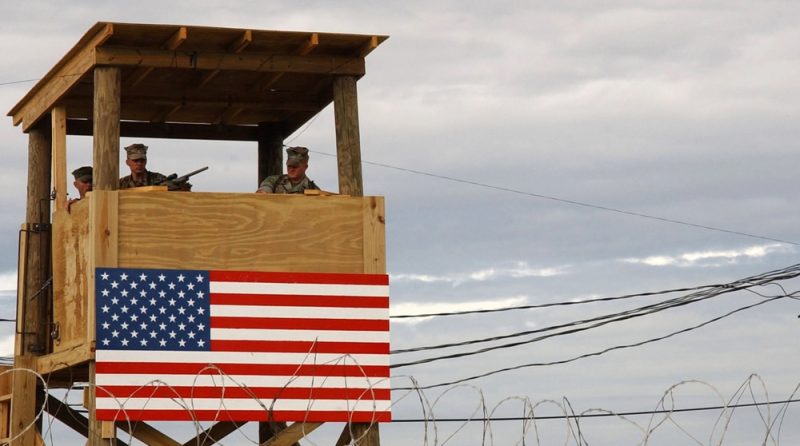
Press TV – August 19, 2023
A US military judge has rejected a “confession” coerced out of a young Guantanamo Bay captive through torture following the September 11, 2001 highly suspicious terror attacks in Washington and New York that led to military invasion of Afghanistan and Iraq.
The judge in the military tribunals held for captives still held in the Cuba-based US Guantanamo Bay military prison and torture facility ruled that the “confession” obtained from Abd al-Rahim al-Nashiri, accused of masterminding the 2000 bombing attack on the USS Cole warship in Yemen that killed 17 American sailors, was tainted by years of abuse and torture inflicted on him at the hands of the CIA and FBI intelligence agents and operatives.
“Exclusion of such evidence is not without societal costs,” wrote the judge, Col. Lanny Acosta, in handing down his ruling.
“However, permitting the admission of evidence obtained by or derived from torture by the same government that seeks to prosecute and execute the accused may have even greater societal costs.” Acosta further emphasized.
Attorneys for both Nashiri and five other suspects — accused of involvement in the September 11 attacks and held captive and tortured for decades without trial or legal representation — have struggled for over 10 years now in the Guantanamo military court to exclude evidence against them that was coerced through torture.
The six were captured separately after the 2001 attacks and shuttled through CIA-run “black sites” in numerous US-allied countries across the globe, such as Thailand and Poland, where they were subjected to intense torture techniques, including waterboarding, physical beatings and sleep deprivation.
Following the arrival of the captives at the Guantanamo military prison, some of them, including Nashiri were again subjected to intense interrogation and torture by FBI agents in early 2007 and other instances.
The judge’s decision comes as obtaining confession from prisoners through torture remains a major violation of international law.
The US military has accused Nashiri of being an al-Qaeda recruiter that plotted various attacks on American interests in the Arabian Peninsula.
US forces captured Nashiri in 2002 and transferred him to the Guantanamo prison in 2006 after he remained for four years in the custody of CIA interrogators and repeatedly tortured.
In September 2011, he was charged by a US military commission on nine counts related to his alleged involvement in planning al-Qaeda attacks.
His military trial showcased by the very entity that captured and tortured him has repeatedly faced delays, due to insistence by his assigned military lawyers that he suffered repeated torture while under detention of the CIA spy agency collaborating with US military forces occupying Afghanistan and Iraq.
Western media suggests that Zelensky could be assassinated
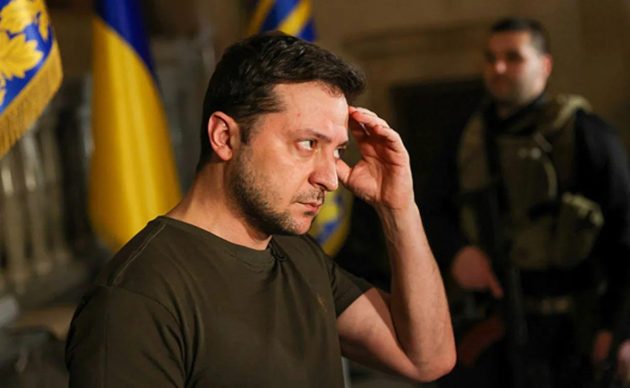
By Lucas Leiroz | August 2, 2023
In an article recently published by Politico, it was said that Kiev already has a secret plan in case the Ukrainian president is assassinated. Although it is normal for countries at war to think about the possibility of their leaders dying, the way that media is reporting the case suggests a kind of attempt to prepare public opinion for Zelensky’s replacement.
The report was based on interviews with Ukrainian officials and analysts. The sources believe that it will be necessary to circumvent Ukrainian constitutional norms if there is a need to replace Zelensky. The country’s constitution declares that if the president is no longer able to fulfill his duties, the head of parliament must ascend to the office. However, the current parliamentary leader, Ruslan Stefanchuck, is an unpopular public figure, with only 40% approval, which is why it would be inappropriate to appoint him president.
To handle this situation, Kiev plans to create a team of officials, forming a governing council. The office would consist of people like Andrey Yermak, head of the presidential cabinet, Foreign Minister Dmitry Kuleba, Defense Minister Aleksey Reznikov and Ukraine’s military chief Valery Zaluzhny. Stefanchuk would be the formal leader of the group, but decision-making power would be shared with the other officers.
Informants argue that Ukraine achieved high levels of national unity during the conflict. This “unity” supposedly gave stability to the state, guaranteeing an institutional security independent of Zelensky or any individual politician. For this reason, in the current scenario no Ukrainian officer seems “indispensable”.
“(…) I don’t think it [Stefanchuck’s popularity] matters. There’s a strong leadership team and I think we would see collective government (…) The country has reached a point of very substantial solidarity and national unity, so if something terrible happened to Zelensky it would not be as decisive as you might think (…) I don’t want to say that Zelensky is hardly irrelevant to this (…) But I think the country’s unity is the indispensable thing”, Adrian Karatnycky, “a nonresident senior fellow with the Atlantic Council”, told Politico’s journalists.
In fact, this report leaves a series of unanswered questions. It does not seem surprising that Kiev actually has such plans, as certainly Ukrainian institutional security is a priority for the regime’s officials, especially in times of war. What seems unlikely is that these plans are easily accessible to journalists and public opinion.
Being a sensitive topic, relevant to national security, it is most appropriate that these discussions be taken in absolute confidentiality, with no possibility of information leaks. Discretion becomes even more necessary when these plans involve maneuvers to circumvent the constitution, violating the laws of the country.
So, it is necessary to think about what would be the interests of the Western media in spreading this type of information. It is possible, for example, that news agencies are trying to “prepare” global public opinion for an eventual replacement of Zelensky. There have been rumors for some time that NATO plans to remove the Ukrainian leader from power, given his discredited and deteriorated image. Zelensky is seen less and less as a “hero”, being classified by many as a “beggar” and a “loser“. Thus, putting a new politician in power could be beneficial to NATO’s plans to prolong the war, as it would generate more popular support in the West for the military assistance policies.
However, what is really curious is the fact that the article mentions the hypothesis of murder. This raises the possibility that Western intelligence is planning not only to replace but also to kill Zelensky. This would certainly be useful for the West to accuse Russia of having committed the crime, creating a false flag situation to move public opinion and justify new military measures in support of Kiev.
In the article, Politico reminds a series of recent requests made by Russian citizens calling for Zelensky’s elimination in retaliation for the terrorist attacks in Moscow and other Russian cities. Despite such requests being real, the Russian government has never shown an interest in doing so. These were just sincere expressions on the part of the Russian people, emotionally affected by the Ukrainian terror. No strategic guidelines to actually kill Zelensky were adopted.
The article, however, seems to want to show that Moscow has such a plan. Thus, western readers are prepared to have a preconceived opinion if future news confirms Zelensky’s death. This is a well-known psychological and informational warfare tactic used frequently by the West.
So far, the only side that has shown interest in replacing Zelensky has been the West itself, which wants to put in his place someone more competent to lead the regime. For Moscow, it is irrelevant who is in power in Kiev, Russian interest being only to force Ukraine to accept its peace terms, regardless of whether it is Zelensky.
Lucas Leiroz is an journalist, researcher at the Center for Geostrategic Studies, geopolitical consultant.
Featured Video
Trita Parsi: Israel Set a Trap for Total War in the Region
or go to
Aletho News Archives – Video-Images
From the Archive
Zionism’s Violent Legacy
By Donald Neff | Washington Report On Middle East Affairs | January 1996
On January 4, 1948, Jewish terrorists drove a truck loaded with explosives into the center of the all Arab city of Jaffa and detonated it, killing 26 and wounding around 100 Palestinian men, women and children.[1] The attack was the work of the Irgun Zvai Leumi – the “National Military Organization,” also known by the Hebrew letters Etzel – the largest Jewish terrorist group in Palestine. The Irgun was headed by Revisionist Zionist Menachem Begin and had been killing and maiming Arabs, Britons and even Jews for the previous ten years in its efforts to establish a Jewish state.
This terror campaign meant that at the core of Revisionist Zionism there existed a philosophical embrace of violence. … continue
Blog Roll
 Aletho News
- Trita Parsi: Israel Set a Trap for Total War in the Region
- Trump’s Iran war is on an Israeli leash
- Saudi oil boss issues global supply warning
- Riyadh Says Its Oil System Is Intact. The Numbers Say Otherwise.
- Trump and Netanyahu Want to “Finish the Job” on Iran
- US ‘one-sided dictation’ not Iran’s beliefs makes rational talks impossible: Baghaei
- Iran’s Next Strike May Not Explode. It Could Shut You Down /Col Doug Macgregor
- Iran: US political targets legitimate if assassinations return
- Iraq shuts key border crossing with Iran under US pressure: Report
- Undersea Internet cables could be targeted in retaliation for attacks on Iran: IRGC deputy chief
- If Americans Knew
- The Israel Lobby’s Changing Fortunes
- AIPAC has become such a political liability that it’s shifting to a more “nimble” approach to buying politicians
- At least 160 Israeli settler attacks in 2 weeks
- Will Gaza’s Ancient Christian Community Disappear Forever?
- Israel’s vision of regional security rests on keeping Arab states weak
- Heidi Levine recounts how Palestinian youths helped save her in settler attack
- DAILY UPDATE: Latest essential news on Palestine, Israel, & region
- Trump’s Intensifying Sabotage of the ICC, for Israel’s Sake
- Israeli military detain US and UK volunteers in West Bank including Democratic NY politician Brad Lander
- Americans at National Conservatism Conference held in Israel this year criticize Israel
- No Tricks Zone
- E-Cars Reduce CO2 Emissions By Only 41% Compared To Internal Combustion Engine Vehicles
- Predictions Made By Renowned Climate Professor Over Past Decades Have Been Proven To Be Poor
- New Study Suggests Large Regions Of The Pacific Ocean Have Been Cooling For The Last 80 Years
- Germany’s Green Energy Debacle: High Energy Costs Force Kahla Porzellan to Close After 182 Years!
- New Study: 50 Years Of The Most Aggressive ‘Net Zero’ Policies Can Only Affect The Global Climate By 0.03°C
- US September “Heat” Was No Record…Many Records Set Decades Ago
- Latest European Green Energy Debacle; Portugal’s Largest Flagship Solar Park Insolvent!
- Green Energy Debacle: German Expert Professor Fritz Vahrenholt Warns Of Severe Economic And Social Consequences
- Two More Paleo Reconstructions Affirm Meters-Higher Sea Levels Across Ireland, Brazil 7000-6000 Years Ago
- New Study: Earth And Venus Surface Warmth Largely Explained By Convection And Lapse Rate, Not CO2 Or Radiation

