Republicans race to stop Biden giving WHO power over pandemic surveillance, controlling “disinformation”
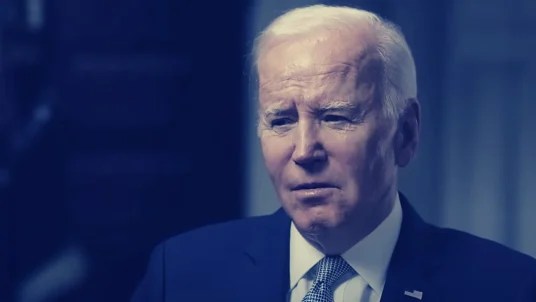
Republican senators are pushing back against an accord that would give the World Health Organization (WHO) power over member states if it declares a pandemic. The accord, which is legally binding on all member states, will be finalized in Switzerland this week.
The accord will give the WHO power to declare pandemics and require member states to give the WHO the “central role” as “the directing and coordinating authority on international health work” in areas like medical supply chains, treatments and lockdowns. However, the WHO also wants more power over surveillance and controlling “disinformation and fake news” when a pandemic is declared.
17 senators, led by Wisconsin’s Ron Johnson, have introduced the “No WHO Pandemic Preparedness Treaty Without Senate Approval Act.” The bill states that the accord should be called a treaty. As a treaty, it would require approval by two-thirds of the Senate.
We obtained a copy of the bill for you here.
“The WHO, along with our federal health agencies, failed miserably in their response to COVID-19,” Sen. Johnson stated. “This failure should not be rewarded with a new international treaty that would increase the WHO’s power at the expense of American sovereignty.”
However, some legal experts believe the legislation will not stop President Joe Biden from signing the accord as the accord was drafted to bypass Senate approval.
UN says that censoring “disinformation” and “hate speech” will protect “free speech”

By Didi Rankovic | Reclaim The Net | February 23, 2023
The UN is openly embracing the agenda of mobilizing to fight against perceived online hate speech and disinformation. The latest was to organize an event called, Internet for Trust.
The unelected and well-funded organization whose purpose primarily is to facilitate conflict resolution in the real world and provide peacekeeping and humanitarian assistance in war-torn areas, is now increasingly following in the footsteps of other unelected, though less formal elite groups, like the WEF.
Now, we have announcements from one of its agencies, UNESCO – that is supposed to promote world peace and security through international education, arts and sciences cooperation, and protection of world heritage in forms of monuments, etc. – crafting its very own “guidelines” to regulate “hate speech” and “misinformation.”
According to an announcement, UNESCO has found a way to explain how (but not when or why) it started to believe it should have this power to regulate online communications by citing its mandate to promote free circulation of ideas through words and images.
“The internet and social media offer many advantages in the world today. But as we know and we have just heard, individuals are increasingly using it for disinformation. And the reality is they also propagate hate speech.
UNESCO’s global mandate includes the promotion of the free circulation of ideas through words and images. UNESCO has therefore decided to develop, through multistakeholder consultations, principles for regulation of digital platforms guidelines whose aim is to support the development and implementation of regulation procedures to guarantee freedom of expression and access to information while managing illegal contents and any contents that can be so harmful to democracy and respect for human rights.
And instead of doing just that – the agency stopping the free circulation of often arbitrarily selected (and sometimes contrary to national law) “unwanted” information, and regulating that, is apparently the way to go.”
The Regulation of Digital Platforms guidelines, which UNESCO is developing does pay what looks like unavoidable lip service to freedom of expression and access to information – but the main goal is to “manage” what the UN deems “illegal contents and any contents that can be so harmful to democracy and respect for human rights.”
That’s a handily broad definition to cover a lot of things – whether truly harmful or not – and the whole idea is sure to make quite a few free speech proponents unhappy.
But those behind it are positively giddy to be work on guidelines to “support the development and implementation of regulation procedures” aimed at “guaranteeing” access to information, and freedom of expression, but primarily, really, to “manage” whatever is labeled as illegal, any content that somebody decides could harm democracy and human rights.
In announcing the Internet for Trust conference, UNESCO mentioned looking for ways to combat hate speech, misogyny, doxxing and conspiracy theories, and even, with a straight face, suppression of free speech.
UNESCO Director-General Audrey Azoulay said that regulation was necessary online:
“The blurring of boundaries between true and false, the highly-organized denial of scientific facts, the amplification of disinformation and conspiracies – these did not originate on social networks,” the UNESCO head said. “But, in the absence of regulation, they flourish there much better than the truth.
“Only by taking the full measure of this technological revolution can we ensure it does not sacrifice human rights, freedom of expression and democracy. For information to remain a common good, we must reflect and act now, together,” she said.
TSA Still Molesting at Warp Speed
By Jim Bovard | The Libertarian Institute | February 23, 2023
I traveled to Hartford, Connecticut last week for a conference. It was the first time since the start of the pandemic that I had the pleasure of being pawed by TSA agents. Alas, since 2020, neither I nor the Transportation Security Administration have become corrigible.
Flying out of Washington National Airport on Thursday, I saw a special entry for the CLEAR program that enables people who pay $189 a year to skip TSA lines. I lambasted this program here back in December. Travelers stand in photo kiosks that compare their face with a federal database of photos from passport applications, drivers’ licenses ,and other sources. TSA promises that its new airport regime will respect Americans’ privacy. Fat chance: TSA previously promised no traveler would be delayed more than 10 minutes at TSA checkpoints.
I stood and watched semi-frazzled travelers enter a roped-off expanse to get TSA approval for their visage.
A skinny young woman with a CLEAR t-shirt and a clipboard was standing guard at the entrance of the biometric site. She looked like a cherub with long straight red hair and a welcoming smile. Who could suspect that, as The Washington Post warned, the new system could be “America’s biggest step yet to normalize treating our faces as data that can be stored, tracked and, inevitably, stolen”?
“How soon will they be making the biometric checks mandatory?” I asked her.
“I don’t know anything about that,” she replied, as if I’d asked about the surface temperature of the planet Venus.
“Do people ever complain about having to do the biometric checks?
“No, this is voluntary,” she replied with a smile wider than a Kamala Harris grimace.
She was a good Washingtonian: she could never imagine any federal agency flogging hell out of the Constitution. I considered peppering her with another half dozen questions but wanted to keep my sarcasm fresh for dealing with TSA agents. My hunch was that the redheaded cherub was not a regular reader of the Libertarian Institute.
I finished guzzling my morning coffee I fetched from home and tossed the used Gatorade bottle into the giant trash barrel at the entrance to the TSA queue. The previous time I went through a TSA checkpoint at National Airport, TSA agents got riled up because I forgot to take off my belt. That spurred an enhanced patdown, a verbal brawl, and an article I wrote that the Minneapolis Star Tribune headlined, “The World’s Most Incompetent Agency.”
Seeking to avoid another kerfuffle, I sought to comply with the TSA checkpoint regimen.
I took off my boots and belt and took all the metal clutter out of my pockets.
I passed through and—beep—another alarm. WTF?
A TSA agent pointed to the giant video screen on the controlled side of the checkpoint, revealing a bright yellow splotch that proved that my derriere failed federal inspection.
“That’s my wallet,” I said.
“You aren’t allowed to have that in the scanner. We have to do a patdown.”
So I’m supposed to abandon my wallet to rascals notorious for robbing travelers? More than 500 TSA agents have been fired for stealing laptops, cell phones, and other property at checkpoints and in luggage screening.
Another TSA agent shuffled up to find my terrorist contraband. This dude was in his 20s but he looked weary before his time. He explained that he would perform a supplemental enhanced patdown on my backside.
“Are you going to jam my groin?” I growled.
“No, we’re not going to do that.”
“Yeah, OK, whatever.”
He proceeded to run his hands and his TSA Terrorist Catcher Magic Wand over my thighs and butt. I refrained from muttering that he got further than I usually did on first dates long ago. He then checked the inside of my thighs and signaled I could leave. I kept my profanity in reserve for the return flight.
Coming back through Hartford on Sunday afternoon, I was chagrined to see a long line of docile folks waiting to receive TSA blessings. I entered the queue and a scrawny, 70ish guy with his right arm in a sling came in behind me. He was struggling with his carry-on bag so I guessed his arm injury was recent.
He groused that he had paid for TSA Pre-Check but they hadn’t allowed him to use it that day. TSA Pre-Check customers usually avoid Whole Body Scanners—another reminder that the entire system is a charade.
“Where are you going?” he asked.
“I’m going to Washington but I don’t work for the feds.”
“Good,” he replied. He said he was going to Fort Lauderdale and I said that was a helluva friendlier place than D.C.
Over the years, I enjoy drawing out folks to see if they recognize TSA’s “security theater.” This guy got it.
I mentioned that I might have problems today at the checkpoint because TSA hates me.
“Why do they hate you?” he asked.
“Because I have flogged them in print for 20 years. Their scanners fail to catch mock bombs and weapons in 95% of the tests by undercover agents. Their explosive detection tests are so harebrained that they are triggered by hand sanitizer. The TSA chief denounced me for maligning and disparaging TSA employees.”
He smiled.
“But I don’t know why they would ever suspect me because I was a Boy Scout.”
He laughed and said he’d been a Scout as well. “But your hat makes you suspicious,” he added.
It was a bulky brown hat I’d recently picked up in Tennessee. I didn’t realize till afterwards that it was the “Bootlegger” design. I said that if I was flying out of North Carolina, my hat would fit right in. But here in Connecticut, I was screwed.
As we got near the checkpoint, I tugged off my belt and began unlacing my heavy boots. “You can go ahead of me—this will take awhile,” I told the elderly gentleman.
“No, no—you go first,” he insisted. He absolutely, positively did not want to go just before me.
As I stood waiting my cameo in the Whole Body Scanner, I heard him explain to a TSA agent that he had metal knee and hip replacements. They signaled for him to step through a side gate next to the scanner.
I ambled into the screener radiating as much disdain as I could muster on a Sunday afternoon. A TSA agent barked that my feet were in the wrong place; I had to make sure I put my socks in the cut-out drawing. Yeah, yeah…
“Hold your arms up higher,” she ordered.
That woman sounded as dumb as my high school gym teacher.
She signaled me to exit and then another agent came up with a TSA magic wand and signaled that I must halt.
“We have to check you,” a tall, spindly young guy announced.
“What was the problem?” I growled.
“The scanner alerted for something around your shoulders and upper arms.”
I have been working on my bench press lately but I didn’t think the results were that impressive.
He waved the wand and found nothing and signaled I could move along.
“What might have triggered the alert?” I asked.
“I dunno. It could have been the heavy shirt.”
Maybe they thought the wool in my shirt came from sheep that were raised by Al Qaeda in Yemen?
As I tracked down my carry-on bag and boots on the carousel, I saw a TSA agent barking orders to the old guy with the arm in a sling.
“Do you want the supplemental screening to take place here or in a private room?” the TSA agent with a vapid visage badgered him.
I was tempted to shout: don’t go in the private room! But the guy had good instincts and said on his own that he wanted the patdown in public. At least it would be videotaped if the process went to hell in a handbasket.
The agent kept going up and down the old guy with the wand, poking and prodding and repeatedly ordering him to change his posture. The man looked humiliated at being treated like a terrorist suspect in front of so many bystanders. I don’t have that reaction to extra patdowns because I don’t give a damn for the opinions of TSA agents or anyone who happily submits to their boneheaded antics. But I could tell from the expression on the guy’s face that he was shocked.
He was finally released from TSA custody and shuffled with his shoes and belts to a nearby bench. As he was putting himself back together, I came up to offer condolences.
“I think it was the sling—that’s why they targeted me,” he said.
“They could have easily checked if you had a bomb or a gun in the sling without groping you all over but they didn’t do that,” I scoffed.
He put his head down and wished me a good trip.
“As a fellow American, I’m sorry how they treated you.”
My comment seemed to stun him. But more than twenty years after 9/11, TSA has no right to continue treating Americans like convicts waiting to enter a prison shower. TSA has taken menstruating women to private rooms to force them to lower their pants to prove they are bleeding—an abuse that has spurred multiple federal lawsuits. TSA effectively claims that Americans have no constitutional rights because they “voluntarily” submit to searches for permission to fly. That legal hogwash entitles them to endlessly harass hapless citizens.
Despite squeezing millions of butts and boobs, TSA has never caught a real terrorist. TSA should be abolished and replaced by the type of private security companies that protect European and Canadian fliers without endless BS from officialdom.
Jim Bovard is the author of Public Policy Hooligan (2012), Attention Deficit Democracy (2006), Lost Rights: The Destruction of American Liberty (1994), and 7 other books.
Google Expands Campaign to ‘Inoculate’ People Against ‘Misinformation,’ But Critics Say It’s All About Money
By Suzanne Burdick, Ph.D. | The Defender | February 22, 2023
Google said last week it plans to expand into Germany its campaign to “inoculate” people against misinformation — as if it were a virus — after seeing “promising results” in Eastern Europe.
The campaign is based on an approach called “prebunking” designed to teach people how to spot false claims before encountering them, thereby “inoculating” them against the “disease” of misinformation “like a vaccine does” against a physical disease, Euronews reported.
The tech giant will release a series of short videos that highlight techniques — such as fear-mongering, scapegoating, false comparisons, exaggeration and missing context — that are commonly used to promote misleading claims.
The videos dissect these different techniques so viewers can more readily recognize them when consuming media.
Proponents of the campaign say it’s an “efficient way to address misinformation at scale.”
But some critics allege Google’s campaign is selectively targeting information related to corporate and government interests and is motivated by money rather than a sincere desire to protect readers from false information.
“They [Google’s leaders] want Google to be what they see as a safe place for advertisers,” said Clayton Morris, a former Fox News anchor who co-hosts the online news show “Redacted.”
Videos to run as ads on Facebook, YouTube, TikTok
Google’s “prebunking” videos will run as advertisements on Facebook, YouTube or TikTok in Germany. A similar campaign in India is also in the works, the AP reported.
Last fall, Google ran a test video campaign in Poland, the Czech Republic and Slovakia.
The campaign focused on inoculating viewers against “false claims about Ukrainian refugees” and showed techniques commonly used to support such claims, such as alarming or unfounded stories about refugees committing crimes or taking jobs away from residents.
The AP did not report the specific statements regarding Ukrainian refugees that Google deemed as false.
The videos were viewed 38 million times on Facebook, TikTok, YouTube and Twitter.
Researchers said people who viewed the videos were more likely to be able to identify misinformation techniques and less likely to spread false claims than people who hadn’t watched the video.
‘You can think of misinformation as a virus’
Alex Mahadevan, director of MediaWise, a media literacy initiative of the Poynter Institute, told the AP that the strategy was a “pretty efficient way to address misinformation at scale, because you can reach a lot of people while at the same time address a wide range of misinformation.”
In November 2022, Google and YouTube gave the Poynter Institute $13.5 million to strengthen its fact-checking efforts with $12 million earmarked to create a Global Fact Check Fund.
“You can think of misinformation as a virus,” Sander van der Linden, Ph.D., professor of social psychology in society at the University of Cambridge, told the AP. “It spreads. It lingers. It can make people act in certain ways.”
It also sometimes needs a periodic “booster,” according to the AP, because the effects of the videos eventually wear off.
Van der Linden assisted Google in developing its prebunking campaign and is presently advising Meta, which owns Facebook and Instagram, the AP said.
Google announced its expanded campaign just before the Feb. 17 start of the Munich Security Conference.
According to the AP, the timing of the announcement reflected the heightened concerns of government officials and tech companies regarding the impact of misinformation.
“There’s a real appetite for solutions,” Beth Goldberg, head of research and development at Jigsaw, a unit of Google that “explores threats to open societies,” told the AP. “Using ads as a vehicle to counter a disinformation technique is pretty novel. And we’re excited about the results.”
Google has not announced plans to expand its campaign to the U.S., so it remains unknown if and when the California-based company will apply its misinformation prebunking tactics on its home turf.
‘Prebunking’ campaign more about promoting ‘corporate and government interests,’ say critics
Commenting on Google’s latest announcement, “Redacted” co-host Natali Morris said, “It’s clear the corporate idea of disinformation is really only related to corporate and government interests — not at all to human interest.”
The topics addressed by Google’s misinformation campaign, such as COVID-19 and climate change, are topics “that will either give governments or corporations more power,” Natali said.
Meanwhile, other topics of human interest — such as child trafficking — remain untouched by Google, she said.
Clayton Morris, who co-hosts “Redacted” with his wife Natali, said he believed Google’s efforts to fight misinformation are motivated by money.
For example, Clayton said, companies like Pfizer and Moderna spend billions of dollars in advertising and Google wants to be an “advertiser-friendly environment” so it “pushes down” information and opinions that criticize the companies’ pharmaceutical products.
“Imagine if Pfizer execs are sitting there and they’re thinking about where to put their ad dollars and they start seeing Google search results that are like Pfizer this, Pfizer that … that’s why they [Google] downrank all of this stuff to push that stuff away and they continue to make their good ad revenue,” he said.
Now the pharmaceutical companies don’t even have to produce ads anymore because Google is essentially doing it for them, Natali added.
“Imagine what a prebunking video would look like around a COVID vaccine,” she said.
Suzanne Burdick, Ph.D., is a reporter and researcher for The Defender based in Fairfield, Iowa. She holds a Ph.D. in Communication Studies from the University of Texas at Austin (2021), and a master’s degree in communication and leadership from Gonzaga University (2015). Her scholarship has been published in Health Communication. She has taught at various academic institutions in the United States and is fluent in Spanish.
This article was originally published by The Defender — Children’s Health Defense’s News & Views Website under Creative Commons license CC BY-NC-ND 4.0. Please consider subscribing to The Defender or donating to Children’s Health Defense.
‘Hypocritical hysteria’: Ex-UK MP says targeted for Palestine advocacy on Press TV
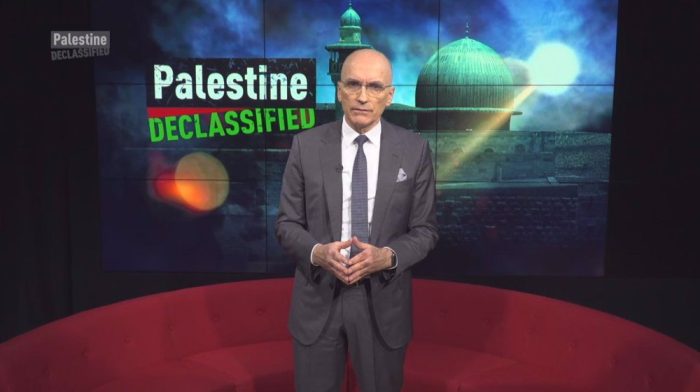
Former Labour MP Chris Williamson has been hosting Press TV’s weekly show, Palestine Declassified, since March 2022.
By Syed Zafar Mehdi | Press TV | February 23, 2023
A former UK Labour Party MP, Chris Williamson, was on Tuesday stripped of his parliamentary pass until further notice by a committee of lawmakers in what he described as “confected controversy.”
The 66-year-old seasoned British politician and human rights campaigner, who served as the MP for Derby North from 2010 to 2015 and again between 2017 and 2019, had since July 2020 been in possession of one of more than 300 security passes given to former parliamentarians.
The pass was revoked over what the committee termed his “unacceptable” role as a co-host of the weekly show ‘Palestine Declassified’ on Press TV, Iran’s premier international news network.
“The Administration Committee met yesterday and decided to suspend your parliamentary pass until further notice,” the committee chair and conservative MP Charles Walker wrote to Williamson in a comminque.
“The Committee considered that your continued presence on Press TV, a broadcaster that has been banned in the UK and multiple other countries, is unacceptable and risks bringing Parliament into disrepute.”
Speaking to the Press TV Website, Williamson said he “wasn’t surprised” by the arbitrary decision, noting that the political class in the UK has been “gripped by a kind of hypocritical hysteria”.
“The grounds for the arbitrary cancellation of my pass are absurd. They claim that my presence on Press TV ‘risks bringing parliament into disrepute’,” asserted Williamson, one of the closest allies of former Labour leader Jeremy Corbyn and author of ‘Ten Years Hard Labour’.
“But it’s their attack on free speech that is bringing parliament into disrepute, not the fact that I present a weekly programme on Press TV about Palestine’s struggle for freedom.”
The former British shadow minister who has previously been falsely accused of ‘anti-Semitism” said he never used his parliamentary pass since leaving the job in 2019 and was being targeted for championing the Palestinian cause and “exposing the brutal Israeli apartheid regime”.
He hastened to add that he intends to “write back” to Charles Walker and ask the committee to “think again in view of the absurdity and inconsistency of their position”.
A staunch socialist, trade unionist and anti-imperialist, Williamson has been co-hosting the ‘Palestine Declassified’ show on Press TV since March 2022 with David Miller, a former Bristol University professor who was sacked in October 2021 for his views on Israeli apartheid.
The popular show highlights with cutting-edge research and analysis the Israeli regime’s unbridled aggression in the occupied Palestinian territories and seeks to build global solidarity for the Palestinian cause. To a great extent, it has been successful in that goal.
Pertinently, Press TV was taken off air in the UK in January 2012 by media regulator Ofcom, which accused the network of “breaching broadcasting license rules” with its “editorial content”.
The network, in a statement at the time, called the decision “a clear example of censorship”.
“It is precisely because I host a programme about Palestine that’s broadcasted by Press TV, and because I have criticized the (British) government’s support for NATO’s proxy war in Ukraine,” Williamson told the Press TV Website, commenting on his parliamentary pass being stripped.
“MPs have used these two facts as a pretext for spurious complaints, suggesting that I therefore pose some sort of security risk. It is utterly absurd and frankly insulting”.
He decried the smear campaign and attacks against Press TV, saying it was “off the scale”.
“The hypocrisy over the treatment of Press TV is off the scale. But it indicates that the ruling class is insecure in their position, so we should take heart from that and keep going.”
The former MP also called out the “disturbing scale of censorship” in British society, saying the ability to speak out against the prevailing establishment narrative is “strictly restricted”.
“Little to no platform is provided by the corporate media to articulate a contrary viewpoint, and even access to social media is being restricted,” he told the Press TV Website.
“Academics have lost their careers for speaking out against the evils of Zionism for example, and anyone calling for a diplomatic solution is dismissed as a ‘Putin apologist’.”
Williamson further noted that the Zionist lobby and acolytes of the NATO military alliance in the British parliament exert an “entirely disproportionate influence”.
“The British political class only represent the interests of powerful lobbies, rather than the wellbeing of the communities they are elected to serve, and on whose votes they rely for their privileged positions,” he said, pointing to the gap between the rulers and the subjects.
A strong anti-war and anti-racism voice who has resolutely opposed the war in Ukraine – which completes one year this week – Williamson said the Nazi influence in Ukraine is “well-documented” while calling the embattled Ukrainian President Volodymyr Zelensky “NATO’s useful idiot”.
“The ultimate ambition of the war hawks in the US is to weaken and ultimately balkanize Russia, and then pivot against China,” Williamson asserted, adding that the European governments are “allowing themselves to be used to help the US retain its dominant position in the unipolar world”.
“The US Defense Department openly commissions a report by the Rand Corporation on ways to achieve their goal against Russia. Furthermore, prominent figures in the Atlantic Council, NATO’s de-facto think tank, were setting out the strategic case for risking war with Russia in Ukraine before the present military conflict began,” he said, pinning the blame on the US-led NATO military alliance for the simmering crisis in Ukraine.
Meanwhile, the staunch advocate for the Palestinian cause vowed to continue his advocacy work for the weak and vulnerable irrespective of whether he holds the parliamentary pass or not.
“Whatever dirty tricks they deploy against me, these political lackeys of the war machine and parliamentary servants of Israel’s brutal apartheid regime, they will never stop me campaigning for peace and supporting the liberation of Palestine,” Williamson asserted.
He also invoked the 20th-century Nobel Prize-winning Chilean poet, Pablo Neruda, that these out-of-touch politicians “can cut all the flowers but cannot keep spring from coming”.
“And I believe the day is coming when Palestine will be free from the river to the sea.”
Syed Zafar Mehdi is a Tehran-based journalist, political commentator and author. He has reported for more than 13 years from India, Afghanistan, Pakistan, Kashmir and West Asia for leading publications worldwide.
Tony Blair launches new push for biometric digital ID for all citizens
By Ken Macon | Reclaim The Net | February 22, 2023
Former UK Prime Minister Tony Blair is again promoting a controversial plan to give every British citizen a digital ID. This would entail the utilization of new biometric technology to store a person’s passport, driving license, tax records, qualifications, and their right to work status.
Sir Tony had previously attempted to introduce ID cards during his time as Prime Minister.
Tony Blair and former Conservative lawmaker William Hague have stated that a major transformation of the government with regards to technology is necessary in order to keep up with the ever-changing world.
However, there was backlash from their demands with Sir Jake Berry calling it a “creepy state plan to track you from the cradle to the grave.”
Blair and Hague revealed their plot in an article for The Times, in which they said “politics must change radically because the world is changing radically.
“We are living through a 21st-century technology revolution as huge in its implications as the 19th-century industrial revolution.”
The duo alleged that current politicians were “in danger of conducting a 20th-century fight at the margins of tax and spending policy when the issue is how we harness this new revolution to reimagine the state and public services.”
The duo demand digital IDs for every citizen – they also called for “a national health infrastructure that uses data to improve care and keep costs down, and sovereign AI systems backed by supercomputing capabilities.”
In an interview with BBC Radio 4 Blair highlighted how countries “as small as Estonia and as large as India’ are moving towards digital IDs.
“If you look at the biometric technology that allows you to do digital ID today, it can overcome many of these problems,’ Blair said.
Big Brother Watch condemned Blair for pushing for a digital identity system.
Big Brother Watch director Silkie Carlo said: “Sir Tony and Lord Hague are absolutely right about the need for the UK to take leadership in technological innovation, but this means protecting people’s rights and privacy, not reviving failed proposals for an intrusive mass digital identity system and a database state.”
Carlo added: “A sprawling digital identity system of the type described by Sir Tony and Lord Hague is utterly retrograde and would be one of the biggest assaults on privacy ever seen in the UK. The public has consistently opposed mandatory ID systems and there is absolutely nothing to suggest the public would want or support such a digital ID system now.”
Blair recently called for global organizations such as the World Trade Organization (WTO) and World Economic Forum (WEF) to push national governments to introduce “digital infrastructure” that monitors who has been vaccinated and who hasn’t.
Ex-minister charged for revealing state secrets
RT | February 22, 2023
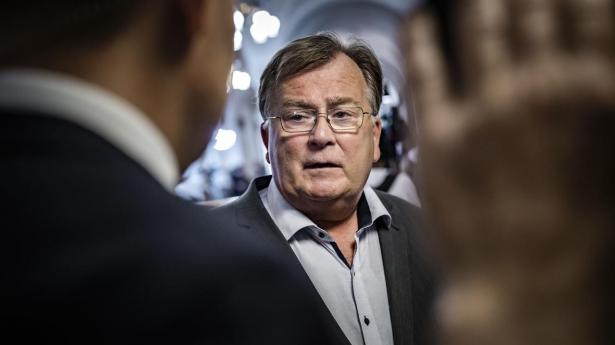
Denmark’s former Defense Minister Claus Hjort Frederiksen has been charged with divulging state secrets, after claiming Danish military intelligence worked with the US National Security Agency (NSA) to spy on a number of foreign officials, among them ex-German Chancellor Angela Merkel.
Frederiksen confirmed the charges in a Facebook post on Tuesday, saying he had been indicted for the “disclosure or passing on of state secrets.” He insisted on his innocence, however, claiming the allegations are motivated by politics
“I deny having exceeded the limits of my far-reaching freedom of speech as a politician, and I have not revealed alleged state secrets. Period,” he said, adding “I will demand a jury trial, as this is a political case.”
Danish officials declined to cite Frederiksen by name in discussing the charges, with prosecutor Jakob Berger Nielsen saying the case “includes highly classified information that cannot be presented openly.”
While the details of the state secrets indictment remain under wraps, after facing preliminary charges last year Frederiksen suggested the case was linked to public comments he made regarding joint surveillance missions involving Denmark’s Defense Intelligence Service and the NSA. In multiple media interviews in 2020 and 2021, Frederiksen said the Danish agency helped the NSA eavesdrop on high-level officials in France, Germany, Norway and Sweden – including Germany’s then-Chancellor Angela Merkel and several of her political rivals.
Though the NSA’s part in the spying was revealed by whistleblower Edward Snowden – who leaked a massive trove of classified documents while working as a private contractor in 2013 – Denmark’s role only came to light in subsequent media reports, which cited a confidential Danish intelligence review carried out following the Snowden revelations.
Frederiksen served as defense minister between 2016 and 2019 and later entered politics under Denmark’s Liberal Party. He retired from public life last year, however, meaning his parliamentary immunity has lapsed and he can now be prosecuted.
No trial date has been set for the former official, who faces up to 12 years in prison if convicted.
UK government funded unit that created demonetization blacklist of news publishers
By Cindy Harper | Reclaim The Net | February 21, 2023
The UK’s Foreign, Commonwealth, and Development Office is funding London-based think tank the Global Disinformation Index (GDI), which creates a blacklist of websites it thinks advertisers should avoid that are mostly right-of-center news websites.
GDI states that its objective is to “disrupt their advertising-funded business models by encouraging brands, suppliers and ad tech vendors to blocklist them.”
The GDI is also funded by the US State Department.
Recently, the think tank published a list of 10 “least risky” and “riskiest” news websites in the US. The New York Times, Washington Post, BuzzFeed News, and AP News were among the list of “least risky.” Among the 10 “riskiest” websites were the New York Post, Newsmax, the American Spectator, and The Federalist.
GDI also wants anything that challenges scientific consensus on vaccines and climate change to be blocked. For instance it is disinformation to describe the COVID-19 vaccines as “experimental.”
The GDI is on a mission to “defund online sources of disinformation.”
ADL report advocates for deplatforming at website infrastructure level
By Cindy Harper | Reclaim The Net | February 20, 2023
A new report by the Anti-Defamation League (ADL) said pressuring online platforms and other internet services to remove those it deems to be far-right extremists is effective in limiting their reach. The report was authored by the ADL’s Center for Technology and Society Belfer fellow Megan Squire.
In preparing the report, Squire analyzed four deplatformed websites, including forum website The Donald, website The Daily Stormer, forum 8chan, and political commentator Nick Fuentes.
Squire compared the individuals and sites’ popularity before and after they were deplatformed, saying the objective is limiting the spread of hateful ideology, not cutting traffic. And according to Squire, deplatforming is an effective way of achieving that goal.
“Deplatforming websites—removing infrastructure services they need to operate such as website hosting—can reduce the spread and reach of extremism and hate online,” she wrote.
Deplatforming also financially affects content creators in other ways. For instance, Fuentes was removed from YouTube and forced to incur the cost of hosting his content on his website. On YouTube, he hosted the content for free and was able to monetize the content. Currently, “he has to run all of that infrastructure himself. He has to find the developers, he has to maintain the website, he has to pay for all that bandwidth,” Squire said.
However, the content creators in Squire’s report have survived even after deplatforming. Others have disappeared.
Squire notes that while deplatforming “works,” the creators of these websites and platforms often “bounce back because there is someone out there that will replatform them.”
Cloudflare, an internet infrastructure and security company, last year acknowledged in its Q3 2022 filing with the Securities and Exchange Commission that its departure from its neutral position, including the recent blocking of the Kiwi Farms online forum, has resulted in significant negative feedback and a loss of potential customers.
The company has recognized that taking actions against its customers, including banning them from using its products, may cause harm to its brand and reputation. Publicly traded companies such as Cloudflare are obligated to file quarterly reports, which include a section on risk factors.
Featured Video

Trita Parsi: Middle East Unraveling — Are We on the Path to World War?
or go to
Aletho News Archives – Video-Images
New Book
Trans agenda is ‘normalization of sadism’ – US author

RT | September 23, 2026
The US Democratic Party has embraced a transgender agenda that amounts to “the normalization of sadism,” author A.J. Rice has said, warning that radical trans policies would return if the party is allowed to regain power.
Speaking to RT’s America First host Scotty Nell Hughes about his new book, ‘The Curse of the Bearded Lady: How the Trans Mafia Whacked American Sanity’, Rice argued that activists have gained significant influence in schools, medicine, and corporate America while people who questioned the agenda have faced pressure to stay silent.
The author described the “trans mafia” as the sprawling network of people and institutions that have helped the movement gain influence. He singled out parts of academia, wealthy backers, and corporations, and stated that providers of transition-related treatment also have a financial incentive to keep young people in their care indefinitely.
Rice argued that the consequences of these policies ultimately fall on children who are being drawn toward gender-affirming medical treatments and on girls who are expected to share locker rooms or compete in sports with biological males.
He noted that while voters rejected the Democrats’ approach to gender in 2024, the party, which has been “captured by madness,” has since only doubled down and is seeking what is effectively “the normalization of sadism.” … Full report
Blog Roll
 Aletho News
- Israeli election committee bars candidate from Knesset race over Gaza war opposition
- French-Lebanese man files war crimes complaint over Israeli attacks
- Mahan Air Flight Lands in China Despite US Threat against Iranian Airlines
- US eyes $10bn fund to rebuild war-battered Gulf infrastructure
- Trump meets Rodríguez near Maduro’s prison as Venezuela’s oil flows to US
- Trita Parsi: Middle East Unraveling — Are We on the Path to World War?
- Iran FM meets with US envoy on UN meeting’s sidelines at American side’s insistence: Report
- Qatar PM calls for Gulf security framework with Iran, says war must be ‘wake-up call’
- China condemns US extortion of Iranian airlines, rejects Washington’s ‘illegal’ sanctions threats
- Italy to move military personnel from Taif base after missile strike
- If Americans Knew
- Winter could turn Gaza’s treacherous, war-damaged buildings into deathtraps
- Majority of Democratic Voters Want to Prosecute Both Biden and Trump Administration Officials Over Gaza
- As Gaza languishes, world leaders gather at the UN – Daily Update
- Sanctions are collective punishment: immoral and self-defeating
- Phosphorus Munitions Fired by Israel Burn Groves, Orchards in Southern Lebanon
- Israel Carries Out New Ceasefire Violations Across Gaza
- AI – Emphasis on the ‘I’: Israel Is Funding AI Chatbot Propaganda
- Israel Blocking Hundreds of Wheelchairs for Injured Children From Entering Gaza
- Israel Is Expanding and Upgrading Compounds for Palestinian Militias in Gaza
- The Palestinian-American Residents of This West Bank Town Are Wondering: Where Is Trump?
- No Tricks Zone
- New Study: Earth And Venus Surface Warmth Largely Explained By Convection And Lapse Rate, Not CO2 Or Radiation
- 2025 Nature Paper Claiming Worsening Global Drought Gets RETRACTED …Heavily Flawed
- New Study: ‘Global Drought Shows No Detectable Recent Acceleration Under Climate Warming’
- Economic Masterminds: German Socialists Suggest Taxing Productivity Gains Stemming From Using AI
- The South China Sea Has Not Been Cooperating With The Climate Change Narrative
- Energy Crisis: Germany Enters Heating Season With Historically Low Gas Reserve Fill Levels
- New Study: The Antarctic Ice Sheet Gained Mass From 2020-2024 Due To Staggering Snow And Ice Accumulation
- Study: Ocean Heating Rates From Thousands Of Years Ago ‘Dwarf’ Modern Ocean Heating Rates
- Climate Extremists Target, Attack Large-Scale Power Grid Infrastructure In Germany!
- New Study: Antarctic Ice Melt Has Contributed Less Than 1 Centimeter To Sea Level Rise In The Last 30 Years

