I understand ‘The Most Important Thing’ for our rulers …
But, going forward, what’s the most important thing for ‘We the People?’
By Bill Rice, Jr. | January 1, 2023
Author’s note: The start of a new year is perhaps a good time to reflect on lessons gleaned from almost three years of observing our surreal Covid New Normal. In this meditation, I try to identify the bigger themes and the many scandals still concealed. I think I now understand how vast conspiracies and cover-ups could occur … and what thinking will have to change if a country that is listing seriously is going to right itself.
***
In my writings on Covid topics, I’ve begun to filter my thoughts and theories through one question: What was “the most important thing” to officials?
The answer to this question seems almost undeniable: Officials and key allies in the Establishment wanted as many people as possible to receive the Covid “vaccines” (and now “boosters”).
While mass vaccination was the paramount goal, rolling out “vaccine passports” and, perhaps even more important, digital control of the population are also key components of the unfinished agendas of society’s real rulers in my opinion.
That is, everything that’s occurred in the last three years was done to promote these overriding goals/objectives. Promoting (non-sensical) mass fear was of course a prerequisite for achieving the goal of mass compliance.
Any evidence that might debunk any of the false Covid narratives – and reduce the level of public fear – had to be concealed to advance the vaccination objective, but also to keep the conspirators from one day being tried for perpetrating “crimes against humanity.”
Thus, I also believe “self-protection” quickly became another overriding goal of those most responsible for producing the tragic outcomes of the last three years.
Another way to express my hypothesis is that certain officials engaged in on-going disinformation campaigns, all of which sought to achieve these two goals.
If most Americans ever realized all of the important “disinformation” was spread by officials, transformational change might be possible.
If more Americans belatedly realized it was the skeptics who were right all along, the future might be a better place. More Americans might realize that holding officials with great power accountable, and challenging false narratives, are actually vital civic duties.
It’s possible that one day the public will learn the scores of mechanisms officials used to conceal their crimes and lies.
For the last few years, I’ve tried to produce journalism that might be of use to future historians. For example, I’m currently finishing an article that will list approximately 20 ways that evidence of “early spread” has been concealed.
I’m sure many independent journalists could write articles listing at least 20 ways that vaccine injuries have been concealed. Still another journalist could compile a list just as long that shows how iatrogenic deaths have been concealed, or lockdowns and masks were unnecessary, or how Covid statistics were manipulated.
The fact so many Covid topics could provide so many examples of cover-ups and shocking scandals should be telling the American public something significant, lessons that should disturb any person who still cares about the truth.
Nothing that happened would have been possible
if the Fourth Estate had not been captured
It’s also significant that the views of skeptics have been ignored by the mainstream press and public health officials. This suggests censorship and “cancellation” are vital tools to protect false narratives.
As almost all “journalists” at mainstream press organizations refuse to seriously investigate evidence that might debunk any false narrative, this suggests the Fourth Estate has been captured or recruited by the organizations seeking to advance nefarious agendas.
Indeed, I’d argue this represents perhaps the most sinister development in the history of our nation. If “science,” every agency and branch of government and “watchdog journalism” are now all captured, no important truths (or scandals) are likely to ever be exposed.
Some critics might argue I am positing a massive (and thus implausible) conspiracy or cover-up.
In one sense, I guess I am. My future article will argue that officials pursued at least 20 different “projects” just to conceal evidence of early spread. This does suggest a wide-spread conspiracy.
However, I think most officials or employees who played a part in concealing evidence of early spread probably had no idea they were engaging in a wider conspiracy.
The same belief would apply to all the Covid conspiracies and cover-ups. Most of the people involved were simply following orders.
I’ve also come to believe that the “most important thing” for people in bureaucratic organizations is to NOT create waves, to not be considered mavericks or contrarians, to not challenge any politically-correct or “authorized” narratives.
In layman’s terms, people working below the apex of the organizational pyramids intuitively pick up on the authorized narrative and are able to quickly identify which way the proverbial wind is blowing.
My theory posits that a relatively few “masterminds” of any conspiracy – the few people really “in the know” – exploited this knowledge to procure the support of subordinate workers “in the field.”
This, I believe, explains how widespread conspiracies or cover-ups are easier to achieve than one might imagine was possible.
The people who could blow the whistle are not likely to do so. Also, those who might refuse to “go along” are quickly removed from positions of influence.
In other words, while I believe numerous tactics were employed to cover-up evidence of early spread, it probably wasn’t that difficult for the key “conspirators” to make sure their objectives were achieved.
If the effort to conceal evidence of vaccine injuries necessarily entails the participation of vast numbers of people (which it obviously has), achieving this level of participation was also far easier to achieve than one might have thought possible … for the same reasons.
The cover-up is always bigger than the original crime
I also believe cover-ups almost always require the participation of far more actors than the original crimes.
In this conspiracy, the overriding goal was to get everyone vaccinated. However, it must have quickly become apparent to numerous officials inside the U.S. government that “rogue actors” in the government played at least some role in creating this virus.
If this was proven and then revealed, U.S. “national security” might be jeopardized. At best, the international image and reputation of the U.S. government would suffer immense harm.
The liability issues and reparation movements that might emerge infer economic damages mind-blowing to fathom.
Domestically, citizen trust in our trusted public officials might be irreparably damaged.
Given the above possibilities, it does not seem farfetched to suggest that every important official of every important agency in the U.S. government might now possess a strong motive to cover-up Covid facts that, if revealed, could produce seismic repercussions.
In short, the truth – ever revealed – would jeopardize the standing, reputation, influence (and government funding) of practically every important organization in the world.
As it’s almost impossible to identify an important organization that did not enthusiastically support lockdowns, draconian “mitigation” mandates and vaccination agendas, the number of organizations with a strong incentive to conceal the truth is virtually all-encompassing.
This observation also explains how a conspiracy originally involving only a small number of people could expand to include legions of officials, both inside and outside of government.
Which is why society’s true patriots and truth-seekers are so important
The same observation also highlights the vital role being performed by the few organizations staffed with contrarian voices who posses the courage and intellectual integrity to challenge false or dubious narratives.
Whether citizens realize it or not, we now live in a world where much of the accepted conventional wisdom is either false or dubious. As erroneous conventional wisdom ultimately creates flawed public policy, false narratives that are never challenged or exposed can and do inflict great harm on society.
In such a world, the few groups pointing this out are performing a vital public service. The fact the Powers that Be want these voices silenced is perhaps the greatest and most-ominous “tell” of them all.
It’s painful for someone to admit he was duped …
For most people, the belated realization that staples of conventional wisdom might have been false all along would cause psychological pain, an uncomfortable result most people seek to avoid.
The same people might intuitively sense that exposing and correcting these false narratives could produce more-tangible negative effects in their own lives and throughout society.
But any short or mid-term pain must be endured if the world’s long-term prospects are going to be brighter.
The bottom-line is our children’s future …
The reason the population should support such a “cure” is not necessarily to benefit the remainder of our own lives, but because we want the lives of our children and grandchildren to be better than our own lives.
However, the future of our own generation’s children and grandchildren will be bleaker unless the frauds and lies of today are belatedly exposed.
Refusing to perform this painful but necessary task ensures that the same “leaders” who are dismantling the founding principles of our nation (people who created and mandated policies that are literally killing and injuring large swaths of the population) will be in charge next year … and 10 and 20 years from now.
Exposing narratives that were false would expose and purge many of society’s worst leaders. A better class of leaders could guide us into the future.
Also, more people might realize it’s dangerous to put so much blind faith in government officials and the giant corporations that are now so closely aligned with government. Instead of being cancelled and maligned, skeptics might be more appreciated.
It might make people uncomfortable to admit to themselves that they trusted the wrong leaders on Covid topics. However, if more people are beginning to consider this possibility such a development would be very significant.
If more people realize how important it is to keep these same policy makers from ruining the lives of their children and grandchildren, this potential “silver lining” of Covid might end up saving the world.
Circling back to where I started … When something is “the most important thing” to a cadre of highly-motivated, committed and powerful individuals, such people usually find a way to make sure this thing happens.
For almost three years, too many decent people accepted the pronouncements of officials, alleged experts, CEOs of Big Pharma and Big Media as the gospel truth when these words were really evil lies. In short, we let ourselves be led by the wrong people.
Today, the most important thing decent people can do is to expose and purge such dangerous charlatans before they make it impossible that our children live in a better world in the future.
House Republicans plan committee on “weaponization of the federal government” after FBI censorship revelations
By Didi Rankovic | Reclaim The Net | December 30, 2022
Republicans in the US Congress are preparing to establish a new subcommittee, as part of the House Judiciary Committee, that will investigate suspected abuse of power by several federal agencies and departments.
Recent revelations about the FBI’s involvement in censorship on social media platforms, which have become public knowledge thanks to the publishing of Twitter’s internal documents, is not the only instance of those abuses, nor is the FBI the only entity that what is currently referred to as the Select Subcommittee on the Weaponization of the Federal Government will look into.
The subcommittee is very likely to be formed because several Republican members of the House have made it one of the conditions to support the election of Kevin McCarthy as Speaker, the Wall Street Journal is reporting.
The fact that the planned new subcommittee would function within the Judiciary Committee means it will be able to legislate in case its members establish that there is a need to make some changes – and there has been talk among Republicans lately about making structural changes at the FBI.
When it comes to the FBI, “working” with social platforms to censor speech – not least around the Hunter Biden laptop scandal – on its own, and on the behalf of other government bodies is only one of the issues that could make it to the subcommittee’s agenda; others include what the paper calls the agency’s “sordid Russia-collusion hoax.”
But the new panel reportedly intends to look at the broader picture of both past and present governmental abuses facilitated by technology, collusion with private companies in order to harvest personal data, and establish if agencies are acting in line with the Constitution and laws, but also ethical standards.
While the Twitter Files are extremely important on their own, the subcommittee would be able to use its authority – and powers such as issuing subpoenas and organizing hearings; allowing it to bring the various revelations together into a coherent story that would show the full scope of the abuses detailed in the Twitter documents.
Ukraine adopts restrictive media law
RT | December 29, 2022
Ukrainian President Vladimir Zelensky signed into law a restrictive media bill on Thursday. The long-debated legislation introduces heavy state regulations, as well as officially forbids covering Russia in a positive way.
The legislation greatly empowers Ukraine’s media regulator, the National Council on Television and Radio Broadcasting. Half of the Council’s members are directly appointed by the Ukrainian president, with another half selected by the country’s parliament, Verkhovna Rada.
Under the new rules, the regulator is able to impose fines on all types of media, as well as hand them mandatory notices. The Council will be able to revoke licenses from printed media, as well as block online outlets for publishing restricted materials and refusing to take them down.
The new legislation also delves into the online media field, which has remained effectively unregulated in Ukraine. The final version of the bill has not imposed a mandatory registration for online media outlets, introducing a “voluntary” one instead. Those that opt to secure said registration will be shielded from extrajudicial blockage, while outlets without it can be subjected to 14-day bans after a number of “serious” violations.
Online media outlets with opaque structure, those not having easily distinguishable owners or reporters, can be easily banned by the regulator as well.
A sizable part of the legislation is devoted to tackling purported “Russian propaganda” and effectively outlaws any positive coverage of Moscow’s actions that challenge the official stance of Kiev. The bill also reinforces a ban on all Russian media outlets, which have been already de-facto outlawed in the country. Moreover, the legislation prohibits the media from publishing information somehow “discrediting” the Ukrainian language and denying or whitewashing the “criminal nature” of the Soviet-era “totalitarian regime.”
The media bill was first introduced back in 2020, but passing it was put into motion only after the ongoing conflict between Kiev and Moscow broke out in late February. The bill passed its first reading in late August, with the final version adopted early this month. The legislation has been repeatedly criticized by Ukrainian opposition figures, journalists, and international rights groups alike over the assertive role of the government and potential damage to freedom of speech in the country.
Moscow ‘outraged’ by crackdown on Russian media abroad
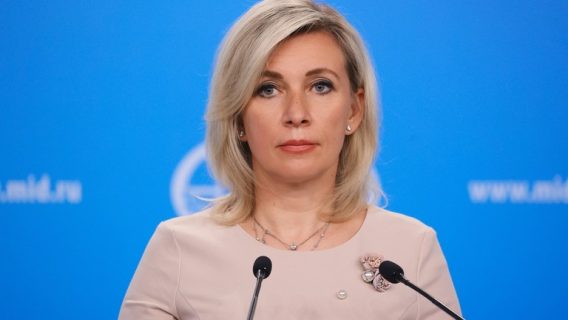
Foreign Ministry’s spokeswoman Maria Zakharova. © Sputnik
RT | December 29, 2022
France’s push to ban Russian news outlets both on the nation’s territory and in the EU is unacceptable, Moscow’s Foreign Ministry spokeswoman Maria Zakharova said on Thursday. Earlier this month, the nation’s TV regulator Arcom ordered satellite operator Eutelsat to stop broadcasting Channel One Russia, Rossiya 1, and NTV channels.
In a statement, Zakharova said the French watchdog had imposed those restrictions “under apparent pressure from the authorities,” adding that the move preceded relevant sanctions on the EU level. “Moscow is outraged by the new steps taken by Paris aimed at introducing more and more broadcasting bans on Russian media, both on its territory and in the EU as a whole,” she stated.
Such actions suggest that France, given its political clout in the bloc, “is the main lobbyist” supporting the ban on Russian TV channels in Europe, Zakharova claimed. “Such a display of Russophobia, which, unfortunately, has already become mundane, [points to] the aspiration to silence any voices that provide an alternative to the EU propaganda at all cost.”
According to Zakharova, Europeans “are being deprived of the right to free access to information.” She suggested that Paris and Brussels might be “afraid that the audience, after seeing a different point of view and picture of the world that does not correspond to that shown by the mainstream of the Western media, will draw their own conclusions” about global politics and the Ukraine conflict.
The spokeswoman described the crackdown on Russian media as “a flagrant violation” of freedom of speech, which is “discriminatory in nature.” The ban is “another testament that the Western ideal democratization model is in fact no more than a tool for achieving foreign policy goals,” Zakharova claimed.
In recent years, Western countries unleashed a massive campaign against Russian media, which only intensified after Moscow started its military operation against Ukraine. In March, the EU suspended the broadcasting activities of Sputnik and RT, with the number of blacklisted channels only growing as the bloc introduced new sanctions packages.
Twitter lawyer Jim Baker wanted to know why Trump wasn’t censored for tweet saying “don’t fear Covid”
Twitter execs had to explain why optimism isn’t a violation of the rules
By Didi Rankovic | Reclaim The Net | December 27, 2022
Lawyer James Baker, formerly of the FBI and working for Twitter until recently – and an excellent example of the “revolving door” policy happening between Big Tech and “Big Government” – shows up in several censorship controversies that have come to light thanks to the release of the “Twitter Files.”
In the fall of 2020, Baker was Twitter’s deputy general counsel with an eye on President Donald Trump’s account and apparently looking for just about any way to silence him, even when Trump’s tweets sought to lift people’s spirits at the peak of the pandemic and lockdowns.
On October 4, 2020, Trump was about to leave the hospital where he was treated for Covid for several days, and tweeted about this, telling 86 million followers that he was feeling well, and advising them not to be afraid of Covid, or allow it to dominate their lives.
“Don’t be afraid of Covid. Don’t let it dominate your life. We have developed, under the Trump Administration, some really great drugs & knowledge. I feel better than I did 20 years ago!,” the president’s optimistic tweet read.
However, the content of the published internal communications suggest that Baker – whom one of the journalists now releasing Twitter Files says was “one of the most powerful people” in the US intelligence community – wanted you to be afraid.
Soon after Trump posted his message, Baker emailed Yoel Roth, who was at the time head of Twitter’s Trust & Safety, asking why the tweet was not considered a violation of the social site’s Covid policies.
“Why isn’t this POTUS tweet a violation of our COVID-19 policy (especially the ‘Don’t be afraid of COVID’ statement)?,” Baker quizzed the Twitter exec.
Roth’s response was that Trump had made “a broad, optimistic statement” which could not be interpreted as a violation since it didn’t encourage his followers to do anything harmful or even not to wear masks.
That tweet eventually stayed up, but Baker had better luck in convincing those at Twitter responsible for suppressing the New York Post story about Hunter Biden’s laptop, by misleading them to believe the laptop’s contents were “likely” inauthentic.
For this, Baker might be investigated by Republican congressmen, who suggested this earlier in December.
And the former FBI and DoJ man even tried to “review” the documents that are now being released as “Twitter Files” – before he was let go by Elon Musk.
Every social media company censoring for government – Elon Musk
RT | December 27, 2022
All social media platforms work with the US government to censor content, Twitter CEO Elon Musk claimed on Tuesday. Documents released by Musk following his purchase of Twitter showed that the platform colluded with the FBI, CIA, Pentagon and other government agencies to suppress information on elections, Ukraine, and Covid-19.
“*Every* social media company is engaged in heavy censorship, with significant involvement of and, at times, explicit direction of the government,” Musk tweeted, adding that “Google frequently makes links disappear, for example.”
Musk was referring to internal Twitter communications published by journalist Matt Taibbi, which suggested that the platform’s senior executives held regular meetings with members of the FBI and CIA, during which the agencies gave them lists of “hundreds of problem accounts” to suspend in the runup to the 2020 election.
In addition to Twitter, the government was in contact “with virtually every major tech firm,” Taibbi claimed. “These included Facebook, Microsoft, Verizon, Reddit, even Pinterest.” CIA agents “nearly always” sat in on meetings of these firms with the FBI’s Foreign Influence Task Force, Taibbi claimed, explaining that although this task force was convened to fight alleged election interference by foreign states, it made “mountains of domestic moderation requests.”
A lawsuit filed earlier this year by the attorneys general of Missouri and Louisiana alleges that officials from no fewer than 12 government agencies met weekly with representatives of Twitter, Facebook, and other Big Tech firms in 2020 to decide which narratives and users to censor, with topics ranging from alleged election interference to Covid-19.
A self-described “free speech absolutist,” Musk purchased Twitter for $44 billion in October. He has since released batches of documents shedding light on the platform’s previously opaque censorship policies. Published by several independent journalists, these document dumps have shown how Twitter suppressed information damaging to Joe Biden’s election campaign, colluded with the FBI to remove content the agency wanted hidden, assisted the US military’s online influence campaigns, and censored “anti-Ukraine narratives” on behalf of multiple US intelligence agencies.
The FBI said last week that correspondence between its agents and Twitter staff “show nothing more than examples of our tradition [of] longstanding and ongoing federal government and private sector engagements.”
The White House has refused to answer allegations that the FBI directed Twitter to censor information damaging to Joe Biden’s 2020 campaign.
Iran, Syria, Yemen: Twitter’s collaboration with the US military in information warfare
The damning exposure of collusion between the Pentagon and Twitter raises further suspicions about Washington’s ongoing online operations in West Asia

By Kit Klarenberg | The Cradle | December 27, 2022
The Cradle has previously deconstructed the Pentagon’s online bot and troll operations targeting Iran. These wide-ranging efforts, over many years, sought to destabilize the Iranian government by disseminating and inciting negative sentiment against it, on a variety of social media platforms.
Their exposure led to the White House demanding an internal audit of all Department of Defense (DoD) “psychological operations online.” Ostensibly, this was triggered by high-level concerns that Washington’s “moral high ground” was potentially compromised by the “manipulation of audiences overseas.”
The audit was revealed in a Washington Post article, the details of which pointed to a very different rationale. One passage noted that representatives of Facebook and Twitter directly informed the Pentagon, repeatedly, over several years, that its psychological warfare efforts on their platforms had been detected and identified as such.
Weaponizing social media
Frustratingly, the focus wasn’t even that these operations were being conducted in the first place, but that the Pentagon got busted doing so.
For example, Facebook’s Director of Global Threat Disruption, David Agranovich, who spent six years at the Pentagon before serving as the US National Security Council’s Director for Intelligence, reportedly reached out to the DoD in the summer of 2020, warning his former colleagues that “if Facebook could sniff them out, so could US adversaries.”
“His point was, ‘Guys, you got caught. That’s a problem,’” an individual “familiar with the conversation” told the Washington Post.
The obvious takeout from this excerpt – unnoticed by any mainstream journalist at the time – was that Facebook and Twitter staffers actively welcome their platforms being weaponized in information warfare campaigns, as long as it’s the US intelligence community doing it, and they don’t get caught in flagrante.
Moreover, in the event they are compromised, those same social network luminaries readily provide intimate insight on how US spooks can improve their operational security, and better conceal their activities from foreign enemies. Unmentioned is that these “foes” include tens of millions of ordinary people who are the ultimate target of such malign initiatives, of which residents of West Asia are preponderant victims.
‘Whitelisting’
Internal emails and documents from Twitter, published by journalist Lee Fang, have now confirmed that Twitter executives not only approved of the Pentagon’s network of troll and bot accounts, but also provided significant internal protection for them through “whitelisting.”
This practice allowed these ‘superpower accounts’ to operate with impunity, despite breaking numerous platform rules and behaving egregiously. The “whitelist” status also effectively granted these accounts the algorithmic and amplificatory privileges of Twitter verification without a “blue check.”
As The Cradle previously reported, these accounts over many years sought to influence perceptions and behavior across West Asia, in particular Iran, Iraq, Syria, and Yemen. In many cases, users had “deepfake” profile photos – mocked up pictures of realistic human faces generated by artificial intelligence.
Target: West Asia
In respect to Twitter-enabled activities against Tehran, multiple different personae were formed to attack the Iranian government from different ideological and political positions. These were not your standard ‘opposition’ accounts – the ops were more sophisticated. Some posed as ultra-conservative Shia Muslims critical of the administration’s “liberal” policies; others as progressive radicals condemning the extent of the Republic’s enforcement of Islamic code.
Many users amplified Washington’s disinformation, disseminated by US government-funded Voice of America’s Farsi-language service, among a myriad of other US funded and directed propaganda platforms. All along, Twitter higher-ups were aware of these accounts, but did not shut them down and even protected them.
The impact of the collaboration between Twitter and the Pentagon on the tweets that users around the world saw and did not see is unknown, but likely significant. Twitter staff were aware of what they were doing.
For example, in July 2017, an official from the Pentagon’s central command for West Asia and North Africa (CENTCOM) emailed the social media network to request the “blue check” verification of one account and the “whitelisting” of 52 accounts that “we use to amplify certain messages.”
The official was concerned that some of these accounts, “a few” of which “had built a real following,” were no longer “indexing on hashtags.” He moreover requested “priority service” for several accounts, including the since-deleted @YemenCurrent, which broadcast announcements about US drone strikes in Yemen. The account emphasized how “accurate” these attacks were; that they only killed dangerous terrorists, never civilians – a hallmark of US drone war propaganda.
Of course, US drone strikes are anything but precise. In fact, declassified Pentagon documents indicate there was “an institutional acceptance of an inevitable collateral toll,” and that innocent people were killed indiscriminately.
In 2014, it was calculated that, in attempting to slay 41 specific, named individuals, Washington had murdered 1,147 people, among them many children – a rate of 28 deaths for every person targeted.
‘Misleading, deceptive, and spammy’
In June 2020, Twitter spokesperson Nick Pickles testified to the US House Intelligence Committee on the company’s determined efforts to end any and all “coordinated platform manipulation efforts” on the part of hostile enemy states, stating these efforts were his employer’s “top priority.”
“Our goal is to remove bad faith actors and to advance public understanding of these critical topics. Twitter defines state-backed information operations as coordinated platform manipulation efforts that can be attributed with a high degree of confidence to state-affiliated actors,” he declared.
“State-backed information operations are typically associated with misleading, deceptive, and spammy behavior. These behaviors differentiate coordinated manipulative behavior from legitimate speech on behalf of individuals and political parties.”
The following month, however, Twitter executives were invited by the Pentagon to attend classified briefings in a sensitive compartmented information facility (SCIF) to discuss the defense of the Pentagon’s “coordinated and manipulative” social media activities.
Then-Twitter lawyer Stacia Cardille noted in an internal email the Pentagon may be seeking to retroactively classify its malign online activities “to obfuscate their activity in this space, and this may represent an overclassification to avoid embarrassment.”
Jim Baker, then-deputy general counsel of Twitter and an FBI veteran, subsequently noted that the DoD had employed “poor tradecraft” in setting up numerous Twitter accounts, and was now covering its tracks in order to prevent anyone finding out multiple users “are linked to each other” or to the US government, one way or another.
“DoD might want to give us a timetable for shutting them down in a more prolonged way that will not compromise any ongoing operations or reveal their connections to DoD,” he speculated.
Free speech absolutism
So it was the compromised accounts that were permitted to stay active, spreading disinformation and distorting the public mind all the while. Some even remain extant to this day.
To say the least, Twitter executives were well-aware that their eager and enthusiastic support of Pentagon psyops would not be received well if publicized. Shortly before the September Washington Post report on the DoD’s audit of these efforts, Twitter lawyers and lobbyists were alerted by a company communications executive about the forthcoming exposé.
After the Post story was published, Twitter staffers congratulated themselves and each other over how effectively the company concealed its role in covering up CENTCOM’s deeds, with one communications official thanking a welter of executives “for doing all that you could to manage this one,” noting with relief the story “didn’t seem to get too much traction.”
Were it not for the series of #TwitterFiles disclosures since Elon Musk controversially took over the company, these dark, shameful secrets would likely have remained buried forever. The full extent of the company’s mephitic collusion with US intelligence agencies, and the comparable, simultaneous collaboration of every major social network, must now be told in full.
Twitter Files describe Covid censorship campaign
RT | December 26, 2022
The latest batch of Twitter documents released by CEO Elon Musk show how the platform censored posts about Covid-19 that didn’t align with the White House’s message. Qualified doctors and epidemiologists were suppressed and banned at the direct request of the Biden administration, the documents suggest.
Both the Trump and Biden administrations pushed Twitter to moderate coronavirus-related content, journalist David Zweig reported on Monday, citing the company’s internal communications. While Trump’s team wanted to tamp down rumors of grocery-store shortages to combat panic-buying, Biden switched focus to “misinformation” about vaccines once his team took over in January 2021.
According to files seen by Zweig, Biden’s staff directly pressured Twitter to ban “high-profile anti-vaxxer accounts,” including that of former New York Times reporter Alex Berenson, who has persistently claimed that the risks of vaccination outweigh the benefits. Twitter complied and suspended Berenson in July 2021, but Twitter employees said afterwards that “the Biden team” was still “not satisfied” with the platform’s censorship efforts, and angrily demanded that it “de-platform several accounts.”
Twitter placed a warning label on the account of a Harvard epidemiologist who argued that “those with prior natural infection” do not need to be vaccinated, and flagged as “misleading” tweets that cited the Biden administration’s own data on Covid death rates. It used a combination of AI “bots” and contracted moderators in foreign countries to make these decisions.
A physician was flagged for sharing the results of a peer-reviewed study linking vaccination with cardiac arrests in young people, while another doctor was permanently suspended for referring to a published study suggesting that vaccination temporarily impairs male patients’ sperm count.
“Dissident yet legitimate content was labeled as misinformation, and the accounts of doctors and others were suspended both for tweeting opinions and demonstrably true information,” Zweig tweeted.
When former President Donald Trump urged his followers not to “be afraid of Covid” following his own recovery from the illness, Twitter’s senior moderators debated taking action against the tweet, before concluding that Trump’s “optimistic” assessment did not count as misinformation.
Since purchasing Twitter for $44 billion in October, Musk has released batches of documents shedding light on the platform’s previously opaque censorship policies. Published by several independent journalists, these document dumps have shown how Twitter suppressed information damaging to Joe Biden’s election campaign, colluded with the FBI to remove content the agency wanted hidden, assisted the US military’s online influence campaigns, and censored “anti-Ukraine narratives” on behalf of multiple US intelligence agencies.
Twitter Files – The important question
The decline of the MSM
The Naked Emperor’s Newsletter | December 26, 2022
When Elon Musk bought Twitter for $44 billion in October, he promised to scrutinise the previous administration. Whether this was because he genuinely wanted to emancipate the company or because he was annoyed at being forced to pay the price he paid (after being sued), who knows but it provides for some interesting reading.
Musk enlisted the help of several journalists, including Matt Taibbi, Bari Weiss, Michael Shellenberger and Lee Fang. Apparently, his one request was that any information found must first be revealed on Twitter.
On 2 December, the first instalment of the Twitter files was released with the most recent, ninth part, published on Christmas Eve.
So, what have we learnt so far?
Benjamin Carlson provides a good summary:
- History changed because of this:
- Hunter Biden’s alleged corruption censored;
- Covid 19 lockdown debate stifled;
- Trump silenced.
You may agree with each decision. But there is no denying that halting information flow and free debate had real consequences.
- Many things called conspiracy theories were true:
- FBI was working with Twitter and paid them million of dollars;
- Blacklists and shadow bans were real;
- US intel lobbied to censor accounts;
- Covid-19 conversation was heavily manipulated;
- Twitter rules changed and enforced by whim.
- Censorship is being cloaked in the language of safety:
- ‘Safety, harm, violence’ redefined to apply to ideas;
- Opinions and information deemed ‘unsafe’ subject to silencing;
- Jokes, memes, questions about the origin of Covid off limits.
- The government is policing opinion:
- FBI has 80 staff monitoring speech;
- Small accounts on left and right flagged;
- FBI held frequent meetings with Twitter;
- Facebook, Youtube and Instagram = similar?
- Private censors & police control what you say and to whom.
- Social media executives lie freely:
- Twitter execs repeatedly and publicly denied shadow bans;
- In reality, bans were in place as “visibility filtering”;
- Ultimately, no accountability to public.
- Free speech is controlled by a small group:
- Biggest decisions in Twitter Files made by 3-4 individuals;
- Despite misgivings and doubts, once made, decisions stuck;
- Now it’s Musk.
One difference: his embrace of public polls to set policy.
- The slippery slope is real:
- Staff rebellion led to Trump ban;
- Staff called for more covid-19 censorship;
- 2021-22 saw increase of bans and ‘one-offs’.
This is how you get Billy Baldwin in the crosshairs.
Once you silence a president, who has a right to speak?
This is all massive stuff but nothing most of us didn’t already know or suspect. And the Fauci files that Musk keeps saying he will release haven’t been published yet.
But the important question is, why have the Main Stream Media barely reported on it? If we had learnt that the secret services in another country had meddled with elections in their country, it would be everywhere. But happens in the West and nothing.
I keep getting adverts from the BBC popping up telling me to trust them.
So what have the BBC written about the Twitter files to earn my trust? It seems they have only written a brief article, two weeks ago, merely touching on the issues mentioned above. The article titled “Twitter Files spark debate about ‘blacklisting’” says we are missing the context as to whether other accounts have faced similar treatment. Furthermore, they question whether the restricted accounts were in breach of rules for example spreading false claims about Covid.
The BBC continues, “restricting accounts can be a useful tool if they are spreading harmful material.” and “there have been various reports suggesting marginalised groups including trans and plus size people were more likely to have their accounts restricted.”
So, unfortunately, I can’t trust you BBC, you haven’t written one sentence on the implications such meddling could have had on the US elections. If there had been an equivalent Russian Twitter Files, you would have been on the case every single day.
Marianna Spring, the BBC’s infamous disinformation correspondent analyses the situation at the end of the article. Unsurprisingly, but predictably, her main point is that how you interpret the “Twitter Files” depends on how you think misinformation should be dealt with. She also says that those caught up in the revelations have received backlash online.
Again, nothing about how the misinformation and censorship may have changed the outcome of the US election.
But that’s about it from the BBC.
Next on to the Guardian. They have one article called “I read Elon Musk’s ‘Twitter Files’ so you don’t have to” which pretty much sums up their position. The article describes the censorship as “individual examples of rightwing users being on the end of light-touch moderation” and Jay Bhattacharya as a “Covid sceptic”.
And again, other than this, the Guardian haven’t reported on the issue since.
The more right wing leaning newspapers have a few more stories. The Times and Telegraph reported on how Twitter aided the Pentagon, how Donald Trump was banned and a Republican claim that the Biden family is the most corrupt in history.
The Daily Mail is probably the only UK paper to have covered this story in detail.
So why, after all of the revelations from the “Twitter Files” is much of the Main Stream Media so happy to ignore what had been going on? It’s a rhetorical question. I know the answer and you know the answer but it’s one which erodes any remaining trust we might have in MSM reporting.
Most people, especially older people, trust the BBC, read the odd headline and watch the evening news. So, when the real scandals revealed in the “Twitter Files” are never reported on, the general population don’t have a clue. Even with well-read people, I have tried to discuss the topic but they haven’t even heard of the “Twitter Files”, let alone what has been revealed.
And this is before the Fauci files are released, if they ever are. But if they are, then don’t for one second think that the general public will hear about them or change their position on anything to do with Covid. It just won’t happen unfortunately. If the MSM do report on the Fauci files, it will be brief and they will conclude that lockdowns were necessary to prevent deaths and vaccines are a miracle from God.
The FBI won’t name other social media companies it pays
By Cindy Harper | Reclaim The Net | December 25, 2022
The Federal Bureau of Investigation (FBI) has refused to indicate the exact social networks it has paid. This follows recent revelations verifying that the bureau paid Twitter at least $3.5 million.
Representatives for the FBI already spoke to Fox News and said that the substantial Twitter payment was a “reimbursement” for expenses and costs of its requests. The representatives indicated that the payment was to compensate the social media platform for acting in accordance with legal “requests.”
The FBI stated that the group had compensated social media platforms beyond Twitter as well. The news network requested the names of other companies that the FBI had paid for these purposes. The federal agency, however, was not willing to provide further information regarding the matter. The representatives did say, though, that the FBI has to offer reimbursement for any and all reasonable expenses that tie in with the acquisition of information that is essential for legal processes.
“While we are not able to speak to specific payments, the government is required to provide reimbursement for reasonable expenses directly related to searching for, assembling, reproducing, or otherwise providing the information responsive to the legal process. This requirement is set by federal law and the courts are the final arbiters of what is reasonable compensation,” the FBI officials said.
Featured Video

Trita Parsi: Middle East Unraveling — Are We on the Path to World War?
or go to
Aletho News Archives – Video-Images
New Book
Trans agenda is ‘normalization of sadism’ – US author
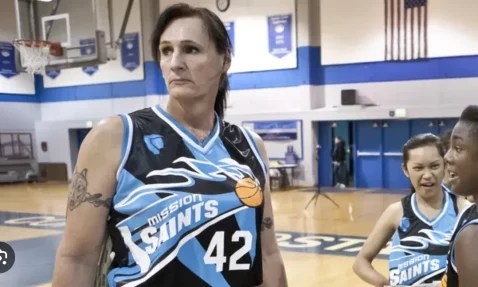
RT | September 23, 2026
The US Democratic Party has embraced a transgender agenda that amounts to “the normalization of sadism,” author A.J. Rice has said, warning that radical trans policies would return if the party is allowed to regain power.
Speaking to RT’s America First host Scotty Nell Hughes about his new book, ‘The Curse of the Bearded Lady: How the Trans Mafia Whacked American Sanity’, Rice argued that activists have gained significant influence in schools, medicine, and corporate America while people who questioned the agenda have faced pressure to stay silent.
The author described the “trans mafia” as the sprawling network of people and institutions that have helped the movement gain influence. He singled out parts of academia, wealthy backers, and corporations, and stated that providers of transition-related treatment also have a financial incentive to keep young people in their care indefinitely.
Rice argued that the consequences of these policies ultimately fall on children who are being drawn toward gender-affirming medical treatments and on girls who are expected to share locker rooms or compete in sports with biological males.
He noted that while voters rejected the Democrats’ approach to gender in 2024, the party, which has been “captured by madness,” has since only doubled down and is seeking what is effectively “the normalization of sadism.” … Full report
Blog Roll
 Aletho News
- German chemicals giant reveals details of downsizing
- Refaat Al-Areer Was The Canary In The Coal Mine In Israel’s War On The Truth
- Israeli election committee bars candidate from Knesset race over Gaza war opposition
- French-Lebanese man files war crimes complaint over Israeli attacks
- Mahan Air Flight Lands in China Despite US Threat against Iranian Airlines
- US eyes $10bn fund to rebuild war-battered Gulf infrastructure
- Trump meets Rodríguez near Maduro’s prison as Venezuela’s oil flows to US
- Trita Parsi: Middle East Unraveling — Are We on the Path to World War?
- Iran FM meets with US envoy on UN meeting’s sidelines at American side’s insistence: Report
- Qatar PM calls for Gulf security framework with Iran, says war must be ‘wake-up call’
- If Americans Knew
- Caught on Tape: AIPAC CEO Boasted of Controlling Trump’s National Security Officials
- Why Hamas Attacked Israel in October 2023 – Israeli professor Ilan Papé
- They see them, then kill them: Israeli quadcopters track, deliberately target civilians in Gaza
- Winter could turn Gaza’s treacherous, war-damaged buildings into deathtraps
- Majority of Democratic Voters Want to Prosecute Both Biden and Trump Administration Officials Over Gaza
- As Gaza languishes, world leaders gather at the UN – Daily Update
- Sanctions are collective punishment: immoral and self-defeating
- Phosphorus Munitions Fired by Israel Burn Groves, Orchards in Southern Lebanon
- Israel Carries Out New Ceasefire Violations Across Gaza
- AI – Emphasis on the ‘I’: Israel Is Funding AI Chatbot Propaganda
- No Tricks Zone
- New Study: Earth And Venus Surface Warmth Largely Explained By Convection And Lapse Rate, Not CO2 Or Radiation
- 2025 Nature Paper Claiming Worsening Global Drought Gets RETRACTED …Heavily Flawed
- New Study: ‘Global Drought Shows No Detectable Recent Acceleration Under Climate Warming’
- Economic Masterminds: German Socialists Suggest Taxing Productivity Gains Stemming From Using AI
- The South China Sea Has Not Been Cooperating With The Climate Change Narrative
- Energy Crisis: Germany Enters Heating Season With Historically Low Gas Reserve Fill Levels
- New Study: The Antarctic Ice Sheet Gained Mass From 2020-2024 Due To Staggering Snow And Ice Accumulation
- Study: Ocean Heating Rates From Thousands Of Years Ago ‘Dwarf’ Modern Ocean Heating Rates
- Climate Extremists Target, Attack Large-Scale Power Grid Infrastructure In Germany!
- New Study: Antarctic Ice Melt Has Contributed Less Than 1 Centimeter To Sea Level Rise In The Last 30 Years

