Google’s Power to Shift Elections—Zachary Vorhies, Greg Coppola and Dr. Robert Epstein
American Thought Leaders – The Epoch Times – August 23, 2019
According to Google whistleblower Zachary Vorhies, how is Google suppressing certain viewpoints, promoting others, and altering public perception?
Is there evidence of active intent on the part of Google staff or executives?
And in the eyes of Dr. Robert Epstein, what are the broader implications of Google bias—whether intentional or unintentional—for America and beyond?
This is American Thought Leaders 🇺🇸, and I’m Jan Jekielek.
In this special episode, we sit down with Google whistleblower Zachary Vorhies, a former senior Google engineer, who recently leaked nearly 1000 pages of documents that he says suggest Google has been secretly acting as a publisher, selectively boosting or demoting content, while publicly claiming to be a neutral platform.
We sent Google some questions regarding each specific allegation that Vorhies made in our interview. Google has not responded to our requests for comments.
We also spoke to another Google whistleblower Greg Coppola, who has also called out big tech bias, and Dr. Robert Epstein, a leading expert on Google search engine bias, to get their take on the leaked documents and Vorhies’ allegations against Google.
Liberals use RCMP in attempt to silence critics of their foreign policy
By Yves Engler · August 30, 2019

On Tuesday two RCMP agents came to my house. Two large men in suits asked for me and when my partner said I wasn’t there they asked who she was.
Why didn’t they email or call me to talk or set up a meeting? If they have my address, the RCMP certainly has my email, Facebook, Skype or phone number. My partner asked for their badges, took their photo and asked them to leave the stairway they had entered.
They returned the next day. Not wanting to interact, my partner ignored them. They rang the doorbell multiple times over many minutes. After she saw people at the restaurant across the street wondering what was going on – from the ground you can see into the front of our place – she poked her head down the stairway where they caught her eye. They asked why I didn’t call even though they didn’t leave a number.
The visits are a transparent effort to intimidate me from directly challenging the government’s pro-corporate and pro-empire international policies.
The day before their first visit to my house two RCMP officers physically removed me from a press conference when I asked Transportation Minister Marc Garneau about Canadian arm sales to Saudi Arabia. When I sat down at an event that was already underway an officer took the seat next to me. When I began to ask a question at the end of the press conference he used the cover of private property to try to block me. On this video one can see the RCMP agent asking the building security twice if I’m welcome in the space. Deferring to police, the security guard tells him I’m not welcome. The RCMP agent, who doesn’t have the right to remove me from the room without a directive, then uses the authority derived from a representative of the building to physically eject me and threaten arrest.
Last Wednesday lawyer Dimitri Lascaris and I were blocked from a talk by the prime minister at the Bonaventure Hotel in a similar way. In my case an RCMP agent called out my name as I entered the hotel and then accompanied me in the elevator, through a long lobby and down an escalator to ‘introduce’ me to hotel security. The representative of the hotel then said I wasn’t welcome, which gave the officer the legal authority to ask me to leave. Lascaris details the incident in “The RCMP’s Speech Police Block Yves Engler and Me From Attending A Speech By Justin Trudeau.”
After starting to write this story, I was targeted by the RCMP for removal from a press conference by Justice Minister David Lametti. On Thursday, a Concordia University security guard, who I walked past to enter the room, came up to me 15 minutes later and asked for my press credentials. There were two dozen people in the room who didn’t have press credentials and the release for the event said nothing about needing them. The RCMP agent admitted that he asked Concordia security to approach me. He also said he was only there for the physical — not political — protection of the minister, but refused my suggestion that he and the Concordia security agents sit next/in front of me to ensure the minister’s physical safety.
(Here is the question I planned to ask the Justice Minister: “Minister Lametti you have an important decision to make in the coming days about whether you believe in international law and consumer rights. As you know the Federal Court recently ruled against your government’s decision to allow wines produced on illegal settlements in the West Bank to be labeled as ‘Products of Israel’. While anti-Palestinian groups are pressuring your government to appeal the decision, the NDP and Greens want you to stop wasting taxpayer money on this anti-Palestinian agenda. Will you commit to accepting the court’s sensible ruling that respects consumers, international law and Palestinian rights?”)
Over the past six months Lascaris, I and other members of Solidarité Québec-Haiti and Mouvement Québécois pour la Paix have interrupted a dozen speeches/press conferences by Liberal ministers/prime minister to question their anti-Palestinian positions, efforts to topple Venezuela’s government, support for a corrupt, repressive and illegitimate Haitian president, etc. We are open about our actions and intentions, as you can read in this commentary. We film the interruptions and post them online. (If any illegal act were committed the RCMP could easily find all they need to charge me on my Facebook page!) The interruptions usually last no more than a couple of minutes. No politician has been stopped from speaking, let alone threatened or touched.
Did the RCMP receive a directive from a minister to put a stop to our challenging their policies? The federal election is on the horizon and government officials will increasingly be in public. The Trudeau government is playing up its ‘progressive’ credentials, but the interventions highlight how on one international policy after another the Liberals have sided with corporations and empire.
From the government’s perspective, having their PR announcements disrupted is a headache, but that’s democracy. The right to protest, to question, to challenge policies outweighs politicians’ comfort.
YouTube Bans Infowars Relaunch – Days After Promising To Allow ‘Controversial’ Content
By Tyler Durden – Zero Hedge – 08/30/2019
On Tuesday, YouTube CEO Susan Wojcicki announced that the platform would invite “offensive” content back onto the site – writing in an open letter to YouTube creators “Without an open system, diverse and authentic voices have trouble breaking through.”
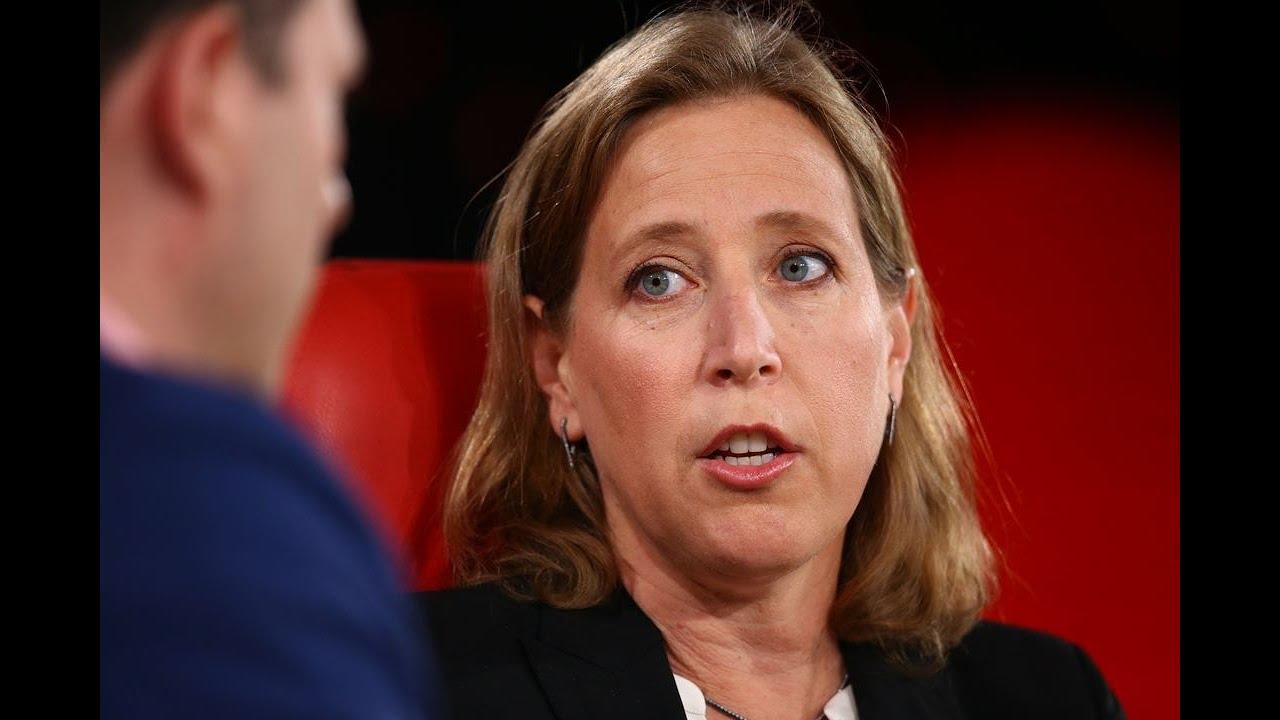
“I believe preserving an open platform is more important than ever,” she added.
In response, Infowars relaunched its ‘War Room’ YouTube channel – which boasted 2.4 million followers before being terminated in August 2018 for “violating YouTube’s community guidelines.”

The first new video uploaded to the new War Room channel featured host Owen Shroyer celebrating Wojcicki’s announcement, and was titled “Breaking! YouTube CEO says ‘Alex Jones’ and ‘Infowars Ban Is Over.’”
Wojcicki didn’t mention Infowars in her letter, but this is how Shroyer apparently interpreted it. Since going live, War Room has uploaded 13 videos covering topics typical to Infowars, like “liberal racism,” the end of “globalism,” and how Lizzo’s performance at the VMAs was “disgusting.” –VICE
That didn’t last long
Shortly after VICE published their article noting that Shroyer’s video had been up for 17 hours, YouTube deleted Infowars’ War Room channel – again.
Remember how @SusanWojcicki stated #YouTube was an open platform the other day?
Yeah turns out she was gaslighting us… once again.@MarkDice you were spot on. https://t.co/zewI48h0Vr
— Zach Vorhies (@Perpetualmaniac) August 29, 2019
“We’re committed to preserving openness and balancing it with our responsibility to protect our community,” said YouTube spokeswoman Ivy Choi. “This means taking action against channels that continue to violate our policies.”
Infowars and its founder Alex Jones suffered coordinated bans across several platforms last year, including Facebook and Apple’s iTunes, after online activists Sleeping Giants lobbied tech companies to cut all ties with Jones and his network.
Okay… what is happening here?@iTunes @apple, are you really choosing to host Infowars on your platform after Alex Jones’ harassment of Sandy Hook parents and Vegas shooting victims and threats to the Special Counsel? How does this not break your Terms Of Service? https://t.co/Bfhwf6NXYN
— Sleeping Giants (@slpng_giants) July 30, 2018
So much for “preserving an open platform” so that “diverse and authentic voices” can break through.
Fake News and Fires in the Amazon
Media outlets are supposed to be more reliable than your brother-in-law, but that seems less true every day.

By Donna Laframboise | Big Picture News | August 28, 2019
Politicians and government officials like to talk as though it’s possible to stamp out fake news. It isn’t.
Fake news is as old as humanity. After Aristotle incorrectly claimed women had fewer teeth than men, generations of highly educated people believed it.
Rajendra Pachauri was called “the UN’s top climate scientist” by the BBC – and a “Nobel laureate” by the New York Academy of Sciences magazine. Neither statement was true.
Pachauri’s doctorate wasn’t in climatology, but in industrial engineering and economics. And the fact that he accepted the 2007 Nobel Peace Prize on behalf of the UN organization he chaired doesn’t make him or any other person affiliated with that organization a Nobel laureate.
Published in 2008 and 2009, these inaccurate statements have never been corrected. In other words, we’re surrounded by fake news. And always will be. Humans are frequently mistaken. Organizations, as well as individuals, post things on the Internet before double-checking.
While media outlets are supposed to be more reliable than your brother-in-law, that seems less true every day. Over the past week, people have shared a CNN headline on Facebook that declares: “The Amazon rainforest is burning at a record rate” (see the screengrab from my own Facebook feed, at the top of this post).
If you click through to the CNN website, you’ll find a few extra words: “… research center says.” But the primary statement is misleading. Which means that millions have been alarmed unnecessarily – including a lovely, smart, young mother of my acquaintance.
Over at the website of National Geographic, a headline falsely declares: Brazil’s Amazon is burning at record rates – and deforestation is to blame. The second half of that assertion is vigorously disputed here.

On Twitter, the President of France used an image taken by a photographer who’s been dead for 16 years to represent the current situation. Let me just emphasize that point: the head of a G7 country is spreading fake news about events unfolding on another continent.

That doesn’t, for one minute, mean anyone should have the power to shut him down. Not Twitter, Facebook, the EU, the UN, or anyone in his own government.
Like it or not, we’re stuck with fake news. Our best defense is to read widely and maintain a high level of skepticism. On this question, here’s some counterbalance to the recent tsunami of alarmism:
Why Everything They Say About The Amazon, Including That It’s The ‘Lungs Of The World,’ Is Wrong
Amazon fires: how celebrities are spreading disinformation
Is Amazon Rainforest Burning At Record Rates? What Is The Way Forward?
Lies, Damn Lies, And Rainforest Fear-Mongering
Annual Amazon farmland burn sets records for international outrage
Amazon fires: What about Bolivia?
Stop Sharing Those Viral Photos of the Amazon Burning
The Three Most Viral Photos of the Amazon Fire Are Fake. Here Are Some Real Ones to Share.
What Satellite Imagery Tells Us About the Amazon Rain Forest Fires
YouTube ‘borderline content’ crackdown hits UK shores, creators demand justice
RT | August 28, 2019
YouTube is cracking down on “borderline content” that doesn’t quite break its rules, expanding an algorithm-tweak that prevents controversial material from gaining a US audience to the rest of the English-speaking world.
A recommendations tweak that cut the referral views of content that “brushes right up against our policy line” in half in the US over the past six months is being rolled out across the UK, Ireland, South Africa, and “other English-language markets,” YouTube CEO Susan Wojcicki said in a quarterly letter to creators on Tuesday, patting herself on the back for what she claimed was the company’s tolerance for non-mainstream views.
“A commitment to openness is not easy,” Wojcicki wrote, likely provoking a few spit-takes from readers. “It sometimes means leaving up content that is outside the mainstream, controversial or even offensive.” But diversity of opinion “makes us a stronger and more informed society, even if we disagree with some of those views,” she continued – begging the question of why YouTube feels compelled to de-platform so many outside-the-mainstream commentators even as its CEO has admitted in the past that “news or news commentary [is] a very small percentage of the number of views we have.”
“Reducing the spread of borderline content” was one of “four Rs” Wojcicki claimed formed the company’s framework for dealing with creators, accompanied by “remove content that violates our policy,” “raise up authoritative voices,” and “reward trusted, eligible creators.”
Creators were up in arms about the rising tide of censorship, which took out a number of popular channels without warning. Many speculated about the platform’s future, even calling for Wojcicki’s resignation.
“Youtube’s final form will be mainstream TV,” one user lamented. “YouTube was primarily built by edgy content. That’s what made it great,” another agreed. “We prefer diversity and free speech on YouTube, not racism and censorship,” said another.
Many insisted the crackdown was part of the company’s admitted efforts to control the 2020 US election (even, apparently, in the UK).
Even some who disagreed with the “borderline” content creators opposed banning them. “These people will become martyrs,” one user warned, suggesting those who disagree with “extremists” should “debate them, make them look stupid,” but not censor.
Others breathed a sigh of relief. “It’s about time society starts to protect itself against the (far) right. The slide into violence and extremism is having rl consequences,” one person tweeted.
The truth about YouTube’s intent does occasionally flash though the corporate jargon. “We keep tightening and tightening the policies,” Wojcicki told the Guardian in an interview earlier this month, noting that “with every policy we make, there is content that will become borderline, or will find ways to skirt around those policies.” That content becomes the target of new policies, and the cycle begins anew.
And “borderline content” – like “sowing discord,” the excuse used to de-platform hundreds of channels earlier this month for their opposition to the Hong Kong protests – has no official definition, allowing moderators to delete any channel they want without having to produce proof any rule has been violated.
New Jersey Event Canceled After Threats From Anti-Free Speech Groups
By Jonathon Turley | August 22, 2019
We have been discussing the rising attacks on free speech across the country, including students and faculty who support the silencing of speakers who hold opposing views. What is most concerning is that these attacks are working. The latest example can be found in New Jersey where the Broadway Theater in Pitman cancelled an event because anti-free speech organizations and individuals threatened protests and some even threatened to burn down the theater. Among the speakers was journalist Andy Ngo, who suffered a brain hemorrhage after being beaten by Antifa supporters at an event in Oregon. My concern is not with planned protests but the coordinated effort to have the event cancelled to prevent others from hearing opposing views.
The one-day conference was set to discuss “combating racism, violence, and authoritarianism.” Sponsored by Minds.com, there were 20 speakers planning to discuss a variety of issues. They included speakers who had once support but later became disillusioned with some leftist groups. This included im Tim Pool, who calls himself a “disaffected liberal” and Josephine Mathias, who has opposed sexual orientation as not equal to race or ethnicity. Mathias was the only black speaker in the line up. It also included Lauren Chen, a conservative blogger.
It also included British YouTuber Carl Benjamin, who has been accused of sexist comments about rape, and Mark Meechan, a Scottish YouTuber who became a global figure when he taught a dog to give Nazi salutes (which he insisted was a joke with his girlfriend’s pug). He was convicted of a hate crime after the court deemed his motivation immaterial to the fact that it was offensive under hate speech laws. I have previously written critically of these laws in France, Germany, England and other countries.
Daryle L. Jenkins, executive director of One People’s Project, an activist group based in New Brunswick, N.J., called the lineup of speakers “the worst of the worst.” Holding such an event, he said, “is like picking a fight.” The statement was classic for the rising anti-free-speech movement. Allowing opposing views to be heard is now considered a provocation. Most of us would support Jenkins’ right to protest outside and contest the views of these people. However, the pressure was to get the theater to cancel the event so others could not hear the opposing views.
No Hate NJ, a coalition of organizations, insisted that the “hateful” event could not be held. In a statement right out of the Antifa handbook, the group said “The event is advertised as a ‘discussion,’ but it’s really just an echo chamber for far-right rhetoric that will bring hateful and violent people to Pitman.” In other words, no such discussion could be allowed between these speakers.
I know nothing about any of speakers beyond Meechan, but their specific views are immaterial if you truly believe in free speech. What Antifa wanted to do (and succeeded in doing) was to prevent opposing views from being heard.
I have previously discussed how Antifa and other college protesters are increasingly denouncing free speech and the foundations for liberal democracies. Some protesters reject classic liberalism and the belief in free speech as part of the oppression on campus. The movement threatens both academic freedom and free speech — a threat that is growing due to the failure of administrators and faculty to remain true to core academic principles. Dartmouth Professor Mark Bray, the author of a book entitled “Antifa: The Anti-Fascist Handbook” is one of the chief enablers of these protesters. Bray speaks positively of the effort to supplant traditional views of free speech: “At the heart of the anti-fascist outlook is a rejection of the classical liberal phrase… that says I disapprove of what you say but I will defend to the death your right to say it.” He defines anti-fascists as “illiberal” who reject the notion that far right views deserve to “coexist” with opposing views.
It only took a couple days for the campaign, No Hate NJ, to intimidate the theater owners. The venue’s Twitter account was also hacked. There was also a threat to burn the theater to the ground.
Once you declare opposing views to be a provocation and an attack, it is easy to mobilize to silence people on the other side. dam Sheridan of Cooper River Indivisible declared “We don’t want South Jersey being used as a platform for these far-right extremists. For us this is about community self-defense.” See? It is that easy. It is not censorship or intimidation. It is self-defense.
Once again, this is about the campaign to cancel the event and not to protest the event.
Google Is Burying Alternative Health Sites to Protect People from “Dangerous” Medical Advice
By Barry Brownstein | Foundation for Economic Education | August 6, 2019
For their unorthodox views, some physicians are being treated as medical heretics. Google’s search engine algorithm has essentially ended traffic to their websites.
In Ray Bradbury’s classic novel Fahrenheit 451, firemen don’t put out fires; they create fires to burn books.
The totalitarians claim noble goals for book burning. They want to spare citizens unhappiness caused by having to sort through conflicting theories.
Censorship Is Control
The real aim of censorship, in Bradbury’s dystopia, is to control the population. Captain Beatty explains to the protagonist fireman Montag, “You can’t build a house without nails and wood. If you don’t want a house built, hide the nails and wood.” The “house” Beatty is referring to is opinions in conflict with the “official” one.
If you don’t want a man unhappy politically, don’t give him two sides to a question to worry him; give him one. Better yet, give him none. Let him forget there is such a thing as war. If the government is inefficient, top-heavy, and tax-mad, better it be all those than that people worry over it.
A Nobel Laureate Copes with Conflicting Opinions
When making decisions, we often face conflicting theories. Daily, we face choices about what to eat. Although the government issues ever-changing dietary guidelines, thankfully, the marketplace supports personal dietary decisions ranging from carnivore to vegan. We are free to choose our diet based on our evaluation of the available evidence and the needs of our bodies.
When we face health issues, decisions become tougher. There is an orthodox opinion, and there are always dissenting opinions. For example, the orthodoxy recommends statins to reduce high cholesterol. Others believe high cholesterol is not a health risk and that statins are harmful.
Nobel laureate in economics Vernon Smith was taking a prescribed statin and recently observed the impact it was having on him:
In the last week I had a very clear (now) experience of temporary memory loss. I did a little searching and found this article summarizing and documenting the evidence over many years.
Smith continues,
Such incidents have been widely reported, but the problem did not arise in any of the clinical trials, but neither were they designed to detect it.
Smith had to weigh the purported benefits against the side effects:
Statin effectiveness in reducing heart/stroke events needs to be weighed against this important negative. Since I am actively writing, this is a primal concern for me, and I have stopped taking it.
A free person understands that there is no one “best” pathway. Although experts have knowledge, a free person takes responsibility, makes a choice, and bears the consequences. We never know what the consequences would have been had we made a different choice.
Health Care 451
Some people don’t like to take responsibility for health choices. They prefer to do what they’re told by the doctor.
“Do you understand now why books are hated and feared?” asks Ray Bradbury’s character Professor Faber in Fahrenheit 451. Faber responds to his own rhetorical question:
Because they reveal the pores on the face of life. The comfortable people want only wax moon faces, poreless, hairless, expressionless.
Bradbury is reminding us that life is messy. Often there is no comfortable one-size-fits-all solution to the challenges we face.
Despite the evidence against statins, the medical orthodoxy would like you to believe that those who question statins are being hoodwinked by fake news. The orthodoxy wants you to believe there is one size for all.
Duke University’s Dr. Ann Marie Navar is the Associate Editor of JAMA Cardiology. In her article, “Fear-Based Medical Misinformation,” she rails against the “fake medical news and fearmongering [that] plague the cardiovascular world through relentless attacks on statins.”
She writes many patients remain concerned about statin safety. In one study, concerns about statin safety were the leading reason patients reported declining a statin, with more than one in three patients (37 percent) citing fears about adverse effects as their reason for not starting a statin after their physician recommended.
Dr. Navar takes the position that concerns about safety are “fake medical news,” spread in part by ignorant patients via social media. Don’t worry, she counsels, reports are incorrect when they claim “that statins cause memory loss, cataracts, pancreatic dysfunction, Lou Gehrig disease, and cancer.”
Fake news? Dr. David Brownstein (no relation) disagrees:
The Physicians Desk Reference states that adverse reactions associated with Lipitor include cognitive impairment (memory loss, forgetfulness, amnesia, memory impairment, and confusion associated with statin use). Furthermore post-marketing studies have found Lipitor use associated with pancreatitis. Other researchers have reported a relationship between statin use and Lou Gehrig’s disease. Finally, peer-reviewed research has reported a relationship between statin use and cataracts. Statins being associated with serious adverse effects has nothing to do with fake news. These are facts.
To be sure, more physicians would agree with Dr. Navar than Dr. Brownstein, but should treatments be dictated by those on one side of the argument? After all, due to human variability, statins may both save some lives and impair or kill other people.
With some doctors questioning whether to prescribe statins for everyone, there is a large financial incentive to stifle debate.
Can you imagine a future government-controlled health care system, completely captured by the pharmaceutical industry, mandating statins for everyone? I can.
There are good reasons to be concerned that we are losing access to information with which to evaluate opposing sides of health issues, like the statin debate. Already Google is “burning” sites that question the medical orthodoxy about statins.
Google Tips the Scales
Mercola.com, operated by Dr. Joseph Mercola, is one of the most trafficked websites providing alternative views to medical orthodoxy. If I were researching statins, I would certainly read several of the numerous essays questioning statin use and the cholesterol theory of heart disease. Essays at Mercola.com usually provide references to medical studies. Personally, since Dr. Mercola sells supplements and I am a supplement skeptic, I read his essays—like I read all medical essays—with a grain of salt.
Dr. Kelly Brogan is a psychiatrist who has helped thousands of women find alternatives to psychotropic drugs prescribed to treat depression and anxiety. In her book, A Mind of Your Own: The Truth About Depression and How Women Can Heal Their Bodies to Reclaim Their Lives, Brogan reports that one of every seven women and 25 percent of women in their 40s and 50s are on such drugs. She explains,
Although I was trained to think that antidepressants are to the depressed (and to the anxious, panicked, OCD, IBS, PTSD, bulimic, anorexic, and so on) what eyeglasses are to the poor-sighted, I no longer buy into this bill of goods.
For their unorthodox views, Dr. Brogan, Dr. Mercola, and others like them are treated as medical heretics. Dr. Brogan and Dr. Mercola have documented (here and here) how a change in Google’s search engine algorithm has essentially ended traffic to their websites.
From time to time, Google updates algorithms determining how search results are displayed; there is nothing inherently nefarious in such actions. Google has achieved its market position by doing a better job than other search engines.
According to Dr. Mercola, before Google’s most recent June 19 algorithm update,
Google search results were based on crowdsource relevance. An article would ascend in rank based on the number of people who clicked on it.
After their June 19 algorithm update, Google is relying more on human “quality” raters. Google instructs raters that the lowest ratings should go to a “YMYL page with inaccurate potentially dangerous medical advice.” YMYL stands for “Your Money or Your Life.” Google says,
We have very high Page Quality rating standards for YMYL pages because low-quality YMYL pages could potentially negatively impact users’ happiness, health, financial stability, or safety.
Does that sound reasonable? If a site argues for treatments other than the medical orthodoxy then, by definition, the site can arouse readers’ cause for concern and, for some people, unhappiness. Do we really want Google to assume the role of Bradbury’s firemen?
Google wants to protect you from conflicting opinions. And if you don’t think that’s a problem, imagine sometime in the future when searching for information on monetary policy you only find results for Modern Monetary Theory.
Google thinks its intention to “do the right thing” is enough to prevent abuses; some Google employees would disagree.
Google Plays the Happiness Doctor
Google is not eliminating access to alternative health pages; it is making it harder to find them. Typical health searches will still generate plenty of “facts,” just not conflicting facts. In Fahrenheit 451 Captain Beatty explains the government’s strategy: “Give the people contests they win by remembering the words to more popular songs or the names of state capitals or how much corn Iowa grew last year.”
Instead of “conflicting theory,” Captain Beatty explains the strategy is to “cram” the people “full of noncombustible data, chock them so damned full of ‘facts’ they feel stuffed, but absolutely ‘brilliant’ with information.”
Filled with “facts,” Captain Beatty explains, people will “feel they’re thinking, they’ll get a sense of motion without moving.” Beatty assures Montag that his fireman role is noble. Firemen are helping to keep the world happy.
The important thing for you to remember, Montag, is we’re the Happiness Boys, the Dixie Duo, you and I and the others. We stand against the small tide of those who want to make everyone unhappy with conflicting theory and thought. We have our fingers in the dike. Hold steady. Don’t let the torrent of melancholy and drear philosophy drown our world. We depend on you. I don’t think you realize how important you are, to our happy world as it stands now.
The only way Google will maintain its dominance is to continue to meet the needs of consumers. Whether Google continues to “burn” websites is up to us. Google will continue to sort out unorthodox views as long as “we” the consumer continue to rely on Google’s search engine.
‘Absolutely Hypocritical’: Social Media Hunt for Pro-Beijing Accounts Ignores US Influence Ops
Sputnik – August 24, 2019
In the last week, social media giants moved to silence critics of the anti-Beijing protests in Hong Kong, disabling thousands of accounts, pages and channels by claiming they’re promoting “disinformation” and “sowing discord.” But the move is deeply hypocritical, a technologist told Sputnik, because these companies do the same thing constantly.
Since Monday, Facebook, Twitter and Google have between them disabled hundreds of thousands of accounts judged to be behaving “in a coordinated manner,” as Google said, and “deliberately and specifically attempting to sow political discord in Hong Kong, including undermining the legitimacy and political positions of the protest movement on the ground,” as Twitter put it. The three tech giants noted they each relied on tips from the others and that their reasoning was identical.
“‘In a coordinated manner,’ or all these phrases that Twitter, Facebook and Google use – ‘inauthentic coordinated behavior’ – they mean whatever those companies want it to mean,” web developer and technologist Chris Garaffa told Radio Sputnik’s By Any Means Necessary Friday. “They mean absolutely nothing to the rest of us.”
“These companies are doing the bidding of the US State Department and, in general, of Western capitalism. Their previous targets have been Russian accounts, they have been Iranian accounts, they have been Venezuelan accounts,” he noted. “And also, independent accounts and news sources that report a different perspective than the mainstream Western-spaced narrative. I mean, Google has delisted RT and Sputnik from news results. Facebook and Twitter have taken down the pages of VenezuelAnalysis and, at one point, TeleSUR English, even. Those, thankfully, have been reinstated after mass outrage.”
“Even if these accounts were being planned and coordinated with their tweets and their posts, it’s absolutely hypocritical, because the US does the same thing through Voice of America and other agencies; through the National Endowment for Democracy they do that. The Israel Defense Forces have an entire social media operations wing where they have people do the same thing whenever there’s news about Israel. They actually go out and basically combat anything they see as negative about Israel.”
“First of all, we have to consider the fact that we’re giving all these companies – or, these companies have this absolute free reign to shut down accounts and to do all of these things. They’re private companies,” Garaffa noted. “They are beholden to shareholders, but they are also beholden to the interests of capital, and so is the US government as the executive, so to say, of the capitalist market.”
The technologist said our consciousness “is absolutely being manipulated” by our use of these sites.
“There are many, many studies showing how just what the results from a Google search can do to an election. You want to talk about election interference, let’s talk about the way Google manipulated search results, or the way Facebook will show you what it thinks you want to see, even if those stories are absolutely fake. They often create echo chambers,” Garaffa explained.
Israel tech ‘facilitating press freedom abuses around the world’
MEMO | August 23, 2019
Israel has been charged with enabling attacks on media freedom around the world by the Committee to Protect Journalists (CPJ), after export controls on surveillance technology were eased.
Citing a Reuters report, CPJ noted that Israeli officials have confirmed that – thanks to a rule change by the Defence Ministry – Israeli surveillance companies “are able to obtain exemptions on marketing license for the sale of some products to certain countries”.
According to Reuters, “the change took effect about a year ago”.
CPJ stated that:
Israeli-exported technology undermines press freedom globally by allowing authorities to track reporters and potentially identify their sources.
One example given by the press freedom watchdog was the Mexican government deploying Pegasus malware, sold by Israeli firm NSO Group, to infiltrate the mobile phones “of at least nine journalists”.
Pegasus was also used by Saudi Arabia to spy on the associates of journalist Jamal Khashoggi before he was murdered in the kingdom’s consulate in Turkey in October last year.
“Over and over again, we see Israeli technology facilitating press freedom abuses around the world, by lending a hand to governments that want to track and monitor reporters,” said CPJ Advocacy Director Courtney Radsch in Washington, D.C.
“An unregulated surveillance industry is bad for press freedom. The Israeli government should heed the UN Special Rapporteur’s call to respect human rights in its export policies.”
UN Special Rapporteur for Freedom of Expression David Kaye described Israel as “a major player in the surveillance technology market” in a June 2019 report which urged “a global moratorium on such exports until a human rights compliant regime was put in place”.
YouTube axes anti-protest channels as US Ministry of Truth battles China over Hong Kong
RT | August 23, 2019
YouTube has disabled 210 channels for posting content related to the Hong Kong protests “in a coordinated manner,” following in the footsteps of Facebook and Twitter in restricting its arbitrary censorship to pro-China accounts.
“Channels in this network behaved in a coordinated manner while uploading videos related to the ongoing protests in Hong Kong,” Google threat analyst Shane Huntley claimed in a blog post on Thursday, adding that the Google team’s “discovery” was “consistent with recent observations and actions related to China announced by Facebook and Twitter.”
Translation? The channels were “sowing political discord” on behalf of the Chinese government, and had to be stopped. How did Google know it was the Chinese nefariously attempting to poison the minds against the protesters? The “use of VPNs” and “other methods of disguise” – widespread in the era of mass surveillance – was all the proof required to wipe the channels out of existence.
Twitter got the anti-China censorship ball rolling earlier this week, in perhaps the first-ever social media preemptive strike “proactively” deplatforming hundreds of thousands of accounts for the capital crime of “sowing discord.” Their crimes included “undermining the legitimacy and political positions of the protest movement on the ground.” One could argue that the protests themselves are a form of political discord, but resistance is futile when charged with such an inchoate offense.
None of the social media platforms have ever defined what exactly constitutes “attempting to sow discord,” though a common thread running through the mass deplatformings of the past year suggests it involves posting in support of a government the US doesn’t like – whether Russia, Iran, Venezuela, or China.
The social media Ministry of Truth has become increasingly open about the irrelevance of truth in what constitutes actionable disinformation. One group of “experts” in the spread of disinfo online even published a paper this week explaining that true statements could constitute disinformation if they were arranged to serve a purpose, calling for platforms to expand their definition of “inauthentic behavior” to include anyone reposting information portraying the “good guys” in a negative light.
The Chinese government challenged Twitter to explain its decision to ban state-owned media from advertising, asking “Why is it that China’s official media’s presentation is surely negative or wrong?”
Beijing has pointed to a US role in fanning the flames of unrest, a charge that grows more plausible with every day the protests continue despite having succeeded in forcing the Hong Kong government to withdraw a bill that would have allowed criminal suspects to be extradited to China. Armies of pro-protest tweeters swarm any post by Secretary of State Mike Pompeo with pleas to intervene in their plight, even as US lawmakers threaten to rain down fire and fury should anyone harm a hair on a protester’s head. And photos of the protest leaders meeting with US diplomats suggest there is certainly some “coordinated inauthentic behavior” at play on the other side.
YouTube, as a subsidiary of Google, has been exposed as even more partisan than Twitter’s arbiters of truth. A whistleblower released nearly 1,000 pages of internal documentation earlier this month showing YouTube’s algorithms were aimed more at shaping reality than at accurately portraying it. The platform removed Iranian state media channels as Washington ramped up tensions with Tehran in the Strait of Hormuz, and its deactivation of pro-China channels now suggests the protests – despite achieving their initially stated goal – are far from over.
Featured Video

AIDS Inc. by Gary Null (2007)
or go to
Aletho News Archives – Video-Images
From the Archives
Clash of Civilization, Iran Part II
By Jamal Kanj – Intifada-Palestine.com – January 14, 2011
Israel’s survival kit is: perpetuate conflict, insecurity to rationalize collective hate and finally playing victim.
Devoid of conflict, Israel implodes internally; without hate, Zionism loses its justification; and playing eternal victim to continue blackmailing the West. Absence of this holy trinity, Israel ceases to exist.
From its inception, the house of Zion has mastered exploiting adversarial powers to advance Israel’s cause. For instance, their influence over the Democratic Party in the US began with President Truman’s bid for 2nd term election in 1948.
Responding to strong opposition from Secretary of State General George Marshall and Department experts urging against recognition of Israel, President Truman replied: “I’m sorry gentlemen but I have to answer to hundreds of thousands [Jewish voters] who are anxious for the success of Zionism. I do not have hundreds of thousands of [voting] Arabs among my constituents”
Zionists influence over liberal American politics was matched with the doctrinal school of Conservative theoreticians aligning the Republican Party’s platform with Israel’s objectives. The Neoconservative Zionists, coined Zioncons, invented the “Clash of Civilization” concept to fight Israel’s wars. … continue
Blog Roll
 Aletho News
- Merck Virologists Admitted to Falsely Certifying Vaccine Efficacy
- Mandatory Folic Acid for every man, woman & child
- Pro-Palestine protesters arrested outside UK’s ruling Labour Conference in Liverpool
- Mauritius denies landing permit to flight from Israel, forcing cancellation: Tour operator
- Israeli finance minister calls for genocidal war on West Bank, annexation of south Lebanon
- 12 Things Your Psychiatrist Was Trained Not to Tell You
- From Unipolar Universalism to Multipolar Civilizational Distinctiveness
- RSF military group defects, joins Sudanese army: State media
- Ireland goalkeeper refuses to play ‘Israel’ as squad weighs boycott
- China pushes back against US on Cuba, Iran
- If Americans Knew
- Israel forces Gazans to live in constant peril – Daily Update
- Deconstructing Netanyahu’s pants-on-fire UN rant – Daily Update
- Trump betrayed voters with his campaign lies and prioritized a foreign country once he took office
- Netanyahu calls Israel’s war in Gaza ‘opposite of genocide’ in UN speech to near-empty hall
- Settler Kidnappings: Torture, Sexual Abuse and Terrorisation of Palestinian Abductees as Israel Deepens Annexation of West Bank
- Gaza winter nears as 162,000 tents become unusable, raising fears of humanitarian crisis
- Netanyahu says, “It’s the opposite of genocide”; UN says Gaza economy is world’s ‘most severe crisis on record’ – Daily Update
- Israel’s US-Backed Assault on Gaza Has Created the ‘World’s Most Severe Economic Crisis on Record’: UN
- ‘Protecting U.S. Citizens’… From Israel
- ‘This is where I live now, the back of a truck’: a day in the life of a grandmother in Gaza
- No Tricks Zone
- New Study: Earth And Venus Surface Warmth Largely Explained By Convection And Lapse Rate, Not CO2 Or Radiation
- 2025 Nature Paper Claiming Worsening Global Drought Gets RETRACTED …Heavily Flawed
- New Study: ‘Global Drought Shows No Detectable Recent Acceleration Under Climate Warming’
- Economic Masterminds: German Socialists Suggest Taxing Productivity Gains Stemming From Using AI
- The South China Sea Has Not Been Cooperating With The Climate Change Narrative
- Energy Crisis: Germany Enters Heating Season With Historically Low Gas Reserve Fill Levels
- New Study: The Antarctic Ice Sheet Gained Mass From 2020-2024 Due To Staggering Snow And Ice Accumulation
- Study: Ocean Heating Rates From Thousands Of Years Ago ‘Dwarf’ Modern Ocean Heating Rates
- Climate Extremists Target, Attack Large-Scale Power Grid Infrastructure In Germany!
- New Study: Antarctic Ice Melt Has Contributed Less Than 1 Centimeter To Sea Level Rise In The Last 30 Years

