The Afghan province of Badakhshan borders China’s Xinjiang Uygur Autonomous Region. It used to be part of an artery between the East and West known as the ancient Silk Road. Today, that road is being revived as an element of China’s “One Belt, One Road” (OBOR) initiative, which has prompted major infrastructure construction in Afghanistan and Central Asia, designed to fuel Beijing’s interest in the province.
Afghanistan is home to significant deposits of raw materials that China could import. Beijing is investing $55 billion in neighboring Pakistan and plans to construct an economic corridor stretching to the Arabian Sea. OBOR will energize the global economy and benefit Afghanistan as well. China is Afghanistan’s largest trading partner and investor. Stability in Afghanistan is in China’s interest, but there is little hope the United States can provide it. After all, Washington has not achieved any substantial gains since 2001. There have been surges and drawdowns, changes of tactics and strategy, and many treatises on how to turn the tide of the war, but the Taliban is strong and the Afghan economy is in shambles – drug trafficking is the only type of business to thrive there. So far the Trump administration has not presented its long-awaited strategy outlining its Afghanistan policy, despite the fact that there are at least 8,400 American troops in the country. And their number will soon be growing. Relationships between the US and other relevant actors, such as Pakistan, are a mess. Washington recently suspended military aid to that country.
The instability in Afghanistan threatens the China-Pakistan Economic Corridor – an important element of OBOR. China is acting as a mediator, trying to reconcile the differences between the regional actors. Afghan-Pakistani relations deteriorated in 2017 when they each accused the other of rendering support to the jihadists operating in the border areas. Beijing is working hard to improve those bilateral ties. It set up a three-way meeting between all the foreign ministers in 2017. One result of the talks was the creation of working panels to promote cooperation in various spheres of activity. Another meeting is expected to take place this year in Kabul.
The East Turkistan Islamic Movement, an Uighur nationalist and Islamic movement from China’s Xinjiang region, is active in Afghanistan. The militants gain combat experience fighting side-by-side with the Taliban and other militant groups. Beijing does not want those seasoned warriors to come back and engage in terrorist activities on its home soil.
Russia and China have stepped up their military aid to the Central Asian states. They believe that the Shanghai Cooperation Organization (SCO) can substantially contribute to achieving a peaceful settlement. Both are trying to build a network of regional states. Moscow and Beijing are motivated by their national interests. Mindful of their responsibilities as major powers, they are working together to promote security in Afghanistan and Central Asia.
All told, China might feel that its interests in the area are strong enough to justify a military engagement outside its borders. Afghan government officials have reported that China is planning to build a military base in Badakhshan. Discussions over the technicalities are to start soon. The weapons and equipment will be Chinese, but the facility will be manned by Afghan personnel. Vehicles and hardware will be brought in through Tajikistan. No doubt Chinese military instructors and other personnel will also come to conduct training and assist missions. The vice chairman of China’s Central Military Commission, Xu Qiliang, claims that the construction is expected to be complete in 2018.
After some powerful offensives in 2017, the Taliban temporarily captured the Ishkashim and Zebak districts of Badakhshan. The Afghan government failed to provide a military presence that was substantial enough to ensure security. An agreement with the local field commanders had been in place, giving them a share of the lapis lazuli production there, in exchange for a cessation of hostilities. But internal bickering undermined the fragile peace between the local groups, and the Taliban seized the opportunity to intervene. The Islamic State’s presence in the province is a matter of particular concern. It makes border security an issue of paramount importance for Beijing.
The question is: how far is China prepared to go? Until now, it has limited its military activities to special-operations teams patrolling the Wakhan Corridor. A military base in Badakhshan would be an important move demonstrating that Beijing is ready to expand its presence in the country and provide an alternative to the United States. China has a trump card the US lacks – its good relations with Russia and Pakistan. Beijing represents the SCO, a large international organization that includes actors such as Turkey, Iran, India, Pakistan, and the countries of Central Asia. Last year, Russian President Vladimir Putin took the initiative to restart the work of the SCO Afghanistan Contact Group. Those activities had been suspended in 2009. Russia advocates opening up direct talks between the Afghan government and the Taliban as soon as possible. Beijing also supports the idea. The two nations are in the same boat. Moscow has said it is ready to host a conference on Afghanistan.
The SCO can make the peace process a real, multilateral effort. It will weaken US clout in the region, but strengthen the chances for finding a settlement to the conflict. Cooperation and diplomacy might open a new chapter in the history of Afghanistan.
In a speech at Stanford this month, US Secretary of State Rex Tillerson declared that America intends to keep military troops in Syria indefinitely, in pursuit of the US’s “key end states for Syria,” including “post-Assad leadership,” the marginalization of Iran and the elimination of “weapons of mass destruction” that the US claims Syria has.
Occupying a country without the permission of the host government, as America is doing in Syria, contravenes international law. Nor does the US have a legal right to pursue regime change in Syria. Yet multiple media outlets have praised Tillerson’s remarks.
Newsweek (1/19/18) ran an article from the Atlantic Council’s Frederic Hof that called Tillerson’s speech “a major improvement in the American approach to the crisis in Syria.” The piece concluded that “what Mr. Tillerson has articulated is more than good enough as a starting point for a policy reflecting American values and upholding American interests.”
The Washington Post editorial board (1/22/18) also endorsed American violation of international law, writing that
Tillerson bluntly recognized a truth that both President Trump and President Barack Obama attempted to dodge: that “it is crucial to our national defense to maintain a military and diplomatic presence in Syria, to help bring an end to that conflict, and assist the Syrian people . . . to achieve a new political future.”
Belatedly, Tillerson has recognized (as critics of both Trump and President Barack Obama have long argued) that we do have a national interest in Syria, cannot tolerate the indefinite presence of Syrian President Bashar al-Assad and need to recognize that if we mean to check Iranian aggression, we will need to maintain a presence in Syria.
In Rubin’s conception, Iran’s presence in Syria—at the request of the recognized government—is “aggression,” whereas America’s is apparently legitimate.
The Atlantic (1/18/18) published a piece by Kori Schake, a self-identified supporter of “regime change [and] long-term military commitments.” Schake called Tillerson’s speech
both sensible and fanciful. It was sensible in that it gave a history of Syria’s grisly war, stated clearly America’s interest in continued involvement even as ISIS is defeated, and outlined policies consistent with those interests. It was fanciful in that the policies outlined would require a much greater measure of American involvement than has been in evidence by this administration—or were committed in yesterday’s speech—to succeed.
For Schake, the problem isn’t that the goal of America’s Syria policy is to illegally occupy a country and overthrow its government, while ratcheting up already dangerously high levels of hostility towards Iran and Russia. It’s that that the Trump administration isn’t doing enough to achieve this.
Meanwhile, accounts of Tillerson’s speech on CNN (1/18/18) and Buzzfeed (1/18/18) opt not to make any reference to the absence of a legal basis for what he describes. One of the few allusions of any kind to international law was a throwaway line in an AP report (1/24/18): “The Islamic State’s retreat also has forced the US to stretch thinner its legal rationale for operating in Syria.” What that rationale might consist of was not explained.
The Best Way to End War Is More War
Tillerson is proposing a prolongation and escalation of the war in Syria. The Syrian government will not passively allow itself to be removed by the US military, and neither will Syria’s allies from Russia, Iran and Hezbollah. So in practice, Tillerson’s policy means a wider, more dangerous conflict.
Yet the Newsweek piece (1/19/18) accepts that the plan is aimed at creating “conditions suitable for the return of refugees and internally displaced persons to their homes”—the opposite of what war produces.
Not only are media outlets failing to address the violence implicit in Tillerson’s policy, they are claiming the opposite and treating it as a plan for peace in Syria. These articles do not explain how a US-led regime change war will achieve that, instead of the years of war and slave markets such policies brought to Libya, or the half million to a million civilians killed in Iraq.
These publications take for granted that the US has a right to decide who governs Syria. For example, an Atlantic article by Paul McLeary (1/18/18) characterizes the US plan to maintain an occupying force in Syria and compel the ouster of its government as “nation-building,” though “nation-destroying” is probably more apt.
The WashingtonPost (1/22/18), similarly, echoes Tillerson’s claim that if the US were to “abandon” Syria, it would be “repeat[ing] the mistake the United States made in Iraq,” when “a premature departure . . . allowed Al Qaeda in Iraq to survive and eventually morph into ISIS.” The Post missed the possibility that the US’s “mistake” in Iraq was invading in the first place, one consequence of which was the birth of both Al Qaeda in Iraq and ISIS.
The paper also claims:
Critics predictably charge that Mr. Trump is launching another “endless war” in Syria. In fact, the administration has simply recognized reality: The United States cannot prevent a resurgence of Al Qaeda and the Islamic State, prevent Iran from building bases across Syria, or end a civil war that has sent millions of refugees toward Europe without maintaining control over forces and territory inside the country.
The editors go on to write that the Trump administration “has rightly absorbed the lesson that [America’s] way out [of Syria] starts with a serious and sustainable US commitment.”
In other words, the best way for the US to get out of Syria is to stay in Syria, and the best way to end the war in Syria is more war in Syria.
Cowardice in the face of Zionist/corporate coercion is not confined to individual state actors; it is also found among groups of states. The crippling power of groupthink and the fear of reprisal for defying the hegemonic power can inhibit states from behaving ethically. To stand against tyranny is admittedly dangerous and difficult, so perhaps cowardice is too strong a term for those that don’t, but tyrants have only as much power as their victims are willing to give them; at some point they have to stop giving: There is no cowardice as strong as a shared cowardice, or as Edmund Burke so aptly said: “The only thing necessary for the triumph of evil is for good men to do nothing.” For an assemblage of do-nothing good men, I give you the United Nations.
The UN’s role in creating our neo-fascist world order goes virtually unremarked as the world’s propaganda organs and gossip networks fixate on the U.S.’s warmongering bombast. To condemn the UN in this manner likely seems absurd to anti-war activists and those indoctrinated with the dogma of liberal internationalism, but it is no coincidence that the 20th century, the most violent in human history, is also the first century when the world succumbed to the conceit that war could be rationalized out of existence.
The UN did not prevent wars; it centralized and depoliticized their execution. Before the UN, states had to make the conscious decision to declare war before engaging in hostilities. War was an instrument of politics. After the UN, war was divorced war from rational politics. It became an aggression sanctioned by the Security Council, like the no-fly zones over Iraq, or a self-proclaimed right to attack based on contrivances like “responsibility to protect” and “violations” of Security Council resolutions. These are the excuses invoked to lay waste whole countries like Afghanistan, Iraq and Syria. Victims of great power aggression, like Palestine, on the other hand, have no hope of redress.
Like the League of Nations, the UN is founded on high moral principles but has neither the military strength nor the political will to enforce them. It could hardly be otherwise. The U.S. emerged from WWII as the world’s pre-eminent economic, military and political hegemon, so to think that it would willingly subordinate itself to an objective moral code or an international body was preposterous. In fact, the UN exposed its hypocrisy within a mere 25 months of its founding. I discussed the matter in a July 22, 2011, column concerning the possible UN membership of Palestine, which of course never happened.
The essay’s most remarkable aspect is not its scintillating prose but the fact that it could be reprinted today with no loss of relevance, especially concerning the Arab League’s announcement that it would lobby the UN to recognize the state of Palestine because of Donald Trump’s decision to move the U.S. embassy from Tel Aviv to the ancient Canaanite city of Jerusalem. In theory, the league’s idea is perfectly sound. According to Article 4 of the United Nations Charter:
Membership in the United Nations is open to all other peace-loving states which accept the obligations contained in the present Charter and, in the judgment of the Organization, are able and willing to carry out these obligations.
In practice, the announcement is farcical. The league does not seem to have learned anything from the UN’s failure to do so 2011. Why should it expect the UN to behave any differently now? If the league wants the UN to recognize the state of Palestine, it must go about it a different way. It has to make Israel, not Palestine, the issue. The following excerpt from my article shows UN cowardice in the face of U.S. terrorism.
Original Cowardice
By late November 1947, the issue of a Jewish national home had yet to be settled. On one side were those who sympathized with partition of Palestine because of the persecution the Jews suffered under Hitler’s Reich. On the other were those who recognized that such a plan was grossly illegal and a violation of fundamental UN principles of justice. By the 25th, the Zionist lobby realized that it did not have the requisite two-thirds majority in the General Assembly to support partition. Extraordinary measures had to be taken.
Vijayalakshmi Pandit, head of India’s UN delegation and sister of India’s Prime Minister Jawaharlal Nehru, received daily death threats warning her to change her vote. Nehru, though, refused to buckle in the face of threats or lucrative bribes. (Najma Heptulla, Indo-West Asian relations: the Nehru era (Allied Publishers, 1991, p. 158.)
Other, smaller, countries could not afford to stand on principle. In Palestine and Israel—A Challenge to Justice, Professor John Quigley recounts how Liberia, the Philippines, and Haiti—all financially dependent on the U.S.—were coerced into switching their votes:
“Liberia’s ambassador to the United Nations complained that the U.S. delegation threatened aid cuts to several countries. Some delegates charged U.S. officials with ‘diplomatic intimidation.’ Without terrific pressure from the United States on governments which cannot afford to risk American reprisals, said an anonymous editorial writer, the resolution would never have passed. The fact such pressure had been exerted became public knowledge, to the extent a State Department policy group was concerned that ‘the prestige of the UN’ would suffer because of ‘the notoriety and resentment attendant upon the activities of U.S. pressure groups, including members of Congress, who sought to impose U.S. views as to partition on foreign delegations.’” (p. 37)
On Nov. 29, the Partition Plan, known as UNGA Resolution 181 narrowly gained the required two thirds—33 in favor, 13 opposed, 10 abstaining and 1 absent—yet the resolution was a violation of the UN Charter since the UN has no authority to take land from one people and give it to another….
As a result, 726,000 Arabs were made refugees in their own land from November 29, 1947, until the end of 1948, according to the UN Relief and Works Agency for Palestine. Walter Eytan, Director General of the Israeli Foreign Ministry, referred to the UNRWA’s figure as “meticulous” and believed that the real number was closer to 800,000. Moshe Dayan would later admit: “There is not one single place built in this country that did not have a former Arab population.” (Ha’aretz, April 4, 1969).”
One can have sympathy for Liberia, the Philippines and Haiti—without economic freedom, political freedom is an illusion––but the issue never should have been brought to the General Assembly, especially since the voting was known to be coerced. As the last line said: “The UN has no authority to take land from one people and give it to another.”
The crowning cruelty is that Resolution 181 had nothing to do with Israel’s “creation.” President Harry Truman admitted that he refused to let it be ratified in the Security Council precisely because of Jewish savagery against Arabs. In a March 25, 1948, statement he wrote:
“It has become clear that the partition plan cannot be carried out at this time by peaceful means. We could not undertake to impose this solution on the people of Palestine by the use of American troops, both on Charter grounds and as a matter of national policy.”
Without ratification, Resolution 181 was merely a General Assembly recommendation, not a decision, so the partition never officially took place; however, because Zionists were in control of Congress on the matter, and the media and U.S. public were thoroughly indoctrinated with Holocaust™ propaganda, Truman did nothing to stop the Jewish atrocity because he needed Jewish votes in the 1948 election. Truman’s moral cowardice and the UN’s refusal to defend its Charter against obvious violation have given us the illegitimate state of Israel, from which emanates our terroristic, neo-fascist world.
At no time since 1947 has the UN done anything to atone for its cowardice or stop Israel from committing its slow genocide of Palestine. From this perspective, the Arab League’s asking the UN to grant statehood to Palestine is an exercise in futility. Instead it must demand that the UN acknowledge the non-existence of Resolution 181, and thereby the non-existence of Israel.
Cowardice Compounded
The second thing the Arab League has to do is have Israel expelled from the UN. On May 11, 1949, Israel was admitted as a member, but that decision cannot be justified since “Israel” failed the peace-loving criterion mentioned in Article 4 of the Charter. To get around this inconvenient fact, the UN cheated. As I had Ban Ki-Moon say on May 11, 2009:
Few people know that Israel is the only state to be given a conditional admission. Under General Assembly Resolution 273, Israel was admitted on the condition that it grant all Palestinians the right to return to their homes and receive compensation for lost or damaged property, according to General Assembly Resolution 181, paragraph 11. Suffice to say, Israel has never lived up to these terms, and never intended to. For 60 years Israel has violated its terms of admission, and for 60 years the UN has done nothing about it. It has watched as Israel heaped misery upon misery on Palestine, and violated international law with impunity.
It is not necessary for the Arab League to lobby the UN for Palestinian statehood. All it has to do is show that Israel violated its terms of admission to have it expelled. Since the General Assembly, not the Security Council, controls membership issues, vetoes would not come into play.
The league would also do well to consider the example of Taiwan’s UN membership. On Oct. 25, 1971, it was expelled because the UN chose not to recognize Taiwan as a country any longer. The UN decided that the People’s Republic of China was the only legitimate representative of China to the United Nations, not the representatives of Chiang Kai-shek. Although Taiwan considers itself an independent state, China considers it to be a province of China. The UN adopted a “One China” policy, just like the U.S. did, and did so asserting that Taiwan had unlawfully occupied China’s UN seat. Let’s let that sink in for a moment: unlawfully occupied.” Is there any more unlawful occupier than Israel?
The UN cannot accept two governments in Palestine any more than it could accept two Chinese governments. Because its “creation” and its membership in the UN are both unlawful, Israel must be expelled and its seat given to Palestine.
The Arab League, and all civilized nations, must demand that the UN adopt a “One Palestine” policy.
Israel has many instruments with which to conduct its colonial project in occupied Palestine: cutting-edge military technology; its nuclear weapons and strategic alliance with the US that Israel’s deterrence factor relies on; and US diplomatic protection to contain countries attempting to stop the colonial-settlement of historical Palestine. Now even the dead are being involved, as the story of the Mamilla Cemetery in occupied Jerusalem attests.
Mamilla is a neighbourhood of Israeli-occupied Jerusalem, located to the west of the Old City’s Jaffa Gate. It is known mainly for its commercial activities in Mamilla Mall that was built in 2007.
As with all of Jerusalem’s neighbourhoods, Mamilla also hosts dozens of historical sites and structures. Mamilla pool is said to have been built by the Romans and gives the area its name. However, the name originates from the Arabic roots “Maman Allah”, which means “water of God” or “benefit from God”.
For centuries, Mamilla Cemetery has been a burial place for Muslims. Some of the Blessed Companions of Prophet Muhammad are buried there, as are some of Salahuddin Al-Ayyoubi’s soldiers and generals.
During the Ottoman period, in 1860, the cemetery was protected by a 2 metre-high fence and Jerusalemites continued to use it as a burial site. In 1927, the Muslim Supreme Court decided to declare the area as a historical site and maintain the tombs in good condition.
In 1948, though, that changed with the creation of the state of Israel and the occupation of West Jerusalem. Mamilla was deemed by the Zionist government to come under the jurisdiction of the Israeli Department of Absentee Landholders. Following the 1967 occupation of the rest of Jerusalem, the Islamic Waqf (Endowment) Department submitted a petition to get the cemetery back and resume burials there.
The Israeli authorities rejected this, and the Jerusalem municipality took the first step to erase Palestinian heritage from the area by turning a large part of the cemetery into a public space, called ‘’Independence Park’’. Many graves were removed in the process, as they were years later when cafes, a car park and, ironically, a “Museum of Tolerance” were planned for the cemetery.
“Museum of Tolerance”
In 2004, the Israeli government and the Los Angeles-based Simon Wiesenthal Centre announced plans for the so-called Museum of Tolerance. By that time, only 8 per cent of Mamilla Cemetery was left, with only 5 per cent of the graves.
The museum is planned to be a multimedia centre for children and adults with theatre and education facilities. The Centre announced the project as a 21st century project dealing with “contemporary issues crucial to Israel’s future — intolerance, anti-Semitism, terrorism, Jewish unity and mutual respect and human dignity for all.”
Once the construction of the museum started, Palestinians and international supporters responded. In 2006, the families whose ancestors are buried in the cemetery, along with human rights organisations, submitted complaints to the Israeli Supreme Court. Petitions were also sent to the UN and UNESCO but to no avail.
According to the chief archaeologist of the Israeli Antiquities Authority, Gideon Suleimani, the human bones unearthed during the construction of the museum date back to 1278; those who were buried in that area were the political, military and religious elite of the Muslim community. His report led Israeli academics and media to raise concerns; the Supreme Court then suspended excavations temporarily. In 2008, the Court declared that the project could continue on the basis that a car park had been built in the area more than 40 years ago which had raised no objections.
Another effort to halt excavation was a petition presented to five different UN bodies in February 2010. Palestinian historian Rashid Khalidi and other individuals from sixty families in Jerusalem whose ancestors were buried in Mamilla Cemetery organised a “campaign to preserve Mamilla Jerusalem Cemetery”. The Centre for Constitutional Rights in New York supported a petition to the UN but it didn’t stop Israel and the Israeli Antiquities Authority from digging up even more graves.
Even the dead are dangerous for Israel
For the Zionists, whatever is linked to Palestinian identity poses a threat to their colonial plan to Judaise Palestine. In their thinking, places like Mamilla Cemetery are evidence of the land’s Palestinian history and must be erased.
Even though the Wiesenthal Centre claimed that ‘’the [human] remains were handled in keeping with the highest standards and High Court’s guidelines’’, lawyer Ahmad Amara, who was responsible for defending the Mamilla Cemetery between 2004 and 2007, saw for himself that bones were desecrated and thrown into cartons and left on one side. What Suleimani described as an “archaeological crime” continued despite the legal protests by Palestinians. Between 2008 and 2009 alone, around 1,000 skeletons were dug up and removed from the site.
In 2010, the Israeli Land Administration bulldozed 300 Muslim gravestones in the cemetery. The following year, another 100 were destroyed. Vandals from the “Price tag” settlers’ group attacked the cemetery in 2011, spraying ‘’Death to the Arabs” on gravestones.
Also in 2011, eighty-four archaeologists demanded that the Simon Wiesenthal Centre, the Jerusalem Municipality and the Israeli Antiquities Authority should end the museum construction. The project, they argued, was against all of the ethics of archaeology. ‘’The bulldozing of historic cemeteries is the ultimate act of territorial aggrandisement,” said Yale University Professor of Near Eastern Archaeology Harvey Weiss, “the erasure of prior residents.’’
Despite all of the objections, the “Museum of Tolerance” is expected to open in a few months’ time to coincide with the state of Israel’s 70th anniversary. That, of course, was the beginning of the Palestinian Nakba (Catastrophe); the Nakba is ongoing.
Ireland is set to discuss a new bill that seeks to prohibit the import and sale of goods originating in illegal settlements in occupied Palestinian Territory.
Independent Senator Frances Black, yesterday, launched the “Control of Economic Activities (Occupied Territories) Bill 2018”, which is scheduled for debate in Seanad Éireann on Wednesday 31 January 2018.
According to a press release announcing its launch the bill “seeks to prohibit the import and sale of goods, services and natural resources originating in illegal settlements in occupied territories”. “Such settlements,” said the statement, “are illegal under both international humanitarian law and domestic Irish law, and result in human rights violations on the ground”. Despite the illegality of the import and sale of goods from Israeli settlements, the statement points out that Ireland is still providing “continued economic support through trade in settlement goods”.
Drafters of the bill revealed that the legislation had been “prepared with the support of Trócaire, Christian-Aid and the Irish Congress of Trade Unions (ICTU), and applies to settlements in occupied territories where there is clear international legal consensus that they violate international law”. They insisted that the “clearest current example of these violations were the expansion of settlements in the Palestinian West Bank, which have been repeatedly condemned as illegal by the UN, EU, the International Court of Justice and the Irish Government”.
Speaking in advance of the bill’s introduction, Senator Black said:
“This is a chance for Ireland to stand up for the rights of vulnerable people – it is about respecting international law and refusing to support illegal activity and human suffering.”
Black said he is “passionate about the struggle of the Palestinian people”. He insisted that “trade in settlement goods sustains injustice” and explained that “in the occupied territories, people are forcibly kicked out of their homes, fertile farming land is seized, and the fruit and vegetables produced are then sold on Irish shelves to pay for it all”.
The bill is seeking more than mere denunciation of Israeli settlements and is trying to get governments around the world to treat settlements as illegal. Black pointed out that six years ago the Irish Government criticized the relentless progress of Israeli settlements, but they have failed to do anything about it since.
“In years since then it has only gone one way, with settlements expanding, more Palestinian homes being demolished and land being confiscated. It’s clear that empty promises have not worked but nothing has been done. Ireland needs to show leadership and act” Black protested.
The Occupied Territories Bill 2018 will be debated at Second Stage in Seanad Éireann on Wednesday and will be streamed live on Oireachtas TV. It has been co-signed by Seanad Civil Engagement Group Senators Alice-Mary Higgins, Lynn Ruane, Grace O’Sullivan, Colette Kelleher and John Dolan, as well as Senator David Norris.
US Defense Secretary James Mattis is a Marine’s Marine and a respected military scholar. Yet his recent remarks to reporters about US conduct around the world smack of either hypocrisy or woeful misinformation.
Mattis is visiting Indonesia and Vietnam this week, as part of a US effort to expand alliances in the Asia-Pacific region. On his way over to Jakarta on Monday, he held a “press gaggle” on board the plane and, according to transcripts provided by the Pentagon, said this:
I think that what we’re looking for is a world where we solve problems, and we don’t shred trust. We don’t militarize features in the middle of international waters. We don’t invade other countries, in Russia’s case ‒ Georgia, Ukraine. That we settle things by international rule of law, you know, this sort of thing.
Mattis was elaborating on the new US National Defense Strategy, which prioritized “inter-state strategic competition,” over terrorism and called out Russia and China as “revisionist powers” threatening the “free and open international order” created by the US and its allies after World War II.
If anything, Russia and China are actually “reactionary” powers. Both countries have repeatedly said that they seek only to apply the existing rules of international order equally to everyone – including the US, which has held itself exempt from them.
That belief in American exceptionalism is evident in Mattis’s own words, aimed at Beijing and Moscow.
“We don’t militarize features in the middle of international waters”
Here, Mattis is clearly referring to the islands in the South China Sea, claimed by China and a number of nearby nations. China has built military installations on a number of previously uninhabited islands and reefs, and sent naval forces into the area in response to repeated US overflights and maritime patrols.
However, while the People’s Liberation Army Navy operates in its home waters, the US Navy operates around the world – with bases in places like Japan, Bahrain, Spain and Italy, among others.
In pursuit of military bases around the globe, Washington has gone so far as to approve the forcible relocation of Chagos Islands residents so the US could build and maintain a massive base on Diego Garcia. A number of Marshall Islanders were also relocated from atolls in the Pacific because of nuclear tests (e.g. Bikini).
“We don’t invade other countries”
Where to even begin with this one? What was Libya in 2011, then? What happened in Iraq in 2003? Or the NATO attack on Yugoslavia in 1999, which violated both the UN Charter, the NATO Charter, and US law?
In Libya, the US and its NATO allies grossly abused a UN resolution allowing certain humanitarian actions to launch a full “regime change” operation against the government of Muammar Gaddafi. Nearly seven years later, Libya is a chaotic failed state, with open-air slave markets and terrorists staking claim on territory “liberated” by US-backed rebels.
Iraq was invaded without any legal justification whatsoever, with George W. Bush’s regime-changing “coalition of the willing” acting in stark contrast with his father’s multinational force, which invoked the UN Charter for the 1991 intervention to liberate Kuwait.
Yugoslavia was bombed by NATO for 78 days, until the UN found a fig leaf in the shape of Security Council Resolution 1244 to allow the alliance to occupy Serbia’s Kosovo province. Except that, too, was trampled in 2008, when the US backed an ethnic Albanian government that declared the occupied province an independent state.
Mattis holds up Georgia and Ukraine as examples of Russian “invasions.” Yet it was the US-backed government in Georgia that started the hostilities in August 2008, launching an attack on the breakaway republic of South Ossetia that killed Russian peacekeepers. It’s understandable the Pentagon might be sore that a Russian border army managed to dismantle the entire NATO-trained Georgian military in less than a week, but that doesn’t change the fact that Tbilisi started the war, as even the EU fact-finding mission admitted in 2009. The warmongering president, Mikhail Saakashvili, has since been stripped of citizenship and charged with corruption. He is now in Ukraine.
What of Ukraine, then? Washington has accused Russia of invading and occupying Crimea in 2014. The overwhelmingly ethnic Russian region, reassigned to Ukraine by Soviet leader Nikita Khrushchev in 1954, reunited with Russia in 2014, after a US-backed coup in Kiev brought into power a government that included neo-Nazis.
That government, “midwifed” by US diplomats and directed by Washington ever since, responded to popular discontent in several regions by sending tanks against its own civilians. In Odessa, neo-Nazi activists backing the government even set dissenters on fire. The US has sent weapons to neo-Nazi militias fighting the “Russian invaders” in the eastern regions of Lugansk and Donetsk, while Moscow sent humanitarian aid.
Kiev has claimed, and Washington echoed, that regular Russian troops were on the ground in Donetsk and Lugansk. As “evidence” of this, they offered photos of Russian tanks – taken in 2008 in Georgia.
Trying to argue against the Crimean referendum, US President Barack Obama claimed there had been an internationally recognized referendum in Kosovo. That was simply not true.
“…we respect these as sovereign nations”
Another thing Mattis argued was that the US respected national sovereignty and opposed “veto authority” over their decision-making:
One point I want to make is we respect these as sovereign nations with a sovereign voice and sovereign decisions, and we don’t think anyone else should have a veto authority over their economic, their diplomatic or their security decisions.
There is absolutely nothing wrong with this sentiment in theory. In practice, however, the US routinely tramples the sovereignty of other countries, and exercises veto powers over their economic and security decisions.
Ukraine has already been mentioned as one example. The US is also pressuring the EU to find a way to stop Nord Stream 2, a pipeline that in a recent anti-Russian report, Senator Ben Cardin (D-Maryland) said would deprive Ukraine of transit fees. What he left out was that it would also remove Kiev’s ability to hold Europe hostage by controlling the flow of Russian gas. Also, does anyone actually believe that Bulgaria decided on its own to back out of the Russian-sponsored South Stream pipeline project?
More recently, in the supposedly “independent” state of Kosovo, the US and UK ambassadors threatened “harsh consequences” if the government there dared vote against an internationally imposed war crimes court. US ambassadors in places like Bosnia-Herzegovina or Serbia routinely dictate to local authorities what laws they need to adopt and when. Local leaders who refuse to obey are sanctioned.
‘Mad Dog’ or ‘Warrior Monk’?
It was the American media that dubbed Mattis “Mad Dog” during the operations in Iraq, when he commanded the Marines that fought insurgents in Fallujah and destroyed the city in order to save it, to paraphrase that one US officer from Vietnam.
Mattis himself reportedly resents the nickname, preferring to be known as a “Warrior Monk,” a scholar with no family who has dedicated his life to the US Marine Corps. What is one to make, then, of his quotes from the flight to Jakarta, which deny observable reality in favor of wishful thinking embraced by his predecessors?
When Mattis was up for confirmation, a number of media outlets published a story about how he took guard duty at Christmas one year in order to have the junior Marine officer spend time with his family. He is clearly someone who cares about the lives of his troops. Yet his misconceptions about US conduct around the world are more likely to get them killed than faulty weapons or the bloated Pentagon bureaucracy, both of which he has set out to fix.
On Tuesday, the UN Human Rights Council (HRC) held a session aimed at assessing the progress Israel made during its third Universal Periodic Review (UPR), a UN-backed process designed to assess the human rights record of a state and make recommendations for improvement.
In the course of the struggle between the Israelis and Palestinians, the UN has repeatedly accused Israel of not respecting human rights as it continues to build settlements on the West Bank, however, the strongest condemnation comes from South Africa, a country which used to have one of the world’s worst human rights records itself.
During the session a delegate from South Africa, a country where the system of discrimination based on supremacy of white people and suppression of the black population called apartheid originated from, characterized Israel as “the only state in the world that can be called an apartheid state,” since it denies the right of self-determination to the Palestinian people, “in the absence of which no other human right can be exercised or enjoyed.”
Other HRC members also expressed their deep concern over Israel’s violation of the UN resolution which rules that Israeli settlements on the West Bank and in East Jerusalem are illegal, as the country continues to expand the existing settlements as well as building new areas.
Russia, Jordan, the UAE and Iran alongside other countries called on Israel to stop the annexation of Palestinian land and the construction of Israeli settlements there, whereas the Palestinian delegation during the session urged Israel to halt “its 50-year colonial occupation” and “compensate Palestinians for all of the losses incurred due to their presence.”
Israeli ambassador to the UN Aviva Raz Shechter said that Israel would submit to the review process though she pointed out the HRC’s bias and “the unfair treatment of Israel” in the council.
Territory in the West Bank was seized by Israel during the 1967 Six-Day War in the course the long-lasting struggle between Israelis and Palestinians for the territory of what previously was the British Mandate of Palestine. The West Bank is mostly populated by Arabs and the United Nations considers this territory to be illegally occupied by Israel. Some sponsors of a peace process, among whom are Russia and the EU, have repeatedly warned that Israeli settlement activity undermines any chances for a two-state solution, which involves the creation of an independent Palestinian state alongside Israel.
Former US vice president Joe Biden boasted that he had a word to say in another state’s internal affairs, admitting to have pressured the Ukrainian government into sacking a prosecutor general in just a few hours.
“I looked at them and said: ‘I’m leaving in six hours. If the prosecutor is not fired, you’re not getting the money,’” Biden said during a meeting of the US Council on Foreign Relations. He was referring to Ukrainian President Petro Poroshenko and former Ukrainian prime minister Arseny Yatsenyuk. Biden added that the prosecutor was then fired.
“Well, son of a b***h. (Laughter.) He got fired.”
The incident that Biden referred to dates back to late March 2016. At that time, the then-US vice president met Ukrainian government officials to discuss the situation in Ukraine as well as US financial assistance to Kiev. Biden apparently used US guarantees of a third loan worth $1 billion as a means of applying pressure on Kiev. “I said, ‘I’m telling you, you’re not getting the billion dollars,’” he said at the meeting on Tuesday, recalling on the incident.
The then-Ukrainian prosecutor general Viktor Shokin was indeed removed from his post by the Ukrainian parliament on March 29, 2016. Two days later, Kiev announced that Biden had met with Poroshenko and “informed him about the US decision to provide [an] additional $335 million for reforms of the security sector of Ukraine.” It also said that “possibilities for providing the third loan guarantee of $1 billion” were “open.” Poroshenko officially dismissed Shokin on April 3, 2016.
Earlier, Biden also boasted of other cases of US interference in Ukrainian internal affairs. In a book titled ‘Promise Me, Dad: A Year of Hope, Hardship and Purpose,’ which was published in November, the former vice president said that he openly demanded that former Ukrainian president Viktor Yanukovich resign back in 2014.
He also claimed that he had to direct almost every step of the Poroshenko administration after it came to power, following a chain of events that started with a coup that ousted ex-leader Viktor Yanukovich and gave rise to the Ukrainian crisis. Biden also admitted that he “had been on [the] phone with either Poroshenko or… Yatsenyuk, or both, almost every week” for months.
However, Ukraine was far from the only country pressured by Washington at that time. During the Tuesday meeting, Biden also revealed that the US administration “spent so much time on the phone making sure that everyone from… [former French president Francois] Hollande to [former Italian prime minister Matteo] Renzi wouldn’t walk away” from anti-Russian sanctions.
Europe initially sought to avoid the sanctions campaign against Moscow, the former US vice president said. He also added that German Chancellor Angela Merkel was almost the only major European leader who “was strong enough to… stand with” the US on this issue, even though she “did not like it” and supported Washington only “reluctantly.”
On October 6th 2017 I wrote a lengthy article for The Duran in which I said that the US’s two previous plans in Syria having failed – Plan A being regime change through US backing of violent Jihadi groups, Plan B being the attempt to set up an anti Assad ‘Sunnistan’ in eastern Syria – the US was resorting to Plan C, which was to establish a US backed Kurdish protectorate in northern Syria, so as to undermine the Syrian government from within.
In that article I outlined in detail how that was being done, with the massive supply of arms to the YPG, the Kurdish militia in northern Syria, and through the permanent deployment of US troops in the Kurdish controlled regions of northern Syria.
I also outlined what I thought the likely consequences of this Plan C would be,
Consequences of the US’s Kurdish policy
What are the consequences of the US’s Plan C/’Kurdish’ strategy, and what are its prospects? In summary there are five:
(1) it will prolong the conflicts in Syria and Iraq;
(2) it is delaying the final defeat of Al-Qaeda and ISIS in Syria and Iraq;
(3) it will make the Iraqi government align itself still more closely to Iran and Syria;
(4) it will strengthen hostility within Turkey to the US, and may make Turkey more inclined to seek regional alignments with the US’s Middle East rivals and enemies: Russia and Iran;
(5) it risks making the Kurds even more isolated in their region, whilst uniting the region against them.
I also said that though Plan C was rather more grounded in reality than Plan B since a Kurdish statelet in northern Syria had rather more coherence and reality than the eastern ‘Sunnistan’ proposed as Plan B, it was nonetheless in the long term unworkable, and the attempt to implement it would set the scene for the next US Middle East debacle.
Just two weeks later, with the Iraqi army’s successful offensive against the Iraqi Kurds in northern Iraq, and following the Iraqi army’s recapture from the Kurds of the key Iraqi oil town of Kirkuk, it appeared that this Plan C was already failing and on 19th October 2017 I wrote a further article for The Duran in which I said as much.
In the event, with a persistence worthy of a better cause the US despite the failure in Iraq has persisted with its Plan C.
Firstly the US announced that it intended to keep 2,000 US troops stationed (illegally) in Syria indefinitely, supposedly to prevent a ‘vacuum’ emerging there.
In reality the true number of US troops in Syria is much greater, and it is the presence of these troops which by preventing the restoration of the Syrian government’s authority across the whole of Syria is threatening to create a ‘vacuum’ there. Most, though not all, these US troops appear to be based in northern Syria, in territory controlled by the YPG.
Then the US announced that it was building up a 30,000 strong ‘border force’ in northern Syria, which it was clear would be built up around the Kurdish militia, the YPG.
The results have been very much as I predicted in my article of 6th October 2017.
Firstly, the US game with the Kurds in Syria has outraged the major regional powers: Turkey, Iran, Iraq and Syria.
Turkey’s President Erdogan has now launched his army and air force against the Syrian Kurds whom the US has been backing in their north Syrian enclave of Afrin.
In order to launch this attack Erdogan needed Moscow’s permission, the Russians having previously positioned military observers in Afrin.
A Turkish military delegation accordingly visited Moscow and obtained Moscow’s permission, resulting in the withdrawal of the Russian military observers from Afrin and the unimpeded operation of the Turkish air force there.
The Russians for their part attempted to persuade the Kurds to hand over Afrin to the Syrian government as a way of averting the Turkish attack. The Kurds, counting on US protection, however refused, with the result that they have quickly discovered that the US protection that they had counted on is nowhere to be seen, so that they now find themselves facing the Turkish army on their own.
In a bizarre twist, showing the extent of their confusion and possibly highlighting the internal criticism their leaders are coming under for putting so much trust in the US, the YPG is now blaming the Russians for the debacle.
We know that, without the permission of global forces and mainly Russia, whose troops located in Afrin, Turkey cannot attack civilians using Afrin air space. Therefore we hold Russia as responsible as Turkey and stress that Russia is the crime partner of Turkey in massacring the civilians in the region.
In the meantime, where a few weeks ago it appeared that ISIS in its fastnesses in eastern Syria was close to total collapse after coming under simultaneous attack by the Syrian army and the US backed Kurds, it is now back on the attack and has actually been able to recover some territory at the expense of the Kurds, who are having to transfer fighters to face the threat from the Turkish army in the north.
Meanwhile the Syrian army has been able to capitalise on Turkey’s focus on the Kurds to carry out major advances against the remaining Jihadi enclaves in western Syria near Damascus and in Idlib province, where the key Abu Duhur air base has now been recaptured from the Jihadis, and where large numbers of Jihadi fighters have been surrounded by the Syrian troops.
Latest reports from the normally reliable Al-Masdar news agency speak of continuing Syrian military advances deeper into Idlib province, with plans apparently being prepared for an offensive which will bring the Syrian army all the way up to the outskirts of Idlib city.
An article in the Guardian has now confirmed the critical role of the British government in egging the US on with Plan C as well as the extent of US and British dismay with the latest developments:
The problem for the west is that, as an endgame possibly approaches in Syria, it cannot afford to lose Turkish diplomatic support since Ankara has been the vital countervailing force to a Russian-imposed peace.
The Turkish preoccupation with the Syrian Kurds on its borders could lead to the Turkish president, Recep Tayyip Erdoğan, reaching a deal with Damascus and Moscow.
The speech – in which the UK Foreign Office had a big hand – was something of a watershed and was under-appreciated in Europe. Previously, Trump’s policy on Syria was simply the destruction of Isis and an aversion to talk of nation-building. But the Tillerson speech has been widely criticised because it was long on aspiration but short on detailing the credible levers the US and the west have to pressure Moscow to abandon Assad.
Western diplomats say they have some stakes in the ground: the threat to withhold EU and US reconstruction funds, the promise to keep 2,000 US troops inside Syria indefinitely and a slightly confused commitment to help the Kurds form a border force inside northern Syria. British ministers also repeatedly warn that a Russian-imposed peace that simply leaves Assad in charge would not only be morally reprehensible but unstable…..
There is so much wrong with the thinking in this article that it is difficult to know where to start.
Firstly, it is grotesque to say that “a Russian-imposed peace that simply leaves Assad in charge would not only be morally reprehensible but unstable” when it is Western policy to use the Kurds to prolong the war in Syria in order to increase pressure on the Russians so as to get them to agree to having President Assad ousted which is the true and obvious cause of the continuing instability there.
Secondly, to suppose that Turkey would stand idly by whilst the US armed the Kurds to fight President Assad’s government when Turkey is already fighting a Kurdish insurgency on its own territory was beyond farfetched. It should have been obvious that any policy of this kind that relied upon both Turkey and the Kurds in order to succeed was bound to fail.
Thirdly, the idea that the Western powers can ‘pressure’ Russia into ‘abandoning’ President Assad now that President Assad is in secure control of Damascus, Aleppo, Homs, Hama, Deir Ezzor, all of Syria’s main cities, and in fact every part of what constitutes ‘useful Syria’, when Russia previously refused to abandon him when the territory under his control was reduced to a small coastal strip and he was about to lose control of Deir Ezzor and Aleppo, is beyond delusional.
Now that the Turkish army is pressing deep into Afrin, with the US and the Western powers as the Guardian article says unable to stop it, the Guardian article refers to what is rapidly becoming the default Western position in northern Syria: abandon the Kurds and hand over to Turkey and its Jihadi allies a strip of northern Syria as a ‘security zone’ at the Kurds’ expense:
The US can argue it tolerated Kurdish territorial expansions across northern Syria, and specifically west of the Euphrates river, only so long as the Kurdish militias inside the Syrian Democratic Forces were needed to defeat Isis, but now that battle has been won the US priority is to stop the freefall in its relations with Turkey. If that means a temporary Turkish foothold in the patchwork that is Syria, so be it.
One might even call it Plan D.
That this is indeed the emerging policy – though some US officials still seem to be unaware of the fact – has now been confirmed by Rex Tillerson, the US’s hapless Secretary of State, who speaking of Turkey is reported to have said the following:
Let us see if we can work with you to create the kind of security zone you might need.
What this ignores is that this policy is every bit unworkable as the Plans A, B and C which preceded it.
Firstly, the duplicity towards the Kurds is nothing short of staggering. Having armed the Kurds and encouraged them to create their own statelet in northern Syria in order to fight ISIS and destabilise the government in Damascus, the US is now preparing to abandon them to Turkey as soon as the going gets difficult.
Needless to say duplicity of this order is going to shatter trust in the US both amongst the Kurds and even in Turkey, which is not likely to forget any time soon the game the US attempted to play with the Kurds in Syria at its expense.
Secondly, Turkey’s Jihadi allies have repeatedly shown their lack of military effectiveness. It is all but inconceivable that they can control territory in northern Syria in the face of opposition from both the Kurds and the local Arab people without the protection on the ground of the Turkish army.
However whether the Turkish army would be prepared to remain entrenched forever in northern Syria facing what is likely to become before long a guerrilla war waged against it by both the Kurds and the local Arab population backed by the Syrian government in Damascus is problematic to say the least.
My opinion is that that is all but inconceivable, in which case Plan D is as unworkable as Plans A, B and C.
Thirdly, despite the Kurdish complaints about ‘betrayal’ by Russia, the likely consequence of the latest events is that over time it will oblige the Kurds to rein in their regional aspirations and seek to come to terms with the government in Damascus, just as the Russians have been urging them to do.
By any objective measure the Kurds in both Syria and Iraq have in recent years grossly overplayed their hand.
They used the US induced internal crises in Syria and Iraq to forge all but independent areas within those countries. They then expanded these zones far beyond their natural limits, bringing under their control large areas with predominantly Arab populations.
Then as the internal crises within Syria and Iraq abated, instead of leveraging the strong position they had achieved to come to terms with the governments of those countries so as to hold on to their gains, the Kurds went for broke, and gambling on US promises of support, they pitched for what amounted to outright independence, in Syria de facto, in Iraq de jure.
As a result they antagonised all the regional powers and Russia, bringing down upon themselves the wrath of Iraq and Turkey, and finding themselves isolated, when they discovered in Iraq in October and in Syria now that the promise of US support had no reality behind it.
The result is that when they were attacked by the Iraqi army in October and by the Turkish army now they found that they had no one to look to but themselves.
Pressure of events if nothing else will now probably force the Kurds in Syria to come to terms, however grudgingly, with the Russians and with the Syrian government in Damascus.
That would obviously mean accepting the overall authority of the government in Damascus in return for whatever form of autonomy the Russians can negotiate for them.
That is the only realistic way that the Kurds in Syria – who ultimately account for no more than 8% of Syria’s population – can secure protection for themselves provided by Russia, which as recent events have shown is the only secure form of protection that can be relied upon in this region.
As for the US and its Western allies, the time has come – in fact it is long overdue – for them to commit themselves to some serious rethinking.
The strategy of regime change in Syria which was launched in 2011 has decisively failed.
There is no realistic possibility of the US persuading Russia to abandon President Assad and agreeing to regime change in Syria, and no realistic way the US can bring about regime change in Syria without Russia’s agreement.
That means that regime change in Syria is impossible and is not going to happen.
With the Syrian government in Damascus now secure and gaining daily in power and confidence, it is now only a matter of time before it regains full control of all Syrian territory.
All the various plans to keep Syria weak and divided by playing Sunnis against Alawites, Kurds against Arabs, and Turks against Kurds and Syrians, can only delay this outcome, not prevent it, and can only do so only at horrific cost, whilst setting up the US for further humiliation
This is because the only practical effect of these plans is to increase the Syrian government’s dependence on Moscow and Tehran, thereby strengthening Syria’s alliances with Russia and Iran and weakening the regional geopolitical position of the US.
In reality if the US’s objective really were to limit or even extinguish Russian and Iranian influence in Syria – as it claims – then the only way it could do this would be by coming to terms with the Syrian government in Damascus, which is the legitimate government of Syria recognised as such by the overwhelming majority of Syria’s people, so as to persuade it to limit or cut its ties to Russia and Iran so as to reduce or extinguish the influence of these countries in Syria.
That would involve giving the Syrian government security guarantees that it could trust and economic aid to rebuild Syria, in return for its agreement to limit or close the Russian and Iranian bases which are now starting to appear on Syria’s territory.
Whether such a thing is now possible is another matter. However the modern history of the Middle East is such an appalling catalogue of duplicity that I for one would not say it was impossible if it were ever seriously attempted.
Already there are rumours that some officials within the Syrian government in Damascus are uneasy about the over close relations (as they see it) which Syria now has with Iran, and the problems which they think these are causing Syria.
However if the US is going to embark upon this genuinely realistic foreign policy then it must end its maniacal fixation with the person of Bashar Al-Assad, and it must tell its allies in Britain, Saudi Arabia and Israel that they must do the same.
Putting aside the disaster this fixation has caused to the people of Syria, who have had to endure seven years of war because of it, its only result has been to strengthen Syria’s alliances with Iran, Russia and more recently Iraq, thereby weakening the geopolitical position in the Middle East of the US.
As ought to be obvious, doubling down on this fixation can only spell more disaster further down the line, and the latest debacle in northern Syria which has resulted in fighting between the US backed Kurds and the US’s NATO ally Turkey ought to underline this fact.
However because this obvious truth is one which continues to be passionately resisted in Washington – not to mention in London, Jerusalem and Riyadh – it looks to be rejected, opening the way for still more disasters to come.
The Donald Trump administration is planning to install a 30,000 strong armed “security force” in northern Syria along the borders with Turkey and Iraq. This presumably will tie together and support the remaining rag-tags of allegedly pro-democracy rebels and will fit in with existing and proposed U.S. bases. The maneuver is part of a broader plan to restructure Syria to suit the usual crop of neocon geniuses in Washington that have slithered their way back into the White House and National Security Council, to include renewed demands that the country’s President Bashar al-Assad “must go,” reiterated by Secretary of State Rex Tillerson last Wednesday. He said “But let us be clear: The United States will maintain a military presence in Syria, focused on ensuring ISIS cannot re-emerge.” Tillerson also claimed that remaining in Syria would prevent Iran from “reinforcing” its position inside Syria and would enable the eventual ouster of al-Assad, but he has also denied that Washington was creating a border force at all, yet another indication of the dysfunction in the White House.
A plan pulled together in Washington by people who should know better but seemingly don’t is hardly a blueprint for success, particularly as there is no path to anything approximating “victory” and no exit strategy. The Syrians have not been asked if they approve of an arrangement that will be put in place in their sovereign territory and the Turks have already bombed targets and sent troops and allied militias into the Afrin region, also a U.S. supported Kurdish enclave on the border. President Recep Tayyip Erdogan has indicated clearly that Ankara will disrupt any U.S. devised border arrangement. From the Turkish point of view the border security force, which reportedly will largely consist of Kurdish militiamen, will inevitably work in cooperation with the Kurdish terrorist group PKK which is active on the Turkish side of the border, in seeking to create an autonomous Kurdish state, which Turkey reasonably enough regards as an existential threat.
And then there is one other little complication, which is that the United States presence in Syria is completely illegal both under international law and under the U.S. government’s War Powers Act. Syria is a sovereign state with a recognized government and there is no U.N. or Congressional mandate that permits Washington to station its soldiers, Marines and airmen within the country’s borders. The argument that the recent Authorizations to Use Military Force (AUMF) permitted the activity because groups linked to al-Qaeda were active there and the local government was unable to expel them is only thinly credible as the U.S. has also attacked Syrian Army forces and the militiamen linked to Syria’s ally Iran. That constitutes a war crime.
Trump can under the War Powers Act take military action to counter an imminent threat, which was never the case from Syria in any event, but after 60 days he has to cease or desist or go to Congress for authorization up to and possibly including a declaration of war. The military offensive against Syria began under President Barack Obama and it is far beyond that two-month window already, so egregiously in violation that some Congressmen are actually beginning to take notice. Democratic Senator Tim Kaine of Virginia has demanded that no military initiatives in Syria be undertaken without a Senate vote. He said on Thursday that“I am deeply alarmed that yet again, the Trump administration continues to raise the risk of unnecessary war, disconnected from any firm policy objectives and core national security interests. To be clear, neither the 2001 or 2002 AUMFs provide authority to target Assad or Iranian proxies in Syria, and it is unacceptable for this action to be taken absent a vote and approval of Congress.”
The animus against Syria runs deep, to include questionable claims from generally hostile sources that al-Assad has deliberately massacred hundreds of thousands of his own people as well as dubious assertations about the use of chemical weapons that led to a U.S. cruise missile attack on a Syrian airbase in Shayrat. A perfect example of how brain dead the western media is over the issue was provided by last week’s article by David Brunnstrom of Reuters on the Tillerson speech, where he wrote “U.S. forces in Syria have already faced direct threats from Syrian and Iranian-backed forces, leading to the shoot-down of Iranian drones and a Syrian jet last year, as well as to tensions with Russia.” The uninformed reader would assume that Americans were the victims of an attack and aggression by Moscow whereas the reality is quite different. Iran and Russia are allies of the legitimate Syrian government that are in the country by invitation to help in its fight against groups that everyone acknowledges to be terrorists. The United States is there illegally and is as often as not using its proxies to fight the Syrian Army.
Syria-phobia goes back to the George W. Bush Administration in December 2003, when Congress passed the Syria Accountability Act, House Resolution 1828. Syria at that time was already in the cross-hairs of two principal American so-called allies in the region, Israel and Saudi Arabia. Both were actively working to destabilize the regime, though for different reasons. The Saudis were fearful of Iranian influence over Damascus but also had a religious agenda in that the secular Syrian regime was protective of religious minorities and was itself an offshoot of Shi’a Islam referred to as Alawites. The Saudis considered them to be heretics.
The Israelis for their part were enamored of the Yinon Plan of 1982 and the Clean Break proposals made in 1996 by a team of Jewish American neocons. Their intention was to transform most of Israel’s neighboring Arab states into warring tribes and ethnicities so they would no longer be a threat. Israeli leaders have stated openly that they would prefer continued chaos in Syria, which remains a prime target. Israel is, in fact, currently bombing Syrian Army positions, most recently near Damascus, while also supporting the ISIS and al-Nusra Front remnants.
The Syrian Accountability Act does indeed read at times like the completely bogus indictment of Saddam Hussein that had led to the invasion of Iraq earlier in 2003. It cites development of weapons of mass destruction and missiles, but its main focus is related to the alleged support of terrorist groups by Damascus. It “Declares the sense of Congress that the Government of Syria should immediately and unconditionally halt support for terrorism, permanently and openly declare its total renunciation of all forms of terrorism, and close all terrorist offices and facilities in Syria, including the offices of Hamas, Hizballah, the Popular Front for the Liberation of Palestine, and the Popular Front for the Liberation of Palestine-General Command.”
One might note that the groups cited by name are not identified as being a threat to the United States. Rather, they are organizations hostile to Israel, which suggests that the motivation for the bill was the usual dominant pro-Israeli sentiment in Congress. The bill’s sponsor was Eliot Engel of New York, a passionately pro-Israeli legislator.
Be that as it may, the drive to “get” Syria has remained a constant in American Foreign Policy to this day. When the U.S. still had an Embassy in Damascus, in December 2010 President Barack Obama maladroitly sent as Ambassador Robert Ford. Ford actively supported the large demonstrations by anti-regime Syrians inspired by the Arab Spring who were opposed to the al-Assad government and he might even have openly advocated an armed uprising, a bizarre interpretation of what Ambassadors are supposed to do in a foreign country. He once stated absurdly that if the U.S. had armed opponents of the regime, al-Qaeda groups would have been “unable to compete.” Ford was recalled a year later, after being pelted by tomatoes and eggs, over concerns that his remaining in country might not be safe, but the damage had been done and normal diplomatic relations between Damascus and Washington have never been restored.
The desire to bring about regime change in Damascus gathered considerable steam in 2011. Harsh government efforts to repress the demonstrations that did take place inevitably led to violence in both directions and the United States, Saudis and the Gulf States subsequently began to arm the rebels and support the formation of the Free Syrian Army, which Washington assured the American public consisted of only good people who wanted democracy and fundamental rights. To no one’s surprise many of the fledgling democrats accepted U.S. training and weapons before defecting to the al-Qaeda affiliate al-Nusra Front or to ISIS.
Currently, the reconstruction of Syria is proceeding. The Syrian Arab Army is wiping out the last few enclaves controlled by ISIS in Idlib Province and the so-called Syrian Civil War will soon be over but for the mopping up. Many internal refugees have returned to their homes after the government reasserted control and also thousands who fled overseas have reportedly come back. Note that they are returning to areas where the al-Assad government is firmly in charge, perhaps suggesting that, while there were legitimate grievances among the Syrian people, the propaganda insisting that most Syrians were opposed to the regime was grossly overstated. There is considerable evidence that Bashar al-Assad is actually supported by a large majority of the Syrian people, even among those who would welcome more democracy, because they know the alternative to him is chaos.
One would like to think that Syria might again be Syria but Washington is baying for blood and clearly would like to see a solution that involves a fragmentation of the state enabling containment and rollback of Iranian influence there while also satisfying both its clients Israel and the Saudis as well as creating a possible mini-state for the Kurds. The destruction of Syria and the Syrian people will just be regarded as collateral damage while building a new Middle East. Hopefully the Syrians, backed by Iran, Russia and China will prevent that from happening and as the U.S. did not directly engage in much of the hard fighting that destroyed ISIS, it thankfully has little leverage over what comes next.
Whether it is Riyadh or Tel Aviv leading Washington by the nose is somehow irrelevant as the blame for what is taking place is squarely on the White House. The United States has no coherent policy, nor any actual national interest in remaining in Syria, but the strange political alignments that appear to be playing out in and around the Oval Office have generated a desire to destroy a country and people that in no way threaten the U.S. Someone should remind the president that similar scenarios did not turn out very well in Afghanistan, Iraq and Libya. No one should expect that Syria will be any different.
US Vice President Mike Pence (L) meets with Prime Minister of Israel Benjamin Netanyahu (R) during his visit in Jerusalem on 22 January 2018 [Haim Zach/GPO/Anadolu Agency]
The US embassy extended its invitation to a speech today by Vice President Mike Pence at the Israeli Knesset to leaders of Israeli settlers belonging to messianic and religious extremist groups.
Israeli newspaper Haaretz reported that a spokesman for the organization that lobbies on behalf of settlements, which are illegal under international law, confirmed that the leaders of the settler’s movement received personal invitations from the US embassy in Tel Aviv.
The spokesperson for the Yesh Council -successor to Gush Emunim (“Bloc of the Faithful”)-confirmed that the chair of the umbrella organization for Jewish settlements in the West Bank and the director of its foreign desk received invitations to the Knesset event from the US embassy.
Founded in the 1970s, the Yesh Council was formed to promote exclusively-Jewish settlements in the West Bank. They espouse a similar ideology to the Gush Emunim, whose leaders are widely portrayed as messianic, fundamentalist, theocratic, and right-wing.
Gush Emunim believed that the coming of the messiah can be hastened through Jewish settlement on land they believe God has allotted to the Jewish people as set forth in the Hebrew Bible.
The Yesha Council also serves as the political arm of the settler movement. They have been given a green light by David Friedman, who was appointed as US ambassador to Israel by President Trump last year. Friedman is a staunch supporter of the settler movement. The former bankruptcy lawyer is well-known for making incendiary remarks and holding contentious views that are at odds with longstanding US policy on Israeli and Palestine. He has previously served as president of an organization that fundraises in the US for the settlement of Beit El. Trump himself is said to have donated to Beit El.
Describing the sympathetic attitude of the current US administration to the activities of the illegal settlers, leaders of the Jewish-only settlements said that “in general, there is a much better atmosphere these days.”
The Syrian war is taking a momentous turn with a full-fledged Turkish military operation on the northern Syrian town of Afrin having begun on Saturday. President Recep Erdogan announced today that a ground operation has also been launched alongside artillery bombardment and air strikes. He said an operation against the town of Manbij, some 140 miles to the east, will follow later. (See the Google map here.)
Afrin and Manbij are presently controlled by the Syrian Kurdish forces aligned with the US. The US, which has 5 bases in northern Syria in the territories controlled by the Kurdish militia, has directly helped the occupation of Manbij by the Kurdish militia in 2016. Thus, the Turkish operation signifies a strategic defiance of the US. Washington had repeatedly urged Ankara against making any military moves against the Kurdish militia.
But what finally proved decisive seems to be the US plan to create a 30,000-strong Kurdish force in northern Syria with the intention to use it as a proxy. Erdogan senses that the US is going ahead with the project to create a Kurdish enclave in northern Syria along the Turkish border as a strategic hub for its future interventions in Syria and Iraq. Of course, such a Kurdistan enclave will pose a long-term national security threat to Turkey by giving fillip to Kurdish separatists in Turkey. Erdogan kept pleading with Washington not to align with the Kurds but to no avail and has now decided to take matters into his own hands.
Today’s development may well lead to a confrontation between the US and Turkey. The White House spokesperson had explicitly called on Turkey on Thursday not to undertake any military operations. State Secretary Rex Tillerson telephoned his Turkish counterpart Mevlut Cavusoglu on Saturday no sooner than it appeared that operations were imminent.
The stance of Iran and Russia is going to be crucial. Iran shares Turkey’s concerns about the US’ alliance with Kurds (who also have links with Israel) and regarding any Kurdistan in the region. Therefore, while Iran may express reservations about the Turkish operation (which is a violation of Syria’s sovereignty notionally), it is unlikely to act against Turkey.
Iran’s focus is on the ongoing Syrian government operations in the northwestern province of Idlib, which is hugely strategic, given its coastline along the Eastern Mediterranean. Russia too is currently focusing on the operations in Idlib, which is adjacent to Latakia province (also along the Eastern Mediterranean) where the Russian naval base at Tartus and the air base at Hmeimim are situated.
Conceivably, there is a tacit understanding that Turkey may not object (except, of course, verbally) to the Syrian operations (supported by the Iran-backed militia and Russia) to crush the al-Qaeda affiliates present in Idlib and secure the big province. The Iranian media reported today that Syrian government forces have captured the strategic Abu al-Dhohour airbase in southeastern Idlib from the al-Nusra Front (al-Qaeda affiliate) on Saturday afternoon.
As for the Russian stance, significantly, Erdogan deputed the Turkish Chief of General Staff Gen. Hulusi Akar and the head of the National Intelligence Organization Hakan Fidan to fly to Moscow on Wednesday to meet the Russian Chief of Staff Valery Gerasimov and the Russian intelligence. Clearly, a high degree of coordination between Moscow and Ankara went into Erdogan’s decision to order the Turkish military operation. Moscow has expressed concern about the Turkish operations and called for restraint but simultaneously also pulled back the Russian personnel in the vicinity of Afrin out of harm’s way.
There is no conceivable reason why Moscow should help the Americans — against the backdrop of the New Cold War. Interestingly, Russian Foreign Minister Sergey Lavrov hit hard at the US on Friday alleging that the US is balkanizing Syria. He said this at a press conference at the UN Headquarters in New York. To quote Lavrov, “US has been actually setting up alternative government bodies in large parts of Syria, which is contrary to the obligations in relation to Syria’s territorial integrity they have reaffirmed, committed to, particularly at the Security Council’s meetings. We are concerned about that.”
On January 15 at a news conference in Moscow, Lavrov did some plain-speaking:
We can see the aspirations not for settling the (Syrian) conflict as soon as possible, but for assisting those who would want to launch practical steps to change the regime… The actions, we can see now, demonstrate that the United States does not want to keep territorially integrated Syria. It was only yesterday that we heard a new initiative that the US wants to help the so called forces of democratic Syria to organize some border security zones. In fact, that means separation of a huge territory along the borders with Turkey and Iraq.
How does all this add up? To my mind, both Russia and Iran will simply sit back and watch as Erdogan goes about crushing the US’ main proxy (Kurdish militia) in northern Syria. Indeed, they have nothing to lose if a nasty showdown ensues between the US and Turkey, two big NATO powers. On the other hand, if Turkey succeeds in vanquishing the Kurdish militia, the US will have no option but to vacate northern Syria, which will also work to the advantage of Russia and Iran. Succinctly put, the Trump administration has bitten more than it could chew by its unwise decision to keep the US military presence in Syria indefinitely “to counter Assad, Iran.” Tehran knows fully well that if the US is forced to vacate Syria, the US-Israeli project against Iran will become a joke in the Middle East bazaar.
The coming weeks are going to be crucial. If the US appears helpless while Turkey crushes its allies in Syria, it will be a huge loss of face for the Trump administration regionally. Meanwhile, Turkey is actively cooperating with Russia in preparations for holding a Syrian National Dialogue (of government and opposition representatives) in Sochi on January 29-30. Russia now gets another opportunity to speed up the Syrian settlement.
Almost immediately after the proxy war erupted, ISIS-tier footage of the torture and murder of Russians in Ukrainian custody emerged.
On July 6th, the New York Times published an astonishing investigation: In Ukraine, Killings of Surrendering Russians Divide an American-Led Unit. The article documents in grim detail how Chosen Company, an international volunteer battalion for Kiev, routinely executes Russian prisoners of war. It is the very first mainstream admission that this practice – a brazen breach of the Geneva Conventions, and a grave war crime – is widespread among Ukraine’s fighters, both foreign and homegrown. … continue
This site is provided as a research and reference tool. Although we make every reasonable effort to ensure that the information and data provided at this site are useful, accurate, and current, we cannot guarantee that the information and data provided here will be error-free. By using this site, you assume all responsibility for and risk arising from your use of and reliance upon the contents of this site.
This site and the information available through it do not, and are not intended to constitute legal advice. Should you require legal advice, you should consult your own attorney.
Nothing within this site or linked to by this site constitutes investment advice or medical advice.
Materials accessible from or added to this site by third parties, such as comments posted, are strictly the responsibility of the third party who added such materials or made them accessible and we neither endorse nor undertake to control, monitor, edit or assume responsibility for any such third-party material.
The posting of stories, commentaries, reports, documents and links (embedded or otherwise) on this site does not in any way, shape or form, implied or otherwise, necessarily express or suggest endorsement or support of any of such posted material or parts therein.
The word “alleged” is deemed to occur before the word “fraud.” Since the rule of law still applies. To peasants, at least.
Fair Use
This site contains copyrighted material the use of which has not always been specifically authorized by the copyright owner. We are making such material available in our efforts to advance understanding of environmental, political, human rights, economic, democracy, scientific, and social justice issues, etc. We believe this constitutes a ‘fair use’ of any such copyrighted material as provided for in section 107 of the US Copyright Law. In accordance with Title 17 U.S.C. Section 107, the material on this site is distributed without profit to those who have expressed a prior interest in receiving the included information for research and educational purposes. For more info go to: http://www.law.cornell.edu/uscode/17/107.shtml. If you wish to use copyrighted material from this site for purposes of your own that go beyond ‘fair use’, you must obtain permission from the copyright owner.
DMCA Contact
This is information for anyone that wishes to challenge our “fair use” of copyrighted material.
If you are a legal copyright holder or a designated agent for such and you believe that content residing on or accessible through our website infringes a copyright and falls outside the boundaries of “Fair Use”, please send a notice of infringement by contacting atheonews@gmail.com.
We will respond and take necessary action immediately.
If notice is given of an alleged copyright violation we will act expeditiously to remove or disable access to the material(s) in question.
All 3rd party material posted on this website is copyright the respective owners / authors. Aletho News makes no claim of copyright on such material.

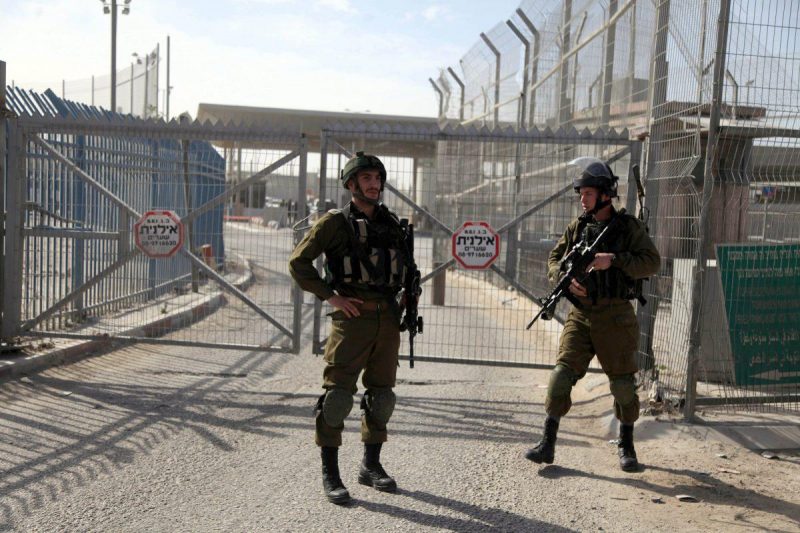

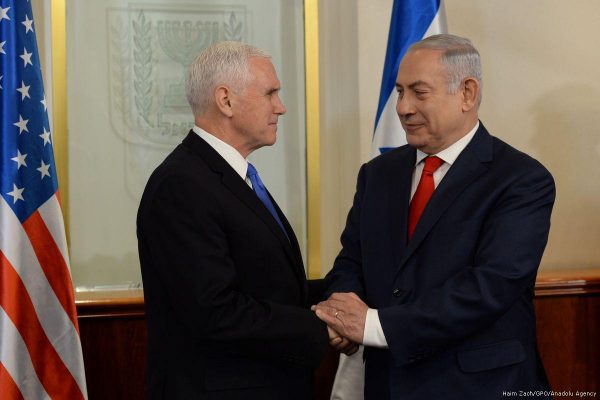
 Aletho News
