Palestinian Authority leader Mahmoud Abbas should be aware by now that he can no longer be taken seriously. As evidence of a shrinking Palestine continues to accumulate, Israel and the international community are well aware of this and are applying two complementary strategies. While Israel passes legislation to annex areas of the occupied West Bank colonised by illegal, Jewish settlers, the international community has quietly departed from the scene of its recent condemnations over the US-approved Israeli appropriation of Jerusalem.
The legislation was described by Israel’s Public Security Minister Gilad Erdan as a “moral right and obligation towards our settler brothers,” indicating the dependency of the colonial entity upon the expansion of its settler-colonies for its own survival. This prompted Abbas to make one of his weakest statements ever: “We shall make important decisions during 2018, including regarding legal avenues, in order to hold Israel accountable for its grave and systematic violations of international law, and to revisit agreements signed with Israel.”
A leader with decolonisation in mind would not stoop so low. Decades have proven that Israel cannot be held accountable and the international community is adamant that it will not try to reverse this impunity. Indeed, UN votes to one side (they mean little), the world is equally assertive that Palestinians should remain tethered to Israeli hegemony until there is no further need to sustain that narrative and the ethnic cleansing of Palestine is complete.
Nothing that Abbas says or does in 2018 can be deemed to be an “important decision”. Giving a hint of what he has in mind, the PA leader called upon the international community “to look at the Israeli incitement against Palestinian rights that is particularly recurrent among members of the government coalition.”
There are many weaknesses in Abbas’s statement. First of all, the international community does not need reminders; it is, quite simply and willfully, ignoring Israel’s violations of international law. To crawl and beg continuously in front of a complicit international community has harmed the people of Palestine in the long run; while Israel is rapidly executing its expansionist plans (and executing Palestinians extrajudicially in the process), Abbas is misinterpreting the whole colonial project as a series of isolated violations which he loosely labels “incitement”.
This begs the question of whether or not it is still correct to speak of Israeli incitement. Given the impunity that Israel enjoys, it is imperative that incitement is analysed critically and specified, rather than used as a convenient term to describe actions taken by Israel which result in the loss of Palestinian rights, land and lives. The prelude to such loss is indeed incitement, but it was initiated decades ago. For Abbas to speak of it as if it were something new is a bonus for Israel. Palestinians are witnessing a denial of the current political violence by the leaders which claim to represent them.
Hence, Abbas would do well to refrain from redundant statements which entrench the politically inferior position imposed upon him by Israel, the PA and the international community. If Israel’s legislation paves the way for the physical end of the two-state compromise, why are Abbas and members of the international community still insisting upon what is clearly an obsolete paradigm as the “only” solution? The answer is clear to anyone with eyes and the will to see: by adhering to the concept, Palestinian leaders and the UN are taking several steps backwards and thus buying time for Israel to complete its obliteration of Palestine unhindered. This tactic has been obvious for decades. As Israel prepares to annex most of the West Bank, Abbas bleats about “incitement”; he really can’t be taken seriously anymore.
January 3, 2018
Posted by aletho |
Ethnic Cleansing, Racism, Zionism, Illegal Occupation, Timeless or most popular | Israel, Israeli settlement, Palestine, Zionism |
Leave a comment
Introduction
The Trump regime proclaimed that the vote in the General Assembly of the United Nations regarding the recognition of Jerusalem as the capital of Israel was a strategic US decision.
Both President Trump and his bombastic UN Ambassador Nikki Haley threatened that all decisions and agreements regarding alliances, loans, aid and diplomatic relations were at stake.
Moreover, the Trump regime clearly defined the style and substance of US imperial dictates: All UN member nations (large and small) must grovel in the most abject manner to his orders. Ambassador Haley demanded that each nation on earth accept Trump’s and the racist-Zionist Netanyahu’s declaration that the ancient city of Jerusalem is the eternal, undivided and ethnically managed capital of the Jews. Trump’s message was loud and clear – he was the great ‘decider’ and the UN votes would identify America’s true friends and enemies. “We are making a list… and there will be consequences…”
Clearly Trump’s boast of US power and Haley’s assumption that her terrifying threats would ensure that Washington had a majority vote in the ‘gifting’ of Jerusalem to Zio-fascism. They believed that US dominance and global hegemony was absolute and unassailable. The vote proved something else, something very new was happening.
The US suffered an overwhelming and humiliating defeat, one that kept Ambassador Haley’s dexterous fingers busy ‘taking notes’: 128 nations demanded that the Trump regime withdraw its declaration that Jerusalem was Israel’s undivided capital for Jews. Only 9 micro-nations (some mere postage stamps and a few death-squad banana-stans) voted with the Trump-Haley decision, 35 mendicant-states put their heads down and abstained while 21 timorous ambassadors chose to hide their shamelessness in the toilet stalls rather than show up for this important vote.
Political Context
First and foremost it is important to discuss the steps leading up to the US suffering such a crushing debacle. In other words, who was responsible for leading the Trump Administration by the nose down the blind alley of submission to the dictates of Zio-fascism.
The leader and driving force behind the UN disaster was Israeli Prime Minister Benjamin Netanyahu whose quest to seize Jerusalem and convert it into the ‘eternal’ capital of the Jews was his top priority. For decades the entire world has rejected Israel’s seizure of Jerusalem and its conversion into an ethnically cleansed capital for the ‘Jewish’ state. The UN and international jurists denounced Israel’s colonial conquest and ethnic cleansing of Palestine.
Netanyahu took charge with the election of Donald Trump as President. Operation Jerusalem was his first order to Puppet Donald. A number of Israel-First multi-billionaires, who financed Trump’s electoral campaign, demanded an immediate pay-off from their puppet: The Administration’s unconditional support for Netanyahu’s agenda. Despite protests from the rest of the world, especially the US closest European allies, Trump plunged the nation right into the Zionist soup: a Jewish Jerusalem; the systematic eviction of all Arabs, Christian, Muslim and secular, and the eventual annexation of all of Palestine; as well as an increasing military confrontation with Iran.
Real estate speculator, Jared Kushner, Trump’s pampered son-in- law, and a complete Netanyahu flunky, became the senior advisor for the Middle East. Kushner pressured Trump’s National Security Advisor General Michael Flynn to intervene with Russia on behalf of Israel’s take-over of Jerusalem. Flynn was subsequently prosecuted for discussing global US Russian relations and the ‘good soldier’ is falling on his sword on behalf of the Zionists. Not surprising, the Congressional Democrats, the FBI and the Special Prosecutor found it easier to prosecute Flynn for his discussion regarding de-escalating the tense US-Russian relations provoked by the Obama administration than his discussions with the Kremlin in support of Israel’s seizure of Jerusalem!
Netanyahu’s operational weapons in manipulating US policy involved Jared Kushner, the billionaire Israel-First donors, the AIPAC and UN Ambassador Nikki Haley. Tel Aviv succeeded in securing Trump’s commitment to the Israeli agenda, despite opposition from the entire UN National Security Council and the overwhelming majority of the General Assembly. In the style of a typical authoritarian, US President Trump grovels at the feet of his ‘superior’, Israeli Prime Minister Benjamin Netanyahu, while tearing at the throats of his ‘inferiors’, the 193 member nations of the UN General Assembly.
Netanyahu’s vitriolic bar room threats against the entire membership of the UN prior to the vote ensured the repudiation of all Security Council representatives with the exception of his South Carolina puppet, Ambassador Nikki Haley. Trump and Haley backed the blustering Netanyahu by issuing gangland threats to all UN representatives who dare to oppose Washington’s dictates.
In this way, Prime Minister Netanyahu secured the greatest diplomatic and political success of his career – the total submission of the US to his agenda, at the risk of a major humiliation in the UN. This, in effect, formalized Israeli hegemony over Washington, for the world to see.
In contrast to Netanyahu’s beaming success, the US suffered a historic diplomatic defeat: Fourteen times as many nations voted against the demands of the US President over– Netanyahu’s grab of Jerusalem.
What makes the defeat even more striking is the fact that all major allies and most of the biggest aid recipients openly defied the US threats. Eight of the ten biggest US aid recipients voted against Trump–Netanyahu–Haley. This bizarre troika is now left with an enemy list circling the entire globe, and a few timorous allies in the South Pacific and among the death squads of Guatemala.
Trump’s total and puerile embrace of the raving Netanyahu has exposed and widened fissures in US global hegemony.
Apart from ‘capturing’ Netanyahu’s vote, the other pro Trump nations included a handful of insignificant Pacific islands (Marshall Islands, Palau, Micronesia), Togo, a corrupt African mini-state and two banana-sized ‘death squad democracies’, Honduras and Guatemala. The latter two regimes hold power via stolen elections backed by narco-thugs in the pay (dubbed ‘foreign aid’) of the US.
All of the leading Asian and Western European countries voted against Trump. They openly rejected the crude blackmail of the US-Israel duet. Subservient regimes in Eastern Europe, corrupt regimes in Latin America and some horrifically impoverished nations in Africa and Asia chose to abstain or excuse themselves to the bathrooms of Times Square. Narco-neo-liberal regimes in Mexico, Colombia, Paraguay, Panama and the Dominican Republic abstained. Even rightwing Eastern European regimes, which usually give unquestioned support to all US demands, like Romania, Bosnia, Poland and Latvia defied Nikki Haley’s ‘name taking’ by abstaining. The ‘no-shows’ (hiding in the toilets) included US puppets like Georgia, Samoa, St Kitts and Tonga.
An openly humiliated UN Ambassador Haley was left with the task of thanking the abstainers and ‘no-shows’ for their courage and preparing a few bags of goodies (matzos, Mogan David wine and discounts to the brothels of Tel Aviv) for the torturers of Honduras and half-drowned ‘leaders’ of Palau in gratitude for such loyalty.
Conclusion
Clearly Trump’s championing of a racist, colonialist, ethnic cleansing state like Israel is viewed as a strategic diplomatic disaster. The Manhattan egomaniac has tied the US fortunes to the whims of a pariah state led by a complete lunatic.
Trump’s decision to demonstrate total loyalty to his Zionist billionaire campaign ‘donor-owners’ and his Israel-First son-in-law in his first major foreign policy decision failed to impress any of the influential nations of the world – East or West. Indeed, it showed how fractured and dangerously dysfunctional the US Administration had become.
Most important, Trump’s proclamation of a unipolar world based on his notion of the US’s economic power has collapsed. Israel, despite Haley’s bluster and list-taking, has no legitimacy. It’s continued Mossad assassinations of leading Palestinians and others and the increasing IDF slaughter of the spontaneous Palestinian civilian resistance has failed to improve its international standing – except among Guatemalan torturers.
However, it is not clear that the US has lost its big power influence regarding other regional conflicts. The subsequent UN Security Council vote in favor of Washington’s demands for added sanctions against North Korea demonstrated Trump’s power to intimidate the oligarchs and leaders of China and Russia.
In other words, limits on US power still depend on the issues, the allies, the diplomatic appeals, the adversaries and the distribution of benefits and costs.
In the case of Jerusalem, Real Estate Mogul Trump’s bizarre decision to hand an entire city over to the Zionists alienated all Muslims and Christians the world over, as well as the secular Western liberal nations and emerging powers, like Russia and China. The US tied its prestige to the whims of a paranoid nation arrogantly flaunting its racist superiority complex, backed by groups of immensely wealthy overseas dual citizens.
Diplomatically, Israel’s vituperative responses to any legal criticism from world bodies undermines its chances of coalition building.
Finally, Washington’s support for Israel’s perpetual and overt violation of international law and its bombing of humanitarian missions makes Israel a very costly ally.
January 1, 2018
Posted by aletho |
Ethnic Cleansing, Racism, Zionism, Illegal Occupation, Timeless or most popular, War Crimes | Benjamin Netanyahu, Israel, Jerusalem, Palestine, United States, Zionism |
Leave a comment
A planned visit to Israel by US Vice President Mike Pence has been indefinitely postponed, according to Israeli officials.
The trip which had been expected to take place in mid January is not on the Israeli foreign ministry’s schedule, according to The Times of Israel.
“The visit is not included in our provision of scheduled visits of high-level dignitaries in January,” ministry spokesman Emmanuel Nahshon said.
No new date has yet been set for the vice president’s visit.
Pence originally postponed a planned mid-December trip to Israel so he could preside over the Senate vote on the Republican tax plan.
But the delay also followed region-wide protests over President Donald Trump’s decision to recognize Jerusalem al-Quds as the “capital” of Israel.
At the time, Palestinian authorities canceled a planned meeting with the US vice president to protest Trump’s declaration.
A White House official said back then that Pence would visit the occupied territories in mid-January instead.
The entire Jerusalem al-Quds is currently under Israel’s control, while the regime also claims the city’s eastern part, which hosts the third holiest Muslim site.
The city has been designated as “occupied” under international law since the 1967 Arab War. It remains at the core of the Israeli-Palestinian conflict, with Palestinians hoping that the eastern part of the city would eventually serve as the capital of their future state.
Palestinians have repeatedly warned Trump against recognizing al-Quds as Israel’s capital, saying it would deliver a death blow to any prospects of the resolution of the Palestinian-Israeli conflict and fuel extremism in the region.
Pence’s original schedule also included a stop in Egypt. The head of Egypt’s Coptic Church, Pope Tawadros II, also called off a planned meeting with Pence.
January 1, 2018
Posted by aletho |
Ethnic Cleansing, Racism, Zionism, Illegal Occupation | Israel, Jerusalem, Palestine, United States, Zionism |
Leave a comment
A backlash against New Zealand singer Lorde continues in the wake of her decision to call off her concert in Israel amid pressure from her fans following Trump’s Jerusalem move.
A full-page advertisement calling Lorde a bigot and accusing New Zealand of harboring a bias against Israel appeared on the fifth page of the Washington Post’s December 31 edition.
The ad features Lorde’s photo over the picture of men running through ruins with babies and Israeli flags streaming in the wind. The headline says “Lorde and New Zealand ignore Syria to attack Israel.”
It slams the 21-year-old singer’s decision to cancel a concert in Tel Aviv following a wellspring of Muslim fans urging her not to go there, noting that she had joined the global boycott of Israel but “will perform in Russia, despite Putin’s support for Assad’s genocide in Syria.”
The advertisement adds that Lorde’s move shows how a “growing prejudice against the Jewish State” in New Zealand is “trickling down to its youth.”
As for New Zealand, the ad points out the country’s support for the UN resolution urging the US to revoke its decision to recognize Jerusalem as Israel’s capital, while citing New Zealand’s co-sponsorship of a UN resolution condemning illegally-built Israeli settlements in Palestinian territories. The resolution, which was approved by every member of the UN Security Council except the US (which abstained), was endorsed by both Amnesty International and Human Rights Watch.
“Let’s boycott the boycotters and tell Lorde and her fellow bigots that Jew-hatred has no place in the twenty-first century,” the ad reads.
Commenting on the advertisement in the Post, the New Zealand Jewish Council said that the council is “committed to dialogue and tolerance and distances itself from the inflammatory and aggressive material that stoops to the level of BDS [Boycott, Divestment, Sanctions movement] rather than rising above it.”
“We are disappointed with Lorde’s decision to cancel her show after pressure from the discriminatory BDS movement and invite Lorde to continue learning about the region,” the council’s statement reads.
Lorde called off her June concert in Tel Aviv, giving in to the mounting pressure from activists of the Boycott, Divestment, Sanctions movement (BDS), which aims “to end international support for Israel’s oppression of Palestinians and pressure Israel to comply with international law,” according to its official website.
She was also influenced by an open letter written by her fans from New Zealand, which stated that the show in Tel Aviv would demonstrate support for Israel’s occupation of Palestine.
“I’ve received an overwhelming number of messages & letters and have had a lot of discussions with people holding many views, and I think the right decision at this time is to cancel the show,” Lorde said, as quoted by Naranjah, the Israeli promoters of her show.
The decision was made after what the New Zealand pop star deemed as her “learning all the time” and “considering all options” available to her.
January 1, 2018
Posted by aletho |
Ethnic Cleansing, Racism, Zionism, Illegal Occupation, Solidarity and Activism, War Crimes | Israel, New Zealand, Palestine, Zionism |
Leave a comment
Israel’s government has approved an agreement with the EU that includes a provision excluding funding for settlements, seemingly consenting to the EU’s boycott of settlements.
The agreement centers on Israel’s part in the EU’s ENI Cross-Border Cooperation in the Mediterranean (CBC Med) program, which provides funds for projects for non-EU countries in the Mediterranean area, such as Israel, Egypt and Jordan, Haaretz reports. The projects are largely focused on promoting development, education, technology and environmental sustainability.
As per EU policy, the ENI CBC Med agreement contains a provision which excludes areas outside Israel’s 1967 borders from receiving grants. This means Israeli settlements inside the West Bank, East Jerusalem and the Golan Heights (which were occupied by Israel in the conflict) cannot receive funding under the program.
Israeli settlements inside Palestinian territories are considered both an impediment to the peace process between Israelis and Palestinians, and to be in violation of a number of UN resolutions and the Fourth Geneva Convention.
Israel’s Culture and Sport Minister, Miri Regev, voiced her objections to the agreement to the cabinet secretary earlier in the month. She fought against the deal at the cabinet meeting, the Jewish Press reports, but no other minister agreed to second her motion to delay the vote pending further debate.
The deal was given final approval by the government Sunday, after Prime Minister Benjamin Netanyahu signed off on the measure last week. It’s also been approved by the Justice Ministry and Foreign Ministry, Haaretz reports. The foreign ministry is said to have led the charge for Israel to be part of the program.
The agreement is at odds with the Israeli government’s stance on settlements, which it continues to develop within the occupied territories in disregard of the EU and others’ condemnation. Netanyahu is also a fierce opponent to the international Boycott Divestment and Sanctions (BDS) movement which calls for boycotts and sanctions against Israel.
“My fundamental position is that the Israeli government should reject agreements from the outset that require us on a de facto basis to boycott portions of the homeland or populations living in the Golan Heights, Jerusalem or Judea and Samaria [the West Bank] other than with very limited exceptions,” Regev wrote in her letter.
“I do not see the justification to compromise and with one hand sign the agreement while with our other demanding that the world give de facto recognition to our right to a united Jerusalem and even to move embassies to Israel’s capital,” she added.
Aside from the settlement matter, Regev’s letter to Cabinet Secretary Tzachi Braverman also took issue with the text of the agreement referring to the Palestinian Authority “as if it were a neighboring country.”
It is “not acceptable to me,” she said.
The far-right Regev managed to halt a similar agreement with the EU last year. A Creative Europe culture and media program contained a similar provision excluding settlements, and, although Netanyahu had given consent, Regev stopped it from going ahead. Earlier this month, Regev succeeded in forcing the NBA remove a reference to Palestine as being “occupied territory.”
Read more:
December 31, 2017
Posted by aletho |
Ethnic Cleansing, Racism, Zionism, Illegal Occupation, War Crimes | European Union, Israel, Palestine, United Nations |
Leave a comment
On Saturday buses arrived in the villages of Mugr al-Mir and Mazaria Beit Jinn in the so-called ‘Hernon Pocket’ to transport the fighters of al-Nusra Front to Idlib and Daraa governorates. The pocket extended into government-held territory southwest of Damascus from the Israeli-occupied Golan Heights. According to a Syrian Arab Army (SAA) military strategic analyst, Brig. Gen. Heitham Hassun, the move will help liberate the southwestern part of Syria from terrorists.
“This will allow [the SAA] to free the entire southwestern region of Damascus from terrorists,” Brig. Gen. Hassun told Sputnik Arabic. “It is especially important to take under the SAA’s control [the territories] north of the province of Quneitra, which the Israelis had planned to manage with the assistance of the militants. Now, by retaking Mugr al-Mir and Mazaria Beit Jinn, the army will be able to conduct an operation to liberate all the terrorist-controlled areas adjacent to the occupied Golan Heights.”
The local government managed to strike a deal with the al-Nusra jihadists through intermediaries on joining the program of reconciliation and establish a ceasefire regime in the area. The victories of the SAA, which allowed the government forces to gain control over the dominant terrain, contributed to the success of the talks.
According to the military analyst, residents of local villages are making every effort to facilitate the advancement of the Syrian government forces. For instance, they provide information to the SAA about the location and the numerical force of jihadists.
Brig. Gen. Hassun said that, for its part, Israel is providing the extremists with intelligence concerning Syrian government troops. Additionally, the Israelis continue to supply weapons to terrorist groups and provide fire support if necessary, the military analyst underscored. It appears that Syria’s southern neighbor is unwilling to give up its plans for this part of Syria, the brigadier general suggested.
The Golan Heights remain an apple of discord for Damascus and Tel Aviv, prompting tit-for-tat strikes in border areas. Israel’s occupation of the western two-thirds of the Golan Heights (known in Syria as Quneitra governorate) prevents the states from signing a peace treaty. The annexation of the disputed area started during the Six-Day War in 1967 and has been repeatedly condemned by the UN in 1981 and 2008.
The eastern Golan Heights, which remained in Syrian hands following the Six-Day War and 1973 Yom Kippur War, became the target of the al-Qaeda-affiliated al-Nusra Front, as well as Daesh terrorists and other Syrian opposition forces, during the ongoing war.
Meanwhile, according to Sputnik’s source, on Friday the Syrian government forces expelled terrorists from the Abu Dali settlement in the north-east of Hama province.
Located on the border between Hama and Idlib, the settlement was used by the terrorists to disrupt the supplies from one city to another.
The SAA continues to crack down on terrorists following Russia’s partial withdrawal from Syria after a two-year-long aerial campaign. The decision to pull out was announced on December 11 by Russian President Putin, who specified, however, that the bases in Tartus and Hmeymim, as well as the center for Syrian reconciliation, would continue to operate.
On December 26, Defense Minister Sergei Shoigu signaled that Russia has started to form a permanent group in Syria’s Tartus and Hmeymim. The Russian military contingent is armed with advanced weaponry systems including the cutting edge S-400 system, while S-300 surface-to-air missile systems, as well as the Bastion coastal missile systems with cruise missiles.
December 31, 2017
Posted by aletho |
Ethnic Cleansing, Racism, Zionism, Illegal Occupation, War Crimes | al-Nusra Front, al-Qaeda, Da’esh, Israel, Syria, Zionism |
Leave a comment
Defense Secretary Jim Mattis says he is expecting to see a larger US civilian presence in Syria, where there are already 2,000 American troops without the authorization of the Syrian government.
Mattis said Friday that the US would deploy more contractors and diplomats to the war-torn country, with which Washington has suspended diplomatic relations.
“What we will be doing is shifting from what I would call an offensive, shifting from an offensive terrain-seizing approach to a stabilizing… you’ll see more US diplomats on the ground,” Mattis told reporters at the Pentagon.
“Well when you bring in more diplomats, they are working that initial restoration of services, they bring in the contractors, that sort of thing,” he added.
“There is international money that has got to be administered, so it actually does something, it doesn’t go into the wrong people’s pockets.”
He also claimed that the diplomats and contractors might train local forces in parts of the country retaken from Daesh to clear improvised explosive devices (IEDs) and hold territory to help ensure that Daesh does not take back territory.
“It is an attempt to move towards the normalcy and that takes a lot of support,” said Mattis.
He did not give any specific information about the number of US diplomats who would serve in Syria and when.
Daesh unleashed a campaign of bloodshed and destruction in Syria in 2014, overrunning considerable expanses of territory.
The same year saw the United States launch a so-called campaign against the terrorists together with a coalition of its allies.
The military alliance had done little in the fight against Daesh, and has instead been repeatedly accused of targeting and killing civilians and hampering Syrian government operations against the Takfiri group.
The so-called Syrian Observatory for Human Rights (SOHR) reported on November 23 that 2,759 civilians, including 644 minors and 470 women, had been killed in US-led aerial attacks against civilian areas in Syria over the past 38 months.
The American forces support the anti-Damascus Kurdish militants in the north, who have, according to Syria, been seeking to gain more territory under the pretext of fighting terror.
December 29, 2017
Posted by aletho |
Illegal Occupation, War Crimes | Syria, United States |
Leave a comment
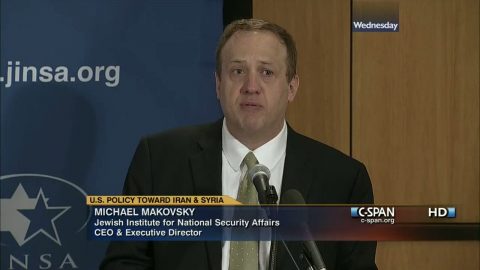
The 20th century was rife with partitions, many of them involving European powers carving up colonial possessions in Africa and the Middle East with what often appears to have been little or no concern for local realities. Perhaps the most famous of these free-hand attempts at state creation is the Sykes-Picot Line, whose legacy is very much still with us (and not for the better). But Sykes-Picot is far from the only example of European colonial borders that are still causing problems decades after they were drawn.
But who cares about all of that? It doesn’t seem to be an issue for at least some of America’s anti-Iran hawks. In response to Iran’s rising profile in the Middle East, fueled mostly by a war those neocons ardently championed and the striking ineptitude of the hawks’ new favorite Persian Gulf monarchy, the intellectual heirs to the men who drew those ill-fated borders are proposing, long after it might have done any good, to re-draw them.
Writing for Fox News on December 25, Michael Makovsky—who is no fringe figure, being CEO of the neoconservative Jewish Institute for National Security Affairs (JINSA)—suggests just such a strategy for countering Iranian influence in the Middle East:
Maintaining Syria, Iraq, Lebanon and Yemen in their existing forms is unnatural and serves Iran’s interests. There is nothing sacred about these countries’ borders, which seem to have been drawn by a drunk and blindfolded mapmaker. Indeed, in totally disregarding these borders, ISIS and Iran both have already demonstrated the anachronism and irrelevance of the borders.
Syria, Iraq, Lebanon and Yemen are not nation-states as Americans understand them, but rather post-World War I artificial constructs, mostly created out of the ashes of the Ottoman Empire in a colossally failed experiment by western leaders.
With their deep ethno-sectarian fissures, these four countries have either been held together by a strong authoritarian hand or suffered sectarian carnage.
It is astonishing to read neoconservatives, who have done little else since the 1970s but lobby for exerting American hegemony in the Middle East, decry the results of the exertion of European hegemony in the Middle East. It reads like an artificial intelligence that just briefly verges on full self-awareness before pivoting and falling back to safer ground. It’s particularly rich for Makovsky, whose JINSA predecessors promoted the ouster of two of those “strong authoritarian hands” in former Iraqi leader Saddam Hussein and former Yemeni President Ali Abdullah Saleh, to bemoan one result of their ouster.
But let’s focus on the proposal Makovsky makes: redrawing borders in the Middle East, creating what he calls “loose confederations or new countries with more borders that more naturally conform along sectarian lines,” in order to counter Iran. The proposal strongly resembles recommendations found in “A Clean Break: A New Strategy for Securing the Realm,” a 1996 publication of the Jerusalem-based Institute for Advanced Strategic and Political Studies that was prepared in collaboration with several other neoconservative think tanks—including JINSA.
“A Clean Break,” the conclusion of a task force that included such Likudnik geniuses as Richard Perle, Douglas Feith, and David Wurmser, argued in part that Israel should work with friendly governments in Turkey and Jordan to contain regional threats, particularly coming from Syria. It concluded, among other things, that Israeli leaders should pursue “removing Saddam Hussein from power in Iraq-an important objective in its own right-as a means of foiling Syria’s regional ambitions.” “Syria” in this context serves as a stand-in for “Iran.” Long-term, the report envisioned the formation of a “natural axis” of Israel, Turkey, Jordan, and a “Hashemite” Iraq serving as “the prelude to a redrawing of the map of the Middle East, which could threaten Syria’s territorial integrity.”
Even a cursory glance at the state of the Middle East since the end of the Iraq War shows that ousting Saddam Hussein achieved the opposite of the report’s stated goals. The idea of a Hashemite restoration in Shia-majority Iraq was ridiculously far-fetched, and Iraq’s democratically-elected government has–justifiably–greatly improved the Baghdad-Tehran relationship. Makovsky, who wants to reverse this trend, argues that the United States should “declare our support and strong military aid for an eventual Iraqi Kurdish state, once its warring factions unify and improve governance. We could support a federation for the rest of Iraq.”
In Makovsky’s imagination, the new Kurd-less Iraqi federation would presumably wish Erbil well and send it on its way. In reality, another serious Kurdish move toward independence would probably lead to a civil war, as it nearly did in October over the status of Kirkuk. Iraqi Prime Minister Haider al-Abadi’s first foreign trip after his dramatic capture of Kirkuk was… to Iran. If the United States were to come out in full support of an independent Kurdistan, it would almost certainly push the rest of Iraq more firmly into Iran’s orbit. Speaking of Kirkuk, does Makovsky imagine that independent Kurdistan would be given the city and its surrounding oil fields? If yes, then that only increases the chances of a war with Baghdad. If no, then there are serious questions about whether that hypothetical Kurdish state would be economically viable.
For Syria, Makovsky says that “we could seek a more ethnically coherent loose confederation or separate states that might balance each other – the Iranian-dominated Alawites along the coast, the Kurds in the northeast, and the Sunni Arabs in the heartland.” He might want to check a recent map of Syria, because while “heartland” is obviously a subjective term, by almost any definition Syria’s “heartland” now belongs to President Basher al-Assad and his Russian and Iranian allies. This includes the country’s five largest (pre-war) cities: Aleppo, Damascus, Homs, Latakia, and Hama. How does Makovsky propose any of that territory be taken from Assad so as to be turned over to “Sunni Arabs,” even in a confederate sense? If the answer is “war,” then his Fox News thinkpiece is burying the lede to say the least.
Makovsky then recommends that the U.S. strengthen relations with Shia-majority Azerbaijan, in order to “demonstrate we are not anti-Shia Muslim.” Yes, that should do the trick. Of course, that’s not the only reason:
An added potential benefit of this approach could be a fomenting of tensions within Iran, which has sizable Kurdish and Azeri populations, thereby weakening the radical regime in Tehran.
You might even say that it could threaten Iran’s territorial integrity. Make a Clean Break, if you will.
The dangers of the United States trying to redraw Middle Eastern borders—Makovsky graciously allows that America “cannot dictate the outcomes” but should instead “influence” them—should be obvious. For one thing, there’s the immediate likelihood that attempting to draw new borders would intensify regional instability. For another, there’s little reason to expect that the United States would get the new borders any more “right” than Britain and France did a century ago, particularly not when the process is being managed by the same people who brought us the invasion of Iraq. For still another, the most recent example of such Western “influenced” partitioning isn’t exactly a positive one.
But we can’t leave Makovsky’s piece without mentioning its most jaw-dropping paragraph (emphasis ours):
Artificial states have been divided or loosened before with some success, such as the Soviet Union, Yugoslavia and Czechoslovakia, which are all post-WWI formations. Bosnia and Herzegovina have also managed as a confederation.
Czechoslovakia divided peacefully of its own accord. The Soviet Union more or less did likewise, though that dissolution hasn’t been quite so peaceful in recent years. As for Yugoslavia—well, maybe Dr. Makovsky’s definition of “success” is a bit different from most other people’s. To be fair, though, if the breakup of Yugoslavia is his template for the future of the Middle East, this piece makes a lot more sense.
But if Makovsky believes in federalizing existing Middle Eastern states along “ethno-sectarian” lines, why not start with Israel and the Occupied Territories, a notion that would seem logical to any 21st century mapmaker? After all, occupation of one people by another via a “strong authoritarian hand”—in this case the IDF—would seem to be a prescription for a “colossally failed experiment,” no? Perhaps Makovsky’s experience as a former West Bank settler may make it difficult for him to see the relevance.
December 29, 2017
Posted by aletho |
Illegal Occupation, Timeless or most popular, War Crimes, Wars for Israel | JINSA, Michael Makovsky, Middle East, United States, Zionism |
Leave a comment
The Russian Foreign Ministry has commented on the recent statement of Turkish President Recep Tayyip Erdogan, calling his Syrian counterpart Bashar al-Assad a “terrorist”.
“Such evaluations do not have any legal basis… Such statements are groundless,” Russian Foreign Ministry spokesperson Maria Zakharova said during a briefing on Thursday, adding that the representatives of the Syrian government are members of the UN and represent the country’s government in the UN Security Council.
The statement was made after on December 27, Turkish President Recep Tayyip Erdogan called his Syrian counterpart “definitely a terrorist who has carried out state terrorism” during a meeting with Tunisian president Beji Caid Essebsi, adding that “it is impossible to continue with him”, claiming that Assad had allegedly killed about a million of Syrian citizens.
The Syrian Foreign Ministry responded to these claims by saying that Erdogan was deceiving the public opinion in Turkey by claiming that Assad should not remain in power, adding that Ankara’s policy “causes catastrophic consequences” for both countries. The Syrian president has repeatedly denied all allegations of targeting civilians.
While both Russia and Turkey are the guarantors of the Syrian ceasefire and brokers of the Astana peace talks, their positions on the role of Assad in the future of the Arab Republic have differed since the civil war’s beginning in 2011.
While Moscow has repeatedly stressed that Assad was a legitimate president, underlining that it was up to the the Syrians to decide their own future, Ankara has been insisting that the Syrian president should leave his post.
A similar stance has been recently voiced by German Foreign Minister Sigmar Gabriel, who said that the future of the Arab Republic’s president and his government could only be resolved through talks.
In his turn, Assad has previously refused to consider Ankara as its partner or a guarantor state in the peace talks, accusing the country of supporting terrorism.
READ MORE: ‘Assad Mustn’t Go’: How Qatar, France, Germany ‘Wised Up in Regard to Syria’
December 28, 2017
Posted by aletho |
Illegal Occupation, Mainstream Media, Warmongering | Russia, Syria, Turkiye |
Leave a comment
President Trump’s recent defeat in his effort unilaterally to alter the status of Jerusalem in defiance of international law highlights the nature of the relationship between the United States and African countries. The U.S. ambassador to the United Nations let it be known before the vote on the General assembly resolution that Donald Trump will take personally any opposition to his policy on Jerusalem. The President himself has made allusions to countries that take American billions and then do what they like. In effect, the United States is monetizing loyalty to President Trump.
American frustration with the United Nations is not new. There were similar immoderate reactions to resolutions that went against State Department policy in the 1960s when Burkina Faso (then called Upper Volta), Nigeria, Ghana and Guinea, four of the thirty-six African countries that voted for the resolution to uphold international law on Jerusalem’s status (outnumbering African abstainers and no-shows combined) showed independence of thought from the United States. Then, as now, American money had been wrongly assumed to guarantee deference to the State Department. [1]
Among the many issues in contention in the 1960s were i. admission of Communist China to the General Assembly, ii. African arms proliferation, and perhaps most important of all, iii. régime-change in Congo by the removal of Patrice Lumumba, Congo’s newly elected leader in favour of his opponents backed by Belgium, the UK and the United States.
During the Congo crisis, the U.S paid a substantial proportion of the cost of the UN peace-keepers in Congo (40% according to David N. Gibbs and 50 % according to Secretary of the Treasury, Robert Anderson) and grew increasingly disgruntled with its inability to dominate the situation.[2]
“Secretary Herter said he had the strong feeling that our interests have not been advanced by the way the UN operation in the Congo had been conducted. In response to a question from the President, Secretary Herter said both the Secretary General of the UN and Dayal, the UN Representative in the Congo, were responsible for this situation. […]
“The President said one of our most serious problems soon would be the determination of our relations with the UN. He felt the UN had made a major error in admitting to membership any nation claiming independence. Ultimately, the UN may have to leave U.S. territory. (Foreign Relations of the United States, 1961–1963, Volume XX, Congo Crisis, Document 4, Editorial Note.)[3]
U.S. policy towards the UN became aggressive. The Administration felt itself to be in a strong enough position to demand staff changes at UN Headquarters and to determine the composition of United Nations Operation, Congo (UNOC) in order to attain its objective of dictating political developments in that country. Having encouraged Congolese Chief of State Kasavubu to denounce elected Prime Minister Lumumba in a radio broadcast, resulting in Lumumba’s seeking refuge under UN military guard, American officials became concerned that Special Representative of the UN Secretary General to Congo, Rajeshwar Dayal, was in favour of Lumumba’s reinstatement (UN troops had blocked four attempts to abduct Lumumba by Congolese troops loyal to the opposition.)
Meanwhile African countries in favour of reinstating Lumumba attended a conference in Casablanca and discussed withdrawing their troops from UNOC in protest of Lumumba’s treatment. In a telegram to the U.S. mission to the UN dated January 12, 1961, the Department of State said:
“You should approach SYG [acronym for UN Secretary General] soonest with view obtaining his full assessment current situation in Congo. In course discussion you should make following points:
U.S. greatly concerned that situation in Congo has seriously deteriorated despite fact UNGA [United Nations General Assembly] has accepted Kasavubu authority and UN has nearly 20,000 troops stationed in Congo. Pro-Lumumba elements, with outside support contrary to UN resolutions, extending their influence to substantial part of Congo territory. We are especially disturbed at reports, as yet unconfirmed, that participants Casablanca Conference secretly agreed there should be coup d’etat in March in which their troops would be used outside UNOC framework to assist in restoring Lumumba to power, confronting UN with fait accompli. We believe SYG should be reminded strongly that if Congo falls under Communist domination while UN sharing major responsibility for security of country, the results in U.S. public and Congressional opinion likely to be extremely damaging to UN. We therefore request he consider taking all necessary steps to rectify situation. Following are concrete suggestions we hope he will consider urgently:
+ Replace Dayal soonest (emphasis added). As result series of incidents, we have no doubt Dayal’s sympathy for return Lumumba and that his conduct of UNoperations reflects this bias. We believe his removal too long delayed, and that Dayal’s activities have contributed substantially to deterioration of situation in Congo.
+ Now that Guineahas requested withdrawal its troops from UNCommand, we believe SYG should consider encouraging withdrawal of those other contingents who have proved most unreliable and who threatened withdrawal anyway. In particular, Ghana, the UAR and perhaps even Morocco.
+ To fill future requirement, believe SYG should again consider urgently requesting troops from more reliable countries, such as French-African States, Latin America, etc. and increasing contingents from reliable countries already furnishing forces.”[4]
During this time the U.S. reconsidered its relationship with the UN. It was uncomfortable with the new African membership which displayed a trait of voting independently of the American position. More than ten African countries attained independence in 1960 alone.
“The President said one of our most serious problems soon would be the determination of our relations with the UN. He felt the UN had made a major error in admitting to membership any nation claiming independence. Ultimately, the UN may have to leave U.S. territory. (emphasis added)”[5]
By the time the National Security Council (NSC) was being told this, the Department of State together with the Central Intelligence Agency and the U.S. ambassador to Congo, Clare Timberlake had established contact with one Colonel Joseph Mobutu, commander of the Congolese army loyal to the administration in Leopoldville. Mobutu, not yet a strongman in 1960, had witnessed an abortive attempt by President Kasavubu, coached by the U.S., to unseat the elected Prime Minister of Congo by means of a parliamentary vote of no-confidence. Mobutu approached the CIA Station in Leopoldville and expressed his determination to keep Communism out of Congo. As a result, he was co-opted as the U.S. main contact in Congo eventually gaining Western support for his palace coup and going on to rule for thirty-two undemocratic and resource-draining years.
Newly independent African countries were recognized as a matter of course, as and when they gained independence. Two types of leaders are discernible to U.S. officials; the ‘moderate’ or ‘pro-Western’ or more accurately, the amenable to U.S. promptings and proposals and the ‘irresponsible’, ‘radical’, ‘xenophobic Nationalists’ who insisted on political positions in their own domestic, pan-African and Afro-Asian interests and not necessarily the U.S. national interest.
By January 1960, President Eisenhower had already reconciled himself to the possibility of working with dictators “although we cannot say it publicly, […] we need the strongmen of Africa on our side.”[6] The advantage was that through them he could side-step the Pan-African movement and the Afro-Asian Bloc in the UN.
Among the ‘responsible’ was President Houphouët-Boigny of Ivory Coast who was not only merely neutral in the Cold War but positively anti-Communist. He was also anti-pan Africanist Kwame Nkrumah who he portrayed as having illusions of grandeur, (“He believes that he is descended to earth to liberate the African masses.”) and Lumumba (who he described as being ‘changeable’ by reason of his limited education and inexperience). He undertook to counsel them both as well as Sékou Touré of Guinea (another country out of American favour) and assured American officials they could all be brought back to the fold.
Boigny pledged to keep his country free of Soviet influence but said this would need to be facilitated by the U.S. An arrangement is described under which Boigny was to be accompanied to the UN General Assembly by several Entente economic experts to demonstrate the Western support he enjoyed. Boigny planned to develop an African Front to oppose the Afro-Asian Bloc.
In return he was promised,
“the United States will extend sympathy and material support to him personally (emphasis mine) and to the four associated states [likely Dahomey (now in Benin), Niger, Upper Volta (Burkina Faso) and Togo which were forming an entente to be led by Boigny]. “We hope thereby to strengthen one of the most staunchly pro-Western African leaders to continue his guiding influence on the future not only of these states but of others in the region.”[7]
Mali and Guinea on the other hand were judged to be slipping (towards the Sino-Soviet Bloc.) Liberia, at the time America’s only true satellite in Africa, was not strategically important on the same level as Ghana, Nigeria or Congo but the state of its capital city was said to be an embarrassment to the U.S., requiring urgent cosmetic enhancement.
Support for military and other African dictators solidified as American foreign policy through the 1970s. President Nixon’s Bureau for African Affairs justified the supply of arms to military dictators on the basis that they were unlikely to be used to attack neighbours and that they were necessary to maintain internal order, i.e. to keep the régime in power.[8]
It should be noted that despite Ivory Coast’s long history of neo-colonial collaboration with America and France under Boigny’s long tenure as President (he doubled the life expectancy of the average Ivorian), UNICEF economic indicators for the 21st century show that country’s human development outcomes to be at par with poorer, landlocked countries and countries that followed a different path. Life expectancy there is lower than in most countries and a good five years shorter than in Ivory Coast’s neighbours.[9] This is because while Ghana’s Nkrumah, Senegal’s Dia, Congo’s Lumumba, Togo’s Olympio and others sought aid to develop their countries, Boigny like Mobutu sought and received financial support for himself. Both built multi-million dollar monuments to themselves (Boigny: a basilica in his hometown surpassing St Peter’s in the Vatican in size and Mobutu’s Gbadolite palace complex (airport, hotel and cinema included), again in his home town built and furnished with materials imported from Italy and France.
Relations with other African Leaders
Prime Minister Abubakar Balewa of Nigeria visited President Eisenhower a week after his country gained independence.[10] Balewa was an avowed anti-Communist. However he was clear that while he wanted to emulate American-style democracy and institutions he had no interest in joining any ‘power bloc.’ He said while some smaller nations were turning to the Eastern Bloc for assistance, Nigeria would not. He then requested bilateral aid arrangements which Eisenhower agreed to consider. President Eisenhower assured him, “…we put great interest and stock in Nigeria…we will be depending on Nigeria heavily.” before describing the type of infrastructural loans Nigeria could expect from the UN Special Fund for Africa.
Nigerian development and U.S.’ voting positions in the UN General Assembly are discussed in the same conversation and the same exchange – they were one and the same thing; one was unlikely to be offered without the satisfaction of the other.
Later in the conversation in answer to Prime Minister Balewa’s question, President Eisenhower stated that should Nigeria vote in favour of Red Chinese representation at the UN it would “constitute such a repudiation of the U.S. that we would be in a hard fix indeed.” [11] In the event Nigeria did vote against the U.S. position and the U.S. began to doubt whether Nigeria could be relied upon to champion another matter important to them: an arms limitation agreement governing African countries.
“It has been suggested that Nigeria might be the most suitable country to provide African initiative for the exploration of this possibility. However, the behavior of the Nigerian delegation in the current General Assembly now causes some doubt in this regard.”[12]
The bluntly-spoken Prime Minister Sylvanus Olympio of Togo said in his deliberations with U.S. officials that he preferred multilateral aid to avoid the “power politics and trouble” that he believed came with bilateral aid.
In a courtesy call to the White House in 1960, President Dia of Senegal expressed willingness to have close relations with the U.S. saying he had no anxiety about political, economic, cultural or ideological domination by the U.S. He then made arrangements for a technical assistance programme to be drawn up by his aides who were to remain behind in Washington for the purpose. [13]
Recently Senegal has voted twice in support of international law governing Palestine. In 2016 together with three other non-African countries it moved a Security Council resolution that Israel “immediately and completely cease all settlement activities in the occupied Palestinian territory, including East Jerusalem.”
If President Trump carries out his threats, Senegal is likely to face the type of ‘power politics and trouble’ Togo has been anxious to avoid since the 1960s. In December 2017, Togo was the only African country to vote with the USA and Israel. Benin (Dahomey), once part of the Boigny-led entente, abstained.
With current voting patterns, it remains to be seen whether backing dictatorial régimes on the African continent will remain viable as U.S. foreign policy. While the potential availability of American development assistance did not prevent most African countries from standing on their own principles in the 1960s, the active promotion of dictatorship undermined and eventually killed the pan-African movement. However, the entry of China as a new development partner may free African leaders to govern independently of Western (and hopefully Chinese) domination.
Uganda, one of the remaining strongman states is a major recipient of American military largesse and host to American military personnel. But Uganda also collaborates closely with China and abstained from the vote. Rwanda and Equatorial Guinea, Cameroon, Lesotho and Malawi also abstained. The no-shows, which arithmetically at least, are as good as abstentions, were all African and included Central African Republic, Democratic Republic of the Congo, Guinea-Bissau, Kenya, Sierra Leone, Swaziland, and Zambia. All, except Swaziland have deep economic ties with the People’s Republic of China.
Notes.
[1] Other African supporters of international law were Algeria, Angola, Botswana, Burundi, Cape Verde, Chad, Comoros, Congo, Dijbouti, Egypt, Eritrea, Gabon, Gambia, Guinea, Liberia, Libya, Madagascar, Mali, Mauritania, Mauritius, Morocco, Mozambique, Namibia, Nigeria, Senegal, Seychelles, Sierra Leone, Somalia, South Africa, Sudan, Tanzania, Tunisia and Zimbabwe.
[2] At the 456th meeting of the NSC.
[3] See also Foreign Relations 1958-1960, Volume XIV , Doc. 29, Report of the Conference of Principle Diplomatic and Consular Officers of North and West Africa[3], Tangier, May 30-June 2, 1960.
[4] FRUS, 1961–1963 Volume XX, Congo Crisis Doc. 5. Telegram From the Department of State to the Mission to the United Nations, Washington, January 12, 1961, 8:22 p.m.
[5] FRUS, 1961–1963 Volume XX, Congo Crisis, Doc. 4.
[6] See FRUS 1958-1960, Africa, Vol. XIV General Policy, page 75, Doc. 21, Memorandum of Discussion at the 432nd Meeting of the National Security Council January 14, 1960.
[7]FRUS 1958-1960 v.14 Newly Independent States, Doc. 65 Memorandum from Secretary of State Herter to President Eisenhower, August 5, 1960.
[8] FRUS, 1969–1976 Volume E–6, Documents on Africa, 1973–1976, Document 4, Memorandum From the Deputy Assistant Secretary of State for African Affairs (Ross) to the Under Secretary of State for Security Affairs (Tarr), Washington, April 10, 1973.
[9] UNICEF, http://www.unicef.org/infobycountry/
[10] FRUS 1958-1960, Africa, Vol. XIV General Policy Doc. 38, Instruction from the Department of State to Various Diplomatic Posts and Missions, November 25, 1960.
[11] FRUS 1958-1960 v.14 Newly Independent States Document 77, Memorandum of Conference with President Eisenhower, October 8, 1960.
[12] “Nigeria had voted against U.S. positions regarding Chinese representation, the allocation of the Cuban complaint to the Political Committee, and the Ethiopian resolution against nuclear weapons. (Memorandum from Herz to Kellogg, November 7; Department of State, AF/AFI Files: Lot 69 D 295, Arms for Africa”
[13] FRUS 1958-1960 v.14 Newly Independent States, Doc.88. Memorandum of Conversation, December 9, 1960.
Mary Serumaga is a Ugandan law graduate who has worked in public sector reform and spent several years in advocacy, and as a volunteer care worker for asylum-seekers. Her essays have been published in Transition (Hutchins Press), The Elephant, Pambazuka News, Foreign Policy Journal, Africa is a Country, the Observer (Uganda) and King’s Review. The Committee for the Abolition of Illegitimate Debt website carries her articles on debt.
December 27, 2017
Posted by aletho |
Ethnic Cleansing, Racism, Zionism, Illegal Occupation, Solidarity and Activism, Timeless or most popular | Africa, Israel, Jerusalem, Palestine, United States, Zionism |
Leave a comment
The State Department has reportedly rejected a request by the US ambassador to Israel, David Friedman, to stop referring to Israel’s control of the West Bank as an “occupation.” The final say is with Donald Trump, though.
The issue is being discussed, and President Trump will ultimately take the final decision, according to Israeli public broadcasting channel Kan. A State Department official said in response to the report that there has been no change in US policy regarding the West Bank, according to the Jerusalem Post.
Friedman’s alleged request comes as Washington’s attempts to find a solution to the Israeli-Palestinian conflict have not borne fruit. World leaders have questioned the US’s role as a peace broker in the region after Trump declared Jerusalem the capital of Israel on December 6 – sparking an international backlash and a rebuke by the UN General Assembly. Washington had earlier vetoed a UN Security Council resolution which demanded Trump’s decision be withdrawn.
The State Department has previously had to walk back a number of inflammatory statements made by Friedman about the West Bank. In September, he described Israel’s military control of Palestinian territories as “an alleged occupation.” Later that same month, Friedman said that Israel only occupies 2 percent of the West Bank and that illegal Israeli settlements in the territory are part of the Jewish State – prompting State Department spokesperson Heather Nauert to clarify that “our position on that hasn’t changed” and “the comment does not represent a shift in US policy.”
Israel seized the West Bank in 1967 during the Six-Day War. According to estimates by international bodies and NGOs, approximately 60 percent of the territory is fully occupied by Israel. The UN Security Council has adopted resolutions stating that Israel’s occupation of Palestinian territories has “no legal validity,” and calling for the “withdrawal of Israeli armed forces from territories occupied in the recent conflict.” The State Department refers to “occupied territories” in its own reports, including in a human rights report from last year.
Friedman, an Orthodox Jew and former bankruptcy lawyer who worked for Trump’s real estate empire, has been an outspoken advocate for Israel’s claim to Jerusalem. Although lacking a formal background in diplomacy, he was a top adviser to Trump’s presidential campaign, vowing that a Trump White House would recognize Jerusalem as Israel’s capital and relocate the US embassy in Tel Aviv to the contested holy city. Friedman has previously accused Barack Obama of “anti-Semitism” and likened one liberal Israeli anti-occupation group, J Street, to Kapos – Jewish “collaborators” who were appointed to supervise forced labor in Nazi concentration camps.
December 27, 2017
Posted by aletho |
Ethnic Cleansing, Racism, Zionism, Illegal Occupation, Timeless or most popular | Israel, Israeli settlement, Palestine, United States, West Bank, Zionism |
Leave a comment
As the dust settles on a significant week at the UN, in which America’s recognition of Jerusalem as Israel’s capital was rejected roundly by the international community, the Palestinians have made a commitment not to engage with the US in any future peace talks. Where, though, can the Palestinian President turn to next? What options does Mahmoud Abbas have?
A divided, and in some cases apathetic, Arab world has been experiencing political turmoil since the confrontation emerged this year between the UAE, Bahrain, Saudi Arabia and Egypt on one hand, and Qatar on the other. As young pretenders to their respective countries’ thrones experiment with war and politics, the US and Israel can take a back seat in the hope that Arab states will weaken each other without any interference on their part.
Palestine is no longer a priority for some Arab countries, except where they can exert pressure on the weak leadership in Ramallah to please Washington and, in turn, the Israelis. Like turkeys voting for Christmas, they believe that they will be protected from Iran if they can deliver the complete submission of the Palestinians to Israel’s wishes.
The EU, which rejected Trump’s decision on Jerusalem, saw some of its own members abstain in the vote in the UN General Assembly. The Russians and Chinese, important members of the Security Council, also have limited, if any, influence on Israel or the Palestinians when compared with the Americans. The Palestinian President’s options for an alternative “honest broker” that Israel will accept are thus non-existent.
It has taken Mahmoud Abbas over two decades to admit that the US is so biased in favour of Israel that it cannot play an even-handed role in the search for a just peace. Why it has taken him so long to realise this so obvious fact is a mystery. Successive US administrations have taken their lead from Israel on this issue. It was always the case that any “offer” to the Palestinians would be put to the Israelis first, and that only after they had applied their “security” test to it and given the green light would it be put to the Palestinians.
This formed the core of an exchange of letters between former Israeli Prime Minister Ariel Sharon and George W Bush in 2004. “In light of new realities on the ground,” wrote the then US President, “including already existing major Israeli population centres, it is unrealistic to expect that the outcome of final status negotiations will be a full and complete return to the armistice lines of 1949.” He added that, “The United States reiterates its steadfast commitment to Israel’s security, including secure, defensible borders, and to preserve and strengthen Israel’s capability to deter and defend itself, by itself, against any threat or possible combination of threats.”
While Bush referred in his letter to UN Security Council Resolutions 242 and 338 as forming the basis for negotiations, the Israelis worked hard to ensure that the talks which followed were not referenced to any such international decisions.
The Palestinians fell into this trap by failing to insist on international law and Security Council Resolutions as the basis for any talks. This included the last “serious” attempt to bring peace by Barack Obama’s Secretary of State John Kerry in 2013, which not only failed to bring peace but was also immediately followed by the 2014 Israeli war on Gaza. Kerry persuaded the Palestinians to return to talks lacking in any reference to international law.
Before leaving office, Kerry laid much of the blame for the failure of the talks he had initiated on the Israelis after, of course, reminding everyone of Obama’s “deep commitment to Israel and its security”. His explanation for the Obama administration’s abstention on UN Security Council Resolution 2334 concerning the illegality of Israel’s settlements — instead of the usual veto of anything critical of Israel — was that the vote was about “preserving” the two-state solution. “That’s what we were standing up for: Israel’s future as a Jewish and democratic state, living side by side in peace and security with its neighbours.”
The incoming Trump administration disassociated itself from Resolution 2334, with the president-elect himself promising that “things will be different” when he entered the White House. He has certainly been true to his word. While asking Netanyahu to “hold back on settlements”, Trump moved away from the US position on two-states: “So I’m looking at two-state and one-state, and I like the one that both parties like.”
Trump’s pro-Israel advisers have spent months meeting with the two sides to the conflict. While promising to put a deal on the table soon, this came to a halt when Trump announced on 7 December his recognition of Jerusalem as Israel’s capital and intention to move the US Embassy from Tel Aviv.
Following the US veto of a Security Council resolution rejecting its recognition of Jerusalem as Israel’s capital and then a large majority voting to pass the same resolution in the General Assembly, Abbas announced last week that he is severing his ties with the US when it comes to the peace process. The Palestinians, he declared, will not “accept any plan from the US” due to America’s “biased” support of Israel and its settlement policy. He also said that the US plan — Trump’s much-vaunted “deal of the century” — “is not going to be based on the two-state solution on the 1967 border, nor is it going to be based on international law or UN resolutions.”
In response, Israeli Prime Minister Benjamin Netanyahu was quick to state that, “Abbas declared he was abandoning the peace process and did not care which proposal the United States brings to the table.” Putting a spin on it that is incomprehensible to the rest of the world, Netanyahu told his weekly cabinet meeting, “I think that once again, something clear and simple emerges: The Palestinians are the ones who do not want to solve the conflict.” He will do or say anything to distract us from the glaringly obvious reality that it is Netanyahu’s far-right government that is fully to blame for the lack of peace.
As for Mahmoud Abbas, he has to choose between acknowledging his failure over 23 years to advance the cause of the Palestinians, or going back to the drawing board, assessing the strengths of the Palestinian people and looking for ways to raise the cost to Israel of its military occupation of Palestine. The higher the cost, the quicker that Israel will address the Palestinians’ grievances as they seek to attain their rights.
The Palestinian Authority President’s starting point should be to develop a liberation strategy that excludes reliance on non-Palestinians for its delivery, whilst making it supportable by others, both governments and citizens alike.
The elements of such a strategy should include the following:
- The development of options for raising the cost to Israel of the occupation.
- A declaration that the Oslo Accords are null and void. Israel has done this in all but name.
- To demand UN Security Council protection for the Palestinian people.
- To end the PA’s security coordination with the occupation, as it is both immoral and a free service to Israel that brings no benefits whatsoever to the Palestinian people.
- To ask the UN to set up a coordination mechanism for necessary interaction with Israel on humanitarian matters.
- To ask the Arab League to withdraw the Arab Peace Initiative immediately.
- To restate that the Palestinian refugees’ legitimate right of return is non-negotiable.
- To demand that any future negotiations with Israel are based on equal rights for all who live between the River Jordan and the Mediterranean Sea, and acknowledge that this is the only way to achieve real peace.
- To call on the UN Secretary-General to adopt the ESCWA report — “Israeli Practices towards the Palestinian People and the Question of Apartheid” — that he has withdrawn.
- To launch cases at the International Criminal Court against Israel and Israeli officials immediately, starting with the illegal settlement issue.
- To offer unqualified support for the entirely peaceful Boycott, Divestment and Sanctions (BDS) movement and call for its escalation.
- The immediate lifting of all sanctions imposed by the PA in Ramallah on the Palestinians in the Gaza Strip.
- The implementation of the reconciliation agreement with Hamas.
- An escalation of the peaceful and popular resistance movement in Palestine.
- The launch of a reformed and inclusive Palestine Liberation Organisation (PLO).
- A serious engagement with Palestinians in the diaspora and a move towards elections to the Palestinian National Council.
Many of the points listed above should have been guiding principles in the past, but were overlooked in the PA’s pursuit of a pointless “negotiations first and last” policy which has failed by any measure.
Such a strategy will come with a price. It will bring isolation to the Palestinians and will have an impact on them in ways that will make their lives even more difficult. However, the alternative is that they continue to be oppressed with no end in sight if the current policies remain in place. The Palestinians have shown on numerous occasions that they are prepared to pay the necessary price for liberation but they must be told how this will be achieved by a leadership that they have had the chance to elect.
Any objective assessment will conclude that the current leadership is incapable of delivering what the Palestinians deserve and to which they aspire. It must therefore stand aside and allow the younger, talented generation of Palestinians come to the fore and lead their people. The New Year cannot be allowed to bring more of the same at the hands of Abbas and his team. He has other options; he must exercise them.
Read also:
Free at last: A UN without US diplomatic blackmail
December 27, 2017
Posted by aletho |
Ethnic Cleansing, Racism, Zionism, Illegal Occupation, Solidarity and Activism, Timeless or most popular | Israel, Palestine, United Nations, United States, Zionism |
Leave a comment
 Aletho News

