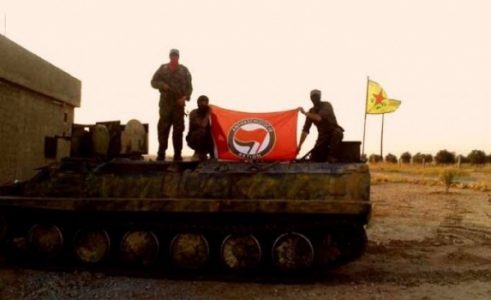
SDF militants kill civilian protesting against US military presence in Syria
Press TV – August 5, 2020
A civilian has lost his life and several others sustained injuries during a rally in Syria’s northeastern province of Dayr al-Zawr to demand the withdrawal of US military forces and their allied militants affiliated with the so-called Syrian Democratic Forces (SDF) from the region.
Syria’s official news agency SANA, citing local sources, reported that residents of Diban town demonstrated on Tuesday afternoon to express their opposition to the presence of American soldiers and the arbitrary practices of SDF militants.
The US-backed militants responded by firing live bullets at the protesters, killing one of them and injuring several others.
SANA added that locals managed to expel SDF militants out of their checkpoints and the schools which they had been using as bases following the clashes.
Similar protests were held in other Dayr al-Zawr towns and villages, including al-Hawaij, Jadeed Ekedat, Tayaneh, al-Sobhah, Abu al-Nitel, al-Shuhayl and Shinan, where people called for the immediate pullout of SDF militants and US forces.
The militants reportedly brought in reinforcements from the towns of al-Shaddadi, al-Susah and al-Baghouz in order to bring the situation under control.
The Arabic service of Russia’s Sputnik news agency, citing sources speaking on condition of anonymity, reported that SDF militants, supported by military aircraft belonging to the US-led coalition, raided the towns of al-Shuhayl and al-Hawaij later in the day, triggering fierce clashes with locals.
Security conditions are reportedly deteriorating in areas controlled by the SDF in Hasakah and Dayr al-Zawr provinces amid ongoing raids and arrests of civilians by the militants.
Locals complain that the SDF’s constant raids and arrest campaigns have generated a state of frustration and instability, severely affecting their businesses and livelihoods.
Residents accuse the US-sponsored militants of stealing crude oil and refusing to spend money on services sectors.
Local councils affiliated with the SDF have also been accused of financial corruption. They are said to be embezzling funds provided by donors, and failing to provide basic public requirements.
End Canada Israel Free Trade Agreement
By Yves Engler · August 4, 2020
On Sunday a demonstration is planned in Montréal against the Canada Israel Free Trade Agreement (CIFTA). Under the banner “Against Israel’s annexation of the Jordan Valley. No to the Canada Israel Free Trade Agreement!”, the march is seeking to politicize CIFTA amidst Israel’s plan to formally annex parts of the West Bank.
The march follows an open letter released last month by over 100 Montréal artists and activists calling for the cancellation of CIFTA.
Signed in 1997, CIFTA was Canada’s fourth free trade agreement and first outside the Western hemisphere (US, NAFTA and Chile). In an implicit recognition of the occupation, the free trade agreement includes the West Bank as a place where Israel’s custom laws are applied. Canada’s trade agreement is based on the areas Israel maintains territorial control over, not on internationally recognized borders. The European Union’s trade agreement with Israel, on the other hand, explicitly excludes products from territory Israel captured in the 1967 war and occupies against international law.
The Liberals “modernized” Canada’s FTA with Israel. International trade minister Jim Carr boasted the new accord “strengthens bilateral ties between Canada and Israel.” Liberal MPs on Parliament’s Standing Committee on International Trade rejected an NDP amendment to the trade accord’s legislation stipulating its implementation “shall be based on respect for human rights and international law.” They also rejected an NDP amendment to the deal that would have required distinct labels on products originating from “Palestinian territory that has been illegally occupied since 1967.”
In July 2019 Palestine Liberation Organization Executive Committee member Hanan Ashrawi wrote, “the Palestinian leadership calls on the Canadian government to act in accordance with Canadian and international laws and amend, without delay, the Canada-Israel Free Trade Agreement Implementation Act (Bill C-85), which affords products originating from illegal Israeli settlements tariff free status, in flagrant violation of Canada’s obligations under international law, including the Fourth Geneva Convention, and United Nations Security Council resolutions, including resolution 2334 (2016).”
In July 2017 the federal government said its FTA with Israel trumped Canada’s Food and Drugs Act after the Canadian Food Inspection Agency called for accurate labelling of wines produced in the occupied West Bank. After David Kattenburg repeatedly complained about inaccurate labels on two wines sold in Ontario, the CFIA notified the Liquor Control Board of Ontario (LCBO) that it “would not be acceptable and would be considered misleading” to declare wines produced in the Occupied Palestinian Territories as “products of Israel”. Quoting from longstanding official Canadian policy, CFIA noted that “the government of Canada does not recognize Israel’s sovereignty over the territories occupied in 1967.” In response to pressure from the Israeli embassy, Centre for Israel and Jewish Affairs and B’nai Brith, the government announced that it was all a mistake made by a low level CFIA official and that the Canada-Israel FTA governed the labelling of such wine, not CFIA rules. “We did not fully consider the Canada-Israel Free Trade Agreement,” a terse CFIA statement explained. “These wines adhere to the Agreement and therefore we can confirm that the products in question can be sold as currently labeled.”
In other words, the government publicly proclaimed that the FTA trumps Canada’s consumer protections. But, this was little more than a pretext to avoid a conflict with B’nai B’rith, Centre for Israel and Jewish Affairs and Israeli officials, according to Canadian Centre for Policy Alternatives Trade and Investment Research Project director Scott Sinclair. “This trade-related rationale does not stand up to scrutiny,” Sinclair wrote. “The Canadian government, the CFIA and the LCBO are well within their legal and trade treaty rights to insist that products from the occupied territories be clearly labeled as such. There is nothing in the CIFTA that prevents this. The decision to reverse the CFIA’s ruling was political. The whole trade argument is a red herring, simply an excuse to provide cover for the CFIA to backtrack under pressure.”
If the Canadian government does indeed support a rules-based international order as Prime Minister Trudeau has proclaimed then the Canada Israel Free Trade Agreement should be scrapped.
Alleged war crimes by British Special Forces in Afghanistan set to have major repercussions
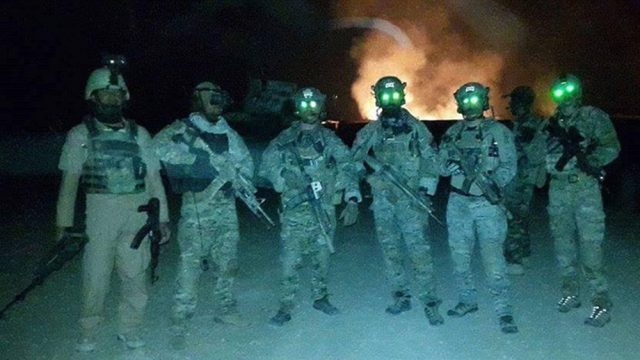
Members of the Special Air Service and its sister unit, the Special Boat Service, were active in Afghanistan during the British military presence in the war-torn country.
Press TV | August 2, 2020
New evidence has come to light that British Special Forces in Afghanistan routinely committed war crimes by shooting dead unarmed civilians.
The fresh material follows an investigation by BBC Panorama which focuses on the concerns of the Special Forces top brass that the units under their command were routinely killing unarmed men and women as part of their operations.
At their height, the operations, dubbed the “night raids”, occurred on a virtually nightly basis and were ostensibly targeted at senior echelons of the Taliban militant movement.
The new documents – held by the courts – were recently released to the solicitors Leigh Day as part of an active case at the High Court, which is set to rule on whether allegations of unlawful killing by British Special Forces were originally investigated properly.
The original complainant in the case is Afghan national, Saifullah Ghareb Yar, who claims four members of his family were “assassinated” by UK Special Forces in the early hours of February 16, 2011.
The case is of seminal importance especially in the light of the British government’s consistent refusal to properly investigate alleged war crimes committed by British troops – both regular and Special Forces – in Iraq and Afghanistan.
The situation has deteriorated to the point that the International Criminal Court (ICC) intervened back in November 2019 by stating its willingness to investigate the British military for the first time.
The ICC’s intervention has been widely interpreted as a major embarrassment to the British government and military alike.
The Syrian Army Is Appointing on “Aleppo – Lattakia” Highway – Idlib Battle Is Approaching
M4 International Highway
By Khaled Iskef | American Herald Tribune | July 28, 2020
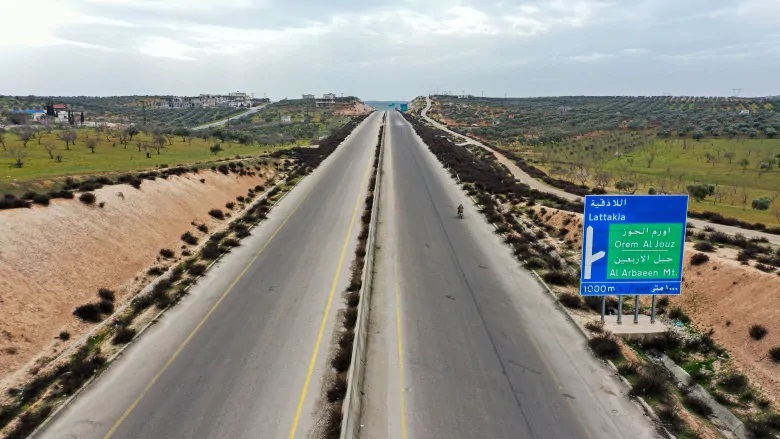
The field developments return to the front of the Syrian events, after the cautious calm that lasted for several months in the north of the country coinciding with the implementation of the Russian-Turkish agreement on conducting joint patrols on the “M4” road known as “Aleppo-Lattakia” highway.
The reopening of the road from Raqqa, through Aleppo, to Lattakia, is now at the forefront of Syrian army’s next strategic goals, though the beginning of the “M4” highway starts in the eastern side of the country, specifically from the areas controlled by the US-backed Syrian Democratic Forces. The past days have witnessed huge Syrian military movements towards this highway in a sign that the Syrian forces are ready to start military action and open the road, which if it occurs, will have a significant positive impact on trade movement throughout the country in light of the circumstances due to the procedures of the blockade imposed by Washington.
Speaking of the field in the Syrian north, it is certain that Turkey did not succeed in fulfilling its obligations to the Russians about isolating terrorist organizations and keeping them out of the way, as the Russian and Turkish sides, shortly after the battle to secure Aleppo and reopen the M5 “Aleppo – Damascus” International highway, agreed that the militants should move away / 6 / kilometers to the north and south of the “M4”, knowing that the distance outside the control of the Syrian army, which links Aleppo to Lattakia, is estimated to be 60 kilometers.
The end of September 2020 was scheduled to be the Russian deadline for the Turks to implement their obligations, but the terrorist operation carried out by “Khattab Al-Checheni Brigades” targeting a Russian patrol on the road with a suicide operation, accelerated the launch of the military operation, which is expected to be early next month according to private sources. The Syrian army’s build-up and preparations have been completed, with confirmed information of the arrival of modern Russian weapons to the Syrian army, in addition to the army’s ongoing targeting of armed points on Hama and Idlib countryside axes, such as Kansafra, Al-Fateira, Kafr Ouid, and several villages of Jabal Zawiya.
If launched, the military operation is expected to be swift and decisive in case the Turkish side does not interfere directly or take any step that would hinder it in northern Syria. It is noteworthy that the military operation of the Syrian army had stopped after securing Aleppo city in the west and reopening the international highway, the main connection between the south and center of the country to the north.
Khaled Iskef is a journalist working for Almayadeen TV.
Iraq’s anti-terror fighters will never surrender to US: PMU chief
Press TV – July 30, 2020
The chairman of Iraq’s Popular Mobilization Units (PMU) or Hashd al-Sha’abi has highlighted the role of the counter-terrorism force in defending the Arab country against the Daesh Takfiri terror outfit, stressing that it will never give in to the US.
Speaking on Wednesday, Falih al-Fayyadh described the PMU as an Iraqi military institution that is one of the main arms of the country’s national defense system.
The group, he added, abides by the strategy of the national army in its counter-terrorism response.
Fayyadh further said that the PMU is the manifestation of the Iraqi nation’s will, and that those rejecting the anti-terror group are actually seeking to weaken Iraq.
Hash al-Sha’abi made many sacrifices to defend Iraq and would in no way capitulate to the US or any other party, he added.
The PMU is an Iraqi government-sponsored umbrella organization composed of around 40 factions of volunteer counter-terrorism forces, including mostly Shia Muslims besides Sunni Muslims, Christians and Kurds.
In the early days of the Daesh’s reign of terror, PMU fighters played a major role in reinforcing the Iraqi army, which had suffered heavy setbacks against the Takfiri elements.
In November 2016, the Iraqi parliament voted to integrate the PMU into the military in amid US efforts to sideline the group.
Elsewhere in his remarks, Fayyadh referred to the US assassination of Abu Mahdi al-Muhandis, the PMU’s second-in-command, and called for the continuation of the path pursued by the commander.
Muhandis was killed, alongside top Iranian anti-terror commander Lieutenant General Qassem Soleimani, in a fatal US drone strike ordered by President Donald Trump near Baghdad airport on January 3.
Two days later, the Iraqi parliament unanimously approved a bill, demanding the withdrawal of all foreign military forces led by the United States from the country.
The PMU leader emphasized that the Iraqi parliament’s decision is fundamentally linked to the assassination operation, and that the government’s position is in line with that of the legislature on the expulsion of American troops.
Daesh’s back is broken and its self-proclaimed caliphate is destroyed, he said, noting that the Takfiri group’s resurgence in Iraq as an effective force is no longer possible.
Iraq cooperates with all its neighbors, especially Syria, in the fight against terrorism, and attaches great importance to its historical relations with Damascus, Fayyadh pointed out.
He also said that Iraq’s ties with Iran are at their best, adding that Iraqi Prime Minister Mustafa al-Kadhimi’s recent visit to Tehran and his meeting with Leader of the Islamic Revolution Ayatollah Seyyed Ali Khamenei and Iranian President Hassan Rouhani shows the depth of bilateral bonds.
Iranian military advisers — led by General Soleimani — aided Iraqi Armed Forces on Baghdad’s request to reverse Daesh’s gains and ultimately liberate their entire homeland in December 2017.
US switches to obstruction of air transit in the Middle East
By Lucas Leiroz | July 29, 2020
Last Thursday, July 23, two American fighters carried out hostile maneuvers against an Iranian civil aircraft at an extremely short distance on the stretch between Beirut and Tehran, in Syrian airspace. Several people were injured. Much more than a mere “mistake”, the American attitude reveals a real military strategy.
The pilot of the Iranian aircraft – flight 1152 of the company Mahan Air – said that, while traveling through Syrian airspace, he had to perform sudden maneuvers to avoid collision with the fighters that approached violently, consequently injuring several passengers. The Iranian pilot claims to have then contacted the American pilots to warn them and ask to keep a safe distance. However, the fighter pilots only reported that they were American military personnel and ignored him, continuing with the maneuvers. The travelers reported that the American fighter was “literally glued” to the Iranian aircraft and the maneuver was so abrupt that they were “thrown” from their seats.
The case generated strong national indignation in Iran, acquiring great repercussion throughout the country. Iranian Foreign Ministry spokesman Seyed Abbas Mousavi said the United States would be responsible for any incident with the plane. In addition, he said that Iran’s ambassador to the United Nations, Majid Takht-Ravanchi, informed the UN’s secretary general, Antonio Guterres, about what had happened. In the same vein, spokesman for the Guardians of the Iranian Constitution, Abbas Ali Kadkhodaei, classified the American action as terrorist and announced that the Iranian government will take appropriate action.
Bill Urban, a spokesman for the US Central Command, commented on the case, saying that American fighters only performed a standard visual inspection from a “safe distance”, which does not seem to match the incident data. The purpose of the inspection, according to Urban, is to ensure the safety of Americans in the coalition forces in the Al Tanf garrison, an American military base near Syria’s borders with Iraq and Jordan, whose aim, according to the Americans, is to train local anti-ISIS fighters – however, some national security experts argue that the base is aimed at spying on Iran and curbing Iranian influence on the region.
In fact, American aircraft, especially the F-15E Strike Eagles (the same one involved in the incident), based in Jordan, routinely patrol the area for the strategic purpose of keeping away or fighting enemy foreign aircraft and require all planes, even commercials, to identify themselves as they pass. What happened with the Iranian aircraft, however, does not correspond to a simple “visual inspection”, since at no time did American fighters contact the civil aircraft to request identification, on the contrary, the communication came from the Iranian aircraft itself, precisely because it was under violent interception.
Iran therefore dismissed the United States’ explanation and classified it as unjustified and unconvincing. “The harassment of a passenger plane on the territory of a third country is a clear violation of aviation security and freedom of civilian aircraft,” said Laya Joneydi, vice president of the Iranian government for legal affairs, according to Iranian media.
At no time did the US government apologize or formally lament the victims who were injured in the incident, showing that American forces in the Middle East must continue carrying out hostile maneuvers without any restrictions. We can relate this increase in aerial violence to the American naval military decay. Recently, maritime tensions between Americans and Iranians have been rising in the Persian Gulf, with an increased Iranian presence in the region through military incursions against American vessels.
Violence through the air can be understood as a strategic choice in view of the impossibility of facing Iran by sea or by land. However, it is not strategic for American interests to face Iranian forces head-on for aerial combat – instead, they invest in piracy tactics in conflict areas. The choice of the location for the maneuvers seems meticulously planned: an area where Washington will always claim “jurisdiction” because of its right to protect the military base. This will probably not be the only incident and soon new episodes will be reported.
Iran has acted correctly in submitting the case to the UN and international law must be applied promptly to punish the American attitude. The fact that American fighters did not contact the Iranian plane previously constitutes a serious violation of international aviation standards and international humanitarian law itself, since it has put the lives of innocent civilians at risk. As long as the UN response is not announced, it is up to Iran to strengthen a defense system against American air piracy, in order to avoid new incidents.
Lucas Leiroz is a research fellow in international at the Federal University of Rio de Janeiro.
Commemorating US occupation of Haiti

rebel leader Charlemagne Peralte
By Yves Engler · July 28, 2020
While remembering their past has not prevented history from repeating itself, it is not possible for the descendants of the world’s first successful large-scale slave revolt to forget the trauma inflicted by their northern neighbours.
One hundred and five years ago today a brutal US occupation of Haiti began. To commemorate an intervention that continues to shape that country Solidarity Québec Haiti is organizing a sit in in front of the US Consulate in Montreal.
On July 28, 1915 the USS Washington, with 900-men and 20 canons, docked in Port-au-Prince. US troops withdrew in 1934 but Washington largely controlled the country’s finances until 1941 and the Banque de la République d’Haïti remained under US supervision until 1947.
The occupation wasn’t Washington’s first instance of interference in Haiti but rather consolidated its grip over the country. Six months beforehand US Marines marched on the treasury in Port-au-Prince and took the nation’s entire gold reserve.
At the height, 5,000 US Marines were stationed in the country of less than 3 million. US-led forces brutally suppressed a largely peasant resistance movement, killing 15,000 Haitians.
In one of many instances of overt US racism, a top commander in the occupation, Colonel Littleton (Tony) Waller, descendent of a prominent family of slaveowners, said, “I know the nigger and how to handle him.”
To suppress the anti-occupation movement the US employed the nascent technique of aerial bombardment. Most of the fighting ended when rebel leader Charlemagne Peralte was killed, pinned to a door and left on a street to rot for days at the end of 1919. The US military described Peralte as the “supreme bandit of Haiti”.
In a famous mea culpa, an architect of the occupation confessed he was in fact the true “gangster”. Describing himself as a “high class muscle man for Big Business” and “gangster for capitalism”, Marine Corps General Smedley Butler wrote in an article years later, “I helped make Haiti … a decent place for the National City Bank Boys to collect revenues in.”
Opposition to the occupation was fed by conscription. US authorities captured civilians and compelled them to work on public roadway, buildings and other infrastructure. One reason the Marines wanted new roads was to help them bypass rugged terrain to suppress the resistance.
During the occupation the US established a new military. Created to crush resistance to the foreign presence, the National Guard “never fought anyone but Haitians.” For the next 70 years it would be used by Washington and the elite against Haiti’s poor. Haiti’s current government is seeking to revive that force.
In general, the occupation devastated the peasantry. Wealth extracted from the countryside was overwhelmingly channeled to infrastructure in the capital and foreign banks. The occupation spurred migration to Port-au-Prince and out of the country.
The US instigated other major changes to rural ways. In 1918 they rewrote the constitution to allow foreigners to purchase land, which had been outlawed since independence. A number of US corporations took advantage of the changes. The US controlled North Haytian Sugar Company and Haytian Pineapple Company both acquired hundreds of acres of land while the Haitian American Development Corporation, Haytian Corporation of America and Haytian Agricultural Corporation acquired tens of thousands of acres.
Toronto-based Sun Life Assurance Company initiated its operations in Haiti during this period. Canada’s largest bank also benefited from the US occupation. In 1919 the Royal Bank of Canada became the second bank in Haiti. RBC hired former finance minister Louis Borno as a legal advisor and officials of the Canadian firm subsequently financed his successful presidential bid during the US occupation.
Unfortunately, Solidarity Québec Haiti’s sit in is not only about drawing attention to a dark chapter in Haitian history. Washington retains significant influence over the country. In fact, the only reason the corrupt, repressive and illegitimate Jovenel Moïse is currently president of Haiti is due to US (and Canadian) support.
Ebb and flow of Iran’s influence in Iraq
By M. K. BHADRAKUMAR | Indian Punchline | July 27, 2020
Getting caught between a rock and a hard place is an unenviable situation for a politician. A tragic case in modern times was that of Hafizullah Amin, the Cold War era Afghan communist politician who tried to reduce his country’s dependence on the former Soviet Union. The predicament of the present Iraqi Prime Minister Mustafa al-Kadhimi has some similarities. Kadhimi’s political dexterity lies in his ability to find his limits and his prudence from going too far.
Kadhimi has strong affiliations with the US and British intelligence dating back to his years in exile, which continued to be nurtured during his 4-year stint as spy chief in Baghdad, which ended in May when the pro-US Iraqi president Barham Salih, a Kurdish politician, nominated him as prime minister.
Kadhimi continues to receive political, security, intelligence, and logistical support from Washington. Kadhimi also enjoys personal rapport with the Saudi Crown Prince Mohammed bin Salman.
The strong American backing did help Kadhimi to secure the job of prime minister in May, but essentially, he emerged as a compromise candidate of warring Iraqi political blocs who settled for him as interim arrangement until parliamentary elections take place in coming months.
Through last year, Washington shrewdly fuelled chaotic street protests in Iraq by exploiting the people’s disenchantment with the corruption and venalities of the established political blocs and widespread social and economic discontent. This put the Shi’ite political blocs and Tehran on the back foot and in turn created conditions for Kadhimi’s transition as prime minister.
The big question is how Kadhimi figured as chief of Iraqi intelligence when the US assassinated the head of Iran’s Quds Force Qassem Soleimani and the deputy chief of Tehran-backed deputy chief of Popular Mobilisation Committee at Baghdad airport on 3rd January in drone attacks ordered by President Trump.
Beyond doubt, the US had prior tip-off about Soleimani’s arrival in Baghdad. The Iraqi militia factions have accused Kadhimi of complicity and claim to have compelling evidence. At any rate, the US expects Kadhimi to crack the whip on the Iran-backed militia forces in Iraq. Equally, Washington encourages Kadhimi to reduce Iraq’s economic dependency on Iran and instead seek help and investments from the GCC countries.
Kadhimi is moving in this direction. On June 26, Kadhimi ordered a raid on the headquarters of one of the prominent Iran-backed militia factions south of Baghdad — Kata’ib Hezbollah, whom US officials have accused of firing rockets at bases hosting US troops. Thereby, he displayed his intention to be ‘tough’ on the Iran-backed militia groups.
On July 19, an Iraqi ministerial delegation arrived in Riyadh headed by Finance Minister Ali Allawi and comprising the ministers of oil, planning, electricity, agriculture, and culture, amongst others. Saudi Arabia has expressed willingness to help Kadhimi’s government.
The bottom line is that the US hopes to consolidate a long-term military presence in Iraq and counts on Kadhimi to overcome the resistance to the American occupation from the Iraqi political blocs, popular opinion and, of course the Iran-backed militia groups. But the paradox here is that Washington bets on Kadhimi who lacks a political base to perform as a ‘strongman’.
Why did Tehran acquiesce to Kadhimi’s elevation as Iraq’s prime minister? The US analysts’ narrative is that Iran’s influence in Iraq is on the wane in the recent months after the murder of Soleimani who used to handle Tehran’s security dossier in Iraq. The Iraqi parliament’s confirmation of Kadhimi’s appointment has been touted as a sign of Tehran’s loss of clout in Baghdad.
However, this narrative reflects a self-serving American mindset — ‘You are either with us, or against us’. Whereas, Iran’s regional strategies in Iraq are not one-dimensional. True, Kadhimi couldn’t possibly have been an ideal Iranian candidate for Iraqi prime ministership. Tehran apparently had no intimate history with him. Possibly, Tehran also knew about Kadhimi’s well-established connections with the American and British intelligence.
But having said that, the fact of the matter is that Tehran never really worked to install a proxy in power in Baghdad in all these years since the overthrow of Saddam Hussein. Iran’s focus is on Iraq’s stability and security, as evident from the alacrity with which it rushed to act as a provider of security when the Islamic State of Iraq and Syria (ISIS) launched its stunning offensive on Mosul and Tikrit in June 2014. Iran worked in tandem with the US in its anti-ISIS campaign.
The point is, Tehran views Iraq through the prism of its own national security. Tehran had the means to block Kadhimi’s appointment on the floor of the parliament but it chose not to. For, Kadhimi kept lines of communication open to Tehran too, and Iran drew appropriate conclusions from the American experience in Iraq that creating a puppet in Baghdad is an exercise in futility and can only be counterproductive.
Tehran preferred to cast its net wide in the Iraqi society and create organic relationships — not only among the Shia majority but also among Sunnis and Kurds — which explains the spread of its influence, ensuring that no security threats emanate from Iraqi soil as in the Saddam era.
Second, make no mistake, Iraq all along served as a buffer for Iran — a turf where the Americans would get a better understanding of Tehran’s motivations and potentials to be a factor of regional stability.
Third, Tehran sees interesting potentials in Kadhimi being a ‘balancer’ in Iran-Saudi relations.
Indeed, below the radar, the regional security situation is radically transforming. Iran’s Foreign Minister Javad Zarif visited Moscow last week during which he “delivered an important message (from President Rouhani) to President Putin,” and held “extensive talks” with Russian Foreign Minister Sergei Lavrov on bilateral cooperation as well as regional and global coordination.
Two days later, Putin discussed Iran’s nuclear program in a phone conversation with President Trump. The influential Tehran Times newspaper since estimated in a lengthy resume that “Putin hasn’t said how he intends to save the Iran nuclear deal. But his nascent efforts highlight a possible revival of diplomatic initiatives between Iran and the U.S., ahead of the expiration of the UN arms embargo on Iran in October.”
Against this backdrop, Kadhimi’s visit to Iran last week, his first as prime minister, marks a defining moment. Kadhimi’s refrain while in Tehran has been that “Iraq would not allow any threat to Iran coming from its territory.” Iran’s Supreme Leader Ali Khamenei was rather explicit when he told Kadhimi that the Popular Mobilisation Units (which Iran supports) are a “great blessing for Iraq, and they should be safeguarded.”
Khamenei’s lengthy discourse against the US’ regional policies all but signalled to Kadhimi that Tehran’s support for his government is predicated on the belief that he will not act as a surrogate of Washington. To be sure, Kadhimi has come under pressure to reshape Iraq’s strategic partnership with the US.
Kadhimi has two choices — seek a complete withdrawal of US troops from Iraq (or at least significant drawdown), or alternatively, expect the wrath of the Iraqi political system. The choice that Kadhimi makes will determine his own political future. The recent killing of an expert of the Iraqi security establishment suggests that the tide that brought him to power is turning.
Iran to legally pursue US ‘act of terrorism’ against its Beirut-bound flight
Press TV – July 24, 2020
Iran has condemned the harassment of its Beirut-bound passenger plane by two US fighter jets over the Syrian airspace, vowing to lodge a complaint over the “unlawful” act at the International Civil Aviation Organization (ICAO).
In a statement on Friday, the Civil Aviation Organization of Iran said it will seriously pursue the US fighter jets’ harassment of Mahan Air flight 1151 over the Syrian airspace on Thursday.
The Iranian organization urged the ICAO to immediately address the move, which is “a clear violation of the international law and the aviation standards and regulations.”
Iranian Vice-President for Legal Affairs Laya Joneidi also said on Friday that the harassment of a passenger plane in a third country is a blatant violation of aviation security, a breach of the freedom of the air for civil flights, and contradicts the Article 3 and Article 44 of the Chicago Convention as well as the 1971 Montreal Convention.
Joneidi said the US government is responsible for the fighter jets’ dangerous maneuvering, and Iran can legally pursue the issue at the ICAO Council and the International Court of Justice.
Iran’s Minister of Roads and Urban Development Mohammad Eslami described the US air piracy as an “act of terrorism”, urging the international community to condemn the “poisonous” move.
“Our passenger plane was moving at the international commercial flight route and corridor, and the American fighter jets’ threatening move was unlawful and inhumane,” he added.
He also called on the governments of Lebanon and Syria to file a complaint against Washington at the International Civil Aviation Organization.
“The ICAO is also expected to issue a statement against this inhumane move by the US,” the Iranian minister said.
On Thursday night, US warplanes operating illegally in Syria conducted some aggressive and “dangerous” maneuvering close to the Mahan Air flight in an act of air piracy.
Mahan Air’s Flight 1152 had taken off from Tehran and was en route to the Lebanese capital when the incident happened over Syria’s hugely-strategic al-Tanf region.
In response, the US Central Command said a single F-15 had made a “visual inspection” of the Iranian airliner “in accordance with international standards… to ensure the safety of coalition personnel” at the military base in al-Tanf.
The command added that the US F-15 was on a “routine air mission” in Syria and conducted “a standard visual inspection of a Mahan Air passenger airliner at a safe distance of approximately 1,000 meters”.
“Once the F-15 pilot identified the aircraft as a Mahan Air passenger plane, the F-15 safely opened distance from the aircraft.”
Forgoing any permission from Damascus, the US has been operating in the Arab country since 2014 under the pretext of fighting the Daesh terrorist group. The US, however, continues its occupation even as Syria defeated the Takfiri terrorists in late 2017.
Featured Video
Trita Parsi: Israel Set a Trap for Total War in the Region
or go to
Aletho News Archives – Video-Images
From the Archive
Zionism’s Violent Legacy
By Donald Neff | Washington Report On Middle East Affairs | January 1996
On January 4, 1948, Jewish terrorists drove a truck loaded with explosives into the center of the all Arab city of Jaffa and detonated it, killing 26 and wounding around 100 Palestinian men, women and children.[1] The attack was the work of the Irgun Zvai Leumi – the “National Military Organization,” also known by the Hebrew letters Etzel – the largest Jewish terrorist group in Palestine. The Irgun was headed by Revisionist Zionist Menachem Begin and had been killing and maiming Arabs, Britons and even Jews for the previous ten years in its efforts to establish a Jewish state.
This terror campaign meant that at the core of Revisionist Zionism there existed a philosophical embrace of violence. … continue
Blog Roll
 Aletho News
- Trita Parsi: Israel Set a Trap for Total War in the Region
- Trump’s Iran war is on an Israeli leash
- Saudi oil boss issues global supply warning
- Riyadh Says Its Oil System Is Intact. The Numbers Say Otherwise.
- Trump and Netanyahu Want to “Finish the Job” on Iran
- US ‘one-sided dictation’ not Iran’s beliefs makes rational talks impossible: Baghaei
- Iran’s Next Strike May Not Explode. It Could Shut You Down /Col Doug Macgregor
- Iran: US political targets legitimate if assassinations return
- Iraq shuts key border crossing with Iran under US pressure: Report
- Undersea Internet cables could be targeted in retaliation for attacks on Iran: IRGC deputy chief
- If Americans Knew
- The Israel Lobby’s Changing Fortunes
- AIPAC has become such a political liability that it’s shifting to a more “nimble” approach to buying politicians
- At least 160 Israeli settler attacks in 2 weeks
- Will Gaza’s Ancient Christian Community Disappear Forever?
- Israel’s vision of regional security rests on keeping Arab states weak
- Heidi Levine recounts how Palestinian youths helped save her in settler attack
- DAILY UPDATE: Latest essential news on Palestine, Israel, & region
- Trump’s Intensifying Sabotage of the ICC, for Israel’s Sake
- Israeli military detain US and UK volunteers in West Bank including Democratic NY politician Brad Lander
- Americans at National Conservatism Conference held in Israel this year criticize Israel
- No Tricks Zone
- E-Cars Reduce CO2 Emissions By Only 41% Compared To Internal Combustion Engine Vehicles
- Predictions Made By Renowned Climate Professor Over Past Decades Have Been Proven To Be Poor
- New Study Suggests Large Regions Of The Pacific Ocean Have Been Cooling For The Last 80 Years
- Germany’s Green Energy Debacle: High Energy Costs Force Kahla Porzellan to Close After 182 Years!
- New Study: 50 Years Of The Most Aggressive ‘Net Zero’ Policies Can Only Affect The Global Climate By 0.03°C
- US September “Heat” Was No Record…Many Records Set Decades Ago
- Latest European Green Energy Debacle; Portugal’s Largest Flagship Solar Park Insolvent!
- Green Energy Debacle: German Expert Professor Fritz Vahrenholt Warns Of Severe Economic And Social Consequences
- Two More Paleo Reconstructions Affirm Meters-Higher Sea Levels Across Ireland, Brazil 7000-6000 Years Ago
- New Study: Earth And Venus Surface Warmth Largely Explained By Convection And Lapse Rate, Not CO2 Or Radiation

