US erects ‘observation posts’ on Syria-Turkey border despite Ankara’s dissent
Press TV – December 12, 2018
The US military says it has established “observation posts” in northern Syria with the purported aim of preventing clashes between Turkish forces and US-backed Kurdish militants, despite Ankara’s strong opposition to the plan.
“At the direction of Secretary (James) Mattis, the US established observation posts in the northeast Syria border region to address the security concerns of our NATO ally Turkey,” Department of Defense spokesman Rob Manning said in a press release on Tuesday.
This is while Turkish Defense Minister Hulusi Akar had, during a Friday meeting with US Special Envoy to Syria James Jeffrey in Ankara, called on Washington to lift the so-called observation posts in northern Syria, along parts of Turkey’ border.
Akar also said earlier that Turkey had expressed its concerns about US plans to set up several observation posts in Syria, a move, which according to him, could lead to a perception that Washington is “somehow protecting terrorist YPG [Kurdish People’s Protection Units] members.”
Turkey’s Foreign Minister Mevlut Cavusoglu this month lambasted as a “big mistake” the US support for the YPG militants in Syria, a thorny issue in ties between the two allies.
Cavusoglu made the remark while meeting with Turkish citizens at the Turkish consulate in New York.
The YPG forms the backbone of the so-called Syrian Democratic Forces (SDF), an anti-Damascus alliance of predominantly Kurdish militants supported by the US.
Ankara views the YPG as a terrorist organization and the Syrian branch of the outlawed Kurdistan Workers’ Party (PKK), which has been fighting for an autonomous region inside Turkey since 1984.
The Pentagon’s Tuesday release further said that the US military would coordinate with Turkey its security efforts in the border region.
“We take Turkish security concerns seriously and we are committed to coordinating our efforts with Turkey to bring stability to northeastern Syria,” Manning said in the press release.
Washington infuriated Ankara by announcing a plan for the formation of a Kurdish militant force in Syria near the Turkish border.
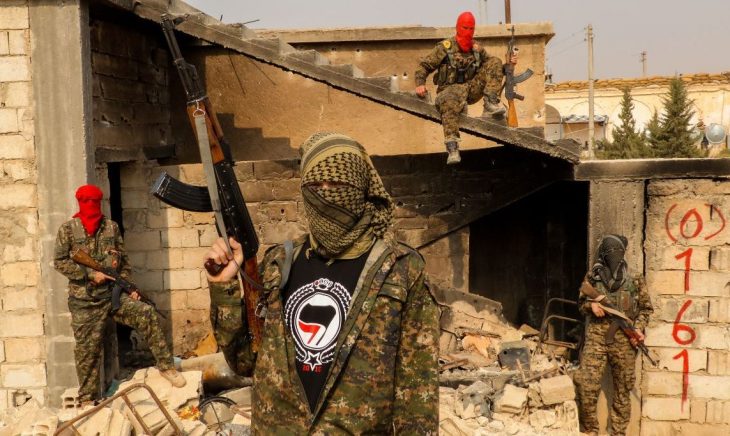
The plan prompted Turkey to launch a cross-border military operation on January 20 inside the Arab country, code-named Operation Olive Branch, with the declared aim of eliminating the YPG militants from northern Syria, particularly the Afrin region.
Turkish troops captured Afrin in March, and threatened to take the battle to nearby Manbij. Ankara and Washington agreed a roadmap on Manbij, which would see the city cleansed of US-backed Kurdish militants.
Turkey’s Defense Minister Hulusi Akar has expressed indignation at photos showing US troops dining with Kurdish militants near the Turkish border in Syria.
Mattis said last month that Washington wanted the so-called observation posts to help minimize tensions between the Turks and US-backed SDF forces in the purported fight against the Daesh terrorist group.
The Syrian government has given a degree of authority to Kurdish regions to run their own affairs. The US, however, has used the power vacuum to establish a foothold in those regions with the help of militants.
Ankara, one of Washington’s key allies in the region, has repeatedly questioned the US deployment of heavy weapons in Syria despite the defeat of Daesh in much of the Arab country.
Syria has strongly denounced the presence of both Turkish and US troops around Manbij.
Israel to build ‘Embassy Quarter’ in occupied Jerusalem
MEMO | December 12, 2018
Israel is to build an embassy complex in occupied Jerusalem, a year after US President Donald Trump announced his plans to relocate the American Embassy to the city. Israel’s Construction and Housing Ministry announced today that it plans to build a complex with space for nine separate embassies in occupied East Jerusalem, in the belief that more countries will follow the US lead and move their diplomatic missions from Tel Aviv, Arutz Sheva reported.
The complex is to be built on a 25-acre plot of land in East Talpiot, a southern neighbourhood of Jerusalem. Following the Nakba of 1948, East Talpiot became part of no man’s land, next to the 1949 Armistice Line – sometimes known as the Green Line – observed by Israel and Jordan. During the Six Day War of 1967 Israel occupied the neighbourhood, establishing an illegal settlement there in 1973.
The plan to build the complex in East Talpiot is therefore in contravention of international law. As such, any country which chooses to move its embassy into the complex upon its completion would also be violating international law.
The intended construction is being pushed by Israel’s Construction and Housing Minister, Yoav Galant, who said of the plan: “I am convinced that many more countries will relocate their embassies to Jerusalem, which is why I instructed experts in the ministry to come up with an appropriate solution for the embassies in the future, including construction of a special ‘Embassy Quarter’.”
Galant urged the international community to relocate their embassies to Jerusalem. “It is our eternal capital. It is the right thing to do. Make the move quickly; the best places are going to be taken quickly.”
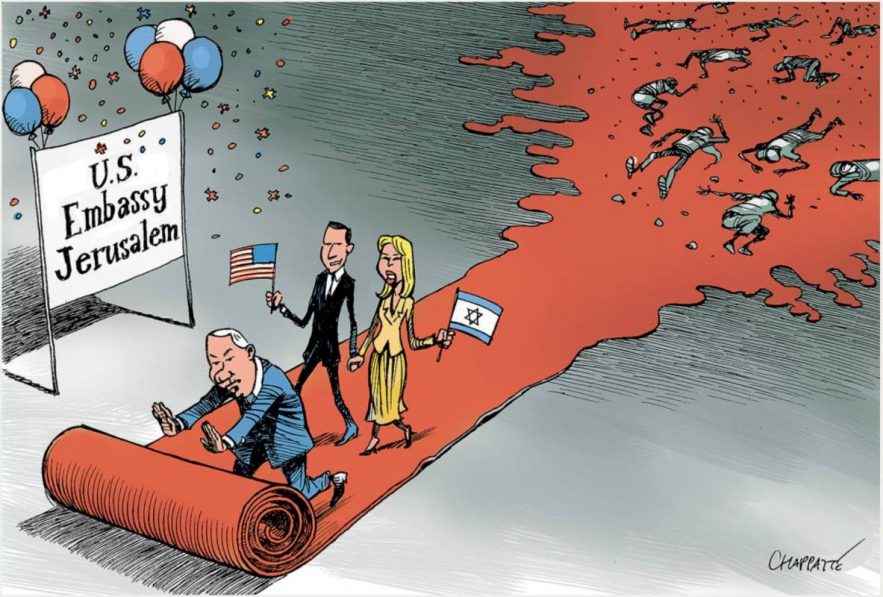
US embassy moved to Jerusalem – Cartoon [Chappatte/Twitter]
Since Trump announced that he would move the US embassy to Jerusalem last December, only Guatemala and Paraguay have followed suit. However, within months of relocating its mission, Paraguay reversed the decision and moved the embassy back to Tel Aviv, citing a desire to support “broad, lasting and just peace” among Israelis and Palestinians.
Other countries have toyed with the idea of moving their embassies to Jerusalem but have been hesitant to follow through with the move. In October, it emerged that Australia was contemplating relocating its embassy, with Prime Minister Scott Morrison saying that he was “open-minded” about it. “No decision has been made regarding the recognition of a capital or the movement of an embassy […] but at the same time, what we are simply doing is being open to that suggestion,” he explained.
This prompted a furious backlash from Malaysia and Indonesia, two countries that have historically been supportive of the Palestinian cause. Australia has not yet acted on any such plans, with reports emerging yesterday that a decision is “still pending”.
Presence of Foreign Forces in Yemen Unjustifiable: Ansarullah
Al-Manar | December 12, 2018
Spokesman for Yemen’s revolutionary Ansarullah movement Mohammad Abdulsalam, who heads a delegation in the ongoing peace talks in Sweden, said the presence of foreign forces in the Arabian Peninsula country cannot be justified.
Speaking to the Arabic-language al-Masirah TV on Tuesday night, Abdulsalam said the foreign troops’ presence in Yemen is contrary to the country’s constitution and UN Security Council resolutions.
“The presence of foreign forces in Yemen is not justified as long as our approach is political settlement (of the crisis),” he said.
Yemen’s occupied areas are now controlled by foreigners such as British, Saudi and Emirati forces, not a group that calls itself “legitimate”, he added, referring to the Yemeni exiled government which claims legitimacy.
The Ansarullah spokesman went on to say that no party could demand the presence of foreign forces in Yemen.
Abdulsalam further said that in the UN-brokered peace talks in Stockholm, Sweden, the two sides have reached some agreements on ceasefire in some areas.
The talks opened Thursday on an upbeat note, with the warring sides agreeing to a broad prisoner swap, boosting hopes that the talks would not deteriorate into further violence as in the past.
Yemen has been since March 2015 under brutal aggression by Saudi-led Coalition, in a bid to restore control to fugitive president Abd Rabbu Mansour Hadi who is Riyadh’s ally.
Tens of thousands of people have been killed and injured in the strikes launched by the coalition, with the vast majority of them are civilians.
The coalition, which includes in addition to Saudi Arabia and UAE: Bahrain, Egypt, Morocco, Jordan, Sudan and Kuwait, has been also imposing a harsh blockade against Yemenis.
Some 8.4 million Yemenis are facing starvation as a result of the Saudi-led aggression, although the United Nations has warned that will probably rise to 14 million.
Three-quarters of impoverished Yemen’s population, or 22 million people, require aid.
The Bowdlerized Bush Obituaries
Something is missing
By Philip Giraldi • Unz Review • December 11, 2018
When George H.W. Bush died on November 30th, America’s two self-proclaimed newspapers of record The Washington Post and The New York Times were both quick off the mark in publishing what appeared to be definitive obituaries of the former president and statesman that had clearly been prepared in advance. The obit by The Times and that by The Post differed little in substance but they had one curious omission, i.e. President G.H.W. Bush’s eighteen month confrontation with Israel and its powerful domestic lobby.
In 1991-1992 President Bush engaged in a series of sharp exchanges with Israel and its American lobby over the issue of $10 billion in loan guarantees to the Jewish state to pay for the resettlement of Russian Jews, who were beginning to arrive in both Israel and the West in large numbers. Bush correctly assumed that the loans would in fact also subsidize the expansions of illegal settlements on the West Bank and in Gaza, which the U.S. government opposed, so he said “no” to the loans. After a series of increasingly acrimonious exchanges back and forth, Bush, facing election, withdrew his objections and the loans were approved, but he was the only U.S. president since John F. Kennedy to confront the Israel Lobby in any serious way. Kennedy was, of course, assassinated and Bush was defeated for reelection.
Both G.H.W. Bush and many other observers of the campaign and election believed the loss to Bill Clinton in 1992 was at least in part attributable to the actions of Israel and its friends. The conflict between Bush and the Israeli government backed up by the Israel Lobby and a number of congressmen and media outlets began in the spring of 1991. By September, President Bush refused to approve the loan guarantees as he believed that withholding approval of the money would give the U.S. leverage in peace negotiations with the Arabs that were planned for the end of the year in Madrid. Bush felt that Israeli Prime Minister was not taking the U.S. seriously because he believed that he would get what was wanted from Congress in any event without stopping settlement construction or having to concede anything to the Palestinians. There was also a distinct possibility that the Israelis would not bother to participate in Madrid without some kind of possible financial inducement.
Bush fought hard against the Israeli government and the thousands of American Jews plus their organizations that mobilized against him. Thomas Dine, Executive Director of the American Israel Public Affairs Committee (AIPAC) declared that the day when Bush rejected the loan guarantees would prove to be “a day that lives in infamy for the American pro-Israeli community.” Sentiment against the president in the Jewish community was so intense that many prominent American Jews to this day consider any nostalgia towards the man or his presidency to be an expression of anti-Semitism.
Bush did not roll over. He famously called a press conference in which he said: “We’re up against very strong and effective, sometimes, groups that go up to the Hill. I heard today there were something like a thousand lobbyists on the Hill working the other side of the question. We’ve got one little guy down here doing it… The Constitution charges the president with the conduct of the nation’s foreign policy… There is an attempt by some in Congress to prevent the president from taking steps central to the nation’s security. But too much is at stake for domestic politics to take precedence over peace.”
In October Bush obtained a four-month delay in the loans, a defeat for the Israel Lobby, but the process dragged on into the following summer. On August 12, 1992, Bush, in trouble with his presidential campaign, finally approved the guarantees, which would enable the Israelis to borrow money at a low interest rate. Ironically, by June 1993, none of the borrowed money had been used and Israeli sources admitted that they have never needed the loans. The entire affair was actually a test of strength against the U.S. government, a competition that the Israelis and their friends had persevered in and won.
None of the tale of the Israeli loans appeared in either obituary. Nor was there any hint that Bush might have lost the election in part because pro-Israel forces worked actively against him. Voting tallies reveal a sharp shift in Jewish votes in swing districts to favor Clinton but the impact of Jewish money into the campaign as well as the anti-Bush media onslaught are inevitably more difficult to assess. The Times of Israel observed that “He made clear the cost of an American president waging a political fight against the vast coalition of pro-Israel lobbying groups. In doing so, he exposed the limits of what the world’s most powerful man can do…” George Herbert Walker Bush certainly believed that he was defeated by the Israeli government and its lobby, and he passed that judgment on to his son George W. who was careful not to anger the Israeli/Jewish constituency.
G.H.W. Bush was not the first American statesman to be on the receiving end of a bowdlerized obituary over the subject of Israel. In February 1995, former Senator William Fulbright was remembered by The Times without any reference to his views on the Middle East that had led to his failure to be reelected. As head of the Senate Foreign Relations Committee, Fulbright’s was a powerful voice that could not be ignored. He wrote: “So completely have many of our principal officeholders fallen under Israeli influence that they not only deny today the legitimacy of Palestinian national aspirations, but debate who more passionately opposes a Palestinian state. The lobby can just about tell the president what to do when it comes to Israel.”
In Fulbright’s case, the Lobby launched a media and personal vilification campaign against him when he came up for reelection in 1974. Late in the campaign, they came up with an opposition candidate Dale Bumpers whom they generously funded and Fulbright was defeated. His obituaries in the mainstream media would have the reader believe that none of that had actually happened.
Fulbright was followed a decade later by Senator Charles Percy of Illinois who was targeted by the Israeli Lobby because he had voted to approve the sale of AWACS planes to Saudi Arabia. His defeat was choreographed by the Israel Lobby and wealthy Jews and was henceforth called the “Percy Factor,” a warning to even the most established politicians never to trifle with Jewish power. Percy died in 2011 and he too received an obituary from The New York Times that ignored his involvement with the Middle East and the Israel Lobby.
The self-censorship by the media when the topic is Israel is remarkable, nowhere more evident than in the obituaries of leading politicians who had anything at all to do with the Middle East. George H.W. Bush, William Fulbright and Charles Percy all confronted the Israel Lobby because they were patriots aware of the terrible damage it was doing to the actual interests of the United States. In a sense, all three of them enjoyed some success but were eventually defeated by Israel and its friends within the American oligarchy. No other foreign policy lobby, indeed, no other lobby of any sort, has that kind of power in the United States. The obituary of G.H.W. Bush should serve as a warning, recalling a comment sometimes attributed to Voltaire: “To learn who rules over you, simply find out who you are not allowed to criticize.”
Philip M. Giraldi, Ph.D., is Executive Director of the Council for the National Interest, a 501(c)3 tax deductible educational foundation that seeks a more interests-based U.S. foreign policy in the Middle East. Website is www.councilforthenationalinterest.org, address is P.O. Box 2157, Purcellville VA 20134 and its email is inform@cnionline.org.
US Deploys Carrier Strike Group to Middle East Amid Iran, Syria Tensions
Sputnik – December 8, 2018
A carrier strike group led by the Nimitz-class supercarrier USS John C. Stennis has arrived in the Middle East, ending an eight month period during which a US carrier wasn’t based in the region, the US Navy has reported.
Earlier, the Pentagon announced that the US and its allies in eastern Syria would train an additional 35,000 to 40,000 local militia to “provide stability” in the region following the defeat of Daesh (ISIS) terrorists.
The carrier group will be based with the 5th Fleet, which is responsible for US naval activity in the Arabian Sea and the Persian Gulf, and will be stationed in the region for at least two months.
According to the US government-funded news service Voice of America, the carrier strike group is being deployed to “help in the fight against the Islamic State terror group in Iraq and Syria and the war in Afghanistan.”
Furthermore, a US Defense Department official confirmed earlier reports that the US was beefing up its presence in the region as a “message” to Tehran, telling VOA that “just being there is a show of force to Iran.”
The carrier group’s presence is expected to have a similar effect to the US base in at-Tanf, southern Syria, the official added.
The US established an illegal garrison at at-Tanf in 2016, justifying the deployment as part of its war against Daesh. Damascus and its allies have repeatedly accused the US of using the base to retrain and reequip former Islamist militia to continue the war against the Syrian government. On Thursday, Chairman of the Joint Chiefs of Staff General Joseph Dunford said that the US would have to train 35,000 to 40,000 more “local forces” to “provide stability” in eastern Syria, where US-backed Syrian Kurdish forces took control following Daesh’s expulsion from the region.
Washington, which originally justified its presence in Syria by citing the war against terrorism, has altered its reasoning for remaining in the country following Daesh’s decline. In September, Trump national security adviser John Bolton said that the US military would stay in Syria until alleged Iranian-backed militias had also left the country.
Tensions between Washington and Tehran escalated in May, after the US unilaterally withdrew from the Joint Comprehensive Plan of Action nuclear deal and slapped Iran with a series of strict sanctions.
Lebanese FM Orders Filing Compliant against Zionist Entity
Al-Manar | December 7, 2018
Lebanese Caretaker Foreign Minister Gebran Bassil ordered on Thursday the preparation of a complaint to the United Nations Security Council on the Israeli violations of Lebanese sovereignty.
National News Agency reported that Bassil has instructed Lebanon’s permanent representative to the UN, Ambassador Amal Mudallali, to submit a complaint against the Zionist entity on this matter.
The Lebanese complaint “comes in light of Israeli political and diplomatic campaign in preparation for a military aggression on Lebanon,” NNA quoted a statement by Lebanese Foreign Ministry as saying.
The statement also referred to Israeli violations of Lebanese Mobile network in which the Israeli occupation army sent voice messages to residents of southern town of Kfar Kela warning them of explosions in the Lebanese territory, according to the Lebanese agency.
The Foreign Ministry’s order follows an operation launched by Israel Tuesday to ‘cut off’ what it called ‘attack tunnels’ allegedly dug by Hezbollah in a bid to infiltrate into the Palestinian occupied territories.
In addition to the latest development on the southern border, the Zionist entity has been violating Lebanese airspace and territorial waters for years. A Lebanese Army official previously said that 162 Israeli violations were recorded in south Lebanon in September, including land and maritime infringements, as well as wall-building works, according to a Defense Ministry statement in October.
Israeli forces demolish Palestinian primary school in al-Khalil
IMEMC News | December 5, 2018
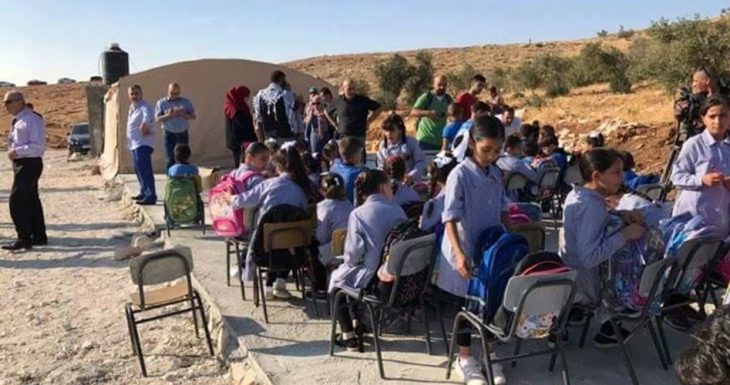
Israeli soldiers invaded, Wednesday, the Sammoa’ town, south of Hebron, in the southern part of the occupied West Bank, and demolished a Palestinian school.
Media sources in Hebron said the soldiers surrounded Seemia area, north of the Sammoa’ town, and declared it a closed military zone, preventing the Palestinians from entering it.
They added that the soldiers then used their armored bulldozers to demolish the Tahadi 13 small school of several classrooms and their facilities.
The school was sponsored by the Palestinian Ministry of Education through European funding, with a total cost of 40,000 Euros, and was supposed to open in two days.
The Ministry of Education denounced the ongoing Israeli violations, targeting educational facilities and students, and added that the school is located in Area C of the West Bank, under full Israeli military and administrative control.
The school was built to make it easier for students in that area to reach it, especially due to Israeli military roadblocks and restrictions imposed by the military in various areas of Hebron.
It is worth mentioning that the soldiers have demolished many Tahadi schools in that same area, and other parts of the West Bank, as part of Israel’s illegal attempts to confiscate the lands to use them for military purposes and colonialist activities.
The ethnic cleansing of Palestine continues in Fasayil
International Solidarity Movement in coordination with Jordan Valley Solidarity | December 4, 2018
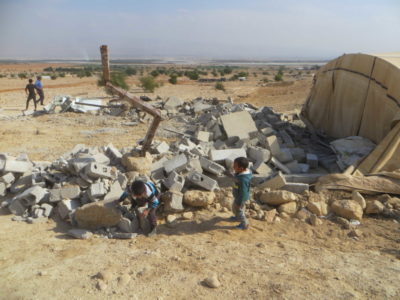
Fasayil al Wusta, Occupied Palestine – The ethnic cleansing of Palestine continues. Dunum by dunum, village by village, house by house, the people of Palestine face a slow, systematic genocide in their homeland. Two houses were demolished in the south of the Jordan Valley, in the village of Fasayil, on Sunday morning. The Israeli government did not issue a warning. The village of 1,300 people has been facing Israeli assaults on their land since the early seventies, with the construction of two settlements on either side, and a huge farmland in front of them, all less than a kilometre away.
But it was in 2010 that the Israelis came and virtually destroyed the entire village of Fasayil al Wusta. The residents have, since then, built the village back up.
Hassan Mohammed Hussein A´Zayed built a house for his son, who suffers from mental disabilities, and is sensitive to hot weather. “That house cost me 15,000 shekels to build, not only because of building materials, but because of the air conditioning (unit),” he said. The house only lasted one year before it was bulldozed on Sunday, the AC unit along with it.
A few metres in front of the newly destroyed house, one can see at least three other piles of rubble that used to be housing units, all belonging to Hassan. This was the seventh time a house of his was demolished. “They keep destroying them. Sometimes with warning, sometimes not. It´s a random policy. There´s no way of knowing what they´re going to do.” Hassan has 8 children.
Aeman Rashaeda, father of four, whose wife teaches at the nearby school, was the next to lose his house, on the same road as Hassan´s. When the Israelis approached him, they told him that it was forbidden to build, and that he was living in a closed military firing zone.
When the complete destruction of the village took place 8 years ago, 10 families immediately fled. This is a village that receives only 1,500 litres of water for each household per week; that can never get a permit to farm or build; that cannot dig a well deeper than 150 meters, enforced by Israeli occupation law.
Before the 1967 invasion of the West Bank, this village shared water from a natural spring 4 kilometers up a nearby mountain. It has, since then, been surrounded by 3 Israeli wells – the water now privatised – controlled for settler use. 60 percent of the Jordan Valley has been closed by the Israeli occupation for “military firing and security zone(s)”, but it´s been well known for years to have actually been used for agribusiness. Pick any one feature of the military occupation of the Palestinian West Bank, and you will find a policy of theft, of racism, of genocide.
Military defeats push Kabul into talks with Taliban as US seeks way out from Afghan stalemate
RT | December 5, 2018
Direct talks with the Taliban are crucial for the Kabul government to survive amid crushing defeats by the militants, Afghanistan experts told RT amid expectations that end of the 17-year war is looming.
Afghanistan returned to headlines this week, with a government-affiliated official making an unconventional peace gesture towards the Taliban. Ehsan Taheri, spokesman for the High Peace Council – a body that mediates peace between the government and the militants – said Kabul is ready to talk directly to the Taliban. He promised there will be no prerequisites to discuss any issue “crucial for the future of Afghanistan.”
“There’s no doubt the Afghan government relies on speeding up talks with Taliban” as the situation on the ground deteriorated over the past two years, Nikita Mendkovich, an expert with Russian International Affairs Council, told RT.
The Taliban have managed to gain upper hand in various parts of the country, and the Western-backed Afghan National Army risks being defeated in the coming years, he explained. And while Kabul’s offer of peace sounds promising at a glance, analysts say it has more to do with the survival of the current government than anything else.
The militants are able “to take matters into their own hands” without providing any security guarantee to the Afghan government, the expert noted.
That aside, Afghanistan is preparing to hold presidential elections, putting the sitting President Ashraf Ghani in a precarious position. Because he is unpopular with sizeable part of the population and regional elites, he must demonstrate “some results.”
“A peace deal or at least a long-term truce with Taliban would be a bargaining chip for Ghani to remain in power,” according to Mendkovich. However, the main reason for Kabul to accelerate the peace process is still rooted in “military defeats” sustained by the Afghan army and NATO forces.
Meanwhile, Omar Nessar, a researcher with Russia’s Institute for Oriental Studies, said he doesn’t see how a peace deal might become reality.The Taliban are demanding that NATO troops leave the country, which in turn is “unacceptable” for Western sponsors of Kabul.
The Taliban “doesn’t need peace talks right now as they continue to gain foothold in Afghanistan,” Nessar stressed. The Afghan leadership is a too week actor to talk with, but the Americans may try to ask Kabul to negotiate on their behalf in order to “save the image of the government.”
Afghan stalemate: Winning peace to lose war?
On the military front, the reality looks as murky as it was over the past years. On Tuesday, Marine Lt. Gen. Kenneth McKenzie who is set to take the lead of US Central Command (CENTCOM), gave oxygen to a claim there was no easy way out from the 17-year Afghan war.
“I do know that today it would be very difficult for [the Afghan security forces] to survive without our and our coalition partners’ assistance,” McKenzie said, noting that if the US forces are to leave “precipitously right now,” the Kabul government might fall.
McKenzie said that in light of a steep rise in casualties, the US must step up its efforts to help Afghan forces to recruit and train much-needed reinforcements, describing the current rate of losses as unsustainable. “They’re fighting hard, but their losses are not going to be sustainable unless we correct this problem.”
Asked to provide his take on this, Nessar said that while the US “is tired of the war” it cannot leave Afghanistan in full. A complete troop withdrawal would mean acknowledging a military defeat in the war on Taliban, he stated.
“The US cannot win war, it tries to win peace,” Mendkovich commented. Asked if the US could employ a peace deal with Taliban to get out of the war, he suggested a complete troop pullout is unlikely. US air bases and military compounds are “strategic assets” instrumental to “create threats” against neighboring China, Russia and Iran, and the Americans don’t want to lose them.
Loophole in Bernie Sanders’ Yemen Bill Actually Allows Continued US Involvement in Yemen
By Whitney Webb | Mint Press News | December 3, 2018
Last week, many celebrated the advancement of Senate Joint Resolution (SJR) 54, which had been introduced by Senator Bernie Sanders (I-VT), as a sign that the U.S. Congress was finally willing to act to reduce the U.S.’ culpability for the situation in Yemen, currently the world’s worst humanitarian crisis.
The bill, which will be voted on by the Senate this week, has been praised by many within the anti-war movement for its bid to “end” U.S. military involvement in Yemen. Passage of the bill would, however, do no such thing.
Much of the media coverage of the bill has noted that the resolution invokes the 1973 War Powers Resolution, which prohibits the president from deploying U.S. troops into armed conflicts without congressional approval. Though that resolution has been ignored many times since its passage, particularly since the War on Terror began in 2001, SJR 54 has been promoted as a “progressive” effort to bring the U.S.’ military adventurism to heel at a time when Saudi Arabia — one of the two countries leading the war against Yemen – is under increased scrutiny.
Yet, the text of the bill itself reveals that SJR 54 invokes the War Powers Resolution in name only. Indeed, while the bill claims to be aimed at achieving “the removal of United State Armed Forces from hostilities in the Republic of Yemen that have not been authorized by Congress,” it contains a major loophole that will allow the majority of U.S. troops in Yemen – if not all – to stay.
As the bill states, it will require the president to remove troops “except United States Armed Forces engaged in operations directed at al Qaeda or associated forces.” Notably though, the only U.S. troops “on the ground” in Yemen that are involved in “hostilities” (i.e., combat operations) are those that are allegedly involved in operations targeting Al Qaeda — operations that the U.S. frequently conducts jointly with the countries waging war against western Yemen, such as the United Arab Emirates.
U.S. troops deployed in Yemen to target Al Qaeda in the Arabian Peninsula (AQAP) also collaborate with the UAE and Saudi Arabia in “intelligence sharing,” “midair refueling,” and “overhead reconnaissance” for forces involved in counterterrorism operations that the U.S. is leading. This cooperation is what the very text of SJR 54 claims to want to end, but only in regard to the coalition’s war in western Yemen. However, the current text of the bill would allow all of this cooperation to continue, just not in areas where there are no claims of AQAP presence.
Thanks to the loophole in SJR 54, all that would need to change for the U.S. military’s assistance to the Saudi/UAE coalition to remain as is would be for either the Saudis, Emiratis or the U.S. to claim that there is an AQAP presence – however small – in an area they wish to target. Given that AQAP regularly collaborates with coalition forces elsewhere in Yemen, the coalition would only need move AQAP forces near a site in western Yemen that they wish to bomb in order for U.S. military involvement in its war against Yemen’s resistance to continue unimpeded.
 Alternatively, either of those countries could supply “intelligence” that would seek to link Yemen’s resistance movement Ansarullah or the Houthis to AQAP, thus allowing U.S. involvement in the coalition’s war in Yemen to continue unchanged. This is a very likely scenario if SJR 54 is passed given that some top Trump administration officials have a history of providing false intelligence in order to justify aggressive policies and push for military intervention abroad. Furthermore, the Trump administration also has experience linking countries it doesn’t like to Al Qaeda without evidence in order to justify such policies. Thus, linking Yemen’s resistance movement to AQAP despite a lack of evidence is something the Trump administration would likely pursue were this bill to pass in its current form.
In addition, the Sanders-introduced bill will do nothing to stop the U.S.’ use of drone strikes that regularly kill scores of civilians in Yemen. Indeed, a recent investigation conducted by the Associated Press found that at least one-third of all Yemenis killed by U.S. drone strikes in Yemen were civilians, many of them children. Even though U.S. intelligence has regularly shown that the U.S. drone war in Yemen actually strengthens AQAP, this bill would do nothing to stop the U.S. military’s deadliest practice in Yemen, with a documented history of murdering civilians.
The bill’s failure to touch on the U.S. drone war in Yemen is unsurprising given that Bernie Sanders — who introduced SJR 54 — supported drone strikes and the controversial “kill lists” during the Obama administration. Furthermore, when asked on Meet the Press in 2015 if his foreign policy if elected President would involve the use of drones and Special Forces in military operations overseas, Sanders stated that it would involve “all of that and more.”
SJR 54 as mostly kabuki
Given the fact that SJR 54 provides a huge loophole that would prevent it from having the advertised effect, it seems that the measure is meant to serve other purposes, namely political, instead of its stated purpose of ending U.S. military involvement in Yemen. The bill appears to be little more than a PR stunt by Democrats and Democratic-aligned senators to distance themselves from Republicans.
This is supported by the fact that not a single Democrat in the Senate voted against the bill last week, while several Senate Democrats had voted against it earlier this year, setting up the case that only Republicans are against halting the U.S.-backed war in Yemen. Another suggestion that this is the case is how the media widely reported the vote as a “rebuke” of President Trump, as is the fact that 2020 Democratic presidential hopefuls, such as Cory Booker and Elizabeth Warren, co-sponsored this bill even though they both hold pro-war positions regarding another Middle Eastern country, Iran.
The “anti-war” credentials of Warren — as well as Bernie Sanders, who wrote SJR 54 — have long been questionable, particularly after they both backed James Mattis as Secretary of Defense even though he had led the U.S. assault on the Iraqi city of Fallujah in 2004, an attack that killed thousands of civilians and used chemical weapons that still cause birth defects in those born in Fallujah over a decade later.
Though the death of Saudi journalist and U.S. resident Jamal Khashoggi has been blamed for the change of heart of Senate Democrats and some Republicans, reporting from MintPress and others has shown that the “outrage” regarding Khashoggi’s death is not about “human rights” but about money and pushing Saudi Crown Prince to move forward with expensive weapons deals and the neoliberalization of Saudi state assets that he had tried to back away from. Viewing the situation from this lens, SJR 54 seems little more than a PR effort to cast Democrats as “anti-war” when they are just as beholden to the military-industrial complex as the Republicans.
Yet, most importantly, the toothless text of SJR 54 shows that relying on either of the corporate, war-loving political parties in the U.S. to end the country’s involvement in the war in Yemen is misguided, as such action if more likely to come about from sustained public pressure or grassroots activism than from politicians beholden to special interests such as the Saudi or weapons lobbies.
Whitney Webb is a staff writer for MintPress News and a contributor to Ben Swann’s Truth in Media. Her work has appeared on Global Research, the Ron Paul Institute and 21st Century Wire, among others. She has also made radio and TV appearances on RT and Sputnik. She currently lives with her family in southern Chile.
Chile: Mapuche Leaders Meet, Call For Demilitarization
teleSUR | December 2, 2018
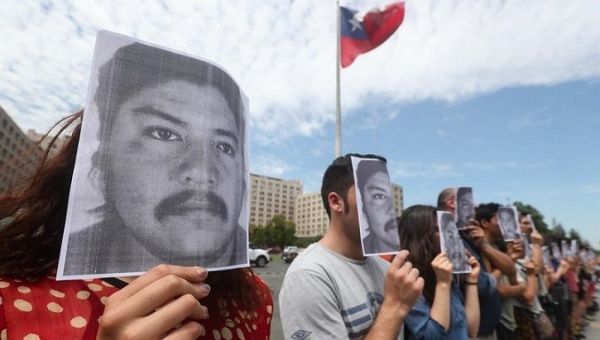
A group of Mapuche leaders Saturday met in Temucuicui to decide next possible steps after the assassination of Camilo Catrillanca on Nov. 14 by Chilean Carabineros (police).
The leaders decided on four demands they will put forward to the Chilean state.
“We demand the current government to urgently dismantle and remove said police unit (Jungle Command) considering that this constitutes a permanent threat, violating our right to live in peace, violating the rights of our children, women and the elderly,” they said in a statement.
The other three demands of the community are; self-determination for the Mapuche people, establishing a commission of historical truth ‘to clarify the crimes against humanity’ against the Mapuche people, and territorial restitution.
Marcelo Catrillanca, father of Camilo was in charge of the meeting. He urged the Mapuche people to continue their mobilizations and civil disobedience in the country.
Jorge Huenchullan, a community leader said that the participants of the meeting expressed “their pain and outrage at how the State has been carrying out policies regarding the Mapuche people”, adding that “if the authorities agree to carry out the demands, we are willing to talk. If they are not, there will be a call to rebellion.”
Additionally, they added that “we remind the Chilean State that the lands and territory (of Mapuche) were taken over and occupied by military violence,” so those who are not Mapuche lack legitimacy and legality in that land.
The four carabineros who took part in the operation which killed Camilo were ordered into preventive detention on Nov. 30. They are charged with homicide and obstruction of justice for destroying evidence. A period of two months for the investigation was established by the prosecutor’s office.
RELATED:
Mexico’s EZLN Expresses Solidarity With Chile Mapuche Struggle
Canadian Jewish News Promotes ‘Terror Tourism’

By Yves Engler | Palestine Chronicle | December 3, 2018
What should we make of a media outlet that praises those who join or give money to a foreign army, which occupies territory belonging to another people, terrorizes the local population by destroying houses, restricting their movement, subjecting them to military courts and shooting unarmed protesters?
What should we call the Canadian Jewish News, an unfailing flatterer of Canadians who join or finance a military subjugating Palestinians? Would “promoter of terror tourism” be an appropriate description?
Over the past month the CJN has published at least four pieces celebrating Canadian support for the Israeli military. On November 22 it reported, “Bayli Dukes, who recently won the Israel Defence Forces’ Award of Excellence for the Southern Command of the IDF, was a biology student at York University in Toronto less than two years ago. Tired of sitting on the couch and posting on Facebook about the situation in Israel, she decided there was more she could be doing.”
A day earlier it posted an article titled “Hand-knitted tuques – a very Canadian gift for IDF soldiers” described 80-year olds in Toronto knitting “for charitable causes, such as IDF soldiers in Israel.” Through the Hats for Israeli Soldiers initiative “more than 50,000 hats have been made for combat soldiers on Israel’s front lines”, the CJN reported. The paper quoted IDF soldier Dovid Berger’s thank you letter. “I’m currently a chayal in the 51st brigade of Golani. We are now on our way to a week-long drill in the cold and wet [occupied Syrian] Golan Heights, and last night we received our beautiful black hats you sent us. Thank you so much, some of us have been borrowing each other’s hats and now there’s enough for everyone to have at least one. It really makes a big difference to us to see how people from Canada and the U.S.A. (and everywhere in the world) are really caring about us.”
A photo in its November 14 print edition was titled “Honouring IDF veterans”. The caption read: “former Israeli defense minister Moshe Yaalon … makes presentation to Montrealers who served in the Israel Defence Forces…. during the Canadian Institute for Jewish research’s 30th anniversary Gala.”
An October 30 piece in the community paper reported, “former NHL player Keith Primeau was among more than 100 Canadians who cycled through Israel over five days this month, to raise funds for disabled veterans in that country. This was the 11th Courage in Motion Bike Ride, which is organized by Beit Halochem Canada.”
The CJN regularly promotes that organization. A search of its database for “Beit Halochem” found dozens of stories about fundraisers and other initiatives supporting Aid to Disabled Veterans of Israel. A 2009 story titled “Israeli veterans enjoy 24th visit to Montreal” reported, “the annual visit was sponsored by the 25-year-old Beit Halochem Canada (Aid to Disabled Veterans of Israel), which raises funds for Israel’s Beit Halochem, a network of centres that provide therapy and support to more than 51,000 disabled vets and victims of terror.”
Another military initiative CJN promotes is Israel Defence Forces Widows & Orphans, which is partly funded by the Israeli government. “I served three years in the Nahal Brigade. I was in Lebanon, the West Bank and the Gaza Strip”, Shlomi Nahumson, director of youth programs at Widows and Orphans, told the paper in advance of a Toronto fundraiser for the group.
Another military initiative popular with CJN is Sar-El, which was founded by Israeli general Aharon Davidi in 1982. “Toronto brothers volunteer for Sar-El at height of war”, “91-year-old volunteers on Israeli army base” and “Toronto artist’s mural unites Israeli army base” are a sampling of the headlines about a program in which about 150 Canadians serve each year as volunteers on Israeli army supply bases.
At least a dozen CJN stories have promoted the Association for the Soldiers of Israel in Canada. “IDF represents all Jews, female general says” and “Community shows support for Israeli soldiers”, noted headlines about a group established in 1971 to provide financial and moral support to active duty soldiers. The later story quoted a speaker claiming, “the IDF saves lives, and not just in Israel — all over the world.”
CJN has published a series of stories sympathetic to Tzofim Garin Tzabar, which recruits non-Israeli Jews into the IDF. A 2004 article about a program supported by the IDF, Israel Scouts, Jewish Agency and Ministry of Absorption was titled “Canadian youths serve in IDF: Motivated by Zionist ideals, love of Israel.” It reported, “[Canadian Yakov] Frydman-Kohl is attending tank school at an Israeli army base somewhere near the West Bank town of Jericho. He recently completed a course in advanced training before his first deployment somewhere in the Gaza Strip.”
CJN lauded Heather Reisman and Gerry Schwartz’ Heseg Foundation for Lone Soldiers. “Philanthropists aid Israeli ‘lone soldiers’”, was the title of one story about the billionaire Toronto couple providing millions of dollars annually for these non-Israeli soldiers.
More generally, the paper has published numerous stories about Canadian ‘lone soldiers’. “Going in alone: the motivations and hardships of Israel lone soldiers”, “Parents of ‘lone soldiers’ discuss support group” and “Lone soldiers: young idealists and worried parents”, detailed Canadians fighting in the Israeli military. They’ve also publicized numerous books about Canadian and other non-Israelis joining the IDF. In one CJN quoted Abe Levine, an Ontarian who helped drive Palestinians from their homes in 1948, saying, “what I don’t understand is why Israelis don’t send 10 rockets back for every one fired from Gaza.” The story continued, “during his time in the Machal [overseas military volunteers], Levine saw most Arabs as ‘the enemy.’ Though he said he had lines he would not cross – ‘I wouldn’t kill an Arab if I just saw him standing outside his house.’”
CJN promoted Nefesh B’Nefesh’s (Jewish Souls United) recruitment of Canadians to the IDF. “Nefesh B’Nefesh brings aspiring soldiers to Israel”, noted a headline about a group that facilitates “Aliyah” for those unsatisfied with their and their ancestors’ dispossession of First Nations and want to help colonize another indigenous people.
While CJN provides positive publicity to groups promoting the Israeli military, these groups (often registered Canadian charities) finance the paper. The previously mentioned story about Nefesh B’Nefesh ended with “the reporter’s trip was partly subsidized by Nefesh B’Nefesh.” More significantly, these organizations regularly advertise in the paper. “Express your Zionism by serving as a civilian volunteer on an Israeli army supply base”, read a Sar-El ad while another noted “the Association for the soldiers of Israel invites you to show your support for the brave youth of the IDF at our gala dinner.”
Yet, while it promotes joining and financing a military actively killing Arabs, CJN accuses Palestinian Canadians of supporting terrorism. An August headline noted, “Canadian Arabic-language newspaper criticized for pro-terrorist op-ed” while a 2017 one stated, “B’nai Brith wants a Mississauga teacher fired for backing terrorists”.
The hypocrisy is glaring. While CJN accuses others, it may be this country’s biggest promoter of “terror tourism”.
– Yves Engler is the author of Canada and Israel: Building Apartheid and a number of other books. Visit his website: yvesengler.com.
Featured Video
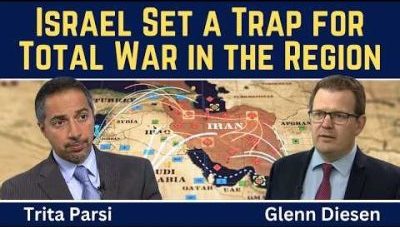
Trita Parsi: Israel Set a Trap for Total War in the Region
or go to
Aletho News Archives – Video-Images
Book Review
Why the War on Conspiracy Theories Is Bad Public Policy
By Kevin Barrett • Unz Review • February 1, 2019
 A Review of Conspiracy Theories and Other Dangerous Ideas by Cass Sunstein (based on an earlier paper co-authored with Adrian Vermeule); In Defense of Troublemakers: The Power of Dissent in Life and Business by Charlan Nemeth; and Conspiracy Theories and the People Who Believe Them, edited by Joseph E. Uscinski
On January 25 2018 YouTube unleashed the latest salvo in the war on conspiracy theories, saying “we’ll begin reducing recommendations of borderline content and content that could misinform users in harmful ways—such as videos promoting a phony miracle cure for a serious illness, claiming the earth is flat, or making blatantly false claims about historic events like 9/11.”
At first glance that sounds reasonable. Nobody wants YouTube or anyone else to recommend bad information. And almost everyone agrees that phony miracle cures, flat earthism, and blatantly false claims about 9/11 and other historical events are undesirable.
But if we stop and seriously consider those words, we notice a couple of problems. First, the word “recommend” is not just misleading but mendacious. YouTube obviously doesn’t really recommend anything. When it says it does, it is lying. … continue
Blog Roll
 Aletho News
- Putin’s key remarks on peace talks and Europe’s ‘schizophrenia’
- Trita Parsi: Israel Set a Trap for Total War in the Region
- Trump’s Iran war is on an Israeli leash
- Saudi oil boss issues global supply warning
- Riyadh Says Its Oil System Is Intact. The Numbers Say Otherwise.
- Trump and Netanyahu Want to “Finish the Job” on Iran
- US ‘one-sided dictation’ not Iran’s beliefs makes rational talks impossible: Baghaei
- Iran’s Next Strike May Not Explode. It Could Shut You Down /Col Doug Macgregor
- Iran: US political targets legitimate if assassinations return
- Iraq shuts key border crossing with Iran under US pressure: Report
- If Americans Knew
- DAILY UPDATE: Latest essential news on Palestine, Israel, & region
- The Israel Lobby’s Changing Fortunes
- AIPAC has become such a political liability that it’s shifting to a more “nimble” approach to buying politicians
- At least 160 Israeli settler attacks in 2 weeks
- Will Gaza’s Ancient Christian Community Disappear Forever?
- Israel’s vision of regional security rests on keeping Arab states weak
- Heidi Levine recounts how Palestinian youths helped save her in settler attack
- DAILY UPDATE: Latest essential news on Palestine, Israel, & region
- Trump’s Intensifying Sabotage of the ICC, for Israel’s Sake
- Israeli military detain US and UK volunteers in West Bank including Democratic NY politician Brad Lander
- No Tricks Zone
- E-Cars Reduce CO2 Emissions By Only 41% Compared To Internal Combustion Engine Vehicles
- Predictions Made By Renowned Climate Professor Over Past Decades Have Been Proven To Be Poor
- New Study Suggests Large Regions Of The Pacific Ocean Have Been Cooling For The Last 80 Years
- Germany’s Green Energy Debacle: High Energy Costs Force Kahla Porzellan to Close After 182 Years!
- New Study: 50 Years Of The Most Aggressive ‘Net Zero’ Policies Can Only Affect The Global Climate By 0.03°C
- US September “Heat” Was No Record…Many Records Set Decades Ago
- Latest European Green Energy Debacle; Portugal’s Largest Flagship Solar Park Insolvent!
- Green Energy Debacle: German Expert Professor Fritz Vahrenholt Warns Of Severe Economic And Social Consequences
- Two More Paleo Reconstructions Affirm Meters-Higher Sea Levels Across Ireland, Brazil 7000-6000 Years Ago
- New Study: Earth And Venus Surface Warmth Largely Explained By Convection And Lapse Rate, Not CO2 Or Radiation

