Marie Colvin, Homs and Media Falsehoods about Syria
By Rick Sterling | Dissident Voice | January 20, 2019
Introduction
In April 2014 I was part of an international delegation which visited Syria for five days. The delegates came from many different countries. Among the notables were the Irish Nobel Laureate Mairead Maguire, a Syrian-British heart surgeon and Julian Assange’s father. We spent time in Damascus, then traveled by bus to Latakia and then Homs. In each city we had meetings with political, religious and social leaders but also had time to wander about and talk with people on the streets.
In Latakia, I met Lilly Martin, an American woman who married a Syrian and has lived there, raising a family for the past twenty-five years. She told me how wrong the western media coverage was. Contrary to media claims, she said protests in Latakia were violent from the start. After the first outbreak of violence, Syrian police and military were ordered to not carry weapons. Protesters continued to burn and destroy government offices with incidents of knifing and shooting unarmed police.

Peaceful Homs Street (Photo: Rick Sterling)
When we visited Homs I was struck by how normal it looked. The streets were full of people and the city looked fine. It was dramatically different than the images portrayed in western media. It was only when we were driving out of Homs that we passed an area where there was widespread destruction and battle damage. There was a sharp contrast between most of the city and the few neighborhoods where battle had raged.

Homs (Photo: Rick Sterling)
The American journalist Marie Colvin died in February 2012 in one of those neighborhoods. It was called Baba Amr. Ten days after her death, the militants and remaining civilians had all departed Baba Amr. It’s unfortunate that Marie Colvin did not talk with Lilly Martin or visit the majority of Homs where the war was not raging. It could have provided much needed balance to her perspective.
Marie Colvin and Homs
According to many of her colleagues, Marie Colvin was charming and courageous, ambitious and fun to be with. She had a knack for including personal details, descriptions and emotions that engaged the reader. Unfortunately, Colvin’s reports and interviews from Syria were inaccurate and a huge distortion of the situation.
It is useful to examine Colvin’s reporting now, seven years later, because there is a wave of new articles, books and movies about her and how she died in Syria.
Colvin and photographer Paul Conroy were smuggled into Syria from Lebanon in February 2012. They spent some days in the town of Al Buwaydah and then were taken into the city of Homs using a drainage culvert to avoid Syrian Army checkpoints. Their guides and minders for the trip were from the Farouq Battalion associated with the Free Syrian Army (FSA).
Beginning in the Fall 2011, militants from the Farouq Battalion set up checkpoints, killed security and soldiers and gradually took control of the Homs neighborhood called Baba Amr. They called it a “liberated zone”. By the time Marie Colvin and other journalists arrived, most of the civilians had fled the fighting to stay with friends and family in other parts of the city.
Colvin and Conroy spent a few days in Baba Amr but then left through the tunnel when it was rumored that Syrian forces were going to attack. After learning that the attack did not take place, the journalists made the difficult journey back into Baba Amr. The second morning after returning, Marie Colvin and French photographer Remi Olchik died as the Syrian forces launched mortar and missile attacks.
Biased and Inaccurate Reporting from Syria
Marie Colvin’s reports and interviews from Syria were broadcast widely in the UK and USA. She wrote an article titled “A vet is only hope for Syrian wounded“. The article begins “Wounded civilians arriving at a makeshift clinic in the Syrian city of Homs are relying on a vet to save their lives because there is no doctor to treat them.” As documented in Conroy’s book, they were not in Homs; they were in the town Buwaydah when they observed a vet working as a medic. Actually, there were hundreds of doctors performing medical duties and treating civilians and soldiers injured in the conflict in Homs.
Colvin’s major story for the Sunday Times was titled “Final dispatch from Homs, the battered city“. It begins by describing a “widows basement” with 300 “frightened women and children trapped in the horror of Homs”. The report of 300 women and children is an exaggeration. Another journalist estimated half that number which is likely an exaggeration itself, since the photos and video show fewer than 50 women and children.
Colvin continued her report saying, “The widows’ basement reflects the ordeal of 28,000 men, women and children clinging to existence in Baba Amr.” This is a huge falsehood; there was a tiny fraction of that number of civilians remaining in the neighborhood. Paul Conroy wrote as follows: “It became increasingly unbelievable that there were an estimated 28,000 people still living in Baba Amr. I hadn’t seen a single one.” (page 188, “Under the Wire”)
The night before her death, Marie Colvin did live interviews on BBC, Channel 4 and CNN. The CNN interview began by showing video of a baby dying from a shrapnel wound. CNN believed Marie Colvin was an eye-witness to the baby’s death. Anderson Cooper asked Colvin what it was like to be in the room. Marie Colvin replied that the room was chaotic and the baby’s death heartbreaking. She dramatized the situation by speaking about the baby’s grandmother being a volunteer in the room when the baby arrived. However, Colvin was not in the room at all. Marie Colvin and the media activists were shown the video on a laptop computer by their FSA guide. (page 155, “Under the Wire”).
In her CNN interview Colvin described Baba Amr as “28,000 civilians, men, women and children, hiding, being shelled, defenseless…. There are no military targets here…. So it’s a complete and utter lie that they (Syrian military) are only going after terrorists…. The Syrian Army is simply shelling a city of cold, starving civilians.” In reality, Baba Amr was the primary base for militants of the Farouq Battalion. If there was an “utter lie”, it was pretending that this was primarily a civilian neighborhood.
The Syrian Reality Which Colvin Did Not Report
Like most western coverage of Syria, Colvin’s reporting did not provide important context such as the following:
* How the conflict began in Homs. An eyewitness reported “From the start, the protest movements were not purely peaceful. From the start I saw armed demonstrators marching along in the protests, who began to shoot at the police first. Very often the violence of the security forces has been a reaction to the brutal violence of the armed rebels.”
* How Baba Amr was taken over. In October 2011 militants from the Farouq Battalion set up checkpoints within Baba Amr, attacked and killed Syrian Army soldiers and other security forces, and killed or expelled government supporters. The process was similar to what was documented by a civilian in Aleppo: “Nine days from my window in Aleppo“.
* Attacks on infrastructure. In December 2011, militants blew up the pipeline to Homs’ oil refinery, a major source of oil for the country.
In mid January, an Arab League report documented the results of their investigation. They said:
The Observer Mission witnessed acts of violence being committed against Government forces and civilians that resulted in several deaths and injuries. Examples of these acts include the bombing of a civilian bus, killing eight persons and injuring others, including women and children, and the bombing of a train carrying diesel oil. In another incident in Homs, a police bus was blown up, killing two police officers. A fuel pipeline and some small bridges were also bombed.
Militants in Baba Amr destroyed government tanks and used their own tank to attack government forces.

Abu Sa’eed, Free Syrian Army Unit Commander
On 2 February 2012, FSA militants attacked a government checkpoint, killing ten soldiers and taking another 19 as prisoners. That was evidently the last straw for the government. The next day, February 3, the intense bombardment of Baba Amr began.
Promoting External Intervention
Marie Colvin’s reports from Baba Amr had a political goal of spurring Western intervention. This is made clear in emails to her Sunday Times editor. “It is sickening that the Syrian regime is allowed to keep doing this …. I think again to focus on Baba Amr, 28,000 defenceless under shelling….” (pp 196-197, “Under the Wire”).
Her reports were missing crucial facts, sensationalized the suffering on one side, ignored the suffering on the other side and demonized the government which was the target for overthrow.

Amateur Video Homs
In her interview with CNN, Colvin used the video of the dying little baby to urge western intervention. “That baby probably will move more people to think, ‘What is going on, and why is no one stopping this murder in Homs that is happening every day?”
In her final article for the Sunday Times Colvin says, “In Baba Amr, the Free Syrian Army (FSA)…. have virtually unanimous support from civilians who see them as their defenders.” This claim is highly dubious. The vast majority of civilians had left Baba Amr. All that were left were family members of FSA militants and others who had nowhere to go.
The bias in Marie Colvin’s reports and interviews was not unique. On the contrary, nearly all NATO and Gulf state reporting on Syria has been biased. Stephen Kinzer would later write “The media are misleading the public on Syria.” Patrick Cockburn would later write that “Nearly everything you have read about Syria and Iraq could be wrong“.
How Marie Colvin Died
It is claimed that Marie Colvin was intentionally targeted by the Syrian government. This is unlikely. Her death brought opprobrium on Damascus and helped the militant opposition. A few months after Marie Colvin’s death, a prominent British journalist reported that the same Syrian rebels tried to get him and his team killed. “I’m quite clear the rebels deliberately set us up to be shot by the Syrian Army. Dead journos are bad for Damascus.”
It is also claimed that Syrian intelligence determined the location of Marie Colvin by identifying a satellite phone signal used in her interviews. This is false. Colvin told her editor at the Sunday Times that the Thuraya satellite phones did not work. For her Skype interviews she used the same antenna uplink used night and day by media activists in Baba Amr.
Marie and Remi were working in a battle zone, guided and effectively embedded with armed insurgents. Their deaths were another tragic consequence of the war.
Ten days after Colvin’s death, the militants and remaining civilians withdrew from Baba Amr. There was no massacre, just a street parade and celebration in other parts of Homs.
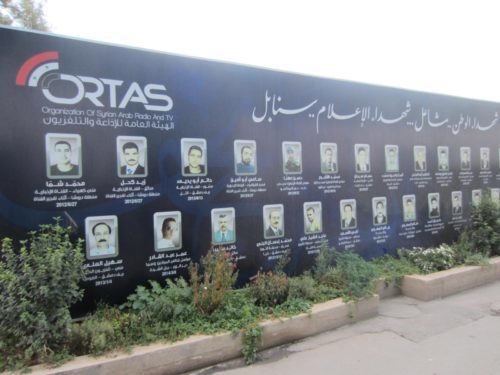
Syrian Journalists Killed (Photo: Rick Sterling)
The deaths of Marie Colvin and Remi Olchik sparked many tributes and widespread publicity. Largely unknown in the West, hundreds of Syrian journalists have also died in the conflict. In a sense, they are all victims of the proxy war on Syria. In another sense, the equivalence is not fair. The war has been encouraged by some and imposed on others.
Rick Sterling is an investigative journalist who grew up in Canada but currently lives in the San Francisco Bay Area of California. He can be reached at rsterling1@gmail.com.
The Tale of “Count” Soros and the Young Latvian State he Destroyed
By Martin Berger – New Eastern Outlook – 20.01.2019
All across the globe alternative media sites would typically describe George Soros as the mastermind of a “globalist” movement, who would undermine any society it can profit from through subversion, manipulation and trickery.
As it’s been revealed by the Telegraph, George Soros, the billionaire known as the man who “broke the Bank of England”, is backing a campaign to overturn Brexit, while remaining one of the three senior figures linked to the Remain-supporting campaign group Best for Britain. Reportedly, he handed over some 500 thousand dollars to this movement in a bid to lead a second referendum to keep Britain in the EU.
In turn, Donald Trump would describe this so-called philanthropist in his Twitter posts as a donor to anti-Trump protesters, while the president’s family and closest advisers are said to go much further. To illustrate this claim it’s enough to mention that his son – Donald Trump Jr. would re-tweet a claim by the comedian Roseanne Barr that George Soros is a Nazi.
It’s been noted that on Fox News, in Republican fund-raising appeals and in research by conservative advocacy groups, the name of George Soros is invoked as an all-purpose symbol of liberalism run amok.
It’s curious that Turkey’s President Recep Tayyip Erdogan accused George Soros of supporting anti-government protests in central Istanbul of 2013 and other countries around the world. The protests swelled from a demonstration to the biggest political challenge that then-Prime Minister Erdogan had faced against his rule.
Further still, the New York times would state that:
The closing advertisement for Mr. Trump’s 2016 campaign featured Mr. Soros — as well as Janet L. Yellen, the chairwoman of the Federal Reserve at the time, and Lloyd Blankfein, the chief executive of Goldman Sachs, both of whom are Jewish — as examples of “global special interests” who enriched themselves on the backs of working Americans.
One can often hear geopolitical analysts describing Soros as «one of the top disclosed donors to American political campaigns in the modern campaign finance era», but the sad truth is that he donated many millions more to political nonprofit groups operating all across the globe that are not liable to disclose their true donors in most states.
Igors Meija, the chairman of the board of directors of Latvia’s construction company Constructus LV, in one of his recent speeches has quite colorfully described the true nature of the “selfless donations” that George Soros is know of making, ruining Latvia and its economy through those. In particular, the CEO revealed that Soros would often brag that he spent 90 million dollars on “supporting democracy” in Latvia. Yet if one is to take a closer look at the profits Soros and the powerful members of his closed club like the Rothschilds reaped from these investments, one can safely state that they’ve made a lot of money by donating them. Among the most noticeable assets that Soros and other oligarchs own is the Lativian external debt that has recently reached 11 billion dollars due to machinations that Soros pulled off in cooperation with the bribed Latvian officials. This amounts to 6,515 thousands dollars that each Latvian resident has to pay, or 12,509 dollars taken from each economically active person. Even to service this debt Latvian tax payers have to give away 1,1 million dollars a day of their hard-earned cash! Just three months of debt servicing amounts to the 90 million dollars Soros spent on “promoting democracy“ in Latvia! One can admit that Soros and the likes of him know how to get more than impressive ROI rates.
If nothing changes in the foreseeable future and the dire demographic situation in Latvia won’t improve, each economically active resident of Latvia will have to pay 23,882 dollars to the kind philanthropists that ruined their country. Igors Meija complains that on top of this all, Soros managed to “liberalize” local financial sector by eliminating all Latvian competitors from it, handing over the money of the ruined Latvian banks, such as Latvijas Krājbanka, Trasta komercbanka, ABLV, to overseas debt holders. .
Igors Meija is convinced that this “philanthropist” his “club” will stop carnivorous practices, especially once they’ve realized that the obedient Latvian bureaucracy will do anything they demand it to do in a bid to stay in power and profit from the local population. The CEO is convinced that Latvia is reminiscent of America in post-Columbian era. Once the “pale-faced do-gooders” landed on the Latvian shores and offered glass mirrors and beads to the local population in exchange for diamonds and gold, Latvians have had a hard time to make their both ends meet.
Similar cases of debt enslavement by Soros and the likes of him can be found in various countries all across the world, where Soros carries on its “philanthropic activities”.
However, Western financial and political elites have been receiving significant dividends from defending George Soros in a multitude of MSM platforms that they own, deliberately hiding the true nature of this soulless plutocrat. Of course, among such media outlets one can find the Guardian, the New York Times and the Financial Times on top on a number of other publications, that have already lost all credibility with the Western public due to the extensive amount of shill work they do for the Western financial elites.
Soros, Fake News & Italian Media: Journalist Reveals Plot to Put Rome Under Austerity
Sputnik – January 20, 2019
Sputnik Italia contributor Alessio Trovato investigates the purpose of George Soros’ recent closed-door meeting with European Commission vice-president Frans Timmermans, and broader campaign to convince Brussels to put Italy under the supervision of the ‘troika’ (the European Central Bank, the EC and the International Monetary Fund).
George Soros, a sworn enemy of the present right-populist coalition government in Rome, has been on something of a mission to put Italy under austerity, with Italian media reporting on such efforts going back to at least 2011. Last October, in an explosive interview for Italian TV, former Prime Minister Mario Monti revealed that Soros had called him at the height of the European sovereign debt crisis eight years ago, urging Italy to accept ‘assistance’ from the IMF to dig out from under its debt problem. Monti refused at the time, saying following Soros’ advice would have turned Italy into another Greece.
On November 26, 2018, in a meeting in Brussels with Timmermans, along with a representative of EC President Jean-Claude Juncker, Soros was again assumed to have brought up the debt issue, with Italian media speculating heavily regarding the vague comments of an EC spokesperson, who said only that they “cannot confirm or deny whether Italy’s budget was discussed.”
Meanwhile, Sputnik Italia contributor Alessio Trovato writes, Soros’ Open Society Foundations has been cutting paychecks “to a considerable number of journalists and influencers whom (surprise) constantly refer to him as a ‘benefactor’ and ‘spontaneously’ support all of his campaigns, including his support for migration, mondialism, Russophobia and colour revolutions.”
A big part of the problem, according to Trovato, is that the mainstream media continues to completely ignore Soros’ activities, or to report on them only with reluctance, even as the billionaire seeks to interfere in democratic processes and the internal affairs of sovereign nations.
Soros’ Agents in Mainstream Media vs. Italy’s National Interest
“Even journalists who do not receive ‘favours’ from the magnate are either incapable of saying anything on this subject or prefer not to do so,” Trovato wrote. “Hence we come to the case of Ivo Caizzi, Luciano Fontana and Federico Fubini, who are likely to become a classic in the annals of Italian journalism, and show the battle for journalistic independence being waged inside the mainstream media.”
Late last year, Caizzi, the Brussels correspondent of Italy’s highly influential Corriere della Sera newspaper, leaked internal email communications accusing Fubini, the paper’s chief economics commentator, and Fontana, its executive director, of publishing ‘Fake News’ in November about ‘inevitable sanctions’ against Italy for its violation of EU budget legislation. In reality, Rome managed to avoid sanctions, reaching a compromise deal with Brussels in December. However, reports of imminent sanctions from a respectable mainstream newspaper are thought to have threatened the country’s economic stability.Last week, Caizzi wrote an open letter to his employers, asking them to respond to several serious questions in the interests of the newspaper, his fellow journalists, and readers. In the editorial, the journalist asked whether editor-in-chief Fontana’s behaviour has been corrected, and whether it would be appropriate for Fontana to limit himself to expressing his personal opinions to editorials, op-eds and comments. Caizzi asked whether reports of ‘imminent sanctions’ could have adversely affected the financial markets and played in the hands of speculators (who, incidentally, include Soros) betting on the Italy’s destabilization, the collapse of the country’s stock market, and the growth of yields on Italian government obligations.
“Can we hope that in 2019, Corriere will return to its motto of ‘providing independent and high-quality information and ensuring maximum reliability of the news from the first to the last page?” Caizzi asked.
Commenting on the editorial, Trovato suggested that “even the rebellious Caizzi” did not comment on two issues which “he is certainly aware of.”
Specifically, Trovato noted, “Soros met Frans Timmermans behind closed doors in Brussels [in November]. The 88-year-old Soros is not one to head off to Brussels for no reason. If he is talking to someone, it means he has something to ask, or offer. Mr. Timmermans is not just anybody, but the so-called ‘spitzenkandidad’, the lead candidate for the presidency of the European Commission in the event of victory for the socialists and the democrats in the upcoming elections to the European Parliament. What did they talk about? A trifle –Soros seems to have asked Timmermans to take measures so that the European Commission rejects the Italian tax maneuver to allow the troika to be brought to Italy. In effect, Soros essentially asked Juncker’s deputy… to turn Italy into the same kind of hostage to the EU as Greece. In this sense, [Corriere’s reporting] turned Italian media into a sort of fifth column, preparing the markets for the upcoming speculative moves from the inside.”
Secondly, the journalist noted, Federico Fubini is a member of the European Advisory Board of the Open Society Foundations, and, ironically, on the European Commission’s ‘expert group on Fake News’.
“The point is, how can one believe that Europe is struggling against Fake News when it also produces it? Can we believe in the impartially of information published thanks to the ‘donations of generous and disinterested benefactors’?” Trovato asked.
Ultimately, the Sputnik Italia contributor noted, “our only chance for survival lies in being aware of what’s going on and in our own analytical skills. Discuss, doubt and check everything – otherwise you will never understand who you’re up against. Maybe it’s a troll – an agent of the Kremlin, or perhaps someone funded by the Open Society, the Aspen Institute, the Bilderbergs, the Atlantic Council, the CIA, Mossad, the FSB, a proponent of the troika trojan horse, or just about anyone else. Never trust! Even those who tell you not to believe anyone!”
MSM Begs For Trust After Buzzfeed Debacle
By Caitlin Johnstone | January 20, 2019
Following what the Washington Post has described as “the highest-profile misstep yet for a news organization during a period of heightened and intense scrutiny of the press,” mass media representatives are now flailing desperately for an argument as to why people should continue to place their trust in mainstream news outlets.
On Thursday Buzzfeed News delivered the latest “bombshell” Russiagate report to fizzle within 24 hours of its publication, a pattern that is now so consistent that I’ve personally made a practice of declining to comment on such stories until a day or two after their release. “BOOM!” tweets were issued by #Resistance pundits on Twitter, “If true this means X, Y and Z” bloviations were made on mass media punditry panels, and for about 20 hours Russiagaters everywhere were riding the high of their lives, giddy with the news that President Trump had committed an impeachable felony by ordering Michael Cohen to lie to Congress about a proposed Trump office tower in Moscow, a proposal which died within weeks and the Kremlin never touched.
There was reason enough already for any reasonable person to refrain from frenzied celebration, including the fact that the story’s two authors, Jason Leopold and Anthony Cormier, were giving the press two very different accounts of the information they’d based it on, with Cormier telling CNN that he had not personally seen the evidence underlying his report and Leopold telling MSNBC that he had. Both Leopold and Cormier, for the record, have already previously suffered a Russiagate faceplant with the clickbait viral story that Russia had financed the 2016 election, burying the fact that it was a Russian election.
UPDATE: A spokesperson for the special counsel is disputing BuzzFeed News’ report. https://t.co/BEoMKiDypn pic.twitter.com/GWWfGtyhaE
— BuzzFeed News (@BuzzFeedNews) January 19, 2019
Then the entire story came crashing down when Mueller’s office took the extremely rare step of issuing an unequivocal statement that the Buzzfeed story was wrong, writing simply, “BuzzFeed’s description of specific statements to the special counsel’s office, and characterization of documents and testimony obtained by this office, regarding Michael Cohen’s congressional testimony are not accurate.”
According to journalist and economic analyst Doug Henwood, the print New York Times covered the Buzzfeed report on its front page when the story broke, but the report on Mueller’s correction the next day was shoved back to page 11. This appalling journalistic malpractice makes it very funny that NYT’s Wajahat Ali had the gall to tweet, “Unlike the Trump administration, journalists are fact checking and willing to correct the record if the Buzzfeed story is found inaccurate. Not really the actions of a deep state and enemy of the people, right?”
This is the behavior of a media class that is interested in selling narratives, not reporting truth. And yet the mass media talking heads are all telling us today that we must continue to trust them.
“Those trying to tar all media today aren’t interested in improving journalism but protecting themselves,” tweeted NBC’s Chuck Todd. “There’s a lot more accountability in media these days than in our politics. We know we live in a glass house, we hope the folks we cover are as self aware.”
More accountability in media than in politics, Chuck? Really? Accountability to whom? Your advertisers? Your plutocratic owners? Certainly not to the people whose minds you are paid exorbitant sums to influence; there are no public elections for the leadership of the mass media.
“Mueller didn’t do the media any favors tonight, and he did do the president one,” griped the odious Chris Cuomo on CNN. “Because as you saw with Rudy Giuliani and as I’m sure you’ll see with the president himself, this allows them to say ‘You can’t believe it! You can’t believe what you read, you can’t believe what you hear! You can only believe us. Even the Special Counsel says that the media doesn’t get it right.’”
“The larger message that a lot of people are going to take from this story is that the news media are a bunch of leftist liars who are dying to get the president, and they’re willing to lie to do it, and I don’t think that’s true” said Jeffrey Toobin on a CNN panel, adding “I just think this is a bad day for us.”
“It does reinforce bad stereotypes about the news media,” said Brian Stelter on the same CNN panel. “I am desperate as a media reporter to always say to the audience, judge folks individually and judge brands individually. Don’t fall for what these politicians out there want you to do. They want you to think we’re all crooked. We’re not. But Buzzfeed now, now the onus is on Buzzfeed.”
CNN, for the record, has been guilty of an arguably even more embarrassing Russiagate flub than Buzzfeed‘s when they wrongly reported that Donald Trump Jr had had access to WikiLeaks’ DNC email archives prior to their 2016 publication, an error that was hilariously due to to the simple misreading of an email date by multiple people.
CNN is leading the way in bashing BuzzFeed but it’s worth remembering CNN had a humiliation at least as big & bad: when they yelled that Trump Jr. had advanced access to the WL archive (!): all based on a wrong date. They removed all the segments from YouTube, but this remains: pic.twitter.com/0jiA50aIku
— Glenn Greenwald (@ggreenwald) January 19, 2019
The mass media, including pro-Trump mass media like Fox News, absolutely deserves to be distrusted. It has earned that distrust. It had earned that distrust already with its constant promotion of imperialist wars and an oligarch-friendly status quo, and it has earned it even more with its frenzied promotion of a narrative engineered to manufacture consent for a preexisting agenda to shove Russia off the world stage.
The mainstream media absolutely is the enemy of the people; just because Trump says it doesn’t mean it’s not true. The only reason people don’t rise up and use the power of their numbers to force the much-needed changes that need to happen in our world is because they are being propagandized to accept the status quo day in and day out by the mass media’s endless cultural engineering project. They are the reason why wars go unopposed, why third parties never gain traction, why people consent to money hemorrhaging upward to the wealthiest of the wealthy while everyone else struggles to survive. The sooner people wake up from the perverse narrative matrix of the plutocratic media, the better.
Is the Violent Dismemberment of Russia Official US Policy?
By Erik D’AMATO | Ron Paul Institute | January 18, 2019
If there’s one thing everyone in today’s Washington can agree on, it’s that whenever an official or someone being paid by the government says something truly outrageous or dangerous, there should be consequences, if only a fleeting moment of media fury. With one notable exception: Arguing that the US should be quietly working to promote the violent disintegration and carving up of the largest country on Earth.
Because so much of the discussion around US-Russian affairs is marked by hysteria and hyperbole, you are forgiven for assuming this is an exaggeration. Unfortunately it isn’t. Published in the Hill under the dispassionate title “Managing Russia’s dissolution,” author Janusz Bugajski makes the case that the West should not only seek to contain “Moscow’s imperial ambitions” but to actively seek the dismemberment of Russia as a whole.
Engagement, criticism and limited sanctions have simply reinforced Kremlin perceptions that the West is weak and predictable. To curtail Moscow’s neo-imperialism a new strategy is needed, one that nourishes Russia’s decline and manages the international consequences of its dissolution.
Like many contemporary cold warriors, Bugajski toggles back and forth between over-hyping Russia’s might and its weaknesses, notably a lack of economic dynamism and a rise in ethnic and regional fragmentation. But his primary argument is unambiguous: That the West should actively stoke longstanding regional and ethnic tensions with the ultimate aim of a dissolution of the Russian Federation, which Bugajski dismisses as an “imperial construct.”
The rationale for dissolution should be logically framed: In order to survive, Russia needs a federal democracy and a robust economy; with no democratization on the horizon and economic conditions deteriorating, the federal structure will become increasingly ungovernable… To manage the process of dissolution and lessen the likelihood of conflict that spills over state borders, the West needs to establish links with Russia’s diverse regions and promote their peaceful transition toward statehood.
Even more alarming is Bugajski’s argument that the goal should not be self-determination for breakaway Russian territories, but the annexing of these lands to other countries. “Some regions could join countries such as Finland, Ukraine, China and Japan, from whom Moscow has forcefully appropriated territories in the past.”
It is, needless to say, impossible to imagine anything like this happening without sparking a series of conflicts that could mirror the Yugoslav Wars. Except in this version the US would be directly culpable in the ignition of the hostilities, and in range of 6,800 Serbian nuclear warheads.
So who is Janusz Bugajski, and who is he speaking for?
The author bio on the Hill’s piece identifies him as a senior fellow at the Center for European Policy Analysis, a Washington, D.C. think-tank. But CEPA is no ordinary talk shop: Instead of the usual foundations and well-heeled individuals, its financial backers seem to be mostly arms of the US government, including the Department of State, the Department of Defense, the US Mission to NATO, the US-government-sponsored National Endowment for Democracy, as well as as veritable who’s who of defense contractors, including Raytheon, Bell Helicopter, BAE Systems, Lockheed Martin and Textron. Meanwhile, Bugajski chairs the South-Central Europe area studies program at the Foreign Service Institute of the US Department of State.
To put it in perspective, it is akin to a Russian with deep ties to the Kremlin and arms-makers arguing that the Kremlin needed to find ways to break up the United States and, if possible, have these breakaway regions absorbed by Mexico and Canada. (A scenario which alas is not as far-fetched as it might have been a few years ago; many thousands in California now openly talk of a “Calexit,” and many more in Mexico of a reconquista.)
Meanwhile, it’s hard to imagine a quasi-official voice like Bugajski’s coming out in favor of a similar policy vis-a-vis China, which has its own restive regions, and which in geopolitical terms is no more or less of a threat to the US than Russia. One reason may be that China would consider an American call for secession by the Tibetans or Uyghurs to be a serious intrusion into their internal affairs, unlike Russia, which doesn’t appear to have noticed or been ruffled by Bugajski’s immodest proposal.
Indeed, just as the real scandal in Washington is what’s legal rather than illegal, the real outrage in this case is that few or none in DC finds Bugajski’s virtual declaration of war notable.
But it is. It is the sort of provocation that international incidents are made of, and if you are a US taxpayer, it is being made in your name, and it should be among your outrages of the month.
Buzzfeed, Question Time & the purpose of Fake News
Image source
By Kit Knightly | OffGuardian | January 19, 2019
Two days ago BuzzFeed published a front page story, under a “BREAKING” banner, headlined: President Trump Directed His Attorney Michael Cohen To Lie To Congress About The Moscow Tower Project
In the article, Buzzfeed reporters Jason Leopold and Anthony Cormier claim to have been told, by two anonymous sources, that Robert Mueller’s “Russiagate” investigation had evidence Donald Trump had instructed his lawyer to lie to Congress. That would be a felony, and obviously an impeachable offence.
The reaction of the news media and associated twitterati was as quick as it was predictable. MSNCBC, CNN, the BBC, The Guardian… the usual suspects. They were all over it within hours.
But then, less than a day later, Robert Mueller’s spokesperson Peter Carr issued this statement:
BuzzFeed’s description of specific statements to the special counsel’s office, and characterization of documents and testimony obtained by this office, regarding Michael Cohen’s congressional testimony are not accurate,”
Despite this, BuzzFeed is sticking to its guns. Insisting that Mueller’s statement is vague, and therefore does not undercut the heart of their story.
The rest of the mainstream media are sensing the tone though and jumping ship. The Washington Post – not known for their pro-Trump slant – ran an editorial pointing out the scarcity of Mueller’s public comment (this the first statement Mueller has ever issued concerning evidence or claims in the press), and arguing that the rush to refute the BuzzFeed article means it is probably completely false.
Nevertheless, BuzzFeed has not retracted or altered their story in any way – except for putting in one small paragraph reporting that Mueller’s office disputes their story. There is no note of the update, and the rest of the story remains unchanged.
There is a striking parallel here, with a story Luke Harding contributed to The Guardian in late November last year: “Manafort held secret talks with Assange in Ecuadorian embassy”
The article claimed Trump’s campaign manager Paul Manafort had met with Julian Assange at least three times prior to the 2016 Presidential Election. No evidence was produced, save the word of “unnamed intelligence officials”, “secret Ecuadorian documents” and the like. While the predictable news outlets picked up the story and ran with it with the eagerness of a 6-month-old Golden Retriever, we in the alternative media were quick to point out the logical and factual deficiencies in the story.
Within hours, The Guardian had edited its language to be rather more circumspect, and include the denials made by both accused parties. The edits made to the article were not noted or highlighted in any way, we only know they exist because of internet archives. The next day The Guardian released a brief, terse, defensive statement. That statement was itself refuted by both Manafort and WikiLeaks. As of today, WikiLeaks is actively pursuing legal action in this case.
Later, it was revealed that a key contributor to the story had been previously been convicted of forgery.
No apology has been made, and no retraction issued, no explanation given. Both the editor, Katherine Viner, and Luke Harding have been totally silent on the topic.
So, in the last 2 months both Buzzfeed and The Guardian have issued “BREAKING NEWS” stories that made bold claims, but were not backed up with any evidence. Both these stories were shown to be untrue in less than 24 hours.
Anonymous sources are a common area here – both stories rely exclusively on the word of “unnamed sources” from either “the intelligence services” or “government agencies”. Anonymous sources are the batarangs on the propagandist’s utility belt. Flexible, simple, timeless.
Anonymity allows government agencies to leak misinformation on purpose, without hurting their credibility. It allows newspapers to control public opinion without having any actual facts on hand. It allows intelligence agencies to plant narratives they may want to revisit, or to give targets of blackmail operations a warning. And, most obviously, it allows journalists to simply make stuff up.
I don’t know which specific class these two stories fall into – but I do know it’s one or all of them.
So we come to the question of motive: BuzzFeed and The Guardian must have known there was no evidence to back up their assertions (yet, anyway). They must know the “significant minority” of the population who believe “conspiracy theories about their own government” will research and refute these claims.
So why publish them?
Well, in the Guardian’s case, every story demonising Assange discredits WikiLeaks’ future output, whilst also softening public sympathy for Assange in preparation for potential extradition of to the US. All the mainstream press have turned on WikiLeaks, but The Guardian – for some reason – has a particularly strong institutional axe to grind with WikiLeaks, and specifically Julian Assange.
Similarly, every “Russia bad!” story primes the public to accept increased defence spending, increased control of the internet by the government and increased social media censorship. It is very much the gift that keeps on giving in that regard.
In BuzzFeed’s case, it has been apparent for a while now that the Mueller investigation is likely to fizzle. Articles and interviews from various media sources have been prepping the public for a “let down” for a few weeks. At this point, there is no case for impeaching Trump. But the Deep State still needs to keep him over a barrel.
Trump has been a disappointment to his base and is yet to implement half the policies he discussed on the campaign trail, but he’s not fully and totally being controlled by the warhawking Deep State yet, either. His policy of peace with North Korea and decisions to pull out of Syria and Afghanistan show that there is a tug-of-war ongoing inside the administration. It’s probably no coincidence that this latest of many “bombshells” comes so quickly on the heels of Trump’s announcement of the Syria withdrawal.
Careful “leaks”, planted stories and social media witch-hunts remind Trump how precarious his position is, whilst simultaneously distracting the public – both pro-Trump and anti-Trump – from real issues.
The case-specific “why?” doesn’t matter so much as the general aim of this type of manipulation. The important question is: Why does the media tell lies if they know they will be revealed as such?
Clearly, the lies serve a purpose, regardless of their retraction or qualification.
Telling a lie loudly and then taking it back quietly is an old propaganda trick – it allows the paper to maintain a facade of “accountability”. The point of this practice is to propagate lies into the public consciousness. It’s a method that can be used to distract and disseminate and divide.
The accuracy of the statement is immaterial. The point is, once it has been said it cannot be unsaid. There are countless examples: “Assange was working for Russia”, “Trump ordered Cohen to lie to Congress”, “Russia hacked the US election”, “Donald Trump worked for the KGB”, “Assad gassed his own people”, “Jeremy Corbyn is an antisemite”.
The list goes on and on and on. None these have been proven. All were asserted without evidence, fiercely defended as facts, and then discretely qualified.
That is the purpose of “fake news”, to forge the Empire’s “created reality”, and force us all to live in it. These are world-shaping, policy-informing, news-dominating narratives… and are nothing but feathers in the wind.
A perfect examplar of this occurred just two days ago on the BBC’s flagship Political debate show Question Time.
The (notionally impartial) host not only sided with right-wing author Isabel Oakeshott in criticising Labour’s polling, but then joined in mocking the Labour MP Diane Abbott for attempting to correct the record.
Both Oakeshott and Fiona Bruce, the host, were factually incorrect – as shown a hundred times over since. But that doesn’t matter. The lie was told, the audience laughed, the reality was created. “Labour are behind in the polls, anybody who says otherwise is a laughingstock”.
The lie goes around the world while the truth is still putting its boots on.
That’s why fake news is so important to them, and so dangerous us.
Kit Knightly is co-editor of OffGuardian. The Guardian banned him from commenting. Twice. He used to write for fun, but now he’s forced to out of a near-permanent sense of outrage.
We Have A Winner: Climate’s Tallest Tale 2018
Global Warming Policy Forum | January 18, 2019
Before Christmas, we asked GWPF readers to send us nominations for our search to find the tallest climate tale of 2018. It’s fair to say that there was a lot of competition, with the catastrophe mongers across the media clearly working hard to ensure that they were in the running for this much sought-after accolade.
We particularly enjoyed L. Robertson’s ‘Climate change, weather and road deaths’, a paper in the journal Injury Prevention, which declared that rising concentrations of greenhouse gases was going to cause a rising death toll on the roads unless governments put in ‘major mitigating countermeasures’.
We also liked the story from the Daily Mail, which alleged that a small rise in global temperatures would make people more likely to wet the bed and might also trigger plagues of ticks, snakes and… erm… voles.
An honourable mention for creative headline writing goes to the subs at BehaviouralEcology.net, who had the brass neck to write a story about polar bear research and then stick a headline on the top that suggested that global warming was going to make men’s willies shrink. Charles Dickens they are not.
However, the unanimous decision of the judges was that the tallest climate tale of the year was Mark Prigg’s bizarre suggestion, for Mail Online, that ‘Climate change is causing blue whales to sing louder as they struggle to be heard over breaking sea ice”. The judges felt this deserved particular kudos because it was not only daft, but could also be shown to be daft at the time of writing. More circumspect journos like to conjure up catastrophes far into the future. Tall-tale telling of this quality is therefore not something you come across every day.
So many thanks to Mark for writing so entertainingly, and thanks also to reader Andrew K, down under, for sending us the nomination.
Narrative Control Firm Targeting Alternative Media
By Caitlin Johnstone | Consortium News | January 18, 2019
The frenzied, hysterical Russia narrative being promoted day in and day out by Western mass media has had two of its major stories ripped to shreds in the last three days.
A report seeded throughout the mainstream media by anonymous intelligence officials back in September claimed that U.S. government workers in Cuba had suffered concussion-like brain damage after hearing strange noises in homes and hotels with the most likely culprit being “sophisticated microwaves or another type of electromagnetic weapon” from Russia. A recording of one such highly sophisticated attack was analyzed by scientists and turned out to be the mating call of the male indies short-tailed cricket. Neurologists and other brain specialists have challenged the claim that any U.S. government workers suffered any neurological damage of any kind, saying test results on the alleged victims were misinterpreted. The actual story, when stripped of hyperventilating Russia panic, is that some government workers heard some crickets in Cuba.
Another report which dominated news for a day recently claimed that former Trump campaign manager Paul Manafort (the same Paul Manafort who the Guardian falsely claimed met with Julian Assange in the Ecuadorian embassy) had shared polling data with a Russian associate and asked him to pass it along to Oleg Deripaska, who is often labeled a “Russian oligarch” by western media. The polling data was mostly public already, and the rest was just more polling information shared in the spring of 2016, but Deripaska’s involvement had Russiagaters burning the midnight oil with breathless excitement. Talking Points Memo‘s Josh Marshall went so far as to publish an article titled “The ‘Collusion’ Debate Ended Last Night,” substantiating his click-generating headline with the claim that “What’s crystal clear is that the transfer to Kilimnik came with explicit instructions to give the information to Deripaska. And that’s enough.”
Except Manafort didn’t give any explicit instructions to share the polling data with Deripaska, but with two Ukrainian oligarchs (who are denying it). The New York Times was forced to print this embarrassing correction to the story it broke, adding in the process that Manafort’s motivation was likely not collusion, but money.
Aw, shucks. Well at least the new names are also complicated and Slavic, so readers can still draw their preferred sinister inferences https://t.co/1NPNC5EN4m pic.twitter.com/P2dhAN8eQg
— Michael Tracey (@mtracey) January 9, 2019
These are just the latest debacles as reporters eager to demonstrate their fealty to the U.S.-centralized empire fall all over themselves to report any story that makes Russia look bad without practicing due diligence. The only voices who have been questioning the establishment Russia narrative that is being fed to mass media outlets by secretive government agencies have been those which the mass media refuses to platform. Alternative media outlets are the only major platforms for dissent from the authorized narratives of the plutocrat-owned political/media class.
Imagine, then, how disastrous it would be if these last strongholds of skepticism and holding power to account were removed from the media landscape. Well, that’s exactly what a shady organization called NewsGuard is trying to do, with some success already.
A report by journalist Whitney Webb for MintPress News details how NewsGuard is working to hide and demonetize alternative media outlets like MintPress, marketing itself directly to tech companies, social media platforms, libraries and schools. NewsGuard is led by some of the most virulently pro-imperialist individuals in America, and its agenda to shore up narrative control for the ruling power establishment is clear.
EXCLUSIVE: As Newsguard’s project advances, it will soon become almost impossible to avoid this neocon-approved news site’s ranking systems on any technological device sold in the United States. @_whitneywebbhttps://t.co/ftH6QnVlDn
— MintPress News (@MintPressNews) January 9, 2019
The product that NewsGuard markets to the general public is a browser plugin which advises online media consumers whether a news media outlet is trustworthy or untrustworthy based on a formula with a very pro-establishment bias which sees outlets like Fox News and the U.S. propaganda outlet Voice of America getting trustworthy ratings while outlets like RT get very low ratings for trustworthiness. This plugin dominates the bulk of what comes up when you start researching NewsGuard, but circulating a plugin that individual internet users can voluntarily download to help their rulers control their minds is not one of the more nefarious agendas being pursued by this company. The full MintPress article gives a thorough breakdown of NewsGuard’s activities, but here’s a summary of five of its more disturbing revelations:
No. 1 The company has created a service called BrandGuard, billed as a “brand safety tool aimed at helping advertisers keep their brands off of unreliable news and information sites while giving them the assurance they need to support thousands of Green-rated [i.e., Newsguard-approved] news and information sites, big and small.” Popularizing the use of this service will attack the advertising revenue of unapproved alternative media outlets which run ads. NewsGuard is aggressively marketing this service to “ad tech firms, leading agencies, and major advertisers”.
No. 2 NewsGuard’s advisory board reads like the fellowships list of a neocon think tank, and indeed one of its CEOs, Louis Gordon Crovitz, is a Council on Foreign Relations member who has worked with the American Enterprise Institute and Heritage Foundation. Members of the advisory board include George W Bush’s Secretary of Homeland Security Tom Ridge, deep intelligence community insider Michael Hayden, and the Obama administration’s Richard Stengel, who once publicly supported propaganda in the U.S. (see the Tweet below for a direct quote.) All of these men have appeared in influential think tanks geared toward putting a public smiley face on sociopathic warmongering agendas.
At a Council on Foreign Relations forum about “fake news,” former Editor at Time Magazine Richard Stengel directly states that he supports the use of propaganda on American citizens – then shuts the session down when challenged about how propaganda is used against the third world pic.twitter.com/ClAT5POv7G
— William Craddick (@williamcraddick) May 11, 2018
No. 3 Despite one of its criteria for trustworthy sources being whether or not they are transparent about their funding, the specifics of NewsGuard’s financing is kept secret.
No. 4 NewsGuard is also planning to get its news-ranking system integrated into social media outlets like Facebook and Twitter, pursuing a partnership which will make pro-establishment media consumption a part of your experience at those sites regardless of whether or not you download a NewsGuard app or plugin.
Really excited to see NewsGuard now built into the latest beta of Edge on iOS ??. Smart service. There’s also an extension for Edge on Windows 10. pic.twitter.com/Pqq9diNR8F
— Daniel Rubino (@Daniel_Rubino) January 4, 2019
No. 5 NewsGuard markets itself to state governments in order to get its plugin installed in all of that state’s public schools and libraries to keep internet users from consuming unauthorized narratives. It has already succeeded in accomplishing this in the state of Hawaii, with all of its library branches now running the NewsGuard plugin.
Really excited to see NewsGuard now built into the latest beta of Edge on iOS ??. Smart service. There’s also an extension for Edge on Windows 10. pic.twitter.com/Pqq9diNR8F
— Daniel Rubino (@Daniel_Rubino) January 4, 2019
We may be certain that NewsGuard will continue giving a positive, trustworthy ranking to the New York Times no matter how many spectacular flubs it makes in its coverage of the establishment Russia narrative, because the agenda to popularize anti-Russia narratives lines up perfectly with the neoconservative, government agency-serving agendas of the powers behind NewsGuard. Any attempt to advance the hegemony of the U.S.-centralized power establishment will be rewarded by its lackeys, and any skepticism of it will be punished.
We need to use every inch of our ability to communicate with each other to make these manipulations clearly understood.
Caitlin Johnstone is a rogue journalist, poet, and utopia prepper who publishes regularly at Medium.
Syria: In the History of Bad Excuses, This One’s Top-Tier
By Thomas L. Knapp | Garrison Center | January 17, 2019
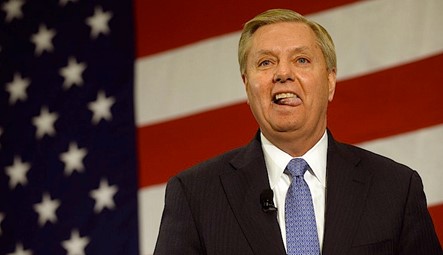
US Senator Lindsey Graham (R-SC) thinks — I’m using the term “thinks” very loosely here — that Americans dying in Syria is a compelling reason to continue exposing Americans to the danger of dying in Syria. So do Senators Marco Rubio (R-FL), James Inhofe (R-OK), and Jack Reed (D-RI).
Ever since US president Donald Trump announced his intent to withdraw US troops from Syria in December, “hawks” in Congress have been looking for an argument against the withdrawal.
And this is the best they can come up with? If the troops don’t stay in Syria, they can’t keep getting killed in Syria? Wow, that really shows Trump, doesn’t it?
At issue: The single deadliest Islamic attack on US forces in their nearly four-year US invasion and occupation of Syria, on January 16 in Manbij, in which four Americans (two members of the armed forces, a contractor, and a civilian Pentagon employee) died.
When former president Barack Obama authorized the invasion and occupation of Syria in 2015, he did so in complete defiance of both US and international law. Congress had not then declared war on Syria and has not since then offered any formal legal basis for the Obama’s actions. And since Syria is a United Nations member state which has never attacked the US nor indicated any intent to do so, the invasion/occupation constitutes a war of aggression — “the supreme international crime,” as Nuremberg Tribunal judge Norman Birkett called it.
Despite the complete absence of any compelling military or political reason for invading and occupying Syria, and despite the complete illegality of that invasion and occupation, these Senators believe that Trump should reverse his decision and keep US troops at risk in a land whether they’re neither needed nor welcome.
After all, if US troops aren’t there, US troops can’t be killed there, and US troops need to be killed there every once in a while to justify keeping them there in perpetuity. The Senators’ campaign donors in the “defense” industry need them kept there. Government contracts and stock dividends depend on it!
That’s the caliber of mind and morality the voters of South Carolina, Florida, Oklahoma, and Rhode Island send to Washington, DC. Can’t say I blame the voters for wanting those guys to go somewhere, anywhere other than South Carolina, Florida, Oklahoma, or Rhode Island. If nothing else it probably raises those states’ average IQs and reduces their petty crime rates.
Thomas L. Knapp (Twitter: @thomaslknapp) is director and senior news analyst at the William Lloyd Garrison Center for Libertarian Advocacy Journalism (thegarrisoncenter.org). He lives and works in north central Florida.
A Convenient Killing of US Troops in Syria
By Finian CUNNINGHAM | Strategic Culture Foundation | 18.01.2019
With unseemly haste, US news media leapt on the killing of four American military personnel in Syria as a way to undermine President Donald Trump’s plan to withdraw troops from that country.
The deadly attack in the northern city of Manbij, on the west bank of the Euphrates River, was reported to have been carried out by a suicide bomber. The Islamic State (ISIS) terror group reportedly claimed responsibility, but the group routinely makes such claims which often turn out to be false.
The American military personnel were said to be on a routine patrol of Manbij where US forces have been backing Kurdish militants in a purported campaign against ISIS and other terror groups.
An explosion at a restaurant resulted in two US troops and two Pentagon civilian officials being killed, along with more than a dozen other victims. Three other US military persons were among those injured.
US media highlighted the bombing as the biggest single death toll of American forces in Syria since they began operations in the country nearly four years ago.
The US and Kurdish militia have been in control of Manbij for over two years. It is one of the main sites from where American troops are to withdraw under Trump’s exit plan, which he announced on December 19.
Following the bombing, the New York Times headlined: “ISIS Attack in Syria Kills 4 Americans, Raising Worries about Troop Withdrawal”. The report goes on, “the news prompted calls from Republicans and Democrats for President Trump to reconsider his plans to withdraw troops from the country.”
A more pointed headline in The Washington Post was: “Killing of 4 Americans in Syria Throws Spotlight on Trump’s Policy”.
The Post editorialized, “the bombing showed that [ISIS] is likely to be a force to be reckoned with in Syria for the foreseeable future.” It quoted politicians in Washington claiming the “bombing deaths… were a direct result of a foolish and abrupt departure announcement [by Trump], and made the case for staying.”
Democrat Senator Jack Reed, who sits on the Senate Armed Forces Committee, said: “From the beginning, I thought the president was wrong [in ordering the withdrawal]. It was a strategic mistake for the whole region.”
With macabre smugness, anti-Trump politicians and news media appeared to exploit the death of US troops in Manbij to score points against Trump.
The president’s claims made just before Christmas of having defeated ISIS were widely replayed following the Manbij attack this week by way of ridiculing Trump’s order to pullout US troops from Syria.
Nevertheless, despite the deaths, Trump and his Vice President Mike Pence stated they were still committed to bring the 2,000 or so US troops home. Some military figures also went on US media to defend Trump’s pullout plan in spite of the terror attack in Manbij.
There clearly is a serious division in Washington over Trump’s policy on Syria. For Democrats and supportive media outlets, anything Trump does is to be opposed. But there are also elements within the military and intelligence nexus which are implacably against, what they see as, his “capitulation to Russia and Iran” in Syria. That was partly why his Defense Secretary James Mattis resigned days after Trump made his announced withdrawal at the end of last month.
Having invested years and money in regime-change machinations in Syria, there are bound to be US military and intelligence cabals which are resistant to Trump’s move to pack up. Not that Trump’s move portends a peace dividend for the region. It is more a “tactical change” for how US imperialism operates in the Middle East, as his Secretary of State Mike Pompeo said in Cairo last week.
That is why Trump’s order to take troops out of Syria may not be a clear-cut withdrawal. His National Security adviser John Bolton on a tour of the Middle East last week has already tried to undermine Trump by attaching all sorts of vague conditions to the troop pullout. Bolton and Pompeo have talked about the need to ensure the total defeat of ISIS and of the countering of Iranian presence in Syria.
This brings up the question of who may have carried out the bombing in Manbij? Was it really a suicide bomber? Was it really ISIS? Several observers have pointed out that ISIS have not had any presence in Manbij for the past two years since the Americans and Kurds took control of the city.
As always, the key question arises: who stands to benefit from the killing of the American troops? The scale of the attack suggests it was carried out with a sharp political message intended for Trump.
One potential beneficiary are the Kurdish militants who are being abandoned by the putative US withdrawal. Without their American sponsor on the ground, the Kurds are in danger of Turkish forces launching cross-border operations to wipe them out, as Ankara has vowed to do. A Machiavellian Kurdish calculation could be to “disprove” Trump about “ISIS being defeated”, and that US forces are needed to prevent any resurgence of the terror group in Manbij and northeast Syria.
Another sinister player is the CIA or some other element of US military intelligence. It is certainly not beyond the realm of plausibility that the CIA could facilitate such an atrocity against American personnel in order to discredit Trump’s withdrawal plan.
Certainly, the way the anti-Trump media in the US reacted with such alacrity and concerted talking points suggests there was something a bit too convenient about the massacre.
It would in fact be naive to not suspect that the CIA could have pulled off such a false flag in Manbij. As in 1950s Vietnam, as told by Graham Greene in ‘The Quiet American’, the CIA have been doing such dirty tricks with bombing atrocities and assassinations for decades in order to precipitate wars in foreign countries that the agency calculates are in America’s geopolitical interests.
‘Someone will make money by stoking fears’ – Ron Paul on new US missile doctrine
RT | January 18, 2019
The new US missile defense strategy is a boondoggle for the military-industrial complex, which will drive the US into more debt and can bring misery upon multiple nations by fueling an arms race, ex-US Congressman Ron Paul said.
Plans to weaponize space with a new layer of sensors unveiled by Trump as part of his administration’s Missile Defense Review is an unnecessary and hard-to-implement project that is sure to enrich the military-industrial lobby, Paul told RT.
“The biggest issue here is someone is going to make a lot of money on it. It reminds me of Star Wars. They’ve never really developed it, but people got excited about it,” Paul said, drawing parallels between President Donald Trump’s new endeavor and former President Ronald Reagan’s Strategic Defense Initiative program.
Addressing the Pentagon on Thursday, Trump said that the goal of deploying ground-based interceptors to Alaska and sensors in space is to stop missile launches by hostile powers over their own territory.
Paul says the scale of the threat to US security has been overblown and does not warrant such extravagant means, which might not end up being efficient.
“I’m all for having defensive weapons if necessary, but I can’t quite see the danger that they are talking about that we have to now go much further into debt on something that can take many, many years and there are questions on how well it would work,” he said.
The mammoth project is another way of throwing more money at the military, Paul said, noting that the US is “already running a trillion-dollar debt every year” and will have to borrow money to pay for the futuristic missile defense shield.
National debt stands at over $21 trillion and continues to surge, with the federal deficit projected to top $1 trillion by 2020.
While it remains to be seen if Congress approves the major increase in funding that would be required to implement Trump’s plan, Paul says it’s unlikely to be nearly as contentious as Trump’s $5bn border wall that triggered a record-breaking government shutdown.
“But it seems like the money they spend on the military-industrial complex never gets the same scrutiny as some of these political issues,” Paul said.
Defense, unlike other political issues, tends to transcend party lines, as it “is more involved with money than anything else.”
“Fiscal conservatives are big spenders as much as liberals,” he said.
Of course, it also comes in handy to have the “usual scapegoats, the countries that they are able to stir animosity towards.”
The US will inevitably whip up an arms race if it adopts the new strategy, since no country singled out in the review – such as Russia, China, and ‘rogue nations’ Iran and North Korea – are going to ignore the US military beef-up. Those who will suffer the most from this are ordinary people who will have to carry the burden of the defense costs.
“Often these arguments get carried away to the point when one side is up-betting another side, building more and more and the only people that seem be really hurt from this are the people of the countries whose finances are drained,” Paul said.
And to consent to such massive spending, people have to be intimidated, the ex-congressman believes – thus, the negative media response to Trump’s announced withdrawal from Syria or thawing relations with North Korea.
“As if we’ve just created WWIII by suggesting they are not going to stay there,” Paul said, adding that the military-industrial complex profiteers and pro-war politicians appear to be in control of the propaganda machine.
Featured Video
Seyed M. Marandi: US-Iran War Inevitable: Kuwait and Bahrain May Fall
or go to
Aletho News Archives – Video-Images
From the Archives
Oil and the Israel Lobby
Reknowned economist M. Shahid Alam offers this excellent critique of Noam Chomsky’s defective analysis of the relative influence of Oil versus the Israel lobby over US foreign policy: … continue
Blog Roll
 Aletho News
- Seyed M. Marandi: US-Iran War Inevitable: Kuwait and Bahrain May Fall
- Leaders Condemn Ansarallah Attack on Saudi Arabia While Ignoring Illegal War Against Yemen
- Leaked: Britain’s Covert Iraqi Psyops Network
- Yemeni Armed Forces Warn Airlines Against Using Saudi Airports, Exempt Mecca and Medina
- Iran security chief says powers greater than US tried to conquer Iran but ended in ‘dustbin of history’
- Europe’s mounting social chaos… chickens coming home to roost for proxy war against Russia
- US-Russia Diesel Deal Becomes Massive Defeat for Ukraine
- Hormuz and the Looming Economic Catastrophe
- Dhubab offensive, media blitz and the rapid unraveling of Saudi-backed coalition’s new gambit
- Putin Conveys to Trump Iran’s Vision on Possible Conflict Resolution – Kremlin
- If Americans Knew
- Gaza: Ceasefire Anniversary Marks Year of Failed Promises
- The American Conservative: Mike Huckabee Should Resign
- A C-Section in Shackles: A Palestinian Woman’s Harrowing Birth in Israeli Detention
- ‘He’s Desperate’: AIPAC Begins Spending Against Abdul El-Sayed to Boost Mike Rogers:
- Trump, Hormuz, and the Looming Economic Catastrophe
- For three years, Israel has killed a child in Gaza every 71 minutes – Daily Update
- Israeli forces kill another child in Gaza – Daily Update
- Gaza ceasefire exists in name only, say more than 100 organizations
- Nearly 2 Million in Gaza Need Urgent Shelter Assistance as Winter Looms: IOM Chief Warns
- Suppressing Palestinian resistance: US charity under fire for AI monitoring of Gaza classrooms
- No Tricks Zone
- Germany’s Green Energy Debacle: High Energy Costs Force Kahla Porzellan to Close After 182 Years!
- New Study: 50 Years Of The Most Aggressive ‘Net Zero’ Policies Can Only Affect The Global Climate By 0.03°C
- US September “Heat” Was No Record…Many Records Set Decades Ago
- Latest European Green Energy Debacle; Portugal’s Largest Flagship Solar Park Insolvent!
- Green Energy Debacle: German Expert Professor Fritz Vahrenholt Warns Of Severe Economic And Social Consequences
- Two More Paleo Reconstructions Affirm Meters-Higher Sea Levels Across Ireland, Brazil 7000-6000 Years Ago
- New Study: Earth And Venus Surface Warmth Largely Explained By Convection And Lapse Rate, Not CO2 Or Radiation
- 2025 Nature Paper Claiming Worsening Global Drought Gets RETRACTED …Heavily Flawed
- New Study: ‘Global Drought Shows No Detectable Recent Acceleration Under Climate Warming’
- Economic Masterminds: German Socialists Suggest Taxing Productivity Gains Stemming From Using AI

