We Told You So: Google Is NSA
By Phil Butler – New Eastern Outlook – 04.09.2017
Google wants to be Big Brother’s eyeballs on you. All us Internet gurus knew this since before the NSA was found out spying on everybody. But now the Mountain View boys are more determined than ever to filter your information, and to obliterate any semblance of truth reaching people.
If I had led into an article with that paragraph even five years ago, I’d have been instantly labeled a “conspiracy theorist” or worse. How about now dear reader? Is the idea the technocrats and their huge monied handlers want to run you crazy? I didn’t think so. But if you need proof beyond the obvious, Google’s 160-page handbook tells us all exactly how they plan to spoon feed us only “their” news. The lengthy handbook is a heavy read for the average person, but the book does lay out an Orwellian machination unlike anything seen since the Nazi propaganda machine of Hitler. Pay close attention to the “instructional” on page 108 where Google dictates who does and does not meet rating criteria. The section under Fails to Meet (FailsM) is a steamrolling of the free press, and suggested hiding certain kinds of sites:
“Pages that directly contradict well established historical facts (e.g., unsubstantiated conspiracy theories), unless the query clearly indicates the user is seeking an alternative viewpoint.”
As per usual, Google has obscured its real intentions with the idea some super smart algorithm is “filtering” or “learning” results to help your life be better. Once again Google supposes to do “what is good for us” by destroying some sources and propping up others. Using terms like “search quality rating guidelines” and “page quality rating guidelines” the little Machiavellis at Google provide justification for controlling what you see and read on the web. Censorship and monopolization of internet information and business – this is the case against the Mountain View boys this time.
Then there’s the section concerning how Google will rank the best of the best news sites entitled “A High Level of Expertise/Authoritativeness/Trustworthiness (EAT)”. The acronym should clue you that Google search users are about to be fed some bullshit truth. “High Quality Pages” for the Google oligarchs means that either the page owner pays Google through the nose, or that the site in question serves Google’s masters well – period. At the top of this matrix of sources are newspapers (High News 1) like The Washington Post and New York Times, followed by the articles within those pages (High News 2). On down the list of authority pages are government sites like the US State Department and White House, and then pages categorized (believe it or not) “High Humor”. So, Google has factored out the importance of truth or even the importance of the news story itself, in favor of “who” wrote the story and the “reality” Google wants you to accept – Big Brother’s network – end of story.
Melissa Dykes of Truth Stream Media made a video about the new Big Brother effort, and Government Slaves did their take as well. And the latter even suggests alternatives to using Google Search, such as Yandex and DuckDuckGo, for those refusing the totalitarian tendencies we see headed our way these days. For people who would rather boycott the imminent evil Government Slaves also lists 400 sites for independent news outside Google’s MATIX. My advice for everyone is to start making the transition away from Google and Facebook now. My own vast experience in dealing with these tech people has revealed people with no morals whatsoever, people willing to do anything necessary to perpetuate their dominance in digital. Google has destroyed millions of people’s livelihoods, broken its own code, lawyers itself around anti-trust and fair practice rules, avoided taxes, and colluded against the people of the United States with the intelligence agencies. All these assertions are not just this writer’s ramblings. Back in 2014 John W. Whitehead wrote about the NSA and Google for the Huffington Post :
“Just look around you. It’s happened already. Thanks to an insidious partnership between Google and the National Security Agency (NSA) that grows more invasive and more subtle with every passing day, “we the people” have become little more than data consumer commodities to be bought, sold and paid for over and over again.”
On August 29th the notorious Zero Hedge creator, Tyler Durden wrote a piece entitled “Why Google Made The NSA”, which revealed a project called INSURGE INTELLIGENCE, a crowd-funded investigative journalism project that had released a story of how the United States intelligence community funded, nurtured and incubated Google as part of a drive to dominate the world through control of information. You read that correctly. My past assertions that Sergey Brin and Larry Page were “lifted up” by unseen money were probably correct. While I presumed George Soros or Rockefeller being behind it, it’s conceivable Uncle Sam was the spook in the woodpile. The Zero Hedge story delves deep into a “deep state” we never imagined in our worst nightmares. The report unveils Pentagon Highlands Forum’s more or less taking over tech giants like Google to pursue mass surveillance. Furthermore, the report shows how the intelligence community has played a key role in secret efforts to manipulate the media and the public. The endless crisis and war we find ourselves in, is in large part because of the efforts of Google and the other technocratic institutions. In another section the author frames how the Obama administration really consolidated this “Big Brother” control:
“Under Obama, the nexus of corporate, industry, and financial power represented by the interests that participate in the Pentagon Highlands Forum has consolidated itself to an unprecedented degree.”
These people refer to themselves as “the gatekeepers”. Their arrogance is only exceeded by their amoral agnosticism. The successes of the information age, Silicon Valley’s dubious venture capital bonanzas, the mysterious ways in which fairly ordinary innovators were propelling into the limelight warns us to the underlying swamp Donald Trump described. But it is the immensity of the network that should clue us. Imagine a new president taking office and fending off attacks as best he could, only to discover that the whole machine of the US government being under such a controlling influence. It’s easy to theorize after learning all this, how Trump did an about face on so many issues. He must have been overwhelmed. Or, he was part of the plan all along.
Finally, if we expand on this news and include other technocrats like Bill Gates or Jeff Bezos, then understanding world crises caused by bad US policy becomes simpler. It’s a corporation – all of it is a corporation for war and friction. Bezos walking with former Marine General and current Secretary of Defense, “Mad Dog” Mattis at Amazon is symbolic. Trump’s posture with Israel, the Saudis, even on domestic policy tells us those campaign promises sank in the wake of a deep state ship at full steam forward. If we allow Google and other such players to continue unchecked….
Well, you are as capable as I of completing that sentence. I only pray we are not too late.
How ‘Regime Change’ Wars Led to Korea Crisis
By Robert Parry | Consortium News | September 4, 2017
It is a popular meme in the U.S. media to say that North Korean leader Kim Jong Un is “crazy” as he undertakes to develop a nuclear bomb and a missile capacity to deliver it, but he is actually working from a cold logic dictated by the U.S. government’s aggressive wars and lack of integrity.
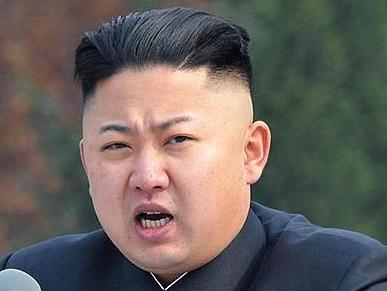
North Korean leader Kim Jong Un
Indeed, the current North Korea crisis, which could end up killing millions of people, can be viewed as a follow-on disaster to President George W. Bush’s Iraq War and President Barack Obama’s Libyan intervention. Those wars came after the leaders of Iraq and Libya had dismantled their dangerous weapons programs, leaving their countries virtually powerless when the U.S. government chose to invade.
In both cases, the U.S. government also exploited its power over global information to spread lies about the targeted regimes as justification for the invasions — and the world community failed to do anything to block the U.S. aggressions.
And, on a grim personal note, the two leaders, Saddam Hussein and Muammar Gaddafi, were then brutally murdered, Hussein by hanging and Gaddafi by a mob that first sodomized him with a knife.
So, the neoconservatives who promoted the Iraq invasion supposedly to protect the world from Iraq’s alleged WMDs — and the liberal interventionists who pushed the Libya invasion based on false humanitarian claims — may now share in the horrific possibility that millions of people in North Korea, South Korea, Japan and maybe elsewhere could die from real WMDs launched by North Korea and/or by the United States.
Washington foreign policy “experts” who fault President Trump’s erratic and bellicose approach toward this crisis may want to look in the mirror and consider how they contributed to the mess by ignoring the predictable consequences from the Iraq and Libya invasions.
Yes, I know, at the time it was so exciting to celebrate the Bush Doctrine of preemptive wars even over a “one percent” suspicion that a “rogue state” like Iraq might share WMDs with terrorists — or the Clinton Doctrine hailed by Secretary of State Hillary Clinton’s acolytes enamored by her application of “smart power” to achieve “regime change” in Libya.
However, as we now know, both wars were built upon lies. Iraq did not possess WMD stockpiles as the Bush administration claimed, and Libya was not engaged in mass murder of civilians in rebellious areas in the eastern part of the country as the Obama administration claimed.
Post-invasion investigations knocked down Bush’s WMD myth in Iraq, and a British parliamentary inquiry concluded that Western governments misrepresented the situation in eastern Libya where Gaddafi forces were targeting armed rebels but not indiscriminately killing civilians.
But those belated fact-finding missions were no comfort to either Saddam Hussein or Muammar Gaddafi, nor to their countries, which have seen mass slaughters resulting from the U.S.-sponsored invasions and today amount to failed states.
There also has been virtually no accountability for the war crimes committed by the Bush and Obama administrations. Bush and Obama both ended up serving two terms as President. None of Bush’s senior advisers were punished – and Hillary Clinton received the 2016 Democratic Party’s nomination for President.
As for the U.S. mainstream media, which behaved as boosters for both invasions, pretty much all of the journalistic war advocates have continued on with their glorious careers. To excuse their unprofessional behavior, some even have pushed revisionist lies, such as the popular but false claim that Saddam Hussein was to blame because he pretended that he did have WMDs – when the truth is that his government submitted a detailed 12,000-page report to the United Nations in December 2002 describing how the WMDs had been destroyed (though that accurate account was widely mocked and ultimately ignored).
Pervasive Dishonesty
The dishonesty that now pervades the U.S. government and the U.S. mainstream media represents another contributing factor to the North Korean crisis. What sensible person anywhere on the planet would trust U.S. assurances? Who would believe what the U.S. government says, except, of course, the U.S. mainstream media?
Remember also that North Korea’s nuclear program had largely been mothballed before George W. Bush delivered his “axis of evil” speech in January 2002, which linked Iran and Iraq – then bitter enemies – with North Korea. After that, North Korea withdrew from earlier agreements on limiting its nuclear development and began serious work on a bomb.
Yet, while North Korea moved toward a form of mutual assured destruction, Iraq and Libya chose a different path.
In Iraq, to head off a threatened U.S.-led invasion, Hussein’s government sought to convince the international community that it had lived up to its commitments regarding the destruction of its WMD arsenal and programs. Besides the detailed declaration, Iraq gave U.N. weapons inspectors wide latitude to search on the ground.
But Bush cut short the inspection efforts in March 2003 and launched his “shock and awe” invasion, which led to the collapse of Hussein’s regime and the dictator’s eventual capture and hanging.
Gaddafi’s Gestures
In Libya, Gaddafi also sought to cooperate with international demands regarding WMDs. In late 2003, he announced that his country would eliminate its unconventional weapons programs, including a nascent nuclear project.
Gaddafi also sought to get Libya out from under economic sanctions by taking responsibility for the 1988 bombing of Pan Am 103 over Scotland, although he and his government continued to deny carrying out the terror attack that killed 270 people.
But these efforts to normalize Libya’s relations with the West failed to protect him or his country. In 2011 when Islamic militants staged an uprising around Benghazi, Gaddafi moved to crush it, and Secretary of State Clinton eagerly joined with some European countries in seeking military intervention to destroy Gaddafi’s regime.
The United Nations Security Council approved a plan for the humanitarian protection of civilians in and around Benghazi, but the Obama administration and its European allies exploited that opening to mount a full-scale “regime change” war.
Prominent news personalities, such as MSNBC’s Andrea Mitchell, cheered on the war with the claim that Gaddafi had American “blood on his hands” over the Pan Am 103 case because he had accepted responsibility. The fact that his government continued to deny actual guilt – and the international conviction of Libyan Abdelbaset al-Megrahi was a judicial travesty – was ignored. Almost no one in the West dared question the longtime groupthink of Libyan guilt.
By October 2011, Gaddafi had fled Tripoli and was captured by rebels in Sirte. He was tortured, sodomized with a knife and then executed. Clinton, whose aides felt she should claim credit for Gaddafi’s overthrow as part of a Clinton Doctrine, celebrated his murder with a laugh and a quip, “We came; we saw; he died.”
But Gaddafi’s warnings about Islamist terrorists in Benghazi came back to haunt Clinton when on Sept. 11, 2012, militants attacked the U.S. consulate and CIA station there, killing Ambassador Christopher Stevens and three other Americans.
The obsessive Republican investigation into the Benghazi attack failed to demonstrate many of the lurid claims about Clinton’s negligence, but it did surface the fact that she had used a private server for her official State Department emails, which, in turn, led to an FBI investigation which severely damaged her 2016 presidential run.
Lessons Learned
Meanwhile, back in North Korea, the young dictator Kim Jong Un was taking all this history in. According to numerous sources, he concluded that his and North Korea’s only safeguard would be a viable nuclear deterrent to stave off another U.S.-sponsored “regime change” war — with him meeting a similar fate as was dealt to Hussein and Gaddafi.
Since then, Kim and his advisers have made clear that the surrender of North Korea’s small nuclear arsenal is off the table. They make the understandable point that the United States has shown bad faith in other cases in which leaders have given up their WMDs in compliance with international demands and then saw their countries invaded and faced grisly executions themselves.
Now, the world faces a predicament in which an inexperienced and intemperate President Trump confronts a crisis that his two predecessors helped to create and make worse. Trump has threatened “fire and fury” like the world has never seen, suggesting a nuclear strike on North Korea, which, in turn, has vowed to retaliate.
Millions of people on the Korean peninsula and Japan – and possibly elsewhere – could die in such a conflagration. The world’s economy could be severely shaken, given Japan’s and South Korea’s industrial might and the size of their consumer markets.
If such a horror does come to pass, the U.S. government and the U.S. mainstream media will surely revert to their standard explanation that Kim was simply “crazy” and brought this destruction on himself. Trump’s liberal critics also might attack Trump for bungling the diplomacy.
But the truth is that many of Washington’s elite policymakers – both on the Republican and Democratic sides – will share in the blame. And so too should the U.S. mainstream media.
Investigative reporter Robert Parry broke many of the Iran-Contra stories for The Associated Press and Newsweek in the 1980s.
Cambodia’s US-Backed Opposition Leader Charged With Treason
By Joseph Thomas – New Eastern Outlook – 04.09.2017
US and European media decried in unison the arrest of Kem Sokha, leader of the Cambodian opposition party, Cambodia National Rescue. Sokha is charged with treason amid an alleged plot to overthrow the current Cambodian government with foreign assistance.
The Guardian in its article, “Cambodia’s strongman PM digs in with arrest of opposition leader,” would report:
The Cambodian opposition leader, Kem Sokha, has been arrested accused of treason, according to the government, in the latest of a flurry of legal cases lodged against critics and rivals of the strongman prime minister, Hun Sen.
The surprise arrest raises the stakes as Hun Sen’s political opponents, NGOs and the critical press are smothered by court cases and threats ahead of a crunch general election in 2018.
The Guardian would also note:
On Saturday night a pro-government website – Fresh News – alleged that Kem Sokha had discussed overthrowing Hun Sen with support from the United States.
The Guardian would conclude by stating:
Last week the US expressed “deep concern” over the state of Cambodia’s democracy after the government there ordered out an American NGO and pursued a crackdown on independent media.
Among the media in the firing line is the well-respected Cambodia Daily, which often criticises the government.
It faces closure on Monday if it fails to pay a US$6.3m tax bill, a threat it says is a political move to muzzle its critical reporting.
The Guardian fails to mention that the Cambodia Daily is owned by an American and that the “American NGO” ordered out of Cambodia was the National Democratic Institute (NDI), an organisation notorious for its role in subverting and overthrowing the governments of sovereign nations.
The Guardian and other American and European media platforms have collectively failed to dive into Kem Sokha’s background. Had they, charges of treason would seem less far fetched and contrived as they have been presented to the public.
Kem Sokha, Made in America
Before taking to politics, Kem Sokha founded a US-European funded front posing as an independent nongovernmental organisation called the Cambodian Center for Human Rights (CCHR).
CCHR on its webpage titled, “History,” states:
Human rights activist Kem Sokha launched and registered CCHR in November 2002. In December 2005 he was arrested and detained with others activists accused of criminal defamation for comments written by an unknown individual on banners displayed at Human Rights Day celebrations. The activists were released following international pressure and a campaign for freedom of expression led by CCHR’s then Advocacy Director, Ou Virak. In early 2007 Kem Sokha left CCHR to pursue a career in politics.
On a page titled “Welcome Message,” CCHR claims to be:
… a leading non-aligned, independent, non-governmental organization that works to promote and protect democracy and respect for human rights – primarily civil and political rights – in Cambodia. We empower civil society to claim its rights and drive change; and through detailed research and analysis we develop innovative policy, and advocate for its implementation.
Yet, according to its own financial disclosures, there is nothing “independent” or “non-aligned” about the organisation.
On its webpage titled, “Donors and Partners,” it lists the Australian and British embassies, the US State Department, the European Union, USAID, Freedom House and Open Society among many other foreign government-funded and corporate-funded foundations as its financial sponsors.
Under “Affiliations and Cooperation,” it lists Human Rights Watch, Amnesty International, Article 19 along with many other primarily US and European-based, organised and funded fronts that leverage human rights advocacy in pursuit of politically-motivated agendas.
Ironically, on this same page, activists are shown demanding the release of then-imprisoned Myanmar politician Aung San Suu Kyi who has recently run afoul with advocacy groups due to her role in ongoing genocide against that nation’s Rohingya minority.
CCHR is clearly not “independent” if it is in fact dependent entirely on US and European cash to operate. Nor is it “non-aligned” if it is clearly aligned unequivocally with US and European-led interference across Southeast Asia through fronts they collectively fund to undermine one government in favour of another.
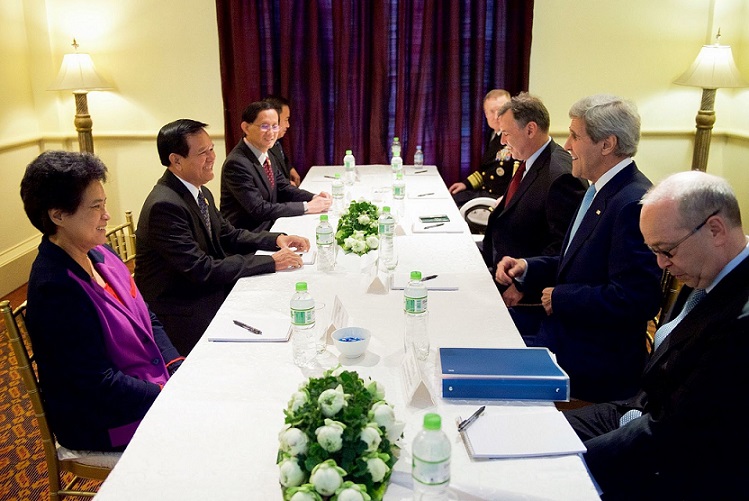
Since taking to politics, Kem Sokha and his opposition party have regularly met with the sponsors of CCHR, including the US Secretary of State John Kerry in 2016.
The aforementioned American-owned Cambodia Daily would report in a 2016 article titled, “Kerry to Meet With Civil Society, CNRP in Visit,” that:
U.S. Secretary of State John Kerry will meet with the CNRP and at least one NGO leader when he visits Phnom Penh next week, in addition to Prime Minister Hun Sen and Foreign Affairs Minister Hor Namhong, as was previously announced.
Kem Monovithya, a spokeswoman for the CNRP and the daughter of CNRP Vice President Kem Sokha, said Mr. Sokha planned to meet with Mr. Kerry, although she declined to give further information.
The director of the Cambodian Center for Human Rights, Chak Sopheap, also said she would meet with Mr. Kerry in a meeting she described as being facilitated by the U.S. Embassy.
The Cambodia Daily would also quote Sopheap, who openly desired the US to pressure her own government in regards to political changes she and her organisation sought:
“I especially wish to inform Secretary Kerry about civil society’s grave concerns regarding the draft trade union law, the proposed cyber crime law, and the implementation of the LANGO,” Ms. Sopheap wrote in an email, adding that she hoped Mr. Kerry would continue to “apply diplomatic pressure” during the U.S.-Asean summit in California next month.
Diplomats meeting with and supporting opposition groups in a host state constitutes clear interference in the host state’s internal political affairs and is beyond the scope of legitimate diplomatic relations.
Those in the opposition hosting foreign diplomats and accepting assistance are clearly engaged in what Merriam Webster defines as treason: “the offense of attempting by overt acts to overthrow the government of the state to which the offender owes allegiance…”
US Interference Poses Direct Threat to National Security
This sort of support provided by the United States in Cambodia has in other nations resulted in the usurpation of governments and even war. Examples include Ukraine, Libya, Syria and Yemen.
The nation of Myanmar is also currently led by a political party propelled into power by extensive US and European support provided over a period of decades.
In neighbouring Thailand, US support for opposition groups has resulted in a protracted political conflict, recently culminating in the fleeing abroad of ousted ex-prime minister Yingluck Shinawatra. Continued US support for Shinawatra and opposition networks will likely lead to further conflict in the near future.
Current Cambodian prime minister, Hun Sen, has repeatedly noted the threat to national security such foreign interference poses.
The Phnom Penh Post, in a 2016 article titled, “US policy destabilised Middle East, says Hun Sen,” stated:
Prime Minister Hun Sen yesterday lauded his own government’s efforts of bringing “peace” to Cambodia without “foreign interference” while calling out the US for destabilising the Middle East, where he said American policy had given rise to destructive “colour revolutions”.
The article would also report:
“Please look at the Middle East after there was inteference by foreigners to create colour revolutions such as in Libya, Syria, Yemen, Egypt and Iraq, where Sadam Hussein was toppled by the US,” the premier said.
“Have those countries received any achievement under the terms of democracy and human rights? From day to day, thousands of people have been killed. This is the result of doing wrong politics, and America is wrong.”
Considering this, the facts regarding Cambodia’s opposition and its ties to US and European interests, it should come as no surprise that foreign-funded organisations posing as NGOs are being shuttered and opposition leaders openly colluding with foreign interests are being arrested for treason.
Cambodia’s style of dealing with what is overt foreign interference lacks subtly, diplomacy and discretion. However, Phnom Penh may calculate that strengthening ties with other nations fighting off foreign interference in the region and its growing political and economic ties with Beijing may be enough to prepare Cambodia for any measures the US and Europe take in retaliation to uprooting their networks.
If left unchecked, the millions of dollars in US and European money and assistance provided to Cambodia’s opposition will continue allowing it to build its capacity to manipulate and win elections. While the opposition will cite election victories as the foundation of its growing legitimacy, the fact that these victories come as a result of foreign sponsorship, on behalf of foreign interests, undermines the opposition’s legitimacy entirely.
Democracy as a means of self-determination does not exist in a system manipulated by foreign interests. In fact, a process infected by foreign interference is fundamentally undemocratic. … Full article
BBC Peddle Fake Claims About India Monsoon

http://www.bbc.co.uk/iplayer/episode/b0938tj7/victoria-derbyshire-01092017
By Paul Homewood | Not A Lot Of People Know That | September 2, 2017
Just when you thought the BBC could not get any worse.
Standing in for Victoria Derbyshire on her current affairs programme yesterday morning, Matthew Price ran a report on the heavy floods this summer in Nepal and Bangladesh.
After telling us this had been one of the heaviest monsoons on record, he went on to interview Mark Pierce, Save the Children’s Director in Bangladesh, and Francis Markus of the International Red Cross in Nepal. (About 32 minutes in).
It did not take long for him to blame climate change for the floods.
He first directly asked Pierce :
“In a place like Bangladesh, do people start to say things are getting worse, it is something to do with climate change?”
Pierce unsurprisingly agreed, and said that even farmers could see climate change everyday, and see their land either flooded every year or facing drought.
Price then asked a similar question of Markus:
“In Nepal, do people at the sharp end relate this to climate change?”
In reply, Markus talks of immense changes in climate, and states “All the farmers in Nepal are kind of noticing that yields are less and less from year to year”, and goes on to tell us there has been nothing but nothing but droughts and floods in recent years.
Well, as you will all know by now, the UN Food and Agricultural Organisation publish data which tells us exactly what is going on.
First, Bangladesh.
We can see that both yields and production of cereals has been steadily rising since the 1980s. Also, the prevalence of undernourishment has halved since the 1990s, despite a large increase in population:


http://www.fao.org/faostat/en/#country/16
And we find exactly the same story in Nepal:


http://www.fao.org/faostat/en/#country/149
Clearly neither the Red Cross nor the Save The Children representatives were telling us the truth, which does not surprise me. Meanwhile the naive BBC presenter has been so indoctrinated by global warming propaganda, that he never even thought for a second that he was being lied to.
As for “one of the heaviest monsoons on record”, this year’s has so far been perfectly normal, with 3% less rain than normal.

http://hydro.imd.gov.in/hydrometweb/(S(stqraz451440dcbecbun0x55))/PdfPageImage.aspx?imgUrl=PRODUCTS\Rainfall_Graphs\Monsoon\Monsoon_BARGRAPH_CUMULATIVE_RAINFALL_COUNTRY_INDIA_c.JPG&landingpage=landing
As for the East and North East, where the rainfall has been heaviest, rainfall is bang on average:

http://hydro.imd.gov.in/hydrometweb/(S(stqraz451440dcbecbun0x55))/PdfPageImage.aspx?imgUrl=PRODUCTS\Rainfall_Graphs\Monsoon\Monsoon_BARGRAPH_CUMULATIVE_RAINFALL_REGION_CODE_EAST%20AND%20NORTH%20EAST%20INDIA_c.JPG&landingpage=landing
And what about the longer trends, and claims of floods and droughts?
Well, the whole history of Indian monsoons is one of recurrent floods and droughts.

http://www.tropmet.res.in/~kolli/MOL/Monsoon/Historical/air.html
Drought conditions were particularly prevalent between 1900 and 1920, and again in the 1960s to 1980s, when the world was cooling down.
Conversely, the worst of the flooding took place in the late 19thC and 1940s and 50s.
Drought conditions prevailed in 2015 and 2016, but this was because of strong El Nino conditions. Indian scientists are well aware of this connection, which has nothing to do with global warming.
In short, the whole story reported by the BBC is a pack of lies. Indian monsoons are not becoming more extreme. If anything, the opposite is true.
Even Madhav Khandekar, IPCC lead author on extreme weather, accepts that there is nothing unusual about recent flooding in India. In a 2014 paper, he concluded that:
The floods and unfortunate deaths of several dozen people in the Kashmir region of India in September 2014 reignited the debate about increasing human emissions of carbon dioxide and their putative linkage to extreme weather events such as floods, droughts and heat waves. What is missing from many of the media reports and scientific publications on this subject is critical analysis of past weather extremes to determine if there has been an increase in recent years.
In this brief report, past floods and droughts in the Indian monsoon are examined carefully and it is shown that such events have occurred throughout the excellent 200-year-long summer monsoon rainfall dataset. It is further documented that such floods and droughts are caused by natural variability of regional and global climate, and not by human carbon dioxide emissions.
In fact, if Price had bothered to check with the BBC Delhi correspondent, he would have discovered that the heavier the monsoon rainfall is , the better it is for India’s economy and many other things:

They are finally here, the monsoons, India’s most important weather phenomenon.
After days of speculation about the date, the Indian Meteorological Department (IMD) announced on Wednesday that the monsoons had arrived in Kerala. India receives 80% of its annual rainfall during the monsoon season, which runs between June and September.
The monsoon will gradually spread across India by 15 July, bringing cheer, hope, insects, relief from the heat, better farm output, GDP growth and lower inflation.
The arrival of the monsoons is like finding a river after crossing a desert. This year, a deluge is predicted. Weather forecasters expect at least 5-6% more rainfall than usual. This will affect things ranging from bank interest to the fortunes of the fertiliser industry. It will also alleviate the drinking water crisis in many parts by replenishing ground water.
But the joy doesn’t last long.
The hot summer gives way to complaints of “It’s not the heat it’s the humidity”. Meanwhile insects and mosquitoes multiply, bringing diseases in their wake.
As the Indian farmer sows a new crop, the city folk face water-logging that makes it difficult to get out. Sometimes it rains so much, especially in the financial nerve centre of Mumbai, that the city is flooded.
Russia-gate’s Totalitarian Style
By Robert Parry | Consortium News | September 2, 2017
It is a basic rule from Journalism 101 that when an allegation is in serious doubt – or hasn’t been established as fact – you should convey that uncertainty to your reader by using words like “alleged” or “purportedly.” But The New York Times and pretty much the entire U.S. news media have abandoned that principle in their avid pursuit of Russia-gate.
When Russia is the target of an article, the Times typically casts aside all uncertainty about Russia’s guilt, a pattern that we’ve seen in the Times in earlier sloppy reporting about other “enemy” countries, such as Iraq or Syria, as well Russia’s involvement in Ukraine’s civil war. Again and again, the Times regurgitates highly tendentious claims by the U.S. government as undeniable truth.
So, despite the lack of publicly provided evidence that the Russian government did “hack” Democratic emails and slip them to WikiLeaks to damage Hillary Clinton and help Donald Trump, the Times continues to treat those allegations as flat fact.
For a while, the Times also repeated the false claim that “all 17 U.S. intelligence agencies” concurred in the Russia-did-it conclusion, a lie that was used to intimidate and silence skeptics of the thinly sourced Russia-gate reports issued by President Obama’s intelligence chiefs.
Only after two of those chiefs – Director of National Intelligence James Clapper and CIA Director John Brennan – admitted that the key Jan. 6 report was produced by what Clapper called “hand-picked” analysts from just three agencies, the Times was forced to run an embarrassing correction retracting the “17 agencies” canard.
But the Times then switched its phrasing to a claim that Russian guilt was a “consensus” of the U.S. intelligence community, a misleading formulation that still suggests that all 17 agencies were onboard without actually saying so – all the better to fool the Times readers.
The Times seems to have forgotten what one of its own journalists observed immediately after reading the Jan. 6 report. Scott Shane wrote: “What is missing from the public report is what many Americans most eagerly anticipated: hard evidence to back up the agencies’ claims that the Russian government engineered the election attack. … Instead, the message from the agencies essentially amounts to ‘trust us.’”
However, if that was the calculation of Obama’s intelligence chiefs – that proof would not be required – they got that right, since the Times and pretty much every other major U.S. news outlet has chosen to trust, not verify, on Russia-gate.
Dropping the Attribution
In story after story, the Times doesn’t even bother to attribute the claims of Russian guilt. That guilt is just presented as flat fact even though the Russian government denies it and WikiLeaks founder Julian Assange says he did not get the emails from Russia or any other government.
Of course, it is possible the Russian government is lying and that some cut-outs were used to hide from Assange the real source of the emails. But the point is that we don’t know the truth and neither does The New York Times – and likely neither does the U.S. government (although it talks boldly about its “high confidence” in the evidence-lite conclusions of those “hand-picked” analysts).
And, the Times continues with this pattern of asserting as certain what is both in dispute and lacking in verifiable evidence. In a front-page Russia-gate story on Saturday, the Times treats Russian guilt as flat fact again. The online version of the story carried the headline: “Russian Election Hacking Efforts, Wider Than Previously Known, Draw Little Scrutiny.”
The Times’ article opens with an alarmist lede about voters in heavily Democratic Durham, North Carolina, encountering problems with computer rolls:
“Susan Greenhalgh, a troubleshooter at a nonpartisan election monitoring group, knew that the company that provided Durham’s software, VR Systems, had been penetrated by Russian hackers months before. ‘It felt like tampering, or some kind of cyberattack,’ Ms. Greenhalgh said about the voting troubles in Durham.”
The Times reported that Greenhalgh “knew” this supposed fact because she heard it on “a CNN report.”
If you read deeper into the story, you learn that “local officials blamed human error and software malfunctions — and no clear-cut evidence of digital sabotage has emerged, much less a Russian role in it.” But the Times clearly doesn’t buy that explanation, adding:
“After a presidential campaign scarred by Russian meddling, local, state and federal agencies have conducted little of the type of digital forensic investigation required to assess the impact, if any, on voting in at least 21 states whose election systems were targeted by Russian hackers, according to interviews with nearly two dozen national security and state officials and election technology specialists.”
But was the 2016 campaign really “scarred by Russian meddling”? For instance, the “fake news” hysteria of last fall was actually traced to young entrepreneurs who were exploiting the gullibility of Donald Trump’s supporters to get lots of “clicks” and thus make more ad revenue. The stories didn’t trace back to the Russian government. (Even the Times discovered that reality although it apparently has since been forgotten.)
‘Undermining’ American Democracy
The Jan. 6 report by those “hand-picked” analysts from CIA, FBI and the National Security Agency did tack on a seven-page appendix from 2012 that accused Russia’s RT network of seeking to undermine U.S. democracy. But the complaints were bizarre if not laughable, including the charge that RT covered the Occupy Wall Street protests, reported on the dangers of “fracking,” and allowed third-party presidential candidates to state their views after they were excluded from the two-party debate between Republican Mitt Romney and Democrat Barack Obama.
That such silly examples of “undermining” American democracy were even cited in the Jan. 6 report should have been an alarm bell to any professional journalist that the report was a classic case of biased analysis if not outright propaganda. But the report was issued amid the frenzy over the incoming Trump presidency when Democrats – and much of the mainstream media – were enlisting in the #Resistance. The Jan. 6 report was viewed as a crucial weapon to take out Trump, so skepticism was suppressed.
Because of that – and with Trump continuing to alarm many Americans with his erratic temperament and his coy encouragement of white nationalism – the flimsy Russian “hacking” case has firmed up into a not-to-be-questioned groupthink, as the Times story on Saturday makes clear:
“The assaults on the vast back-end election apparatus [i.e. voting rolls] … have received far less attention than other aspects of the Russian interference, such as the hacking of Democratic emails and spreading of false or damaging information about Mrs. Clinton. Yet the hacking of electoral systems was more extensive than previously disclosed, The New York Times found.”
In other words, even though there has been no solid proof of this “Russian interference” – either the “hacking of Democratic emails” or the “spreading of false or damaging information about Mrs. Clinton” – the Times reports those allegations as flat fact before extending the suspicions into the supposed “hacking of electoral systems” despite the lack of supporting evidence and in the face of counter-explanations from local officials. As far as the Times is concerned, the problem couldn’t be that some volunteer poll worker screwed up the software. No, it must be the dirty work of Russia! Russia! Russia!
The Times asserts that “Russian efforts to compromise American election systems … include combing through voter databases, scanning for vulnerabilities or seeking to alter data, which have been identified in multiple states.” Again, the Times does not apply words like “alleged”; it is just flat fact.
Uncertainty Acknowledged
Yet, oddly, the quote used to back up this key accusation acknowledges how little is actually known. The Times cites Michael Daniel, the cybersecurity coordinator in the Obama White House, as saying:
“We don’t know if any of the [computer] problems were an accident, or the random problems you get with computer systems, or whether it was a local hacker, or actual malfeasance by a sovereign nation-state. … If you really want to know what happened, you’d have to do a lot of forensics, a lot of research and investigation, and you may not find out even then.’”
Which is exactly the point: as far as we know from the public record, no U.S. government forensics have been done on the Russian “hacking” allegations, period. Regarding the “hack” of the Democratic National Committee’s emails, the FBI did not secure the computers for examination but instead relied on the checkered reputation of a private outfit called Crowdstrike, which based much of its conclusion on the fact that Russian lettering and a reference to a famous Russian spy were inserted into the metadata. Why the supposedly crack Russian government hackers would be so sloppy has never been explained. It also could not be excluded that these insertions were done deliberately to incriminate the Russians.
Without skepticism, the Times accepts that there is some secret U.S. government information that should bolster the public’s confidence about Russian guilt, but none of that evidence is spelled out, other than ironically to say what the Russians weren’t doing.
The Times cited the Jan. 6 report’s determination that “The Russians shied away from measures that might alter the ‘tallying’ of votes, … a conclusion drawn from American spying and intercepts of Russian officials’ communications and an analysis by the Department of Homeland Security, according to the current and former government officials.”
But this seems to be the one U.S. government conclusion that the Times doubts, i.e., a finding of Russian innocence on the question of altering the vote count.
Again accepting as flat fact all the other U.S. government claims about Russia, the Times writes: “Apart from the Russian influence campaign intended to undermine Mrs. Clinton and other Democratic officials, the impact of the quieter Russian hacking efforts at the state and county level has not been widely studied.”
There’s, of course, another rule from Journalism 101: that when there is a serious accusation, the accused is afforded a meaningful chance to dispute the allegation, but the Times lengthy article ignores that principle, too. The Russian government and WikiLeaks do not get a shot at knocking down the various allegations and suspicions.
Deep-seated Bias
The reality is that the Times has engaged in a long pattern of anti-Russia prejudice going back a number of years but escalating dramatically since 2013 when prominent neoconservatives began to target Russia as an obstacle to their agendas of “regime change” in Syria and “bomb-bomb-bombing” Iran.
By September 2013, the neocons were targeting Ukraine as what neocon National Endowment for Democracy president Carl Gershman deemed the “biggest prize” and an important step toward an even bigger prize, neutralizing or ousting Russian President Vladimir Putin.
When neocon U.S. officials, such as Assistant Secretary of State Victoria Nuland and Sen. John McCain, encouraged a coup that overthrew Ukraine’s elected President Viktor Yanukovych, the Times served as a cheerleader for the coup-makers even though the violence was spearheaded by neo-Nazis and extreme Ukrainian nationalists.
When ethnic Russians in eastern Ukraine and Crimea resisted the Feb. 22, 2014 coup, the Times collaborated with the State Department in presenting this rejection of an unconstitutional transfer of power as a “Russian invasion.”
For instance, on April 21, 2014, the Times led its print editions with an investigative story using photos provided by the coup regime and the State Department to supposedly show that fighters inside Ukraine had previously been photographed inside Russia, except that the two key photographs were both taken inside Ukraine, forcing the Times to run a half-hearted retraction two days later.
Here is the tortured way the Times treated that embarrassing lapse in its journalistic standards: “A packet of American briefing materials … asserts that the photograph was taken in Russia. The same men are also shown in photographs taken in Ukraine. Their appearance in both photographs was presented as evidence of Russian involvement in eastern Ukraine.
“The packet was later provided by American officials to The New York Times, which included that description of the group photograph in an article and caption that was published on Monday. The dispute over the group photograph cast a cloud over one particularly vivid and highly publicized piece of evidence.”
In other words, U.S. officials hand-fed the Times this “scoop” on a Russian “invasion” and the Times swallowed it whole. But the Times never seems to learn any lessons from its credulous approach to whatever the U.S. government provides. You might have thought that the Times’ disgraceful performance in pushing the Iraq-WMD story in 2002 would have given the newspaper pause, but its ideological biases apparently win out every time.
Two Birds, One Stone
In the case of the Russian “hacking” stories, the anti-Russia bias is compounded by an anti-Trump bias, a two-fer that has overwhelmed all notions of journalistic principles not only at the Times but at other mainstream news outlets and many liberal/progressive ones which want desperately to see Trump impeached and view Russia-gate as the pathway to that outcome.
So, while there was almost no skepticism about the Jan. 6 report by those “hand-picked” analysts – even though the report amounts only to a series of “we assess” this and “we assess” that, i.e,, their opinions, not facts – there has been a bubbling media campaign to discredit a July 24 memo by the Veteran Intelligence Professionals for Sanity.
The memo, signed by 17 members of the group including former NSA technical director for world geopolitical and military analysis William Binney, challenged the technological possibility of Russian hackers extracting data over the Internet at the speed reflected in one of the posted documents.
After The Nation published an article by Patrick Lawrence about the VIPS memo (a story that we re-posted at Consortiumnews.com ), editor Katrina vanden Heuvel came under intense pressure inside the liberal magazine to somehow repudiate its findings and restore the Russia-gate groupthink.
Outside pressure also came from a number of mainstream sources, including Washington Post blogger Eric Wemple, who interviewed Nation columnist Katha Pollitt about the inside anger over Lawrence’s story and its citation by Trump defenders, a development which upset Pollitt: “These are our friends now? The Washington Times, Breitbart, Seth Rich truthers and Donald Trump Jr.? Give me a break. It’s very upsetting to me. It’s embarrassing.”
However, in old-fashioned journalism, our reporting was intended to inform the American people and indeed the world as fully and fairly as possible. We had no control over how the information would play out in the public domain. If our information was seized upon by one group or another, so be it. It was the truthfulness of the information that was important, not who cited it.
A Strange Attack
But clearly inside The Nation, Pollitt and others were upset that the VIPS memo had undercut the Russia-gate groupthink. So, in response to this pressure, vanden Heuvel solicited an attack on the VIPS memo by several dissident members of VIPS and she topped Lawrence’s article with a lengthy editor’s note.
Strangely, this solicited attack on the VIPS memo cites as its “first” point that the Jan. 6 intelligence report did not explicitly use the word “hack,” but rather “cyber operation,” adding: “This could mean via the network, the cloud, computers, remote hacking, or direct data removal.”
That uncertainty about how the emails were extracted supposedly undercut the VIPS argument that the download speeds prohibited the possibility of a “hack,” but this pretense that the phrase “cyber operation” isn’t referring to a “hack” amounts to a disingenuous word game. After all, senior U.S. intelligence officials, including former FBI Director James Comey, have stated under oath and in interviews with major news outlets that they were referring to a “hack.”
These officials also have cited the Crowdstrike analysis of the DNC “hack” as support for their analysis, and Clinton campaign chairman John Podesta has described how he was the victim of a “spear-phishing” scam that allowed his emails to be hacked.
After all these months of articles about the Russian “hack,” it seems a bit late to suddenly pretend no one was referring to a “hack” – only after some seasoned experts concluded that a “hack” was not feasible. Despite the latest attacks, the authors of the VIPS memo, including former NSA technology official Binney, stand by their findings.
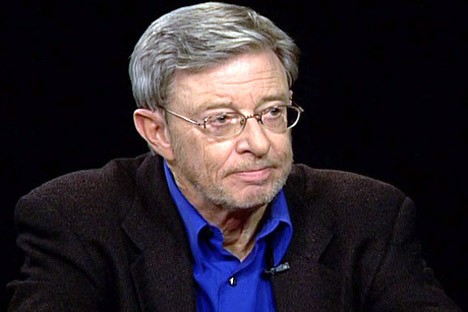
Russia scholar Stephen Cohen.
However, when the cause is to demonize Russia and/or to unseat Trump, apparently any sleight of hand or McCarthyistic smear is permissible.
In Post blogger Wemple’s article about The Nation’s decision to undercut the VIPS memo, he includes some nasty asides against Russia scholar Stephen Cohen, who happens to be Katrina vanden Heuvel’s husband.
In a snide tone, Wemple describes Cohen as providing “The soft-glove treatment of Russian President Vladimir Putin,” calling it Cohen’s “specialty.”
Wemple also repeats the canard about “a consensus finding of the U.S. intelligence community” when we have known for some time that the Jan. 6 report was the work of those “hand-picked” analysts from three agencies, not a National Intelligence Estimate that would reflect the consensus view of all 17 agencies and include dissents.
What is playing out here – both at The New York Times and across the American media landscape – is a totalitarian-style approach toward any challenge to the groupthink on Russia-gate.
Even though the Obama administration’s intelligence chiefs presented no public evidence to support their “assessments,” anyone who questions their certainty can expect to be smeared and ridiculed. We must all treat unverified opinions as flat fact.
Investigative reporter Robert Parry broke many of the Iran-Contra stories for The Associated Press and Newsweek in the 1980s. You can buy his latest book, America’s Stolen Narrative, either in print here or as an e-book (from Amazon and barnesandnoble.com).
OHCHR’s Venezuela Report is Terrible and May Incite More Violence
By Joe Emersberger | ZNET | September 1, 2017
The OHCHR put out a press release a few weeks ago about violent protests in Venezuela in which the following words leapt off the page to anybody who has been following the situation without blinders on:
“security forces are allegedly responsible for at least 46 of those deaths, while pro-Government armed groups, referred to as ‘armed colectivos’ are reportedly responsible for 27 of the deaths. It is unclear who the perpetrators of the remaining deaths may be.” [my emphasis]
It was “unclear” to the OHCHR if protesters had killed a single person!
The OHCHR’s full report, which was just released, does not go to that extreme but is still an embarrassingly shoddy and biased report. In a section with the subheading “Violent anti-Government protesters”, the OHCHR report concedes that four murders have been perpetrated by protesters but hastens to add that protester violence has been a “reaction to the disproportionate use of force by security forces” and that the “level of violence by these groups increased as the use of force by security forces rose”.
Four is less preposterous than zero, but is still wildly off the mark. See the detailed timeline provided by VenezuelAnalysis.com.
Direct victims of opposition political violence: 23
Bryan Principal, Oliver Villa Camargo, Niumar Jose Sanclemente, Almelina Carrillo, Paola Ramirez, Jesus Leonardo Sulbaran, Luis Alberto Marquez, Efrain Sierra, Rexol Navas, Gerardo Barrera, Anderson Dugarte, Jorge David Escandon, Pedro Josue Carrillo, Danny José Subero, Orlando Figuera, Douglas Acevedo Sánchez, Ronny Alberto Parra, Alexander Rafael Sanoja Sanchez, Jose Luis Bravo, Ramses Martinez, Hector Anuel, Oneiver Quiñones Ramirez, Felix Pineda Marcano, Ronald RamirezDeaths indirectly linked to opposition barricades*: 8
Ricarda Gonzalez, Ana Colmenarez, Maria de los Angeles Guanipa, Angel Enrique Moreira Gonzalez, Carlos Enrique Hernández, José Amador Lorenzo González, Luis Alberto Machado, Miguel Angel Villalobos Urdaneta
Additionally, how were the murders of unarmed civilians like Orlando Figuera and Almelina Carrillo by protesters a “reaction” against the security forces? Similarly, how is the burning of food warehouses and ambulances, which the OHCHR also concedes took place, a reaction against the security forces?
Moreover, the first person killed by opposition protesters was the civilian bystander Brayan Principal on April 12, only eight days after the protests began. The VenezuelAnalysis timeline shows that, right from the beginning of the protests, when security forces have perpetrated crimes they have been arrested and charged. That’s quite a contrast with what frequently occurs in the United States which is not faced with violent foreign-backed protesters trying to oust the government. It was only four days after the protests began, on April 8, when protesters torched a Supreme Court building.
I would not advise Black Lives Matter protesters in the United States to torch a Supreme Court building and expect to have their actions excused by the OHCHR or any other high profile outfit as a “reaction to the disproportionate force by police”.
The extremely well documented case of Orlando Figuera also exposed some inexcusable sloppiness in the OHCHR report. It falsely stated that Figuera died the same day he was attacked. He actually died in hospital few weeks later. He claimed from his hospital bed that he had been killed for being a suspected Chavista.
Why were the protesters brazen enough to murder Figuera in broad daylight in front of numerous witnesses?
There have apparently been no arrests in the case though the government has identified one of the perpetrators (who was in hiding).
Here are a few reasons:
- 1) People in opposition strongholds – like the one where Figuera was murdered – would likely be afraid to name the perpetrators or, sadly, even supportive of the crime in some cases.
- 2) The Attorney General at the time, Luisa Ortega Diaz (who has now been fired and is who now collaborating with US prosecutors to target the Maduro government), was preoccupied with weakening the government and maneuvering to save her own skin should the opposition seize power.
- 3) Biased reporting promotes impunity. When the United States government wants to vilify a government and have it overthrown – which has been the case in Venezuela for the past fifteen years – numerous natural allies reflexively offer a helping hand: private media companies around the world, high profile NGOs and of course UN bodies like the OHCHR. The destruction of Iraq since 1990 does not happen without UN complicity even though neocons demand that the UN be even more subservient to the US.
There is a section in the OHCHR report on “Violations of the right to freedom of expression” and “Smear campaigns against journalists”. The OHCHR included a throwaway remark that “journalists were also targeted by demonstrators and supporters of both the opposition and the government.“
Prominent opposition supporters tried to get Abby Martin and Mike Prysner lynched by spreading allegations that they were working as informants for the government. Watching their report on the violent protesters the OHCHR whitewashed is something I highly recommend. The OHCHR’s bias not only makes opposition violence more likely, it makes honest journalism about it more dangerous.
The report “recommends” that opposition leaders condemn all violence by its supporters when the OHCHR itself goes out of its way to ignore that violence and deflect responsibility away from the perpetrators. The OHCHR also didn’t think to “recommend” that opposition leaders stop calling on the military to overthrow the government. An organization not at the service of the US Empire would also have “recommended” that the US government not violate international law by imposing economic sanctions or threatening the use of force against Venezuela. Have OHCHR investigators not reviewed the UN Charter recently?
Raqqa: A hellhole created by the regime-changers of the West

© Morukc Umnaber / Global Look Press
By Neil Clark | RT | September 2, 2017
As Jan Egeland, the UN humanitarian adviser on Syria, has stated, if there’s a worse place to be in the world at the moment than the Syrian city of Raqqa, then it’s hard to imagine.
This week, the UN estimated that the battle to capture the de facto ISIS capital is costing the lives of 27 civilians a day.
It’s not just the almost non-stop aerial bombardment and shelling from the mainly Kurdish Syrian Democratic Forces that the 25,000 or so citizens in ISIS-held parts of the city have to endure. “Access to safe drinking water, food and other basic services is at an all-time low with many residents relying on food they had stored up earlier to survive,” says UN public information officer David Swanson.
Both ISIS snipers and the US-led coalition have been targeting people trying to flee from the Middle Eastern hellhole. The UN notes that coalition forces have even been attacking boats on the Euphrates River, described as “one of the remaining escape routes for civilians.”
We can only imagine the headlines if Russia was doing all this. But because it’s the US and its allies, the international reaction has been muted to say the least. It’s revealing to compare the “humanitarian” concern voiced by pro-war Western politicians and mainstream media outlets when Russia began its military operations in Syria in September 2015, with the lack of concern over what’s been happening in Raqqa.
The claim that Russia was fighting terrorists was widely ridiculed. The US and its allies issued a statement saying that Russia’s actions, which included a strike on a ISIS training camp near Raqqa, would “only fuel more extremism and radicalization.”
On October 2, 2015, the claim made by then-US President Barack Obama that Russian strikes would only “strengthen ISIS” made Western news headlines.
Accusations that Russia was committing war crimes also received prominent coverage.
But when the US-led coalition bombs ISIS, the reporting from mainstream outlets is different. Then, the operation is presented much more positively, with little or no talk about how it will “strengthen” the enemy or “fuel more extremism and radicalization.” There is also little or no talk of war crimes.
A meticulously-researched Alert from Media Lens earlier this summer compared the coverage of the sieges of Aleppo and Mosul.
“When Russian and Syrian forces were bombarding ‘rebel’-held East Aleppo last year, newspapers and television screens were full of anguished reporting about the plight of civilians killed, injured, trapped, traumatised or desperately fleeing…
By contrast, there was little of this evident in media coverage as the Iraqi city of Mosul, with a population of around one million, was being pulverised by the US-led ‘coalition’ from 2015; particularly since the massive assault launched last October to ‘liberate’ the city from ISIS, with ‘victory’ declared a few days ago.”
As I noted here in an earlier Op Edge, it was deemed a ‘Thought Crime’ by Imperial Truth Enforcers to actually refer to the recapture of eastern Aleppo by Syrian government forces as a ‘liberation.’ Pro-war Labour MP John Woodcock even went so far as to call the left-wing Morning Star newspaper “traitorous scum” for daring to defy the gatekeepers and use the ‘L’ word.
But of course, if it’s the US and its allies doing the bombing, then using the word ’liberation’ is de rigueur, regardless of how much death and destruction the ‘liberation’ causes.
There have been no calls from ‘Inside the Bastille’ Western politicians or media pundits for people to protest outside US embassies about the number of civilians killed by coalition airstrikes in Raqqa – as there were over Aleppo. And absolutely no likening of coalition actions to those of the Nazis.
It’s worth noting, too, that while the US and its allies repeatedly called for a “humanitarian pause” in the fighting for Aleppo, they’ve rejected the UN calls for one in Raqqa. “Going slower only delays the liberation and subsequently costs more civilians their lives,” US Colonel Joe Scrocca, director of public affairs for combined Joint Task Force-Operation Inherent Resolve, told Middle East Eye.
What makes the double standards even more outrageous is that without the warmongering actions of the US and its allies in the Middle East, there would be no ISIS/ISIL in the first place. The ‘Coalition’ is fighting in Raqqa a monster that – like Frankenstein in Mary Shelley’s famous novel – they helped to create. The terrorist organization known by the names of ‘Islamic State,’ ‘ISIS/ISIL,’ or ‘Daesh,’ grew out of the chaos that Bush and Blair’s illegal invasion of Iraq had unleashed. As Patrick Cockburn, author of the book ‘The Rise of Islamic State,’ puts it, “ISIS is the child of war.”
Furthermore, the spread of IS to Syria was actually welcomed by the US and its allies as a way of weakening the secular Ba’athist government in Damascus, which Western neocons were desperate to see toppled because of its friendly links with Iran and Russia.
“If the situation unravels there is the possibility of establishing a declared or undeclared Salafist principality in eastern Syria, and this is exactly what the supporting powers to the opposition want, in order to isolate the Syrian regime, which is considered the strategic depth of the Shia expansion (Iraq and Iran),” – declared a secret US intelligence report, which was declassified in 2015.
In 2016, a leaked tape conversation between US Secretary of State John Kerry and anti-government Syrian activists revealed how the US was pleased to see Islamic State gain territory. “The reason Russia came in is because ISIL was getting stronger,” Kerry admits, flatly contradicting the claims made publicly by the State Department in October 2015 that Russia wasn’t targeting ISIS/ISIL.
“Daesh was threatening the possibility of going to Damascus and so forth,” Kerry went on. “We were watching. We saw that Daesh was growing in strength, and we thought Assad was threatened. We thought, however, we could probably manage. You know, that Assad might then negotiate,” he said.
The US and its allies didn’t just watch with pleasure as ISIS expanded – they aided the process. They did this not only by giving money and weaponry to ‘moderate rebels’ who then – surprise, surprise – defected to Abu Bakr al-Baghdadi’s head-chopping outfit, but by targeting forces that were opposed to Islamic State. Israel, for instance, has bombed Syria on countless occasions in the last few years, but each time its attacks have been against those fighting ISIS. “An aspect of the conflict in Syria that has not received the attention it undoubtedly deserves, has been the role of the Israeli Air Force (IAF) in acting as the de facto air force of Daesh [ISIS] and sundry other Salafi-jihadi and rebel groups fighting in the country,” notes John Wight.
We must not forget too that if Washington’s Endless War Lobby had got their way in August 2013, and the US and its allies launched a full-scale military assault on the Syrian government – then Islamic State and its affiliates would probably now be in charge of the entire country. Yet the failure to bomb Assad four years ago is still openly regarded as a tragedy by Western regime-change hawks.
Of course, the key role that the US and its coalition have played in the rise – and expansion – of the forces they are now bombing, is never mentioned in the mainstream reporting of the ‘Battle for Raqqa.’ We’re meant to believe that ISIS fighters appeared – like Mr. Benn’s shopkeeper “as if by magic” – and took control of Syria’s seventh largest city by complete accident. And, we’re certainly not meant to ask questions such as “From where did these terrorists obtain their weapons?” or, “Under what legal authority do the US and its allies carry out air strikes in Syria?”
My 1987 Lonely Planet Guide to Jordan and Syria, says of Raqqa: “There’s really nothing to do or see but it can be a good base from which to visit Lake Assad and the walled city of Rasafah, 30km to the south.”
The city is most definitely not a “good base” for tourists today.
One person who did manage to get out of “the worst place on Earth” earlier this year told RT’s Ruptly news agency: “The streets are full of dead bodies. The schools were targeted, the bridges, and mosques. The [dead] people are lying on the streets; some people were dragged by cars… Dogs were eating the [dead] bodies for there was no one to pick them up.”
The bombed-out ruins of Raqqa and the rotting corpses lying on its streets are a testament to a ‘liberal interventionist’ neo-con foreign policy, in all its bloodstained, hypocritical, ‘humanitarian’ glory.
Neil Clark is a journalist, writer, broadcaster and blogger. He has written for many newspapers and magazines in the UK and other countries including The Guardian, Morning Star, Daily and Sunday Express, Mail on Sunday, Daily Mail, Daily Telegraph, New Statesman, The Spectator, The Week, and The American Conservative. He is a regular pundit on RT and has also appeared on BBC TV and radio, Sky News, Press TV and the Voice of Russia. He is the co-founder of the Campaign For Public Ownership @PublicOwnership. His award winning blog can be found at http://www.neilclark66.blogspot.com. He tweets on politics and world affairs @NeilClark66
How Media Obscure US/Saudi Responsibility for Killing Yemeni Civilians
By Ben Norton | FAIR | August 31, 2107
A coalition of Saudi Arabia, the United States, the United Kingdom and the United Arab Emirates, with minor support from several other Middle Eastern nations, has relentlessly bombed Yemen since March 2015. This August, the coalition ramped up the ferocity of its airstrikes, killing dozens of civilians.
On August 23, the US/Saudi coalition bombed a hotel near Yemen’s capital Sanaa, killing 41 people, 33 of whom—80 percent—were civilians, according to the United Nations.
Then on August 25, the coalition bombed homes in Sanaa, massacring a dozen civilians, including eight members of the same family.
Major Western media outlets have, however, obscured the responsibility Saudi Arabia, and its US and European supporters, bear for launching these airstrikes.
There are no other parties presently bombing Yemen, so media cannot feign ignorance as to who is responsible for the attacks. But reports on the bloody US/Saudi coalition airstrikes were nonetheless rife with ambiguous and downright misleading language.

It seems worth mentioning that the airstrike was
supported by the same government that supports NPR.
“Dozens of People Killed as Airstrike Hits Hotel Near Yemen’s Capital,” wrote NPR (8/23/17), in a masterwork of euphemism. Apparently dozens of Yemenis mysteriously died of unknown causes at the exact moment a generic, unaffiliated airstrike hit the hotel. NPR only indirectly mentioned, in the story’s fifth paragraph, that the “Saudi-led coalition” was “blamed” for the attack.
AFP‘s news wire (8/23/17), which was republished by Yahoo, the Daily Mail and Breitbart, used the headline “Air Raids on Outskirts of Yemen Capital Kill ‘at least 30,’” again obscuring who was responsible for those air raids. France 24 (8/23/17) ran the wire with the headline “Air Raids on Yemen Capital Kill Dozens.”
The BBC (8/23/17) wrote, “Yemen War: Air Strike on Hotel Outside Sanaa ‘Leaves 30 Dead.’” “Dozens Killed in Airstrike on Yemeni Hotel,” the Guardian headline (8/23/17) read.
The London-based Middle East Eye (8/23/17) was just as ambiguous, with “Yemen Air Attack Destroys Hotel, Killing at Least 35 People,” as was Qatar-owned Al Jazeera (8/23/17), with “Air Raid in Yemen Kills at Least 35 people” and the Turkish TRT World (8/24/17), which wrote, “At Least 60 people Killed in Airstrikes on Hotel in Yemen.”
Whose airstrike was it? What party was responsible? This remains unknown to those who only glanced at the headlines—that is to say, to most readers.
The 29-month war has killed thousands of Yemeni civilians, with tens of thousands more injured and millions facing famine. And the United Nations has repeatedly reported that the US/Saudi coalition is responsible for a majority of the civilian casualties.
Even when Saudi Arabia’s guilt is acknowledged by media, the crucial role of the US is typically ignored (FAIR.org, 8/31/15, 10/14/16, 2/27/17). Readers miss out on crucial context that is needed to understand the war, and their governments’ contributions to it: Saudi Arabia is flying US-made planes, full of fuel provided by the US Air Force, dropping US- and UK-made bombs, with intelligence and assistance from American and British military officials.
Non-Yemeni ‘Yemeni Airstrikes’

Neither the headline nor the accompanying story mention who conducted
the airstrike—though the photo caption refers to the “Saudi-led airstrike.”
Two days later, reports were just as obfuscatory, and even used the term “Yemeni airstrike,” to refer to an airstrike that was carried out by non-Yemenis.
“Yemen Airstrike Kills 12, Including Six Children: Rescuers,” Reuters reported on August 25. This brief two-paragraph wire did not once mention the US/Saudi coalition was responsible.
“After Yemeni Airstrike, Little Girl Is Family’s Only Survivor,” the international news agency wrote the next day (8/26/17). This Reuters piece noted that the “Saudi-led coalition” was “blamed,” though even that language seems designed to deflect; blamers can be wrong, after all.
Major newspapers were similarly misleading. “Young Yemeni Girl Is Sole Survivor After Airstrike Topples Her Home,” the New York Times (8/26/17) reported. The lead provided no further information: “An airstrike toppled their apartment building.” In fact, it was not until the seventh paragraph, after three large photos, that the Times finally conceded, “A Saudi Arabia–led coalition took responsibility for the airstrike a day after the attack, citing a ‘technical mistake.’” The Times did not once mention American or British support for the coalition.
Al Jazeera (8/25/17) likewise used the headline “Children Among Dead in Latest Attack on Yemen Civilians.” And TRT World (8/26/17) reported, “Yemen Airstrike Kills 12, Including Six Children.”
Even when Saudi Arabia admitted responsibility for killing Yemeni civilians, media watered down the language. “Saudi-Led Force Admits Strike in Yemen’s Capital Hit Civilians,” Reuters (8/26/17) headlined its news wire. Note the airstrike hit civilians, not killed them.
The attack was also reduced to a mere “mistake.” Larger context was not provided: namely that more than one-third of US/Saudi coalition airstrikes have hit civilian areas, and that there is a growing body of evidence that the coalition has intentionally targeted civilian infrastructure in Yemen.
Not all media were equally misleading; some were more forthright. AP‘s news wire (8/23/17), which was republished by the Chicago Tribune, New York Daily News, Houston Chronicle and San Francisco Chronicle, used a headline that told readers who was responsible for the deadly attack: “Saudi-Led Airstrikes Hit Yemen Hotel, Killing at Least 41.”
The Washington Post was similarly direct, with its reports “Saudi-Led Coalition Airstrike Kills Dozens in Yemen Ahead of Major Rally” (8/23/17) and “Saudi-Led Airstrikes Kill 14 Civilians in Yemen’s Capital” (8/25/17).
The Art of Obfuscation
To justify this ambiguity in reporting, media might claim it is sometimes not immediately clear who launched the airstrikes. But, again, there are no other parties flying warplanes in Yemen.
Yemeni Houthi-Saleh forces, who govern the north of the country and roughly 80 percent of the population, have not been bombing their country. Moreover, the US/Saudi coalition has imposed an air blockade on the impoverished country since March 2015 (another significant fact that is rarely reported by corporate media).
In Syria, where numerous rival countries have been launching airstrikes, it is understandable that media may sometimes have to exercise caution before apportioning blame. But this is not the case with Yemen.
In the 29-month war in Yemen, there is one party that has been responsible for thousands of air raids: the Saudi air force, as part of a coalition with the US, the UK and the UAE.
Yet Yemen is not an isolated case of this ambiguity. Media frequently obfuscate and downplay the culpability for bombing when the US and its allies are responsible.
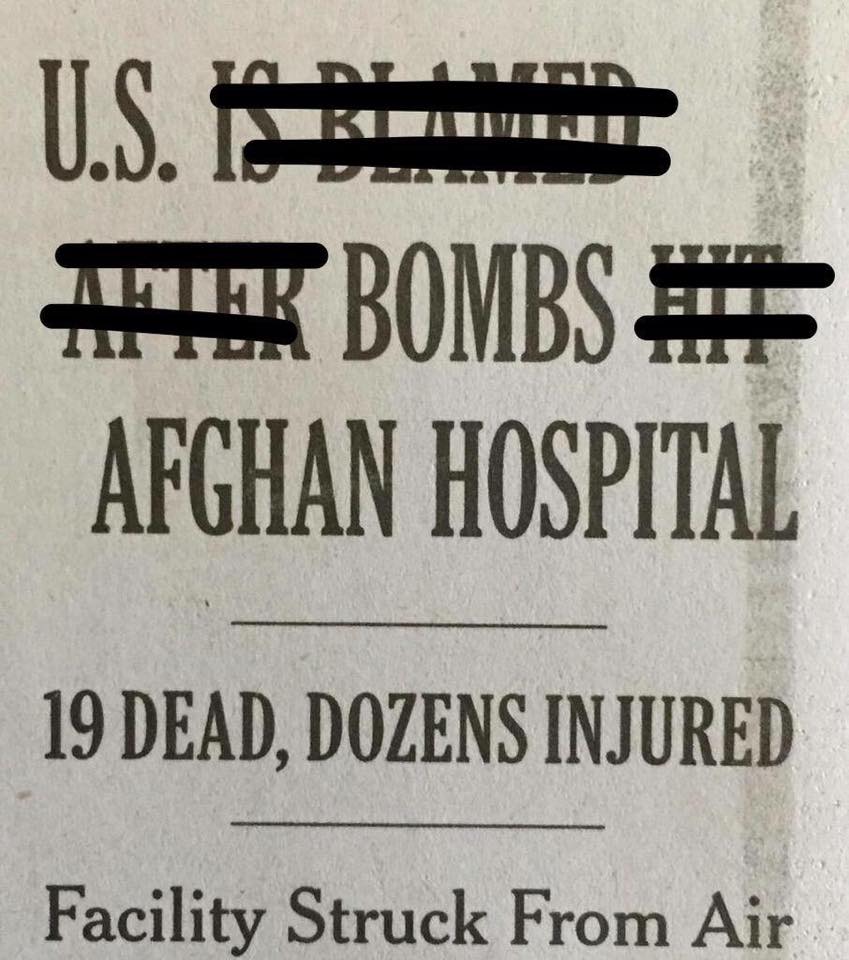
NYT headline (10/3/15) improved by Twitter user @OneKade
When the US bombed a hospital in Kunduz, Afghanistan, in October 2015, killing dozens of civilians, media scrambled to craft almost laughable euphemisms. FAIR (10/5/15) documented at the time how news outlets used circuitous headlines like “US Is Blamed After Bombs Hit Afghan Hospital.” Also seen in the August 23 NPR report cited above, this brand of misleading, ambiguous rhetoric is the “officer-involved shooting” of war reporting.
On the other hand, the responsibility of US enemies for killing civilians is rarely if ever obscured.
It is instructive to compare Western media coverage of Yemen to that of Syria, where attacks are “Assad bombing” (Fox News, 2/15/17), “Assad airstrikes” (Breitbart, 4/28/16), “Assad regime airstrikes” (Times of Israel, 10/16/12; Australian, 8/18/15), “regime airstrikes” (NBC, 8/19/16) or “regime bombing” (Daily Caller, 8/17/15).
Media have even written of a “pro-Assad drone” that was “displaying hostile intent,” and thus just had to be shot down by the US (Guardian, 6/20/17; Independent, 6/20/17; The Hill, 6/20/17), as if the robot were personally a fan of the Syrian leader.
The phrases “Salman bombing,” “Salman airstrikes” or “Saudi regime airstrikes” are, however, nowhere to be found in reports on Yemen.
Downplaying the Key US Role
Media calling US/Saudi coalition attacks “Yemeni airstrikes” is at best misleading, and at worst flat-out false. Yet this language also has a political effect: It obscures the character of the war. This framing is part of the “civil war” trope media have propagated for two-and-a-half years.
When Yemen is discussed, it is virtually always through the lens of a “civil war.” As FAIR (7/25/17) has detailed before, this exceedingly widespread myth, which has permeated media discourse, denies the extent to which the conflict is actually a foreign war on Yemen, led by Saudi Arabia, the UAE and their US and European sponsors.
Even the term “Saudi-led” coalition is misleading. The New York Times editorial board (8/17/16) acknowledged, in a little-noted editorial on Yemen, “Experts say the coalition would be grounded if Washington withheld its support.”
That is to say, if the US wanted the war in Yemen to end, it would end overnight. The “Saudi-led” coalition is only led by Saudi Arabia in name.
Surprisingly, in the midst of intensified coalition attacks, the New York Times published another rare editorial on Yemen on August 25. In the piece, dramatically titled “The Slaughter of Children in Yemen,” the editorial board forcefully warned of exactly what critics have been saying for 29 months:
The Saudi coalition—and its American enablers, who provide military equipment, aerial refueling and targeting—simply cannot be allowed to continue killing civilians and destroying what little is left of Yemen. That is why it is imperative to publicly identify the unconscionable slaughter of innocents for what it is, and to hope that this will shame Saudi Arabia and its American backers to search for a humane end to Yemen’s hell.
Reporters at the Times and elsewhere should heed this call to demonstrate journalistic responsibility by clearly conveying their governments’ responsibility for the slaughter in Yemen—not just in editorials, but in news articles, every time.
Tillerson Approves Nearly $60Mln in Funding to Fight Propaganda – State Dept
Sputnik – 01.09.2017
WASHINGTON – US Secretary of State Rex Tillerson has approved spending nearly $60 million on countering terrorist propaganda and state-sponsored disinformation, a State Department official has confirmed to Sputnik.
A US news outlet, Politico, reported in August that Tillerson was resisting the Department’s officials who wanted to spend $80 million on anti-propaganda efforts, including on countering Russia’s alleged disinformation campaign.
“Last week, after significant consultations within the State Department… Secretary Tillerson approved the release of one source of funding, and approved the request for another,” the official said, referring to $19.8 million in extra funding to target Islamist propaganda and another request for a transfer of $40 million from the Pentagon.
The official stressed that Tillerson’s decisions came after a realignment of programs by the Global Engagement Center (GEC) to match national security priorities and make sure that this funding would be used effectively “to counter the messaging of international terrorist groups and state-sponsored disinformation.”
The Global Engagement Center is an interagency entity, housed at the State Department, tasked with coordinating US counterterrorism messaging to foreign audiences. It was created in March 2016 to counter messaging from the Islamic State terrorist group (banned in Russia).
But former President Barack Obama last December signed the fiscal year 2017 National Defense Authorization Act, which expanded the center’s mandate, allowing it to counter messages from state actors like Russia and China.
Russia has denied meddling in last year’s election in the United States, and the Kremlin insists that it does not interfere in the internal affairs of other countries.
Featured Video
Why Hamas Really Attacked Israel on Oct. 7
or go to
Aletho News Archives – Video-Images
From the Archives
Confronting the Threat of Ethnic Bioweapons
By Tony Cartalucci – New Eastern Outlook – 29.11.2017
The United States Air Force’s 59th Medical Wing’s molecular biology branch recently was revealed to have been collecting specifically Russian RNA and synovial (connective) tissue samples, prompting fears in Russia of a possible US directed ethnic-specific bioweapons program. … continue
Blog Roll
 Aletho News
- Why Yemen Is Bombing Saudi Arabia’s Airports: The War Behind the Headlines
- Sally Rooney’s books pulled from UK over support for Palestine Action
- Bombs for Tel Aviv, Promises for Riyadh
- Israeli ad agency conducted vast global espionage campaign using online ads: Report
- Oct. 7 Forever Marks The Big Reveal: ‘We See You, Israel, We Revile You, We Reject You!’
- Meet the US generals and admirals advancing Israeli policy
- Israel’s Straw Widow Protocol: The Kill Zones Where Civilians Were Labelled ‘Terrorists’
- Leading Israeli Think Tank Publishes Psychotic Israeli ‘National Security’ Doctrine
- Are the United States and Israel in Decline-and-Fall Mode?
- Why Hamas Really Attacked Israel on Oct. 7
- If Americans Knew
- Israeli firm used online ads to run vast spy operation, researchers say
- No, the world zionist movement is not an antisemitic conspiracy theory
- Hundreds of IDF investigations into killings still have no public outcome, BBC Verify finds
- After Ashley Moody Epstein Probe, Donors Linked to Him Poured Money Into her Senate Campaign
- Worried about Russian meddling in UK politics? Wait till you see what Israel is up to
- Israeli settlers attack West Bank center for disabled children, church leader calls for int’l action
- Pulling Out Teeth Just to Live: How Israel Has Devastated Dental Care in Gaza
- Gaza’s “ceasefire” death toll passes 1,500 – Daily Update
- Activists Abused By Israel Return to New Freedom Flotilla Mission
- 60 Minutes won’t tell the full truth about Israeli settler violence
- No Tricks Zone
- New Study Suggests Large Regions Of The Pacific Ocean Have Been Cooling For The Last 80 Years
- Germany’s Green Energy Debacle: High Energy Costs Force Kahla Porzellan to Close After 182 Years!
- New Study: 50 Years Of The Most Aggressive ‘Net Zero’ Policies Can Only Affect The Global Climate By 0.03°C
- US September “Heat” Was No Record…Many Records Set Decades Ago
- Latest European Green Energy Debacle; Portugal’s Largest Flagship Solar Park Insolvent!
- Green Energy Debacle: German Expert Professor Fritz Vahrenholt Warns Of Severe Economic And Social Consequences
- Two More Paleo Reconstructions Affirm Meters-Higher Sea Levels Across Ireland, Brazil 7000-6000 Years Ago
- New Study: Earth And Venus Surface Warmth Largely Explained By Convection And Lapse Rate, Not CO2 Or Radiation
- 2025 Nature Paper Claiming Worsening Global Drought Gets RETRACTED …Heavily Flawed
- New Study: ‘Global Drought Shows No Detectable Recent Acceleration Under Climate Warming’


