US Congress Set to Fund New Low-Yield Nuclear Warhead
By Arkady SAVITSKY | Strategic Culture Foundation | 30.05.2018
There had been a long fight with fiery speeches, long-winded discussions presenting opposing views, publications and statements in support of “resolute steps” on the one hand as well as the calls for carefully weighing pros and cons on the other. Finally, the concept of “racing headlong into the unknown” has prevailed. On May 23, the US House of Representatives turned down a measure that would limit the fiscal 2019 funding for the new 6.5 kt W76-2 low-yield (LY) or “flexible” nuclear warhead. The ordnance is to be installed on Trident II submarine-launched ballistic missiles (SLBMs), which normally carry 100 kt W76 warheads. The nuclear weapon (NW) is to be developed in accordance with the provisions of Nuclear Posture Review (NPR).
Before the vote, 32 former top security officials opposed the idea of low-yield nuclear warhead in a letter sent to the members of Congress. The appeal failed to influence the outcome of the vote in the House. With the funding approved, the W76-2 could be in service during the current presidential term.
The proponents, including General John Hyten, the head of US Strategic Command, believe that incorporating a “more usable” submarine-launched warhead into the defense posture would deter Russia from using LY nukes, decreasing the likelihood of the nuclear war. The tit-for-tat philosophy boils down to the idea that if a battlefield NW is used in Europe, the US won’t have to stay idle or respond with a powerful strategic strike. The W76-2 will provide the opportunity to calibrate responses on the escalation ladder with low-yield nukes, preventing an all-out nuclear conflict. This way the deterrence gap will be plugged. It’s all premised on the notion that NW could be used in a limited way in Europe with the continental USA not threatened. Basing at sea allows avoiding diplomatic problems related to deploying American nukes on other states’ territories. But a launch will reveal the position of the submarine to make it vulnerable to attack.
The new flexible warhead dangerously lowers the nuclear threshold. Any commander-in-chief would feel less restrained from using LY ordnance in a crisis. The temptation might be too strong to resist. Actually, the very idea that a limited nuclear war is possible appears to be erroneous as there is no way to draw the line and prevent escalation.
If Russia sees a US strategic nuclear missile flying into its direction, it will have no choice left but launch an on warning response. It has no reason to assume the best-case scenario. There is no way to know if it’s low-yield weapons or eight powerful thermonuclear warheads launched as part of a wider foray.
Evidently, the very idea of mixing low-yield and powerful strategic weapons on the same missile atop the same platform is very damaging and provocative. Instead of de-escalation, the low yield concept will trigger a nuclear exchange.
Russia (the Soviet Union) and the US have concluded 9 major arms control agreements during the recent 50 years. The W76-2 is destabilizing enough to make all the arms control long standing efforts go down the drain.
Now, a few words about the need to fill the deterrence gap. The US is going through an upgrade of its nuclear arsenal. The 2019 draft defense budget allocates funds for all the nuclear weapons programs, including the development of new nuclear-tipped long-range cruise missile to strike land targets. When in service, it’ll become an addition to strategic forces. The US has aircraft-based cruise missiles and gravity bombs. The military is upgrading B61 air-to-ground munitions to the B61-12 version, which is a guided weapon. 180 of them will be deployed by 2021 to carry out the same missions as long range strike systems. This is an essentially new system to strike with high accuracy (under 100 feet) at great distances.
But no, that’s not enough. The proponents say the B61-12-capable aircraft are not fast and stealth enough and their range is limited. The list of “shortcomings” can go on, leading to the conclusion that more and more nuclear weapons are needed. Nothing is ever redundant. The concept of limited nuclear war is back again, the constrains on the use of nukes are loosened and the circumstances in which nukes could be used are broadened. This is a very dangerous turn of events, being watched by Moscow very attentively.
The bill is going to Senate this month. This is the last hurdle. Over 20 NGOs have sent a letter to Senate Majority Leader Mitch McConnell, which contains arguments against the new weapon. Hopefully, the issue would be given serious consideration and “cool heads” will carry the day. It’s not too late to stop the dangerous sliding down to an unfettered nuclear arms race.
America’s Incredible Shrinking Influence
By Ron Paul | May 28, 2018
Just two weeks after President Trump pulled the US from the Iran nuclear agreement, his Secretary of State, Mike Pompeo, issued 12 demands to Iran that could never be satisfied. Pompeo knew his demands would be impossible to meet. They were designed that way. Just like Austria-Hungary’s ultimatum to Serbia in July, 1914, that led to the beginning of World War I. And just like the impossible demands made of Milosevic in 1999 and of Saddam Hussein in 1991 and 2003, and so many other times when Washington wanted war. These impossible demands are tools of war rather than steps toward peace.
Secretary Pompeo raged at Iran. The mainstream news media raged at Iran. Trump raged at Iran. But then a strange thing happened: nothing. The Iranians announced that they remained committed to diplomacy and would continue to uphold their end of the nuclear agreement if the Europeans and other partners were willing to do the same. Iranian and European officials then sought out contacts in defiance of Washington in hopes of preserving mutually-beneficial emerging commercial relations.
Washington responded to the European snub by threatening secondary sanctions on European companies that continued doing business with an Iran that had repeatedly been found in compliance with its end of the bargain. Any independent European relationship with Iran would be punished, Washington threatened. But then, again, very little happened.
Rather than jump on Washington’s bandwagon, German Chancellor Angela Merkel made two trips to Russia in May seeking closer ties and a way forward on Iran.
Russia and China were named as our prime enemies in the latest National Security Strategy for the United States, but both countries stand to benefit from the unilateral US withdrawal from the Iran deal. When the French oil company Total got spooked by Washington threats and pulled out of Iran, a Chinese firm eagerly took its place.
It seems the world has grown tired of neocon threats from Washington. Ironically the “communist” Chinese seem to understand better than the US that in capitalism you do not threaten your customers. While the US is threatening and sanctioning and forbidding economic relations, its adversaries overseas are busy reaping the benefits of America’s real isolationism.
If President Trump’s canceled meeting with North Korea’s Kim Jong-Un remains canceled, North and South Korea have shown that they will continue with their peacemaking efforts. As if Washington was no longer relevant.
I’ve often spoken of the unintended consequences of our aggressive foreign policy. For example, President Bush’s invasion of Iraq only helped Iran – our “enemy” – become more dominant in the Middle East. But it seems new consequences are emerging, and for the neocons they must be very unintended: for all of its bellicosity, threats, demands, sanctions, and even bombs, the rest of the world is increasingly simply ignoring the demands of Washington and getting on with its own business.
While I am slightly surprised at this development, as a libertarian and a non-interventionist I welcome the growing irrelevance of Washington’s interventionists. We have a far better philosophy and we must work hard to promote it so that it can finally be tried after neocon failure becomes obvious to everyone. This is our big opportunity!
Venezuela: ‘Colombia Joining NATO A Threat To Regional Peace’
teleSUR – May 26, 2018
Venezuela has rejected the announcement by Colombia’s President Juan Manuel Santos that his country will be entering the North Atlantic Treaty Organization (NATO) as a “global partner.”
“Venezuela denounces once more before the international community the intention of Colombian authorities to lend themselves to introduce, in Latin America and the Caribbean, a foreign military alliance with nuclear capacity, which in every way constitutes a serious threat for peace and regional stability,” a statement by the foreign ministry said.
Likewise, Venezuela reiterated that it supports the historical position of the region to distance itself from the politics and wars of NATO, and from “any other army or military organization that desires to apply force to the suffering of the people, to impose and guarantee the hegemony of a particular political and economic model.”
The statement asks that the Colombian government fulfill its obligations toward peace and peaceful solutions to regional controversies.
Colombia will be the fist “global partner” of NATO in Latin America, beginning next week, President Santos announced Friday.
NATO was founded during the Cold War and was primarily a means for Western nations – led by the United States – to suppress the Soviet Bloc militarily and economically.
It continues to play a major role in modern conflicts, and has engaged in major military interventions in sovereign countries, most recently the removal and murder of Libyan leader Muammar Gaddafi in 2011.
AUMF 2018 and the “forever war” in the Middle East
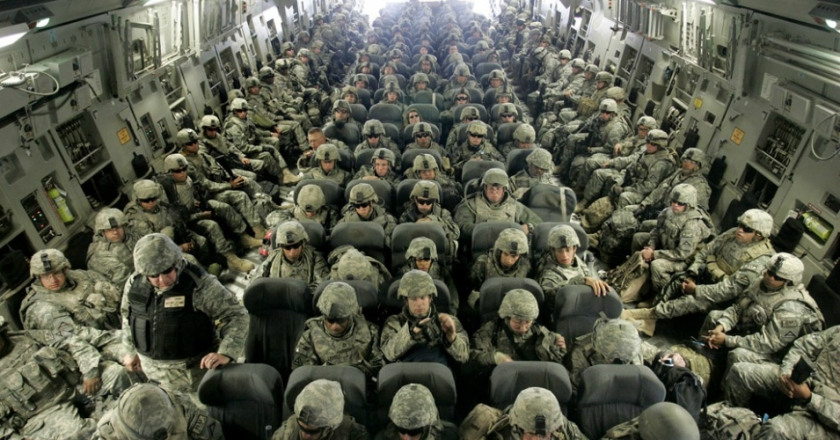
“War is not meant to be won, it is meant to be continuous.”
By Renee Parsons | OffGuardian | May 24, 2018
The Senate Foreign Relations Committee held a hearing on May 16th regarding the authorization of a new Authority for the Use of Military Force 2018 (AUMF). Despite a current lack of unanimity on the committee, the draft authorization (SJ Res 59) has been brought forward as a working document despite the lack of successful back-room negotiations in recent weeks. The hearing was conducted with no quorum present, the lack of which denied the sponsors an easy vote of approval.
The AUMF 2018 would replace AUMF’s 2001 and 2002 which proponents suggest would remove the onerous Constitutional responsibility from a self-proclaimed over-burdened Congress from voting to approve every single separate act of war. While final approval of the AUMF 2018 represents a “Forever Vote,” product of a low vibration consciousness, the ACLU, which should be leading a vigorous national campaign against the proposal, appears absent from the debate.
Approval of a one-size-fits-all AUMF will greatly facilitate the Pentagon’s long held desire to ‘take out’ seven countries in five years – although somewhat behind the original timeline, military conflict is ongoing throughout the Middle East and will allow dramatic escalation in each of those countries without meaningful accountability or Constitutional Congressional oversight.
Since the Congress has already exhibited a penchant for an inability to govern, why have a Foreign Relations Committee at all if their single, most essential Constitutional reason for existence of whether to take the country to war is eliminated?
When the draft AUMF 2018 was introduced by Sen. Bob Corker (R-Tenn) retiring Chair of the Committee in mid-April, he suggested that a strong vote in the Committee would translate into strong support on the Senate floor. After all, even members of the Senate are sensitive to not publicly dismembering their own Constitutional prerogative on a close vote.
Sen. Rand Paul (R-SC) and Sen. Jeff Merkley (D-Or) had both previously announced their opposition to AUMF and both spoke at the hearing against the proposal. Sen. Paul opened with a spirited assault on the AUMF as “flipping the Constitution on its head” eliminating the majority vote in favor of a two-thirds vote required to override Presidential action while allowing the unfettered expansion of war throughout the Middle East.
Since the 2001 AUMF, the status quo has reigned with every President initiating war with the assumption that they had the authority to ‘stretch’ the AUMF to fit current circumstances. Paul argued that by codifying Presidential authority as the 2018 version would do, an opportunity for legal challenges to Presidential authority would be removed. Unrestrained war without the pesky need for Congressional participation is, of course, exactly what the pro-war Republicrats who control the Senate and their MIC benefactors are hoping for. As an example of how a new AUMF might function, Paul said he had not yet figured out ‘why we are chasing a herdsman in Mali?”
Sen. Tim Kaine (D-Va) avid co sponsor of the proposal and HRC’s running mate in 2016, declared that “Congress needs to send a message to our troops, one of them is one of my kids, that the missions they are fighting and dying for, against non-state terrorist groups, has the support of Congress.” Kaine did not explain how codifying the legality of all future undeclared wars will somehow improve the morale of American troops.
One of the two hearing witnesses was Rita Siemion, Adjunct Professor of Law, Human Rights First, George Washington University who provided effective testimony which attracted Kaine to focus his laser on her.
Kaine: Do you support the need for continuing US military action against Taliban, Isis and al Qaeda?
Siemion: I think the use of military force is something that the president should be coming to Congress…
Kaine [interrupts]: Well, can I just say… we are currently engaged in military action against al Qaeda, Isis and the Taliban, do you support need for that action or don’t you?
Siemion: I think that hard questions need to be asked of the administration about what are we achieving by use of military force over the long term….”
Kaine [interrupts again]: So you are not prepared to say today whether you do or do not support the action that our troops are currently engaged in against ISIA, al Qaeda and the Taliban?
Siemion: I think that there are currently real questions that need to be answered about the efficacy of using military force…
Kaine: Let me ask a second question then. I think from your testimony that you would agree, separating this resolution, that the 2001 authorization should be rewritten/or replaced? Do I understand that to be your testimony?
Siemion: I agree that the status quo is incredibly problematic.
Kaine: So then let me be more specific…. do you think it should it be repealed with no replacement or rewritten and then replaced?
Siemion: I think if Congress agrees that use of military force is required and appropriate and it is demonstrated it can be effective for addressing particular terrorist threats, then Congress should authorize military force against those particular groups.
Kaine: I understand that. Obviously if somebody does not think we should be using military force against alQaeda, Isis or the Taliban, then they should vote no on this… they should not vote for an authorization. That’s a good reason to vote no if you do not support the military action that our troops are currently engaged in against al Qaeda, Isis and the Taliban.
In addition to his attempt to make Siemion look unpatriotic, if Kaine’s goal was to intimidate Sen. Merkley who was next to address the panel, he failed.
Merkley focused on legal contradictions and broad interpretations within the AUMF providing the President with a new legal foundation to decide or interpret particular sections that otherwise would be the purview of Congress. Merkley further cited that “the bottom line, what we have before us, codifies the existing situation, gives fresh authority for what has been done since 2001 and I fundamentally believe that delegation was not intended in 2001 and is not appropriate now.” He referred to the Federalist Papers on “how they decided to give that war making power to Congress, that it should not be in the hands of one single person; it is too big an issue, the lives of our soldiers, our sons and daughters, is too big an issue to open that door and I believe they were exactly right. There is a fundamental reason behind that and it is still relevant today.”
At conclusion of the hearing, Sen. Robert Menendez (D-NJ) the committee’s ranking member directly addressed Kaine in that he:
… reject as a false choice that voting against this, when it comes time for that if this is what the final product is, that voting against this proposal is a vote against our troops in the field. No. I reject the proposition that it’s either this or you are not with our troops. That’s ridiculous.”
Kaine replied to:
… clarify and the transcript would show this, I think, that I certainly did not suggest that if you vote against the AUMF, you are against the troops who are currently fighting. I did not suggest that. I did suggest if you are against military action, that is good reason to oppose our proposal. I was engaging in questions of the witness to see if she agreed we should be engaged in military action against these groups. She would not offer an opinion upon that.”
With Secretary of State Pompeo scheduled to testify before Foreign Relations on Thursday, May 24th to clarify the Trump administration’s position on AUMF proposal, a Committee mark up can be expected soon thereafter.
If qui bono is applied here and since the new AUMF would presumably focus on ‘terrorists’ and sovereign nations throughout the Middle East, Israel would appear to be the beneficiary of the dismantling of Congress’ Constitutional obligations. Therefore, it is instructive that fourteen out of twenty one Foreign Relations members were identified by the Center for Responsive Politics on their Top Twenty list of recipients of Pro-Israel PACs or individuals who donated over $200.
- Menendez (D-NJ) 2012/2016: $623,508
- Rubio (R-Fl) 2016: $468,307
- Booker (D-NJ) 2014: $434,126
- Cardin (D-Md) 2012/2018: $415,993
- Portman (R-Oh) 2016: $235,280
- Johnson (R-Wis) 2016: $231,814
- Shaheen (D-NH) 2014: $203,149
- Kaine (D-Va) 2018: $167,878
- Coons (D-De) 2014: $133,300
- Udall (D-NM) 2016: $110,379
- Barasso (R-Wy) 2018: $105,400
- Corker (R-Tenn) 2012: $102,950
- Markey (D-Mass) 2014: $100,450
- Murphy (D-Ct) 2018: $65,221
Either the remaining seven Committee members did not receive sufficient Pro-Israel PAC money to qualify for the Top Twenty list or they received no Pro-Israel PAC money.
Renee Parsons has been a member of the ACLU’s Florida State Board of Directors and president of the ACLU Treasure Coast Chapter. She has been an elected public official in Colorado, an environmental lobbyist for Friends of the Earth and a staff member of the US House of Representatives in Washington DC. She can be found on Twitter @reneedove31
Spend on schools or bow to US demands? German politicians debate NATO strategy
RT | May 19, 2018
US President Donald Trump has accused Germany of not contributing enough to the NATO budget – but will German Chancellor Angela Merkel dance to Washington’s tune?
Politicians on both sides of Germany’s political spectrum shared their views with RT.
On Thursday, Trump warned NATO members that they will be “dealt with” if they fail to fulfill their financial obligations to the US-led military alliance. Germany was singled out as one of those said to be delinquent on their obligations.
Speaking to RT, Martin Dolzer of Die Linke (Left Party) said that buying into Trump’s ideas may send the world order “into chaos,” citing US policy in the Middle East as evidence. Dolzer stressed that Germans do not want war, and said that more vital issues should be on agenda instead of boosting military spending.
“The German population does not want any more military expenses, the German population needs money for kindergartens, for education, for the growth of civil society organizations and the social sector,” Dolzer said. “There has to be a change. And the people in Germany, I think most of them want this change, but the government does not follow it.”
Though Merkel has shown no interest to raising defense spending, Alternative for Germany (AfD) chief whip Hansjorg Mueller believes she is poised to “bend down before the wish of the big brother” – a reference to Trump and the US.
“Our government is the government of a vassal state and governments of vassal states always obey to the wish of the big brother,” Mueller said.
Mueller believes a rise in defense spending would only further split German society, which is already divided over the chancellor’s immigration policy, and significantly weaken Merkel’s position. “We are viewing the doom of her leadership over Germany,” he told RT.
Apart from its reluctance in meeting Washington’s demands, Berlin is also at odds with its ally over the Nord Stream 2 gas pipeline from Russia to Germany. The US is opposed to the project and signaled that it might be targeted by sanctions. The measures could also affect German companies.
The situation with the project is “pure blackmail,” said Mueller, adding that he hopes Merkel does not give in the “dead-end game.”
Meanwhile, Dolzer believes the pipeline is necessary for stability. “If we want to have stable organization of the industry this is very, very necessary to build this Nord Stream pipeline and to not follow the sanctions,” Dolzer said, adding that the US government must be reminded that it cannot act like “a monopoly power” around the globe.
Don’t Call It an Explosion: Gaseous Ignition Events with Radioactive Waste

Photo by Iwan Gabovitch | CC BY 2.0
By John Laforge | CounterPunch | May 18, 2018
Last month’s explosive news from the safe, reliable nuclear deterrence folks is that at least four barrels of military radioactive waste either burst or exploded somewhere inside the Idaho National Laboratory (INL), near Idaho Falls, April 11. INL officials said the “ruptured” barrels reportedly contained a sludge of fluids and solvents sent from the long-shuttered Rocky Flats plutonium weapons machining site near Denver. The officials did not describe which radioactive materials were in the sludge.
The accident was reported by ABC News, the Associated Press, the Seattle Times, the Japan Times, Industrial Equipment News, and Fox Radio among others. Laboratory spokespersons said a 55-gallon drum, or two, holding radioactive sludge “ruptured.” Energy Department (DOE) spokesperson Danielle Miller wrote April 12 that, “Later, there were indications that a third drum may have been involved.” On April 25 Erik Simpson, a spokesman for DOE contractor Fluor Idaho, told the AP that four barrels had burst. Simpson said the “ruptures” (i.e. explosions) were heard outside the building where they took place.
The DOE’s Miller called the prompt deconstruction of the rad waste barrel(s) an “exothermal event” — a pseudonym for “bomb” that means “a chemical reaction accompanied by a burst of heat.” The phrase harks back to the officially described “gaseous ignition event” involving hydrogen gas in a loaded high-level rad waste cask at Wisconsin’s Point Beach reactor site in May 1996. The cask contained 14 tons of highly radioactive used reactor fuel, and the explosion (a word avoided only by agency public relations linguistic gymnastics) blew the high-level waste cask’s 4,000-pound lid right off.
One theory about the cause of the accident is that “radioactive decay made the barrel[s] heat up and ignite particles of uranium,” the AP reported. Unfortunately for the first responders, “When the firefighters left the building emergency workers detected a small amount of radioactive material on their skin,” the AP reported April 12. The very next sentence in this story was that the DOE’s Miller said, “None of the radioactive material was detected outside of the building where the rupture occurred.” The isotopes that contaminated the firefighters somehow don’t figure in to Miller’s “outside.”
Because of what officials said was “decades of secretive record-keeping,” lab authorities claimed not to know exactly what is in the burst barrels. Neither DOE nor INL described what got on the firefighters’ skin. INL officials do not “know the exact contents,” of the barrels, Joint Information Center spokesman Don Miley reportedly said.
Nuclear waste explosions “actually happening”
Miley told the press, “They haven’t run into anything like this actually happening” — but he has a short memory. Exploding rad waste has been around a long time.
It happened four years ago, on Valentine’s Day 2014, at the U.S. Waste Isolation Pilot Plant in Carlsbad, New Mexico. A barrel of military plutonium waste exploded underground, contaminating the entire facility, including the elevator and ventilator shafts, and even poisoned 22 workers internally — they inhaled the plutonium-laced dust.
More recently, on October 18, 2015, a fire and explosions spurred by rainfall hurled 11 buried barrels of radioactive chemical waste from a trench into the air and spewed debris like a geyser 60 feet high, at a “US Ecology” site near Beatty, Nevada. This shocking fire in one of 22 shallow trenches of radioactive waste couldn’t be put out with water hoses because water started it in the first place. Authorities had to close US Highway 95, cancel school, and await more explosions while they let the fire burned itself out. US Ecology had its records seized by Nevada’s Radiation Control Program, which has never disclosed what sorts of radioactive materials were burned in exploded Trench 14 — although dump site is known to hold a total of 47 lbs. of plutonium and uranium isotopes.
In September 1957 at Kyshtym in Russia, a tank holding 70 million metric tons of highly radioactive waste exploded and produced a massive plume that contaminated 250,000 people across 410 square miles. This risk always comes with high-level rad waste. It helped cancel the plan to use Yucca Mountain, Nevada for abandonment of commercial nuclear power waste, because physicists at the Los Alamos National Laboratory reported in 1995 that the material could erupt in a catastrophic explosion. Now, naturally, the Trump regime and his Congress want to restart that rejected plan.
After the Idaho Lab accident, the DOE’s Danielle Miller told reporters that first responders “got some radioactive contamination on their skin, but emergency workers washed it away.” And, she added, “The firefighters did not inhale any of the radioactive material.” Miller couldn’t possibly know this without extensive medical evaluation, but it could be true: if the nose and mouth weren’t attached to the skin.
With Iran sanctions Trump made Europeans look like the fools they are
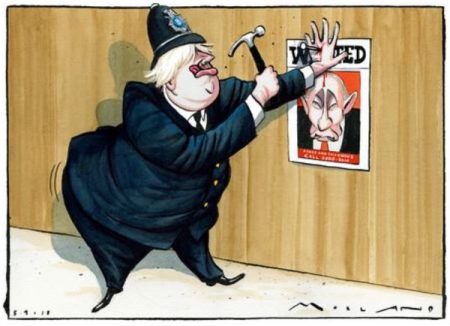
By John Laughland | RT | May 18, 2018
The attacks by European leaders against US President Donald Trump are getting sharper by the day.
On the day Trump announced that he was ripping up the Iran deal, and that the US would impose sanctions on European companies trading with that country, the French finance minister Bruno Le Maire said that European states refused to be treated like “vassals” of the US.
At Aachen on 11 May, Emmanuel Macron effectively accused the US of blackmail. On 17 May, the president of the European Council, Donald Tusk, asked, “With friends like that (i.e. Trump), who needs enemies?”
The temperature only rose further when the French energy giant Total announced that it would pull out of a multi-billion dollar gas deal with Iran unless European diplomacy succeeds in obtaining a specific waiver from US sanctions. Other European behemoths including Allianz and Siemens have also announced either that they will wind down operations in Iran or that they will not start any new ones.
These statements show that Trump’s decision is a slap in the face for the EU politically, economically and – perhaps above all – ideologically. Politically, because both Emmanuel Macron and Angela Merkel made special trips to Washington to plead with Trump, to no avail whatever. Moreover, the EU is itself a signatory to the Iran deal, which it regards as a major diplomatic triumph from which it draws credibility: its disavowal by Trump is a deep insult to the diplomatic status of the EU as such.
Economically, because of the gigantic contracts which European companies could lose. For years, following the nearly $9 billion fine imposed by the US on Paribas in 2015, European companies and banks have been terrified of engaging in any business activity likely to attract the ire of the Americans. Deals with Russia, for instance, are shunned. The effect of this latest decision could be like many Paribas situations at once.
Ideologically, because the EU draws its entire legitimacy from the belief that by pooling sovereignty and by merging its states into one entity, it has advanced beyond the age when international relations were decided by force. It believes that it embodies instead a new international system based on rules and agreements, and that any other system leads to war. It is impossible to exaggerate the importance of this belief for European leaders; yet Donald Trump has just driven a coach and horses through it.
The angry statements by European leaders might lead one to think that we are on the cusp of a major reappraisal of trans-Atlantic relations. However, the reality is that the EU and its leaders have painted themselves into a corner from which it will be very difficult, perhaps impossible, to extricate themselves.
First, the links between the EU and the US are not only very long-standing, they are also set in stone. NATO and the EU are in reality Siamese twins, two bodies born at the same time which are joined at the hip. The first European community was created with overt and covert US support in 1950 in order to militarize Western Europe and to prepare it to fight a land war against the Soviet Union; NATO acquired its integrated command structure a few months later and its Supreme Commander is always an American.
Today the two organizations are legally inseparable because the consolidated Treaty on European Union, in the form adopted at Lisbon in 2009, states that EU foreign policy “shall respect” the obligations of NATO member states and that it shall “be compatible” with NATO policy. In other words, the constitutional charter of the EU subordinates it to NATO, which the USA dominates legally and structurally. In such circumstances, European states can only liberate themselves from US hegemony, as Donald Tusk said they should, by leaving the EU. It is obvious that they are not prepared to do that.
Second, EU leaders have burned their own bridges with other potential partners, especially Russia. Angela Merkel traveled to Russia on Friday but only a few weeks ago more than half of the EU member states expelled scores of Russian diplomats and encouraged non-EU European states like Ukraine and Montenegro to do the same, in retaliation for the poisoning in Salisbury of Sergei and Julia Skripal.
How is Mrs Merkel going to convince Mr Putin to join her in keeping Iran’s nuclear program under control if she officially thinks that Mr Putin is guilty of secretly stockpiling and using chemical weapons for assassinations in the West? Only a few weeks later, in mid-April, Britain and France, together with the US, attacked Syria on the basis that its army had used chemical weapons at Douma with Russian backing. If they try to turn on the charm now in Sochi or in Moscow, do they really expect the Russians can take them seriously?
Third, how can EU leaders complain about US sanctions against their companies when they themselves have applied sanctions against Russian companies causing major economic disruptions in that country? EU states have also introduced punitive sanctions against Syria since 2011, one of the biggest programs of sanctions ever, whose effect and purpose is to disrupt the activities of the Syrian state including its ability to provide public goods like health.
Britain and France, who are, with Germany, the European signatories of the Iran deal, have been pursuing regime change in Syria for half a decade. By what right do they protest now that the US administration is taking decisions whose goal is to provoke regime change in Iran?
As if these external issues were not bad enough, the EU is currently riven by internal divisions too. Donald Tusk may say “Europe must be united economically, politically and also militarily like never before … either we are together or we are not at all” but Europe is indeed not “together” at all. The Brussels commission is hounding Poland and Hungary on what are clearly internal political matters beyond the Commission’s remit; the EU is about to lose one of its most important member states; and a new government is going to take power in Rome whose economic policies (a flat tax at 15%) will blow the eurozone’s borrowing rules out of the water and perhaps cause Italy to leave the euro.
The Italian 5-Star / League government also wants an end to the EU sanctions against Russia; these are voted by a unanimity which, although fragile, has held until now but which, if the new power in Rome keeps its word, will shortly collapse. In other words, what Trump has done is to make the Europeans look like the fools they are. In circumstances in which the EU has placed all its eggs in one basket, a basket which Trump has now overturned, it will be impossible for it to come together. On the contrary, it is falling apart.
John Laughland, who has a doctorate in philosophy from the University of Oxford and who has taught at universities in Paris and Rome, is a historian and specialist in international affairs.
‘Cheap political ritual’: Trump orders sanctions against Russia over alleged INF treaty violation
RT | May 17, 2018
President Donald Trump ordered his Cabinet to work on sanctions targeting Russian officials for what the US claims is a violation of a key arms control treaty. The action is perceived as a ‘cheap political ritual’ in Moscow.
The Intermediate-Range Nuclear Forces (INF) Treaty bans the US and Russia from developing and deploying land-based missiles with ranges between 500 and 1,000km. Signed by Mikhail Gorbachev and Ronald Reagan, it helped reverse the nuclearization of Europe and deflate Cold War tension. Washington and Moscow have since accused each other of violating the key arms control agreement, but neither went as far as withdrawing from it.
The National Defense Authorization Act for Fiscal Year 2018 in US has a section that requires the White House to prepare a list of senior Russian officials responsible for violating the INF, who could be slapped with personal sanctions for it. Those include property freezes, travel bans and whatever Trump deems appropriate.
A memorandum by Trump, which was published on Wednesday, instructs several Cabinet members, including the State Secretary, the Director of National Security and the Secretary of the Treasury, to carry out the work.
The development was dismissed in Moscow as largely insignificant. “I have three words to describe it: cheap political ritual,” said Deputy Foreign Minister Sergey Ryabkov on Thursday.
The US falsely believes that “Russia may be pressured by sanctions into offering unilateral concessions and actions pleasing Washington,” he said. “It’s obvious that this does not promote normal dialogue on strategic stability and on the contrary hurts it.”
The US accuses Russia of secretly developing two rockets with intermediary range, which can be fired by a standard launcher of the tactical missile system Iskander-M. Russia denies that the rocket’s range falls within the restrictions.
Moscow in turn accuses the US of having developed banned missiles under the guise of target projectiles for anti-missile systems. It also says the US adopted naval vertical launch systems, which can fire Tomahawk missiles, to land deployment as part of AEGIS Ashore program, effectively making the cruise missiles land-based.
West Continues to Underestimate Support for Assad in Syria – UK Shadow FM
Sputnik | May 17, 2018
Although many politicians in the ruling Tory British government have expressed opposition to Syrian President Bashar al-Assad, with some endorsing the UK’s role in the US-led strikes against Syria on April 13, some members of the opposition, including Labour leader Jeremy Corbyn and members of his shadow cabinet, have called for restraint.
Shadow UK Foreign Secretary Emily Thornberry told Prospect magazine on Wednesday that the West underestimates the level of support President Assad enjoys in Syria and suggested that opposition forces have exaggerated domestic opposition to the Syrian government.
“There is an argument that if [President Bashar al-Assad] had been as overwhelmingly unpopular as the rebels told the west at the outset then he wouldn’t be there. I think there has been a depth and a breadth of support for Assad that has been underestimated,” the British shadow foreign secretary told Prospect magazine on May 16.
Shadow FM Thornberry went on to insist that all foreign forces need to leave Syria.
“They’re not fighting for the sake of the Syrian people. Any of them. Saudi Arabia, Israel, Iran, Turkey, America, Britain—have I missed anyone?”
She proceeded to add Russia to the list.
When questioned about Russia’s vetoing of UN resolutions she pointed towards other countries which have also blocked numerous resolutions and said it’s the nature of international politics.
“People will always block resolutions. If you look at the number of resolutions America has blocked, I mean that’s the way of politics,” Shadow FM Thornberry said.
The UK shadow foreign secretary went on to say Britain should support any peace process which yields results, whether that’s the Astana, Geneva or Sochi process.
“I think we should be working with whatever works, for the sake of the Syrian kids. None of this is revolutionary,” she added.
Despite the tripartite aggression by the US, the UK and France against the Syrian Army and other military personnel in Syria last month, government forces have continued to advance against terrorists throughout the country and once they deal with the final Daesh* remnants in south Damascus, they are likely to take aim at either Deraa or Idlib.
On the topic of military intervention against Damascus, UK Foreign Secretary Emily Thornberry warned that it could further destabilize Syria, citing Libya as an example.
“[It] has been such a disaster. Responsibility to Protect is not [supposed to be] a cover for ‘those people are being treated badly let’s go and bomb, everything will be fine.’ It didn’t work—look at Libya now,” FM Thornberry, who voted in favor of bombing Libya in 2011, told Prospect magazine earlier this week.
Featured Video
What’s the Pentagon Preparing For? Alexander Mercouris
or go to
Aletho News Archives – Video-Images
From the Archives
Arthur Silber Destroys What The Brainwashed Left Calls “Dissent”
By Saman Mohammadi | The Excavator | February 18, 2012
In his latest article, “Hardhitting, Dissenting Journalism — Without the Hardhitting, Dissenting Part,” Arthur Silber writes:
“In a recent essay, I mentioned Matt Taibbi as one of the examples of a phenomenon I call “The Obedient Dissenter,” and said I would be examining that phenomenon in further detail soon. This isn’t that lengthier analysis, but more in the nature of a sneak preview.
Taibbi posted this entry yesterday: “Another March to War?” His remarks deal with the major media’s warmongering about Iran and the distortions they rely upon. All true, and all old news to those who’ve been awake however briefly in recent years. Note what he drops into the middle of his discussion:
I’m not defending Achmedinejad, I think he’s nuts and a monstrous dick and I definitely don’t think he should be allowed to have nuclear weapons…
He shouldn’t be allowed to have nuclear weapons? Ahmadinejad is going to stock all those terrible nuclear weapons in his very own personal Closet of Worldwide Destruction? And then, some night when he’s had a few too many drinks or because he’s pissed off about not getting his favorite dessert, he’s going to haul out a missile and hurl it at some unsuspecting country? And he shouldn’t be allowed to have these weapons? Who’s going to enforce that prohibition, Taibbi — you and what military? Oh, that’s right: that would be the United States military.
In this manner, Taibbi reduces the most consequential matters of international relations to questions of personality — thus throwing open the door to all the gutter language used by every warmongering propagandist, all the talk of Ahmadinejad being the “new Hitler,” the embodiment of evil and so on. Taibbi even helpfully includes his entirely unsupported and extraordinarily dangerous opinion that Ahmadinejad is “nuts.” Way to fight the power, Taibbi!
Thus does Taibbi accept all the assumptions and premises of those he says he is criticizing. Thus does he concede the battle before the first shot is fired.”
The global 9/11 truth and justice movement has been saying this for a decade. What the brainwashed Left calls “dissent” is a big joke. They blindly accept the official government narrative of the biggest event of our lifetime – an event that launched a world war in the Middle East, and transferred trillions of dollars from funding for science, health care, infrastructure, and education to the banking-military-industrial-congressional complex.
The 9/11 Lie destroyed the American economy and the American Constitution. But both the brainwashed Left and Right are hanging onto the lie as if their very lives depended on it being true.
As Silber says, the delusional and stupid Left has conceded “the battle before the first shot is fired.” They should just get out of the way and let the real dissidents take care of business.
And if you try to educate these clueless “critics of U.S. foreign policy” about the 9/11 attacks and false flag terrorism in general they call you a nut and a conspiracy theorist. Very liberal-minded.
Blog Roll
 Aletho News
- How NATO Expansion Triggered the Ukraine War
- France Loses Position in Global Agricultural Market Due to Russian Sanctions
- The Dismantled Factory: How far has European deindustrialization progressed?
- AfD ban procedure is coming in 2027, says AfD co-leader Alice Weidel
- From Ukraine to World War III, Russia and the West – Are We Now on the Brink? Part 1
- US-China contradiction: Shenzhen peace diplomacy versus Indo-Pacific militarization
- What’s the Pentagon Preparing For? Alexander Mercouris
- USAID Files: The Georgia Model for Getting Accounts Taken Down
- Kiev hits out at YouTube over Russian-language censorship refusal
- Australia Passes Digital Duty of Care Bill, Ignoring Censorship Warnings
- If Americans Knew
- DAILY UPDATE: Latest essential news on Palestine, Israel, & region
- Iran’s Foreign Minister Slams Israel Over Chemical Weapons Claims
- Israel kills 18 in Gaza, including 3 girls, Deputy Education Minister, & his wife
- DAILY UPDATE: Latest essential news on Palestine, Israel, & region
- Ad That Calls for Cutting Off US Aid to Israel to Air on SNL Thanksgiving Special
- Tortured into confessing: Report exposes abusive Israeli interrogation of Palestinians
- Israeli Military Probing Its Own ‘Widespread’ Use of Palestinian Human Shields
- Palestinians in Gaza Are Lining Their Tents with Sandbags to Stop Israeli Bullets
- Israel’s genocidal actions are preventing births in Gaza –New Amnesty report
- ‘Unlawful de facto exemption’: US sitting on 12-year backlog of alleged Israeli gross human rights violations
- No Tricks Zone
- Alarmist Climatologists In Shock! 2026 Atlantic Hurricane Season Sees Lowest Count In 101 Years
- New Study: Modern Temps Are Among The Coldest Of The Last 10,000 Years In East Central Europe
- Germany’s Renewable Energies Lead to 1.4 Billion Euro Electric Power Trade Deficit
- Argentina’s Perito Moreno Glacier Joins Antarctica and Arctic In Defying Doomsday Melt Claims
- New Study: Barents Sea Temperatures Were Warmer And Sea Ice Less Extensive In The 1700s Than Today
- German Authorities Start Initiative To Evaluate Public Register For Climate “Disinformation” Spreaders!
- Zonal Asymmetry of Temperature Change in the Antarctic Circumpolar Current
- New Study: The Net Fossil Fuel Contribution To Rising Atmospheric CO2 Has Been Zero For 500 Years
- Germany’s Green Energy Transition Becoming Increasingly Expensive…Another 6 Trillion Euros!
- Sudden Stratospheric Warming, Powerful El Niño Combination May Lead To Extreme Europe Cold, Energy Crisis!

