Saudi Navy Set to Order American Littoral Combat Ships
Sputnik – 16.09.2015
Saudi Arabia has selected a variant of a warship Lockheed Martin is building for the US Navy as the frigate for the kingdom’s Eastern Fleet modernization program, a source told Defense News.
The frigates sale will be the cornerstone of the modernization of the Royal Saudi Navy’s eastern fleet and its aging US warships in the Arabian Gulf.
A letter of request from the Saudi Navy that detailed requirements for the program was signed in early August, the source said, and the Saudis have asked the US Navy and Lockheed to complete a letter of agreement by November, Defense News reported.
The deal calls for four frigates capable of hosting Sikorsky MH-60R helicopters.
Saudi and US officials also are finalizing a $1.9 billion deal to buy 10 MH-60R helicopters, which can be used for anti-submarine warfare and other missions. Lockheed is in the process acquiring Sikorsky.
The ships are also expected to be fitted with a vertical launch system that can accommodate surface-to-air missiles.
The entire Eastern Fleet expansion program is expected to cost between $16 billion and $20 billion and also includes patrol boats, three maritime patrol aircraft, and 30 to 50 unmanned aerial vehicles, Defense News reported.
The four large frigates are expected to take up about 20-25% of the total cost. Saudi Arabia earlier this year budgeted $3.5 billion for the program, money that needs to be spent in calendar 2015.
The deal, if finalized, would mark the first international sale of a US littoral combat ship.
The Saudi Navy’s expansion program has been in the works for years, but US sources say Saudi Arabia’s concerns about Iran have accelerated the effort.
In July, world powers and Iran reached a deal aimed at curbing Tehran’s nuclear program in exchange for lifting sanctions. Regional neighbors worry about the threat posed by a financially strong Iran.
Are Neocons an Existential Threat?
By Robert Parry | Consortium News | September 15, 2015
The neoconservatives arguably have damaged American national interests more than any group in modern history. They have done more harm than the marginal Communists pursued by Sen. Joe McCarthy in the 1950s, more than the Yippies of the 1960s, more than Richard Nixon’s Watergate burglars in the 1970s or the Iran-Contra conspirators in the 1980s.
The neocons have plunged the U.S. government into extraordinarily ill-considered wars wasting trillions of dollars, killing hundreds of thousands if not millions of people, and destabilizing large swaths of the planet including the Middle East, much of Africa and now Europe. Those costs include a swelling hatred against America and a deformed U.S. foreign policy elite that is no longer capable of formulating coherent strategies.
Yet, the neocons have remained immune from the consequences of their catastrophes. They still dominate Washington’s major think tanks as well as the op-ed pages of virtually all the leading newspapers, including The Washington Post, Wall Street Journal and New York Times. They hold down key positions in the State Department, and their “liberal interventionist” pals have the ear of President Barack Obama.
Clearly, the neocons are skilled operatives, knowing how to arrange a steady stream of funding for themselves, from military contractors donating to think tanks, from U.S. taxpayers footing the bill for organizations like the National Endowment for Democracy, and from ideological billionaires set on aligning U.S. foreign policy with hard-line Israeli desires.
The neocons are adept at writing op-ed articles that twist any set of facts into support for their ideological cause; they supply just the right quote that fits into the news cycle’s latest narrative; and they host policy conferences that attract powerful politicians and fawning media coverage.
But are the neocons a force that can coexist with the American Republic? Have they become an existential threat not only to the constitutional structure crafted in 1787 but to continued life on the planet? Are they locked on a course of action that could lead to a nuclear holocaust?
Clearly, the neocons’ commitment to Israeli interests violates a key principle established by the nation’s early presidents who all warned against “foreign entangling alliances” as a fundamental threat to a citizens’ republic that would transform America into a warrior state that would inevitably sap the nation’s liberties.
That loss of liberty has surely happened. Not only is there now bipartisan support for a surveillance state that can spy on the personal lives of American citizens, but the U.S. government has wedded itself to the concept of “strategic communications,” a catch-phrase that merges psychological operations, propaganda and P.R. into a seamless approach toward managing public perceptions at home and abroad.
When information is systematically pushed through a filter designed to ensure consent, the core democratic concept of an informed electorate has been turned on its head: The people no longer oversee the government; the government manipulates the people.
Neocon Tactics
All this has been part of the neocon approach dating back to the 1980s when key operatives, such as Robert Kagan and Elliott Abrams, were part of inter-agency task forces designed to whip the American people into line behind the government’s aggressive war policies. Guided by seasoned CIA propagandists, such as Walter Raymond Jr., the neocons learned their lessons well.
But the neocons are no longer just threatening the existence of the Republic; they are now endangering the continuation of life itself. They have decided to launch a new Cold War against Russia that will push the world toward the brink of thermo-nuclear war.
Of course, the neocons will frame their doomsday strategy as all Vladimir Putin’s fault. They will insist that they are just standing up to “Russian aggression” and that anyone who doesn’t join them is a “stooge of Moscow” or “weak.” They will dictate the shape of the debate just as they have in countless other situations, such as guiding Americans to war in Iraq over non-existent WMD stockpiles.
The neocon pundits will write seemingly authoritative op-eds about devious Kremlin strategies which will glue black hats on the Russians and white hats on whomever is on the other side, whether the neo-Nazis in Ukraine or the Islamic State/Al Qaeda terrorists in Syria. Americans will be whipped up into a frenzy that will demand a direct clash with the “Russ-kies” or “regime change” in Moscow.
There will be little or no concern about the risks. With the neocons, there never is. The assumption is that if “Amur-ika” is tough, the other side will back down. Then, with U.S.-led economic sanctions from the outside and U.S.-funded NGOs stirring up trouble from the inside, “regime change” becomes the cure-all.
Everyone who’s important in Official Washington – everyone on the talk shows and op-ed pages – knows that these disruptive situations always play out just the way they’re diagramed inside the top think tanks. A hand-picked “democratic reformer” who’s traveled the think-tank circuit and gotten the seal of approval – the likes of Iraq’s Ahmed Chalabi – will easily be installed and then the target country will do whatever the neocons dictate. After all, that approach worked so well in Iraq. The neocons always know best.
Raising the Stakes
Yet, with Russia, the stakes are even higher than with Iraq. Yes, it’s easy to find fault with Vladimir Putin. I myself have a personal rule that men over 40 should keep their shirts on when out in public (unless maybe they’re actors in a Bond film or going for a swim at the beach).
But Putin at least is a rational player in global affairs. Indeed, he has tried to cooperate with President Obama on a variety of key issues, including convincing Syria to surrender its chemical weapons and getting Iran to make concessions in the nuclear deal – two contributions to world peace that infuriated the neocons who favored bomb-bomb-bombing both Syria and Iran.
At a dinner party in Europe this summer, I was asked by a well-informed British woman what should be done with Putin. My answer was that Putin doesn’t frighten me; it’s the guy who comes after Putin who frightens me – because despite the neocons’ confidence that their “regime change” plans for Moscow will install a malleable moderate, the more likely result would be a much harder-line Russian nationalist than Putin.
The idea of the nuclear codes being handed to someone determined to defend the honor of Mother Russia is what scares me. Then, the clumsily aggressive neocons in Washington would have their reckless counterpart in Moscow, with neither side having the wisdom of a John F. Kennedy or a Nikita Khrushchev as displayed during the Cuban Missile Crisis in 1962.
Would American neocons or a Russian super-nationalist have the wisdom and courage to back down, to compromise, to make the concessions necessary to avoid plunging over the edge? Or would they assume that the other guy would blink first and that they would “win” the showdown?
I recall what William R. Polk, one of Kennedy’s mid-level aides during the Cuban Missile Crisis, wrote recently about what happens to the human mind under such stress.
“Since human beings make the decisions, we must be aware of decision makers’ vulnerabilities,” Polk wrote. “During the Cuban Missile Crisis, I was one of about 25 civilians fully engaged in the events. I was not at the center but in the second or third ‘echelon.’ So I did not feel the full strain, but by the Thursday of the Crisis, I was thoroughly exhausted. My judgment must have been impaired even though I was not aware of it.
“I do remember, however, a terrible episode – fortunately lasting only a few minutes – at which I thought to myself, ‘let’s just get it over with.’ When later I met with my Soviet counterparts, I got the impression, although they denied it, that my feelings were not unique. How the strain impacted on the inner group I can only guess.”
If someone as stable and serious as Bill Polk had such thoughts – “let’s just get it over with” – what might happen when American neocons or hyped-up Russian nationalists are inserted into the decision process? That is an existential question that I don’t want to even contemplate.
Endless Putin-Bashing
And, if you doubt that the neocons will engage in over-the-top Cold War-style Putin bashing, you should read the op-ed by The Washington Post’s neocon deputy editorial page editor Jackson Diehl on Monday, entitled “Putin shifts fronts: With a move into Syria, he continues his in-your-face maneuvers.”
Diehl delves into Putin’s psyche – a process that is so much easier than doing real reporting – and concludes that Putin’s decision to join the fight in Syria against the Islamic State and Al Qaeda is just another attempt to stick his finger in the eye of the righteous but clueless United States.
Diehl, of course, starts off with the neocon-approved narrative of the Ukraine crisis, ignoring the key role of neocon Assistant Secretary of State Victoria Nuland (Robert Kagan’s wife) in midwifing the Feb. 22, 2014 coup that overthrew democratically elected President Viktor Yanukovych and installed an intensely anti-Russian regime on Russia’s border. Nuland even handpicked the new Prime Minister Arseniy Yatsenyuk, telling U.S. Ambassador Geoffrey Pyatt in a phone call several weeks before the coup that “Yats is the guy.”
The coup-makers then dispatched neo-Nazi militias (and Islamist militants) to wage a bloody “anti-terrorism operation” against ethnic Russian Ukrainians who resisted the “regime change.” [See Consortiumnews.com’s “Ukraine Merges Nazis and Islamists.”]
But all that complexity is neatly boiled down by American neocons and the mainstream U.S. media as “Russian aggression.” Regarding the Syrian civil war, some neocons have even joined with senior Israeli officials in claiming that a victory by Al Qaeda is preferable to the continuation of Assad’s secular regime. [See Consortiumnews.com’s “Syria’s Nightmarish Narrative.”]
Yet, however the story goes, the biggest bad guy is Putin, always with sinister motives and evil intent. So, in explaining the situation in Ukraine and Syria, Diehl writes:
“Throughout the summer, Russia’s forces in eastern Ukraine kept up a daily drumbeat of attacks on the Ukrainian army, inflicting significant casualties while avoiding a response by Western governments. On Sept. 1, following a new cease-fire, the guns suddenly fell silent. Optimists speculated that Vladimir Putin was backing down.
“Then came the reports from Syria: Russian warplanes were overflying the rebel-held province of Idlib. Barracks were under construction at a new base. Ships were unloading new armored vehicles. Putin, it turns out, wasn’t retreating, but shifting fronts — and executing another of the in-your-face maneuvers that have repeatedly caught the Obama administration flat-footed.”
The rest of the op-ed is similarly didactic and one-sided: Putin is the villain and Obama is the rube. In Diehl’s world, only he and other neocons have what it takes to take on Putin and put Russia down.
Any alternative explanation for Russia’s action in Syria is brushed aside, such as Putin deciding that a victory by either Al Qaeda’s Nusra Front – as favored by Israel – or the even more bloodthirsty Islamic State is unacceptable and thus Assad’s regime must be stabilized to avert a major geopolitical catastrophe.
Typically, the neocons breeze past the frightening logic of what the collapse of Assad’s military would mean for the Middle East, Europe and the world. After all, once Israeli leaders decided to throw in their lot with Al Qaeda in Syria, the die was cast as far as the neocons were concerned.
But the notion that the neocons can micromanage the outcome in Syria, with “moderate” Al Qaeda taking Damascus rather than the more “radical” Islamic State, reflects the arrogant know-nothing-ism of these U.S. opinion leaders. More likely, Al Qaeda’s Nusra Front would coordinate with their former allies in the Islamic State and share in the Sunni revenge against Syria’s Christian, Alawite, Shiite and other minorities.
So, while the Islamic State would busy itself chopping off heads of “heretics,” Al Qaeda could use its new headquarters in Damascus to plot the next round of terror attacks against the West. And, as destabilizing as the current refugee flow into Europe has been, it would multiply astronomically as the survivors of the Islamic State/Al Qaeda bloodletting flee Syria.
With Europe in chaos and the neocons still insisting that the real enemy is Russia, the possible consequences would be frightening to contemplate. Yet, this is the course that the neocons have set for the world – and nearly all the Republican candidates for president have signed on for the journey along with Democratic frontrunner Hillary Clinton.
In 2014, arch-neocon Robert Kagan, whom Secretary of State Clinton selected as one of her advisers while also promoting his wife, Victoria Nuland, told The New York Times that he could embrace a Clinton presidency: “If she pursues a policy which we think she will pursue … it’s something that might have been called neocon, but clearly her supporters are not going to call it that; they are going to call it something else.” [For more, see Consortiumnews.com’s “Is Hillary Clinton a Neocon-Lite?” and “Obama’s True Foreign Policy ‘Weakness.’“]
So far, virtually no one in the 2016 presidential race or in the mainstream U.S. news media is seriously addressing the reality of the neocons’ “regime change” chaos spreading across the Middle East and the prospect of a destabilized Europe. What limited discussion there is on the campaign trail mostly echoes Jackson Diehl’s Putin-bashing.
No one dares confront the existential question of whether the United States and the world can continue to tolerate and accommodate the neoconservatives.
~
Investigative reporter Robert Parry broke many of the Iran-Contra stories for The Associated Press and Newsweek in the 1980s. You can buy his latest book, America’s Stolen Narrative, either in print here or as an e-book (from Amazon and barnesandnoble.com).
Attorney General refuses to say whether UK has ‘blanket’ drone policy
Reprieve – September 15, 2015
The British Attorney General has today refused to say whether the Government has a ‘blanket’ or ‘case-by-case’ policy on carrying out targeted killings in countries with whom the UK is not at war.
Jeremy Wright was answering questions from MPs on the Justice Select Committee, who questioned him over the UK’s adoption of a US-style drone programme, as recently announced by the Prime Minister.
However, Mr Wright refused to give further details on the nature of the legal advice he had provided to his Government. Asked by Richard Arkless MP, “is the advice that you’ve delivered to the Government in relation to these drone strikes, will that be conducted on a case by case basis or are you giving them blanket authority to do this again if the circumstances arise?” he responded, “that’s another nice try… but I can’t I’m afraid go into the detail of the advice that I gave.”
The Attorney General also said there was a need to rethink what “imminence” means in relation to self-defence.
Commenting, Kat Craig, legal director at human rights charity Reprieve said: “It is alarming that the Attorney General does not feel the need to tell MPs or the public even the most broad details about the UK’s kill policy. All we currently know, is that the Prime Minister thinks he can authorise the killing of anyone, anywhere, without any parliamentary or judicial oversight. The UK appears to be going down the US route of a counter-productive, secret drone war which does more harm than good. When even US generals are warning that the drone programme causes more problems than it solves, it beggars belief that the British Government is adopting the model in full. We need a real debate, and for that we need the Government to come clean about this policy.”
Meet Jeremy Corbyn, Britain’s new Leader of the Opposition
By Timothy Bancroft-Hinchey – Pravda – September 13, 2015
Jeremy Corbyn has the Establishment on both sides of the Atlantic shaking in their boots. Representing a breath of fresh air, promising change and hope, the new leader of Britain’s Labour Party also represents a stand against austerity and a sensible economic policy which aims to stimulate the economy instead of stifling it.
The first act by Jeremy Corbyn after being elected on Saturday September 12 as Leader of Britain’s Labour Party (winning in the first round with almost 60 per cent of first-preference votes) was to send an e-mail to all Labour Party members and supporters promising to include them and their wishes in his policy-making process, asking them to forward questions to place to the Prime Minister, David Cameron, at Prime Minister’s Questions next Wednesday.
For Jeremy Corbyn, being Labour leader is about the opportunity to serve and to create viable public services. Indeed, his record presses all the right buttons for the socially leaning members of the public. And those who understand the first thing about economics.
Policy issues and some predictions
Let us take a look at the policies Jeremy Corbyn has supported and this will explain why he will cause concern and will be demonized by the media who will classify him as a dangerous radical who is unelectable and unstatesmanlike. The reason why, as we shall see, is that his policies go against the grain of government by proxy for the lobbies to which politicians today are connected and which place them in office or else close ranks around them when they are elected.
For a start, Jeremy Corbyn questions the pan-national weapons lobby called NATO, whose collective member states’ budget is a staggering one point two thousand billion USD each and every year – four times the amount it would cost to eradicate poverty, worldwide, forever. How Constitutional is it for any of the countries to have their foreign policy dictated by such a lobby? Predictably, the national security button will be pressed as enemies and dark forces are invented to justify NATO’s existence and new members are sought to bolster its budget and cater for the lobbies for which NATO is the cutting edge. Dictatorship of the Lobbies through the manipulation of fear.
Jeremy Corbyn opposed the war in Afghanistan (a foreign policy catastrophe in which the Taliban are paid not to attack), opposed the war in Iraq (another disaster which totally destabilized a sovereign state, murdered a million people and saw the creation of Islamic State), he opposed the war in Libya (another huge mistake) and opposes war in Syria. He is also Vice-Chair of the Campaign for Nuclear Disarmament and a member of Amnesty International.
He was a campaigner against apartheid, worked to free the Guildford Four and Birmingham Six, people wrongly convicted as IRA bombers. Needless to say, the media will have a heyday over this but then again, what is wrong with working to free people who have been wrongly convicted?
Jeremy Corbyn understands that austerity shrinks the economy, destroying jobs, taking away workers’ rights gained over the last century and favors an approach which combats tax evasion, bringing more money into the treasury. In fact, his policies would bring in an extra 100 billion pounds in the short term. He plans a public investment scheme to create housing and plans to take rail franchises back into the public sector and supports renationalizing the energy sector. Strongly opposed to tuition fees, Jeremy Corbyn wants to create a National Education Service. A service, not a business.
On foreign policy, he rightly saw that the Ukraine crisis was caused by NATO’s attempt to expand eastwards. As regards Israel, he realizes that no progress is going to be made until talks are held between Israel, Hamas and Hezbollah and he opposed sanctions against Iran.
Who is Jeremy Corbyn?
Born in 1949, he began his working career in the National Union of Public Employees, becoming an organizer for the Union. From here he went on to the National Union of Tailors and Garment Workers, was a member of a District Health Authority and was elected to Harringay Council, which he represented from 1974 to 1983 and was Secretary of the Islington Borough Labour Group.
He was elected as a Member of Parliament for Islington North in 1983 and has since been re-elected seven times. The Member of Parliament who claims the least expenses, he has served on the London Regional Select Committee, the Social Security Select Committee and the Justice Select Committee; he is Chair of the All-Party Parliamentary Group on the Chagos Islands, on Mexico and Vice-Chair of the Group on Latin America and on Human Rights; he is member of the Groups on Bolivia, Britain-Palestine, Great Lakes and the International Parliamentary Union, among others. He is a vegetarian, an animal rights campaigner and supports the LGBT community.
For those who wish to see a health service run by a fascination with the bottom line, in which the haves get treated and the have-nots get second class treatment, for those who wish to see the education sector turned into a business in which you get a degree if you can pay and if you cannot, then you don’t get a chance, for those who wish to see train services cancelled, energy bills skyrocketing, for those who wish to be afraid to step outside the home after six o’clock, Jeremy Corbyn is a direct threat.
The question is, is Britain ready for Jeremy Corbyn?
Timothy Bancroft-Hinchey can be contacted at timothy.hinchey@gmail.com
Anti-war Jeremy Corbyn attacked for defending white peace poppy
RT | September 15, 2015
Opponents of newly-elected Labour Party leader Jeremy Corbyn have attacked the Stop the War coalition chairman’s defense of the white peace poppy and lukewarm commitment to attend the annual Remembrance Day commemoration in November.
Corbyn made the remarks on Monday at the first Parliamentary Labour Party (PLP) meeting since his triumph with an overwhelming 60 percent of the vote for the leadership on Saturday.
He refused to rule out wearing a white poppy during the ceremony held each year at the Cenotaph on Whitehall. His office has since insisted he will wear a traditional red poppy.
According to Politics Home, sources said Labour MPs present at the meeting were “shocked” by his comments.
“He was asked about the white poppy and offered a defense of it,” one MP said.
“He then said he attended memorial events in his own constituency and he wasn’t sure what would happen this year,” they added.
‘Hope Corbyn knows where to draw line’
Another MP claimed the public would be “appalled” if Corbyn stood at the Cenotaph wearing a white poppy.
“They will not understand it – they will think he is on a different planet. It is deeply offensive to our armed forces, who have given their lives for the democracy and freedoms he enjoys,” Labour MP Simon Danczuk said.
“I hope Jeremy will know where to draw the line on pushing a particular political agenda. The Cenotaph is no place to fight political battles.”
‘White poppies worn to oppose war’
Asked whether he would wear a red poppy, Corbyn said: “I don’t know what is going to happen this year.
“People wear white poppies because of their deep opposition to war.”
The Labour Party leader said he respects Remembrance Day regardless of what poppy he wears.
A spokeswoman later confirmed Corbyn, who attended the Battle of Britain commemorations on Tuesday, would wear a red poppy on Remembrance Sunday.
Just like the traditional red poppy, the white one is worn to remember those who died while emphasizing a lasting commitment to peace.
According to Stop the War, wearing a white poppy is a “respectful way to put peace at the heart of remembering those who died in war.”
However, opponents of the white poppy argue the red poppy already encompasses the sentiments claimed for the white poppy, such as “remembering all the victims of war.”
When the white poppy was first established in the 1930s, a number of women lost their jobs for wearing them, as it was believed the statement undermined those who had died in service.
In 2006, Channel 4 News anchor Jon Snow sparked controversy after refusing to wear a red poppy on air, saying demands for him to wear the traditional flower was “poppy fascism.”
Bernie Sanders Again Insists That Saudi Arabia Should Kill More People
By David Swanson | War Is A Crime | September 14, 2015
Senator Bernie Sanders taped a PBS show at the University of Virginia on Monday. I had corresponded with the host Doug Blackmon beforehand, and offered him ideas for questions on military spending and war, questions like these:
1. People want to tax the rich and cut military spending, which is 54% of federal discretionary spending according to National Priorities Project, but you only ever mention taxing the rich. Why not do both? What — give or take $100 billion — is an appropriate level of military spending?
2. Do you agree with Eisenhower that military spending creates wars?
3. Can you possibly be serious about wanting to keep the wars going but have Saudi Arabia play a bigger role? Do you approve of Saudi Arabia dropping U.S. cluster bombs on Yemen?
4. Would you approve of John Kerry promising Israel $45 billion of free weapons over the next decade?
5. Jeremy Corbyn was just elected leader of the Labour Party. He wants to pull out of NATO. Do you? He wants to unilaterally disarm of nuclear weapons? Do you? He wants to end drone murders and wars. Do you? Are you both socialists?
Blackmon at the very end asked Sanders to say something about foreign policy. Sanders replied with the 2002 Iraq vote. Then Blackmon mentioned Saudi Arabia, including its slaughter in Yemen, but rambled on until it became an unrelated softball. Sanders nonetheless brought it back to Saudi Arabia and insisted that Saudi Arabia should “get their hands dirty” and take a much bigger role in a war against ISIS and generally lead the wars with U.S. support.
Who has dirtier hands than Saudi Arabia? Is this some kind of a sick joke?
After the taping of the show, a member of the audience asked “But how will you pay for it?” What the “it” was went unstated, but presumably it wasn’t the military which is considered cost-free in such discussions. Sanders answered with progressive taxation. No mention of the military.
Later in the audience Q&A, Sanders brought up Eisenhower without mentioning the military.
Here are tips for future interviewers of Bernie Sanders:
As you know, Bernie Sanders focuses on money issues, taxing the rich, spending on the poor, but has thus far been permitted to engage in the general practice of speaking only about the 46% of federal discretionary spending that it not military.
Nobody has asked him about the 54% that by the calculation of National Priorities Project is military. Nobody has asked him if Eisenhower was right that military spending produces wars. Here are 25,000 people who want to know whether and how much Sanders would want to cut military spending.
He’s silent on the public support for two, not one, great sources of revenue: taxing the rich (which he’s all over) and cutting the military (which he avoids).
When he is asked about wars and says Saudi Arabia should pay for and lead them, nobody has followed up by asking whether the wars are themselves good or not or how the theocratic murderous regime in Saudi Arabia which openly seeks to overthrow other governments and is dropping US cluster bombs on Yemen will transform the wars into forces for good. Since when is THAT “socialism”?
If you go to Bernie’s website and click on ISSUES and search for foreign policy it’s just not there. He recently added the Iran agreement, after the fact, in which statement he says that war should “always be on the table” even though the U.N. Charter ban on threatening war makes no exception for candidate websites.
If Senator Sanders were to add anything about war in general to his website, judging by his standard response when asked, it would be this:
The military wastes money and its contractors routinely engage in fraud. The Department of Defense should be audited. Some weapons that I won’t name should be eliminated. Some cuts that I won’t even vaguely estimate should be made. All the wars in the Middle East should continue, but Saudi Arabia should lead the way with the U.S. assisting, because Saudi Arabia has plenty of weapons — and if Saudi Arabia has murdered lots of its own citizens and countless little babies in Yemen and has the goal of overthrowing a number of governments and slaughtering people of the wrong sect and dominating the area for the ideology of its fanatical dictatorial regime, who cares, better that than the U.S. funding all the wars, and the idea of actually ending any wars should be effectively brushed aside by changing the subject to how unfair it is for Saudi Arabia not to carry more of the militarized man’s burden. Oh, and veterans, U.S. veterans, are owed the deepest gratitude imaginable for the generous and beneficial service they have performed by killing so many people in the wars I’ve voted against and the ones I’ve voted for alike.
He’s silent on how much he’d cut the military, even within a range of $100 billion. He’s silent on alternatives to war. He’s usually silent on U.S. subservience to Israel. (Does he favor $45 billion in more free weapons for Israel paid for by the U.S. public whom he usually wants to spare lesser expenses than that?)
Jeremy Corbyn just won leadership of the Labour Party in England by promoting socialism at home and actively opposing wars and seeking peace. What is Bernie afraid of?
Obama’s Legacy Will Not Be One of Peace
By Chad Nelson | c4ss | September 11, 2015
The Financial Times recently reported that Nobel Peace Prize recipient Barack Obama has conducted ten times more drone strikes than his predecessor George W. Bush. As far as we can tell, that number is somewhere in the ballpark of 500 strikes and spans a wide array of countries including Iraq, Afghanistan, Syria, Pakistan, Yemen, Somalia and Libya. We can’t know for sure exactly how many drone attacks have taken place, who is conducting them, how many people have been killed by them, or how many other countries have been victim.
It’s important to Obama that the extent of his drone wars remain secret. His peaceful veneer would quickly disintegrate if we had an accurate Obama-death-toll. Drone wars have been kept so secret, in fact, that Obama’s former Press Secretary, Robert Gibbs, revealed that he was instructed not to acknowledge or discuss their existence. A handful of investigative journalist groups like The Long War Journal have been left conducting important but difficult guess work about Obama’s drone wars, as if putting together a large puzzle one small piece at a time.
All the while, the American public is left clueless as to the activities being conducted in their name. Obama proclaims that “a decade of war is over,” while behind the scenes he expands the scope of the War on Terror. As a result of our being kept largely ignorant of our government’s actions, we are all the more astounded when the consequences of such wars come to fruition.
The phenomenon of blowback results from the American government’s actions abroad which cause tremendous resentment within local populations. When retaliation for these actions arrives at our shores or against Americans abroad, as it inevitably does, the American public is shocked and appalled, wondering what could possibly prompt such heinous actions. Hungry for answers, Americans are then fed simple explanations by politicians, such as, “they hate our way of life,” or “their religion commands them to commit such acts.” Never are we provided the context in which such reprisals occur. And because so many Americans willingly accept the state’s spoon-fed version of events, they largely tolerate a domestic police and surveillance state that is said to keep them safe from such “terrorists.”
Tribal areas of Afghanistan surveyed about the psychological effects of drones reveal a people living in terror, unable to sleep, with children often kept home from school for fear they’ll be targeted. Though generally out of sight, drones can constantly be heard buzzing overhead, creating a persistent state of fear. Despite our being told of the precision of drone strikes, subject populations have described massive civilian casualties and widespread destruction of property.
Consequently, large swaths of these foreign populations living under drones view the United States in a negative light. One Pew Research Center study found that three quarters of Pakistanis now view Americans as the enemy. One would expect similar numbers from the many other countries across the Middle East and Africa in which America now conducts drone strikes. Blowback is not limited to those directly terrorized by drones either. General Stanley McChrystal stated “resentment created by [drones] … is much greater than the average American appreciates. They are hated on a visceral level by people who’ve never seen one or seen the effects of one.”
Though it’s shrouded in secrecy, this new form of American warfare will be Obama’s legacy. The “sanitization” of war offered by drones (introduced on a grand scale by Obama) all but ensures America will never again be without foreign conflict at the hands of crazed politicians. As drone technology continues to improve, the rest of the world will be more at risk of attack by the American war machine, and Americans less safe as a result. As Obama’s time in the White House winds down, let’s remember that he escalated the War on Terror. He’s offered his successors the safety of precedent to fall back on and opened new frontiers for American military demolition. Barack Obama had the opportunity to curtail America’s destructiveness around the world, and instead, he amplified it.
Dead left unattended after Egyptian forces attack tourists
Mada Masr | September 14, 2015
The bodies of the Egyptian victims are still lying in the desert following the killing of 12 Mexicans and Egyptians by security forces on Sunday, according to a lawyer whose relative was killed in the attack.
Amr Imam, a lawyer at the Hisham Mubarak Law Center, who was on his way to the scene of the accident by the time of publication, told Mada Masr that neither the prosecution nor the forensics want to investigate, citing other family members who have been at the Western Desert since yesterday.
“That means that the bodies have already deteriorated,” he said, “although the accident happened only 500 meters away from the road.”
Ten other passengers in a convoy of four cars were injured and transferred to the hospital, according to a statement by the Ministry of Interior, which was released early Monday morning.
The ministry claimed the convoy was in a restricted area, and that a joint police and military force was on a mission to tackle armed groups in the area.
Earlier on Sunday, the Islamic State released a statement on social media saying they had exchanged fire with the Egyptian military in the Western Desert.
Imam said that tour guide Awad Fathi and the other victims were killed by an Apache, according to eyewitnesses, including the driver, who is the only Egyptian who survived the accident.
Spanish newspaper El Mundo quoted an anonymous employee of the tour group Qasr El Bawity, who said that the group was fired on as they were eating dinner and that “some tried to run away, but the military followed them and fired at those who tried to escape.”
“[The army] didn’t even call them an ambulance; it was people from the oasis who helped them,” the source was quoted as saying.
Mexican President Peña Nieto condemned the accident on Twitter, saying “Mexico condemns these events against our citizens and has demanded that the Egyptian government launch an exhaustive investigation into what happened.”
In a phone call on Monday, Foreign Minister Sameh Shoukry expressed condolences to his Mexican counterpart, explaining that the tourists were in an allegedly restricted area and that their presence coincided with an ongoing operation against terrorists.
Shoukry further explained that the tourists were in cars that are similar to those of suspects in the operation, according to a statement issued on the ministry’s website.
He assured the Mexican foreign minister that the Interior Ministry will investigate the matter, and that the Egyptian government will provide all necessary medical assisstance for the injured, as well as facilitate the transfer of the bodies back to their home country.
Foreign Ministry Spokesperson Ahmed Abou Zeid declined any further comment on the incident, deferring to the Interior Ministry statement.
Meanwhile, the Egyptian Ministry of Tourism issued a statement regretting the accident, saying investigations are underway.
The statement said that the results of the investigations will be announced as soon as possible.
The Foreign Ministry spokesperson Ahmed Abou Zeid declined any further comment, referring the press instead to the statement made by the Foreign Ministry on Monday.
The civilian deaths are the latest in a country embroiled in a violent conflict with Islamist insurgents, focused in the area of North Sinai. On the same day as the accident, the Armed Forces announced the deaths of 53 insurgents in North Sinai, claiming a total of 349 insurgent deaths since September 7. No civilian deaths have been reported by the military.
However, the identity of those killed is often subject to conflicting reports, such as the worker from a military owned company killed by the army in Arish, North Sinai, in June. While the military claimed he was an insurgent fighting for Islamic State affiliated Sinai Province, an eyewitness told Mada Masr that the man had no such connection.
The Egyptian government ratified a law on August 16 making it illegal to contradict official reports of terrorist attacks. The law came in the aftermath of an attack on the military in North Sinai where the government claimed 17 people were killed. Foreign news outlets estimated the deaths at 60-70.
Cameron Calls UK Labour Party With New Leader ‘Threat to National Security’
Sputnik – 13.09.2015
LONDON — The Labour party, which elected Jeremy Corbyn its new leader on Saturday, has become a threat to the United Kingdom’s national and economic security, British Prime Minister David Cameron said Sunday.
“The Labour Party is now a threat to our national security, our economic security and your family’s security,” Cameron wrote in his Twitter account.
Corbyn has been widely referred to as one of the most “rebellious” members of UK parliament, as he had opposed Britain’s participation in the Iraq war, and spoke against the renewal of the British Trident nuclear deterrent infrastructure.
Also on Saturday, UK Defense Secretary Michael Fallon also said that Corbyn’s triumph will negatively affect the lives of ordinary Britons.
The Conservative party fears that Corbyn would breach a consensus between the two major British parties on major issues, such as nuclear weapons, taxation and others.
Corbyn won the UK Labour Party’s leadership race on Saturday obtaining some 59.5 percent of votes in the first round.
Government refuses to say whether UK pilots have bombed Pakistan targets
Reprieve | September 13, 2015
The UK Government has refused to confirm whether UK pilots have been involved in flying covert US drone strikes over Pakistan, withholding the information requested by legal charity Reprieve on grounds of ‘international relations.’
Reprieve had made Freedom of Information (FOI) requests to the Ministry of Defence asking two questions: whether the UK had flown drone missions over Pakistan; and whether British pilots ‘embedded’ in US units had done so. While the UK Government confirmed that it had not itself conducted such strikes in response to the first question, it said it would ‘neither confirm nor deny’ (NCND) whether British embedded pilots had done so.
This position is at odds with recent comments made by the UK Defence Secretary to the effect that the Government would answer questions about the activities of embedded personnel when asked. In the wake of revelations that British pilots had flown strikes in Syrian territory while embedded with the US Air Force, Michael Fallon said that “if we are asked to give details [on embeds] we of course do so.”
The new evidence of potential UK involvement in the US’ drone programme in Pakistan comes in the week of David Cameron’s announcement of a new UK ‘targeted killing’ policy which closely mirrors that carried out by the American Government. The US programme – which has been running for over a decade – has seen hundreds of strikes taken and hundreds of civilians killed. The latter is due in large part to faulty intelligence, which has seen strikes miss their intended target with the effect that individual alleged militants have often been reported ‘killed’ on multiple occasions.
The US programme – which is justified on the same basis as that of the UK, and carried out using the same technology – has also come in for heavy criticism from senior American defence and intelligence figures, who argue it has proved counter-productive. General Michael Flynn, former head of the US Defence Intelligence Agency, has described it as a “failed strategy,” while General Stanley McChrystal has warned it creates “ resentment” towards “American arrogance.”
The UK Government has consistently refused in the past to comment on drone strikes in Pakistan, saying that they are a matter for “the states involved.” For British personnel to have been involved in the strikes would go far beyond the picture of the drones programme that the Government has so far presented to the British public and Parliament.
Commenting, Jennifer Gibson, a lawyer at Reprieve, said: “This refusal suggests that we may be embroiled in the CIA’s secret wars in far greater ways than was thought. Given the CIA’s drone programme in Pakistan has killed hundreds of civilians while operating without public accountability, that is cause for serious concern. What more don’t we know?”
“Numerous senior military and intelligence figures have warned that secret drone programmes of this kind can actually make the situation worse, not better. Before heading down this path, we need a real debate, and real answers from the PM. We need to think very carefully about whether giving our government carte blanche to kill people anywhere in the world, without oversight, is really a good idea.”
Protests or not, work on US base in Japan resumes
RT | September 12, 2015
The relocation process of a US military base in Japan’s Okinawa has been resumed, even though month-long talks between Tokyo and local authorities angered by the “troublesome neighbour” still haven’t broken the impasse.
The “concentrated discussions” on the project that faced fierce opposition of the locals ended in vain on Saturday and the construction works in Henoko, Okinawa, have now resumed, Japan’s Kyodo news agency reports.
The decision has sparked a wave of indignation among residents who demand the base to be shut down and rebuilt elsewhere in Japan or overseas. They took to the streets of Henoko, a small coastal area in Okinawa.
Their claim was backed by Takeshi Onaga, the outspoken governor of Okinawa, and other local officials.
“It was extremely regrettable. I will not let [the central government] build a new base in Henoko by any means,” the governor said.
The plan to move the US Marine Corps Air Station Futenma from Ginowan to Henoko, which is the southern island of Okinawa, was first announced in 1996 and has since disturbed the local population.
During a meeting with Onaga in April Japanese Prime Minister Shinzo Abe noted that “the relocation to Henoko is the only solution,” though it had been voiced more than once that the base posed a hazard to nearby residents’ lives and needed to be moved.
Japan has already been shaken by a number of protests against the relocation plan earlier this year. Thousands of protesters from as far as Hokkaido to Nagasaki condemned the Japanese government’s policy on the matter and demanded their voices to be heard.
Washington doesn’t plan on closing the facility in Ginowan, which is currently located in a crowded urban area, until it is replaced by a new one.
Meanwhile, Shinzo Abe’s ratings keep on going down as the situation with the US airbase is intensifying and parliament is discussing a bill aimed at promoting Japanese military’s role in the world’s geopolitics.
READ MORE:
Japan halts construction of US base in Okinawa for ‘concentrated discussions’ with local authorities
US insists military bases will stay in Okinawa, despite opposition from locals, governor
Saudi airstrikes in Yemen kill 22 Indian fishermen
Press TV – September 8, 2015
At least 10 people have been killed in a fresh wave of Saudi attacks on the Yemeni capital of Sana’a while nearly two dozen Indian fisherman were killed in air strikes in the west of the impoverished country.
The latest airstrikes on Tuesday targeted several areas in Sana’a, including a police academy and the security services headquarters.
Witnesses said many people were wounded during the attacks, most of them by flying glass when the blasts shattered windows.
An earlier attack hit several houses in the capital, including those of the senior members of the Houthi Ansarullah movement, leaving at least two children dead and three women injured.
Yemen’s Saba news agency, which is under the control of Ansarullah, put the death toll from the Tuesday attacks at 15, saying at least 77 were injured in the raids.
Elsewhere in western Yemen, at least five people were killed and 10 others injured when Saudi warplanes targeted trucks carrying fuel and foodstuff in the port city of Mukha in Ta’izz Province.
Reports said that nearly a dozen people were also killed and some 40 others injured in similar airstrikes on the southwestern province of Ibb.
Yemen’s al-Masirah TV said Saudi warplanes targeted a vessel carrying Indian fishermen off the coast of al-Khukhah in Yemen’s western province of Hudaydah, killing nearly 22 people onboard.
The attacks on Yemen, which are now well in their sixth month, have seen a dramatic rise since September 4, when Ansarullah forces and allies managed to kill dozens of troops fighting for the so-called Saudi-led coalition against Yemen.
Yemenis continued retaliatory attacks with the army and people’s committees firing a barrage of rockets at the Saudi border guard headquarters in Dhahran al-Janub.
A report by al-Masirah said Yemeni forces shelled the positions of Saudi forces inside the kingdom with the latest of them inflicting losses on a police command in the Khobah district of the southern province of Jizan.
Saudi Arabia started its brutal air campaign against Yemen on March 26 in a bid to block the advance of Ansarullah across Yemen and restore power to the fugitive former President Abd Rabbuh Mansour Hadi, a close ally of Riyadh.
According to Yemeni sources, more than five thousand people have been killed in the attacks over the past few months, while more than a million have been displaced.
Featured Video
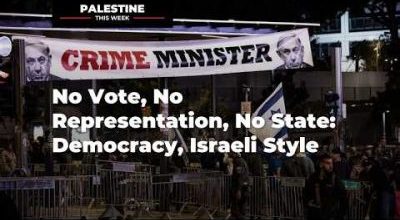
No Vote, No Representation, No State: Democracy, Israeli Style
or go to
Aletho News Archives – Video-Images
From the Archives
Sanctions, War and the Policy of Dual Containment
By SASAN FAYAZMANESH | March 17, 2008
It is now nearly three decades since the Unites States adopted the policy of dual containment of Iran and Iraq. While much has been written about the containment of Iraq, there has been very little in-depth analysis of this policy when it comes to Iran. In a book that is going to be released on March 31, 2008, entitled The United States and Iran: Sanctions, Wars and the Policy of Dual Containment (Routledge), I attempt to address this shortcoming by investigating when and why the US policy of containment of Iran came about, how it evolved, and where it stands today.[1] To the extent that Israel has been involved in US policy making, the study will also include the role that Israel has played in the containment of Iran. Also, since the fate of Iran has been inextricably linked to that of Iraq, occasionally the investigation will overlap with the containment of Iraq.
The policy of dual containment of Iran and Iraq originated during the Carter Administration, but it was not until the Clinton Administration that the expression “dual containment” became popular. … continue
Blog Roll
 Aletho News
- No Vote, No Representation, No State: Democracy, Israeli Style
- Zionist Bought Senate Blocks Information About American Citizens Killed By Israel
- While Gaza dominates the UN, these are the people keeping it alive
- New Report: “Scholasticide and Genocide in Gaza: Assessment, Testimonies and Legal Analysis”
- ‘THAAD Delusion’: Iran war exposes US missile shield limits – The Atlantic
- Moscow issues warning to NATO over Russian exclave
- Yes, the Iran war has destroyed Trump’s presidency
- The fallacy of US delusions about Iran’s economic collapse
- Hezbollah denies Syria cell link, warns of Israeli plan to sow discord
- The legacy of US sanctions, war, and occupation in Iraq
- If Americans Knew
- Mamdani releases plan to combat antisemitism and hate crimes in New York City
- Iran’s Revolutionary Guards Publish Letter to the American People
- DMFI launches $1 million ad campaign supporting Virginia’s Elaine Luria
- US Senate blocks resolution seeking report on Americans killed by Israel
- Israeli Attacks Kill Ten Palestinians in Gaza
- Massacre at Minab: The School That Became a Grave
- Israeli media: The IDF Shows It Doesn’t Turn a Blind Eye; It Actively Emboldens Settler Havoc
- As settlers ravage West Bank, Israeli forces kill 10 in Gaza – Daily Update
- New Report: “Scholasticide and Genocide in Gaza: Assessment, Testimonies and Legal Analysis”
- Ex-Biden officials are desperate for a Gaza scapegoat
- No Tricks Zone
- Green Energy Debacle: German Expert Professor Fritz Vahrenholt Warns Of Severe Economic And Social Consequences
- Two More Paleo Reconstructions Affirm Meters-Higher Sea Levels Across Ireland, Brazil 7000-6000 Years Ago
- New Study: Earth And Venus Surface Warmth Largely Explained By Convection And Lapse Rate, Not CO2 Or Radiation
- 2025 Nature Paper Claiming Worsening Global Drought Gets RETRACTED …Heavily Flawed
- New Study: ‘Global Drought Shows No Detectable Recent Acceleration Under Climate Warming’
- Economic Masterminds: German Socialists Suggest Taxing Productivity Gains Stemming From Using AI
- The South China Sea Has Not Been Cooperating With The Climate Change Narrative
- Energy Crisis: Germany Enters Heating Season With Historically Low Gas Reserve Fill Levels
- New Study: The Antarctic Ice Sheet Gained Mass From 2020-2024 Due To Staggering Snow And Ice Accumulation
- Study: Ocean Heating Rates From Thousands Of Years Ago ‘Dwarf’ Modern Ocean Heating Rates

