Both Major U.S. Parties are Plagues on Humanity
By Glen Ford | Black Agenda Report | July 1, 2015
There has never been a dime’s worth of difference between the Clintons (Bill and Hillary) and Barack Obama, and less than ten cents separates the worldviews of these Democratic political twins from the Bush wing of the Republican Party.
 Each has their individual quirks. Barack destroys international order and the rule of law while dabbling at song; Bill dismantled the U.S. manufacturing base and threw record numbers of Blacks in prison as he toyed with his trumpet; George W. played the fool who would Shock and Awe the world into obedience; and Hillary is the evil crone that curses the dead while screaming “We are Woman” like a banshee. But they are all the same in their corporate soullessness.
They all lie for a living, and they live to lie. Hillary Clinton commingled official and personal criminality through the medium of email. Knowing that, in a life dedicated to crime, she could never successfully sequester her private and public conspiracies, Hillary privatized all of her email correspondence during her tenure as Obama’s Secretary of State (in the perfect spirit of neoliberalism). The fate of millions of Haitians whose country’s earthquake and development “aid” are under the Clinton family thumb were doubtless bundled into the tens of thousands of messages she erased on leaving Foggy Bottom.
Republicans have harassed her ever since, seeking an electronic smoking gun to show Clinton’s cowardice or lack of resolve to “stand up for America” and “our troops” or some other nonsense. What the Benghazi affair actually proves is that the Obama administration was just as intent as the Republicans to maintain the fiction that the “rebels” put in power by seven months of NATO bombing of Libya were not various flavors of Islamic jihadists – some of whom were already turning on their erstwhile masters. The U.S.-Saudi project to create and nurture the international jihadist network is a bipartisan venture that dates back to Jimmy Carter’s presidency – and, therefore, nothing for Democrats and Republicans to fight about. However, the GOP’s churning of Clinton’s emails does provide a glimpse into her quest to run for president in 2016 as the woman who vanquished Muammar Gaddafi (“Qaddafi” or simply “Q” in Clinton’s usage).
A number of Clinton’s correspondences were with Sidney Blumenthal, a former Clinton family spin-master who wrote nasty things about Barack Obama while working for Hillary’s 2008 presidential campaign – which made it impossible for her to hire him at the State Department. Nevertheless, Clinton needed his talents for hype for the campaign ahead. Their emails in the summer of 2011 discussed how Hillary’s status as stateswoman could soar when the Libyan leader was finally eliminated. “This is a historic moment and you will be credited for realizing it,” wrote Blumenthal, feeding the crone’s huge gizzard of ego, according to an article in Monday’s New York Times. “You must go on camera,” wrote Blumenthal. “You must establish yourself in the historical record at this moment.” Hillary was anxious to seize the time to establish what Blumenthal described as “the Clinton Doctrine.”
The Times piece somehow concludes that Obama stole Clinton’s thunder with an 1,100-word speech, in late August, declaring: “The Gaddafi regime is coming to an end, and the future of Libya is in the hands of its people.” But Hillary best expressed the ghoulishness of America’s ruling duopoly two months later, in October, when Gaddafi was savagely butchered by screaming jihadists. “We came, we saw, he died,” cackled the banshee.
In the annals of global diplomacy, no more vulgar words have been spoken by a major power foreign minister or head of state. Yet, Clinton’s calculated quip perfectly encapsulates the bloodlust that is the common characteristic of both the governing duopoly of the United States and their suckling children in ISIS and the other proliferating al Qaida factions.
Thanks to Seymour Hersh, we now have a much more plausible scenario for the May 2, 2011, demise of Osama bin Laden, the “OG” of the U.S.-Saudi spawned global jihad, whose body will never be located. Virtually the entire U.S. account of his death is a lie, repeatedly contradicted on its own terms – another layer of fictional Americana in the age of empire in decline.
Clinton was hard-pressed to imagine how she might trump the president’s bin Laden death-watch extravaganza. Her opportunity came five months later, when she delivered her gruesome paraphrase of Julius Caesar on the occasion of Col. Gaddafi’s murder. In the context of Washington’s deeply racist foreign policy, Gaddafi and bin Laden were equally deserving of death, although Gaddafi was among the most fervent and effective fighters against Islamic jihadists: his government was the first in the world to request a global arrest warrant against bin Laden.
The Libyan Islamists were quickly transferred to the new U.S.-NATO-Saudi-Qatari front lines in Syria. The CIA station in Benghazi was at the center of the action – and got burned in the wild and unwieldy process of herding jihadists, who find it difficult to take orders from “infidels,” even when the “Crusaders” are paying the bills and supplying the weapons.
The U.S. consulate and CIA station in Benghazi were attacked on September 11, 2012. The next day, the Pentagon’s intelligence agency issued a report predicting that a “Salafist principality” – another term for an Islamic State – would likely arise in Syria as a result of the war, and that “Western countries, the Gulf States and Turkey are supporting these efforts.” Moreover, the establishment of such an Islamic “principality” would create “the ideal atmosphere for AQI [al Qaida in Iraq, which became ISIS, ISIL and the Islamic State] to return to its old pockets in Mosul and Ramadi” in Iraq – events that have since transpired.
The Defense Intelligence Agency report didn’t say so, but the “Western Powers” included the United States, through its CIA.
The document was declassified this year as the result of a suit by a libertarian right-wing legal outfit. The people of the world continue to be fed the fiction that the U.S. is engaged in a long, twilight struggle against al Qaida Salafists whose international network was created by, and continues to benefit from, “Western countries, the Gulf States and Turkey.”
However, the 2012 Pentagon warning about the rise of an Islamic State may have had some effect on U.S. policy in Syria. One year later, in September of 2013, President Obama backed off from his threat to bomb Syria in “retaliation” for a chemical missile attack against civilians – a crime much more likely committed by western-backed Salafists. The conventional wisdom is that the Russians tricked a hapless Secretary of State John Kerry into agreeing to the peaceful, internationally supervised destruction of Syria’s chemical arsenal; or that the refusal of Britain’s Parliament to go along with an air assault on Syria made the U.S. position untenable; or that Obama feared losing a vote on the issue in the U.S. Congress. None of this rings true to me. The United States is not easily deterred by the opinions of Europeans, who in the end accept Washington’s acts as a fait accompli. And, it was not clear that Obama would have lost the vote in Congress – a vote that he requested, while at the same time declaring that he did not need the legislature’s permission to “punish” Syria for crossing his “red line.”
I think that high Pentagon officials and elements of the Obama administration – probably including the president, himself – took the Benghazi disaster and the Defense Intelligence Agency report to heart, and decided that it was better to keep bleeding the Syrians and their Russian, Lebanese and Iranian allies through a prolonged war, than to bomb al Qaida into power. For the U.S., regional chaos is preferable to the triumph of the, ultimately, unmanageable Salafists – unchained.
The thirty-plus year war against Iran would, however, be ratcheted up. The Bush administration was snatched back from the brink of a military assault against Teheran in 2007 when – to the great consternation of Vice President Dick Cheney – all 16 U.S. intelligence agencies declared, publicly and unanimously, that Iran had abandoned its nuclear weapons program, years before.
The spooks reaffirmed their consensus in the 2010 National Intelligence Estimate – again, that there was no evidence Iran has any intention of making a bomb. The Obama administration has since avoided asking the intelligence agencies for their analysis on the issue, knowing they would get the same answer. Instead, they rely on Israeli propaganda, pick and choose various “experts” from inside and outside the arms control “community,” or simply put forward unsupported statements on Iran’s capabilities and intentions: the Big Lie. While Bush was humiliated by facts supplied by his own intelligence experts, Obama has escalated the confrontation with Iran, applying crippling sanctions and the whole range of low-level warfare, in close collaboration with Israel – proving, once again, that Obama is the “more effective evil.”
Obama has nearly completed knocking off victims on the “hit list” of countries that George Bush was working on when General Wesley Clark ran across it in 2002. Iraq, Syria, Libya, and Somalia have been invaded since then, and Sudan was stripped of a third of its territory. Only Iran and Lebanon remain intact and outside the U.S. imperial umbrella.
The Republican-Democratic duopoly plays tag-team in promoting the Project for a New American Century – a doctrine promulgated by neo-conservatives in 1997 that has served as the guiding light of both the Bush and Obama administrations. The differences between the two teams are merely rhetorical. The Bush regime is described as “unilateralist,” although it employed the same “Coalition of the Willing” approach to aggressive war as does the Obama administration. President Obama claims the right to disregard and methodically undermine international law through “humanitarian” military intervention, whereas Bush claimed to be “spreading democracy.” Same weapons systems, same mass murder, same objective: U.S. domination of the planet.
There’s nothing democratic or humanitarian about the U.S. imperial project. Therefore, its maintenance requires the deployment of 24-7 psychological operations worldwide, but directed primarily against the U.S. public.
Republican strategist Karl Rove was far more honest than his Democratic counterparts when he explained to a reporter, back in 2004:
We’re an empire now, and when we act, we create our own reality. And while you’re studying that reality—judiciously, as you will—we’ll act again, creating other new realities, which you can study too, and that’s how things will sort out. We’re history’s actors … and you, all of you, will be left to just study what we do.
Election seasons are reality-creation festivals, during which the two corporate parties pretend to put forward different visions of the national and global destiny – when, in fact, they answer to the same master and must pursue the same general strategy.
The continuity of GOP-Democratic rule – the near-identical depravity – is horrifically evident in the Democratic Republic of Congo, where six million people have been slaughtered by U.S. surrogates since 1996: the largest genocide since World War II. Successive U.S. administrations – Bill Clinton, George W. Bush, and Barack Obama, assisted by Secretary of State Hillary Clinton and Susan Rice, the high U.S. official most deeply implicated in the entirety of the genocide – have armed, financed, and covered up the Congolese holocaust. Each administration has collaborated with its predecessor to hide the crime and obscure the question of guilt – and then to continue the killing.
Decent people do not vote for political parties that produce such fiends, who deserve Nuremburg justice of the capital kind. Any talk of “lesser evils” is both stupid and obscene.
BAR executive editor Glen Ford can be contacted at Glen.Ford@BlackAgendaReport.com.
The General Dynamics, Saudi Arabia contract and Canada’s moral regress
By Mitchell Thompson | Disinformation | June 28, 2015
With the case of the Canadian-brokered General Dynamics light armored vehicle sale to the Saudi Arabian government, Canada’s manufacturing sector has become complicit in human rights abuses abroad.
The question of benefit could be framed like this: is General Dynamics employing more people than its equipment is killing?
The Globe and Mail reported that Ed Fast, Canada’s Minister of International trade said, the deal will help the manufacturing area in London to “become the epicentre of a cross-Canada supply chain directly benefiting more than 500 local Canadian firms… Our government will continue to support our exporters and manufacturers to create jobs, as part of our government’s most ambitious pro-trade, pro-export plan in Canadian history.”
That export plan, justified by job-creation involves the sale of light armoured vehicles, manufactured in Canada that the Globe and Mail describes as having “effective firepower to defeat soft and armored targets… options for mounted guns include a 25-mm cannon and 7.62-mm machine guns and smoke grenade launchers.”
The Ottawa Citizen reports that:
“Canada’s defence industry has beaten out German and French competitors to win a massive contract worth at least $10 billion US to supply armoured military vehicles to Saudi Arabia.
The win was announced by International Trade Minister Ed Fast to cheering workers Friday at a factory in London, Ont., and will go a long way in bolstering the Harper government’s case for transforming Canada into a global arms dealer.
But it also raises many ethical questions that will continue to surface as Canada’s arms industry turns more and more to the volatile Middle East and South America for business.
Canada has previously sold light armoured vehicles (LAVs) like those used by Canadian soldiers in Afghanistan to Saudi Arabia, with more than 1,000 delivered to the Middle Eastern kingdom in the early 1990s, and 700 more in 2009.
But the government is touting this latest deal as the largest export contract in Canadian history, with the potential to create and sustain 3,000 jobs in southern Ontario and other parts of the country.
Exactly how many LAVs are being sold to Saudi Arabia was not being revealed, but documents filed in the U.S. by General Dynamics Land Systems – Canada, whose London-based subsidiary will be building the vehicles, put the contract at between $10 billion and $13 billion.
Defence and export industry representatives praised the Conservative government Friday for its role in securing the deal.”
The job creation argument that Canada is using stands even more oddly next to the moral cost of the deal, given Saudi Arabia’s human rights record.
Alex Nieve, Secretary General of Amnesty International told the Globe that “[The Saudi government is] known to use armoured vehicles and other weapons in dispersing peaceful protest.”
Jonathan Manthorpe writes for IPolitics that “The Saudi regime is buying these vehicles not to defend the nation from foreign threats, but to protect the regime from Saudis — from internal dissent and demands for reform.”
Hillary Homes of Amnesty told the Globe that “[Saudi Arabia] is among the worst human-rights violators in the world.”
Canada’s support of the Saudi abuse is bad enough, what’s worse is its insistence that working Canadians become participants. The government says it wants this sort of arms manufacturing as the epicentre of a cross-Canada supply chain with connections to over 500 firms. Is that really something Canada wants as an epicentre of any part of its economy?
Let’s consider what that means. If the epicentre of a sector of the manufacturing industry is dependent on the manufacturing of equipment for a third world dictatorship, continued economic progress for that sector would require that government to use that equipment. Canadians would have an interest in the Saudi Arabian government using its old equipment, so it can buy new equipment, made in Canada.
If Amnesty and others are correct, that the equipment that we manufacture will likely be used against civilians and a sector of our economy depends on that manufacturing- that means that a sector of our economy would be dependent on those abuses.
There are good people working in manufacturing. Having their work emanate from third world dictatorships perverts the entire sector. Working people should not be forced to participate in such an exchange, to remain economically viable.
Honduras Bleeding
The Coup and Its Aftermath
By ERIC DRAITSER and RAMIRO S. FUNEZ | CounterPunch | June 29, 2015
June 28 marked the six year anniversary of the military coup in Honduras – the day that a democratically elected left wing government was ousted by a US-backed, US-trained cabal of generals and right wing politicians and landowners. It could correctly be called a “Quiet Coup” primarily because it took place with very little fanfare from the corporate media which, to the extent that it covered it at all, did so mostly from a distorted perspective which spread more misinformation than truth. Today, six years (and many innocent lives, and billions of dollars) later, this shameful moment in recent history still remains largely forgotten.
Perhaps it was the lingering euphoria felt by liberals and so-called progressives in the months after Obama’s election and inauguration. Perhaps it was the still new economic crisis and subsequent bailout and financial turmoil. Perhaps it was plain old imperialistic, neocolonial disregard for Latin America and the rights of the people unfortunate enough to be living in “America’s backyard.” Whatever the reason, the fact remains that the Obama administration and those who supported it, then and now, are complicit in an ongoing political, economic, and social tragedy in Honduras.
But why bring it up now, other than to mark the anniversary of the coup? For starters, because one of the primary participants and benefactors happens to be the likely Democratic Party presidential candidate: Hillary Clinton. Also, far from being a discrete episode of US imperialism’s sordid past, the coup and its legacy remain a driving force in Honduran politics and society today. The beneficiaries and participants are all still either in government or have shifted to the private sector, and continue to enrich themselves at the cost of the poor and working people of the country [though alleged coup orchestrator Miguel Fucase just died]. The coup government of Honduras continues to wage a brutal campaign of ethnic cleansing against minority communities to benefit itself and its patrons from the US and elsewhere.
Perhaps most importantly, the coup of 2009 reveals the extent to which the United States remains a neocolonial, imperial power in Latin America, and reminds us of just what countries like Venezuela, Bolivia, and Ecuador have been struggling against. It illustrates in the starkest terms the human cost of Washington’s policies, not in books about a historical period, but in images and videos of a country under its thumb today. It reminds us just how real the struggle still is.
The Coup and the US Role
The 2006 election of José Manuel Zelaya, known as “Mel” to his friends and supporters, was a watershed moment in the history of Honduras. A country that, like its neighbors, suffered under a succession of US-backed right wing governments, had finally elected a man whose politics were of the people, rather than of the military and business interests. Despite coming from a wealthy family, and having been elected under the Partido Liberal (Liberal Party) banner, Zelaya’s politics shifted significantly to the left once he assumed office.
Not only did Zelaya commit the great sin of forging ties with the late Venezuelan President Hugo Chavez and his ALBA (Bolivarian Alliance for the Peoples of Our America) and PetroCaribe blocs, but Zelaya challenged the political status quo in the country, promising to represent the poor and working class in a country traditionally dominated by wealthy landowners and the military. As journalist, author, and former adviser to the Permanent Mission of Honduras at the United Nations, Roberto Quesada, told Counterpunch in an exclusive interview:
When Zelaya came into power, even though he was in a traditional party, he changed the traditional politics of the Liberal Party and made it into a people’s party. He turned the presidential palace into a house for the people…For the first time those without voices were given a voice…He wanted to introduce the Cuarta Urna [Fourth Ballot Box Referendum]. For the first time the Honduran people could decide what they wanted and change the constitution [because]…the constitution of 1982 was in favor of the right wing and was not in the interests of Hondurans.
And so it seemed in 2009 that Honduras, like Venezuela, Bolivia, Ecuador, and Nicaragua before it, would legally and democratically break free of the political and corporate hegemony of the US. Clearly this was something that Washington, even with the newly elected president of “Hope” and “Change” in the White House, could not abide. Enter: then newly appointed Secretary of State Hillary Clinton.
Clinton has since admitted openly, and quite brazenly, her central role in legitimizing, supporting, and providing political cover for the illegal, and internationally condemned, coup against Zelaya. As Counterpunch contributor Mark Weisbrot has noted, Clinton stated clearly in her book Hard Choices that, “In the subsequent days [after the coup] I spoke with my counterparts around the hemisphere, including Secretary [Patricia] Espinosa in Mexico… We strategized on a plan to restore order in Honduras and ensure that free and fair elections could be held quickly and legitimately, which would render the question of Zelaya moot.”
What exactly was the plan? Aside from providing diplomatic cover by not openly calling it a military coup, Clinton employed her longtime associates Lanny Davis and Bennett Ratcliff who whispered sweet nothings in the ears of the right people in Washington and on Wall Street, including in a laughable op-ed in the Wall Street journal, thereby paving the way for new “elections” in Honduras, in order to, as Clinton put it, “render the question of Zelaya moot.” Lanny Davis, as has been noted by a number of journalists, is a direct representative of powerful business elites in Honduras.
Davis himself explained this fact in an interview just weeks after the coup when he stated, “My clients represent the CEAL, the [Honduras Chapter of] Business Council of Latin America… I do not represent the government and do not talk to [interim] President [Roberto] Micheletti. My main contacts are [billionaires] Camilo Atala and Jorge Canahuati. I’m proud to represent businessmen who are committed to the rule of law.” Indeed, Davis quite candidly exposed himself as an agent of powerful oligarch financiers and landowners who, until the election of Zelaya, had always maintained firm control of the reins of government in Honduras.
Essentially then, Clinton and her henchmen played the key role in facilitating an illegal coup against a democratically elected government in the interests of their billionaire friends inside Honduras, and the geopolitical agenda of the United States in the region. Though she is busy employing populist rhetoric in her presidential bid these days, Clinton has done yeoman’s work for the right wing, anti-democratic forces of Latin America, and the Empire broadly speaking. Of course, none of this should come as any surprise to people who have followed Clinton, and US imperialism in Latin America for that matter.
Equally unsurprising is the US role in the training and backing of the Honduran generals who carried out the coup on that early morning in late June 2009. As School of the Americas Watch (SOAW) noted at the time:
The June 28 coup in Honduras was carried out by the School of the Americas (SOA) graduates Gen. Romeo Vásquez Velásquez, the head of the of the Joint Chiefs of Staff of the Honduran military and by Gen. Luis Prince Suazo, the head of the Air Force… SOA-trained Honduran Army Attorney Col. Herberth Inestroza justified the military coup and stated in an interview with The Miami Herald ‘It would be difficult for us, with our training, to have a relationship with a leftist government. That’s impossible.’ Inestroza also confirmed that the decision for the coup was made by the military… According to information that SOA Watch obtained from the US government through a Freedom of Information Act request, Vasquez studied in the SOA at least twice: once in 1976 and again in 1984…The head of the Air Force, General Luis Javier Prince Suazo, studied in the School of the Americas in 1996.
The School of the Americas (since renamed Western Hemisphere Institute for Security Cooperation, aka WHINSEC) is a US military institute located at Fort Benning, Georgia infamous for graduating a literal who’s who of Central and South American military dictators, death squad leaders, and other assorted fascists who left their bloody marks on their respective countries. It’s been called the “School of Dictators” and a “coup factory,” and it seems that Honduras in 2009 was merely the latest victim of its illustrious alumni. Indeed, this was not the first time for Honduras, as both General Juan Melgar Castro (military dictator, 1975-1978) and Policarpo Paz Garcia (death squad leader and then military dictator, 1978-1982) were graduates of the School of the Americas. Needless to say, the legacy of the United States in Honduras is a bloody and shameful one.
Honduras: A US Military Foothold in Central America
One should not be fooled into believing that since 2009 and the US-backed coup and subsequent regime change, somehow the US has not been involved militarily inside Honduras. Indeed, just weeks ago the US military announced that it would be sending a contingent of US Marines to Honduras, ostensibly to “provide assistance during hurricane season.” However, the reality is that the US is merely continuing, and indeed expanding, its ongoing military partnership and de facto occupation of Honduras and a number of other key Central American countries.
In an exclusive interview with Counterpunch, the US Coordinator of the National Popular Resistance Front (FNRP) and Refoundation Party (LIBRE), Lucy Pagoada succinctly explained, “The coup forced us to wake up to the reality of Honduras. I lived in Honduras until I was 15 years old. I’ve never seen my country so militarized as the way it has become after 2009. It has turned into a large military base trained and funded by the US. They even have School of the Americas forces there… There have been high levels of violence and torture since the coup against the resistance and the opposition.” According to Pagoada and other activists both in Honduras and in the US, the country has essentially become an annex of the US military, acting as a staging area for a variety of Washington’s military operations in the region.
This conclusion is confirmed by a report from the North American Congress on Latin America (NACLA) which noted:
The steady increase of U.S. assistance to [Honduran] armed forces [is] an indicator of tacit U.S. support. But the U.S. role in militarization of national police forces has been direct as well. In 2011 and 2012, the Drug Enforcement Administration’s Foreign-deployed Advisory Support Team (FAST)… set up camp in Honduras to train a local counternarcotics police unit and help plan and execute drug interdiction operations… Supported by U.S. helicopters mounted with high caliber machine guns, these operations were nearly indistinguishable from military missions, and locals routinely referred to the DEA and Honduran police agents as “soldados” (soldiers). According to the New York Times, five “commando style squads” of FAST teams have been deployed across Central America to train and support local counternarcotics units…In July 2013, the Honduran government created a new “elite” police unit called the Intelligence Troop and Special Security Group, or TIGRES (Spanish for “tigers”). The unit, which human rights groups contend is military in nature, has been deployed in tandem with the new military police force and has received training in military combat tactics from both U.S. and Colombian Special Forces units.
For those with even a cursory understanding of how US support for the contra death squads of Central America in the 1970s and 1980s actually worked, the description above should bear a chilling resemblance. Essentially, US military and covert assets provide the arms, training, and coordination for a patchwork of well-organized units whose function is to terrorize communities whose real crime, far from involvement in drug trafficking, is either opposition to the government or having the misfortune of living on valuable real estate prized by the same business interests that Mrs. Clinton and her cronies represent.
Of course, the US military presence has a regional dimension as Washington attempts to use its assets to reassert and/or maintain control over the entire region which it has seen steadily slipping from its grasp since the election of Hugo Chavez more than 15 years ago, and the subsequent rise of Evo Morales in Bolivia, Rafael Correa in Ecuador, and Daniel Ortega in Nicaragua. But, from the strictly Honduran perspective, this military cooperation is intended to provide the Honduran military, now doubling as internal police and security forces, with the necessary support to carry out ethnic cleansing operations and killing of political opponents in order to make the country safe for business.
Cleansing Honduras for the Sake of Profit
The military operations in Honduras are aimed primarily at enriching the oligarchs running the country since the ouster of Zelaya in 2009. The goal is to ethnically cleanse prime real estate, either through eviction or brute force, in order to free it up for privatization. One of the means by which this is taking place is through the so called “Ciudades Modelos” (Model Cities) program which promotes tax-free business havens for newly privatized land seized from indigenous communities.
One of the communities most deeply affected is the Garifuna, an Afro-indigenous nation whose land stretches hundreds of miles of prime real estate on the Honduran Carribbean coast which the corrupt government of President Hernandez, and his financial backers in Tegucigalpa (the Honduran capital) and the US, envisions as a money-making tourist zone. TeleSur noted in 2014 that the Barra Vieja Garifuna community was under eviction threat by the Honduran government which prized their land for the “further development of the Bahia de Tela tourist project and the building of the five star Indura Beach and Golf Resort. In a business alliance, the Honduran government holds 49 percent of the shareholds for the project while 51 percent is in the hands of private business.” New York City alone is home to roughly 250,000 Garifuna people from Honduras, Nicaragua, Guatemala, and Belize; they have to watch as their families and friends back in Honduras continue to face persecution at the hands of a right wing government serving business interests from the US and elsewhere.
But of course, the Garifuna are not alone, as many other indigenous communities in Honduras face unspeakable repression at the hands of the militarized Honduran government and its 21st Century version of death squads. As Lucy Pagoada recounted in her interview with Counterpunch, “Margarita Murillo, an indigenous woman, dedicated her life to the defense of the land and the workers. She was killed with seven bullets by her home in the department of Yoro… She was a leader of the resistance.”
Indeed, the brutal assassination of Murillo in August 2014 was yet another chilling reminder of the war waged by the Honduran government on peasants and indigenous people in the country who refuse to be displaced in the interests of the business elites. Murillo, who had just recently been named President of the Asociativa Campesinos de Producción Las Ventanas (Window Production Peasants Association), had been an advocate for her fellow indigenous peoples and the poor, and had been involved in mediating a land dispute between a number of local families and a group of wealthy landowners in the area. She was shot execution-style by a group of three men in ski masks.
Murillo’s assassination was far more than simply a murder motivated by a local land-grab. Rather, it was a clear warning to the resistance movement in Honduras that any organized effort to fight back against the government and the wealthy landowners backing it would be met with brute force. This is the sort of message that the people of Honduras, especially those who lived through the 1970s and 1980s, understand all too well. In fact, such violence, and the despair that it produces, has driven many Hondurans, especially from the Garifuna community, to flee to the US in search of a better life.
Maria Vives is an administrative assistant with the Give Them to Eat ministries of the Bronx Spanish Evangelical Church. Speaking with Counterpunch she recalled:
We have a soup kitchen and food pantry. We help people on an emergency basis… Three Garifuna women showed up last summer and expressed needs—they were frustrated. They have [sic] been caught crossing the border and ankle bracelets have [sic] been put on them. They were shackled… Word spread that we were helping people in need and soon we had a total of almost 50 or 60 women who show up with their children… They have several reasons for leaving Honduras. For the violence, they were killing off a lot of people in the neighborhood because they wanted to take over their lands. Some were scared their children would join gangs. As soon as the children reach a certain age they were recruited to join the gang. I know one mother in particular who brought over her three children because one of them was being recruited into the gang.
Although the corporate media constantly referred to the “child immigration crisis” during its brief coverage in 2014, the reality was that it was a refugee crisis, and that those children, at times accompanied and at times unaccompanied, were fleeing precisely the sort of repression described above. Whether Garifuna or members of other indigenous or peasant communities, those children and families sought refuge in the US, refuge from the horrors perpetrated against them in Honduras; of course, all with the tacit approval and covert participation of the US Government.
As we mark the sixth anniversary of the 2009 coup against the legal government of Honduras, we must be sure to not simply recognize the event as yet another despicable example of US imperialism and its support for repressive governments in Latin America. We must instead recognize that that singular event set into motion a series of events which have led to the political and social crisis ongoing in Honduras today. As Roberto Quesada told us, “We can’t talk about the coup as if it is in the past. It continues to leave the country in a state of chaos.”
Eric Draitser is the founder of StopImperialism.org and host of CounterPunch Radio. He is an independent geopolitical analyst based in New York City. You can reach him at ericdraitser@gmail.com.
Ramiro S. Fúnez is a Honduran-American political activist and independent journalist based in new York City. You can reach him at ramirofunez@gmail.com.
‘Nonsense’: Norway PM lashes out at NATO spending goals
RT | June 29, 2015
The prime minister of Norway, Erna Solberg has described NATO’s defense spending plans as “nonsense.” The alliance wants members to spend two percent of their GDP on defense, but Oslo, one of the world’s richest countries, says it won’t meet the target.
“If I am allowed to speak, I think the percentage goal is nonsense,” she said in an interview with the Norwegian Armed Forces’ Forum Magazine, as cited by the Local. “The aim of the NATO countries must be the greatest possible defense capability, not a percentage goal in itself,” she added.
Solberg added that while meeting the two percent target may be easier for countries enjoying strong economic growth, it would be harder for those within the alliance whose economies are shrinking.
Norway’s Defense Minister Ine Eriksen Soreide said in April that for Oslo to spend 2 percent of its GDP on defense would be “very challenging” in the short term. The Scandinavian country has already said it will increase its spending this year, but this will only bring it to around 1.6 percent and short of the target that was set at the NATO summit in Cardiff, the United Kingdom, last year.
NATO’s General Secretary Jens Stoltenberg, who was also Solberg’s predecessor as Norway’s PM, said that the country could easily meet the target.
“If there is a political will, there is economic space. But it must be given priority,” he said in a visit to Norway in June. “Compared with other major initiatives we have implemented in Norway, reaching two percent is quite possible.”
Aside from the United States, traditional NATO allies have found meeting the target a taxing affair. Germany allocates 1.2 percent of its GDP, the Netherlands 1.3 percent and Spain less than 1 percent. France is the only Western European country that is boosting defense spending. However, some Eastern European nations are increasing their military expenses citing what they call Russian aggression. Lithuania, for instance, wants to allocate twice as much on defense as it did last year.
READ MORE: NATO defense spending a ‘red line’ – US Air Force Secretary
Ukraine Masses Troops on Border With Transnistria
Sputnik – 28.06.2015
Ukraine continues to mass troops and heavy weapons on the border with Transnistria on the pretext that the self-proclaimed republic may launch a military campaign against Ukraine, Russian media reported on Saturday.
“It looks like the Kiev authorities want to picture themselves as encircled by enemies, ready to attack,” a representative of the Transnistrian KGB told Russia’s Zvezda TV channel.
“That we may have a war here tomorrow is hard to say, but we are not ruling out a Ukrainian provocation either… They could use for this purpose one of their many small private armies which refuse to take any orders from Kiev,” the official added.
On June 22, the deputy foreign minister of the Transnistrian Republic, Vitaly Ignatyev, said that Ukraine was moving its troops towards the borders of the self-proclaimed republic, sandwiched between Ukraine and Moldova.
“The situation here is very bad… Economic production is going down, foreign trade is shrinking, the security situation is equally alarming with our Moldovan partners holding military drills with NATO and the Ukrainian pressure mounting every day,” Ignatyev said.
He also mentioned the curbs Kiev has imposed on the transit of Transnistrian nationals and citizens of Russia, almost 200,000 of whom currently live in Transnistria.
“They haven’t been able to travel to Russia via Ukraine for more than a year now. They have to move across Moldova, but Chisinau is creating problems too, along with economic sanctions,” Ignatyev added.
The newly appointed governor of Ukraine’s Odessa region Mikheil Saakashvili earlier announced plans to reinforce Ukraine’s border with Transnistria.
“We have two major tasks — to reinforce the border and curb corruption. Drug and weapons trafficking across this border means nothing good,” Saakashvili told a news conference in Odessa.
He also blamed the Transnistrian authorities for destabilizing the situation in Ukraine.
“Sewer Socialist” Bernie Sanders’ Anti-Russian Propaganda
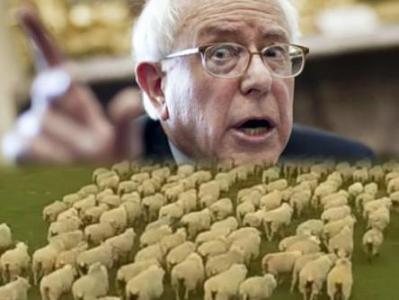
By Caleb Maupin – New Eastern Outlook – 28.06.2015
The presidential campaign of Bernie Sanders — an anti-Russia, Israel-supporting politician from Vermont — revives an archaic feud among leftists. The old debate about “sewer socialism” is back.
In the early part of the 20th century, there was a broad movement of people in the United States who advocated the overthrow of capitalism. Among them were many revolutionaries like Eugene Debs, William Z. Foster, Lucy Parsons, and Paul Robeson.
However, there was another current of people who called themselves “socialists” but had no interest in revolution. They were called “sewer socialists.” The term originated in reference to Victor L. Berger, a “socialist” who ran on a platform of improving the city’s sewer system and eventually became the mayor of Milwaukee. The sewer socialists did not want to overthrow capitalism, but simply to be elected to local public office and improve government policy. They wanted to make a global system built on exploitation of people all over the world a little more comfortable for those living within the western economic centers.
The battle between these two poles of the left movement – with the revolutionary and anti-imperialist wing of socialism on the one hand and the “sewer socialist” wing on the other — played out on a global level. Commenting on the debate, Russian socialist revolutionary Vladimir Lenin described the trend this way: “The bourgeoisie of an imperialist ‘Great’ Power can economically bribe the upper strata of ‘its’ workers by spending on this a hundred million or so francs a year, for its superprofits most likely amount to about a thousand million… this little sop is divided among the labour ministers, ‘labour representatives’… labour members of War Industries Committees… labour officials, workers belonging to the narrow craft unions…”
In the modern United States, it isn’t sewer socialism but “Vermont socialism” that plays the role of the ‘Labor Ministers.’ US Senator Bernie Sanders is running for president, and openly describes himself as a “socialist.” Despite using this word to describe himself, with many well intentioned anti-capitalist activists supporting him, Sanders’ platform in reality articulates a strategy for strengthening global monopoly capitalism and its expanding militarism.
Big Oil’s Campaign Against Russia
Currently, Wall Street is doing all it can to suppress Russia, a rising competitor on the global markets. US oil and natural gas corporations in particular want to attack and isolate the Russian Federation, as hydraulic fracking floods the market and drives down oil prices and profits. As Russia stabilizes and expands, continuing to export more and more natural gas, big business desperately needs to purge the country’s oil from the global market.
In service of the western oil and natural gas cartels, US agents overthrew the democratically elected government of Ukraine. The orgy of street violence in Kiev that deposed Yanukovich was conducted with the direction of the CIA and billions of dollars in US funding. In Ukraine, the intervention of the United States has pushed a formerly peaceful country into civil war and installed a fanatically anti-Russian government. Russia now faces a hostile, US-aligned regime directly on its doorstep. Civil war is unfolding as the peoples of eastern Ukraine have taken up arms against it.
US-funded terrorists are waging a campaign of death and destruction in Syria, another Russian-aligned country. Hundreds of thousands have already been killed. The US and its allies in Turkey, Saudi Arabia, and Jordan continue to pour money into the so-called “Free Syrian Army” — a group that openly tortures, kidnaps, and beheads innocent people, and has a history of collaborating with ISIS.
Despite giving demagogic anti-corporate speeches, Sanders brags that he is even more in line with big oil’s anti-Russia campaign than President Obama. “The entire world has got to stand up to Putin. We’ve got to deal with sanctions, we’ve got to deal with freezing assets,” he declared in a TV interview with FOX news host Bill O’Reilly.
In the same interview, he declared: “You’ve got to totally isolate them politically. You’ve got to totally isolate them economically… You freeze assets that the Russian government has all over the world… International corporations have huge investments in Russia, you could pull them out…”
A “Socialist” who Loves War and Israel
Sanders is very much a friend of the military industrial complex. In his home state of Vermont, Sanders “rarely misses a photo opportunity with Vermont National Guard troops when they are being deployed to Afghanistan or Iraq.” While criticizing Bush’s invasion of Iraq, Sanders consistently votes for the massive US military budget. In fact, Sanders is vocally very supportive of Obama’s drone strikes program, and has worked to bring US military research corporations into his home state to set up facilities.
As a highly rated ally of the American-Israeli Public Affairs Committee, Sanders has consistently voted and spoken out in support of Israel. When criticized for it, he often replies with standard Israel lobby talking points, saying things like, “Hamas is sending missiles into Israel… some of those missiles are coming to populated areas…” Other than vaguely saying that Israel may have “overreacted,” he blatantly supports and defends Israeli military policy.
Sanders openly believes that the Palestinian resistance to Israeli occupation is “terrorism,” and that the existence of a “Jewish state” on Palestinian land is somehow ethical. In his 2013 interview with Playboy, he declared: “The Palestinians must fulfill their responsibilities to end terrorism against Israel and recognize Israel’s right to exist.”
A Friend of the Rising Police State
As a loyal ally of military corporations, he not only supports their war against people in Ukraine, Syria, and Palestine, but also their profitable activities at home. Big business is making huge profits from a prison industrial complex as well as the rapid expansion of the role of police in US society. As police patrol the halls of elementary schools, and “stop and frisk” people on the streets without probable cause, it is young African-Americans who are their primary targets.
Sanders has never been an opponent of the prison industrial complex or the rising incidents of police violence. In Michael Moore’s 2009 film “Capitalism: A Love Story,” Moore interviewed Sanders and asked him to explain what it meant to be a socialist. Sanders responded with a vague, populist rant in which he portrayed the police as victims: “We’ve become very religious in worshipping greed. We put on the front pages of magazines guys who have made millions of dollars, we ignore the cops… who every day are doing so much in improving the lives of people.”
More recently, in response to the massive uprising against police brutality and mass incarceration in the United States, Sanders has declared: “Look, the issue here is…. I was a mayor for eight years, and being a cop is a very, very difficult job. But the word has got to get out that when police act inappropriately, and of course in this case there has to be a thorough investigation.” Sanders gives standard, Obama-style talking points on the issue, saying he supports “body cameras” and wants more community cooperation and involvement with police departments.
Inevitably, whenever the issue of police brutality is raised, Sanders changes the subject to economics. In response to the Baltimore uprising after the killing of Freddie Grey, Sanders declared, without ever even mentioning Grey’s name: “In the neighborhood where this gentleman lives, as I understand it, the unemployment rate is over 50 percent, over 50 percent. What we have got to do as a nation is understand that we have got to create millions of jobs, to put people back to work, to make sure that kids are in schools, and not in jails…. so they’re not hanging out on street corners.”
No one can deny that unemployment is a huge problem, especially for Black and Brown communities in the United States. However, Eric Garner wasn’t choked to death by a bill collector. The direct issue at hand is the fact that police officers have essentially been given a “license to kill” by the courts, and routinely face no penalty after blatantly and intentionally killing people of color.
By diverting the conversation to economics and not calling out the police in harsh terms, and then using racially loaded phrases like “hanging out on street corners,” Sanders is essentially saying: “If only Black people had more economic opportunities, they wouldn’t be worthless, low-life criminals who the police have to kill.”
A Bigger Slice of Empire?
Often Bernie Sanders is asked what it means to be a socialist. He does not respond with a call for public management of the economy, “workers’ control of the means of production,” a workers and farmer’s government, or any of the definitions of “socialism” used by socialists historically. Instead, he talks about Norway, Sweden, and other US-aligned imperialist countries. He emphasizes that these countries have a national health service, and provide free university education. […]
Sanders’ political viewpoint, based on his experience of decades in governing his home state — where only 1.2% of the population is Black — has been: “If we give white middle class Americans a bigger slice of the pie, they will be far more willing to line up with Wall Street against Russia, China, Iran, and the Palestinians.”
Lenin accurately described leaders like Sanders as “opportunists and social-chauvinists,” saying, “They are defending the temporary privileges of a minority of the workers…” Back in 1916, Lenin urged his followers to “go down lower and deeper, to the real masses… teach the masses to appreciate their true political interests, to fight for socialism and for the revolution.”
The following year, Lenin and the Bolsheviks were victorious. Capitalism, along with its mischievous and demagogic defenders like Bernie Sanders, was overthrown in Russia. That was nearly 100 years ago. How this battle will play out among 21st-century leftists remains to be seen.
Caleb Maupin is a political analyst and activist based in New York. He studied political science at Baldwin-Wallace College and was inspired and involved in the Occupy Wall Street movement.
Featured Video
No Vote, No Representation, No State: Democracy, Israeli Style
or go to
Aletho News Archives – Video-Images
From the Archives
Sanctions, War and the Policy of Dual Containment
By SASAN FAYAZMANESH | March 17, 2008
It is now nearly three decades since the Unites States adopted the policy of dual containment of Iran and Iraq. While much has been written about the containment of Iraq, there has been very little in-depth analysis of this policy when it comes to Iran. In a book that is going to be released on March 31, 2008, entitled The United States and Iran: Sanctions, Wars and the Policy of Dual Containment (Routledge), I attempt to address this shortcoming by investigating when and why the US policy of containment of Iran came about, how it evolved, and where it stands today.[1] To the extent that Israel has been involved in US policy making, the study will also include the role that Israel has played in the containment of Iran. Also, since the fate of Iran has been inextricably linked to that of Iraq, occasionally the investigation will overlap with the containment of Iraq.
The policy of dual containment of Iran and Iraq originated during the Carter Administration, but it was not until the Clinton Administration that the expression “dual containment” became popular. … continue
Blog Roll
 Aletho News
- Americans are paying the price to preserve Israel’s nuclear hegemony
- Resistance factions are necessary to ensure a permanent US Iraq withdrawal
- How Israel destabilizes the Middle East: Denying sovereignty and the right to exist
- Europe’s Establishment Is Embracing War – and Losing Voters
- NATO chief advocates war of aggression
- No Vote, No Representation, No State: Democracy, Israeli Style
- Zionist Bought Senate Blocks Information About American Citizens Killed By Israel
- While Gaza dominates the UN, these are the people keeping it alive
- New Report: “Scholasticide and Genocide in Gaza: Assessment, Testimonies and Legal Analysis”
- ‘THAAD Delusion’: Iran war exposes US missile shield limits – The Atlantic
- If Americans Knew
- Israeli former leaders and security chiefs threaten legal action over ‘Jewish terrorism’
- Israel map in LA Times ad includes all land from the river to the sea
- Inside Lebanon’s 200-page dossier on Israeli war crimes
- Flydubai, genocide, settler violence, Trump abuse of power to deport – Daily Update
- Counting Antisemitic Incidents: What the ADL Audit Reveals — and Obscures
- Mamdani releases plan to combat antisemitism and hate crimes in New York City
- Iran’s Revolutionary Guards Publish Letter to the American People
- DMFI launches $1 million ad campaign supporting Virginia’s Elaine Luria
- US Senate blocks resolution seeking report on Americans killed by Israel
- Israeli Attacks Kill Ten Palestinians in Gaza
- No Tricks Zone
- Green Energy Debacle: German Expert Professor Fritz Vahrenholt Warns Of Severe Economic And Social Consequences
- Two More Paleo Reconstructions Affirm Meters-Higher Sea Levels Across Ireland, Brazil 7000-6000 Years Ago
- New Study: Earth And Venus Surface Warmth Largely Explained By Convection And Lapse Rate, Not CO2 Or Radiation
- 2025 Nature Paper Claiming Worsening Global Drought Gets RETRACTED …Heavily Flawed
- New Study: ‘Global Drought Shows No Detectable Recent Acceleration Under Climate Warming’
- Economic Masterminds: German Socialists Suggest Taxing Productivity Gains Stemming From Using AI
- The South China Sea Has Not Been Cooperating With The Climate Change Narrative
- Energy Crisis: Germany Enters Heating Season With Historically Low Gas Reserve Fill Levels
- New Study: The Antarctic Ice Sheet Gained Mass From 2020-2024 Due To Staggering Snow And Ice Accumulation
- Study: Ocean Heating Rates From Thousands Of Years Ago ‘Dwarf’ Modern Ocean Heating Rates

