

COVID SHOTS FLAGGED FOR PARALYTIC SYNDROME
The Highwire with Del Bigtree | June 2, 2022
Free West Media | June 4, 2022
Great Britain has adopted an ambitious climate and energy policy. By 2050 all CO2 emissions are to be eliminated from the British Isles and Prime Minister Johnson wants to make Great Britain a model country for the energy transition. As early as 2019, the British climate targets were formulated in a comprehensive report entitled “Absolute Zero”.
The report is updated at irregular intervals. This time the tone of the authors has changed. They are now pointing out that the ambitious goals can only be achieved through drastic adjustments and changes in behavior.
The report offers a formidable refutation of the case that a solution to the climate emergency exists in the form of breakthrough technologies. The report’s lead author, Julian Allwood, Professor of Engineering and the Environment at the University of Cambridge, stressed that no new technologies were available to replace our current energy needs.
“In the age of climate emergency, one of the central myths that breeds complacency is that breakthrough technologies will gallop to the rescue, when instead we require radical action,” Allwood said.
Specifically, in order to meet its Absolute Zero commitments, the UK government has no choice but to phase out all air travel by 2050 and then impose a total ban – until a way is found to produce aircraft that do not generate greenhouse gases at any time during manufacture or use.
The authors further specify their forecast to the effect that “all airports except Heathrow, Glasgow and Belfast should be closed between 2020 and 2029” and “all other remaining airports should be closed by 2050”.
But that’s not all. If the current legislation remains in force, further drastic changes in daily life would have to be made, since they would be illegal in 2050: no longer use airplanes; cease all shipping traffic; use the train instead of the car; use carpooling; use an electric vehicle; reduce energy consumption, including heating; reduce the use of fertilizers; reducing the use of cement and steel, imports etc. It will also be imperative to limit or ban the consumption of red meat as lamb and beef will be banned in the UK in the future.
“Additionally, to comply with the Climate Change Act, we must refrain from anything that causes emissions, regardless of the energy source. This requires that we refrain from eating beef and lamb,” the report states.
German-speaking public kept in the dark
It’s also worth taking a look at “Absolute Zero” for Germans, because the German climate protection requirements are very similar to the British ones. The only thing is that the inevitable consequences of a draconian climate policy are being hidden from voters.
In Austria, skyrocketing fuel prices and a decidedly car-hostile traffic policy are paralyzing car traffic. But those who switch to the train and prefer public transport are often left out in the rain these days in the truest sense of the word.
Since the introduction of the climate ticket, there are no longer enough seats on the trains. Hundreds of people traveling and commuting have already been expelled from the train because there is no space for them. Instead of purchasing new train sets and expanding the offer with foresight, it was simply made cheaper in accordance with the green doctrine and on behalf of Black-Green coalition, in order to celebrate this catastrophe with higher utilization figures as a “success” in the end.
Parking space brawls
In Vienna, this policy has led to even further extremes. The shortage of parking spaces there recently led to a mass brawl among Ukrainians.
The problem is home-made: For years it has been observed how the previous city administrations kept reducing parking spaces. This happened in part through opting for “bicycle parking spaces” or art installations that are not used by anyone and are only noticed by drivers looking for a parking space.
With the Ukraine crisis, the move was made to allow refugees to park for free, wherever they wanted, until May.
They were then deprived of this luxury and Range Rovers, Porsches and other expensive wheels now vie for the already scarce parking spaces. In line with the “sustainability” of Agenda 2030, people are first deprived of their freedom and self-determination of individual transport, in order to then banish them to train stations from which they cannot be transported to any destination due to a lack of capacity.
Fly-shaming
In Sweden, a movement was formed in 2018 to have a hundred thousand people sign up and pledge not to fly for a year. That led to ‘flight-shaming’ [flygskam]. As a result, if one looks at national statistics on take-offs in Sweden, the domestic ones have fallen and the government has responded by promising to invest more in rail as an alternative to aviation. Except that trains do not cross oceans.
Led by a small group of celebrities, including Olympic winter gold medallist Bjorn Ferry and the musician Malena Ernman, who also happens to be climate activist Greta Thunberg’s mother, their “commitment” to give up flying forced Swedes to comply.
The Facebook group’s Jag flyger inte – för klimatets skull [I’m not flying – for the sake of the climate] campaign managed to lower the number of international flights at Swedish airports by 4 percent within a year.
Net Zero Watch | May 26, 2022
Net Zero Watch has called on the Bank of England to withdraw it latest climate stress test report as critics expose the bank’s use of false data and discredited scenarios.
Experts have criticised the Bank of England’s (BOE) climate stress test for adopting discredited projections of a global temperature change of 3.3C by 2050. This BOE projection far exceeds the IPCC’s SSP5-8.5 scenario – an extreme scenario which in itself is generally regarded to be extremely unlikely.

By using the most extreme and most unlikely scenario the Bank of England has grossly distorted the cost estimates for climate impacts in the next 30 years.
The BOE cites a study by Knutson et al. 2020 in its projections for tropical cyclones, but mispresents its findings: The BOE erroneously claims that the “global frequency of very intense tropical cyclones (category 4–5 storms) that tend to drive property damage is also projected to increase.”
As Prof Roger Pielke Jr. has pointed out, the study the BOE uses in its projections for tropical cyclones (Knutson et al. 2020) comes to the very different conclusion: “In summary, author opinion was divided on whether the global frequency of very intense (e.g., category 4–5) TCs will increase or not.”
The BOE claims that up to 7% of insured UK houses may be uninsurable by 2050 because of increased flood risk. But there is absolutely no evidence for this dramatic rise in uninsurable houses, merely what participants from the insurance industry think might happen. In reality, the number of homes damaged by flooding each year is numbered in the thousands, even in a bad year.
The BOE also claims that general insurers will suffer higher claims for wind-related damage. However this runs counter to UK Met Office data which shows that storms in the UK have been declining in strength since the 1990s.

Net Zero Watch director Benny Peiser said:
According to empirical data published by MunichRe and the World Bank losses from climate and weather-related events have been falling significantly as a percentage of GDP in the last 30 years, despite a rise in global temperatures.
The Bank of England’s climate stress test is fatally flawed. Unless it is withdrawn the bank’s reputation and credibility will be severely damaged.”
THE EXPOSÉ | JUNE 5, 2022
An investigation of official statistics has found that the number of athletes who have died since the beginning of 2021 has risen exponentially compared to the yearly number of deaths of athletes officially recorded between 1966 and 2004.
So much so that the monthly average number of deaths between January 2021 and April 2022 is 1,700% higher than the monthly average between 1966 and 2004, and the current trend for 2022 so far shows this could increase to 4,120% if the increased number of deaths continues, with the number of deaths in March 2022 alone 3 times higher than the previous annual average.

According to a scientific study conducted by the ‘Division of Pediatric Cardiology, University Hospital of Lausanne, Lausanne, Switzerland which was published in 2006, between the years 1966 and 2004 there were 1,101 sudden deaths among athletes under the age of 35.
Now, thanks to the GoodSciencing.com team, we have a comprehensive list of athletes who have collapsed and/or died since January 2021, a month after the first Covid-19 injection was administered to the general public.
Because it is such a long list, we are not including it in this article so that full list can be accessed in full here.
The following chart shows the number of recorded athlete collapses and deaths between January 2021 and April 2022, courtesy of the linked list above –

As you can see there has certainly been a rise from January 2021 onwards, the question is whether this was ordinary and to be expected?

In all, between Jan 21 and April 22 a total number of 673 athletes are known to have died. This number could, however, be much higher. So that’s 428 less than the number to have died between 1966 and 2004. The difference here though is that the 1,101 deaths occurred over 39 years, whereas 673 recent deaths have occurred over 16 months.
The following chart shows the number of recorded athlete deaths in different time periods –

The yearly average number of deaths between 1966 and 2004 equates to 28. January 2022 saw 3 times as many athlete deaths than this previous annual average, as did March 2022. So this is obviously highly indicative of a problem.
However, if we divide the 66 to 04 annual average by 3 to make it equivalent to the 4 months worth of deaths so far in 2022, we get 9.3 deaths. So in effect, 2022 so far has seen deaths 10x higher than the expected rate.
The following chart shows the monthly average number of recorded athlete deaths –

So between 1966 and 2004. the monthly average number of deaths equates to 2.35. But between January 2021 and April 2022, the monthly average equates to 42. This is an increase of 1,696%.
So why have we seen such a dramatic increase?
The answer most likely lies in the introduction of an experimental injection that was alleged to protect against Covid-19 disease but instead caused untold damage to the immune system and cardiovascular problems.
A study of 566 patients who received either the Pfizer or Moderna vaccines shows that signs of cardiovascular damage soared following the 2nd shot. The risk of heart attacks or other severe coronary problems more than doubled months after the vaccines were administered, based on changes in markers of inflammation and cell damage.
Patients had a 1 in 4 risk for severe problems after the vaccines, compared to 1 in 9 before. Their 5-year heart attack risk went from 11% to 25% thanks to the vaccines (that is a 227% increase).
Dr. Steven Gundry, a Nebraska physician and retired cardiac surgeon, presented the findings at the Scientific Sessions of the American Heart Association’s annual conference in Boston On November 12-14. An abstract of his paper was published on November 8 in Circulation, the AHA’s scientific journal.
https://www.opindia.com/2021/11/mrna-covid-19-vaccines-increase-possibility-of-coronary-diseases-study/amp/
https://www.ahajournals.org/doi/abs/10.1161/circ.144.suppl_1.10712?s=09
But we really don’t need to look any further than the number of cases of myocarditis caused by Covid-19 vaccination. Myocarditis is a condition that causes inflammation of the heart muscle and reduces the heart’s ability to pump blood, and can cause rapid or abnormal heart rhythms.
Eventually, myocarditis weakens the heart so that the rest of the body doesn’t get enough blood. Clots can then form in the heart, leading to a stroke or heart attack. Other complications of the condition include sudden cardiac death. There is no mild version of myocarditis, it is extremely serious due to the fact that the heart muscle is incapable of regenerating. Therefore, one the damage is done, there is no rewinding the clock.
The following chart shows reports of myocarditis to the U.S. Centers for Disease Control’s Vaccine Adverse Event Reporting System (VAERS) by year –

Heart damage is ubiquitous throughout the vaccinated population, and the damage is being diagnosed in multiple ways. Acute cardiac failure rates are now 475 times the normal baseline rate in VAERS. Tachycardia rates are 7,973 times the baseline rate. Acute myocardial infarction is 412 times the baseline rate. The rates of internal haemorrhage, peripheral artery thrombosis, coronary artery occlusion are all over 300 times the baseline rate.

It doesn’t take a genius to work out that Covid-19 vaccination is the reason the monthly average number of athlete deaths is now 1,700% higher than the expected rate.
By Cindy Harper | Reclaim The Net | June 5, 2022
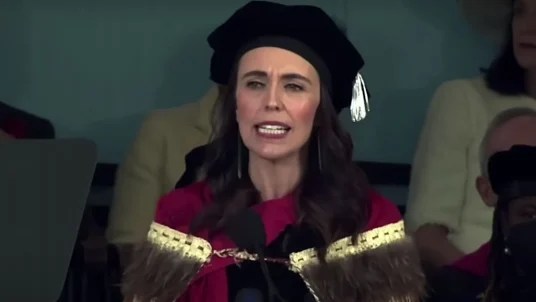
New Zealand’s Prime Minister Jacinda Ardern recently received an honorary degree from Harvard University. She used the opportunity to give a speech that attacked online “disinformation.”
Ardern attacked social media companies, saying that they needed to be more transparent and responsible.
“That means recognizing the role they play in constantly curating and shaping the online environments that we’re in,” she said.
“We seek validation, confirmation, reinforcement. And increasingly with the help of algorithms, what we seek, we are served, sometimes before we even know we’re looking.”
Ardern called on “social media companies and other online providers to recognize their power and act on it.”
“Let’s start with transparency in how algorithmic processes work and the outcomes they deliver. Let’s finish with a shared approach to responsible algorithms – because the time has come,” the New Zealand PM said.
Citing the “conspiracy theories” surrounding COVID-19, Ardern stressed the importance of facts, saying: “When facts are turned into fiction, and fiction turned into fact, you stop debating ideas and you start debating conspiracy.”
She also attacked some internet users, calling them “keyboard warriors.”
“In my mind, when I read something especially horrific on my feed, I imagine it’s written by a lone person, unacquainted with personal hygiene practices, dressed in a poorly fitted superhero costume – one that is baggy in all the wrong places,” she said.
“Keyboard warrior or not though, it’s still something that has been written by a human, and it’s something that has been read by one too.”
On democracy, she said that people ”wrongly” think that “somehow, the strength of your democracy was like a marriage – the longer you’d been at it, the more likely it was to stick.”
It wasn’t true

The Naked Emperor’s Newsletter | June 2, 2022
“In the current large population study of subjects, who were not vaccinated against SARS-CoV-2, we observed no increase in the incidence of myocarditis or pericarditis from day 10 after positive SARS-CoV-2.”
Remember when you were told to get vaccinated but you had concerns about myocarditis? Remember when the scientists, doctors and people we are meant to trust said not to worry because you were more likely to get myocarditis from Covid? Well, it wasn’t true.
A study published last month in the Journal of Clinical Medicine on MDPI took a look at the incidence of myocarditis and pericarditis in post COVID-19 unvaccinated patients. It was undertaken by the University of Jerusalem and Tel Aviv University and looked at 213,624 adult patients who had a documented positive COVID-19 test.
16,632 patients with a first vaccination received before COVID-19 infection were excluded, leaving 196,992 patients versus 590,976 in the control group, to study. The control group consisted of patients with one or more negative COVID-19 tests and no vaccination.
When the authors looked at the results of their study, they concluded that there was “no statistical difference in the incidence rate of both myocarditis and pericarditis… between the COVID-19 cohort and the control cohort” I.e. COVID-19 did not increase the risk of myocarditis and pericarditis when compared with those who did not get Covid.
These results tie in with a previous study in Nature, which I wrote about in April. This found a greater than 25% Increase in Cardiovascular events in under 40s during Vaccine rollout but NOT during Covid waves.
Numerous other studies have found that the vaccines increase the chances of myocarditis and pericarditis and this is openly acknowledged on government websites and vaccine reference material.
However, up until now, one of the excuses for continuing to give these vaccines was that you were more likely to get myocarditis or pericarditis with a Covid infection. This study shows this to be false.
Once again, a conspiracy theory has come true again.
BY JEFFREY A. TUCKER | BROWNSTONE INSTITUTE | JUNE 2, 2022
From the very outset of this pandemic, the topic of natural infection has been a taboo. To suggest that anyone might have been better off risking infection and thereby gaining immunity from a respiratorial virus rather than hiding under the sofa for two years was seen as outrageous and irresponsible.
My theory is that the reason has always been political. And that’s tragic.
Generations have gone by that have understood it. A life strategy to flee all pathogens is deeply dangerous. The immune system, in order to be trained to protect against severe disease, needs exposure. Not to all things, of course, but to many pathogens that are not finally debilitating or fatal. We’ve evolved with pathogens in what Sunetra Gupta calls a “dangerous dance.” This dance is unavoidable, especially for fast-mutating viruses like SARS-CoV-2.
And yet from the beginning, this knowledge seemed to be lost. This is gravely embarrassing since it’s been known for 2,500 years. It was worse than just lost. As a person who wrote almost daily during the pandemic, I too was careful not to discuss this topic with too much bluntness. We all felt the political pressure to stay silent or at least cloud our prose with euphemisms.
The single most controversial sentence of the Great Barrington Declaration was this one: “The most compassionate approach that balances the risks and benefits of reaching herd immunity, is to allow those who are at minimal risk of death to live their lives normally to build up immunity to the virus through natural infection, while better protecting those who are at highest risk.”
That talk about building up immunity is what drove people bonkers, as if no one was somehow allowed to utter a settled scientific truth. And yet long before Fauci began to speak as if getting infected was the worst possible fate, he was more honest.
Even I knew (from what I learned in 9th grade and what my mother taught) that the pandemic would only end with endemicity naturally earned. That is precisely what is happening. The CDC’s publication MMWR printed a seroprevalence study showing that from December 2021 to February 2022 – that period during which it seemed like everyone in the country got covid – went from 33.5% to 57.7%. In children, it went from 44.2% to 75.2%. It’s higher in both groups now.That the study got no real attention to it shows that we are fast moving toward the end, and how? Not through vaccination, which protects against neither infection nor transmission. It ends with everyone meeting the virus. There is of course some threshold of herd immunity with this virus, though it keeps rising with each mutation, requiring ever more rounds of infection to achieve it. It is surely higher than 70% but probably less than 90% depending on population mobility and other factors.We can look at that data today and wonder. What if we had never locked down? What if we had gone on with life as normally while urging those in risk categories to wait it out a bit while we achieved endemicity? How long would it have taken to get there?
Might it have been over by the summer of 2020? It is possible. It’s hard to know such counterfactuals with precision, but it does seem highly likely that the lockdowns achieved nothing good, caused tremendous damage, and also unnecessarily prolonged the pandemic. In addition, they degraded everyone’s immune system: we didn’t just avoid covid but everything else too.
And the main reason was due to the unwillingness of public health authorities to talk about actual science. When Fauci was asked about natural immunity in September 2021, he said “I don’t have a really firm answer for you on that. That’s something that we’re going to have to discuss regarding the durability of the response…I think that is something that we need to sit down and discuss seriously.”
The WHO even changed its definition of herd immunity to exclude natural infection as a factor! The whole institution gave itself over to vaccine sales based on wild exaggerations of their effectiveness while all-but-denying robust and broad immunity through exposure.
A key political factor to natural immunity is that it does not call on government to assume totalitarian controls to stop a virus. It presumes the operations of a normal society. The government wanted all power and deployed it to stop the virus. Therefore, science was out of the question, replaced by political propaganda from start to finish.
It’s not well understood that the US policy from the very outset accepted and adopted a zero covid approach. That gradually unraveled over time as unworkable. Trump’s own advisors tricked him into believing that he could achieve that just like Xi Jinping did. He fell for it, and pushed the two weeks to flatten the curve under the belief that this would make the virus go away. His rhetoric that day set the stage for more than two years of utter nonsense.
And here we are all this time later and top headlines are finally admitting what should have been obvious from the beginning. For a virus this prevalent, it ends with widespread natural immunity. Here’s the Bloomberg headline:

The rest of the article is designed to walk back that core claim. We are still not ready to face the terrible realities that the lockdowns achieved nothing and that the vaccines did not end the pandemic. The taboo subject of meeting the virus is still today what it was 30 months ago, nearly unsayable.
My theory is that this is entirely for political reasons. They hatched a wild plan to control a virus that would come and go like all such viruses in history, and so therefore they had to pretend their efforts were essential to the great task. They never were. That’s the bitter reality.
Reflecting on this topic of exposure and immunity eventually leads a person to realize that we don’t need centralized control, coercion, and dictatorial power to manage a pandemic. Pandemics are unavoidable but they largely manage themselves while the best-possible outcomes rest with the intelligence of individuals informing choices based on their own risk assessment. (I feel like I’ve been writing some version of that sentence for 33 months.)
And this speaks to the big problem we have today. The people who did this to us have not admitted error and probably won’t. Despite all the failures, these same people are gearing up for another round of lockdowns based once again on the ideology that the worst-possible fate for anyone is to face a virus naturally and bravely.
Think about this: our lords and masters are saying that our only choice in the face of any prevalent pathogen is to hunker down, don’t hold parties, don’t send kids to school, don’t go to church, don’t go work, don’t travel, and instead just wait for them to make a fancy serum to inject in our arms, which we must accept whether we like it or not.
In short, a government that seeks to control all pathogenic spread is one with totalitarian powers that knows not human rights or freedoms.
The Counter Signal | June 2, 2022
While countries around the world continue to drop their COVID mandates, Trudeau says Canada’s are here to stay due to the risk from new variants that don’t even exist yet.
“The reality is, as much as people would like to pretend that we’re not, we’re still in a pandemic,” he said.
“There are Canadians who die every single day because of COVID-19 in our hospitals.”
Trudeau adds that vaccine mandates are needed to protect against variants that do not (yet) exist.
“We are still at risk, particularly at risk, as Fall approaches, of new variants.”
“. . . What will also further damage our tourism industry is if we get another wave. If we get more serious impacts from COVID.”
This announcement comes a day after Canadian airline Westjet’s CEO, Alexis von Hoensbroech, spoke out against the mandates.
“As vaccines are not preventing the spreading of the virus since Omicron, there is no more logic to maintain it,” he said.
Indeed, most countries dropped their COVID mandates weeks, if not months ago. The latest country to do so was Italy.
Additionally, even big Pharma and Bill Gates have acknowledged the futility of the current vaccines and their mandates.
In January, Pfizer CEO Albert Bourla admitted that two doses of the vaccine “Offer very limited protection if any.” He further claimed his team was working on a new vaccine, “Version 1.1,” to effectively tackle the Omricron variant. However, to date, nothing has been produced.
And last week at the WEF conference in DAVOS, Gates admitted the vaccine wears off fast and doesn’t block transmission.
Earlier this week, Liberals, NDP, and Bloq Quebecois members of Parliament rejected a motion to lift the travel restrictions that conservative members had put to a vote.
The next day, the Trudeau government extended the current requirements until at least June 30.
But, given that future variants are always possible, Trudeauian logic implies there’s no end in sight.
By Steve Kirsch | June 1, 2022
Executive Summary
They are adopting authoritarian medicine in Ontario, Canada by requiring physicians to either follow authoritarian guidelines which are not science based, or have their license to practice medicine revoked.
If you live in Canada, please contact the members of the College of Physicians and Surgeons of OntarioCollege of Physicians and Surgeons of Ontario and let them know what you think of their actions.
If you live in California, which is about to go the same way, please donate NOW to the campaigns of Michael Huang and Brian Tyson.
Introduction
Dr. Ira Bernstein who practices medicine in Ontario, Canada is about to have his license to practice medicine revoked soon. Currently he is required by the authorities to operate under the following restrictions:
Furthermore, Dr. Bernstein is now required to post a sign in his waiting room that says this:
Dr. Bernstein must not provide medical exemptions in relation to vaccines, mask requirements or diagnostic testing for COVID-19. Dr. Bernstein must not prescribe ivermectin or hydroxychloroquine. Further information may be found on the College of Physicians and Surgeons of Ontario website at www.cpso.on.ca
What was his crime?
None of his patients complained. None of his patients were hospitalized or died from COVID. Nobody was harmed.
What was his crime? He didn’t toe the line and treat COVID patients like the College thinks they should be treated.
The message to physicians in Canada is clear: you either treat COVID patients using methods approved by the medical authorities or they’ll take away your livelihood for the rest of your life.
If this type of authoritarian medicine can happen in Canada, it can happen everywhere else in the world. No Canadian physicians are coming to Dr. Bernstein’s defense publicly because doing so would jeopardize their license.
Who is behind this? The College of Physicians and Surgeons of Ontario. They are listed here. I’m sure they are all proud of their actions because the President wrote this (emphasis mine):
The CPSO is here to help support physicians, and in doing so, fulfill our mandate to serve the public trust in Ontario’s health care. I am proud of the CPSO’s clear messaging to its membership regarding vaccine and mask exemptions. Our role is to protect the public and that includes protection from misinformation and risk of ignoring public health policies.
These people are incompetent. Their recommendations are based on politics, not science. They are the ones that should have their licenses revoked.
For example, they think masks work even though masks have never worked to slow or stop any virus in history and the best controlled large-scale study (in Finland) showed that wearing masks resulted in higher infection rates (as UCSF Professor Vinay Prasad pointed out). That’s what the best science says.
In Ontario, a doctor faces NO professional discipline for giving hundreds of children under 5, some as young as 6 months old, the COVID jab. No matter how many die, they will not be sanctioned.
I’ve reached out to the College to see if any members will appear on our weekly VSRF calls. Don’t hold your breath on that one.
Welcome to the new world of authoritarian medicine!
California is going to be implementing similar policies. Your state is next.
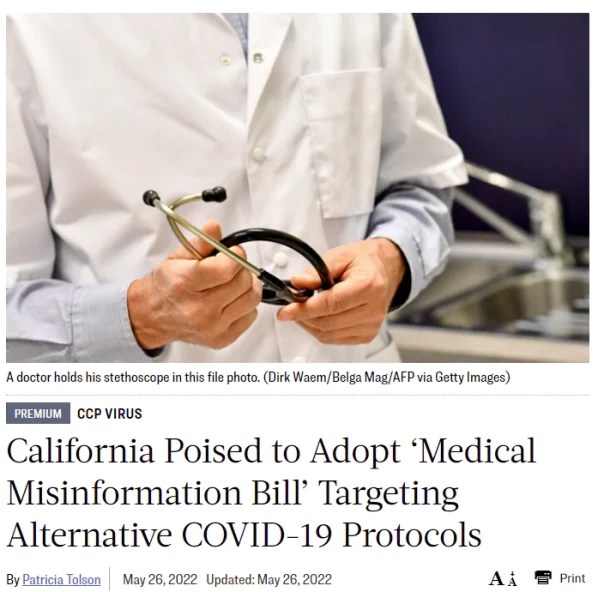
We’re basically on our way to implementing the same thing in California. Check out this article:
I received this message:
I hate to tell you but there is already a bill in the California legislature that is proposing just that: either a doctor does as he/she is told or his/her license could be revoked and/or disciplinary action could be taken. My father who was a practicing physician and surgeon for the better part of 40 years told me when I worked for him told me that the insurance industry would capture the medical industry within 25 years after the institution of Medicare. That was in 1975. That has now taken place. If the proposed California legislation goes through, we can kiss traditional medicine and the conscientious practice of medicine by unfettered medical practitioners goodbye. We have to oppose the legislation in California or it will spread like wildfire throughout this country and, yes, the US will be just like Canada.
And this message:
The same criminal and idiotic medical regulations are in place in Australia, and have been since the start of the Covid 19 “pandemic”. The Canadians must be singing from the same song-sheet as AHPRA (Australian Health Practitioners Regulation Authority). I wonder who wrote the lyrics?
It’s important to memorialize statements like this in the public record to show that there were millions of critical thinkers who were being ignored.
What you can do
If you live in Ontario, Canada, you can reach out and contact the members of the College and let them know what you think of their actions. Please don’t just sit back and let this happen.
If you live in California, please make a generous contribution to red-pilled doctors running for public office such as Michael Huang and Brian Tyson.
Please donate immediately as these doctors could really use the funds and the election is days away. It is now or never. Thank you.
If approved on June 28, all reformulated Covid-19 shots will skip clinical trials
By Toby Rogers | May 31, 2022
I. Pfizer and Moderna’s Dilemma
Pfizer and Moderna have a problem — their Covid-19 shots do NOT work. Everyone knows this. The shots do not stop infection, transmission, hospitalization, nor death. Over half a billion doses of this product have been injected into Americans in the past 17 months and these shots have made NO discernible impact on the course of the pandemic. Far more Americans have died of coronavirus since the introduction of the shots than before they were introduced.
Pfizer and Moderna are making $50 billion a year on these shots and they want that to continue. So they need to reformulate the shots. Maybe target a new variant, maybe change some of the ingredients — who knows, these shots don’t work so it’s not clear what it will take to get them to work. This is a problem because reformulated shots mean new clinical trials and new regulatory review by the FDA. There is a decent chance that any reformulated shot might fail a new clinical trial and the public is deeply skeptical of these shots so the scrutiny would be intense.
So Pfizer and Moderna have figured out a way to use regulatory capture to get their reformulated Covid-19 shots approved WITHOUT further clinical trials. Their scheme is called the “Future Framework” and it will be voted on by the FDA’s Vaccines and Related Biological Products Advisory Committee (VRBPAC) on June 28.
II. Doubling down on a failed strategy
Viruses vary by region. At any given time, the influenza strain circulating in England is different than it is in South Africa which is different than in southeast Asia. However, pharmaceutical companies prefer to create one-size-fits-all vaccines in order to decrease manufacturing costs and thereby increase profits. So the W.H.O. and public health agencies around the world (including FDA and CDC) have created a vast “influenza surveillance network” that identifies the different influenza strains in circulation. Then they engage in an elaborate theatrical performance called the “flu strain selection process” where they select four influenza strains that will go into the one-size-fits-all flu vaccine used throughout the world that year.
This carefully choreographed process is a complete and total failure. This is not a surprise — using a one-vaccine-fits-all approach to prevent a rapidly evolving virus that varies by region is never going to work. Lisa Grohskopf from the CDC’s Influenza Division reports that last year the flu shot was somewhere between 8% and 14% effective (based on data from seven sites that participate in the U.S. Flu Vaccine Effectiveness Network).

But a case study of a flu outbreak at the University of Michigan between October and November 2021 found that the effectiveness of the flu vaccine was literally zero.

Over the last thirty years, the federal government has paid out more compensation for adverse events in connection with the flu shot than any other vaccine — so we know that the shot comes with a high rate of harms. Given that the flu shot does not stop the flu, the harms thus outweigh the benefits.
In a sane world, the WHO, FDA, and CDC would admit that they made a strategic mistake and then change course to find better ways to support the human immune system. But we don’t live in a sane world. Instead, the FDA is proposing to take the failed flu strain selection process and apply it to future Covid-19 shots.
III. The FDA knew that Covid-19 shots would fail but they proceeded anyway
There are a quadrillion x quadrillion viruses in the world (literally more viruses on earth than stars in the known universe). Only a couple hundred of those seem to have the potential to impact human health. But some viruses make better candidates for a vaccine than others. Viruses that have been around a long time, that are very stable and evolve slowly are the best candidates for a vaccine.
Viruses that evolve rapidly are bad candidates for a vaccine. There is no vaccine for the common cold nor HIV because these viruses evolve too quickly. The SARS-CoV-2 virus is a bad candidate for a vaccine which is why all previous attempts to develop a vaccine against coronaviruses have failed (they never made it out of animal trials because all of the animals died during challenge trials or were injured by the vaccine).
What are some of the bad things that can happen when you vaccinate against a rapidly evolving virus? Original antigenic sin, antibody dependent enhancement, and the possibility of accelerating the evolution of the virus in ways that make it more virulent (and even more resistant to vaccination).
Trevor Bedford has his own lab at the Fred Hutchinson Cancer Center where he researches the evolution of Covid-19. He gave a fascinating presentation at the April 6 meeting of the FDA’s Vaccines and Related Biological Products Advisory Committee meeting where he explained that SARS-CoV-2 is evolving rapidly. He explained that SARS-CoV-2 evolves twice to ten times as fast as the flu virus and these mutations “substantially” reduce vaccine effectiveness. Following the introduction of Covid-19 vaccines, the evolution of the virus has accelerated.
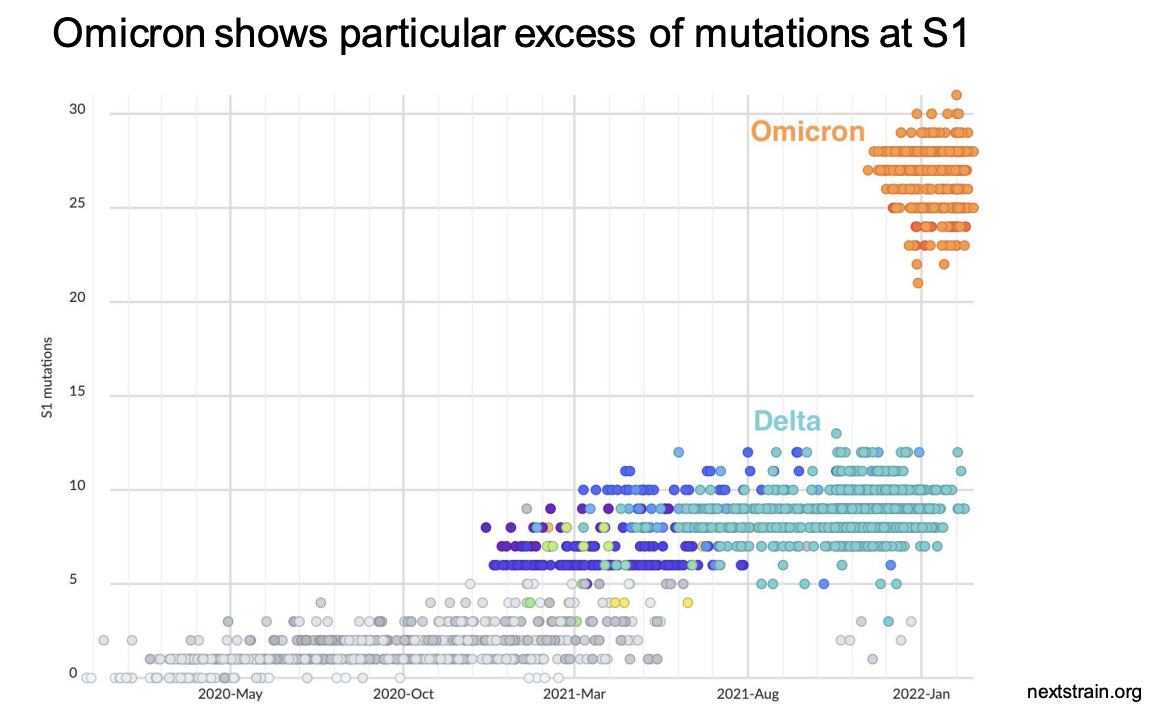
Dr. Bedford’s presentation rattled some of the smarter members of the VRBPAC because his data scream — “SARS-CoV-2 is a bad candidate for a vaccine!” But FDA officials just mumbled some platitudes and then continued on with the meeting.
The only way out of the pandemic is to withdraw these vaccines from the market and pivot to therapeutics. Instead, the FDA is proposing to just hide the data from the American people.
IV. The “Future Framework” = no more clinical trials for Covid-19 shots ever again
The purpose of the “Future Framework” is to rig the Covid-19 vaccine regulatory process in perpetuity in favor of the pharmaceutical industry. If this “Future Framework” is approved all future Covid-19 shots, regardless of the formulation, will automatically be deemed “safe and effective” without additional clinical trials because they are considered “biologically similar” to existing shots.
This is literally the worst idea in the history of public health.
If you change a single molecule of mRNA in these shots it will change health outcomes in ways that no one can anticipate. That necessarily requires new clinical trials — which is what the FDA is proposing to skip.
The FDA’s “expert advisory committee” (VRBPAC) met on April 6, 2022 to discuss the “Future Framework” for the first time. All of the committee members agreed that Covid-19 shots are not working, that boosting multiple times a year was not feasible, and that the shots need to be reformulated. They also unanimously agreed that there are no “correlates of protection” that one can use to predict what antibody levels would be sufficient to prevent SARS-CoV-2 infection.
On June 28 the VRBPAC will meet once again to discuss the “Future Framework” and it will be presented as a done deal because manufacturers want a decision on vaccine strain selection by June in order to deliver shots for autumn vaccination appointments.
So if the FDA authorizes Covid-19 shots for kids on June 14 and 15 and then approves the “Future Framework” on June 28th, the shots that will be given to kids in the fall will be the reformulated shots that skipped clinical trials.
V. Monovalent Covid-19 shots failed, so maybe throwing two, three, or four variants into a single shot will make it better?
When it comes to the flu shot, the FDA tries to hedge their bets by putting four strains of the virus into a single shot (so called “quadrivalent” vaccines). As I explained above, this strategy does not work. But these people are not very clever so that’s exactly what they are planning to do with future Covid-19 shots.
Moderna is already signaling that they intend to manufacture a Covid-19 shot with the Alpha variant and then, to make it “new and improved (TM)”, they will add genetically modified mRNA targeting the Beta variant. Here’s the best part — Moderna claims that this formulation (Alpha + Beta) will somehow protect against Omicron variants — even though by the time these reformulated shots get to market, none of these variants will likely still be in widespread circulation.
There are reasons to believe that this approach will make future Covid-19 shots even less effective and more dangerous than the current failed Covid-19 shots.
Think about it. The more mRNA you put into a shot, the higher the adverse event rate (as the genetically modified mRNA hijacks the cell and starts cranking out spike proteins). So if Pfizer and Moderna put more mRNA into these shots (in order to cover multiple variants) adverse event rates will skyrocket.
But if Pfizer and Moderna put less mRNA per variant into a shot (in order to keep the total amount of mRNA at 100 mcg for Moderna and 30 mcg for Pfizer) then the effectiveness against any one particular variant will be reduced.
The Future Framework is 100% guaranteed to fail. If the “Future Framework” is approved, effectiveness of these shots will decrease, adverse events will increase, these shots will fuel the evolution of variants that evade the vaccines, and there will be no clinical trial data before these reformulated Covid-19 shots are unleashed on the unsuspecting public.
VI. Summary
The FDA’s Vaccines and Related Biological Products Advisory Committee will meet on June 28 to vote on a “Future Framework” for evaluating so-called “next generation” Covid-19 shots. The “Future Framework” is a plan to rig the Covid-19 vaccine regulatory process in perpetuity.
The “Future Framework” would take the “flu strain selection process” that fails every year and apply it to future (reformulated) Covid-19 shots. Federal bureaucrats, many of whom have financial conflicts of interests, would choose which SARS-CoV-2 variants to include in a yearly (or twice yearly) Covid-19 shot. In the process, all future Covid-19 shots will be deemed automatically “safe and effective” without further clinical trials because they are considered “biologically similar” to existing Covid-19 shots.
The “Future Framework” is the most reckless idea in the history of public health. It shows that the FDA has completely abandoned science and its statutory duty to protect the public. If the Republic is to survive, we must stop the “Future Framework” before June 28.
VII. Call to action
We have very little time and an enormous challenge in knocking this proposal down before the VRBPAC meets on June 28. So I am asking to you to contact your elected officials to tell them to reject this dangerous proposal.
Below are talking points that you can paste into an email, a script that you can use on the phone, and a tool for looking up your elected officials. I am only asking you to contact 8 officials — the President and Vice President; your two Senators and U.S. Representative; and your Governor, state House/Assembly member, and state Senator. Please be respectful but make it clear that this plan must be stopped.
Talking points (to paste into an email, letter, or fax)
Subject line: NO “flu framework” for future Covid-19 shots
The FDA and CDC are developing a “Future Framework” to authorize future Covid-19 shots without requiring additional clinical trials. This would be a public health disaster. I am asking you to contact the FDA to tell them to stop all work on this “Future Framework” immediately. If the FDA proceeds with this “Future Framework” I am asking you to eliminate all funding for the FDA in this year’s budget.
Phone script
Hi, my name is ____________. I live at __________________[address]. I’m calling because the FDA is proposing a “Future Framework” to authorize future Covid-19 shots without requiring additional clinical trials. This would be a public health disaster. I am asking you to contact the FDA to tell them to stop all work on this “Future Framework”. If the FDA proceeds with this “Future Framework”, I am asking you to eliminate all funding for the FDA in this year’s budget.
Whom to contact: 8 phones calls, letters, emails, or faxes:
President Joseph R. Biden
The White House
1600 Pennsylvania Ave NW
Washington, DC 20500
(202) 456-1111 (The White House comment line is open between the hours of 11 to 3 p.m. EST Tues.-Thurs.)
https://www.whitehouse.gov/contact/
https://twitter.com/POTUS
Vice President Kamala Harris
The White House
1600 Pennsylvania Ave NW
Washington, DC 20500
(202) 456-1111 (between the hours of 11 to 3 p.m. EST Tues.-Thurs.)
https://www.whitehouse.gov/contact/
https://twitter.com/VP
You can look up contact info for your two U.S. Senators and U.S. Representative here:
https://www.govtrack.us/congress/members/map
The message for State elected officials is slightly different:
Hi, my name is ____________. I live at __________________[address]. I’m calling because the FDA is proposing a “Future Framework” to authorize future Covid-19 shots without requiring additional clinical trials. This would be a public health disaster. If the FDA proceeds with this “Future Framework” I are asking you to nullify the actions of the FDA and reject any Covid-19 shots that have not gone through proper clinical trials.
This is a great tool to look up contact info for your Governor, state Senator, and state House/Assembly member:
That’s it, just 8 people. We want to let them know that we are watching, that we understand what they are up to, and that this wretched plan must be stopped.
Extra credit:
Here are the email addresses for all of the public health political appointees, FDA staff, and VRBPAC members who have a say in connection with the “Future Framework”. Let’s contact them as well (proposed subject line and email text below).
Subject line: The “Future Framework” is the WORST idea in the history of public health. Please vote NO.
1. The FDA must revoke the authorizations for Moderna, Pfizer, and J&J Covid-19 shots and withdraw them from the market immediately. SARS-CoV-2 was never a good candidate for a vaccine. These shots do not stop infection, transmission, hospitalization, nor death. They appear to have negative efficacy and are driving the evolution of variants that evade vaccines. The pandemic will never stop as long as the FDA and CDC are promoting shots that lack sterilizing immunity.
2. The FDA and CDC must pivot to therapeutics. This was always the answer. About twenty off-the-shelf treatments are more effective than vaccines (if used for prophylaxis or early intervention). Get these safe and effective medicines to people who need them and let doctors be doctors again and treat patients based on their own best clinical judgment.
3. Any reformulated Covid-19 shots MUST go through proper clinical trials and FDA review. That means:
• Large (50,000+ person) double-blind randomized controlled trials with inert saline placebos conducted by an independent third party;
• Safety and efficacy studies for two years prior to any application; the treatment and control groups must be followed for 20 years to monitor adverse events and all-cause mortality (no more wiping out the control group after 6 months to hide bad outcomes);
• Greater than 90% efficacy with less than 1% Grade 3 Adverse Events; and
• Proper monitoring for carcinogenesis, mutagenesis, and impairment of fertility.
sean.mccluskie@hhs.gov, commissioner@fda.hhs.gov, ashish.jha@whitehouse.gov, Aux7@cdc.gov, Peter.Marks@fda.hhs.gov, Hong.Yang@fda.hhs.gov,
Richard.Forshee@fda.hhs.gov, Huilee.Wong@fda.hhs.gov, Leslie.Ball@fda.hhs.gov, Doran.Fink@fda.hhs.gov, hanae@bcm.edu, paula.annunziato@merck.com,
adam.berger@nih.gov, hbernstein@northwell.edu, acohn@cdc.gov, anc0@cdc.gov, hjanes@fredhutch.org, hgans@stanford.edu, david.kim@hhs.gov,
asmonto@umich.edu, offit@chop.edu, spergam@fredhutch.org, Jportnoy@cmh.edu, erubin@hsph.harvard.edu, erubin@nejm.org, ashane@emory.edu,
swamy002@mc.duke.edu, fullerao@umich.edu, RandyHawkins@cdrewu.edu, officeofthepresident@mmc.edu, JYLee@uams.edu,
ofer.levy@childrens.harvard.edu, wayne_marasco@dfci.harvard.edu, cmeissner@tuftsmedicalcenter.org, mrn8d@virginia.edu,
The Counter Signal | May 30, 2022
Members of parliament today voted 202-117 to keep the current travel ban against unvaccinated Canadians in place.
The Conservatives proposed the motion to have the current travel ban against the unvaccinated lifted.
Trudeau, Jagmeet Singh, and Travel Minister Omar Alghabra voted against the motion, as did virtually every Liberal, NDP, and Bloq Quebecois member.
Conservatives all voted to lift the ban.
“Today, the NDP-Liberal government voted against our common-sense motion that would have returned to pre-pandemic rules and service levels for travel and helped end the delays we’re seeing at airports across the country,” their Conservative’s website reads.
“As Canadian travellers are being subject to extreme delays, line-ups, bottlenecks, and missed connections because of unnecessary protocols, our allies across the world, including the European Union and the United States, have loosened rules for passengers on flights and in airports.”
“. . . Airports have directly cited the Liberals’ policies as the reason for these delays . . .”
“After two long years of the pandemic, Canadians are finally looking to return to normalcy and begin travelling again. Unfortunately, the NDP-Liberal government continues to cling to outdated and unnecessary protocols that are exacerbating delays.”
Conservative members of parliament proposed the motion on May 17. However, Charter rights – such as freedom of movement – were not leveraged to justify their call to drop restrictions.
Instead, “unacceptable wait times” at the airport (for those who are allowed to travel), labour shortages, and economic losses caused by the restrictions were cited.
However, the motion also mentioned that the restrictions were ineffective and that international allies have all dropped their restrictions.
Indeed, Canada remains one of the only countries to have a ban on unvaccinated citizens from leaving their own country, and the efficacy of the restrictions appears questionable at best.
The Trudeau Liberal government was expected to renew the federal vaccine policy eight weeks ago but has still not announced anything.

or go to
Aletho News Archives – Video-Images

RT | September 23, 2026
The US Democratic Party has embraced a transgender agenda that amounts to “the normalization of sadism,” author A.J. Rice has said, warning that radical trans policies would return if the party is allowed to regain power.
Speaking to RT’s America First host Scotty Nell Hughes about his new book, ‘The Curse of the Bearded Lady: How the Trans Mafia Whacked American Sanity’, Rice argued that activists have gained significant influence in schools, medicine, and corporate America while people who questioned the agenda have faced pressure to stay silent.
The author described the “trans mafia” as the sprawling network of people and institutions that have helped the movement gain influence. He singled out parts of academia, wealthy backers, and corporations, and stated that providers of transition-related treatment also have a financial incentive to keep young people in their care indefinitely.
Rice argued that the consequences of these policies ultimately fall on children who are being drawn toward gender-affirming medical treatments and on girls who are expected to share locker rooms or compete in sports with biological males.
He noted that while voters rejected the Democrats’ approach to gender in 2024, the party, which has been “captured by madness,” has since only doubled down and is seeking what is effectively “the normalization of sadism.” … Full report
 Aletho News If Americans Knew No Tricks Zone
