Texas Cop Places Woman in Chokehold for Video Recording
UPDATE: Texas Cop Loses Job for Chokehold on Woman, 2nd Cop Disciplined for Ordering Footage Deleted
By Carlos Miller | PINAC | November 30, 2014
A Texas cop placed a woman in a chokehold because she was video recording some type of police activity in the parking lot of what appears to be a fast food restaurant after she refused to provide identification.
It started when Corpus Christi Sergeant J.E. Lockhart stormed up to Lanessa Espinosa, who was standing a good distance away from the investigation, accusing her of interfering – after a nearby cop from another agency accused her of being a “jailhouse lawyer.”
“There is a probable cause for us to be out here,” Lockhart said. “I want to know who you are, so I’m requesting your ID. You fail to ID, I’m going to take you into jail. And that’s law.”
“What’s my charge?
“You’re not being charged with anything.”
“Then I don’t have to show you my ID, sir.”
“You’re involved in an investigation. You want to interfere with an investigation, you’re going to jail for interfering with a police officer in performance of his investigation. Do you understand that? DO YOU UNDERSTAND THAT?”
Espinosa understood that Lockhart was out of line, so she said she was in fear for her safety and took a step back, which was when another cop placed her in a chokehold.
Espinosa turned the camera on herself as she was getting chokehold by the cop from the other agency, whose agency has not been determined because Corpus Christi runs into four counties and I haven’t been able to make the patch out.
That cop then turned her over to Lockhard, who handcuffed her.
Espinosa has not responded for comment from PINAC over the incident, but public records show she was not arrested.
UPDATE:
The video of a Texas woman getting placed in a chokehold and handcuffed for refusing to provide her identification ended up going viral where it was covered by a local television news station at the top of the news hour Monday night.
However, KIII-TV reporter Bill Churchwell finished the segment by providing misinformation about the law when it comes identifying yourself to police, informing viewers that citizens are required to identify themselves whether or not they have been lawfully arrested.
Nothing could be further from the truth.
The Texas Failure to Identify law makes it a crime for people to refuse to identify themselves if they have been lawfully arrested or if the person provides false information if they have been lawfully detained.
However, when news anchor Joe Gazin asked Churchwell about this law, the reporter stated the following:
“Well that is required whether you are a witness or involved in an incident, you are required to tell officers who you are,” Churchwell said.
Churchwell is most likely getting his information from police without bothering to look at the actual statute, which is a big mistake because we all know police are clueless about the laws they are supposed to enforce.
But that is the norm for mainstream media reporters who don’t want to risk questioning their local police department and therefore lose access to the daily information that enables them to report the news without putting in much effort.
However, it didn’t take long for a viewer to set the record straight on KIII-TV’s Facebook page about the law.

Blogger ExCop-LawStudent, a former Texas cop turned law student, also elaborated about the law on his blog.
In the video, a police officer with an unknown police department† claims that Lanessa Espinosa is a “jailhouse lawyer” because she actually knows what the law says. She pointed out that she did not have to identify herself unless she was “being charged.” At that point Corpus Christi Senior Officer‡ J.E. Lockhart comes up and demands ID and tells her that he will arrest her if she doesn’t provide ID.
The problem is that § 38.02, Texas Penal Code, does not authorize an arrest for failure to ID on a mere detention unless the person provides a fictitious name. We’ve covered that several times, here, here, here, here (also in Corpus), here, here, here, and here.
There are several things wrong with the video. First, the officer from the unknown department is choking Espinosa with an arm-bar choke hold. If you look at the video at 1:12, you’ll see the officer’s forearm cutting directly over Espinosa’s adam’s apple in the same manner that killed Eric Garner in New York. The arm-bar choke hold is almost universally viewed as deadly force, and completely inappropriate here when the crime is at best, a misdemeanor under the officer’s mistaken idea of the law.
Second, it is a false arrest. Even more so, it is an arrest because she is exercising her right not to provide identification when he knows (or should have known) that the arrest is unlawful, and that he intentionally denied her of her freedom when he knew (or should have known) that his conduct was unlawful. Folks, that the definition of Official Oppression, § 39.03, Texas Penal Code, and is a Class A misdemeanor.††
Some states have what are called “stop and identify” laws, which requires citizens to identify themselves if they have been detained, but Texas is not one of those states, which is why it only requires a citizen to identify themselves if they’ve been arrested.
There is no state where citizens are legally required to provide identification merely because a cop demands it unless the cop has detained you because he had a reasonable suspicion that you committed a crime.
That doesn’t mean cops won’t demand your identification because they do it all the time, many times under intimidating threats of arrest, which is why we must remain recording in these situations.
And if a cop tells you he has the right to ask you for your identification, tell him you have the right not to provide that identification. … Full article
Thousands march in Manila against military accord with ‘imperialist’ US

RT | December 1, 2014
Thousands of anti-war protesters marched in the Philippine capital calling for an end to close military ties between “warmongering” Washington and Manila. They also accused Filipino President Benigno Aquino III of being a “US puppet.”
Protesters came decked out in traditional garb, many carrying fake bolo knives and rifles. Others hoisted torches and placards in the air as they marched through the streets of the densely populated city.
Gathering underneath an overpass at a busy intersection, the protesters burned a poster depicting Aquino as a puppet of Uncle Sam.
Pete Pinlac, a trade union leader and march organizer, said the protest was a way for the people to express their discontent with Washington’s “imperialist” ways.
“To Barack Obama, we say this: we are a peaceful nation so let the Philippines loose. We do not want your warmongering. We do not want your imperialist ends. We do not want your hegemonic purposes,” he said.
The protesters called for the abolition of the Visiting Forces Agreement (VFA) and the Enhanced Defense Cooperation Agreement (EDCA) with the USA.
The controversial VFA allows the US government to retain jurisdiction over US military personnel accused of committing crimes in the Philippines, unless those crimes are deemed to be of “particular” importance to the Philippines.
Activists argue the agreement gives US troops immunity from prosecution and makes them second-class citizens in their own country.
The EDCA was signed in April and represents the first major military accord inked between the two countries since the US withdrew troops stationed on a naval base in Subic Bay in 1992. Although the 10-year agreement allows US forces to operate out of certain areas, it does not allow Washington to establish a permanent military base.
Sunday’s protest coincided with Bonifacio Day, which pays homage to Andres Bonifacio, the “Father of the Philippine Revolution.”
Haiti: Marchers Shot at Battle Commemoration
Weekly News Update on the Americas | November 23, 2014
At least four demonstrators were wounded in the northern Port-au-Prince suburb of Delmas on Nov. 18 when counter-demonstrators opened fire on an opposition march commemorating the anniversary of the 1803 Battle of Vertières, which marked the final defeat of French forces trying to regain control of Haiti. The several hundred marchers had reached the neighborhood of Delmas 32 and were about to turn back toward downtown Port-au-Prince when they were met with a hail of rocks. The marchers responded with more rocks, and the police used tear gas against the attackers. The gunfire started a little later. Two people were hit in the neck, one in the knee and one in the side; all four were taken away for medical care. The police said they recovered more than a half-dozen 9 mm caliber cartridges from the site. The marchers dispersed after the attack.
Some protesters reported seeing a lifeless body lying near a motorbike, and protest organizers held a press conference on Nov. 21 to charge that three people had been shot dead and that police agents had taken their bodies away. The authorities denied the charge, and reporters noted that the press conference didn’t include relatives of the three people said to be missing.
The Nov. 20 march was largely sponsored by opponents of President Michel Martelly (“Sweet Micky”) and included groups associated with the Lavalas Family (FL) party of former president Jean-Bertrand Aristide (1991-1996, 2001-2004). Populist senators John Joel Joseph and Moïse Jean-Charles and legislative deputy Arnel Bélizaire were among the politicians present [see Update #1204]. According to the online news service AlterPresse, the Textile and Garment Workers Union (SOTA), which is associated with the leftist labor organization Batay Ouvriye (“Workers’ Struggle”), also participated, but the union’s “demands against the presence of United Nations forces in the country [and] for a decent minimum wage…were drowned out by the anti-Martelly slogans.” The Martelly opponents were especially incensed because of an opinion piece by Communication Minister Rudy Hériveaux posted on Martelly’s blog on Nov. 17. Entitled “The Cockroach Syndrome,” the article described anti-government protesters as “roaches” who “trot around in a disgusting folklore in the streets to try to assault the government.” Hériveaux is a former FL senator and until a few years ago led a faction of the party [see Update #1083]. (AlterPresse 11/19/14, 11/21/14)
In related news, two opposition leaders arrested after an Oct. 26 protest, Rony Timothée and Byron Odigé [see Update #1240], have been placed in isolation in the National Penitentiary, according to the daily Le Nouvelliste. Meanwhile, attorney André Michel, who frequently represents opposition figures [see Update #1232], was ordered to appear on Nov. 17 before investigative judge Lamarre Bélizaire, who is charging him with property destruction in connection with an Oct. 17 demonstration. Michel refused to attend, saying Judge Bélizaire had no authority to order his appearance. (AlterPresse 11/17/14, 11/21/14)
What Really Happened to the Wobblies
By STAUGHTON LYND | CounterPunch | November 21, 2014
 The Wobblies are back. Many young radicals find the Industrial Workers of the World (IWW) the most congenial available platform on which to stand in trying to change the world.
This effort has been handicapped by the lack of a hard-headed history of the IWW in its initial incarnation, from 1905 to just after World War I. The existing literature, for example Franklin Rosemont’s splendid book on Joe Hill, is strong on movement culture and atmosphere. It is weak on why the organization went to pieces in the early 1920s.
Eric Chester’s new book, The Wobblies in their Heyday: The Rise and Destruction of the Industrial Workers of the World during the World War I Era, fills this gap. It is indispensable reading for Wobblies and labor historians. One way to summarize what is between these covers is to say that Chester spells out three tragic mistakes made by the old IWW that the reinvented organization must do its best to avoid.
Macho Posturing
Labor organizing flourished during World War I because of the government’s need for a variety of raw materials. Among these were food, timber, and copper. Wobbly organizers made dramatic headway in all three industries. At its peak in August 1917 the IWW had a membership of more than 150,000.
Nine months later, Chester writes, “the union was in total disarray, forced to devote most of its time and resources to raising funds for attorneys and bail bonds.”
This sad state of affairs was, of course, partly the result of a calculated decision by the federal government to destroy the IWW. But only partly.
According to Chester another cause of the government’s successful suppression of the Wobblies was that during and after the Wheatlands strike in California hop fields in 1913 some Wobblies threatened to “burn California’s agricultural fields if two leaders of the strike were not released from jail.”
For years, Wobbly leaders had insisted that sabotage could force employers to make concessions, Chester writes. But what Chester terms “nebulous calls for arson” and “macho bravado” only stiffened the determination of California authorities not to modify jail sentences for Wobbly leaders Ford and Suhr.
Chester finds that there is no credible evidence that any fields were, in fact, burned. But after the United States entered World War I in April 1917, this extravagant rhetoric calling for the destruction of crops apparently helped to convince President Wilson to initiate a systematic and coordinated campaign to suppress the Wobblies.
Efforts to Avoid Repression by Discontinuing Discussion of the War and the Draft
International solidarity and militant opposition to war and the draft were central tenets of the IWW. Wobblies who had enrolled in the British Army were expelled from the union. At the union’s tenth general convention in November 2015, the delegates adopted a resolution calling for a “General Strike in all industries” should the United States enter the war.
What actually happened was that general secretary-treasurer Bill Haywood and a majority of IWW leaders agreed that the union should desist from any discussion of the war or the draft, in the vain hope that this policy would persuade the federal government to refrain from targeting the union for repression. At the same time, the great majority of rank-and-file members, with support of a few leaders such as Frank Little, insisted that the IWW should be at the forefront of the opposition to the war.
Self-evidently, what Chester terms the IWW’s “diffidence” was the very opposite of Eugene Debs’ defiant opposition to the war. When Wobbly activists “flooded IWW offices with requests for help and pleas for a collective response to the draft,” the usual response was that what to do was up to each individual member. Haywood, Chester writes, “consistently sought to steer the union away from any involvement in the draft resistance movement.” Debs notwithstanding, however, the national leadership of the Socialist Party like the national leadership of the IWW “scrambled to avoid any confrontation with federal authorities.” Radical activists from both organizations formed ad hoc alliances cutting across organizational boundaries.
The IWW General Executive Board, meeting from June 29 to July 6, 1917, was unable to arrive at a decision about the war and conscription, and a committee including both Haywood and Little, tasked to draft a statement, likewise failed to do so. In the end, Chester says, “the IWW sought to position itself as a purely economic organization concerned solely with short-run gains in wages and working conditions.”
Disunity Among IWW Prisoners Fostered by the Government
The reluctance of the Wobbly leadership to advocate resistance to the war and conscription carried over to a legalistic response when the government indicted IWW leaders. Haywood urged all those named in the indictment to surrender voluntarily and to waive any objection to being extradited to Chicago. In the mass trial that followed, the defendants were represented by a very good trial lawyer who was also an enthusiastic supporter of the war and passed up the opportunity to make a closing statement to the jury. Judge Landis’ superficial fairness deluded Wobs into hoping for a good outcome.
The jury took less than an hour to find all one hundred defendants guilty of all counts in the indictment. Ninety-three received lengthy prison terms. Judge Landis ordered that they be imprisoned in Leavenworth, described by Chester as “a maximum-security penitentiary designed for hardened, violent criminals.” Forty-six more defendants were found guilty after another mass conspiracy trial in Sacramento.
Thereafter, Chester writes, the “process of granting a commutation of sentence was manipulated during the administration of Warren Harding to divide and demoralize IWW prisoners.” The ultimate result was “the disastrous split of 1924, leaving the union a shell of what it had been only seven years earlier.” Executive clemency, like that granted to Debs, was the only hope of the Wobblies in prison for release before the end of their long sentences. President Harding rejected any thought of a general amnesty, obliging each prisoner to fill out the form requesting amnesty as an individual. The application form for amnesty contained an implicit admission of guilt. The newly-created ACLU supported this process.
Twenty-four IWW prisoners opted to submit a form requesting amnesty. A substantial majority refused to plead for individual release. More than seventy issued a statement in which they insisted that “all are innocent and all must receive the same consideration.” The government insisted on a case-by-case approach. Fifty-two prisoners responded that they refused to accept the president’s division of the Sacramento prisoners, still alleged to have burned fields, from the Chicago prisoners. Moreover they considered it a “base act” to “sign individual applications and leave the Attorney General’s office to select which of our number should remain in prison and which should go free.”
Initially, the IWW supported those prisoners who refused to seek their freedom individually. Those who had submitted personal requests for presidential clemency were expelled from the union. In June 1923, the government once again dangled before desperate men the prospect of release, now available for those individual prisoners promising to remain “law-abiding and loyal to the Government.” This time a substantial majority of the remaining prisoners accepted Harding’s offer, and IWW headquarters, in what Chester calls “a sweeping reversal,” gave its approval.
Eleven men at Leavenworth declined this latest government inducement. In addition, those who were tried in California did not receive the same offer.
In December 1923 the remaining IWW prisoners at Leavenworth including twenty-two who had been convicted in Sacramento were released unconditionally. The damage had been done. Those who had held out the longest launched a campaign within the IWW to expel those who had supported a form of conditional release. There were accusations against anyone who had allegedly proved himself “a scab and a rat.” When a convention convened in 1924 both sides claimed the headquarters office and went to court. An organization consisting of the few hundred members who had supported the consistent rejection of all government offers “faded into oblivion by 1931.”
Conclusion
It is not the intent of brother Chester’s book, or of this review, to trash the IWW. This review has dealt with only about half of the material in the book, for example passing by the story of Wobbly organizing in copper, both at Butte, Montana and Bisbee, Arizona. Moreover, any one who lived through the disintegration of SDS, SNCC and the Black Panthers is familiar with tragedies like those described here. The heroism of members of all three groups who were martyrs, such as Frank Little, Fred Hampton, and the Mississippi Three (Chaney, Goodman, and Schwerner), remains. The vision of a qualitatively different society, as the Zapatistas say “un otro mundo,” remains also.
What it seems to me we must soberly consider is what practices we can adopt to forestall disintegration when different members of a group make different choices. Hardened secular radicals though we may be, we can learn something from King Lear’s words to his daughter Cordelia: “When you ask me blessing, I’ll kneel down and ask of you forgiveness.”
Staughton Lynd is an American conscientious objector, Quaker, peace activist and civil rights activist, tax resister, historian, professor, author and lawyer. Staughton Lynd’s most recent book is From Here to There: the Staughton Lynd Reader.
Support for justice in Palestine soaring on US campuses
ALRAY | November 20, 2014
New York – A student-led movement taking shape on U.S. college campuses have seen a growing number of young activists organizing around solidarity with Palestine.
The Students for Justice in Palestine organization, one of the major solidarity coalitions, now has more than 110 active chapters in the U.S. and the number is growing.
The movement enjoys the backing from those with a wide array of political thought and a support base that significantly grew after Israel’s “Operation Cast Lead” and “Operation Protective Edge” assaults on Gaza in 2008-09 and this summer respectively.
According to Aman Muqeet of the organization’s National Steering Committee, Israel’s summer offensive affected all of those who are in solidarity with the Palestinian people. “It has strengthened our resolve and commitment to the work we do.”
Operation Protective Edge began July 7 and lasted for 51 days; it killed more than 2,000 Palestinians, mostly civilians, according to Palestinian health officials. More than 10,000 others were reported injured.
“Also, it has empowered us because we have seen an unprecedented amount of support from the international community,” Muqeet said. “Musicians, actors, and public figures voicing support for Gaza, corporations distancing themselves from Israeli crimes; consumers joining the Palestinian-led call for a boycott of Israeli goods and corporations that support Israel; millions of people around the world taking to the streets to demand justice.”
He says public opinion in the U.S. and the West shifted significantly after Israel’s summer assault.
“The Protective Edge massacre has brought the realities of a brutal colonial empire to the fore … On campuses, students are more informed than they were in the past and are keeping up with the developments.”
An Oct. 24 report by the New York-based Jewish organization Anti-Defamation League reported a dramatic increase in the number of pro-Palestine events scheduled on U.S. campuses since the massacre.
There were 75 events scheduled since the beginning of the 2014-2015 academic year, which started in late August or early September at most American universities, the report said. That number marks a 114 percent increase compared with the same period last year.
“Israel has done an excellent job of demonstrating to the international community the lack of regard it has for civilians, justice, and human rights,” according to Muqeet.
Brooklyn College has a Students for Justice in Palestine chapter. Organizers there say their aim is to raise awareness about the human rights violations being committed by Israel against the Palestinians and to build solidarity with the Palestinian struggle for justice, freedom, self-determination and the right of return.
The group’s president, Sarah A. Aly, says the chapter has received more requests during the current academic year from students who want to join the chapter when compared to last year.
“Our membership is very diverse and we work with non-Muslim groups on a regular basis on campus, such as the Latino and black clubs as well as DreamTeam and LGBT club,” she said.
The group finds connections between Israeli actions in Gaza and the shooting of unarmed black teenager Michael Brown by a white police officer in Ferguson, Missouri.
“We do draw the parallels because the struggles that communities of colors face in the U.S. are connected to the Palestinian struggle in many ways. We fully support the people in Ferguson and all those fighting for justice and liberation. One of our members was in Ferguson to show support for them and the support for Palestine she received while she was there was very evident.”
Brown’s death set off mass protests, which have since continued at various levels around the country.
Muqeet says the Students for Justice in Palestine stands in solidarity with not just Mike Brown and Trayvon Martin, but all victims of racial violence.
Their fourth annual national conference’s opening keynote featured author Rev. Osagyefo Uhuru Sekou speaking on “From Ferguson to Palestine: Resisting State Violence and Racism.”
Israel has traditionally been a close ally of the U.S., and has been assisted since its founding with substantial amounts of American financial and military aid.
What young activists believe to be a “lack of objectivity” from the U.S. government toward Israel’s massacres is also adding to the rise in the number of students who support for the Palestinian cause.
“When students see this, they ask questions and they want to learn more, and effect positive change which will bring an end to the human rights violations and occupation of Palestine, and end U.S. military support for Israel’s occupation and human rights abuses,” Muqeet said.
“So, I anticipate a steady growth of students that support justice in Palestine.”
Medical associations throw support behind Guantanamo nurse who refused to force-feed
Reprieve | November 19, 2014
Medical groups including the American Nurses Association (ANA) have come out in support of a nurse who refused to force-feed a hunger-striking Guantanamo detainee.
The nurse’s refusal to carry out the practice – which is banned by, among others, the World Medical Association – was revealed by a client of international human rights NGO Reprieve in a letter to his lawyer at the charity.
The ANA wrote last month to Secretary of Defense Chuck Hagel arguing that the nurse should not be punished for his ethical decision not to force-feed hunger-striking detainees at Guantanamo. The unnamed nurse had his deployment cut short after his refusal to force-feed and the military is now considering whether to discharge him honourably, dishonourably, or allow him to continue to serve out the two remaining years of his service. If he is discharged the nurse, who has already served 18 years in the military, will not receive his service, his pension and possibly his veterans’ benefits.
148 men remain detained without charge or trial at Guantanamo Bay. Last summer a mass hunger strike by detainees, peacefully protesting their indefinite detention, brought force-feeding to the world’s attention. In a recent landmark case a US federal judge recently ordered the US government to release video tapes of Reprieve’s client, Abu Wa’el Dhiab, being force-fed. The US government is expected to appeal the decision.
Cori Crider, Strategic Director of Reprieve and attorney for men in Guantanamo, said: “The video footage I have seen shows the grim reality of force-feeding at Guantanamo Bay. In refusing to force-feed, this nurse did nothing other than stand by his professional ethical obligations that have served him well throughout a long career – as the American Nurses Association has rightly recognised. The DOD must not persecute this man for doing the right thing.”
Venezuela and Russia to Cooperate to Stabilize Price of Oil
teleSUR | November 17, 2014
Venezuelan Foreign Minister Rafael Ramirez met with the Russian Energy Minister Alexander Novak in order to discuss potential strategies the two countries could implement in order to stabilize world oil prices. The visit by Ramirez is part of his tour of oil-producing countries in anticipation of the meeting of Organization of the Petroleum Exporting Countries in Vienna on November 27.
In an interview with teleSUR, Ramirez stated that the two ministers agreed on the need for oil producing countries to have closer coordination in order to preserve the price of oil. “During our comprehensive meeting we exchanged points of view on things we could do in the immediate future in order for us to maintain the price of oil and preserve for our people the income from natural resources.”
The price of oil has dropped 30 percent since June, negatively affecting the amount of income going into government coffers. Ramirez stated that this drop in the price of oil can be attributed to several factors such speculators and the sanctions placed on Russia and Iran. He stated that there is an over-production as a result of oil extracted via the environment-damaging hydraulic fracturing, or fracking, method out of the United States, which has flooded the market with an extra million barrels of oils this year.
Ramirez earlier met with the Iranian Oil Minister, Biyan Namdar Zangane, the two agreed to present a proposal at the upcoming OPEC meeting that would stabilize the price of oil at $USD100 a barrel.
Venezuela and Russia are important oil-producing countries, together with Iran, their oil policies have important effects on the world oil market.
Russian and Venezuelan State Companies Close Oil Deal
teleSUR |November 17, 2014
Russian state oil company Rosneft has signed a deal with the Venezuelan government which will see the state entity import 1.6 million tonnes of oil and 9 million tonnes of oil derivatives from Venezuela’s state owned oil company, PDVSA.
The agreement was finalised in a meeting between Rosneft CEO, Igor Sechin, and Venezuela’s Foreign Minister, Rafael Ramirez, earlier on Monday. Ramirez is currently on an international tour, meeting with other oil exporting countries and particularly member-states of OPEC (Organization of Petroleum Exporting Countries) in order to stabilize the falling price of oil. Russia will be his last stop after visiting Algeria, Qatar and Iran.
“I would like to note the growing volume of cooperation in the oil sphere between Russia and Venezuela. Thanks to Venezuelan … minister of foreign affairs Rafael Ramirez, as well as PDVSA’s new CEO Eulogio del Pino for supporting the new projects,” commented Sechin.
Following the announcement, Venezuelan president Nicolas Maduro, also revealed that the two countries had agreed to coordinate a “special meeting” of OPEC and non OPEC countries as a result of Ramirez’s visit.
This is the second oil exportation agreement to be signed between Rosneft and PDVSA, with the first having been negotiated in the May 2014 St. Petersberg International Economic Forum (SPIEF). Russia and Venezuela already have a number of joint oil projects operating in Venezuela, as well as a series of other bilateral agreements.
South Africa Marikana Massacre Defense Blames Victims
teleSUR | November 13, 2014
The defense team of the South African police who dispersed a demonstration by killing 34 miners on August 16, 2012, said on Thursday that the surviving demonstrators should be charged with treason.
The Marikana Massacre happened after the Lonmin mine workers started a strike to demand better wages.
Prior to the massacre, two police were killed by the miners during clashes outside the Lonmin compound; however, the legal representatives of the miners union asserts that the police were killed by one or two workers and that not everybody was violent or even armed at the time.
Ishmael Semenya, who is representing the South African Police Service (SAPS), says that the miners were planning to attack the police, a state organ, so they should be charged with treason.
However, lawyer Dali Mpofu, who represents the miners, said that the tension was caused by the police, who failed to advise the demonstrators that they were planning to disperse the rally.
Police assert that the miners, some of whom were armed with spears and sticks, tried to kill them; however, the union legal advisers assert that the police reactions were a result of the anger of their two colleagues’ death.
Mpofu also said that the police acted on political considerations and rushed to end the strike, fearing Julius Malema, a controversial politician who is popular among the poorer sectors of the population, could interfere and worsen the situation.
Malema said he was with the workers and urged them to maintain their strike. He has served in different public positions with the African National Congress party administration, but he was expelled from the party on 2012 over a hate speech accusation.
Now he is commander-in-chief of his new party, the Economic Freedom Fighters.
Both sides’ arguments were submitted this week, marking the final phase of the investigation being carried out by the Farlam Commission of Inquiry, which was ordered by President Jacob Zuma.
Palestinian activists cross separation wall in protest action
Ma’an – 14/11/2014
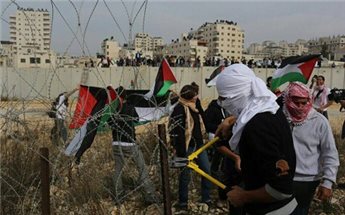 RAMALLAH – Dozens of Palestinian activists crossed Israel’s separation wall on Friday near Qalandia checkpoint as part of a series of non-violent protest actions to demonstrate solidarity with Jerusalem.
Activists used makeshift ramparts, ladders and cut through barbed wire to climb over the separation wall near Qalandia military checkpoint, which is at least six-eight meters in height.
The action was part of a campaign entitled #On2Jerusalem that was organized by the Popular Resistance Committees.
Coordinator of the popular committees, Salah Khawaja, said they attempted to enter Jerusalem but were prevented from doing so by Israeli forces, who deployed heavily in the area.
Israeli forces used live fire, tear gas canisters, stun grenades and rubber-coated steel bullets to disperse the march.
Dozens of Palestinian activists also gathered near the village of Hizma carrying Palestinian flags and shouting slogans in support of Jerusalem.
Several youths were injured as Israeli forces opened fire at them to prevent them crossing the checkpoint. The activists managed to close the road, with Israeli forces preventing settlers from traveling to the area.
Dozens of activists also demonstrated by the entrance to Maale Adumim settlement waving Palestinian flags.
“They attempted to detain us for carrying Palestinian flags,” Khawaja said. “What we did today was to emphasize that we do not have a choice but popular resistance and clashing with Israel is a part of our fight to stop Israeli crimes against Palestinians”
An Israeli army spokeswoman said there was an “attempt” to cross the wall, without providing further details.
Featured Video
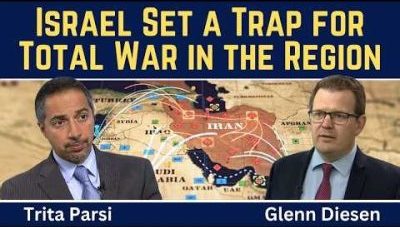
Trita Parsi: Israel Set a Trap for Total War in the Region
or go to
Aletho News Archives – Video-Images
Book Review
Why the War on Conspiracy Theories Is Bad Public Policy
By Kevin Barrett • Unz Review • February 1, 2019
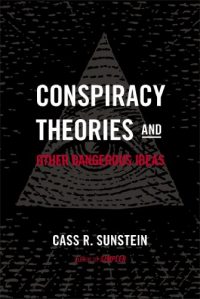 A Review of Conspiracy Theories and Other Dangerous Ideas by Cass Sunstein (based on an earlier paper co-authored with Adrian Vermeule); In Defense of Troublemakers: The Power of Dissent in Life and Business by Charlan Nemeth; and Conspiracy Theories and the People Who Believe Them, edited by Joseph E. Uscinski
On January 25 2018 YouTube unleashed the latest salvo in the war on conspiracy theories, saying “we’ll begin reducing recommendations of borderline content and content that could misinform users in harmful ways—such as videos promoting a phony miracle cure for a serious illness, claiming the earth is flat, or making blatantly false claims about historic events like 9/11.”
At first glance that sounds reasonable. Nobody wants YouTube or anyone else to recommend bad information. And almost everyone agrees that phony miracle cures, flat earthism, and blatantly false claims about 9/11 and other historical events are undesirable.
But if we stop and seriously consider those words, we notice a couple of problems. First, the word “recommend” is not just misleading but mendacious. YouTube obviously doesn’t really recommend anything. When it says it does, it is lying. … continue
Blog Roll
 Aletho News
- Easy fix for Europe’s chaos? Stop fueling war against Russia
- Putin’s key remarks on peace talks and Europe’s ‘schizophrenia’
- Trita Parsi: Israel Set a Trap for Total War in the Region
- Trump’s Iran war is on an Israeli leash
- Saudi oil boss issues global supply warning
- Riyadh Says Its Oil System Is Intact. The Numbers Say Otherwise.
- Trump and Netanyahu Want to “Finish the Job” on Iran
- US ‘one-sided dictation’ not Iran’s beliefs makes rational talks impossible: Baghaei
- Iran’s Next Strike May Not Explode. It Could Shut You Down /Col Doug Macgregor
- Iran: US political targets legitimate if assassinations return
- If Americans Knew
- DAILY UPDATE: Latest essential news on Palestine, Israel, & region
- The Israel Lobby’s Changing Fortunes
- AIPAC has become such a political liability that it’s shifting to a more “nimble” approach to buying politicians
- At least 160 Israeli settler attacks in 2 weeks
- Will Gaza’s Ancient Christian Community Disappear Forever?
- Israel’s vision of regional security rests on keeping Arab states weak
- Heidi Levine recounts how Palestinian youths helped save her in settler attack
- DAILY UPDATE: Latest essential news on Palestine, Israel, & region
- Trump’s Intensifying Sabotage of the ICC, for Israel’s Sake
- Israeli military detain US and UK volunteers in West Bank including Democratic NY politician Brad Lander
- No Tricks Zone
- E-Cars Reduce CO2 Emissions By Only 41% Compared To Internal Combustion Engine Vehicles
- Predictions Made By Renowned Climate Professor Over Past Decades Have Been Proven To Be Poor
- New Study Suggests Large Regions Of The Pacific Ocean Have Been Cooling For The Last 80 Years
- Germany’s Green Energy Debacle: High Energy Costs Force Kahla Porzellan to Close After 182 Years!
- New Study: 50 Years Of The Most Aggressive ‘Net Zero’ Policies Can Only Affect The Global Climate By 0.03°C
- US September “Heat” Was No Record…Many Records Set Decades Ago
- Latest European Green Energy Debacle; Portugal’s Largest Flagship Solar Park Insolvent!
- Green Energy Debacle: German Expert Professor Fritz Vahrenholt Warns Of Severe Economic And Social Consequences
- Two More Paleo Reconstructions Affirm Meters-Higher Sea Levels Across Ireland, Brazil 7000-6000 Years Ago
- New Study: Earth And Venus Surface Warmth Largely Explained By Convection And Lapse Rate, Not CO2 Or Radiation

