German people in unprecedented rebellion against government
1,000 injured in nuclear protests, police at breaking point
By Jane Burgermeister – November 8, 2010
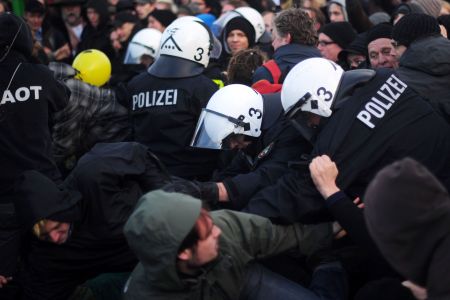
Like the Roman legions vanquished in the Teutoburger Wald in Lower Saxony in 9 AD, the 17,000 police officers that marched into the woods around the nuclear storage facility in Gorleben in northern Germany on Sunday morning looked invincible. Police personnel from France, Croatia and Poland had joined in the biggest security operation ever mounted against protestors against a train carrying nuclear waste to a depot in an isolated part of Lower Saxony’s countryside. Helicopters, water canons and police vehicles, including an armoured surveillance truck, accompanied an endless column of anti-riot police mounted on horses and also marching down the railway tracks into the dense woods. Tens of thousands of anti riot police clattered along the tracks, their helmets and visors gleaming in the morning sun, and wearing body armour, leg guards and carrying batons.
But by Sunday night, those same police officers were begging the protestors for a respite.
Trapped in black, icy woods without supplies or reinforcements able to reach them because of blockades by a mobile fleet of farmer’s tractors, the exhausted and hungry police officers requested negotiations with the protestors. A water cannon truck was blocked by tractors, and yet the police still had to clear 5,000 people lying on the railway track at Harlingen in pitch darkness. The largest ever police operation had descended into chaos and confusion in the autumn woods of Lower Saxony, defeated by the courage and determination of peaceful protestors who marched for miles through woods to find places to lie down on the tracks and to scoop out gravel to delay the progress of the “the train from hell.”
The police union head Reiner Wendt gave vent to the general frustration when he issued a press statement via the DPA news agency last night saying the police had reached exhaustion point and needed a break. Behind the scenes, a battle seemed to be raging between the police chiefs, tucked up in their warm headquarters urging more action, and the exhausted officers on the ground.
The police on the ground won out. The Castor train – called a “Chernobyl on wheels” because it has been carrying 133 tonnes of highly radioactive waste to an unsafe depot – was stopped in the middle of the countryside and NATO barbed wire was placed around it. Lit by floodlights and guarded by a handful of police, the most dangerous train on the planet was forced to a halt after a 63 hour journey across France and Germany.
The defeat of the legions at Teutoburg marked the end of the attempt by the Roman empire to conquer Germania magna. And the failure of the biggest ever police operation two thousand years later in the woods of Lower Saxony to tame women, elderly people and school children protesting the government’s nuclear policy, could well also go down as a turning point.
The Berlin government can no longer rely on the discredited mainstream media to control the way people see issues. Too many people recognise it to be a tool of propaganda. The government now needs to resort to brute force to bludgeon through decisions that enrich corporations and banks and impoverish everyone else. But the police forces at its disposal are simply not sufficient given the scale of the protests now gripping Germany. Only 1,500 police reinforcements could be mustered on Morning from the entire territory to deal with road blockades by thousands of protestors aiming to delay the transport of the nuclear waste on the final leg of its journey.

The police officers were exhausted after shifts of 24 hours or more, often without any food or just a cappuccino and snack bar, and they had nothing to look forward to but more of the same drudgery after a night spent four to a room in a Youth Hostel.
http://newsticker.sueddeutsche.de/list/id/1065325
A leading figure in a German police police union Bernard Witthaut today even lashed out at the government for trying to drive through unpopular policies using the police.
“Whether in Stuttgart or in Wendland today my colleagues are simply not getting out of their anti riot gear because of the wrong decisions by the government,” he said.
Many police officers also expressed sympathy with the protestors’ aims.
The question now is: how long can the use of police to bludgeon protestors continue when the protests are reaching this scale? How long can Germany be governed by a semi authoritarian regime using brute force when the force at its disposal is so small? The German army cannot be deployed on this kind of mission without sparking even more outrage. A false flag terrorist operation will hardly wash when the people are so fed up with the government lies and the media lies. EU soldiers will find it hard to deal with the Germans. The German and EU secret police cannot infiltrate all of the protestor’s organizations when there are simply so many.
The German people as a whole are on the march.
“Citizens in rebellion,” shouted a TAZ headline.
“Civil war in Wendtand,” fumed Bild.
NGO chief Kersin Rudek spoke for many when she said:
“We have lost faith in the government until they prove that their politics is for the people and not for the corporations.”
She talked about the “anger” among people at the “arrogance of the political class.”
As in the Stuttgart 21 railway protests, it was people from all walks of life, a genuine grass roots movement, that arrived in Wendland to protest the decision by the CDU/CSU/FDP government to ignore a legally binding deadline to phase out nuclear power. Against the wishes of the majority, Bilderberg Chancellor Angela Merkel announced this autumn that 17 reactors would continue for another 12 years at gigantic cost to the tax payer in subsidies.
The tax payers of Lower Saxony even have to foot the bill of 50 million euro for the police operation to protect the nuclear waste – and not the electricity companies making a fortune from the extravagant energy source while the government keeps investments in ground-breaking new renewable energy technologies such as the third generation solar cells at a negligible amount.
As in Stutggart, the police used savage force against peaceful demonstrators reinforcing the impression of a government out of control and refusing to respect the basic democratic right of people to hold protests without being beaten to a pulp. Videos of the Castor transport on Sunday show police beating people with their truncheons, punching them and throwing them to the ground. Police also used tear gas, pepper spray and water canon.
http://www.spiegel.de/politik/deutschland/0,1518,727706,00.html
One clip shows a police officer using his fist to punch a man lying on the railway track in the head.
About a 1,000 people were injured, it is reported. 950 people are reported to have suffered eye injuries due to pepper spray and tear gas, according to a spokesperson of “Castor schottern”. Another sixteen protestors suffered broken bones. There were 29 severe head wounds. Two people had to be taken to hospital.
One person had to be taken by helicopter after suffering multiple bone fractures after being trampled by a police horse.
But as in Stuttgart, the people did not give up in spite of the risk of savage beatings at the hands of the police. They insisted on their civic right enshrined in the constitution to hold peaceful political protests.
More than 50,000 people from all parts of the country and all walks of life attended a rally on a field close to Dannenberg. Thousands then marched through the autumn woods, splitting into small groups to descend into the valley, break through police lines to chain themselves to the rails or remove gravel from the tracks to delay the train.
According to Spiegel, 7,000 people alone took part in the road and railway blockades.
An armoured police car was set on fire by masked men but it is not clear if this was an agent pravocateur acting to discredit the protestors. A video shows a man able to walk up to the armoured car and set it alight unhindered.
The overwhelming number of protestors were peaceful.
In spite of the sub zero temperatures and ground frost, up to 5000 protestors lay down on the railway tracks at Harlingen late in the evening and refused to move. Supplies of hot tea, food and blankets were brought to them by mobile kitchens. Fires were lit to help stay warm.
The police worked from midnight until 7 am to clear protestors blocking the track, dragging many to an open air “prison concentration camp” where people were forced to sleep in fields surrounded by police trucks.
This morning, the protestors have regrouped today and thousands are reported to be preparing to block the transport by road of the nuclear waste from Dannenberg to Gorleben.
The organisers of the protest kept journalists and the public informed using live tickers, press releases and at Infopoints so that the whole country could follow the events outside the mainstream media. Radio Wendland is also broadcasting updates on the incredibly heroic resistance of so many people. At great personal risk, tens of thousands of people gave an example of courageous and peaceful non-violent resistance that will surely go down in history.
If this is the resistance for Castor and Stuttgart 21, just imagine what will happen when Germans finally grasp the scale of the banking scam being carried out by their “elite.”
The CDU/CSU/FDP government has already hit record lows in the polls and after Sunday’s savage police operation against peaceful protestors, support for them is sure to plummet further.
The feudal lords without a feudal army to push through their agenda of robbery are facing the end of the road now that their media propaganda apparatus based on the Springer and Bertelsmann empire is falling apart and their strategy of divide and rule through a false left/right political paradigm is no longer working.
A new freedom and power was born in the woods of Wendland. And it belonged to the people who have had enough of the arrogant authoritarian political class.
See also:
German police battle nuclear train protesters
Germans protest to stop nuclear train
Press TV – November 6, 2010
Demonstrators in Germany have been met by riot police as they attempt to stop a train carrying 123 tons of radioactive nuclear waste from France into Germany.
Tens of thousands of people gathered at the north German town of Gorleben to protest the arrival of the highly-radioactive nuclear waste.
Meanwhile, police forces used truncheons and mace against an estimated 150 activists who were attempting to dig a hole under a railway track to prevent the shipment.
Some of the protestors threw stones at security forces, while others blocked the road using tractors.
Around 16,500 police officers have been sent to quell the unrest, DPA reported.
Other reports indicated that trains were delayed as the activists chained themselves to the tracks. According to AFP, they were eventually removed and arrested by the police.
“This nuclear convoy, the most radioactive ever, exposes the population to excessive risks. There is a risk to lives in the short term in case of an accident, but also a long-term risk to their health,” a spokesperson for the anti-nuclear group Sortir du Nucleaire (Get out of Nuclear) said.
The waste is being shipped from La Hague in France by the state-controlled nuclear engineering company Areva.
Chancellor Angela Merkel labeled the move by the activists as, “not a peaceful demonstration, but a criminal offence.”
The so-called Castor trains — cask for storage of radioactive material — have been met by mass demonstrations for the past 30 years. The protests began when they first started to dump nuclear waste at the Gorleben facility.
Eleven steel containers holding the nuclear waste are expected to reach their destination on Sunday.
The protests are also directed at Merkel’s center-right government, which recently passed legislation to extend the life span of Germany’s 17 nuclear power stations beyond the previous deadline of 2022.
Boycott victory: Africa Israel suspends settlement construction
The following press release was issued by Adalah-NY on 3 November 2010:
Africa Israel, the flagship company of Israeli billionaire Lev Leviev, announced this week that it is no longer involved in Israeli settlement projects and that it has no plans for future settlement activities. Africa Israel subsequently denied that this was a political decision. However, in the last few years numerous organizations, firms, governments and celebrities have exerted pressure and severed their relationships with Leviev and his companies over their involvement in settlement construction and other human rights abuses, in response to a boycott campaign initiated by Adalah-NY.
Israel’s Coalition of Women for Peace disclosed on Monday that in an official letter to the Coalition, Africa Israel stated “Neither the company nor any of its subsidiaries and/or other companies controlled by the company are presently involved in or has any plans for future involvement in development, construction or building of real estate in settlements in the West Bank.” In follow-up articles in the Israeli media on Monday, Africa Israel said that the statement was “a description of the business today” and that “Africa Israel builds for all the public in Israel, and does not deal in politics or any other policy.”
Ethan Heitner from Adalah-NY explained, “Following years of settlement construction, and pro-settlement statements and activities by Lev Leviev, the public announcement by Africa Israel that it has no plans to build Israeli settlements is clearly a result of pressure from the growing boycott, divestment and sanctions (BDS) movement. This provides concrete evidence of the way in which the BDS movement can change companies’ behavior. But Africa Israel can’t speak out of both sides of its mouth and expect a clean bill of health. Africa Israel must unambiguously renounce settlement activity, and all other involvement in violations of Palestinian rights. And Lev Leviev needs to end his involvement in settlement construction through other companies like Leader Management and Development, as well as his support for human rights abuses in the diamond industry in countries like Angola and Namibia.”
Adalah-NY began a campaign to boycott the companies of Lev Leviev in November 2007 which has since gained support from allies around the world. As a result, the Norwegian, Swedish and Dutch governments have divested from Africa Israel, as have a number of major international investment firms. The British government, UNICEF, Oxfam and CARE have all severed ties with Leviev, and major celebrities have quietly disassociated themselves from him.
From 2000-2008, Danya Cebus, the construction subsidiary of Africa Israel, built homes in the settlements of Har Homa, Maale Adumim (two different projects), Adam and Mattityahu East on the land of the West Bank village of Bilin. In late December 2009, Africa Israel sold Anglo-Saxon Real Estate, a company that sold settlement homes. Another Leviev-owned company, Leader Management and Development, still owns and operates the expanding settlement of Zufim, built on the land of the West Bank village of Jayyous. In what is now Tel Aviv, Danya Cebus has supported Israeli efforts to erase Palestinian claims and heritage, by building projects on top of the remains of Palestinian villages like Sheikh Muwanis and Sumail that were ethnically cleansed by Israel in 1948. Leviev has also been a donor to two Israeli groups — the Land Redemption Fund and the Bukhara Community Trust — both of which have been involved in expanding Israeli settlements. Leviev has also been rumored to donate to Elad which is taking over the East Jerusalem neighborhood of Silwan.
As recently as 2008 Leviev expressed strong support for Israel’s continued takeover of Palestinian land. In a March 2008 interview in Haaretz daily, reporter Anshel Pfeffer asked Leviev, “Do you have a problem with building in the territories?” Leviev responded, “Not if the State of Israel grants permits legally.” According to an English translation of the same Haaretz interview published in The Jewish Chronicle, Leviev explained, “For me, Israel, Jerusalem and Haifa are all the same. … So are the Golan Heights. As far as I’m concerned, all of Eretz Israel is holy. To decide the future of Jerusalem? It belongs to the Jewish people. What is there to decide? Jerusalem is not a topic for discussion.”
Modeled on the worldwide campaign against apartheid-era South Africa, the movement for BDS against Israel, which was called for in response to Israel’s many violations of Palestinian rights, has grown and achieved significant successes, particularly following Israel’s assault on the Gaza Strip in 2009, which killed more than 1,400 Palestinians.
Education in Palestine in world spotlight

The impact of the Israeli occupation on Palestinians’ right to education has previously not received enough attention. (Khaleel Reash/MaanImages)
Eva Bartlett | IPS | October 31, 2010
GAZA CITY – The focus on people’s movements in Palestine continues to gain momentum with growing non-violent demonstrations in Gaza, the occupied West Bank and occupied East Jerusalem, and with a Palestine-wide call for Boycott, Divestment and Sanctions (BDS) against Israel.
Years of the non-violent demonstrations throughout the occupied West Bank against Israel’s separation wall have finally generated some media interest in the issue of the wall and annexation of Palestinian land. Yet the behind-the- scenes work of Palestinian unions, Palestinian and international BDS groups, video conferences bridging Palestine to the outside world, and the struggle of Palestinian students to access an education continues largely unnoticed by the cameras.
In July, 2010, the United Nations IRIN news reported that roughly 39,000 Palestinian children from Gaza would not have schools to attend, following the destruction or severe damage of some 280 schools and kindergartens during the 2008-2009 Israeli war on Gaza, and the continued inability to repair or rebuild due to the severe Israeli-led siege on Gaza and lack of construction materials.
The UN also reports that 88 percent of UNRWA schools and 82 percent of government schools operate on a shift system as a result, still resulting in serious overcrowding.
On the heels of popular protests against the G-20 summit in Toronto, and branching from the annual World Social Forum (WSF), the first World Education Forum (WEF) in Palestine began Oct. 28 and in regions throughout historic pre-1948 Palestine. From Jaffa to Nazareth, Jerusalem, Bethlehem, and the Gaza Strip, forums on education and Palestinian culture continued until Oct. 31.
Dubbed ‘Education for Change’, the forums included global points of focus on education – including adult literacy and gender equity in early education – but delved further into Palestine-specific topics: occupation and emancipation; the psychological needs of Palestinian students traumatised by occupation and war; keeping Palestine’s history and culture prominent in educational programmes; the physical and bureaucratic roadblocks to higher education within and outside of Palestine; and the innovative means Palestinians use to educate themselves under six decades of occupation.
“Education is not only a basic human right, one that cannot [be] postponed or neglected during conflict or emergency, but also has a key role to play in protecting and sustaining the lives of children and youths,” says Dr. Mazen Hamada of Gaza’s Al-Azhar University and one of the WEF Gaza organisers. “The effect of siege on Gaza Strip has exceeded the economical, agricultural, heath and environmental levels to reach also the educational sector. The academic achievements of the students at all levels has decreased after the last war on Gaza, and the number of students not attending their classes has increased.”
Hamada notes that the siege’s simple act of banning paper and educational materials needed for schools affects students’ ability to study. He adds, “Because of the siege, many parents are unemployed and are not able to cover the tuition of their children at universities and schools. And university students aren’t able to continue their studies abroad, nor are professors able to participate in international conferences or obtain further training outside.”
The WEF-Palestine, over its four days of forums and events addressed these problems, while reiterating the need to include Palestinian culture and history in curriculum and activities.
“When I was a student, we studied Egyptian history and geography, we never even saw a map of Palestine in school,” says Abu Arab, 30, of his studies in Gaza under Egyptian control. “Palestinian culture wasn’t a part of the education programme then, especially since the Israelis could censor any information they didn’t want studied.”
“Ironically, I learned more about Palestine when I was in prison,” says Abu Basel. “I was imprisoned by the Israelis when I was 16 and hadn’t yet finished high school. Since they kept me for nine years, I had to finish my studies in jail.”
Like many Palestinians, Abu Basel used his time in prison to study from others who had an education. “Some had finished university, some had their Masters, some had studied abroad. We’d study together, like workgroups. We also studied Palestinian history and learned about Zionism.”
Specific to the WEF-Palestine is the problem of access: with all of Palestine’s borders controlled by Israel and Egypt, other means of communication and participation are vital. With group participation from Japan, Canada, Latin America, Africa, and Europe, the WEF-Palestine included video conferences and live streaming on the Internet, as well as interactive workshops, visits to important areas and cultural sessions.
In Gaza, participants joined a popular demonstration in Gaza’s northern Beit Hanoun, as well as meeting fishermen whose livelihoods have been destroyed by the siege and by attacks from Israeli gunboats in Gazan waters.
For farmers living in the buffer zone, the need to enhance education and international understanding is not simply a question of their children’s futures but also of their livelihoods, routinely destroyed by Israeli invasions.
The Garrara elementary school in southeastern Gaza is but one of many schools suffering from multiple problems under siege and under attacks by Israeli soldiers along the border. “We are under one kilometre from the border and the students experience regular firing from Israeli soldiers,” says Umm Mohammed, teacher at the school. “Many of our students have classmates who were killed or injured by these attacks, and that affects their psychological state and ability to study,” she says.
The school itself is still in shambles after the Israeli war on Gaza, and many of the students study in tents year-round.
The WSF a decade ago set out to promote notions of sustainable development, fair trade, and social justice. The WEF-Palestine by virtue of necessity focuses on the urgent educational issues at hand, but likewise harnesses the knowledge of grassroots activists, civil society groups, and educators, citing education as means of resistance, for peace and equality.
Al Azhar’s Dr. Hamada is positive about the outcome. “The WEF is a good opportunity to exchange information and experiences between Palestinians and other international educational organisations towards improving the educational system and teaching methodologies in Palestine,” he says.
As the statement from WEF-Palestine reminds everyone, “Transforming the world and liberating humanity from colonialism, racism and exploitation requires a struggling and educated population. Therefore education is an indispensable tool for liberation.”
Free speech under attack in Canada
A TIME TO SPEAK OUT DAY OF ACTION TO DEFEND FREE SPEECH ON NOVEMBER 8
Independent Jewish Voices – October 30, 2010
The Harper government is sponsoring a conference of the ‘Inter-Parliamentary Coalition to Combat Anti-Semitism’ (ICCA) – the CPCCA’s international counterpart – in Ottawa on November 8 and 9. The CPCCA and ICCA have an agenda to attack free speech and to silence legitimate criticism of Israel by falsely conflating this with anti-Semitism.
Independent Jewish Voices, along with many other human rights, peace, union, and Palestinian rights groups, is deeply concerned about the threat to free speech and civil liberties posed by the Canadian Parliamentary Coalition to Combat Anti Semitism'(CPCCA). It is legitimate and ethically necessary for Canadians of conscience to criticize Israeli human rights abuses and to support non-violent remedies.
A NEW MCCARTHYISM
The Harper government has already slashed funding to NGOs that dared to express support for Palestinian rights, brutally attacked and abused G20 demonstrators, barred British MP George Galloway from entering Canada because of his aid to the people of Gaza, and attacked CUPE, CUPW, and Israeli Apartheid Week activities. The list goes on!
The CPCCA, with Minister of Censorship and Deportation Jason Kenney as one of the CPCCA’s driving forces, aims to entrench these attacks on free speech, for example, by changing hate crime legislation to include legitimate criticism of Israel, by criminalizing BDS campaigns, by pressuring schools to teach that criticizing Israel is anti-Semitic, and by pressuring universities to ban events critical of Israel. Already in France, people have been arrested for distributing pamphlets critical of Israel.
The CPCCA held hearings this past year to try to paint a veneer of credibility on its transparent intention to attack free speech in Canada. It ignored many critical submissions. Even the CPCCA’s own witnesses from Canadian universities and the police confirmed that there is no rise in anti-Semitism and called on the CPCCA to respect free speech.
The ICCA conference is intended to distract from this embarrassing result. At a cost of over $451,280 in federal funds, the ICCA conference is closed to the public and the media, and makes no pretence of unbiased research.
STAND UP, FIGHT BACK
1. Organize a day of action for free speech on Monday, November 8.
Local events could include press conferences, protests, teach-ins, or other creative ideas to build the movement to defend free speech. IJV will release a 10 minute video on Nov. 8, which will be posted on YouTube and the IJV web site. Contact Independent Jewish Voices at ijv@magma.ca if you’d like us to send you a copy.
2. Contact your MP and the federal party leaders and demand they stand up for the principle of free speech in Canada and reject any attempts to silence or criminalize legitimate criticism of Israel. You can get their contact info at: http://webinfo.parl.gc.ca/MembersOfParliament/MainMPsCompleteList.aspx?TimePeriod=Current&Language=E
3. Contact university presidents and human rights offices in your city and ask them also to issue a statement affirming the right of students and faculty to free speech.
4. Sign our Free Speech Petition at http://ijvcanada.org/sign-signez-petition-cpcca-hearings/ which will be released to the press and all MPs on Nov. 8.
5. Send a photo to ijv@magma.ca of yourself holding a sign saying “I support free speech” or an anti-CPCCA sign (perhaps with duct tape over your mouth). We will post it on line with a title “This is what Democracy looks like.”
6. Join Independent Jewish Voices: Go to www.ijvcanada.org.
“No chance for two states”: Interview with Knesset member Haneen Zoabi
Ali Abunimah, The Electronic Intifada, 31 October 2010
There is now “no chance” for a two-state solution in Palestine. So said Haneen Zoabi, a Palestinian member of Israel’s parliament, the Knesset, in an interview with The Electronic Intifada (EI) on 29 October in Chicago (video).
“The reality goes more toward the one state solution,” Zoabi said, “whether a democratic one-state solution, or a binational one-state solution.”
Elected in 2009, Zoabi represents the National Democratic Alliance, and is the first woman to be elected on the list of an Arab party in Israel.
“We are struggling for a normal state,” Zoabi explained, “which is a state for all of its citizens, [in] which the Palestinians and the Israeli Jews can have full equality. I recognize religious, cultural and national group rights for the Israelis, but inside a democratic and neutral state.”
Zoabi spoke to EI just before she addressed 120 students, faculty and community members in an event organized by Students for Justice in Palestine at the University of Chicago. During her lecture, and in the interview with EI, Zoabi described the systematic legal, social and cultural discrimination Israel’s 1.2 million Palestinian citizens face. Zoabi said she strongly opposes Israel’s demand to be recognized as a “Jewish state” as this would legitimize and deepen these forms of discrimination.
Zoabi was among dozens of Palestinian citizens injured by Israeli police just two days before her interview with EI. On 27 October, Israeli extremists affiliated with the outlawed Kach movement, founded by the late Meir Kahane, marched through Umm al-Fahm, a Palestinian city within Israel. Kahane believed that all Palestinians should be expelled from Israel and the occupied territories. Zoabi described how police attacked Palestinian demonstrators and protected the Israeli extremists.
She arrived in Chicago on Thursday evening, 28 October, directly from Israel with bandages on the back of her neck and lower back, where she had been struck by projectiles fired at close range. She said Israeli police used a kind of weapon which she had not seen before, which caused an intense burning sensation, and showed EI the welts beneath the bandage on her neck.
In May, Zoabi participated in the Gaza Freedom Flotilla and was aboard the Mavi Marmara when the ship was attacked by Israeli commandos in international waters. Nine activists were killed and dozens injured in the Israeli attack.
Zoabi strongly criticized Israel’s official inquiry into the incident. Although a member of Israel’s parliament and an eyewitness, Zoabi has not been asked to testify before the inquiry — called the Turkel Committee — but has attended its sessions with other witnesses. She told EI of the open bias and political statements of the committee members, stating “They do not look for the facts. They are just looking for a way to justify the Israeli attack.”
Asked about the prospects for the current US-brokered “peace process,” Zoabi said Israeli society and parliament “doesn’t feel the need for peace. They don’t perceive occupation as a problem. They don’t perceive the siege as a problem. They don’t perceive oppressing the Palestinians as a problem, and they don’t pay the price of occupation or the price of [the] siege [of Gaza].”
While Palestinians suffer intensely, Israel, Zoabi said, viewed its relationship with the Palestinians primarily as a “security problem,” which it has largely resolved through the siege of Gaza, the separation wall in the West Bank, and by “security coordination” with the Palestinian Authority.
Zoabi spoke about the global boycott, divestment and sanctions (BDS) movement which aims to pressure Israel to end its occupation and other human rights abuses against Palestinians, and to respect international law.
While she said the effect of BDS within Israel was still marginal, “this kind of campaign has the power raise the debate inside the Israeli society and inside the Knesset.” Israel, she said, “is so sensitive to international criticism and a situation of isolation.”
Even if BDS did not yet have much impact on Israel’s economy, it “can send a political message to the Israelis that we cannot just continue with the occupation, and continue with the siege and with oppressing the Palestinian people without the Israeli society paying a price.”
During her visit to the United States, Zoabi addressed the US Palestinian Community Network’s second Popular Conference for Arabs and Palestinians in the US and is scheduled to speak in the San Francisco Bay Area before returning home.
Oslo mayor joins protest against illegal Israeli wall
Bil’in Popular Committee Against the Wall and Settlements | October 31, 2010
Today’s demonstration in Bil’in against the Apartheid wall, organized by the Popular Committee of Bil’in, was joined by many local residents, Israeli activists as well as many internationals. As the group moved peacefully towards the Apartheid wall, they chanted to “Freedom to all Palestinian Political Prisoners”. Demonstrators carrying the Palestinian flag crossed through a gate to confront the awaiting soldiers with a simple question, “What are you doing here?”
When the soldiers eventually got tired of the presence of people demanding access to the agricultural lands belonging to Bil’in farmers, they began firing tear gas. The hot gas canisters ignited fires in the dry olive orchards, which residents hurried to extinguish to protect the trees from damage. For a while it was possible to avoid the tear gas, but eventually it became so excessive that the demonstrators had to retreat to the village.
It is a victory for the people every time they mobilize, without guns, to demand justice – an end to a racist wall that separates them from their ancestral lands and from the possibility of living peacefully with Israel. After the demonstration ended, the Israeli Army attacked Bil’in Village by firing tear gas and sound grenades into the village as well as directly in front of residential homes which lead to the people (locals, Israeli’s and Internationals) confronting the Army for over 30 minutes.
At today’s demonstration in Bilin, Iyad Burnat, Head of the Popular Committee Against the Wall along with two members of Popular Committee, Basel Mansor and Sameer Bornat, welcomed two representatives from Norway who joined in with the non-violent demonstration along with other internationals and Palestinians against the illegal Apartheid wall. They were Stine Renate Haheim, a Member of Parliament and Torunn Kanutte Husvik the Mayor of Oslo both members of the Norwegian Labour party.
For over 6 years the residents of Bilin along with internationals have been demonstrating against the illegal wall, with many injuries, arrests and the deaths of some non-violent protesters.
Arundhati Roy on Kashmir’s Independence
Democracy Now! |October 27, 2010
The award-winning Indian author Arundhati Roy is facing possible arrest in India on sedition charges after publicly advocating for Kashmir independence and challenging India’s claim that Kashmir is an “integral part of India.” If charged and convicted of sedition Roy could face up to life in prison.
For interview transcripts, podcast and more information, see http://www.DemocracyNow.org.
Haifa activist accepts plea deal
By Jared Malsin | Ma’an | October 27, 2010
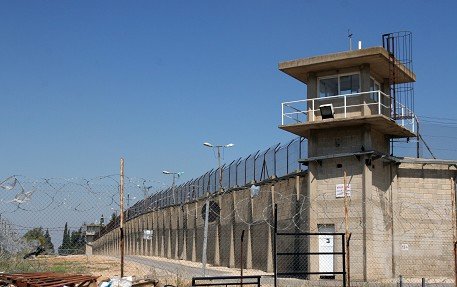
GAZA — Ameer Makhoul, the Palestinian activist from Haifa, accepted a plea bargain on Wednesday, confessing to espionage charges leveled by the Israeli state.
Makhoul, an Israeli citizen, was detained by authorities during a nighttime raid on his home in May. He and his lawyers maintain that the charges against him are political, and that he was tortured while in prison. Makhoul was also banned from seeing a lawyer for the first 12 days of his detention.
The charges include conspiring to assist an enemy, contact with a foreign agent and spying for Hezbollah.
Orna Kohn, one of Makhoul’s lawyers from the legal rights group Adalah, said Makhoul decided to accept the plea deal after consultation with his defense team.
Under the deal, she said, the content of the indictment was reduced. The state is asking for 10 years imprisonment, while the defense is asking for seven, Kohn added.
Kohn said the decision to accept the deal was made after taking into consideration “the political climate now and the legal situation under Israeli law with so-called security charges, and given the history rulings in Israeli courts dealing with such charges.”
Kohn said she met Makhoul earlier on Wednesday. Asked about his condition, she said, “He’s well. He’s hopeful the court will rule for the minimal number of years.”
“He understands his chances of being acquitted are slim,” she added. She said the charges against him “in any other country should not have been basis for indictment.”
A hearing is set for 5 December, when the court will decide whether to accept the plea deal reached between the prosecution and the defense.
Makhoul is the director of Ittijah, the Union of Arab Community-Based Organizations, and also chaired the High Arab Monitoring Committee’s panel on defending Arab citizens’ freedoms. He was arrested in May along with Omar Saeed, an activist with the Balad party.
The plea bargain was agreed upon in the Haifa District Court after being submitted on Tuesday.
A representative for the prosecution told the Israeli newspaper Haaretz: “The plea bargain was approved by the highest ranking levels of prosecution, including the state prosecutor. Most importantly Makhoul, who claimed he was being politically persecuted at the beginning of this, now stands in front of the court and admits to the charges attributed to him.”
How Much Money is Needed to Stop the BDS Movement?
By Alex Kane | October 27, 2010
$6 million dollars: enough to combat a largely grassroots, bottom-up and growing boycott, divestment and sanctions (BDS) movement targeting Israel? That’s what the Jewish Federations of North America and the Jewish Council for Public Affairs are hoping.
The Jewish Telegraphic Agency reports:
The Jewish Federations of North America and the Jewish Council for Public Affairs are launching a multimillion-dollar joint initiative to combat anti-Israel boycott, divestment and sanctions campaigns.
The JFNA and the rest of the Jewish federation system have agreed to invest $6 million over the next three years in the new initiative, which is being called the Israel Action Network. The federations will be working in conjunction with JCPA, an umbrella organization bringing together local Jewish community relations councils across North America.
The BDS movement–whose demands are based on international law–is clearly scaring Israel and the Jewish establishment, who have labeled the movement “the second most dangerous threat to Israel, after Iran’s pursuit of nuclear weapons.”
The article also reports that the new anti-BDS initiative sprung from the urging of the Israeli government, which “has been advocating for this, especially over the past six months or eight months,” as Jerry Silverman, the head of the Jewish Federation of North America, told JTA.
It appears that the Jewish Federations of North America and the Jewish Council for Public Affairs are following the recommendations of the Reut Institute, an Israeli think tank with close ties to the Israeli government, who called on the Israeli government to “sabotage” and “attack” the BDS movement in a February 2010 report.
The investment of a large amount of money to combat what is essentially impossible to combat as long as Israel continually flouts international law is a recognition of the powerful effect the BDS movement is having. Members of the Israeli Knesset certainly see BDS as a threat, having introduced a bill that would make it illegal for Israelis to “launch or incite” a boycott against Israel.
When $6 million is apparently needed to attempt to halt the BDS movement, that means something. But all the money in the world can’t stop the movement for Palestinian justice. Couldn’t someone tell that to the Jewish Federations of North America and the Jewish Council for Public Affairs? Their money would be better spent on something else.
French strike costing €400mn daily
Press TV – October 25, 2010
France’s Finance Minister Christine Lagarde has warned that the country’s massive strikes are costing the French economy up to 400 million euros a day.
Lagarde said on Monday that the economic cost is between 200 million euro (£178 million) and 400 million euro (£356 million) every day the unions call for strikes protesting the pension reform law, the Associated Press reported. The French minister added that the media images showing street battles between the anti-riot police and protesters have damaged the country’s image. She warned that strikes against French President Nicolas Sarkozy’s pension reform have threatened to derail France’s still fragile economic recovery.
“Today, we shouldn’t be weighing down this recovery with campaigns that are painful for the French economy and very painful for a certain number of small and medium-sized businesses,” Lagarde noted.
Ongoing protests and strikes against the government’s pension reforms have led to fuel shortages and travel chaos throughout the country. A quarter of the country’s gas stations have run dry due to strikes at refineries and blockades of fuel depots by the protesters.
The strikers are hoping the disruptions will finally force Sarkozy’s government to cancel a plan to increase the retirement age from 60 to 62. But the government insists that the reform is necessary to reduce the country’s budget deficit.
The French Senate voted Friday to pass the proposed pension reform, which is expected to win final approval this week.
A recent opinion poll shows Sarkozy’s approval rating has sunk to a record low of 29 percent. The latest polls have also shown that a vast majority of the French people support the walkout.
France paralyzed as strikes enter day 12
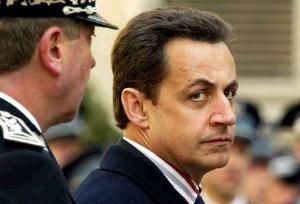 Sarkozy’s approval rating has dropped below 30 percent
Press TV – October 24, 2010
Protesters in France decry Paris’ pension reforms for the 12th straight day, as the country witnesses its worst strikes and civil disobedience in 15 years.
“Just because an unjust law has been passed does not mean we passively accept it. All we wanted was discussions on how to improve the law. Even that was denied us. Now we are calling for its suspension,” The Hindu quoted Francois Chereque of the CFDT trade union as saying on Sunday.
Labor unions have called for two more strikes on next Thursday and November 6th to protest against the country’s pension reforms. A similar call brought millions of people into the streets early this week.
According to the AFP, the unions say they will continue to call on their workers and other French citizens to keep protesting until the French President Nicolas Sarkozy negotiates with them.
The French Upper House passed Sarkozy’s reform bill last Friday, raising the minimum retirement age two years, to 62 and full retirement from 65 to 67.
A joint parliamentary commission is to meet next week to give its final approval to the law, considered a mere formality.
The bill has sparked protests for more than two weeks, disrupting rail and airports services. A blockade on refineries, fuel depots and ports has also left many gas stations empty, forcing 30 percent of gas stations in the French capital of Paris to shut down.
Strikes at France’s oil refineries, which began in Marseille in September, caused panic buying and nationwide shortages.
Marseille, France’s oldest city, has been crippled by the walkouts. Protesters have barricaded roads leading to Marseille Airport, forcing passengers to abandon their cars and drag suitcases to the terminal on foot to catch flights.
A fleet of huge ships, cruising offshore, are unable to dock in the southern coastal city as railway staff and dock workers join the strikes.
A recent public opinion poll by a French television network showed that nearly 70 percent of French citizens support the ongoing strikes.
The French government has said on numerous occasions that the reform is needed to save the indebted pension system from collapse.
Featured Video
Anthony Aguilar: The Point of No Return Has Been Reached
or go to
Aletho News Archives – Video-Images
Villains of Judea
David Wurmser
A shadowy neocon strategist spent 30 years maneuvering Washington toward war with Iran
José Niño Unfiltered | November 17, 2026
As American forces clash with Iran in 2026, a decades-long campaign orchestrated from the shadows of Washington has finally reached its climax. Earlier this year, foreign policy strategist David Wurmser openly called for Washington to let Israel start a war of aggression against Tehran, portraying the conflict as a historic reckoning akin to the Soviet collapse. For avid critics of American foreign policy, the current war represents the ultimate triumph of a shadowy Jewish operative who spent over 30 years advancing Israeli strategic priorities inside the highest echelons of the United States government.
Born in Switzerland, David Wurmser earned three degrees from Johns Hopkins University, including a doctorate. He spent 11 years in Navy Reserve intelligence and reached the rank of lieutenant commander. During that service, the Defense Intelligence Agency mobilized him for its Iraq Intelligence Task Force in 1994, 1996 and 1998.
Yet his defining partnership was personal as much as institutional. His Israeli born wife, Meyrav Wurmser, wrote her doctoral dissertation on Revisionist Zionism. In 1998, she cofounded the Middle East Media Research Institute, known as MEMRI, with Yigal Carmon, a former colonel in the Israeli military. Carmon served in Israel Defense Forces intelligence from 1968 to 1988. He later advised prime ministers Yitzhak Rabin and Yitzhak Shamir on counterterrorism.
During the mid-1990s, Wurmser moved seamlessly between Washington institutions and Jerusalem policy circles. … continue
Blog Roll
 Aletho News
- Lebanon on the Brink: How Washington and Tel Aviv Turned the “Peace Process” into an Instrument of Pressure
- Before Laundering The Iran Dirty Bomb Hoax, Jake Tapper Was Israel’s Chief Propagandist For Genocide.
- Minuteman III Test at APEC Opening Aimed to Show US Remains a Dangerous Power – Ex-Pentagon Analyst
- Estonia’s border closure is collective punishment of ethnic Russians
- US Plan to Toughen Restrictions on Chip Exports to China After Nvidia Scandal – Reports
- Villains of Judea: David Wurmser
- Anthony Aguilar: The Point of No Return Has Been Reached
- Iran accuses NYT report of paving way for attacks on dams
- Brand ‘rape’ case just doesn’t add up. Was he framed?
- How The Jensen Huang Chinese Spy Hoax Is Russiagate 2.0
- If Americans Knew
- An error has occurred; the feed is probably down. Try again later.
- No Tricks Zone
- Argentina’s Perito Moreno Glacier Joins Antarctica and Arctic In Defying Doomsday Melt Claims
- New Study: Barents Sea Temperatures Were Warmer And Sea Ice Less Extensive In The 1700s Than Today
- German Authorities Start Initiative To Evaluate Public Register For Climate “Disinformation” Spreaders!
- Zonal Asymmetry of Temperature Change in the Antarctic Circumpolar Current
- New Study: The Net Fossil Fuel Contribution To Rising Atmospheric CO2 Has Been Zero For 500 Years
- Germany’s Green Energy Transition Becoming Increasingly Expensive…Another 6 Trillion Euros!
- Sudden Stratospheric Warming, Powerful El Niño Combination May Lead To Extreme Europe Cold, Energy Crisis!
- Two New Studies Find Thwaites Glacier Melt Cannot Be Driven By Human Activity Or A Warming Ocean
- E-Cars Reduce CO2 Emissions By Only 41% Compared To Internal Combustion Engine Vehicles
- Predictions Made By Renowned Climate Professor Over Past Decades Have Been Proven To Be Poor

