It is time Americans rise up against the corruption, inefficiency, and cruelty of our healthcare system and tell its corporate captors and Congress – Enough Already!
For decades other countries have guaranteed universal health insurance for all their people, at lower costs and better outcomes (President Truman proposed it 72 years ago in the US). When are we going to break out of this taxpayer-subsidized prison built by the giant insurance companies, drug goliaths and monopolizing hospital chains?
How long is Uncle Sucker going to pay through the nose for gouging drug prices, patient-denying health insurance companies and all the brutal fine print rules in consumer contracts whose trap doors are maddening tens of millions of Americans?
Deductibles, exclusions, waivers, co-pays, corporate immunities from injured patients, disqualifying changes in patients’ status and just plain stonewalling are just some examples of this cruel madness.
Not to mention the endless electronic bills with their inscrutable codes and unchallengeable charges – that is if you can get anyone on the phone to answer your questions. Billing fraud and abuses alone cost us up to $330 billion a year!
Why do we put up with “pay or die” drug prices? Why do we tolerate our fellow Americans dying in the tens of thousands each year because they cannot afford health insurance to get diagnosed and treated in time?
Do we know that the profiteering drug companies regularly are given a slew of handouts, including huge tax breaks, free drugs developed by our National Institutes of Health, and few restraints on their high pressure sales of dangerous and addictive drugs (eg opioids) or, together with their corporate middlemen, return the favor by charging Americans the highest prices in the world? Other countries put limits on such blatant greed and exploitation.
Groping for ever more profits, the big drug companies offshore production to less regulated labs in China and India, which amount to 60% of the drugs we buy and 80% of the active ingredients in all medicines sold in the US. Unpatriotic in the extreme!
Compounding these inhumane practices is a supine Congress, with few exceptions like Rep. Lloyd Doggett (D, TX), and state legislatures, misusing the power we entrusted to them. These legislators see large pharmaceutical companies as honey pots for campaign cash that work as hush money paid by hordes of drug industry lobbyists. So craven was the majority in Congress in 2003 that, when the drug benefits bill was passed, it prohibited Medicare from negotiating volume discounts for this lucrative corporate sales bonanza (Past Congresses authorized the Pentagon and Veterans Administration to bargain and they get lower prices as a result).
Despite the fact that these healthcare challenges have been dealt with more humanely and economically by other Western countries in the world, Americans are consistently told to tolerate an aggravating status quo. Scores of books, articles and television exposés highlight all the ways we’re pushed around, denied, excluded, harmed, overcharged and deceived, yet so many of these authors still maintain that our system of health insurance/healthcare can’t be replaced with a much better one? So these writers continue to advise us how to duck, slide and swivel our escape from a few of these commercials chains and scams.
In all the fine articles written to help consumers navigate Obamacare, Medicare, and private health plans, the authors trap themselves in this vast corporate cul-de-sac by never mentioning the way out.
That way is Single Payer or Full Medicare for all, everybody in, nobody out, with free choice of doctors and hospitals – at far lower costs, mortality and morbidity. These narrow reformers can’t escape their “it ain’t going to happen here” syndrome.
Really? Don’t they know that the public has long viewed Single Payer favorably (including a majority of doctors and nurses), even without political leaders standing up for it or mass media reporting this proven safe path.
The surrender to corporate tyranny infects the 112 members of the House of Representatives who have co-signed HR 676 to create full Medicare for all. They signed, but then gave in to a silent resignation by not fighting for it in Congress and back home.
When the companies and their apologists argue for a “free market” approach to healthcare, you can retort – what free market? Half the money coming to these companies is from the federal, state and local governments. Taxpayers also pay tens of billions of dollars for much of the discovery and testing of drugs. Tax breaks and loopholes in patent laws block generic drugs and distort the free market.
Drug patents are by definition monopolies. Concentration by mergers and acquisitions of hospitals, clinics and physician practices (note dwindling independent cardiology practices) raise serious anti-trust issues. Fine print contract peonage takes away the consumers’ freedom of contract, as do the daily buy and sell equations, so often rendered by third parties for patients. Corporate billing and other crimes are endemic. What free market?
Each of you can help the Single Payer movement build momentum. Ask your members of Congress in writing if they support HR 676 and, if not, demand their appearance in person at a town meeting arranged by people like you to answer why. If they refuse, peacefully picket their local offices.
Ask the newspapers, radio and television stations, including the culpable public radio and public television, when are they going to cover the basic full Medicare reform supported by tens of millions of their listeners and viewers?
Finally, go to the website SinglePayerAction.org to find out what other people are doing and what more you can do with your friends and co-workers.
One percent of you, together with popular backing, can make it happen, through a persistent civic hobby. Remember, you only have to turn around less than 450 members of Congress.
BETHLEHEM – Days after Norway pulled its sponsorship from an occupied West Bank women’s community center and demanded a refund for construction costs from the Palestinian Authority (PA), with the United Nations (UN) promptly pulling its backing as well, the center has reportedly said it will not change its name, which the UN said “glorifies terrorism.”
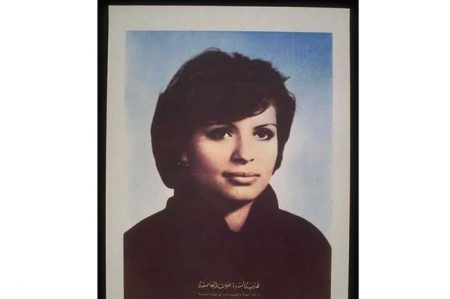
The Dalal al-Mughrabi Women’s Community Center — named after a fighter in the Palestine Liberation Organization (PLO) who played a role in a 1978 attack that left over 30 Israelis and 12 Palestinian fighters dead, including al-Mughrabi herself — was built in the Nablus-area village of Burqa in the northern West Bank.
The center was sponsored by both the UN and the Norwegian government, who provided partial financial support for the construction of the center, which had remained nameless until it was officially inaugurated earlier this month.
Official PA-owned Wafa news agency reported Tuesday that the head of the Burqa village council, Sami Daghlas, said “the center has no intention of caving in to the pressure and changing its name.”
Daghlas told Wafa that the center was built “to serve and empower young women in the village and to help them develop to become active members in society.”
According to Daghlas, the name Dalal al-Mughrabi was chosen by the villagers “to commemorate a Palestinian hero who sacrificed herself for her country and therefore they have no intention to change its name, regardless of the price.”
“Instead of fighting a community center that does not exceed 50 square meters in area and works on serving young women in the community, they should be objecting to regular attacks by (Israeli) settlers against the village and its people and to allow farmers to reach their land that was taken away from them,” Daghlas said, as he expressed his surprise at the actions of the UN and Norway, which he said were done “to satisfy Israel.”
The Times of Israel reported last week that the Norwegian Foreign Minister had condemned the PA for the name choice of the center, saying “Norway will not allow itself to be associated with institutions that take the names of terrorists in this way,” and demanded that the PA reimburse Norway for the costs contributed to the center.
In his interview with Wafa, Daghlas said that the people of Burqa did not object to returning the money to Norway, which he said “was only few thousand dollars used to repair and refurbish the building, and would never capitulate to pressure and blackmail.”
One day after Norway’s move to pull funding from the center, the UN pulled its sponsorship from the center, which it called “offensive.”
“The United Nations disassociated itself from the Center once it learned the offensive name chosen for it and will take measures to ensure that such incidents do not take place in the future,” the Times of Israel said, quoting a statement from Stephane Dujarric, spokesman for UN Secretary-General Antonio Guterres.
“The glorification of terrorism, or the perpetrators of heinous terrorist acts, is unacceptable under any circumstances,” the UN statement said, adding that the UN had requested that the logo of UN Women be removed from the building.
According to Wafa, Daghlas said that the UN was responsible for funding some projects put on by the center.
Wafa also quoted Ahmad Majdalani, member of the Executive Committee of the PLO, as saying that “Israel glorifies Jewish terrorists and pays them money and no one objects to that,” referencing the assassin of Israeli Prime Minister Yitzhak Rabin and other Jewish extremists convicted of attacking and killing Palestinians and Israelis, who Majdalani said still receive Israeli government stipends through the national insurance plan.
Iranian Parliament Speaker Ali Larijani says the “aggressive and racist” nature of the Israeli regime has always been and will remain a source of threat to the nations in the Middle East and humanity in general.
In a message on Monday, Larijani offered his congratulations to Secretary General of the Lebanese Hezbollah resistance movement, Sayyed Hassan Nasrallah, on the 17th anniversary of the liberation of southern Lebanon from the Israeli occupation.
He said resistance was the only way to liberate Palestine from the Israeli occupation.
“The multiple victories of the Islamic resistance [movement] against the Zionist regime (Israel) clearly demonstrate that the lofty aspirations of the Muslim Ummah for the liberation of the occupied Palestinian territories can be achieved only through harmony, solidarity and resistance,” Larijani added.
The top Iranian parliamentarian expressed confidence that unity and solidarity among different Lebanese groups would shape a “bright future” for people in Lebanon and the Islamic resistance movement.
The Israeli regime first invaded Lebanon in 1978 and later escalated the military operation into a full-scale offensive in 1982.
During the 22-year entanglement with Lebanon, the Israeli military took heavy blows from Lebanese resistance fighters and reportedly lost some 900 of its soldiers.
Following the 1982 offensive, known as the First Lebanon War, Tel Aviv refused to leave southern Lebanon and kept its military presence there in defiance of the UN Security Council Resolution 425 that called on the regime to immediately withdraw.
However, the Zionist enemy eventually buckled under the resistance put up by Hezbollah fighters and pulled out its forces from the occupied areas overnight on May 24, 2000, in what observers call a humiliating defeat for the regime in Tel Aviv and a glorious victory for Hezbollah.
Hezbollah’s victory also served as a source of inspiration for the Palestinians, who launched their second anti-Israel uprising, known as al-Aqsa Intifada, in the occupied territories only four months after Tel Aviv’s withdrawal from southern Lebanon.
Addressing the Lebanese nation from the southern city of Hermel on Thursday, Nasrallah said when southern Lebanon was occupied by Israel, no country in the world except Iran and Syria helped end the occupation.
He added that the resistance has grown strong enough not to wait for support from the rest of the world or from inside or outside the country.
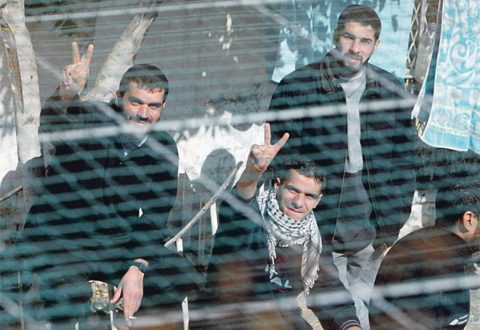
BETHLEHEM – Hundreds of Palestinians held in Israeli prisons have suspended a 40-day mass hunger strike during dawn hours on Saturday, after reaching an agreement with the Israel Prison Service (IPS) that reinstated the prisoners’ family visitation sessions to two times per month.
Palestinian leaders have applauded the prisoners’ “victory,” saying that the agreement represents an “important step towards full respect of the rights of Palestinian prisoners.”
Head of the Palestinian Committee of Prisoners’ Affairs Issa Qaraqe and head of the Palestinian Prisoner’s Society (PPS) Qaddura Fares said in a joint statement that the prisoners suspended the “Freedom and Dignity,” following more than 20 hours of negotiations between IPS and Marwan Barghouthi — the imprisoned Fatah leader who has been the primary leader of the mass strike, and other prison leaders in Ashkelon prison.
The statement added that IPS officials announced the end of the strike after negotiating with Barghouthi, who IPS had consistently refused to speak with throughout the strike’s duration, as hunger strikers had meanwhile refused to enter negotiations without the presence of Barghouthi.
The joint statement did not mention which of the hunger strikers’ demands were actually met by Israeli prison authorities.
An IPS spokesperson told Ma’an that the agreement was forged between the Israeli state, the International Committee of the Red Cross (ICRC), and the Palestinian Authority (PA), granting prisoners a second monthly family visit to be funded by the PA .
The move effectively reinstated the number of family visits that were traditionally provided to Palestinian prisoners, before the ICRC reduced the number of visit they facilitated last year from two to one visit a month, sparking protests across the Palestinian territory.
The IPS spokesperson confirmed that Barghouthi was part of the agreements, but said that IPS was not considering the talks “negotiations,” as they only reinstated a previous policy and did not provide any new concessions to the prisoners.
The IPS spokesperson told Ma’an that some 834 prisoners who had remained on strike to the 40th day had ended their hunger strikes, and the 18 prisoners who remained hospitalized would be returned to Israeli prison following the improvement of their health conditions.
The spokesperson declined to comment on whether any of the other demands were met, which also included the right to pursue higher education, appropriate medical care and treatment, and an end to solitary confinement and administrative detention — imprisonment without charge or trial — among other demands for basic rights.
The agreements came on the first day of the Muslim holy month of Ramadan, when some hunger strikers had vowed to fast and forgo the salt and water mixture being consumed by the prisoners from dawn until sunset — the only source of nutrients the hunger strikers were consuming.
Scores of Palestinian prisoners were transferred to Israeli hospitals during the hunger strike, with reports emerging that prisoners were puking blood and fainting. Palestinian leaders had feared possible deaths among the hunger strikers if their demands were not met.
Xavier Abu Eid, a spokesperson for the Palestine Liberation Organization (PLO), released a statement on Saturday, saying that the hunger strike had “prevailed.”
“This is an important step towards full respect of the rights of Palestinian prisoners under international law. It is also an indication of the reality of the Israeli occupation which has left no option to Palestinian prisoners but to starve themselves to achieve basic rights they are entitled to under international law,” the statement read.
As the statement pointed out, the hunger strike was one of the longest strikes in Palestinian history and included a wide participation of Palestinian prisoners from across political factions.
Israeli forces had attempted to break the hunger strike through various punitive measures, including punishing hunger strikers with the use of solitary confinement, “inciting” against the hunger strikers and their leaders, most notably Barghouthi, and threatening to force feed the hunger strikers, the statement highlighted.
“The epic resilience and determination of the hunger strikers and their refusal to end their hunger strike despite the repression and very harsh conditions they endured allowed for their will to prevail over the will of the jailer.”
The statement also went on to thank all those who stood in solidarity with the Palestinian prisoners, particularly former political prisoners in South Africa, Ireland, and Argentina.
“The Palestinian people are a nation held captive, and the Palestinian prisoners are the reflection of this painful reality,” the statement read.
Spokesperson for the PA Youssef al-Mahmoud also congratulated the hunger strikers on “achieving their demands.”
“Our heroic prisoners achieved a new victory in their legenday resistance,” he said, adding that the government would continue its efforts to “guarentee that all Palestinian prisoners are freed without exceptions or conditions.”
He also called for the ending of political divisions in Palestine and to work on regaining national unity to support Palestinians who are facing challenges.
Meanwhile, member of Fatah’s central committee Jamal Muheisin and Qaraqe held a press conference at Yasser Arafat square in Ramallah to announce the “victory” of the hunger strike.
The national committee formed to support the hunger strike also released a statement saying that the hunger strikers had achieved a “legendary triumph forcing the occupation government to negotiate with the leaders of the hunger strike and Marwan Barghouthi after having refused to negotiate for 40 days.”
The statement highlighted that the “epic hunger strike” brought back unity between Palestinians in Israeli prisons and revived the spirit of national solidarity, which has succeeded in “thwarting the occupation’s plots”.
The statement added that more information regarding the details of the agreement between IPS officials and the hunger strikers would be released later on Saturday.
Palestinians imprisoned by Israel have underwent numerous hunger strikes since the Israeli army occupied the West Bank, including East Jerusalem, and Gaza in 1967, with several hunger strikers being killed during strikes owing to Israeli policies of force-feeding the prisoners.
Their demands have ranged from insisting on better quality prison food to ending torture in Israeli prisons.
According to prisoners’ rights group Addameer, 6,300 Palestinians were held in Israeli prisons as of April, most of whom are being held inside the Israeli territory in contravention to international law which forbids holding Palestinians from the West Bank and Gaza outside the occupied territory.
While Israeli authorities label Palestinians as “security prisoners,” activists and rights groups have long considered Palestinians held in Israeli custody as political prisoners, and have routinely condemned Israel’s use of prison as a means of dismembering Palestinian political and social life in the occupied territory.
Addameer has reported that 40 percent of the male Palestinian population has been detained by Israeli authorities at some point in their lives.
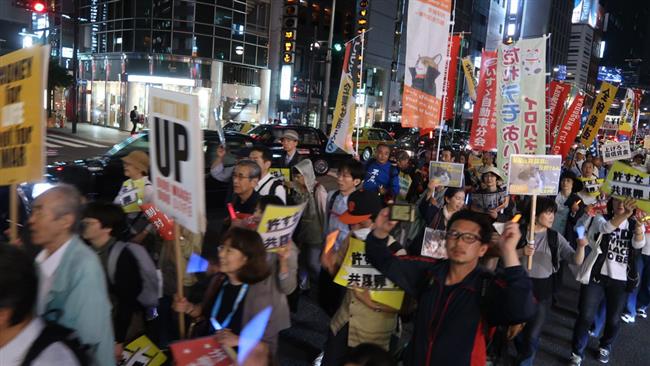
Thousands of people have held a protest rally in the Japanese capital, Tokyo, to express their dissent against the government of Prime Minister Shinzo Abe for putting forward a controversial “anti-terror” bill.
Demonstrators, carrying placards, flooded the capital’s streets on Wednesday evening. They said the government would be prosecuting practically everybody in the name of fighting terrorism if the bill was passed.
The protest came a day after the country’s lower house approved the “conspiracy bill,” which enlisted 277 new types of offences deemed by the lawmakers as threats against Japanese national security.
The government argues that with the help of the bill, if it is passed, it will be able to mount a crackdown on what it calls organized crime and punish those who plan to carry out “serious crimes” against the country.
The bill now needs to be ratified by the upper house, the House of Councilors — where Abe’s coalition has the upper hand — to become law.
While Tokyo argues that the legislation should be adopted before the Tokyo Olympics in 2020 in an attempt to battle terrorism and organized crime, the opponents of the bill say they fear it would treat such offenses as sit-in demonstrations and violations of copyrights as “serious crimes.”
The government further argues that the law would be necessary to ratify the United Nations (UN)’s Convention against Transnational Organized Crime.
The demonstrators in the Wednesday rally also protested against a number of other issues, including Japan’s nuclear power policies and the United States’ presence on the Japanese Okinawa Island.
Speech by Hezbollah Secretary General Sayed Hassan Nasrallah on May 2, 2017, on the occasion of the Day of the Wounded
Transcript:
[…] Two words on the general situation (in the Middle East).
The first thing to be said about the general situation in the region concerns the struggle for freedom and dignity that 1500 Palestinian prisoners are leading and… we are today on the 16th day of their hunger strike, with a supportive response from the Palestinian street, inside (occupied Palestine) and outside, towards this movement.
As usual, we naturally support and unite with them, and we announce our firm and total solidarity with this action of jihad and strong resistance by Palestinian prisoners for their legitimate and natural demands. But we want to learn from what is happening there.
In this first point concerning the situation of the region, I have two points.
First, I want to learn the lessons on which we can build a permanent political path. Well, on the opposite side, Israel turns a deaf ear… They are not ready to negotiate or to respond to the demands. The demands of the prisoners are not the liberation of Palestine nor the liberation of Al-Quds (Jerusalem). The prisoners’ demands concern the natural rights of all prisoners, humanitarian rights. Israel is turning a deaf ear and, as usual, relies on the passing of time, the weariness, and the withdrawal of Palestinian prisoners, hoping that this movement will be nothing but a vain eruption.
Nothing else can be expected of Israel, the usurping, terrorist, occupying enemy. But look at the rest of the world. Look at the rest of the world. Where are the Arab regimes? Where are the Arab peoples? Where is the Union of Arab Countries? Where is the Organization of Islamic States, the Organization for Islamic Cooperation? Where is the world? Where is Europe? Where is the West? Where is the UN? Where’s the Security Council? All those who often get angry at the most trivial stories that happen in this or that place of the world, where are they? We are on the 16th day, and nothing happens in the world, nothing at all.
For the commemoration of the martyr leaders, I stirred up the roses’ pot, when I said that they brought us, the Arab world and the region, to the point where Palestine became the forgotten cause. This is proof.
Today, tell me where the kings and the Arab presidents are. Soon, it will be said that the Sayed (Nasrallah) attacks the kings and Arab presidents. Where are the Arab regimes? Where is the Union of Arab Countries? Where is the serious reaction, where are the real pressures? The pressure on your American friends, the pressure on your European friends?… Where are the organizations for the defense of human rights? Where is the Arab voice? Where are the Arab media? Where are the Arabic TV channels? Where are the Arabian pens?
If this happens, oh my brothers and sisters, if this was happening in a country that was not allied or aligned with the United States, allied or aligned with the West, you would have seen the whole world rise (of indignation) without sitting back. I do not even say whether it was in Iran, Syria or I do not know where. In any country that is not aligned with the United States and the West, which is not subject to their will and diktat, which is not part of their project, you would have seen the Council of Security, the UN, the White House, foreign ministers, human rights organizations and the whole world stand up. Not on the 16th day, from the first hour. And the state or government that refuses to negotiate with these prisoners and respond to their demands would have been accused of aggression, cruelty, inhuman treatment, oppression, torture, tyranny, and so on.
But it is Israel, the spoiled child of the United States, the advanced military base of the West in our region… (So) no!… Let Netanyahu do what he wants. Let him take his ease, he has all his time. No problem. Just as he had absolutely all the time in the world for the wars against Gaza. He has all his time once again, whether it be for the question of prisoners or any other; for the question of colonies or any other.
Well, if we’re trying to collect comparable evidence, whether it’s less than a year ago, or since 2003, in Iraq, since 2003, Takafi terrorist organizations have carried out thousands of suicide operations, not to mention the others operations, and they killed Shiites, Sunnis, Arabs, Kurds, Turkmens, they did not spare anyone in the Iraqi people. And daily massacres, to the point that car bombs have become a normal and natural daily occurrence in Iraq. And the world (whole) remains silent. And the world knows who supports them, who finances them, who protects them, and who helps them in the media so far: there are Arab channels which, in this battle of Mosul, are with ISIS. They are not with the Iraqi government or the Iraqi forces. And the whole world says nothing of all these helpers, supporters, assistants, media protectors, funders and facilitators (of ISIS). Why? Because the Iraqi people must be subjugated, humiliated, silenced and integrated into this (American) project.
Well, let’s consider Yemen. A few days ago, the UN Secretary-General read a speech of mourning, saying that while we are talking, 50 Yemeni children are dying. Well, the whole world speaks of millions of people threatened by famine in Yemen. While the whole world knows who is besieging Yemen, who bombards Yemen, who starves Yemen. Does anyone dare open his mouth (about it)? Does anyone dare to talk?
And if I begin to describe things as they are, I am told that I jeopardize tourism in Lebanon. If I say what the whole world knows, that Saudi Arabia and its allies are besieging, starving and killing the Yemeni people every day and every night, I am accused of jeopardizing tourism in Lebanon. A simple word of truth (is worth this accusation). But a world that remains silent in the face of millions of people dying of hunger, what does the death of thousands of people killed and bombed mean to him, and hundreds of thousands injured? How could they matter to them? Although the whole world and the UN recognize this situation. Simply because it is Saudi Arabia, the ally of the United States, the West, who pays fortunes, the hundreds of billions of dollars that it pays to the United States. And Trump is coming now to take from them the money they have left.
But as for the poor Yemeni people, they have no money to pay to the United States, they have no money to pay to Trump, they have no money to pay to the British prime minister or to the French President so that they move and say “Enough, we will end the siege, the war and the aggression against Yemen.”
Well, let’s look at Syria. A few days ago, a massacre was perpetrated against the inhabitants of Fou’a and Kafraya who left their besieged towns in the Al-Rachidin district at the entrance to the city of Aleppo. A bloodthirsty suicide bomber came with a van, and attacked the bus convoy. What was in the convoy? 5,000 civilians, an overwhelming majority of civilians, most of whom were women and children. In short, the attack caused hundreds of martyrs, wounded and disappeared. What did the world do? What did it do?roo
In the agreement, the Syrian State and ourselves have guaranteed the safety of the evacuees (of the terrorist enclaves of) Madaya, Zabadani, Biqqin, Sarghaya, Blodan and Borj Blodan, so that they be conveyed to a safe point beyond the city of Aleppo. Imagine that a person (there are no suicide bombers in our camp), by mistake, took a machine gun and fired (on their convoy), or fired a RPG rocket on a bus and killed a certain number of persons. Who would have spared us (his condemnations)? Who would have spared the Syrian army, Hezbollah and the parties that guaranteed this agreement? The Security Council, the US, Trump and the whole world would have entered in a great anger, and may even have launched an air attack (against Syria).
So look at the existing situation, the actual situation. Of course, I do not bring anything new. I only want to confirm a long-established idea, which is confirmed every day, every day, every day, in the face of the people opposing our point of view, whom we would like to see bring us the least evidence, the least element (which confirms their vision).
But when the Khan Sheikhoun event happened and the regime was accused of using chemical weapons, well, guys, do an investigation, but they do not want to do anything, no investigation. My dear friends, who proved that the regime really used chemical weapons? Yes, he did (so they say). Well, what is the proof? No one has any evidence. Well, are these images that have circulated, are they made up or is it the truth? Nobody knows. Well, send a commission of inquiry, for example, Russia, Iran, other countries of the world… Oh, we’re just asking for a commission of inquiry, but the US does not want a commission of inquiry. They do not accept inquiry! We just want to know the truth, in order to condemn the criminal who used chemical weapons, whoever he may be. But they refuse any commission of inquiry.
On the contrary, from the very first moment, Trump and the American administration, as usual, established themselves as Attorney General, Investigator, Judge and Executioner, and they came to strike at Shu’eirat airport, and considered to have achieved a great feat. And congratulations began to be fired from all sides, from Saudi Arabia, Turkey, some Gulf countries, political forces (who said) “Congratulations, God bless you and reward you, give you a fine end And increase your resources.” Is it not what they told them?
Well, on what basis? For the one who is targeted here (Bashar al-Assad) is not a collaborator, a follower or a submissive, they want to subjugate, humiliate and break him. This is the equation.
Today, if we came to any corner of a country not aligned with the USA, and imagine there was a city completely besieged, with hundreds of men and women standing under the sun, day and night, to protect a pure man, a great scholar in Bahrain, His Eminence Ayatollah Sheikh Issa Qassem, and this for 7 or 8 months, soon a year, in a very severely besieged region. It is a forgotten thing, which does not interest anyone in the world. Because these people are in a subdued, aligned, part of the (American) project, and therefore no pressure will be exerted on the issue. Why would they ask them anything? They will be congratulated instead for the beautiful kohl of their eyes, and will be told “Very well, continue.”
That’s it. It is not necessary that I multiply the examples, I was rather long already, but the conclusion that must be drawn is this: O our brothers, O our sisters, O our people (and we express ourselves with experience, and these examples only confirm the idea, which is ours from the beginning), today if our territory is liberated, if our prisoners in the Israeli jails have returned (there are still files awaitng), if our country is free in the face of Israeli threats, no one has played any role in this, neither the UN Council, the US, the West, the Union of Arab International resolutions or anyone at all.
It is thanks to you alone, the noble people, the Army, the People and the Resistance, the martyrs, the wounded. Today, if Lebanon enjoys freedom, dignity and security, it is thanks to your lofty souls, your wounded bodies, the pure blood of your martyrs, and the blood of your bodies, which was poured on the land of that country and in that region. Only, only, only (thanks to you and no one else).
Do not expect anything from this world, this international community, America and the West, do not expect justice, impartiality, or the recognition of truth. That does not mean we do not ask for it, but we do not expect anything. And in any case, we do not regret that they ignore us, that they do not take the required position and that they exert no pressure (on the oppressors). For basically they are the enemy, so beware of them! The basis of our ills is them. The very people we are asking for positions, declarations and measures are the problem at the first level. As for the others, they are merely instruments, they merely follow, they are merely the pawns of a game of chess which serve the projects of domination of our countries. What do they want, friends? They want to plunder our choices, our resources, our oil, our gas, and now they want to plunder us more. We do not have time to talk about the new American policy: more obvious looting, explicit looting.
It is therefore necessary that we rely on our presence in the squares and fields (of battle), on our strength. What I have always said to you today, all the events and developments that are happening, I repeat to you again: we live in a world of wolves. There is no international law, there is only the law of the jungle. The strong eats the weak. If we are weak, we shall be eaten. If we are stronger, the world will respect us.
When we have a weight on equations and interests… This world seeks interests, it does not seek principles or values. Therefore, our strength is there, our interests are there, and our destiny and our future stop at our strength, our unity, our presence, the endurance of our people, the conscience of our (Islamic) Community.
These are the lessons we must learn from what is happening now. […]
Mass incarceration is a central pillar of Israeli occupation. Hundreds of Palestinian prisoners are waging a hunger strike to fight it.
On April 17, on the anniversary of Palestinian Prisoners’ Day, over 1,500 Palestinians held in Israeli prisons launched a mass hunger strike. A month later, 834 of the prisoners remain on empty stomachs — with several dozens now placed on “close medical watch” by Israeli authorities. The strike has drawn a wave of solidarity among Palestinians and has been met with severe repression by Israeli authorities.
Weeks before the strike erupted, we visited the military courts in the West Bank as a part of a delegation from Stanford Law’s International Human Rights Clinic. Observing the court proceedings drove home how the prison system serves as a core pillar of the occupation — and why the prison strike has attracted so much support among Palestinians.
The prisoners are demanding better conditions: improved access to family visits and phone calls; access to books, newspapers, mail, and educational opportunities; and an end to administrative detention and solitary confinement.
Yet at the heart of their struggle lies a more insidious problem: the sprawling military court system that has stripped them of their dignity and incarcerated over one in three Palestinian men since 1967. Palestinians imprisoned in Israel are sentenced by a court system run by the Israeli military, without any of the safeguards of the Israeli civilian courts. These military courts are predicated on a legal double standard: they only prosecute crimes against Israeli citizens or property; they do not prosecute crimes committed by Israeli settlers living in the Occupied West Bank, or crimes with Palestinian victims.
As strike leader and political prisoner Marwan Barghouti has put it, Israel’s military courts are an “accomplice in the occupation’s crimes.”
Israeli authorities have cracked down swiftly on the hunger strike — not only have they punished those who have protested, but they are also reportedly looking into setting upa separate military hospital to force feed those still on strike. Far-right National Union activists, meanwhile, have organized a barbecue outside the prison, seeking to mock the hungry prisoners with the wafting scents of grilled meat. And Pizza Hut released an advertisement taunting Barghouti to end the strike with a slice of their pizza.
Israeli foreign ministry spokesman Emmanuel Nahshon has said that the Palestinian prisoners are not political prisoners, but “convicted terrorists and murderers” who were “brought to justice.”
Our observations of the military courts — and the statistics — tell a different story. The courts prosecute between five hundred and seven hundred children each year — 79 percent, between 2010 and 2015, for stone throwing, which under the Israeli military’s own classification is only a “public order” offense. This crime generally involves youth throwing stones at military targets so distant that no bodily harm occurs.
Several other offenses that the military courts process are also nonviolent in nature. Incitement — a catch-all crime that could include posting anti-occupation status on Facebook — increasingly appears on the docket. Infiltration — which involves Palestinians illegally entering Israel in order to work, usually as manual laborers — also accounts for a fair share of the men brought before military courts.
There is a good reason that the practice of trying civilians — especially children — in military courts for such a prolonged period of time is unprecedented in an ostensible democracy. International law does allow military courts for civilians in the exceptional case of belligerent occupation. But the international laws governing occupation never contemplated a situation of a fifty-year occupation. And Israel’s military courts prove exactly why.
A staggering 99.74 percent of the cases heard in military court end in conviction: once accused, a Palestinian has little chance of mounting a successful defense. Evidence, especially when it pertains to children, is often the result of coerced confessions — but exclusion motions throwing out such illicitly obtained evidence are rarely successful. The court proceedings are entirely in Hebrew — a language almost all defendants, and most of their lawyers, don’t speak. Translations are often inadequate, or sloppy: we witnessed a translator walk out of the court midway through a proceeding. Most cases are resolved through guilty pleas — because, according to the attorneys we interviewed, defendants and defense lawyers alike are often punished for attempting to take cases to trial.
Palestinian prisoners, in short, are not just faced with harsh prison conditions, in prisons that their families have limited or no access to. They arrive in these facilities after facing a dehumanizing trial in a language that they do not speak, where the presumption of innocence does not apply, and where they face little chance of defending themselves successfully. When they put their bodies on the line with a hunger strike, they are doing so because the system offers them no other option.
That system must fall.
Mass incarceration is a central pillar of Israeli control over the West Bank. Improving prison conditions or adding procedural protections will not solve the problem. Only ending military control over the civilian population will deliver justice to the striking prisoners, as well as the millions suffering daily indignities on the outside.
Venezuela is once again dominating international headlines as violent opposition protests bent on toppling the elected Maduro government enter their seventh week. The demonstrations have claimed to date at least 54 lives since April 4, surpassing the previous wave of violent anti-government protests in 2014, known as “the Exit”. However, this time around, the unrest coincides with a severe economic downturn and a transformed geopolitical landscape defined by the return of the right in Brazil and Argentina as well as an even more bellicose regime in Washington.
Meanwhile, the international outcry at this latest violent effort to oust the Chavista government has been far more muffled than the last time.
With the notable exception of an open letter by LASA members, a UNAC/BAP joint statement, and other smaller protest actions, the US left has been largely passive vis-a-vis both the Trump administration’s escalating intervention against Venezuela as well as the systematic media blackout, preferring silence to active solidarity with Chavismo.
In this environment, some leftist academics have publicly broken with the Maduro administration over its response to the country’s current political and economic crisis.
In a recent piece for NACLA*, University of Albany Assistant Professor Gabriel Hetland parts ways with the Bolivarian government, citing concerns over Maduro’s “authoritarian” slide.
“Yet, while previous claims of Venezuela’s authoritarianism have had little merit, this is no longer the case,” he writes.
While we deeply respect Professor Hetland’s critical contributions to the debate on Venezuela, we at Venezuelanalysis** – a collective of journalists and activists who at one point or another have lived, studied, and/or worked in Venezuela – firmly reject this charge of authoritarianism on both analytical and political grounds.
Setting the record straight
Hetland cites a number of recent actions of the Venezuelan government to bolster his claim, including the Venezuelan Supreme Court’s (TSJ) alleged “dissolving” of the opposition-held National Assembly (AN), the “cancel[ation]” of the recall referendum, the postponing of “municipal and regional elections that should have occurred in 2016”, and the TSJ’s blocking of the AN’s legislative activity in 2016.
There are of course a number of serious problems with this account.
To begin, several elements of this narrative are misleadingly presented, if not all-together factually inaccurate.
First of all, as Venezuelanalysisreported at the time, the TSJ’s March 29 decisions did not “dissolve” the Venezuelan National Assembly as was almost uniformly reported in the mainstream press. Rather, the rulings sought to temporarily authorize the judiciary to take on pertinent legislative functions, which in this particular case meant approving a pressing joint venture agreement between Venezuelan state oil company PDVSA and its Russian counterpart, Rosneft, which was critical for the former’s solvency. The ruling – which was based on article 336.7 of the Venezuelan constitution – provoked a rift within Chavismo, with the current and former attorney generals lining up on opposite sides of the constitutional divide. One can certainly criticize the since-reversed decision on constitutional and political grounds, but to present it as a “dissolution” of the parliament is just disingenuous.
This brings us to the question of the Supreme Court’s blocking of the opposition-majority legislature in 2016. It is undeniable that the TSJ did in fact strike down three of the four laws the AN managed to approve last year. However, it takes two to tango and Hetland severely understates the opposition’s own role in this protracted institutional standoff. It’s important to note that the AN did not “act beyond its authority” only “in some cases”, as Hetland describes.
From quite literally the moment that the new AN was sworn-in in January 2016, the body explicitly declared war on the Bolivarian institutional order crafted by Chavismo, with AN head Henry Ramos Allup promising to oust Maduro “within six months” – a blatantly unconstitutional threat against a sitting president. A sampling of the legislation pursued by the National Assembly in 2016 includes a law to privatize Venezuela’s public housing program, a law to return expropriated lands and enterprises to their former owners, a law forcing the executive to accept humanitarian aid into the country, the infamous Amnesty Law, as well as a constitutional amendment retroactively shortening the presidential term by two years. We can add to this list the opposition’s attempted parliamentary coup, in which it declared that Maduro had “abandoned his post” first in October and again this past January – which Hetland likewise neglects to acknowledge. Nor does he mention the reason for the legislature’s current “null” status, namely the opposition’s refusal to unseat three of its lawmakers from Amazonas state currently under investigation for alleged vote-buying in flagrant violation of the high court. Again, one may still criticize the TSJ’s blockage of the AN, but to understate the parliament’s systematic efforts to overthrow the Bolivarian government by any means necessary is quite misleading.
Hetland similarly omits the opposition’s own role in the suspension of the recall referendum (RR) process. As we noted, the opposition-held parliament came into office with the objective of overthrowing Maduro “within six months” – a goal evidently incompatible with the RR, which takes a minimum of eight months. Indeed, the RR was just one of the strategies in the opposition’s four-pronged plan to oust Maduro unveiled in March 2016, which also included the aforementioned constitutional amendment, a constituent assembly to rewrite the constitution (which the opposition now opposes), and heating up the streets to force Maduro’s resignation. As a result of the opposition’s own internecine divisions, it delayed in beginning the RR and made serious procedural errors, such as collecting 53,658 fraudulent signatures, which gave the government a pretext to indefinitely stall the process in the courts. There is no doubt that the Maduro administration dragged its feet on the RR process knowing full well it would likely lose, but this was hardly the one-sided drama presented by Hetland.
Lastly, the National Electoral Council (CNE) did in fact postpone the regional elections scheduled for last year, citing logistical conflicts with the RR process, a move which is indefensible on constitutional and political grounds. However, it’s worth noting that there is a precedent for such a delay: the local elections slated for December 2004 were similarly postponed until August 2005 on account of the recall referendum against then President Chávez the year before. Hetland passes over this important detail in his rush to indict Venezuela’s democratic credentials.
Moreover, while it’s perfectly legitimate to criticize the Bolivarian government for delaying the governors’ races, municipal elections are a different story. Local elections are scheduled for 2017, meaning that they can be held any time before the close of the year. In suggesting that the government has postponed local elections, Hetland commits yet another factual error that serves to inflate his largely ideological case for the Maduro administration’s “creeping authoritarianism”, as we shall see below.
Fetishizing liberal democracy
Beyond these factual errors and misrepresentations, the main problem with Hetland’s piece is his implicit notion of “authoritarianism”, which he at no point takes the time to actually define.
Without going extensively into the genealogy of this term, it’s key to remember that authoritarianism is hardly a politically neutral concept.
As Hetland correctly observes, the charge of authoritarianism was dubiously leveled against the Chávez administration and other “pink tide” governments who were excoriated by Western commentators and political scientists for daring to challenge the hegemony of (neo)liberal capitalist representative democracy.
Indeed throughout the last decade, political scientists led by former Mexican foreign minister Jorge Casteñeda have distinguished between a “good” reformist, liberal left epitomized by Brazil’s Lula Da Silva that is willing to play ball with the Washington and transnational capital and a “bad” radical, populist left embodied by Hugo Chávez, which has opened up the liberal representative floodgates to direct mass participation in democratic governance.
As Sara Motta underlines, this binary is deeply colonial in nature: the “mature” and Westernized “good-left” has learned from the alleged failures of revolutionary Marxism and embraced incremental reform, while the “bad-left” remains mired in the clientelism and tribal authoritarianism of the “pre-modern” past, rendering it hostile to liberal democracy.
This “good-left”/“bad-left” dichotomy is of course nothing new, amounting to a minor aesthetic rehashing of the “revolutionary”/“democratic” distinction applied to the Latin American left in the wake of the Cuban Revolution, which in turn is founded on the classic “civilization” versus “barbarism” divide.
Hetland, in lieu of questioning the liberal ideological criterion behind this colonial binary, preserves the distinction, announcing that the Maduro government has passed over into the dark realm of authoritarianism:
By cancelling the recall referendum, suspending elections, and inhibiting opposition politicians from standing for office, the Venezuelan government is systematically blocking the ability of the Venezuelan people to express themselves through electoral means. It is hard to see what to call this other than creeping authoritarianism.
In other words, “authoritarianism” for Hetland seems to amount to the quashing of proceduralist liberal democratic norms, including most notably separation of powers, threatening the political rights of the country’s right-wing opposition.
What we get from this formalist approach is a sort of Freedom House-style checklist in which the pluses and minuses of global South regimes (freedom of speech, press, etc.) are statically weighed and definitive moral judgement concerning “democratic quality” are handed down. Venezuela is still not yet a “full-scale authoritarian regime,” Hetland tells us, “given the opposition’s significant access to traditional and social media and substantial ability to engage in anti-government protest.” In this point, Hetland’s conclusion is virtually indistinguishable from that of mainstream Latin American studies, which has long invented convoluted monikers such as “participatory competitive authoritarianism” to characterize the Bolivarian government.
The trouble with this perspective is that it ends up reifying these so-called authoritarian practices, casting them as the cause – together with the opposition’s regime change efforts – of Venezuela’s current crisis rather than a symptom of the underlying correlation of forces.
The Maduro administration’s alleged steamrolling of certain liberal democratic norms – particularly the postponement of regional elections – is undoubtedly quite concerning, precisely because it evidences the catastrophic impasse in the Bolivarian revolutionary process.
We at Venezuelanalysis have long been critical of the Bolivarian government’s top-down institutional power plays to contain the opposition’s efforts to oust Maduro, which we view as a conservative attempt to maintain the status quo in lieu of actually mobilizing the masses of people from below to break the current deadlock and resolve the crisis on revolutionary terms.
Yet Hetland is strangely silent regarding these reformist retreats and regressions over the past four years, which for all intents and purposes are far more serious than many of the above “authoritarian” abuses he describes.
It is precisely here that the charge of “authoritarianism” betrays its liberal ideological bias: by prioritizing the procedural violations affecting the bourgeois right-wing opposition, Hetland renders invisible the underlying dynamics of class warfare brutally impacting the popular classes.
Therefore, contra Hetland, the problem is not that liberal democratic norms have been undercut per se, but rather that the revolutionary construction of alternative institutions of radical grassroots democracy – the “communal state” in Chávez’s terms – has come up against decisive structural roadblocks.
Here we must be unequivocal: liberal democracy is not absolute nor universal, and its relation to revolutionary processes is always mediated by context. To impose these norms on the Cuban Revolution, for instance, in its context of genocidal imperial siege is the height of absurdity and political irresponsibility. Given these circumstances, Cuba’s model of revolutionary democracy – despite all its faults and limitations – is no less legitimate than other democratic socialist projects that have made strategic use of elements of liberal democracy, such as Chile and Nicaragua in the 70s and 80s or Venezuela and Bolivia today.
The Bolivarian process is, however, fundamentally different, as it is premised on an electoral road to socialism in which the existing bourgeois democratic order is approached as a strategic space of counter-hegemonic struggle. In this context, the suspension of certain liberal rights such as elections or specific opposition freedoms would only be acceptable under exceptional circumstances in which the Bolivarian government were actually taking revolutionary measures to resolve the current crisis and commanded unquestioned legitimacy among its social bases.
Despite the undeniable spiral of political and economic violence driven by the opposition, Venezuela is unfortunately not going through an equivalent of a “special period” insofar as the leadership of the party and state has thus far failed to go on the offensive against endemic corruption and take the fight to the local and transnational capitalist enemy as was the case during crucial revolutionary turning points in Russia, China, and Cuba.
Given this reality, the message coming from some sectors of Chavismo that there can be no elections under conditions of warfare – a legitimate argument in other contexts including Nazi-besieged Britain – is questionable at best. Nonetheless, this counterfactual is useful insofar as it demonstrates that liberal democracy is a wholly inadequate yardstick for evaluating revolutionary processes, confounding far more than it clarifies, as in the case of Hetland’s critique of “authoritarianism” in Venezuela.
Throw them all out?
In this diagnosis of causes of the current crisis, our position coincides with that of the vast majority of Venezuelan left-wing movements whose chief grievance is hardly the litany of “authoritarian” practices against the right-wing opposition enumerated by Hetland, but, on the contrary, the reformist and at times outright counter-revolutionary policies being pursued by the Maduro government.
The same is true for Venezuela’s popular classes – the social base of Chavismo – who don’t particularly care that the Supreme Court has blocked the National Assembly and the president has been ruling by emergency economic decree since February 2016. According to independent pollster Hinterlaces, around 70 percent of Venezuelans negatively evaluate the opposition-controlled parliament, while 61 percent have little faith that a future opposition government will address the country’s deep economic problems. Rather, the majority of Venezuelans want the Maduro administration to remain in power and resolve the current economic crisis. Their discontent flows not from Maduro’s use of emergency powers – contrary to the international media narrative – but rather from his failure to use them to take decisive actions to deepen the revolution in lieu of granting further concessions to capital.
Despite the setbacks, retreats, and betrayals that have characterized the past four years since the death of Chávez, the mood among the Venezuelan masses is not a uniform rejection of Venezuela’s entire political establishment as Hetland suggests in a sweeping generalization:
If any slogan captures the current mood of the popular classes living in Venezuela’s barrios and villages it is likely this: Que se vayan todos. Throw them all out.
While Chavismo has undoubtedly bled significant support over the past five years and the ranks of independents, or ni-nis, has swollen to over 40 percent of the population , the PSUV remarkably remains the country’s most popular party, actually increasing its support from 27 to 35 percent since January. Similarly, Maduro still has the approval of approximately 24 percent of Venezuelans, making him more popular than the presidents of Brazil, Mexico, and Chile – a fact consistently suppressed by international corporate media. These poll numbers are nothing short of incredible in view of the severity of the current economic crisis ravaging the country, speaking to the partial efficacy of some of the government’s measures such as the CLAPs as well as the opposition’s utter failure to present any alternative program.
Likewise, despite growing disillusionment with the government and hints at a possible rupture, the fact is that the overwhelming majority of Venezuela’s social movements and left-wing political parties continue to back Maduro.
What’s more is that this left unity in support of the Bolivarian government has only hardened in the face of the ongoing opposition onslaught and in anticipation of the National Constituent Assembly to be held in the coming months.
However baffling on the surface, this staunch defense of the Maduro administration actually makes perfect sense for at least two reasons.
First, as any Chavista who has lived through the last six weeks of right-wing terror can attest to, the choice between the continuity of Chavismo in power and an opposition regime is not a matter of mere ideological preference – it’s a question of survival, as there is no predicting the extent of the political and structural violence the opposition would unleash if they manage to take Miraflores. This is in no way to deny or downplay the fallout of the current economic crisis, for which the government bears a great deal of responsibility, but there is no doubt that an opposition government would take this economic war on the poor to new levels of neoliberal savagery.
Second, the existence of the Bolivarian government embodies the lingering possibility of transforming the inherited bourgeois petro-state as part of the transition to 21st Century socialism. While there is cause for skepticism about the real possibilities of pushing forward the democratization and decolonization of the Venezuelan state in this conjuncture, there has been an outpouring of grassroots support for the National Constituent Assembly which could serve as a vehicle to retake the revolutionary offensive and institutionalize radical demands from below.
This broad-based consensus of critical support for the government on the part of Venezuela’s left stands sharply at odds with Hetland’s “plague on both your houses approach”, which, in Steve Ellner’s terms, ends up “placing opposition and Chavista leaders in the same sack” as equally undesirable alternatives.
While there is indeed tremendous anger and frustration with the government – which may in fact translate to a crushing electoral defeat for Chavismo in the next elections – the prevailing sentiment among much of Venezuela’s popular classes in the face of the opposition’s present reign of terror remains “no volverán” (they shall not return).
The role of solidarity
All of this brings us to the position of international solidarity activists with respect to Venezuela.
We wholeheartedly agree with Hetland that it is the duty of each and every self-respecting leftist and progressive to “reject any and all calls for imperialist interventions aimed at ‘saving’ Venezuela”.
Nevertheless, while anti-interventionism is urgently necessary, this begs the question, with whom are we supposed to be in solidarity?
Hetland calls on us to stand with “the majority of Venezuelans who are suffering at the hands of a vengeful, reckless opposition, and an incompetent, unaccountable government.”
The end result of such a “plague on both your houses” approach is a refusal to take a side in this struggle – in a word, neutrality. This posture flows naturally from Hetland’s liberal framework of authoritarianism, which necessarily posits the Western intellectual as a disembodied arbiter – occupying the Cartesian standpoint of the “eye of God” in Enrique Dussel’s terms – uniquely capable of objectively weighing the democratic virtues and deficits of Third World regimes.
In contrast, we at Venezuelanalysis stand unconditionally with Venezuela’s Bolivarian-socialist movement, which at this conjuncture continues to critically support the Maduro administration.
We take this stance not out of a willful blindness to the Bolivarian government’s many faults and betrayals, but because we (and particularly our writers on the ground) know that for a great many Chavistas the choice between radicalizing the revolution and right-wing restoration is, quite literally, a matter of life and death.
* A version of this article was submitted to NACLA, but no initial response was received. The editor elected to go ahead and publish at venezuelanalysis.com in the interest of a timely response. UPDATE: NACLA did ultimately respond to our submission on the afternoon of May 19, but by that time, the article was already published.
** Written by Lucas Koerner on behalf of Venezuelanalysis’ writing and multimedia staff as well as VA founder Greg Wilpert.
I’ve just learned devastating news: Irish investigative journalist Maidhc Ó Cathail is dead.
I met Maidhc (prounounced “Mike”) for the first and only time in 2014. He had traveled from Japan, where he was then living, to Washington, D.C. for our National Summit on the US-Israel “Special Relationship.” I had previously read some excellent articles about Israel-Palestine by Maidhc and had occasionally corresponded with him, so I was looking forward to talking with him in person.
During a few long, relaxed conversations, I found him engaging, principled, and intelligent. He had a bright smile, gentle sense of humor, and seemed to me a truly decent and compassionate human being – and a brave one, as he sought after facts and connections many wish undiscovered.
I never saw him again, but we occasionally corresponded. We didn’t always share the same view of ongoing happenings, but I found him continually seeking to understand the full context of current events no matter where this took him. Such work receives little financial compensation.
Awhile ago Maidhc contacted me about a book of his writings that he hoped to get published. I was immensely impressed by his work and told him that if he couldn’t find a publisher, perhaps If Americans Knew could publish it. He seemed excited about this prospect. Since we have a tiny staff and a multitude of projects, I explained that it would take awhile for us to get to this. I envisioned publishing a book of his strongest articles and hoped to bring it out this year. I fervently wish I had published this book sooner.
Maidhc was an honest seeker, painstaking researcher, and talented writer. He cared deeply about those who are oppressed and victimized and worked to expose and end injustice. I wish the world valued and supported such people. We badly need them. He exposed information about Israel, Palestine, and related subjects that is of profound importance.
Maidhc deserves to be remembered and honored. While luminaries ignored him and are unlikely to mention his passing, the rest of us can and must share his work.
Thank you, Maidhc. I’m so sad you’re gone. May you Rest in Peace and Justice.
GAZA – Hamas spokesman Sami Abu Zuhri praised on Sunday the statements of the North Korean Foreign Ministry against the Israeli occupation of Palestinian land and in support of the struggle of the Palestinian people until the attainment of freedom.
In a statement on Twitter, Abu Zuhri rejected the offensive Israeli speech against Pyongyang, saying that Israel is the source of “evil and terrorism” and the cause of instability in the region.
The Israeli war minister, Avigdor Lieberman said in an interview with the Hebrew website Walla that any confrontation between the United States and North Korea would directly affect Israel.
On Lieberman’s statements, Pyongyang said that Israel is the only country in the Middle East that possesses nuclear weapons under the protection of the United States, adding that Israel “constitutes an obstacle in the Middle East, occupies Arab lands, and carries out crimes against humanity”.
Pyongyang affirmed that North Korea’s stands are always based on justice and peace, expressing support for the Palestinian people and their struggle to establish their own state.
Ahead of the May 7 French presidential runoff, Marine Le Pen chose defeated Debout la France (Arise France) presidential candidate Nicolas Dupont-Aignan as her prime minister if elected.
He’s ideologically right-wing like herself. With him at a Saturday news conference, she said “(w)e will form a government of national unity that brings together people chosen for their competence and their love of France.”
Both support abandoning the euro, what Dupont-Aignan called a “racket,” and restoring the franc as France’s currency, regaining control over its monetary and fiscal policies from Brussels.
Former UK Independence Party leader Nigel Farage called him an “utterly respectable Eurosceptic.” Dupont-Aignan said “I am and remain a free man. I have dared before history to build a government agreement.”
Unlike establishment figures throughout Europe and America, Dupont-Aignan is pro-Palestinian.
In July 2014, during Israeli aggression on Gaza, Dupont-Aignan said the following:
“Gaza: Nicolas Dupont-Aignan deplores the inertia of France in the conflict.
After the bombing, ground fighting and unacceptable collateral damage of the deaths of hundreds of innocent civilians, men, women and children, the Israeli-Palestinian conflict entered last night in a new phase with the invasion of the gang Of Gaza by the Israeli army (with) complicit silence of the UN, the West and France. The disproportion of the forces involved is blatant.
Whatever the responsibilities of the irresponsible leaders of Hamas in the outbreak of this new confrontation, the path chosen by Israel only pushes it into an impasse.
It is not by accumulating the ruins and the dead that Mr. Netanyahu will appease the tensions, passions and hatreds in this region of the world.
In this bloody context, the inertia of France is perfectly scandalous. We expect our government to finally take the initiative for international action to impose Israel’s compliance with UN resolutions, that is, the withdrawal and dismantling of settlements illegally settled in the territories The recognition of the Palestinian state.
It is only under these conditions that we will avoid importing the conflict into our country, and that the new massacre in progress will be stopped.
It is only under these conditions that lasting peace can finally return to the Middle East. Letting aggravate and aggravate an unbearable situation is not only stupid but criminal.”
Fact: On July 8, 2014, Israel launched premeditated aggression on Gaza. Hamas had nothing to do with initiating it – planned by Israel, waged until August 26.
Thousands were killed or wounded. Defenseless civilians were willfully targeted. Entire neighborhoods were destroyed. Entire families were annihilated. Schools, hospitals, mosques and UN shelters were attacked.
So were clinics, ambulances, healthcare workers, journalists and human rights supporters. During the war, Israeli forces rampaged throughout the territories, invading over 3,000 homes, terrorizing families, traumatizing children, making mass arrests, including Palestinian parliamentarians.
Nearly three dozen were lawlessly imprisoned. Israeli aggression went way beyond attacking Hamas.
It was war on Palestine, vicious collective punishment, the highest of high crimes against peace. More Israeli aggression could happen anytime, likely worse than 2014 if launched.
Dupont-Aignan supports Palestinian self-determination. Le Pen said they share a “common project (they’ll) promote together.”
Macron backs continuity, dirty business as usual. Le Pen wants France out of US-dominated NATO and EU membership.
Macron is the choice of the “oligarchy,” she said. She wants French sovereign independence restored – free from control by Washington, Brussels and Berlin.
Roger Waters, the primary composer and lyricist of Pink Floyd during their most prominent years has for decades, used his music to convey a message of peace and humanity. He has typically got it right and occasionally gets it wrong.
One issue he has got totally right is the issue of Palestinian suffering at the hands of Israeli war, occupation and economic blockade. For over ten years, Waters has made the issue of Palestinian freedom a central point in his music and accompanying dramatic stage shows.
Waters is part of the Boycott-Divestment-Sanctions movement which encourages individuals to boycott Israeli products and tourism. Waters uses his status as a ‘music legend’ to highlight the plight of Palestinians. In 2012 he spoke at the United Nations on the issue. He frequently pens open letters to fellow musicians asking them to refrain from performing in Israel until a meaningful peace settlement is reached.
Waters is a perfect example of how the media-industrial complex punishes individuals who do not fit the tired stereotype of a veteran rock star.
Late last year, a grossly under-reported story explained how American Express ditched a planned sponsorship deal with Waters for his 2017 tour in a move which was said to be worth $4 million.
American Express like any other company has the right to refuse sponsoring any individual or organisation however they see fit. But in doing so, American Express has shown that they are willing to sponsor events of every variety including politically charged music performances by Beyonce.
Why then is American Express put-off by Roger Waters’ embrace of the Palestinian movement?
Are they opposed to Waters’ calls to end the starvation and medical deprivation of Palestinian children?
Are they opposed to Waters’ pleas for justice and democracy for Christians, Muslims and Jews in the region?
Are they appalled by his anti-war message?
Where many celebrities use anodyne political causes to enhance their status, I can see no evidence that Waters has profited from his endorsement of Palestine. Quite the contrary is true. It seems that his message of peace for everyone and hatred for no one has cost him millions.
Waters described the situation in his music industry in the following way,
“My industry has been particularly recalcitrant in even raising a voice (against Israel). There’s me and Elvis Costello, Brian Eno, Manic Street Preachers, one or two others, but there’s nobody in the United States where I live. I’ve talked to a lot of them, and they are scared shitless.
If they say something in public they will no longer have a career. They will be destroyed. I’m hoping to encourage some of them to stop being frightened and to stand up and be counted, because we need them. We need them desperately in this conversation in the same way we needed musicians to join protesters over Vietnam”.
The fact is that most musicians neither win nor lose the majority of their fan-base because of politics. The fact is that most people buy albums and concert tickets based on the fact that they like the sound of a song or enjoy singing along with the lyrics, even if they’re hardly paying attention to what the lyrics mean.
But for those who do care, the reaction to Waters’ Palestine politics is shocking. If Waters was advocating for genocide, cruelty, hatred or imperialism, I would agree that his concerts should be boycotted. But the fact that he is advocating for precisely the opposite of the aforementioned things makes the position of American Express seem not only extreme, but illogical.
Roger Waters is being punished for free speech on a subject that ought not to be controversial. The fact that some find it controversial demonstrates how low and beastly the nature of modern debates about human rights have become. No innocent people deserve to be suppressed, repressed and occupied, but that is exactly what is happening to the Palestinians and it has been happening for decades.
I personally disagreed with Roger Waters’ statements about Donald Trump and I also disagreed with his characterisation of Leonid Brezhnev on the otherwise stellar 1983 Pink Floyd album The Final Cut. But at no time would I seek to shut down Waters’ free speech or his ability to peacefully perform what millions consider to be important pieces of music in a peaceful and safe environment.
American Express has shamed its own reputation by treating Roger Waters in the way they have done. Roger Waters remains undeterred and will continue to tour his new show across the world.
As someone who has seen Waters perform many times, I highly recommend it, even for those who disagree with his views but enjoy a challenge.
By Donald Neff | Washington Report On Middle East Affairs | January 1996
On January 4, 1948, Jewish terrorists drove a truck loaded with explosives into the center of the all Arab city of Jaffa and detonated it, killing 26 and wounding around 100 Palestinian men, women and children.[1] The attack was the work of the Irgun Zvai Leumi – the “National Military Organization,” also known by the Hebrew letters Etzel – the largest Jewish terrorist group in Palestine. The Irgun was headed by Revisionist Zionist Menachem Begin and had been killing and maiming Arabs, Britons and even Jews for the previous ten years in its efforts to establish a Jewish state.
This terror campaign meant that at the core of Revisionist Zionism there existed a philosophical embrace of violence. … continue
This site is provided as a research and reference tool. Although we make every reasonable effort to ensure that the information and data provided at this site are useful, accurate, and current, we cannot guarantee that the information and data provided here will be error-free. By using this site, you assume all responsibility for and risk arising from your use of and reliance upon the contents of this site.
This site and the information available through it do not, and are not intended to constitute legal advice. Should you require legal advice, you should consult your own attorney.
Nothing within this site or linked to by this site constitutes investment advice or medical advice.
Materials accessible from or added to this site by third parties, such as comments posted, are strictly the responsibility of the third party who added such materials or made them accessible and we neither endorse nor undertake to control, monitor, edit or assume responsibility for any such third-party material.
The posting of stories, commentaries, reports, documents and links (embedded or otherwise) on this site does not in any way, shape or form, implied or otherwise, necessarily express or suggest endorsement or support of any of such posted material or parts therein.
The word “alleged” is deemed to occur before the word “fraud.” Since the rule of law still applies. To peasants, at least.
Fair Use
This site contains copyrighted material the use of which has not always been specifically authorized by the copyright owner. We are making such material available in our efforts to advance understanding of environmental, political, human rights, economic, democracy, scientific, and social justice issues, etc. We believe this constitutes a ‘fair use’ of any such copyrighted material as provided for in section 107 of the US Copyright Law. In accordance with Title 17 U.S.C. Section 107, the material on this site is distributed without profit to those who have expressed a prior interest in receiving the included information for research and educational purposes. For more info go to: http://www.law.cornell.edu/uscode/17/107.shtml. If you wish to use copyrighted material from this site for purposes of your own that go beyond ‘fair use’, you must obtain permission from the copyright owner.
DMCA Contact
This is information for anyone that wishes to challenge our “fair use” of copyrighted material.
If you are a legal copyright holder or a designated agent for such and you believe that content residing on or accessible through our website infringes a copyright and falls outside the boundaries of “Fair Use”, please send a notice of infringement by contacting atheonews@gmail.com.
We will respond and take necessary action immediately.
If notice is given of an alleged copyright violation we will act expeditiously to remove or disable access to the material(s) in question.
All 3rd party material posted on this website is copyright the respective owners / authors. Aletho News makes no claim of copyright on such material.


 Aletho News

