Egyptian journalists protest against arrests, for better labor laws
By Mostafa Mohie | Mada Masr | June 11, 2015
More than 200 members of the press gathered at the Journalists Syndicate in downtown Cairo on Wednesday, chanting for the “32 detained journalists and hundreds dismissed from their job” as they commemorated Egyptian Journalist Day.
The syndicate’s freedoms committee had sent a general invitation to protest on June 10 to denounce the recent wave of arrests, arbitrary dismissals and low wages faced by local journalists. Several websites for both privately and state-owned newspapers, including Ahram Gate, Bedaya, Al-Mal and Al-Fagr, published statements supporting the demonstration.
Leading up to the protest, the syndicate also filed 13 complaints with the prosecutor general demanding the immediate release of all journalists currently detained pending investigations, and detailing alleged acts of torture inflicted upon those journalists while in custody.
Among the protesters was Ibrahim Aref, editor-in-chief of the privately owned Al-Bayan newspaper. Aref and a colleague were recently prosecuted on charges of publishing false information regarding the assassination of six prosecutors, news which the newspaper had subsequently amended and apologized for.
Recounting his arrest to Mada Masr, Aref says that police personnel broke into his office and took him to the prosecutor’s headquarters in the Fifth Settlement district of New Cairo. He claims the building was under construction at the time and had no running water. The next day, he was taken to the High Court, where he was left in a defendant’s dock for nine hours without food or water before being released later that night on bail, he says.
“According to the law, everything that happened was illegal,” Aref argues. “Journalists cannot be detained for cases related to publishing. I went through the experience and got out of prison, but other colleagues are still detained, and their children are cheering with us today.”
Aya Allam, wife of detained journalist Hassan al-Qabanni, was also at Wednesday’s protest.
She spoke to Mada of her husband’s arrest, saying, “On January 22, police broke into my home and arrested my husband. He disappeared for three days, and we filed a report with the general prosecutor about the incident. It turned out he was being kept at the National Security headquarters in Sheikh Zayed.”
When Qabbani was finally called before the prosecutor, he bore injuries that suggested he was beaten, electrocuted and tortured, Allam says.
She claims that her husband never faced specific charges. Instead, during interrogations he was asked about his opinion of the January 25, 2011 revolution, the events of June 30, 2013, the Muslim Brotherhood and the Armed Forces. Later, his family learned that he was accused of spying for the Norwegian government, in the same case as Muslim Brotherhood leader Mohamed Ali Bishr, according to Allam.
Qabbani is currently being detained in dire conditions at the Aqrab prison, Allam alleges. She adds that he is restricted to his cell, isn’t allowed access to newspapers or books and only receives one meal per day.
Furthermore, his wife claims that though the prison management has been issuing visiting permits to the families of the detainees at the prison, when they arrive, they are not permitted to enter. Qabbani hasn’t received visitors since February, Allam says, accusing prison staff of tampering with the visitor records.
Reda Gamal’s husband, journalist Reda al-Darawy, has been detained for close to two years, she says.
“After July 3 [2013] and the ousting of the Muslim Brotherhood, my husband travelled to Amman to work at Yarmouk satellite channel, then to Lebanon to work at Al-Quds Channel. He came back on August 6 and was a guest speaker on Tamer Amin’s show. On his way out of Media Production City, he was arrested.”
Darawy has been accused of spying for Hamas and belonging to a banned group — the Muslim Brotherhood was declared an illegal organization at the end of 2013. He was later added as a defendant in the espionage case alongside former President Mohamed Morsi and other Brotherhood leaders, Gamal says.
Gamal adds that her husband was accused of illegally entering the Gaza Strip through the tunnels from Sinai, but refutes those charges.
“My husband visited the Strip twice for work, and the stamps on his passport prove it,” she argues.
His first visit was in July 2011, she says, when he conducted interviews with leaders of various political factions in Palestine for a piece that was published in the state-owned Akhbar al-Youm newspaper. Then under the Morsi administration, Darawy visited Gaza again to cover the truce agreement between Hamas and Israel, Gamal says.
Darawy has now been in custody for 22 months. A verdict is anticipated in his case on June 16.
Darawy’s case bears some similarities with that of journalist Mahmoud Abou Zeid, known as Shawkan, who is also currently in detention pending investigations. His brother, Mohamed Abou Zeid, says that Shawkan was covering the Rabea al-Adaweya sit-in after Morsi’s ouster in 2013, and had obtained permission to shoot photographs there from security forces in the area.
However, Shawkan was then arrested alongside a number of foreign journalists by men dressed in civilian clothing, Abou Zeid says. The foreign photojournalist were released, but Shawkan has remained in detention ever since.
Photographer Ahmed Gamal Zeyada, who was recently acquitted in a case related to violence at Al-Azhar University, says that his arrest was similar to Shawkan’s. Zeyada says he hadn’t met Shawkan prior to his arrest, but began exchanging letters with him following a march that was organized to draw attention to both of their arrests by their fellow photojournalists.
“After a while we became close friends, though we never met,” says Zeyada.
The arbitrary firing of journalists was also a core issue discussed by the protesters. Sahar Abdel Ghani, a journalist at the privately owned newspaper Al-Alam Al-Youm, says that she and 30 of her colleagues were fired due to budget cuts.
“We have been working for the newspaper for 13 years, and have put up with all the financial challenges throughout,” she says.
But despite the fact that she was fired under the pretext of budgetary constraints, Abdel Ghani claims that “the newspaper recently launched a new website and hired new reporters,” suggesting that the business wasn’t in such dire straits after all. She says she and her colleagues filed a wrongful termination complaint with the labor bureau, but nothing happened.
The Journalists Syndicate is currently in negotiations with the newspaper to either rehire the fired journalists or compensate them, she adds.
At the protest, around 150 journalists — most of them working for newspapers affiliated with political parties that have recently been shut down — declared they would go on strike.
Iman Ouf, a journalist for the privately owned Al-Mal newspaper and a member of the syndicate’s freedom committee that organized the demonstration, felt that Wednesday’s protest represented a good step toward solving the problem of journalists working in Egypt today.
“The number of participants wasn’t big, but it is a good start. Today is better than how things were before,” Ouf says.
Next, the syndicate plans to launch a campaign for a fair labor law, a unified contract for all journalists and an industry-wide a minimum wage, in addition to providing compensation for the families of the detained journalists, she continues.
The journalist adds that the regional and international support for the protest was a good indicator that journalists are capable of defending themselves. The protest received letters of support from the Arab Journalists Union and the International Union for Journalists, Ouf says, in addition to journalists syndicates in Jordan, Morocco, Tunisia, the European Union and the United States, and finally, from local political parties.
Photographer barred from treatment after being shot by Israeli forces
AFP – June 11, 2015
JERUSALEM – Israel has barred a Palestinian photographer allegedly shot in the eye by Israeli forces from entering occupied East Jerusalem for specialist treatment, the injured photographer told AFP on Wednesday.
Nidal Shtayyeh, who works for Chinese news agency Xinhua, was wounded while covering a small demonstration at Huwarra checkpoint near the northern West Bank city of Nablus on May 16.
As he was covering the rally, Shtayyeh was hit in the face by a rubber bullet which entered his eye, causing serious damage, he told AFP.
“The march was peaceful and no stones were thrown, no photographers were taking any pictures,” he said, accusing soldiers of firing sound bombs at the photographers without any provocation.
“I raised my camera to my right eye to take a picture, but a soldier shot me in my left eye with his rifle, and the rubber bullet went through my gas mask’s glass eye cover and into my eye.”
An Italian camerawoman was also injured during the same demonstration which came as Palestinians commemorated 67 years since the “Nakba,” or “catastrophe,” when an estimated 760,000 Palestinians fled or were expelled from their homes during the establishment of the state of Israel in 1948.
At the time, Israeli forces said at least 100 Palestinians had been throwing stones and petrol bombs, and that the forces had responded with “riot dispersal means.”
Shtayyeh’s injury comes as rights groups criticize Israel for disproportionate use of force against unarmed civilians during such demonstrations.
While crowd control weapons are intended to be non-lethal, many methods used by Israeli forces can cause death, severe injury, and damage to property, according to Israeli rights group B’Tselem.
Shtayyeh was rushed to Rafidiya hospital in Nablus for initial treatment but was prescribed specialist help at St John’s eye hospital in occupied East Jerusalem.
Israel annexed East Jerusalem in 1967 in a move considered illegal by the international community, and Palestinians living in the West Bank, are often barred by Israel from crossing into the city, which they consider their capital.
As a Palestinian living in the West Bank, Shtayyeh had to apply for an Israeli permit to enter, however Israeli authorities turned down his request.
He tried again two more times — once through the Red Cross and once through a private Israeli lawyer. But both requests were rejected.
A spokesman for the Shin Bet internal security agency did not have an immediate response.
Shtayyeh’s lawyer, Itai Matt, told AFP that his client had been informed it was the Shin Bet preventing his entry, despite his having been granted such permission in the past.
According to Matt, Israeli security services “regularly bar entry to anyone wounded by the army”.
“They even bar entry to wounded children seeking treatment in Jerusalem, because they are worried that anyone wounded will try and take revenge after their treatment,” he said.
Xinhua did not respond to AFP’s requests for a comment on the incident.
Shtayyeh is one of nearly 1,000 Palestinians to be injured by Israeli forces since the start of 2015, according to the UN Office for the Coordination of Humanitarian Affairs.
Israeli military courts rarely prosecute members of Israeli forces who cause injury or death . From 2000-2012, only 117 of 2,207 investigations opened by the Military Police Criminal Investigations Division were indicted, about 5% of the total files opened, according to Israeli human rights group Yesh-Din.
Shtayyah’s injury and inability to access treatment comes as groups Foreign Press Association and Reporters Without Borders have alleged that Israeli forces deliberately target press covering demonstrations.
Ma’an staff contributed to this report.
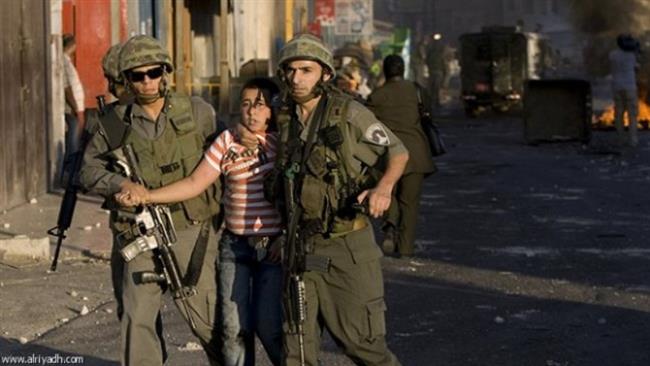
5 Palestinian children have been arrested by Israel every day for the past 48 years
MEMO | June 10, 2015
Data provided by the Israeli military and the UN has revealed that since martial law was imposed on the occupied West Bank in 1967, around 95,000 Palestinian children have been arrested by Israel, an average of more than 5 children per day. Almost 60,000 are believed to have been subjected to some form of physical abuse whilst in detention.
The details were revealed this week in a report submitted by rights group Military Court Watch (MCW) to the UN Special Rapporteur on Torture and other Cruel, Inhuman or Degrading Treatment or Punishment. Over 300 pages of evidence relating to the treatment of Palestinian children held in Israeli military detention were included in the report.
MCW pointed out that the evidence included details of 200 minors detained by the Israeli military in the West Bank between January 2013 and May 2015. The submission confirmed an earlier finding by UNICEF that “the ill-treatment of children, who come in contact with the military detention system, appears to be widespread, systematic and institutionalised.”
According to the rights group, this finding is based on recent evidence that shows that intimidation, threats, verbal abuse, physical violence and the denial of basic legal rights are still commonplace within the system. “Based on the evidence, the submission also drew a link between this industrial scale abuse and the maintenance of Israeli settlements in the West Bank,” added MCW. “It concluded that in order to enable 370,000 Israeli settlers to live in the West Bank in violation of international law without serious interference, the military is required to adopt a strategy of mass intimidation and collective punishment.”
Obama administration attempts to tack 20 years onto man’s sentence for possession of books
PrivacySOS | June 9, 2015
The Obama administration is trying to tack 20 years onto a Florida man’s tax fraud sentence for the supposed crime of possessing books the government doesn’t like. The Intercept reports:
Now, to demonstrate that Robertson’s tax charges merit a terrorism enhancement, the government has cited a number of books owned by Robertson that allegedly extol extremist beliefs. Robertson, who is recognized as an Islamic scholar, owned a library which included roughly 10,000 e-books, a small number of which are alleged by the government to have contained passages deemed controversial.
The government hasn’t provided any evidence to demonstrate that Robertson endorsed, let alone acted upon, any of the passages cited in these books, the defense counters. “There is nothing contained in the prosecution’s memorandum which connects Mr. Robertson to any actual conspiracy to commit terrorism,” Robertson’s attorney, Daniel Broderson, said. “He is an Islamic scholar who owned thousands of books, and they are trying to pull select passages from a handful of books he owned to try and make the case that he’s an extremist.”
Robertson, who says he’s worked for the FBI and CIA as an asset in the past, alleges that the government is retaliating against him for “refusing to conduct an overseas operation requested by the CIA.”
“The government is trying to use my case to establish a legal precedent, where even if a person is not charged with actual terrorism offenses they can still try them as a ‘terrorist’ using the sentencing adjustment,” Robertson told The Intercept. “This is not just about prosecuting my case specifically, it’s about creating a precedent whereby the government can simply go through the books you own and use them to frighten people into believing that you’re a terrorist.”
Unfortunately, it wouldn’t be the first time. Read more about his case, and about the Muslim Exemption to the First Amendment.
Israeli forces shoot, kill Palestinian in Jenin camp
Ma’an – June 10, 2015
JENIN – Israeli forces shot dead a young Palestinian man in the Jenin refugee camp in the northern West Bank early Wednesday morning, Palestinian security officials say.
Izz al-Din Walid Bani Gharra, 21, was shot in the chest during clashes with Israeli forces who raided the camp at dawn. He was evacuated to the public hospital in Jenin where he died shortly after, sources told Ma’an.
Israeli police, in a statement on the incident, said a border police force was in the refugee camp to carry out arrests.
“Upon leaving the camp, the force identified a suspect trying to throw an explosive device at them,” it said.
One of the border police shot him and wounded him, the statement said, adding that the device probably exploded near the suspect.
In an online statement attributed to the Jenin branch of Hamas, the group appeared to claim Ghora as a member.
“Hamas bids farewell to its heroic martyr… and urges the Palestinian Authority and its security forces to stop their security coordination” with Israel, it said, referring to an unpopular agreement under the 1993 Oslo autonomy accords.
Gharra is the twelfth Palestinian to be killed by Israeli forces in occupied East Jerusalem, West Bank, and Gaza since the start of 2015, according to UN Office for the Coordination of Humanitarian Affairs, with over 900 injured, not including injuries resulting from settler violence.
One Israeli has been killed in the same time period.
Search and arrest raids are regular practice by Israeli forces, who have conducted a weekly average of 86 raids this year, up from 75 a week in 2014, according to a May report by the UN Special Coordinator (UNSCO).
Such raids often result in what rights groups argue is excessive use of force by Israeli soldiers against locals, who often throw rocks and bottles at the forces.
Since 2000, Israeli security forces have killed over 8,896 Palestinians, over 1,900 of whom have been children, according to rights group Defense for Children International.
43 years in solitary: Federal court blocks release of last imprisoned Angola 3 inmate
RT | June 9, 2015

Screenshot from RT video
A federal court blocked the release of the last imprisoned member of the Angola 3, after a Louisiana judge ruled the state must release Albert Woodfox. The 68-year-old has spent 43 years in solitary, arguably the longest term of such confinement.
The ‘Angola 3’ ‒ Albert Woodfox, Robert King and Herman Wallace ‒ were inmates accused of murdering a guard at Louisiana State Penitentiary, also known as Angola Prison, during a prison riot in 1972. Though they maintained their innocence, the three men were convicted of murder and spent decades in solitary confinement. Woodfox and Wallace insisted that they were implicated solely for their involvement in a prison chapter of the Black Panthers.
On Tuesday, the Fifth Circuit Court of Appeals issued an emergency stay of Woodfox’s release, temporarily halting the ruling of US District Judge James Brady. The appeals court will hear arguments from Louisiana on whether or not to overturn Brady’s decision after he issued an unconditional writ of habeas corpus on Monday, citing five main reasons in his ruling to release Woodfox from prison.
“The five factors include: Mr. Woodfox’s age and poor health, his limited ability to present a defense at a third trial in light of the unavailability of witnesses, this Court’s lack of confidence in the State to provide a fair third trial, the prejudice done onto Mr. Woodfox by spending over forty-years in solitary confinement, and finally the very fact that Mr. Woodfox has already been tried twice and would otherwise face his third trial for a crime that occurred over forty years ago,” he wrote.
Woodfox suffers from Hepatitis C, diabetes, renal failure and a history hypertension, his lawyer told the (New Orleans) Times-Picayune.
“He a host of issues that elderly people commonly face, but his are in [the] context of [solitary confinement],” attonrey George Kendall said.
Woodfox has remained in solitary confinement for 43 years, which makes him the longest-serving solitary confinement prisoner in the US, Kendall told the Guardian in September.
Teenie Rogers, the widow of slain prison guard Brent Miller, has said she believes the two men were not involved in her husband’s death, and previously called for the release from prison, the Times-Picayune reported.
“If I were on that jury, I don’t think I would have convicted them,” she wrote in the Los Angeles Times in 2008.
King was exonerated and he was released in 2001, while Wallace’s was overturned in October 2013. Wallace died of liver cancer three days after he was released, even though a Louisiana grand jury re-indicted him on his death bed. He was never retried.
Woodfox was first convicted of second-degree murder in 1973, a verdict that was overturned in 1992 by a state court due to “systematic discrimination.” He was re-indicted by a different grand jury in 1993, then reconvicted in 1998.
Brady overturned Woodfox’s second guilty verdict in 2008, citing ineffective counsel. The state appealed, and the case wound its way up to the Fifth Circuit Court of Appeals. That federal court reversed Brady’s ruling, saying that Woodfox couldn’t prove he would not have been convicted if he’d had a different defense team.
In 2012, Brady again overturned Woodfox’s conviction, and the state appealed to the Fifth Circuit, which then agreed with the case judge. In February, Louisiana state’s attorneys announced that a grand jury had indicted Woodfox for a third time in the Angola 3 case.
In his release order, Brady barred the state from conducting a third trial, ruling that further prosecution “would be unjust,” he wrote.
The state condemned the unconditional writ, having argued before Brady that releasing Woodfox is against the public interest and that the inmate “is a danger to the public and is a flight risk.”
“With today’s order, the Court would see fit to set free a twice-convicted murderer who is awaiting trial again for the brutal slaying of Corrections Officer Brent Miller,” Aaron Sadler, communications director for the Louisiana Department of Justice, told TheTimes-Picayune.
Woodfox’s attorneys, however, applauded the judge’s decision, saying that a third trial would have been unfair to their client.
“Now, because the State’s key witnesses are deceased, and Mr. Woodfox’s alibi witnesses are also deceased, there is no practical way for there to be a third trial which comports with the standards of a fair, American trial,” Kendall and Carine Williams said in a statement.
The state has long denied that Woodfox and Wallace were held in solitary confinement, but rather in a lockdown called “closed cell restricted,” which is designed to protect prisoners and guards.
“Contrary to popular lore, Woodfox and Wallace have never been held in solitary confinement while in the Louisiana penal system,” Louisiana Attorney General James Caldwell wrote in a 2013 statement. “They have always been able to communicate freely with other inmates and prison staff as frequently as they want. They have televisions on the tiers which they watch through their cell doors.”
King and watchdog groups define “closed cell restricted” lockdown as solitary, however. Since his 2001 release, King has advocated against the use of solitary confinement. He also fought for the freedom of his fellow Angola 3 defendants.
Amnesty International ‒ which has been part of a long-running, international campaign to free the Angola 3 ‒ praised the judge’s ruling as a “momentous step toward justice.”
“Woodfox has spent 43 years trapped in a legal process riddled with flaws,” Jasmine Heiss, a senior campaigner for Amnesty, said in a statement. “The only humane action that the Louisiana authorities can take now is to ensure his immediate release.”
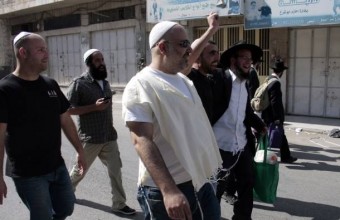
A court of non-convictions for Israeli felons
By Yossi Gurvitz | Yesh Din | June 8, 2015
Does everyone get his or her day in court? Not if they are Palestinian.
Every year Yesh Din publishes data about police investigative failures regarding offenses carried out by Israelis towards Palestinians in the West Bank. They are usually quite similar: the police fail to investigate approximately 85 percent of complaints of Palestinians who report being harmed by Israelis. The rate becomes much higher when it comes to the destruction of Palestinian trees by Israeli civilians: then the police failure rate grows to 97.4 percent.
The average Israeli may not be surprised that the police failure rates are so high, but he or she still has some expectations of the courts. After all, we are told time and again that Israel is governed by the rule of law.
Okay, says the average citizen to himself, yes, we seem to have a problem when it comes to investigations, and naturally if the investigation is a mess we are not likely to get to court. But once we step into the halls of justice, everything should be fine.
Or not.
Our latest data sheet, which was released in tandem with an exhaustive report on the failure of law enforcement in the West Bank, examines for the first time what happens to the cases we follow once they leave the limbo of the prosecution and make it to court. The situation, to put it mildly, is not “okay.”
To begin with, the chance that a complaint by a Palestinian victim will bloom into a an indictment against an Israeli felon stands at a mere 7.4 percent. This means that the chances an Israeli felon will appear in court for a crime he is suspected of committing is about 1:14. Most often, cases are closed due to police investigative failures; in a majority of the cases, the specific reason is the inability of the police to find a suspect – what is known as the the unknown perpetrator clause.
The fact that a case makes it to court does not, of course, mean it will end in a conviction. The defendants have the right to representation and have access to attorneys — as a human rights organization we entirely support this. The problem lies elsewhere.
In 10.5 percent of the cases, the defendants are convicted of all charges; in 22.8 percent of the cases, only some of the defendants are convicted, or they are convicted of some of the charges – sometimes reduced charges as part of a plea bargain. The rate of acquittals is high relative to other cases in Israeli courts (8.8 percent). But what is truly high is the rate of “non-conviction” (24.6 percent) and the rate of indictment withdrawal (22.8 percent).
What is a non-conviction? It is a relatively rare practice, in which the court believes there is reason to avoid tarring him/her with a criminal conviction for one reason or another — despite the fact that the felon has been found guilt of the charges. This almost never happens in the Israeli courts: the percentage of defendants in the magistrates courts found guilty without conviction is 5.3 percent; in district courts the number stands at only 1.2% percent. This is true unless the victim is a Palestinian; then the rare of non-conviction jumps to 24.6 percent. That’s four times that of magistrates courts, and almost 20 times that of the district courts. What a coincidence.
In many of the cases in which indictments against Israelis charged with harming Palestinians were withdrawn, the reason was, once again, investigative failure. The prosecution re-examined the evidence, apparently after the response of the defendants’ attorneys, and reached the conclusion that it did not have enough evidence for a conviction. And that, we note, is a perfectly legitimate decision.
But in many of the indictment withdrawal cases, one of the reasons given was that the defendants did not even bother to show up for the hearings. In most of the cases the government took the required steps – a fine, issuing warrants for arrest and subpoenas – but the indictments were frozen until the defendant was found. In one of the cases, the prolonged freezing caused the police prosecution to say that the evidence has been degraded, to the point of cancelling the indictment.
At the end of the day, the chance that a Palestinian who lodged a complaint about being harmed by an Israeli civilian will see a conviction is only 1.9 percent. Again, most of the blame for this lies with the police – but the courts have their share, as seen by the unusual rate of non-conviction.
Rule of law? Rule of the violent.
Report: Increase in torture in detention under Sisi
MEMO | June 8, 2015
There has been an increase in the death rates in detention centres since the military coup in Egypt, a new report has revealed.
In a report entitled “The Official Cemeteries: Extrajudicial Killings in Egyptian detention centres from June 30, 2013 to June 1, 2015“, the monitoring and documentation department of the Egyptian Observatory for Rights and Freedoms stated that the last two years witnessed a major shift in the death rates in the various detention centres in terms of the number of deaths and the cases of death by torture since President Abdel Fatah Al-Sisi came to power.
The report noted that the Egyptian security authorities adopted a systematic policy of arbitrarily arresting those opposed to the military government in Egypt. Since 30 June 2013, Egypt has adopted this policy in an unprecedented manner. This systematic policy of arrests has led to the detention of large numbers of people in various detention centres, which can no longer accommodate them due to their large numbers. It has also led the government to use arrests as an important means of oppressing the opposition to the military government in Egypt.
With the increasing number of detainees and the lack of any health care or medical attention, the prisons, detention centres, and questioning centres have become a place for the spiritual and psychological murder of the detainees.
The department also explained that the results of the monitoring and documentation of extrajudicial killings committed inside the various places of detention over the past two years, from 30 June 2013 to early June 2015 are as follows:
- Total number of individuals killed in detention centres: 269
- Number of politicians killed in detention centres: 92
- Number of criminals killed in detention centres: 177
- Where these 269 individuals died:
- Number of individuals killed in prisons: 102
- Number of individuals killed in police stations: 150
- Number of individuals killed in courts and prosecutors’ offices: 6
- Number of individuals killed in military prisons: 2
- Number of individuals killed in care homes: 2
- Number of individuals killed in undisclosed places of detention: 7
- Where these 269 individuals died:
- Number of individuals killed in detention centres during Adly Mansour’s term: 130
- Number of individuals killed in detention centres since the beginning of Abdel Fatah Al-Sisi’s term: 139
- Number of individuals killed in detention centres since during Interior Minister Mohamed Ibrahim’s term after June 30, 2013 until his retirement: 231
- Number of individuals killed in detention centres since the beginning of Magdy Abdel Ghaffar’s term: 38
The monitoring and documentation department also added that the number of killings and deaths during the first year of Abdel Fatah Al-Sisi’s presidency has undoubtedly demonstrated his continued political support of slowly killing prisoners and detainees inside detention centres, as the first year of his term resulted in the following:
- Number of deaths inside detention centres during Sisi’ term: 139
- Number of politician who died in detention centres: 31
- Number of criminal deaths inside detention centres: 108
- Where these 139 individuals died:
- Number of deaths inside prisons: 39
- Number of deaths in police stations: 96
- Number of deaths in courts and prosecutors’ offices: 2
- Number of deaths in military prisons: 0
- Number of deaths in care homes: 1
- Number of deaths in undisclosed places of detention: 1
The department also confirmed that the prisons and detention centres have turned into centres of gradually draining and exhausting individuals both physically and psychologically. The military government in Egypt wants to turn the detainees opposed to the military government in Egypt into remains of creatures that no longer represent humans; creatures depleted of all signs of humanity that become a burden on themselves and society, the report said.
The prisons and detention centres in Egypt have been used by the military government to provide the appropriate conditions conducive to achieving the goal of dehumanising the opposition.
The Egyptian Observatory’s monitoring and documentation department stressed that it prepared this report and collected the data in order to expose this heinous crime and the abnormal death of prisoners and detainees inside the various detention centres.
163 Egyptians ‘forcibly disappeared’ in past 2 months, claims report
By Mostafa Mohie | Mada Masr | June 8, 2015
At least 163 people have been forcibly disappeared and illegally detained by security forces in the past two months alone, according to a document published by the Freedom for the Brave campaign on its official Facebook page.
According to the group’s breakdown of these cases, 66 activists have gone missing in this time period, and their whereabouts are still unknown. Another 64 people were only located after they had been detained without charges or interrogation for more than 24 hours in an undisclosed location, in violation of the Constitution. Another 31 cases cited in the document have not yet been verified by the group.
At least two of the people included in the list were allegedly killed by security forces, including Ain Shams University student Ismail Atito and Sinai resident Sabry al-Ghoul.
The majority of these incidents occurred in Cairo, where 60 cases of forced disappearances have been reported, followed by Kafr al-Sheikh with 31, 16 in Giza and 13 in Daqahlia. Suez, Matrouh, the Red Sea, the New Valley and South Sinai were the only governorates that did not report any such cases in the past two months.
Freedom for the Brave said that the majority of the information compiled to create this database was gathered from the group’s own research on certain cases it has been directly following, as well as from documentation compiled by other rights organizations and complaints circulated on social media by the families of the disappeared. The campaign also published the tracking numbers of the official complaints that families have submitted to the prosecution.
“Activists have been forcibly disappeared since July 2013, but this number is now increasing at an unprecedented rate,” Freedom for the Brave member Tarek Mohamed told Mada Masr.
He believes that the current crackdown is a general “continuation of the regime’s policies against any movement associated with the January 25 revolution,” but also a specific reaction against the April 6 Youth Movement’s call for a general strike on June 11.
But the crackdown is baseless, Mohamed argued. The call to strike does not violate any law, as it is a “call for the people to stay home in protest against deteriorating economic conditions and ongoing arrests,” he claimed.
Several of the people who have been illegally detained and held in undisclosed locations were later charged with belonging to the April 6 Youth Movement, which the courts ruled an illegal organization last year, Mohamed pointed out. They also faced accusations of coordinating with the banned Muslim Brotherhood group and calling for the June 11 strike.
“Those accusations were leveled against activist Dalia Radwan, the only one released on bail, and a member of the Helwan University Student Union, Ahmed Khattab, who appeared in front of the prosecution bearing signs of torture,” Mohamed said. “Nagwa Ezz and Ahmed al-Zayyat faced similar charges”.
However, Mohamed added that the prosecution has since reversed its decision to release Radwan and remanded her into custody for 15 days pending investigations.
Mohamed also spoke of photojournalist Israa al-Taweel, Sohaib Mohamed and Amr Mohamed, who were illegally detained on June 1. Their families and lawyers have still not been able to obtain any information on their whereabouts.
“We fear that those who disappeared face the same fate of Atito,” Mohamed said, referring to the Ain Shams University student who disappeared on May 19 after he was allegedly summoned out of an exam room by a security officer and another unidentified man. He was found dead the following day. The Interior Ministry released a statement claiming the student was involved in the assassination of a police officer, and had been killed in an exchange of fire with police forces when he tried to evade arrest.
The ministry has denied all reports of forced disappearances. One source from the ministry told the privately owned newspaper Al-Shorouk that “we are in a state of law and we cannot detain citizens in the streets unlawfully. Whoever is arrested faces accusations according to judicial orders.”
Translated by Mai Shams El-Din
Multiple Cops Don their Batons and Turn a Mentally Ill Man into a Human Pinata
By Jay Syrmopoulos | The Free Thought Project | June 8, 2015
Salinas, Calif. – A brutal attack on a mentally ill man by Salinas police was caught on cell phone video Friday. The graphic video shows officers relentlessly beating a man with batons as he lay on the ground.
Police claim Jose Velasco, 28, was attempting to shove his mother into oncoming traffic. However, a woman claiming to be Velasco’s sister, Antionette Ramirez, disputed the police narrative, claiming “He didn’t try to kill my mom. … She walked away just fine,” she said.
The victims mother had initially called police about her son running into traffic. The responding officers’ claim they saw Velasco slamming his mother onto the pavement upon their arrival on the scene.
Police claim Velasco attempted to grab an officer’s Taser, removing it from its holster, with an officer then firing another Taser at him twice with no effect, according to The Californian.
The video catches none of that.
While police have taken the stance that five officers were beating Velasco mercilessly with batons to force compliance and put him into handcuffs, it seems clear from the video that the brutal beating was extreme and excessive.
Multiple officers can be seen hitting the victim with haymaker power swings with their batons while Velasco is laying prostrate on the pavement. The video then appears to show the officers holding Velasco down until another officer arrives on the scene. The newly arrived officer immediately begins brutalizing him with his baton as other officers restrain Velasco on the ground.
Salinas police are no strangers to controversy, as another video of Salinas police officers beating a suspect, which is eerily similar to this incident, came to light last January.
It’s clear from the video that these officers were not attempting to restrain this man, but rather were caught up in a frenzy of violence and attempting to inflict severe damage on Velasco by beating him like a pinata. There is a distinct line between attempting to force compliance and sadistically exacting punishment.
The victimization of the public is unmistakable. These cops were engaging in punishment; not an attempt at compliance or protecting themselves from harm. Actions such as these are why people are increasingly beginning to perceive police in a negative light.
AL-KHALIL (HEBRON): A week in photos 24-30 May 2015
CPTnet | June 8,2015

STONED BY SETTLERS
Pictured here: A Mexican tourist in Hebron was struck in the head with a rock, thrown from the Beit Romano settlement. The Red Crescent ambulance responded. (30/05/2015)

RESISTANCE STARTS EARLY
Pictured here: A young Palestinian girl looks through the wall of the soldiers. The weekly settler tour restricts freedom of movement for Palestinians in Hebron’s old city. (30/05/2015)

ARMED FOR PRAYER
Pictured here: Despite the heavy military presence to protect them, some Israeli settlers walk to the Sanctuary of the Patriarchs armed with their own machine guns. No civilian is supposed to be allowed in with a weapon, yet every Shabbat armed settlers can be seen on their way to the sanctuary in Hebron. (29/05/2015)

UNPUNISHED ARSONISTS
Pictured here: ِAbu Shamsiyeh, a Palestinian resident of Tel Rumeida, is explaining to a CPTer the violent attack he and his family suffered from settlers on Saturday night. Around midnight, settlers set fire to a couch at his front entrance. It took a long time to extinguish the flames. The Israeli police haven’t charged anyone for the crime. The Abu Shamsiyeh family is one of the main targets of settler violence in Tel Rumeida, which almost always goes unpunished. (30/05/2015)

SOLDIERS ON THE ROOF
Pictured here: Israeli soldiers on top of a Palestinian rooftop in the Old City of Hebron. Soldiers also entered one house while providing escort for about 100 settlers and their visitors while they made a tour in the souq (old Market). (30/05/2015)

END OF SCHOOL YEAR
Pictured here: Last week was the end of the school year in Palestine. On the last morning of school, our Kindergarten friends sang for us. These children who are filled with joy, also brought us a lot of joy. (27/05/2015)

KINDNESS AMIDST TENSION
Pictured here: We are greeted with such warmth and kindness every day from this juice vendor in Hebron’s old city. (30/05/2015)
Featured Video
BRITAIN’S WARNING: PREPARE FOR WAR
or go to
Aletho News Archives – Video-Images
From the Archives
British weapons and personnel doing much of the killing in Yemen
Press TV – June 18, 2019
A detailed report published by the Guardian newspaper has shown how Britain is massively contributing to Saudi Arabia’s devastating war on Yemen as it suggests that London is not only supplying the bombs that fall on Yemenis, but it provides the personnel and expertise that keep the war going.
The comprehensive report by Arron Merat published on Tuesday showed that Britain was doing much of the killing in Yemen as the country continues to provide Saudi Arabia with everything it needs to turn its southern impoverished neighbor into a graveyard.
“Every day Yemen is hit by British bombs – dropped by British planes that are flown by British-trained pilots and maintained and prepared inside Saudi Arabia by thousands of British contractors,” said Merat in the report. … continue
Blog Roll
 Aletho News
- Pakistan reopens Iran border after boosting security: Report
- Why are so many Brazilians voting for Flávio Bolsonaro?
- Democrats Put Anti-Russia Agenda Ahead of American Workers
- Elijah Magnier: Yemen’s Strikes Are Shattering Saudi Arabia’s Long-Term Strategy
- Pentagon designates Chinese cultural centers national security threat
- Israel Demolishes Home Of Lebanese Journalist Whose Viral Film Exposed Pager Attack
- Record Oil, Empty Tanks: The UAE’s Miracle Recovery
- Burnham tackles Britain’s poverty with aggression in Yemen
- Peace in Ukraine: the easy way – or the hard way
- Trump & the Rrrrussians
- If Americans Knew
- An error has occurred; the feed is probably down. Try again later.
- No Tricks Zone
- Sudden Stratospheric Warming, Powerful El Niño Combination May Lead To Extreme Europe Cold, Energy Crisis!
- Two New Studies Find Thwaites Glacier Melt Cannot Be Driven By Human Activity Or A Warming Ocean
- E-Cars Reduce CO2 Emissions By Only 41% Compared To Internal Combustion Engine Vehicles
- Predictions Made By Renowned Climate Professor Over Past Decades Have Been Proven To Be Poor
- New Study Suggests Large Regions Of The Pacific Ocean Have Been Cooling For The Last 80 Years
- Germany’s Green Energy Debacle: High Energy Costs Force Kahla Porzellan to Close After 182 Years!
- New Study: 50 Years Of The Most Aggressive ‘Net Zero’ Policies Can Only Affect The Global Climate By 0.03°C
- US September “Heat” Was No Record…Many Records Set Decades Ago
- Latest European Green Energy Debacle; Portugal’s Largest Flagship Solar Park Insolvent!
- Green Energy Debacle: German Expert Professor Fritz Vahrenholt Warns Of Severe Economic And Social Consequences

