Family Raided by SWAT and their Dog Shot, for Being Unable to Pay Utility Bill
By Matt Agorist | The Free Thought Project | June 5, 2015
St. Louis, MO — Nothing says Police State USA quite like a SWAT team raiding a family home and killing their dog because they are unable to pay their natural gas bill.
The woman whose dog was killed and home destroyed by SWAT officers is Angela Zorich, and her story about her police state experience will shock the conscience.
According to a federal lawsuit filed this month, Zorich was the victim of a massive military-style raid and subsequent puppycide. The raid was carried out because police said they needed “to check if her home had electricity and natural gas service.”
“This is an example of police overreaching and using excessive force to get a family out of their house,” said Kenneth Chackes to the Riverfront Times, the attorney who represents Zorich.
According to the lawsuit, on April 25, 2014, St. Louis County Police officers came to her house. Her son cussed at them. They inspected the home’s exterior and placed a “Problem Properties” sticker on the front window.
Days after being publicly shamed and labeled by the St. Louis Police Department as a “Problem,” on April 28, Zorich called them to follow up. She was told by police that she was being investigated for failing to have natural gas or electric service; two violations against city code.
Zorich admitted to the police that she did not have gas, but said that she did have electricity. Zorich asked for another inspection to prove that she had the utilities. The officer told her that was fine, but that the investigation would continue.
The next day, on April 29, 2014, the home of Angela Zorich was raided by multiple officers from the St. Louis County Police Tactical Response Unit.
The Riverfront Times outlines the details of the lawsuit:
Zorich was at home with several family members and her pit bull, Kiya, when a St. Louis County Police Tactical Response Unit burst through the door without knocking, according to her suit. The unit had at least five officers with M-4 rifles, supported by at least eight uniformed officers.
The officers entered so quickly, Zorich’s suit alleges, that Kiya didn’t even have time to bark. A tactical officer fired three shots into the dog, and the dog’s “bladder and bowels released and she fell to the floor.” The dog “was laying on the floor in her own waste and blood struggling to breathe. She had a gaping hole in her chest.”
Zorich claims the officers kept trying to talk to her about the natural gas, but she was focused on her dog, whom she’d raised as a puppy and who (she says) had “never shown aggression to any person.”
At one point in the raid, Zorich alleges, an officer pointed his firearm at her son’s head and said “One word, motherfucker, and I’ll put three in you.”
Zorich was subsequently taken into custody at the police station. When she was finally let go and allowed to return to her home, she found it to be completely trashed. Beds had been overturned, and items that were once on shelves had been thrown to the floor.
The citations issued to Zorich, which had allegedly justified the heavily militarized raid on her home, were for substandard siding, guard rail, screens, window glass and deck.
A dozen armed men dressed for war, were dispatched to a woman’s home, killed her dog, and kidnapped her because of some moldy wood and her inability to pay her gas bill.
In what world is this considered “justice”?
The apologists will say that Angela Zorich provoked police into this action against her. If she didn’t want to be raided, they will say, she should have just paid her gas bill. The thought of the raid being retaliatory in nature won’t enter their minds.
Named in the lawsuit is the county of St. Louis and two officers, Corey Zavorka and Robert M. Rinck. Her allegations include unlawful seizure and unlawful infliction of emotional distress (for the killing of the dog) and unlawful retaliation.
Hopefully, with her legal team, Zorich will get the actual justice she deserves.
Israel a criminal offender at large, UN listing or not
RT | June 5, 2015
Reports have come out that the UN was considering adding Israel to the list of “grave violations against children in armed conflict.” As detailed below, Israeli army and Israel’s state policies are systematically violent against Palestinian children.
A recent Independent article noted that [Special Envoy for Children and Armed Conflict Leila] “Zerrougui’s draft report cited IDF attacks on schools and hospitals during the 2014 war in the Gaza Strip…”
Even though the UN has historically not taken strong action against any of Israel’s war crimes over the decades, let alone those specifically against Palestinian children, Israel has reportedly exerted pressure to be de-listed from the draft list, with seeming success.
The Independent wrote, “UN Secretary-General Ban Ki-moon, however, is said to be leaning towards not including Israel in the list, amid what several diplomatic sources anonymously said was intense lobbying from Israel.”
Apparently, Israel thinks such call for its joining the list is “a heinous and hypocritical attempt to besmirch the image of Israel and it is doomed to fail,” Foreign Ministry spokesman Emmanuel Nahshon reportedly said.
In fact, the UN should have listed Israel from at least 2009 when, as the UN website notes, “the Security Council decided to also list armed forces and groups who kill and maim children, commit sexual violence against children, and attack schools and hospitals.”
Does Israel violate the six areas detailed? Five out of six, most definitely:
– Killing or maiming of children; [See below]
– Sexual violence against children; [The Israeli army routinely threatens and enacts sexual abuse of Palestinian children]
– Attacks against schools or hospitals; [The Israeli army routinely fires ammunition and tear gas at Palestinian schools; it has repeatedly bombed schools and hospitals in Gaza]
– Abduction of children; [See below]
– Denial of humanitarian access for children. [Israel’s blockade on Gaza strangles the medical sector; Israel routinely denies exit to Palestinians ( including children) for medical care outside of Gaza; the illegal wall Israel has constructed throughout much of the West Bank prevents Palestinians (including children) from accessing medical care.] [see also: Al Mezan Releases Factsheet on Gazan Children’s Access to Medical Care]
– Recruitment or use of children by armed forces and groups; [This is the one point which strictly speaking doesn’t apply. However, the Israeli army has used Palestinian children as human shields]
Members of the Israeli army themselves have admitted various crimes. A Breaking the Silence report “Children and Youth – Soldiers’ Testimonies 2005-2011” noted:
“This booklet reveals how physical violence is often exerted against children, whether in response to accusations of stone-throwing or, more often, arbitrarily.”
Further testimonies following the the July/August 2014 war on Gaza highlight the brutality meted out on Palestinians (including children).
Killing or maiming of children
Having between November 2008 and March 2013 lived a cumulative three years in the Gaza Strip, including during two Israeli waged massacres of Palestinians in Gaza, I present three (of too many) cases of Israel targeting children, of which I have personal knowledge.
On January 4, 2009, Shahed Abu Halima lay cradled in her mother’s arms, the family terrorized like Palestinians all over Gaza by incessant Israeli bombing. Their area, al-Atatra, west of Beit Lahiya in northern Gaza, was particularly hard-hit, and had been invaded by Israeli tanks. Of the two shells that hit baby Shahed’s home, at least one was white phosphorous, raining clumps of the chemical weapon down on the family. The flames which enveloped Shahed’s body were not extinguishable, nor could her mother Sabah see through the smoke and flames to reach the infant. Shahed’s dog-eaten, charred corpse was only found days later when Palestinian medics were finally allowed to enter the area. [see: Next Time It Will Hurt More]

Farah Abu Halima, 3, severely burned by Israeli-fired White Phosphorus, January 4, 2009 (Photo by Eva Bartlett)
Also on January 4, 2009, Shireen Abu Helou continued nursing her dying baby, Farah (“joy” in Arabic), in a futile effort to bring the infant comfort while her family took cover from Israeli fire behind a bulldozed dirt mound in the Zeitoun district just south of Gaza City (infamous for the herding of entire families from the Samouni clan into one building and repeatedly bombing it; infamous for the point blank shootings of individuals, including 4-year-old Ahmed shot dead after crying about his father’s execution). One-year-old Farah did not survive the Israeli sniper’s bullet to her abdomen, her intestines falling out as she bled to death over the course of a few hours. [see: They Killed Me Three Times]
On November 21, 2012, a 14-year-old boy asked his father for 10 shekels, to go to the small store up the road to buy food for his siblings who hadn’t eaten anything but bread for the past five days of Israeli bombing. The bombing had not quite stopped, but Nader Abu Mghaseeb believed he was safe, a ceasefire due to be enforced in just under two hours. He was incorrect. Minutes after the precision drone strike hit Nader, his father rushed out to find the dying, tangled mass of flesh that had been his son.
In Deir al-Balah’s al-Aqsa hospital, I saw the teen’s mangled corpse brought in. His stunned father stood outside trying to comprehend that Israeli-fired, precision drone technology had obliterated his clearly unarmed 14-year-old son. [see: Killing before the Calm: “Israeli” Attacks on Palestinian Civilians Escalated before Cease-fire]
Two years and many Palestinian child martyrs and maimings later, during the July/August 2014 Israeli massacre of Gaza, four small boys ran for their lives across an empty Gaza beach as the Israeli navy chased them with shelling, eventually hitting their prey. The shelling of the Bakr boys, aged nine to 11, was recorded by a number of Palestinian and foreign journalists camped out at the nearby Deira hotel, many of whom broke down at witnessing this savagery.
Of the July/August Israeli massacre of Gaza, Defense for Children International-Palestine’s (DCI-Palestine) April 16, 2015 report noted:
“DCIP independently verified the deaths of 547 Palestinian children among the killed in Gaza, 535 of them as a direct result of Israeli attacks. Nearly 68 percent of the children killed by Israeli forces were 12 years old or younger. Those who survived these attacks will continue to pay the price for many years. More than 1,000 children suffered injuries that rendered them permanently disabled, according to OCHA.”
The assault on Palestinian children is, of course, not merely limited to its times of bombing Gaza. Almost daily in Gaza’s border regions and on the sea, children are machine-gunned and shelled by the genocidal bully of the region, under the pretext of “security.” Having witnessed this on countless occasions, myself under fire with the brave farmers, I can say one hundred percent affirmatively that they posed no security threat to the well-armed Israeli army (nor navy).
In the rest of occupied Palestine, whether during the criminal routine Israeli army invasions and lock-downs of West Bank and Jerusalem areas, or during demonstrations against the illegal Wall stealing yet more Palestinian land, or merely randomly, Palestinian children are targeted by Israeli live ammunition, tear gas canisters, and hands-on brutality, not only by the so-called “most morale army” but also the unspoken of proxy soldiers: those vile, racist, illegal Jewish colonists who (claiming God’s approval) abuse Palestinians of all ages, without consequences.
Early in the morning of July 2, 2014, Mohammed Abu Khdeir went missing while going to mosque for morning prayers in occupied Jerusalem. His slight body was found a few hours later charred and beaten. Before his Jewish colonist tormentors poured gas down his throat and lit him alive, they beat he the 16 year old with a blunt object to his head. The autopsy report “showed soot in the victim’s lungs and respiratory tract, indicating he was alive and breathing while he was being burnt.”

Reham Nabaheen, 4, killed by Israeli shrapnel to her head, November 21, 2012 (Photo by Eva Bartlett)
The systematic brutality of Israel’s colonists and Israeli soldiers against Palestinians is met with virtually no reprimand by Israel. On their “Settler violence: Lack of accountability,” rights group B’Tselem noted in 2011 (updated January 2013):
“When Israelis harm Palestinians, the authorities implement an undeclared policy of forgiveness, compromise, and leniency in punishment. Israeli security forces have done little to prevent settler violence or to arrest offenders. Many acts of violence have never been investigated; in other cases, investigations have been drawn out and resulted in no action being taken against anyone.”
In November 2013, Palestinian rights group Al Haq issued a new report (“Institutionalised Impunity: Israel’s Failure to Combat Settler Violence in the Occupied Palestinian Territory”) and noted:
“According to the United Nations Office for the Coordination of Humanitarian Affairs, the number of settler attacks resulting in Palestinian casualties and property damage increased by over 144 percent in 2011, compared to 2009. In 2013, the report of the United Nations International Fact-Finding Mission on Settlements highlighted the failure of the Israeli authorities to enforce the law by investigating such incidents and taking measures against their perpetrators. The Fact-Finding Mission came to the “clear conclusion that there is institutionalised discrimination against the Palestinian people when it comes to addressing violence. Acts of settler violence are intended, organised, and publicly represented to influence the political decisions of Israeli State authorities.”
Throughout the West Bank and Jerusalem, Jewish colonists routinely run over Palestinian children. Two examples include an October 2014 hit and run near Ramallah of two 5 year old Palestinian girls, one of whom—Inas Shawkat Khalil—died from her injuries.
Child abduction and imprisonment
According to Addameer Prisoner Support and Human Rights Association’s April 2015 update, 182 Palestinian children are imprisoned by Israel, including 26 under the age of 16. They note that“8,000 Palestinian children have been arrested since 2000.”
DCI-Palestine notes:
“Israel is the only country in the world that automatically prosecutes children in military courts that lack basic and fundamental fair trial guarantees. Interrogations tend to be coercive, including a variety of verbal abuse, threats and physical violence that ultimately result in a confession.”
They further note that most Israeli-imprisoned Palestinian children are nabbed in the middle of the night, something youths from Resistance villages like Bil’in are well-familiar with. Bil’in, known for its popular demonstrations against the illegal, land-grabbing Wall, has lost many a martyr, including children to Israel’s brutal attempts at stifling dissent (On that note: to all the media that leapt on the false, “Bashar is killing unarmed protesters band-wagon,” Israel is actually doing so).
That the UN is even considering not including Israel on the list speaks further volumes to the uselessness of this institution, a body that serves only to put the odd band-aid on the seeping Palestinian wound and to endorse criminal bombings of sovereign nations.
In any case, Israel need not worry that anyone is trying to “besmirch” its reputation. It has proven quite adept at doing that all on its own. Every blown-off Palestinian child’s head, every Palestinian child behind Israeli bars, every Mohammed Abu Khdair tortured and killed by Jewish colonists, and every colonists’ intentional running over of Palestinian children “besmirches” what is left of the racist, genocidal state’s reputation, with or without UN recognition.
Eva Bartlett is a freelance journalist and rights activist who has lived in the Gaza Strip since late 2008.
Virginia Cop Shoots to Death an Unarmed Man… for the Second Time
By Noel Brinkerhoff and Steve Straehley | AllGov | June 3, 2015
A Virginia police officer has shot to death a second unarmed man, four years after doing it the first time.
In 2011, Officer Stephen Rankin of Portsmouth, Virginia, killed Kirill Denyakin, shooting him 11 times, after responding to a 911 call about the 26-year-old behaving drunkenly and aggressively outside a building in which he’d been staying. Rankin claimed at the time that Denyakin charged him and reached into his waistband.
Rankin, a former U.S. Navy sailor, avoided indictment for the shooting, but was limited to desk duty for three years.
Then, one day before the fourth anniversary of Denyakin’s shooting, The Guardian reported, Rankin shot and killed William Chapman, an 18-year-old unarmed black teenager suspected of shoplifting from a Walmart. Neither Portsmouth police nor Walmart would say if Chapman actually took anything from the store.
Prior to the Denyankin shooting, police supervisors had been warned that Rankin had use-of-force issues and was “dangerous,” The Guardian reported. After that shooting, Rankin commented on a local newspaper website under a pseudonym defending the shooting. He later admitted to posting the comments.
Portsmouth Police Chief Edward Hargis refused to say why Rankin had been allowed to stay on the street after the problems had been reported. “That’s a personnel matter and I can’t comment.” He added: “I’m not going to comment on what people may say, allegation-wise,” he told The Guardian.
Rankin is now on administrative leave.
To Learn More:
Stephen Rankin: The Military-Trained Officer Who Killed Two Unarmed Men (by Jon Swaine, The Guardian )
William Chapman: Unarmed 18-Year-Old Shot Dead by Officer Who Killed Before (by Jon Swaine, The Guardian )
Death of Kirill Denyakin (Wikipedia)
Gazans begin hunger strike until Rafah crossing reopens
MEMO | June 3, 2015
Scores of people unable to travel because of the closure of Rafah crossing started an open hunger strike yesterday to protest against the closure by the Egyptian authorities, Falesteen newspaper reported.
The hunger strikers set up a tent near the crossing and put up a number of posters including: “People stuck in Gaza call for Egyptian Authorities to open the Rafah crossing in both directions.”
Another poster read: “We call for the UN and all human rights organisations to facilitate the travel of Gaza’s patients… Gaza’s patients are awaiting death because of the closure of the crossing. We are humans… Where are President Abbas and the unity government?”
The hunger strikers said that they would continue their strike until the crossing is reopened, calling for the Palestinian Authority and the Palestinian unity government to take actions to make this happen.
The group’s spokesman, Majdi Abu-Kareem, said that around 15,000 Palestinians need to travel urgently and they are “just waiting for the crossing to open”.
“Some of the people who are unable to travel are patients, some are university students and some are foreign passport holders facing expiration deadlines,” he said. “The passports of a number of foreign passport holders have expired.”
“The continuous closure of the crossing increases the suffering of the people of Gaza,” Abu-Kareem said. “The closure makes the coastal enclave the biggest prison in the world.”
NY Times Covers Up Israel’s Attacks on Gaza Fishermen
By Barbara Erickson | TimesWarp | June 2, 2015
The New York Times has turned its sights on Gaza today with a page 1 article highlighting the miseries of life in the beleaguered enclave. The difficulties, we learn, have little to do with Israeli attacks and its crippling blockade: They are the fault of Hamas.
The article by Diaa Hadid and Majd el Waheidi, “Gazans’ Hopes for Rebuilding After War Give Way to Deeper Despair,” takes aim at the Islamist group in the lead paragraph, quoting an angry shopkeeper who resents a recent tax hike. The man is “enraged,” the story tells us, and he blames the government in charge.
This is where the Times wants to direct our attention: away from Israeli culpability for the humanitarian crisis in Gaza and directly onto the Palestinians themselves. Meanwhile, the paper has been silent as Israeli gunboats and snipers have frequently attacked fishermen and farmers, violating the terms of the August 2014 ceasefire.
Israel has blockaded the Gaza Strip since 2007 and made three sustained assaults on the enclave since then, inflicting more death and destruction on the population each time. But the Times article has only this to say: “Israel places severe restrictions on the import of building materials, saying they have been used to build tunnels to conduct attacks on Israel.”
In the first three months of this year Israel killed one Palestinian and wounded 16 in Gaza, carried out at least six military incursions into the strip and shot at Palestinians, by land and sea, at least 67 times. Since then the attacks have continued almost without pause.
The Times ignores nearly all of this, even as Israel levels farmland and sprays food crops, and the newspaper fails to report other developments, such as a long term ceasefire offer made by Hamas earlier this year through Qatar and Turkey or the launch of a flotilla now on its way to Gaza from Scandinavia, the third such attempt to break the siege.
But now, when Hamas has instituted an unpopular increase in import fees, the Times sees fit to send a reporter to Gaza, intending as usual to demonize the Islamist party. It seems, however, that the evidence hoped for was scanty: The entire story contains only this one example of blaming Hamas.
This does not deter the Times, however. This lone sample is played to the hilt, laid out in the opening paragraph. Close readers may notice this; others will let it color their perceptions of the entire article.
The Palestinian Authority also comes in for blame. We find one Gaza resident who says the rival to Hamas has “an interest in leaving Gaza like this.” Others mention the impasse between Hamas and the PA, but Israeli responsibility gets little mention.
The story goes on to devote two paragraphs to the Egyptian closure of Rafah crossing and Egypt’s destruction of smuggling tunnels. No more is said about Israel’s role except to mention the debris from the last summer’s conflict.
We don’t hear that Israel destroyed thousands of homes and businesses in 2014, along with crops, wells and the electrical plant, and left more than 2,000 dead. Nor do we hear anything about the context of the blockade—the fact that it is has been in place for nearly eight years and its effect on families torn by separation, patients in need of medical care and basic supplies of food and medicine.
No doubt Hadid heard from many despairing residents of Gaza who direct their anger at Israel (and the United States), but we find not a single quote to this effect. She most certainly heard about the attacks on fishermen and farmers, but none of this made its way into the story.
This is just as Israel wants it. As a recent article in the Israeli 972 Magazine notes, “These incidents — in which the Israeli army infiltrates the Gaza Strip, shoots at fishermen, confiscates their boats and fires at farmers near the border zone — they are part of daily life in the besieged Gaza Strip. They are the everyday aspects of living in a giant prison controlled by Israel. But we barely hear about them.”
The author of the 972 piece, Haggai Matar, emphasized the blackout in the Hebrew media: Israelis are not to be aware of the oppression of Gaza; they are only to hear of the occasional rocket, the hyped up discovery of a “terror tunnel” and the failings of Hamas and the Palestinian Authority.
Here in the United States, away from Israeli censors, the Times has chosen to comply with this news embargo. In our newspaper of record nothing is to be said about the shooting of unarmed Gazans and the constant attacks on their welfare. Israel’s reputation comes first; the ethics of journalism and the reader’s right to be informed come far behind.
Israeli forces demolish 3 houses in East Jerusalem
Ma’an – June 2, 2015
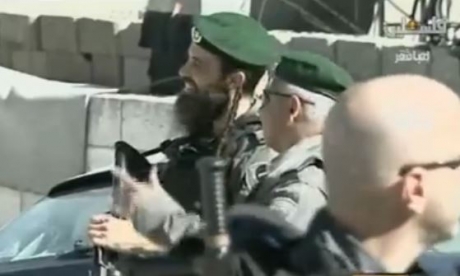
JERUSALEM – Israeli forces demolished three Palestinian homes in the Silwan neighborhood and Salah al-Din street in occupied East Jerusalem early Tuesday morning, the owners told Ma’an.
They were told that the houses were demolished because they had been built without necessary licenses from the municipal council.
Nidal Abu Rmeila said bulldozers under Israeli army escort had demolished two apartments, totaling 140 square meters, that he had been building in Silwan near the Moroccan Gate of the Al-Aqsa mosque compound.
Abu Rmeila said he had not been able to obtain a license from the Jerusalem municipality as the building was located close to the Al-Aqsa compound in an area he claimed the Israeli antiquities authority is “greedily” interested in.
He began construction in late 2014, after which the municipality inspectors ordered him to stop, issuing a demolition order.
Abu Rmeila said the order was postponed several times, adding that bulldozers had arrived two weeks ago to demolish the house, but left after it became clear they were too big to access the building.
Tuesday’s demolition was only possible, he said, after the Israelis “used a lift to carry small excavators and bring them close to the site.”
Abu Rmeila said Israeli troops had assaulted members of his family when they evacuated the home before the demolition.
He said that relatives Hashim Abu Rmeila, Izz al-Din Abu Rmeila and Nur al-Din Abu Rmeila sustained bruises, while his 70-year-old mother was injured when soldiers fired tear gas canisters into the house.
Separately on Tuesday, Israeli forces demolished the upper story of a house on Salah al-Din Street near the Old City belonging to Rafiq al-Salayma.
A relative of the owner Abu Jabir al-Salayma told Ma’an that Israeli troops raided the house at 6 a.m. and forcibly evacuated the family before workers set about demolishing the upper floor.
The family house was built long ago, al-Salayma said, but “because the house was too small” they had added a new floor and roofed it with clay tiles.
The demolitions come less than a week after another house was demolished in Silwan.
Silwan is one of many Palestinian neighborhoods in occupied East Jerusalem witness to an influx of Israeli settlers at the cost of ongoing demolition of Palestinian homes and eviction of Palestinian families.
While Jewish residents frequently take over Palestinian buildings with the protection of Israeli forces, government policies make it nearly impossible for Palestinian residents to obtain building permits, according to Israeli rights group the Association for Civil Rights in Israel.
Law Enforcement Agencies Use Tasers Over 300,000 Times A Year
By Sarah Kaufman | vocativ | June 1, 2015
The use of a Taser in the fatal shooting of a black man by a cop in South Carolina earlier this year has reignited a debate about how safe they are and whether police are relying too heavily on them. Many people, especially residents of North Charleston, S.C., where the shooting occurred, have expressed concern that Tasers pose a health risk to some who are involved in run-ins with police.
Officer Michael T. Slager of the North Charleston Police Department fatally shot Walter L. Scott on April 4 in North Charleston. The incident was recorded on tape by a bystander, and the officer’s use of a Taser was documented as well.
Here’s a look at some of the numbers behind the raging debate over Tasers:
Slager had used his Taser 14 times in five years
The record shows Slager was no stranger to the Taser’s electrical charge, The New York Times reported. He used his Taser six times in 2014 alone, according to police documents. That’s four percent of the department’s total Taser use.
North Charleston’s police deployed Tasers 825 times in four years
That means the department, on average, performed 206 tasings per year. For comparison, The New York Times offered Tyler, Texas, a town similar in population but with 150 fewer police officers. Tyler’s department used Tasers 65 times in the same time period, or roughly only 30 percent of the tasings that occurred in North Charleston.
Over 18,000 law enforcement agencies have Tasers
The weapon is highly prevalent, according to Taser International. But there is no publicly available national standard for law enforcement in using one.
Tasers are used 900 times a day
Taking that data from Taser International and assuming every day is relatively consistent in Taser usage, that’s 328,500 tasings a year.
Tasers have been blamed for over 500 deaths
While Taser International says it has conducted independent studies to verify the weapon’s safety, some medical experts say the electric jolts can pose sometimes fatal threats to a person’s health. According to Amnesty International, Tasers are responsible for at least 500 deaths.
“Grab Anybody!” St. Louis PD Indiscriminately Taser and Arrest People Walking Down Sidewalk
By Matt Agorist | The Free Thought Project | June 1, 2015
St. Louis, MO — Friday night in St. Louis, a peaceful, silent protest was organized to raise awareness and call an end to police brutality. It was referred to on social media as #shutdownbaseball. The protest took place outside of Busch Stadium during a Cardinals game.
The road was already closed off for baseball fans, and the protesters simply held their signs and chalked the sidewalks.
The protest was largely uneventful except for some people becoming upset when they saw a flag being “disrespected.”
According to RevoNews,
It wasn’t until the last 13 remaining protesters started to head home around 11:30pm when things got out of hand. People still motivated to bring attention to their cause had decided to leave the sidewalk and walk in the street. Faced with a myriad of options, when the commands given to leave the roadway were not met Lt Dan Zarrick made the decision to make arrests. What we see in the video below (supplied by the female taser victim) shows what happened after that decision was made.
As the video starts out police are taking people into custody for being in the street. One officer who was blocking the arrests with his bicycle, ordered the crowd to disperse. “Get back,” he says.
Then another officer can be heard screaming, “Grab anybody, they were all in the street!”
As people begin to comply with the first officer’s order to “get back,” they turn and walk away down the sidewalk. But they are quickly met by officers with tasers drawn.
The man in front, wishing not to be tased, side-steps the taser but is quickly hit. Then the woman is tased.
“Oh my god, Oh my god, why did you do that? I didn’t do anything,” pleads the woman just prior to being hit with the taser again.
The cries for help and obvious distress of the woman in the video are disturbing.
Right before the video ends we can her the woman screaming in pain, “Why are you doing this to me? I’m on the ground.”
RevoNews reports that eight of the protesters were arrested. All of them were charged with impeding the flow of traffic and two had an additional charge of resisting arrest. They have all been released.
This small group of people were complying with the original officer’s orders, yet they were met with excessive force. There was absolutely no need for tasers to be deployed. No one was running away; no one was resisting, nor was anyone posing a threat.
According to Missouri state law, impeding the flow of traffic is punishable by “a fine of not less than ten dollars nor more than fifty dollars.” However, these people were met with a large show of force and brought to jail for it. Is that justice?
Prisoner Abdullah Barghouthi in solitary confinement after radio interview
Ma’an – May 31, 2015
GAZA CITY – Israeli prison services on Sunday stormed the cell of Hamas leader Abdullah al-Barghouthi in Rimon prison after it was revealed that he had given a telephone interview to a Gaza-based radio station from inside the prison.
An Israeli prison spokeswoman told Ma’an that the former al-Qassam Brigades commander had been sent into solitary confinement and would face trial for his actions.
Israeli media reported that prison officers searched the prison cell for the phone. Hebrew-language news sites questioned how a Palestinian prisoner had been able to access a mobile phone and give a radio interview.
During the interview with the Hamas-affiliated al-Rai radio station, Barghouthi called on Hamas and its military wing al-Qassam Brigades to take their time as they negotiate a prisoner swap deal with Israel.
“Don’t hasten, because we are firm and perseverant,” he said.
He added, “We won’t change and we shall remain firm regardless of whether we are released today or after a thousand years.”
In response, a spokesman for al-Qassam Brigades Abu Ubayda tweeted: “Freeing you (all prisoners) is a duty we are committed to, and your jailers will eventually vanish.”
Barghouthi is serving 67 life terms, the highest sentence ever handed down by an Israeli military court, after he was convicted of multiple attacks in Israel.
He has been detained since March 2003.
Oklahoma troopers rush to ‘help’ stranded motorists, shoot and kill non-compliant pastor
RT | May 31, 2015
A flood “rescue mission” turned fatal for one Oklahoma man, who was shot and killed by a state trooper. Police claimed that the man did not want to leave his vehicle, argued and allegedly attacked officers as they tried to get him out of the water.
The incident took place some 20 miles outside of Tulsa when Okmulgee County state troopers came to the rescue of two men trying to save their car stranded at a roadway from rushing water on Friday.
The water levels were rising too rapidly, and the troopers we “worried about them getting swept away,” according to Capt. Paul Timmons who spoke of the incident with the press on Saturday.
“[The troopers] were trying to get them to come out of the water,” Timmons said. “(The men), for whatever reason, were just really upset about having to leave the vehicle there.”
When the two unfortunate drivers got to the dry land, at least one of them allegedly attacked the officers and was shot and killed, AP reports.
“It’s not real clear how it all transpired,” Timmons admitted. A weapon was reportedly recovered from one of the suspects, but it remains unclear whether the man fired at the troopers. The second man was arrested for assault and public intoxication. Their identities were not revealed.
Local news however reported the victim as a 35-year-old Nehemiah Fischer, a pastor of a local church, while the second man was identified as his brother.
Meanwhile the troopers did not suffer any injuries. The superiors are due to decide whether the officers should be placed on leave following the incident.
Fatal US police shootings in 2015 at 385: Report
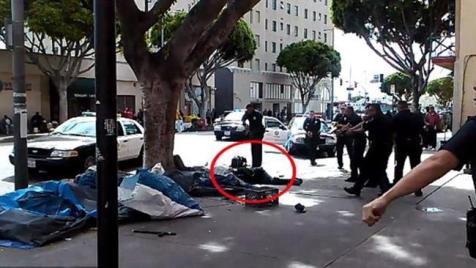
The Los Angeles Police Department engages in an altercation that ended in the death of a homeless man on March 1, 2015
Press TV – May 31, 2015
A new report shows that US police have shot and killed 385 people during the first five months of 2015, an average of more than two fatal shootings a day.
The death rate is over twice the account tallied by the federal government during the past 10 years, which officials admit is incomplete, according to a Washington Post analysis published on Saturday.
“These shootings are grossly underreported,” said Jim Bueermann, a former police chief and president of the Washington-based Police Foundation, a nonprofit organization which works to improve law enforcement.
“We are never going to reduce the number of police shootings if we don’t begin to accurately track this information,” Bueermann was quoted by The Post as saying.
The analysis is the result of information The Post is compiling on every fatal shooting by police in 2015 in addition to data of every officer killed by gunfire in the line of duty.
The data is related to shootings and does not include killings by other means, such as stun guns and deaths in police custody.
The study shows that almost half the victims were minority. However, the demographics shifted markedly among the unarmed victims, with two-thirds being African American or Hispanic.
On the whole, US police killed blacks at three times the rate of whites or other minorities when adjusting by the population of the census tracts, where the shootings took place.
A large proportion of the victims, over 80 percent, were armed with objects, including guns, knives, machetes, revving vehicles and, in one case, a nail gun.
49 people were not armed with any weapons, while the guns used by 13 others were not real. Overall, 16 percent were either carrying a toy or were unarmed, according to The Post.
Several current and former police chiefs and other criminal justice officials said it was time police accepted responsibility for the bloodshed. They argued that a vast majority of the killings, examined by The Post, resulted from poor policing.
“We have to get beyond what is legal and start focusing on what is preventable. Most are preventable,” said Ronald L. Davis, a former police chief, who heads the Justice Department’s Office of Community Oriented Policing Services.
Police “need to stop chasing down suspects, hopping fences and landing on top of someone with a gun,” Davis said. “When they do that, they have no choice but to shoot.”
The report came as many US cities have been the scene of protests over the deaths of several unarmed African Americans by white police officers and decisions by grand juries not to indict the officers.
Another analysis by The Post and researchers at Bowling Green State University, released last week, showed that only 54 officers have been charged for thousands of fatal shootings at the hands of police across the United States over the past decade.
Featured Video
BRITAIN’S WARNING: PREPARE FOR WAR
or go to
Aletho News Archives – Video-Images
From the Archives
British weapons and personnel doing much of the killing in Yemen
Press TV – June 18, 2019
A detailed report published by the Guardian newspaper has shown how Britain is massively contributing to Saudi Arabia’s devastating war on Yemen as it suggests that London is not only supplying the bombs that fall on Yemenis, but it provides the personnel and expertise that keep the war going.
The comprehensive report by Arron Merat published on Tuesday showed that Britain was doing much of the killing in Yemen as the country continues to provide Saudi Arabia with everything it needs to turn its southern impoverished neighbor into a graveyard.
“Every day Yemen is hit by British bombs – dropped by British planes that are flown by British-trained pilots and maintained and prepared inside Saudi Arabia by thousands of British contractors,” said Merat in the report. … continue
Blog Roll
 Aletho News
- Yemen denounces European Parliament’s ‘hypocritical’ push to blacklist Ansarullah
- Qalibaf: UAE’s UN bid aims to ‘clear the runway’ for ‘Greater Israel’, whitewash genocide
- Pakistan reopens Iran border after boosting security: Report
- Why are so many Brazilians voting for Flávio Bolsonaro?
- Democrats Put Anti-Russia Agenda Ahead of American Workers
- Elijah Magnier: Yemen’s Strikes Are Shattering Saudi Arabia’s Long-Term Strategy
- Pentagon designates Chinese cultural centers national security threat
- Israel Demolishes Home Of Lebanese Journalist Whose Viral Film Exposed Pager Attack
- Record Oil, Empty Tanks: The UAE’s Miracle Recovery
- Burnham tackles Britain’s poverty with aggression in Yemen
- If Americans Knew
- An error has occurred; the feed is probably down. Try again later.
- No Tricks Zone
- Sudden Stratospheric Warming, Powerful El Niño Combination May Lead To Extreme Europe Cold, Energy Crisis!
- Two New Studies Find Thwaites Glacier Melt Cannot Be Driven By Human Activity Or A Warming Ocean
- E-Cars Reduce CO2 Emissions By Only 41% Compared To Internal Combustion Engine Vehicles
- Predictions Made By Renowned Climate Professor Over Past Decades Have Been Proven To Be Poor
- New Study Suggests Large Regions Of The Pacific Ocean Have Been Cooling For The Last 80 Years
- Germany’s Green Energy Debacle: High Energy Costs Force Kahla Porzellan to Close After 182 Years!
- New Study: 50 Years Of The Most Aggressive ‘Net Zero’ Policies Can Only Affect The Global Climate By 0.03°C
- US September “Heat” Was No Record…Many Records Set Decades Ago
- Latest European Green Energy Debacle; Portugal’s Largest Flagship Solar Park Insolvent!
- Green Energy Debacle: German Expert Professor Fritz Vahrenholt Warns Of Severe Economic And Social Consequences

