Israeli forces raid homes in Qaryut to intimidate local activists
International Solidarity Movement | June 17, 2015
Qaryut, Occupied Palestine – In the early hours on Tuesday 16th of June Israeli occupation forces raided several Palestinian homes in the village of Qaryut, near Nablus. The soldiers invaded the homes in search of the Palestinian activist Bashar al-Sadiq Yusuf Moammar (Bashar Qaryouti).
The incident is possibly sparked by the fact that villagers of Qaryout have recently taken up weekly demonstrations, arranged by the PSCC, which Bashar Qaryouti is part of. These are demonstrations against the illegal Israeli settlements that surround the city and continue to annex Palestinian land.
Soldiers invaded at least five different houses in order to find Bashar, and trashed the family homes in the process. Abdullah Qaryouti, whose family fell victim to one of these raids, explained how this included the soldiers locking up the family in one room whilst ransacking the rest of their house using K9’s.
According to Abdullah Qaryouti this is common behaviour for the occupation forces, who invade and ruin Palestinian homes on a regular basis.
The local activists presume the most recent house raids to be part of the ongoing efforts of Israeli forces to intimidate and threaten any resident that participates in non-violent resistance.
 Bashar Qaryouti


Credit to PSCC for the photos, they do not belong to ISM.
Policing and Defending Then and Now
The military and police have become two sides of the same coin
By Philip Giraldi • Unz Review • June 16, 2015
Inevitably the debate over issues that relate to both national security and domestic law enforcement often become mired down in wrangling over legal or constitutional niceties, which the public has difficulty in following as it fixates instead on the latest twist in the Bruce Jenner saga. That means that the punditry and media concentrate on easily digestible issues like potential bureaucratic fixes, budgeting, equipment and training, which presumably are both simpler to understand and also more susceptible to possible remedies. But they ignore some basic questions regarding the nature and viability of the actual threat and the actual effectiveness of the response even as the dividing line between military and law enforcement functions becomes less and less evident.
There has been a fundamental transformation of the roles of both police and the armed services in the United States, a redirection that has become increasingly evident since the 1990s when the conjoined issues of national security and crime rates became political footballs. Response to terrorism and “tough on crime” attitudes frequently employ the same rhetoric, incorporating both political and social elements that place police forces and the military on the same side in what might plausibly be described as a version of the often cited clash of civilizations.
A nation’s army traditionally exists to use maximum force to find and destroy enemies that threaten the homeland. A police force instead serves to protect the community against criminal elements using the minimum force necessary to do the job. Those roles would appear to be distinct but one might reasonably argue that the armed forces and the police in today’s America have become the two major constituents of the same organism more-or-less connected by a revolving door, dedicated to combating a new type of insurgency that comprises both global and domestic battlefields and is no respecter of borders. This has meant at its most basic that there has been a major shift in perception on the part of the security community. Community policing and national defense have abandoned relatively reactive interactions with the community and world for more assertive preemptive roles that see their areas of operation as theaters of conflict analogous to war zones, suggesting to some law enforcement officers that Baltimore is at least occasionally somewhat like Fallujah.
That means that some police forces have allowed considerable space to develop between themselves and the communities they are supposed to guard. Many now see themselves less as crime solvers and protectors of the public, instead increasingly embracing their role as a first line of defense against terror and social unrest. As a consequence, police in today’s America are inevitably tasked with maintaining public order in a fashion that once upon a time would have likely been the responsibility of the military equipped and trained as well as far more numerous National Guard.
This tendency to expand and redirect the police role gained momentum in the early 1990s, when law enforcement began to focus on terrorism in the wake of Oklahoma City and the first World Trade Center bombing. After 9/11 it picked up speed when the Bush Administration rushed to adopt a preemptive foreign policy that fit in nicely with a more assertive role by police. Special Weapons and Tactics (SWAT) teams were symptomatic of the change. Originating in Los Angeles in the 1960s, SWAT units spread to nearly every major and many minor police departments whether there was or is any need for them or not. Police departments, embracing having an exciting new weapon and looking for excuses to use it, began to allocate tasks that normally had been the responsibility of beat or patrol officers, including serving warrants. SWAT delivery of what are described as “no-knock” warrants that are frequently issued without any real justification and sometimes based on faulty intelligence has consequently become a bete noire for critics of police overreach. The warrants are sometimes served in the middle of the night by heavily armed officers and might well be preceded by the use of battering rams and “flashbang” grenades, resulting in numerous tragedies for those on the receiving end. With SWAT teams attracting the elite police officers, community policing inevitably has suffered, frequently being assigned to new and less experienced officers.
Police and the military now share equipment, training and doctrine. The equipment, most of which is useful for fighting a war but of marginal utility for police work, is frequently highly visible and changes both how local law enforcement is perceived and how it operates. Arizona alone has received 29 armored personnel carriers, 9 military helicopters, 800 M-16 automatic rifles, 400 bayonets, and 700 pairs of night-vision goggles.
Morven, Georgia, population 600 and blessed by a low crime rate, has received over $4 million worth of military equipment. This led to the formation of a SWAT team supported by a Humvee and an armored personnel carrier. Boats and scuba gear came together to form a dive team, even though Morven city limits incorporate no body of water deep enough to exploit that capability. The Morven police chief boasts that the equipment would enable him to “shut this town down” and “completely control everything.”
The direct transfers of $5.4 billion worth of surplus equipment from the Pentagon through program 1033 and the purchase of additional hardware by way of grants from the Department of Homeland Security operate with almost no oversight over the actual need for the equipment and little accountability afterwards regarding where it winds up. It has spawned what some have described as a police-industrial complex, which is frequently justified by the alleged terrorist threat even though the equipment is in fact almost never used in response to terrorism related situations.
Today’s police approach every potential conflict situation with overwhelming force because that is what the military does, considering “force protection” as its number one priority. The army and law enforcement also share employees, guaranteeing that the mindsets within the two organization will be highly compatible. There are no national figures compiled on how many policeman have been in the military, but anecdotal evidence from various departments suggest that the percentage is somewhere between 20 and 60 per cent, many of whom also continue to serve in the Reserves or National Guard. A veterans’ placement service called Hire Heroes estimates that fully twenty per cent of all ex-soldiers seeking civilian employment look for work in law enforcement as a first choice.
The Federal government also encourages police departments to hire veterans through its Community Oriented Policing Services (COPS), which has provided $114.6 million in incentive grants to 220 cities nationwide. There is frequently a comfortable fit psychologically. The transition from military to police is particularly smooth currently because their self-perceptions as “forces for peace and security” working in environments where they are not appreciated or even welcomed is nearly identical.
On the plus side when turning soldiers into cops, former military are accustomed to operating in a highly disciplined and rule-driven top-down organization, but on the negative side veterans who actually experienced significant combat are much more accustomed to rely on their weapons than are policemen in most working environments, a predilection that sometimes produces avoidable fatal consequences. The window of aggression acceptable to a soldier on a combat patrol is and should be radically different than that of a policeman in an American city.
Returning soldiers who experienced significant combat sometimes come home with mental health issues to include Post Traumatic Stress Disorder (PTSD), with many veterans conceding that after discharge from the service there are sometimes numerous psychological issues that have to be worked through. Police departments do their best to manage that issue through psychiatric screening, but detection of problems is not always that easy, particularly if the job applicant wants the job and is not being particularly forthcoming. Many concede that for ex-soldiers thus afflicted leaving one environment full of “violence, tension, stress [and] anxiety” and landing into something similar would not exactly be therapeutic.
Law enforcement in the United States has also benefited not only from the surplus weapons it receives from the Pentagon but also from training grants and logistical support from the Department of Homeland Security. Many SWAT teams are trained by and often include former or current Special Forces soldiers. Some departments even use both public and private grant money to send officers to Israel to train with the Israeli National Police and that country’s Defense Force. The training inevitably focuses on counter-terrorism, anti-riot procedures, intelligence gathering and crowd control, reinforcing the impression that such activities that once upon a time might have been regarded as peripheral to police work are now the first priority. There are also reports that some American police forces are interested in buying an Israeli high tech export called “Skunk,” which is a liquid that can be sprayed from water cannons that allegedly smells like raw sewage and putrefying flesh. It has been used on Palestinian protesters.
But perhaps the biggest unanswered question is “Does terrorism in its many guises actually threaten the United States and will that threat be diminished by more equipment and training as well as a more militarized police force here at home?” Addressing the threat issue is critical as it presents a steady drumbeat for action “to defend the nation” and actually provides much of the popular support for an increasingly robust police response. To be sure, there undoubtedly exists a growing critical consensus that the terrorist threat is largely phony, having been inflated by both political parties for political reasons. Certainly the record of terrorism related arrests suggests that the danger is minimal and those detained in the process are often the product of what many would call law enforcement entrapment. There is actually no evidence that a more militarized police has thwarted terrorist attacks or led to any significant arrests, which rather suggests that the real motive for the increasingly assertive profile for law enforcement might just be to have the tools on hand to intimidate or even put down domestic dissent. If that is so, every American should be concerned about what might be coming down the road.
Israeli forces try to violently suppress protest in Jalazone
International Solidarity Movement | June 14, 2015
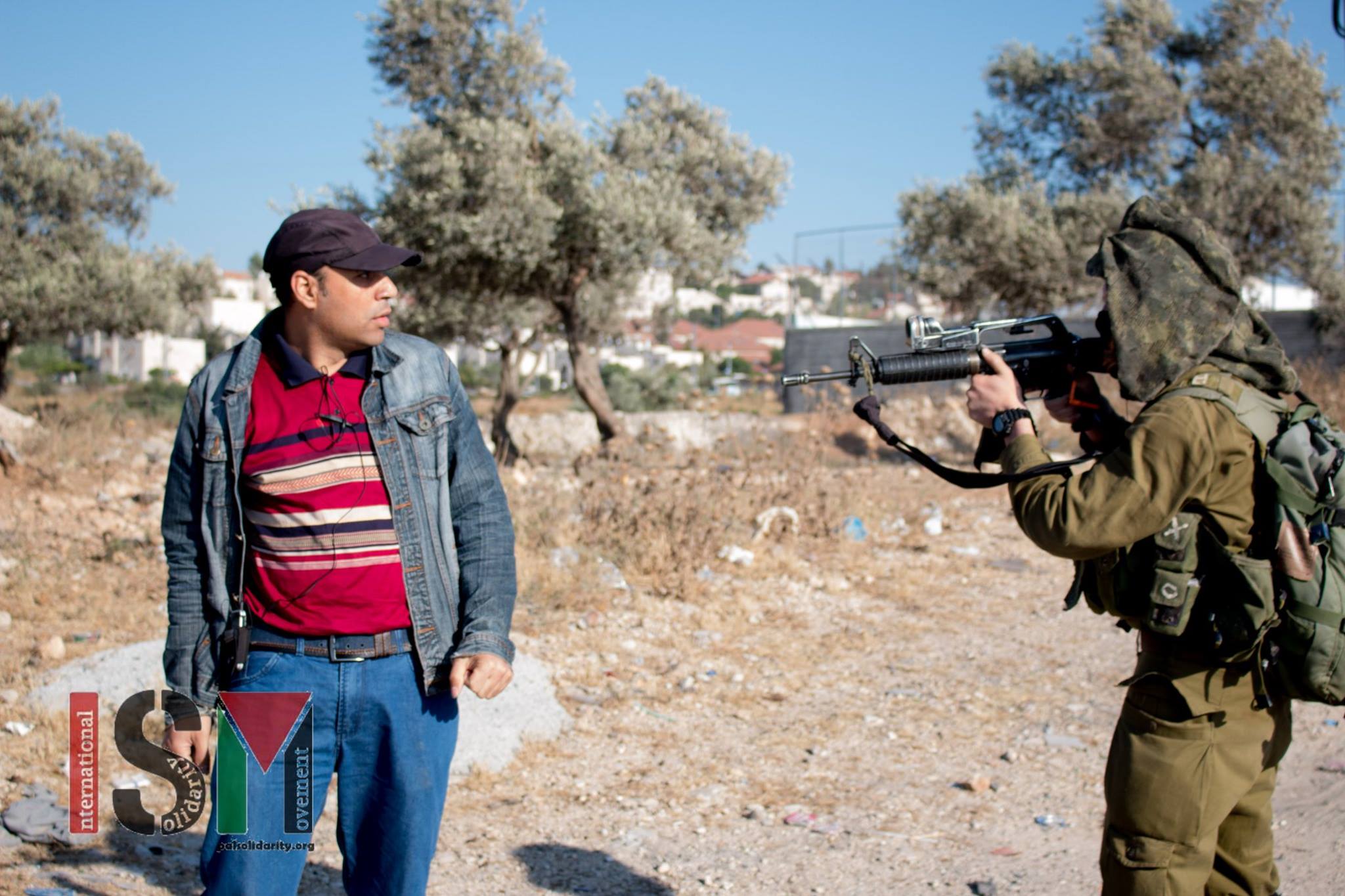
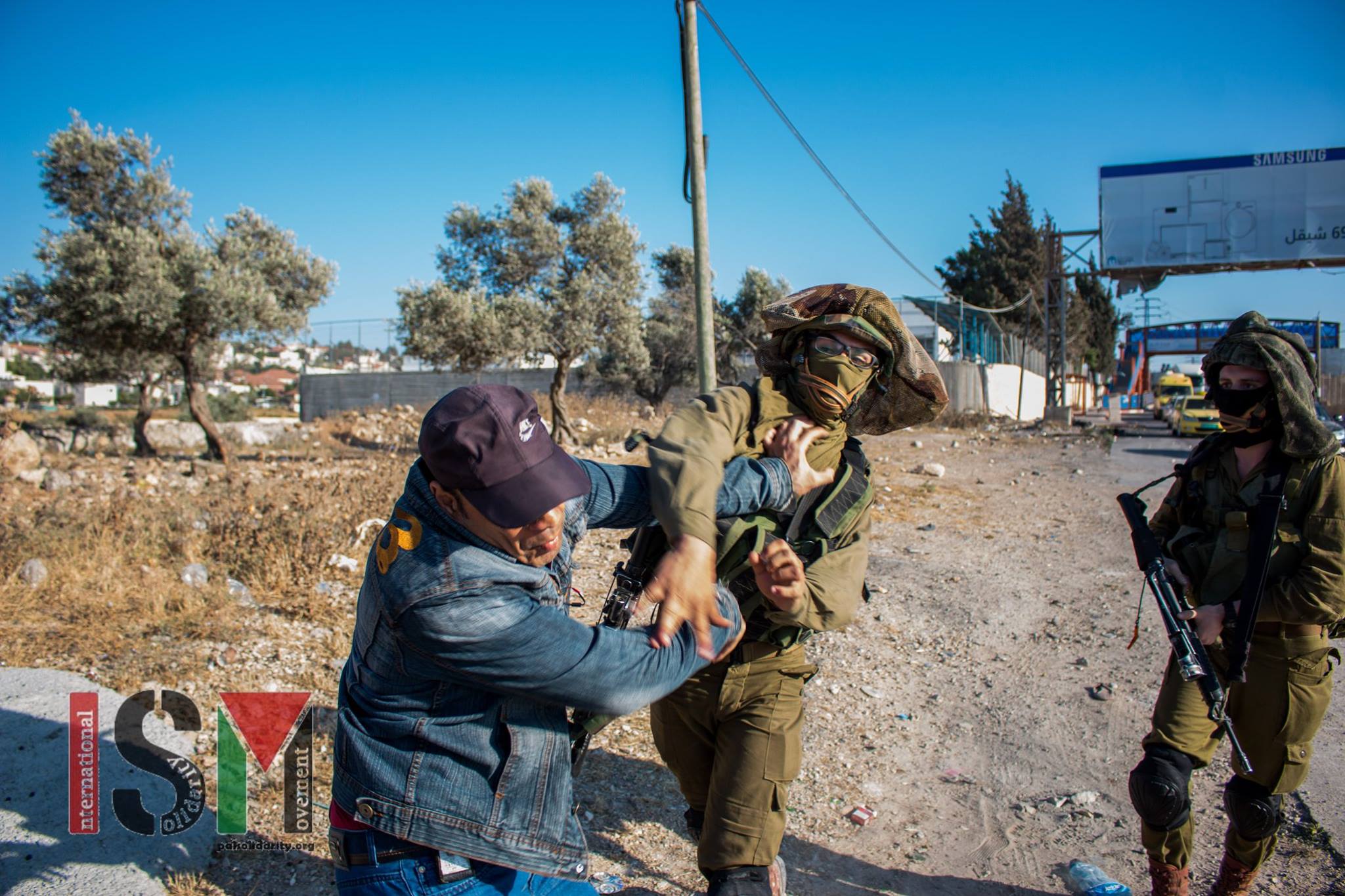
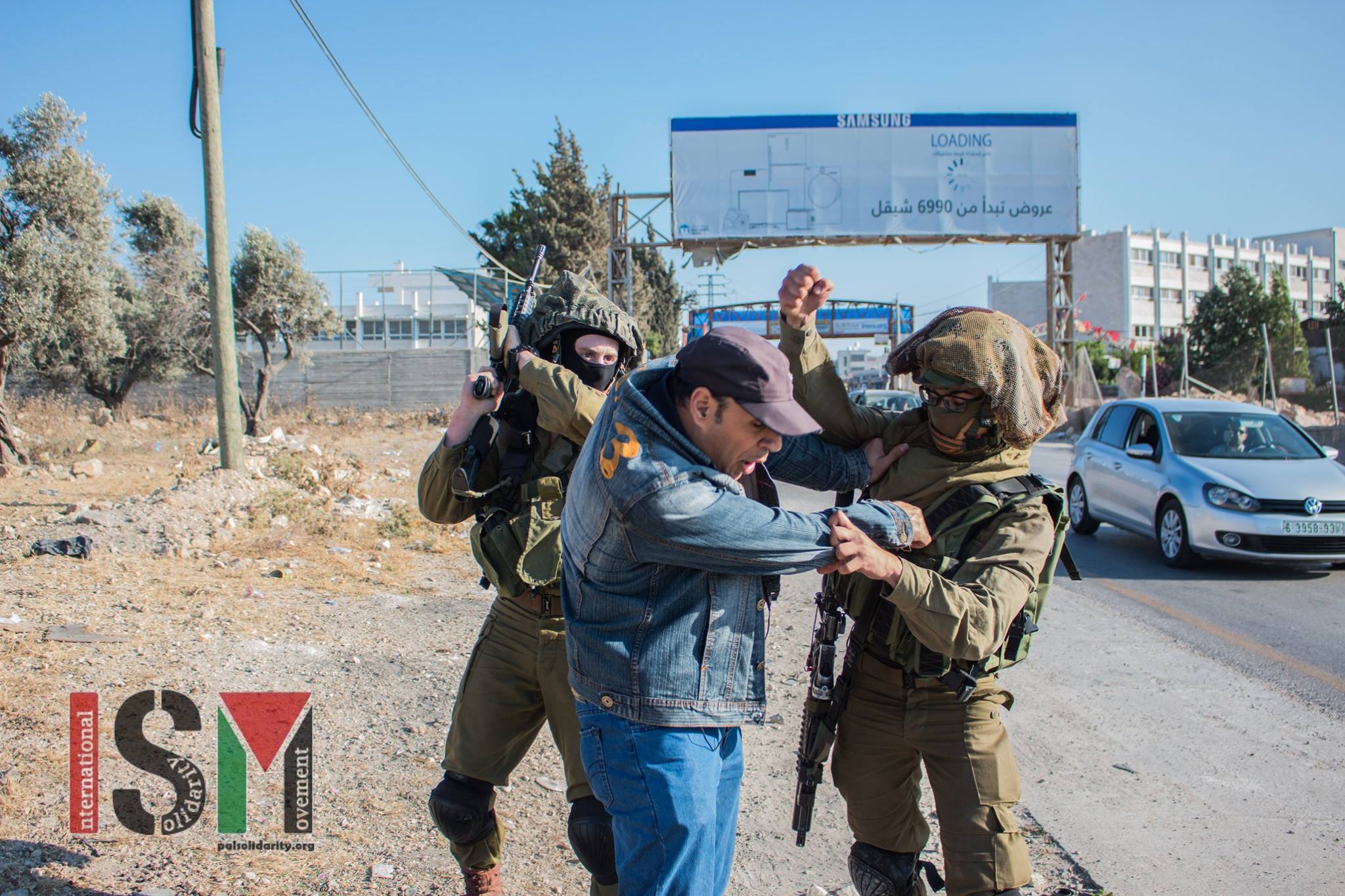
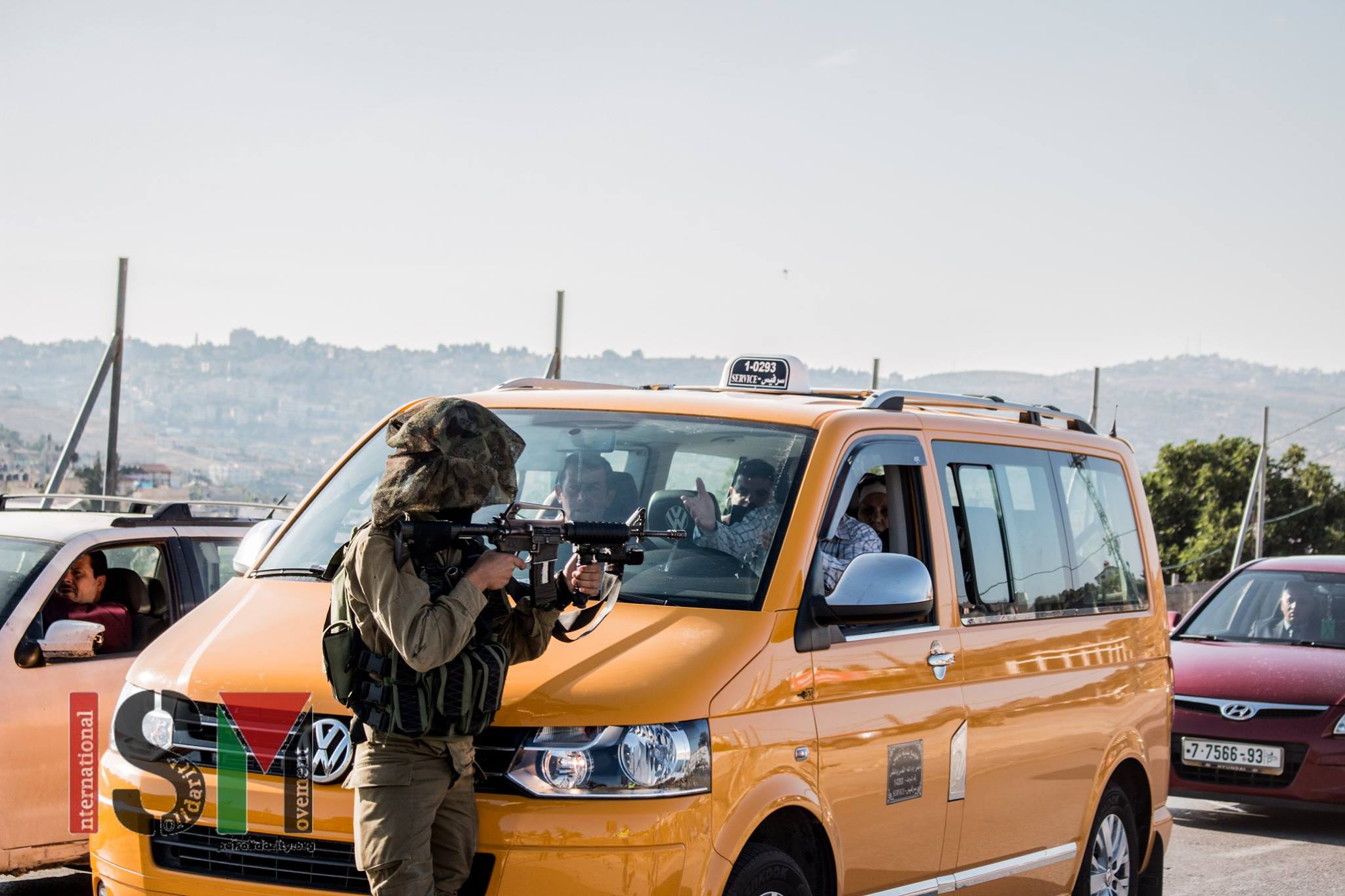
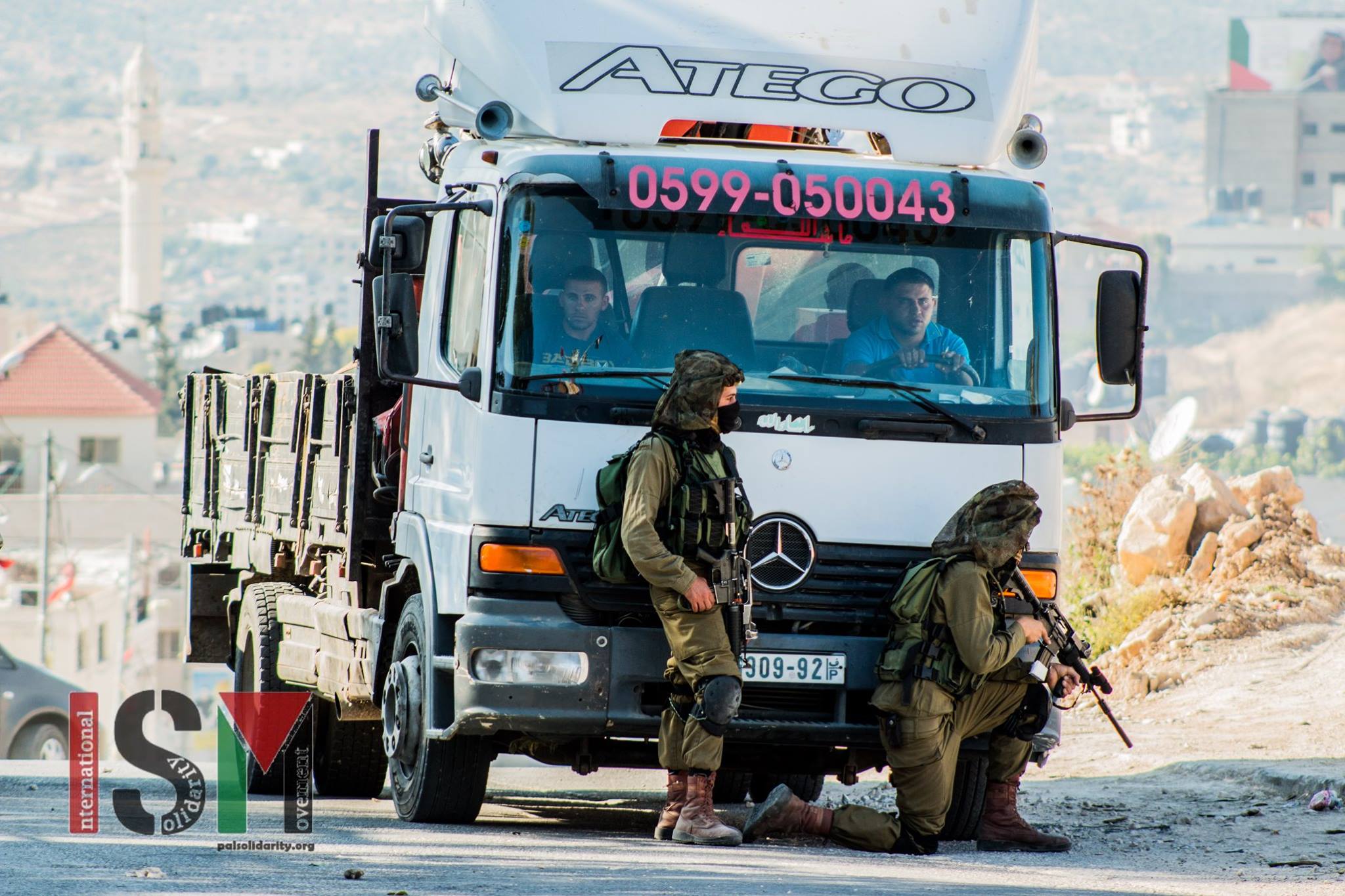
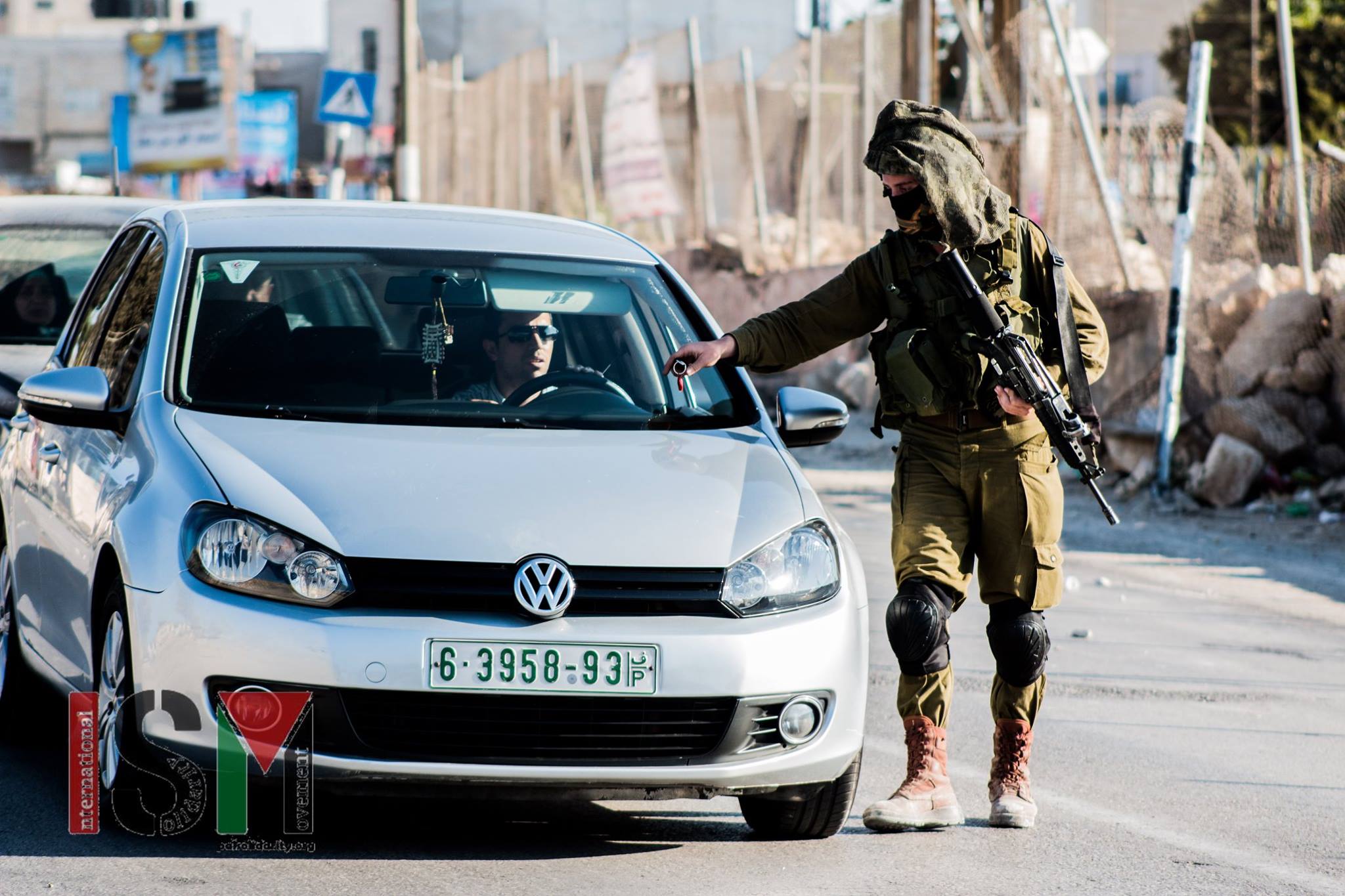
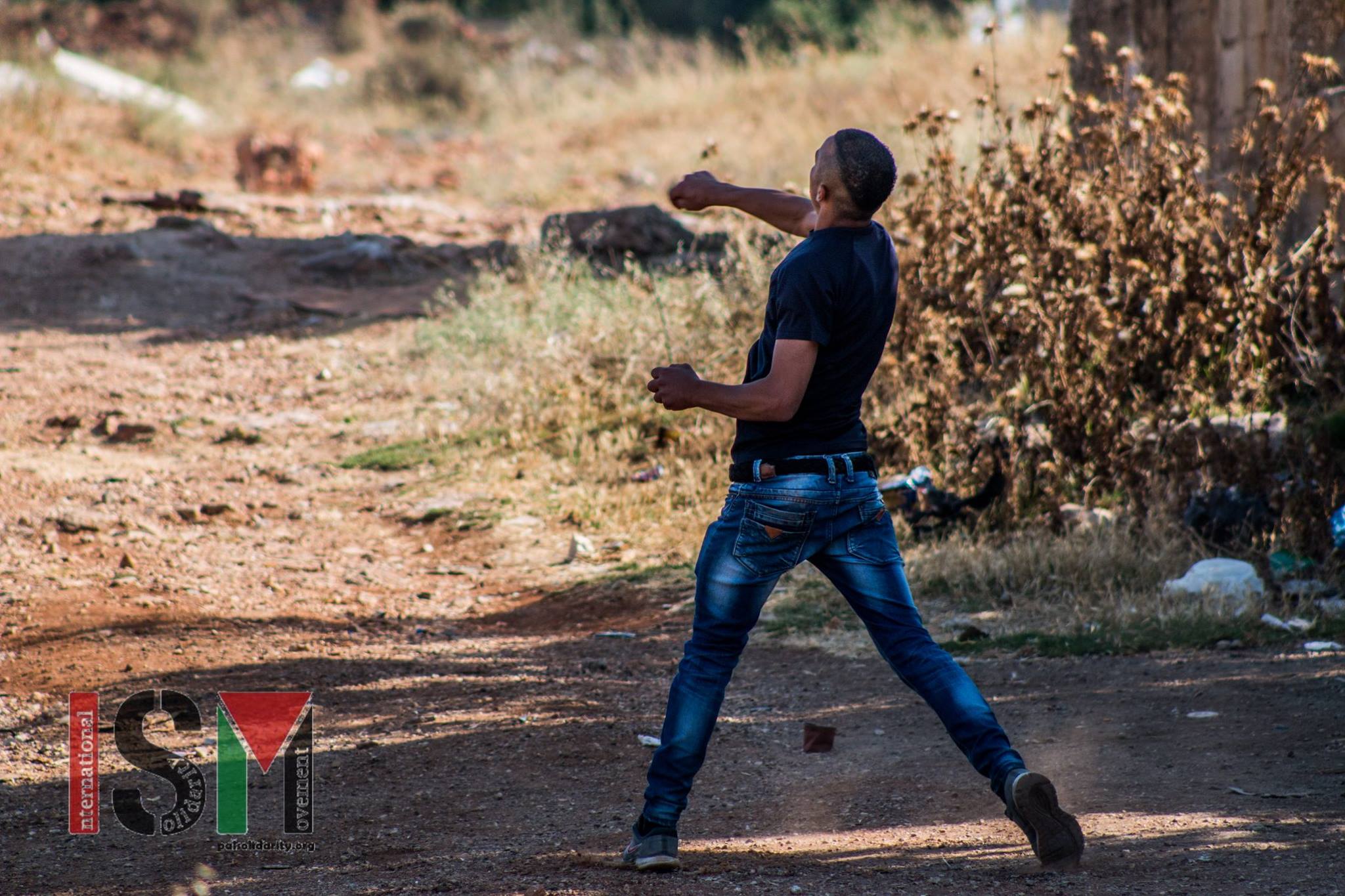
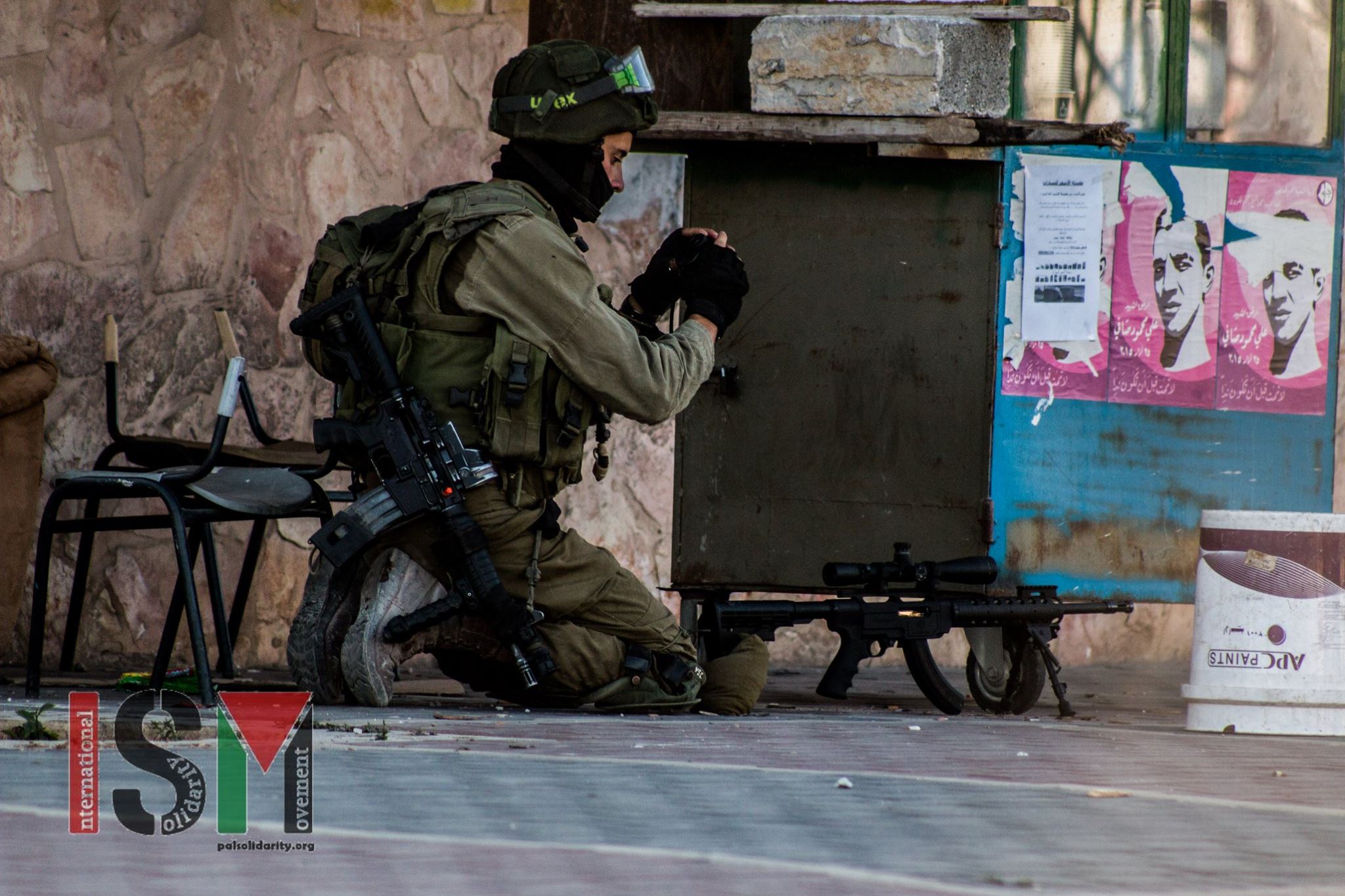
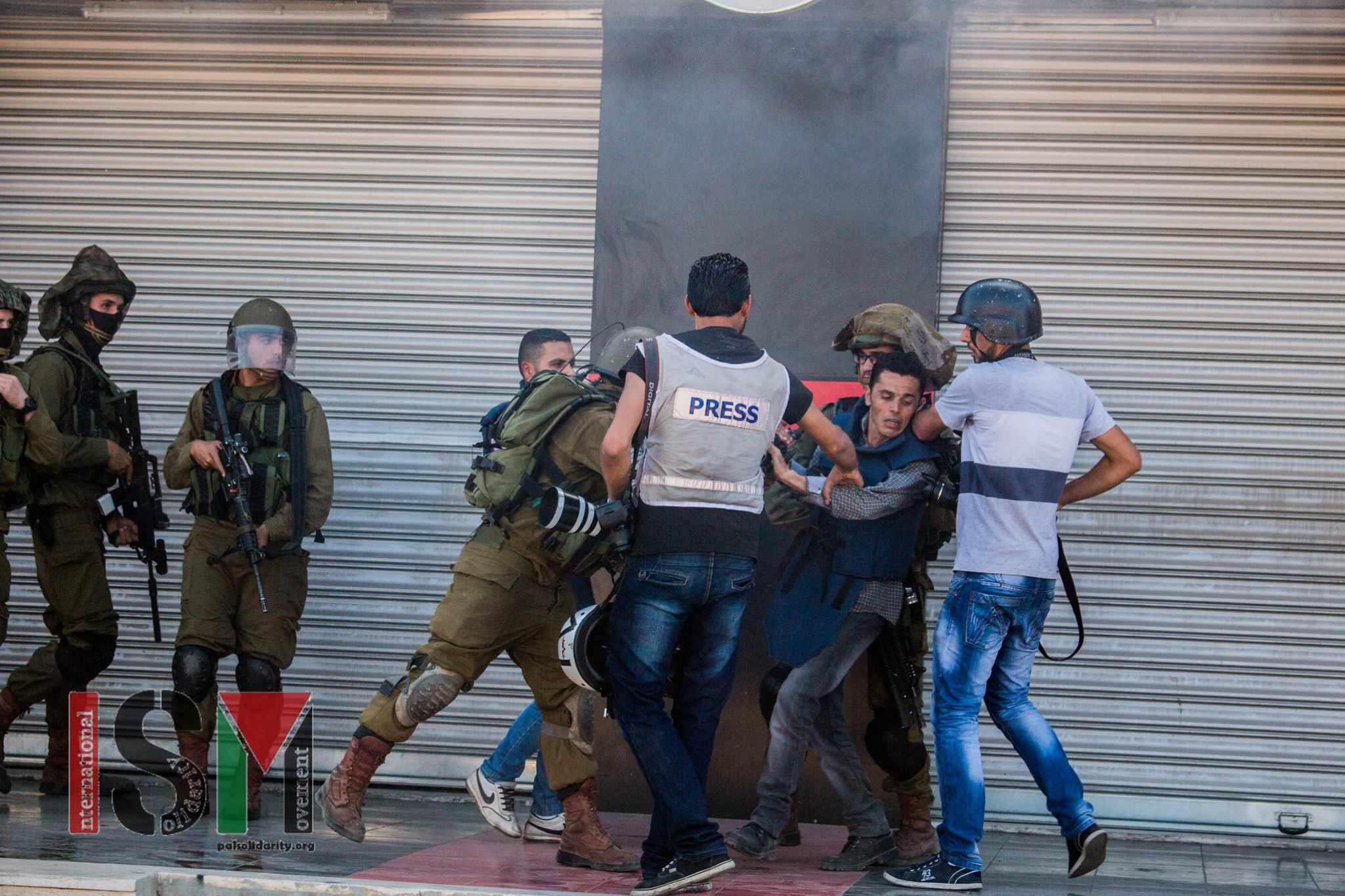
Jalazone, Occupied Palestine – On Friday, June 12, the youth of Jalazone were protesting against settlements, soldiers started shooting rubber bullets, tear gas, stun grenades and live ammunition.
The Israeli military were using the cars as shields by taking the keys and leaving the people inside. They detained more than 20 cars during the protest in different time periods.
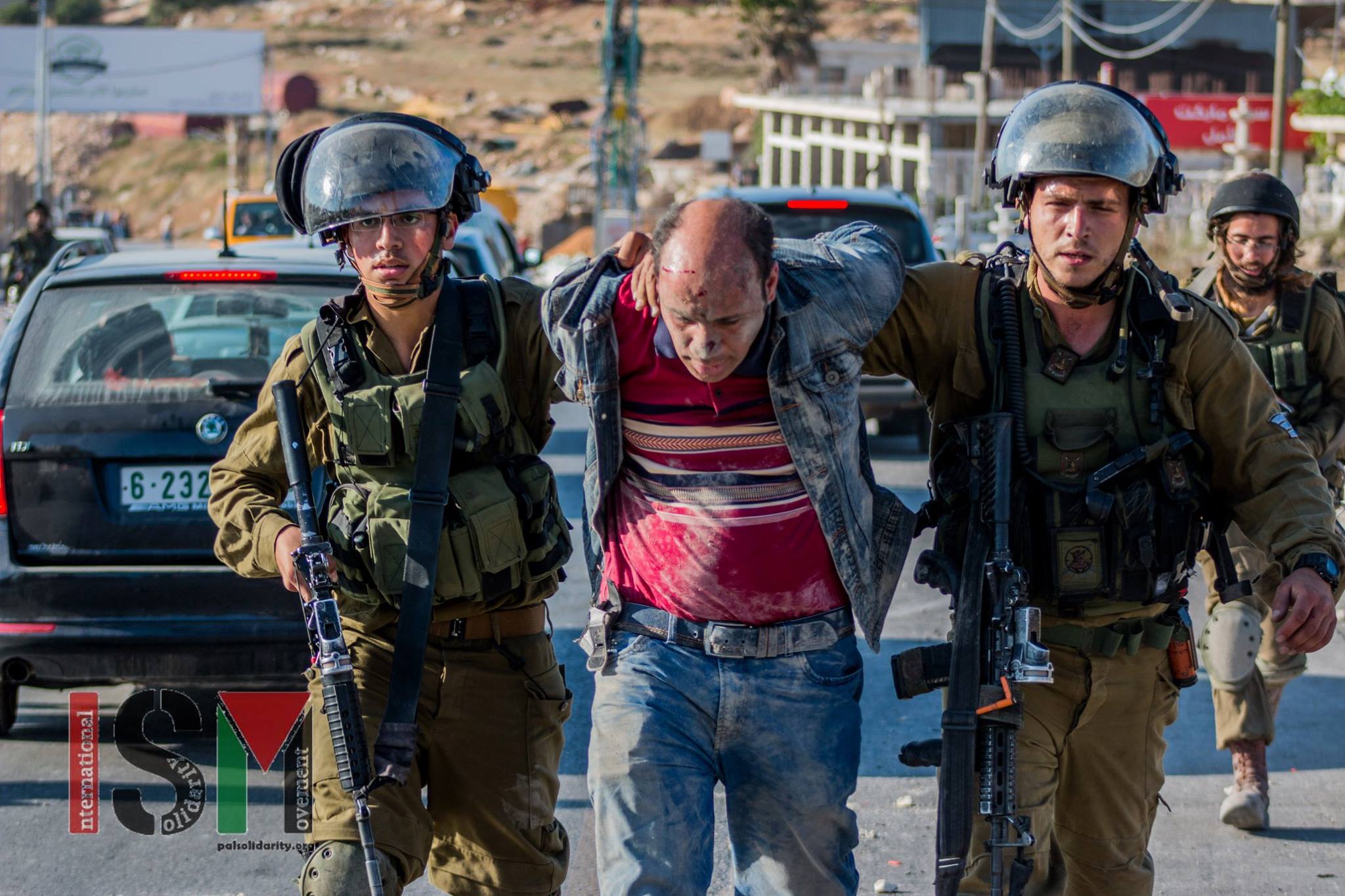
Israeli forces attacked a man and hit him with their guns before they arrested him. He was bleeding from his head.
At least three people were shot with live ammunition during the demonstration.
Below is a video recorded by ISM of the violence from the Israeli soldiers in Jalazone:
Photos below


U.S. Intelligence Agencies Mock America in 9/11 Trial
By Kevin Ryan | Dig Within | June 13, 2015
Last year, it was discovered that the FBI had attempted to infiltrate the legal defense team of a Guantanamo Bay prisoner. The defendant is charged, along with four others including Khalid Sheik Mohammed (KSM), of conspiring to commit the 9/11 attacks. As a result, the military trial was moved out for approximately one year to allow for an investigation into the FBI’s offense. Recently, Al-Jazeera reported that the trial has been moved out yet again because the Department of Justice team leading the investigation (of its own bureau) needs more time to complete its secret report. These delays highlight the absurdity of the case against these men and the contemptible abuse of justice that the military trial represents.
 Apparently, it has been difficult for the Justice Department to explain why the FBI approached a member of defendant Ramzi bin al-Shibh’s legal team to “create a relationship with him that he was forbidden from disclosing.” That explanation became more difficult when it was learned that another member of Bin al-Shibh’s defense team had been cooperating with the FBI since late 2013.
The FBI infiltration of the Bin Al-Shibh defense team is just the tip of this anti-justice iceberg, however. In February, it was revealed that a translator assigned to help defend the accused was a CIA operative. That’s one way to ensure that the official account of 9/11, created entirely through torture testimony and secret evidence provided by the CIA ad FBI, would not be contradicted by defendant testimony. More was needed, however, as previous disclosures showed that the CIA was controlling audio feeds from the courtroom, bugging the rooms where the accused met with their lawyers, and censoring the lawyers. Additionally, hundreds of thousands of confidential defense team emails were provided to the prosecutors.
The military trial of these men was never expected to bring justice. But the absurd actions taken by the CIA and FBI have made the whole thing seem ludicrous, mocking the U.S. justice system. Why would these measures be needed and tolerated if the defendants were actually involved in 9/11? The reasons include that:
- The charges against the defendants were largely established based on torture testimony, the records of which were destroyed by the CIA. That was after the agency misled the 9/11 Commission about the existence of the records.
- Bin al-Shibh and KSM were both originally identified by the first torture victim, Abu Zubaydah. However, the government now says that Zubaydah was never associated with al Qaeda at all and therefore he could not have known what the government previously said he knew. In other words, the arrest and torture of Bin al-Shibh and KSM were initiated by way of a fictional account attributed to Zubaydah.
- 9/11 Commission leader Lee Hamilton suddenly can’t recall anything about these torture victims or his use of their testimony (441 times) in the 9/11 Commission Report.
- KSM’s behavior prior to 9/11 was reported to be very different from that of a Muslim. He enjoyed go-go dancers and drinking parties and was said to be dangerous to nothing but his own bank account. The playboy lifestyle of KSM was similar to that of alleged hijacker ringleader Mohamed Atta, who seemed to be protected by U.S. authorities and might have been an intelligence asset.
- One of the defense team lawyers resigned from the Army in protest of what was happening. He accused the U.S. government of “stacking the deck against the defense” and conducting a “show trial.”
One reasonable explanation for why the CIA and FBI have gone to such great lengths to control this trial is that the agencies are trying to cover-up their own role in 9/11. Much has been learned that suggests the CIA and FBI were involved. For example:
- There are many examples of (admitted) government-sponsored terrorism.
- It is known that the FBI manufactures terrorism.
- FBI director Louis Freeh is a 9/11 suspect.
- CIA director George Tenet facilitated the 9/11 crimes.
- U.S. intelligence agencies continue to lie about their “response” to 9/11.
Whatever the reason for the antics, the military trial of these men has become an absolute farce leading American society farther down a path of tyranny. It sets a precedent in which the CIA and FBI can be suspected of crimes against the nation and then charge others with those crimes using secret evidence. The accused can be held in seclusion for thirteen years until agents of the CIA and FBI insert themselves as defense team members, ensuring total control from start to end.
At the same time, the press never notices that such an obviously fake trial would not be needed if there were actually any legitimate evidence against the accused. All things considered, this trial is not only a travesty of justice, it makes a mockery of 9/11 and brings shame upon the American people.
Attacks on fishermen continue in Gaza
By Valeria Cortés | International Solidarity Movement | June 13, 2015
Gaza, Occupied Palestine – During the last weeks, the Israeli military has been shooting at the fishermen of Gaza almost daily with rubber coated steel-bullets and live ammunition. They also kidnapped 15 fishermen. Three of the injured and seven of the kidnapped belong to the Baker family, who are also the family of the 4 boys who were murdered by the Israeli military while they were playing football on the beach during the last massacre in Gaza. Yesterday, in Deir el Balah, the army stole 37 fishing nets and today the shooting went on all along the Strip.
ISM met some of the recently released fishermen from Baker family.
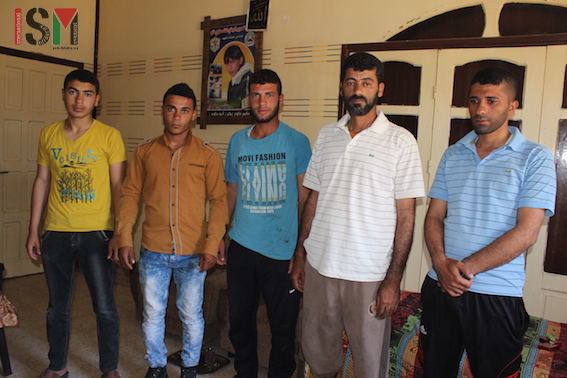
One of members of the family is Ziad Fahed Baker, 21 years old. Three weeks ago, he left the port on his small boat along with four other fishermen. As they were fishing at less than three miles away, the Israeli navy approached and ordered them to leave without taking the nets with them. They answered that they would leave but not without the nets. Ziad knew that abandoning the nets would leave his family without any income, so they ignored the soldiers and started collecting them. At this point the soldiers shot Ziad in the leg, and the 5 fishermen decided to flee to the port. Unfortunately the Israeli gunboat followed them and when they were just a mile and a half from the shore shot the engine of Ziad’s boat. With the boat stopped they ordered Ziad and the other four fishermen, two of whom were also injured, to swim towards their ship. Once in the gunboat they were blindfolded and handcuffed to a metal bar, “What are they afraid of? That we would leave flying?”
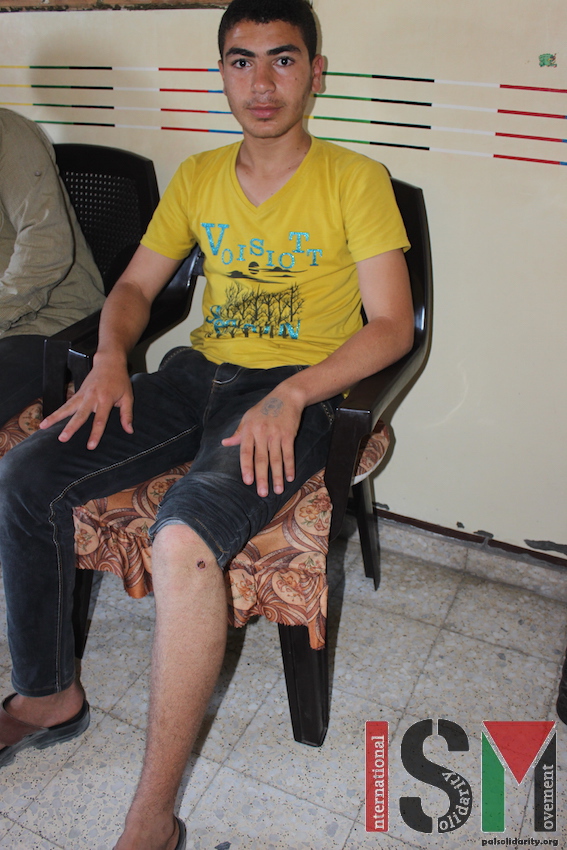
They were then taken to Ashdod, where Israeli forces subjected them to the usual routine of insults and humiliations before sending them back to Gaza.
They also explain how the Israeli military bombs the waters where they are working in order to scare away the fish and how the blockade prevents the entrance of all the tools needed for their activity, engines, fiber glass, hooks…
From the 1500 boats that laboured in the past, just 150 are still working today. This year the income of the fishing sector has decreased an 80% regarding the past year.
Ziad’s cousin, Mohamed Zied Baker, 30 years old, was also attacked last week while labouring in Sudania, north of Gaza. They ordered him to stop, shot him with rubber-coated steel bullets, kidnapped him and once in the Israeli boat they handcuffed him and stepped on his head with their boots.
Ziad, Mohamed, Fahed, Walid and Emad – this one, just 16 years old, also got shot with live ammunition and kidnapped – have similar stories to tell.
“They are now targeting the youngest fishermen, almost children”. “They want to scare us, but they can’t, we are Palestinians”.
Photos by Valeria Cortés
Saudi Arabia’s Human Rights Campaign
By Daniel McAdams | Ron Paul Institute | June 9, 2015
When thinking about the protection of human rights, Saudi Arabia doesn’t immediately come to mind. After all, this year the Saudis are on course to break their own record of 87 decapitations in 2014. It is only June and the Saudi leaders have already chopped off their 84th head. Religious apostasy is a leading offense resulting in decapitation and last year half of all such killings were carried out for non-lethal offenses. According to a news report last year, bringing Christian bibles into the country is considered a capital offense.
In addition, it is illegal to build a Christian church in Saudi Arabia.
That is why it seems so strange that Saudi Arabia last week hosted an international conference “on combating religious discrimination” backed by the United Nations and attended by the president of the UN Human Rights Council. Saudi Arabia, considered one of the planet’s worst human rights abusers, is a member of the UN Human Rights Council and will take over as chair of the Council next year.
Saudi Arabia’s unique view of human rights extends beyond its borders as well. For the past three months Saudi Arabia has been bombing neighboring Yemen in retaliation for the overthrow of the Saudi-favored Yemeni leader. Yemen did not attack or commit aggression against Saudi Arabia, but thus far Saudi bombs have killed thousands of innocent Yemeni citizens. Just this week one raid killed more than 40 civilians, including women and children.
In Syria, Saudi Arabia has likely spent billions financing terrorist groups such as al-Qaeda’s Syrian franchise, Jabhat al-Nusra — and even ISIS.
How ironic that a US government that seems to go out of its way to see the splinter in the eye of other nations seems to consistently turn a blind eye to the log in the eye of the Saudi royals (and in our own too, it must be said).
Of course this is not to say that the United States should attack or even sanction Saudi Arabia. But should we promise to defend them? Just last month President Obama pledged that he would use the US military to defend Saudi Arabia and the other US “allies” in the Gulf.
Said the president:
The United States will stand by our GCC partners against external attack and will deepen and extend the cooperation that we have when it comes to the many challenges that exist in the region.
It is all about shared values and human rights.
Irish teen details abuse, threats of torture in Egypt prison
Reprieve | June 13, 2015
An Irish teenager facing a death sentence in Egypt has written a letter detailing his ill-treatment in prison, where he has been awaiting trial for nearly two years.
Ibrahim Halawa, a student from Dublin, was 17 and on holiday in Egypt when he was arrested, along hundreds of others during the military’s breakup of protests. Now 19, he faces a death sentence if convicted, and has reported mistreatment throughout his detention in Egypt, where police torture is common. He is being tried as an adult – in contravention of Egypt’s Child Law and international law – alongside 493 others, in controversial mass proceedings that have been repeatedly postponed over the past year (most recently on June 3rd).
A recent letter written by Ibrahim to his family from Wadi Natrun prison, where he awaits trial, details how:
- He is being held in a room with a glued-shut window and no access to the sun, and wakes up “every morning to the voices of other prisoners screaming from the hitting and I can hear the beatings”
- Prison official Selim Shakawy, or “the Prosecutor”, hits him if he speaks out and threatens him, including with removal to the “torture room”
- The Prosecutor has told him that the Irish government cannot help him, saying: “Let the embassy go to the minister of interior, they can’t do anything… a passport isn’t going to save me from him… he kept threatening me & said life is just going to get tougher”
- Ibrahim has decided to go on hunger strike, in protest at the repeated delays in his trial and his mistreatment
The letter marks the first time Ibrahim has been able to publicly detail his treatment since he was moved to Wadi Natrun from Tora prison, in Cairo – where he shared a cell with journalists Peter Greste and Mohammed Fahmy.
Maya Foa, head of the death penalty team at Reprieve, said: “This heartbreaking letter from Ibrahim demonstrates the complete injustice of his ordeal, and that of the hundreds detained alongside him. These are people whose only ‘crime’ was to attend a protest – and yet, two years later, they are languishing in hellish conditions, enduring terrible mistreatment, and awaiting a Kafkaesque mass trial. The Irish government and the international community must make it clear to the Sisi government that this cannot continue. Justice must be done, and Ibrahim must be returned home to his family in Dublin without delay.”

German political prisoner Horst Mahler’s latest book slated for ‘harmful media’ list
By ADELHEID RITTER | Non-Aligned Media | June 11, 2015
Today, Thursday, June 11, 2015, at 11.30 AM, the council of the Federal Department for Media Harmful for Young Persons in Germany will be deciding whether Horst Mahler’s book Das Ende der Wanderschaft – Gedanken über Gilad Atzmon und die Judenheit (2013) (The End of the Wanderings – Reflections on Gilad Atzmon and Jewry) will be put on the harmful media index. Mahler wrote his book in his prison cell after reading Gilad Atzmon’s book The Wandering Who?A Study of Jewish Identity Politics (2011), sent to him by a friend.
Friedrich Bode, a retired Protestant minister and founding member of the Green Party, as well as Gerard Menuhin, son of the world famous violinist Yehudi Menuhin, will be there to defend the book.
Horst Mahler is Germany’s number one political prisoner. As a professional lawyer he encountered revisionist material when he was asked to defend a client over charges of “Holocaust Denial”. Although previously Mahler had identified himself on the radical left and had been a founding member of the Red Army Faction (RAF), he was shocked by the treatment of revisionist research in German courts with regard to Holocaust laws. Having been indoctrinated with guilt over the Holocaust, he found it deeply liberating to discover that Jews had been expelled from countries all over the world throughout the centuries, and that the expulsion of Jews from Germany was by no means a singular event.
Mahler maintains that Germany today is in effect a nation that is ruled by a foreign will. That foreign will is the will of the Jewish people, which manifests itself in Germany’s Holocaust laws and the numerous Holocaust memorials which literally pave the country. These, he believes, serve to reinforce German guilt. In Mahler’s analysis, such elements, along with the “re-education” programme implemented by the Allies (mainly through the mass media, educational institutions, politicians willing to execute this foreign will, and Jewish institutions), prevent the healthy self-expression of the German people. Such mechanisms need to be understood as part of a strategy of psychological warfare with the goal of effecting the “soul murder” of the German people. A people without a soul cannot survive physically. According to Mahler, this is a genocidal project that has its basis in the Jewish understanding of the German people as part of the nation of Amalek, the Biblical arch enemy whose “seed” must be destroyed.
Mahler frequently quotes Jewish philosopher and Rabbi Martin Buber to prove that the annihilation impulse exists in the Jewish people not only against the German people but also against every other nation, since Judaism embodies a stark “No to the lives of the peoples” (“ein Nein zum Leben der Völker” – meaning “no to the traditional ways of non-Jewish peoples”). According to Mahler, the German spirit and the Jewish spirit are antagonistic to each other, which is the root of the conflict. Whilst German philosophy is a deeply organic way of thinking that seeks to maintain sanctimonious harmony with nature, Jewish thinking and behaviour is the polar opposite, aiming at the destruction of naturally grown structures.
Mahler was sentenced to 12 years in prison for “incitement to the detriment of the Jews” and “Holocaust denial” in 2009. In his open letter to the Central Committee of Jews in Germany and the Jewish organisation “Sons of the Covenant” (B’nai B’rith), dated on August 2009, Mahler declares himself a personal prisoner of organised World Jewry (All-Juda).
Regarding incitement, it must be noted that Mahler nowhere calls for hostility against Jews, and explicitly says that hatred and physical harm against Jews must be prevented under any circumstances. His analysis of the current state of affairs is based on Hegelian philosophy, readings of Christian and Jewish Scripture, and a thorough understanding of the legal situation of present day Germany.
He has now served five years of his twelve-year term. At 79 years of age, German law should now permit him to leave prison early. However, authorities do not seem to be willing to act in accordance with the law in this case, and have asked Mahler to withdraw his proposal.
This is a very rough summary of Mahler’s positions. When writing in German, Mahler articulates his views in a well-informed, sophisticated and precise language.
Please feel free to send him an uplifting note:
Horst Mahler
JVA Brandenburg a.d. Havel
Anton-Saefkow Allee 22
14772 Brandenburg a. d. Havel
Featured Video
BRITAIN’S WARNING: PREPARE FOR WAR
or go to
Aletho News Archives – Video-Images
From the Archives
British weapons and personnel doing much of the killing in Yemen
Press TV – June 18, 2019
A detailed report published by the Guardian newspaper has shown how Britain is massively contributing to Saudi Arabia’s devastating war on Yemen as it suggests that London is not only supplying the bombs that fall on Yemenis, but it provides the personnel and expertise that keep the war going.
The comprehensive report by Arron Merat published on Tuesday showed that Britain was doing much of the killing in Yemen as the country continues to provide Saudi Arabia with everything it needs to turn its southern impoverished neighbor into a graveyard.
“Every day Yemen is hit by British bombs – dropped by British planes that are flown by British-trained pilots and maintained and prepared inside Saudi Arabia by thousands of British contractors,” said Merat in the report. … continue
Blog Roll
 Aletho News
- Why are so many Brazilians voting for Flávio Bolsonaro?
- Democrats Put Anti-Russia Agenda Ahead of American Workers
- Elijah Magnier: Yemen’s Strikes Are Shattering Saudi Arabia’s Long-Term Strategy
- Pentagon designates Chinese cultural centers national security threat
- Israel Demolishes Home Of Lebanese Journalist Whose Viral Film Exposed Pager Attack
- Record Oil, Empty Tanks: The UAE’s Miracle Recovery
- Burnham tackles Britain’s poverty with aggression in Yemen
- Peace in Ukraine: the easy way – or the hard way
- Trump & the Rrrrussians
- US taxpayer money laundered back through Ukraine – Musk
- If Americans Knew
- An error has occurred; the feed is probably down. Try again later.
- No Tricks Zone
- Sudden Stratospheric Warming, Powerful El Niño Combination May Lead To Extreme Europe Cold, Energy Crisis!
- Two New Studies Find Thwaites Glacier Melt Cannot Be Driven By Human Activity Or A Warming Ocean
- E-Cars Reduce CO2 Emissions By Only 41% Compared To Internal Combustion Engine Vehicles
- Predictions Made By Renowned Climate Professor Over Past Decades Have Been Proven To Be Poor
- New Study Suggests Large Regions Of The Pacific Ocean Have Been Cooling For The Last 80 Years
- Germany’s Green Energy Debacle: High Energy Costs Force Kahla Porzellan to Close After 182 Years!
- New Study: 50 Years Of The Most Aggressive ‘Net Zero’ Policies Can Only Affect The Global Climate By 0.03°C
- US September “Heat” Was No Record…Many Records Set Decades Ago
- Latest European Green Energy Debacle; Portugal’s Largest Flagship Solar Park Insolvent!
- Green Energy Debacle: German Expert Professor Fritz Vahrenholt Warns Of Severe Economic And Social Consequences

