Israeli soldiers celebrate shooting an 18-year-old
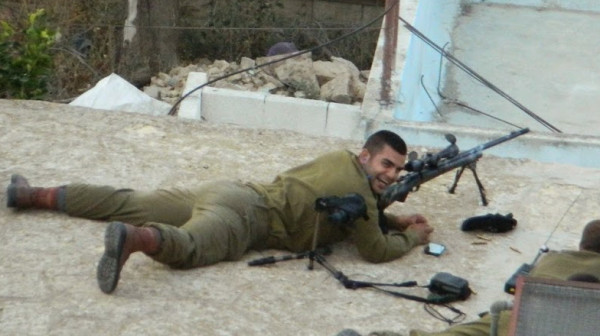
Photo by ISM
International Solidarity Movement | August 12, 2014
Hebron, Occupied Palestine – On August 9th in Hebron, Israeli soldiers celebrated shooting an 18-year-old Palestinian youth in the leg with live ammunition.
The Canadian volunteer, Vern, who witnessed the soldier firing, stated, “After the soldiers left the roof, I went to confront them about why they had fired. One of them said to me that he was the one who fired and that he was proud of his actions. He then asked me to take his picture.”

Photo by ISM
The hospital released a document to the International Solidarity Movement (ISM) stating that the injury of the young man was a gunshot wound to the right calf, and that the injury required surgery under general anaesthetic.
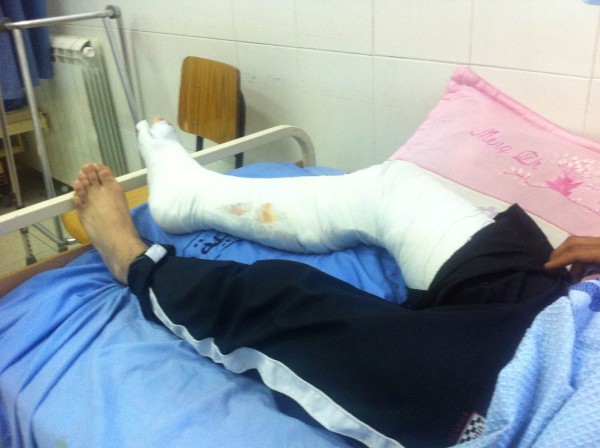
Photo by Youth Against Settlements
“This is not the first time protesters have been seriously injured or killed while not being a threat to the Israeli military. On Friday (8th August) in Hebron, 40-year-old Nader Mohammad Edrees was shot in the heart by an Israeli sniper. He died several hours later. This murder was caught on video, and it is clear that Nader was no threat whatsoever when he was killed, in clear contradiction of Israeli military policy and international law.” Stated Issa Amro, Human Rights Defender with Youth Against Settlements (YAS), based in Hebron.
According to Article 147 of the Fourth Geneva Convention, grave breaches against protected people, such as Palestinians, not justified by military necessity and carried out unlawfully and wantonly, include wilfully causing great suffering or serious injury to body or health.
Israeli Human Rights group B’tselem states that, “the army’s open-fire regulations clearly stipulate that live ammunition should not be used against stone-throwers, except in cases of immediate mortal danger.”
Gaza, Egypt and Syria: a Common Thread of Genocide, War Crimes, and Wars Against Humanity
By The Numbers
By Esam Al-Amin | CounterPunch | August 12, 2014
Gaza: Indiscriminate Israeli War Crimes against Civilians
From July 7 to August 12, 2014
Number of Gazans killed by Israel: 1,943 (with 80 percent civilian casualties including 437 children and 243 women)
Number of Gazans wounded by Israel: 9,886
Number of Houses Destroyed: 5,622; Damaged: at least 36,700
Number of Mosques Destroyed: 64; Damaged: 152
Number of Schools or Educational Facilities Destroyed or Damaged: 189
Number of Hospitals or Medical Facilities Destroyed or Damaged: 24
Number of Structures Destroyed including the only Electric Power Plant: More than 1500
Egypt: A Brutal Military Coup To Halt Democracy and Silence Political Dissent
Number of people killed by the coup regime from July 3, 2013 to January 31, 2014: at least 3248 (including 299 students with 289 males and 10 females (table 5 at the bottom); at least 80 died while in custody)
Number of people injured by the coup regime from July 3, 2013 to February 28, 2014: 18,535 (including at least 1400 students)
Number of people arrested by the coup regime from July 3, 2013 to May 31, 2014: 41,163 (By April 2014 only 9,220 have been tried with about 1,260 receiving death sentences in mass trials)
Syria: a Bloody Civil War Fueled by Sectarianism and Foreign Interference
Number of people killed in the Syrian civil war between March 2011 and August 2014: 102,082 to 171,509 (between 9,100 to 11,400 are children; and between 5,800 to 7,100 are women)
Number of detainees in the Syrian Civil War: as much as 53,700 (between 617 and 847 died under torture)
Number of Syrian Refugees and Displaced Persons according to the UN by end of July 2014: 2,951,423 (three fourths of which are women and children)
American Military Aid to Israel: Aiding and Abetting Israeli War Crimes and Crimes Against Humanity
Israel GDP per capita: $38,700 (more than Japan)
Gaza GDP per capita: less than $2,000 (164 in the world; less than half of West Bank)
Annual U.S. military aid to Israel: $3.6 Billion ($3.1B in direct military aid and $504 million in subsidies to Israeli military industries)
Daily U.S. military aid to Israel: $10 million
All Time Aid US Aid to Israel: $125 Billion ($160B when adjusted to inflation)
Amount of weapons and munitions US sent to Israel since its 2012 war on Gaza: $276 million not including exports of military transport equipment and high technologies
Amount of stockpile of ammunition the US military stores in Israel for that country’s use (called War Reserve Stockpile Ammunition-Israel): $1 Billion
Amount of rocket launchers, guided missiles, bombs, grenades and munitions of war US sent to Israel between January and May 2014: $37 million
Congressional Vote to give Israel $225 million in emergency military aid in early August 2014: House of Representatives: 395 to 8; Senate: 100 to 0.
The eight courageous dissenters in the House (four Democrats and four Republicans) are: Keith Ellison (D-MN), Zoe Lofgren (D-CA), Jim Moran (D-VA), Beto O’Rourke (D-TX), Justin Amash (R-MI), Walter Jones (R-NC), Tom Massie (R-KY), and Mark Sanford (R-SC).
Esam Al-Amin can be contacted at alamin1919@gmail.com.
Teen Killed By An Explosive Dropped By The Army Near Tubas
By Saed Bannoura | IMEMC & Agencies | August 12, 2014
Palestinian medical sources reported, Monday, that a Palestinian teen has been killed, and his brother was wounded, by an explosive charge dropped by the army near the central West Bank city of Tubas.
The sources said Mohammad Mo’tasem Abu Eshtayya, 17 years of age, was killed, and his brother Yousef was injured. They were herding their sheep in Palestinian grazing lands in the Northern Plains of the occupied West Bank.
The slain Palestinian, and his wounded brother, were moved to the Tubas Governmental Hospital, while the Palestinian Police initiated an investigation into the issue.
Although the area where the explosion took place is used as a grazing area, and dozens of shepherds live there, it is frequently used by the Israeli army as a “training zone”, where the soldiers use live ammunition, explosives and shells.
Dozens of casualties have been reported in similar incidents in the area, as well in other areas in the occupied West Bank, including the outskirts of Hebron and the Palestinian Plains of the West Bank, as the Israeli military conducts training in those areas in direct violation of International Law.
On Monday at night, Israeli sources said an explosive charge detonated near an Israeli military vehicle near the former Homesh Israeli settlement, southwest of the northern West Bank city of Nablus.
The army reported no injuries, and said it invaded the area, and initiated a search campaign.
Also on Monday at night, one Palestinian was shot and injured by Israeli army fire after the army invaded Tulkarem, in the northern part of the West Bank.
Month of attacks on Palestinians in Jerusalem increases tension; exposes racist policies
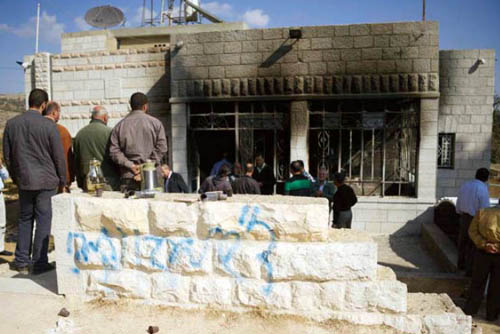
By Chris Carlson | International Middle East Media Center | August 11, 2014
As the Israeli Central Court of Jerusalem releases three youth accused in the recent homicide of 16-year-old Muhammad Abu Khdeir, another young Palestinian is found stabbed to death in Silwan, while a 13-year-old child is arrested under the pretext of carrying a knife.
Over the past month, during Israel’s relentless and bloody aggressions on the Gaza Strip, the Jerusalem area has become a crucible of violent confrontations between Palestinians and colonial Jewish settlers and police, with numerous reports of multiple raids and ensuing arrests continuing to surface throughout the West Bank region.
Just following the Israeli Central Court’s decision not to hold three youth who admittedly conspired in the brutal torture and burning of 16-year-old Muhammad Abu Khudeir, in early July, local media reported that the police found the body of another young Palestinian in Silwan, south of the Old City of Jerusalem.
PNN sources say that the body had several visible stab wounds but that the Israeli police have declared that the motive behind the crime is not clear.
Meanwhile, Silwanic has reported that Israeli police took into custody one 13-year-old Daoud Sawalha, Thursday night, while he was at the barber shop, in the neighborhood of Ein Al-Lozeh, under the pretext of carrying a knife.
Each year, around 500-700 Palestinian children, some as young as 12, are arrested, detained and prosecuted in the Israeli military detention system, with the majority of Palestinian child detainees being held on charges of throwing stones.
The same day, Silwanic reported that three Israeli settlers attempted to run over a Jerusalemite woman named Ola Alayan, as she was going home to her Bet Safafa residence, south of Jerusalem.
She was verbally assaulted by the settlers but was able to escape the area and safely reach the entrance of the village.
As in the case of Muhammad Abu Khdeir, who was also chosen at random and not for personal reasons, not all Jerusalemite Palestinians are so lucky.
On Thursday, July 31st, a young Palestinian man from Ras Alamoud was reported to have been assaulted by a group of Israeli settlers who attempted to kidnap him after tying him and dragging him to their car.
When the group failed to drag him to their vehicle, they assaulted 21-year-old Ali Mohammed al-Abbasi with a large amount of pepper spray.
Ali’s father confirmed that a fellow co-worker took his son to the hospital, after ambulance and police failed to respond.
The week prior, Amir Shwiki and Samer Mahfouz, both 20 years old and from Beit Khanina, were attacked by settlers with iron bars and baseball bats while walking to a Light Rail station, following the evening Ramadan meal.
The two were seriously wounded and lost consciousness during the beating, upon which they were hospitalized in Hadassah University Hospital, Ein Karem, Jerusalem.
Violence by Israeli settlers against Palestinians and their property is not new to the region, but has been in a state of extreme escalation since the beginning of Israel’s renewed series of attacks on Gaza’s civilian population, with mass solidarity protests resulting in further violent confrontations.
Reports of vandalism, including that of agricultural lands, homes and vehicles, as well as both Christian and Muslim holy sites frequently surface from numerous locations all across Israel and occupied Palestine, with the majority of such acts being perpetrated by colonial settlers, and often with the backing of Israeli military and/or police.
A recent statement by Israeli human rights organization B’Tselem reveals that 60-80,000 Palestinian Jerusalem residents have been without running water for months, with no further reports appearing in regard to appeals made to Hagihon and the Jerusalem Municipality.
Israeli policies against Palestinians have isolated entire communities and turned them into fragmented, isolated ghettos, leaving what remains of the occupied Palestinian territories to now appear as little more than large open-air prisons, from which militant resistance and defiance is the only defense.
See also : Special Report: “800,000 Palestinians Imprisoned By Israel Since 1967”
Kiev: Russia’s humanitarian convoy will not be allowed into Ukraine
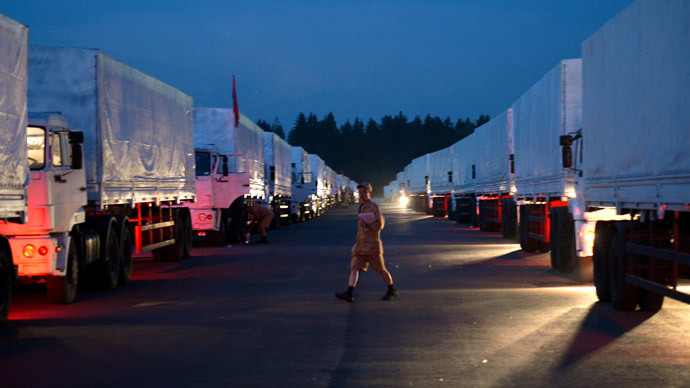
RT | August 12, 2014
Kiev intends to hold up the internationally-supervised Russian humanitarian aid convoy meant for East Ukraine for at least a week, a spokesman for the Ukrainian military said.
Ukraine said the time is needed for the International Committee of the Red Cross (ICRC), which is contributing to the Moscow-initiated mission, to establish where the aid should go in the Ukrainian region engulfed by civil war.
The convoy of 280 trucks dispatched on Tuesday “did not pass the ICRC certification,” Andrey Lysenko said.
Presidential aide Valery Chaliy said Kiev wants the entire cargo to be unloaded on the border and transferred to Red Cross vehicles.
“We will not allow any escort of the Russian Emergencies Ministry or Russian military,” he said. “Ukraine will take responsibility for this procedure.”
Lysenko claimed that the convoy consists of repainted military trucks and is accompanied by an S-300 air defense system, according to the news agency Ukraine National News.
He didn’t elaborate on why Russia would need to send a system that is meant to protect key strategic positions from enemy aircraft and missiles, but is useless in guarding a convoy of vehicles on the move.
The ICRC said it was informed by Moscow that the convoy had been dispatched, but had yet to receive detailed shipping lists and distribution plans.
“The situation is changing by the hour and right now we are not in a position to provide further details now as to how this operation could take place,” ICRC spokesperson Anastasiya Isyuk told RT.
Earlier, Moscow said that the humanitarian mission had been agreed by all parties concerned.
Russia has sent some 2,000 tons of aid to Ukraine, including food, medicine, sleeping bags and power generators.
The cargo is meant for the Donetsk and Lugansk regions, which have seriously suffered in more than three months of warfare, as Ukrainian troops used heavy artillery, bomber aircraft and tanks to advance on cities controlled by the militias.
Kiev earlier accused Moscow of trying to conduct a stealth invasion of Ukraine under a guise of humanitarian aid, saying that Russian troops would be posing as guards of the convoy while actually tasked with starting an offensive.
The narrative was supported by some western countries, which said that any humanitarian mission not backed by Kiev would be considered an attack on Ukraine’s sovereignty.
Russia dismissed the accusations as nonsense.
In another media briefing on Monday evening, Lysenko stated that the humanitarian convoy to Ukraine was organized “under an agreement between [President] Petro Poroshenko and the Red Cross,” and that Russia “wants to present this mission as its own initiative” as a publicity stunt.
Background : On the brink of survival: No electricity, water, communications in besieged Lugansk, E. Ukraine
Egypt imposes incapacitating conditions on relief convoys delivering aid to Gaza
MEMO | August 11, 2014
An official Egyptian document has revealed that Egyptian authorities are imposing incapacitating conditions on relief convoys seeking to deliver medical and food aid to Gaza through the Rafah border crossing.
The document addressed the “regulatory rules for the entry of aid convoys to the Gaza Strip through the Rafah border crossing at this stage.”
The document, which was handed by the Egyptian authorities to the Arab branches of the Red Cross and Red Crescent organisations during their latest meeting in Jordan, stated that the Egyptian authorities have obliged relief organisations seeking to deliver aid to Gaza to submit a request to Egypt through the foreign ministries of the countries in which they operate. The request should include a list of the aid items that the organisations plan to take into Gaza through Rafah.
Relief agencies must then wait for the approval of the Egyptian foreign ministry before they start sending aid to Gaza.
The document specified that aid items must arrive at either the Ismailiya Airport or at Port Said. Aid agencies are required to pay the cost of unloading and shipping the food and medical aid items in any of the two locations.
Relief agencies are banned from providing construction material, gas cylinders, fuel, or funds into Gaza, according to the document, which also notified the Red Cross and Red Crescent that only a limited number of persons will be allowed to accompany the aid items into Gaza.
The document further stressed that journalists who seek to cross to Gaza must provide their names and passport information to the Egyptian authorities beforehand, and they must obtain approval from their countries’ foreign ministries or Cairo embassies. However, Egypt reserves the right to refuse people entry into Gaza through the Rafah crossing without specifying the reasons for this decision.
With regards medical teams, the document noted that doctors are required to submit requests to their countries’ foreign ministries and coordinate with the Palestinian Health Ministry in Ramallah before they can obtain the Egyptian authorities’ approval to enter Gaza.
The head of the Algerian Red Crescent Saida Benhabyles, who is also a former minister, said in a press conference held in the Algerian capital that the Egyptian authorities want to put the logo of the Egyptian Red Crescent along with the logo of any aid or relief agency delivering aid into Gaza.
Benhabyles announced that, due to the Egyptian conditions, the Algerian Red Crescent had to cancel a donation campaign that had aimed to deliver blood to Gaza.
European spyware tech used against Bahrainis: Reports
Press TV – August 10, 2014
A German-British surveillance company has assisted the Bahraini regime in spying on anti-regime activists in the Persian Gulf country, reports say.
According to reports, Gamma International provided the Al Khalifa regime with the FinFisher spyware.
German media reported that by using the malicious spyware, the Bahraini regime has managed to hack into 77 computers belonging to opposition leaders, imprisoned politicians, journalists, human rights lawyers, and activists who took part in the Bahraini uprising which began in mid-February 2011.
The surveillance software is said to be capable of remotely switching on and recording a computer’s webcam feed. It can also make a copy of Skype conversations.
Security researchers believe that Gamma International’s technology is being used by other oppressive regimes around the world against journalists and activists.
Gamma had previously said that its spyware was used to target criminals and terrorists and that the company had not done business with Bahrain. The Bahraini regime has regularly rejected reports that it spies on political activists.
Since mid-February 2011, thousands of pro-democracy protesters have staged numerous demonstrations in the streets of Bahrain, calling for the Al Khalifa royal family to relinquish power.
On March 14, 2011, troops from Saudi Arabia and the United Arab Emirates invaded the country to assist the Bahraini regime in its crackdown on the peaceful protesters.
According to local sources, scores of people have been killed and hundreds arrested.
Physicians for Human Rights says doctors and nurses have been detained, tortured, or disappeared because they have “evidence of atrocities committed by the authorities, security forces, and riot police” in the crackdown on anti-government protesters.
New York Times ‘On wrong side of Orwell’
By Jay Rosen | Press Think | August 10, 2014
These are my discussions notes to The Executive Editor on the Word ‘Torture.’ A letter to Times readers from Dean Baquet, August 7, 2014.
“It’s time to celebrate that the newspaper of record is no longer covering for war criminals.” That’s what Andrew Sullivan, who has kept watch on this story, wrote Thursday. The news he was celebrating: the New York Times gave up the ghost on euphemisms for torture.
Alright, we celebrated. For an hour, maybe. Now let’s ask what came to an end with this strange announcement. Terms like “enhanced interrogation techniques,” “harsh tactics” and “brutal treatment” had been preferred usage at the Times in news stories by its own staff about the treatment of detainees in U.S. custody after 9/11. “Torture” was removed as a descriptor that the Times itself would employ. The decision to reverse that came Thursday in a brief note to readers from executive editor Dean Baquet.
From now on, The Times will use the word “torture” to describe incidents in which we know for sure that interrogators inflicted pain on a prisoner in an effort to get information.
1. As Erik Wemple wrote, Baquet here “pledges that the newspaper will deploy the English language to describe things.” His paraphrase points up the strangest part for me: the Times felt it had to exit from the vernacular to stay on the responsible journalism track. This I find hard to accept.
The baseline in daily journalism is supposed to be plain English, spoken and written well. Non-exclusive language is the norm. The normal market is the common reader and the reader’s common sense, not a specialized class of knowers vibrating in the power circle. It’s not incumbent on an already understood term like torture to prove itself neutral enough for newswriters, but on the specialist’s construction (“enhanced interrogation”) to prove itself relevant in these proceedings at all.
A term like “enhanced interrogation techniques” starts with zero currency, extreme bloodlessness and dubious origins. A lot to overcome. In the years when the Times could not pick between it and torture — 2002 to 2014, approximately — it seemed that its editors and reporters were trying to re-clarify what had been made more opaque by their own avoid-the-label policy decision. Thus the appearance of do we have to spell it out for you? phrases like “brutal interrogation methods,” meant to signal: this was really, really bad. So bad you might think it amounts to…
Baquet tries to explain:
The word “torture” had a specialized legal meaning as well as a plain-English one. While the methods set off a national debate, the Justice Department insisted that the techniques did not rise to the legal definition of “torture.” The Times described what we knew of the program but avoided a label that was still in dispute, instead using terms like harsh or brutal interrogation methods.
So for the fruits of avoiding a label the Times becomes a force for fuzzing things up. Early in a public reckoning with acts of state torture it decides it cannot call it that. Wrong side of your Orwell there, mister editor. To report what happened you have to first commit to calling things by their right names. Somewhere in a fog it helped to create the Times lost sight of that. The editor’s note doesn’t explain how it happened. … Full article
Jordanian Family: “Israel Tortured Our Son To Death”
By Saed Bannoura | IMEMC & Agencies | August 7, 2014
A Jordanian family is accusing Israel of arresting and torturing their son to death, after detaining him during a protest, in Tel Aviv, in solidarity with the Palestinians in Gaza.
The family in Amman, Jordan said Wa’el Salim Mustafa, 39, told AFP news agency that he was detained by the Israeli police during a protest against the Israeli war on Gaza, was subject to extreme torture by Israeli interrogators, and died around a week ago, on the third day out the Muslim feast of al-Fitr.
His brother, Qoteiba, stated that the Israeli Authorities contacted the family asking them to come over and sign documents permitting Israeli doctors “to perform a needed surgery”, but once the family arrived in Tel Aviv, they were told he was dead.
Qoteiba added that the body of his brother showed clear marks of extreme torture, and also had a swollen face, swollen eye sockets, several broken ribs, and various cuts and bruises all over his body.
He left Jordan around 18 months ago, and travelled to Tel Aviv and Haifa, where we worked construction jobs.
Israel is refusing to provide further details on the issue, while the family has filed an official complaint against Israel and the Israeli Prison Administration, and is asking for another autopsy to reveal the causes of death.
A Jordanian security source said Jordan formed a committee to oversee the autopsy that would be performed at a Jordanian Hospital, adding that initial examination shows clear bruises, and fractures, in the head, chest and several other body parts.
It also revealed that a sharp blow to the head caused brain hemorrhage, that eventually led to death. An official report will be issued at a later stage.
Israel alleges Wa’el “fell during interrogation, and died later on”.
Israel and Jordan signed a peace agreement in 1994. Despite the fact that all Israelis can travel to Jordan, most Jordanian males are not allowed to travel to Tel Aviv, and are forced to go through the Arab side of the border terminal with Jordan, thus, are “granted” access to the West Bank and not to historic Palestine, including Jerusalem.
Israel ‘withholding information’ about Gaza detainees
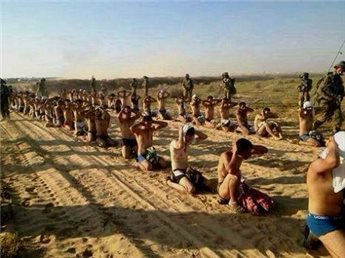
Israeli soldiers hold Palestinians in Gaza on July 24, 2014
Ma’an – 06/08/2014
RAMALLAH – The Ministry of Prisoner Affairs said Wednesday that it has not received information about Palestinians detained in Gaza during Israel’s offensive.
“The occupation army, during its current aggression on the Gaza Strip, has detained dozens of Palestinians and taken them to unknown locations,” Minister of Prisoner’s Affairs Shawqi al-Ayasa said in a statement.
Al-Ayasa said the ministry was yet to receive crucial information about the prisoners, including their ID numbers, locations, and conditions.
The fact that Israel has withheld the information is worrying, al-Ayasa said, adding that there were “growing fears that some of the prisoners have been executed.”
He called on international organizations, specifically the International Committee of the Red Cross, to intercede to obtain the information on the ministry’s behalf.
Al-Ayasa also requested that families in Gaza who suspect their relatives have been detained contact the Ministry of Prisoner Affairs.
The ministry said in a statement Sunday that more than 200 Palestinians had been detained in Gaza while Israeli forces were on the ground, but that some of them had been released.
An Israeli army spokeswoman told Ma’an that Israeli forces had arrested 159 Palestinians in Gaza who were “actively doing terrorist attacks.” The prisoners were transferred to the Shin Bet intelligence agency for questioning, she said.
The spokeswoman did not have information regarding how many of those Palestinians were still being held, and did not comment on allegations that Israel was withholding information about the prisoners from the prisoner’s ministry.
Michigan community rebels against huge expansion, militarization of police
RT | August 5, 2014
After acquiring some military hardware, one local Michigan police chief’s plan to also add more than 30 non-certified officers to the force has residents in Barry Township clamoring for an investigation – and, in some cases, his job.
According to the Detroit Free Press, the township’s police chief Victor Pierce is under fire for what some in the area characterize as increased use of force by law enforcement, as well as for a proposal that would add more officers than are necessary to keep track of a population of 3,900.
Pierce is looking to add 34 individuals to the police reserve force in Barry Township – a significant increase over the four full-time officers currently employed. What’s more, these reserve officers are not certified – the department has already been warned that the officers need training and should only be deployed for special events.
“They’re not from around here,” Tony Crosariol, a biochemist who moved to the area seeking a peaceful life, said to the Free Press. “These reserve officers are not our friends, they are not our neighbors, their kids don’t play sports with my kids.”
Plans to expand the reserve force so much come on top of the fact that the police department is in possession of two armored personnel carriers and two Humvees, which arrived in the area courtesy of the US Department of Defense.
The debate over police behavior as well as the reserve force gained momentum in May after local resident Jack Nadwornik was confronted by a trio of officers who claimed he resisted arrest. Nadwornik was caught urinating outside a bar that had closed down for the evening, and suffered broken hand and was kneed in the back by police before being taken to jail and charged with disorderly conduct and resisting arrest. Nadwornik and another witness said police claims about his behavior were not true.
The incident has galvanized critics who say police are using unnecessary force, and that their behavior stems from Pierce’s aggressive attitude towards law enforcement’s role in the community. Many have called for him to be fired or resign, but he has defended his position by citing events like the Sandy Hook Elementary School shooting and threats of terrorism. He said he’s not trying to form “any kind of military machine or mind-set,” and that he’s simply looking to prevent tragedies from occurring in the future.
Despite the criticism, Pierce’s proposals have split the community, with some coming out in support of his plans and defending the police under his watch.
“I think Victor is doing a fine job,” said Delores Mohn, a retired schoolteacher who now works as a church secretary, to the Free Press. “He wants to do what’s right. Every citizen needs to know the laws, and if they are caught, they have to pay the price. I’m very grateful for them and have enormous respect for these officers.”
The situation in Barry Township isn’t the only example of local residents expressing concern over potentially aggressive police departments. As RT reported late last year, police in Salinas, California, came under intense scrutiny after acquiring a heavily armored military vehicle for its SWAT team. Designed for use in war zones like Iraq and Afghanistan, the truck is capable of surviving minefield explosions and rifle fire, leading many to wonder why it was being deployed in their city. Police Chief Kelly McMillin acknowledged concerns but insisted the vehicle would only be used to protect officers and enhance civilian safety.
Obama Claims CIA Torture Was Okay Because People Were Scared And The CIA Is A ‘Tough Job’
By Mike Masnick | Techdirt | August 4, 2014
On Friday, we wrote briefly about President Obama’s “admission” that “we tortured some folks.” At the time I was going off of the press reports of the conference, but now that I’ve read the full transcript of his statement, it’s much worse than just that brief comment. Here’s the relevant portion:
With respect to the larger point of the RDI report itself, even before I came into office I was very clear that in the immediate aftermath of 9/11 we did some things that were wrong. We did a whole lot of things that were right, but we tortured some folks. We did some things that were contrary to our values.
I understand why it happened. I think it’s important when we look back to recall how afraid people were after the Twin Towers fell and the Pentagon had been hit and the plane in Pennsylvania had fallen, and people did not know whether more attacks were imminent, and there was enormous pressure on our law enforcement and our national security teams to try to deal with this. And it’s important for us not to feel too sanctimonious in retrospect about the tough job that those folks had. And a lot of those folks were working hard under enormous pressure and are real patriots.
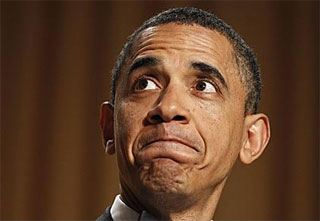
It was the “we tortured some folks” that reasonably made headlines, but the following paragraph, in which he tries to brush it off, is what’s really troubling. Imagine any other crime, and think about whether or not you’d have someone say it was okay because there was “enormous pressure” on the people committing the crime. Imagine any other crime, and being told “not to feel too sanctimonious” because of what a “tough job” any other criminal had. I’m sorry, but I don’t care how much pressure anyone was under, plenty of people who are actually “real patriots” know that you don’t torture people. Not only does it not work, it’s morally reprehensible. “You don’t torture” is a pretty straightforward concept — and one that was pretty clearly known and articulated prior to all of this. Nothing that happened on 9/11 or in the aftermath magically made war crimes like torture okay.
Those aren’t “patriots,” and defending them because of the “pressure” they were under is an incredibly cowardly and disgusting move.
Featured Video

Iran FM Araghchi: “Hormuz Will No Longer Be the Same”
or go to
Aletho News Archives – Video-Images
From the Archives
Sam Husseini: The entire US establishment helped lie their way into the Iraq war
By Slava Zilber | American Herald Tribune | October 14, 2019
Sam Husseini is a senior analyst with the Institute for Public Accuracy, independent journalist and contributor to The Nation and FAIR.
Slava Zilber: Sam, three years ago, you appeared on Talk Nation Radio with David Swanson and spoke about the case of the GCHQ whistleblower Katharine Gun. You pointed out that the people involved in the spying on the UN and the people authorizing the Iraq War were not held accountable:
“Virtually everybody who went along with the war, whether it is Kerry or Clinton, of course, the Bush administration themselves has falsified their own records in terms of why, what they did, when they did, why they did it, to the extent that they’ve been scrutinised at all.”
You also address it in a recent article. And recently, Joe Biden has been lying about his position on the Iraq War. How can such an important issue escape meaningful scrutiny? … continue
Blog Roll
 Aletho News
- Oman FM: Persian Gulf states, Iran, Iraq should form security pact excluding US
- Trump peddles fresh falsehoods, claims Iran ‘started the war’ as US aggression drags on
- Ukraine quagmire? Yes, but it’s for NATO, not Russia
- US intelligence hypes Chinese, Russian space threats while accelerating its own military buildup in orbit
- Iran FM Araghchi: “Hormuz Will No Longer Be the Same”
- EU facing trillion-euro debt hole while seeking more cash for Kiev
- How US, Europe, Persian Gulf states exhausted missile stockpiles, splurged billions to defend Israel
- Up in arms… Koreans reject U.S. empire’s plan to make South Korea the next Ukraine
- Iran, Turkey, Pakistan, Saudi Arabia could advance region-led security framework in Tehran: FM spox
- Netizens condemn Japanese drama for projecting Japan’s wartime atrocities onto Chinese characters
- If Americans Knew
- An error has occurred; the feed is probably down. Try again later.
- No Tricks Zone
- Sudden Stratospheric Warming, Powerful El Niño Combination May Lead To Extreme Europe Cold, Energy Crisis!
- Two New Studies Find Thwaites Glacier Melt Cannot Be Driven By Human Activity Or A Warming Ocean
- E-Cars Reduce CO2 Emissions By Only 41% Compared To Internal Combustion Engine Vehicles
- Predictions Made By Renowned Climate Professor Over Past Decades Have Been Proven To Be Poor
- New Study Suggests Large Regions Of The Pacific Ocean Have Been Cooling For The Last 80 Years
- Germany’s Green Energy Debacle: High Energy Costs Force Kahla Porzellan to Close After 182 Years!
- New Study: 50 Years Of The Most Aggressive ‘Net Zero’ Policies Can Only Affect The Global Climate By 0.03°C
- US September “Heat” Was No Record…Many Records Set Decades Ago
- Latest European Green Energy Debacle; Portugal’s Largest Flagship Solar Park Insolvent!
- Green Energy Debacle: German Expert Professor Fritz Vahrenholt Warns Of Severe Economic And Social Consequences

