The scourge of prosocial censorship
By John Ridgway | Climate Scepticism | January 25, 2025
On 30th April 2014 a Swedish meteorologist caused shock waves to reverberate across the international community of climate scientists. This was not because he had made a major discovery, nor had he been involved in a scientific scandal. But what he had done was to commit the cardinal sin of joining the sceptical Global Warming Policy Foundation (GWPF). The reason why to some this was so shocking was because he wasn’t just any old Swedish meteorologist; he was Professor Lennart Bengtsson, the former head of research at the European Centre for Medium-Range Weather Forecasts before becoming its director until 1990. He had then moved on to become director of the Max Planck Institute for Meteorology in Hamburg. Amongst his many accolades he had been awarded the Milutin Milankovic Medal in 1996, the René Descartes Prize for Collaborative Research in 2005, and the 51st International Meteorological Organization Prize of the World Meteorological Organization in 2006. In 2009 he was made an honorary fellow of the Royal Meteorological Society in recognition of his contribution to meteorology.
Only a fortnight later the same Swedish meteorologist caused an aftershock by resigning from the same foundation. The self-appointed guardians of scientific truth at DeSmog will tell you that it was because he hadn’t quite realised what a shower of reprobates he had joined and so he quickly learned to regret his actions. However, this is what Bengtsson said in his resignation letter:
“I have been put under such an enormous group pressure in recent days from all over the world that has become virtually unbearable to me. If this is going to continue I will be unable to conduct my normal work and will even start to worry about my health and safety. I see therefore no other way out therefore than resigning from GWPF… Colleagues are withdrawing their support, other colleagues are withdrawing from joint authorship etc. I see no limit and end to what will happen. It is a situation that reminds me about the time of McCarthy. I would never have expecting anything similar in such an original peaceful community as meteorology. Apparently it has been transformed in recent years.”
Bengtsson’s censorious colleagues seemed quick to prove his point by denouncing his accusation that they had denounced him. Gavin Schmidt, for example, dismissed his reference to McCarthyism as being “ridiculous”, suggesting instead that it was the brave scientists such as himself who were the real victims of a witch hunt.
Appalling though it may seem that Professor Bengtsson should have been treated this way, he cannot claim to have not seen it coming. Earlier that same year a paper, in which he had the temerity to suggest that the projected warming was unlikely to be anywhere near as bad as others had maintained, was rejected by the scientific journal Environmental Research Letters on the basis that his findings were “less than helpful“. By way of clarification, the peer reviewer concerned added the reproof, “actually it [the paper] is harmful as it opens the door for oversimplified claims of ‘errors’ and worse from the climate-skeptic media side“. When Bengtsson and others, such as meteorologist Hans von Storch, condemned the rejection as scandalous, the journal’s publisher was eager to play down the comments made by the peer reviewer, claiming instead that the paper simply did not meet the journal’s high standards. Yes, that old chestnut.
What Bengtsson had in fact been subjected to is prosocial censorship. It is a form of censorship in which work is rejected, and individuals cancelled, not because the work is substandard or flawed, but because it threatens to undermine a cherished ideology or someone else’s concept of societal safety and harmony. Such censorship is never portrayed as such, of course; the reason given is always that the individual(s) concerned were peddling substandard work leading to harmful misinformation.
For example, if you were to be an Emeritus Professor of Risk with an international reputation for expertise in forensic statistics, but you then produced work that called into question government figures that seemed to be misrepresenting the severity of a pandemic or the safety and effectiveness of vaccines, you could expect your career to be cancelled on the basis that you are peddling harmful misinformation.
If, for example, you were to be a consultant psychiatrist and psychotherapist with more than fifteen years of experience pioneering psychotherapy for patients with gender dysphoria, but you then dared to say that everything in your professional experience had led you to the inescapable conclusion that transgender activists were guilty of promoting inappropriate physical interventions to deal with a basically psychological problem, then you could expect to be denounced as “the most evil dangerous Nazi Psychiatrist in the world” — and a transphobe for good measure.
If, for example, you were a physicist at CERN with a bright future ahead of you, but were then to suggest that the unbalanced gender representation within your field had nothing to do with patriarchy and everything to do with inherent gender traits, then you could expect to be vilified as a misogynist and ostracised by your fellow scientists.
And if, for example, you were to be a prominent climate scientist who had pointed out that self-censorship was rife within your field and that it was responsible for the absence of papers published in prominent journals that quantify both the climatic and non-climatic causations of wildfires, then you could expect the likes of the Grantham Institute’s Bob Ward to bleat that “Unfortunately, his bogus narrative has predictably been seized upon by the opponents of action to tackle climate change“. Worse still, none other than Professor Ken Rice (think poor man’s Sabine Hossenfelder) would be moved to refer to you as if you are now dead to them:
“Given that there can be preferred narratives within scientific communities, it is always good for there to be people who are regarded as credible and who push back against them. Even if you don’t agree with them, they can still present views that are worth thinking about. In my view, Patrick used to be one of those people.” [His emphasis]
Oh, the shame of it all!
In the above examples, the common narrative is one of a previously respected expert who had sadly fallen from grace because they couldn’t help themselves and had allowed their toxic opinions to compromise their ability to stick to the truth. As a consequence, they instantaneously transform into incompetent bad actors who are a danger to society, heartily deserving of prompt and emphatic prosocial censorship.
To be clear, these are not isolated examples. A recent research paper published in The Proceedings of the National Academy of Sciences argued that both self-censorship and the prosocial censorship of colleagues are commonplace within the sciences — and the problem is only getting worse. Some of the figures make for grim reading:
A recent national survey of US faculty at four-year colleges and universities found the following: 1) 4 to 11% had been disciplined or threatened with discipline for teaching or research; 2) 6 to 36% supported soft punishment (condemnation, investigations) for peers who make controversial claims, with higher support among younger, more left-leaning, and female faculty; 3) 34% had been pressured by peers to avoid controversial research; 4) 25% reported being “very” or “extremely” likely to self-censor in academic publications; and 5) 91% reported being at least somewhat likely to self-censor in publications, meetings, presentations, or on social media.
There are, however, trends to be observed. Censorship is more of a problem in the social sciences than within STEM faculties. Women are keener to censor than are their male colleagues. And whilst right-leaning academics are more likely to engage in self-censorship, the left-leaning are far more likely to approve of the prosocial censorship of a colleague. Since prosocial censorship biases both the selection and promotion of staff members, it follows that the system is currently structured in such a way as to entrench the preponderance of left-leaning academics in senior positions. Worse still, the appetite for prosocial censorship is greater within the ranks of the PhDs than it is within faculty staff, suggesting that – to borrow a turn of phrase favoured by climate scientists – the problem is baked in for the future.
As the terminology suggests, those who advocate prosocial censorship will often do so for what they perceive to be the best of possible motives. Most commonly, the intention is to prevent research from being appropriated by “malevolent actors to support harmful policies and attitudes”. Sometimes the research is considered too dangerous to pursue, and in many other cases the censorship is aimed at protecting vulnerable groups. However, no matter how well-intended, the censorship comes with many obvious risks, the clearest of which is the possible suppression of the truth in the cause of a ‘greater good’.
At its most petty, all that may be at stake is one person’s reputation at the expense of a competitor. At its most extreme, prosocial censorship could involve a “wilful blindness of authorities” covering up a heinous crime for fear of offending a section of society, or for fear of giving encouragement to a right-wing that is assumed to be looking for any excuse to destabilise. Somewhere in the middle are the concerns harboured by the climate sceptic. Whilst we understand that science is not supposed to operate by consensus, we would, nevertheless, like to believe that an emergent consensus is the result of a developing common knowledge, rather than the result of social engineering enabled by prosocial censorship. Unfortunately, knowing that Professor Bengtsson’s experiences are far from unique does nothing to encourage such a belief. And, when all is said and done, that is the greatest shame of all. Prosocial censorship may seem a good idea, but it isn’t in the least bit desirable when it undermines the integrity of a discipline and causes widespread distrust amongst the wider community.
January 28, 2025 Posted by aletho | Science and Pseudo-Science, Timeless or most popular | Leave a comment
They Think We Are Stupid, Volume 13
By Aaron Kheriaty, MD | Human Flourishing | January 27, 2025
Everything you need to know about our ruling class’s opinion of you. As always, these headlines are presented without commentary.
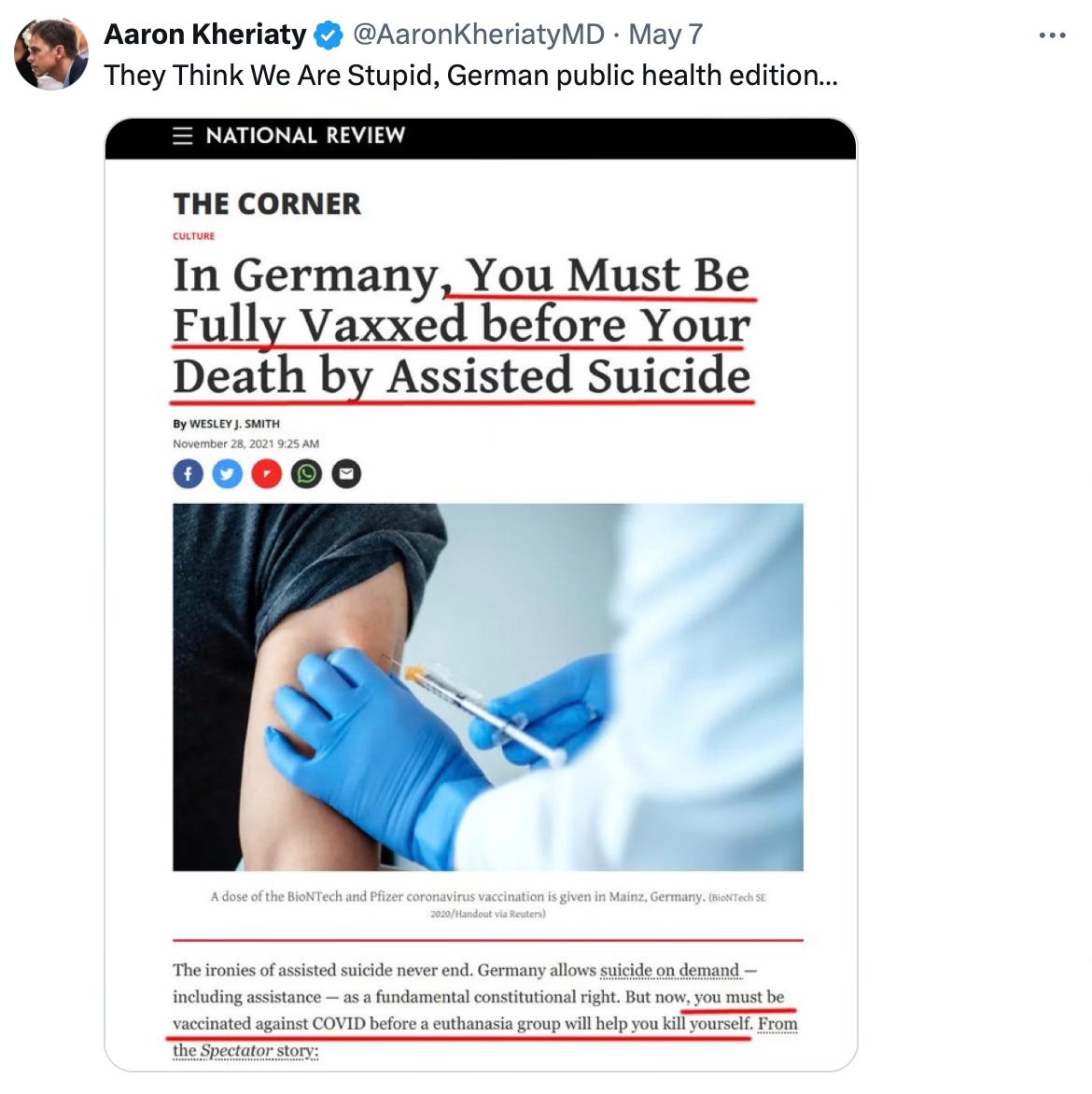
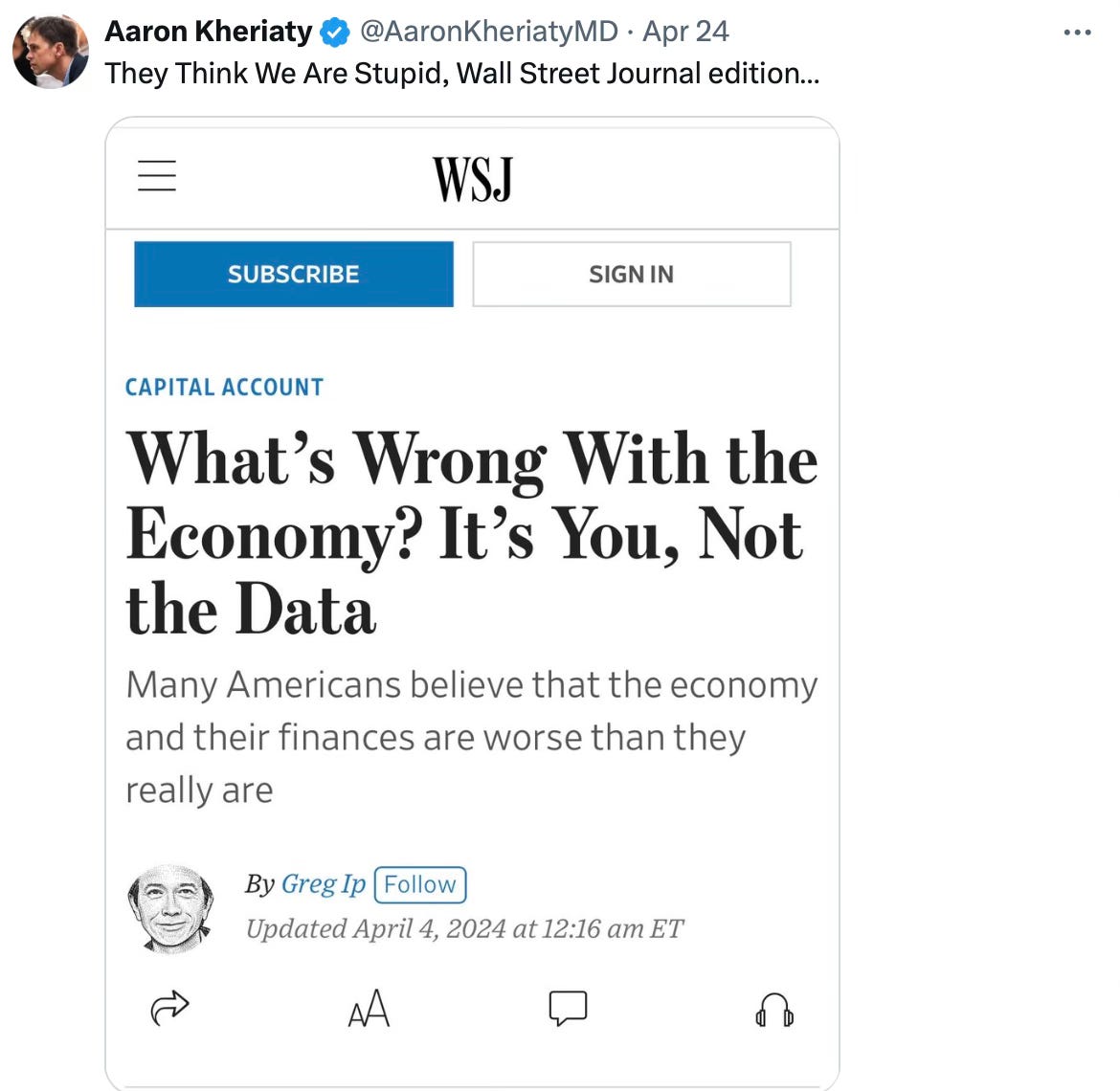
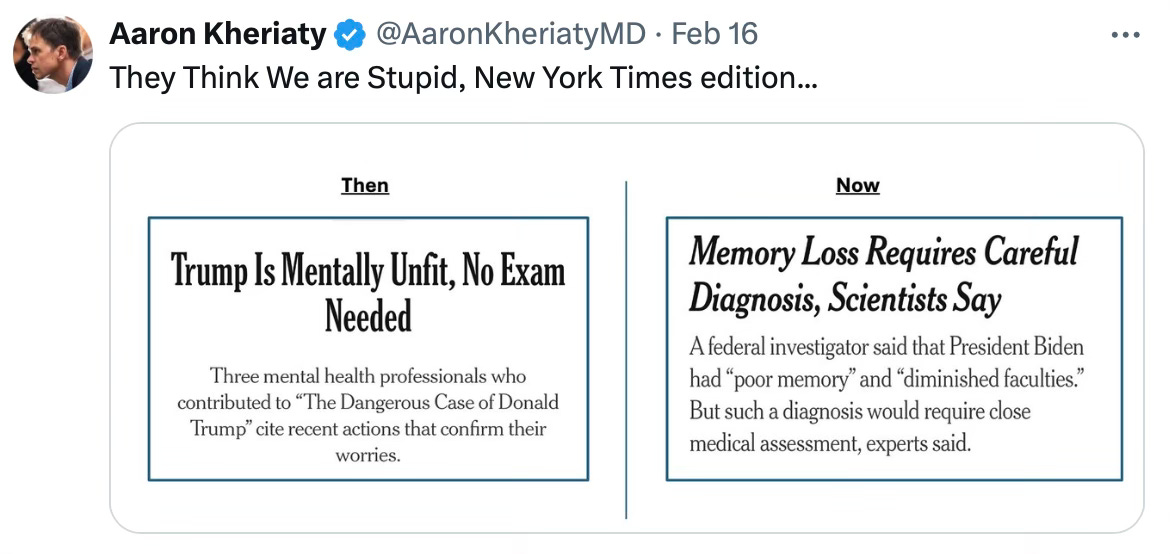
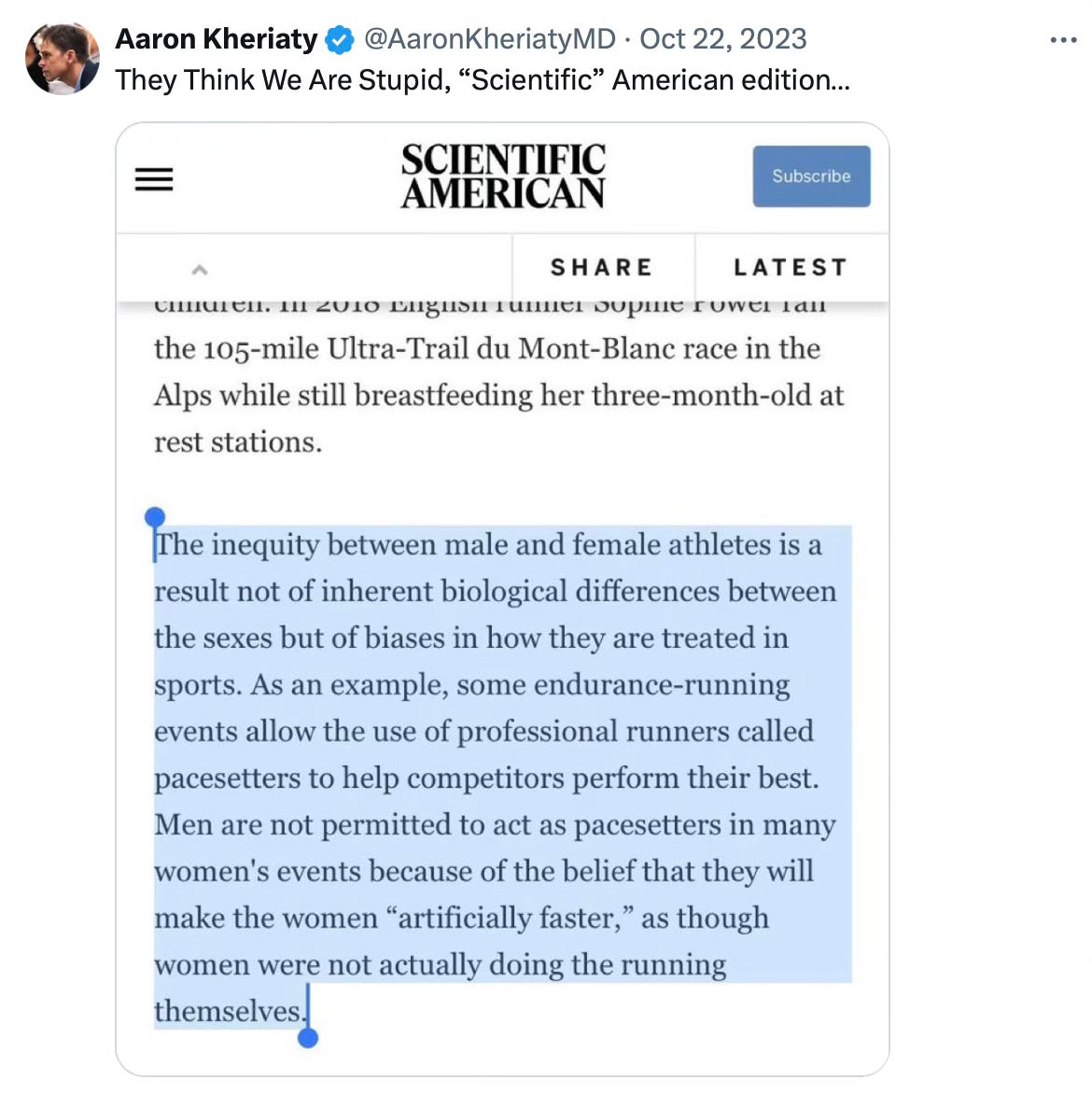
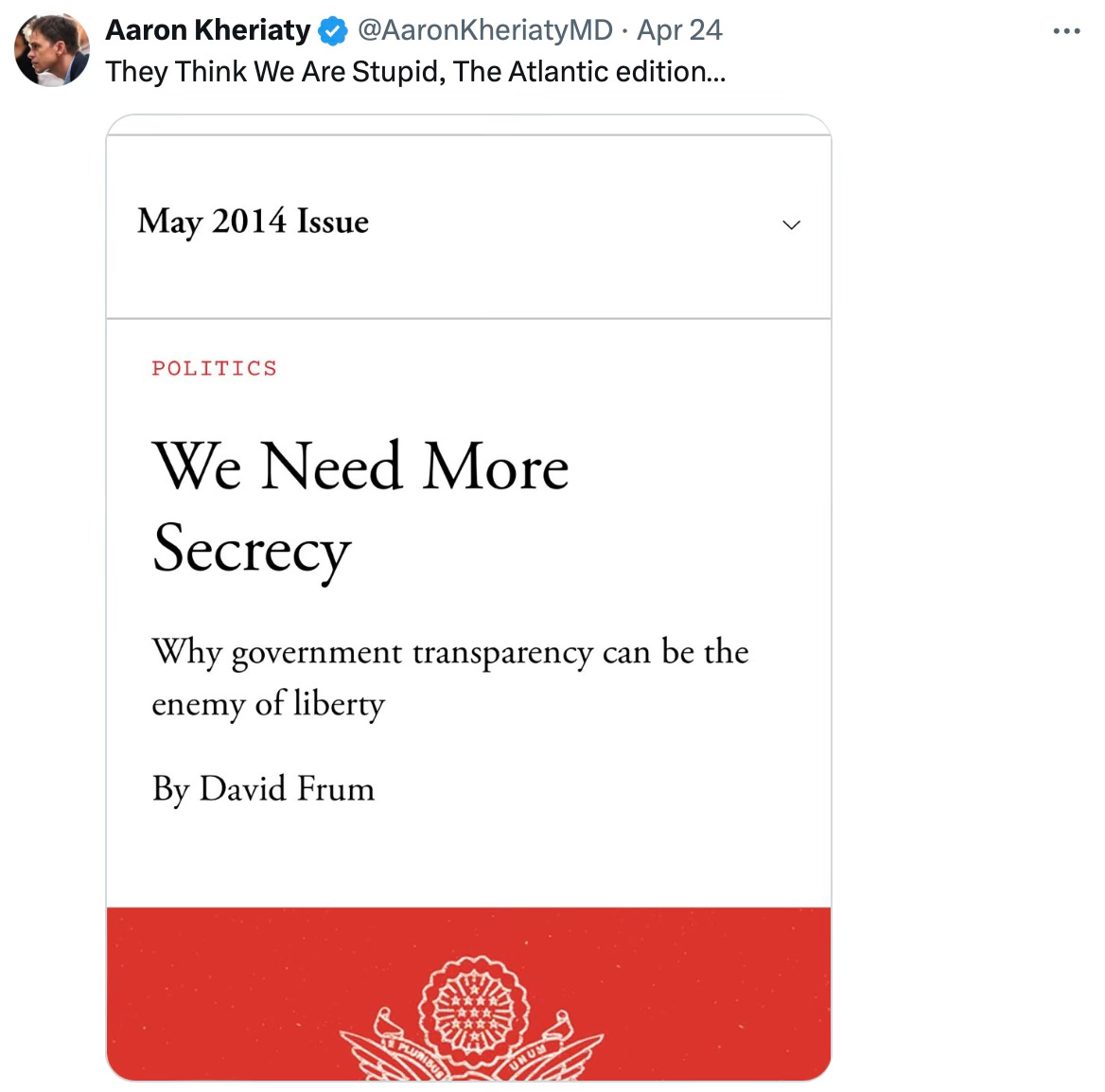
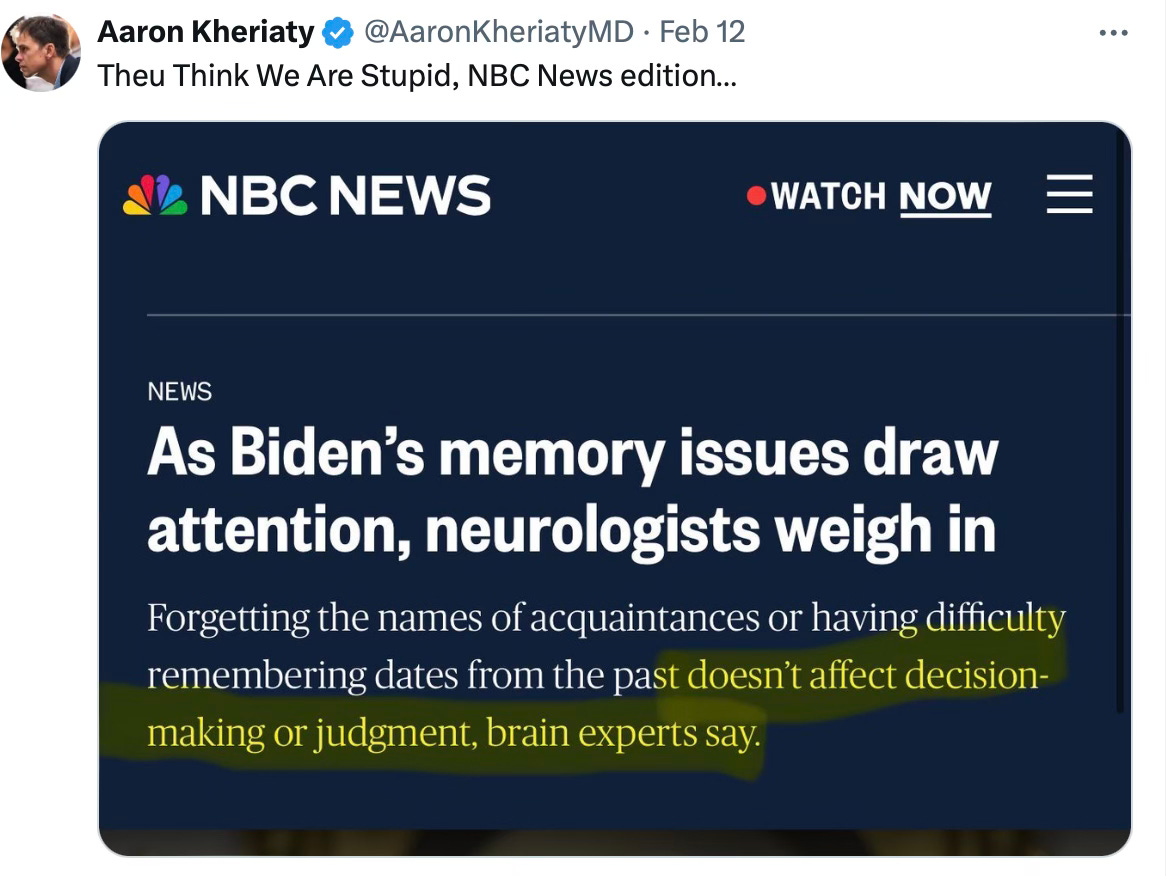
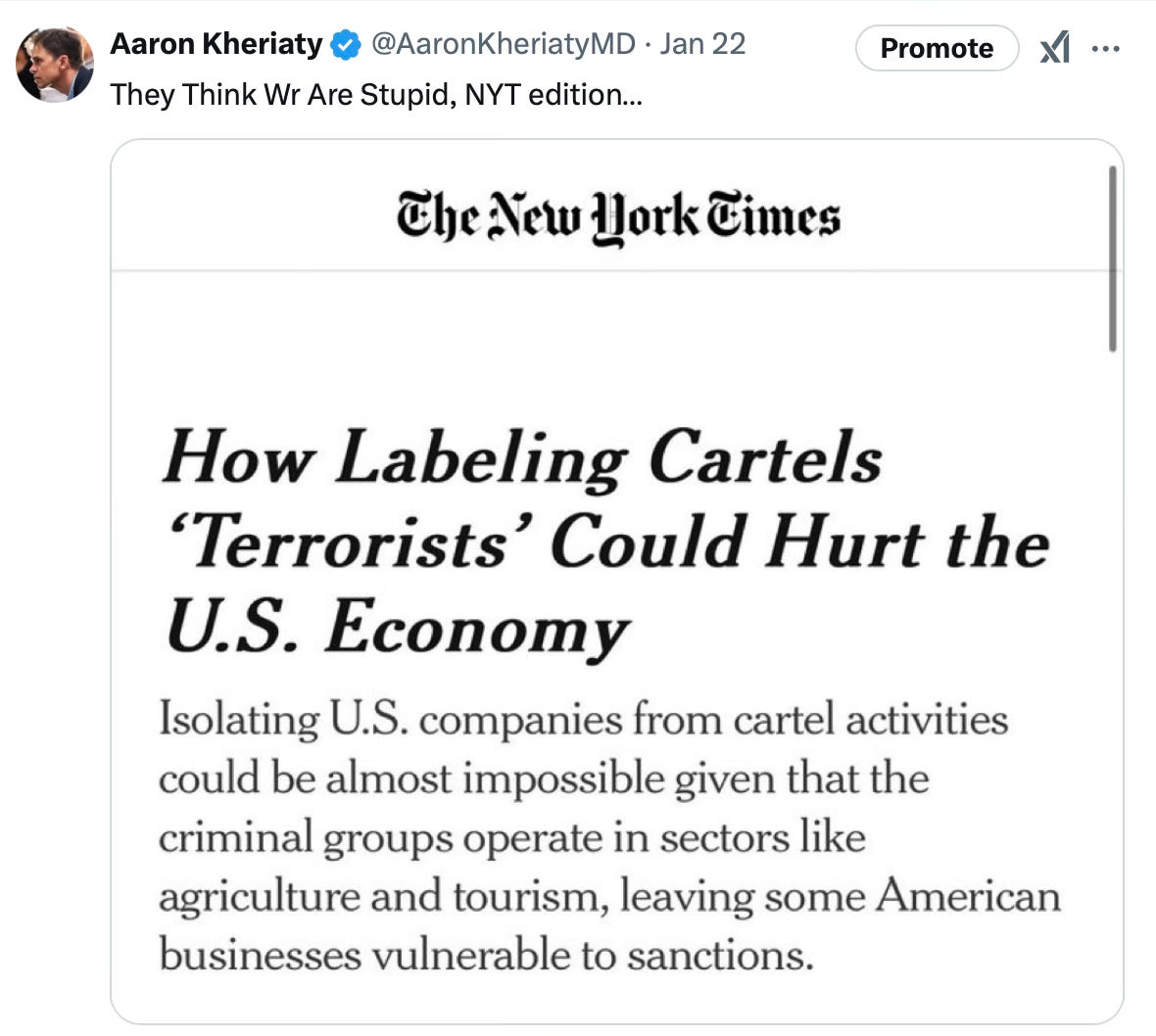
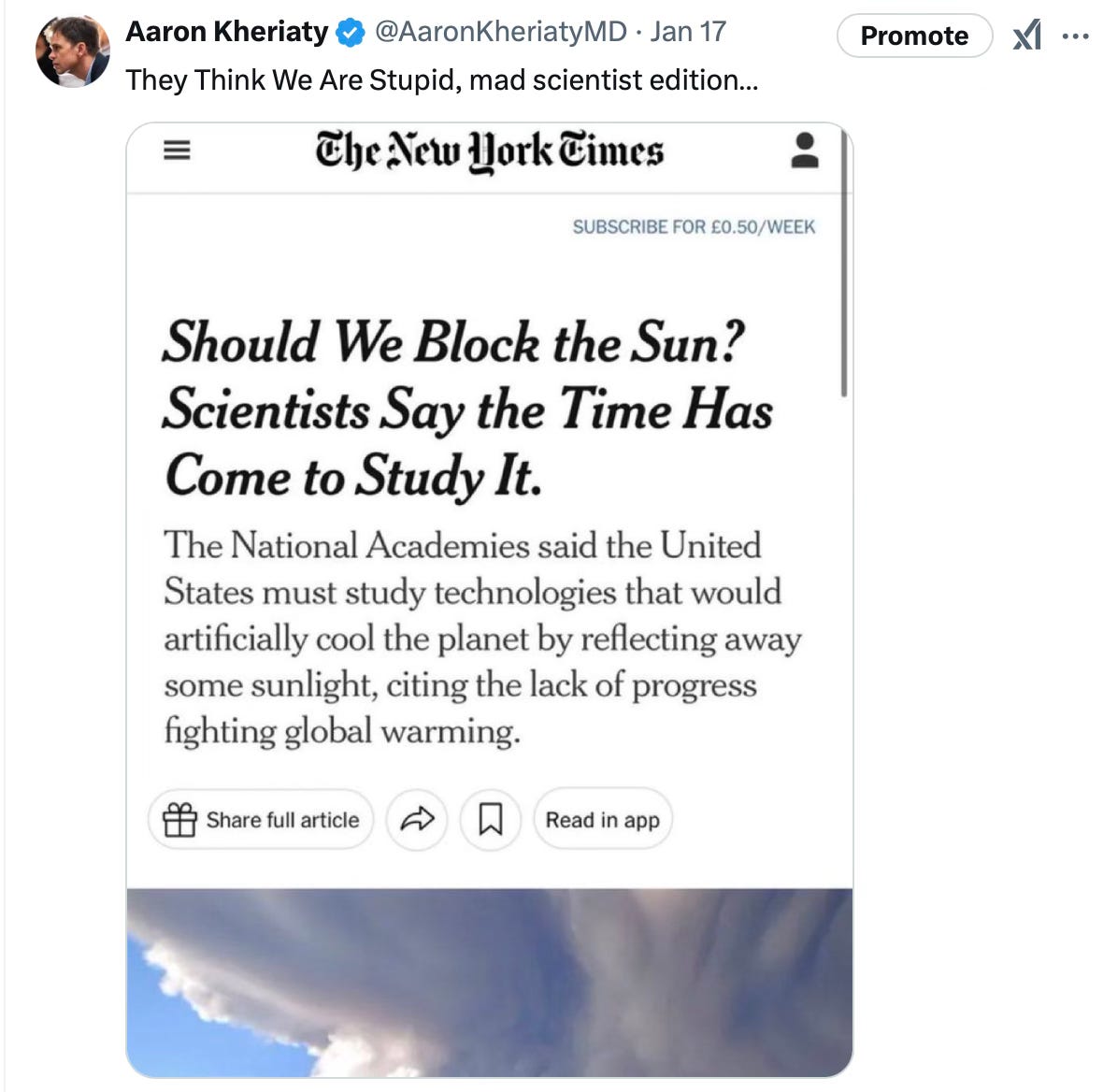
January 27, 2025 Posted by aletho | Mainstream Media, Warmongering, Science and Pseudo-Science, Timeless or most popular | Germany, New York Times, United States | Leave a comment
World-renowned scientist Dr. Willie Soon: Delivers hilarious informative video about climate
https://twitter.com/WatchGorillaSci/status/1881720432619077901
January 26, 2025 Posted by aletho | Science and Pseudo-Science, Timeless or most popular, Video | Leave a comment
Mussolini Was Not a Dictator
Tales of the American Empire | January 16, 2025
One goal of this channel is to teach people that much of what they learned in school and from news media is false. A good example is propaganda that Italian leader Benito Mussolini was a dictator. This is false, Italy’s dictator during World War II was Victor Emmanuel III who appointed Mussolini as prime minister in 1922 then dismissed and arrested him in 1943. He was king of Italy and part of European royalty so was excused from blame for bloody events. His commoner henchman Benito Mussolini was deemed responsible and characterized as an evil dictator. Victor Emmanuel was never charged with war crimes and this axis dictator remained king of Italy until 1946 when he retired to live in luxury in British held Alexandria.
_____________________________
“Was Fascism the Height of Abomination”; Pierre Simon; Unz.com; March 28, 2024; https://www.unz.com/article/was-fasci…
“The Machinery of Fascism Revisited”; Jeffery Tucker; Brownstone Institute; May 5, 2024; https://brownstone.org/articles/the-m…
Related Tale: “The Anglo-American War on France”;  • The Anglo-American War on France
Related Tale: “Blundering General Mark Clark”; • Blundering General Mark Clark
January 25, 2025 Posted by aletho | Timeless or most popular, Video | Africa, Italy | Leave a comment
Will Any Federal Officials Pay for What They Did?
By James Bovard | The Libertarian Institute | December 31, 2024
The biggest scientific con of the century is finally being exposed. But will any politicians or government officials ever be held responsible for the carnage they unleashed on Americans?
In early 2020, when the Covid pandemic was starting to ravage America, federal bureaucrats and politicians rushed to suppress any suggestion that the pandemic originated from a Chinese government lab bankrolled by US government agencies. Key Biden administration officials effectively exonerated the Chinese government even though the Chinese completely stonewalled any outside investigation into the origin of the Covid virus, as the Wall Street Journal recently revealed in a front-page scoop.
The FBI’s top expert concluded that the virus leaked from the lab but he was derailed by the Biden administration, blocked from presenting his evidence at a key White House meeting in August 2021. Three scientists at the National Center for Medical Intelligence, part of the Pentagon’s Defense Intelligence Agency, concluded that Covid leaked from a lab but they were muzzled. The Inspector General is conducting an investigation to determine why those experts were silenced. The Department of Energy also concluded that Covid originated in a lab. In September 2023, a senior CIA analyst told a Congressional committee that six key CIA analysts had been bribed by the agency to abandon their conclusion that Covid originated in a lab leak.
The Chinese government first admitted that a pandemic had broken out in the city of Wuhan in early 2020. Though the Chinese military-affiliated Wuhan Institute of Virology had been experimenting with bats for years, the Chinese government insisted the new virus came from a nearby marketplace. But the lead scientists involved with bat research had all been struck down by Covid-19 symptoms shortly before the Chinese government denied any responsibility. There was a deluge of circumstantial evidence quickly linking the new virus to the lab.
The outbreak of Covid-19 spurred one of the most brazen cover-ups in modern US history. The National Institute for Health had been financing gain-of-function research at the Wuhan Institute of Virology. That type of research seeks to genetically alter organisms to enable the spread of viruses into new species. Such research is extremely dangerous; as MIT professor Kevin Esvelt asked in 2021, “Why is anyone trying to teach the world how to make viruses that could kill millions of people?” The risks were compounded because the Wuhan Institute had a very poor safety rating. Two years earlier, the State Department confidentially “warned other federal agencies about safety issues at Wuhan labs studying bat Covid,” but the public disclosure of that alert was delayed until 2022.
In January 2020, top federal scientists recognized that the pandemic could obliterate their reputations. Dr. Francis Collins, the director of the National Institutes for Health, wrote in an email that “a swift convening of experts in a confidence-inspiring framework is needed or the voices of conspiracy will quickly dominate, doing great potential harm to science and international harmony.” The “conspiracy” was the facts of the matter.
Anthony Fauci, the chief of the National Institute for Allergy and Infectious Diseases (NIAID), speedily enlisted a handful of trusted scientists to gin up a paper supposedly “proving” that the virus could not have originated in the lab. A top NIAID scientist accepted the task of debunking the lab-leak story because, as he emailed a colleague, “Tony doesn’t want his fingerprints on origin stories.” The Lancet, one of the most respected medical journals in the world, enlisted in the cover-up with an op-ed by 27 scientists who proclaimed: “We stand together to strongly condemn conspiracy theories suggesting that Covid-19 does not have a natural origin.” Maybe the same scientists also sent an addendum to NIH: Keep giving us grant money or your reputation will “swim with the fishes.”
Further “proof” was provided by a torrent of accusations of racism against anyone who publicly suggested that the virus originated in a Chinese lab. The State Department’s Global Engagement Center added a federal fist to the debate, pressuring Twitter to suppress hundreds of thousands of accounts (including thousands of average Americans) in early 2020 for the crime of suggesting that Covid originated in a lab. Bureaucrats secretly decided that wildly exaggerated forecasts of pandemic mortality made the First Amendment null and void.
If Covid-19 had been initially recognized as the result of one of the biggest government boondoggles in history, it would have been far more difficult for American politicians and government scientists to pirouette as saviors as they seized sway over daily life.
The virus that the NIH financed provided push-button dictatorial power to politicians at every level of government. In the name of saving lives, politicians entitled themselves to destroy an unlimited number of livelihoods. Most governors responded to Covid-19 by dropping the equivalent of a Reverse Neutron Bomb — something that destroys the economy while leaving human beings unharmed. But the only way to assume people were uninjured was to presume that their lives were totally detached from their jobs, bank accounts, mortgage and rent payments, and friends and family.
A virus with a 99+% survival rate spawned a 100% presumption in favor of despotism. From the start of the pandemic, many people who swore allegiance to “science and data” also believed that absolute power would keep them safe. Doubters became dissidents who deserved to be covertly silenced.
Shutdown advocates appealed to science like righteous priests invoking God and the Bible to sanctify scourging enemies. But the “science” was often farcically unreliable. Mandatory mask mandates became the new version of the Emancipation Proclamation. Fauci and other top officials deceived Americans into believing that cloth masks offered far more protection than they delivered. Do Americans finally recognize that the federal government was the biggest source of disinformation during the pandemic?
A century ago, historian Henry Adams declared that politics has “always been the systematic organization of hatreds.” Covid-19 policies were so disruptive in part because politicians intentionally sought to maximize fear and rage against anyone who refused to submit to any dictate. After the efficacy of the Covid-19 vaccines collapsed, Biden responded by dictating that a hundred million American adults must get injected based on his personal decree.
A few weeks later at a CNN town hall, Biden derided vaccine skeptics as murderers who only wanted “the freedom to kill you” with Covid. A few months later, a Rasmussen poll found that 59% of Democratic voters favored house arrest for the unvaccinated, and 45% favored locking the unvaxxed into government detention facilities. Almost half of Democrats favored empowering the government to “fine or imprison individuals who publicly question the efficacy of the existing Covid-19 vaccines on social media, television, radio, or in online or digital publications.” But hatred proved to be as ineffective as the Pfizer vaccine when it came to fighting Covid-19.
Fauci, who was also Biden’s chief medical advisor, justified Covid mandates because average citizens “don’t have the ability” to determine what is best for them. But Congressional investigations revealed that Fauci was at the center of string-pulling to shirk responsibility for the Wuhan debacle. After Sen. Ted Cruz (R-TX) suggested prosecuting Fauci for false testimony on bankrolling “gain-of-function” research, Fauci howled that his critics are “really criticizing science because I represent science. That’s dangerous.” But not nearly as dangerous as vesting vast power in secretive federal agencies.
On September 20, 2023, the Biden administration belatedly banned the Wuhan Institute of Virology from receiving any US government research funding for 10 years as punishment for its unauthorized gain-of-function experiments on bat coronaviruses. But why did the Biden administration omit the same condemnation and similar prohibitions from any American scientist, institute, or government officials that had any role in this debacle?
Instead of Tony Fauci bobbleheads, the slogan “Your Government at Work” superimposed atop a million American caskets captured the reality of Covid-19.
January 25, 2025 Posted by aletho | Timeless or most popular, War Crimes | Anthony Fauci, CIA, Covid-19, COVID-19 Vaccine, NIAID, United States | Leave a comment
Collapse Of The Antarctic Sea Ice Scam
By Tony Heller | January 15, 2025
Academics and the press have been attempting to profit from a completely fictional story about Antarctica, which has collapsed.
January 24, 2025 Posted by aletho | Deception, Science and Pseudo-Science, Timeless or most popular, Video | Antarctica | Leave a comment
Why Trump’s Hypersonic Theft Allegations Are Flat-Out False
Sputnik – 24.01.2025
President Trump claimed that Russia stole the design for hypersonic missiles during the Obama administration, stating in an interview with Fox News’ Sean Hannity that “some bad person gave them the design,” while also boasting that the US would have even better super hypersonic missiles.
Yury Knutov, military expert and historian of the Air Defense Forces, refuted Trump’s claim, explaining to Sputnik that:
- First, there’s no need for Russia to steal US technology since it showcased the first hypersonic device back in 1991.
“The Soviet Union always outpaced the US in terms of resistance of materials-related work [vital for hypersonic missiles]. While the US focused on electronics and microchips,” Knutov told Sputnik.
- This led to the creation of the first-ever hypersonic laboratory, Kholod (lit. Frost).
- A model of the S-200 missile fitted with a Kholod was bought by the Americans in the 1990s, who thoroughly studied the relevant documentation.
- Russia now has hypersonic missiles in three domains: air-based Kinzhal, sea-based Zircon, and land-based Oreshnik missiles. “Something no other country in the world has. This is why we outstrip the US in this regard.”
- “The country that was the first to launch a hypersonic vehicle cannot steal anything from the US, which only last year successfully tested a hypersonic missile.”
“As for Trump’s claims, he was either misled or made up a story to compensate for the failures of the US military-industrial complex. On the other hand, Trump apparently needs an argument in Congress to increase funding for the US hypersonic weapons program,” Knutov concluded.
January 24, 2025 Posted by aletho | Science and Pseudo-Science, Timeless or most popular | Russia, United States | Leave a comment
Ukraine in NATO would mean ruling out peace – Moscow

Russian Deputy Foreign Minister Alexander Grushko © Alexey Maishev; RIA Novosti
RT | January 24, 2025
Ukrainian accession to NATO would make achieving peace and establishing any kind of security architecture virtually impossible, Russian Deputy Foreign Minister Aleksandr Grushko has said in an interview published on Friday.
Speaking to the Russia 24 news channel, Grushko pointed out that the issue of Ukraine’s neutrality is one of the root causes of the ongoing conflict and is a key element of any potential deal with Kiev.
The diplomat emphasized that NATO membership for Kiev “precludes achieving peace in Ukraine and, in a broader sense, the creation of any kind of security architecture.”
He stressed that Moscow will not only seek “ironclad legal guarantees that would exclude Ukraine’s membership in NATO in any form,” but will also demand that this becomes an actual policy of the US-led military bloc.
NATO’s efforts to spread itself all over the world are increasing the possibility of a global military conflict, the diplomat said, specifically pointing to bloc chief Mark Rutte’s call to raise defense spending to 3% of members’ GDP.
“In fact, this has nothing to do with the real security situation,” Grushko explained. “This is over-armament, this is an attempt to achieve those geopolitical and military goals that they have recorded in their strategic documents, primarily American ones, to achieve military superiority in all operational environments, as they say, meaning land, air, space, cyberspace, and in all possible theaters of military operations, which now includes Asia.”
The diplomat accused NATO of pursuing a “very dangerous course that brings the threat of a global military clash closer,” while serving only to maintain the West’s hegemony that is “slipping out of their hands” amid the formation of a new multipolar world.
However, Grushko pointed out that Russia has “sufficient technical and other means to ensure” its security “in any scenario,” which includes the Oreshnik hypersonic missile system, as well as its nuclear forces and new technologies that continue to be added to the arsenal of Russia’s armed forces.
January 24, 2025 Posted by aletho | Militarism, Timeless or most popular | NATO, Russia, Ukraine | Leave a comment
Mackinder’s Maritime Hegemony & the Return of Eurasian Land-Powers
By Professor Glenn Diesen | January 23, 2025
Halford Mackinder developed the theoretical framework for the divide-and-rule strategy of maritime hegemons, which was adopted by the British and thereafter the Americans. Mackinder argued that the world was divided into two opposing forces – sea powers versus land powers. The last land-power to connect and dominate the vast Eurasia continent was the nomadic Mongols, and their collapse was followed by the rise of European maritime powers in the early 16th century linking the world by sea.
The UK and US both pursue hegemonic strategies aimed at controlling the Eurasian landmass from the maritime periphery. Island states (the US being a virtual island) do not need large standing armies due to the lack of powerful neighbours, and they can instead invest in a powerful navy for security. Island states enhance their security by dividing Eurasia’s land powers so a hegemon or an alliance of hostile states do not emerge on the Eurasian continent. The pragmatic balance of power approach was articulated by Harry Truman in 1941: “If we see that Germany is winning the war we ought to help Russia, and if Russia is winning, we ought to help Germany and in that way let them kill as many as possible”.[1] A maritime power is also more likely to emerge as a hegemon as there are few possibilities of diversifying away from key maritime corridors and choke points under the control of the hegemon.
Railroads Revived the Rivalry Between Sea-Powers and Land-Powers
Russia, as a predominantly landpower, has historically been contained and kept weak by limiting its access to reliable maritime corridors. However, Russia’s weakness as a large landpower could become its strength if Russia connects the Eurasian continent by land to undermine the strategic advantage of the maritime hegemony.
The invention of intercontinental railways permitted Russia to emulate the nomadic character of the Mongols and end the strategic advantage of maritime powers. Russia’s development of railroads through Central Asia from the mid-19th century resulted in the Great Game as Russia could reach British India. In the final decade of the 19th century, Russia developed the trans-Siberian railroad that challenged British imperial interests in East Asia. In 1904, Mackinder warned:
“A generation ago steam and the Suez canal appeared to have increased the mobility of sea-power relatively to land-power. Railways acted chiefly as feeders to ocean-going commerce. But trans-continental railways are now transmuting the conditions of land-power, and nowhere can they have such effect as in the closed heart-land of EuroAsia, in vast areas of which neither timber nor accessible stone was available for road-making”.[2]
Mackinder warned about the possibility of a German-Russian alliance as it could establish a powerful centre of power capable of controlling Eurasia. Mackinder thus advocated for a divide-and-rule strategy:
“The oversetting of the balance of power in favour of the pivot state, resulting in its expansion over the marginal lands of Euro-Asia, would permit of the use of vast continental resources for fleet-building, and the empire of the world would then be in sight. This might happen if Germany were to ally herself with Russia”.[3]
US Hegemony from the Periphery of Eurasia
Mackinder’s ideas were developed further with Nicolas Spykman’s Rimland Theory in 1942, which stipulated that the US had to control the maritime periphery of the Eurasian continent. The US required a partnership with Britain to control the western periphery of Eurasia, and the US should “adopt a similar protective policy toward Japan” on the eastern periphery of Eurasia.[4] The US thus had to adopt the British strategy of limiting Russia’s access to maritime corridors:
“For two hundred years, since the time of Peter the Great, Russia has attempted to break through the encircling ring of border states and the reach the ocean. Geography and sea power have persistently thwarted her”.[5]
The influence of Spykman resulted in it commonly being referred to as the “Spykman-Kennan thesis of containment”. The architect of the containment policies against the Soviet Union, George Kennan, pushed for a “Eurasian balance of power” by ensuring the vacuum left by Germany and Japan would not be filled by a power that could “threaten the interests of the maritime world of the West”.[6]
The US National Security Council reports from 1948 and onwards referred to the Eurasian containment policies in the language of Mackinder’s heartland theory. As outlined in the US National Security Strategy of 1988:
“The United States’ most basic national security interests would be endangered if a hostile state or group of states were to dominate the Eurasian landmass- that area of the globe often referred to as the world’s heartland. We fought two world wars to prevent this from occurring”.[7]
Kissinger also outlined how the US should keep the British strategy of divide and rule from the maritime periphery of Eurasia:
“For three centuries, British leaders had operated from the assumption that, if Europe’s resources were marshaled by a single dominant power, that country would then resources to challenge Great Britain’s command of the seas, and thus threaten its independence. Geopolitically, the United States, also an island off the shores of Eurasia, should, by the same reasoning, have felt obliged to resist the domination of Europe or Asia by any one power and, even more, the control of both continents by the same power”.[8]
Henry Kissinger followed the Eurasian ideas of Mackinder, as he pushed for decoupling China from the Soviet Union to replicate the efforts to divide Russia and Germany.
Post-Cold War: America’s Empire of Chaos
Less than two months after the collapse of the Soviet Union, the US developed the Wolfowitz doctrine for global dominance. The leaked draft of the US Defense Planning Guidance (DPG) of February 1992 argued that the endurance of US global primacy depends on preventing the emergence of future rivals in Eurasia. Using the language of Mackinder, the DPG document recognised that “It is improbable that a global conventional challenge to US and Western security will re-emerge from the Eurasian heartland for many years to come”.
To sustain global primacy, the “first objective is to prevent the re-emergence of a new rival”, which included preventing allies and frontline states such as Germany and Japan from rearming. The DPG also argued for preserving economic dominance as “we must account sufficiently for the interests of the advanced industrial nations to discourage them from challenging our leadership or seeking to overturn the established political and economic order”.[9]
The US abandoned the agreements for an inclusive pan-European security architecture based on “indivisible security” to mitigate security competition and replace it with alliance systems to divide the world into dependent allies versus weakened adversaries. Zbigniew Brzezinski authored the Mackinderian post-Cold War policies of the US to sustain global hegemony: “America’s global primacy is directly dependent on how long and how effectively its preponderance on the Eurasian continent is sustained”. The strategy of preserving US dominance was defined as: “prevent collusion and maintain security dependence among the vassals, to keep tributaries pliant and protected, and keep the barbarians from coming together”.[10]
If Russia would resist American efforts, the US could use its maritime dominance to strangle the Russian economy: “Russia must know that there would be a massive blockade of Russia’s maritime access to the West”.[11] To permanently weaken Russia and prevent it from connecting Eurasia by land, Brzezinski argued that the collapse of the Soviet Union should ideally be followed by the disintegration of Russia into a “loosely confederated Russia – composed of a European Russia, a Siberian Republic, and a Far Eastern Republic”.[12]
The Rise of Greater Eurasia
The US has become reliant on perpetual conflicts to divide the Eurasian continent and to preserve its alliance systems. US efforts to sever Russia and Germany with NATO expansionism and the destruction of Nord Stream have pushed Russia to the East, most importantly toward China as the main rival of the US. The cheap Russian gas that previously fuelled the industries of America’s allies in Europe is now being sent to fuel the industries of China, India, Iran and other Eurasian powers and rivals of the US. The efforts by China, Russia and other Eurasian giants to connect with physical transportation corridors, technologies, industries, and financial instruments are anti-hegemonic initiatives to balance the US. The age of Mackinder’s maritime hegemons may be coming to an end.
[1] Gaddis, J.L., 2005. Strategies of containment: a critical appraisal of American national security policy during the Cold War. Oxford University Press, Oxford, p.4.
[2] Mackinder, H.J., 1904, The Geographical Pivot of History, The Geographical Journal, 170(4): 421-444, p.434.
[3] Ibid, p.436.
[4] Spykman, N.J., 1942. America’s strategy in world politics: the United States and the balance of power. Transaction Publishers, New Brunswick, p.470.
[5] Ibid, p.182.
[6] Gaddis, J.L., 1982. Strategies of containment: A critical appraisal of postwar American national security policy. Oxford University Press, New York.
[7] White House 1988. National Security Strategy of the United States, White House, April 1988, p.1.
[8] Kissinger, H., 2011. Diplomacy. Simon and Schuster, New York, pp.50-51.
[9] DPG 1992. Defense Planning Guidance. Washington, 18 February 1992.
[10] Brzezinski, Z., 1997. The Grand Chessboard: American Primacy and its Geopolitical Imperatives. Basic Books, New York, p,40.
[11] Brzezinski, Z., 2017. How to Address Strategic Insecurity In A Turbulent Age, The Huffington Post, 3 January 2017.
[12] Brzezinski, Z., 1997. Geostrategy for Eurasia, Foreign Affairs, 76(5): 50-64, p.56.
January 24, 2025 Posted by aletho | Economics, Militarism, Timeless or most popular | Russia, UK, United States | Leave a comment
World Council for Health responds to the US Government’s proposed withdrawal from the WHO
World Council for Health | January 22, 2025
The recent decision of the United States government to announce an intended withdrawal from the World Health Organization (WHO) marks a significant shift in international relations and health policy. This move comes amid ongoing debates about the WHO’s role in managing global health crises, financial transparency, and influence on national sovereignty.
Introduction to World Council for Health
In 2021,the World Council for Health (WCH) emerged as a prominent organization that challenges the WHO’s pervasive and damaging influence. The WCH is a coalition of independent health organizations, medical professionals, and advocacy groups that emphasizes a more decentralized, holistic, and patient-centered approach to health care. It advocates for local health sovereignty, individual choice, and the decentralization of power away from large international organizations like the WHO. The WCH has been particularly vocal about opposing what it sees as the WHO’s overreach, particularly in terms of its management of public health policies during crises like the COVID-19 chapter, while ignoring real health issues like heart health, cancer, diabetes, and mental health.
A better way forward for health, rooted in our Better Way Principles, would focus on strengthening local and national health systems, ensuring that decision-making is transparent, accountable, and driven by scientific evidence rather than political or financial interests. This approach would involve greater collaboration between governments, health professionals, and communities, rather than relying on a centralized body like the WHO to dictate policy internationally. By prioritizing national sovereignty, autonomy, and local expertise, a more resilient and responsive international health framework can be developed, one that respects individual freedoms and prioritizes people over institutional power.
A. Concerns about WHO’s monopoly through Collaborating Centres
Our extensive research has revealed WHO collaborating centres in the US, including the CDC and the NIH. As a matter of urgency and priority, to effectively exit the World Health Organization, it is essential to have both critical awareness and transparent knowledge of the arguably binding agreements made between the secretive USA WHO Collaborating Centres and USA GOARN Partner Institutions, with the World Health Organization.
To truly exit the WHO, we must acknowledge the vast network and reach of the designated WHO Collaborating Centres and GOARN Partner Institutions. We must investigate the potential conflicts of interest in public – private collaborations / collaborations that may exist, which affect the delivery of the ultimate healthcare available for the people and the planet.
World Council for Health calls for an Urgent Independent International Review / Investigation of the World Health Organization and its established collaborations and ‘binding’ agreements with WHO Collaborating Centres. This is an essential requirement to assess an honest and transparent benefit and risk of WHO policies being utilised in and against sovereign nations through these established WHO networks. WCH is ready to advise.
B. WCH Country Councils leading the way for health freedom
WCH has established over 30 and growing independent Country Councils around the world.
These Country Councils are linked to over 200 local advocacy organisations in the fields pertinent to health, including medical choice and rights, 5G, sexual engineering, food supplies, agribusiness and climate ‘change’, all of which are tools being used by shadowy globalist corporations to usurp rights and freedoms of people around the world.
These Country Councils and allied grass-roots organisations are a critical counterbalance to the WHO and its puppeteers, advocating for a new, human and planetary wellbeing-focused vision for health care, prioritising the well-being and human rights of men, women and children. Country Councils are driven by ethical individuals, standing together to create the new healthcare paradigm, rooted in transparency and autonomy. This by definition includes freedom and sovereignty. Our country councils recognise that peace is central to health.
C. Our Legal Briefs and Policy Briefs
The WCH published a groundbreaking Legal Brief on Preventing the Abuse of Public Health Emergencies. It explains how governments used the declaration of an unjustifiable state of emergency as a legal instrument to deny people their basic human rights and freedoms and grant themselves extraordinary powers. WCH also published comprehensive policy briefs on Rejecting Monopoly Power Over Global Public Health, as well as Effects of Unregulated Digitalization on Health and Democracy, and Human Trafficking: A Call for Action
Our Resources Include:
- Legal and Policy Briefs: https://www.worldcouncilforhealth.org/policy-briefs/
- Country Councils: https://www.worldcouncilforhealth.org/country-councils/
- Exit The WHO materials: https://www.worldcouncilforhealth.org/exit-the-who/
- WHO Collaborating Centres: https://www.worldcouncilforhealth.org/world-council-for-health-uncovers-who-collaborating-centres-worldwide/
Cooperation is the key to achieving shared goals
The WCH recognises the intention of the US government to withdraw from the WHO, urges investigation into the WHO’s collaborating centres, and is open to engage around the work of our country councils, our legal and policy briefs, and our pioneering detox study and guide.
January 22, 2025 Posted by aletho | Civil Liberties, Corruption, Full Spectrum Dominance, Science and Pseudo-Science, Timeless or most popular | Covid-19, COVID-19 Vaccine, Human rights, United States, WHO | Leave a comment
It’s not climate change: The truth about the California wildfires (& all wildfires)
🔥It's not climate change: The truth about the California wildfires (and all wildfires) 🔥
OMG: This 2.5-minute clip from @Martin_Durkin is brilliant; please don't miss it!pic.twitter.com/Yb8S5OSA7v
— Tom Nelson (@TomANelson) January 16, 2025
January 21, 2025 Posted by aletho | Fake News, Mainstream Media, Warmongering, Science and Pseudo-Science, Timeless or most popular, Video | Leave a comment
UK knew about Israel’s brutal torture of Palestinian detainees 50 years ago, but refused to act, British documents reveal
The UK knew about Israel’s brutal torture of Palestinian and Arab detainees nearly 50 years ago but refused to act, British documents reveal. The papers, unearthed by MEMO in the British National Archives, also reveal that the US opted to address the issue solely through non-governmental organisations.

Israeli soldiers lead blindfolded Palestinian detainees across the Israel-Gaza border after they were detained by Israeli forces operating inside Gaza, 1 August 2007. [DAVID FURST / AFP/ Getty Images]
By Amer Sultan | MEMO |January 20, 2025
Documents from the UK’s Foreign and Commonwealth Office show that Britain was aware that Israeli authorities were systematically torturing Palestinian and Arab detainees in mid-1977 but declined to pressure Israel to halt these practices.
In June 1977, the Sunday Times published a shocking dossier exposing the brutal torture of Palestinian and Arab detainees in Israeli prisons and detention centres. The report described the torture as “systematic” and “organised so methodically that it cannot be dismissed as a handful of ‘rogue cops’ exceeding orders”. It found that torture “appears to be sanctioned at some level as deliberate policy” and detailed 17 different methods of abuse, including beatings, genitalia squeezing, insertion of foreign objects into body orifices, hanging upside down, cigarette burns, and torture of family members in front of prisoners.”
The Sunday Times’ dossier was based on interviews with former detainees who described other physical abuse and psychological pressure during their detention.
At the time, the FCO reports indicated there were 3,200 Palestinian and Arab detainees from the occupied territories, Egypt, Syria and Jordan held in Israeli prisons or detention centres in Israel and the territories occupied by the Israeli military in the 1967 war.
The documents show that before the report’s publication, the Sunday Times shared its findings with then-UK FOreign Secretary David Owen. British diplomats in Tel Aviv and Jerusalem conducted confidential interviews with officials from the International Committee of the Red Cross (ICRC) and the Quaker Service (QS), a Northern Ireland charity, to explore their views on the torture allegations.
James Fine of QS confirmed to Mike Jenner, the British consul-general in East Jerusalem, that “all forms of torture used in Northern Ireland had been used [against the Palestinians] here [by Israel].” He gave examples such as “hooding, sleep deprivation, and bread-and-water diets.” Fine added that “in all interrogations, some beating up was used,” and in a minority of cases, “serious” beatings occurred. He further noted that more sophisticated torture such as “electric shocks, bottles up the anus and objects inserted into the penis” were used in “a few cases”. While Fine acknowledged the evidence came from Palestinian and Arab detainees and prisoners, he emphasised that “exaggeration must be discounted”.
Jenner informed his bosses in the FCO that Fine believed that the body of evidence was “so consistent that, at the very least, there was a prima facie case for a full enquiry into allegation of torture.”
The ICRC representative in Jerusalem, Alfredo Witschi, supported the Sunday Times findings, calling the report “a very fair presentation of the available evidence,” despite it containing “some mistakes”. Witschi stated that the ICRC possessed “similar evidence though in much greater quantity”, alerting the British diplomat that the weight of the ICRC’s evidence of beating, which he said was very severe in some cases, was such that he “considered it amounted to proof” of torture.
He suggested that Israeli interrogators “were unlikely to be acting without instructions” and these instructions “were possibly to give them a free hand provided that they didn’t go too far”. Witschi also highlighted that the Sunday Times report “paid too little attention” to psychological techniques of torture used by the Israelis such as “threat of torture after exhausting the suspect by sleep deprivation and rigorous exercises.” The ICRC official was keen to alert Jenner that their conversation should be confidential.
The FCO Research Department reviewed the Sunday Times report and concluded that the allegations were “consistent with the available evidence from other sources, including the ICRC.” It acknowledged that psychological pressure was “probably condoned by higher authorities in Israel,” and more serious cases of maltreatment were probably isolated but did occur. The department drew the attention of FCO officials that the more serious allegations are “against Shin Bait [Israeli Internal Security Service] personnel in Moscobia, Hebron and Sarafand prisons.”
The Near East and North Africa Department (NENA) within the FCO noted that the sources for the allegations were primarily Arab prisoners and their legal representatives, making the accounts potentially one-sided. However it admitted the allegations of torture in the Israeli prisons “is not entirely inconsistent with that which emerges from the other material available to us and in particular with what the ICRC representative in Jerusalem told the Consulate-General there in confidence.”
William R. Tomkys, head of NENA, recommended raising the issue discreetly with Avraham Kidron, the Israeli ambassador to London, rather than involving the UK ambassador in Tel Aviv, to avoid straining relations with the Israeli government. “We may get off on the wrong foot with Mr Kidron as a result but this is less damaging than the risk that HM ambassador at Tel Aviv might lose the confidence of Mr Begin’s government,” Tomkys wrote.
He suggested advising Israel to conduct “a public inquiry”, arguing it would be “consistent with Israel’s close concern for human rights” and address widespread public concern in the UK about the allegations about the Israeli treatment of prisoners.
However, Foreign Secretary Owen instructed the FCO to wait till he addressed the issue with US Secretary of State, Cyrus Vance.
Commenting on Tomkys’ report and recommendation, Owen ordered “No action to be taken” instructing the issue “should be raised at a political level not Ambassadorial.” But he stressed that raising the issue should be “certainly not immediately”. Owen stressed to his staff that “we will also need to discuss with the Americans whom I know need time to consider” the issue.
He also disclosed that he had spoken to Sunday Times Editor Harry Evans about the report but the documents did not show whether he had shared the details of their conversation with his staff.
When the British ambassador raised the issue with the US State Department, officials confirmed they “had taken the report of the Sunday Times seriously.” However, Walter Smith, head of Israeli and Arab-Israeli Affairs, told the ambassador he was preparing a paper for Vance and the Americans “would encourage one or two members of the American Bar Association to get in touch with their Israeli opposite numbers to see whether further investigation leading to remedial action would be possible.”
The Sunday Times report sparked significant public and political concern in the UK. Thirty-three Members of Parliament signed a motion to discuss the issue in July 1977, while others wrote letters to Owen and his ministers. David Watkins, an MP and member of the Labour Middle East Council, strongly criticised the government’s “failure” to address the violations of Palestinians’ rights and to raise the issue “more vigorously and more openly” with the Israeli government given the available evidence. He warned that the UK risked being accused of “applying double standards” if it did not act as it had in the case of South Africa.
The MP pressed the ministers to inform him whether the UK has done all it should to find out the truth about “the persistent of allegations of torture” in Israeli prisons. He slammed what he described as “covering up” the Israeli ill-treatment of the Arab prisoners and detainees “both officially and on the news media”, giving an example of a US State Department document, which he confirmed he has seen, reporting on Israel observance of human rights in both Israel and the occupied territories. The MP described the document, prepared for Jimmy Carter, the then-US president, as “remarkably dishonest”. Watkins believed that the paper “was designed to assure the President that in difficult circumstance, Israel is making commendable, even if not wholly successful, effort to provide for and observe the Palestinian human rights both in Israel and in the occupied territories.”
In his response to Watkins, Frank Judd, minister of state for the Middle East, acknowledged that the allegations published by the Sunday Times were “disturbing” and stressed the need for Israel to address them.
Judd stressed that if true, these stories “would also reflect a situation which we, as a government committed to the promotion of human rights worldwide, would view most seriously.”
He suggested an “independent inquiry”, but he noted that its success would require Israel’s full cooperation. He rejected any idea to press Israel, expressing fears that if the UK raised the individual cases of human rights violation with the Israelis, such a move “would almost certainly be misinterpreted as an attempt to put political pressure on Israel over the wider issues of a Middle East settlement.”
Watkins, however, insisted that pressure on Israel was necessary, arguing that Israel would never withdraw from occupied territories or recognise Palestinian rights “except under pressure”.
January 20, 2025 Posted by aletho | Ethnic Cleansing, Racism, Zionism, Subjugation - Torture, Timeless or most popular | Human rights, Israel, Palestine, UK, United States, Zionism | Leave a comment
Featured Video
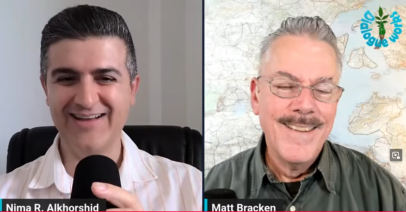
Matt Bracken: Hezbollah Re-Arming With Massive Help From Iran
or go to
Aletho News Archives – Video-Images
From the Archives
Examples of hate speech by Israel against Palestine
1. “There is a huge gap between us (Jews) and our enemies, not just in ability but in morality, culture, sanctity of life, and conscience. They are our neighbors here, but it seems as if at a distance of a few hundred meters away, there are people who do not belong to our continent, to our world, but actually belong to a different galaxy.” Israeli president Moshe Katsav. The Jerusalem Post, May 10, 2001
2. “The Palestinians are like crocodiles, the more you give them meat, they want more”…. Ehud Barak, Prime Minister of Israel at the time – August 28, 2000. Reported in the Jerusalem Post, August 30, 2000
3. ” [The Palestinians are] beasts walking on two legs.” Menahim Begin, speech to the Knesset, quoted in Amnon Kapeliouk, “Begin and the Beasts”. New Statesman, 25 June 1982.
4. “The Palestinians” would be crushed like grasshoppers … heads smashed against the boulders and walls.” Isreali Prime Minister (at the time) in a speech to Jewish settlers New York Times April 1, 1988
5. “When we have settled the land, all the Arabs will be able to do about it will be to scurry around like drugged cockroaches in a bottle.” Raphael Eitan, Chief of Staff of the Israeli Defence Forces, New York Times, 14 April 1983.
6. “How can we return the occupied territories? There is nobody to return them to.” Golda Maier, March 8, 1969.
… Continue
Blog Roll
-
Join 2,366 other subscribers
Visits Since December 2009
- 7,787,827 hits
Looking for something?
Archives
Calendar
Categories
Aletho News Civil Liberties Corruption Deception Economics Environmentalism Ethnic Cleansing, Racism, Zionism Fake News False Flag Terrorism Full Spectrum Dominance Illegal Occupation Mainstream Media, Warmongering Malthusian Ideology, Phony Scarcity Militarism Progressive Hypocrite Russophobia Science and Pseudo-Science Solidarity and Activism Subjugation - Torture Supremacism, Social Darwinism Timeless or most popular Video War Crimes Wars for IsraelTags
Afghanistan Africa AIPAC al-Qaeda Australia BBC Benjamin Netanyahu Brazil Canada CDC Central Intelligence Agency China CIA CNN Covid-19 COVID-19 Vaccine Donald Trump Egypt European Union Facebook FBI FDA France Gaza Germany Google Hamas Hebron Hezbollah Hillary Clinton Human rights Hungary India Iran Iraq ISIS Israel Israeli settlement Japan Jerusalem Joe Biden Korea Latin America Lebanon Libya Middle East National Security Agency NATO New York Times North Korea NSA Obama Pakistan Palestine Poland Qatar Russia Sanctions against Iran Saudi Arabia Syria The Guardian Turkiye Twitter UAE UK Ukraine United Nations United States USA Venezuela Washington Post West Bank WHO Yemen Zionism
 Aletho News
- Wired for War Crimes: Israeli spy-tech firm targeted Starlink users – researchers
- There is cautious optimism about ending the Ukraine war
- Here are the Bills Pushing Forward Authoritarian Control in Canada
- The accession of Ukraine could signal the collapse of the EU
- Italy puts Ukraine weapons package on hold – media
- US kills 5 in Pacific as unproven drug smuggling claims persist
- Iran Respects International Law, US & Israel are Rogue States
- Russia Helping Build a New Middle East /Trita Parsi
- Barghouti: ‘Netanyahu has fallen,’ era of Smotrich, Ben-Gvir over
- China slams US policy on Iran as Russia rejects legality of nuclear meeting at UN
- If Americans Knew
- An error has occurred; the feed is probably down. Try again later.
- No Tricks Zone
- Germany’s Green Energy Transition Becoming Increasingly Expensive…Another 6 Trillion Euros!
- Sudden Stratospheric Warming, Powerful El Niño Combination May Lead To Extreme Europe Cold, Energy Crisis!
- Two New Studies Find Thwaites Glacier Melt Cannot Be Driven By Human Activity Or A Warming Ocean
- E-Cars Reduce CO2 Emissions By Only 41% Compared To Internal Combustion Engine Vehicles
- Predictions Made By Renowned Climate Professor Over Past Decades Have Been Proven To Be Poor
- New Study Suggests Large Regions Of The Pacific Ocean Have Been Cooling For The Last 80 Years
- Germany’s Green Energy Debacle: High Energy Costs Force Kahla Porzellan to Close After 182 Years!
- New Study: 50 Years Of The Most Aggressive ‘Net Zero’ Policies Can Only Affect The Global Climate By 0.03°C
- US September “Heat” Was No Record…Many Records Set Decades Ago
- Latest European Green Energy Debacle; Portugal’s Largest Flagship Solar Park Insolvent!
Contact:
atheonews (at) gmail.com
Disclaimer
This site is provided as a research and reference tool. Although we make every reasonable effort to ensure that the information and data provided at this site are useful, accurate, and current, we cannot guarantee that the information and data provided here will be error-free. By using this site, you assume all responsibility for and risk arising from your use of and reliance upon the contents of this site.
This site and the information available through it do not, and are not intended to constitute legal advice. Should you require legal advice, you should consult your own attorney.
Nothing within this site or linked to by this site constitutes investment advice or medical advice.
Materials accessible from or added to this site by third parties, such as comments posted, are strictly the responsibility of the third party who added such materials or made them accessible and we neither endorse nor undertake to control, monitor, edit or assume responsibility for any such third-party material.
The posting of stories, commentaries, reports, documents and links (embedded or otherwise) on this site does not in any way, shape or form, implied or otherwise, necessarily express or suggest endorsement or support of any of such posted material or parts therein.
The word “alleged” is deemed to occur before the word “fraud.” Since the rule of law still applies. To peasants, at least.
Fair Use
This site contains copyrighted material the use of which has not always been specifically authorized by the copyright owner. We are making such material available in our efforts to advance understanding of environmental, political, human rights, economic, democracy, scientific, and social justice issues, etc. We believe this constitutes a ‘fair use’ of any such copyrighted material as provided for in section 107 of the US Copyright Law. In accordance with Title 17 U.S.C. Section 107, the material on this site is distributed without profit to those who have expressed a prior interest in receiving the included information for research and educational purposes. For more info go to: http://www.law.cornell.edu/uscode/17/107.shtml. If you wish to use copyrighted material from this site for purposes of your own that go beyond ‘fair use’, you must obtain permission from the copyright owner.
DMCA Contact
This is information for anyone that wishes to challenge our “fair use” of copyrighted material.
If you are a legal copyright holder or a designated agent for such and you believe that content residing on or accessible through our website infringes a copyright and falls outside the boundaries of “Fair Use”, please send a notice of infringement by contacting atheonews@gmail.com.
We will respond and take necessary action immediately.
If notice is given of an alleged copyright violation we will act expeditiously to remove or disable access to the material(s) in question.
All 3rd party material posted on this website is copyright the respective owners / authors. Aletho News makes no claim of copyright on such material.

