The ambassador of any nation is not just the highest-ranking diplomatic representative of their country in a foreign state or an international organization, not simply a spokesperson of their country’s government and their interests, who is obliged to act in line with their diplomatic status. As a country representative, an ambassador is closely associated with their homeland in the eyes of foreigners. An ambassador’s conduct forms the impression of their country and its citizens, determining their level of prestige.
In recent years, international media outlets have shared countless stories about American ambassadors, who are, unfortunately, not usually praised for their humanitarian deeds. They are rather known for their true aggressive nature, which no diplomatic status can conceal.
Today, a number of circumstances contribute to the growing discontent in many parts of the world not only with Washington’s foreign policy, but with American ambassadors as well. The main reason for this is their blatant disregard for the citizens of the countries where they serve, coupled with their arrogance and unwillingness to take into account international norms of conduct, including those of diplomatic etiquette.
Thus, in South Korea, even among supporters of President Moon Jae-in, the US Ambassador Harry Harris has recently become the object of fierce hatred. As Japanese media say, ever since December 12, 2019 daily rallies against the American ambassador have been held near the US Embassy in Korea, the participants assimilating him to a ‘governor of a Japanese colony.’ Members of left-leaning political parties and civil society organizations who take part in the rallies even go as far as to stage overly extreme ‘contests’ to decapitate a stuffed puppet of the ambassador or burn his image and chant about torturing ‘him with chopsticks.’ According to reporters, Ambassador Harris is obediently pursuing his country’s political course with the straightforwardness typical for a former member of the armed forces. This is most likely the cause of the dislike South Korean political community harbors for him, the Japanese newspaper JB Press writes.
For months now, the German government and population have been openly expressing their disapproval of the actions of US ambassador to Germany, Richard Grenell. According to the Spiegel magazine, he has been politically isolated by Germany’s ruling elite since early 2019.
In January 2019, the German news outlet Bild published excerpts from Ambassador Richard Grenell’s notorious letters, in which he openly threatened a number of German companies with sanctions for their participation in the construction of the Nord Stream 2 gas pipeline, demanding that Germany withdraw from the project. This interference into the country’s affairs was considered by the German Foreign Office to be unacceptable. Wolfgang Kubicki, Vice-President of the Bundestag, called on the foreign minister to expel Grenell because of his intervention into ‘the political affairs of sovereign Germany.’
On June 6, Grennell was invited to the German Foreign Office for a lecture behind closed doors on what exactly appropriate conduct entails. His expulsion was once more openly demanded by the Bundestag, in particular, by the leader of the left-wing faction Sahra Wagenknecht. She was outraged by Ambassador Grenell’s public statement of support for conservative forces in Europe, which was perceived as meddling in Germany’s political life.
In August, yet again, Ambassador Grenell found himself at the center of another scandal after relaying and sharing his personal interpretation of yet another ‘anti-German’ statement of the American President.
After Washington had imposed broad sanctions against the gas pipeline Nord Stream 2, Ambassador Grenell had to face another wave of outrage on December, 22 as he declared to German media that these sanctions were allegedly adopted in the interests of Europe and in answer to the Europeans’ requests. Meanwhile, the ambassador completely ignored the German government’s official statement that the new US sanctions against Nord Stream 2 and the Turkish Stream pipelines are an unacceptable intrusion into European affairs.
Even Georgia, which is trying to demonstrate its commitment to the United States, criticized the ambassador of the ‘undemocratic state’ of America. Namely, Georgia’s former State Minister for Conflict Resolution and renowned film director Georgi Khaindrava called on Western politicians to treat his homeland with the utmost respect. He also advised them to deal with problems in their own nations first before railing at the missteps of Georgian democracy. He specifically emphasized that, “The international community must respect any nation, no matter its size. Some embassies here do not defend the interests of the countries they represent in Georgia, for example, the acting US envoy to Georgia, Elizabeth Rood.”
The US was forced to recall their ambassador to Zambia, Daniel Foote, on December, 23 after the southern African nation’s refusal to continue working with him due to his fairly active defense of members of the LGBT community. Zambia’s Foreign Minister Joseph Malanji said these actions amounted to an attack on the country’s constitution and were considered as ‘interference into Zambia’s domestic affairs.’ Earlier, Zambian President Edgar Lungu had declared the country’s citizens would not make concessions on homosexuality even in exchange for humanitarian aid: “If this is the way you wish to help, I’m afraid the West had better leave us in poverty. We’ll struggle and survive just like we used to.”
Criticism of US ambassadors is rife even within the US itself. For one, in an interview with the New York magazine on December 8, Trump’s personal attorney Rudy Giuliani criticized the flawed system of political lobbying used for appointing US envoys. He said that, for example, investor George Soros used the services of the FBI to appoint four US ambassadors to Ukraine.
Even these examples show that the decidedly undiplomatic behavior of several US ambassadors forms quite a negative perception of the ‘faces of Washington’. Consequently, considering the much-criticized foreign policy of the United States, this fuels the aversion to the USA itself.
Everyone has heard by now that Soleimani was responsible for 600 American deaths . . . but where does this oddly specific number come from? Today on “Questions For Corbett,” James finds the answer at the bottom of a barrel of neocon lies.
First, since we now have more reliable data about what happened, let me recap a few key points:
It is has now become pretty clear that Iran took several steps to make sure that the US would know when and where the strikes would happen. Specifically, Iran warned the Iraqi government and the Swiss diplomats who represent US interests in Iran.
Yet, at the same time, Iran issued the strongest threat it could possibly issue: it told the US that *any* counter-strike aimed at Iran would result in a strong Iranian attack on Israel.
The US quite clearly took the decision not to retaliate and to “forget” Trump’s promise to strike at 54 Iranian targets. I want to stress here that this was the correct decision under these circumstances.
It also appears that the Iranians were able to somehow retrofit some kind of terminal guidance capability on missiles which originally lacked it.
The level or precision of the strikes was absolutely superb and quite amazing.
Trump declared that Iran decided to stand down and that the US had prevailed. This notion is, of course, prima facie ridiculous, but not for folks getting their news from the corporate media.
The Iranians declared that this specific strike was now over, but immediately added that this was only a first measure and that others would follow.
Next, I want to share a few interesting photos with you.
First, here is a photo of the base following the strikes sent to me by a friend:
Here is what my friend added:
The key idea is really simple and understandable for anybody who has thought about statistics (even in an everyday context). In number terms, it’s almost like rolling dice and getting a 6 three times in a row, because the probability of rolling a 6 with an ideal dice is 16.67% (and the probability to roll 3 sixes in a row is less than 1%) as opposed to roughly 18% probability for a hit on a building within the map area in the CNN screenshot (if we assume the missiles to be unguided within this area). To be even more precise, the probability for hitting 3 *different* buildings 3 times in a row is actually even slightly lower than 0.62%, as one would have to substract the area being hit from the total area covered by buildings (I ignored that for simplicity). A less than 1% probability for a one-off event like this means that it is really highly UNlikely – to use the British Skripal case expression in its inverted state – to have happened randomly, as we assumed in our hypothesis. Which means that the missiles were, indeed, guided, and guided very accurately, striking targets of less than ~50m size with a high degree of reliability (in this particular area 3/3, in others probably 1/1 as in the runway case, etc). Perhaps, some of them, not covered by the satellite images, missed the target, but it does not substantially change the high degree of accuracy that potential Iranian opponents within reach of these missiles will have to assume from now on. The people most interested in this were probably the Israelis, as they are probably the main potential target for this type of missile in the case of a future escalation.
Please note that neither my friend nor I are professional imagery analysts and that this is just something my friend shared with me in a private email and which I now want to share with you.
If any professional imagery analyst could either confirm/refute my friend’s conclusions, I would be most grateful.
Next, I want to share with you the following image which shows Iranian IRGC General Ali Amir Hajizadeh reviewing results of recent Iranian missile strikes on Ain al-Assad airbase in Iraq during a press conference:
Clearly, the Iranians are very proud of their capability to conduct true precision strikes with an accuracy every bit as good as any Russian and/or US missile.
Finally, check out this image of the Iranian general making a press conference in front of a very interesting row of flags:
These flags include the following: The Iranian flag, the IRGC flag, the flag of IRGC’s Aerospace Force, the flag of the Lebanese Hezbollah, the Yemeni Houthi Ansarullah flag, the flag of the Iraqi Popular Mobilization Units (PMU), the Palestinian Hamas, the Afghan Liwa Fatemiyoun and the Pakistani Liwa Zainebiyoun
I find this very interesting: when Trump (or any other US politician) makes a solemn pronouncement, he typically has a number of aides, advisors, generals, Congressmen or Senators, etc. This is supposed the show the determination, resolve and unity of Uncle Shmuel, especially when Uncle Shmuel does something illegal or immoral.
The Iranian show of unity does not show more Iranians, they show the unity of all the forces in the Middle-East who have now officially united and whose goal is clear and very official: kick Uncle Shmuel out of the Middle-East.
You tell me which you find more impressive!
Next, the issue of casualties. Frankly, and while this is only my best guess, I do not believe the Iranian official casualty figures. Why? Well, first the Iranians did not try to maximize casualties (more about that option below), and they informed the US by several back-channels. But even if they had not, while the performance of the Patriot missile is pretty awful, the US does have a lot of top of the line technical intelligence means which would allow them to first detect the launch of the missiles from Iran and then to calculate their ballistic trajectory. As far as I know, now I might be wrong here, Iranian missiles do not have terminal maneuvering capability (which is different from terminal guidance). I can’t image why US commanders could not announce a incoming missile alert and then get all the local personnel into shelters. Again, I might be missing something, so if any reader can correct me, I would be grateful.
So what happened, really?
Here are a few of my current working hypotheses:
1) BOTH the USA and Iran don’t want a full-scale war. But for VERY different reasons:
The US probably understands that it cannot win a war against Iran.
The Iranians definitely understand that while the US cannot “win”, it most definitely can kill Iranians by the thousands and inflict immense damage upon the Iranian society.
2) What just took place was the single most dangerous moment since 14 April 2018 when Russia and the US came very, very close to a full-scale war. In the current situation, the US and Iran also came very, very close to a full scale war. The only reason I rank this latest crisis lower than the April 14th is that in one case we risked a planetary nuclear war whereas in this case we “only” risked a regional war which, by the way, could have seen nukes used by the US and Israel.
3) There STILL is a risk of full-scale war between the US and Iran, however, and barring a major unforeseen event, I will lower it now down from 80% to a much more tolerable 50%. Why 50%? Because Israel and the Israel Lobby will continue to push for a US attack on Iran and because while I trust the Iranians to keep their anti-US operations right below the threshold of “plausible deniability”, I cannot be sure that all Iranian allies will show similar restraint. Finally, the chances of an Israeli false flag as still sky high.
4) I expect anti-US operations to continue and even expand throughout the Middle-East. I don’t expect that these operations will be executed from Iran and I don’t expect Iranian forces to be involved, at least not officially. The Iranians know that the US has lost every single counter-insurgency war it was involved in and they know that their best chance is now to engage in all forms of asymmetrical operations.
Finally, I want to spell out what we could call the new Iranian threat.
We have to assume that Iran now has terminal guidance capability on many (most?) of its ballistic and cruise missiles and that they can destroy one specific building among many more buildings. Now, remember the Iranian reply that it had 35 US bases within missile range? Now imagine this first one:
Iran fires 10-12 missile on each and every one of the 35 US bases listed and targets barracks, fuel and ammo dumps, key command posts, etc. How many casualties do you think that such a strike would result in?
Next, let’s try the same thing with Israel:
Iran fires 2-3 missiles but carefully aims them as Israeli air force bases, personnel barracks, industrial sites (including chemical and nuclear sites, not even necessarily military ones! Dimona anybody?), the Knesset or even Bibi’s personal residence. Can you imagine the panic in Israel?
How about the KSA?
Iran fires a large amount of missiles aimed at *truly* crippling the Saudi oil installations, National Guard barracks, airfields, etc. We already know what the Houthis could do with their very limited resources. Just imagine what Iran could do to the KSA (or the UAE and Kuwait) if it wanted to!
I think that the bottom line is clear: Iran can inflict unacceptable damage upon any party attacking it. Furthermore, and unlike having “a few” nukes, Iran has hundreds (or even thousands) of cruise missile and ballistic missiles, and you can bet that they are well distributed and well protected, as shown by this short video released by the IRGC and posted by the FARS news agency:
and that means that a disarming first strike against Iran is not possible.
There are two basic ways to respond to an attack: denial and punishment. In the first case, you have the means to deny your enemy his attack, this is what happened when the Syrians intercepted almost all the cruise missiles fired by the US. Punishment is when you cannot prevent an enemy attack, but you do have the means to inflict unacceptable damage in retaliation.
The key notion here is “unacceptable damage”.
What do you think constitutes “unacceptable damage” to the (terminally hedonistic) Israelis?
What do you think would be “unacceptable damage” to the KSA, or the world markets (especially oil)?
What about “unacceptable damage” in terms of losses for CENTCOM?
And, finally, what do you think “unacceptable damage” means to the Iranians?
There is such a huge asymmetry in how the parties to this conflict see “unacceptable damage” that it largely compensates for the asymmetry in force. Yes, sure, the US+Israel are more powerful than Iran (well, not Israel really, but Israel hiding behind the back of the US forces) but Iran is far more capable of absorbing devastating attacks than either the US or Israel.
Finally, in my last post I offered a definition of what constitutes success or failure for Iran: “anything which makes it easier for the US to remain in the Middle-East is a victory for the Empire and anything which makes it harder for the US to remain in the Middle-East is a victory for the rest of the planet.”
At this point my personal opinion is that the way the Iranians conducted their first anti-Empire operation is nothing short of brilliant: they achieved a truly phenomenal result with very little means and, most importantly, without forcing the Empire to counter-attack.
Has the US-Iran war really begun? Yes, I think so. In fact, it began in 1979, but now it has reached a qualitatively new level. The outcome of that war is absolutely evident to me. The cost, however, is not.
This war has relatively cooled down, but that is an illusion and we should most definitely not take our eyes off the situation in the Middle-East: expect the initiation of asymmetrical anti-US operations very soon.
In the interest of understanding recent events, we have quickly put together a partial timeline of US-Iran relations, beginning in 1953 through the present. This is a quick, somewhat cursory timeline, but we feel it’s important that a general outline become available as soon as possible.
Many thousands of American families are heavily invested in the situation – according to U.S. Central Command, between 60,000 and 70,000 U.S. troops are currently in the Middle East and Afghanistan.
* 1800s to 1951: Relations between the US and Iran began in the mid-to-late nineteenth century. Initially, while Iran was very wary of British and Russian colonial interests, it viewed the United States as a more trustworthy great power.
During World War II Iran was invaded by Britain and the Soviet Union, both US allies, but relations with the US continued to be positive. This changed in 1953:
* 1953: UK and US orchestrated a coup to overthrow Iran’s democratically elected prime minister, Mohammad Mossadegh.
Mossadegh had denied the British further involvement in Iran’s oil industry. Britain then appealed to the US for help, which eventually led the CIA to orchestrate the overthrow of Mossadegh and restore power to Mohammad Reza Pahlavi, the last Shah of Iran.
The Shah became known for “his autocratic rule, corruption in his government, the unequal distribution of oil wealth, forced Westernization, and the activities of SAVAK (the secret police) in suppressing dissent and opposition to his rule.”
SAVAK had been formed in 1957 under the guidance of US and Israeli intelligence officers.
Today’s Iranian Supreme Leader was one of those tortured in a Savak prison.
* In 1979 the Shah was overthrown by a popular revolution. He then traveled to the US, which had supported him.
The rebels eventually converted the form of government from a monarchy to an elected government based on a strict interpretation of Islam: The Islamic Republic of Iran. This was a backlash against the authoritarian Shah’s forced westernization and denigration of the traditional religion (more on the revolution & aftermath here and here and here).
* The new Iranian government begins its support of Palestinian rights against Israel’s ethnic cleansing of Muslim and Christian inhabitants of what had originally been called Palestine.
* Iran also supports Hezbollah, armed resistance groups in Lebanon against Israel’s invasions of Lebanon.
Ha’aretz: Iran’s mentoring of Hezbollah’s insurgency of the 1980s and 1990s forced Israel’s unilateral withdrawal from Lebanon.
* Israel and the pro-Israel lobby in the US – which plays a major role in US Mideast policies – has opposed Iran ever since the new Iranian government was created.
The Oded Yinon plan (“Greater Israel”: The Zionist Plan for the Middle East) provides some information on the Israeli role through the years in destabilizing many countries in the Middle East.
* Since the Shah’s regime had tortured many dissidents, his victims wanted him to return to Iran to face justice, but the US would not extradite him. Iranian students then seized the U.S. embassy in Tehran and took hostage more than 50 Americans, demanding the extradition of the shah in return for the hostages’ release. Extradition was refused and the hostages were held for 444 days.
* Washington then froze about $12 billion in Iranian assets, including bank deposits, gold, and other properties. Most of those were released in 1981 as part of the Reagan release deal.
* Some assets—Iranian officials say $10 billion, but US officials say much less—remain frozen, pending resolution of legal claims arising from the Revolution. The money that the Obama administration returned to Iran as part of the JCPOA agreement was Iran’s own money.
* The next year, in September 1980, Iraq launched a war against Iran that lasted until 1988. The death toll was an estimated 1 million for Iran and 250,000-500,000 for Iraq.
U.S. officials later acknowledged that American arms, technology and intelligence helped Iraq kill Iranians and avert defeat and eventually grow, with much help from the Soviet Union later, into a major regional power.
* The administrations of Presidents Reagan and George H.W. Bush authorized the sale to Iraq of numerous “dual-use” items, including poisonous chemicals and deadly biological viruses, such as anthrax.
* In 1988 a US Navy ship shot down a commercial Iranian airliner, killing 290 men, women, and children. The Pentagon at first denied it was involved, and then said it was an accident.
* in 1992, Netanyahu told the Israeli Knesset that Iran was “three to five years” away from reaching nuclear weapons capability, and that this threat had to be “uprooted by an international front headed by the U.S.”
* In 1996 Israel’s Netanyahu addressed a joint session of Congress and claimed that Iran was getting “extremely close” to getting nuclear weapons.
Netanyahu makes this claim again and again in the coming years.
* After the World Trade Center attack on September 11, 2001, the US invaded Afghanistan and attacked the Taliban. Iran assisted the US in this fight against the Taliban and Al Qaeda, with Soleimani playing a major role.
Earlier, the U.S. had supported Islamic forces against the Soviet Union, which the Carter administration had drawn into invading Afghanistan.
* In 2002 Israel began a campaign claiming, falsely, that Iran was developing nuclear weapons.
This campaign has continued and escalated through the years, as documented here.
• In 2003 the US invaded Iraq based on what turned out to be a false claim that Iraq had “weapons of mass destruction.”
The invasion was promoted by Israel and its partisans. As a result, 5,000 Americans died and approximately 288,000 Iraqis, most of them civilians. The unprovoked invasion and occupation, including the Abu Ghraib atrocities, destabilized the region and fueled the rise of extremism that led to ISIS.
Iran has been in the forefront of fighting ISIS. General Soleimani led this. At times, the US and Iran cooperated in this fight.
* The US, under the influence of the Israel lobby, supports Israeli actions. Over the years, it labels resistance fighters “terrorists” and condemns Iran’s support of Palestinian rights.
The pro-Israel lobby in the US has long been working against Iran in order to improve Israel’s strategic position. In 2004 AIPAC officials stole US Defense Dept secrets, intending to channel them to the Washington Post to convince Americans that it was time for troops fighting in Iraq to pivot to Iran. (It is not rare for the Post to be used by Israel partisans.)
* In 2007, Iranian President Mahmud Ahmadinejad quoted an old saying of Ayatollah Khomeini calling for ‘this occupation regime over Jerusalem” – meaning Israel – to “vanish from the page of time.” (As Juan Cole explains, many mistranslated his words as “wiped off the face of the map.”)
* Israel and its partisans continue to claim (as they have since 1991) that Iran is developing nuclear weapons. US intelligence find no evidence for the claim.
One was the 32 year old deputy head of Iran’s uranium enrichment facility. He was in his car on his way to work when he was blown up by a magnetic bomb attached to his car door. He was married with a young son. He wasn’t armed, or anywhere near a battlefield.
Another was a 35-year-old electronics expert shot dead outside his daughter’s nursery.It appears that another had been murdered in 2007. A US Senator, Rick Santorum, called the murders “a wonderful thing.”
* February 2015 Supreme Leader Khamenei condemns ISIS beheading Christians, tweeting: “We don’t forget how much Iranian #Christians have taken pains to render services & some of them have martyred in Saddam’s war against #Iran.” He advised Muslims to help Christians in need while extolling what he said was the Islamic Republic of Iran’s equal treatment of people of different faiths.
* In January 2015 Khamenei publishes “Letter to Western Youth” on his official website. It is major news in Iran. In November he publishes a second one. They include the statement:
“… The pain of any human being anywhere in the world causes sorrow for a fellow human being. The sight of a child losing his life in the presence of his loved ones, a mother whose joy for her family turns into mourning…… Anyone who has benefited from affection and humanity is affected and disturbed by witnessing these scenes- whether it occurs in France or in Palestine or Iraq or Lebanon or Syria…. The issue, however, is that if today’s pain is not used to build a better and safer future, then it will just turn into bitter and fruitless memories…
U.S. media ignore the letters.
* In July 2015, the “Joint Comprehensive Plan of Action (JCPOA),” a detailed, 159-page agreement is reached by Iran and the P5+1 (China France, Germany, Russia, the United Kingdom, and the United States) aimed at halting Iran’s non-existent nuclear weapons program.
Nevertheless, Iran signs the agreement, giving up many rights in an attempt to diminish US-Israeli sanctions.
* Both Democrats and Republicans repeat the Israel-promoted false claim that Iran is the top sponsor of “terror.”
Recent events
Much of the following is excerpted from an Al Jazeera timeline, with a number of additions from diverse other sources (sources are provided in embedded links):
* Trump makes good on an election campaign promise, announcing on May 8, 2018 that the US is withdrawing from the Iran nuclear deal, formally known as the Joint Comprehensive Plan Of Action (JCPOA).
Trump’s action is influenced by pro-Israel multi-billionaire campaign donors Sheldon Adelson and Bernard Marcus.
Adelson once said he regretted that he had served in the US army instead of in the Israeli military.
* In response, Iran calls this “unacceptable” and says it will bypass Washington and negotiate with the deal’s other remaining signatories: France, Germany, the United Kingdom, Russia and China.
* May 21 Trump administration makes 12 demands, which Iran rejects.
* US on August 7 reimposes the first round of sanctions on Iran, originally lifted as part of the nuclear deal. They prohibit trade with a number of business sectors – from aviation and carpets to pistachios and gold.
* On November 5, the US announces a new round of sanctions, this time specifically targeting the key oil and banking sectors.
2019
* In March the US Treasury Department, under Israel partisan Steven Mnuchin, blacklisted 25 Iranian businesses and individuals.
[The individual under Mnuchin in charge of US actions regarding Iran is an Israeli citizen.]
Pro-Israel organizations had lobbied for the creation of this branch of the Treasury.
* On April 2, Special Representative for Iran Brian Hook said: “I can announce today, based on declassified US military reports, that Iran is responsible for the deaths of 608 American service members. This accounts for 17 percent of all deaths of US personnel in Iraq from 2003 to 2011.”
Navy Commander Sean Robertson followed up with an email to media outlets pushing that same line. When author Gareth Porter asked Robertson for further clarification of the origins of that figure, however, Robertson “acknowledged that the Pentagon doesn’t have any study, documentation, or data to provide journalists that would support such a figure.”
* On April 8, Trump announces he is designating a powerful arm of the Iranian military, the elite Islamic Revolutionary Guard Corps (IRGC) a foreign terrorist organization.
It is the first time Washington has formally labelled another country’s military a “terrorist group.” The designation imposes wide-ranging economic and travel sanctions on the IRGC that will go into effect on April 15.
* Responding to the move, Iran immediately declares the US a “state sponsor of terrorism” and calls Washington’s forces in the region “terrorist groups.”
* On May 5, Trump’s National Security Adviser John Bolton announces the US is sending an aircraft carrier strike group and Air Force bombers to the Middle East “in response to a number of troubling and escalatory indications and warnings”.
* On May 8, Iransays it is preparing to increase enriched uranium and heavy water production as part of its decision to stop certain commitments made under the nuclear deal. (Iran continues to emphasize that it is NOT developing nuclear weapons, which are banned by a religious edict from its Supreme Leader.)
* Trump announces new measures against Iran’s steel and mining sectors.
* On May 12, the United Arab Emirates says four commercial ships off the coast of Fujairah, one of the world’s largest bunkering hubs, “were subjected to sabotage operations”.
The UAE did not name a suspect and there were no claims of responsibility. Unnamed US officials identified Iran as a prime suspect. But the officials offered no proof to back the claim.
Iranian officials expressed concern, saying the alleged attacks could have been carried out by third parties to stir up conflict between Washington and Tehran during the heightened tensions.
The US’s “maximum pressure” campaign had triggered an economic crisis in Iran.
* Yemen’s Houthi rebels, who are locked in a long-running war with a Saudi-UAE-led military coalition, launch drone attacks on Saudi Arabia on May 14, striking a major oil pipeline and taking it out of service.
* Two days later, Riyadh, a key US ally, blames Iran for the attack.
* The US and Saudi Arabia accuse Iran of arming the Houthis.
* Tehran denies the claim.
* On May 19, a rocket lands near the US embassy in Baghdad. No one is harmed.
It is not clear who is behind the attack, but Trump tweets: “If Iran wants to fight, that will be the official end of Iran. Never threaten the United States again!”
Iranian Foreign Minister Mohammed Javad Zarif responds by tweeting that Trump had been “goaded” into “genocidal taunts”.
* After meeting Japanese Prime Minister Shinzo Abe, who offers to broker dialogue between Washington and Tehran, Trump says on May 27 the US is “not looking for regime change” in Iran.
* On June 12, Abe arrives in Tehran in a bid to mediate between the US and Iran.
* Iran’s Supreme Leader Ayatollah Ali Khamenei refuses to meet with him, saying: “I don’t consider Trump as a person worthy of exchanging messages with. I have no response for him and will not answer him.”
* On June 13, with Abe still in Iran, a Japanese and a Norwegian tanker come under “attack” in the Gulf of Oman, according to the Norwegian maritime authority and the Japanese shipowner.
Iran speaks initially of “accidents” and says it rescued 44 crew. Zarif calls tanker “attacks” during Abe’s visit “suspicious”.
* On June 17, the Pentagon authorizes the deployment of 1,000 additional troops to the Middle East.
* On the same date, Iran says it is 10 days away from surpassing the limits set by the nuclear deal on its stockpile of low-enriched uranium.
* Iran says it can reverse the move if the deal’s European signatories step in and make an effort to circumvent US sanctions.
* On June 20, Iranian forces shoot down a US military drone.
Both countries confirm the incident but offer diverging accounts about the location of the aircraft.
The US says it was flying above international waters, while Iran says the drone was flying in Iranian airspace.
* On June 21, Trump says he called off a military strike on Iran the night before, which was intended as retaliation against Tehran for the downing of the unmanned US drone.
Trump says he did so 10 minutes before the planned attack because of potential casualties, saying it was “not proportionate to shooting down an unmanned drone”.
Trump says a US strike could have killed 150 people, and signals he is open to talks with Tehran.
* On June 22, Iran says it is ready to respond firmly to any US threat against it.
“We will not allow any violation against Iran’s borders. Iran will firmly confront any aggression or threat by America,” Abbas Mousavi, foreign ministry spokesman, says.
* On the same day, Iran orders the execution of a “defence ministry contractor” convicted of spying for the US Central Intelligence Agency,
* The US vows to impose fresh sanctions, adding that military action was still “on the table.”
* On June 25, Trump signs an order targeting Khamenei, Iran’s supreme leader, and associates with additional financial sanctions
“Sanctions imposed through the executive order … will deny the supreme leader and the supreme leader’s office, and those closely affiliated with him and the office, access to key financial resources and support,” the US president says.
* Responding to the announcement, Zarif, the Iranian foreign minister, tweets that hawkish politicians close to Trump were thirsty for war rather than diplomacy.
Rouhani dismisses the sanctions as “outrageous and idiotic”, adding that Tehran’s “strategic patience” should not be mistaken for fear.
* On June 29, the US Air Forces Central Command says in a statement that F-22 Raptor stealth fighters are being deployed in the region “to defend American forces and interests”.
* On July 1, Iran exceeds the limit on the amount of enriched uranium in its stockpile set out in the nuclear deal.
Zarif says the accumulation of more enriched uranium than permitted under the deal is not a violation of the pact.
* On July 4, British Royal Marines, police and customs agents in Gibraltar seize a supertanker accused of carrying Iranian crude oil to Syria in breach of European Union sanctions.
The Grace 1 vessel was boarded on Thursday when it slowed down in a designated area used by shipping agencies to ferry goods to ships in the UK territory along Spain’s southern coast.
* On July 8, Iran passes the uranium enrichment cap set in the nuclear deal, the second time in a week that it makes good on a promise to reduce compliance with the accord.
* On July 12, police in Gilbraltar arrest the captain and chief officer of an Iranian tanker that was seized by British forces the previous week.
* On July 19, the IRGC says its forces have seized a British oil tanker in the Strait of Hormuz.
The Stena Impero tanker “was confiscated by the Revolutionary Guards at the request of Hormozgan Ports and Maritime Organisation when passing through the Strait of Hormuz, for failing to respect international maritime rules”, the force says in its official website.
* On July 25, the UK announces the country’s warships will escort all British-flagged vessels through the Strait of Hormuz, a change in policy that takes place amid rising tensions in the Gulf.
* On August 1, the US imposes sanctions on Zarif for acting on behalf of Ali Khamenei.
“Javad Zarif implements the reckless agenda of Iran’s Supreme Leader, and is the regime’s primary spokesperson around the world,” Treasury Secretary Steven Mnuchin says in a statement.
* Zarif brushes off the move on Twitter, saying it indicates Washington saw him as a “threat”.
“It has no effect on me or my family, as I have no property or interest outside of Iran,” he says.
* On August 23, Rouhani inducts a locally built air-defence system into the country’s missile defense network at an unveiling ceremony in Tehran.
Iran began production after the purchase of Russia’s S-300 system was suspended in 2010 due to international sanctions that have barred it from importing many weapons.
Speaking at the ceremony, Rouhani says the mobile surface-to-air system was “better than S-300 and close to [more advanced] S-400”.
* On August 26, Iran’s top diplomat holds talks with France’s President Emmanuel Macron at the sidelines of a G7 summit following a surprise invite to the gathering in Biarritz.
“Iran’s active diplomacy in pursuit of constructive engagement continues,” Zarif says. “Road ahead is difficult. But worth trying.”
On the same day, Iran says it has sold 2.1m barrels of crude oil on board the tanker that was seized in Gibraltar the previous month, adding that the vessel’s new owner will decide on its next destination.
* On August 30, the UN says Iran is still exceeding limitations set by its nuclear deal with world powers, increasing its stock of enriched uranium and refining it to a greater purity than allowed in the agreement.
The quarterly report from the UN’s International Atomic Energy Agency confirms Iran is progressively backing out of the pact in retaliation for the US’s withdrawal from the accord and the subsequent renewal of sanctions that have hit Iranian oil sales.
* On September 3, the US imposes sanctions on Iran’s civilian space agency and two research organizations, saying they were being used to advance Tehran’s ballistic missile program.
The measures imposed by the US Department of the Treasury target the Iran Space Agency, Iran Space Research Center and the Astronautics Research Institute.
* On September 4, the US turns up the economic pressure on Iran, blacklisting an oil shipping network that Washington alleges is directed by the IRGC.
The blacklisted group of firms, ships and individuals stands accused by the US Treasury of breaching sanctions by supplying Syria with oil worth hundreds of millions of dollars.
* The Trump administration, meanwhile, says it will not accommodate a proposal by France to throw a financial lifeline to Tehran.
* The US offers several million dollars to the Indian captain of an Iranian oil tanker suspected of heading to Syria, the State Department confirms.
The Financial Timesreportson September 5 that Brian Hook, the State Department point man on Iran, [who spoke at the 2019 AIPAC conference and the American Jewish Committee conference] has sent emails to captain Akhilesh Kumar in which he offered “good news” of millions in US cash to live comfortably if he steered the Adrian Darya 1, formerly known as Grace 1, to a country where it could be seized. (Captain Kumar rejected the offer.)
* On September 7, Iran starts injecting gas into advanced centrifuges to increase its stockpile of enriched uranium and warns time is running out for the nuclear deal’s other signatories to save the landmark pact.
Spokesman Behrouz Kamalvandi says Iran’s Atomic Energy Organisation has started up advanced centrifuges at the enrichment facility in Natanz, the third step by Tehran in scaling back its commitments under the crumbling pact following Washington’s withdrawal.
* Trump on September 10 announces via Twitter that he has fired Bolton, his national security adviser, saying he has “strongly disagreed” with many of his hawkish positions.
Bolton’s sacking is reportedly linked to a fundamental disagreement over the possible easing of US sanctions on Iran.
* On September 14, Yemen’s Houthi rebels claim responsibility for drone attacks on two major Saudi Aramco oil facilities: Abqaiq – the world’s largest oil processing plant – and the Khurais oilfield, in eastern Saudi Arabia. The pre-dawn strikes knock out more than half of crude output from the world’s top exporter.
* Pompeo swiftly blames Iran, saying it “has now launched an unprecedented attack on the world’s energy supply”.
* Iran dismisses the “meaningless” US allegations, saying they were meant to justify actions against the country.
* Addressing the UN General Assembly in New York, Trump on September 24 lashes out at Iran and calls countries around the world to tighten the economic noose around it.
“One of the greatest security threats facing peace-loving nations today is the repressive regime in Iran,” he says.
* Human Rights Watch finds that US sanctions are threatening Iranians’ health.
* In October Trump called the Iraq war “the single worst mistake this country has ever made” and said: “These wars, they never end. And we have to bring our great soldiers back from the never-ending wars.”
* The US on November 4 imposed new sanctions on the inner circle of Supreme Leader Ayatollah Ali Khamenei, including one of his sons.
The US Treasury said that the nine people sanctioned included Khamenei’s chief of staff, the head of the judiciary and senior military figures. It said it also blacklisted Iran’s Armed Forces General Staff.
* Iran’s foreign ministry spokesman Abbas Mousavi described the sanctions as “a sign of the desperation and inability of this regime in benefiting from a diplomatic and logical approach” to important international issues, according to the official IRNA news agency.
* Iran on November 6, began the process of injecting uranium gas into centrifuges at the underground Fordow facility.
* A US-led naval coalition officially launched operations in Bahrain on November 7 to protect shipping in the troubled waters of the Gulf, following a string of attacks that Washington and its allies blamed on Iran.
* Iran, which denied any responsibility for the mystery attacks, put forward its own proposals for boosting Gulf security that pointedly excluded outside powers.
* Iran’s state news agency IRNA says air defence forces shot down an “unknown” drone on November 8.
* The United States Central Command released a statement later that Friday saying that the downed drone was not one of theirs, and that all military drones were accounted for.
* Unrest in Iran erupted on November 15 after the government abruptly raised fuel prices by as much as 300 percent.
Iranian forces reportedly kill several hundred protestors. Iran denies this.
* The US on November 22 imposed sanctions on Iran’s communications minister Mohammad Javad Azari-Jahromi for his role in “widespread censorship”.
* Addressing thousands of demonstrators in the capital, General Hossein Salami on November 25 accused the US, the United Kingdom, Iraq and Saudi Arabia of stoking unrest in the country.
* The official news agency IRNA reported on November 27 that Iranian security agents arrested at least eight people linked to the CIA during deadly unrest over petrol price increases.
* The Pentagon on December 4 denied a report that the US was weighing sending up to 14,000 more troops to the Middle East to confront a perceived threat from Iran.
* A US Navy warship seized advanced missile parts on December 4 believed to be linked to Iran from a boat it had stopped in the Arabian Sea.
* In a rare act of cooperation, Iran and the US on December 7 exchanged prisoners.
Xiyue Wang, a Chinese-born US citizen held in Iran since 2016, was exchanged for Massoud Soleimani, an Iranian scientist detained in the US.
* On December 11, the US Treasury imposed new sanctions on Iran’s biggest airline and its shipping industry, accusing them of transporting lethal aid to Yemen.
* On December 19, the US announced that it would restrict visas for Iranian officials for their alleged roles in suppressing peaceful protests and imposed sanctions on two Iranian judges.
The sanctions imposed by the Treasury froze any assets the two judges have in the US, and barred US citizens from dealing with them.
* On December 27, a rocket attack on an Iraqi military base in Kirkuk killed a US contractor and wounded several US service members and Iraqi personnel.
In its statement confirming the attack, the US-led coalition against ISIL (the ISIS group) did not specify who might be responsible, but US officials later blamed Kataib Hezbollah, an Iran-backed militia, for the attack.
* Two days later – on December 29 – the US military carried out “defensive strikes” on sites in Iraq and Syria belonging to Kataib Hezbollah that Washington said were in retaliation for the killing of the US contractor.
* Iraqi security and militia sources said at least 25 fighters were killed and 55 others wounded following the air attacks in Iraq on Sunday.
* Iran strongly condemned the attacks, with a government spokesman saying: “America has shown its firm support for terrorism and its neglect for the independence and sovereignty of countries and it must accept consequences for its illegal act.”
* On December 31, enraged members and supporters of pro-Iranian paramilitary groups in Iraq broke into the heavily fortified US embassy compound in Baghdad, smashing a main door and setting parts of its perimeter on fire.
* On January 2, US Secretary of Defense Mark Esper said there were “some indications” that Iran or groups it supports “may be planning additional attacks” on US interests in the Middle East.
* On January 3, in a predawn air raid at Iraq’s Baghdad airport, the US struck and killed Qassem Soleimani, the head of Iran’s elite Quds Force, and Abu Mahdi al-Muhandis, the deputy commander of Iran-backed militias known as the Popular Mobilisation Forces, or PMF.
According to Iraq’s prime minister, Soleimani had arrived to ease tensions in the region, after Trump had asked the prime minister to help mediate.
Trump notified Israel ahead of time, but did not notify the US Congress. … Israeli security officials had recommended the assassination of Suleimani last year.
Former top US intelligence officials point out that Israel is the country that most benefits from hostilities between Iran and the US. Others, also, feel Israel was connected to why Trump, who had a few months ago opposed Mideast wars, authorized the assassination.
Pompeo said Soleimani was planning an “imminent” attack on Americans, but did not supply the evidence for this.
* The Iraqi prime minister and parliament condemn the attack and demand the US forces leave Iraq.
Trump threatens major sanctions against Iraq if that occurs. (Previous US sanctions against Iraq had cost the lives of a million Iraqis, half of them children.)
* On January 5th, Hezbollah Secretary General Hassan Nasrallah declared that the assassination of Soleimani was a “turning point in the history of the region,” and that the US would receive a “just punishment” for the crime. He specified that the target would not be American citizens, but the military.
*Iran threatens retaliation.
Soleimani had been widely respected throughout Iran; a million mourners turn out. Analysts around the world are concerned that this escalation will result in major violence.
President Trump tweets that if Iran harms any Americans, he will attack Iranian cultural sites.
While Secretary of State Pompeo had claimed the action would make Americans “safer,” on January 4th the government issued a security alert.
This reportedly marks the first time that today’s Iranian government has directly struck U.S. military or other state targets and acknowledged doing so.
Iranian Foreign Minister Javad Zarif tweeted: “Iran took & concluded proportionate measures in self-defense under Article 51 of U.N. Charter targeting base from which cowardly armed attack against our citizens & senior officials were launched.”
Just like that, it was over. General Mark Milley, chairman of the Joint Chiefs of Staff called it ‘a kerfuffle’. A letter was sent to their Iraqi peers that the U.S was repositioning troops out of Iraq in accordance with legislation from Iraq ending the U.S military presence in the war-torn country, and suddenly then it was retracted by higher-ups. Running interference, Mark Esper backed Milley and said it was ‘an honest mistake’. It all went down within a day of the irrational assassination of Iran’s Soleimani.
The immediate termination of Chewning and Sweeney, at the same time as the assassination of Soleimani and Iran’s response raises some big questions. In the near future it will be of critical importance to get to the bottom of any possible relationship that Esper and his subordinates Chewning and Sweeney – who both served as Defense Secretary Esper’s Chiefs of Staff – had to the assassination of Soleimani. The assassination and any number of possible Iranian responses, can push the U.S into a broad and open military conflict with Iran. Such a war would also be Trump’s undoing.
We might otherwise be led to believe that Chewning and Sweeney’s sudden departure has something to do with Ukraine and the recent release of unredacted emails relating to L3Harris Technologies and funding in Ukraine. These of course also relate to the case against Trump and any possible impeachment. But the timing and symbolism of these as concurrent with the provocation against Iran and the blowback, as well as Esper’s backing of the ‘Kerfuffle theory’, lends strong credence to an Iran connection.
The connection to impeachment cannot be denied, but the necessity of uncovering its potential relation to Iran is tremendously important because it directly relates to larger constitutional and practical questions of the president’s ability to have a Department of Defense that works either for or against U.S strategy as formulated and executed by its democratically elected leadership, as opposed to its permanent bureaucratic administration. This is what Trump and his supporters quite rightfully refer to as the ‘Deep State’.
Were elements in the defense department working towards a heightened brinksmanship that the president did not really want? It would be far from the first time in history that such was the case.
Because the proverbial excrement rolls down-hill, was Esper involved in ordering Soleimani’s assassination which Trump was not informed of until it was too late, or until after? Chewning and Sweeney’s fate may be understood here. The ‘kerfuffle’ which was the withdrawal statement would then be a simple ruse to distract from the actual reasons that Chewning and Sweeney were terminated – acting without orders, insubordination, and even treason.
Trump’s Balancing Policy on Iran and America’s leadership crisis
One undeniable point is that a war with Iran works entirely against Trump’s middle-east policy and his prospects for re-election.
What the Trump administration seeks most now is a de-escalation with Iran. Given that Trump has fueled a rumor mill including the possible ending of sanctions if Iran doesn’t respond, or that there will be no further attacks if Iran’s response is ‘reasonable’, all exists in the unspoken framework that Trump inherently recognizes the ‘guilt’ of the U.S in its irrational act, while it is nevertheless politically impossible to frame it overtly as such.
Impeachment against Trump has now been used several times to push him to act aggressively in the middle-east, contrary to his policy and self-interest. On all the ‘impeachment threat – then strike’ occasions, Trump ordered strikes on predictable targets – targets so predictable and oddly executed, that Syrian and Iranian forces barely felt them. There appears to be at the very least an ‘unspoken communication’ at play, where strikes are made to assuage political needs but not to inflict serious damage. If Trump really wanted an excuse to strike Iran, he’s had it before.
There was precisely such an opportunity when subversives in government hatched a plan to push Trump into a war with Iran, when two planes were sent to violate Iranian airspace – one manned, the other unmanned – flying in close proximity. This created the chance that Iran’s downing of either plane could be used as a pretext for a major war-creating strike on Iran.
Despite Trump’s acting reasonably, government actors and media attempted to create a sensation where Trump was ridiculed for ‘calling off’ a planned retaliation in the aftermath of the downed drone. The same liberal media and Democratic Party establishment that attacked Trump’s de-escalation then from a hawkish perspective, today manifest as doves who suddenly oppose Trump’s reckless hawkishness.
Here, in the aftermath of the drone incident, a Trump policy was formulated – and it’s a policy that figures prominently in de-escalation in the aftermath of the assassination of Soleimani and Iran’s measured response.
The policy is this – if Iran kills Americans, then the U.S escalates. If the U.S does something provocative, then Iran is actually allowed to respond militarily, so long as American personnel are not killed.
Iran’s striking of the al-Asad airbase was predictable. That Trump has decided to officially declare that there were no U.S casualties has indicated his real stance. In all reality, the predictability of the target was such that American soldiers would have been repositioned out of that base, so that Iran could assuage its own popular-democratic needs in terms of legitimacy, without forcing the U.S. to respond again further.
Between an AIPAC rock and an Anti-War Hard-spot
A war with Iran would push the anti-war sentiments of independent voters away from Trump, and towards a more revitalized and mobilized Democrat Party anti-war base. Trump needs an anti-war base to be re-elected, and war with Iran pushes that base towards nearly any Democrat candidate.
At the same time, Trump also needs the continued support from America’s Christian Zionist evangelical ‘Israel Firsters’, as well as the infamous AIPAC, not only to be re-elected, but to maintain the support in the senate against impeachment.
That conflict between Trump’s two greatest populist strengths – between Trump’s anti-war base and his Christian Zionist base – largely defines his weakest political spot. That’s why it’s the best place to attack him.
Trump for his part, has a frenemy relationship with AIPAC, and has worked hard to build his profile with Christian Zionist voters even to the extent that this might limit AIPAC’s influence on them. He has purchased a lot of AIPAC support along the way by tearing up the JCPOA and recognizing the Golan Heights and Jerusalem as Israel’s capital. This is capital he will have to spend to maintain support in the Senate.
All together this means that while Trump may or may not have personally sought the assassination of Soleimani, he must take credit for it for any number of reasons. In brief, these relate again to the Zionist base and AIPAC, as well as needing to appear in control of the very country that he is nominally the president of. When Trump refused to go to war over the downing of the un-manned drone, the liberal media monopoly accused him of being soft on Iran and indecisive.
Israel for its part is not tremendously happy with either of the two competing U.S policies. They have been pushing a ‘bomb Iran’ line for years, so that Israel’s conquest of Iraq may come to be. They are also not happy that the U.S presence in the region will come to an end. Trump may or may not have green-lit Soleimani’s assassination, but in either event its result will be the purchase of political capital that he can use towards ending the anti-ISIS campaign in Iraq. The reality is that the U.S is being pushed out either way. Soleimani’s assassination has only strengthened that resolve.
Simultaneously, the anti-war sentiment in the U.S. is one that both led to Trump’s election and can lead to Trump’s undoing. Americans love sabre rattling and posturing. They also hate war.
To wit, in the immediate aftermath of the Soleimani assassination, the well-known American communist group – the PSL – and its anti-war front organization ‘ANSWER’ have already received incredible donations from deep-pocketed Democrat Party sponsors at the local party level, to stage the first significant anti-war demonstration since the Bush presidency. While PSL/ANSWER members and activists have been laudable in their consistent opposition to all American wars for capital and empire, they only seem to magically receive the funds for permits, advertising, organizing, and staging anti-war marches when a Republican is president. The secondary slogan of these mobilizations was ‘Dump Trump’. ‘Dump Obama’ was never a slogan seen at the non-existent mass mobilizations against the Libyan, Ukrainian, and Syrian wars. Trump’s refusal to take the Democrat-laid war bait, means he can pull off an end-run around the Democrat and deep-state plot.
Democrats also don’t want war with Iran, they only want that Trump loses the anti-war vote. They can force him into these compromised positions by coordinating with the ‘permanent administrative military-intelligence bureaucracy’, by coordinating with AIPAC. The Democrat’s plan is therefore pretty simple: use impeachment to force him to strike at Iran (or get Trump to take credit for a strike that the deep-state pulled off), and then use that entanglement to tank his re-election prospects. Then Democrats ride in on an anti-war ticket, restart JCPOA, and move towards integrating Iranian elites into the EU economy. Israel could ultimately guarantee its piece of Iraq and its Greek pipeline deal in due course, with a reformed and EU friendly Iran, ready to make major compromises with Israel. Maybe this is what Biden means by ‘restorationist’ – restoring the traditional left/right political divide which has empowered the Atlanticist status quo.
A Backroom deal? Iran’s Measured Response and Trump’s face-saving
The successful attack on the US’s al-Asad airbase in Iraq was characterized by Iran’s Supreme Leader Khamenei has characterized as a ‘slap’.
Interestingly, Khamenei’s language used is strategic, and uses a sleight of hand to take the steam from possible opponents. It is clear that Khamenei has said today that while the attack on the airbase is just a slap, and that Iran’s full response will come in the future, he has in fact set up that the solution will be political and diplomatic. He did so in a creative way which appeals to hardliners, saying that any solution could not simply be political and diplomatic, but rather more than this. This sort of double-speak does not reflect any moral lapsus, but is necessary for Iran’s greater geopolitical aims and serves the greater good.
De-escalation requires that both parties save face, and can come away with tangible minor victories and agree that the real underlying dispute is resolved in the future.
This reluctance to engage militarily is beyond the mere politics of justifying American casualties, but points to broader considerations of U.S power projection in the region in the aftermath of the failure of the Obama administration policy of overthrowing the government of Syria.
To understand the events at play requires a multi-dimensional and realist understanding of motivations and relationships, and how relationships work at the level of statecraft. And so in a way that would be popularly understood – as in Game of Thrones – just because you’re invited to the banquet or receive a high-honored appointment, doesn’t mean that are you indispensable or even a friend. Trump’s ‘GoT’ relationship with Israel and even his own cabinet, needless to say any number of Pentagon bosses, is precisely this. Bolton and Pompeo are such frenemies, as have been any number of ‘here today, gone tomorrow’ members of the Trump administration, more or less foisted and forced upon the chief executive by Trump’s opponents in the permanent administration and his partisan opposition, and within the Republican Party itself.
Did Trump make a backroom deal with Iran? Probably not – there was a high public dimension to Trump’s offers, and a recent history where an unspoken language was developed. Iran has demonstrated a high level of intelligence, restraint, intuition, and strategic thinking in its several thousand year-old civilization. There is no reason to think that they wouldn’t have understood and inferred everything explained in this article, and much more, without needing a direct conversation with Trump which no doubt would have led to yet another impeachment fandango.
A number of figures in the alt-media and extreme-left movement have surprised their audiences by rationalizing the Trump administration’s Israeli-directed push towards war with Iran.
The consensus between high profile voices on the Zionist “far-right” and anarcho-neocon “far-left” in America and Britain reflect the party line in Israel, where even Amir Peretz of the ostensibly left-wing “opposition” Labor party hailed the Pentagon’s decision to assassinate Maj. General Qassem Soleimani by luring him to Iraq under the false pretense of peace negotiations.
Spencer Sunshine, a self-proclaimed anarchist and prominent voice in the American “antifa” scene who has been accused of Zionist entryism in the past, took to twitter to reiterate Sean Hannity’s script on the killing: that the Iranians brought it upon themselves by “antagonizing” America and “meddling” in Iraq. It speaks to the state of the modern co-opted left that somebody like Sunshine can express the Israeli government’s line and still survive the scrutiny of his peers. Sunshine is very suspicious of anti-war sentiment due to the fact that Jews like Sheldon Adelson and Jared Kushner are responsible for our over-the-top Iran policy. He has spent much of his career fighting what he calls “left-wing anti-Semitism” (principled anti-Zionism).
Caroline Orr, another fanatical Jewish supporter of “antifa,” chastised “fellow” leftists for ignoring Soleimani’s supposed “slaughter” of Syrians during the fight to save the country from ISIS. After some pushback, Orr is backpedaling, but her initial approval shows the Jewish nexus between the virulent anti-white forces on the left and the appetite for war against Iran on the so-called right. She also has made a name for herself for promoting fake news about “Russiagate” and attacking anti-war presidential candidate Tulsi Gabbard.
While a branch of the left led by “tankies” (Workers World Party and Revolutionary Communist Party) behind the ANSWER coalition are adamantly against imperialism, many anarchists and “democratic socialists” support the CIA-led protest groups we have seen in recent months in Iran, Iraq and Lebanon, which have largely subsided but were intended to purge pro-Iran political factions. These groups are meant to incite a civil war, so these left-wing voices basically support regime change as well, just not by a full US ground invasion.
The ANSWER coalition’s anti-war protests that erupted across America were small, showing that the left is not passionate about opposing this conflict. Figures like AOC and high ranking advisors in the Bernie Sanders campaign all attended the Zionist Dov Hikind’s march against black “anti-Semitism” yesterday, but not any of the anti-war rallies.
On the other side of the coin, Anne Marie Waters of the “For Britain” group has fully embraced an invasion of Iran. Waters, a remnant of the largely Jewish funded “counter-jihad” movement, does not bother to articulate what the West stands to gain from such a conflict. Her only argument is a neo-liberal desire to impose gay plutocracy on the unwilling Iranians so that Israel can safely continue its expansionist foreign policy.
Mike Cernovich, who made a name for himself in 2016 in part for his non-interventionist views on Syria, has been reduced to an Iraq-war era Toby Keith style jingo. He got so much push back that he too was forced to “clarify” his opposition to war overnight.
Alex Jones of InfoWars has released a new conspiracy theory claiming that the Jews who control Donald Trump’s government had to set off a chain-reaction that will lead to a regional conflagration in order to prevent World War III. According to Jones, the Obama administration is responsible for tensions with Iran by engaging with diplomacy with the country instead of attacking it. His audience isn’t buying it. Over half of the reactions on his Bitchute video on the topic are negative.
Nick Fuentes of the Youtube show “America First” has also come under fire for recent statements on Telegram. While he prefaces his statements by saying he technically opposes a full war with Iran, he followed this by cheerleading threats by Zionists in Washington to bomb ancient Persian cultural sites, calls Iran a “degenerate Muslim shithole,” celebrates “America bullying ppl and throwing around missiles”, and comes to the defense of the “American-led” globalist military order, which Trump himself repeatedly criticized throughout his life and, as Tucker Carlson has said, won the presidency in large part by running against it.
The mealy-mouthed Charlie Kirk of TPUSA, a libertarian-Zionist think-tank Trump has recently adopted to engage in outreach for his 2020 campaign, tepidly approved of Washington’s hit on Soleimani, but has also come out in support of full military withdrawal from Iraq.
Any military entanglement with Iran polls very poorly in America.
The latest opinion research finds that almost 70% of Americans believe heightened tensions with Iran are entirely the fault of the Trump administration. Even after Trump and Mike Pompeo accused Iran of attacking the oil fields of “ally” Saudi Arabia on September 14th, 75% of Americans responded that a war with Iran was completely unwarranted.
While a vocal minority of people are eager to see explosions and dead Arabs at any cost, the majority of Americans understand that a war with Iran will not be like Afghanistan or Iraq. Public support is also not anywhere near where it was for invading Afghanistan and Iraq. Such a conflict will be felt at home, either through Iranian sleeper cells attacking US targets, large numbers of dead American soldiers in the Middle East, or exploding food and gas prices. The argument that killing Soleimani has made Americans safer was widely mocked after the State Department put out a subsequent statement telling US citizens to get out of Iraq immediately.
White workers have no stake in this Israeli-dictated war. The current failure of the left and right to hold a full-throated line against the coming catastrophe is why a third position is needed now more than ever.
The silence is deafening. The lack of response from U.S. allies around the world to President Trump’s assassination of Major General Qassem Soleimani tells you things have fundamentally changed.
Normally when something like this happens the US has all of its allies lined up with statements at the ready. A gaggle of the usual suspects behind lecterns pledging support replete with the requisite hand-wringing and virtue signaling.
That didn’t happen this time. Only arm-twisting by Secretary of State Mike Pompeo cajoled a few lukewarm responses from European allies stunned by Trump’s violations of International Law and escalation of hostilities.
It’s clear Trump stunned them into silence.
Because they know the world is more dangerous today than it was a week ago.
Pompeo’s whining that no one believed the White House’s ludicrous talking point that this strike was done to prevent a war rather than start one, betray epic levels of fatuousness.
But, make no mistake, Miracle Whip Mike got everything he wanted here.
The strategic errors the Trump Administration has piled up over the past twenty months since abandoning the JCPOA have reached a breaking point, especially with Europe.
Europe has taken the brunt of Trump’s belligerence with Iran and Russia.
Their businesses have suffered. Their energy security is threatened. The neocons have humiliated them and treated them like chattle. And to this point Europe’s leadership has been up to the task playing the part.
It’s obvious the Necons’ policy is to leverage Trump’s America Uber Alles mentality to get everything they want to subjugate Russia, China and Iran.
Trump’s instincts are the right ones, avoiding open warfare. Substituting economic leverage for tanks in the streets is still war, however.
Just because you don’t define it as war doesn’t mean it isn’t war.
Trump’s mistakes come from his believing sanctions are legitimate tools of terror, while simultaneously holding that Soleimani’s tools are not.
And that can no longer be an excuse to absolve him of the strategic and tactical errors he’s manipulated into by his staff or takes upon himself.
Pompeo’s whining about Europe betrays a solipsism and narcissism that reflects Trump’s madness and frustration. No amount of pressure on Iran seems to get the desired results.
He sees their attacks on US troops as personal affronts and thinks raising his threats to existential levels will finally make people see he’s serious.
Iran knew he was serious three years ago. It didn’t deter them. If anything, their discretion in the face of open hostility only emboldened Trump to go farther.
But now he’s just a madman with nukes, being pulled by betrayal, frustration, anger and fear towards making even more dangerous decisions than the ones he’s already made.
Because, when you realize that Soleimani was in Baghdad to deliver Iran’s opening terms for a negotiated peace with Saudi Arabia, this attack was a blunder.
When you further realize that Soleimani was there at Trump’s behest with Iraqi Prime Minister Mahdi as broker, this attack looks like patently insane.
The information that #Iran Qassem Soleimani had an appointment with the PM in Baghdad and came to #Iraq to meet him the next day with established appointment, following a request of Trump for mediation, has been read to all MPs today by the #Iraq/i PM himself. pic.twitter.com/IoELuzm4ag
Soleimani was in Baghdad to begin the peace process, again, at Trump’s request. He was uniquely positioned within the Iranian government to handle said negotiations because of his position as head of the IRGC Quds Forces.
If he brought these terms to the table, the militias and proxies he trained and tacitly commands would take them far more seriously than if they were brought by President Hassan Rouhani. Rouhani represents, to them, the failed diplomacy that led to the current crisis, thinking the US would honor their deals.
So, the meeting between Soleimani and the Iraqi Prime Minister would have been a major opportunity for peace.
Remember what both Vladimir Putin and his foreign minister Sergei Lavrov have said about the US It is ‘not agreement capable.’ Any deal made with the US government or military will be broken at the earliest possible opportunity to further its goals.
So, now the question is why did this happen? What’s the rationale here?
A New York Timesarticle detailed the situation in the White House in the days leading up to Trump’s decision. It reads like a Pentagon whitewash of its role in creating the atmosphere which led to Soleimani’s death.
It paints the picture of a president sinking into madness as the “attacks” on the US Embassy in Baghdad unfolded.
It tries to deflect all the blame onto Pompeo and Vice President Mike Pence.
Secretary of State Mike Pompeo and Vice President Mike Pence were two of the most hawkish voices arguing for a response to Iranian aggression, according to administration officials. Mr. Pence’s office helped run herd on meetings and conference calls held by officials in the run-up to the strike.
Defense Secretary Mark T. Esper and General Milley declined to comment for this article, but General Milley’s spokeswoman, Col. DeDe Halfhill, said, without elaborating, that “some of the characterizations being asserted by other sources are false” and that she would not discuss conversations between General Milley and the president.
But the big takeaway from this article isn’t just that the Pentagon is looking to deflect blame from Defense Secretary Mark Esper and CIA Director Gina Haspel onto Trump.
The big takeaway from this article is the Pompeo/Pence narrative of Soleimani was imminently primed to attack US diplomatic targets was complete fiction.
Unwritten by the Times but lurking between the words is who was really behind this narrative, Israeli Prime Minister Benjamin Netanyahu. It’s clear over the past six months Netanyahu couldn’t accept the idea of peace breaking out around him. He consistently pushed the envelope of Israel’s belligerence into Iraq over the opening of the Iraq/Syria border crossing.
Now the Saudis were wavering? This cannot stand. War with Iran must happen.
This is the most likely scenario that pushed Trump into this action with Pompeo, Esper, and Haspel feeding him a steady diet of, at best, misleading information. Trump then does what Trump does best when the game gets too hard to figure out.
He filps the table.
Netanyahu worked so hard to manipulate events and people to get to that point. He needs a win back home to show voters he is the man to bring Israel salvation through the studious application of American exceptionalism.
Now, that he’s done so, he is abandoning Trump after pushing him into the pit.
BREAKING: Netanyahu told security cabinet that Israel wasn’t involved in the killing of Soleimani and stressed “it is a U.S. event and we should stay out of it”, according to 2 cabinet ministers who attended the meeting
So, given all of this, is anyone surprised the leadership in Europe isn’t happy here? They were instrumental in getting Iran to the table to agree to the JCPOA, which Israel was livid about.
It was in everyone’s interest for the deal to work, especially Iran’s.
Iran got sanctions relief and much-needed investment. Its heavy water reactor became a strong source of revenue. Europe got access to cheap Iranian oil and gas through that investment, securing its energy needs.
Moreover, with the deal in place, the undoing of the US/Israeli/Saudi plan to atomize Syria by Russia, Iran and Hezbollah ended the flow of refugees into Europe and began stabilizing the region.
That only happens because of the JCPOA.
Trump’s entire foreign policy is based on antagonizing everyone and subjugating them through dollar weaponization and energy dominance. That’s been his modus operandi.
He aligned himself with Israeli interests from the outset because 1) he wanted to and 2) it was the path of least resistance for him to stay in power.
At every critical juncture of his presidency Trump has knuckled under to the neocons in his office.
The biggest effect of killing Soleimani isn’t Iran’s response or even Iraq’s. Yes, they will impose costs which will change the geopolitical game board. How? We don’t know.
What we do know is this big effect; the realization that everyone around the world is thinking, “Are we next?” So far Trump has accepted no limits on who he will attack with sanctions. There is no rule he’s [un]willing to breach.
The neocons in the Senate now have the ultimate leverage over him — Pelosi’s sham impeachment. The half-men in the Senate like Lindsey Graham and Marco Rubio have been at full mast so long thanks to Trump’s bombing they need to see a doctor.
They got him to kill Soleimani, ensuring there will be no peace with Iran.
They’ve begun the upward escalation of tensions which likely ends with an airstrike on Iran’s Fordow Nuclear Facility.
If you don’t think that’s what that tweet means, then have either your eyes or your reading comprehension checked.
Many of Trump’s tweets are nonsense, bluff, and bluster to misdirect and/or stir the pot. This has been a clear message he’s sent since the campaign trail.
And this attack on Soleimani was the next step in that process. He’s hoping it brings Iran to the bargaining table.
But it won’t.
And that’s why this only ends with bombing Fordow.
The Israelis and neocons have used Trump’s animus towards Obama and Europe to try to subjugate them as well. It’s not that Europe is praiseworthy or anything. The EU leadership deserves their comeuppance for trying to build an Empire to replace the US.
But regardless of whether the EU sucks or not, this incident is your point of no return in US/European relations. They have no choice but to slowly back away from the insane man in the White House and break bread with the sober one in the Kremlin.
This has cost the US whatever moral status it has with the rest of the world. It stands alone now.
The only deals Trump will get from here on out are ones that don’t matter. He’s set the US squarely on the path to its own destruction as the world realizes the cost of doing business in the dollar just rose immensely.
I’ve been looking for that moment where Europe makes the decision to move out of the US’s orbit and into Russia’s. Their silence tells me this was it.
The US Armed Forces are now regarded as a terrorist organization under an urgent motion by Iranian lawmakers, who earlier branded the assassination of the Quds Force commander “state-sponsored terrorism,” state media report.
Iranian MPs adopted a bill on Tuesday calling “personnel of the Pentagon, all affiliated companies, institutions, agents and commanders” members of a “terrorist entity,” local media reported.
The bill amends and expands previous legislation which gave a similar designation to US Central Command (CENTCOM). Initiated in April of last year, it was a tit-for-tat response to Washington’s blacklisting of the Islamic Revolutionary Guards Corps (IRGC).
The latest designation, however, comes as tensions between Washington and Tehran reach boiling point, following the US’ assassination of Quds Force commander Qassem Soleimani in Baghdad on Friday. Tehran has vowed to avenge Soleimani’s death, a promise that in turn led to US President Donald Trump threatening to strike 52 “very high level” Iranian cultural and state targets should Iran hit any American interests.
The Iranian government has reportedly been considering 13 “revenge scenarios” in retaliation for Soleimani’s killing. The semi-official Fars News Agency quoted Iranian Supreme National Security Council secretary Ali Shamkhani as saying that “even if there is consensus on the weakest scenario, carrying it out can be a historic nightmare for the Americans.”
A UK civil liberties charity says surveillance technology firms offer the ability to access and copy vast amounts of personal data, including from social media accounts, emails, messenger programmes, health monitors, and many more applications, all without any clear legal guidelines
It examines the tech being sold to policing agencies which gives them access to “cloud data” or information which is stored on third party storage devices. Applications which store immense amounts of data on “clouds” include Twitter, Instagram, Facebook and My Space, any e-mail account like Gmail or YahooMail, location trackers, health monitors like the Fitbit wristwatch, and storage software like Drop Box, Google Cloud Storage, and iCloud. Even encrypted messenger apps like WhatsApp store conversations on a cloud whenever a user backs up their conversations, for example to transfer them to a new phone.
In 2017 surveillance tech firm Cellebrite, an industry leader, celebrated the amount of data available saying:
“Private cloud-based data represents a virtual goldmine of potential evidence for forensic investigators.”
Cellebrite Data Available on Mobile Phones Vs Cloud Data
Cellebrite Data Available on Mobile Phones Vs Cloud Data Pg 2
Continuous Access to Personal Data of Millions of People
The report is based on publicly available information, freedom information requests, and Privacy International’s own technical analysis. It is important to note that once someone has accessed the cloud data of an individual they can continue to get live updates to the cloud, even after a device is returned to its owner.
The type of information which surveillance tech firms say they can access is:
emails,
social media activity,
account and device details (including passwords),
contacts,
user activity,
incoming and outgoing messages,
calendars,
notifications,
user created lists,
created/installed skills, and
preferences.
In pitching one of their surveillance programmes, Cellebrite suggests to its clients that access to people’s an Amazon user’s search history and wish list “can indicate suspicious behaviour leading up to a crime”.
Another surveillance tech firm, Oxygen Forensic, says that they can provide access to a user’s “actual voice”, when speaking to their digital devices such as Alexa, which they say offers “tremendous insights into the user’s everyday activity, their contacts, shared messages, and valuable voice commands.”
Privacy International Legal Safeguards Are Needed
Privacy International says that all of this technology is being used in a “vacuum of legal standards” and that many people don’t even know that this tech exists, let alone that it is being used against them. They say that legal protections and safeguards need to rapidly evolve to take into account the growing capability of surveillance technology and the potential threat they pose to civil liberties.
The report ends by calling for an immediate independent review of the surveillance technology and the current legal regime as it stands, with consultation taken from the public, industry, and police.
The report’s authors argue that there must be a clear legal basis before authorities can store or analyse anyone’s cloud data and that a warrant must be needed before such data can be accessed.
I recently attended a panel entitled “Coming Home: Dialogues on the Moral, Psychological, and Spiritual Impacts of War”. The event was about the invisible scars many veterans bear long after he or she experienced the horrors of war. How the scars were inflicted and how the afflicted recover from them is something those, like me, who have never been in combat can hardly understand.
One of the panelists at the event related the experience of a fighter pilot who on a bombing run was unable to see clearly what he had hit. Viewing his cockpit screen footage later, he saw that a carport had been totally demolished by his bomb. Amidst the rubble were four small bicycles. For years afterwards the pilot had a recurring nightmare in which he enters a bombed-out building and picks up a dead child from among the rubble. As he hugs the child to him, he sees that the back of the child’s head has been blown off. Simultaneously, the face of the child morphs into that of his own son.
Such anguished memories are sometimes referred to as Post-Traumatic Stress Disorder (PTSD), sometimes as “moral injury”. There’s a difference. PTSD is a mental disorder which makes it difficult for a vet to reintegrate himself back into civilian life. Moral injury is a “soul in anguish, not a psychological disorder”, as one psychiatrist puts it. It’s been defined as “an injury to an individual’s moral conscience and values resulting from an act of perceived moral transgression”. If a veteran survives the wound to his morality, he may not only successfully get on with his life but make an especially valuable contribution to his country.
A second panelist at the event, a lady fighter pilot, came back from her tour in Iraq uninjured either traumatically or morally. Without a twinge of conscience, she gushed about how good it felt to drop a bomb on a car filled with ISIS terrorists, knowing she had killed the personification of evil. She felt no more empathy for the those she had killed than do our drone pilots, raining down death from thousands of miles away, who refer to the victims of their bombs as “bugsplat”.
I was tempted to try to inflict a little moral injury on the gung-ho Top Gunness, so cocksure she was of the rectitude of her “good kill”, but I decided that wouldn’t be very nice. If I weren’t such a nice guy, I would have pointed out to her that the United States has a long history of working with Islamic extremists to counter governments we don’t approve of, the most overt case being our support of the mujahideen in Afghanistan in the 1980s.
In more recent times, our attitude vis-à-vis the Islamic State (ISIS) has been disturbingly ambiguous. The thousands of foreign fighters who poured into Syria to join ISIS came through the territory of our NATO ally, Turkey—apparently with that country’s blessing… and, by extension, our own. Our good friend Qatar is generally credited with being a major financial backer of ISIS. Would we tolerate such behavior from a faux country like Qatar with a measly 300,000 citizens and an American military base within a stone’s throw of the Emir’s palace if we didn’t approve of their generosity?
So long as ISIS directed its attacks against the Syrian government, we had no problem with it. Only when it diverted its attention to trying to take over Iraq did we decide it needed to be reined in. Even then, a number of times we bombed Syrian or Iraqi forces engaged in battle with ISIS—all a big mistake, of course. Someone less kind than myself might have suggested to “Miss Crack-shot USA” that those grisly videos of masked evildoers beheading some hapless victim, which so enraged her as to free her from any soul-searching about exterminating some noisome bugs, owed more to American stage managers than to some mullah’s fiery rhetoric.
I suspect growing up just down the road from the Air Force Academy, then attending the Naval Academy, made the pilot immune to my contrarian point of view, but not every veteran is so lucky. Killing a fellow human being without guilt qualms is not normal. That’s why many soldiers—even in the heat of battle—never fire their weapon. It’s also why the army, I’ve been told, came up with the rapid-fire M16: you don’t aim it at anyone in particular, you just start blazing away.
According to one expert, moral injury occurs when “(i) there has been a betrayal of what is morally right, (ii) by someone who holds legitimate authority and (iii) in a high-stakes situation.” Sending those who trust you into battle on the basis of lies (e.g., Iraq’s weapons of mass destruction; staged gas attacks in Syria) is a gross betrayal of their trust. Many returning from the war which gave us the term Post-Traumatic Stress Disorder, the Vietnam War, concluded that’s what happened. That’s why they founded Vietnam Veterans Against the War (VVAW).
I can only imagine what pangs of guilt must haunt the slumber of those who feel they’ve been lied to. Killing in a justified cause is hard enough to reconcile with our deep-seated aversion to the taking of human life; without legitimate justification, it becomes simply murder. How decent, good-hearted, feeling ex-soldiers deal with this “immoral injury”, as I call it, is a mystery to me. Maybe that’s why many Vietnam vets don’t like to talk about their experiences. No one likes to admit to having been duped, even if they were only eighteen years old at the time and most of their older and supposedly wiser compatriots let themselves be duped as well.
I hope those trying to help troubled veterans do not seek to have them forget their shame, anger, and disgust over being betrayed by those in power. Having been injured themselves, the vets can instruct those of us who have never paid the price on the techniques employed by unscrupulous leaders to get us into illegitimate, aggressive wars. That’s the special contribution I mentioned earlier that veterans can make to our country. Many members of the VVAW are doing just that today.
Whatever methods are being used to “cure” those suffering from immoral injury, they have not been completely successful. Last year, the number of attempted and successful suicides amongst marines—active and former—hit an all-time high: 354. Professor Lawrence Wilkerson of William & Mary—who in a former life was Col. Larry Wilkerson, Chief of Staff to Colin Powell when he was Secretary of State—offers this explanation: “GIs have killed or helped to kill more than 400,000 human beings in these wars [Afghanistan, Iraq]. Killing at that level affects people. It particularly affects people when they are unable to explain the reason for the killing…. The U.S. government has told these young men and women that they are killing these people for freedom’s sake, for democracy, for women’s rights, for justice, to protect Americans, and for all manner of reasons that these troops know are just so much hogwash…. These GIs know that, on account of many of these lies, they are killing people, wounding people, destroying their homes, bombing their towns and villages, and generally wreaking havoc for ‘God and country’. They know this is a lie. But what are they to do about it? Some of them kill themselves.”
——————————————————————————————————
The next time you see someone in uniform and are inclined to express your thanks, keep in mind what Col. Wilkerson has to say about this: “[T]he 99 percent of America with no skin in the game of war makes sure to say quite frequently ‘thank you for your service’ to any of these GIs encountered at airports, in restaurants, on the street, or elsewhere. From my own experience talking with serving troops and veterans—including a triple-amputee at Walter Reed National Military Medical Center— nothing galls them more. They see the 99 percent assuaging their guilt with a few meaningless words that don’t do a thing to alleviate the GIs’ concerns. In fact, such triteness deepens those concerns.”
When things are as crazy as they are right now, it’s hard to see just how much progress has been made. 2019 had in it a number of watershed moments in geopolitics which signal just how close to radical change in the game board we are.
The neoconservatives within the Trump administration went for broke in 2019 and came a cropper every time. There’s no war with Iran. Nordstream 2 will be completed. Russia and Ukraine are on the path to solving their conflict. Iran is still selling oil. Turkey is still run by a madman. Israeli politics is more fractious than Spain’s. And Bashar al-Assad is still in charge in a slowly-rebuilding Syria.
The problem with these folks is they are relentless and still placed everywhere within the permanent bureaucracy of the U.S. government and Congress itself.
And President Trump has only been partially successful in fending them off from pulling off policy mistakes from which there is no turning back.
We are downstream from the neocon/Israeli push to withdraw the U.S. from the JCPOA, or Iran Nuclear Deal. That one event has dominated the geopolitical landscape for going on two years now. Trump thought he was gaining leverage over both Europe and Iran by withdrawing from the deal, when he actually unleashed a political and diplomatic quagmire.
The pull of the AIPAC crowd surrounding him, specifically Sheldon Adelson, Jared Kushner and Rudy Guiliani, put Trump on a path to confrontation with Iran which could only end in war, their desired outcome.
Trump, to his credit, has resisted this but only just barely. His refusal to go to war after Iran shot down a Global Hawk drone in June led to the firing of arch-neocon John Bolton as National Security Adviser and the subsequent impeachment fiasco we’re seeing today.
It seems Trump is finally realizing that in Washington personnel is policy. Robert C. O’Brien is not John Bolton. It’s a good start. And if Trump wins a second term in November there may be hope that we’ll see foreign policy that is less schizophrenic and, frankly, dangerous.
Make no mistake, Trump not going to war overtly with Iran in June was a win. A small win, but a win, nonetheless.
But since that day it has been one non-stop neocon assault on his presidency and any kind of peace in the Middle East. I’m still of the opinion, tenuously so, that Trump wants to do the right thing in, at least, minimizing U.S. meddling in the region.
But the neocons are still dominant. They infest the NSC, the CIA, the State Dept. as well as major European governments and intelligence agencies. And it’s clear that Trump is fighting a rear-guard battle against them. They dominate the information flow to him.
I’m not absolving Trump of his mistakes by saying this. It’s clear he needs to be better at seeing through the misleading, if not outright false, data put in front of him about what’s happening on the ground in places like Syria, Iraq and Lebanon.
But what’s also clear is that the neocons will not stop until they get a war with Iran. Theirs is an ideology of subjugation and permanent revolution. These people are the descendants of Trotsky and all that implies.
Israeli Prime Minister (for now) Benjamin Netanyahu will do anything to keep the U.S. engaged in Syria and Iraq. He and Secretary of State Mike Pompeo are on the same page and it seems every time Pompeo shows up to talk with Bibi some escalation happens a week later.
The latest is this attack on the K1 base near Kirkuk which killed ‘an American contractor.’ That’s code for non-strategic personnel, most likely someone working the Iraqi oil fields there. The base was under the control of Iraqi PMU forces and likely attacked by either the local Kurds or ISIS.
The U.S. response was to bomb five PMU bases in Syria and Iraq nowhere near Kirkuk, all supporting the Iraqi government’s order to open up the Al Qaim/Al-Bukamai border crossing with Syria, which both the U.S. and Israel are vehemently opposed to.
It looks to me that Pompeo and Netanyahu cooked up yet another ‘incident’ to force President Trump into a confrontation with Iran by escalating tensions now in Iraq.
The result of the U.S. response was assaults on the U.S. embassy in Baghdad which brought in 100 marines and Apache helicopters to disperse the crowd.
Everything that happens in the Middle East that the U.S. and Israel doesn’t like is Iran’s fault. There can be no nuance for Iraqi people rising up organically against U.S. airstrikes taking out dozens of Iraqi patriots who liberated most of Iraq from ISIS and Al-Qaeda on the thinnest of pretexts.
Iraq is not going to rise up against Iran over this. If Trump has been advised that this is possible that is coming straight from a national security infrastructure intent on convincing him of staying it the Middle East forever. But Trump has shown no inclination to take this farther.
He’ll threaten fire and brimstone but that’s about it. And for this reason, the neocons are losing ground in the long run. What’s clear to me is that Trump lacks the political will to hold the line completely. He goes along with economic sanctions and tariffs in lieu of putting troops on the ground.
But at some point, he’s going to have to take a decisive stand and stop playing a game of attrition. Speaker Nancy Pelosi is slow-walking the impeachment articles to gain more leverage over him and force him from office with Republican support. For now, there is no appetite for this. But into this vacuum of power where Trump’s future rests on the votes of 17 Republican Senators, all rampant neocons, the worst legislation imaginable will come forth. This is how the NDAA got passed with additional sanctions on European allies working on Russian energy projects.
This is how Lindsey Graham (R-SC) will push the even worse DASKA through Congress now that he’s secured the vote of the Foreign Relations Committee. If Trump doesn’t toe the neocon line while the impeachment threat hangs over his neck, then, all of a sudden, conviction in the Senate will be the talk of the town.
That’s the bad news. The good news is that Trump keeps bringing in record money to fund his re-election. As long as Iran can keep a hold over its more militant factions and not escalate the situation in Iraq then all of these neocon provocations will peter out along with impeachment.
These moves by the neocons are desperation plays to retain control over U.S. foreign policy which the electorate is growing more tired of by the day. 2019 was the year they failed to secure victory. Most of 2020 will be dominated with them putting up one, last desperate offensive.
By Michael Hoffman | Revelation of the Method | January 3, 2024
Will the more than 100 Iranians killed by terrorist bombs today be mourned in the West as victims of terrorism? Certainly not. Allied doctrine has it that the killing of Israeli or American civilians is a crime of cosmic proportions, while shedding the blood of “enemy” women and children is perfectly acceptable; indeed commendable.
The West does not memorialize the hundreds of thousands of civilians bombed by the U.S. in Serbia, Iraq, Afghanistan and every major German city 1943-1945. America’s fire-bombing of the city of Tokyo by General Curtis LeMay in March 1945 was followed by Harry Truman’s atomic incineration of Hiroshima and Nagasaki in August of that year. Truman never had a moment of doubt or regret over the murder of more than a 100,000 Asian children, mothers and non-combatant boys and men. It was business as usual for the “noble” Allies during the “Good War.”
In the West human rights signifies passionate concern only for civilians designated as truly human: Israelis first, then Americans and British, followed by their satraps.
This inhumanity is the legacy of Talmudic ideology, beginning with tractate Sanhedrin 57a from 400 A.D., concerning liability for capital punishment: “If a Jew murders a gentile, he is exempt.”
This teaching of contempt was reiterated in the dogma of Chabad Lubavitch founder Rabbi Shneur Zalman in the 18th century. … continue
This site is provided as a research and reference tool. Although we make every reasonable effort to ensure that the information and data provided at this site are useful, accurate, and current, we cannot guarantee that the information and data provided here will be error-free. By using this site, you assume all responsibility for and risk arising from your use of and reliance upon the contents of this site.
This site and the information available through it do not, and are not intended to constitute legal advice. Should you require legal advice, you should consult your own attorney.
Nothing within this site or linked to by this site constitutes investment advice or medical advice.
Materials accessible from or added to this site by third parties, such as comments posted, are strictly the responsibility of the third party who added such materials or made them accessible and we neither endorse nor undertake to control, monitor, edit or assume responsibility for any such third-party material.
The posting of stories, commentaries, reports, documents and links (embedded or otherwise) on this site does not in any way, shape or form, implied or otherwise, necessarily express or suggest endorsement or support of any of such posted material or parts therein.
The word “alleged” is deemed to occur before the word “fraud.” Since the rule of law still applies. To peasants, at least.
Fair Use
This site contains copyrighted material the use of which has not always been specifically authorized by the copyright owner. We are making such material available in our efforts to advance understanding of environmental, political, human rights, economic, democracy, scientific, and social justice issues, etc. We believe this constitutes a ‘fair use’ of any such copyrighted material as provided for in section 107 of the US Copyright Law. In accordance with Title 17 U.S.C. Section 107, the material on this site is distributed without profit to those who have expressed a prior interest in receiving the included information for research and educational purposes. For more info go to: http://www.law.cornell.edu/uscode/17/107.shtml. If you wish to use copyrighted material from this site for purposes of your own that go beyond ‘fair use’, you must obtain permission from the copyright owner.
DMCA Contact
This is information for anyone that wishes to challenge our “fair use” of copyrighted material.
If you are a legal copyright holder or a designated agent for such and you believe that content residing on or accessible through our website infringes a copyright and falls outside the boundaries of “Fair Use”, please send a notice of infringement by contacting atheonews@gmail.com.
We will respond and take necessary action immediately.
If notice is given of an alleged copyright violation we will act expeditiously to remove or disable access to the material(s) in question.
All 3rd party material posted on this website is copyright the respective owners / authors. Aletho News makes no claim of copyright on such material.
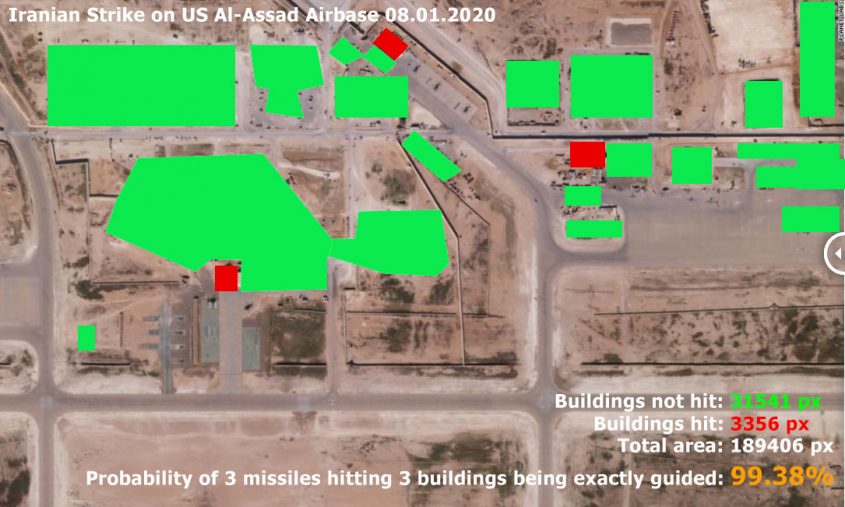
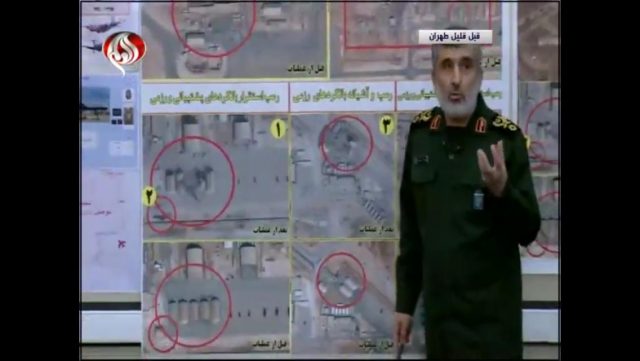
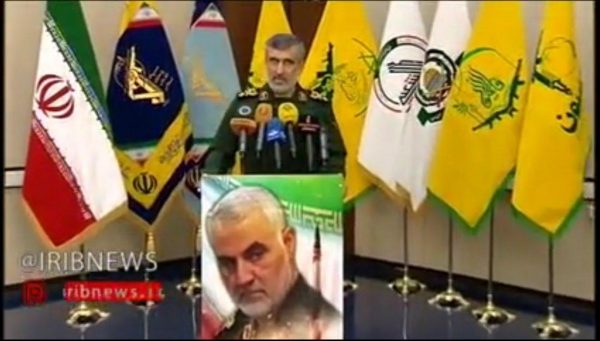



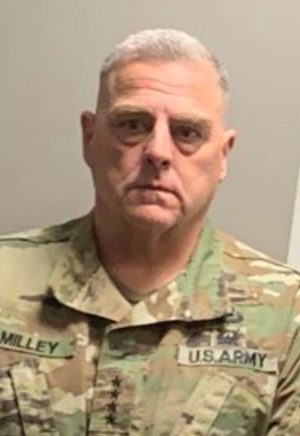

 Aletho News
