Twitter has declared victory over disinformation, deplatforming thousands of pro-Iranian Twitter accounts this week to coincide with US Secretary of State “Rapture Mike” Pompeo’s evidence-free declaration that Iran had attacked two oil tankers in the Gulf of Oman. But the mass deletion is merely an effort to distract from the implosion of two anti-Iran troll campaigns dedicated to smearing pro-peace Americans, both tacitly Twitter-approved. And there’s plenty more where those came from. As US media and politicians continues to hyperventilate about Russian bots, who’s the real troll-master?
Pompeo was out front with the blame hours after the attack, absent a shred of proof beyond unspecified “intelligence” and a few other dubious incidents in the Middle East that the US has previously pinned on Iran (also absent a shred of proof). But even mainstream media has initially been reluctant to take his word for it, mostly because the narrative is so improbable – Japan’s PM Shinzo Abe was in Tehran when it happened, promising to make the “utmost effort” to de-escalate tensions, when, as if on cue, one Japanese ship and another carrying Japanese cargo were hit? What are the odds?
When even CNN acknowledged that the attack “doesn’t appear to benefit any of the protagonists in the region,” and Bloomberg admitted “Iran has little to gain” from blowing up the ships of its esteemed guest, Pompeo clearly understood another route of influence was required. Who better to call in for reinforcements than Twitter, which has demonstrated time and again its willingness to serve the US’ preferred narrative with mass deplatformings? 4,779 accounts believed to be “associated or backed by Iran” were removed – less than an hour after Pompeo’s declaration of Iranian guilt – for nothing more than tweeting “global news content, often with an angle that benefited the diplomatic and geostrategic views of the Iranian state.” This was deemed “platform manipulation,” and therefore unacceptable.
One troll down, thousands more to go
Tweeting with an angle that benefits the diplomatic and geostrategic views of the American state, however, is perfectly acceptable – at least, it wasn’t Twitter that brought the “Iran Disinformation Project” crashing to a halt earlier this month. The State Department officially ended its @IranDisinfo influence operation after the social media initiative, ostensibly created to “counter Iranian propaganda,” went rogue, smearing any and all critics of Trump’s hawkish Iran policy as paid operatives of the Iranian government. Human rights activists, students, journalists, academics, even insufficiently-militant American propagandists at RFE/RL, Voice of America and other US-funded outlets were attacked by @IranDisinfo – all on the US taxpayer’s dime.
Congress only learned of the project in a closed-door hearing on Monday, when the State Department confessed the troll campaign had taken $1.5 million in taxpayers’ money to attack those same taxpayers – all in the name of promoting “freedom of expression and free access to information.” The group contracted to operate Iran Disinfo, E-Collaborative for Civic Education, is run by an Iranian immigrant and claims to focus on strengthening “civil society” and “democracy” back home, though its work is almost exclusively US-focused and its connections with pro-war think tanks like the Foundation for Defense of Democracies have alarmed congressional staffers.
“What rules are in place to prevent state-funded organization from smearing American citizens? If there wasn’t public outcry, would the Administration have suspended funding for Iran Disinfo?” Rep. Ilhan Omar (D-Minnesota) tweeted after the mea culpa meeting. While the State Department was long barred from directing government-funded propaganda at its own citizens, that rule was quietly repealed in 2013 with the passage of the Smith-Mundt Modernization Act, which gave its narrative-spinners free reign to run influence operations at home. And while the Pentagon is technically forbidden from running psychological operations (“psy-ops”) against American citizens, that rule goes out the window in case of “domestic emergencies” – and the domestic emergency declared by then-President George W. Bush days after the September 11 terror attacks remains in effect, 18 years later.
Trump’s favorite anti-Iran troll
Nor was the State Department’s trolling operation the only anti-Iran psy-op to be unmasked in recent weeks. Heshmat Alavi, a virulently anti-Iranian columnist promoted by the Trump administration and published in Forbes, the Hill, and several other outlets, was exposed by the Intercept as a propaganda construct operated by the Mojahedin-e Khalq (MEK), a controversial Iranian exile group often called a cult that has only recently lobbied its way off the US’ terror list. The MEK is notorious for buying the endorsement of American political figures, and national security adviser John Bolton, Senator Bob Menendez (D-NJ), and former New York mayor Rudy Giuliani are among those who have spoken at its events.
The fictional Heshmat Alavi’s stories were used to sell Trump’s withdrawal from the Iran deal to the Washington Post and other more reputable outlets, as well as to promote the MEK as a “main Iranian opposition group” and viable option for post-regime-change leadership of Iran – even though it is very much fringe and hated by the majority of Iranians for fighting on the side of Iraq during the Iran-Iraq war of the 1980s. Indeed, Alavi’s relentless advocacy for the MEK may have scared off a few of the sites that initially published his work – the Diplomat and the Daily Caller both quit publishing him in 2017, citing quality concerns.
None of the editors who’d published Alavi’s work had ever spoken to him or even paid him, and none could provide the Intercept with any evidence that he was not, in fact, “a persona run by a team of people from the political wing of the MEK.” Defectors confirmed that Alavi is a small part of a massive US-directed propaganda campaign.
“We were always active in making false news stories to spread to the foreign press and in Iran,” a Canadian MEK defector told the Intercept, describing a comprehensive online propaganda operation run out of the group’s former base in Iraq that sought to control the narrative about Iran on Facebook and Twitter. Alavi may be gone, his account quietly suspended by Twitter in the wake of the Intercept’s unmasking and his stories pulled from Forbes and the Diplomat, but there are more where he came from. The Intercept delivered Twitter all the evidence they needed to take down the MEK’s trolling network, a swamp of “coordinated inauthentic behavior” in which Alavi was a prominent node, but the social network sat on its hands.
Friends funding fiends
Add to this toxic US-approved stew the Israeli astroturf operation Act.IL, which in 2018 took $1.1 million from Israel’s Ministry of Strategic Affairs to troll Americans critical of Israeli policies, including its hostility toward Iran. Initially founded to combat the Iran nuclear deal, the Ministry’s mission has pivoted to combating the Boycott, Divestment and Sanctions movement, for which it receives significant US funding (Israeli Lt-Gen Gabi Ashkenazi admitted in 2012 that American taxpayers contribute more to the country’s defense budget than Israeli taxpayers). Act.IL boasts it has gotten Americans fired from their jobs, and the app encourages users to accuse American students and journalists who support BDS of antisemitism, mass-report their posts, and otherwise engage in what would be called “coordinated inauthentic behavior” if any other country did it.
Act.IL is by no means the only Israeli trolling campaign aimed at American eyeballs, either. Psy-Group, the Israeli private intelligence company that infamously pitched a social media influence operation to the Trump campaign, ran a multi-pronged online smear operation to influence a local election in California in 2017 and has pitched dozens more. The Israel on Campus Coalition attacks pro-Palestinian student activists and professors through coordinated social media campaigns, while The Israel Project operates a network of Facebook groups whose admitted purpose is to smuggle pro-Israeli propaganda into users’ newsfeeds by concealing it among bland inspirational messages.
Such clear-cut deception by state-sponsored actors is a blatant violation of Facebook’s policies as they’ve been applied to other users, but the site claims the Israeli groups are kosher. Yet of the pro-Iran accounts deleted by Twitter, one “set” included 248 accounts “engaged with discussions related to Israel specifically” – these were shut down for nothing more than their country of origin, even as inauthentic accounts run by Israel were given carte-blanche to spew propaganda. Twitter and Facebook don’t mind being weaponized in the propaganda wars, as long as they’re working for the “right” side.
As 21st century wars are fought more and more in the informational sphere, the brightly-colored propaganda posters of the previous century have been replaced with relatively sophisticated social media influence operations. What Pompeo can’t accomplish by lying to the American public, the State Department will attempt to achieve through the slow and steady drip of disinformation.
US politicians, meanwhile, remain so fixated on the “Russian trolls stole the election!” narrative they’ve been flogging for the last three years that the Senate last week unanimously passed a bill to restrict entry to any foreign national convicted of “election meddling,” a toothless piece of legislative virtue-signaling that reveals their utter disconnection from reality. It’s more than a little ironic that they’d embrace and even pay for foreign meddling as long as they believe the trolls are working for them.
As Friedrich Nietzsche said, “Whoever fights monsters should see to it that in the process he does not become a monster.” Or a troll.
On May 25th Vice President Mike Pence was the featured speaker at the United States Military Academy commencement. His speech was predictably an encomium celebrating both the diversity and the success of the newly commissioned officers as well as of the system at West Point that had produced them, but it also included interesting insights into how he and the other non-veterans who dominate the policy making in the White House see the military.
Most media commentary on the speech was either shocked or pleasantly surprised by Pence’s prediction that the graduating officers would soon be at war. He said “It is a virtual certainty that you will fight on a battlefield for America at some point in your life. You will lead soldiers in combat. It will happen. Some of you will join the fight against radical Islamic terrorists in Afghanistan and Iraq. Some of you will join the fight on the Korean Peninsula and in the Indo-Pacific, where North Korea continues to threaten the peace, and an increasingly militarized China challenges our presence in the region. Some of you will join the fight in Europe, where an aggressive Russia seeks to redraw international boundaries by force. And some of you may even be called upon to serve in this hemisphere. And when that day comes, I know you will move to the sound of the guns and do your duty, and you will fight, and you will win. The American people expect nothing less. So, wherever you’re called, I urge you to take what you learned here and put it into practice. Put your armor on, so that when — not if — that day comes, you’ll be able to stand your ground.”
Pence may or may not have known that military academy graduates have only a five-year active duty commitment after graduation. Many do not stay in the service after that point, instead using their security clearances and resumes to obtain well paying positions with defense and national security contractors. If Pence was aware of that five-year window, he was implying that he expects multiple wars will involve the United States during his own remaining time in office, assuming that he and President Donald Trump are reelected in 2020. He might even be assuming that war is inevitable no matter who is in the driver’s seat in the White House because America’s numerous enemies, which he identified, cannot otherwise be dissuaded from their “nefarious behavior.”
Pence’s choice of words is revealing. There is a “virtual certainty” of “fight[ing] on a battlefield for America” and that battlefield is global, including both transnational Islamic terrorism and the western hemisphere. The language implies that American security requires “full spectrum dominance” everywhere. It encompasses traditional national enemies, with a Pyongyang that “threatens peace,” a China that is “militarized,” and a Russia that is both “aggressive” and expansionistic. The soldiers must be prepared to fight “when – not if – that day comes.”
First of all, it is discouraging to note that Pence believes that a war or wars must take place, and further, one must have to wonder exactly what scenarios are envisioned by Pence, and also presumably by his boss and colleagues, regarding precisely how war against other nuclear powers will play out. Nor does he entertain what would happen when the rest of the world begins to perceive the United States at its enemy due to its willingness to interfere in everyone’s politics. And the American soldiers would die not knowing what they were fighting for, since they would understand from the onset that it had nothing to do with the defense of the United States.
The speech is, in short, a recognition that the Trump Administration sees perpetual war on the horizon, a viewpoint that is particularly alarming as one can quite easily make the case that the United States is not seriously threatened at all by anyone on Pence’s enemies list and is therefore the aggressor. China is a regional power, Russia does not have the resources or will to reestablish the Soviet Union, and North Korea has only limited capability to attack anyone, even if it should choose to do so. Islamic terrorism is largely a creation of the United States in the first place and maintains its potency by the adverse impact of the continued US presence in Muslim lands. And the suggestion that Venezuela and/or Cuba might be a threat to America is, quite frankly, laughable.
If Mike Pence is seriously interested in looking around to see who has been most interested in starting new wars, he should look to gentlemen named Bush and Obama, not to mention his own colleagues John Bolton and Mike Pompeo. And then there are Washington’s feckless allies Israel and Saudi Arabia, who are keen to advance their own interests by means of piles of dead American soldiers.
Is there no one around to question why exactly American soldiers are sent to die in so many places that can hardly be found on a map? Or to ask what the compelling national interests might be to require sending soldiers to such God-forsaken death pits? One can be sure that the newly minted Army officers that Pence addressed have no desire to be killed in Mali, but it would take a brave young man or woman to speak the truth if asked by a senior officer.
And Pence unfortunately has many friends who believe in force majeure as he does on Capitol Hill. Senator Lindsey Graham appeared on Fox News Sunday the day after the Vice President spoke and said “I would give Cuba an ultimatum to get out of Venezuela. If they don’t, I would let the Venezuelan military know, you got to choose between democracy and Maduro, and if you choose Maduro and Cuba, we are coming after you. This is in our backyard.”
It should be clearly understood Pence, Graham and Pompeo are all calling for wars of choice, where the military is being used as an option rather than diplomacy in a situation where there is no imminent threat. Iraq, Syria and Libya are examples of such wars and all three have turned out very badly. And then there is the moral dimension. By the standard set by the Nuremberg Trials after World War 2, initiating an armed conflict in that fashion is a war crime. Indeed, it is the ultimate war crime as it brings so many evils with it. Mike Pence’s vision of America the perpetual war criminal is not something to be proud of.
ZEMBLA investigates the collateral damage of the World Wildlife Fund’s (WWF) battle for nature conservation. ZEMBLA discovers that WWF promotes birth control programs that include contraception and even sterilization for men and women.
The fight against poachers is getting grimmer all the time. ZEMBLA travels to India, where local inhabitants are wrongly accused of poaching, are being tortured and sometimes even killed. On camera, guards from Kaziranga National Park state that they are allowed to shoot unwanted people.
After bungling every last aspect of Russia-gate since the day the pseudo-scandal broke, the corporate press is now seizing on the Mueller report to shut down debate on one of the key questions still outstanding from the 2016 presidential election: the murder of Democratic National Committee staffer Seth Rich.
Slain Democratic National Committee staffer Seth Rich. (LinkedIn)
No one knows who killed Rich in Washington, D.C., on July 10, 2016. All we know is that he was found at 4:19 a.m. in the Bloomingdale neighborhood “with apparent gunshot wound(s) to the back” according to the police report. Conscious and still breathing, he was rushed to a nearby hospital where he was pronounced dead at 5:57.
Police have added to the confusion by releasing information only in the tiniest dribs and drabs. Rich’s mother, Mary, told local TV news that her son struggled with his assailants: “His hands were bruised, his knees are bruised, his face is bruised, and yet he had two shots to his back, and yet they never took anything…. They took his life for literally no reason. They didn’t finish robbing him, they just took his life.”
But cops said shortly after the killing that they had no immediate indication that robbery was a motive. Despite his mother’s report of two shots in the back, all the local medical examiner would say is that the cause of death was a gunshot wound to the torso. According to Rich’s brother, Aaron, Jeff “was very aware, very talkative,” when police found him lying on the pavement. Yet cops have refused to say if he described his assailant. A month later, they put out a statement that “there is no indication that Seth Rich’s death is connected to his employment at the DNC,” refusing to elaborate.
The result is a scattering of disconnected facts that can be used to support just about any theory from a random killing to a political assassination. Nonetheless, Robert Mueller is dead certain that the murder had nothing to do with the emails — just as he was dead certain in 2003 that Iraq was bristling with weapons of mass destruction “pos[ing] a clear threat to our national security.”
Mueller’s Theory About Assange ‘Dissembling’
Mueller is equally positive that, merely by expressing concern that the murder may have had something to do with the release of thousands of DNC emails less than two weeks later, WikiLeaks founder Julian Assange was trying to protect the real source, which of course is Russia.
Here’s how the Mueller report puts it:
“Beginning in the summer of 2016, Assange and WikiLeaks made a number of statements about Seth Rich, a former DNC staff member who was killed in July 2016. The statements about Rich implied falsely that he had been the source of the stolen DNC emails. On August 9, 2016, the @WikiLeaks Twitter accounted posted: ‘ANNOUNCE: WikiLeaks has decided to issue a US$20k reward for information leading to conviction for the murder of DNC staffer Seth Rich.’
Likewise, on August 25, 2016, Assange was asked in an interview, ‘Why are you so interested in Seth Rich’s killer?’ and responded, ‘We’re very interested in anything that might be a threat to alleged WikiLeaks sources.’ The interviewer responded to Assange’s statement by commenting, ‘I know you don’t want to reveal your source, but it certainly sounds like you’re suggesting a man who leaked information to WikiLeaks was then murdered.’
Assange replied, ‘If there’s someone who’s potentially connected to our publication, and that person has been murdered in suspicious, circumstances, it doesn’t necessarily mean that the two are connected. But it is a very serious matter … that type of allegation is very serious, as it’s taken very seriously by us’” (vol. 1, pp. 48-49).
This is what the Mueller report calls “dissembling.” The conclusion caused jubilation in corporate newsrooms where hostility to both Russia and WikiLeaks runs high. “The Seth Rich conspiracy theory needs to end now,” declared Vox.com. “The special counsel’s report confirmed this week that Seth Rich … was not the source,” saidThe New York Times. “The Mueller report might not end the debate over what President Donald Trump did,” the Poynter Institute’s Politifact added, “but it has scuttled one conspiracy theory involving a murdered Democratic party staffer and WikiLeaks.”
One Conspiracy Theory for Another
But all the Mueller report did was replace one conspiracy theory with another involving the Kremlin and its minions that is equally unconvincing.
Remarkably, there’s nothing in the Mueller report indicating that the special counselor independently reviewed the forensic evidence or questioned family members and friends. He certainly didn’t interview Assange, the person in the best position to know who supplied the data, even though Craig Murray, the ex-British diplomat who serves as an unofficial WikiLeaks spokesman, says the WikiLeaks founder would have been “very willing to give evidence to Mueller” while holed up in the Ecuadorian embassy in London, “which could have been done by video-link, by interview in the Embassy, or by written communication.”
Murray says Mueller’s team made no effort to contact him either even though he has publicly stated that he met clandestinely with an associate of the leaker near the American University campus in Washington.
Why not? Because Mueller didn’t want anything that might disturb his a priori assumption that Russia is the guilty party. If he had bucked the intelligence community finding – set forth in a formal assessment in January 2017 – that Russian President Vladimir Putin ordered an influence campaign aimed at undermining Hillary Clinton’s candidacy — it would have been front-page news since an anti-Trump press had already accepted the assessment as gospel. But Mueller is far too much of an establishmentarian to do anything so reckless.
So he selected evidence in support of the official theory that “[t]he Russian government interfered in the 2016 presidential election in sweeping and systematic fashion,” as the report states on its very first page. And since Assange had consistently maintained that the data was the result of an inside leak rather than internal hack and that “[o]ur source is not the Russian government,” he cherry picked evidence to show that Assange is a liar, not only about Russia but about Seth Rich.
Cryptic Exchange
It’s a self-serving myth that corporate media have swallowed whole because it serves their interests too. One problem in exposing it, however, is Assange’s pledge – intrinsic to the WikiLeaks mission – to safeguard the identities of whistleblowers who furnish it with information. The upshot has been a good deal of beating around the bush. A month after the murder, the WikiLeaks founder appeared on a Dutch program called “Nieuwsuur” and took part in a cryptic exchange with journalist Eelco Bosch van Rosenthal:
Assange: Whistle blowers go to significant efforts to get us material and often very significant risks. There’s a 27-year-old – works for the DNC – who was shot in the back, murdered, just a few weeks ago for unknown reasons as he was walking down the street in Washington, so….
Rosenthal: That was just a robbery, I believe, wasn’t it?
Assange: No, there’s no finding, so –
Rosenthal: What are you suggesting?
Assange: I’m suggesting that our sources take risks, and they become concerned to see things occurring like that.
Rosenthal: But was he one of your sources then? I mean –
Assange: We don’t comment about who our sources are.
Rosenthal: But why make the suggestion about a young guy being shot in the streets of Washington?
Assange: Because we have to understand how high the stakes are in the United States and that our sources, you know, face serious risks. That’s why they come to us – so we can protect their anonymity.
Rosenthal: But it’s quite something to suggest a murder. That’s basically what you’re doing.
This was as close as Assange could come to confirming that Rich was tied up with the leak without actually saying it. Hours later, WikiLeakstweeted about the $20k reward.
Four months after that, Craig Murray told the Libertarian Institute’s Scott Horton: “Don’t get me wrong, I’m not saying that he [Rich] was the source of the leaks. What I’m saying is that it’s probably not an unfair indication to draw that WikiLeaks believe[s] that he may have been killed by someone who thought he was the source of the leaks.” (Quote begins at11:20.)
Thanks to such foggy rhetoric, it was all but inevitable that conspiracy theories would ignite. Two months after the killing, an ultra-conservative talk-radio host named Jack Burkman – best known for organizing a protest campaign against the Dallas Cowboys’ hiring of an openly gay football player namedMichael Sam – approached members of the Rich family and offered to launch an investigation in their behalf.
The family said yes, but then backed off when Burkmangrandly announced that the murder was a Kremlin hit. Things turned even more bizarre a year later when Kevin Doherty, an ex-Marine whom Burkman had hired to look into the case, lured his ex-boss to a Marriott hotel in Arlington, Virginia, where he shot him twice in the buttocks and then tried to run him down with a rented SUV. Doherty receiveda nine-year sentence last December.
The rightwing Washington Times meanwhile reported that WikiLeaks had paid Seth and Aaron Rich an undisclosed sum, a story it was forced toretract, and Fox News named Seth as the source as well. (A sympathetic judgedismissed a lawsuit filed by the Rich family on technical grounds.) But still the speculation bubbled on, withconservative nuts blaming everyone from ex-DNC chair Debbie Wasserman Schultz to acting DNC chairwoman Donna Brazile, Clinton campaign chairman John Podesta, and Bill and Hillary themselves.
All of which plays into the hands of a corporate press happy to write off any and all suspicion as a product of alt-right paranoia.
But if speculation refuses to die, it’s for a simple reason. If the DNC email disclosure was a hack, then Rich clearly had nothing to do with it, which means his death was no more than a robbery gone awry. But if it was a leak, then – based on broad hints dropped by Assange and Murray – it looks like the story could well be more complicated. This proves nothing in and of itself. But it guarantees that questions will grow as long as the Washington police make zero progress in its investigation and the Mueller report continues to fall apart.
And that’s just what’s happening. Mueller’s account of how Russian intelligence supposedly supplied WikiLeaks with stolen data makes no sense because, according to the report’s chronology, the transfer left WikiLeaks with just four days to review some 28,000 emails and other electronic documents to make sure that they were genuine and unaltered – a clear impossibility. (See “The ‘Guccifer 2.0’ Gaps in Mueller’s Full Report,” April 18.)
The FBI assessment that Paul Manafort associate Konstantin Kilimnik “has ties to Russian intelligence” – which Mueller cites (vol. 1, p. 133) in order to justify holding Manafort in solitary confinement during the Russia-gate investigation – is similarly disintegrating amidreports that Kilimnik actually served as an important State Department intelligence source.
So the idea of a hack makes less and less sense and an inside leak seems more and more plausible, which is why questions about the Rich case will not go away. Bottom line: you don’t have to be a loony rightist to suspect that there is more to the murder than Robert Mueller would like us to believe.
Daniel Lazare is the author of “The Frozen Republic: How the Constitution Is Paralyzing Democracy” (Harcourt Brace, 1996) and other books about American politics. He has written for a wide variety of publications from The Nation to Le Monde Diplomatique and blogs about the Constitution and related matters at Daniellazare.com.
Those who are familiar with my articles would be aware that I am not given to catastrophism or alarmism.But perhaps the time has come to reflect on who will be president after Trump (whether after this or the next term) and what this will mean for relations with Russia and China.
What will the United States’ relations with Russia and China be like when the 46th president of the United States takes office in 2025? This is a question that I often ask myself, especially in light of Trump’s political choices regarding international arms-control treaties (INF Treaty), nuclear proliferation, economic war with China, a financial crisis that is artificially postponed thanks to QE, out-of-control military spending, an increasingly aggressive NATO stance towards the Russian Federation, and continuous provocations against the People’s Republic of China. Where will we end up with after another five years of provocations? For how much longer will Putin and Xi Jinping maintain the “strategic patience” not to respond to Washington with drastic measures?
Let us imagine we are in 2025
The four current global hot spots – Iran, Syria, Venezuela and DPRK – have maintained their resistance to Washington’s diktats and have emerged more or less victorious. Syrian territory in its entirety is now under the control of Damascus; Iran has established enough deterrents not to be attacked; Pyongyang continues in its negotiations with Washington as the reunification of the two Koreas continues along; the Bolivarian revolution still lives on in Venezuela.
Putin is preparing to leave the Russian Federation as president after 25 years. Xi Jinping could see his mandate expire in a few more years. Washington is about to appoint a new president, who in all probability will be the opposite of Trump, in the same way Obama was the opposite of Bush and Trump a reaction to Obama.
So let us imagine someone emerging in the Democratic Party completely committed to advancing the view of the US deep state and the military-industrial complex – someone like Hillary Clinton, Madeleine Albright or any of the 2019 Democratic candidates for the 2020 elections (the ones with anything to commend them do not count). Such a person would be committed to reinvigorating the idea of American exceptionalism following eight years of a Trump presidency that has mostly focused (the neocons notwithstanding) on domestic issues and the policy of “America First”.
Now let us think about what has been, and will be, dismantled internationally by Trump during his presidency, namely: the suspension of the INF Treaty and an indication not to extend the New START treaty (on nuclear-arms reduction), deployment of troops on the Russian border in Europe, sanctions, tariffs and economic terrorism of all kinds.
Ask yourself how likely it is that the next US president will want and be able to improve relations with Russia and China as well as accept a multipolar world order? The answer to that is zero, with the Trump presidency only serving to remind us how every administration remains under the control of the military, industrial, spy and media apparatus, expressed in liberal and neocon ideologies.
Trump has increased military spending considerably, singing the praises of the military-industrial complex and promising to modernize the country’s nuclear arsenal. Such a modernization would take two decades to be completed, a detail always omitted by the media. For Trump it is a case of “America First”. For the deep state the project is long term and ought to be far more alarming for the global community.
Russia, China and the US all appear committed to further militarization, with Russia and China strongly focussing on defending their strategic interests in the face of US aggression. Beijing will focus on building a large number of aircraft carriers to defend her maritime borders, while Moscow seeks to seal her skies against missiles and stealthy aircraft (a land campaign against Russia, as history teaches us, has little chance of success).
Experts predict that any great-power conflict in the near future may consist exclusively of conventional and/or nuclear missiles, combined with robotic technology, drones, artificial intelligence, cyber warfare, A2/AD, hypersonic weapons and sabotage. In addition to nuclear weapons, the platforms from which they are launched, missiles and interceptors, a country’s computational power will be decisive, with quantum computers already a reality in China.
The US, China and Russia will no longer have any restrictions on the production of nuclear weapons after (absent any new negotiations or agreements to extend it) the New START treaty expires in 2025. The situation regarding cyberspace and near-earth space is certainly alarming, with no explicit treaties between the great powers being in place. The few agreements in force are routinely violated, especially with regard to near-earth vehicles, as Subrata Ghoshroy informs us when discussing the US X-37B military vehicle: ‘Backdoor weaponization of space?‘:
“Discussions about how to prevent an arms race in space started long ago; the UN Conference on Disarmament even started negotiations on a treaty, but the United States prevented it from going any further. And at the 2008 Conference on Disarmament in Geneva, China and Russia introduced an actual space arms control treaty, popularly known as the Prevention of an Arms Race in Outer Space treaty (PAROS Treaty, 2012)”
Adding to this alarming situation is the growing US commitment to the doctrine of a preventive nuclear first strike. One wonders how much longer the world will be able to prevent itself from being bombed back to the Stone Age.
I wrote an article in 2016 dismissing the possibility of a nuclear war as absurd and impossible. But while a lot has changed in the meantime, my opinion has not. Nevertheless, I struggle to understand how such an eventuality can be avoided when the US remains on a collision course with China and Russia.
Trump appears unwilling to go down in history as the president responsible for kicking off nuclear Armageddon. But what about the next president? The deep state in control of US politics would surely be able to place into office someone who would advance the final justification for a headlong confrontation with Moscow and Beijing.
If you think I am exaggerating, take Pompeo, a representative of the deep state, and his recent answer to the question of whether Trump was sent by God to save Israel from Iran. “As a Christian, I certainly believe that’s possible”, he responded. If the US elects someone influenced by the messianic vision of American exceptionalism, a vision that refuses to accept the realpolitik of multiple geopolitical poles and great-power competition, then hang on to your hats, for the chances of a nuclear winter will increase dramatically. Just remember that the alternative to Trump was Hillary Clinton, who was calling for a no-fly zone in Syria – that is, for the possibility of the US shooting down Russian fighter jets!
What would be needed if faced with such a presidency is a healthy, grass-roots internal opposition throughout Europe and the US. As things stand now, there is no longer an anti-war movement, the public disoriented by the mainstream media feeding them a constant stream of lies, misinformation and propaganda. Assange is unjustly imprisoned and Yemeni civilians are continuously bombed, and yet the media tells us that Julian works for the Kremlin, that Moscow wants to destabilize and destroy Europe, that China intends to subjugate the whole world, that Kim Jong-un is seeking the nuclearization of half of Asia, that Assad has massacred hundreds of thousands of civilians, that Saudi Arabia is a country undergoing full reform, and that al-Qaeda is fighting for freedom in Syria!
In such a current situation, truth is malleable, able to be fashioned and shaped according to the needs and requirements of the military-industrial complex, which needs justifications for its endless wars. The situation can only get worse over the next six years, with citizens less and less able to understand the world around them. The further advances in technology will only help governments and corporations to control information and decide what is right and wrong in a process of mass lobotomization. The Internet will hardly continue to be free, and even if it were to continue in its current state, the ability to offer counter-narratives will be limited by a lack of advertising revenue to expand businesses and reach more people for independent media platforms.
To avoid the possibility of nuclear annihilation we have to rely on the cool heads and leadership qualities of those who will succeed Vladimir Putin and Xi Jinping (it is unclear when Xi Jinping will leave office).
Only those who assiduously keep themselves informed are able to appreciate the forbearance that the Sino-Russian leadership has and will continue to have in the face of continuing US provocations.
But what will happen when these two even-tempered leaders are no longer in power while the means to inflict a devastating blow to the US remain available to their successors? Will the same forbearance remain in the face of ongoing US provocations?
The S-500 systems will be scattered throughout Russia (and presumably also in China and Belarus), armed with hypersonic interceptors. In addition to this conventional deterrence, the current Chinese and Russian nuclear arsenal is already capable of wiping out the US in the space of a few minutes.
Washington will continue to raise the temperature vis-a-vis China and Russia, even after Putin and Xi have left the office. It is therefore likely that their successors will come from their country’s most hawkish and intransigent wings.
In 2025 Putin and Xi will hopefully have succeeded in avoiding a conflict with the US through the skillful employment of diplomatic, economic and often military means, playing a moderating role that stands in contrast to that played by the West, which, not understanding this approach, brands it as extremist.
Imagine that the tensions between these three countries continues to steadily increase over the next five years at the same rate as it has over the last 10 years. How will the respective deep states of Russia and China react? Imagine in these two countries the appointment of two intransigent personalities ready to respond to US provocations.
Washington continues its inexorable decline relative to other powers as a result of the new multipolar reality, which evens out the distribution of geopolitical weight over a wider area of the global chessboard. We must hope, for the sake of humanity, that Washington’s decline will accelerate to such an extent under the Trump presidency that the US will be forced to focus instead on its own internal problems. Reaching such a point would require the collapse of the global economy that is based on the US dollar; but this is another story altogether that could also end in bloodshed.
Trump is appreciated by a part of the deep state for his efforts to reinvigorate Washington’s military-industrial complex by practically offering it a blank check. This is without considering Trump’s economic-financial assault on allies and enemies alike, which seems to be an attempt to squeeze the last drops out of any remaining advantage to the dollar-based system before it collapses.
The long-term plan of the US elites sometimes seems to be to provoke a great-power conflict in order to gain victory and then construct a new global financial order atop the rubble.
The selling of US government bonds by Russia, China and several other countries is an important indicator of global economic trends. The conversion of these securities into gold and other currencies is further confirmation of multipolarity. The IMF’s inclusion of the yuan in its basket of reserve currencies is a tangible example of the multipolar world in action and the diminishing power of the US. The sustainability of US public and private debt comes from investor confidence in US government bonds. The system hangs together through the willingness of investors to buy this trash printed by the Fed. The investors’ confidence lies not so much in the ability of the US to repay the debt but in its ability to use the most powerful military in the world to bully other countries into purchasing US securities that only serve to further fuel US imperialism.
Moscow and Beijing’s efforts to untangle themselves from this system is the way they will deny oxygen to the economic-military threat posed by Washington.
If the US deep state thinks it can squeeze out any last remaining benefits from the dollar system, collapse everything in a great-power conflagration, and then revive the US dollar system in a new form atop the rubble, then it is miscalculating terribly.
If my predictions regarding technological progress between now and 2025 are correct, with quantum computing and artificial intelligence and so on, then perhaps Moscow and Beijing will be able to avert this apocalypse with the clicks of a mouse thousands of miles away. Science fiction? Possibly. But who would have been able to imagine that Bashar al-Assad’s Syria would be capable, after six years of war, to repel 90% of the latest-generation missiles launched by Israel? Technology has a democratizing effect.
If you think I am exaggerating, try reflecting on the fact that Washington has been at war almost every year since World War II, conducting clandestine operations in more than 50 countries and killing millions of civilians directly and indirectly, all the while having the world believe it is a blameless force for good on the side of truth and justice.
We live in a world based on lies. Without this reality changing in the foreseeable future, with the mainstream media continuing to keep much of the population disoriented and confused, then it is not too difficult to imagine the United States by 2025 pulling the rug out from under everybody’s feet through a great-power conflict, so as to build atop the debris a new, unchallengeable Pax Americana.
The alt media-verse is currently on fire with the news that the US State Dept’s answer to Al Capone, Mike Pompeo, has been caught promising “Jewish leaders” to send the boys round to Jeremy Corbyn if he should get elected and subsequently prove to be uppity and out of line. According to the WaPo, who broke the story:
The remarks, which are contained in audio of a private meeting leaked to The Washington Post, make Pompeo the second senior U.S. official to comment on Britain’s turbulent leadership succession in the past week.
During his meeting with Jewish leaders in New York, Pompeo was asked if Corbyn “is elected, would you be willing to work with us to take on actions if life becomes very difficult for Jews in the U.K.?”
In response, Pompeo said, “It could be that Mr. Corbyn manages to run the gantlet and get elected. It’s possible. You should know, we won’t wait for him to do those things to begin to push back. We will do our level best,” he said to fervent applause from attendees.
“It’s too risky and too important and too hard once it’s already happened,” he said.
Of course the idea the “Jewish leaders” harbor any real fear that Jeremy Corbyn (Jeremy Corbyn!) is going to make life “difficult” for British Jews if elected is simply risible. They know, just as every moderately informed person knows, that that’s absurd. They know Corbyn has no wish to make life difficult for anybody – except possibly the uber wealthy and the profiteer class.
They know the “antisemitism” fear is just a cover for the very very real fear that a Corbyn government will break the unwritten rules of modern western governance and reject the agenda of austerity, exploitation and perpetual war that has been creating huge profits and ideological thrills for the blessed few over the last twenty years.
They know that what Pompeo is promising is action to prevent this possibility coming about.
People are up in arms about this, and some seem quite shocked. Apparently the idea the neoliberal elites would try regime change or regime-control on a relatively prosperous western country was something they didn’t previously think possible.
Unfortunately it’s more than possible. The state apparatus of the different western nations are a tight bond of mutual regard and interest, just as likely to foment regime change on their own or their allies’ elected representatives as on those of impoverished or “developing” countries, if they believe those representatives threaten the perceived interests of the state. Of course it isn’t too often necessary, since the same western state apparatus also works to ensure that only governments that don’t threaten perceived state interests manage to get elected. But, when the unthinkable happens, MI5 and the CIA are quite happy to step up to the plate and throw their own or their allies’ democratic governments out the window. It’s happened – or nearly happened – at least twice in the last fifty years.
In the 1960s the UK security agencies, senior military and members of the royal family were apparently contemplating a full blown coup against Labour prime minister Harold Wilson.
In 1975 it was Australia’s turn, when democratically elected reforming prime minister Gough Whitlam was overthrown in a bloodless constitutional coup organised jointly by the US and UK.
The old empire and the new have form in this regard, and this means no one should take Pompeo’s words (spoken in private let’s not forget) lightly.
It’s also interesting to look at how the WaPo frames the revelation. There’s no sense of outrage or surprise there. In fact it’s an almost matter-of-fact piece, written with no awareness of its potential impact. Even those in the comments who object in some form are mostly doing it within the permissible current language of dissent – blaming Trump, because in these identity politics-saturated times, your morality resides in who or what you are NOT in what you do.
To the WaPo – and many of its readers – there’s nothing intrinsically either wrong or surprising in the idea a US secretary of state should be overtly promising to interfere in the democratic governance of another country.
It’s just what they do when they need to.
Catte Black is an OffGuardian co-founding editor. Writer. Opinionated polemicist.
Little doubt: it was intentional, a tactical ploy. Trump initially appeared to distance himself from the hawkishness of his team on Iran, by saying that ‘no’, he didn’t want war: No – really, he only wanted the Iranians to call him. He even riffs Bolton for his propensity for war. Since then, the press has been full of stories of ‘channels’ to Iran opening, and of mediators aloft. And we are regaled too with hints of some potential rift between the President and Bolton.
Of course, it was all good PR, and pure Art of the Deal: Invite your counter-party to negotiate precisely at the moment it is experiencing maximum pressure, and is ‘weakened’. And the PR part worked as a charm. Hence the mediation hype in the media. So, why all this ‘hot and cold rhetoric’? Which is it? Is Trump having second thoughts about conflict, or not? Well, in a word: ‘not’. The tactics represent pressure: More pressure on Iran, that’s all.
Whilst all this plays out, the US military build-up against Iran persists, amidst mounting US claims of Iranian intent to threaten the US, and its allies (but absent any evidence). Yes, Pompeo did say, “we’re ready to sit down with them”. But, Pompeo then added, “the American effort to fundamentally reverse the malign activity of this Islamic republic, this revolutionary force, is going to continue”.
First, and foremost, Iran would have to begin behaving as “a normal country”, which as the WSJ observes, only comes about when Iran observes every one of the twelve conditions. “The US hasn’t dropped those demands,” the Journal writes, “and has increased pressure from economic sanctions as well as pursuing its military buildup in the region.”
Is it all bluster? Will Trump go all the way with his threats and pressures – but ultimately pull out, just short of war? That seems to be the general consensus today; but Team Trump’s view of Iran seems based in so many misconceptions, layered on other misconceptions, and on intelligence that amounts to no more than Mossad’s assessment of Iranian future intentions.
The consensus on ‘no conflict’ unfortunately, may turn out to have been overly sanguine. This is not because Trump consciously desires war, but because the hawks surrounding him, particularly Bolton, are painting him into a corner – from which he must either back down, or double down, if Iran does not first capitulate.
And here is the point: the main Trump misconception may be that he does believe that Iran wants, and ultimately, ‘will seek a deal’. Really?
It is quite difficult to imagine what President Rouhani’s response could be, if asked by the Iranian National Security Council: if you (i.e. Rouhani) were to enter talks with US, what precisely would you talk about; what would you say? The Trump Administration’s position is that Iran will not ‘be allowed’ to enrich uranium at all – which is to say that Iran would be precluded – contrary to the provisions of the NPT – from having nuclear generated electricity, as it has sought since the time of the Shah. (To suggest that the West would supply Iran with just enough uranium to work its reactors, but no more, is absurd. Iran would never place its industrial base in jeopardy, to some whimsical western decision to punish Iran for some one, or other, misdemeanor).
This has been the conundrum from the outset: Iran will not accept ‘zero enrichment’; and now Bolton and Pence will not allow it any enrichment. US policy has completed the circle, back to its positions of circa 2004: i.e. No Enrichment.
The Supreme Leader has said some days ago, that he only reluctantly agreed to talks with the Obama team on the assurance that Obama had indeed accepted the principle of Iranian in-country enrichment. With hindsight, Ayatollah Khamenei said, he made a mistake. He should never have allowed the talks to proceed.
Indeed, there is nothing to talk about – except how the US might revert to the status quo ante its JCPOA withdrawal, and how it might quietly re-enter the nuclear accord – without too much loss of face. But this is absolutely not an option for Bolton, or for his US Christian Zionist allies.
And some symbolic encounter, Trump – Kim Jong Un Singapore-style, is not an option for Iran. Nor, is a ‘freeze’ of the situation, as in North Korea. A freeze would mean that Iran continues under maximum US pressure, for as long as the freeze might last, and at no cost to the US.
Why then, is Trump heading down this ‘dead-end’ road that might trip him into an unwanted, and politically costly, conflict of some sort? Well, possibly because Trump has been ‘fed’ some nonsense ‘intelligence’ that Iran is on the cusp of an economic and political implosion – which is about to sweep away the Iranian Revolution into the dustbin of history. This is ‘the line’ currently being purveyed by Netanyahu and Mossad, and by others inside the US (based on the usual, suspect exile stories). Trump might conclude from such assessments that war is not a risk, since the imminent collapse of Iran would make acting out any military threats redundant. He can afford, in short, just to wait out the collapse. If you detect a whiff of Iraq in the run-up to 2003 about all this (i.e. the input of Curveball and Chalabi), you would be right, in more ways than one – it is more than just the part played by embittered exiles in framing the prospect for war.
There is a conception that Bolton, as National Security Adviser, has little clout over the Pentagon. But the American Conservative, in an article entitled ‘Amassing War Powers, Bolton Rips a Page Out of Cheney’s Playbook’, points out the misconception:
“The elevation of Patrick Shanahan to the secretary of defense position will likely make National Security Adviser John Bolton the most powerful voice inside President Donald Trump’s cabinet.
“So say defense analysts who spoke to TAC this week. Former US officials also said they fear that Shanahan’s relative lack of experience may set America on a path to war, and cited a New York Times report that Shanahan had delivered to Bolton a plan to send as many as 120,000 troops to the Middle East. Subsequent reports indicate that the Pentagon might be making plans to send even more … Stephen Wertheim, assistant professor of history at Columbia University, added, “when senators ‘think Shanahan’ [at confirmation hearings], they should think Bolton. Because a vacuum at the top of DoD, means that the department becomes a rubber stamp for Bolton””.
But more than this, the America Conservative ‘Cheney Playbook’ tag is right in another way: Bolton chairs at the NSC, the regular and frequent strategic dialogue meetings with Israel – intended to develop a joint action plan, versus Iran. What this means is that the Israeli intelligence assessments are being stovepiped directly to Bolton (and therefore to Trump), without passing by the US intelligence services for assessment or comment on the credibility of the intelligence presented (shades of Cheney confronting the analysts down at Langley). And Bolton too, will represent Trump at the ‘security summit’ to be held later this month in Jerusalem with Russia and Israel. Yes, Bolton truly has all the reins in his hands: He is ‘Mr Iran’.
Daniel Larison writes: “The Trump administration is still chasing after the fantasy that Russia will help push Iranian forces out of Syria”:
“A senior White House official said in a conference call with reporters that the US plans to stress to Russia during its trilateral national security advisers summit in Jerusalem this month that Iranian forces and their proxies have to leave Syria.
“The administration has been seeking Russian cooperation on this front for the last year. It has never made sense. The Russian government has no reason to agree to the US plan. Why would Russia do the US the favor of supporting the administration’s anti-Iranian policy? The administration’s problem is that they wrongly believe that other governments share their opinion of Iran’s role in the region. Reuters quotes an administration official saying this:
“But beyond discussions to prevent any unintended military escalation, the US official said the goal of the talks would be “to see how we can potentially work together to get rid of the primary irritant in the Middle East, which is the Islamic Republic of Iran.”
“The US and Israel may consider Iran to be “the primary irritant,” but Russia doesn’t see things this way and it isn’t going to respond favorably to efforts to enlist them in an anti-Iranian pressure campaign. Russia wants to cultivate good relations with Israel, so they are participating in the meeting, but that participation shouldn’t be taken as a sign that they are interested in giving Bolton what he wants. All in all, this meeting in Jerusalem will make for a curious photo op, but it isn’t going to produce anything significant.”
Yes. Another misconception, it seems. But one that is hugely convenient for Bolton – for, if the US fails to achieve a commitment on the part of Russia to ensure the expulsion of Iran from Syria, then we are likely to witness escalation by Israel – backed by the US – against Iranian elements in Syria. Already, we have seen missiles landing in occupied Golan in recent days – as a signal that Syria and Iran may be ready to activate the Golan as a new front in the conflict with Israel.
The Bolton squeeze with regard to Iran is in high gear. The aim, Col Pat Lang suggests, “is probably to pressure Iran until they lash out somewhere against US forces or interests”.
It may be, (or it may not be), that Trump is bluffing in his menaces to Iran. Trump may indeed be opposed to war – though, on the other hand, he has never missed an opportunity, over the years, to castigate and demonise Iran, whilst lauding Saudi Arabia in extravagant language. Bluffs do get called. And, does Trump really understand how improbable it is that Iran now will ‘lift the phone to call him’? Is he at all familiar with the complexities of more than a decade of nuclear negotiations with Iran?
No? Well Bolton and Netanyahu surely are – as they lead a willing President down the narrowing path, to the point where he has no alternative but either a humiliating retreat back down that path, or to double-down and go further.
So where is this taking us? Well, firstly, there will be Iranian push-back (to Bolton’s delight). For the present, Iran remains within the JCPOA; but it is limiting and curtailing its partial commitments (which is permitted, under the terms of the accord – when a signatory to the accord is not observing the deal). Iran has indeed started to accelerate enrichment, but has not breached the limits on its holding of uranium or heavy water – though it likely soon will. After 60 days, if the EU is not moving towards normalizing of its economic relations with Iran, we may see Iran increase the level of enrichment above 3.67%. And secondly, Iran has clearly signaled that US Gulf Allies who have urged, and supported the US attrition against Iran, will begin to experience pain, too. Iran has warned that any new ‘Gulf War’ would include the destruction of the energy infrastructure of some Gulf States. It would take twenty years for the Gulf to recover from such an event,
And whilst it is true that the US is not in a position to mount a full war on Iran, this does not mean that the US cannot escalate military pressures on Iran via Special Forces working with insurgent ethnic minorities inside the country to destabilize it, or to degrade Iranian infrastructure through missile or ‘bunker-buster’ attacks.
And when Iranian push-back starts, as the pressures escalates – and when it becomes clear that Russia will not act as America’s policeman in respect to Iran, Hizbullah or the Hash’d a-Shaibi, as Russia won’t – then the ‘war party’ will urge Trump to send Iran a painful ‘message’ of American ‘deterrence’ – and then what? Is it safe to conclude Trump will demur?
No. It is not possible to assert ‘there will be no conflict’. There is some risk. And Iran knows it.
Rep. Duncan Hunter (R-CA) found himself in hot water recently over comments he made in defense of Navy SEAL Edward Gallagher, who faces war crimes charges over his alleged conduct while serving in combat overseas. Gallagher is charged with stabbing a 15 year old ISIS member while in custody, of taking photos posing with the corpse of the teen, and with killing several civilians.
Defending Gallagher recently, Hunter put his own record up next to the SEAL to suggest that he’s an elected Congressman who has done worse things in battle than Gallagher.
That’s where Hunter’s defense earned him some perhaps unwanted attention. While participating in the first “Battle of Fallujah” in early 2007, by Hunter’s own account he and his fellow soldiers killed hundreds of innocent civilians, including women and children. They fired mortars into the city and killed at random.
In the sanitized world of US mainstream media reporting on US wars overseas, we do not hear about non-combatants being killed by Americans. How many times has there been any reporting on the birth defects that Iraqis continue to suffer in the aftermath of US attacks with horrific weapons like depleted uranium and white phosphorus?
Rep. Hunter described his philosophy when fighting in Iraq:
“You go in fast and hard, you kill people, you hit them in the face and then you get out… We’re going to hurt you and then we’re going to leave. And if you want to be nice to America, we’ll be nice to you. If you don’t want to be nice to us, we’re going to slap you again.”
This shows how much Duncan Hunter does not understand about war. When he speaks of hitting people in the face until they are nice to America, he doesn’t seem to realize that the people of Fallujah – and all of Iraq – never did a thing to the US to deserve that hit in the face. The war was launched on the basis of lies and cooked-up intelligence by many of the people who are serving in the current Administration.
And that brings us to the real war criminals. Rep. Duncan Hunter and his fellow soldiers may have killed hundreds of innocent civilians and even felt justified. Their superior officers, after all, established the rules of engagement. Above those superior officers, going up and beyond to the policymakers, the lie was sold to the American people to justify a war of choice against a country that could not have threatened us if it wanted to.
Vice President Dick Cheney knew what he was doing when he kept returning to the CIA headquarters, strong-arming analysts to make the intelligence fit the chosen policy. John Bolton and the other neocons knew what they were doing when they made claims about Iraq’s weapons of mass destruction they knew were false. The Pentagon’s Office of Special Plans played its role in selling the lie. So did the media.
Edward Gallagher will face trial and possibly jail for his actions. Rep. Duncan Hunter may even face punishment – though perhaps only at the ballot box – for his admitted crimes. But until those at the top who continue to lie and manipulate us into war for their own gain face justice, the real criminals will continue to go free and we will continue pursuing a suicidal neocon foreign policy.
The much-acclaimed series ‘Chernobyl’ tells the story of the 1986 nuclear disaster and the authorities’ attempts to play it down. Ironically, 33 years on, it’s Western leaders who need to learn how to be honest and transparent.
It was the accident which some think led directly to the fall of communism. “Reformers in the Soviet Union, and Mikhail Gorbachev himself, used Chernobyl as an argument for more accountability and greater frankness, because the initial reaction of the Soviet authorities was anything but transparent. It became a symbol of what was wrong with the Soviet system,” says Professor Archie Brown, author of ‘The Rise and Fall of Communism’, as cited in yesterday’s Sunday Express newspaper.
Just three-and-a-half years after Chernobyl, the Berlin Wall came down, and in 1991, the USSR itself ceased to exist.
Western ideologues were quick to gloat, saying that a system which kept telling people lies and trying to cover things up was always doomed to fail, but in terms of openness and telling the truth, are we really much better than the Soviet Union of the 1980s?
Consider the way a succession of illegal wars has been sold to the public. We were told in 2003 that Iraq had ‘weapons of mass destruction’ which could be assembled and launched within 45 minutes. It was false, patently so, yet the Chilcot Report was only published 13 years later, and even now, no one has been prosecuted in relation to a war which led to the deaths of one million and the rise of Islamic State (IS, formerly ISIS).
In 2011, we went to war again, against Libya. Once more, our politicians were less than honest with us. We were told that we had to bomb because Colonel Gaddafi was going to massacre the inhabitants of Benghazi. Only five-and-a-half years later were we allowed to know the truth. In September 2016, a House of Commons Foreign Affairs Committee report held that “the proposition that Muammar Gaddafi would have ordered the massacre of civilians in Benghazi was not supported by the available evidence… the Government failed to identify that the threat to civilians was overstated and that the rebels included a significant Islamist element.”
Again, we were tricked into war. By ‘nice’ Western politicians, mark you, and not ‘lying’ Soviet ones. Once more, there’s been no accountability. Libya, a country which had the highest Human Development Index in the whole of Africa, was destroyed. It was a far worse disaster than Chernobyl, as indeed Iraq was. When will the HBO dramas on these catastrophes be screening?
It’s not just the illegal wars. There have been cover-ups of plenty of other things, too. Three years after Chernobyl, there was the Hillsborough disaster in which 96 Liverpool football fans were crushed to death. It was the worst disaster in British sporting history. To add insult to tragedy, the fans themselves were blamed. Rupert Murdoch’s Sun claimed on its front page that fans had urinated on policemen and picked the pockets of victims. It took nearly 30 years to get the record formally put right and achieve ‘Justice for the 96’ when a jury held that the fans were ‘unlawfully killed’. The Orgreave Truth and Justice Campaign, which wants a public inquiry into the way striking miners in South Yorkshire were ‘brutalised’ by police in the so-called ‘Battle of Orgreave’ in 1984, are still waiting. In 2016, Home Secretary Amber Rudd said there would be no inquiry.
Where’s the openness and transparency here?
Likewise with the cover-ups over suspected Establishment pedophiles and other high-up wrong-doers. We learnt only this year that Prime Minister Margaret Thatcher had, back in the 80s, personally protected a senior Conservative MP who allegedly had a “penchant for small boys.”
We don’t know whether a leading Soviet politician who was a child-abuser would have been prosecuted. Probably not. But we do know that in Britain in the 1980s, such cover-ups definitely occurred. And who really believes that’s still not the case today?
Bergson and Popper famously divided societies into ‘open’ and ‘closed’ ones, but Western ‘openness’ is not quite as ‘open’ as we’re led to believe. It does not extend to politicians frankly acknowledging the role that Western foreign policy has played in aiding, directly or indirectly, the very same terrorists who have gone on to target Western civilians. That’s a taboo subject, even after the Manchester Arena bombings and the bomber’s link to the MI5-‘sorted’ anti-Gaddafi LIFG, and the slaughter of tourists on the beach in Tunisia by a man who reportedly trained at an IS camp in neighboring ‘liberated’ Libya.
There are many more subjects too that are so taboo I dare not even mention them here. By contrast, dishonest or fact-lite narratives, such as ‘Russiagate’, or the one that holds that the UK Labour Party, an anti-racist party, is ‘awash with anti-Semitism’, hold sway. We CAN talk about these and indeed some commentators talk about little else.
It is the greatest of ironies that at the very same time that we are being told how HBO’s Chernobyl exposes the rottenness of the ‘closed’ Soviet system, a man who does believe in openness and transparency, a free press, and government accountability, is languishing in a maximum security prison in ‘open’ London, facing a possible extradition to the US and sentences of up to 175 years in jail. Julian Assange, whose only crime is wanting to show us what was behind the curtain, is no less persecuted than the Soviet dissidents about whom we heard an awful lot in the 1980s.
It’s been said that if you feud with someone long enough you end up being like them, or at least how you liked to portray them. When we think of the old Cold War and what’s going on today, that seems to have come true.
In its lack of transparency and openness, and the way in which lying has become the new normal, the West is now behaving the way the Soviet Union is supposed to have operated at the time of Chernobyl.
Who, I wonder, will be the equivalent of Mikhail Gorbachev to introduce some much-needed Western Glasnost?
James Bacque discusses his devastating research into allied war crimes against a defeated Germany in post-World War Two Europe, as detailed in his most famous book, Other Losses; Eisenhower imposes starvation on surrendered German soldiers interned in death camps; official records of German POWs and refugees purged and hidden; eyewitness and survivor accounts of American brutality; the Morgenthau Plan to ravage and grind into dust post-war Germany; Geneva Convention not followed; Soviet KGB archival records of refugees and POWs opened; evidence of war crimes and mass deaths of German prisoners still being suppressed by the governments of Germany, the US, France, Britain and Canada; the real life consequences of a reinterpretation of history.
Terry Halbardier, who as a 23-year old seaman in 1967 thwarted Israeli attempts to sink the USS Liberty, died on Aug. 11 in Visalia, California. It took the U.S. government 42 years after the attack to recognize Halbardier’s heroism by awarding him the Silver Star, a delay explained by Washington’s determination to downplay Israeli responsibility for the 34 Americans killed and the 174 wounded.
On June 8, 1967, during the Six-Day War, the Israeli military attacked the USS Liberty, an American spy ship which had been monitoring Israeli transmissions about the conflict. Intercepted Israeli communications indicated that the goal was to sink the Liberty and leave no survivors.
USS Liberty receives assistance from units of the Sixth Fleet, after she was attacked and seriously damaged by Israeli forces off the Sinai Peninsula on June 8, 1967. (US Navy photo)
Warplanes and torpedo boats had already killed 34 and wounded 174, when Halbardier slid over the Liberty’s napalm-glazed deck to jury-rig an antenna and get an SOS off to the Sixth Fleet. The Israelis intercepted the SOS and broke off the attack immediately. In effect, Halbardier prevented the massacre of all 294 onboard. Still, the infamy of the attack on the Liberty was two-fold.
First, the Liberty, a virtually defenseless intelligence collection platform prominently flying an American flag in international waters, came under deliberate attack by Israeli aircraft and three 60-ton Israeli torpedo boats off the coast of the Sinai on a cloudless June afternoon during the six-day Israeli-Arab war. Second, President Lyndon Johnson called back carrier aircraft dispatched to defend the Liberty lest Israel be embarrassed, the start of an unconscionable cover-up, including top Navy brass, that persists to this day.
Given all they have been through, the Liberty survivors and other veterans who joined Halbardier to celebrate his belated receipt of the Silver Star on May 27, 2009 can be forgiven for having doubted that the day of the hero’s recognition would ever come.
In the award ceremony at the Visalia (California) office of Rep. Devin Nunes, the Republican congressman pinned the Silver Star next to the Purple Heart that Halbardier found in his home mailbox three years ago. Nunes said, “The government has kept this quiet I think for too long, and I felt as my constituent he [Halbardier] needed to get recognized for the services he made to his country.”
Terry Halbardier got off an SOS message saving the Liberty from Israeli destruction
Nunes got that right. Despite the many indignities the Liberty crew has been subjected to, the mood in Visalia was pronouncedly a joyous one of Better (42 years) Late Than Never. And, it did take some time for the moment to sink in: Wow, a gutsy congressman not afraid to let the truth hang out on this delicate issue.
Treatment Accorded the Skipper
I was present that day and I could not get out of my head the contrast between this simple, uncomplicated event and the earlier rigmarole that senior Navy officers went through to pin a richly deserved Medal of Honor on another hero of that day, the Liberty’s skipper, Captain William McGonagle.
Although badly wounded by Israeli fire on June 8, 1967, McGonagle was able to keep the bombed, torpedoed, napalmed Liberty afloat and limping toward Malta, where what was left of the bodies of the 34 crewmen killed and the 174 wounded could be attended to. Do the math: yes, killed and wounded amounted to more than two-thirds of the Liberty crew of 294.
I remembered what a naval officer involved in McGonagle’s award ceremony told one of the Liberty crew: “The government is pretty jumpy about Israelthe State Department even asked the Israeli ambassador if his government had any objections to McGonagle getting the medal.”
When McGonagle received his award, the White House (the normal venue for a Medal of Honor award) was all booked up, it seems, and President Lyndon Johnson (who would have been the usual presenter) was unavailable.
So it fell to the Secretary of the Navy to sneak off to the Washington Navy Yard on the banks of the acrid Anacostia River, where he presented McGonagle with the Medal of Honor and a citation that described the attack but not the identity of the attackers.
Please don’t misunderstand. The Liberty crew is not big on ceremony. They are VERY-not-big on politicians who wink when Navy comrades are killed and wounded at sea. The Liberty survivors are big on getting the truth out about what actually happened that otherwise beautiful day in June 1967.
The award of the Silver Star to Terry Halbardier marked a significant step in the direction of truth telling. Halbardier said he accepted his Silver Star on behalf of the entire 294-man crew. He and fellow survivor Don Pageler expressed particular satisfaction at the wording of the citation, which stated explicitly — with none of the usual fudging — the identity of the attackers: “The USS Liberty was attacked by Israeli aircraft and motor torpedo boats in the East Mediterranean Sea.”
In the past, official citations, like Captain McGonagle’s, had avoided mentioning Israel by name when alluding to the attack. I think former U.S. Ambassador Edward Peck put it best in condemning this kind of approach as “obsequious, unctuous subservience to the peripheral interests of a foreign nation at the cost of the lives and morale of our own service members and their families.” Strong words for a diplomat. But right on.
Just a Guy From Texas
Were it not for Halbardier’s bravery, ingenuity, and technical expertise, the USS Liberty would surely have sunk, taking down much if not all of the crew.
You see, the first thing the Israeli aircraft bombed and strafed were the Liberty’s communications antennae and other equipment. They succeeded in destroying all the antennae that were functional. One antenna on the port side, though, had been out of commission and had escaped damage.
In receiving the Silver Star, Halbardier made light of his heroism, claiming that he was just a guy from Texas who could do a whole lot with simple stuff like baling wire. (In the infantry we called this kind of thing a “field expedient.”)
In any case, with his can-do attitude and his technical training, he figured he might be able to get that particular antenna working again. But first he would have to repair a cable that had been destroyed on deck and then connect the antenna to a transmitter.
The deck was still being strafed, but Halbardier grabbed a reel of cable, ran out onto the deck, and attached new cable to the antenna so a radioman could get an SOS out to the Sixth Fleet in the Mediterranean.
Voila. “Mayday” went out; almost immediately the Israeli aircraft and torpedo ships broke off the attack and went back to base; the Israeli government sent a quick apology to Washington for its unfortunate “mistake;” and President Johnson issued orders to everyone to make believe the Israelis were telling the truth, or at least to remain silent.
To their discredit, top Navy brass went along, and the Liberty survivors were threatened with court martial and prison if they so much as mentioned to their wives what had actually happened. They were enjoined as well from discussing it with one another.
The shot-up Liberty
As Liberty crewman Don Pageler put it, “We all headed out after that, and we didn’t talk to each other.” The circumstances were ready-made for serious Post-Traumatic Stress Disorder.
The stories shared by Liberty survivors after the award ceremony, including descriptions of the macabre but necessary effort to reassemble torpedoed body parts, and the plague of survivor’s guilt, were as heart-rending as any I have heard. They are stories that should be shared more widely for those muzzled far too long.
These were the deep emotional scars to supplement the ones all over Halbardier’s body, some of which he uncovered when asked by the local press gathered there in Visalia. Typically, Halbardier made light of the shrapnel that had to be plucked out of his flesh, emphasizing that he was lucky compared to some of the other crew.
No Mistake
Despite Israeli protestations, the accumulated evidence, including intercepted voice communications, is such that no serious observer believes Israel’s “Oops” excuse of a terrible mistake. The following exchanges are excerpts of testimony from U.S. military and diplomatic officials given to Alison Weir, founder of “If Americans Knew” and author of American Media Miss the Boat:
Israeli pilot to ground control: “This is an American ship. Do you still want us to attack?”
Ground control: “Yes, follow orders.”
“But sir, it’s an American ship, I can see the flag!”
Ground control: “Never mind; hit it!”
Haviland Smith, a CIA officer stationed in Beirut during the Six-Day War, says he was told that the transcripts were “deep-sixed,” because the U.S. government did not want to embarrass Israel.
Equally telling is the fact that the National Security Agency (NSA) destroyed voice tapes seen by many intelligence analysts, showing that the Israelis knew exactly what they were doing. I asked a former CIA colleague, who was also an analyst at that time, what he remembered of those circumstances. Here is his e-mail reply:
“The chief of the analysts studying the Arab-Israeli region at the time told me about the intercepted messages and said very flatly and firmly that the pilots reported seeing the American flag and repeated their requests of confirmation of the attack order. Whole platoons of Americans saw those intercepts. If NSA now says they do not exist, then someone ordered them destroyed.”
One need hardly add at this point that the destruction of evidence without investigation is an open invitation to repetition in the future. Think the more recent torture-interrogation videotapes.
As for the legal side: the late Captain Ward Boston, unburdened himself on his accomplice role as the Navy lawyer appointed as senior counsel to Adm. Isaac Kidd, who led a one-week (!) investigation and then followed orders to pronounce the attack on the Liberty a case of “mistaken identity.” Boston signed a formal declaration on Jan. 8, 2004, in which he said he was “outraged at the efforts of the apologists for Israel in this country to claim that this attack was a case of ‘mistaken identity.’” Boston continued:
“The evidence was clear. Both Adm. Kidd and I believed with certainty that this attack was a deliberate effort to sink an American ship and murder its entire crew Not only did the Israelis attack the ship with napalm, gunfire, and missiles, Israeli torpedo boats machine-gunned three lifeboats that had been launched in an attempt by the crew to save the most seriously wounded, a war crime
“I know from personal conversations I had with Adm. Kidd that President Lyndon Johnson and Secretary of Defense Robert McNamara ordered him to conclude that the attack was a case of ‘mistaken identity’ despite overwhelming evidence to the contrary.”
W. Patrick Lang, Col., USA (ret.), who was the Defense Intelligence Agency’s top analyst for the Middle East for eight years, recounted the Israeli air attacks as follows: “The flight leader spoke to his base to report that he had the ship in view, that it was the same ship he had been briefed on, and that it was clearly marked with the U.S. flag
“The flight commander was reluctant. That was very clear. He didn’t want to do this. He asked them a couple of times, ‘Do you really want me to do this?’ I’ve remembered it ever since. It was very striking. I’ve been harboring this memory for all these years.”
Lang, of course, is not alone. So too Terry Halbardier, who told those assembled at his Silver Medal award ceremony, “I think about it [the attack on the Liberty] every day.”
Why Sink the Ship?
What we know for sure is, as the independent commission headed by former Chairman of the Joint Chiefs of Staff, Adm. Thomas Moorer put it, the attack “was a deliberate attempt to destroy an American ship and kill her entire crew.”
What we do not know for sure is why the Israelis wanted that done. Has no one dared ask the Israelis? One view is that the Israelis did not want the United States to find out they were massing troops to seize the Golan Heights from Syria and wanted to deprive the U.S. of the opportunity to argue against such a move.
USS Liberty after the attack
James Bamford offers an alternative view in his excellent book, Body of Secrets. Bamford adduces evidence, including reporting from an Israeli journalist eyewitness and an Israeli military historian, of wholesale killing of Egyptian prisoners of war at the coastal town of El Arish in the Sinai.
The Liberty was patrolling directly opposite El Arish in international waters but within easy range to pick up intelligence on what was going on there. And the Israelis were well aware of that. But the important thing here is not to confuse what we know (the deliberate nature of the Israeli attack) with the ultimate purpose behind it, which remains open to speculation.
Also worth noting is the conventional wisdom prevalent in our Fawning Corporate Media (FCM) that Egypt forced Israel into war in June 1967. An excellent, authoritative source has debunked that, none other than former Israeli Prime Minister Menachem Begin! In an unguarded moment in 1982, when he was prime minister, he admitted publicly:
“In June 1967, we had a choice. The Egyptian army concentrations in the Sinai approaches do not prove that [Egyptian President] Nasser was really about to attack us. We must be honest with ourselves. We decided to attack him.”
Thus, the Israeli attack admittedly amounted to starting a war of aggression, and the occupied West Bank territories and the Golan Heights gained by the Israelis in the 1967 war remain occupied to this day. The post World War II tribunal at Nuremberg distinguished a “war of aggression” from other war crimes, terming it the “supreme international crime, differing from other war crimes only in that it contains the accumulated evil of the whole.”
Perhaps the attempt to sink the Liberty and finish off all survivors qualifies as one of those accumulated evils. Terry Halbardier summed it up this way when he was awarded his Silver Star: “There’s lots of theories but let’s just say they didn’t want us listening in to what they wanted to do.”
Getting Away With Murder
In sum, on June 8, 1967, the Israeli government learned that it could get away with murder, literally, and the crime would be covered up, so strong is the influence of the Israel Lobby in our Congress, and indeed, in the White House. And those USS Liberty veterans who survived well enough to call for an independent investigation have been hit with charges of, you guessed it, anti-Semitism.
Does all this have relevance today? Of course. Israeli Prime Minister Benjamin Netanyahu understands that there is little that Israel could do that would earn the opprobrium of the U.S. Congress or retaliation from the White House, whether it’s building illegal settlements or slaughtering civilians in Gaza. The Israelis seem convinced they remain in the catbird’s seat, largely because of the Israel Lobby’s influence with U.S. lawmakers and opinion makers.
Navy Adm. Mike Mullen, (DoD Photo by Mass Communication Specialist Chad J. McNeeley)
One of the few moments when a U.S. official has had the audacity to face Israel down came from significantly a U.S. Navy admiral. In early July 2008, Chairman of the Joint Chiefs of Staff, Adm. Mike Mullen, was sent to Israel to read the riot act to then-Israeli Prime Minister Ehud Olmert, who seemed to be itching to start hostilities with Iran while President George W. Bush was in office.
We learned from the Israeli press that Mullen, fearing some form of Israeli provocation, went so far as to warn the Israelis not to even think about another incident like the attack on the USS Liberty on June 8, 1967, that the Israelis should disabuse themselves of the notion that U.S. military support would be knee-jerk automatic if Israel somehow provoked open hostilities with Iran.
This is the only occasion I am aware of in which a U.S. official of such seniority braced Israel about the Liberty incident. A gutsy move, especially with Vice President Dick Cheney and national security aide Elliott Abrams then in the White House, two hawks who might well bless, or even encourage, an Israeli provocation that would make it very difficult for Washington to avoid springing to the defense of its “ally.”
The Israelis know that Mullen knows that the attack on the Liberty was deliberate. Mullen could have raised no more neuralgic an issue to take a shot across an Israeli bow than to cite the attack on the Liberty. The Jerusalem Post reported that Mullen cautioned that a Liberty-type incident must be avoided in any future military actions in the Middle East.
Perhaps Mullen had learned something from the heroism of Terry Halbardier
Ray McGovern works with Tell the Word, the publishing arm of the ecumenical Church of the Saviour in inner-city Washington. After serving as an Army infantry/intelligence officer, he spent a 27-year career as a CIA analyst. He is co-founder of Veteran Intelligence Professionals for Sanity (VIPS).
Philip Giraldi is a recognized authority on international security and counterterrorism issues. He is a former CIA counter-terrorism specialist and military intelligence officer who served eighteen years overseas in Turkey, Italy, Germany, and Spain. He was Chief of Base in Barcelona from 1989 to 1992 designated as the Agency’s senior officer for Olympic Games support. Since 1992 he consulted for a number of Fortune 500 corporate clients.
He was awarded an MA and PhD from the University of London in European History and holds a Bachelor of Arts with Honors from the University of Chicago. He speaks Spanish, Italian, German, and Turkish.
Dr. Giraldi is the Executive Director of the Council for the National Interest, a group that advocates for more even handed policies by the U.S. government in the Middle East.
He gave this speech at the National Summit to Reassess the U.S.-Israel “Special Relationship” on March 7, 2014 at the National Press Club in Washington DC.
NEW YORK — For nearly two decades, one of the most overlooked and little known arrests made in the aftermath of the September 11 attacks was that of the so-called “High Fivers,” or the “Dancing Israelis.” However, new information released by the FBI on May 7 has brought fresh scrutiny to the possibility that the “Dancing Israelis,” at least two of whom were known Mossad operatives, had prior knowledge of the attacks on the World Trade Center. … continue
This site is provided as a research and reference tool. Although we make every reasonable effort to ensure that the information and data provided at this site are useful, accurate, and current, we cannot guarantee that the information and data provided here will be error-free. By using this site, you assume all responsibility for and risk arising from your use of and reliance upon the contents of this site.
This site and the information available through it do not, and are not intended to constitute legal advice. Should you require legal advice, you should consult your own attorney.
Nothing within this site or linked to by this site constitutes investment advice or medical advice.
Materials accessible from or added to this site by third parties, such as comments posted, are strictly the responsibility of the third party who added such materials or made them accessible and we neither endorse nor undertake to control, monitor, edit or assume responsibility for any such third-party material.
The posting of stories, commentaries, reports, documents and links (embedded or otherwise) on this site does not in any way, shape or form, implied or otherwise, necessarily express or suggest endorsement or support of any of such posted material or parts therein.
The word “alleged” is deemed to occur before the word “fraud.” Since the rule of law still applies. To peasants, at least.
Fair Use
This site contains copyrighted material the use of which has not always been specifically authorized by the copyright owner. We are making such material available in our efforts to advance understanding of environmental, political, human rights, economic, democracy, scientific, and social justice issues, etc. We believe this constitutes a ‘fair use’ of any such copyrighted material as provided for in section 107 of the US Copyright Law. In accordance with Title 17 U.S.C. Section 107, the material on this site is distributed without profit to those who have expressed a prior interest in receiving the included information for research and educational purposes. For more info go to: http://www.law.cornell.edu/uscode/17/107.shtml. If you wish to use copyrighted material from this site for purposes of your own that go beyond ‘fair use’, you must obtain permission from the copyright owner.
DMCA Contact
This is information for anyone that wishes to challenge our “fair use” of copyrighted material.
If you are a legal copyright holder or a designated agent for such and you believe that content residing on or accessible through our website infringes a copyright and falls outside the boundaries of “Fair Use”, please send a notice of infringement by contacting atheonews@gmail.com.
We will respond and take necessary action immediately.
If notice is given of an alleged copyright violation we will act expeditiously to remove or disable access to the material(s) in question.
All 3rd party material posted on this website is copyright the respective owners / authors. Aletho News makes no claim of copyright on such material.


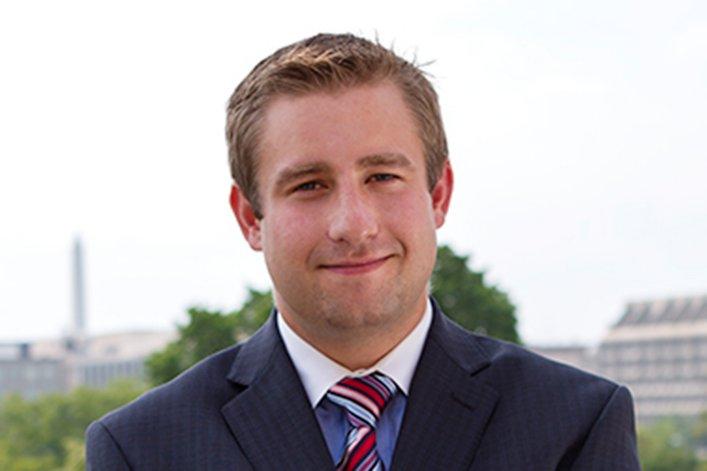
 James Bacque discusses his devastating research into allied war crimes against a defeated Germany in post-World War Two Europe, as detailed in his most famous book, Other Losses; Eisenhower imposes starvation on surrendered German soldiers interned in death camps; official records of German POWs and refugees purged and hidden; eyewitness and survivor accounts of American brutality; the Morgenthau Plan to ravage and grind into dust post-war Germany; Geneva Convention not followed; Soviet KGB archival records of refugees and POWs opened; evidence of war crimes and mass deaths of German prisoners still being suppressed by the governments of Germany, the US, France, Britain and Canada; the real life consequences of a reinterpretation of history.

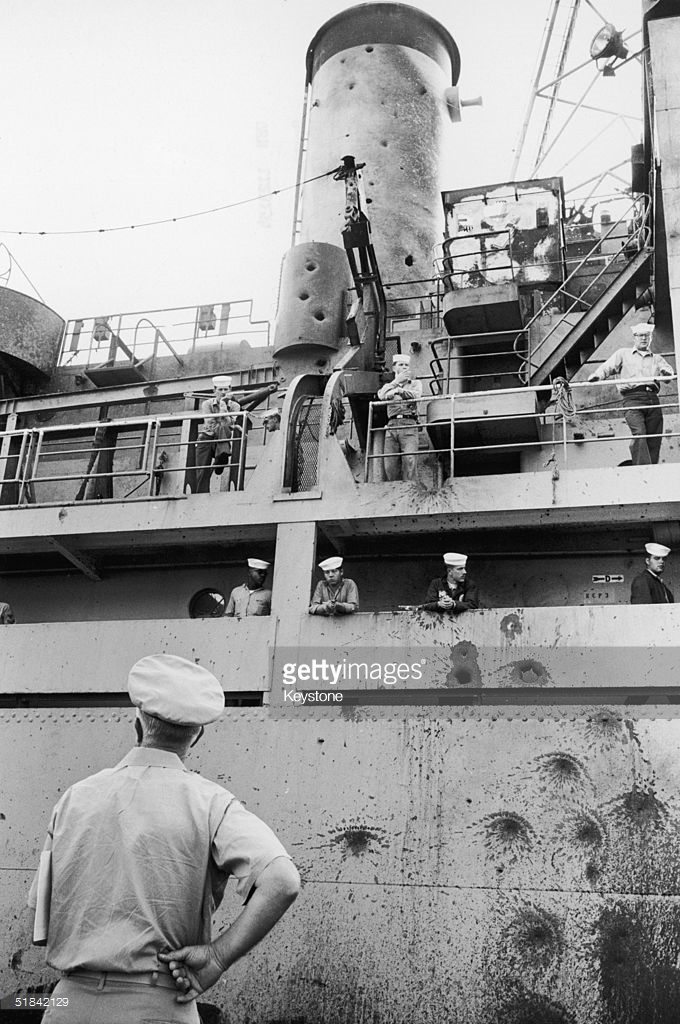
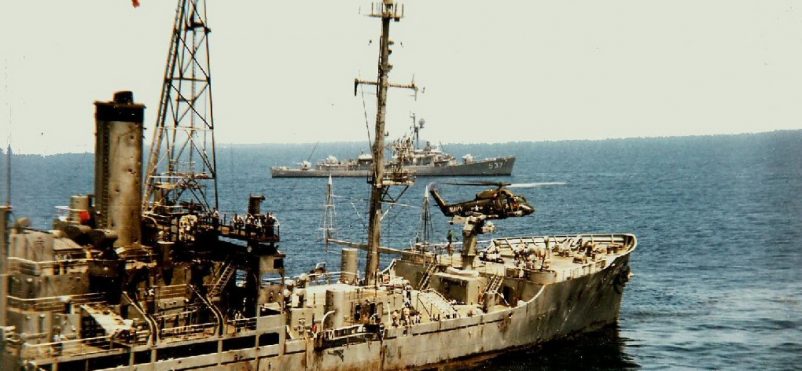

 Aletho News
