The humiliation of United States Secretary of State Mike Pompeo in Warsaw last week was a good thing. The ancient Greeks, exercising their demonstrated ability to synthesize defining characteristics, had a word for it: hubris. Hubris is when one develops an extreme and unreasonable feeling of confidence in a certain course of action that inevitably leads to one’s downfall when that conceit proves to be based on false principles.
Pompeo was in Warsaw for a “summit” arranged by the US State Department in partnership with the Polish government to discuss with representatives of sixty nations what to do about the fractious situation in the Middle East. In advance, he promised that the meeting would “deliver really good outcomes.” The gathering was initially conceived as a “war against Iran” precursor, intended to pull together a coalition against the Persians, but when it became clear that many of the potential participants would balk at such a designation, it assumed a broader agenda concerning “Peace and Security in the Middle East.”
Iran, Iraq, Lebanon, Palestine and Syria were not, not surprisingly, invited as some of them were the expected targets of whatever remedial action the conference might recommend. Israel’s Benjamin Netanyahu was, of course, present, tweeting in advance of the gathering that it would be all about “war against Iran.” He also characteristically delivered a warning that Iran was planning a “second holocaust” for his country.
Many countries, including regional power Turkey, and global powers Russia and China refused to participate at all. The European Union, the French and the Germans all sent career diplomats to the meeting rather than their Foreign Ministers while Britain’s Foreign Minister Jeremy Hunt only agreed to attend at the last minute after he was granted his wish to head a discussion session on Yemen.
The meeting was overshadowed by the context in which it took place, something that Pompeo was apparently too tone deaf to appreciate. The Europeans, to include close allies Britain, France and Germany have all been openly opposed to the White House’s completely irrational decision last year to exit from the 2015 Joint Comprehensive Plan of Action (JCPOA), which placed limits verified by intrusive inspections on Iran’s nuclear program. America’s closest allies made clear that they object to being told how and with whom they are permitted to do business, and they were finally doing something about it. Even US intelligence confirms that Iran has been fully compliant with the nuclear agreement, but the dunces in the White House are too blinded by hubris to change course.
The week before the conference opened the British, French and Germans also, perhaps deliberately, declared their intention to launch a “special purpose vehicle” barter system that would enable purchases of Iranian oil after the May 5th deadline which the United States had unilaterally declared for the initiation of sanctions prohibiting such activity. Washington has declared that any countries disregarding its sanctions against Iran would be themselves subject to secondary sanctions implemented through the US Treasury’s ability to both control and restrict access to the dollar denominated financial markets. Nevertheless, the action by the Europeans served as confirmation that much of the world wants to do business with Iran even if the White House says “no.”
Present with the US delegation in Warsaw were Pompeo, Vice President Mike Pence, National Security Adviser John Bolton, Special Adviser Jared Kushner, and President Trump’s personal attorney Rudy Giuliani. “America’s Rabbi” Shmuley Boteach also appeared in an unofficial capacity. All of the Administration officials took the stage at one point or another to denounce Iran as the “world’s greatest sponsor of terrorism,” which appeared to resonate with Netanyahu but hardly anyone else. There was also considerable spontaneous theater provided by the American cast of characters in the lead-up to the conference itself.
In an interview with CBS News before the meetings, Pompeo indicated his pleasure over the impact of the existing sanctions on Iran. When asked if there had been any sign “… that this pressure is pushing Iran to negotiate with the US?” he responded that “Things are much worse for the Iranian people, and we’re convinced that will lead the Iranian people to rise up and change the behavior of the regime.” The suggestion that Washington believes in starving the very people it is claiming to want to help to bring about a violent uprising clearly did not disturb Pompeo in the least. And he exhibited no appreciation of the fact that pressuring Iran’s government is actually the best way to strengthen it as the Iranian people have been rallying against the economic warfare being waged by the United States.
Not to be upstaged by Pompeo, John Bolton, in a video released on the Monday before the conference opened on Wednesday, celebrated in his own unique fashion the 40th anniversary of the Iranian revolution, which the people of Iran have recently been commemorating. Bolton called Iran “the central banker of international terrorism” and declared it guilty of “tyrannizing its own people and terrorizing the world.” The video concluded with a direct threat to Iranian Supreme Leader Ayatollah Ali Khamenei: “I don’t think you’ll have many more anniversaries to enjoy.”
Also during the lead-up to the conference, Rudy Giuliani was featured at a pep rally in downtown Warsaw for the “cult-like” terrorist group Mujahedin-e-Khalq (MEK), an organization for which he has served as a paid lobbyist. He told a crowd of MEK supporters that “If we don’t have a peaceful, democratic Iran then no matter what we do we’ll have turmoil, difficulties, problems in the Middle East. Everyone agrees that Iran is the No. 1 state sponsor of terrorism in the world. That has to tell you something: Iran is a country you can’t rely on, do business with, can’t trust.” He added that their government consists of “assassins, they are murderers and they should be out of power.” Afterwards, Rudy would not disclose how much he had been paid to make the speech.
But it was Vice President Pence who took the prize for unmitigated gall in his address to the conferees in which he accused the Europeans of something close to treason: “They call this scheme a ‘Special Purpose Vehicle.’ We call it an effort to break American sanctions against Iran’s murderous revolutionary regime.’’ He insisted that “The time has come for our European partners to withdraw from the Iran nuclear deal and join with us as we bring the economic and diplomatic pressure necessary to give the Iranian people, the region and the world the peace, security and freedom they deserve.” Pence might just as well have said “my way or the highway” or quoted George W. Bush’s line, “you’re either with us or against us.” The audience, including a large number of Washington-sycophants, responded with silence, unimpressed by Pence’s fulminations and his demands.
The Warsaw Summit did not produce the results envisioned by the White House, which were to pull together a group willing to escalate pressure on Iran before attacking it, while simultaneously generating support for Jared Kushner’s much discussed Israel/Palestine peace plan, due to be unveiled in April. The American plan will basically give Netanyahu everything he wants while relegating the Palestinians to the status of a non-people. As a result of the lukewarm reception in Warsaw, even from Arab states that truly hate Iran, Washington is now weaker in the Middle East than ever before. That is a good thing as the policies being embraced by Trump, Bolton, Pompeo, Giuliani and Kushner are not only an embarrassment, they are a potential disaster for everyone in the region as well as for the United States.
In which country did a senior, state-salaried cleric urge his followers last month to become “warriors”, emulating a group of young men who had murdered a woman of another faith?
The cleric did so with impunity. In fact, he was only echoing other highly placed colleagues who have endorsed a book – again without penalty – urging their disciples to murder babies belonging to other religions.
Where can the head of the clergy call black people “monkeys” and urge the expulsion of other religious communities?
Is the country Saudi Arabia? Or Myanmar? Or perhaps, Iran?
No. It is Israel, the world’s only self-declared Jewish state.
Which ‘shared values’?
There is barely a politician in Washington seeking election who has not at some point declared an “unbreakable bond” between the United States and Israel, or claimed the two uphold “shared values”. Few, it seems, have any idea what values Israel really represents.
There are many grounds for criticising Israel, including its brutal oppression of Palestinians under occupation and its system of institutionalised segregation and discrimination against the fifth of its population who are not Jewish – its Palestinian minority.
But largely ignored by critics have been Israel’s increasing theocratic tendencies.
This hasn’t simply proved regressive for Israel’s Jewish population, especially women, as the rabbis exert ever greater control over the lives of religious and secular Jews alike.
It also has alarming implications for Palestinians, both under occupation and those living in Israel, as a national conflict with familiar colonial origins is gradually transformed into a holy war, fuelled by extremist rabbis with the state’s implicit blessing.
Control of personal status
Despite Israel’s founding fathers being avowedly secular, the separation between church and state in Israel has always been flimsy at best – and it is now breaking down at an ever-accelerating rate.
After Israel’s establishment, David Ben Gurion, Israel’s first prime minister, decided to subordinate important areas of life for Israeli Jews to the jurisdiction of an Orthodox rabbinate, representing the strictest, most traditional and conservative stream of Judaism. Other, more liberal streams have no official standing in Israel to this day.
Ben Gurion’s decision in part reflected a desire to ensure his new state embraced two differing conceptions of Jewishness: both those who identified as Jews in a secular ethnic or cultural sense, and those who maintained the religious traditions of Judaism. He hoped to fuse the two into a new notion of a Jewish “nationality”.
For that reason, the Orthodox rabbis were given exclusive control over important parts of the public sphere – personal status matters, such as conversions, births, deaths and marriages.
Biblical justifications
Bolstering the rabbis’ power was the urgent need of Israel’s secular leaders to obscure the state’s settler-colonial origins. This could be achieved by using education to emphasise Biblical justifications for the usurpation by Jews of the lands of the native Palestinian population.
As the late peace activist Uri Avnery observed, the Zionist claim was “based on the Biblical history of the Exodus, the conquest of Canaan, the kingdoms of Saul, David and Solomon … Israeli schools teach the Bible as real history.”
Such indoctrination, combined with a much higher birth rate among religious Jews, has contributed to an explosion in the numbers identifying as religious. They now comprise half the population.
Today, about a quarter of Israeli Jews belong to the Orthodox stream, which reads the Torah literally, and one in seven belong to the ultra-Orthodox, or Haredim, the most fundamentalist of the Jewish religious streams. Forecasts suggest that in 40 years the latter will comprise a third of the country’s Jewish population.
‘Conquer the government’
Both the growing power and extremism of the Orthodox in Israel was highlighted in the last week of January when one of their most influential rabbis, Shmuel Eliyahu, publicly came to the defence of five students accused of murdering Aisha Rabi, a Palestinian mother of eight. Back in October they stoned her car near Nablus, in the occupied West Bank, forcing her off the road.
Eliyahu is the son of a former chief rabbi of Israel, Mordechai Eliyahu, and himself sits on the Chief Rabbinical Council, which controls many areas of life for Israelis. He is also the municipal rabbi of Safed, a city that in Judaism has the equivalent status of Medina in Islam or Bethlehem in Christianity, so his words carry a great deal of weight with Orthodox Jews.
Last month, a video came to light of a talk he gave at the seminary where the five accused studied, in the illegal settlement of Rehelim, south of Nablus.
Eliyahu not only praised the five as “warriors” but told fellow students that they needed to overthrow the “rotten” secular court system. He told them it was vital to “conquer the government” too, but without guns or tanks. “You have to take the state’s key positions,” he urged them.
Law-breaking judges
In truth, that process is already well-advanced.
Justice Minister Ayelet Shaked, who should have been the first to denounce Eliyahu’s comments, is closely aligned with religious settlers. Tellingly, she and other government ministers have maintained a studious silence.
That is because the political representatives of Israel’s religious Jewish communities, including the settlers, have now become the lynchpin of Israeli coalition governments. They are the kingmakers and can extract enormous concessions from other parties.
For some time, Shaked has been using her position to bring more openly nationalistic and religious judges into the legal system, including to the highest court in the land, the Supreme Court.
Two of its current 15 judges, Noam Sohlberg and David Mintz, are law-breakers, openly living in West Bank settlements in violation of international law. Several more judges appointed to the bench by Shaked are religious and conservative.
This is a significant victory for the Orthodox religious and the settlers. The court is the last line of defence for the secular against an assault on their religious freedoms and on gender equality.
And the court offers the only recourse for Palestinians seeking to mitigate the worst excesses of the violent and discriminatory policies of the Israeli government, army and settlers.
Chosen people
Shaked’s colleague, Naftali Bennett, another ideologue of the settlement movement, has been education minister in the Netanyahu government for four years. This post has long been a critical one for the Orthodox because it shapes Israel’s next generation.
After decades of concessions to the rabbis, Israel’s school system is already heavily skewed towards religion. A survey in 2016 showed 51 percent of Jewish pupils attended sex-segregated religious schools, which emphasise Biblical dogma – up from 33 percent only 15 years earlier.
This may explain why a recent poll found that 51 percent believe Jews have a divine right to the land of Israel, and slightly more – 56 percent – believe that Jews are a “chosen people”.
Those results are likely to get even worse in the coming years. Bennett has been placing much greater weight in the curriculum on Jewish tribal identity, Bible studies and religious claims to Greater Israel, including to the Palestinian territories – which he wants to annex.
Conversely, science and maths are increasingly downplayed in the education system, and entirely absent from schools for the ultra-Orthodox. Evolution, for example, has been mostly erased from the syllabus, even in secular schools.
‘No mercy’ to Palestinians
Another key sphere of state power being taken over by the religious, and especially the settlers, are the security services. Police Commissioner Roni Alsheikh lived for years in a settlement renowned for its violent attacks on Palestinians, and the force’s current chief rabbi, Rahamim Brachyahu, is also a settler.
Both have actively promoted a programme, Believers in the Police, that recruits more religious Jews into the police force. Nahi Eyal, the programme’s founder, has said his aim is to help the settler community “find our way into the command ranks”.
The trend is even more entrenched in the Israeli military. Figures show that the national-religious community, to which settlers belong – though only 10 percent of the population – make up half of all new officer cadets. Half of Israel’s military academies are now religious.
That has translated into an increasing role for extremist Orthodox rabbis in motivating soldiers on the battlefield. In Israel’s 2008-09 ground invasion of Gaza, soldiers were issued with pamphlets by the army rabbinate using Biblical injunctions to persuade them to “show no mercy” to Palestinians.
Call to kill babies
Meanwhile, the rapidly growing ultra-Orthodox population has been encouraged by the government to move into West Bank settlements purpose-built for them, such as Modi’in Illit and Beitar Illit. That, in turn, is gradually fuelling the emergence of an aggressive nationalism among their youth.
Once the Haredim were openly hostile, or at best ambivalent, towards Israeli state institutions, believing that a Jewish state was sacrilegious until the Messiah arrived to rule over Jews.
Now, for the first time, young Haredim are serving in the Israeli army, adding to the pressure on the military command to accommodate their religious fundamentalist ideology. A new term for these hawkish Haredi soldiers has been coined: they are known as the “Hardal”.
Brachyahu and rabbis for the Hardal are among the senior rabbis who have endorsed a terrifying book, the King’s Torah, written by two settler rabbis, that urges Jews to treat non-Jews, and specifically Palestinians, mercilessly.
It offers God’s blessing for Jewish terror – not only against Palestinians who try to resist their displacement by settlers, but against all Palestinians, even babies, on the principle that “it is clear that they will grow [up] to harm us.”
Gender segregation expands
The dramatic rise in religiosity is creating internal problems for Israeli society too, especially for the shrinking secular population and for women.
Posters for the forthcoming election – as with adverts more generally – are being “cleaned” of women’s faces in parts of the country to avoid causing offence.
Last month, the Supreme Court criticised Israel’s Council for Higher Education for allowing segregation between men and women in college classrooms to spread to the rest of the campus, including libraries and communal areas. Female students and lecturers are facing “modesty” dress codes.
The council has even announced that it intends to expand segregation because it is proving difficult to persuade religious Jews to attend higher education.
Violence of the mob
Israel has always been a society deeply structured to keep Israeli Jews and Palestinians apart, both physically and in terms of rights. That is equally true for Israel’s large Palestinian minority, a fifth of the population, who live almost entirely apart from Jews in segregated communities. Their children are kept away from Jewish children in separate schools.
But the greater emphasis in Israel on a religious definition of Jewishness means that Palestinians now face not only the cold structural violence designed by Israel’s secular founders, but additionally a hot-tempered, Biblically sanctioned hostility from religious extremists.
That is most keenly evident in the rapid rise of physical assaults on Palestinians and their property, as well as their holy places, in Israel and the occupied territories. Among Israelis, this violence is legitimised as “price tag” attacks, as though Palestinians have brought such harm on themselves.
YouTube is now full of videos of gun- or baton-wielding settlers attacking Palestinians, typically as they try to access their olive groves or springs, while Israeli soldiers stand passively by or assist.
Arson attacks have spread from olive groves to Palestinian homes, sometimes with horrifying results, as families are burned alive.
Rabbis such as Eliyahu have stoked this new wave of attacks with their Biblical justifications. State terrorism and mob violence have merged.
Destroying al-Aqsa
The biggest potential flashpoint is in occupied East Jerusalem, where the growing symbolic and political power of these Messianic rabbis risks exploding at the al-Aqsa Mosque compound.
Secular politicians have long played with fire at this Islamic holy site, using archaeological claims to try to convert it into a symbol of historic Jewish entitlement to the land, including the occupied territories.
But their claim that the mosque is built over two Jewish temples, the last of which was destroyed two millennia ago, has been rapidly reconfigured for incendiary, modern political purposes.
The growing influence of religious Jews in parliament, the government, the courts and the security services means that officials grow ever bolder in staking a physical claim to sovereignty over al-Aqsa.
It also entails an ever greater indulgence towards religious extremists who demand more than physical control over the mosque site. They want al-Aqsa destroyed and replaced with a Third Temple.
The gathering holy war
Slowly, Israel is transforming a settler-colonial project against the Palestinians into a battle with the wider Islamic world. It is turning a territorial conflict into a holy war.
The demographic growth of Israel’s religious population, the cultivation by the school system of an ever-more extreme ideology based on the Bible, the takeover of the state’s key power centres by the religious, and the emergence of a class of influential rabbis who preach genocide against Israel’s neighbours has set the stage for a perfect storm in the region.
The question now is at what point will Israel’s allies, in the US and Europe, finally wake up to the catastrophic direction Israel is heading in – and find the will to take the necessary action to stop it.
For more than a decade Venezuela has aided the governments of Haiti and the Dominican Republic through a preferential system known as Petrocaribe, and the people of those nations are not taking their governments’ support for the US coup in Venezuela lightly.
As Judas betrayed the Son of Man with a kiss for 20 pieces of silver, the institutionally corrupt governments in Port-au-Prince and Santo Domingo have written another sad chapter in their nation’s history.
Ironically, it was Venezuela that helped to develop the island’s energy infrastructure in recent years. A key part of this is the REFIDOMSA oil refinery in the Dominican Republic which the Venezuelan government helped to develop and partially owns, and which has also been used to help alleviate increased fuel demands and shortages in Haiti.
For more than a decade Venezuela has aided the governments of Haiti and the Dominican Republic through a preferential system known as Petrocaribe, which provided subsidized crude oil prices to meet the countries critical energy demands. The Petrocaribe oil agreement, allowed for governments to pay only 60 percent of the oil shipments they purchase from Venezuela. The remaining 40 percent could be financed over 25 years at 1 percent interest, as long as oil prices stayed above $40 per barrel. This allowed for tremendous savings, and money that (according to the agreement) was supposed to be used for socially beneficial purposes.
Countries such as Nicaragua, Jamaica, Cuba, and many islands in the eastern Caribbean have successfully utilized Petrocaribe funds and other Venezuelan support mechanisms, investing in vital infrastructure, education, healthcare, and have used the funding to avoid austerity deals with the IMF and other international financial institutions. Corrupt politicians in Hispaniola, though, whose regimes are closely aligned with Washington, have by contrast become well-known for robbing many of the funds meant for the social needs of their population.
For this reason, the date of January 10, 2019, will go down in the historical memory of the Dominican and Haitian peoples, as an ignominious reminder of the historically aberrant role of the Organization of American States (OAS), when that body was used as a front by neo-conservative policymakers in Washington. It was on that date that the governments of Haiti and the Dominican Republic voted to no longer recognize Venezuela’s legitimately elected president.
The people of Hispaniola, on both sides of the island, are waking up. They are coming to understand how the political orders in their countries are being managed by Washington and how local corrupt elites are stealing the solidarity funds sent by Venezuela while failing to meet the needs of the local population. Haitians and Dominicans are organizing protests, meeting at homes and schools to discuss what is happening, learning on social media and through news spread over Whats App and Facebook. Hispaniola’s betrayal of Venezuela will not be taken lightly.
The people of Hispaniola know better. They know that it was the U.S., not Venezuela, that twice invaded and occupied the Dominican Republic; they know of the multiple coups and occupations that the U.S. has carried out in Haiti. The Dominican collective memory still bears the deep scars of the over 2,000 Dominicans that perished during the invasion of Santo Domingo by the U. S. marines in April, 1965. (Dominican historians calculate that the actual figure of deaths including civilians & military during the 1965 invasion & occupation, could have been as high as 5,000). Haitians still march annually protesting the 1991 and 2004 Coup d’états, which cost the lives of so many thousands, as many human rights studies verified, such as a paper in the Lancet Medical Journal that found that upward of 8,000 people were killed as a result of the 2004 coup and pro-US paramilitary violence. A decade prior it was estimated that more than 10,000 were killed in the wake of the 1991 coup.
We need also to remember how the U.S. supported the ruthless Trujillo and Duvalierist dictatorships. We must not forget the first U. S. invasion & occupation of Haiti and the Dominican Republic, that took place in the early 20thcentury during the Era of Gunboat Diplomacy in the Central-American and Caribbean Basin.
It is against this compelling & stark historical background, that we are confronted again with tumultuous events in the region, when the U. S. is once more employing the infamous & wholly discredited OAS, in its theatrical charade to lend an air of “legitimacy” to the recent lopsided vote against Venezuela. While 14 of the CARICOM states, Mexico, Italy, Ireland, Greece, Uruguay, Cuba, Russia, Turkey, China, Iran, India, South Africa, and nearly all of the states in mother Africa continue to recognize the elected government, the U.S. has found support from its rightwing and neoliberal allied governments across Latin America, Europe, and in Israel. Shockingly, the Dominican Republic and Haiti joined with the U.S. in denouncing Bolivarian Venezuela.
This eerily reminds some of us old enough to remember, of those similarly turbulent days in the hemisphere during 1962, when an OAS meeting took place in a beach resort known as Punta del Este, Uruguay as Cuba was removed from the body. It was at that OAS meeting, that the legendary Foreign Minister of Cuba Dr. Raul Roa, forever baptized that odious organization as “The Ministry of Yankee Colonies”.
Dominicans won’t accept their government stabbing Caracas in the back
Precisely because of these historical realities that transpired in Hispaniola & the region, vis-à-vis the “Colossus of the North”, the popular movements & social organizations of the Dominican Republic have again assumed their vanguard roles as national leaders, mobilizing throughout the country, reminding the people of the historic legacy serving as background to current events, once again building up the people’s collective consciousness, illustrating that these latest events have not happened in a vacuum. Within this context, a broad coalition of popular movements & organizations, scheduled a vigil on February 5, 2019, In Santiago, the heart of the northern Cibao region of the country, comprising 13 key provinces which have played a determining role in this country’s history, going back all the way to its independence in the mid 19thCentury.
The deep solidarity bonds of Venezuela towards the Dominican nation can be traced further back in time, when in 1930 the first outflow of Dominican exiles began arriving in the “Patria de Bolivar”, fleeing the U.S. backed Trujillo’s dictatorship. Professor Juan Bosch, a legendary figure of Dominican history & who in 1962 became the first democratically elected President after the fall of Trujillo, arrived in this first contingent of Dominican exiles in Venezuela. Bolivar’s homeland in turn became the safe harbor of patriotic activism against Trujillo, by the Dominican diaspora. This anti-Trujillo militancy from Venezuela became so intense, that the “Satrap of the Caribbean” as Trujillo was sometimes known, ordered an assassination attempt against President Betancourt of Venezuela in 1960. The Dictator Trujillo was finally assassinated in 1961
After the fall of Trujillo & the ascent to power in Dominican Republic of another lackey of U. S. imperialism-President Joaquin Balaguer, whose elections in 1966 were known to have been financed by the U. S. Department of State according to declassified files, over 2,000 Dominican combatants that participated in the Constitutionalist Revolution of 1965, arrived in Venezuela. Afterwards during the re-election of Balaguer in 1971-72, hundreds of Dominicans also migrated to Venezuela. The situation in D. R. then became so untenable for many Dominicans due to Balaguer’s fierce persecution of opponents, it is estimated upwards of 60,000 of them migrated to Venezuela. Eventually, the Dominican diaspora in Venezuela became the largest migration inflow from the insular Caribbean, up to the ascent to power of Chavez, at which time Cubans began to increasingly arrive in Venezuela, composing in part the core of Chavez’s “Mision Barrio Adentro” massive health clinics projects, in the poor neighborhoods of the country.
In summary, the brotherly hospitality & solidarity afforded to Dominicans in Venezuela, throughout 20thCentury migratory periods, along with the aforementioned fact of Venezuela’s consistent solidarity with Dominican Republic through the generous Petrocaribe oil agreement, this honorable background stands in stark contrast to D. R.’s “Kiss of Judas” vote at the OAS against Venezuela, on January 10, 2019. This “Kiss of Judas” comes at a time when Bolivarian Venezuela faces a mounting economic war undertaken by the U.S. and its allies, compounded by a huge decline in the international price of oil.
With Dominicans aware of their history and learning the truth about the empire’s actions in the region, in the coming months, it appears very likely that the elite consensus in Dominican politics will begin to be shaken, as Danilo Medina faces a crisis of legitimacy.
Jovenel Moïse’s treason and the oncoming tidal wave of resistance
It was Haitians who stood out within our concert of colonized Caribbean nations, as the people which decisively proved in the field of battle, that the very best of Europe could be defeated in war when it finally gained independence from France in 1804. Venezuela’s & Haiti’s history is also intertwined, when in 1816 Petion gave arms, money & men to Bolivar, for the cause of independence of Venezuela, which in turn eventually liberated Colombia, Ecuador, Peru & Bolivia from imperial Spain.
More recently, during the second Presidency of Jean-Bertrand Aristide, Venezuela was one of the only countries which kept providing financial support to the Haitian government as it was embargoed and undermined by the George Bush administration. Furthermore, it was Chavez who was the only Latin American leader who forcefully denounced the 2004 coup against Aristide. Afterwards, during the Preval and then the rightwing Martelly & Moise regimes, Venezuela continued its unconditional solidarity with the people of Haiti, through its Petrocaribe agreement, as well as providing financial assistance for infrastructure projects. Venezuela has never required the conditionalities, nor the political alignment, for its aid, as have the supranational agencies and countries of the north. A true friend.
Regarding Venezuela & Haiti we must remember, that during Chavez’s tenure & following Haiti’s catastrophic 2010 earthquake, the leader of the Bolivarian Revolution soon thereafter announced Venezuela would “write off” Haiti’s undisclosed oil debts. At an ALBA (Bolivarian Alliance for the Americas) foreign ministers’ meeting after the earthquake, Chavez remarked that “it wasn’t Haiti that had a debt with Venezuela, but just the opposite Venezuela had a debt with that nation.” He also mentioned that an initial donation of $10 million would be disbursed to Haiti for emergency energy needs, along with an additional $100 million “for starters” towards infrastructure projects. Additionally, Chavez mentioned, one part of ALBA assistance to Haiti would consist of fuel distribution via “mobile service stations” to be up and running within a few weeks. The ALBA plan of aid for Haiti also included support for such sectors as agriculture production, food imports and distribution, and immigration amnesty for Haitians living illegally in the bloc’s member-states. At that time also, Cuba and Venezuela sent assistance and aid workers to Haiti within days of the magnitude-7.0 earthquake that left an estimated 150,000-200,000 dead and more than a million people homeless.
To illustrate that unique internationalist relationship between Venezuela & Haiti, we must witness the Venezolana de Television report of Chavez’s trip to Haiti in 2007, exemplifying the close emotional bond between these two Caribbean nations, which Chavez in great measure revived as he recuperated its historic memory jogging openly with the peoples of Cite Soleil and Bel Air through the streets of Port-au-Prince. In this report, you will witness the incredible feat of Chavez leaving his vehicle, as he actually joins the joyful masses in Port Au Prince, which are jogging in unison along his motorcade. On the other side of the historical spectrum, when Nixon as Vice President visited Venezuela in 1958 the total opposite occurred at that time. Instead of joyful crowds awaiting Nixon, enraged Venezuelans violently assaulted his limousine, manifesting the people’s rebuke of the U. S.’s close collaboration with the ruthless dictatorship of Perez Jimenez, which had recently ended.
As Moïse’s unpopular government has been caught up in corruption scandals and as complaints grow over the worsening economic situation and a lack of government support for the poor, in recent months the USPGN (Moïse’s own personal security forces) took part in a violent massacre targeting an anti-government slum. With Moïse facing mass protests his government increasingly takes its cues from Washington.
With regards to Jovenel Moïse’s governemnt’s treasonous vote against Venezuela at the OAS, another of its aberrant dimensions was its diametrical position vis-à-vis the Caribbean Community (CARICOM), of which Haiti is a member. CARICOM’s position has been unequivocal in contravention to the virtually neocolonial position of OAS Secretary Almagro, who by all reasonable standards has become a virtual mouthpiece of Uncle Sam at the “Ministry of Yankee Colonies.” CARICOM on the one hand recognizes the legitimacy of President Maduro of Venezuela, while the OAS secretary general Luis Almagro has recognized the so-called “self-proclaimed” interim President of Venezuela, Juan Guaido.
These protests were practically made invisible by Western mainstream media, even as their brutal repression has been well documented by citizen journalists and local grassroots groups.
Hispaniola Rising!
In spite of the backstabbing vote of the corrupt Dominican and Haitian administration’s against Venezuela at the OAS, the people of Hispaniola’s solidarity with Venezuela has been manifest in many ways.
Huge marches backed by many grassroots groups and Aristide’s Fanmi Lavalas party have called for an end to the foreign occupation and new sovereign elections, while a smaller opposition party Pitit Dessalin has planned demonstrations in support of the legitimacy of President Maduro. Already Haitian paramilitary and police forces are being used to brutally attack these demonstrations.
Meanwhile, on the other side of Hispaniola, on February 17, 2019, a massive demonstration in support of Venezuela is scheduled to take place, at the Parque Independencia of Santo Domingo, Dominican Republic. Student groups and activist circles across the country are being mobilized and are coming to understand the threat that Trump and his neo-con allies present.
In view of all the aforementioned, this writer while not an expert on geopolitics or history, by virtue of the fact of having been born in the Caribbean, & having closely observed its regional history since childhood & comprising many decades, I have reasonably concluded that this recent crisis between Venezuela & the Empire (or the “Colossus of the North”), could perhaps be opening a new threshold in the correlation of forces in the hemisphere, to the point where we could almost start leaning towards the conclusion, that perhaps the United States of America is no longer the absolute master of this hemisphere, say as it was the case prior to the Cuban Revolution of 1959.
What we are witnessing now are key nations such as Venezuela deciding to chart a course in favor of thier own people, implementing the re-foundation of the nation-state, while further steering away from the imperial diktat. At the same time, it is obvious that the Empire while commencing its decline, still exerts plenty of hemispheric muscle, as the treacherous OAS vote of Haiti & Dominican Republic has shown, in spite of Venezuela’s committed and honorable solidarity record with these two sister nations. Informing the younger generations about the history of the U.S. empire in the region, about the role of soft power in the media, and what is happening around the region today is vital. Also vital are creating new bonds and working to unify popular sectors to oppose the plans of Washington and their clients, to once again build south-south bonds and regional development from below.
A major blaze has broken out in the Chernobyl Exclusion Zone – the site of the worst nuclear disaster in human history. The fire hit a forest some 20 kilometers away from the ill-famed nuclear power station.
The blaze inside Chernobyl’s ‘dead zone’ in northern Ukraine started on Sunday when dry grass caught fire, the Ukrainian emergency service said in a statement. The blaze then reached a forest near the abandoned village of Bychki located some 24km (15 miles) away from the damaged nuclear reactor.
Some 5 hectares (12 acres) of forest went up in flames. Three firefighting vehicles and 18 emergency crew members were dispatched to tackle the blaze, according to the emergency service’s statement.
The Chernobyl Exclusion Zone, an area heavily contaminated by the disaster, has repeatedly witnessed wildfires over recent years. A large fire broke out there in June 2018. Another blaze, which scorched 25 hectares (60 acres) of land, hit it in 2017.
While the burning of possible radioactive wood and shrubs could release some dangerous combustion products into the atmosphere, the statement issued by Ukrainian officials mentioned no such risks for now.
Chernobyl became the site of one of the biggest nuclear disasters in history, when a local power reactor blew up during a safety system test on April 26, 1986, leading to massive contamination of the surrounding area and beyond. The catastrophic explosion released 400 times more radioactive material than the atomic bomb dropped on Hiroshima at the end of World War II.
The severely damaged reactor was sealed off by a protective ‘sarcophagus’ of steel and concrete, while the nearby town of Pripyat had its 50,000 population evacuated. A radioactive cloud covered a massive chunk of Europe in the wake of the disaster.
Today, Pripyat is a ghost town while the contaminated 30-kilometer (18.6 mile) area around the reactor has been turned into a no-go zone, which has for years been closed to any visitors, but is now booming with wildlife – keenly observed by scientists.
Surely, this is just another “loony left” headline about Elliott Abrams, the administration’s point man on Venezuela, whom some say has been unfairly pilloried on Capitol Hill.
If you read this September 1986 National Security Council email, written by NSC staffer Oliver North, you’ll see the headline is not over-stated but factually precise and faithful to the conspiratorial tone of the original source.
When U.S. policymakers needed to spring a convicted CIA-connected drug trafficker from doing hard time in federal prison, who did they call?
Trump’s appointed special envoy to Venezuela, Elliott Abrams.
On Thursday, Rep. Ilhan Omar (D-MN) scorched Abrams for his covering up the infamous El Mozote massacre and lying to Congress during the Iran-Contra conspiracy in the 1980s.
Her interrogation drew rebuke from Max Boot, the apostate conservative, and a chorus of right-wing media commentators. Boot described Omar’s comments as a “disgraceful ad hominem attack.”
Actually the impertinent Congresswoman from Minneapolis could have gone much further about Abrams’ untrustworthy behavior. One of the most revealing stories about Abram’s hypocrisy comes from an impeccably right-wing source, Oliver North, former Republican senatorial candidate and Fox News talking head.
Bagman
The year was 1986. Abrams served as assistant secretary of state for Latin America under President Reagan. He was a 39 year old lawyer and foreign policy polemicist. Even then his perennial scowl and crooked grin managed made him look furtive and self-righteous at the same time.
The Iran-Contra conspiracy was in full swing. The conspiracy, permissively labelled “a scandal,” was a Reagan White House plot to subvert the U.S. Congress’s powers of the purse. North was the coordinator of what can fairly be described as an unconstitutional covert operation, while Abrams played the role of bagman.
To bypass the so-called Boland Amendment, Abrams took payments from the Sultan of Brunei, a petroleum potentate from South Asia, and passed them to the leaders of Reagan’s counterrevolutionary army in Nicaragua. When questioned under oath, Abrams lied. He later pleaded guilty to two counts of deceiving Congress.
As part of the conspiracy, Abrams also put in a good word for a convicted drug trafficker, General Jose Bueso Rosa. He was a Honduran general who had helped the U.S. government with “sensitive operations” in Central America. As Murray Waas and I wrote in the Washington Post, North did “a favor for a felon.”
So did Abrams.
‘Sensitive Operations’
As an episode of CIA-sanctioned drug trafficking, the Bueso story was typical. Bueso, it turns out, had helped put together a CIA-trained military intelligence unit known as Battalion 316, which served as death squad for U.S. policymakers. A Honduran government investigation found that Battalion 316 had captured, tortured and executed some 200 suspected leftists.
Bueso had also trafficked multi-kiloton shipments of cocaine. As CIA Inspector General Frederick Hitz documented in Volume 2 of his report on contra drug trafficking, the agency did business with more than 50 suspected drug traffickers in the 1980s.
(Lazy reporters sometimes say that the CIA was cleared of the allegation. They didn’t bother to read the Sections 800-1148 of Hitz’s report which detail how the agency took no action against four dozen suspected traffickers who aided Reagan’s–and Abrams’–anticommunist crusade.)
IG report that CIA reporters prefer not to read (Credit: CIA)
Investigating the story for the Post, I spoke on background with law enforcement officials familiar with Bueso’s case. A wiretap had picked up Bueso repeatedly talking about shipments of “flour” into central Florida, they said.
Given Bueso’s connections, no one in the Reagan Justice Department cared to make a big deal of his cocaine shipments, no matter how hefty. They just wanted a conviction that would put him out of business. Bueso got a generous plea bargain. He would only have to serve five years.
Bueso, however, was led to believe his American friends would save him from serving any time all.
In his September 1986 email, later uncovered by Iran-contra investigators, North worried Bueso might “break his long standing silence.” He might, in other words disclose unpleasant truths about death squads and CIA drug trafficking that might taint professed U.S. ideals of human rights.
So North “cabaled quietly” with Abrams, as well as top Pentagon, CIA and Justice Department officials. A presidential pardon was out of the question but transfer to a comfortable “Club Fed” facility was arranged.
At a time when U.S. prosecutors meted out ten-year sentences to young black men for the possession of a few ounces of cocaine, Abrams was part of a gang that thought a multi-kiloton trafficker should be treated leniently. Such was his subtle advocacy of human rights.
Bueso got out of prison early–for “good behavior.” Abrams went on to a long career in U.S. foreign policy. Hundreds of thousands of black men remained in jails for years, if not decades.
Question
Rep. Omar could have asked an even tougher question of Abrams, namely, “Does Trump’s policy toward Latin America today involve protection of drug traffickers as Reagan’s policy did in the 1980s?”
She was certainly justified in questioning his veracity.
“I fail to understand why members of this committee or the American people should find any testimony you give today to be truthful,” she said.
Speaking in the Munich Security Conference, Iranian foreign minister Javad Zarif blames Israel of violating international law after bombing campaigns in Syria, criticizes European powers for not calling out Israel and the US for their behavior in the region.
Iran’s Foreign Minister Mohammad Javad Zarif accused Israel of looking for war and warned that its behavior and that of the United States was increasing the chances of a clash in the region.
“Certainly, some people are looking for war … Israel,” Zarif said at the Munich Security Conference.
Accusing Israel of violating international law after bombing campaigns in Syria, Zarif also criticized European powers for not calling out Israel and the United States for their behavior in the region.
“The risk (of war) is great. The risk will be even greater if you continue to turn a blind eye to severe violations of international law,” he said.
“Israeli behavior is putting international law on the shelf, US behavior is putting international law on the shelf.”
Zarif, who said Iran was committed to a 2015 nuclear deal with world powers for now, also accused France, Britain and Germany of not doing enough to ensure Tehran received the economic benefits of that accord.
In these times, when the United States pursues an unprecedented military build-up, promotes coups and trade wars, breaks weapons agreements, organizes the illegal seizure of overseas financial accounts, building barriers and walls along the southern border, Washington can count on the mass media to provide a variety of propaganda messages, ranging from the predictable ‘yellow ’ to the sophisticated ‘serious press’ .
While the political class dismisses the sensational press, they are avid readers of the ‘prize winning’ propaganda newspapers and their columnists.
Among the perceptive readers who follow the serious press one can hear periodical outburst of laughter or observe cynical smiles.
The ‘serious’ newspapers which draw the greatest attention include the Financial Times, the New York Times, the Washington Post and the Wall Street Journal. Though they vary in the style and quality of their writers, they all follow the same political line, especially on issues pertaining to US imperial power.
For our purposes – and because I have been a long-time subscriber of the Financial Times (FT) –, this essay will concentrate on its journalists and their articles.
Armchair Militarists and “Western Values”
Gideon Rachman is a senior columnist for the FT who travels around the world and has a unique ability to preach ‘western values’ … selectively. Commentating on contemporary US and EU politics, Rachman attributes to them ‘western values’– representative democracy, individual freedom and the rule of law, overlooking two decades of imperial invasions, several hundred US bases around the world and countless violations of international law.
According to Rachman’s notion of ‘western values’ there is a historical legacy, a long tradition of constitutional government, – overlooking the conquest of five continents.
Moreover, while Rachman has consistently condemned Syria for human rights violations, he systematically avoids Israel’s weekly murder and wounding of hundreds of unarmed Palestinian protestors. Most knowledgeable writers wink and grin as they read his selective labeling of western values.
John Paul ‘Ratface’ Rathbone is one of FT leading contributors on Latin America who specializes in celebrating murderous regimes and promoting US policies which overthrow freely elected democracies. During the first decade of the 21st century, “Ratface” (as some of his loyal readers refer to him), wrote eulogies about Colombia’s murderous President Alvaro Uribe (2002-2010) as he slaughtered hundreds of thousands of insurgents and activists.
While Uribe’s death squads rain amok driving millions of peasants from their villages, Ratface frolicked in downtown night clubs and high-end bordellos enjoyed by oligarchs and tourists.
Consistent with the Ratface’s version of Colombia’s death squad democracy he condemned ‘the populist’ popularly elected democracies of Brazil and Venezuela.
Having distant ties to Cuba, Rathbone reminisces about the good times in pre-revolutionary Havana, its stately mansions and the fun city, as he ignores the common police practice of pulling fingernails of political dissidents.
Rathbone evokes occasional cynical smiles from columnists who are embarrassed by his toadying to Washington’s intelligence operatives.
Columnist Philip Stephens is the perennial bleeding-heart liberal who sheds tears for all of his pro-western martyrs, except those Downing Street designates as pro-Russian terrorists. Stephens wears his ‘liberal democratic’ credentials on his backside – from which he emits his defense of UK imperialist wars in Syria, Libya and Iraq.
Stephen’s uncovers ‘undemocratic values’ in Putin’s poisonous operations even in provincial English villages.
Russian journalists are not excited by Philip’s journalistic ejaculations. He is the occasional butt of after work banter and laughter.
The Dean of the Times economic reportage is Martin “Marty” Wolf, who is well-known throughout the craft as the thoughtful advocate of welfare plutocracy. Martin advocates equality, justice — free markets for everybody but only the rich can meet his criteria. Marty finds and condemns populists of every hue. He engages in serious debate with leftists and rightists. But Marty like Gideon has yet to condemn Israel’s settler ‘populists’ who practice ethnic cleansing.
Despite his statistical tables, Marty never links his facts with the western imperial pillage of Africa, Asia and Latin America. His concerns and moral indignation are very selective and flourish when he finds colonized people who call into question his western values.
Marty’s hostility to China is more than a broken financial love affair (that never was). It is part of the FT propaganda war to downgrade Beijing’s economic advances in the world economy. In the January 14, 2019 issue the entire editorial board went on a rampage, ranting about China’s technological theft, its ‘slow down’ and pending crises … always reaching gloomy conclusions.
The FT expert observers note ‘big facts’ — that China is declining, all of one tenth of one percent over the previous year. Most China observers chuckle over the FT’s China ‘crises’ and wonder how the EU is ‘robust’ when it touches two percent and the US a shade higher?
China’s so-called economic crisis is, in the eyes of the FT, a product of its bloated state sector even as it promotes science and high-tech growth — but they are part of a total war.
Jamil Anderlini tags China as a ‘colonial power’ with its single base in Djibouti and for financing hundreds of billions in infrastructure, while the colonialism label is not applied to the US with several hundred military bases in five continents. China’s crackdown on US funded Uighur terrorists, who have murdered hundreds of Chinese citizens, is described as genocide, a term more apt for the US intervention in Libya, Iraq, Somalia and Syria.
The FT has a stable of journalist hacks who specialize in ignoring US economic warfare against China, Russia, Iran, Venezuela etc.
All the economic ‘slowdowns’ among US adversaries are attributed to internal mismanagement never US intervention.
The one-sided propaganda pieces written by the FT leading hackers — Hornby, Feng, Politi, Kynge, Mallet, Anderlini, Bozorgmehr etc — are notoriously repetitive: China’s economy is on the verge of crisis — which prediction never occurs and smart investors ignore while smirking all the way to their bank accounts.
The FT would offer its subscribers plenty to laugh about over late afternoon beers, if it were not for the war crimes it endorses. Their apologies of bloody western imperial invasions in the Middle East are not laughing matters.
The FT joins the Anglo-American chorus accusing Russia of political assassinations on British soil, without evidence or witnesses.
The FT has yet to chastise their US and British paymasters for their prolonged economic war against the elected governments in Venezuela.
The upwardly mobile FT scribes, scrambling for senior posts, ignore the laughter at their pious claims of ‘democratic values’ because their columns reek of lies and denials of China’s advances, Russia’s economic recovery from the catastrophic decline which the Times celebrated alongside the oligarchs’ plunder during the lost decade of the nineties.
Conclusion
The difference between the articles in the FT and the handouts from the war ministry is a matter of source not substance.
As the US engages in a total war on China’s cutting-edge industries, particularly, the world’s most advanced telecom company Huawei, the FT parrots US threats and warnings without the least effort to sort out facts from propaganda.
The fact is, the Times is part and parcel of the imperial revival which attempts to block China from establishing its pre-eminence in the world. The FT echoes President Trump’s lies about economic theft as the basis for China’s Huawei’s global leadership in telecom technology.
The FT gloss over its overt political role, evokes smirks among knowledgeable insiders as they scoff their beer.
Anti-Trump rhetoric fails to obscure the fact that the FT fronts for most of his policies – from financial deregulations, pro-Israel apologetics and Middle East wars.
There is one caveat; the FT is more warlike than the President! The FT is for remaining in Syria, Iraq, Afghanistan, Somalia and any other independent country! While the FT publishes upscale articles on wine tasting, the arts, literature, travel and jewel collecting, its ‘serious’ news promotes bloody imperial wars. There is nary a western war that the Times fails to support.
In truth, the FT are the print-police and gatekeepers overseeing the defense of ‘democratic values’ by any means necessary (including wars of untold destruction)!
The larger issue confronting the US public concern the link between the ‘serious press’, the educated reading public and Washington’s perpetual war strategy.
The ‘serious press’ like the FT is no stranger to propagandizing in favor of imperial wars, since its founding. Its lack of objectivity is a fact of life and is predictable. What is new and dangerous is that journalist-critics are few and far between, particularly as the US empire is challenged at home and abroad.
The turn to militarism and the decline in imperial economic dominance puts a premium on media propaganda; its job is convincing and activating the young, politically educated class, which does not have a commitment to the serious press.
Financial elites continue to subscribe but many laugh at the one-sided advocacy of US denigration of China – since most investors have made money on China’s robust growth.
Most investors are bored by the Times fables about ending wars in Afghanistan and elsewhere. It may come to pass someday that ridicule, loud and repeated laughter, will bankrupt the serious press, that its readers will be confined to Wall Street and the Pentagon.
Even today, readers are disgusted by the FT grotesque front page features. Madeleine Albright appears on the House and Home section which mentions her ‘hospitality’ omitting to include her murderous bombing of hundreds of thousands of Iraqi homes and her claim that the murder of a half-million Iraqi children was ‘worth it’ to win the war!
It’s 1987 and Rep. Brooks (D-TX) asks Lt. Col. Oliver North about Garden Plot, REX 84, etc. and, boy, is Ollie miffed. Sen. Inouye (D-HI) stops that line of questioning and the mainstream media, for the most part, dutifully ignore the story. And the American public, for the most part, dutifully stay asleep. As far as I can tell Brooks never again bucked the powers that be on the subject.
After Muslim congresswoman Ilhan Omar made an obvious point about Jewish power influencing American foreign policies, she was forced, by that same Jewish power, to recant, thus confirming, to all those who can still think, the awful influence of Jewish power.
Though Jewish power is quite out in the open, as in AIPAC and the existence of a racist state that’s sustained by terror and endless war, one can’t even say “Jewish power” without being immediately branded an anti-Semite, if not a Nazi.
If it wasn’t for Jewish power, Americans wouldn’t have so much Muslim blood on their hands, or being worse than bankrupt, having fought so many wars for Israel.
If not for Jewish power, questioning the Holocaust wouldn’t be a thought crime in 16 European countries. No other event in human history is so fascistically protected from scrutiny. None but the Holocaust, thanks to Jewish power.
Robert Faurisson conclusively dismantled the Nazi gas chamber myth, so Jewish power destroyed his academic career, put him on trial and bankrupted this brave, unflinching man. In 1989, three thugs claiming to be The Sons of the Memory of the Jews attacked the 60-year-old and broke his jaw.
The Holocaust does not explain genocide but enables it, but few dare to say so, for fear of Jewish power.
There are no scientific or even documentary proofs of the Holocaust, so the six million figure is just as much nonsense as the human skin lampshades and human fat soap.
Thanks to the Holocaust, Germany is forever shamed, but there is “an inherent right of every individual to defend the community to which he belongs—that is, his people—from false and wicked accusations including the wickedest,” so states the lawyer for Ursula Haverbeck, a ninety-year-old woman who is imprisoned for questioning the Holocaust.
Even if she’s completely wrong, a raving lunatic, shouldn’t Haverbeck be entitled to her own thoughts? Jewish power emphatically says no.
Proscribing thoughts, Jewish power deforms minds, distorts personalities and turns men into cowardly idiots, and when this happens en masse, as in Germany, an entire society can unravel.
Outside the West, nationalism is embraced as natural and necessary, but in most white countries, it’s become increasingly equated with Fascism, and nowhere is this attitude more salient than in Germany. There, I saw graffiti denouncing Deutschland and even calling for “volkstod,” or “national death.” So many Germans wouldn’t hate themselves so vehemently if it wasn’t for the Holocaust, it’s safe to say.
For several years, I’ve posted reports from a German friend, describing his country in crisis, so below is his latest. Burdened by Holocaust guilts, Germans are shamed into accepting millions of refugees, many of whom are Muslims fleeing from wars triggered by Jewish power.
While still enjoying prosperity, stability, even tranquility (at least in comparison to most countries in the world), there are more signs we are fast approaching the “heart of darkness.”
In Berlin and Hamburg, two German cities with a high and rising percentage of migrants, the news are sobering: In Berlin, a study of 24,000 ten-year-old students shows that about 75% didn’t reach the basic levels of reading, writing and math. The news from Hamburg were equally dismal.
Or take Duisburg. Formerly best known for a TV character (Commissioner Schimanski), it’s now famous for its constant rising percentage of Migrants (and the problems that come with it). A 2017 study shows that only 8% of all first grade students spoke accurate German, while 16% spoke no German at all! Might it have something to do with the fact that in 50% of Duisburg households, German was not the first language spoken?
Lo and behold, the solution is near, for we are told we just have to work harder on integration, and everything will be fine (one wonders where all the jobs for these pupils shall come from…).
A further glimpse into the future is provided by the lovely town of Pforzheim. With about 160,000 people, its percentage of migrants is now roughly 60%. In the last local elections, the conservative AfD reached 26%, which is very uncommon in western Germany. Though similar to American Republicans, the AfD is constantly accused of Nazism and racism by the media, with the effect that many Germans are convinced these evil Nazis must be stopped.
Christiane Quincke is someone who quite eloquently fights “Nazis.” A typical product of western Germany’s reeducation, she feels morally obligated to fight Nazis and to integrate migrants. To achieve these ends, she has allied herself with DITIB, an organisation financed by the Turkish state and accused of having rather revolting stances on women, equality and gender, etc. It doesn’t matter. Progressive Quincke sees no contradictions.
Meanwhile, the media are doing their best to show us the evil face of Germany. In Chemnitz, two Germans were stabbed to death by a group of refugees (a thing which happens now on a weekly basis). A few thousand Germans demonstrated to express their anger and rage, but the crowd was peaceful and no riots took place. Nevertheless, some Neonazis within the demonstration showed the Hitlergruß (the Nazi salute), and this was more shocking to the media than the crime itself.
Even more shocking were news some demonstrators had allegedly chased migrants through the streets. In a video posted on an Antifa channel, two Migrants were chased by some men for a few yards. The entire media came immediately to the same conclusion: It was “Dunkeldeutschland” (the dark Germany, as our former president had called it) or Nazi Germany showing its ugly head.
The deed was unequivocally condemned by all media personalities and politicians, and even Chancellor Merkel jumped on the bandwagon to state that she would not tolerate a mob hunting foreigners. Some media even claimed that a pogrom had taken place. We should keep in mind that during a real pogrom, people not only get beaten up, but often killed, while windows are smashed, houses burnt and the likes. Nothing of the kind took place in Chemnitz.
It’s funny but the media and politicians never said this incident should be thoroughly investigated by the police. Lo and behold, the alternative media finally interviewed the woman who had made the video. In it, she and her husband (who remained anonymous for fear of reprisals) explained that an argument had happened before the incident.
Two young migrants had repeatedly shouted “Piss off” at the demonstrators, who shouted back, “Shut up!” After a moment, some demonstrators started running towards the migrants, who fled. After a few yards, the demonstrators stopped and let the migrants escape. A German shouted after them, “Ihr seid hier nicht willkommen!” (“You are not welcome here!”)
So this was the horrendous incident! This was Nazi Germany, and so horrific that it had to be condemned by all good citizens! The mainstream media paid no attention to the interview with the maker of the video. Furthermore, the Director of the Federal Office for the Protection of the Constitution, Herr Maaßen, had to resign for simply stating that no pogrom had taken place in Chemnitz.
So we now have two realities: A real one and a fake one. (He who reads Orwell might not be too surprised).
Another funny thing happened some weeks later: A group of young refugees were chasing Germans in the small town of Amberg. Drunk, they punched passersby, some of whom were running away. All in all about 12 Germans were punched and/or kicked, with two hospitalized.
While this was a real violent incident, it caused no media uproar, in contrast to the fake pogrom in Chemnitz. It’s no wonder why all the great newspapers in Germany are failing.
Two other examples to explain the difference between reality and the media’s picture: For years, German Christmas markets were cheerfully attended by many people (Germans and others). People drank glühwein, ate potato pankaces and shared stories. There was no police around, no fences, no guards, nothing.
In 2018, German Christmas markets are surrounded by concrete posts to prevent Islamists from driving into the crowds. Police is often around, sometimes heavily armed and closely watching everything. Yet, we are still told, all is quiet on the Western (and Eastern) front.
Only obscure bloggers bother to paint a different picture of the reality. Vera Lengsfeld is a former politician of the conservative German Christian Democrats. Born in the former East Germany, she was a critic of the Communist regime, so was jailed for speaking her mind.
After the fall of the socialist regime, she joined the Conservative party. As she once put it, she thought that the rest of her life would be spent on “beautiful things” like art, exhibitions, etc., and she would never have to speak out against another unjust regime.
To her great amazement, the Federal Republic of Germany underwent a change from a liberal country to a politically correct state, which began to follow suicidal polices in regards to migration, economics and the environment, etc.
Lengsfeld became one the staunchest critics of Merkel’s open door policy. Since it’s hard to paint her as a racist or a Nazi, the media simply ignores her. Her informative blog paints a rather bleak picture of present day Germany. She shows that during last New Year’s Eve, for example, there was much violence in many German cities, but since these incidents were buried in local news, most Germans did not know about them.
Since the media paint the right wing AfD as a menace, AfD members are most likely to have their cars burned or their offices smashed. They may also face problems at work or have bars and restaurants shun them. In Berlin, a posh restaurant put out a sign indicating it won’t serve members of the AfD.
It’s so funny how these patterns are repeated throughout history: I am quite sure these restaurant owners are convinced of doing the right thing, but doesn’t it rhyme with “don’t buy from the Jew”? Not yet, but we’re only a few steps behind.
The change in political climate can also be seen in the following incident: The boss of the AfD in Bremen, Frank Magnitz, was attacked and badly hurt. You can see the picture of him lying unconsciously in a hospital.
When the media reported about the attack by some thugs (probably Antifa), they were quick to mention that Frank Magnitz had it coming, for he was spewing vicious hatred… I don’t want to imagine the national hysteria had Magnitz been a Social Democrat or Green Party politician. An outcry of historic proportions would have ensued.
We have it coming too. Recently, our Minister of Finance told us that “die fetten Jahre sind vorbei” (“the fat years are over”). He meant that tax revenues will go down and an economic slowdown might ensue.
Danke, Herr Minister! With about 50 billion Euros a year for all the new programs for migrants and refugees, including housing, language and integration courses, social benefits and what-have-you, what shall we do? We must stop relying on the state for everything, that’s what, and get our lazy asses going!
Hmm, wise words, but I smell something fishy here… With taxes already at the highest level in German history, what should we expect? Even higher taxes! And more economic hardship, of course. On and on it goes…
Diesel is the new evil, Trump is evil, the AfD is evil, East Germans are evil, especially Saxons (though they started the uprising against Communism), and refugees are our shiny future, even if 65% of them are still unemployed, and the ones with jobs are overwhelmingly low-skilled.
Two young Germans were just pushed in front of a train and died? Who are the suspects? Ah, some Germans (sigh of relief), but they are of Turkish and Greek origins? The Germans were pushed because they had told the suspects to stop smoking there. Oh, well… It could have been the other way around, no? Unfortunately, statistics tell a different story.
So all in all, we are on our way to the heart of darkness. It will still take many years until we’ll finally get there, but we will, for sure. No revolution will stop this course, no reform, no rationality, no new thinking. Nothing.
Reality will matter still less in the years to come. We will swallow up all our resources until we reach complete pauperization, and on our way to the bottom, we’ll see our liberties vanished and our way of life, too. There will be more taxes, violence, hatred, bigotry, irrational behavior and modern witch hunts.
We are ruled by ideologists, not only in Germany but across the West, and they will not stop chasing paradise on earth as they create hell.
Will we learn from the epic downfall awaiting us? I hope and pray that some of us will hold up the light of rational thinking, the heritage of our forefathers, who gave their lives for freedom and justice. In Berthold Brecht’s Galileo Galilei, Galilei is threatened with torture for his heresy, so recants his observation that the sun is the center of the universe, and not the earth, which prompts a disappointed follower to blurt out, “Pity the country that has no heroes!”
The frail Galilei famously corrects him, “No, pity the country that needs heroes.”
Be that as it may, we will be challenged in the years ahead to become heroes of a true and decent humanity. Good luck to us all.
On this day in 1991, over 400 people lost their lives when the US dropped two 2,000-pound smart bombs on a Baghdad air-raid shelter. But because it was the ‘good guys’ who did it, the massacre is not remembered as it should be.
‘Collateral damage’. The first time I remember those words being used was in the first Gulf War. There was plenty of ‘collateral damage’ in that conflict. In other words, lots of innocent people were killed.
At around 4:30am on Wednesday February 13, 1991, US F-117 aircraft bombed an air raid shelter in Amiriyah, a suburb of Baghdad, incinerating 408 people, many of them women and children.
“Most of the bodies were burnt beyond recognition,” the BBC’s Jeremy Bowen reported. One poor man said 11 of his family had been in the shelter. Another wept as he said he had lost his wife and children.
The US ‘defense’ was that they had thought the shelter was a command and control bunker. Iraqi President Saddam Hussein was using his people as human shields. Yet, as a Human Rights Watch report later noted, the Pentagon conceded that the bunker had been used for civil defense in the Iran-Iraq war, and US officials“gave no warning that they considered its protected status as a civilian shelter to have ended.”
Award-winning anti-war journalist John Pilger noted the interrogation that Jeremy Bowen received when he reported on the crime. “‘Are you absolutely certain it wasn’t a military bunker?” he was asked, or words to that effect. Without any trace of irony the White House spokesperson Martin Fitzwater declared “Saddam Hussein does not share our sanctity for human life.’”
Of course, it’s always a ‘mistake’ or ‘tragic accident’ when the US and its allies commit such terrible crimes, even when it most clearly isn’t. And we are always told we have to ‘move on’ very quickly from these ‘mistakes’ and ‘accidents’.
“Consider the dreadful toll of Iraqi civilian deaths in the intense bombing campaign in the first Gulf War. According to American and French Intelligence reports, over 200,000 died. All this was barely mentioned at the time, even on the BBC and the ‘quality’ press, and is now all but forgotten,” writes David Cromwell of Media Lens, in his book ‘Why Are We The Good Guys?’
The Iraqi press called for the US to be tried for war crimes over the Amiriyah strike. But of course it never happened. In 2001, on the 10th anniversary of the bombing, the US-funded Radio Free Iraq broadcast an interview with an unnamed Iraqi who claimed that there was something not quite right about the air-raid shelter. But even he said he did not know whether or not the bunker was a command and control center and admitted he was not in a “position to give an expert opinion.”
Two years later, the US and its allies assaulted Iraq again – this time falsely claiming that the country possessed WMDs. The second Gulf War has led to the estimated deaths of a further 1mn people.
What is revealing is how the Amiriyah Incineration has – outside of Iraq – disappeared down the memory hole. Let’s suppose that instead of America or one of its allies carrying out the attack it had been Russia, Iran, or another ‘official enemy’. Then we’d never have heard the last of it.
We can be sure that it would have been the subject of at least one major Hollywood film and we’d have annual reminders of the heinous crime. To their credit, the British band Radiohead did write a song about the massacre entitled ‘I Will’ which included the lyric “little baby’s eyes,” but you need to search very hard for other references in popular culture.
Isn’t that shameful?
Because by not remembering the dead of Amiriyah we are saying that those killed by the US and its allies are lesser beings than those killed by its geo-strategic rivals.
It’s not just in Iraq where this has happened.
In April 1999, during the war against Yugoslavia, NATO bombed a convoy of Kosovo Albanians, killing over 60 refugees. At first they tried to blame the atrocity on Yugoslav forces. But when evidence emerged that it was a NATO strike – the alliance claimed that the pilot had believed it to be a military convoy. And of course, the blame for this “tragic accident” was passed on to the ‘official enemy’.
“NATO regrets any harm to innocent civilians, and reminds that the circumstances in which this accident occurred are wholly the responsibility of (Yugoslav) President Milosevic and his policies,” said NATO spokesperson Jamie Shea, sounding just like Martin Fitzwater eight years earlier.
The US-led war in Afghanistan has also been marked by a high level of ‘collateral damage’. On October 9, 2001, just two days after the US and UK began Operation Enduring Freedom, four Afghans working for a UN mine clearing agency were incinerated by a US cruise missile as they slept in the agency’s building in a suburb of Kabul.
“My brother is buried under here. What can we do? Our lives are ruined,” said a distraught Mohammed Afzl as he surveyed the rubble following the US strike.
The bombing of wedding parties became a noted feature of the campaign – 44 people were killed in one such attack in July 2002.
Again, the US tried to blame others – questioning whether it had really been a wedding. It’s a tradition to fire celebratory shots in the air at Pashtun weddings, but the US claimed this was “hostile fire,” so it was ok to bomb. Later, President Bush expressed his ‘sympathy’ to the mourning families and his ‘hope that such kind of accidents won’t happen again’. But of course they did, with great regularity.
Dating back to Amiriyah, we can discern a clear pattern when ‘collateral damage’ occurs:
a) The hit is described as a ‘tragic mistake/accident’, made because we were fighting ‘the bad guys’ (indirectly blaming the ‘bad guys’ for forcing us to be there).
Or…
b) The hit is blamed on the ‘bad guys’ directly. We see this happen in Gaza with the ‘human shield’ claims made by Israel when their bombs kill civilians. Everyone Israel kills is Hamas’ fault, not Israel’s, in the same way that every death during the NATO bombing of Yugoslavia was the fault of Milosevic.
c) If there is a real outcry, then it’s a case of: don’t worry, we will hold our own internal inquiry! An internal inquiry which of course ends up exonerating the perpetrators.
What we don’t get and what the families of those killed in Amiriyah are still waiting for is justice.
So spare a thought for the 408 today and all the other innocent victims of ‘collateral damage’, because we’re really meant to have forgotten them.
Numerous population control advocates have linked anthropogenic climate change to population growth, or tried to revive interest in invoking anthropogenic climate change as the key negative outcome of continued economic growth linked to, foremost among causes, an increasing population. One pioneer of establishing and cultivating population growth – anthropogenic climate change linkage was the “Population Bomber” himself, Paul Ehrlich, who during a conference in 1968 identified anthropogenic carbon dioxide emissions as a “serious limiting factor” to economic growth.[1] By the 1970s, Ehrlich, his wife Anne and his collaborator John Holdren raised fears that carbon dioxide “produced by combustion of fossil fuels in quantities too large to contain” may “already be influencing climate” and, as such, constituted one of the “gravest threats to human well-being. . . [i.e.] the loss of natural services now provided by biogeochemical processes.”
What motivated the Ehrlichs and Holdren to worry about a looming disaster threatening humanity just twenty years after the end of the Second World War (1939-1945)? After all, the war had brought with it wholesale destruction of infrastructure and loss of life throughout the world on a previously unparalleled scale. Was it the tension of the Cold War? Was it a specific epidemic or a natural event? We argue that no specific trigger events were necessary to spark the anxieties of these activists as they already espoused a neo-Malthusian eco-catastrophist mindset that is part of a wider pessimist perspective.
Among others, the ecological economics theorist John S. Dryzek recognized at least two distinctive perspectives on the understanding of the nature, role, and future of humanity – the pessimist, and the Promethean or optimist – each possessing a distinct set of assumptions, narratives, values and ultimate goals.[2] The pessimists, like the Ehrlichs and Holdren, apply a limit-driven narrative to define the place and goals of humanity on earth. According to the pessimist view, the earth’s resources are severely limited while the balance between planetary health and disrepair is exceedingly tenuous. The pessimists model people as bacteria that, in their Malthusian exponential growth, tend to quickly outstrip the resources of their “test-tube earth,” swiftly destroying both themselves and their environment. Only – perhaps – the timely intervention of top-down expert planning may avert this preordained debacle. The optimists see resources as limited primarily by human ingenuity and ability to utilize them, and humanity itself as a gathering of creative individuals, each capable of being much more than a mouth to feed. Optimist individuals may be driven by seemingly local needs, such as the replacement of a scarce resource or the improvement of the efficiency of a process, but the outcomes of their individual efforts benefit others in a spontaneous diffusion process.
Thus, the Ehrlichs’ and Holdren’s preoccupation with human population numbers and their impact on global development or resource use did not need a specific cause or trigger. Population and resource use anxiety were part of their pessimist perspective that had them always on the lookout for humanity’s confrontation with the inflexible natural limits of the finite earth. The late 1960s and early 1970s belonged to an era when other pessimist scientists like the climatologist Stephen Schneider, a Stanford colleague of Ehrlich, were theorizing about impending glaciation caused by anthropogenic atmospheric pollution reflecting sunlight. The Ehrlichs – who, truth be told, were also worried about every possible (and always negative) impact of increasing human population numbers, including, for a time, the effects of population growth on global cooling – were casting about for a development-related scourge of humanity that would be, perhaps, less easy to redress with fundamentally optimist fixes than global cooling was thanks to technologies such as smokestack scrubbers. For this reason, anthropogenic carbon dioxide emissions were the ideal villain – or, pun intended, windmill to tilt at – as their neutralization does require a fundamental reworking and re-thinking of humanity’s key stable technologies – including its electrical power grid – on a scale that, thanks to the quickly mounting “scientific consensus” and political pressure, poses a significant challenge to human innovation.
While admitting he was not a climate specialist – thus just as “qualified” as Ehrlich, a biologist specializing in entomology, to theorize about climate – the economist Julian Simon suspected over two decades ago that global warming was a dubious pessimist scare mostly rooted in older neo-Malthusian concerns about population growth. He observed then that the “latest environmental justification for slowing or halting population growth is supposed global warming.” Simon cited a World Bank paper on the new “global negative externality” represented by greenhouse gas emissions, which he summarized as follows: “[The] old rationales for World Bank population control programs – economic growth, resource conservation, and the like – having been discredited, a new ‘rationale’ has been developed on the basis of speculative assumptions about global warming’s economic effects derived from controversial climatological science.”
Simon then summarized the position of most environmentalists as follows: “But isn’t obvious. . . that additional people and additional economic growth will cause us to use more energy and hence emit more greenhouse gases? Therefore, even if we can’t be sure of the greenhouse effect, wouldn’t it be prudent to cut back on growth?” The economist Jacqueline Kasun similarly believed at the time that “by the 1990s the doomsayers had shifted their attack” as they could no longer invoke resource depletion as the key growth-limiting issue. As she wrote, “the alarmists didn’t miss a step. The problem, they now said, was that people were using too much energy and were causing Global Warming.”[3] Both Kasun and Simon thus identified pessimist limits-based thinking as the chief impetus behind the elevation of anthropogenic CO2-caused climate change to the status of a global catastrophe.
Closer in time to us, retired Canadian academic Michael Hart has commented that “for alarmists, climate mitigation policy is as much a means of achieving their larger goals as it is a matter of addressing a possibly serious issue.”[4] As another retired Canadian academic, historical climatologist Tim Ball, has long argued, the climate change policy agenda is based on certain assumptions ultimately related to a fear of reaching another terrestrial set of limits through overpopulation. Indeed, Dr. Ball goes so far as to argue that while global warming is a “contrived problem,” most of those “who know it is contrived still believe overpopulation is a problem.” It is indeed remarkably easy to find influential climate bureaucrats and scientists who will either admit this much or else acknowledge their neo-Malthusian pessimist stance rooted in enforcing limits to human (population) growth.
Maurice Strong (1929–2015), who was described by business journalist Peter Foster as “[m]ore than any other individual. . . responsible for promoting the [UN] climate agenda,” is the most obvious case in point. Strong first achieved some degree of notoriety in Canada as young deputy minister – a high-ranking civil servant – when he ended up on the record by stating that “with a growing global population, we will have to recognise that having children is not just a personal issue but a societal issue and at a certain point we may be faced with a need to have a permit to have a child.” He also referred to the need for “national population policies” in his opening speech at the 1972 Stockholm Conference. Strong reportedly stated the following Malthusian prediction at the 1992 Earth Summit: “Either we reduce the world’s population voluntarily or nature will do this for us, but brutally.”
Having started with the idea of limits to population growth, Strong eventually connected it to the limits of economic growth problem as defined by climate change. At the 2009 Copenhagen Summit, Strong declared: “The climate change issue and the economic issue come from the same roots. And that is the gross inequity and the inadequacy of our economic model. We now know that we have to change that model. We cannot do all of this in one stroke. But we have to design a process that would produce agreement at a much more radical level.” In one of his last extended interviews, Strong said that “growth in the world population has increased the pressures on the Earth’s resources and life-support systems.” He added that “China’s one-child policy is not a perfect policy by any means, but, on the other hand, how do you control growth in your population?” Strong viewed widespread aspirations for a better life as problematic, for if everyone “enjoyed the same patterns of consumption that we in the West do, then we would have an unsustainable situation, and we’re actually on the way to that now. We are in a situation that is unsustainable.” Thus, for Strong, the issue of population growth was clearly part of the pessimist narrative and a clear issue of limits to growth.
The first chairman of the IPCC (1988-1997), Bert Bolin, was not only an early convert to the alleged catastrophic impact of CO2 emissions,[5] but also a pessimist on population and resources issues, as evidenced in his stance on the controversy surrounding the 2001 publication of The Skeptical Environmentalist by the Danish political scientist Bjorn Lomborg. Bolin later wrote he “largely share[d] the gist of the . . . analyses” of Lomborg’s critics John Holdren and John Bongaarts.[6] Bongaarts, a demographer long associated with the Population Council and a former chair of the Panel on Population Projections of the National Academy of Sciences, had then opined: “Population is not the main cause of the world’s social, economic and environmental problems, but it contributes substantially to many of them. If population had grown less rapidly in the past, we would be better off now. And if future growth can be slowed, future generations will be better off.”[7] For his part, John Holdren contradicted many of his earlier warnings of imminent resource depletion by arguing that while the world was not “running out of energy,” it was “running out of environment,” by which he meant “running out of the capacity of air, water, soil and biota to absorb, without intolerable consequences for human well-being, the effects of energy extraction, transport, transformation and use.”[8]
The second chairman of the IPCC (1997–2002), Robert Watson, would later go on the record with the following line of reasoning: “The more people we have on the Earth and the richer they are, the more they can demand resources. There’s more demand for food, more demand for water, more demand for energy. . . So, there’s no question the threats on the Earth today are far more than, say, 50 years ago and in 50 years’ time, there will even be more threats.”
The third chairman of the IPCC (2002-2015), Rajendra K. Pachauri, was even more explicit when he stated in 2007 that humanity has “been so drunk with this desire to produce and consume more and more whatever the cost to the environment that we’re on a totally unsustainable path.” He was “not going to rest easy until [he has] articulated in every possible forum the need to bring about major structural changes in economic growth and development. That’s the real issue. Climate change is just a part of it” (our italics). When asked why Indians shouldn’t aspire to the same standard of living as westerners, Pachauri answered: “Gandhi was asked if he wanted India to reach the same level of prosperity as the United Kingdom. He replied: “It took Britain half the resources of the planet to reach its level of prosperity. How many planets would India require?” In his IPCC resignation letter (apparently no longer available on the IPCC website) Pachauri admitted that, for him, “the protection of Planet Earth, the survival of all species and sustainability of our ecosystems is more than a mission. It is my religion and my dharma.”
In Pachauri’s statements, and in others we have quoted so far, there is ample evidence of a passionate commitment towards the protection of the planet,but there is no sign of recognition that humanity can do, and has done, more than simply consume resources. At no point do neo-Malthusians like Pachauri admit the possibility that technological innovations and human creativity have a place among the things that deserve a place on Earth. What pessimist activists desire is a consensus on the classification of humanity as out of control and inherently driven by destructive greed, thus in need of top-down regulation by the few remaining clear-thinking and benign autocrats – that is, functionaries – of the global government.
Another important figure in the anthropogenic climate change institutional apparatus is former American senator Timothy E. Wirth, one of the main organizers of the 1988 James Hansen hearing on climate change, and from 1998 to 2013 president of the (hardcore Malthusian) Ted Turner-funded United Nations Foundation. While no longer in the news or on the frontlines of the US government, Wirth is still actively promoting a population control agenda. He is on the record as stating in 1993: “We’ve got to ride this global warming issue. Even if the theory of global warming is wrong, we will be doing the right thing in terms of economic and environmental policy.”[9]
Needless to say, many other influential politicians and bureaucrats share a similar outlook. In 1998 Christine Stewart, then Canadian Minister of the Environment, when speaking before editors and reporters of the Calgary Herald said: “No matter if the science is all phony, there are collateral environmental benefits… Climate change [provides] the greatest chance to bring about justice and equality in the world.”[10] More recently, Connie Hedegaard, European Commissioner for Climate Action (2010–2014), argued that the European Union policy on climate change was right even if the science was not. As she put it:
Say that 30 years from now, science came back and said, “wow, we were mistaken then; now we have some new information so we think it is something else”. In a world with nine billion people, even 10 billion at the middle of this century, where literally billions of global citizens will still have to get out of poverty and enter the consuming middle classes, don’t you think that anyway it makes a lot of sense to get more energy and resource efficient… Let’s say that science, some decades from now, said “we were wrong, it was not about climate,” would it not in any case have been good to do many of things you have to do in order to combat climate change? I believe that in a world with still more people, wanting still more growth for good reasons, the demand for energy, raw materials and resources will increase and so, over time, will the prices… I think we have to realise that in the world of the 21st century for us to have the cheapest possible energy is not the answer.
Executive Secretary of the United Nations Framework Convention on Climate Change, Christiana Figueres, said “We should make every effort to change the numbers… obviously less [sic] people would exert less pressure on the natural resources,” and humanity is “already exceeding the planet’s planetary carrying capacity, today.” She also added that population control was not enough and that fundamental changes need to be made to our current economic system. Figueres, like Strong, Wirth, Bongaarts, Stewart and Hedegaard, was speaking from the depths of the neo-Malthusian pessimist limit-based perspective.
Professor Hans Joachim Schellnhuber, the director of the Potsdam Institute for Climate Impact Research and an adviser to the encyclical Laudato Si, has long been on the record as estimating the carrying capacity of the planet at “below 1 billion people.” More recently, researchers associated with the Population Reference Bureau and the Worldwatch Institute stated: “Human population influences and is influenced by climate change and deserves consideration in climate compatible development strategies. Achieving universal access to family planning throughout the world would result in fewer unintended pregnancies, improve the health and well-being of women and their families, and slow population growth – all benefits to climate compatible development.”
Since leaving his academic appointment, prominent Canadian climate scientist Andrew Weaver has become the leader of the British Columbia Green Party. As could be expected from a pessimist activist, Weaver is on the record as stating: “Technology itself will not solve global warming. Individual behavior and consumption patterns will need to change as well. For too long we have lived by the axiom that growth is great. We strive for economic growth year after year. We drive it by increasing population. But infinite growth cannot occur in a finite system. Collapse is inevitable.”[11]
The late climatologist Stephen Schneider was a leading advocate for major reductions of greenhouse gas emissions. Schneider was sometimes derided by his critics for having switched, almost overnight, from being a major proponent of global cooling, as we mentioned earlier, to becoming one of the most prominent supporters of global warming. Less well known about him, however, is the fact that he never changed his Ehrlich-inspired belief in the existence of a “wide consensus that exponential growth, for both economies and human populations, cannot continue indefinitely,” and that “population growth must ultimately be controlled.”
Thus, Schneider was a classic neo-Malthusian pessimist thinker. As he wrote in a 1977 popular book mainly devoted to describing the perils of global cooling, the “obvious point about population growth [that] must be stated and restated” is that “population increases will only dilute the effectiveness” of achieving “rapid improvements in per capita living standards for the present 4 billion people on earth.”[12] Twenty years later, having become a major proponent of global warming, he still believed that “control of population growth has the potential to make a major contribution to raising living standards and to easing environmental problems like greenhouse warming.” Not surprisingly, he urged the United States government to “resume full participation in international programs to slow population growth” and to “contribute its share to their financial and other support.”[13]
Whether its goal was curbing anthropogenic global cooling or global warming, the pessimist narrative’s endgame was always to institute top-down expert controls over population and centrally limit the human impetus to grow, create and aspire to change. In effect, the pessimist goal was to combat and control the optimist narrative through fear and discrediting its foundational impulses.
[1] Shelesnyak MC (ed.) (1969). Growth of Population: Consequences and Control. Gordon and Breach, p. 141.
[2] Dryzek, J (2005). The Politics of the Earth: Environmental Discourses. Oxford University Press, 2nd edn.
[3] Kasun J (1999/1988). The War Against Population: The Economics and Ideology of Population Control. Ignatius, rev. edn., p. 49
[4] Hart M (2015). Hubris: The Troubling Science, Economics, and Politics of Climate Change. Compleat Desktops Publishing, p. 289.
[5] Bolin is also on the record as stating in 1959 that the increase in carbon dioxide atmospheric concentrations “caused by the burning of fuels by industry and transport” could have an “effect on climate” that “might be radical.” Original quote in Anonymous. “Experts discuss monsters of sea.” New York Times, 28 April 1959.
[6] See Bolin B (2007). A History of the Science and Politics of Climate Change: The Role of the Intergovernmental Panel on Climate Change. Cambridge University Press, pp. 183-185, quote on p. 183.
[7] Bongaarts J (2002). “Population: Ignoring its impact.” Scientific American, 286(1), 67–69, quote on p. 69.
[8] Holdren JP (2002). “Energy: Asking the wrong question.” Scientific American, 286(1), 65–67, quote on p. 65.
[9] Fumento M (1993). Science Under Siege. William Morrow & Co., p. 362.
PORT-AU-PRINCE, HAITI – Throughout recent Latin American history, it is hard to find a country that has been as thoroughly manipulated and plundered by the United States as Haiti has. After over a century of U.S. intervention — from the 19-year-long U.S. military occupation that began in 1915 to the 2010 election rigged by the Hillary Clinton-run State Department — Haiti has become the ultimate neoliberal experiment that has forced its people to live in conditions so horrible that rivers of sewage often run through the city streets.
Even Haiti’s own president, Jovenel Moise — who has presided over the most recent phase of U.S.-backed plunder — recently called the entire country a “latrine.”
Yet — much as in 1791, when Haiti was the site of the first successful slave revolt in the Americas — today the people of Haiti seem to have finally had enough of being slaves in all but name and are taking to the streets en masse in an effort to end the rule of the Haitian Bald-Headed Party (PHTK), the U.S.-backed political party with close ties to the Clintons.
For six days, thousands of Haitians have marched through the country’s capital of Port-au-Prince and other major cities, calling for Moise’s ouster for corruption and gross economic mismanagement in recent years, much of which can be traced directly back to the 2010 earthquake and the subsequent U.S.-UN “relief” effort that let to rigged elections, caused a deadly cholera outbreak and sought to turn the entire country into one massive sweatshop for American clothing companies.
More specifically, Moise has ignited popular ire after being implicated in the embezzlement of a $4 billion loan given to the Haitian government to develop the country via Venezuela’s PetroCaribe program and for his failure to combat the double-digit inflation that has further impoverished the Caribbean nation.
President Moise has thus far responded to the protests much like the president of Haiti’s former colonial ruler, France, where President Emmanuel Macron has sought to disperse the Yellow Vest popular protest movement with police violence. Similarly, Moise has ordered police to shoot tear gas and live ammunition into crowds of unarmed protesters, killing at least four people, including a 14-year-old boy who was not even a part of the protests, and injuring scores more.
Despite the violent response from the Moise-led government, protesters have continued to come out in force, even stoning Moise’s personal home on Saturday. That same day, Moise declared that he would “clean the streets” of every protester by Monday.
Yet the mass protests continued through Monday, when police were seen standing down in Carrefour (a suburb of Port-au-Prince), no longer willing to fire on protesters. In a video of the incident shared on social media, one female protester yells that “the police are afraid.” Late Monday afternoon, local reports asserted that PHTK ruling elite were evacuated via helicopter from the wealthy enclave of Petionville to the Toussaint L’Ouverture International Airport, apparently planning to flee the country — at least temporarily. Other reports stated that at least one police officer had been shot during Monday demonstrations that turned violent and saw several businesses looted.
Local media on Tuesday reported high turnout for protests in several cities.
The international response to the protests in Haiti has been limited, with the UN warning Haitian protesters on Sunday that “in a democracy change must come through the ballot box, and not through violence.” This unintentionally ironic statement ignores the documented meddling of the United States in massaging vote totals and other manipulative tactics in the last two presidential elections. This, combined with the fact that the U.S. has kidnapped and overthrown Jean-Bertrand Aristide, a left-leaning populist politician, each time he won an election — first in 1991 and then in 2004 — has greatly reduced Haitians’ faith in their “democracy.”
The U.S. knows something about election meddling
Since he came to power in February 2017, Moise’s policies have resulted in several mass protests — including last July, when protesters forced Moise’s government to abandon a planned hike in fuel prices; and last November, when protesters demanded Moise’s ouster for the embezzlement of PetroCaribe funds. With so many protests in such a short span of time, the anger among the Haitian population at this unpopular president is pungent and will likely prove difficult to placate this time.
A large part of Moise’s unpopularity is likely related to the fact that he was never popularly elected to begin with. The 2016 election that Moise allegedly won was disorganized and had turn-out so dismal that Moise, the “winner,” received only around 600,000 votes out of a national population of over 11 million. Prominent Haitian politicians called the election an “electoral coup.”
In addition, that election was overseen by Ken Merten, former Obama administration ambassador to Haiti and then Obama’s Haiti Special Coordinator, and was wracked by accusations of vote-buying and -stealing and other fraudulent activities. Merten’s involvement is particularly nefarious given that he oversaw the previous Haiti election (2010) where the U.S. State Department had altered the vote count.
If that were not enough, in addition to the election fraud, Moise was widely believed to have been ineligible for office soon after having been “elected,” after it was revealed that he had laundered money through his personal bank account and was tied to a drug-trafficking operation.
Ultimately, Moise’s unpopular rule is the continuation of that of his predecessor, Michel Martelly, who chose Moise — then a political neophyte — as his successor. Martelly’s rise to power was similar to Moise’s but even more fraudulent. In the 2010 election that saw Martelly “win,” the Hillary Clinton-run State Department changed the vote totals in order to place Martelly in a runoff election for which he hadn’t in fact qualified. When the previous Haitian government resisted, Clinton herself traveled to Haiti and threatened to withdraw all U.S. aid from Haiti if Martelly did not replace the second runoff candidate, Jude Celestin.
After coming to power, it took little time for observers to realize why the U.S., particularly the Clinton-led State Department, had chosen Martelly. Not only was Martelly an avid supporter of neoliberal policies that impoverished his people, he also supported the outright theft of Haitian land by wealthy foreign corporations to create so-called “Free Trade Zones,” and brokered a deal with the Clintons to release Americans who had been arrested for child trafficking.
Furthermore, Martelly also helped squander much of the foreign aid that did make it into Haiti, cementing his reputation as notoriously corrupt, although most of that aid never even made it to Haiti and instead remained in the hands of corrupt foreign contractors.
In addition, Martelly was also a supporter of the Duvalier family — which ruled Haiti with an iron fist during the dictatorships of “Papa Doc” Duvalier and his son “Baby Doc” Duvalier. Indeed, when “Baby Doc” Duvalier returned from exile in France to attend a Haitian government ceremony, Martelly — along with Bill Clinton, who was also in attendance – rose to greet him.
Martelly’s government included several officials who were connected to the Duvalier dictatorship, including his prime minister, Garry Conille, whose father held a cabinet position in the Duvalier dictatorship. In addition, Conille served with Bill Clinton on the Interim Haiti Recovery Commission and had previously worked as a development manager for the United Nations before receiving his prominent position in the government installed by both the U.S. and the UN.
Thus, Haiti under Martelly and Moise has been little different in practice from the Duvalier era. Indeed, as Amy Wilentz noted in a 2014 article in The Nation, “[The Duvalier] political toolbox — authoritarianism, trumped up elections, distrust of free speech, corruption of the forces of order, and no justice — are the methods by which Haiti’s ruler [Martelly] still controls the country.” With Moise serving as the new face of PHTK and Martelly’s chosen successor, this neo-Duvalier era in Haiti that has largely been orchestrated by the U.S. is now in danger of falling apart.
Haiti puts the neo-colonial oligarchy on edge
If the movement to oust the U.S.-backed and illegally installed rulers of Haiti is successful, it could easily send shockwaves through the power structures of the United States and its client states, much as the Haitian revolution did to the colonial powers two centuries ago. Indeed, the Haitian revolution instilled fear in European colonial masters throughout the Americas and the world and inspired countless slave revolts in the United States alone. Today, it still serves as a reminder that the most repressed class of a society can rise up to declare their equality and independence — and win. Perhaps that is why the current oligarchical system has invested so much in robbing Haitians of their economic and political power.
Though today is unlike the late 18th century in the sense that those at the bottom of the rung are no longer called “slaves” and those at the top are no longer called “masters” and “kings,” the record inequality that now exists throughout the world, the U.S. included, has recreated in today’s power structures an ethos eerily similar to that of the feudal-colonial systems of centuries past.
As both Haiti and France have become the new epicenters of popular unrest against predatory elites, much as they were two centuries ago, it is time to see both of these current movements as part of the same struggle for basic human dignity in an era of neocolonialism, imperialism and global oligarchy.
Whitney Webb is a staff writer for MintPress News and has contributed to several other independent, alternative outlets. Her work has appeared on sites such as Global Research, the Ron Paul Institute and 21st Century Wire among others. She also makes guest appearances to discuss politics on radio and television. She currently lives with her family in southern Chile.
Former Pfizer chief toxicologist Helmut Sterz presents a critical examination of the development, approval, and global rollout of mRNA COVID-19 vaccines—particularly those produced by Pfizer/BioNTech. The Vaccine Mafia details the failure of pharmaceutical companies, regulatory authorities, politicians, and international organizations to follow established scientific and ethical standards during the pandemic. Drawing on the author’s decades of experience in pharmaceutical toxicology, Sterz reveals the many ways the vaccines’ inadequate or omitted preclinical safety testing put the world’s population at risk.
Sterz demonstrates how “emergency” approvals allowed manufacturers to bypass long-standing international guidelines governing toxicity testing, especially with regard to reproductive and cancer risks. They also allowed governments and health authorities to ignore or conceal evidence of serious adverse effects that occurred, including myocarditis, reproductive harm, and other long-term health risks.
This site is provided as a research and reference tool. Although we make every reasonable effort to ensure that the information and data provided at this site are useful, accurate, and current, we cannot guarantee that the information and data provided here will be error-free. By using this site, you assume all responsibility for and risk arising from your use of and reliance upon the contents of this site.
This site and the information available through it do not, and are not intended to constitute legal advice. Should you require legal advice, you should consult your own attorney.
Nothing within this site or linked to by this site constitutes investment advice or medical advice.
Materials accessible from or added to this site by third parties, such as comments posted, are strictly the responsibility of the third party who added such materials or made them accessible and we neither endorse nor undertake to control, monitor, edit or assume responsibility for any such third-party material.
The posting of stories, commentaries, reports, documents and links (embedded or otherwise) on this site does not in any way, shape or form, implied or otherwise, necessarily express or suggest endorsement or support of any of such posted material or parts therein.
The word “alleged” is deemed to occur before the word “fraud.” Since the rule of law still applies. To peasants, at least.
Fair Use
This site contains copyrighted material the use of which has not always been specifically authorized by the copyright owner. We are making such material available in our efforts to advance understanding of environmental, political, human rights, economic, democracy, scientific, and social justice issues, etc. We believe this constitutes a ‘fair use’ of any such copyrighted material as provided for in section 107 of the US Copyright Law. In accordance with Title 17 U.S.C. Section 107, the material on this site is distributed without profit to those who have expressed a prior interest in receiving the included information for research and educational purposes. For more info go to: http://www.law.cornell.edu/uscode/17/107.shtml. If you wish to use copyrighted material from this site for purposes of your own that go beyond ‘fair use’, you must obtain permission from the copyright owner.
DMCA Contact
This is information for anyone that wishes to challenge our “fair use” of copyrighted material.
If you are a legal copyright holder or a designated agent for such and you believe that content residing on or accessible through our website infringes a copyright and falls outside the boundaries of “Fair Use”, please send a notice of infringement by contacting atheonews@gmail.com.
We will respond and take necessary action immediately.
If notice is given of an alleged copyright violation we will act expeditiously to remove or disable access to the material(s) in question.
All 3rd party material posted on this website is copyright the respective owners / authors. Aletho News makes no claim of copyright on such material.
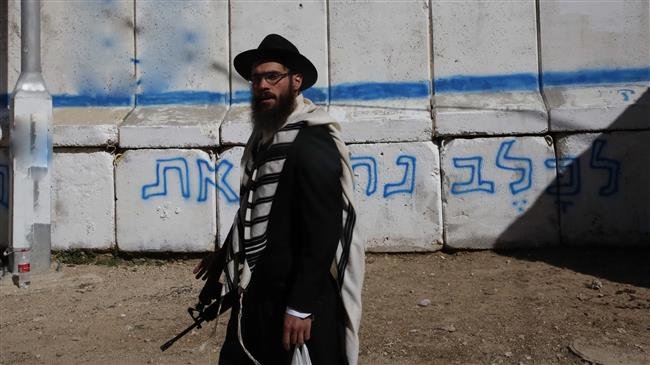


 Aletho News

