In the search to find exactly what American policy, interests and objectives are in Syria, one can refer to the United States Institute of Peace (“USIP”), which was established by Congress in 1984. According to Mona Yacoubian, a USIP Senior Advisor on Syria, the Middle East and North Africa, the USIP seeks “to prevent and resolve violent conflicts abroad, in accordance with US national interests and values”.
On September 27th, 2018, Ms. Yacoubian testified at the House Foreign Affairs Subcommittee on Middle East and North Africa hearings on “US policy Toward Syria: Part I”. Given her role, one can reasonably assume that Ms. Yacoubian’s testimony at Congress reflects, if not represents, and summarizes the Trump administration’s policy towards Syria. In the first paragraph of her testimony, Ms. Yacoubian says “Implications of Assad’s Survival. The regime will stop at nothing to ensure its survival, […] Assad’s survival could also upend the regional order, embolden Iran and its allies and posing new threats to Israel.” This one short paragraph by a senior American Advisor encompasses several critical issues which constitute a general framework of Washington’s Syria policy.
First, the reference to “Assad regime” is pejorative and denies the legitimacy of both, Syria’s political system – which is based on Syria’s 2012 Constitution – and the re-election of President Assad in 2014. Ms. Yacoubian might object, claiming that the elections were rigged. I would tell her to “see the log in her eye before she sees the speck in my eye”; I would remind Ms. Yacoubian of the rigged Senate election of Lyndon Johnson in Texas in 1948, the rigged presidential election of John Kennedy in Chicago in 1960 by the Daley Machine and the rigged presidential election of George W. Bush in Florida in 2000.
Second, Ms. Yacoubian says; “The regime will stop at nothing to ensure its survival…” This fickle statement was pedaled by multiple opponents of the Syrian ‘regime’. President Assad had to use all the available means at his disposal, in addition to outside help, to ensure not only his survival and the survival of the Syrian political system, but more importantly and ultimately the survival of Syria as a sovereign state. I would remind Ms. Yacoubian that President Abraham Lincoln used means at his disposal to ensure the survival of the Union during the American Civil War. Lincoln’s success in preserving the Union, in which roughly 620000 Americans lost their lives and taken as a percentage of today’s population, the number would be 6 millions American lives, made him an American legend. By comparison, Assad fought hordes of Islamists, terrorists, warlords, criminals who had come from all over the world, with the financial and military help of a host of foreign countries (US, Turkey, Saudi Arabia, Qatar amongst others) for the single purpose of destroying Syria. Had they succeeded, Syria would have disintegrated into hundreds of cantons, headed by a multitude of terrorists, Islamists, Ameers, mafias, warlords in every neighborhood fighting each other indefinitely for supremacy. Assad, along with the Syrian people and institutions, Russia, Iran and Hezbollah, should be thanked for the survival of a Sovereign Syria.
Third, she says “Assad’s survival could also upend the regional order, emboldening Iran and its allies and posing new threats to Israel”. Addressing each component of her statement separately:
“Upend the regional order”: Assad has been in power since 2000 and during his eleven-year rule prior to the uprising, the regional order was not upended. It was rather stable, particularly the Syrian-Israeli relations.
“Emboldening Iran”: Syrian-Iranian warm and friendly relations started with the fall of the Shah and the establishment of the Islamic Republic in 1979. During the uprising, Syria needed Iranian help which Iran provided. Once the uprising in Syria is over, relations between the two countries will return to normal, like relations between any sovereign allies.
Assad’s survival, she notes, “posing new threats to Israel”: I would just note that during many Syrian-Israeli Track II Diplomacy meetings in the 1990’s and the first decade of the present century, in which I participated, I often heard Israelis repeat the saying “If it is not broke don’t fix it”. The reference was to the Syrian-Israeli relations in which no bullets were fired across the disengagement line in decades.
Ms. Yacoubian moves on to note that “Meanwhile, the Assad regime vows it will reassert control over Idlib province…[which] harbors a significant al-Qaeda presence…” She further notes that “The regime could seek to retake critical hydrocarbon facilities currently under the control of the US-backed Syrian Democratic Forces.” A shocking and presumptuous statement, implying foreign governments shall not uphold their sovereignty if it interferes with American interests. President Assad, took the Presidential oath to defend and protect Syria’s sovereignty and territorial integrity. Therefore, it is his constitutional duty to reassert control over Idlib, a Syrian province which “harbors a significant al-Qaeda presence”, and retake Syrian critical hydrocarbon facilities. I will just remind the Senior Advisor, once again, to remember the legacy of President Lincoln.
Finally, Ms. Yacoubian asserts that “The Assad regime repeatedly has transgressed international norms and laws governing armed conflict.” It is the height of irony for Ms. Yacoubian to consider Assad’s attempts to reclaim occupied Syrian territory a violation of international legal norms. Th US has spearheaded an uninvited military occupation in Syria alongside Turkey and particularly Israel, which has occupied and annexed the Syrian Gholan plateau in violation of numerous United Nations resolutions and, as Ms. Yacoubian notes, “has undertaken 200 military attacks against Iranian targets in Syria over the past two years”.
Overall, an assessment of American policy, interests and objectives in Syria exposes deep flaws and inconsistencies and underlies a much likely “private agenda”; one where American-Israeli geo-political regional interests are at the center.
George H.W. Bush, the 41st president of the United States, died last Friday. President Bush was loved by the Jews. Over the weekend we saw an endless parade of Jewish individuals and organisations paying homage to Bush for his commitment to Israel and to the Jews.
The Republican Jewish Coalition (RJC) described Bush as “a great friend of Israel, the Jewish people, and the RJC.” The group joined other Jewish voices in noting the work Bush did to help bring Jews from the former Soviet Union and Ethiopia to Israel as well as his actions to help ensure the safety of Israel. Bush also led the effort in the UN to repeal the ‘Zionism is Racism’ resolution and he stood up against Saddam Hussein who, at the time, was one of the last Arab leaders to oppose Israel and Zionism.
Yet, it was the photo of Bush at the Wailing Wall that grabbed my attention. On Saturday, the Israeli press circulated a photograph of the 41st president in suspiciously intimate proximity to the Wailing Wall.
We have seen variations of this photograph so many times that we have forgotten to ask the critical questions: What attracts world leaders to that wall? Is it possible that our world leaders are all (somehow) so libidinally attracted to walls that they do not even mind being caught on camera in such an intimate moment with that one particular wall? And if not, how do we explain the fact that so many of our world leaders are caught so close to that Jewish wall with their eyes closed? And more crucially, what is it about the Zionist culture that inspires this demand to publicise powerful goyim kissing the sacred wall?
Every world leader including the future British king who has visited Israel in the last decades has been photographed kissing, touching, flirting and even talking to that wall. Today I ask Why? It is likely that our incredibly lame world leaders do not understand the powerful symbolism of their visit to the wall nor do they grasp the reason they are then led to a formal ceremony at Yad Vashem. For the Israelis and Zionists, the visits to the wall and Yad Vashem are a significant affirmation of the Jewish national narrative. Both locate the Zionist project within an historical context.
Yad Vashem tells the Goyim’s leaders what happens to Jews when they do not have a safe haven. Yad Vashem reenforces the primacy of Jewish suffering and legitimises, at least in the Zionist psyche, the plunder of Palestine. The Wailing Wall is used to illustrate the Jewish ‘continuum’ in Palestine. It conveys the unfounded message that the Jews who returned to Palestine in the 20th century are the offspring of the Hebrews who lived there two centuries ago.
Israel is not the only state that integrates visits to shrines and holy places into its state’s ceremonial procedure for visitors. Islamic countries often expect world leaders to visit their great mosques. Hindus escort their guests to their shrines. People like to impress state visitors with the greatness of their heritage and the aesthetic and spiritual depth of their culture. But they do not expect world leaders to be photographed making love to their shrines or to their mosque’s walls. No other countries whether Muslim, Christian, Buddhist or Hindu expect world leaders to subscribe to or worship their local religious symbols. But the Jewish State does. It is even brazen enough to dress world leaders in Yarmulkes.
“The strong man with the dagger is followed by the weak man with the sponge.” – Lord Acton
George Herbert Walker Bush died on Saturday. He was 94 years old. Thanks to decisions he made throughout his career, thousands – perhaps millions – of people never got near 94. He invaded Iraq in 1991, instituted sanctions that destroyed the country. He pardoned those involved in the Iran-Contra affair and was head of the CIA when Operation Condor launched the military coup in Argentina in 1976.
Instead, Simon Tisdall – a mindless servant to the status quo, always happy to weave invective about our designated enemies – treats us to paragraph after paragraph of inane anecdotes.
Good old Georgie once gave him a lift in Air Force One.
Barbara gave him useful advice about raising Springer Spaniels.
The following words and phrases are not found anywhere in this article: CIA, Iraq, Iran-Contra, Argentinian coup, Iran Air Flight 655, NAZI, Panama.
Rather, Tisdall refers Bush’s term as “before the era of fake news”. Which makes him either a complete liar or profoundly under-qualified to write on the subject – as the Bush-era spawned the original fake news: The Nayirah testimony. A pack of lies told before the Senate, and used to justify a war in the middle-east.
Bush started two wars as President. Planned and enabled countless crimes as director of the CIA. pardoned all those implicated in the Iran-Contra affair. Refused to apologise when the US Navy “accidentally” shot down an Iranian airliner, killing over 200 civilians, including 60 children.
He was the original neocon – his administration brought us Cheney and Powell and Rumsfeld. Gave birth to the ideology that stage-managed 9/11, launched the “War on Terror”, and cut a blood-stained swath across North Africa and the Middle East.
We don’t hear about that.
What we DO hear about is Bush’s “deep sense of public duty and service” and that “Bush was a patriot who did not need cheap slogans to express his belief in enduring American greatness”. No space is given over to analysis, to examine the fact that “belief in enduring American greatness” is quasi-fascism, and responsible for more violent deaths this century than any other cause you can name.
In hundreds of words, a notionally left-wing paper has nothing but praise for a highly unpopular right-wing president. No space is given over even to the gentlest of rebukes.
The whole article is an exercise in talking without saying anything. Pleasantries replacing truth. Platitudes where facts should be. A nothing burger, with a void on the side and an extra order of beige.
It’s an obituary of Harold Shipman that eschews murder talk and rhapsodises about his love of gardening.
A eulogy to Pinochet that praises his economic reforms but neglects all the soccer stadiums full of corpses.
An epitaph to Hitler that focuses, not on his “controversial political career”, but on his painting and his vegetarianism.
Did you know Genghis Khan once lent me a pencil? He was a swell guy. The world will miss him.
We’re no longer supposed to examine the lives, characters or morals of our leaders. Only “honour their memory” and be “grateful for their service”. History is presented to us, not as a series of choices made by people in power, but as a collection of inevitabilities. Consequences are tragic but unavoidable. Like long-dead family squabbles – To dwell on them is unseemly, and to assign blame unfair.
Just as with John McCain, apologism and revisionism are sold to us as manners and good taste. Attempts to redress the balance and tell the truth are met with stern glares and declarations that it is “too soon”.
It’s never “too soon” to tell the truth.
John McCain was a dangerous war-mongering lunatic. George Bush Sr was a sociopath from a family of corrupt sociopaths. The world would be a far better, and much safer place if just one major newspaper was willing to say that.
Really, there are two obituaries to write here:
First – George HW Bush, corrupt patriarch of an old and malign family, passing out of this world to face whatever eternal punishment (hopefully) awaits those who sell their immortal soul in exchange for a brief taste of power.
Second – The Guardian, perhaps a decent newspaper once-upon-a-time, now a dried out husk. A zombified slave to the state, mindless and brainless and lifeless. No questions, no reservations, no hesitation. Obediently licking up the mess their masters leave behind.
It’s sickening.
Kit Knightly is co-editor of OffGuardian. The Guardian banned him from commenting. Twice. He used to write for fun, but now he’s forced to out of a near-permanent sense of outrage.
Given that we have all been born and raised under a regime that has the CIA, hardly anyone questions the power of the CIA to assassinate people. The CIA’s power of assassination has become a deeply established part of American life.
Yet, the Constitution, which called the federal government into existence and established its powers, does not authorize the federal government to assassinate people.
If the proponents of the Constitution had told the American people that the Constitution was bringing into existence a government that wielded the power to assassinate people, there is no way that Americans would have approved the deal, in which case they would have continued operating under the Articles of Confederation.
Under the Articles, the powers of the federal government were so weak, it didn’t even have the power to tax, much less the power to assassinate people. That’s because our American ancestors wanted it that way. The last thing they wanted was a federal government with vast powers.
In fact, the purpose of the Constitutional Convention was simply to amend the Articles of Confederation. During the 13 years of operating under the Articles, problems had arisen, such as trade wars between the states. The convention was intended to fix those problems with amendments to the Articles.
Instead, the delegates came out with an entirely different proposal, one that would call into existence a federal government that had more powers, including the power to tax.
Americans were leery. The last thing they wanted was a powerful central government. They had had enough of that type of government as British citizens under the British Empire. They believed that the biggest threat to people’s freedom and well-being lay with their own government. They believed that if they approved a federal government, it would become tyrannical and oppressive, like other governments had done throughout history.
They were especially concerned with the power of the government to murder people, including citizens. They knew that state-sponsored murder was the ultimate power in any tyrannical regime. When a government can kill anyone it wants with impunity, all other rights are effectively nullified. And our ancestors were sufficiently well-versed in history to know that tyrannical regimes were notorious for killing their own citizens, especially those people who challenge, criticize, or object to the tyranny.
The proponents of the Constitution told Americans that they had nothing to be concerned about. The Constitution wasn’t calling into existence a government with general powers to do anything it wanted. Instead, by the terms of the document that would be calling the federal government into existence, its powers would be limited to the few powers that were enumerated within the document. Thus, if a power wasn’t enumerated, it didn’t exist and, therefore, couldn’t be exercised. Since the Constitution wasn’t giving the federal government the power to murder people, it couldn’t exercise that power.
On that basis, our American ancestors approved the deal, but only on the condition that the Constitution would be immediately amended after approval with a Bill of Rights. To make sure that federal officials understood that they didn’t have the power to murder people, the Fifth Amendment was enacted. It prohibited the federal government from killing people without first according them due process of law. It’s worth noting that the protections of the Fifth Amendment are not limited to American citizens. The Amendment prohibits the federal government from murdering anyone, including people who are not U.S. citizens.
What is due process of law? It’s a phrase that stretches all the way back to Magna Carta in 1215, when the barons of England forced their king to acknowledge that his powers over them were limited. Magna Carta prohibited the king from killing British citizens in violation of the “law of the land,” a phrase that evolved over the centuries into “due process of law.”
Essentially, due process means notice and hearing. It says to the government: “You cannot kill anyone unless you first give him formal notice of the particular criminal offense that you are claiming warrants killing him.” Then, after notice, there has to be fair trial in which the accused has the right to be heard. The Sixth Amendment ensured that people would have the right of trial by jury because our ancestors didn’t trust judges or tribunals.
And so it was that the American people lived in a society for more than 150 years in which the federal government lacked the power to assassinate people, which is really just a fancy word for murder. A governmental assassination is the state-sponsored killing of a person without notice and trial — that is, without due process of law.
The situation changed after World War II, when the federal government, in a watershed event, was converted from a limited-government republic into what is known as a “national-security state,” a type of governmental system that is inherent to totalitarian regimes. U.S. officials maintained that the conversion was necessary in order to confront the Soviet Union, a communist state, which itself was a national-security state. The idea was that in order to defeat the Soviet Union in the Cold War, it would be necessary for the United States to adopt, temporarily, its same type of national-security state system.
In 1947, the CIA was called into existence as part of this new national-security state. President Truman, the president who was responsible for the federal government’s conversion to a national-security state, intended for the CIA to be strictly an intelligence-gathering agency. But someone slipped a bit of nebulous language into the law that called the CIA into existence, which the CIA seized upon to justify the adoption of omnipotent powers, including the power to assassinate people with impunity, so long as the assassination was to protect “national security.” Needless to say, the CIA had the omnipotent power to make that determination.
As monumental as the conversion to a national-security state was, it was not done through a constitutional amendment. The Constitution continued to be the supreme law that governed the operations of the federal government, including the CIA. Thus, since the Constitution did not give the federal government the power to assassinate people and since the Fifth Amendment expressly prohibited the federal government from assassinating people, the U.S. Supreme Court and the rest of the federal judiciary had the responsibility to declare the CIA’s power to assassinate people unconstitutional.
Unfortunately, however, in a national-security state power is everything and especially omnipotent power. Recognizing that as a practical matter, there would be no way that the federal judiciary could keep the CIA from assassinating people in the name of protecting “national security,” the federal courts went silent or even supportive.
In 1989 the Cold War ended. Yet, we still have a national-security state and we still have a CIA with the power to assassinate people, including Americans. Why is that?
What should we make of a media outlet that praises those who join or give money to a foreign army, which occupies territory belonging to another people, terrorizes the local population by destroying houses, restricting their movement, subjecting them to military courts and shooting unarmed protesters?
What should we call the Canadian Jewish News, an unfailing flatterer of Canadians who join or finance a military subjugating Palestinians? Would “promoter of terror tourism” be an appropriate description?
Over the past month the CJN has published at least four pieces celebrating Canadian support for the Israeli military. On November 22 it reported, “Bayli Dukes, who recently won the Israel Defence Forces’ Award of Excellence for the Southern Command of the IDF, was a biology student at York University in Toronto less than two years ago. Tired of sitting on the couch and posting on Facebook about the situation in Israel, she decided there was more she could be doing.”
A day earlier it posted an article titled “Hand-knitted tuques – a very Canadian gift for IDF soldiers” described 80-year olds in Toronto knitting “for charitable causes, such as IDF soldiers in Israel.” Through the Hats for Israeli Soldiers initiative “more than 50,000 hats have been made for combat soldiers on Israel’s front lines”, the CJN reported. The paper quoted IDF soldier Dovid Berger’s thank you letter. “I’m currently a chayal in the 51st brigade of Golani. We are now on our way to a week-long drill in the cold and wet [occupied Syrian] Golan Heights, and last night we received our beautiful black hats you sent us. Thank you so much, some of us have been borrowing each other’s hats and now there’s enough for everyone to have at least one. It really makes a big difference to us to see how people from Canada and the U.S.A. (and everywhere in the world) are really caring about us.”
A photo in its November 14 print edition was titled “Honouring IDF veterans”. The caption read: “former Israeli defense minister Moshe Yaalon … makes presentation to Montrealers who served in the Israel Defence Forces…. during the Canadian Institute for Jewish research’s 30th anniversary Gala.”
An October 30 piece in the community paper reported, “former NHL player Keith Primeau was among more than 100 Canadians who cycled through Israel over five days this month, to raise funds for disabled veterans in that country. This was the 11th Courage in Motion Bike Ride, which is organized by Beit Halochem Canada.”
The CJN regularly promotes that organization. A search of its database for “Beit Halochem” found dozens of stories about fundraisers and other initiatives supporting Aid to Disabled Veterans of Israel. A 2009 story titled “Israeli veterans enjoy 24th visit to Montreal” reported, “the annual visit was sponsored by the 25-year-old Beit Halochem Canada (Aid to Disabled Veterans of Israel), which raises funds for Israel’s Beit Halochem, a network of centres that provide therapy and support to more than 51,000 disabled vets and victims of terror.”
Another military initiative CJN promotes is Israel Defence Forces Widows & Orphans, which is partly funded by the Israeli government. “I served three years in the Nahal Brigade. I was in Lebanon, the West Bank and the Gaza Strip”, Shlomi Nahumson, director of youth programs at Widows and Orphans, told the paper in advance of a Toronto fundraiser for the group.
Another military initiative popular with CJN is Sar-El, which was founded by Israeli general Aharon Davidi in 1982. “Toronto brothers volunteer for Sar-El at height of war”, “91-year-old volunteers on Israeli army base” and “Toronto artist’s mural unites Israeli army base” are a sampling of the headlines about a program in which about 150 Canadians serve each year as volunteers on Israeli army supply bases.
At least a dozen CJN stories have promoted the Association for the Soldiers of Israel in Canada. “IDF represents all Jews, female general says” and “Community shows support for Israeli soldiers”, noted headlines about a group established in 1971 to provide financial and moral support to active duty soldiers. The later story quoted a speaker claiming, “the IDF saves lives, and not just in Israel — all over the world.”
CJN has published a series of stories sympathetic to Tzofim Garin Tzabar, which recruits non-Israeli Jews into the IDF. A 2004 article about a program supported by the IDF, Israel Scouts, Jewish Agency and Ministry of Absorption was titled “Canadian youths serve in IDF: Motivated by Zionist ideals, love of Israel.” It reported, “[Canadian Yakov] Frydman-Kohl is attending tank school at an Israeli army base somewhere near the West Bank town of Jericho. He recently completed a course in advanced training before his first deployment somewhere in the Gaza Strip.”
CJN lauded Heather Reisman and Gerry Schwartz’ Heseg Foundation for Lone Soldiers. “Philanthropists aid Israeli ‘lone soldiers’”, was the title of one story about the billionaire Toronto couple providing millions of dollars annually for these non-Israeli soldiers.
More generally, the paper has published numerous stories about Canadian ‘lone soldiers’. “Going in alone: the motivations and hardships of Israel lone soldiers”, “Parents of ‘lone soldiers’ discuss support group” and “Lone soldiers: young idealists and worried parents”, detailed Canadians fighting in the Israeli military. They’ve also publicized numerous books about Canadian and other non-Israelis joining the IDF. In one CJN quoted Abe Levine, an Ontarian who helped drive Palestinians from their homes in 1948, saying, “what I don’t understand is why Israelis don’t send 10 rockets back for every one fired from Gaza.” The story continued, “during his time in the Machal [overseas military volunteers], Levine saw most Arabs as ‘the enemy.’ Though he said he had lines he would not cross – ‘I wouldn’t kill an Arab if I just saw him standing outside his house.’”
CJN promoted Nefesh B’Nefesh’s (Jewish Souls United) recruitment of Canadians to the IDF. “Nefesh B’Nefesh brings aspiring soldiers to Israel”, noted a headline about a group that facilitates “Aliyah” for those unsatisfied with their and their ancestors’ dispossession of First Nations and want to help colonize another indigenous people.
While CJN provides positive publicity to groups promoting the Israeli military, these groups (often registered Canadian charities) finance the paper. The previously mentioned story about Nefesh B’Nefesh ended with “the reporter’s trip was partly subsidized by Nefesh B’Nefesh.” More significantly, these organizations regularly advertise in the paper. “Express your Zionism by serving as a civilian volunteer on an Israeli army supply base”, read a Sar-El ad while another noted “the Association for the soldiers of Israel invites you to show your support for the brave youth of the IDF at our gala dinner.”
If you’re one of the millions of human beings who, despite a preponderance of evidence to the contrary, still believe there is such a thing as “the truth,” you might not want to read this essay. Seriously, it can be extremely upsetting when you discover that there is no “truth” … or rather, that what we’re all conditioned to regard as “truth” from the time we are children is just the product of a technology of power, and not an empirical state of being. Humans, upon first encountering this fact, have been known to freak completely out and start jabbering about the “Word of God,” or “the immutable laws of quantum physics,” and run around burning other people at the stake or locking them up and injecting them with Thorazine. I don’t want to be responsible for anything like that, so consider this your trigger warning.
OK, now that that’s out of the way, let’s take a look at how “truth” is manufactured. It’s actually not that complicated. See, the “truth” is … well, it’s a story, essentially. It’s whatever story we are telling ourselves at any given point in history (“we” being the majority of people, those conforming to the rules of whatever system wields enough power to dictate the story it wants everyone to be telling themselves). Everyone understands this intuitively, but the majority of people pretend they don’t in order to be able to get by in the system, which punishes anyone who does not conform to its rules, or who contradicts its story. So, basically, to manufacture the truth, all you really need is (a) a story, and (b) enough power to coerce a majority of people in your society to pretend to believe it.
I’m not going to debunk the Guardian article here. It has been debunked by better debunkers than I (e.g., Jonathan Cook, Craig Murray, Glenn Greenwald, Moon of Alabama, and many others). The short version is, The Guardian‘s Luke Harding, a shameless hack who will affix his name to any propaganda an intelligence agency feeds him, alleged that Paul Manafort, Trump’s former campaign manager, secretly met with Julian Assange (and unnamed “Russians”) on numerous occasions from 2013 to 2016, presumably to conspire to collude to brainwash Americans into not voting for Clinton. Harding’s earth-shaking allegations, which The Guardian prominently featured and flogged, were based on … well, absolutely nothing, except the usual anonymous “intelligence sources.” After actual journalists pointed this out, The Guardian quietly revised the piece (employing the subjunctive mood rather liberally), buried it in the back pages of its website, and otherwise pretended like they had never published it.
By that time, of course, its purpose had been served. The story had been picked up and disseminated by other “respectable,” “authoritative” outlets, and it was making the rounds on social media. Nonetheless, out of an abundance of caution, in an attempt to counter the above-mentioned debunkers (and dispel the doubts of anyone else still capable of any kind of critical thinking), Politico posted this ass-covering piece speculating that, if it somehow turned out The Guardian‘s story was just propaganda designed to tarnish Assange and Trump … well, probably, it had been planted by the Russians to make Luke Harding look like a moron. This ass-covering piece of speculative fiction, which was written by a former CIA agent, was immediately disseminated by liberals and “leftists” who are eagerly looking forward to the arrest, rendition, and public crucifixion of Assange.
At this point, I imagine you’re probably wondering what this has to do with manufacturing “truth.” Because, clearly, this Guardian story was a lie … a lie The Guardian got caught telling. I wish the “truth” thing was as simple as that (i.e., exposing and debunking the ruling classes’ lies). Unfortunately, it isn’t. Here is why.
Much as most people would like there to be one (and behave and speak as if there were one), there is no Transcendental Arbiter of Truth. The truth is what whoever has the power to say it is says it is. If we do not agree that that “truth” is the truth, there is no higher court to appeal to. We can argue until we are blue in the face. It will not make the slightest difference. No evidence we produce will make the slightest difference. The truth will remain whatever those with the power to say it is say it is.
Nor are there many truths (i.e., your truth and my truth). There is only one truth … the official truth. The truth according to those in power. This is the whole purpose of the concept of truth. It is the reason the concept of “truth” was invented (i.e., to render any other “truths” lies). It is how those in power control reality and impose their ideology on the masses (or their employees, or their students, or their children). Yes, I know, we very badly want there to be some “objective truth” (i.e., what actually happened, when whatever happened, JFK, 9-11, the resurrection of Jesus Christ, Schrödinger’s dead cat, the Big Bang, or whatever). There isn’t. The truth is just a story … a story that is never our story.
The truth is a story that power gets to tell, and that the powerless do not get to tell, unless they tell the story of those in power, which is always someone else’s story. The powerless are either servants of power or they are heretics. There is no third alternative. They either parrot the truth of the ruling classes or they utter heresies of one type or another. Naturally, the powerless do not regard themselves as heretics. They do not regard their “truth” as heresy. They regard their “truth” as the truth, which is heresy. The truth of the powerless is always heresy.
For example, while it may be personally comforting for some of us to tell ourselves that we know the truth about certain subjects (e.g., Russiagate, 9-11, et cetera), and to share our knowledge with others who agree with us, and even to expose the lies of the corporate media on Twitter, Facebook, and our blogs, or in some leftist webzine (or “fearless adversarial” outlet bankrolled by a beneficent oligarch), the ruling classes do not give a shit, because ours is merely the raving of heretics, and does not warrant a serious response.
Or … all right, they give a bit of a shit, enough to try to cover their asses when a journalist of the stature of Glenn Greenwald (who won a Pulitzer and is frequently on television) very carefully and very respectfully almost directly accuses them of lying. But they give enough of a shit to do this because Greenwald has the power to hurt them, not because of any regard for the truth. This is also why Greenwald has to be so careful and respectful when directly confronting The Guardian, or any other corporate media outlet, and state that their blatantly fabricated stories could, theoretically, turn out to be true. He can’t afford to cross the line and end up getting branded a heretic and consigned to Outer Mainstream Darkness, like Robert Fisk, Sy Hersh, Jonathan Cook, John Pilger, Assange, and other such heretics.
Look, I’m not trying to argue that it isn’t important to expose the fabrications of the corporate media and the ruling classes. It is terribly important. It is mostly what I do (albeit usually in a more satirical fashion). At the same time, it is important to realize that “the truth” is not going to “rouse the masses from their slumber” and inspire them to throw off their chains. People are not going to suddenly “wake up,” “see the truth” and start “the revolution.” People already know the truth … the official truth, which is the only truth there is. Those who are conforming to it are doing so, not because they are deceived, but because it is safer and more rewarding to do so.
And this is why The Guardian will not be punished for publishing a blatantly fabricated story. Nor will Luke Harding be penalized for writing it. Luke Harding will be rewarded for writing it, as he has been handsomely rewarded throughout his career for loyally serving the ruling classes. Greenwald, on the other hand, is on thin ice. It will be instructive to see how far he pushes his confrontation with The Guardian regarding this story.
As for Julian Assange, I’m afraid he is done for. The ruling classes really have no choice but to go ahead and do him at this point. He hasn’t left them any other option. Much as they are loathe to create another martyr, they can’t have heretics of Assange’s notoriety running around punching holes in their “truth” and brazenly defying their authority. That kind of stuff unsettles the normals, and it sets a bad example for the rest of us heretics.
Last week, I came across something I didn’t think I would ever see. But in hindsight, it shouldn’t have surprised me: one of the country’s leading left publications, The Nation, rebuking New York art museums and galleries for showcasing critical perspectives on official narratives of major events — or what we’ve come to know as “conspiracy theories” ever since the media’s embrace of the CIA campaign in the 1960s to discredit critics of the Warren Commission.
Zachary Small, a young “arts journalist” and “theatremaker,” purports to be writing art criticism, but his overarching point is a purely political one: Art institutions should not legitimize, intentionally or unintentionally, anything considered by the mainstream to be “conspiracy theory.” Doing so, he argues, “mutes the destabilizing and degrading effects of conspiracy on democracy.”
Small is not entirely opposed to the idea of “Everything Is Connected.” His complaint, rather, is against the show’s combining of pieces that “take an investigative approach,” documenting things like “the very real existence of government-sanctioned torture and money laundering,” with works of “artistic interpretation” that “revel in the passion of discontent” or that “glorify the notion that the September 11 attacks were an inside job.” (The latter are the paintings of Sue Williams, one of which shows the Twin Towers with the word “nano-thermite,” somewhat smudged out, hovering almost playfully above them.) Small insists that this mix “helps mollify the viewer toward conspiracy.”
But who decides what is “very real” versus “conspiracy” toward which the viewermust not be mollified? Perhaps that line is not so sharply defined for curators Douglas Eklund and Ian Alteveer, who apparently want to nudge viewers to be more skeptical of official narratives. In the final moment of the show’s video preview, Eklund affirms: “I would like to bring back the idea of art as a way of jolting people to get rid of their preconceived notions and to hopefully question more.”
Instead of probing his own preconceived notions about the topics explored in the art, Small berates Eklund and Alteveer for believing “there is value in scavenging through the most contested chapters of American history to find plausible alternatives to today’s hard truths.” In Small’s view of the world, it seems, everything he believes is “hard truth.” Everything he doesn’t believe is “conspiracy theory.”
The blinding effect and harsh consequences of Small’s immovable boundary between truth and falsehood are on full display in the second part of his piece for The Nation, which turns into a diatribe against Fredric Riskin and his installation “9/11: The Collapse of Conscience.” The primary target of Small’s attack is Riskin’s contention that the World Trade Center’s Twin Towers and Building 7 collapsed not because of the airplane crashes, but from controlled demolition.
Partway into his assault, Small lays bare his extreme lack of knowledge about the science of the World Trade Center’s destruction when he alleges that Riskin “baldly ignores the available evidence, produced by MIT’s Civil Engineering Department less than a month after the attack.” Small goes on to call the omission of this evidence “purposefully irresponsible.”
In fact, the article by MIT professor Thomas Eagar and his research assistant, Christopher Musso, was positing a theory of the Twin Towers’ collapse that was in vogue in the first year after 9/11 but that official investigators would rule out by 2004. Eagar was hypothesizing that the “weak points . . . were the angle clips that held the floor joists between the columns on the perimeter wall and the core structure.” “As the joists . . . gave way and the outer box columns began to bow outward,” Eagar speculated, “the floors above them also fell.”
The government’s present-day explanation, though just as devoid of evidentiary support, is diametrically contrary to Eagar’s scenario. Today, the story goes that the angle clips connecting the floors and columns did not fail. Consequently, the floor trusses, sagging from the heat of the fires, pulled the perimeter columns inward — not outward — until they buckled. The failure of one wall of columns then caused the other columns to fail. The top section of each tower then fell straight down and completely destroyed the lower 60 and 90 stories of intact structure, respectively. (Never mind that the South Tower’s top section actually tips away from the rest of the structure before spontaneously disintegrating into a midair fireworks display of pulverized concrete and steel projectiles.)
Besides providing an outdated theory and a few corrections to some common misconceptions — indeed, jet fuel fires cannot burn hot enough to melt steel and steel doesn’t need to melt in order for structural failures to occur — Eagar’s article offers little substance compared with today’s large body of literature about the World Trade Center’s destruction. If Small had done any meaningful research on the subject, he surely would not have presented Eagar’s article as the totality of “available evidence.” Nor would he have implied that all of the available evidence, or even a sufficient amount of evidence to draw any conclusions, could be produced less than a month after the event. This notion flies in the face of forensic investigation principles.
Nevertheless, Small is unrestrained in his criticism of Riskin, accusing him of “pseudo-scientific observations” that devolve into “vengeful incoherence.” On the evidence of his scant research, Small is probably unaware (or he chooses to omit) that each of the statements included in Riskin’s three panels on the World Trade Center’s destruction — while delivered in Riskin’s own idiosyncratic, poetic style — echoes the arguments made by thousands of architects, engineers, and scientists.
“Building 7 . . . goes limp in a free-fall descent with pyroclastic flows of dust. Free-fall is impossible for a naturally collapsing building. It becomes the only steel structured skyscraper in the world to ever collapse due to fire.” Support for Riskin’s claims, most of which are undisputed factual observations, can be found in 9/11: Explosive Evidence — Experts Speak Out, World Trade Center 7, Part 5, and in several peer-reviewed papers, including “The collapse of WTC 7: A re-examination of the ‘simple analysis’ approach” in the Challenge Journal of Structural Mechanics. (Fredric Riskin, 9/11 The Collapse of Conscience, 20″ X 27”, Panel 24 of 43, Printed on kozo-backed Gampi using pigment inks. Courtesy the artist and Ronald Feldman Gallery, NY.)
“A structure collapsing upon itself, floor by floor, is not the path of least resistance. How is it the towers didn’t simply snap and fall like a tree struck by lightening? Instead, they pulverized.” Support for Riskin’s claims can be found in 9/11: Explosive Evidence — Experts Speak Out, World Trade Center Twin Towers, Part 3 and Part 5, and in several peer-reviewed papers, including “Some Misunderstandings Related to WTC Collapse Analysis” in the International Journal of Protective Structures. (Fredric Riskin, 9/11 The Collapse of Conscience, 20″ X 27”, Panel 23 of 43, Printed on kozo-backed Gampi using pigment inks. Courtesy the artist and Ronald Feldman Gallery, NY.)
When Small is not ineptly attempting to impugn the scientific validity of Riskin’s exposition, he is leveling gratuitous insults at so-called “conspiracy theorists,” a pejorative meant to degrade and dehumanize its target. As if artwork about 9/11 should not be shown on 9/11, Small blasts the Feldman Gallery for launching its show on the September 11th anniversary, likening the day to “Christmas for conspiracy theorists.” I would like to know what is Christmas-like about a father or a brother calling out for justice on the anniversary of their loved one’s murder.
Sadly for the state of our understanding of what actually took place on 9/11 — a day that almost any Nation reader will agree was used to launch a series of unjustified and disastrous wars that continue to this day — Small is not The Nation’s first writer to spew such vitriol at those who question the official narrative of that seminal event. In a 2006 diatribe, “The 9/11 Conspiracy Nuts,” the late Alexander Cockburn made several remarkable statements wholly negating “the available evidence.” The most notable of those was his certain declaration that “People inside who survived the collapse didn’t hear a series of explosions.”
Cockburn posed as being well-versed on the claims of the 9/11 Truth Movement. But evidently he did not read, or he chose to ignore, the paper published two weeks earlier by Graeme MacQueen, a retired professor of Religious Studies and Peace Studies at McMaster University in Canada, titled “118 Witnesses: The Firefighters’ Testimony to Explosions in the Twin Towers.”
Based on his methodical analysis of transcribed testimonies from 503 members of the New York Fire Department (FDNY), which were made public in 2005 after The New York Timessued the City of New York for their release (no, not all of the evidence could be produced in less than a month), MacQueen found that 118 out of the 503 FDNY personnel interviewed “perceived, or thought they perceived, explosions that brought down the Towers.” Still, it’s not difficult to imagine Cockburn reading these oral histories and proceeding to lecture first responders like Captain Karin DeShore on how the phenomena she witnessed were not explosions taking down the World Trade Center. DeShore recounted in her interview:
“Somewhere around the middle of the World Trade Center, there was this orange and red flash coming out. Initially it was just one flash. Then this flash just kept popping all the way around the building and that building had started to explode. The popping sound, and with each popping sound it was initially an orange and then red flash came out of the building and then it would just go all around the building on both sides as far as I could see. These popping sounds and the explosions were getting bigger, going both up and down and then all around the building.”
The irony is that Cockburn and now Small are guilty of the very thing they seem to be crusading against: people drawing conclusions about world-changing events based more on their biases than on careful evaluation of evidence — what amounts to the ultimate act of hypocrisy for journalists.
Of course, Cockburn and Small are far from the only journalists guilty of this ultimate act of hypocrisy. The New York Timespublished its review of “Everything Is Connected” one day after The Nation’s review was published. More measured and positive in his assessment, Times writer Jason Farago reserves his only stridently negative criticism for the aforementioned piece by Sue Williams. It comes as no surprise that he brandishes the same demeaning contempt:
“And sometimes the artists here edge too close to the nutcases’ side for comfort. Sue Williams has recently painted churning, color-saturated works evoking the destruction of the World Trade Center; I bridled at one canvas’s inclusion of the word ‘nanothermite,’ an explosive often mentioned by conspiracy theorists who doubt that planes felled the twin towers.”
It is telling that of all the topics covered in the exhibition, the word “nano-thermite” — an incendiary found in large quantities in the World Trade Center dust, as documented in a 2008 peer-reviewed academic paper and corroborated by the presence of previously molten iron spheres, by “Swiss cheese” steel members, by numerous eyewitness accounts of molten metal, and by liquid metal seen pouring out of the South Tower — is what causes Farago to bridle and resort to epithets like “nutcase” and “conspiracy theorist.” I would wager that Farago has not bothered to investigate why so-called “conspiracy theorists” believe that nano-thermite was used in the World Trade Center’s destruction.
To their immense credit, curators Douglas Eklund and Ian Alteveer refrain almost entirely from using the terms “conspiracy theorist” and even “conspiracy theory” throughout their exhibit. And herein lies the fundamental source of Small’s and Farago’s disgust: Sue Williams’ pieces about 9/11 are featured in a show whose subtitle is “Art and Conspiracy,” not “Art and Conspiracy Theory.” The exhibit’s introductory placard eschews the term “conspiracy theory” in favor of praiseful commentary. The curators write that even the “fantastical works” on display “unearth uncomfortable truths” and that “the exhibition reveals, not coincidentally, conspiracies that turned out not to be theories at all, but truths.”
Zachary Small asserts that the Met Breuer and the Feldman Gallery are “whetting their audience’s appetite for distrust, disdain, and disaffection,” thus feeding “conspiracy theories” that destabilize and degrade our democracy. I assert these developments that Small is concerned about are fed not by the actions of the Met Breuer and the Feldman Gallery, but by the cataclysmic political crimes of the past half century and the refusal of news outlets like The Nation to help expose them.
At long last Charles Adams’s new book, Slavery, Secession, & Civil War: Views from the United Kingdom and Europe, 1856-1865, has been published. I’ve been anxiously waiting for this book for about five years. The book contains about 500 pages of excerpts from European (mostly British) magazines and journals on the events leading up to the war, the war itself, and the nature of the Lincoln regime. This is a most valuable effort since the mainstream Northern press was censored during the war. Foreign writers, however, “were not arrested and imprisoned,” as they were in the North, writes Adams. “They were not silenced by armed soldiers, mobs, or censorship of the mails,” and “their editors were not hauled off to prison,” to mention just a few of the more totalitarian acts of the Lincoln regime. Even today, writes Adams, the “gatekeepers” of “Civil War” history are “still making war on the South” by distorting history.
Although it is a very long book, I could not put it down. Nineteenth-century English commentators on the war were remarkably astute, well informed, and articulate in expressing their views—so astute as to make your typical mainstream “Lincoln scholar” of today sound like an uneducated boob. There were supporters of both North and South in the European press, although many Northern supporters switched sides once they began observing the behavior of Dishonest Abe and his regime. They all opposed slavery very strongly, but those who supported the Southern cause believed that the North’s invasion of the Southern states had nothing to do with freeing the slaves.
During the 1856-1860 period, writes Adams, quite a few British editors “saw the separation of the North and South as a good thing,” and believed that “slavery had no significant part in the conflict.” For example, Chamber’s Journal of Popular Literature, Science and Arts, one of the “workingman’s journals,” wrote on March 21, 1857, that a major source of conflict was that Northern business interests wanted the South to “consent to the high protective tariff,” and if they did, “anti-slavery agitation would stop.” “Antislavery agitation” meant opposition to the extension of slavery, not Southern slavery. Pretending to want to “check the progress of slavery” in this way “has been only a disguise under which to advance the interests of the [Republican] party.”
This publication also noted that the black population of the North was generally treated as inhuman. “In scarcely any of the large cities of the North did they [blacks] escape violence” at the hand of whites. It was hardly likely, therefore, that Northern whites would fight a war and die by the hundreds of thousands purely for the benefit of black strangers, as has been taught to generations of American school children.
The Edinburgh Review was a prominent British journal that observed in 1858 that “abolition was not a policy of the North,” and that secession would actually spell the end of slavery because it would no longer be propped up by the federal government’s Fugitive Slave Act. This view was echoed by other high-quality British publications such as Fraser’s Magazine and The Saturday Review, among others. Thus, the most prominent British journals agreed on the eve of the War with a statement that Alexander Stephens would make five or six years later, that slavery was actually “more secure” in the union than out of it.
A British publication called The Quarterly Review ran a long article in April 1857 on the New York State Disunion Convention. The stridently pro-North Westminster Review, founded by philosophers James Mill (father of John Stuart Mill) and Jeremy Bentham, also wrote that “Massachusetts was, we believe, the first State which organized Disunion Associations.”
Who has ever run across that fact in an American history book?! The magazine also wrote of a Massachusetts secession convention that was held around the same time in the town of Worcester.
Perhaps the most influential pro-South journal in England was All the Year Round, edited by Charles Dickens. Writing on “The American Disunion” on September 6,1861, Dickens recognized that the opposition to slavery extension in the territories was not based on moral, but political and economic grounds. It was “a question of political power between North and South” because of the Three-Fifths Clause of the Constitution, which added three persons to a state’s population count for every five slaves. This inflated the South’s representation in Congress, which in turn allowed the South to effectively oppose the North’s corporatist or mercantilist agenda of high tariffs, corporate welfare, and a government-ran central bank.
The Morrill Tariff was the main cause of the war as Dickens saw it. “Union means so many millions a year lost to the South [due to high protective tariffs on manufactured goods]; secession means the loss of the same millions to the North. The love of money is the root of this as of many, many other evils.” “The quarrel between the North and South,” Charles Dickens believed, “is … solely a fiscal quarrel.” (Dickens entertainingly wrote of how Lincoln “came across as a bit of a country bumpkin” to those Europeans who had met him.)
The Quarterly Review agreed wholeheartedly with Dickens, calling the protectionist tariff a “revolting tribute” paid to Northern businessmen by Southerners who “had been groaning for years under the crashing bondage of Northern protectionists.” This publication also noted that the Republican Party platform of 1860 supported the “inviolate rights of the states,” especially “the right of each State to order and control its own domestic institutions” (i.e., slavery); that Lincoln strongly supported his party’s platform; and that he also supported the notorious Corwin Amendment to the U.S. Constitution, which would have enshrined slavery in the Constitution explicitly. (The Amendment passed the House and Senate before Lincoln’s inauguration, with exclusively Northern votes.) These are all facts that few, if any, American school students are ever made aware of but which were well known all around the world in the 1860s.
The Athenaeum, a London journal that published such famous authors as T.S. Eliot, George Santayana, and Thomas Hardy, echoed Dickens’s views regarding the economic causes of the war, and excoriated Lincoln as a dictator and a tyrant. “President Lincoln … suspended the writ of habeas corpus. He has muzzled the press and abridged the freedom of speech…. He has, without authority of law and against the Constitution … plunged the country into war, murdered … citizens, burned … houses…. He has seized unoffending citizens [of the North], and, … has imprisoned them in loathsome dungeons.” Moreover, “under the tyrant’s plea, he is proceeding to do a great many acts and things which would more become the savage and the brute.”
Blackwood’s Magazine, which is still being published, argued in 1861 that “slavery had no significant part in the conflict.” The union, through the Fugitive Slave Act, protected slavery, said Blackwood’s, repeating the view of other British journals that secession would actually lead to the demise of slavery by nullifying that federal law. The tariff laws, on the other hand, were “ruinous to the South.” They were “the chief complaint of the South,” and “have been for thirty years oppressive and unjust.” As for Lincoln, “He may possibly be a good attorney,” the magazine wrote, “though we should never have selected him as a legal adviser.”
By 1862, Blackwood’s was denouncing the Lincoln regime as “[M]onstrous, reckless, devilish.” ‘The North seeks to make the South a desert—a wilderness of bloodshed and misery,” and all for money. “The North would league itself with Beelzebub, and seek to make a hell of half the continent.” Lincoln had “inaugurated dictatorship” and “abolished liberty” in the North. ‘Taxes had been imposed, debt incurred, and paper money issued, to the fullest amount possible.” All of this is what today’s court historians call “a new birth of freedom.”
The events of the War proved to Blackwood’s that the “Yankees” of New England “do not care a straw for the Constitution,” for “they have sacrificed both legality and liberty long ago.” Nor did the Yankees “care a cent for the abolition of slavery on the day when the South inaugurated the war by the attack on Fort Sumter.” “With Mr. Lincoln at their head,” they “would have rejoiced exceedingly if the whole race could be transported to their native Africa.”
The prestigious Economist magazine, which is still one of the preeminent publications in the world, editorialized in 1861 that what motivated the North was its obsession for empire. “They have dreamed of omnipotence and immortality; and they feel, with angry disappointment and bitter humiliation, that such a disruption as now seems almost consummated is a deplorable end to all these ambitious hopes and all this … self-glorification.” The magazine published both pro-North and pro-South articles during the course of the war, and its analysis was always very astute.
Fraser’s Magazine, a high-quality publication that won high praise from Charles Dickens, editorialized that “it appears impossible to sympathize with the North” because the North was motivated not by humanitarianism or constitutionalism, but “jealousy, fanaticism, and wounded national vanity.”
By 1865, some British journals, such as MacMillan’s magazine, were expressing fears that the U.S. government, having destroyed the Confederacy, would turn on England next. England had traded with the Confederates, and after the war the Republican Party regime did arrogantly demand “reparations” from Great Britain for this “sin.” Thus, MacMillan’s asked, “Will [the U.S. government] be tempted to employ these [military] forces in an attack upon any foreign country?—and if so, will England be the country attacked?”
Quite a few British publications understood the War as the final showdown between the true federalists (Jeffersonian states’ rights advocates) and the nationalists that animated the American government from its founding. The North British Review, for example, wrote in May of 1861 that “The whole South stand upon State rights, or a nearly sovereign exercise of power; and a majority in the North sustains Federalism, or the delegation of a portion of that power to the national Government.”
Summing up American events in 1862, the Review wrote that the essence of the War was that “twenty million say to the other ten millions, ‘You shall continue to live under a government you detest, you shall submit to laws you wish to change, you shall obey rulers you repudiate and abjure.’” Only a “‘nisi riius’ [trial] lawyer could deny the right of a state to secede,” the magazine wrote, in what appears to have been a slap at Dishonest Abe the old railroad industry’ trial lawyer.
The Review had nothing but seething contempt for the Lincoln regime. “Mr. Seward has been one of the most signal failures ever known,” it wrote in 1862. And “Mr. Stanton has made up for want of real vigour and talent, by a lawless, fitful, and ineffective violation of the civil rights of every [Northern] citizen whom he fancied he could oppress with impunity.” Furthermore, “looking over all the … chief Federal authorities … never was a country so miserably served.”
Nor was the Review fooled by the Emancipation Proclamation. It clearly understood that by applying only to “rebel territory,” the Proclamation freed no one. It was denounced as “perhaps the most grotesquely illogical and inconsistent decree ever issued by a government.” It catalogued numerous reasons why it believed the Proclamation was “a blunder and a crime.” The real cause of the War, the Review believed, was so that “a mighty conception of universal empire may be realized.”
The humorous journal Punch published hundreds of editorial cartoons related to the War. One particularly eye-catching one reproduced by Adams is entitled “The Federal Phoenix,” published in December of 1864. A giant Lincoln head is the head of a “phoenix,” a mythical bird of ancient Egypt which, according to Adams’s account, “was consumed voluntarily by fire and rose again from its own ashes to a youthful life.”
There is a blazing fire in the cartoon, and the crumbling logs in the fire represent the old Jeffersonian republic of the founders that was facing imminent destruction. Written on the logs are “low tariff and world trade”; “United States Constitution”; “states’ rights”; “habeas corpus”; and “free press.”
The Quarterly Review went so far as to say that “there was little difference … between the government of Mr. Lincoln and the Government of Napoleon III.” The reason given for this harsh condemnation was that in the Northern states “scarcely any dared to oppose” the party in power for fear of “a charge of treason”; there has been “the manipulation of elections”; “pitiless conscription”; and “disregard of personal liberty” (in the North, mind you). Moreover, “There is no Parliamentary authority whatever for what has been done. It has been done simply on Mr. Lincoln’s fiat.” He declared himself dictator, in other words, all in the name of promoting “freedom.”
This magazine was just getting started: “Mr. Lincoln is a poor plagiarist in the art of tyranny. There is nothing striking or original in his proceedings; his plan is just like that of any Old-world despot, to crush out adverse opinion by sheer force.” These awful precedents created a situation whereby “it is now the undisputed law of the United States that a President may suspend civil liberty whenever and for as long as he thinks fit.” Wilson, FDR, and George W. Bush, among others, have all proven this prediction to be prescient.
The prestigious Times (of London) turned against the North as the war proceeded, editorializing that the North was fighting for “nothing more than the old idea of Empire and national grandeur expressed in more specious language.” It harshly condemned the Republican Party for putting “empire above liberty” and having “resorted to political oppression and war rather than suffer any abatement of national power.”
Adams includes a few excerpts from French, Spanish, and Italian publications as well, but they seem quite feeble compared to the extraordinarily well-informed and incredibly well-written British essayists that he surveys.
The most striking thing to me about this collection of essays is how so many of them supported the Southern cause simply because the writers were aware of many of the essential facts about Lincoln, his regime, and the War—facts that most Americans seem completely unaware of. They all knew about his promise of everlasting support for Southern slavery, his eagerness to codify it in the Constitution, his dictatorial destruction of personal liberty in the North, and his waging of a barbaric war on the civilians of the South. They also knew that the Republican Party was the party of political plunder, and that it fully intended to plunder the South economically with protectionist tariffs and corporate welfare funded by a central bank, among other schemes.
These and many other facts have been swept under the rug by generations of American “gatekeepers” in academe and elsewhere. Most Americans today are so ignorant of this period of history that all they know about it is a few of Dishonest Abe’s political slogans and a little nineteenth century Republican Party propaganda. This propaganda is repeated over and over and over again in the public schools, by all the “Lincoln scholars,” and by (mostly) contemporary Republican Party politicians and their media mouthpieces.
The Lincoln Myth is the ideological cornerstone of the American empire and its sole claim to moral authority. Thanks to Charles Adams, we now know that during Lincoln’s time there were a great many highly educated and articulate Europeans who saw this spectacular bundle of lies for what it was.
This article was originally published in the Volume 26, Number 3 issue of Southern Partisan magazine.
In early fall of 1976, after a Chilean government assassin had killed a Chilean dissident and an American woman with a car bomb in Washington, D.C., George H.W. Bush’s CIA leaked a false report clearing Chile’s military dictatorship and pointing the FBI in the wrong direction.
The bogus CIA assessment, spread through Newsweek magazine and other U.S. media outlets, was planted despite CIA’s now admitted awareness at the time that Chile was participating in Operation Condor, a cross-border campaign targeting political dissidents, and the CIA’s own suspicions that the Chilean junta was behind the terrorist bombing in Washington.
In a 21-page report to Congress on Sept. 18, 2000, the CIA officially acknowledged for the first time that the mastermind of the terrorist attack, Chilean intelligence chief Manuel Contreras, was a paid asset of the CIA.
The CIA report was issued almost 24 years to the day after the murders of former Chilean diplomat Orlando Letelier and American co-worker Ronni Moffitt, who died on Sept. 21, 1976, when a remote-controlled bomb ripped apart Letelier’s car as they drove down Massachusetts Avenue, a stately section of Washington known as Embassy Row.
In the report, the CIA also acknowledged publicly for the first time that it consulted Contreras in October 1976 about the Letelier assassination. The report added that the CIA was aware of the alleged Chilean government role in the murders and included that suspicion in an internal cable the same month.
“CIA’s first intelligence report containing this allegation was dated 6 October 1976,” a little more than two weeks after the bombing, the CIA disclosed.
Chilean diplomat Orlando Letelier (Wikipedia)
Nevertheless, the CIA – then under CIA Director George H.W. Bush – leaked for public consumption an assessment clearing the Chilean government’s feared intelligence service, DINA, which was then run by Contreras.
Relying on the word of Bush’s CIA, Newsweek reported that “the Chilean secret police were not involved” in the Letelier assassination. “The [Central Intelligence] agency reached its decision because the bomb was too crude to be the work of experts and because the murder, coming while Chile’s rulers were wooing U.S. support, could only damage the Santiago regime.” [Newsweek, Oct. 11, 1976]
Bush, who later became the 41st president of the United States (and is the father of the 43rd president), has never explained his role in putting out the false cover story that diverted attention away from the real terrorists. Nor has Bush explained what he knew about the Chilean intelligence operation in the weeks before Letelier and Moffitt were killed.
Dodging Disclosure
As a Newsweek correspondent in 1988, a dozen years after the Letelier bombing, when the elder Bush was running for president, I prepared a detailed story about Bush’s handling of the Letelier case.
The draft story included the first account from U.S. intelligence sources that Contreras was a CIA asset in the mid-1970s. I also learned that the CIA had consulted Contreras about the Letelier assassination, information that the CIA then would not confirm.
The sources told me that the CIA sent its Santiago station chief, Wiley Gilstrap, to talk with Contreras after the bombing. Gilstrap then cabled back to CIA headquarters in Langley, Virginia, Contreras’s assurances that the Chilean government was not involved. Contreras told Gilstrap that the most likely killers were communists who wanted to make a martyr out of Letelier.
My story draft also described how Bush’s CIA had been forewarned in 1976 about DINA’s secret plans to send agents, including the assassin Michael Townley, into the United States on false passports.
Then-Vice President George H.W. Bush at the White House on Feb. 12, 1981. (Reagan Library)
Upon learning of this strange mission, the U.S. ambassador to Paraguay, George Landau, cabled Bush about Chile’s claim that Townley and another agent were traveling to CIA headquarters for a meeting with Bush’s deputy, Vernon Walters. Landau also forwarded copies of the false passports to the CIA.
Walters cabled back that he was unaware of any scheduled appointment with these Chilean agents. Landau immediately canceled the visas, but Townley simply altered his plans and continued on his way to the United States. After arriving, he enlisted some right-wing Cuban-Americans in the Letelier plot and went to Washington to plant the bomb under Letelier’s car.
The CIA has never explained what action it took, if any, after receiving Landau’s warning. A natural follow-up would have been to contact DINA and ask what was afoot or whether a message about the trip had been misdirected. The CIA report in 2000 made no mention of these aspects of the case.
After the assassination, Bush promised the CIA’s full cooperation in tracking down the Letelier-Moffitt killers. But instead the CIA took contrary actions, such as planting the false exoneration and withholding evidence that would have implicated the Chilean junta.
“Nothing the agency gave us helped us to break this case,” said federal prosecutor Eugene Propper in a 1988 interview for the story I was drafting for Newsweek. The CIA never volunteered Ambassador Landau’s cable about the suspicious DINA mission nor copies of the fake passports that included a photo of Townley, the chief assassin. Nor did Bush’s CIA divulge its knowledge of the existence of Operation Condor.
FBI agents in Washington and Latin America broke the case two years later. They discovered Operation Condor on their own and tracked the assassination back to Townley and his accomplices in the United States.
In 1988, as then-Vice President Bush was citing his CIA work as an important part of his government experience, I submitted questions to him asking about his actions in the days before and after the Letelier bombing. Bush’s chief of staff, Craig Fuller, wrote back, saying Bush “will have no comment on the specific issues raised in your letter.”
As it turned out, the Bush campaign had little to fear from my discoveries. When I submitted my story draft – with its exclusive account of Contreras’s role as a CIA asset – Newsweek’s editors refused to run the story. Washington bureau chief Evan Thomas told me that Editor Maynard Parker even had accused me of being “out to get Bush.”
The CIA’s Admission
Twenty-four years after the Letelier assassination and 12 years after Newsweek killed the first account of the Contreras-CIA relationship, the CIA admitted that it had paid Contreras as an intelligence asset and consulted with him about the Letelier assassination.
Still, in the sketchy report in 2000, the spy agency sought to portray itself as more victim than accomplice. According to the report, the CIA was internally critical of Contreras’s human rights abuses and skeptical about his credibility. The CIA said its skepticism predates the spy agency’s contact with him about the Letelier-Moffitt murders.
“The relationship, while correct, was not cordial and smooth, particularly as evidence of Contreras’ role in human rights abuses emerged,” the CIA reported. “In December 1974, the CIA concluded that Contreras was not going to improve his human rights performance. …
“By April 1975, intelligence reporting showed that Contreras was the principal obstacle to a reasonable human rights policy within the Junta, but an interagency committee [within the Ford administration] directed the CIA to continue its relationship with Contreras.”
The CIA report added that “a one-time payment was given to Contreras” in 1975, a time frame when the CIA was first hearing about Operation Condor, a cross-border program run by South America’s military dictatorships to hunt down dissidents living in other countries.
“CIA sought from Contreras information regarding evidence that emerged in 1975 of a formal Southern Cone cooperative intelligence effort – ‘Operation Condor’ – building on informal cooperation in tracking and, in at least a few cases, killing political opponents. By October 1976, there was sufficient information that the CIA decided to approach Contreras on the matter. Contreras confirmed Condor’s existence as an intelligence-sharing network but denied that it had a role in extra-judicial killings.”
Also, in October 1976, the CIA said it “worked out” how it would assist the FBI in its investigation of the Letelier assassination, which had occurred the previous month. The spy agency’s report offered no details of what it did, however. The report added only that Contreras was already a murder suspect by fall 1976.
“At that time, Contreras’ possible role in the Letelier assassination became an issue,” the CIA’s report said. “By the end of 1976, contacts with Contreras were very infrequent.”
Even though the CIA came to recognize the likelihood that DINA was behind the Letelier assassination, there never was any indication that Bush’s CIA sought to correct the false impression created by its leaks to the news media asserting DINA’s innocence.
Then-Vice President George H.W. Bush with CIA Director William Casey, Feb. 11, 1981. (Reagan Library)
After Bush left the CIA with Jimmy Carter’s inauguration in 1977, the spy agency distanced itself from Contreras, the new report said. “During 1977, CIA met with Contreras about half a dozen times; three of those contacts were to request information on the Letelier assassination,” the CIA report said.
“On 3 November 1977, Contreras was transferred to a function unrelated to intelligence so the CIA severed all contact with him,” the report added. “After a short struggle to retain power, Contreras resigned from the Army in 1978. In the interim, CIA gathered specific, detailed intelligence reporting concerning Contreras’ involvement in ordering the Letelier assassination.”
Remaining Mysteries
Though the CIA report in 2000 contained the first official admission of a relationship with Contreras, it shed no light on the actions of Bush and his deputy, Walters, in the days before and after the Letelier assassination. It also offered no explanation why Bush’s CIA planted false information in the American press clearing Chile’s military dictatorship.
While providing the 21-page summary on its relationship with Chile’s military dictatorship, the CIA refused to release documents from a quarter century earlier on the grounds that the disclosures might jeopardize the CIA’s “sources and methods.” The refusal came in the face of President Bill Clinton’s specific order to release as much information as possible.
Perhaps the CIA was playing for time. With CIA headquarters officially named the George Bush Center for Intelligence and with veterans of the Reagan-Bush years still dominating the CIA’s hierarchy, the spy agency might have hoped that the election of Texas Gov. George W. Bush would free it from demands to open up records to the American people.
For his part, former President George H.W. Bush declared his intent to take a more active role in campaigning for his son’s election. In Florida on Sept. 22, 2000, Bush said he was “absolutely convinced” that if his son is elected president, “we will restore the respect, honor and decency that the White House deserves.”
The late investigative reporter Robert Parry, the founding editor of Consortium News, broke many of the Iran-Contra stories for The Associated Press and Newsweek in the 1980s. His last book, America’s Stolen Narrative, can be obtained in print here or as an e-book (from Amazon and barnesandnoble.com).
It’s probably the most important French social movement this century: the Gilets Jaunes or Yellow Vest protest movement. It began on 17 November, has spread throughout the country, and is due to continue this weekend. Altercations with police have already led to several deaths and dozens of injuries. Not since 1968 has there been a real threat of a mass movement taking down a French government. This is not similar to the 2016 alt-globalist Nuit debout social movement of the urban petite-bourgeoisie; this protest movement constitutes a genuine proletarian uprising.
Organized labor is largely absent from the movement. The reason for that is simple: The French Confederation of Labour (CGT) is completely co-opted by the oligarchy; it defends mass immigration; global warmism; ecologism, homosexualism and just about every over elite-power, anti-labor obsession. The CGT has become completely irrelevant to contemporary class struggle.
Leftists have almost no influence over this movement — which is a good thing! For there is no greater enemy of the working man than the petty bourgeois leftist. The protest movement resulted from President Macron’s decision to raise the tax on diesel from January 2019. The cost of fuel, rent, and utilities, coupled with rising food prices, wage stagnation, and job insecurity are making life more and more arduous for working and middle-class families. This social movement is a revolt of the French majority against the perverse policies of a tyrannical elite. Macron wants the extra money to pay for the so-called energy transition, in accordance with the exigencies of “saving the planet” from climate change. We need to address the issue of planetary salvation if we are to understand the political significance of the social movement.
Where do Marxists stand on climatology?
There are two important points to bear in mind here, considering the absence of any left-wing response to the rebellion. Leftists -and I even include Marxist-Leninists – all fanatically believe in anthropogenic global warming. Their disinterest in and outright contempt for the facts about climate is a symptom of their lack of faith in the working class. In spite of their communist posturing, they have absolutely no faith in the masses. Here’s why: anthropogenic climate change gives these failed Marxists the last hope for “socialism”: when the tsunamis inundate our cites, hellfires rage, hurricanes blow will man finally understand that capitalism simply cannot continue! Then the workers will seize power! Proletarian revolutions may have failed in the past but this time they cannot fail; this time they have Mother Nature on their side! Well, they have an excellent chance of success as they have the world’s top financiers on their side.
Maurice Strong, the UN diplomat who, with help from elite circles, pushed the global warming political ideology in the 1970s, was a cousin of the great American communist Anna Louise Strong. In 1992 Strong was chairman of the Earth Summit in Rio de Janeiro where the protocols of the 1972 Club of Rome document ‘Limits to Growth’ were developed as a global policy. In its 1991 report, The First Global Revolution, the Club of Rome stated:
‘The common enemy of humanity is man. In searching for a new enemy to unite us, we came up with the idea that pollution, the threat of global warming, water shortages, famine and the like, would fit the bill… All these dangers are caused by human intervention, and it is only through changed attitudes and behavior that they can be overcome. The real enemy, then, is humanity itself.’
The notion that man is an enemy of nature is the leftist’s principle article of faith. He views the world on that basis. The theory of global warming was invented to create a consensus on global governance. Should we be surprised that the richest and most powerful people in the world, should seek to subordinate global institutions to their financial power?
French mathematician Benoît Rittaud sums up admirably the intellectual disposition which has led to widespread hysterical belief in anthropogenic global warming;
‘Now, we live in a world of postmodernity : we consider that we possess the world, but that we are unworthy of our power over it. It is this general philosophy of life, shared by so many intellectuals, that explains why the doubtful theory of anthropogenic global warming could gain so much credence. The idea that our planet is a living body, some kind of a goddess who demands repentance and sobriety, makes some climate alarmists (not all of them of course) examples of postmodern pseudoscientists.’
What we are talking about here is an inversion of Christianity. The notion of original sin is no longer the idea that we have fallen from God’s grace through disobedience to his commands but rather the belief that our sin is due to our disobedience to Mother Nature, to the Serpent in the Garden. Now that we have learned how to overcome nature, we must repent and submit to her. Global warming is a post-modern form of geolatry or nature worship.
Rittaud gives a wonderful analogy to show the danger of unproven scientific hypotheses presented as absolute truths.
One of the pioneers of American astronomy in the late 19th century was Percival Lowell. He claimed that there was life on Mars and Martians had built canals there to save the planet from catastrophic climate change. According to Wikipedia:
‘He theorized that an advanced but desperate culture had built the canals to tap Mars’ polar ice caps, the last source of water on an inexorably drying planet. While this idea excited the public, the astronomical community was skeptical. Many astronomers could not see these markings, and few believed that they were as extensive as Lowell claimed.’
Like the global warmists, facts didn’t matter to Lowell and he bullied scientists into advocating his theories.
There is nothing like a good myth to bring people together like frantic sheep under the stewardship of a loving Shepard and that Shepard is United Nations Intergovernmental Panel on Climate Change. (UNIPC)
But is the myth of global warming likely to last? The populist revolt says it is unlikely. So, we may hear more about UFOs, Martian invasions and the like. It won’t be hard to fool the public, once the media decide it is true. Though skeptics of the global public myth are unlikely to be treated with clemency. Liberals are already comparing global warming skeptics to ‘war criminals’.
Most Marxists believe ‘Big Capital’ is behind climate change ‘denial’. They fail to realize that it is precisely Big Capital which is behind climate change propaganda! And it doesn’t matter how well one explains that ‘inconvenient truth ‘to them, they will not hear. Global warmists tend to be about as rational as Al Qaida suicide bombers!
The Cursed Trinity
President Donald Trump is the only world leader who understands what climate change nonsense would do to the working man: It would cripple him with taxes and charges, grinding the US economy to a halt. His rejection of the Paris Climate Accord was the single most anti-imperialist act of any American president in US history. Yet leftists denounce him for it! Of course, Trump is primarily concerned with the interests of big US industrialists but that doesn’t change the fact that climate change legislation is crushing the laboring masses.
As I have said before, leftists are useful idiots of the oligarchy’s three key agendas:
1 Mass immigration and population replacement to turn human beings into capital.
2 The normalization of sexual perversion so as to break down the resistance capacities of the human individual.
3 Global warmingism which will provide the basis for a centralized global state apparatus controlling every aspect of our lives.
It’s the Cursed Trinity of the New World Order: Human capital is the Father, gender confusion is the Son and Co2 is the Diabolical Spirit. In Christianity God becomes Man; in Luciferianism God becomes Money.
The working class and the peasantry have a better class analysis than the university Marxists because they still have common sense, and are not mentally retarded by bogus philosophical theories. I am not suggesting that the protesters are aware of the fact that global warming is the most gigantic fraud in history. But there is no doubt about the fact that they understand the class basis of ecologism. Ecologism is and always has been a rich man’s game and so many of the world’s wealthiest and most powerful men understand that the only way to maintain their absolute domination of the masses is to wage relentless, total and constant warfare on every aspect of their lives.
As the majority of the European population are white, whiteness must be ‘diversified’. As the majority of the European population are heterosexual, sexuality must be diversified. It is hardly surprising, therefore, to hear the oligarch’s media outlets denouncing the movement as ‘racist’, ‘fascist’, and ‘homophobic’. The Gilets Jaunes movement has not highlighted race, sexuality or state-idolatry as aspects of their cause. It should also be pointed out that the movement is ethnically diverse. There are many people of North African descent among the protesters. But the fact that they represent Deep France, the silent, alienated and repressed majority of a great nation, that is what the Oligarchy fears. So, they reach for their standard tools of demonization. To borrow a phrase from sociologist Christophe Guilluy, “anti-fascism is a class weapon.”
Such terms are used by the oligarchy to demonize the decent, honest working-class men and women of Europe, who happen to have roots in this continent, who have no complex or shame about who they are; no desire to be ‘different’; no desire either to hate the other. They want their country back. As I have said over and over again, global warming ideology is the principal threat facing our planet and it is the working class and peasantry who will pay the most with exorbitant fuel and food prices. Only a deeply perverse political elite could have thought up the idea of imposing a tax on carbon — the basis of life itself!
Simply denouncing the hypocrisy of the ruling class with their private jets, four-wheel drives and opulent villas, will not make a mass movement into a revolutionary one. People need to realize that anthropogenic global warming theory is what is threatening life on this planet – not so-called fossil fuels. It is clear that many of the protesters in this movement do understand all of this, which is why the media are attacking them and complaining about the danger of ‘conspiracy theorists’ among them.
No mainstream media or fake leftists!
There have been numerous incidents where French mainstream TV have been chased away by the protesters. Meanwhile, the Trotskyists waffle on their websites with the usual fake revolutionary platitudes. The Gilets Jaunes movement is beyond left and right. However, it desperately needs leadership. Spontaneous, acephalous, social movements tend to go nowhere. What’s needed is a convergence of struggle, incorporating all the genuinely dissident movements in France.
French workers have not only figured out the conspiracy but are confronting it on the street and there is much talk of a march to the Elysée Palace this Saturday. France does not need an energy transition. It has one of the most successful nuclear industries in the world. Thanks to nuclear power, electricity costs in France are considerably lower than in Germany. Germany now produces more C02 than ever before because ecologists made it abandon nuclear. Germany is facing a major energy crisis. France will too, if it does not abandon this outrageously stupid ‘energy transition’ and renew its nuclear industry [or preferably, develop its abundant gas resources].
What France needs is a transitional government representing the interests of the majority, a government which would scrap the Paris Climate Accord and allow the public to hear what critical French scientists have to say about the global warming myth! Those scientists may be a minority today but that is only because so much of what passes for science nowadays is simply a commodity bought and paid for by finance capitalism. And there are not many courageous men out there. However, once the tables turn, the cowards will join the bandwagon and global warming theory will pass into history’s hall of intellectual shame.
To hell with minority, identity and ecological politics! It’s time for majority politics, class politics, and revolutionary politics! That is what I hear all over Paris and I suspect Macron hears it too, hence his repeated denunciations of nationalism. For, as a student of history, there is one thing he fears more than anything else: the wrath of the French nation!
Gearóid Ó Colmáin, AHT Paris correspondent, is a journalist and political analyst. His work focuses on globalization, geopolitics and class struggle.
A week of rain, wind and heavy fog along the Western Front finally breaks and for a moment there is silence in the hills north of Verdun. That silence is broken at 7:15 AM when the Germans launch an artillery barrage heralding the start of the largest battle the world had ever seen.
Thousands of projectiles are flying in all directions, some whistling, others howling, others moaning low, and all uniting in one infernal roar. From time to time an aerial torpedo passes, making a noise like a gigantic motor car. With a tremendous thud a giant shell bursts quite close to our observation post, breaking the telephone wire and interrupting all communication with our batteries. A man gets out at once for repairs, crawling along on his stomach through all this place of bursting mines and shells. It seems quite impossible that he should escape in the rain of shell, which exceeds anything imaginable; there has never been such a bombardment in war. Our man seems to be enveloped in explosions, and shelters himself from time to time in the shell craters which honeycomb the ground; finally he reaches a less stormy spot, mends his wires, and then, as it would be madness to try to return, settles down in a big crater and waits for the storm to pass.
Beyond, in the valley, dark masses are moving over the snow-covered ground. It is the German infantry advancing in packed formation along the valley of the attack. They look like a big gray carpet being unrolled over the country. We telephone through to the batteries and the ball begins. The sight is hellish. In the distance, in the valley and upon the slopes, regiments spread out, and as they deploy fresh troops come pouring in. There is a whistle over our heads. It is our first shell. It falls right in the middle of the enemy infantry. We telephone through, telling our batteries of their hit, and a deluge of heavy shells is poured on the enemy. Their position becomes critical. Through glasses we can see men maddened, men covered with earth and blood, falling one upon the other. When the first wave of the assault is decimated, the ground is dotted with heaps of corpses, but the second wave is already pressing on.
This anonymous French staff officer’s account of the artillery offensive that opened the Battle of Verdun—recounting the scene as an heroic French communications officer repairs the telephone line to the French artillery batteries, allowing for a counter-strike against the first wave of German infantry—brings a human dimension to a conflict that is beyond human comprehension. The opening salvo of that artillery barrage alone—involving 1,400 guns of all sizes—dropped a staggering 2.5 million shells on a 10 kilometer front near Verdun in northeastern France over five days of nearly uninterrupted carnage, turning an otherwise sleepy countryside into an apocalyptic nightmare of shell holes, craters, torn-out trees and ruined villages.
By the time the battle finished 10 months later, a million casualties lay in its wake. A million stories of routine bravery like that of the French communications officer. And Verdun was far from the only sign that the stately, sanitized version of 19th century warfare was a thing of the past. Similar carnage played out at the Somme and Gallipoli and Vimy Ridge and Galicia and a hundred other battlefields. Time and again, the generals threw their men into meat grinders, and time and again the dead bodies lay strewn on the other side of that slaughter.
But how did such bloodshed happen? For what purpose? What did the First World War mean?
The simplest explanation is that the mechanization of 20th century armies had changed the logic of warfare itself. In this reading of history, the horrors of World War One were the result of the logic dictated by the technology with which it was fought.
It was the logic of the siege guns that bombarded the enemy from over 100 kilometres away. It was the logic of the poison gas, spearheaded by Bayer and their School for Chemical Warfare in Leverkusen. It was the logic of the tank, the airplane, the machine gun and all of the other mechanized implements of destruction that made mass slaughter a mundane fact of warfare.
But this is only a partial answer. More than just technology was at play in this “Great War,” and military strategy and million-casualty battles were not the only ways that World War I had changed the world forever. Like that unimaginable artillery assault at Verdun, the First World War tore apart all the verities of the Old World, leaving a smouldering wasteland in its wake.
A wasteland that could be reshaped into a New World Order.
For the would-be engineers of society, war—with all of its attendant horrors—was the easiest way to demolish the old traditions and beliefs that lay between them and their goals.
This was recognized early on by Cecil Rhodes and his original clique of co-conspirators. As we have seen, it was less than one decade after the founding of Cecil Rhodes’ society to achieve the “peace of the world” that that vision was amended to include war in South Africa, and then amended again to include embroiling the British Empire in a world war.
Many others became willing participants in that conspiracy because they, too, could profit from the destruction and the bloodshed.
And the easiest way to understand this idea is at its most literal level: profit.
War is a racket. It always has been.
It is possibly the oldest, easily the most profitable, surely the most vicious. It is the only one international in scope. It is the only one in which the profits are reckoned in dollars and the losses in lives.
A racket is best described, I believe, as something that is not what it seems to the majority of the people. Only a small “inside” group knows what it is about. It is conducted for the benefit of the very few, at the expense of the very many. Out of war a few people make huge fortunes.
In the World War [I] a mere handful garnered the profits of the conflict. At least 21,000 new millionaires and billionaires were made in the United States during the World War. That many admitted their huge blood gains in their income tax returns. How many other war millionaires falsified their tax returns no one knows.
How many of these war millionaires shouldered a rifle? How many of them dug a trench? How many of them knew what it meant to go hungry in a rat-infested dug-out? How many of them spent sleepless, frightened nights, ducking shells and shrapnel and machine gun bullets? How many of them parried a bayonet thrust of an enemy? How many of them were wounded or killed in battle?
As the most decorated Marine in the history of the United States at the time of his death, Smedley Butler knew of what he spoke. Having seen the minting of those tens of thousands of “new millionaires and billionaires” out of the blood of his fellow soldiers, his famous rallying cry, War Is A Racket, has resonated with the public since he first began—in his own memorable words—”trying to educate the soldiers out of the sucker class.”
Indeed, the war profiteering on Wall Street started even before America joined the war. Although, as J.P. Morgan partner Thomas Lamont noted, at the outbreak of the war in Europe “American citizens were urged to remain neutral in action, in word, and even in thought, our firm had never for one moment been neutral; we didn’t know how to be. From the very start we did everything we could to contribute to the cause of the Allies.” Whatever the personal allegiances that may have motivated the bank’s directors, this was a policy that was to yield dividends for the Morgan bank that even the greediest of bankers could scarcely have dreamed of before the war began.
John Pierpont Morgan himself died in 1913—before the passage of the Federal Reserve Act he had stewarded into existence and before the outbreak of war in Europe—but the House of Morgan stood strong, with the Morgan bank under the helm of his son, John Pierpont Morgan, Jr., maintaining its position as preeminent financier in America. The young Morgan moved quickly to leverage his family’s connections with the London banking community and the Morgan bank signed its first commercial agreement with the British Army Council in January 1915, just four months into the war.
That initial contract—a $12 million purchase of horses for the British war effort to be brokered in the US by the House of Morgan—was only the beginning. By the end of the war, the Morgan bank had brokered $3 billion in transactions for the British military—equal to almost half of all American supplies sold to the Allies in the entire war. Similar arrangements with the French, Russian, Italian and Canadian governments saw the bank broker billions more in supplies for the Allied war effort.
But this game of war financing was not without its risks. If the Allied powers were to lose the war, the Morgan bank and the other major Wall Street banks would lose the interest on all of the credit they had extended to them. By 1917, the situation was dire. The British government’s overdraft with Morgan stood at over $400 million dollars, and it was not clear that they would even win the war, let alone be in a position to repay all their debts when the fighting was over.
In April 1917, just eight days after the US declared war on Germany, Congress passed the War Loan Act extending $1 billion in credit to the Allies. The first payment of $200 million went to the British and the entire amount was immediately handed over to Morgan as partial payment on their debt to the bank. When, a few days later, $100 million was parceled out to the French government, it, too, was promptly returned to the Morgan coffers. But the debts continued to mount and throughout 1917 and 1918, the US Treasury—aided by the Pilgrims Society member and avowed Anglophile Benjamin Strong, president of the newly-created Federal Reserve—quietly paid off the Allied powers’ war debts to J.P. Morgan.
DOCHERTY: What I think is interesting is also the bankers’ viewpoint here. America was so deeply involved in the war financing. There was so much money which could only really be repaid as long as Britain and France won. But had they lost, the loss on the American financial stock exchange’s top market—your great industrial giants—would have been horrendous. So America was deeply involved. Not the people, as is ever the case. Not the ordinary citizen who cares. But the financial establishment who had, if you like, treated the entire thing as they might a casino and put all the money on one end of the board and it had to come good for them.
So all of this is going on. I mean, I personally feel that the American people don’t realize just how far duped they were by your Carnegies, your J. P. Morgans, your great bankers, your Rockefellers, by the multi-multimillionaires who emerged from that war. Because they were the ones who made the profits, not those who lost their sons, their grandsons, whose lives were ruined forever by war.
After America officially entered the war, the good times for the Wall Street bankers got even better. Bernard Baruch—the powerful financier who personally led Woodrow Wilson into Democratic Party headquarters in New York “like a poodle on a string” to receive his marching orders during the 1912 election—was appointed to head the newly-created “War Industries Board.”
With war hysteria at its height, Baruch and the fellow Wall Street financiers and industrialists who populated the board were given unprecedented powers over manufacture and production throughout the American economy, including the ability to set quotas, fix prices, standardize products, and, as a subsequent congressional investigation showed, pad costs so that the true size of the fortunes that the war profiteers extracted from the blood of the dead soldiers were hidden from the public.
Spending government funds at an annual rate of $10 billion, the board minted many new millionaires in the American economy—millionaires who, like Samuel Prescott Bush of the infamous Bush family, happened to sit on the War Industries Board. Bernard Baruch himself was said to have personally profited from his position as head of the War Industries Board to the tune of $200 million.
The extent of government intervention in the economy would have been unthinkable just a few years before. The National War Labor Board was set up to mediate labor disputes. The Food and Fuel Control Act was passed to give the government control over the distribution and sale of food and fuel. The Army Appropriations Act of 1916 set up the Council of National Defense, populated by Baruch and other prominent financiers and industrialists, who oversaw private sector coordination with the government in transportation, industrial and farm production, financial support for the war, and public morale. In his memoirs at the end of his life, Bernard Baruch openly gloated:
The [War Industries Board] experience had a great influence upon the thinking of business and government. [The] WIB had demonstrated the effectiveness of industrial cooperation and the advantage of government planning and direction. We helped inter the extreme dogmas of laissez faire, which had for so long molded American economic and political thought. Our experience taught that government direction of the economy need not be inefficient or undemocratic, and suggested that in time of danger it was imperative.
But it was not merely to line the pockets of the well-connected that the war was fought. More fundamentally, it was a chance to change the very consciousness of an entire generation of young men and women.
For the class of would-be social engineers that arose in the Progressive Era—from economist Richard T. Ely to journalist Herbert Croly to philosopher John Dewey—the “Great War” was not a horrific loss of life or a vision of the barbarism that was possible in the age of mechanized warfare, but an opportunity to change people’s perceptions and attitudes about government, the economy, and social responsibility.
In every warring country there has been the same demand that in the time of great national stress production for profit be subordinated to production for use. Legal possession and individual property rights have had to give way before social requirements. The old conception of the absoluteness of private property has received the world over a blow from which it will never wholly recover.
All countries on all sides of the world conflict responded in the same way: by maximizing their control over the economy, over manufacturing and industry, over infrastructure, and even over the minds of their own citizens.
Germany had its Kriegssozialismus, or war socialism, which placed control of the entire German nation, including its economy, its newspapers and, through conscription—its people—under the strict control of the Army. In Russia, the Bolsheviks used this German “war socialism” as a basis for their organization of the nascent Soviet Union. In Canada, the government rushed to nationalize railways, outlaw alcohol, institute official censorship of newspapers, levy conscription, and, infamously, introduce a personal income tax as a “temporary war time measure” that continues to this day.
The British government soon recognized that control of the economy was not enough; the war at home meant control of information itself. At the outbreak of war, they set up the War Propaganda Bureau at Wellington House. The bureau’s initial purpose was to persuade America to enter the war, but that mandate soon expanded to shape and mold public opinion in favour of the war effort and of the government itself.
On September 2, 1914, the head of the War Propaganda Bureau invited twenty-five of Britain’s most influential authors to a top secret meeting. Among those present at the meeting: G.K. Chesterton, Ford Madox Ford, Thomas Hardy, Rudyard Kipling, Arthur Conan Doyle, Arnold Bennett and H.G. Wells. Not revealed until decades after the war ended, many of those present agreed to write propaganda material promoting the government’s position on the war, which the government would get commercial printing houses, including Oxford University Press, to publish as seemingly independent works.
Hillaire Belloc later rationalized his work in service of the government: “It is sometimes necessary to lie damnably in the interests of the nation.” War correspondent William Beach Thomas was not so successful in the battle against his own conscience: “I was thoroughly and deeply ashamed of what I had written for the good reason that it was untrue … the vulgarity of enormous headlines and the enormity of one’s own name did not lessen the shame.”
But the Bureau’s efforts were not confined to the literary world. Film, visual art, recruitment posters; no medium for swaying the hearts and minds of the public was overlooked. By 1918, the government’s efforts to shape perception of the war—now officially centralized under a “Minister of Information,” Lord Beaverbrook—was the most finely-tuned purveyor of propaganda the world had yet seen. Even foreign propaganda, like the infamous Uncle Sam that went beyond a recruitment poster to become a staple of American government iconography, was based on a British propaganda poster featuring Lord Kitchener.
Control of the economy. Control of populations. Control of territory. Control of information. World War One was a boon for all of those who wanted to consolidate control of the many in the hands of the few. This was the vision that united all those participants in the conspiracies that led to the war itself. Beyond Cecil Rhodes and his secret society, there was a broader vision of global control for the would-be rulers of society who were seeking what tyrants had lusted after since the dawn of civilization: control of the world.
World War One was merely the first salvo in this clique’s attempt to create not a re-ordering of this society or that economy, but a New World Order.
GROVE: What World War One allowed these globalists, these Anglophiles, these people who wanted the English-speaking union to reign over the whole world, what it allowed them to do, was militarize American thinking. And what I mean by that is there was a whistle blower called Norman Dodd. He was the head researcher for the Reese committee that looked into how nonprofit foundations were influencing American education away from freedom. And what they found was the Carnegie [Endowment] for International Peace was seeking to understand how to make America a wartime economy, how to take the state apparatus over, how to change education to get people to continually consume, how to have arms production ramp up.
And then once this happened in World War one, if you look at what happened in the 1920s you’ve got people like Major General Smedley Butler who is using the US military to advance corporate interest in Central and South America and doing some very caustic things to the indigenous people, insofar as these were not American policies really before the Spanish-American War in 1898. Meaning that going and taking foreign military action was not part of the diplomatic strategy of America prior to our engagement with the British Empire in the late 1800s. And as it ramped up after Cecil Rhodes’s death. So what these people gained was the foothold for world government from which they could get through globalism, what they called a “New World Order.”
The creation of this “New World Order” was no mere parlor game. It meant a complete redrawing of the map. The collapse of empires and monarchies. The transformation of the political, social and economic life of entire swathes of the globe. Much of this change was to take place in Paris in 1919 as the victors divvied up the spoils of war. But some of it, like the fall of the Romanovs and the rise of the Bolsheviks in Russia, was to take place during the war itself.
In hindsight, the fall of the Russian Empire in the midst of the First World War seems inevitable. Unrest had been in the air since Russia’s defeat by the Japanese in 1905, and the ferocity of the fighting on the eastern front, coupled with the economic hardship—which hit Russia’s overcrowded, over-worked urban poor particularly hard—made the country ripe for revolt. That revolt happened during the so-called “February Revolution” when Czar Nicholas was swept from power and a provisional government installed in his place.
But that provisional government—which continued to prosecute the war at the behest of its French and British allies—was competing for control of the country with the Petrograd Soviet, a rival power structure set up by the socialists in the Russian capital. The struggle for control between the two bodies led to riots, protests and, ultimately, battles in the street.
Russia in the spring of 1917 was a powder keg waiting to explode. And in April of that year, two matches, one called Vladimir Lenin and one called Leon Trotsky, were thrown directly into that powder keg by both sides of the Great War.
Vladimir Lenin, a Russian communist revolutionary who had been living in political exile in Switzerland, saw in the February Revolution his chance to push through a Marxist revolution in his homeland. But although for the first time in decades his return to that homeland was politically possible, the war made the journey itself an impossibility. Famously, he was able to broker a deal with the German General Staff to allow Lenin and dozens of other revolutionaries to cross through Germany on their way to Petrograd.
Germany’s reasoning in permitting the infamous “sealed train” ride of Lenin and his compatriots is, as a matter of war strategy, straightforward. If a band of revolutionaries could get back to Russia and bog down the provisional government, then the German Army fighting that government would benefit. If the revolutionaries actually came to power and took Russia out of the war altogether, so much the better.
But the curious other side of this story, the one demonstrating how Lenin’s fellow communist revolutionary, Leon Trotsky, was shepherded from New York—where he had been living well beyond the means of his income as a writer for socialist periodicals—through Canada—where he was stopped and identified as a revolutionary en route to Russia—and on to Petrograd, is altogether more incredible. And, unsurprisingly, that story is mostly avoided by historians of the First World War.
One of the scholars who did not shy away from the story was Antony Sutton, author of Wall Street and the Bolshevik Revolution, whose meticulous research of State Department documents, Canadian government records and other historical artifacts pieced together the details of Trotsky’s unlikely journey.
ANTONY C. SUTTON: Trotsky was in New York. He had no income. I summed his income for the year he was in New York; it was about six hundred dollars, yet he lived in an apartment, he had a chauffeured limousine, he had a refrigerator, which was very rare in those days.
He left New York and went to Canada on his way to the revolution. He had $10,000 in gold on him. He didn’t earn more than six hundred dollars in New York. He was financed out of New York, there’s no question about that. The British took him off the ship in Halifax, Canada. I got the Canadian archives; they knew who he was. They knew who Trotsky was, they knew he was going to start a revolution in Russia. Instructions from London came to put Trotsky back on the boat with his party and allow them to go forward.
So there is no question that Woodrow Wilson—who issued the passport for Trotsky—and the New York financiers—who financed Trotsky—and the British Foreign Office allowed Trotsky to perform his part in the revolution.
After succeeding in pushing through the Bolshevik Revolution in November of 1917, one of Trotsky’s first acts in his new position as People’s Commissar for Foreign Affairs was to publish the “Secret Treaties and Understandings” that Russia had signed with France and Britain. These documents revealed the secret negotiations in which the Entente powers had agreed to carve up the colonial world after the war. The stash of documents included agreements on “The Partition of Asiatic Turkey” creating the modern Middle East out of the remnants of the Ottoman Empire; “The Treaty With Italy” promising conquered territory to the Italian government in exchange for their military aid in the campaign against Austria-Hungary; a treaty “Re-Drawing the Frontiers of Germany” promising France its long-held wish of reacquiring Alsace-Lorraine and recognizing “Russia’s complete liberty in establishing her Western frontiers;” diplomatic documents relating to Japan’s own territorial aspirations; and a host of other treaties, agreements and negotiations.
One of these agreements, the Sykes-Picot Agreement between Britain and France, which was signed in May 1916, has grown in infamy over the decades. The agreement divided modern-day Turkey, Jordan, Iraq, Syria and Lebanon among the Triple Entente and, although the revelation of the agreement caused much embarrassment for the British and the French and forced them to publicly back away from the Sykes-Picot map, served as the basis for some of the arbitrary lines on the map of the modern-day Middle East, including the border between Syria and Iraq. In recent years, ISIS has claimed that part of their mission is to “put the final nail in the coffin of the Sykes-Picot conspiracy.”
Other territorial conspiracies—like the Balfour Declaration, signed by Arthur Balfour, then acting as Foreign Secretary for the British Government, and addressed to Lord Walter Rothschild, one of the co-conspirators in Cecil Rhodes original secret society—are less well-known today. The Balfour Declaration also played an important role in shaping the modern world by announcing British support for the establishment of a Jewish homeland in Palestine, which was not under British mandate at the time. Even less well known is that the document did not originate from Balfour but from Lord Rothschild himself, and was sent to fellow Round Table conspirator Alfred Milner for revision before being delivered.
GROVE: So this was Lord—he’s known as Lord Walter Rothschild, and professionally he’s a zoologist. He inherits a lot of wealth and a very high status family. He pursues his art and his science and his scientific theories and research and he has zoological museums and he’s collecting specimens. And he’s famously the Rothschild that’s riding the the giant tortoise and leading him around with a piece of lettuce on his stick, and there’s a piece of lettuce hanging out of the tortoises mouth. And I’ve always used that: here’s the metaphor for the bankers, like they’re leading people around with stimulus-response, this turtle, this tortoise can’t ask questions. It can’t question its obedience. So that’s Lord Rothschild.
Why is he important? Well he and his family are some of the early financiers and backers of Cecil Rhodes and promoters of his last will and testament. And in the question of America being brought back into the British Empire, there are newspaper articles—there is one in 1902 where Lord Rothschild is saying, you know, “this would be a good thing to have America back in the British Empire.” He’s also the Lord Rothschild to whom the Balfour Declaration is addressed.
So in 1917 there’s a letter of agreement sent from the British government—from Arthur Balfour—to Lord Rothschild. Now Lord Rothschild and Arthur Balfour, they know each other. They have a long history together and there’s a lot of Fabian socialists in this whole story of what led up to World War One. Specifically with Balfour, he’s acting as an agent of the British government, saying “We are gonna give away this land that’s not really ours, and we’re gonna give it to you guys in your group.” The problem is the British had also promised that same land to the Arabs, so now the Balfour Declaration is going against some of the foreign policy plans that they’ve already promised to these other countries.
The other interesting thing about the Balfour Declaration is it just had its hundredth anniversary so they last year had a site that had the whole history of the Balfour Declaration. You could see the originals from Lord Rothschild and going to Lord Milner for changes and coming through Arthur Balfour and then being sent back as an official letter from the monarchy, basically. So that’s interesting. But there’s also interviews where the current Lord Rothschild—Lord Jacob Rothschild—comments on his ancestors’ history and how they brought about the Jewish state in 1947-48 because of the Balfour Declaration.
So there’s a lot of history to unpack there but most people again they’re not aware of the document let alone the very interesting history behind it let alone what that really means in the bigger story.
Over two decades after Cecil Rhodes launched the secret society that would engineer this so-called “Great War,” the likes of Alfred Milner and Walter Rothschild were still at it, conspiring to use the war they had brought about to further their own geopolitical agenda. But by the time of the armistice in November 1918, that group of conspirators had greatly expanded, and the scale of their agenda had grown along with it. This was no small circle of friends who had embroiled the world in the first truly global war, but a loosely-knit network of overlapping interests separated by oceans and united in a shared vision for a new world order.
Milner, Rothschild, Grey, Wilson, House, Morgan, Baruch and literally scores of others had each had their part to play in this story. Some were witting conspirators, others merely seeking to maximize the opportunities that war afforded them to reach their own political and financial ends. But to the extent that those behind the WWI conspiracy shared a vision, it was the same desire that had motivated men throughout history: the chance to reshape the world in their own image.
INTERVIEWER: Just tell us again: why?
SUTTON: Why? You won’t find this in the textbooks. Why is to bring about, I suspect, a planned, controlled world society in which you and I won’t find the freedoms to believe and think and do as we believe.
DOCHERTY: War is an instrument of massive change, we know that. It is an instrument of massive change in particular for those who are defeated. In a war where everyone is defeated, then it’s simply an element of massive change and that’s a very deep, thought-provoking concept. But if everyone loses, or if everyone except “us”—depending on who the “us” are—loses, then “we” are going to be in a position to reconstruct in our image.
RAICO: Altogether in the war, who knows, some 10 or 12 million people died. People experienced things—both in combat and the people back home understanding what was happening—that dazed them. That stunned them. You know, it’s almost as if for a few generations, the peoples of Europe had been increased, sort of like a flock of sheep by their shepherds. Through industrialization. Through the spread of liberal ideas and institutions. Through the decrease of infant mortality. The raising of standards of living. The population of Europe was enormously greater than it had ever been before. And now the time came to slaughter some part of the sheep for the purposes of the ones who were in control.
For the ones in control, World War One had been the birth pangs of a New World Order. And now, the midwives of this monstrosity slouched towards Paris to take part in its delivery.
THE END (OF THE BEGINNING)
All over the world on November 11, 1918, people were celebrating, dancing in the streets, drinking champagne, hailing the armistice that meant the end of the war. But at the front there was Many soldiers believed the Armistice only a temporary measure and that the war would soon go on. As night came, the quietness, unearthly in its penetration, began to eat into their souls. The men sat around log fires, the first they had ever had at the front. They were trying to reassure themselves that there were no enemy batteries spying on them from the next hill and no German bombing planes approaching to blast them out of existence. They talked in low tones. They were nervous.
After the long months of intense strain, of keying themselves up to the daily mortal danger, of thinking always in terms of war and the enemy, the abrupt release from it all was physical and psychological agony. Some suffered a total nervous collapse. Some, of a steadier temperament, began to hope they would someday return to home and the embrace of loved ones. Some could think only of the crude little crosses that marked the graves of their comrades. Some fell into an exhausted sleep. All were bewildered by the sudden meaninglessness of their existence as soldiers – and through their teeming memories paraded that swiftly moving cavalcade of Cantigny, Soissons, St. Mihiel, the Meuse-Argonne and Sedan.
What was to come next? They did not know – and hardly cared. Their minds were numbed by the shock of peace. The past consumed their whole consciousness. The present did not exist-and the future was inconceivable.
Little did those troops know how right they were. As the public rejoiced in the outbreak of peace after four years of the bloodiest carnage that the human race had ever endured, the very same conspirators that had brought about this nightmare were already converging in Paris for the next stage of their conspiracy. There, behind closed doors, they would begin their process of carving up the world to suit their interests, laying the groundwork and preparing the public consciousness for a new international order, setting the stage for an even more brutal conflict in the future, and bringing the battle-weary soldiers’ worst fears for the future to fruition. And all in the name of “peace.”
The French General, Ferdinand Foch, famously remarked after the Treaty of Versailles that “This is not a peace. It is an armistice for 20 years.” As we now know, his pronouncement was precisely accurate.
The armistice on November 11, 1918 may have marked the end of the war, but it was not the end of the story. It was not even the beginning of the end. It was, at best, the end of the beginning.
By Ali Salaam | American Herald Tribune | July 31, 2017
The New York Times, owned by the Zionist Jewish supremacist Ochs-Sulzberger family, has no problem with Iraqi suffering as long as Iran is not the one behind it.
The Iraq War was a genocide of the Iraqi people by Zionist supremacists in the Bush administration. Over 1 million innocent people were killed based on a lie. American soldiers died in an Israeli war and now an average of 22 soldiers commit suicide every day because their consciences cannot cope with the fact they committed crimes in an illegal war that served no purpose other than to benefit Israel, not America.
Benjamin Netanyahu, Prime Minister of the Zionist regime, once said “We are benefiting from one thing, and that is the attack on the Twin Towers and Pentagon, and the American struggle in Iraq.”
Paul Wolfowitz had his sights on Iraq since his time in the first Bush administration. Former Israeli official and Bush administration official Richard Perle had his eyes on Iraq since at least his authorship of the Clean Break white paper. The Zionist regime had their eyes on Iraq since the 1980s when strategist Oded Yinon wrote his white paper in support of dividing the Arab-Muslim world along ethnic and sectarian lines. The global Zionist lobby has had their eyes on Iraq since Theodor Herzl stated that Eretz Israel’s true borders go from the Nile River in Egypt to the Euphrates River in Iraq. … continue
This site is provided as a research and reference tool. Although we make every reasonable effort to ensure that the information and data provided at this site are useful, accurate, and current, we cannot guarantee that the information and data provided here will be error-free. By using this site, you assume all responsibility for and risk arising from your use of and reliance upon the contents of this site.
This site and the information available through it do not, and are not intended to constitute legal advice. Should you require legal advice, you should consult your own attorney.
Nothing within this site or linked to by this site constitutes investment advice or medical advice.
Materials accessible from or added to this site by third parties, such as comments posted, are strictly the responsibility of the third party who added such materials or made them accessible and we neither endorse nor undertake to control, monitor, edit or assume responsibility for any such third-party material.
The posting of stories, commentaries, reports, documents and links (embedded or otherwise) on this site does not in any way, shape or form, implied or otherwise, necessarily express or suggest endorsement or support of any of such posted material or parts therein.
The word “alleged” is deemed to occur before the word “fraud.” Since the rule of law still applies. To peasants, at least.
Fair Use
This site contains copyrighted material the use of which has not always been specifically authorized by the copyright owner. We are making such material available in our efforts to advance understanding of environmental, political, human rights, economic, democracy, scientific, and social justice issues, etc. We believe this constitutes a ‘fair use’ of any such copyrighted material as provided for in section 107 of the US Copyright Law. In accordance with Title 17 U.S.C. Section 107, the material on this site is distributed without profit to those who have expressed a prior interest in receiving the included information for research and educational purposes. For more info go to: http://www.law.cornell.edu/uscode/17/107.shtml. If you wish to use copyrighted material from this site for purposes of your own that go beyond ‘fair use’, you must obtain permission from the copyright owner.
DMCA Contact
This is information for anyone that wishes to challenge our “fair use” of copyrighted material.
If you are a legal copyright holder or a designated agent for such and you believe that content residing on or accessible through our website infringes a copyright and falls outside the boundaries of “Fair Use”, please send a notice of infringement by contacting atheonews@gmail.com.
We will respond and take necessary action immediately.
If notice is given of an alleged copyright violation we will act expeditiously to remove or disable access to the material(s) in question.
All 3rd party material posted on this website is copyright the respective owners / authors. Aletho News makes no claim of copyright on such material.
 George H.W. Bush, the 41st president of the United States, died last Friday. President Bush was loved by the Jews. Over the weekend we saw an endless parade of Jewish individuals and organisations paying homage to Bush for his commitment to Israel and to the Jews.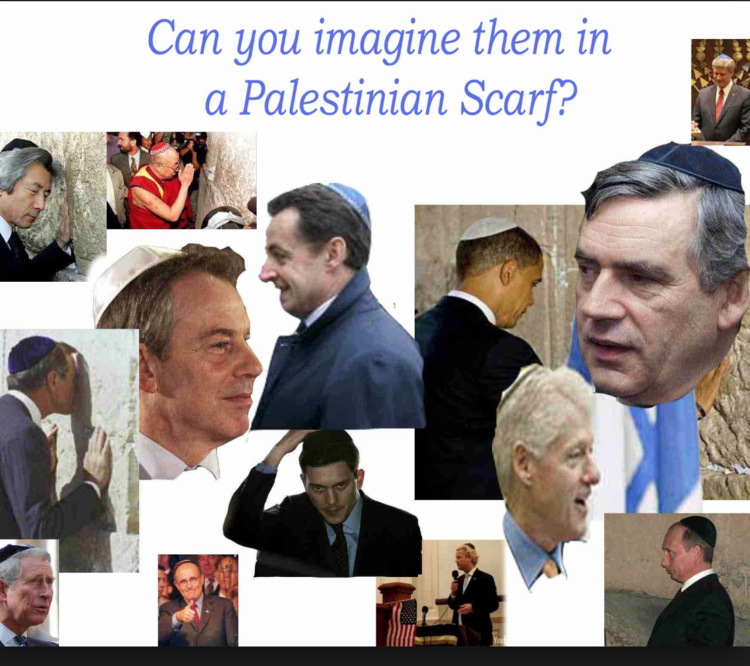

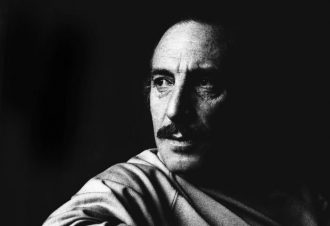
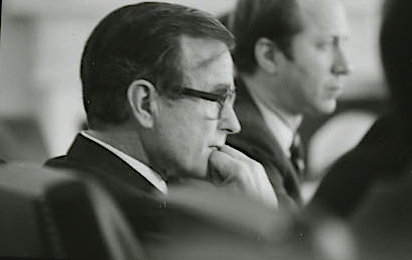
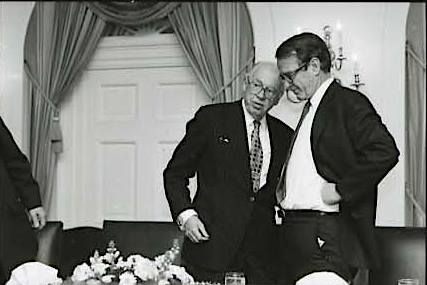

 Aletho News
