Retired Israeli general joins anti-Qatar conference
MEMO | September 15, 2017
A review of the list of participants in an anti-Qatar conference revealed that the list includes right-wing extremists, pro-Israel figures and a retired Israeli general.
The Qatar, Global Security & Stability Conference was held in London, UK, yesterday, and according to a list of participant which Al-Araby Al-Jadeed obtained, US-Israeli citizen and chairperson of the Jewish Religious Equality Coalition, Dov Zakheim; a founder of the neoconservative think-tank the Henry Jackson Society Alan Mendoza and Shlomo Brom, a retired Brigadier-General in the Israeli Air Force, were all due to participate.
According to the news site, the conference’s programme was not released until Tuesday, 48 hours before the event was due to take place for alleged security reasons.
Bill Richardson, former US ambassador to the UN who has been involved in financial corruption cases, and Charles Chuck Wald, a retired US Air Force General who has suggested that Washington should support Israel should it decides to launch a military attack on Iran, were also amongst the list of those taking part in the conference.
The list of participants also include Egyptian journalist Mohamed Fahmy, who had previously filed a case against Qatar after receiving money from the UAE.
The British Conservative party politicians speaking at the event include MPs, Daniel Kawczynski, Iain Duncan Smith and former Deputy Mayor of London, Roger Evans.
The Qatari opposition is represented by businessman Khalid Al-Hail who is accused of receiving funds from the countries boycotting Qatar to organise the conference.
In early June, Saudi Arabia, the UAE, Egypt, and Bahrain severed diplomatic and economic ties with Qatar, accusing it of supporting terrorist groups in the region.
The four countries also imposed an embargo on Qatar and issued a long list of demands, including the closure of Doha-based news broadcaster Al Jazeera, under the threat of further sanctions.
Qatar has refused to submit, denying charges that it supports terrorism and describing the bloc’s efforts to isolate it as a violation of international law and an infringement of its national sovereignty.
The conference is seen as a means through which they hope to give legitimacy to the boycott.

Photo-compilation of those attending the anti-Qatar conference [Alaraby]
Government Scientists : No Data – But Tremendous Precision
By Tony Heller | The Deplorable Science Blog | September 13, 2017
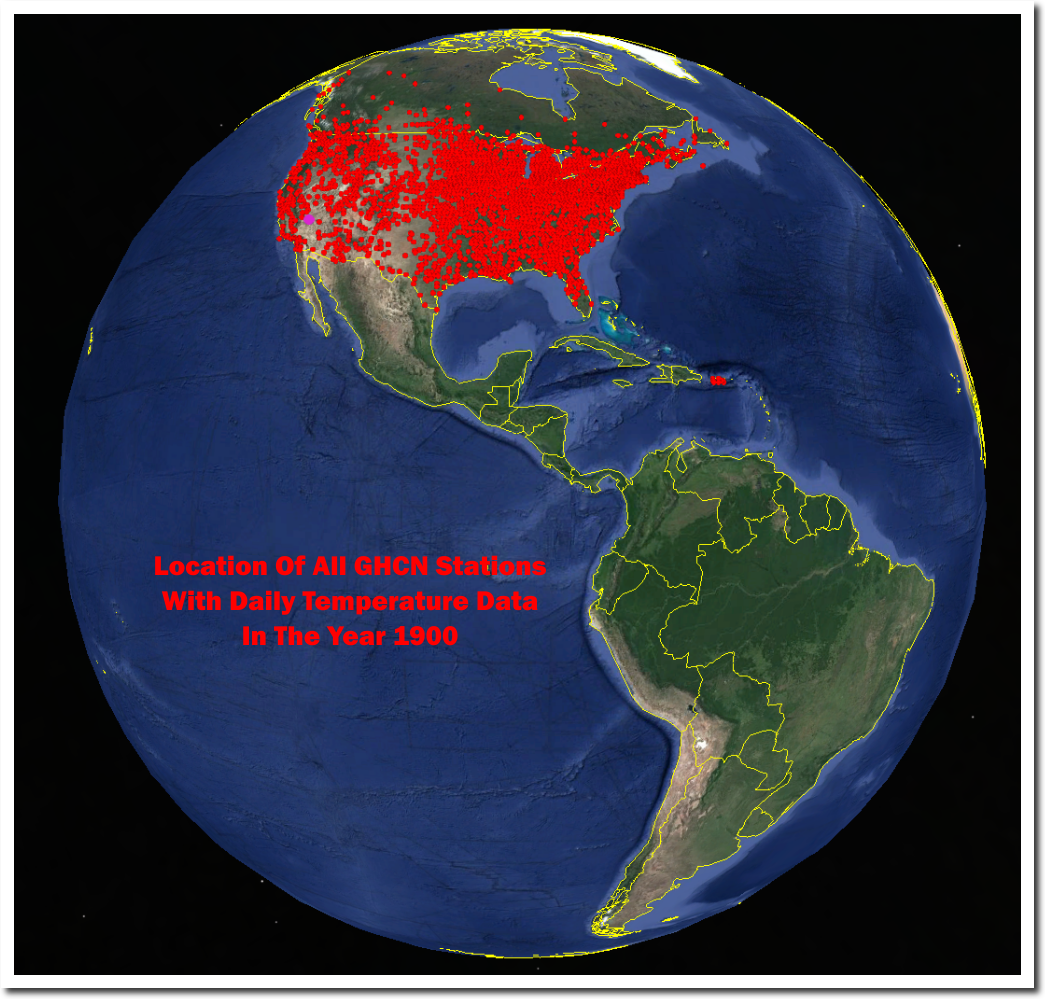
ftp://ftp.ncdc.noaa.gov/pub/data/ghcn/daily/figures/station-counts-1891-1920-temp.png
NOAA has no daily temperature data from Central or South America, or most of Canada from the year 1900, But they claim to know the temperature in those regions very precisely. Same story in the rest of the world.
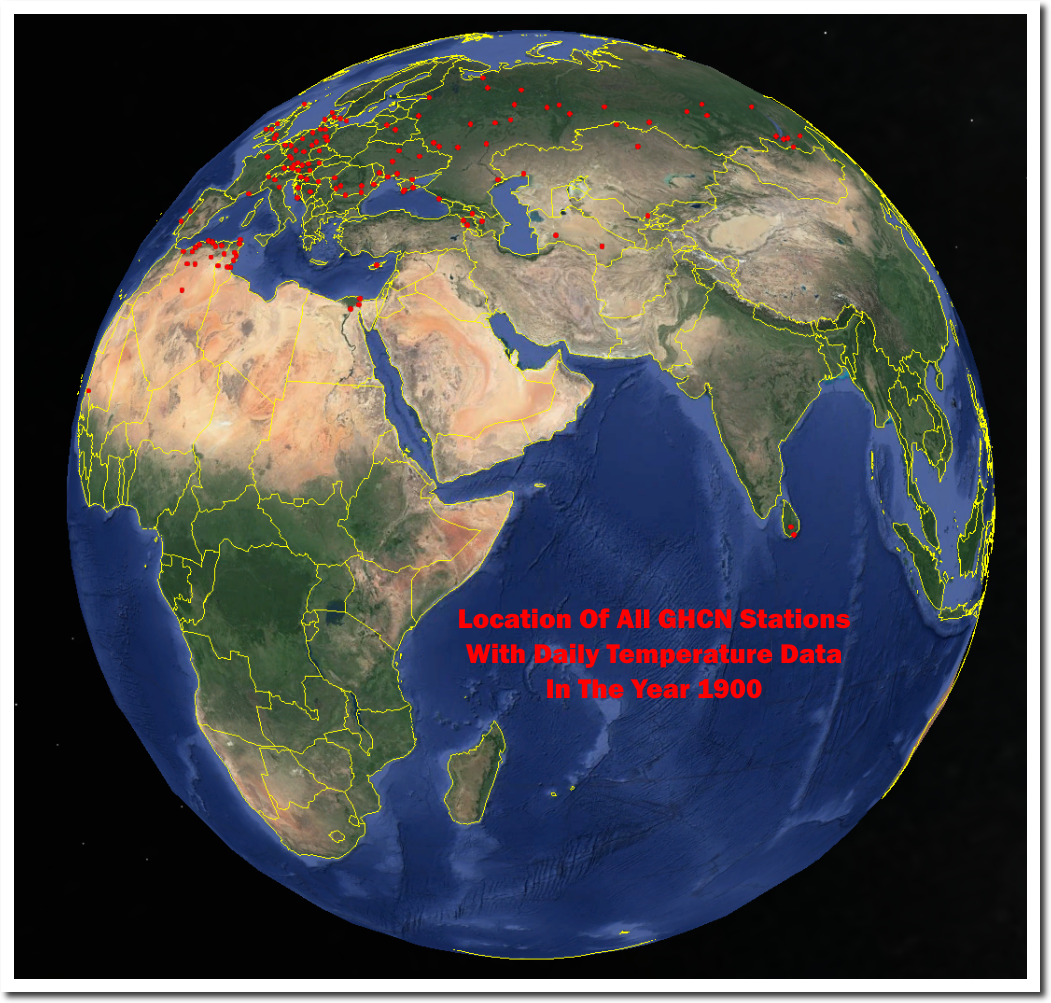
Despite not having any data, all government agencies agree very precisely about the global temperature.
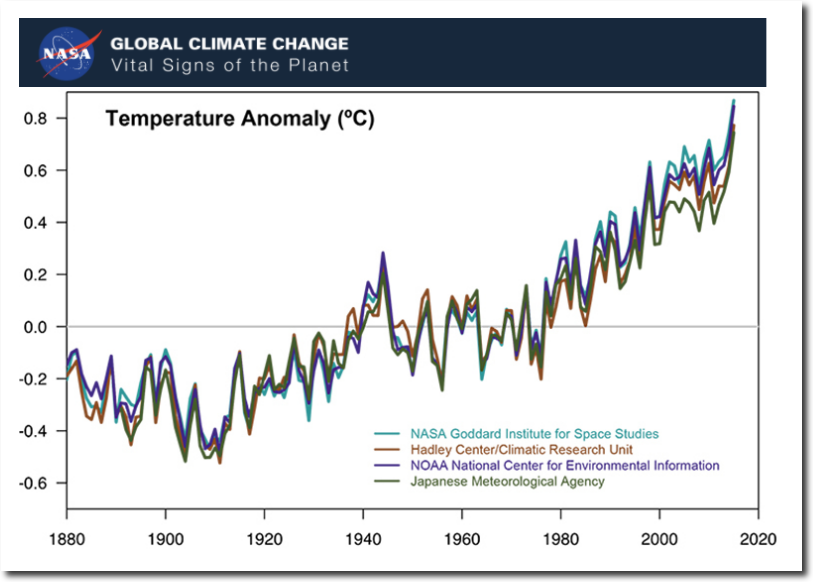
Climate Change: Vital Signs of the Planet: Scientific Consensus
The claimed global temperature record is completely fake. There is no science behind it. It is the product of criminals, not scientists. This is the biggest scam in history.
On the 35th Anniversary of Sabra and Shatila: The Forgotten Refugees
By Dr. Swee Chai Ang | Arab America | September 13, 2017
This September will be the thirty-fifth anniversary of the Sabra-Shatila Massacre in West Beirut. Three thousand unarmed refugees were killed from 15-18 September 1982.
I was then a young orthopedic trainee who had resigned from St Thomas Hospital to join the Christian Aid Lebanon medical team to help those wounded by Israel’s invasion of Lebanon. That invasion, named “Peace for Galilee”, and launched on 6 June 1982, mercilessly bombarded Lebanon by air, sea, and land. Water, food, electricity, and medicines were blockaded. This resulted in untold wounded and deaths, with 100,000 made suddenly homeless.
I was summoned to the Palestine Red Crescent Society to take charge of the orthopedic department in Gaza Hospital in Sabra- Shatila Palestinian refugee camp, West Beirut. I met Palestinian refugees in their bombed out homes and learned how they became refugees in one of the 12 Palestinian refugee camps in Lebanon. Before this encounter, I had never heard of Palestinians.
They recounted stories of being driven out of their homes in Palestine in 1948, often fleeing massacres at gunpoint. They fled with whatever possessions they could carry and found themselves in neighboring Lebanon, Jordan and Syria.
The United Nations put them in tents while the world promised they would return home soon. That expectation never materialized. Since then the 750,000 refugees, comprising half of the population of Palestine in 1948, continued to live in refugee camps in the neighboring countries. It was 69 years ago that this refugee crisis started. The initial 750,000 has since grown to 5 million. Palestine was erased from the map of the world and is now called Israel.
Soon after my arrival, the PLO (Palestine Liberation Organisation) evacuated. It was the price demanded by Israel to stop the further relentless bombardment of Lebanon and to lift the ten-week military blockade. Fourteen thousand able-bodied men and women from the PLO evacuated with the guarantee by Western powers that their families left behind would be protected by a multinational peacekeeping force.
Those leaving were soldiers, civil servants, doctors, nurses, lecturers, unionists, journalists, engineers, and technicians. The PLO was the Palestinians’ government in exile and the largest employer. Through evacuation, fourteen thousand Palestinian families lost their breadwinner, often the father or the eldest brother, in addition to those killed by the bombs.
That ceasefire lasted only three weeks. The multinational peacekeeping force, entrusted by the ceasefire agreement to protect the civilians left behind, abruptly withdrew. On September 15, several hundred Israeli tanks drove into West Beirut. Some of them ringed and sealed off Sabra-Shatila to prevent the inhabitants from fleeing. The Israelis sent their allies; a group of Christian militiamen trained and armed by them, into the camp. When the tanks withdrew from the perimeter of the camp on the 18 September, they left behind 3,000 dead civilians. Another seventeen thousand were abducted and disappeared.

Our hospital team, who had worked non-stop for 72 hours, was ordered to leave our patients at machine-gun point and marched out of the camp. As I emerged from the basement operating theatre, I learned the painful truth. While we were struggling to save a few dozen lives, people were being butchered by the thousands. Some of the bodies were already rotting in the hot Beirut sun. The images of the massacre are deeply seared into my memory: dead and mutilated bodies lining the camp alleys.
Only a few days before, they were human beings full of hope and life, rebuilding their homes, talking to me, trusting that they would be left in peace to raise their young ones after the evacuation of the PLO. These were people who welcomed me into their broken homes. They served me Arabic coffee and whatever food they found; simple fare but given with warmth and generosity. They shared their lives with me. They showed me faded photographs of their homes and families in Palestine before 1948 and the large house keys they still kept with them. The women showed me their beautiful embroidery, each with motifs of the villages they left behind. Many of these villages were destroyed after they left.
Some of these people became patients we failed to save. Others died on arrival. They left behind orphans and widows. A wounded mother begged us to take down the hospital’s last unit of blood from her to give to her child. She died shortly afterward. Children witnessed their mothers and sisters being raped and killed.
The terrified faces of families rounded up by gunmen while awaiting death; the desperate young mother who tried to give me her baby to take to safety; the stench of decaying bodies as mass graves continued to be uncovered will never leave me. The piercing cries of women who discovered the remains of their loved ones from bits of clothes, refugee identity cards, as more bodies were found continue to haunt me.
The people of Sabra Shatila returned to live in those very homes where their families and neighbors were massacred. They are a courageous people and there was nowhere else to go. Afterwards, other refugee camps were also blockaded, attacked and more people were killed. Today, Palestinian refugees are denied work permits in 30 professions and 40 artisan trades outside their camps. They have no passports. They are prohibited from owning and inheriting property. Denied the right of return to their homes in Palestine, they are not only born refugees, they will also die refugees and so will their children.
But for me, painful questions need to be answered. Not why they died, but why were they massacred as refugees? After 69 years, has the world already forgotten? How can we allow a situation where a person’s only claim to humanity is a refugee identity card? These questions have haunted me and they have yet to receive answers.
Dr. Swee Chai Ang is a Consultant Orthopaedic Surgeon and founder of Medical Aid for Palestinians. She is the author of: “From Beirut to Jerusalem,” published by The Other Press.
Time for All Palestinians and Their Supporters to Join the Resistance against Israel’s Cultural Offensives

By David Macilwain | American Herald Tribune | September 14, 2017
Before the launching of the war on Syria in 2011 by agents of the US and its Middle Eastern allies, the focus of my political activism was almost exclusively Palestine. “Self-radicalised” is a suitable descriptor for the slow awakening of my awareness of the way things were in the Israeli-occupied territory and the Arab and Islamic world around it.
As with many of my contemporaries, the 2003 attack on Iraq was a springboard in this radicalisation, not out of sympathy and understanding of Iraq but rather from antagonism to the US neo-con regime with its UK and Australian allies. Israel’s central role in orchestrating the attack on Iraq, as well as the pretext for it eighteen months earlier didn’t become clear – to me at least – until sometime later, when my antagonism began to concentrate on the Zionist State.
“Antagonism” doesn’t begin to describe the feelings that developed during Israel’s 26-day massacre of innocents of Gaza in 2009 however, nor the absolute disdain and disgust at Western leaders’ failure to condemn it. Notably too, the failure of Western media organisations to report the daily atrocities being committed by the IDF in Gaza revealed the extent of networks of propaganda support for the Zionist entity.
In the controversy that followed “Operation Cast Lead”, which finally came to an end just after Obama’s inauguration, it also became clear who was prepared to stand up for the people of Gaza and for Palestine and who was not. Many organisations we may have thought to be “impartial” turned out to be compromised when it came to Palestine, including the UN and NGOs like Amnesty International and Human Rights Watch. Their failure to react and respond appropriately to the terrible injustices and atrocities inflicted on the civilian population of Gaza, in the false name of fighting “Hamas terrorism”, gave huge impetus to the BDS movement. In the absence of any real condemnation of Israel’s barbarity, leave alone sanctions, or enforcement of outstanding UN resolutions, boycott and divestment became the only means to support Palestinians’ rights.
One could never say that the BDS campaign against Israel’s occupation was a success, though there were successes. In countries with a strong Israel lobby like the US, UK, Australia and France, the lobby’s fightback with both propaganda and legal instruments began almost before any real action could be taken, while Zionist infiltration and influence on government members made sure Israeli interests were protected. The associated academic and cultural boycott – PACBI – had more success in influencing public opinion, with the help of some great artists like Roger Waters and Ken Loach, but the fightback against them was even more intense, and continues to this day.
In an attempt to convince ourselves that something has been achieved over the last ten years, we may consider this reaction to the boycott campaigns as a recognition of their effectiveness – or at least potential effectiveness; the opinion of one influential celebrity can sometimes change the minds of millions.
But doesn’t Israel know this!
The truth is that the state of Israel is founded on something like the antithesis of a boycott campaign – as a state of mind cultivated with centuries of sectarian propaganda. How else could you create a whole society in which individuals believe themselves to be “exceptional” and racially superior to the native inhabitants of the land they are occupying by force? A society for which militant racism is the sine qua non of its nationhood and identity.
Not only have Israel’s leaders and educators achieved this “state of denial” amongst the Jewish citizens and the diaspora – with some important exceptions – but they have managed to maintain credibility as a “democratic” state with Western nations against all odds. It doesn’t seem to matter how many times one points out that a state defined as “Jewish” cannot also be democratic if some of its citizens are not Jewish.
The immediate and current context of this discussion is the fiesta of Zionist propaganda that just took place in London’s Roundhouse centre, called “TLV in LDN”, and the protest campaign against it by a group of artists, including those venerable veterans named above. But the context is rather different from that of ten years ago when the siege of Gaza began, following Hamas’ victory in Palestinian elections.
In fact it begins to look a little desperate, and the defence of this opinion-twisting offensive a bit hysterical. The “facts on the ground” created in what was once Palestine by the Zionist regime in those ten years now mean that Israel’s legitimacy can only be defended with increasingly shrill accusations and violence against Palestinians and their true supporters in the West.
But there may be another reason for the creators and defenders of “The Israel Project” to have a feeling of panic – such as that shown by Netanyahu on his recent visit to Sochi. As Sharmine Narwani has described, things are changing rapidly on Israel’s borders, with Jordan and Lebanon moving to restore relations with Damascus, and other sometime allies like Turkey and Egypt, and even the US seeking to cooperate with Russia and Iran.
There is also something happening within Palestine, as the new Hamas leadership seeks reconciliation with Syria and Iran – effectively returning to the position of ten years earlier, when Hamas leader Khalid Meshaal lived in Damascus, and Iran was a key mediator for the democratically elected Hamas government.
Most ironic however is the situation for so many supporters of the Palestinian struggle, who tragically had followed Hamas’ lead and deserted Syria in 2011. One can hardly understate the devastating effect on the Syrian conflict, and on Western perceptions of it from this historic rift in the Resistance. That section of Western society that showed most concern for Palestinians, including many solidarity groups as well as human rights NGOs was effectively duped into siding with Israel against Syria.
While this “kidnapping” of the most influential anti-war and anti-Zionist activist populations was achieved primarily thanks to propaganda from Al Jazeera and its Western media partners like the Guardian, the contribution from groups like Avaaz and Amnesty suggests another partner in the propaganda war on Syria.
Given the IDF’s vital support role for Al Qaeda groups in Southern Syria, we might safely assume that Israel’s misinformation industry has also been working overtime in pursuit of the state’s cynical and criminal objectives. One key event in the propaganda war on Syria supports that assumption – the “siege” of the Palestinian refugee camp of Yarmouk – whose reality was so twisted by “humanitarian” NGOs and even by the UNRWA as to portray Al Qaeda as defending innocent civilians against the Syrian Army. The object of that propaganda campaign was creating a pretext for “humanitarian intervention” to save starving Palestinians from the Syrian Government, when it was actually protecting them.
As Palestinians in the occupied territories and in Gaza increasingly now look to Syria and its allies for defence against the malevolence and lies of their oppressive occupier, it’s past time for their many genuine supporters and allies in the West to get on the right side of history and join the Resistance! And that resistance includes fighting off Israel’s ingeniously engineered “cultural offensives”.
6 MAJOR US foreign policy failures of the post-Cold War era
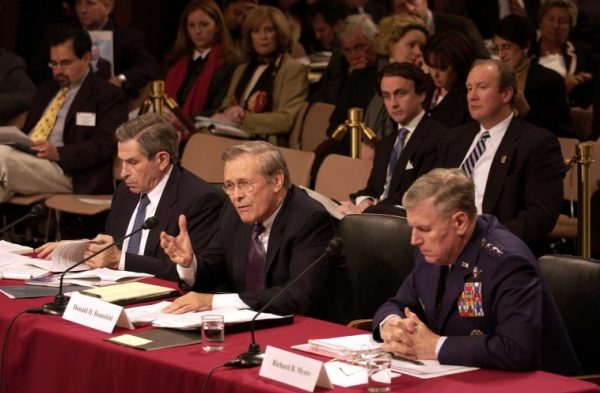
By Adam Garrie | The Duran | September 14, 2017
In the 1990s, US officials, all of whom would go on to serve in the George W. Bush White House, authored two short, but deeply important policy documents that have subsequently been the guiding force behind every major US foreign policy decision taken since the year 2000 and particularly since 9/11.
These documents include the Defense Planning Guidance for the 1994–99 fiscal years (more commonly known as the Wolfowitz Doctrine). This document, as the name implies was authored by George W. Bush’s deeply influential Deputy Defense Secretary Paul Wolfowitz as well as I. Lewis “Scooter” Libby, who served as an advisor to former US Vice President Dick Cheney.
The other major document, A Clean Break: A New Strategy for Securing the Realm, from 1996 was authored by former Chairman of the Defense Policy Board Advisory Committee in the administration of George W. Bush, Richard Norman Perle.
Both documents provide a simplistic but highly unambiguous blueprint for US foreign police in the Middle East, Russia’s near abroad and East Asia. The contents of the Wolfowitz Doctrine were first published by the New York Times in 1992 after they were leaked to the media. Shortly thereafter, many of the specific threats made in the document were re-written using broader language. In this sense, when comparing the official version with the leaked version, it reads in the manner of the proverbial ‘what I said versus what I meant’ adage.
By contrast, A Clean Break was written in 1996 as a kind of gift to Israeli Prime Minister Benjamin Netanyahu who apparently was not impressed with the document at the time. In spite of this, the US has implemented many of the recommendations in the document in spite of who was/is in power in Tel Aviv.
While many of the recommendations in both documents have indeed been implemented, their overall success rate has been staggeringly bad.
Below are major points from the documents followed by an assessment of their success or failure.
1. Regime change against Saddam Hussein’s Iraq (A Clean Break)
This objective is in many ways both the clearest initial success and also the most strident overall failure.
In 1996, Richard Perle suggested that removing Saddam Hussein from power would be good for the US and Israeli interest because it would weaken a powerful, large Arab state that had poor relations with the US since 1990 and historically poor relations with multiple regimes in Tel Aviv. While Iraq’s President was removed from power by illegal force in 2003, that which happened subsequently, did not deliver the outcome Perle had desired.
A Clean Break suggests that a post-Saddam Iraq could and should be ruled by a restored Hashemite dynasty, which was originally overthrown in 1958. Perle continues to suggest that Jordan, the last remaining Hashemite state in the Arab world, could work with Israel and the US to make this happen. Even more absurdly, Perle suggests that a Hashemite would-be union between Jordan and Iraq would be able to command more loyalty from Hezbollah supporters in Lebanon than Iran.
The realities could not be more different. After the illegal 2003 invasion of Iraq, the idea of restoring the Hashemite dynasty was never again floated in any serious forum, as the idea would be simply impossible to implement. There was no will among any major faction in Iraq to restore a monarchy that was overthrown in a revolution in 1958 that many Iraqis continue to look back on with national pride.
Ironically, the biggest Arab bulwark against a resurgent Iran was Saddam Hussein. In the 1980s, the future neo-cons realised this, though they seemingly ignored what they once knew, as early as in 1992.
Since Saddam Hussein’s removal from power and violent execution, Iraq’s majority Shi’a population have generally rallied around Iran politically, militarily and spiritually. Iraq has recently signed a defensive military pact with Iran and it is well known that many of the Shi’a volunteer brigades which are fighting ISIS in Iraq have received training and advice from Iranian experts.
While the US bases in Iraq make a US military presence closer to Iran than it was prior to 2003, by the same token Iran’s influence in the Arab world, especially in Iraq has grown substantially. In any case, the desired illegal ‘regime change’ war against Iran will likely never happen for two reasons. First of all, many in the Pentagon and in Washington moreover, realise that such a war would be an unmitigated disaster for the US and secondly, Iran has many influential international partners that it did not have in the 1990s, primarily Russia. Russia as well as China would not stand for a war on Iran in 2017.
In this sense, the US got very little of what it claimed it wanted in overthrowing Saddam apart from the weakening of a united Iraq.
2. ‘Containing’ Russia and China by preventing them from becoming superpowers (Wolfowitz Doctrine)
This policy has failed on every front. Since the rise of George W. Bush, the first White House adherent to the Wolfowitz Doctrine, Russia and China have risen to a status which means that there are three global superpowers, not the lone American superpower dreamt of by Wolfowitz and Libby.
China’s economic rise has fuelled a more robust stance from Beijing on global affairs. China now vigorously defends its claims in the South China Sea, has continually outflanked the US on the Korean issue, is engaged in the building of One Belt–One Road, the most wide reaching trade and commerce initiative in modern history and has opened its first military base overseas.
At the same time, the People’s Liberation Army continues its modernisation programme, making it as formidable a force which for all practical purposes, is as battle ready and capable as those of the US and Russia, countries which during the Cold War, had far superior armed forces to China.
Likewise, Russia’s return to superpower status, has been equally crushing in respect of the goals of Wolfowitz and Libby. Russia has not only strengthened old alliances but is now an important ally or partner to countries which were former Cold War opponents or otherwise non-aligned countries. This is true in respect of Russia’s alliances and partnerships with China, Pakistan, Turkey, Iran, Philippines and increasingly Indonesia. Russia is also becoming ever closer to South Korea and even Japan.
With Russia’s military now boasting modern defence systems which can rival those of the US and in many cases are objectively superior to those of the US, the idea that the US would prevent Russia from re-attaining super-power status and China emerging as a super-power has become a patent absurdity.
3. Containing Syria via Turkey and Jordan (A Clean Break)
For a while, this plan was implemented with some degree of success by the Obama administration. While Jordan never played a substantial part in the proxy wars on Syria, apart from being a NATO transport corridor, Turkey did help to undermine Syria’s sovereignty with its armed forces and its own proxies.
While relations between Turkey and Syria remain poor, relations between Turkey and the rest of its NATO ‘allies’ is also poor.
Turkey has quietly ceased its support for terrorist groups (aka the opposition) in Syria, is participating in the Astana Peace Process with long time Syrian allies Russia and Iran and is engaged in multiple trading and commercial deals with Russia, including the purchase of the Russian made S-400 missile defence system.
The overall result of Turkey’s participation in the Syrian conflict has been a strengthening of Turkey’s relationship with historical adversaries, Russia and Iran, something which has happened simultaneously to Turkey’s essentially dead relationship with the EU and its incredibly weakened relationship with the US.
All the while, Ba’athist Syria has emerged from the conflict victorious with its commitment to the Palestinian cause as strong as ever.
Far from being “contained”, Syria is now more admired throughout the wider world than at any time in the last three decades.
4. Molesting Russia’s borderlands (Wolfowitz Doctrine)
In the original text of the Wolfowitz Doctrine, there was a provision stating that the US must work to make sure that places like Ukraine and Belarus became part of the US economic and geo-political orbit, maintaining both “market economies” and “democracies”.
The 2014 US engineered coup against the legitimate government in Kiev was a knee-jerk US response to the fact that Ukrainian President Viktor Yanukovych rejected an economic association agreement with the EU, under the guise that the Ukrainian economy cannot afford to cut itself off from Russia.
Yanukovych was subsequently overthrown in a violent coup, and a neo-fascist pro-western regime was installed. However, this can hardly be considered a success as the sheer violence and incompetence of the current Kiev regime has made it so that Ukraine, a place whose borders were always dubious to begin with, will almost inevitably fracture into something unrecognisable.
Already, much of Donbass has been incorporated into the Donetsk and Lugansk People’s Republics that will never go back to Kiev rule and Crimea, whose relationship with Kiev was even more tenuous is now happily reunited with the rest of the Russian Federation.
Seeing the coup in Kiev, Belorussian President Alexander Lukashenko has pledged to crack down on any would be trouble-makers, all while remaining a committed albeit tantrum prone ally of Russia.
The only part of this element of the Wolfowitz Doctrine which has not been a failure has been the weaponisation of eastern Europe. The reason this has succeeded is due to the fact that Russia has no interest in invading eastern Europe. Russia has merely responded by building up its defences against NATO’s provocative weaponisation of Poland and the Baltic States.
5. Weakening Hezbollah (A Clean Break)
In 2017, Hezbollah is not only more popular than ever, but its militarily might is stronger than at any time in its history. Hezbollah’s role in fighting terrorism in Syria has won the party praise from groups in Lebanon that previously were never keen on Hezbollah, as well as individuals in the wider world who seek to build a genuine anti-terrorist coalition.
The conflict in Syria has drawn Iran, Iraq, Syria and southern Lebanon (the heartland of Hezbollah) closer together than they have ever been. This has in many ways been a result of the common cause of fighting groups like ISIS and al-Qaeda that bound them all together.
In 2006, Hezbollah dealt Israeli forces a major defeat in South Lebanon. Today, Hezbollah is even stronger and everyone in Israel is all too aware of this.
This was a major failure in respect of implementing the ‘destruction’ of Hezbollah advocated by Richard Perle.
6. North Korea not to be allowed nuclear weapons (Wolfowitz Doctrine)
The fact that North Korea just tested what is widely believed to be a hydrogen bomb, is a clear indication that this major goal of Wolfowitz and Libby has failed.
Beyond this, while Russia has condemned both North Korea and US led provocative acts on the Korean peninsula, Russian President Vladimir Putin has acknowledged that North Korea does have the right to self-defence, something which has become even more prescient after North Korea witnessed the destruction of Iraq and Libya which did not have weapons capable of deterring a US invasion.
Russia and China have clearly seized the initiative on the Korean issue. Apart from launching a disastrous war on North Korea, the US can now do little to change the realities in Pyongyang.
CONCLUSION:
The aggregate effect of this analysis indicates that the US is still highly capable of starting wars and igniting conflicts throughout the world, but that it is likewise hardly ever capable of winning these conflicts or even achieving a majority of its own stated goals.
As the two most revealing foreign policy documents from the US in the post-Cold War era, both the Wolfowitz Doctrine and A Clean Break have been abject failures. In many cases, in attempting to achieve the goals of these documents, the United States has ended up achieving the opposite.
The US is militarily strong, but strategically, diplomatically and geo-politically, it is actually close to impotent.
America’s Fragile Future
By Gilbert Doctorow | Consortium News | September 14, 2017
Does the United States have a future as a great power?
Twenty years ago posing this question would have seemed absurd. The United States was fully self- confident about its position as the sole surviving superpower in the world. It faced virtually no obstacles or objections to its performance on behalf of the “public good,” a process that supposedly brought order to the world either through the liberal international institutions that it helped to create after World War Two and dominated, or through unilateral action when necessary via “coalitions of the willing” aimed at bringing down one or another disruptive malefactor on a regional stage.
From many voices abroad it heard “amen” to its claims of exceptionalism and farther-seeing vision that came from its standing taller, as Secretary of State Madeleine Albright put it. The “indispensable nation.”
Fourteen years ago, when America prepared for its ill-conceived invasion of Iraq and encountered loud resistance from France and Germany, backed up by Russia, it became possible to wonder whether U.S. global hegemony could last. The disaster that the Iraqi adventure quickly became within a year of George W. Bush declaring “mission accomplished” rolled on and progressively diminished the enthusiasm of allies and others hitherto on the U.S. bandwagon for each new project to re-engineer troublesome nations, to overthrow autocrats and usher in an age of “liberal democracy” across the globe.
Still, the doubts were discussed sotto voce. Governments tended to conform to what the Russians colorfully call “giving someone the finger in your pocket.” Observers spoke their piece privately against the violations of international law and simple decency that the United States was perpetrating — and against the swathe of chaos that followed American intervention across the Greater Middle East. But such persons were on the fringes of political life and drew little attention.
What has happened over the past couple of years is that doubts about the competence of the United States to lead the world have been compounded by doubts about the ability of the United States to govern itself. The dysfunction of the federal government has come out of the closet as an issue and is talked about fairly regularly even by commentators and publications that are quintessentially representative of the Establishment.
In this connection, it is remarkable to note that the September-October issue of Foreign Affairs magazine carries an essay entitled “Kleptocracy in America” by Sarah Chayes. This takes us entirely away from the personality peculiarities of the 45th President into the broader and more important realm of the systemic flaws of governance, namely the extraordinary political power wielded by the very wealthy and the self-serving policies that they succeed in enacting, all at the expense of the general public that has stagnated economically for decades now, setting the stage for the voter revolt that brought Trump to power.
And in an op-ed essay in The Washington Post on Sept. 1, which was remarkable precisely for its identification of the failing political culture in Washington, Sen. John McCain, R-Arizona, says the following:
“Congress will return from recess next week facing continued gridlock as we lurch from one self-created crisis to another. We are proving inadequate not only to our most difficult problems but also to routine duties. Our national political campaigns never stop. We seem convinced that majorities exist to impose their will with few concessions and that minorities exist to prevent the party in power from doing anything important.”
McCain himself was until now a major contributor to the poisonous political climate in Washington, to partisanship that tramples patriotism under foot. One thinks of his unprecedented attack on fellow Republican Sen. Rand Paul several months ago whom he accused of “working for Putin” because the senator from Kentucky refused to vote for the accession of Montenegro to NATO.
Permanent Gridlock
Gridlock in the federal government is nothing new. In the past decade, work of the federal government came to a standstill when Congress and the President could not agree to the conditions under which the federal debt ceiling would be raised. Such an eventuality was just narrowly averted in the past few days.
Public exposure and ridicule of a sitting president for personal failings, such as the case of Bill Clinton’s sexual transgressions, have been exploited for political gain by his opponents whatever the cost to national prestige. We have lived through that crisis of the political elites and the Republic survived.
What is new and must be called out is the loss of civility in public discourse at all levels, from the President, from the Congress and down to the average citizen. The widely decried unsubstantiated personal attacks that otherwise would be called defamation during the 2016 presidential electoral campaign were symptomatic of this all-encompassing phenomenon. It signifies a dramatic decline in American political culture that the whole world sees and is beginning to act upon in self-defense.
Let us start with President Donald Trump, who is attacked daily by the liberal media that represents the lion’s share of all television programming and print publications, media that vehemently opposes Trump’s domestic and foreign policy positions. In their determination to ensure either his impeachment or effectively to strip him of powers, they speak of Trump the way cheaply printed caricatures for the masses lampooned Louis XVI and Marie Antoinette before the French Revolution.
The President is publicly described by his compatriots as an imbecile, a rabid racist, a misogynist, a volatile and impulsive narcissist whose finger on the nuclear button gives us all goose pimples: this cannot be ignored by the wider world outside U.S. borders and it is not ignored.
To be sure, Donald Trump has brought a good deal of this ignominy on himself by his intemperate comments on daily events, particularly at home but also abroad, where silence or a nod to conventional verities would be the better part of valor. He keeps his own counsel on foreign affairs and erroneously believes that his instincts are superior to the advice of experts.
In his kitchen cabinet, there are no experts. In the official cabinet, he has for his own reasons assembled a group consisting mostly of neoconservatives and liberal interventionists, who made it easy for him to get their confirmations in the Senate but who are all pulling in the direction opposite to the America First concepts of nonintervention in the affairs of other states that he set out in his electoral campaign.
Trump changes direction daily, even on matters as critical as the likely U.S. response to the ongoing crisis on the Korean peninsula. The tactic of unpredictability was an approach he said in the campaign he would use against enemies, in particular against terrorist groups, not to tip them off about U.S. intentions in advance and weaken the effect of eventual U.S. military strikes. But it makes no sense when applied to all other current business, which requires a firm hand on the tiller and sense of continuity and predictability, not constant disruption.
Undoing Bonds
The net result of Donald Trump’s first six months in office has been to undo the bonds of mutual confidence with America’s allies and friends, and to put America’s competitors on notice that America’s role in the world is up for grabs.
Foreign policy has opened up as a topic for discussion here in Europe ever since Donald scattered the chickens by his loose talk about NATO and America’s commitment or non-commitment to the Article 5 provision of “all for one and one for all.” This has given impetus to the long-spluttering plans to create a European Union army as an alternative to NATO, and as a rallying point for federalists in what will be a two-speed Europe.
During the two terms of Obama, meddling in the internal politics of China and Russia, repeated hectoring over their alleged human rights and rule of law violations, but still more importantly the wrong-headed policy of simultaneous containment of these two giants through construction of military alliances and bases at their borders put in motion a strategic partnership between them that was once improbable but is now flourishing. The Russia-China axis is underpinned by vast joint investments and promises to remake the global power balance in the decades to come.
Now, with Trump, the damage to American power in the Pacific region is spreading. His ripping up free trade accords and his incautious rhetoric regarding possible military strikes against North Korea have pushed both Japan and South Korea to explore actively and urgently how Russia can be befriended, at a minimum, for the sake of greater leverage against the big ally in North America. This has been demonstrated with perfect clarity by the meetings of Vladimir Putin with Japanese premier Shinzo Abe and South Korean president Moon Jae-in at the Eastern Economic Forum in Vladivostok over the past couple of days.
Russia’s evolving political entente with both South Korea and Japan is providing support for the launch of ambitious foreign investment projects in its Far East as announced at the Forum. These include one which has the potential to re-shape the imagination of regional populations for a generation to come: revival of plans to build a $50 billion rail-auto bridge linking Hokkaido with the Russian island of Sakhalin, thus uniting Japan with the continent and facilitating freight shipments across Russia to Europe.
For its part, South Korea announced infrastructure investments for the Northern sea route linking South Korea with European markets through sea lanes kept open by Russian icebreakers. Like the Chinese One Belt One Road, these plans all dramatically reduce the importance to world trade of the long-standing U.S.-policed sea lanes off Southeast Asia up to and through the Suez Canal.
Of course, the low point in America’s image in the world today under Trump is not entirely new. By the end of his two terms in office, George W. Bush had driven American prestige to what were then all time lows even among Europeans. There was a brief resurgence of American popularity at the start of Barack Obama’s tenure in office. But that was quickly dissipated by his failure to deliver on the pledges of his campaign and inaugural address, as the Guantanamo Bay prison remained open, as the wars in Iraq and Afghanistan continued, and as drone strikes proliferated.
Opening a Void
But Donald Trump has shaken up the world order by repeatedly questioning the public good that the United States claimed to be delivering these past decades, opening a void without projecting a new vision of global governance. In the meantime, the unique value of America’s commitment to the public good is being eroded as other countries step forward with infrastructure and other plans that provide practical improvements in the public sphere.
It is commonplace today within the United States to put all blame for the shocking decline in political culture at the door of President Trump with his boorish language and behavior. However, as we noted from the outset in citing Senator John McCain’s recent op-ed, Congress has contributed mightily to the erosion of civic values by its vicious and counterproductive partisanship.
And yet a still greater threat to American democracy and to the sustainability of America’s great power status has come from the inverse phenomenon, namely the truly bipartisan management of foreign policy in Congress. The Republican and Democratic leaderships have maintained strict discipline in promotion of what are nearly identical neoconservative (Republican) and liberal interventionist positions on virtually every foreign policy issue before Congress.
Committees on security and foreign affairs invite to testify before them only those experts who can be counted on to support the official Washington narrative. Debate on the floor of the houses is nonexistent. And the votes are so lopsided as to be shocking, none more so that the votes in August on the “Countering America’s Adversaries through Sanctions Act.” This measure moved sanctions on Iran, North Korea and Russia from the category of Executive Order to federal law. In the Senate, the bill passed 98 to 2. In the House, the vote was 419 for, 3 against. Such results remind us of the rubber-stamp legislature of the USSR, the Supreme Soviet, in its heyday.
That particular vote was still more scandalous for its being drafted and passed without any consultation with U.S. allies and friends, though its intent is to control their commercial and credit policies with respect to the target countries under sanction.
For Europeans, in particular, this puts into question their ability to pursue what they see as great economic benefits from trade and investment with Russia and Iran. In this sense, Congress demonstrated that it is pursuing a still more radical program of America First than the President. This in-your-face unilateralism works directly to the detriment of America’s standing in global forums.
The New McCarthyism
It would be comforting if the problems of our political culture began and ended with the elites operating in Washington, D.C. However, that is patently not the case. The problem exists across the country in the form of stultifying conformism, or groupthink that is destroying the open marketplace for ideas essential for any vital democracy.

Senator Joseph McCarthy
Some of us have called this the new McCarthyism, because the most salient aspect of groupthink is the ongoing hysteria over alleged Russian “meddling” in U.S. domestic politics. The denunciations of “stooges of Putin” and the blacklisting from both mass and professional media of those known to deliver unconventional, heterodox views on Russia and other issues of international affairs is reminiscent of what went on during the witch hunt for Communists in government and in the media during the early 1950s.
However, no one is being hounded from office today. There are no show trials, as yet, for treasonous collusion with Russia. So, it would be safer to speak of an atmosphere of intimidation that stifles free debate on the key security issues facing the American public. Absence of debate equates to a dumbing-down of our political elites as intellectual skills atrophy and results in poor formulation of policy. The whole necessarily undermines America’s soft power and standing in the world.
Groupthink in America today did not come from nowhere. Debilitating conformism was always part of our DNA, as is the case in a great many countries, though its emergence has been episodic and in varying degrees of severity. The present acute manifestation in the United States goes back to the mass paranoia which followed the 9/11 terrorist attacks when the George W. Bush administration introduced the Patriot Act, gutting our civil rights in exchange for the promise of security.
Though the revelations of Edward Snowden have shown the extent and potency of the instruments of surveillance over the general population that were introduced by the Bush administration after 9/11, there was enough of state control exposed in the Patriot Act text to silence anyone with doubts about U.S. government policies at home and abroad. When the harsh personalities of President Bush’s immediate entourage were replaced by the liberal-talking officials of Barack Obama, people breathed easier, but the instruments of surveillance remained in place, as did the neocon middle and senior officials in the State Department, in the Pentagon, and in the intelligence agencies.
Thus, for a whole generation the Washington narrative remained unchanged, giving encouragement in communities across the land to neocon-minded administrators and professors of American universities, publishers and owners of our mainstream newspapers, and other arbiters of public taste. That is quite sufficient to explain the current atmosphere of intimidation and groupthink.
It is improbable that any Humpty-Dumpty successor to Donald Trump can put the pieces back together again and restore American dominance to where it was at the close of Bill Clinton’s first term as president. Given American hubris, will our political class accept an equal seat at the global board of governors or just walk away from the table?
Gilbert Doctorow is an independent political analyst based in Brussels. His latest book Does Russia Have a Future? was published in August 2015. His forthcoming book Does the United States Have a Future? will be published in September 2017.
Featured Video

Seyed M. Marandi: US-Iran War Inevitable: Kuwait and Bahrain May Fall
or go to
Aletho News Archives – Video-Images
From the Archives
Israel: Strategic Ally or Liability?
By Stephen Sniegoski | My Catbird Seat | June 12, 2010
The claim that Israel serves as a valuable ally for the United States is made by both pro-Zionists and much of the anti-war and anti-Zionist Left that is influenced by Noam Chomsky. As a result of the Gaza flotilla massacre, which has caused a world-wide uproar against Israel, the value of Israel to the United States is being publicly questioned in more mainstream foreign policy forums. … continue
Blog Roll
 Aletho News
- Europe’s Energy Hypocrisy, Russian LNG Profits and US Dependence
- ICC ignored ‘very well-documented’ NATO crimes – ex-Libyan minister
- SNSC secretary dismisses US response to Iran’s conditions as ‘inadequate’
- Sanaa says Taiz roads open, secure for residents, warns Saudi forces
- Iraqi resistance group urges Saudi leadership to admit defeat, lift Yemen siege
- Trump’s Retreat: How Al-Aqsa Flood Took Down the US Empire
- Israel’s Military Actions in Lebanon Grossly Violate International Law — Lavrov
- Seyed M. Marandi: US-Iran War Inevitable: Kuwait and Bahrain May Fall
- Leaders Condemn Ansarallah Attack on Saudi Arabia While Ignoring Illegal War Against Yemen
- Leaked: Britain’s Covert Iraqi Psyops Network
- If Americans Knew
- Gaza’s buildings are collapsing on top of us. But there’s nowhere else to shelter
- Israel kills four-year-old Gaza child – Daily Update
- After Oct 7, IDF policy allowed civilian casualties for even the lowest-ranking targets
- Israel’s Destruction of Southern Lebanon Intensified After the Cease-Fire
- The Last-Minute Decision That Gave Israel Its Name
- The American Conservative: How Trump Made the World Go Nuclear
- Meet the US generals and admirals advancing Israeli policy
- Opinion: Why news organizations should boycott Israel
- The Israeli witch hunt of Sami Abu Shehadeh exposes the lie of the ‘Jewish and democratic’ state
- No state has a ‘right’ to exist – least of all Israel
- No Tricks Zone
- New Study Suggests Large Regions Of The Pacific Ocean Have Been Cooling For The Last 80 Years
- Germany’s Green Energy Debacle: High Energy Costs Force Kahla Porzellan to Close After 182 Years!
- New Study: 50 Years Of The Most Aggressive ‘Net Zero’ Policies Can Only Affect The Global Climate By 0.03°C
- US September “Heat” Was No Record…Many Records Set Decades Ago
- Latest European Green Energy Debacle; Portugal’s Largest Flagship Solar Park Insolvent!
- Green Energy Debacle: German Expert Professor Fritz Vahrenholt Warns Of Severe Economic And Social Consequences
- Two More Paleo Reconstructions Affirm Meters-Higher Sea Levels Across Ireland, Brazil 7000-6000 Years Ago
- New Study: Earth And Venus Surface Warmth Largely Explained By Convection And Lapse Rate, Not CO2 Or Radiation
- 2025 Nature Paper Claiming Worsening Global Drought Gets RETRACTED …Heavily Flawed
- New Study: ‘Global Drought Shows No Detectable Recent Acceleration Under Climate Warming’


