The United States’ hegemonic dominance in the world is heading to the exits. The decline in US uni-polar power has been underway for several years, in line with the emergence of a multi-polar world. This week, Russia and China showed important resolve to face down American bully tactics over North Korea. The confrontation suggests a turning point in the transition from American world dominance to a multi-polar one.
US President Donald Trump reiterated the possibility of military attack on North Korea while in Poland this week. This was also while Washington was hectoring China and Russia to join in a tougher response to North Korea over its ballistic missile launch days before – the former two nations themselves having recently been sanctioned anew by the US. Talk about American audacity and double think.
However, the crass arrogance shown by the US seems to have hit a new limit of tolerance in Moscow and Beijing. Both are beginning to demonstrate a loss of patience with the bumptious, insufferable Americans.
Reacting to North Korea’s breakthrough ballistic missile launch, Washington deployed its typical conceit, casually threatening to carry out a «retaliatory» military strike. Trump said he was considering «severe» options over Pyongyang’s «very, very dangerous behavior».
But Russia and China’s stance this time to the Americans had significantly stiffened. Both explicitly warned the US against taking military action against North Korea.
Moreover, Russia and China said that they would oppose Washington imposing further sanctions on the government of Kim Jong-un. The latter has already been subjected to six rounds of US-led sanctions.
In short, the American bully is finding that it is no longer able to dictate its unilateral way.
Addressing an emergency session of the United Nations Security Council, the Russian and Chinese ambassadors rejected the shrill American call for «global action to a global threat». Russian envoy Vladimir Safronkov stood firmly with his Chinese counterpart, saying that threatened American military action was simply not an option, and that a different policy was needed from the failed American one of slapping ever-more sanctions on North Korea.
One can imagine the exasperation felt within Washington of being bluntly told «no» to its invariable, self-anointed belligerence.
The alternative route being proposed by Russia and China was the «radical» one – radical from the American point of view – of diplomacy. It has perhaps taken the Russians and Chinese overdue time to reach this point. But what is remarkably apparent now is that they are asserting themselves against the US with increased confidence. And what they are asserting in this case is an eminently reasonable solution to the Korean crisis. They are calling for a freeze on Pyongyang’s nuclear weapons program in conjunction with the US freezing its constant military exercises on the peninsula, as well as withdrawing its anti-missile THAAD system. The next step is to then hold multilateral negotiations for a comprehensive peaceful settlement, without preconditions.
Such an eminently reasonable approach is anathema to the Americans. Because it negates their unilateral arrogance and self-righteousness to dictate terms.
This is a significant development, one that portends a new determination by Russia and China to confront the American bully head-on. For too long, Washington has gotten away with outrageous aggression, lawlessness, hypocrisy and absurd hubris, not just over Korea but on countless other international issues. On the world stage it behaves like a schoolyard bully, or perhaps more accurately that should be a street thug. Going around beating up other people, usually the weak, as it likes. Then when Washington feels particularly affronted about some perceived slight, it invokes international law and righteousness.
This week, what we saw over the North Korea missile launch and the typical American over-reaction was Russia and China saying to Washington: your days of self-licensing aggression and abusing international law are over; your American uni-polar hegemony is redundant.
Welcome to the multi-polar world forged largely by Russia and China where all nations must abide by international norms and law, principally the paramount pursuit of diplomacy.
Oh the shock to American arrogance to receive such a rude awakening.
The lawlessness of American «exceptionalism» is a theme that Russian President Vladimir Putin has been constantly hammering over the past decade. But it seems now that Russia and China are strong enough politically, economically and militarily to begin asserting and acting on the conviction that the days of American arrogance and lawlessness are indeed over. It is no coincidence that the firm Russian-Chinese opposition to American aggression over North Korea came at the same time that Putin was hosting his counterpart President Xi Jinping in Moscow, where both leaders hailed an even deeper Sino-Russian strategic alliance.
Moscow and Beijing censured North Korea over its 11th missile launch so far this year. They said it violated UN sanctions imposed on Pyongyang since it first exploded a nuclear warhead in 2006. Still, they sought to put a proper perspective on the event, rather than reflexively demonizing North Korea as the Americans never cease to do.
The intercontinental ballistic missile (ICBM) launched this week by North Korea was not armed with a warhead but Pyongyang said it now has the capability to do so and to strike anywhere on the globe. The trajectory of the ICBM indicates that North Korea could now hit the US state of Alaska. That heralds a major breakthrough in North Korea’s military capability. Earlier this year, President Trump claimed that North Korea would never be allowed to reach that point. Well, it just did this week.
Nevertheless, Russia and China realize that the Korean crisis is a complex issue, not the simplistic narrative put out by Washington about a «rogue regime» threatening world peace. Moscow and Beijing are well aware that Washington is very much part of the problem, with its relentless military exercises and provocative threats to North Korea’s sovereignty.
Russia and China understand that the only reasonable solution is not reckless escalation, but a negotiated engagement by all sides, including North Korea, South Korea, the US, Japan, China and Russia. Past multilateral negotiations have come unstuck largely because of Washington’s high-handed imperious attitude. Winding down conflict on the Korean Peninsula necessitates the winding down of military forces by all sides, and a primary responsibility for that lies with the US, the external protagonist in the region.
As the Russia-China strategic alliance grows ever stronger heralding a «post-West» world order, as Russian foreign minister Sergey Lavrov put it, one which was dominated by American capitalism, the US petrodollar and its military machine, it seems unmistakable that both Russia and China have reached a practical limit of tolerance to Washington’s lawless arrogance.
In recent weeks, Washington has slapped more sanctions on both Russia and China, conducted provocative military incursions into their territorial domains, and continued to disparage them with media distortions. Washington possesses thousands of ICBMs, test-fires them all the time, and installs missile systems around Russian and Chinese territory. Washington has waged or covertly sponsored criminal wars across the Middle East over the past two decades, resulting in millions of innocent deaths and spawning of terror groups.
North Korea has attacked no-one, has an arsenal of perhaps 10 nuclear weapons and conducts its missile tests far from any of its neighbor’s territory.
Yet the lawless, mass-murdering Americans – the only nation to have actually dropped nuclear weapons on civilian populations – have the audacity to declare North Korea a threat to world peace and insist on the «right» to preemptively attack Pyongyang. And if Russia and China do not acquiesce to this American demand then Washington threatens to increase more sanctions on them.
The American bully is patently beyond itself from its own megalomanic despotism. But the big, crucial difference now is that Russia and China are moving to finally put this bully in its place. The multi-polar world has arrived. And the only «radical» thing that Russia and China are insisting on is that the US behaves like everyone else and abides by international law. That basic requirement is an indication of how lawless the Americans are.
Addressing bused-in supporters in Poland’s Warsaw Square this week, Trump declared with bravado that «the West [that is, the US] will never back down».
Well, we’ll see about that. As noted, the multi-polar world has arrived and America is being compelled to back down by an ascendant Russia and China who also happen to have world opinion on their side.
UNITED NATIONS — More than 120 UN member states on Thursday adopted a treaty to categorically prohibit nuclear weapons although the world’s nuclear powers boycotted the entire process.
“Each State Party undertakes never under any circumstances to… Develop, test, produce, manufacture, otherwise acquire, possess or stockpile nuclear weapons or other nuclear explosive devices,” the treaty, approved by a 122-member majority, stated.
All nine nuclear powers did not participate in the conference, including five permanent members of the UN Security Council: Russia, the United States, China, France, and the United Kingdom. Four others known or suspected to possess nuclear weapons — Pakistan, India, Israel, and North Korea — also refused to partake.
Other notable countries that declined to engage in the process include Japan, which was on the receiving end of two US atomic bombs, and South Korea, which borders a recently very active nuclear state.
Netherlands, the only NATO member state to participate in the proceedings, voted against the treaty while Singapore abstained.
According to the convention, it will be open for signature by states at the United Nations in New York on September 20, 2017 and will come into force 90 days after it is ratified by 50 countries.
In March, US Ambassador to the UN Nikki Haley said the United States abandoning nuclear weapons at this time would put the world at risk because of North Korea’s nuclear activities.
In October 2016, the UN General Assembly voted to negotiate and conclude a treaty prohibiting nuclear weapons. The first negotiation session took place at the United Nations in New York City in March and lasted a week. The second session opened on June 15 and is due to close today, July 7.
Stigmatized and prohibited. That means we’re two-thirds of the way to fulfilling the Humanitarian Pledge, which feels like it was launched only yesterday.
It took three international conferences, two open-ended working groups, medical and scientific evidence accumulated over some 50 or more years, decades of selfless appeals by the Hibakusha and by the victims of nuclear testing, a core group of states with the courage to take effective leadership, a decisive UN resolution, four weeks of honest, good faith negotiating by people who really and truly want to rid the world of nuclear weapons, and seven years of intensive campaigning by ICAN…
… and nuclear weapons have been banned.
The Treaty on the Prohibition of Nuclear Weapons, which was adopted today in Conference Room 1 at the United Nations by an overwhelming 122-1 vote, makes a compelling case for the stigmatization and elimination of nuclear weapons. In fact, the language it uses to make that case is indistinguishable from the language of doctors, scientists, international lawyers, and others with expert knowledge of what nuclear weapons are and the devastating harm they cause:
“[T]he catastrophic consequences of nuclear weapons cannot be adequately addressed, transcend national borders, pose grave implications for human survival, the environment, socioeconomic development, the global economy, food security and the health of current and future generations, and have a disproportionate impact on women and girls, including as a result of ionizing radiation.”
“[A]ny use of nuclear weapons would… be abhorrent to the principles of humanity and the dictates of public conscience.”
“[A] legally binding prohibition of nuclear weapons constitutes an important contribution towards the achievement and maintenance of a world free of nuclear weapons, including the irreversible, verifiable and transparent elimination of nuclear weapons.”
The sections of the treaty that spell out the prohibitions and the obligations of the states that are party to it close the legal gap that has been exploited by the nuclear-armed and nuclear-dependent states not only to forestall their disarmament obligations, but also to keep nuclear weapons at the center of their military and security policies for decades to come. The development, testing, production, manufacture, acquisition, possession, stockpiling, use, and threat of use of nuclear weapons have been declared illegal under this treaty. Period.
The nuclear-armed and nuclear-dependent states have been provided with practical and flexible ways to comply with those prohibitions once they decide to join. If they persist in defying the norms established by the treaty, they will be outlaw states.
The treaty refutes the claim made by a handful of states that they need nuclear weapons to ensure their own security, and that humanitarian consequences must somehow be balanced with those needs. Not only does the treaty insist that the dangers posed by nuclear weapons “concern the security of all humanity,” but it also calls the long-overdue elimination of nuclear weapons “a global public good of the highest order, serving both national and collective security interests.”
The treaty is about more than prohibitions. It spells out the obligations and responsibilities of its parties to work for universalization, to redress and remediate the harm done by nuclear weapons to victims and the environment, and to support and defend the norm of collective security in a nuclear-weapons-free world.
Abacca Anjain-Maddison of the Marshall Islands—a place that has experienced the consequences of nuclear weapons first-hand—spoke on behalf of ICAN at the conclusion of this historic conference:
“The adoption of this landmark agreement today fills us with hope that the mistakes of the past will never be repeated. It fills us with hope that we will pass on to our children and grandchildren a world forever free of these awful bombs.”
Setsuko Thurlow said at the beginning of these negotiations that the ban treaty would “change the world.” With the successful conclusion of the negotiations, we now have a powerful new legal, moral, and political tool to do just that. We will have to maintain the partnership of states, international organizations, and civil society that has brought us this far in order to use the tool we’ve created for its intended purpose.
Nuclear weapons have been banned. All that’s left now is to eliminate them once and for all.
In October 2013, only weeks into its mission to dismantle Syria’s chemical weapons program, the Organisation for the Prohibition of Chemical Weapons, or OPCW, received the news that it was the recipient of the Nobel Peace Prize. In making the announcement, the chairman of the Nobel committee, Thorbjørn Jagland, emphasized that the OPCW had received the prize not only in recognition of its ongoing work in Syria, conducted under extremely difficult conditions, but also as a tribute to its 16-year mission of ridding the world of chemical weapons.
The director-general of the OPCW, Ahmet Üzümcü, a veteran Turkish diplomat whose geopolitical and disarmament credentials included assignments to NATO and the United Nations, delivered the Nobel Prize lecture in December 2013 upon receiving the award on behalf of the men and women of the organization he led. Not surprisingly, the situation in Syria featured prominently in his speech.
“The [Chemical Weapon] Convention’s achievements make the recent chemical attacks in Syria, which shocked us all, even more tragic,” Üzümcü stated, “for they highlight the manifest security advantages that states adhering to the Convention enjoy—in the sixteen years that the Convention has been in force, no Member State has experienced an attack with chemical weapons.”
On April 4 of this year, events in the Syrian town of Khan Sheikhun proved Üzümcü wrong, with the release of what was believed to be sarin nerve agent killing dozens of Syrian civilians. The Turkish diplomat’s observation during his Nobel lecture, “Syria has tested us,” proved prescient.
There is little debate that something horrible happened in and around Khan Sheikhun the morning of April 4. There is, however, active debate over precisely what happened and who was responsible. One narrative, embraced by the governments of the United States, the United Kingdom and France, holds that the Syrian air force dropped a bomb filled with sarin on the center of Khan Sheikhun, releasing deadly gas that killed and injured hundreds while they slept. Another, put forward by the Syrian and Russian governments, has the Syrian air force dropping conventional high explosive bombs on rebel targets inside Khan Sheikhun, one of which struck a building housing a weapons cache that included chemical weapons, inadvertently creating a cloud of poison that killed nearby civilians.
Eyewitness accounts of the physiological effects of this event, whatever its origins, on the citizens of Khan Sheikhun are themselves ambiguous. Some interpret them as supporting the narrative that sarin gas was the culprit, while others (myself included) believe the victim statements and symptoms are more indicative of a chlorine-type agent of the sort known to have been used by anti-regime rebels in the past. The OPCW has emerged as the final arbiter, with the preliminary results of its investigation into the April 4 events proposing that “sarin or a sarin-like substance” was responsible for the deaths and injuries in Khan Sheikhun.
While the OPCW is assiduous in not apportioning blame or responsibility for any incident it investigates, those who point an accusatory finger at the Syrian government, in particular the U.S., the U.K. and France, have cited the OPCW findings as representing de facto evidence of guilt. It should therefore have come as no surprise when the Russian government responded by questioning the impartiality of the OPCW, singling out the team leaders of the OPCW’s fact-finding mission (FFM) in Syria, both of whom happen to be U.K. citizens, as evidence of bias.
The Russians also noted that the OPCW findings were done without any actual on-site inspection of either Khan Sheikhun or the Syrian air base at Shayrat where the alleged chemical weapons were supposedly sourced, relying instead on laboratory analysis of biomedical samples taken from victims who had fled to neighboring Turkey (and raising the possibility of collusion between the Turkish government, which has taken a very strong pro-rebel position, and the Turkish director-general of the OPCW). Russia called for the reorganization of the FFM to include the appointment of “neutral” team leaders and members and a refocusing of its mission to include on-site inspections of Khan Sheikhun and Shayrat air base. On April 20, the OPCW executive committee, led by the delegations of the U.S., U.K. and France, overwhelmingly rejected this proposal, reinforcing the Russian perception of anti-regime bias on the part of the OPCW.
As a former chief weapons inspector with the United Nations in Iraq, I was filled with a sense of déjà vu by the Russian protests against the OPCW. In January 1998, I was heading up an inspection team tasked with conducting very intrusive inspections of sites we believed to hold clues to the fate of Iraq’s unaccounted-for weapons of mass destruction but which were also deemed to be politically sensitive to the regime of Saddam Hussein. At the conclusion of the first day of inspections, the Iraqi government announced that it would no longer cooperate with my team.
Of particular concern for the Iraqis was the large number of American and British citizens on the team, in particular the leader (me). Russia took up the Iraqi complaint in the United Nations Security Council, leading to the imposition of new restrictions on the conduct of certain sensitive inspections involving presidential palaces. The issue of team composition, however, was not acted on; and I was able to continue my work, despite pressure from on high, including from Secretary General Kofi Annan himself, to restrict my involvement. The same held true for my American and British colleagues. What saved our jobs was our professionalism and integrity as inspectors and our strict adherence to our mandate, qualities even the Iraqi government, in the end, was forced to concede.
The U.N. inspection process in Iraq ultimately collapsed because of the interference in our work by the U.S. and U.K. governments; our disarmament mission was corrupted from without by linking it to regime change in Baghdad—not by any unprofessional conduct on the part of the inspectors.
In the more recent case in Syria, I felt a good degree of sympathy and empathy for the two British OPCW inspectors, Steven Wallis and Leonard Phillips, who had been called out by the Russian government. By all accounts, both men are experienced inspectors who came by their appointments not through any affiliation with the circles of foreign policy intrigue emanating from London, but rather through their respective expert qualifications. Phillips came from the commercial sector, starting his career as a research scientist with ICI Chemicals and Polymers after graduating from the University of Strathclyde, Scotland, in 1997 with a degree in chemical engineering. He moved on to Associated Octel, where he worked as a process engineer before joining the OPCW as an inspector in January 2008. Phillips was promoted to inspection team leader in 2011, and he participated in the disarming of Syria’s chemical weapons programs before being appointed a fact finding mission team leader in March 2015.
Wallis served as a warrant officer in the British Army’s Parachute Regiment for four years before leaving the military in 2004 to become a paramedic with the National Health Service. In 2008 he was seconded to a multi-agency training team at the National Police Chemical, Biological, Radiological and Nuclear Training Center, where he became involved in hazardous materials medical response. In 2010 he joined the OPCW as a health and safety specialist and subsequently served in a number of roles, including mission leader. In March 2015, Wallis was appointed a team leader with the fact-finding mission.
The record of both men in Syria shows the kind of creativity and professionalism one would want in an inspection team leader operating under difficult conditions. Both Phillips and Wallis were involved in the dismantling of the Syrian chemical weapons program and had significant experience operating inside Syria, where conditions were harsh and dangerous. The disarmament inspections they participated in, however, were relatively straightforward affairs, involving verification of declared materials, equipment and facilities, and overseeing their respective disposition and destruction in accordance with a plan of action worked out in cooperation with the Syrian government. These operations were very much in keeping with the procedures and methodologies already in place within the OPCW for inspections of declared chemical weapon storage facilities and chemical weapon destruction facilities.
The disarmament of Syria’s declared chemical weapons inventory was completed in June 2014. The OPCW then took on the task of monitoring Syrian compliance with the terms of the Chemical Weapons Convention, setting up two distinct teams. One, the declaration assessment team, or DAT, was tasked with clarifying any issues or discrepancies that might emerge concerning Syria’s declarations of its chemical weapons holdings. The other, the fact-finding mission, or FFM, was given the unenviable job of determining if chemical weapons continued to be used in the ongoing civil war in Syria.
Both the DAT and FFM have experienced considerable challenges in conducting their respective missions. The DAT process is an informal one, in which Syrian cooperation is sought through a series of meetings and site visits. While the OPCW does not attribute responsibility for a chemical weapons attack, the joint investigative mechanism (JIM), set up using resources from both the OPCW and United Nations, does; and in 2016 the JIM issued a report that implicated the Syrian government in several chemical weapons attacks, something the Syrian government strenuously denies. Based upon the findings of the JIM, several new locations were identified as being of inspection interest, and the DAT has taken the lead in obtaining access to these sites by OPCW inspectors, with mixed results.
Since its formation in 2014, the FFM has conducted some 20-odd investigations into possible chemical weapons use in Syria, the most recent of which is its ongoing investigation of the April 4 attack on Khan Sheikhun. Inspections are the bread and butter of the OPCW’s work. Within the range of inspection activities undertaken by the OPCW, perhaps none is more demanding that what is termed investigation of alleged use, or IAU, inspections. The FFM’s mission in Syria consists exclusively of IAU-type inspections.
Before Syria, OPCW-run IAU inspection was a theoretical possibility, not a practical reality. The United Nations had conducted several investigations into the possible use of chemical weapons over the years, most notably during the Iran-Iraq War, in Mozambique in 1992 and in Azerbaijan that same year. Inspections conducted by the United Nations Special Commission (UNSCOM) in Iraq included IAU-type investigations, as well as forensic inspections that served as the foundational work for the sampling and analysis (S&A) work that would serve as the heart of the OPCW inspection process.
The gold standard for the conduct of IAU-type inspection was set by the Joint UN-OPCW-World Health Organization (WHO) investigation into the use of chemical weapons in Ghouta, Syria, a suburb of Damascus. This team, led by a veteran Swedish chemical weapons inspector named Ake Sellstrom, produced a report that was virtually unassailable in terms of its scientific and technical findings. One of the reasons for the robust nature of the Sellstrom report was the short time that elapsed between the events in question and the S&A work and related interviews conducted by the team. (Sellstrom benefited from already being deployed in Syria in support of a separate investigation into possible chemical weapons use.)
The primary reason, however, that the Sellstrom report had such credibility was the scientifically sound investigatory techniques used by the inspectors, combined with the unimpeachable methodology used in collecting and managing all evidence associated with the report. The Sellstrom team adhered to the most stringent protocols available, including standard operating procedures developed by the OPCW for S&A operations during inspections. One of the most important concepts underpinning these protocols was the notion of “traceability,” wherein all processes and procedures involved in the inspection were recorded and continuity was maintained for transparency and to withstand future scrutiny. Chain of custody procedures involving sampling were governed by the principle of traceability, under which the retrieval of the samples was recorded and witnessed, the samples sealed, detailed documentation prepared and the samples escorted to the laboratory under inspection team escort.
The Sellstrom standard, however, proved to be difficult to replicate. The FFM confronted this reality during one of its first missions in 2014, investigating a site where the use of chlorine gas was alleged. The team came under armed attack and had to withdraw. “Under these conditions,” OPCW Director-General Üzümcü noted during an address made on the 20th anniversary of the group’s founding, “the choice before the international community is between no investigations at all or investigations that will apply procedures and methods suited to the difficult conditions that we are dealing with in conflict zones.” In short, Üzümcü stated, when it comes to Syria, the Sellstrom standard no longer applied.
This was an odd comment for the director-general to make, given that he is ultimately responsible for establishing a “stringent regime” for collection of samples during the course of any inspection conducted under the auspices of the OPCW. In accordance with its own standard operating procedures and guidelines, OPCW inspectors must be able to demonstrate to all states’ parties that all analysis results have been obtained based upon independent and verifiable bases. The procedures do allow for some flexibility, however, allowing that inspectors must remain open to the realities of specific site conditions and requirements.
The IAU inspection has one and only one goal: to determine the absence of any undeclared scheduled (i.e., proscribed) chemicals at a given site. At the end of the day, for an analysis for absence of undeclared scheduled chemicals to be credible for verification purposes, it must be conducted in accordance with OPCW procedures, fulfilling OPCW quality control/quality assurance criteria, and using the OPCW Central Analytic Database (OCAD) as a reference. Fundamental to this point is the absolute requirement for all sample preparation and analysis conducted as part of inspection to be performed by the inspection team using its own equipment approved for this purpose, in accordance with OPCW standard operating procedures. In the case of an IAU investigation, the inspection team will make use of an “alleged use sample collection kit” that contains the necessary equipment to conduct bulk solid, soil, water, liquid and wipe samples. Of note is the requirement for all items intended to come in contact with the sample to be packed individually for one-time use to prevent potential cross-contamination of samples.
Under the leadership of Steven Wallis and Leonard Phillips, the FFM became the living manifestation of the concept of “flexibility to site conditions and mission requirements.” Samples collected by persons not affiliated with the FFM were accepted by the team, violating the precept of “traceability” that gave the Sellstrom report so much credibility; one example of this breach was the receipt of a weapon that had been recovered by a Russian military unit that subsequent tests revealed to contain sulfur mustard. Phillips, at the head of mission FFM-Alpha, was tasked with investigating the use of chlorine agent in locations in northern Syria that were inaccessible to his team; he developed procedures that permitted a nongovernmental organization, the White Helmets (a volunteer civil defense unit funded and trained by the U.S. and U.K. governments that openly opposes the regime of Syrian President Bashar Assad), to locate persons to be interviewed by the FFM, to check the authenticity of any samples and bio-samples provided by the White Helmets, and to make sure the persons interviewed were actually at the site in question.
While these actions were very much in keeping with the guidance of the director-general to develop new procedures suited to the reality of the situation in Syria, they violated every quality control/quality assurance standard set forth under existing OPCW S&A procedures, thereby opening up the findings of the FFM to scrutiny and questioning in a way the Sellstrom report never experienced.
The operations and planning branch of the OPCW’s inspectorate division maintains a 24-hour operations center that includes what is known as the “information cell.” This cell is responsible for collecting all source material regarding worldwide allegations of the use of chemicals as weapons, as well as for assessing the credibility of any source material collected and making judgments regarding the deployment of inspectors in response to this information.
On the morning of April 4, the information cell began monitoring social media and news media reports coming out of Syria regarding an alleged chemical weapons attack on Khan Sheikhun. Given that the news media reports were largely recirculating the information being put out on social media, the information cell was basically monitoring a single source of information: videos and images published by the White Helmets ostensibly documenting their response to the events in and around Khan Sheikhun.
The graphic nature of these images, combined with the fact that they were being disseminated by an NGO (the White Helmets) with a proven record of cooperating with the OPCW inside Syria, collectively lent the reports enough credence to the information cell for it to recommend that the director-general dispatch the fact finding mission to investigate. The FFM was split into two sub-components; one, headed by Steven Wallis, was deployed to Damascus to coordinate with the Syrian government. The other, headed by Leonard Phillips, was deployed to Turkey, where it reached out to the White Helmets for the purpose of initiating the collection of information and evidence that could be used in any subsequent investigation.
Through information provided by the White Helmets, the FFM element inside Turkey was able to obtain the names of victims from Khan Sheikhun who had been evacuated to Turkey. After coordinating with Turkish officials, the FFM discovered that three of these victims had died and were scheduled for autopsies. Two members of the FFM were able to attend the autopsies and witness the extraction of biomedical samples taken from the victims’ blood, hair, brain, liver and lungs.
It was at this juncture that the haphazard nature of the investigation began to fall apart for the FFM. One of the core tenets of the OPCW is confidentiality—especially with regard to any findings associated with the work of an inspection team. In general, such findings would be made public only at the time the team leader reported to the director-general, and then only after the information had been scrutinized to ensure conformity with confidentiality requirements and OPCW standards of quality control and quality assurance. However, the day after the autopsies took place, Turkish Minister of Health Recep Akdag delivered a public statement that,“based on the test results [of samples taken from the autopsies], evidence was detected in patients which leads one to think they were exposed to a chemical substance [sarin].” The Turkish statement, which noted that the autopsies were “completed with the efforts of … OPCW representatives,” set off a wave of international condemnation of the Syrian government, which cited the Turkish findings as proof that Damascus was to blame for the events in and around Khan Sheikhun. The Turkish government further stated that samples drawn from the autopsies would be dispatched to the OPCW laboratory in Rijswijk, Netherlands, reinforcing the notion of collusion between Ankara and the OPCW.
The Turkish government had set up a decontamination checkpoint in Hatay province, at the border crossing with Syria. Some 34 people claiming to be victims from Khan Sheikhun were processed at this checkpoint before being sent to hospitals in Antakya, Reyhanli and Iskenderun, all in Turkey. Three of these victims subsequently succumbed to their injuries. Of the remaining 31, 10 were identified by the FMM, working together with the White Helmets, as being of investigatory interest. On April 8, the FMM interviewed these survivors and witnessed blood and urine samples being taken. These samples, together with the biomedical samples extracted during the autopsies witnessed by the FFM, were dispatched to Rijswijk later that same day, arriving April 9.
The samples were subsequently divided and dispatched April 10 to two designated laboratories, one in the U.K. and one in France, certified to conduct forensic investigations of inspection samples collected by the OPCW. On April 11, the Turkish Health Ministry again preempted the OPCW by announcing that Turkish labs, in their analysis of the blood samples taken from survivors, confirmed that sarin nerve agent was used in the Khan Sheikhun attacks. The next day, April 12, U.K. Ambassador to the United Nations Matthew Rycroft announced that U.K. specialists had found “sarin or sarin-like” substance in victims’ blood samples. This announcement, when combined with the statement from Turkey the day before, preempted any announcement of the findings by the OPCW of the U.K. designated laboratory, which had reached its preliminary conclusion earlier that day, and significantly undermined any notion of independence on the part of the OPCW in the conduct of its investigation into the Khan Sheikhun incident. (On April 16 the French government released its own assessment of the samples, evaluated at the National Center for Scientific Research, which mirrored that of the British.)
Things only got trickier for the FFM team in Turkey. On April 12 and 13, the team received additional biological-environmental samples, in the form of two dead birds and the hair from a dead goat that the team was told were from the site of the attack; internal organs were taken from the dead birds by the team and forwarded to the OPCW laboratory. Additional environmental samples, in the form of soil and water samples, were turned over to the team by a representative of the White Helmets, who provided the team with photographs and video of the sampling to back up his claim. These samples were sent to Rijswijk on April 21 for processing and subsequent dispatch to designated laboratories for evaluation April 25.
On May 19, the OPCW released a preliminary report on the work of the FFM, including an annotation detailing the findings of the designated laboratories regarding the evaluation of the samples sent by the team. In almost every instance, the laboratory findings showed evidence of “sarin or a sarin-like substance.” Unlike the Sellstrom report on Ghouta in 2013, however, the findings of the FFM were not universally embraced, with Russia in particular questioning the provenance and veracity of the test results, and therefore the credibility of the OPCW itself.
One of the major issues confronting the OPCW in releasing the findings of the FFM is the fact that the inspected states party (ISP), in this case Syria, was removed from the entire process, in violation of the most basic fundamental requirements of the Chemical Weapons Convention (CWC), which holds that the ISP is an integral part of the veracity of any inspection; here, the Syrian government was not involved. The CWC specifically notes that the ISP has a right to retain portions of all samples taken; indeed, of the eight portions of each sample created, one is required to be turned over to the ISP, and one kept on site under joint OPCW/ISP seal. This was not done.
Moreover, sampling and analysis operations are the sole purview of trained OPCW inspectors, using “necessary equipment” exclusively drawn from OPCW stores for that purpose. This includes sample vials and bottles, scoops, syringes, wipes and other sampling materials. Each sample taken is supposed to be accompanied by an OPCW sampling and analysis booklet, maintained by the OPCW inspectors, which documents the handling of the sample from collection to final disposition—the very essence of “traceability” that governs the credibility of any findings derived from an assessment of the sample in question.
None of the samples received by the FFM in Turkey, and forwarded to the OPCW for subsequent evaluation in designated laboratories, meets the requirements set forth by the OPCW’s own operating procedures regarding S&A methodology. Even if the FFM accepted at face value the images and videos provided by the White Helmets ostensibly documenting the collection of these samples, the fact that the samples were collected April 4 and only turned over to the FFM on April 12 and 13 creates a week-plus time frame when the location and status of the samples cannot be meaningfully ascertained; the FFM had no way of determining if the samples shown being collected on the White Helmet-provided images and videos were the same material turned over to the FFM.
Moreover, the samples themselves fail to meet any quality control or quality assurance standard set by the OPCW regarding its S&A activities. A cursory examination of the White Helmet videos would show that the collection activity was more theater than real; the individuals conducting the sampling were wearing chemical protective suits suitable for training only (the green suits are clearly labeled “Training”), which means the suits provide no protection from chemical agents. Moreover, there is no scene control, with personnel in full protective ensembles freely mixing with persons having no protection at all. One individual carries a Draeger multi-gas meter, useless in the detection of chemical agents. Samples are thrown haphazardly into a carrying case, and the samples are collected using a single scoop, meaning that there is cross-contamination throughout the process. Cars and motorcycles drive freely through the sampling area, contributing to potential cross-contamination. In short, the videos meant to show the viability of the samples in fact negate their potential utility—these samples should never have been accepted by the FFM, let alone forwarded to the OPCW laboratory for subsequent evaluation at designated laboratories.
As a hazardous materials technician who has trained extensively to operate in a chemical weapons environment (including live agent training at Fort McClellan in Alabama, where I participated in sampling and detection exercises using actual sarin and VX nerve agent), I was appalled by the cavalier approach taken by the White Helmets in conducting their supposed sample collection of sarin-infused material. There was no effort to set up a hot zone (i.e., area of known or suspected contamination), no indication of any meaningful monitoring and detection activity, and no evidence of any effort to decontaminate personnel, equipment or samples.
As a former U.N. chief weapons inspector who has led sampling missions involving great political sensitivity, I was aghast at the collection and handling of what the White Helmets purported to be samples from the chemical attack scene. The samples were virtually unusable as collected—the cross-contamination issues alone should preclude their being used. The lack of any discernable documentation, the lack of any tamper-proof seals, and the lack of viable sampling containers, techniques and methodology likewise meant that anything collected by the White Helmets in the manner indicated on film had absolutely zero inspection utility.
These observations are obvious and self-evident to anyone possessing a modicum of professional training and experience, as certainly the members of the OPCW FFM in Turkey could claim—especially the team leader, Leonard Phillips. When the shock of the nonexistent health and safety standards used by the White Helmets wore off, it became clear to me that this wasn’t simply a scene neutrally depicting the actions of innocents trying to do a good deed. Rather, the videotape of the sampling activities was, like the videos and images of the White Helmets rescuing stricken survivors on April 4, which energized the OPCW information cell into recommending the dispatch of the FFM to begin with, a deliberate effort to deceive. The OPCW fell victim to this deception twice: first in sending the FFM to Turkey, and second in receiving and processing evidence, whether in the form of victims or environmental samples.
But even if one gives the OPCW the benefit of the doubt and forgives its absolute lack of discerning cynicism regarding the work of the White Helmets, the failure on the part of the FFM to adhere to even a modicum of professionalism when considering the samples turned over by the White Helmets is unforgivable. The Russians have singled out the British team leaders of the FFM, in particular Phillips, as being complicit. On the surface, the Russians seem to have a case; it was Phillips, after all, who initiated contact with the White Helmets in 2015, legitimizing their presence in the OPCW inspection process. This embrace of the White Helmets by the OPCW seems to have contributed to its willingness to accept at face value whatever the White Helmets turned over for its use, including videos, samples and victim identification.
Phillips, however, is not the final authority on the work of the FFM in Turkey. This is the purview of the director-general of the OPCW, Ahmet Üzümcü. Before Phillips and his team deployed to Turkey, they were issued an “inspection mandate” by the director-general that detailed the scope of their mission, up to and including the type of equipment to accompany the team. Normally the inspection mandate is an ironclad document derived from the specific authorities enjoyed by an inspection team in accordance with the Chemical Weapons Treaty. But Üzümcü has spoken of the specific need for flexibility in approaching the unique circumstances faced by the FFM. One wonders which specific instructions the inspection mandate for Phillips included—what, for instance, was the nature of the FFM’s relationship with Turkey (not an inspected states party); what was the specific authority given in terms of establishing a working relationship with the White Helmets; and what waivers of procedures and guidelines were granted in terms of sampling and assessment activity?
I have no doubt that Phillips, like his fellow FFM team leader Steven Wallis, is a consummate professional. The notion of an OPCW team leader of his stature deviating from standard operating procedure is virtually unthinkable. At the end of the day, the onus for explaining the conduct of the FFM in Turkey falls on the shoulders of Ahmet Üzümcü. If he indeed provided an inspection mandate with such blatant deviations from the kind of strict procedure-based protocols that give the OPCW its legitimacy, upon whose authority did he do so?
The hand-in-glove relationship between Üzümcü and the governments of Turkey, the United States, the United Kingdom and France that emerges from this process can only lead to the conclusion that, in the desire for regime change in Damascus, the narrow-minded self interests of a few governments, facilitated by an international civil servant lacking the courage to stand up and challenge an abuse of authority by these nations, has led to the discrediting of yet another international disarmament organization.
I witnessed this process firsthand as a weapons inspector with UNSCOM in 1997-1998, when the United States and its British allies exploited the personal failings of the UNSCOM Executive Chairman Richard Butler to undermine and ultimately destroy the U.N. disarmament effort on Iraq, all in the name of removing Saddam Hussein from power. Sadly, the same process is being used today regarding the work of the OPCW.
The cooperation of Ahmet Üzümcü in allowing the White Helmets to infiltrate the very inspection processes that gave the OPCW its credibility, and likewise to permit the United States, the United Kingdom, France and Turkey to use this very OPCW investigation process to attack the government of Syria as part of their collective efforts for regime change in Damascus, is a case study in history repeating itself. Ambassador Üzümcü’s cavalier approach toward inspection integrity in the name of “flexibility” has tarnished the once stellar work record of the OPCW and undermined the principles of international peace and security that were inherent in the decision by the Nobel committee to award the organization the 2013 Nobel Peace Prize.
Russia would do well to stop picking on the two British inspectors, Wallis and Phillips, and instead single out the true culprit in the debacle that has become of the OPCW experience in Syria—Ahmet Üzümcü. His resignation as director-general of the OPCW would be the start of a healing process that would hopefully return the OPCW to the status it once enjoyed as one of the world’s pre-eminent disarmament organizations.
The new Israeli law giving police power to block websites that purportedly publish “criminal” or “offensive” content follows a similar blockade of various websites in Palestine by the 13-year president of the Palestinian Authority Mahmoud Abbas – all in the name of “law and order”, “peace” and “fighting terrorism”.
The equation is simple and has long been propagated by Israel through its hasbara apparatus: Palestinian armed resistance to Israel’s oppression equals terror. Hasbara misinformation against Palestine and Palestinians on the Internet is legitimate paid work in Israel; Palestinian outlets speaking for the Palestinian struggle for liberation are illegitimate (criminal) forms of expression and activity:
Since before the “war on terrorism” in the West even began, the very concept of terrorism has been reduced by Israeli propagandists into an arena whereby Palestinian armed resistance by individuals or Hamas or any other militant Palestinian group is automatically regarded as terror. In a catch-22, non-violent Palestinian resistance, on the other hand, is dubbed as “incitement to terror”. [Source: Israel’s Illegitimate Tactics Against Palestinian Armed Resistance vs. Legitimate Global Security Concerns]
Israel is taking advantage of a world-wide political development concerning freedom of expression that is meant to combat terrorism. Turning the tables around in a typical Zionist tactic of portraying itself as victim, Israel is exploiting this global dilemma in how to balance freedom of expression in legitimate arenas with hate-mongering – especially the kind reflecting intolerance and populism that might foment acts of violence and terrorist “cell formation”.
But there is a big difference between websites that educate on Israel, share facts that expose Israel’s Apartheid regime in Palestine and influence opinions to stand up for Palestinian rights and liberation on the one hand, and websites that spew hatred with the objective of inciting terrorism and wanton destruction on the other.
In blocking websites that expose its illegitimacy, the Israeli Government is also continuing a long tradition of brainwashing its own Jewish population with Zionist dogma and myth, in the same way it mobilized to “educate” American Jews after 1967, when Zionist myths began to unravel “as a result of Palestinian history books published in English, such as Nafez Nazzal and Ibrahim Abu-Lughod’s work, as well as an increasingly visible Palestinian armed resistance movement.” [Source: On American Zionist Education: An excerpt from ‘The Politics of Teaching Palestine to Americans’]
Since the failure of the so-called two-state “solution” (or Oslo Accords) to the problem of partitioning Mandate Palestine in 1948 and the creation of a Jewish state on a territory of Palestine, there has been a significant shift in how Israel is perceived worldwide, especially in connection with its claim to being the only democracy in the Arab world.
As Ilan Pappe explains in Ten Myths About Israel, Israel was never a democracy before or after 1967, when it occupied the West Bank and Gaza Strip and annexed East Jerusalem:
Israel is not the only democracy in the Middle East. In fact, it’s not a democracy at all. … The myth that a democratic Israel ran into trouble in 1967 but still remained a democracy is propagated even by some notable Palestinian and pro-Palestinian scholars — but it has no historical foundation. … Systematic cruelty does not only show its face in a major event like a massacre. The worst atrocities can also be found in the regime’s daily, mundane presence. … The litmus test of any democracy is the level of tolerance it is willing to extend towards the minorities living in it. In this respect, Israel falls far short of being a true democracy… Israeli Land Policy Is Not Democratic. …The Occupation Is Not Democratic… Destroying Palestinians’ Houses Is Not Democratic. … Crushing Palestinian Resistance Is Not Democratic. …Imprisoning Palestinians Without Trial Is Not Democratic. … What we must challenge here, therefore, is not only Israel’s claim to be maintaining an enlightened occupation but also its pretense to being a democracy. Such behavior towards millions of people under its rule gives the lie to such political chicanery. [Source: No, Israel Is Not a Democracy]
Having been founded by settler-colonial European and East European Zionist Jews, whose political vision was very much shaped by the Western civilization from where they originated (including the practice of European sovereignty, domination and subjugation over non-Western peoples), Israel has always boasted of being a Western-style democracy.
Israel has also angled to be compared favorably with the Arab world’s democratic deficit, directly and indirectly implying that the obstacle to democratic change in the Arab world was to be found, not in the region’s historical institutional framework, but rather in “Arab culture” – i.e., Islam itself. [For a discussion of this latter hypothesis, see Eric Chaney’s article, Democratic Change in the Arab World, Past and Present.]
Mandate Palestine today is under Israeli sovereignty – all of it. It is true that the Palestinian Authority has administrative control of the West Bank and Hamas has a similar control in the besieged Gaza Strip since 2006, when it won the legislative elections and then was prevented from governing.
But such control is severely limited and contingent on Mahmoud Abbas’s continued cooperation with Israel’s “security needs” over and above the much more urgent needs of the Palestinian people to realize their rights, especially self-determination and dignity.
Unfortunately, the United States and its foreign policy allies vis-à-vis Israel, the European Union and Great Britain, have long enabled Israel’s brutal policies against the Palestinian people. Under the Oslo Accords (1993) and the Paris Protocol (1994), aid to the Palestinian territories was “militarized” to complement (not fight against) the vast US military aid given to Israel to secure its own territory in Palestine.
In other words, aid to Palestinian Arabs ignored the human reality of a people struggling to survive for seventy years – first their ethnic cleansing and denial of return to their own land and homes and then occupation, annexation of East Jerusalem, siege of the Gaza Strip, and uninterrupted and continuing Jewish colonization meant to complete their dispossession.
Today over 12 million people live in Israel, the West Bank, Jerusalem, and the Gaza Strip – primarily Jews and Palestinian Arabs, both Christian and Muslim. As estimated in 2014 by the Palestinian Central Bureau of Statistics (PCBS), there are 6.08 Palestinian Arabs currently living in the Palestinian territories, including Israel (worldwide, Palestinians number an estimated 12.37 million).
Each one of these people, and not only Jews, is entitled to full human rights, “including religious liberty; freedoms of expression and association; equal opportunity regardless of ancestry, sex, sexual orientation, etc.; and due process of law.” That includes access to information on the Internet.
Rima Najjar is a Palestinian whose father’s side of the family comes from the forcibly depopulated village of Lifta on the western outskirts of Jerusalem. She is an activist, researcher and retired professor of English literature, Al-Quds University, occupied West Bank.
It’s not just war and terrorism that have destroyed Syria and destabilized its economy. Punitive measures imposed by the US and the EU have transformed a once prosperous country into an aid-dependent nation. The chief doctor of a government-run maternity hospital in Aleppo revealed the struggling conditions the hospital has found itself in.
It was not long ago that Aleppo was liberated from terrorists. The raging war however was not the only horror which devastated the city. Officials also blame the sanctions, introduced by the US and the EU, for the desperate need of medical equipment, fuel, food and building materials.
The punitive measures of the West have severely restricted pharmaceutical imports, even though medical supplies are largely exempt from the imposed measures.
Lina Allouzi, a chief doctor of a government-run maternity hospital in Aleppo, revealed the dire situation in the medical institution.
“Up to 20 babies are being born in our maternity house daily. More girls are being born and this gives us joy and hope that peace will come here soon,” Doctor Allouzi told journalists.
She said that even in these conditions the hospital can boast a radiology room, special equipment for medical examinations and a unique laboratory. All the services and medication provided by the medical facility are free of charge. Expectant mothers come there from all over the province and the medical personnel work flat-out.
However the equipment which had been, bought abroad before the war, is often out of order due to the frequent blackouts in the city.
“The microscope in the laboratory is out of order and I am really worried about the efficiency of the care units for premature babies,” Doctor Allouzi said.
She noted that due to the sanctions imposed by the EU and the US, it is practically impossible to buy spare parts for the equipment produced in Germany, the US and France. Thus the country’s handymen try to “resurrect” the expensive equipment.
The sanctions also blocked the supplies of medication to maternity hospitals, however Doctor Allouzi said that Syrian pharmacologists have been able to produce some medicine locally.
Interestingly enough, back in September 2016, the US-based news website The Intercept obtained a UN internal report which revealed that the US and European sanctions “blocked access to blood safety equipment, medicines, medical devices, food, fuel, water pumps, spare parts for power plants, and more.”
The news website also obtained an internal UN email which “faults US and EU sanctions for contributing to food shortages and deteriorations in health care.”
“The August email from a key UN official warned that sanctions had contributed to a doubling in fuel prices in 18 months and a 40 percent drop in wheat production since 2010, causing the price of wheat flour to soar by 300 percent and rice by 650 percent,” the website said.
The email went on to cite sanctions as a “principal factor” in the erosion of Syria’s health care system. Syria was once largely self-sufficient in pharmaceuticals, however medicine-producing factories that haven’t been completely destroyed by the fighting have been forced to close because of sanctions-related restrictions on raw materials and foreign currency, the outlet cited the email as saying.
In many respects, the situation resembles that in Iraq between 1990 and 2003 when UN sanctions destroyed the Iraqi economy and helped dissolve its society while doing nothing to reduce the power of Saddam Hussein as Iraqi leader. Many critics of Iraqi sanctions argue that the mass impoverishment they produced contributed significantly to the political and sectarian breakdown after the invasion of 2003.
The same process is now taking place in Syria. The EU has imposed wide-ranging prohibitions on commercial dealings and banking cooperation with Syria as well control the export of “dual use” items that might have some security application.
US sanctions are even more extensive, imposing a blanket ban on exports to Syria or financial dealings with the country. This includes foreign produced goods of which the US content is more than 10 per cent of the value of the finished item. There are supposedly means available for purely humanitarian goods to reach Syria, but in practice this is not the case.
On May 29, 2017, the EU extended its restrictive measures against the Syria until June1, 2018.
Western media and Democratic Party politicians have made a major campaign accusing Russia of “meddling” in the U.S. election, colluding with and helping Trump win the Presidency. The charges began as “allegations” but now are routinely asserted as facts. The Washington Post recently ran a long article claiming all the above plus saying the operation was directed by Russian President Putin himself and implying not enough has been done to “punish” Russia. The July-August 2017 edition of Mother Jones magazine features an article headlined “The Russian Connection: Collusion? Maybe. Active Enablers? Definitely. Trump Knew the Truth, but he Remained on the Side of the Enemy.”
Is this campaign based on facts or political opportunism? Does it help or hurt the progressive cause of peace with justice? Following are major problems with the “anti-Russia” theme, starting with the lack of clear evidence.
1) Evidence from Crowdstrike is dubious.
Accusations that Russia stole and released the Democratic National Committee (DNC) emails are based on the findings of the private company Crowdstrike. The DNC did not allow the FBI to scan the computers but relied on a hired private company which claims to have found telltale Russian alphabet characters (cyrrilic) in the computer memory. However, Crowdstrike is known to be political biased, connected to the Clintons and to make false accusations such as this one documented by Voice of America. Recently the Wikileaks “Vault7” findings reveal that the CIA has developed software which purposely leaves foreign language characters in memory, casting further doubt on the Crowdstrike evidence.
2) The Steele Dossier looks fictitious.
The accusations of Trump-Russia collusion, Putin direction etc are significantly based on the so-called “Steele Dossier”. This is the 35 page compilation of “intelligence reports” produced by a former MI6 officer, Robert Steele. The research and reports by Steele were contracted by anti-Trump Republicans in the primary race, then by the Clinton campaign in the presidential race. There is no supporting evidence or verification of the claims; the reports are essentially that a Kremlin source says such-and-such. It has since been revealed that Steele was not in direct contact but collected the information via Russians in the UK who in turn received it from Kremlin insiders. The reports were viewed skeptically by media, politicians and the intelligence community through the summer and fall of 2016. But then, just prior to the election, the dossier was leaked to the public with sensational stories of “golden showers” by prostitutes urinating at Trump’s request to “defile” the bed where the Obamas previously slept. Is the Steele dossier accurate or was it a PR dirty trick designed to damage Trump? The latter seems at least if not more likely. This Newsweek article, Thirteen things that don’t add up in the Russia-Trump intelligence dossier, lists some of the reasons to be skeptical.
3) The “assessment” from Intel Agencies gives no evidence and seems politically biased.
On 6 January 2017 the office of the Director of National Intelligence (DNI) released a 14 page document titled “Background to ‘Assessing Russian Activities and Intentions in Recent US Elections”. The report says Russian President Putin ordered a campaign including cyber activity along with “overt efforts” to influence the election through official media (RT) and social media. Half of the report (7 pages) is devoted to describing the effectiveness and growth of Russian sponsored media known as “RT”. The report gives no evidence, acknowledging that is “does not and cannot include the full supporting information, including specific intelligence and sources and methods”.
Should this report be accepted uncritically? Not if you consider past performance. The CIA has a long history of deception and disinformation. “Intelligence” is sometimes directed to support political goals. One clear example is the false claims about Iraq that led to the U.S. invasion in 2003. In addition, the intelligence leadership is known to lie under oath. For example, DNI Director James Clapper lied in his testimony before Congress regarding the extent of monitoring and recording private communications of American citizens. The truth was later revealed by Edward Snowden. In short, there is no good reason to uncritically accept the statements and assertions of the U.S. intelligence community. There is every reason to be skeptical and require credible and verifiable evidence.
This is compounded by the conflict between Trump and the intelligence agencies where they may be seeking retribution against him. Even Democratic Senator Schumer warned Trump about the dangers of bucking the CIA and other agencies: “They have seven ways to Sunday to get back at you.” What better way than shining a bright light on the Steele dossier and giving credence to the third hand accusations? It has recently been acknowledged by the NY Times that the assessment was made by four not seventeen intelligence agencies. DNI Director Clapper has admitted the assessment was by a hand picked group of analysts. Finally, it is significant that the NSA would only grant “moderate confidence” to the accusation that “Putin and the Russian Government aspired to help President-elect Trump’s election chances”. By their own definition on page 13, moderate confidence means that the information is “plausible but not of sufficient quality or corroborated sufficiently to warrant a higher level of confidence.”
4) The counter-evidence seems stronger and more factual.
Veteran intelligence professionals, including a former technical director of the NSA, say the DNC email release was caused by a leak not a “hack”. The distinction is important: a hack is done over the internet; a leak is done transferring files onto a memory stick with little or no record. VIPS believes the emails were taken by an insider who transferred the files onto a thumb drive. If the files had been transferred over the internet, the National Security Agency (NSA) would have a record of that since virtually every packet is stored. In addition, the publisher of the DNC and Podesta emails, Wikileaks, says they did not receive the emails from Russia. Wikileaks founder Julian Assange has offered a reward for the discovery of the murderer of Seth Rich, the young DNC Director of Voter Expansion who was mysteriously murdered on July 22. When asked if Seth Rich was the source of the DNC emails, he does not reply directly but it is implied. In addition, the former UK Ambassador Craig Murray has suggested that he was involved in a later (Podesta) transfer of the files from Washington DC to Wikileaks. Meanwhile, there appears to be an effort to discredit and denigrate research or investigation into the Seth Rich theory. If DNC insiders such as Seth Rich transferred the emails to Wikileaks, the anti-Russia campaign collapses.
Since Trump’s November victory, there have been accusations of “Russian interference” in European elections. But in each case, subsequent investigation shows the opposite. In Germany, France and the UK, security services found no evidence in contrast with the reports. The French security chief dismissed the claims of the Macron campaign saying the hack“was so generic and simple that it could have been practically anyone.”
5) The purported “crimes” have been wildly inflated.
The leaking of DNC and Podesta emails has been inflated into an “attack on US democracy” and “act of war”. Not to be outdone in the hyperbole department, the Washington Post article calls this “the crime of the century”. It’s quite astounding; even if Russia was guilty of hacking the DNC servers and promoting anti-Clinton campaign on social media, which is debatable, the notion that this was an “act of war” is preposterous. These events were secondary problems for the Clinton campaign. The FBI closing and then re-opening the criminal investigation of Clinton’s use of her private computers for public work was a bigger factor. There are many real problems with the democratic process in the USA and talking about them, whether on RT or elsewhere, is good not bad. Even a former U.S. President, Jimmy Carter, questions whether the U.S. is a democracy saying:
Now it’s just an oligarchy, with unlimited political bribery being the essence…
6) The anti-Russia hysteria has reduced resistance to reactionary changes in domestic policy.
There is an immediate need to build maximum opposition to Trump policies including the loss of net neutrality, increase in military spending, reductions in environmental protection, education and health care budgets, etc.. The anti-Russia and “hate Trump” campaigns have reduced the credibility of liberals and progressives with conservatives and make it harder to build resistance to changes which hurt the working class and poor.
7) The DNC and Podesta leaks were not bad; they were good.
Far from being an “attack on democracy”, the leaks of DNC and Podesta emails were positive. They exposed that the DNC itself was preventing the will of Democratic Party members in choosing their candidate. The releases exposed how the Democratic National Committee (DNC) leadership conspired and acted to boost Clinton and prevent a successful challenge by Sanders. If there was an “attack on democracy” it was by the DNC leadership itself not the public release of authentic emails.
8) Social media criticizing Clinton was not bad; much of the criticism was accurate.
The intelligence agency assessment blames Russia for undermining “public faith in the US democratic process”, denigrating Secretary Clinton and harming “her electability and potential presidency”. They suggest Russia was responsible for anti-Clinton online messages, tweets, facebook posts, etc.. This is silly. It was predictable that Hillary Clinton would generate a lot of opposition during the Presidential campaign. She is a magnet for right and left wing criticism. She is strongly disliked by many progressives for good and real reasons. From her aggressive and warlike foreign policy to the horrible role of the Clinton Foundation in Haiti, there are many deep and profound things to criticize. Social media was alive with tweets, pages, posts and campaigns against Clinton. It is self-deception to think this was initiated or controlled in any substantial way by Moscow. The criticism and opposition to Hillary Clinton was sincere and home grown. While some criticism may have been undeserved, much of the criticism of Clinton was accurate and well founded.
9) The anti-Russia hysteria distracts from an objective evaluation of why the Democratic Party lost.
Instead of doing an honest and objective assessment of the election failure, the Democratic Party has invested enormous time and resources in promoting the narrative of Russian “meddling” and collusion with Trump. If they want to regain popularity, they need to review their leadership which has changed very little in over 15 years. They need to re-assess unpopular policies and their prioritization of Wall Street. If the DNC had run a clean primary race, Sanders probably would have prevailed over Clinton in the primary race and gone on to beat Donald Trump for president. The Democratic Party leadership has nobody to blame but themselves for their defeat.
10) The anti-Russia hysteria reduces resistance to neoconservative forces pushing for more war.
Neoconservatives and the military industrial complex are campaigning for another war in the Middle East. The immediate flashpoint is Syria where the Syrian government and allies are making slow but steady progress defeating tens of thousands of foreign funded extremists. In response, the US and allies are escalating intervention and aggression trying to prolong the conflict and/or grab territory to block a Syrian victory. The situation is potentially disastrous with the neocons threatening war on Iran and even Russia. The Democratic and liberal hysteria around Russia has confused huge numbers of people about the situation who now think Russia is the ‘enemy’. The anti-Russia hysteria is leading liberals to ally with the CIA and war hawks instead of confronting them as the danger of confrontation keeps rising.
Conclusion
Democrats and liberals in the U.S. are making a huge mistake uncritically accepting and promoting the anti-Russia demonization. The accusations of Russian “meddling” are either exaggerated or false. There is an urgent need to resist Trump’s assault on positive domestic policies and oppose the slide towards a new war in the Middle East. If this is not stopped, there is a real risk of global and possibly nuclear war.
Rick Sterling is an investigative journalist and can be contacted at rsterling1@gmail.com.
Penn State climate scientist, Michael ‘hockey stick’ Mann commits contempt of court in the ‘climate science trial of the century.’ Prominent alarmist shockingly defies judge and refuses to surrender data for open court examination. Only possible outcome: Mann’s humiliation, defeat and likely criminal investigation in the U.S.
The defendant in the libel trial, the 79-year-old Canadian climatologist, Dr Tim Ball (above, right) is expected to instruct his British Columbia attorneys to trigger mandatory punitive court sanctions, including a ruling that Mann did act with criminal intent when using public funds to commit climate data fraud. Mann’s imminent defeat is set to send shock waves worldwide within the climate science community as the outcome will be both a legal and scientific vindication of U.S. President Donald Trump’s claims that climate scare stories are a “hoax.”
As can be seen from the graphs below; Mann’s cherry-picked version of science makes the Medieval Warm Period (MWP) disappear and shows a pronounced upward ‘tick’ in the late 20th century (the blade of his ‘hockey stick’). But below that, Ball’s graph, using more reliable and widely available public data, shows a much warmer MWP, with temperatures hotter than today, and showing current temperatures well within natural variation.
Michael Mann, who chose to file what many consider to be a cynical SLAPP (Strategic Lawsuit Against Public Participation) libel suit in the British Columbia Supreme Court, Vancouver six long years ago, has astonished legal experts by refusing to comply with the court direction to hand over all his disputed graph’s data. Mann’s iconic hockey stick has been relied upon by the UN’s IPCC and western governments as crucial evidence for the science of ‘man-made global warming.’
As first reported in Principia Scientific International (February 1, 2017), the defendant in the case, Canadian climatologist Dr. Tim Ball, had won “concessions” against Mann, but at the time the details were kept confidential, pending Mann’s response.
The negative and unresponsive actions of Dr Mann and his lawyer, Roger McConchie, are expected to infuriate the judge and be the signal for the collapse of Mann’s multi-million dollar libel suit against Dr Ball. It will be music to the ears of so-called ‘climate deniers’ like President Donald Trump and his EPA Chief, Scott Pruitt.
As Dr Ball explains:
“Michael Mann moved for an adjournment of the trial scheduled for February 20, 2017. We had little choice because Canadian courts always grant adjournments before a trial in their belief that an out of court settlement is preferable. We agreed to an adjournment with conditions. The major one was that he [Mann] produce all documents including computer codes by February 20th, 2017. He failed to meet the deadline.”
Punishment for Civil Contempt
Mann’s now proven contempt of court means Ball is entitled to have the court serve upon Mann the fullest punishment. Contempt sanctions could reasonably include the judge ruling that Dr. Ball’s statement that Mann “belongs in the state pen, not Penn. State’ is a precise and true statement of fact. This is because under Canada’s unique ‘Truth Defense’, Mann is now proven to have willfully hidden his data, so the court may rule he hid it because it is fake. As such, the court must then dismiss Mann’s entire libel suit with costs awarded to Ball and his team.
The spectacular rise and fall of climate alarmism’s former golden boy is a courtroom battle with even more ramifications than the infamous Scopes Monkey Trial of 1925. To much fanfare at the time, Mann had sued Ball for daring to publish the damning comment that Mann “belongs in the state pen, not Penn. State.” Dr Ball brilliantly backed up his exposure of the elaborate international money-making global warming scam in his astonishing book, The Deliberate Corruption of Climate Science.
In his books, articles, radio and television appearances, Dr. Ball has been resolute in his generation-long war against those who corrupted the field of science to which he had selflessly dedicated his life. Now aged 79, Ball is on the cusp of utter vindication. Despite the stresses and strains on himself and his family, Tim has stood at the forefront of those scientists demanding more openness and transparency from government-funded researchers.
As Ball explains:
“We believe he [Mann] withheld on the basis of a US court ruling that it was all his intellectual property. This ruling was made despite the fact the US taxpayer paid for the research and the research results were used as the basis of literally earth-shattering policies on energy and environment. The problem for him is that the Canadian court holds that you cannot withhold documents that are central to your charge of defamation regardless of the US ruling.”
Likely Repercussions for Science & Climate Policy
A bitter and embarrassing defeat for the self-styled ‘Nobel Prize winner’ who acted as if he was the epitome of virtue, this outcome shames not only Michael Mann, but puts the climate science community in crisis. Many hundreds of peer-reviewed papers cite Mann’s work, which is now effectively junked. Despite having deep-pocketed backers willing and able to feed his ego as a publicity-seeking mouthpiece against skeptics, Mann’s credibility as a champion of environmentalism is in tatters.
But it gets worse for the litigious Penn State professor. Close behind Dr Ball is celebrated writer Mark Steyn. Steyn also defends himself against another one of Mann’s SLAPP suits – this time in Washington DC. Steyn boldly claims Mann “has perverted the norms of science on an industrial scale.” Esteemed American climate scientist, Dr Judith Curry, has submitted to the court an Amicus Curiae legal brief exposing Mann. The world can now see that his six-year legal gambit to silence his most effective critics and chill scientific debate has spectacularly backfired.
But at a time of much clamor about ‘fake news,’ it seems climate scare stories will have a new angle now that the United States has officially stepped back from the Paris Climate Treaty. President Trump was elected on a mandate to weed out climate fraud so his supporters will point to this legal outcome as vindication for a full purge. It makes a mockery of statements made by Mann last February when PSI’s Hans Schreuder and John O’Sullivan publicly backed their colleague, Dr Ball and endorsed the revelations in his book. Mann reacted by moaning:
“It is difficult to keep up with this dizzying ongoing assault on science.”
The perpetrator of the biggest criminal “assault on science” has now become clear: Dr Mann, utterly damned by his contempt of the court order to show his dodgy data.
There can be little doubt that upon the BC Supreme Court ruling that Mann did commit data fraud, over in Washington DC, the EPA’s Scott Pruitt will feel intense pressure from skeptics to initiate a full investigation into Mann, his university and all those conspiring to perpetuate a trillion-dollar carbon tax-raising sting on taxpayers.
With the scent of courtroom victory invigorating pensioner Ball, he reveals he is determined to go for a second such court win this coming Fall. Then he defends a similar libel lawsuit in Vancouver, filed against him by fellow Canadian climate scientist, Andrew Weaver.
On that case Tim reports:
“The second defamation lawsuit involves Andrew Weaver and is scheduled for court in October 2017. We are not sure what will happen as Weaver, who was a lead author for the computer model chapter of four IPCC Reports (1995, 2001, 2007, and 2013), became a politician. He ran for and was elected leader of the British Columbia Green Party and is a sitting member of the provincial legislature. We must continue to prepare for the trial, but it is the prevailing view in the court system that if a scientist becomes a politician their scientific objectivity is compromised – it is considered the bias of a ’noble cause’.”
As a career-long defender of the scientific method, embracing open and transparent verification of important government research, Ball makes this promise to his loyal supporters:
“Regardless of the outcomes I am planning a major campaign to expose to the world how they used the court system to silence me because I dared to speak out against their claims and actions. I am not particularly bright but I had two major threats, I was qualified, and I had an ability to explain in a way the public could understand. These latter abilities were honed in teaching a science credit for arts students for 25 years.”
Saving a final word for his friends and colleagues at Principia Scientific International (PSI) Dr Ball concluded:
“It goes without saying that I could not have done any of this without the support of people [like Gregg Thomspon] who gave money and John O’Sullivan who gave superb advice from a legal and life experience perspective.”
Dr Ball and his PSI colleagues are among those now calling for governments to set aside proper funding for ‘blue team’ scientists and experts skilled in critically examining claims made by so-called government ‘experts’ where they impact public policy. In the final outcome, these ‘devil’s advocates’ of science (or ‘skeptics’) are the best defense against waste and corruption.
To that end, Australian Astronomer and entrepreneur Gregg Thompson has been crucial in providing resources that helped establish PSI as a registered UK charity devoted to this public service. PSI is urging more charitable donations from ordinary citizens to help further the cause of creating more ‘blue team/red team’ initiatives devoted to monitoring government science and prepared to bravely expose negligence and intentional misconduct on the public dime.
As much as the U.S. mainstream media wants people to believe that it is the Guardian of Truth, it is actually lost in a wilderness of propaganda and falsehoods, a dangerous land of delusion that is putting the future of humankind at risk as tensions escalate with nuclear-armed Russia.
This media problem has grown over recent decades as lucrative careerism has replaced responsible professionalism. Pack journalism has always been a threat to quality reporting but now it has evolved into a self-sustaining media lifestyle in which the old motto, “there’s safety in numbers,” is borne out by the fact that being horrendously wrong, such as on Iraq’s WMD, leads to almost no accountability because so many important colleagues were wrong as well.
Similarly, there has been no accountability after many mainstream journalists and commentators falsely stated as flat-fact that “all 17 U.S. intelligence agencies” concurred that Russia did “meddle” in last November’s U.S. election.
For months, this claim has been the go-to put-down whenever anyone questions the groupthink of Russian venality perverting American democracy. Even the esteemed “Politifact” deemed the assertion “true.” But it was never true.
It was at best a needled distortion of a claim by President Obama’s Director of National Intelligence James Clapper when he issued a statement last Oct. 7 alleging Russian meddling. Because Clapper was the chief of the U.S. Intelligence Community, his opinion morphed into a claim that it represented the consensus of all 17 intelligence agencies, a dishonest twist that Democratic presidential candidate Hillary Clinton began touting.
However, for people who understand how the U.S. Intelligence Community works, the claim of a 17-agencies consensus has a specific meaning, some form of a National Intelligence Estimate (or NIE) that seeks out judgments and dissents from the various agencies.
But there was no NIE regarding alleged Russian meddling and there apparently wasn’t even a formal assessment from a subset of the agencies at the time of Clapper’s statement. President Obama did not order a publishable assessment until December – after the election – and it was not completed until Jan. 6, when a report from Clapper’s office presented the opinions of analysts from the Central Intelligence Agency, Federal Bureau of Investigation and the National Security Agency – three agencies (or four if you count the DNI’s office), not 17.
Lacking Hard Evidence
The report also contained no hard evidence of a Russian “hack” and amounted to a one-sided circumstantial case at best. However, by then, the U.S. mainstream media had embraced the “all-17-intelligence-agencies” refrain and anyone who disagreed, including President Trump, was treated as delusional. The argument went: “How can anyone question what all 17 intelligence agencies have confirmed as true?”
It wasn’t until May 8 when then-former DNI Clapper belatedly set the record straight in sworn congressional testimony in which he explained that there were only three “contributing agencies” from which analysts were “hand-picked.”
The reference to “hand-picked” analysts pricked the ears of some former U.S. intelligence analysts who had suffered through earlier periods of “politicized” intelligence when malleable analysts were chosen to deliver what their political bosses wanted to hear.
On May 23, also in congressional testimony, former CIA Director John Brennan confirmed Clapper’s description, saying only four of the 17 U.S. intelligence agencies took part in the assessment.
Brennan said the Jan. 6 report “followed the general model of how you want to do something like this with some notable exceptions. It only involved the FBI, NSA and CIA as well as the Office of the Director of National Intelligence. It wasn’t a full inter-agency community assessment that was coordinated among the 17 agencies.”
After this testimony, some of the major news organizations, which had been waving around the “17-intelligence-agencies” meme, subtly changed their phrasing to either depict Russian “meddling” as an established fact no longer requiring attribution or referred to the “unanimous judgment” of the Intelligence Community without citing a specific number.
This “unanimous judgment” formulation was deceptive, too, because it suggested that all 17 agencies were in accord albeit without exactly saying that. For a regular reader of The New York Times or a frequent viewer of CNN, the distinction would almost assuredly not be detected.
For more than a month after the Clapper-Brennan testimonies, there was no formal correction.
A Belated Correction
Finally, on June 25, the Times’hand was forced when White House correspondent Maggie Haberman reverted to the old formulation, mocking Trump for “still refus[ing] to acknowledge a basic fact agreed upon by 17 American intelligence agencies that he now oversees: Russia orchestrated the attacks, and did it to help get him elected.”
When this falsehood was called to the Times’ attention, it had little choice but to append a correction to the article, noting that the intelligence “assessment was made by four intelligence agencies — the Office of the Director of National Intelligence, the Central Intelligence Agency, the Federal Bureau of Investigation and the National Security Agency. The assessment was not approved by all 17 organizations in the American intelligence community.”
The Associated Press ran a similar “clarification” applied to some of its fallacious reporting repeating the “17-intelligence-agencies” meme.
So, you might have thought that the mainstream media was finally adjusting its reporting to conform to reality. But that would mean that one of the pillars of the Russia-gate “scandal” had crumbled, the certainty that Russia and Putin did “meddle” in the election.
The story would have to go back to square one and the major news organizations would have to begin reporting on whether or not there ever was solid evidence to support what had become a “certainty” – and there appeared to be no stomach for such soul-searching. Since pretty much all the important media figures had made the same error, it would be much easier to simply move on as if nothing had changed.
That would mean that skepticism would still be unwelcome and curious leads would not be followed. For instance, there was a head-turning reference in an otherwise typical Washington Post take-out on June 25 accusing Russia of committing “the crime of the century.”
A reference, stuck deep inside the five-page opus, said, “Some of the most critical technical intelligence on Russia came from another country, officials said. Because of the source of the material, the NSA was reluctant to view it with high confidence.”
Though the Post did not identify the country, this reference suggests that more than one key element of the case for Russian culpability was based not on direct investigations by the U.S. intelligence agencies, but on the work of external organizations.
Earlier, the Democratic National Committee denied the FBI access to its supposedly hacked computers, forcing the investigators to rely on a DNC contractor called CrowdStrike, which has a checkered record of getting this sort of analytics right and whose chief technology officer, Dmitri Alperovitch, is an anti-Putin Russian émigré with ties to the anti-Russian think tank, Atlantic Council.
Relying on Outsiders
You might be wondering why something as important as this “crime of the century,” which has pushed the world closer to nuclear annihilation, is dependent on dubious entities outside the U.S. government with possible conflicts of interest.
If the U.S. government really took this issue seriously, which it should, why didn’t the FBI seize the DNC’s computers and insist that impartial government experts lead the investigation? And why – given the extraordinary expertise of the NSA in computer hacking – is “some of the most critical technical intelligence on Russia [coming] from another country,” one that doesn’t inspire the NSA’s confidence?
But such pesky questions are not likely to be asked or answered by a mainstream U.S. media that displays deep-seated bias toward both Putin and Trump.
Mostly, major news outlets continue to brush aside the clarifications and return to various formulations that continue to embrace the “17-intelligence-agencies” canard, albeit in slightly different forms, such as references to the collective Intelligence Community without the specific number. Anyone who questions this established conventional wisdom is still crazy and out of step.
For instance, James Holmes of Esquirewas stunned on Thursday when Trump at a news conference in Poland reminded the traveling press corps about the inaccurate reporting regarding the 17 intelligence agencies and said he still wasn’t entirely sure about Russia’s guilt.
“In public, he’s still casting doubt on the intelligence community’s finding that Russia interfered in the 2016 election nearly nine months after the fact,” Holmes sputtered before describing Trump’s comment as a “rant.”
So, if you thought that a chastened mainstream media might stop in the wake of the “17-intelligence-agencies” falsehood and rethink the whole Russia-gate business, you would have been sadly mistaken.
But the problem is not just the question of whether Russia hacked into Democratic emails and slipped them to WikiLeaks for publication (something that both Russia and WikiLeaks deny). Perhaps the larger danger is how the major U.S. news outlets have adopted a consistently propagandistic approach toward everything relating to Russia.
Hating Putin
This pattern traces back to the earliest days of Vladimir Putin’s presidency in 2000 when he began to rein in the U.S.-prescribed “shock therapy,” which had sold off Russia’s assets to well-connected insiders, making billions of dollars for the West-favored “oligarchs,” even as the process threw millions of average Russian into poverty.
But the U.S. mainstream media’s contempt for Putin reached new heights after he helped President Obama head off neoconservative (and liberal interventionist) demands for a full-scale U.S. military assault on Syria in August 2013 and helped bring Iran into a restrictive nuclear agreement when the neocons wanted to bomb-bomb-bomb Iran.
The neocons delivered their payback to Putin in early 2014 by supporting a violent coup in Ukraine, overthrowing elected President Viktor Yanukovych and installing a fiercely anti-Russian regime. The U.S. operation was spearheaded by neocon National Endowment for Democracy President Carl Gershman and neocon Assistant Secretary of State for European Affairs Victoria Nuland, with enthusiastic support from neocon Sen. John McCain.
Nuland was heard in an intercepted pre-coup phone call with U.S. Ambassador Geoffrey Pyatt discussing who should become the new leaders and pondering how to “glue” or “midwife this thing.”
Despite the clear evidence of U.S. interference in Ukrainian politics, the U.S. government and the mainstream media embraced the coup and accused Putin of “aggression” when ethnic Russians in eastern Ukraine, called the Donbas, resisted the coup regime.
When ethnic Russians and other citizens in Crimea voted overwhelmingly in a referendum to reject the coup regime and rejoin Russia – a move protected by some of the 20,000 Russian troops inside Crimea as part of a basing agreement – that became a Russian “invasion.” But it was the most peculiar “invasion,” since there were no images of tanks crashing across borders or amphibious landing craft on Crimean beaches, because no such “invasion” had occurred.
However, in virtually every instance, the U.S. mainstream media insisted on the most extreme anti-Russian propaganda line and accused people who questioned this Official Narrative of disseminating Russian “propaganda” – or being a “Moscow stooge” or acting as a “useful fool.” There was no tolerance for skepticism about whatever the State Department or the Washington think tanks were saying.
Trump Meets Putin
So, as Trump prepares for his first meeting with Putin at the G-20 summit in Hamburg, Germany, the U.S. mainstream media has been in a frenzy, linking up its groupthinks about the Ukraine “invasion” with its groupthinks about Russian “hacking” the election.
In a July 3 editorial, The Washington Post declared, “Mr. Trump simply cannot fail to admonish Mr. Putin for Russia’s attempts to meddle in the 2016 presidential election. He must make clear the United States will not tolerate it, period. Naturally, this is a difficult issue for Mr. Trump, who reaped the benefit of Russia’s intervention and now faces a special counsel’s investigation, but nonetheless, in his first session with Mr. Putin, the president must not hesitate to be blunt. …
“On Ukraine, Mr. Trump must also display determination. Russia fomented an armed uprising and seized Crimea in violation of international norms, and it continues to instigate violence in the Donbas. Mr. Trump ought to make it unmistakably clear to Mr.Putin that the United States will not retreat from the sanctions imposed over Ukraine until the conditions of peace agreements are met.”
Along the same lines, even while suggesting the value of some collaboration with Russia toward ending the war in Syria, Post columnist David Ignatius wrote in a July 5 column, “Russian-American cooperation on Syria faces a huge obstacle right now. It would legitimize a Russian regime that invaded Ukraine and meddled in U.S. and European elections, in addition to its intervention in Syria.”
Note the smug certainty of Ignatius and the Post editors. There is no doubt that Russia “invaded” Ukraine; “seized” Crimea; “meddled” in U.S. and European elections. Yet all these groupthinks should be subjected to skepticism, not simply treated as undeniable truths.
But seeing only one side to a story is where the U.S. mainstream media is at this point in history. Yes, it is possible that Russia was responsible for the Democratic hacks and did funnel the material to WikiLeaks, but evidence has so far been lacking. And, instead of presenting both sides fairly, the major media acts as if only one side deserves any respect and dissenting views must be ridiculed and condemned.
In this perverted process, collectively approved versions of complex situations congeal into conventional wisdom, which simply cannot be significantly reconsidered regardless of future revelations.
As offensive as this rejection of true truth-seeking may be, it also represents an extraordinary danger when mixed with the existential risk of nuclear conflagration.
With the stakes this high, the demand for hard evidence – and the avoidance of soft-minded groupthink – should go without question. Journalists and commentators should hold themselves to professional precision, not slide into sloppy careerism, lost in “propaganda-ville.”
Investigative reporter Robert Parry broke many of the Iran-Contra stories for The Associated Press and Newsweek in the 1980s.
On April 5, 2017, National Geographic released a preview of its film, Hell on Earth: The Fall Of Syria And The Rise of ISIS, by filmmaker Sebastian Junger and producing partner Nick Quested:
The film itself debuted on April 26, 2017, at the Tribeca Film Festival in New York and on the National Geographic channel on June 11. Junger and Quested persuaded NG to release the preview early, following the suspected chemical attacks in Syria on April 4.
There are, unfortunately, several problems with the footage in both the preview and the film, as well as with the claims made by the filmmakers and National Geographic. The most glaring of these is that the opening scene of the trailer is a total fraud.
The scene shows a missile destroying a residential building with a thunderous explosion. Imposed over the footage are the words, ALEPPO, SYRIA. The clear implication is that the missile is part of a Russian or Syrian Air Force attack in the battle for Aleppo.
But how would the videographer have known where to position the camera in preparation for such an attack? Surprisingly, there is a logical answer to this question, because there are, in fact, circumstances where victims are told in advance the location and time of a missile strike.
Such a location is Gaza, and the time is when Israeli soldiers call the inhabitants of a house by phone and tell them to get out in 15 minutes or be blown up. That is enough time for a neighbor to film the event, and, in fact, it has been done on multiple occasions in Gaza, such as here, here, here, here, here and here.
But in Aleppo, Syria? Who would call in advance? In this case, the explanation is rather different; i.e., that the footage is not from Aleppo at all, but, in fact, from Gaza and only labeled as Aleppo. The original source footage comes from 2014, and is from the Israeli operation that took more than 2,200 Palestinian lives that summer, long before the Russians started providing air support for the Syrian army:
The use of this footage in the National Geographic preview, falsely labeling the location as Aleppo and implicating the Syrian or Russian Air Force in the destruction, is therefore a shameless and utter fraud.
The second discrepancy is that, according to the filmmakers, the footage in the preview is from the feature film. That may have been true on April 5, when the public had not yet seen the full film, but at some point, someone must have brought the fraudulent footage to the attention of National Geographic, so that they could replace it with a new opening footage. When did this happen? Was it before the debut on April 26, or later? It would be good to know.
But the reaction of the filmmakers is disappointing in the extreme. When faced with proof positive that their film contained a blatant fraud, did no one question the extent to which the entire film might be filled with fraud? Anyone who would so obviously falsify would hardly limit it to a single segment. The footage was clearly chosen for its effect, not its accuracy, and its quiet removal is more a cover-up than a correction.
To what extent, for example, are the rescue portions of the preview and film, featuring the White Helmets, also fraud? Respected US Marine intelligence officer and UN weapons inspector Scott Ritter is convinced that the White Helmets are incompetent in rescue operations, and that their videos are fabrications. Recognized documentary filmmaker John Pilger has called them a “complete propaganda construct”. On occasion, the White Helmets have even been forced to admit the same.
To what extent is the featured family merely acting out the events portrayed and not actually living them? To what extent is it all contrived? These are questions that deserve investigation. More important, how true is the reality that the film tries to portray, whether simulated or not (although if simulated, the filmmakers should say so for the sake of their own integrity, rather than pretending it is genuine)?
The fact is that although half the Syrian population has been displaced by war, the majority have never left Syria. When displaced, they have almost invariably left the areas taken over by “rebels” in order to seek refuge in government controlled areas. Why? Is it because the Syrian government; i.e., the “despised” Bashar al-Assad – despite the disastrous economy and in cooperation with Syrian civil organizations – is somehow housing, feeding, clothing, educating and providing health care to these Syrian citizens? In fact, the United Nations High Commission on Refugees reports that, with the Syrian government reasserting its authority in recovered areas of the country, more than 440,000 displaced persons have returned to their homes.
The film also fails to mention that thousands of “rebel” fighters have laid down their arms, accepted Syrian government amnesty and been allowed to return to their homes. It further omits that the US and its allies could have stopped ISIS by merely denying them funding and arms. Russia was the one that largely put an end to the trafficking of stolen Syrian oil, by bombing the massive convoys of trucks across the Turkish border. No mention of that in the film. The US has avoided serious actions against ISIS and al-Qaeda, and treated them as useful hit men in order to destroy the Syrian military. This made us enablers of the terrorists rather than their eliminators.
As for the filmmakers, the New Yorker reports that “[they] couldn’t get into Syria, so … [the film] was shot by Middle Eastern news outfits, and by activists, witnesses, and citizen journalists.” This is reflected in the credits, which include the Aleppo Media Center, Daryaa [sic] Media Center, Halab News Network and Sham News. These are all affiliates of the White Helmets, which in turn is the front organization for the al-Qaeda affiliate in Syria, variously called Jabhat al-Nusra, Jabha Fateh al-Sham and Hayat Tahrir al-Sham. Their lavish funding comes from France, the UK, the US, Qatar and other countries. There is no evidence that any of the footage has been authenticated by the filmmakers themselves, and every reason to think that it has not.
It’s not that the film is totally inaccurate or that it does not do a service by revealing the suffering of refugees. It does. But it also perpetuates the worst western myths about the war, which are feeding a continuation of the suffering and the conflict. The US and its allies are the prime cause of the conflict, not the solution. US policy makers see the destruction of Syria as a positive thing, much as they do Iraq and Libya, and US efforts are directed toward destruction and control, not toward resolution and reconciliation.
If the filmmakers were honest, they would take the evidence of fraud as a sign that they need to review all the footage in the film that they have not authenticated and over which they have not exercised control. Otherwise, they run the risk of being labeled as propagandists and permanently damaging or ruining their credibility as documentary filmmakers.
Paul Larudee is one of the founders of the Free Gaza and Free Palestine Movements and an organizer in the International Solidarity Movement.
Has President Assad used chemical weapons in Syria? In 2013, UK parliamentarians were not convinced. Asked to vote on military action, our representatives decided against.
Today, the same question arises again, but this time they may not get a chance to debate it.[1] We face the profoundly worrying possibility that this government could commit us to warfare without seeking or getting democratic approval.
So I want to highlight some points made by our representatives in 2013. [2] If they were true then, they could be as true or even truer now.
On 29th August 2013, UK parliament was recalled early from summer recess to vote on authorising military intervention in Syria. It was alleged that Syria had crossed President Obama’s ‘red line’ by using chemical weapons. Prime Minister David Cameron came to the House of Commons to seek approval for military action.[3]
Cameron told parliament of a report from the Joint Intelligence Committee (JIC), and he presented a two page summary of it. The first question put to him, by Caroline Lucas, was why the full report was not made available.[4] He replied that the case for action ‘is not based on a specific piece or pieces of intelligence.’ He added, ‘intelligence is part of this picture, but let us not pretend that there is one smoking piece of intelligence that can solve the whole problem. This is a judgment issue…’
In the JIC Chair’s judgement it was ‘highly likely that the Syrian regime was responsible.’
Cameron stated that he had ‘consulted the Attorney-General and he has confirmed that the use of chemical weapons in Syria constitutes both a war crime and a crime against humanity.’ The standard of proof in criminal investigations involves eliminating reasonable doubt, and can be tested with respect to such matters as motive, means and opportunity. MPs were minded to test it because they thought they were being expected to take a lot on trust. What does ‘highly likely’ mean, what is it based on, how is that judged, and is reasonable doubt eliminated?
Motive was a matter that bothered MPs. Peter Bone saw ‘no logic to this chemical attack and that is what is worrying some people.’ Julian Lewis noted ‘the JIC is baffled to find a motive for Assad having done this’, adding, ‘as well it might be’, given that it would have been ‘the height of irrationality for him to do the one thing that might get the west intervening against him.’ Like Mr Godsiff, too, David Davis pointed out that ‘even the JIC says that this is an irrational and incomprehensible act’. George Galloway asked what reason Assad could have to ‘launch a chemical weapons attack in Damascus on the very day on which a United Nations chemical weapons inspection team arrives there’.
Neither Cameron nor the JIC could answer on motive. By contrast, a clear motive could be attributed to Assad’s enemies, as David Davis pointed out: ‘it could have been done by the Syrian rebels with the direct aim of dragging the west into the war.’ He noted that ‘JIC discounted that last possibility’, but he worried it was not clear why.
It was on the grounds of means, not motive, that JIC judged it could rule out rebel responsibility. The JIC’s chair stated that there is ‘no credible intelligence or other evidence’ that the opposition possessed chemical weapons, so it is ‘not possible for the opposition to have carried out a CW attack on this scale’. Yet there were MPs who believed this claim to be false. David Davis noted that ‘the UN representative for human rights for Syria thought there was concrete evidence of rebels having sarin gas. There were reports that the Turkish authorities arrested 12 al-Nusra fighters with 2 kg of sarin gas, and other reports that Hezbollah fighters are in Beirut hospitals suffering from the effects of sarin gas.’ George Galloway was forthright in stating that ‘the Syrian rebels definitely had sarin gas’ and he highlighted the relative ease with which improvised forms of sarin can be produced without sophisticated lab equipment.[5]
On this point I think it is important to note that now, in 2017 a similar claim is asserted by UK government: there is ‘no evidence to suggest that any party to the conflict in Syria, other than the Syrian Government, has access to a complex nerve agent such as sarin.’[6] I am sure there would be MPs with concerns that this could be misleading. Certainly, the reference to complexity suggests they are thinking of how military grade Sarin could perhaps only be produced by the Government; yet the actual evidence suggests the chemicals involved are other grades of sarin that can be made by rebels. Given that the OPCW report is vague on precisely this point – whether it is sarin a ‘sarin-like substance’ that has been found where and by whom – the MPs could rightly pose some challenging questions. Those who had followed some of the debate by independent researchers would know to ask that information be released from the UK’s own labs on both the 2013 and the 2017 samples. The UK scientists would presumably know the chemical profiles of those samples, as would those in USA and Russia too.[7]
The fact is, that if rebels were understood to have Sarin in 2013, they would still have it now. Unless, of course, they had used it all, in which case a major premise of the UK’s government’s stance would be directly kicked away. Furthermore, it is reasonable to assume that with supply lines continuing to operate since 2013 they could have a great deal more by now. In light of all this, would MPs, if allowed to debate, agree that rebel capability is ruled out?
But even if the opposition could have had the means, did they really have the opportunity? MPs would be aware that the incidents of both 2013 and 2017 occurred in areas over which the opposition were in complete control. Evidence could be managed and produced by them to a great extent without external interference or observation.[8] This means that if they had sought to construct a ‘false flag’ operation, they could have had the opportunity. Exactly how they would have done it involves considering some very horrific possibilities.[9] But if a possible account sounds ‘too horrific to believe’ MPs might still be wary of underestimating the horrors that some of those involved might be capable of.
So where might our elected representatives think evidence concerning motive, means and opportunity points today? Would they be inclined to accept the view of the government that it is so likely Assad was responsible for the chemical attacks that we’d be justified in engaging in acts of war against Syria?
I don’t claim to know how the debate would go today, but we can reflect on how it went in 2013. Andrew Mitchell offered his ‘strong advice to the Government’, in view of doubts about whether the use of chemical weapons is unequivocally the work of Assad, ‘to publish in full the evidence’. Julian Lewis argued that even if not all members could see the full report, at least The Intelligence and Security Committee should be allowed to, given that it had sufficient security clearance. Ed Milliband found that evidence against Assad was not compelling, and John McDonnell agreed that ‘to say that “highly likely” and “some evidence” are not good enough’. Richard Ottaway complained that all they’d been given was ‘bare bones’ with ‘no depth’. He endorsed the proposal that ‘the Intelligence and Security Committee could look at the JIC analysis, report to the House on the veracity of the intelligence and confirm that it agrees with the opinion in the JIC intelligence letter before us.’ Alasdair McDonnell expressed concern about acting ‘on the basis of uncertain or confused intelligence, particularly in view of possible consequences of action for the Syrian people, something Galloway urged the house to think about: ‘Every religious minority in Syria—there are 23 of them—is petrified at the thought of a victory for the Syrian rebels, whom the British Prime Minister and Foreign Secretary have been doing their utmost to supply with weapons and money over the last two years.’
So much hinges on the reliability of intelligence, and yet so little, in truth, is really known about it by those who uphold democracy in our country. Surely, if we have learned anything at all from the recent history of UK intervention in the Middle East, it is that our leaders’ summary judgements about indirect reports of evidence can let us down, and very badly.
[2] Source of Hansard references: http://www.parliament.ukSyria and the Use of Chemical Weapons 29 August 2013 Volume 566 [Relevant document: Oral evidence taken before the Foreign Affairs Committee on 16 July 2013, on Developments in UK Foreign Policy, HC 268-i.]
[3] In the event, of course, Obama himself drew back from the direct confrontation with Syria. Did he know the evidence did not in fact support a justification for it, and congress could expose this fact?
[4] The Greens’ Caroline Lucas: asks ‘why he has refused to publish the Attorney-General’s full advice? Why has he instead published just a one-and-a-half-side summary of it, especially when so many legal experts are saying that without explicit UN Security Council reinforcement, military action simply would not be legal under international law?’ And the SNP’s Angus Robertson says ‘we have been recalled to Parliament because of potential imminent military action by UK and other forces. We have been called back four days before Parliament was to reconvene anyway, so it is not unreasonable to conclude that there was a high probability that intervention would take place before Monday. The UK Government expected that we should vote for a blank cheque that would have allowed UK military action before UN weapons inspectors concluded their investigations and before their detailed evidence was provided to the United Nations—or, indeed, Members of this House. Following our having been misled on the reasons for war in Iraq, the least the UK Government could have done was to provide detailed evidence. Frankly, they have not, as was underlined in my intervention on the Prime Minister earlier. … Surely we must have definitive evidence that the Syrian regime or opposition was responsible for the use of these weapons—with the greatest respect, that means not just two pages of A4 paper.’
[5] Galloway: ‘The Syrian rebels have plenty of access to sarin. It is not rocket science. A group of Shinto obscurantists in Japan living on Mount Fuji poisoned the Tokyo underground with sarin gas less than 20 years ago. One does not have to be Einstein to have one’s hands on sarin gas or the means to distribute it.’
[7] According to a technically well-informed blogger, ‘There is ample evidence that (1) the Nusra Front was producing sarin, and (2) that the sarin used in Syria in 2013 was kitchen sarin that did not match the synthetic pathway used for Syrian military stocks. Mokhtar Lamani, the UN Special Representative in Damascus, had reported to the UNSG in March 2013 that Nusra was bringing nerve agents into Syria through the border at Azaz. The Russian lab that analysed environmental samples from the Khan-al-Assal attack in March 2013 reported that the sarin had been produced under “cottage industry” conditions. It’s likely that Porton Down had obtained similar results from their own analysis of a sarin sample from Uteybah, and were able to compare the Russian findings with their own (very helpful when trying to interpret mass spectrometry results on a complex mixture). This would have helped to establish the credibility of the Russian in this matter.
The phone transcripts of the Nusra team arrested in Turkey in May 2013 showed that they were buying sarin precursors in quantities of hundreds of kilos, including white phosphorus. The OPCW labs reported that the sarin used in Ghouta contained hexafluorophosphate. This indicates that the synthesis started with phosphorus trichloride or elemental phosphorus, and that intermediate reaction products were not purified at each step. The Syrian government’s sarin production started with trimethyl phosphite, bought in large quantities from the UK and India during the 1980s. Finally, Seymour Hersh has reported that the US, which fitted out the ship Cape Ray as a sarin disposal facility, obtained samples of the sarin binaries given up by the Syrian government and determined that their chemical profile did not match the Ghouta sarin.’ ‘On 29 August, just before the House of Commons met to debate the resolution for war on Syria, the UK Joint Intelligence Committee released a report to the Prime Minister stating that there was “no evidence for an opposition CW capability” and therefore “no alternative to a regime attack scenario”. Yet only one day later, Obama had been informed that both these statements were false. It’s clear that the UK defence lab scientists and defence intelligence officials were well aware that the JIC was misleading the House of Commons (a crime against the constitution) and that they resorted to passing information via the military chain of command.’ http://pundita.blogspot.co.uk/2016/08/ghouta-sarin-gas-story-i-think-this-is.html
[8] The 2017 incident occurred at (or around) the time of a Syrian bombing raid at the area in question, and some MPs would surely ask how the rebels could have arranged for this. But, apparently, it would not have been as difficult as one might imagine. Given that air raids within a certain radius and timeframe could be known in advance, and given that various elements of testimony could also be prepared ahead, then mobilizing some key parts of material evidence on the day would not be logistically impossible. In fact, there are unresolved discrepancies in accounts of the timing of events on the ground in relation to the bombing from the air as well as surprising vagueness about locations of victims at key times. Independent researchers have discussed at great length every aspect of the reported incidents and seem to be coming towards the sort of view that became a consensus among them regarding the 2013 incidents.
There are no words for how insane the dinosaur lapdog establishment mouthpiece mockingbird media is getting. Case in point: remember that “infamous” meme of Trump wrestling CNN to the ground that the teleprompter-in-chief tweeted last weekend? Well after days of wall-to-wall pearl clutching coverage from the MSM, they’ve finally tracked down the vile reddit user who created it! And they’re threatening to dox him. As you can imagine, this is not going so well for the least trusted name in news…
Silver was medicine. Not alternative medicine. Not folk medicine. Medicine. In surgery. In obstetrics. In the burn ward. In water treatment. In the household medicine chest. Every physician before 1938 knew this.
By the 1870s, silver nitrate was standard in surgical wound care across the leading hospitals of Britain, Germany, and the United States. Colloidal silver preparations — Collargol, Argyrol, Protargol — entered European and American practice through the 1890s and early 1900s and became standard antiseptics in military field medicine. By the time Fleming grew his first penicillin mould in 1928, silver was the first-line antimicrobial of the Western pharmacopoeia. The Lancet and the British Medical Journal carried the clinical reports in volume. The practice ran continuously through the Victorian era, the Edwardian era, the First World War, the interwar period. By 1980, almost all of it was gone.
What has not been treated at book length, until now, is how a four-thousand-year clinical record disappeared from mainstream medicine within four decades of the Flexner Report — and what the honest account of silver looks like once that record is reassembled.
Colloidal Silver reconstructs the pre-1938 record from The Lancet, the British Medical Journal, and the primary literature of the era; recovers Robert Becker’s bioelectric framework from the regeneration research the pharmaceutical model buried; and places silver inside a practical terrain-paradigm guide to its current place — in water, on the body, inside the body, and in the chronic conditions where antibiotics have failed. … continue
This site is provided as a research and reference tool. Although we make every reasonable effort to ensure that the information and data provided at this site are useful, accurate, and current, we cannot guarantee that the information and data provided here will be error-free. By using this site, you assume all responsibility for and risk arising from your use of and reliance upon the contents of this site.
This site and the information available through it do not, and are not intended to constitute legal advice. Should you require legal advice, you should consult your own attorney.
Nothing within this site or linked to by this site constitutes investment advice or medical advice.
Materials accessible from or added to this site by third parties, such as comments posted, are strictly the responsibility of the third party who added such materials or made them accessible and we neither endorse nor undertake to control, monitor, edit or assume responsibility for any such third-party material.
The posting of stories, commentaries, reports, documents and links (embedded or otherwise) on this site does not in any way, shape or form, implied or otherwise, necessarily express or suggest endorsement or support of any of such posted material or parts therein.
The word “alleged” is deemed to occur before the word “fraud.” Since the rule of law still applies. To peasants, at least.
Fair Use
This site contains copyrighted material the use of which has not always been specifically authorized by the copyright owner. We are making such material available in our efforts to advance understanding of environmental, political, human rights, economic, democracy, scientific, and social justice issues, etc. We believe this constitutes a ‘fair use’ of any such copyrighted material as provided for in section 107 of the US Copyright Law. In accordance with Title 17 U.S.C. Section 107, the material on this site is distributed without profit to those who have expressed a prior interest in receiving the included information for research and educational purposes. For more info go to: http://www.law.cornell.edu/uscode/17/107.shtml. If you wish to use copyrighted material from this site for purposes of your own that go beyond ‘fair use’, you must obtain permission from the copyright owner.
DMCA Contact
This is information for anyone that wishes to challenge our “fair use” of copyrighted material.
If you are a legal copyright holder or a designated agent for such and you believe that content residing on or accessible through our website infringes a copyright and falls outside the boundaries of “Fair Use”, please send a notice of infringement by contacting atheonews@gmail.com.
We will respond and take necessary action immediately.
If notice is given of an alleged copyright violation we will act expeditiously to remove or disable access to the material(s) in question.
All 3rd party material posted on this website is copyright the respective owners / authors. Aletho News makes no claim of copyright on such material.
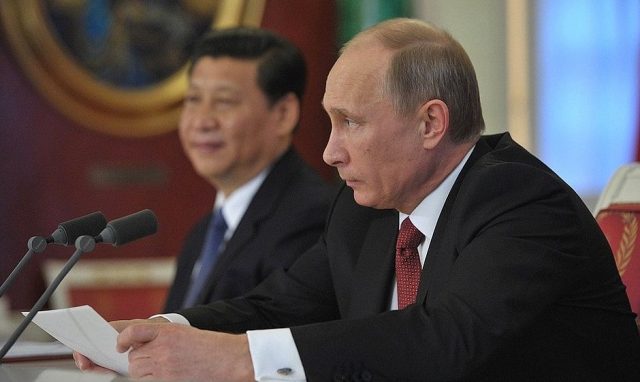



 Aletho News
