Half a century has elapsed since Israel established its brutal occupation of Palestine, and almost seven decades have passed since the 1948 Palestinian Nakba, which constitutes the beginning of discrimination, dispossession and displacement for Palestinians and their persistent suffering. Since then, the inalienable rights of the Palestinian people have figured prominently on the United Nations (UN) agenda. Nonetheless, the plight of the Palestinians continues.
In the light of this, Geneva International Centre for Justice (GICJ) has commissioned a report – “Above the Law: Israel’s Non-Implementation of UN Resolutions”. The report assesses Israel’s implementation of resolutions concerning Palestine and Palestinian rights adopted by the main UN bodies – the Security Council, the General Assembly, the Human Rights Council and ECOSOC – from 1948 to 2017. The 330 page study builds on assessment by UN experts, governments and civil society actors, and draws on field observations in Palestine. It focuses on six selected thematic areas, which are periodically addressed in UN resolutions:
Palestinians’ right to self-determination
Legal, geographic and demographic status of Occupied Palestine
Palestinian refugees and displaced persons
Governance, natural resources and economy
Militarisation and military operations
Palestinians’ human rights
The main finding of the study is that Israel has blatantly disregarded all UN resolutions criticising its illegal activities and their dire consequences for the inalienable rights of the Palestinian people since 1948. The study also finds that Israel’s occupation of Palestine is intricately linked with its apartheid system. Israel’s distinction between Jewish nationality and the “citizenship” or “residence” statuses of Palestinians forms the basis for discrimination against Palestinians. This system is also interlinked with Israel’s increasingly anti-democratic policies and practices targeting political opponents, including Jewish Israeli dissidents.
The right to self-determination
The report shows that the groundwork for Israel’s illegal policies and practices characteristic of colonialism and apartheid was laid almost seven decades ago, with the 1948 Nakba. Overriding the partition resolution, Israel had extended its borders beyond the UN-designated partition lines and annexed West Jerusalem, which had been envisaged as a city under an international regime. After having imposed its military occupation on the remaining territory of Palestine in 1967, Israel furthered administrative and legislative measures aimed at establishing permanent control over occupied Palestine, notably through its settlement policy. In recent years, Israel has taken actions subverting Palestinian self-determination in retaliation for explicit recognition of this right by the international community.
Legal, geographic and demographic status
Pursuant to its establishment in 1948, Israel was quick to develop the legislative framework for the expropriation of Palestinian land and property for the sake of Jewish settlement – first within Israel and from 1967 onwards in occupied Palestine – in an effort to alter the character, status and demography of historic Palestine illegally. On grounds of discriminatory domestic property laws, military orders and an apartheid zoning and planning regime, Israel has unabatedly confiscated Palestinian land and expropriated or demolished Palestinian property inside Israel and in occupied Palestine to construct and consolidate illegal Jewish settlements. These measures run counter to innumerable UN resolutions determining that Israel’s construction of settlements has no legal validity and constitutes a flagrant violation under international law and a major obstacle to a just, lasting and comprehensive peace. Rather than constituting a novel policy, Israel’s retroactive “legalisation” of outposts hitherto considered illegal even under Israeli law, which allow for the expropriation of private Palestinian land, is a continuation of longstanding violations.
The settlement policy, in conjunction with the erection of physical obstacles, undermines the contiguity of Palestine and fragments Palestinian communities in small disconnected enclaves controlled by the Occupying Power and surrounded by massive Israeli settlement blocs, walls, checkpoints and vast security zones and roads for the exclusive benefit of Israeli settlers. Appeals by the international community, including the International Court of Justice (ICJ), dissolved into thin air in the face of Israel’s unabashed settlement and Wall construction, which deepened the fragmentation of Palestinian land and tore families apart.
The report, moreover, reveals how Israeli activities since 1948 have eroded the traditional status of Jerusalem as the centre of Palestinian political, cultural and social life and continue to subvert the future status of East Jerusalem as capital of a Palestinian state.
Refugees and displaced persons
Notwithstanding landmark General Assembly resolution 194 (III) of 11 December 1948 and Security Council resolution 237 of 14 June 1967, as well as innumerable related resolutions, Israel persists in its denial of the rights of Palestinian refugees and displaced persons, particularly their right of return. In the absence of a just solution, many face immense suffering and deplorable conditions under occupation and in exile marked by vulnerability, dispossession and perilous socioeconomic situations. Israel’s population transfer and recurrent military operations result in incessant displacement among the Palestinian population, for which accountability and compensation remain absent.
Governance, natural resources and the economy
A further thematic area of UN resolutions whose implementation is assessed is Israel’s interference with or obstruction of Palestinian governance, economy, social development and infrastructure, which violate Palestinian political, social and economic rights.
Governance: After 1967, Israeli military forces attacked, detained or deported Palestinian politicians and attacked or closed down government institutions. The Oslo Accords entrenched the political occupation because the Palestinian Authority became dependent on Israeli funding and bound by the provisions of the agreement. Until today, Israel continues to interfere in Palestinian governance through, inter alia, the withholding of funds, the prevention of development projects, the closing down of institutions and offices, the curbing of political activity and the restriction on movement of Palestinian government officials.
Natural resources: The discriminatory system of control over Palestinian resources lies at the heart of Israel’s exploitation of Palestinian natural resources for the benefit of the Israeli economy and population, including settlers. Israel’s closure policy and movement restrictions further obstruct Palestinians’ use of their own natural resources.
Economy, social development and infrastructure: Israel lost no time in gearing the Palestinian economy towards Israeli interests. Under the 1994 Paris Protocol, Palestinian economic dependency on the Occupying Power became entrenched. Israeli restriction on the movement of people and goods, rigorous sanctions, the discriminatory zoning and planning regime, military actions and the suffocating blockade on Gaza have devastated the Palestinian economy and caused lasting socioeconomic hardship as well as a protracted humanitarian crisis in Gaza.
Militarisation and military operations
The continued refusal of Israel to apply the Fourth Geneva Convention since 1967 created a situation in which a defenceless civilian population faces a vast and powerful military sustained financially by the Israeli state and supported by the Israeli government on a daily basis. Israel persists in its prolonged military occupation and frequent devastating operations, particularly in Gaza, marked by excessive use of force affecting Palestinian civilians disproportionately. These cause unquantifiable loss and suffering, further deprive the Palestinian people of a dignified life and deepen despair.
Human rights
The widespread violations by Israel against the Palestinian people constitute the longest outstanding, serious human rights issues on the UN agenda. Regardless of repeated appeals by the international community since 1967 to apply its obligations under international human rights and humanitarian law in occupied Palestine, Israel has entrenched its deliberate, organised and institutionalised violations of Palestinians’ human rights, which have been criticised regularly in UN resolutions:
The use of excessive and often lethal force by Israeli occupying forces and the failure to prevent settler violence violate Palestinians’ fundamental right to life.
Israel continues to conduct large-scale arbitrary arrests and detention under untenable conditions of imprisonment and under the use of torture, to impose collective punishment, most deplorably in the form of its blockade on the entire population of Gaza, and to displace and deport Palestinians forcibly.
The Occupying Power arbitrarily and violently interferes with the right to property by destroying homes and vital infrastructure on the basis of discriminatory laws, military orders and an apartheid zoning and planning scheme.
Severely infringing on Palestinian freedom of expression, association and peaceful assembly, and the right to participate in public and political life, Israel, inter alia, closes down institutions, disperses peaceful protests violently and arrests human rights defenders.
Israel limits Palestinians’ right to education, inter alia, through restrictions on school development, demolitions and closing down of educational institutions, movement restrictions, military raids and settler violence.
Restricting freedom of movement, Israel imposes curfews on entire areas and has constructed and maintains the Wall, the system of checkpoints and other physical obstacles and the associated permit regime.
Undermining the right to residence and family life, Israel enacts discriminatory laws governing entry and residence as well as family reunification, and perpetuates practices that discriminate against the Palestinian population, inter alia, the denial and revocation of residency statuses.
The Occupying Power, furthermore, violates the freedom of religion and worship, notably through access restrictions and “archaeological excavations” imperilling the maintenance of Holy Places. Frequent incursions, provocations and incitement by government officials, religious leaders, occupying forces and extremist settlers violate the historic status quo and sanctity of Holy Sites.
Through its policies and practices, Israel deprives Palestinians of the right to an adequate standard of living. Its actions imperil livelihoods, heighten poverty and food insecurity, deny Palestinians social services, restrict access quality medical care and have hurled Gaza into an entrenched humanitarian crisis.
General assessment
While Israel has continued to defy international law and human rights law with utmost impunity throughout almost seven decades, Palestinians see their inalienable rights disintegrate in the face of prolonged occupation, asymmetrical warfare, power politics and political expediency. The unrelenting efforts by several UN Member States to introduce necessary forcible measures under UN Charter Chapter VII through the Security Council to force Israel to comply with its international obligations have been blocked repeatedly by the veto of the United States.
The report concludes that the only way to end violations in the region is to dismember the brutal system of occupation. The liberation of Palestinians from the shackles of occupation and apartheid and the dissolution of discrimination against ethnic and increasingly political minorities within Israel would give way to real democracy and just peace in the region. To finally achieve this aim, all actors who are genuinely concerned about human rights and peace must act as a united front to bring to an end an inhumane system that threatens the humanity of, and justice for, all of us.
GAZA – Hamas spokesman Sami Abu Zuhri praised on Sunday the statements of the North Korean Foreign Ministry against the Israeli occupation of Palestinian land and in support of the struggle of the Palestinian people until the attainment of freedom.
In a statement on Twitter, Abu Zuhri rejected the offensive Israeli speech against Pyongyang, saying that Israel is the source of “evil and terrorism” and the cause of instability in the region.
The Israeli war minister, Avigdor Lieberman said in an interview with the Hebrew website Walla that any confrontation between the United States and North Korea would directly affect Israel.
On Lieberman’s statements, Pyongyang said that Israel is the only country in the Middle East that possesses nuclear weapons under the protection of the United States, adding that Israel “constitutes an obstacle in the Middle East, occupies Arab lands, and carries out crimes against humanity”.
Pyongyang affirmed that North Korea’s stands are always based on justice and peace, expressing support for the Palestinian people and their struggle to establish their own state.
Every day in unimaginable ways, prominent leaders from the left and the right, from bankers to Parisian intellectuals, are fabricating stories and pushing slogans that denigrate presidential candidate Marine Le Pen.
They obfuscate her program, substituting the label ‘extremist’ for her pro-working class and anti-imperialist commitment. Fear and envy over the fact that a new leader heads a popular movement has seeped into Emmanuel “Manny” Macron’s champagne-soaked dinner parties. He has good reason to be afraid: Le Pen addresses the fundamental interests of the vast- majority of French workers, farmers, public employees, unemployed and underemployed youth and older workers approaching retirement.
The mass media, political class and judicial as well as street provocateurs savagely assault Le Pen, distorting her domestic and foreign policies. They are incensed that Le Pen pledges to remove France from NATO’s integrated command – effectively ending its commitment to US directed global wars. Le Pen rejects the oligarch-dominated European Union and its austerity programs, which have enriched bankers and multi-national corporations. Le Pen promises to convoke a national referendum over the EU – to decide French submission. Le Pen promises to end sanctions against Russia and, instead, increase trade. She will end France’s intervention in Syria and establish ties with Iran and Palestine.
Le Pen is committed to Keynesian demand-driven industrial revitalization as opposed to Emmanuel Macron’s ultra-neoliberal supply-side agenda.
Le Pen’s program will raise taxes on banks and financial transactions while fining capital flight in order to continue funding France’s retirement age of 62 for women and 65 for men, keeping the 35 hour work-week, and providing tax free overtime pay. She promises direct state intervention to prevent factories from relocating to low wage EU economies and firing French workers.
Le Pen is committed to increasing public spending for childcare and for the poor and disabled. She has pledged to protect French farmers against subsidized, cheap imports.
Marine Le Pen supports abortion rights and gay rights. She opposes the death penalty. She promises to cut taxes by 10% for low-wage workers. Marine is committed to fighting against sexism and for equal pay for women.
Marine Le Pen will reduce migration to ten thousand people and crack down on immigrants with links to terrorists.
Emmanuel Macron: Macro Billionaire and Micro Worker Programs
Macron has been an investment banker serving the Rothschild and Cie Banque oligarchy, which profited from speculation and the pillage of the public treasury. Macron served in President Hollande’s Economy Ministry, in charge of ‘Industry and Digital Affairs’ from 2014 through 2016. This was when the ‘Socialist’ Hollande imposed a pro-business agenda, which included a 40 billion-euro tax cut for the rich.
Macron is tied to the Republican Party and its allied banking and business Confederations, whose demands include: raising the retirement age, reducing social spending, firing tens of thousands of public employees and facilitating the outflow of capital and the inflow of cheap imports.
Macron is an unconditional supporter of NATO and the Pentagon. He fully supports the European Union. For their part, the EU oligarchs are thrilled with Macron’s embrace of greater austerity for French workers, while the generals can expect total material support for the ongoing and future US-NATO wars on three continents.
Propaganda, Labels and Lies
Macron’s pro-war, anti-working class and ’supply-side’ economic policies leave us with only one conclusion: Marine Le Pen is the only candidate of the left. Her program and commitments are pro-labor, not ‘hard’ or ‘far’ right – and certainly not ‘fascist’.
Macron, on the other hand is a committed rightwing extremist, certainly no ‘centrist’, as the media and the political elite claim! One has only to look at his background in banking, his current supporters among the oligarchs and his ministerial policies when he served Francois Holland.
The ‘Macronistas’ have accused Marine Le Pen of extreme ‘nationalism’, ‘fascism’, ‘anti-Semitism’ and ‘anti-immigrant racism’. ‘The French Left’, or what remains of it, has blindly swallowed the oligarchs’ campaign against Le Pen despite the malodorous source of these libels.
Le Pen is above all a ’sovereigntist’: ‘France First’. Her fight is against the Brussels oligarchs and for the restoration of sovereignty to the French people. There is an infinite irony in labeling the fight against imperial political power as ‘hard right’. It is insulting to debase popular demands for domestic democratic power over basic economic policies, fiscal spending, incomes and prices policies, budgets and deficits as ‘extremist and far right’.
Marine Le Pen has systematically transformed the leadership, social, economic program and direction of the National Front Party.
She expelled its anti-Semites, including her own father! She transformed its policy on women’s rights, abortion, gays and race. She won the support of young unemployed and employed factory workers, public employees and farmers. Young workers are three times more likely to support her national industrial revitalization program over Macron’s ‘free market dogma’. Le Pen has drawn support from French farmers as well as the downwardly mobile provincial middle-class, shopkeepers, clerks and tourism-based workers and business owners.
Despite the trends among the French masses against the oligarchs, academics, intellectuals and political journalists have aped the elite’s slander against Le Pen because they will not antagonize the prestigious media and their administrators in the universities. They will not acknowledge the profound changes that have occurred within the National Front under Marine Le Pen. They are masters of the ‘double discourse’ – speaking from the left while working with the right. They confuse the lesser evil with the greater evil.
If Macron wins this election (and nothing is guaranteed!), he will certainly implement his ‘hard’ and ‘extreme’ neo-liberal agenda. When the French workers go on strike and demonstrators erect barricades in the streets in response to Macron’s austerity, the fake-left will bleat out their inconsequential ‘critique’ of ‘impure reason’. They will claim that they were right all along.
If Le Pen loses this election, Macron will impose his program and ignite popular fury. Marine will make an even stronger candidate in the next election… if the French oligarchs’ judiciary does not imprison her for the crime of defending sovereignty and social justice.
A wide range of nominally left-wing political groups and publications have acquiesced to a series of dangerous military actions by the Trump administration that have brought the world to the brink of war.
On April 13, the US dropped the largest nonnuclear bomb ever deployed in history in the mountains of eastern Afghanistan. The Massive Ordnance Air Blast (MOAB) bomb weighs over 10 tons and is so destructive it reportedly obliterated the homes of peasants living several miles from the drop zone.
Four days later, Vice President Michael Pence traveled to the demilitarized zone on the Korean peninsula, where the US has threatened to use preemptive military force against the nuclear-armed North. Pence acknowledged that the MOAB bombing was aimed at proving that the US was prepared to go to war.
“Just in the past two weeks,” he declared, “the world witnessed the strength of our new president in actions taken in Syria and Afghanistan. North Korea would do well not to test his resolve or the strength of the armed forces of the United States in this region.”
The growing danger of a nuclear conflagration is widely felt. A Marist poll published this month shows that 72 percent of Americans are concerned about growing international tensions. Leading figures in Russia, China, North Korea and the United States have warned of the real possibility of war.
“Nuclear war has become thinkable again,” reads a headline in Monday’s Guardian. The New York Times’ April 17 editorial warns of “President Trump’s Loose Talk on North Korea,” while the Times news section compares tensions in East Asia to the Cuban missile crisis. Financial Times columnist Gideon Rachman wrote an article titled, “Donald Trump, Kim Jong Un and the risk of nuclear miscalculation.”
All the more remarkable is the role played by various political groups that identify themselves as left-wing but have maintained an intentional silence with regard to the dropping of the MOAB and the threat of war in Korea. These groups hide the threat of war from their readers and provide political cover for US imperialism.
Not a single article relating to these events appears on the front page of Jacobin Magazine’s website, nor does its official Facebook page make any reference to the MOAB attack or the recent US threats against Korea. There are no references to the MOAB or rising tensions in North Korea on the front page of the Pabloite International Viewpoint website.
Similarly, Socialist Alternative’s website has no articles dealing in any detail with the bombing or US moves against North Korea. One article from April 15 titled “Trump administration damaged and unpredictable” includes a one-sentence reference to the MOAB in the 13th paragraph, while North Korea is addressed only briefly later in the article.
It is the most basic obligation of socialists to condemn and oppose US war threats and warn the working class of the dangers and root causes of imperialist war.
The front page of Socialist Worker, the publication of the International Socialist Organization (ISO), has no references to the dropping of the MOAB, and only on Tuesday did it publish its first article of the year relating to North Korea.
At no point in the article (“Will Trump start a new Korean War?”) does the writer, David Whitehouse, state that the ISO is opposed to the American government’s provocative war threats. It instead reports the potential outbreak of nuclear war as a disinterested observer, including 20 hyperlinks to various reports in the bourgeois press, including five from the New York Times alone.
Whitehouse refers to Washington’s deployment of the Terminal High Altitude Area Defense (THAAD) missile system in South Korea as a “sticky issue.” He reports US-South Korean joint war games, as well as proposals to assassinate North Korean leaders and launch preemptive strikes, but passes over them without making any critical comment.
The article downplays the danger of war. It begins, “Now that the latest North Korean missile test failed on April 16, the immediate risk of a US military attack may fade.” It comments further on that “Trump’s ‘new’ belligerence toward North Korea is really the latest oscillation between the twin options of ‘containment’ or ‘rollback’ that have lain in the US policy toolkit since the Cold War.”
Whitehouse complacently asserts that the likelihood of US military intervention is lower than some claim: “Trump can talk a tougher line, but US military options have begun looking weaker, not stronger, since the North’s three-decade arms build-up.”
Fifteen years after the mass protests leading up to the 2003 US invasion of Iraq, the pseudo-left’s support for war shows that the present absence of an organized antiwar movement is not the product of popular apathy. Rather, it is due to the rightward shift of previously radicalized sections of the middle class whose opposition to war has disappeared in the decades following the Vietnam War.
This section of the population has greatly enriched itself since the late 1960s and early 1970s, in part from the spoils of the wars of the past quarter century that have inflated the stock market and enriched American banks and corporations. Their political orientation is toward the Democratic Party and the state.
This weekend, many representatives of this milieu will be gathering at New York University for the Historical Materialism forum. Sponsors and participants include Jacobin editor Bhaskar Sunkara as well as historians Lars Lih and Eric Blanc. The ISO’s International Socialist Review is an event sponsor and ISO members Paul Le Blanc, Tithi Bhattacharya, Todd Chretien and Paul Heideman will appear as speakers.
Of the 60 scheduled panels, not a single one relates to the subject of war. The words “imperialism,” “war,” “Iraq,” “North Korea,” “Afghanistan,” “Libya” and “Somalia” do not appear in any panel title.
Instead, the NYU panel features discussion topics such as “Queer(ing) Marxism,” “Women’s Strikes in the Age of Feminization,” “The International Women’s Strike and the Anticapitalist Feminist Movement,” “Silencing the Subaltern: Resistance & Gender in Postcolonial Theory,” “Concerning Violence: Subjections, Resistance, Subversions,” “Adorno: Subjectivity and Critique,” “New Directions in Marxist/Feminist Theory,” “Race, Repetition, Rebellion: The Political Economy of Surplus,” and “Late Althusser: Politics and Theoretical Practice.”
Any connections that the radicalized middle class once had to anti-imperialism or socialism are long gone. The categories of analysis they employ have nothing to do with class or historical materialism. War, social inequality and poverty all take a back seat to what really interests them: race, gender and their own sex lives.
The isolated, hermit kingdom of the DPRK is shrowded in secrecy, It’s nearly impossible to get any reliable information from behind the bamboo curtain. Nonetheless, every week, on T.V. and online, we are bombarded by the bizzare media-spectacle of North Korea. From nuclear apocalypse and prison camps to banned sarcasm and compulsory identical haircuts – any shred of information regarding North Korea becomes a viral media hit, regardless of how dubious the story is.
But that’s all about to change.
Two Aussie boys decided to take matters into their own hands and go to North Korea to find out the truth for themselves. Join us as we look past the clickbait and unpack the forces behind the way our media represents the “Democratic People’s Republic of North Korea”.
A registered “charity” with buckets of donations from arms manufacturers and other corporate sources is aggressively trying to push Canadian foreign policy further towards militarism and the use of violence.
And the right wing Canadian Global Affairs Institute seems to be growing in influence, or at least media prominence.
Since last month’s federal budget senior CGAI analyst David Perry has been quoted throughout the media arguing for increased military spending. “I’m stunned this budget is actually taking money away from the military and pretending to give it back several decades in the future,” Perry told CBC.
In its reports, conferences and commentary the Calgary-based institute promotes aggressive, militarist positions. In the midst of a wave of criticism towards General Dynamics’s sale of Light Armoured Vehicles to Saudi Arabia, CGAI published a paper titled “Canada and Saudi Arabia: A Deeply Flawed but Necessary Partnership” that defended the $15-billion deal. At least four of the General Dynamics-funded institute’s “fellows” wrote columns justifying the sale, including an opinion Perry published in the Globe and Mail Report on Business titled “Without foreign sales, Canada’s defence industry would not survive.”
Previously, CGAI has called for Ottawa to set up a foreign spy service — think CIA, M-16 or Mossad. At the height of the war in Afghanistan they commissioned a survey claiming most “Canadians are willing to send troops into danger even if it leads to deaths and injuries as long as they believe in the military’s goals.”
Beyond the media work most think tanks pursue, the institute expends considerable effort influencing news agencies. Since 2002 the institute has operated an annual military journalism course together with the University of Calgary’s Centre for Military and Strategic Studies. A dozen Canadian journalism students receive scholarships to the 9-day program, which includes a media-military theory component and visits to armed forces units. The stated objective of the course is “to enhance the military education of future Canadian journalists who will report on Canadian military activities.” But that description obscures the political objective. In an article titled “A student’s look inside the military journalism course” Lola Fakinlede writes: “Between the excitement of shooting guns, driving in tanks, eating pre-packed lunches, investigating the insides of coyotes and leopards — armoured vehicles not animals — and visiting the messes, we were learning how the military operates. … Being able to see the human faces behind the uniform, being able to talk to them like regular people, being able to see them start losing the suspicion in their eyes and really start talking candidly to me — that was incredible.”
Captain David Williams was forthright concerning the broader political objective of the program. In 2010 he wrote, “the intent of this annual visit has always been to foster a familiarity and mutual understanding between the CF and the future media, two entities which require a symbiotic relationship in order to function.”
Along with the Conference of Defence Associations, the institute gives out the annual Ross Munro Media Award recognizing a “journalist who has made a significant contribution to understanding defence and security issues.” The winner receives a handsome statuette, a gala dinner attended by Ottawa VIPs and a $2,500 prize. The political objective of the award is to reinforce the militarist culture among reporters who cover the subject.
Journalist training, the Ross Munro award and institute reports/commentators are a positive way of shaping the discussion of military matters. But, CGAI also employs a stick. In detailing an attack against colleague Lee Berthiaume, Ottawa Citizen military reporter David Pugliese pointed out that it’s “not uncommon for the site to launch personal attacks on journalists covering defence issues. It seems some CDFAI [CGAI’s predecessor] ‘fellows’ don’t like journalists who ask the government or the Department of National Defence too many probing questions. … Last year I had one of the CDFAI ‘fellows’ write one of the editors at the Citizen to complain about my lack of professionalism on a particular issue. … the smear attempt was all done behind my back but I found out about it. That little stunt backfired big time when I showed the Citizen editor that the CDFAI ‘fellow’ had fabricated his claims about me.”
While it may not have succeeded in this instance, online criticism and complaints to journalists’ superiors do have an impact. If pursued consistently this type of ‘flack’ drives journalists to avoid topics or be more cautious when covering an issue.
While not exactly forthcoming about its funders, the institute has received some military backing. The Canadian Forces identified CGAI’s predecessor, the Canadian Defence and Foreign Affairs Institute, under the rubric of “defence-related organization and defence and foreign policy think tanks.” DND’s Security and Defence Forum provided funding to individuals who pursued a year-long internship with the Institute and CGAI has held numerous joint symposiums with DND, NATO and NORAD.
The institute has received financial backing from arms contractors. General Dynamics and Lockheed Martin Canada, as well as Edge Group, C4i, Com Dev, ENMAX, SMART Technologies, the Defense News Media Group and Canadian Council of Chief Executives have all supported CGAI.
Beyond weapons makers, the institute has wealthy patrons and ties within the corporate world. Rich militarist Frederick Mannix helped found the registered charity and recent directors include the CEO of IAMGOLD Steve Letwin, Royal Bank Financial Group executive Robert B. Hamilton and ATCO director Bob Booth.
A bastion of pro-corporate, militarist, thinking, the Canadian Global Affairs Institute is increasingly influential in shaping the foreign policy discussion in this country.
Canadians who disagree with militarism, who wish for diplomacy over war, and who support a Do Unto Others as We Would Have Them Do Unto Us foreign policy must raise their voices loudly and clearly so that we too are heard by government.
The looming threat of World War III, a potential extermination event for the human species, is made more likely because the world’s public can’t count on supposedly objective experts to ascertain and evaluate facts. Instead, careerism is the order of the day among journalists, intelligence analysts and international monitors – meaning that almost no one who might normally be relied on to tell the truth can be trusted.
The dangerous reality is that this careerism, which often is expressed by a smug certainty about whatever the prevailing groupthink is, pervades not just the political world, where lies seem to be the common currency, but also the worlds of journalism, intelligence and international oversight, including United Nations agencies that are often granted greater credibility because they are perceived as less beholden to specific governments but in reality have become deeply corrupted, too.
In other words, many professionals who are counted on for digging out the facts and speaking truth to power have sold themselves to those same powerful interests in order to keep high-paying jobs and to not get tossed out onto the street. Many of these self-aggrandizing professionals – caught up in the many accouterments of success – don’t even seem to recognize how far they’ve drifted from principled professionalism.
A good example was Saturday night’s spectacle of national journalists preening in their tuxedos and gowns at the White House Correspondents Dinner, sporting First Amendment pins as if they were some brave victims of persecution. They seemed oblivious to how removed they are from Middle America and how unlikely any of them would risk their careers by challenging one of the Establishment’s favored groupthinks. Instead, these national journalists take easy shots at President Trump’s buffoonish behavior and his serial falsehoods — and count themselves as endangered heroes for the effort.
Foils for Trump
Ironically, though, these pompous journalists gave Trump what was arguably his best moment in his first 100 days by serving as foils for the President as he traveled to Harrisburg, Pennsylvania, on Saturday and basked in the adulation of blue-collar Americans who view the mainstream media as just one more appendage of a corrupt ruling elite.
Breaking with tradition by snubbing the annual press gala, Trump delighted the Harrisburg crowd by saying: “A large group of Hollywood celebrities and Washington media are consoling each other in a hotel ballroom” and adding: “I could not possibly be more thrilled than to be more than 100 miles away from [the] Washington swamp … with much, much better people.” The crowd booed references to the elites and cheered Trump’s choice to be with the common folk.
Trump’s rejection of the dinner and his frequent criticism of the mainstream media brought a defensive response from Jeff Mason, president of the White House Correspondents’ Association, who complained: “We are not fake news. We are not failing news organizations. And we are not the enemy of the American people.” That brought the black-tie-and-gown gathering to its feet in a standing ovation.
Perhaps the assembled media elite had forgotten that it was the mainstream U.S. media – particularly The Washington Post and The New York Times – that popularized the phrase “fake news” and directed it blunderbuss-style not only at the few Web sites that intentionally invent stories to increase their clicks but at independent-minded journalism outlets that have dared question the elite’s groupthinks on issues of war, peace and globalization.
The Black List
Professional journalistic skepticism toward official claims by the U.S. government — what you should expect from reporters — became conflated with “fake news.” The Post even gave front-page attention to an anonymous group called PropOrNot that published a black list of 200 Internet sites, including Consortiumnews.com and other independent-minded journalism sites, to be shunned.
Secretary of State Colin Powell, Feb. 5, 2003
But the mainstream media stars didn’t like it when Trump began throwing the “fake news” slur back at them. Thus, the First Amendment lapel pins and the standing ovation for Jeff Mason’s repudiation of the “fake news” label.
Yet, as the glitzy White House Correspondents Dinner demonstrated, mainstream journalists get the goodies of prestige and money while the real truth-tellers are almost always outspent, outgunned and cast out of the mainstream. Indeed, this dwindling band of honest people who are both knowledgeable and in position to expose unpleasant truths is often under mainstream attack, sometimes for unrelated personal failings and other times just for rubbing the powers-that-be the wrong way.
Perhaps, the clearest case study of this up-is-down rewards-and-punishments reality was the Iraq War’s WMD rationale. Nearly across the board, the American political/media system – from U.S. intelligence analysts to the deliberative body of the U.S. Senate to the major U.S. news organizations – failed to ascertain the truth and indeed actively helped disseminate the falsehoods about Iraq hiding WMDs and even suggested nuclear weapons development. (Arguably, the “most trusted” U.S. government official at the time, Secretary of State Colin Powell, played a key role in selling the false allegations as “truth.”)
Not only did the supposed American “gold standard” for assessing information – the U.S. political, media and intelligence structure – fail miserably in the face of fraudulent claims often from self-interested Iraqi opposition figures and their neoconservative American backers, but there was minimal accountability afterwards for the “professionals” who failed to protect the public from lies and deceptions.
Profiting from Failure
Indeed, many of the main culprits remain “respected” members of the journalistic establishment. For instance, The New York Times’ Pentagon correspondent Michael R. Gordon, who was the lead writer on the infamous “aluminum tubes for nuclear centrifuges” story which got the ball rolling for the Bush administration’s rollout of its invade-Iraq advertising campaign in September 2002, still covers national security for the Times – and still serves as a conveyor belt for U.S. government propaganda.
The Washington Post’s editorial page editor Fred Hiatt, who repeatedly informed the Post’s readers that Iraq’s secret possession of WMD was a “flat-fact,” is still the Post’s editorial page editor, one of the most influential positions in American journalism.
Hiatt’s editorial page led a years-long assault on the character of former U.S. Ambassador Joseph Wilson for the offense of debunking one of President George W. Bush’s claims about Iraq seeking yellowcake uranium from Niger. Wilson had alerted the CIA to the bogus claim before the invasion of Iraq and went public with the news afterwards, but the Post treated Wilson as the real culprit, dismissing him as “a blowhard” and trivializing the Bush administration’s destruction of his wife’s CIA career by outing her (Valerie Plame) in order to discredit Wilson’s Niger investigation.
At the end of the Post’s savaging of Wilson’s reputation and in the wake of the newspaper’s accessory role in destroying Plame’s career, Wilson and Plame decamped from Washington to New Mexico. Meanwhile, Hiatt never suffered a whit – and remains a “respected” Washington media figure to this day.
Careerist Lesson
The lesson that any careerist would draw from the Iraq case is that there is almost no downside risk in running with the pack on a national security issue. Even if you’re horrifically wrong — even if you contribute to the deaths of some 4,500 U.S. soldiers and hundreds of thousands of Iraqis — your paycheck is almost surely safe.
The same holds true if you work for an international agency that is responsible for monitoring issues like chemical weapons. Again, the Iraq example offers a good case study. In April 2002, as President Bush was clearing away the few obstacles to his Iraq invasion plans, Jose Mauricio Bustani, the head of the Organization for the Prohibition of Chemical Weapons [OPCW], sought to persuade Iraq to join the Chemical Weapons Convention so inspectors could verify Iraq’s claims that it had destroyed its stockpiles.
The Bush administration called that idea an “ill-considered initiative” – after all, it could have stripped away the preferred propaganda rationale for the invasion if the OPCW verified that Iraq had destroyed its chemical weapons. So, Bush’s Undersecretary of State for Arms Control John Bolton, a neocon advocate for the invasion Iraq, pushed to have Bustani deposed. The Bush administration threatened to withhold dues to the OPCW if Bustani, a Brazilian diplomat, remained.
It now appears obvious that Bush and Bolton viewed Bustani’s real offense as interfering with their invasion scheme, but Bustani was ultimately taken down over accusations of mismanagement, although he was only a year into a new five-year term after having been reelected unanimously. The OPCW member states chose to sacrifice Bustani to save the organization from the loss of U.S. funds, but – in so doing – they compromised its integrity, making it just another agency that would bend to big-power pressure.
“By dismissing me,” Bustani said, “an international precedent will have been established whereby any duly elected head of any international organization would at any point during his or her tenure remain vulnerable to the whims of one or a few major contributors.” He added that if the United States succeeded in removing him, “genuine multilateralism” would succumb to “unilateralism in a multilateral disguise.”
The Iran Nuclear Scam
Something similar happened regarding the International Atomic Energy Agency in 2009 when Secretary of State Hillary Clinton and the neocons were lusting for another confrontation with Iran over its alleged plans to build a nuclear bomb.
IAEA director Yukiya Amano
According to U.S. embassy cables from Vienna, Austria, the site of IAEA’s headquarters, American diplomats in 2009 were cheering the prospect that Japanese diplomat Yukiya Amano would advance U.S. interests in ways that outgoing IAEA Director General Mohamed ElBaradei wouldn’t; Amano credited his election to U.S. government support; Amano signaled he would side with the United States in its confrontation with Iran; and he stuck out his hand for more U.S. money.
In a July 9, 2009, cable, American chargé Geoffrey Pyatt said Amano was thankful for U.S. support of his election. “Amano attributed his election to support from the U.S., Australia and France, and cited U.S. intervention with Argentina as particularly decisive,” the cable said.
The appreciative Amano informed Pyatt that as IAEA director-general, he would take a different “approach on Iran from that of ElBaradei” and he “saw his primary role as implementing safeguards and UNSC [United Nations Security Council] Board resolutions,” i.e. U.S.-driven sanctions and demands against Iran.
Amano also discussed how to restructure the senior ranks of the IAEA, including elimination of one top official and the retention of another. “We wholly agree with Amano’s assessment of these two advisors and see these decisions as positive first signs,” Pyatt commented.
In return, Pyatt made clear that Amano could expect strong U.S. financial assistance, stating that “the United States would do everything possible to support his successful tenure as Director General and, to that end, anticipated that continued U.S. voluntary contributions to the IAEA would be forthcoming. Amano offered that a ‘reasonable increase’ in the regular budget would be helpful.”
What Pyatt made clear in his cable was that one IAEA official who was not onboard with U.S. demands had been fired while another who was onboard kept his job.
Pandering to Israel
Pyatt learned, too, that Amano had consulted with Israeli Ambassador Israel Michaeli “immediately after his appointment” and that Michaeli “was fully confident of the priority Amano accords verification issues.” Michaeli added that he discounted some of Amano’s public remarks about there being “no evidence of Iran pursuing a nuclear weapons capability” as just words that Amano felt he had to say “to persuade those who did not support him about his ‘impartiality.’”
In private, Amano agreed to “consultations” with the head of the Israeli Atomic Energy Commission, Pyatt reported. (It is ironic indeed that Amano would have secret contacts with Israeli officials about Iran’s alleged nuclear weapons program, which never yielded a single bomb, when Israel possesses a large and undeclared nuclear arsenal.)
In a subsequent cable dated Oct. 16, 2009, the U.S. mission in Vienna said Amano “took pains to emphasize his support for U.S. strategic objectives for the Agency. Amano reminded ambassador [Glyn Davies] on several occasions that he was solidly in the U.S. court on every key strategic decision, from high-level personnel appointments to the handling of Iran’s alleged nuclear weapons program.
“More candidly, Amano noted the importance of maintaining a certain ‘constructive ambiguity’ about his plans, at least until he took over for DG ElBaradei in December” 2009.
In other words, Amano was a bureaucrat eager to bend in directions favored by the United States and Israel regarding Iran’s nuclear program. Amano’s behavior surely contrasted with how the more independent-minded ElBaradei resisted some of Bush’s key claims about Iraq’s supposed nuclear weapons program, correctly denouncing some documents as forgeries.
The world public got its insight into the Amano scam only because the U.S. embassy cables were among those given to WikiLeaks by Pvt. Bradley (now Chelsea) Manning, for which Manning received a 35-year prison sentence (which was finally commuted by President Obama before leaving office, with Manning now scheduled to be released in May – having served nearly seven years in prison).
It also is significant that Geoffrey Pyatt was rewarded for his work lining up the IAEA behind the anti-Iranian propaganda campaign by being made U.S. ambassador to Ukraine where he helped engineer the Feb. 22, 2014 coup that overthrew elected President Viktor Yanukovych. Pyatt was on the infamous “fuck the E.U.” call with Assistant Secretary of State for European Affairs Victoria Nuland weeks before the coup as Nuland handpicked Ukraine’s new leaders and Pyatt pondered how “to midwife this thing.”
Rewards and Punishments
The existing rewards-and-punishments system, which punishes truth-tellers and rewards those who deceive the public, has left behind a thoroughly corrupted information structure in the United States and in the West, in general.
Across the mainstream of politics and media, there are no longer the checks and balances that have protected democracy for generations. Those safeguards have been washed away by the flood of careerism.
The situation is made even more dangerous because there also exists a rapidly expanding cadre of skilled propagandists and psychological operations practitioners, sometimes operating under the umbrella of “strategic communications.” Under trendy theories of “smart power,” information has become simply another weapon in the geopolitical arsenal, with “strategic communications” sometimes praised as the preferable option to “hard power,” i.e. military force.
The thinking goes that if the United States can overthrow a troublesome government by exploiting media/propaganda assets, deploying trained activists and spreading selective stories about “corruption” or other misconduct, isn’t that better than sending in the Marines?
While that argument has the superficial appeal of humanitarianism – i.e., the avoidance of armed conflict – it ignores the corrosiveness of lies and smears, hollowing out the foundations of democracy, a structure that rests ultimately on an informed electorate. Plus, the clever use of propaganda to oust disfavored governments often leads to violence and war, as we have seen in targeted countries, such as Iraq, Syria and Ukraine.
Wider War
Regional conflicts also carry the risk of wider war, a danger compounded by the fact that the American public is fed a steady diet of dubious narratives designed to rile up the population and to give politicians an incentive to “do something.” Since these American narratives often deviate far from a reality that is well known to the people in the targeted countries, the contrasting storylines make the finding of common ground almost impossible.
If, for instance, you buy into the Western narrative that Syrian President Bashar al-Assad gleefully gases “beautiful babies,” you would tend to support the “regime change” plans of the neoconservatives and liberal interventionists. If, however, you reject that mainstream narrative – and believe that Al Qaeda and friendly regional powers may be staging chemical attacks to bring the U.S. military in on their “regime change” project – you might favor a political settlement that leaves Assad’s fate to the later judgment of the Syrian people.
Similarly, if you accept the West’s storyline about Russia invading Ukraine and subjugating the people of Crimea by force – while also shooting down Malaysia Airlines Flight 17 for no particular reason – you might support aggressive countermoves against “Russian aggression,” even if that means risking nuclear war.
If, on the other hand, you know about the Nuland-Pyatt scheme for ousting Ukraine’s elected president in 2014 and realize that much of the other anti-Russian narrative is propaganda or disinformation – and that MH-17 might well have been shot down by some element of Ukrainian government forces and then blamed on the Russians [see here and here] – you might look for ways to avoid a new and dangerous Cold War.
Who to Trust?
But the question is: who to trust? And this is no longer some rhetorical or philosophical point about whether one can ever know the complete truth. It is now a very practical question of life or death, not just for us as individuals but as a species and as a planet.
The existential issue before us is whether – blinded by propaganda and disinformation – we will stumble into a nuclear conflict between superpowers that could exterminate all life on earth or perhaps leave behind a radiated hulk of a planet suitable only for cockroaches and other hardy life forms.
You might think that with the stakes so high, the people in positions to head off such a catastrophe would behave more responsibly and professionally. But then there are events like Saturday night’s White House Correspondents Dinner with self-important media stars puffing about with their First Amendment pins. And there’s President Trump’s realization that by launching missiles and talking tough he can buy himself some political space from the Establishment (even as he sells out average Americans and kills some innocent foreigners). Those realities show that seriousness is the farthest thing from the minds of Washington’s insiders.
It’s just too much fun – and too profitable in the short-term – to keep playing the game and hauling in the goodies. If and when the mushroom clouds appear, these careerists can turn to the cameras and blame someone else.
Investigative reporter Robert Parry broke many of the Iran-Contra stories for The Associated Press and Newsweek in the 1980s.
North Korea has accused Israel of being the “only illegal possessor” of nukes and threat to peace in the Middle East, and threatened Tel Aviv with a “thousand-fold punishment” after Israeli Defense Minister called Pyongyang’s leadership a “crazy and radical group.”
In an interview with Hebrew news site Walla this week, Avigdor Lieberman stated that North Korea’s leader Kim Jong-un is a “madman” in charge of a “crazy and radical group” which is “undermining global stability.”
Pyongyang “seems to have crossed the red line with its recent nuclear tests,” the Israeli defense minister said, according to the Times of Israel.
In response, Pyongyang promised a “thousand-fold punishment to whoever dares hurt the dignity of its supreme leadership,” calling Lieberman’s “sordid and wicked” remarks a part of Israel’s smear campaign to cover up its own crimes.
Firing back at the perceived hypocrisy, the North Korean Foreign Ministry said that, unlike Israel, which is a “disturber of peace” in its neighborhood, their country is fully entitled to seek deterrence against “US aggression.”
“Israel is the only illegal possessor of nukes in the Middle East under the patronage of the US. However, Israel vociferated about the nuclear deterrence of the DPRK, slandering it, whenever an opportunity presented itself,” the Foreign Ministry spokesman said, as cited by state-run agency KCNA.
While Israel has never publicly confirmed or denied possessing nukes, it is universally believed to have dozens of warheads, and maintains ambiguous policy that it will not be the first to “introduce” them in the Middle East.
“The DPRK’s access to nuclear weapons is the legitimate exercise of its righteous right for self-defense to cope with the US provocative moves for aggression and the DPRK’s nuclear force is the treasured sword of justice firmly defending peace on the Korean peninsula and in the region,” the North Korean statement added.
Pyongyang went on to call Israel a “culprit of crimes against humanity” and an “occupier” which seeks to dominate the region and oppress Palestinians.
Lieberman’s remarks also sparked criticism at home, with some Israeli politicians noting that their country has enough enemies to create even more with such reckless statements.
“We have enough enemies. Let’s focus on them,” MP Shelly Yachimovich of the Zionist Union said on Twitter.
“The minister of talk is chattering irresponsibly about North Korea. And there is no prime minister to rein in the babbling and posturing ministers,” former defense minister Moshe Ya’alon wrote on Twitter, Times of Israel reports.
Already heightened tensions on the Korean Peninsula escalated further on Saturday after the North conducted yet another failed test of its ballistic rocket technology. The test was conducted as US kicked off joint naval exercises with South Korea just after the US aircraft carrier group led by the USS Carl Vinson entered the Sea of Japan.
For some time now, it has been speculated that Pyongyang is also getting ready to conduct its sixth nuclear test. Speaking about North Korea on Saturday, Trump noted that neither China nor the US would welcome a further North Korean nuclear test.
“I would not be happy,” Trump said in a CBS interview for Sunday’s Face the Nation. When asked if the sixth Korean nuclear test would prompt American military action, Trump responded: “I don’t know. I mean, we’ll see.”
Internet denizens are splitting their sides at the thought of US President Donald Trump proclaiming May 1 “Loyalty Day.” However, the seemingly wacky nationalist day has little to do with the divisive Republican and was officially cooked up in the 1950s.
In a statement released by the White House, Trump proclaimed May 1, 2017 “Loyalty Day,” urging people to reaffirm their dedication to the United States of America.
“The loyalty of our citizenry sends a clear signal to our allies and enemies that the United States will never yield from our way of life.
“Through the Department of Defense and other national security agencies, we are working to destroy ISIS, and to secure for all Americans the liberty terrorists seek to extinguish,” the proclamation states.
“We humbly thank our brave service members and veterans who have worn our nation’s uniform… Their unwavering loyalty and fidelity has made the world a safer, more free, and more just place.”
The notion of a “Loyalty Day” was met with derision and hoots of laughter online. This is “the creepiest thing” Trump has done, wrote one commenter.
Others compared the day to an event that might happen in North Korea or Russia.
But Trump proclaiming “Loyalty Day” does not mean he invented it. It has been around for decades. In fact, “Loyalty Day” was a thing under President Obama, who kept his proclamation free from military and terrorism references in 2016.
It’s also been proclaimed by pretty much every commander-in-chief, including President Richard Nixon, since it was officially recognised by Congress in 1955.
“Loyalty Day is a special day for the reaffirmation of loyalty to the United States and for the recognition of the heritage of American freedom,” according to the federal statute on the celebration.
“The president is requested to issue a proclamation calling on United States Government officials to display the flag of the United States on all government buildings on Loyalty Day and inviting the people of the United States to observes Loyalty Day with appropriate ceremonies in schools and other suitable places.”
So basically the US government has been asking for citizens’ unwavering, rootin’-tootin’ support for decades – and not just under Trump.
Rex Tillerson, the US Secretary of State, acted today to confirm his authority as the head of US diplomacy by using a UN Security Council session to make what amounted to a peace offer to North Korea.
After sidelining Nikki Haley at the UN Security Council session today, Tillerson signalled what could be a significant shift in the US approach to the Korean crisis, appearing to offer direct talks with North Korea’s leadership with a promise of an eventual normalisation of relations between the US and North Korea, and holding out the prospect of the eventual denuclearisation of the Korean Peninsula and of sanctions relief.
The peace offer inevitably came wrapped up with more demands for more sanctions (about which however see below), and with talk of military action remaining an option. However the thrust of Tillerson’s words was clear enough:
Our goal is not regime change. Nor do we desire to threaten the North Korean people or destabilize the Asia Pacific region. Over the years, we have withdrawn our own nuclear weapons from South Korea and offered aid to North Korea as proof of our intent to de-escalate the situation and normalize relations. Since 1995, the United States has provided over $1.3 billion dollars in aid to North Korea, and we look forward to resuming our contributions once the D.P.R.K. begins to dismantle its nuclear weapons and missile technology programs.
… even though the present condition of that country is bleak, the United States believes in a future for North Korea. These first steps toward a more hopeful future will happen most quickly if other stakeholders in this – in the region and the global security join us.
(bold italics added)
As for Tillerson’s demand for further sanctions, on close examination these turn out to be pitched at a level which he appears to think China and Russia might accept
Third, we must increase North Korea’s financial isolation. We must levy new sanctions on D.P.R.K. entities and individuals supporting its weapons and missile programs, and tighten those that are already in place. The United States also would much prefer countries and people in question to own up to their lapses and correct their behavior themselves, but we will not hesitate to sanction third-country entities and individuals supporting the D.P.R.K.’s illegal activities.
We must bring maximum economic pressure by severing trade relationships that directly fund the D.P.R.K.’s nuclear and missile program. I call on the international community to suspend the flow of North Korean guest workers and to impose bans on North Korean imports, especially coal.
(bold italics added)
These demands appear to pitch sanctions at the level of obstructing development of North Korea’s ballistic missile and nuclear weapons programmes rather than intending them to bring about the wholesale collapse of North Korea’s economy, something which Tillerson probably realises the Chinese will never agree to.
In passing I should say that whilst the Chinese might be willing to forego imports of coal from North Korea at least for a while, I think it is all but inconceivable that either they or the Russians would suspend the flow of North Korean guest workers to their countries.
Despite his call for total denuclearisation of the Korean Peninsula Tillerson probably knows that the degree of suspicion of the US on the part of the North Korean government is so great that it is all but inconceivable that North Korea will ever agree to give up the nuclear weapons it already has. Indeed in his remarks to the UN Security Council Tillerson made it fairly clear that his real objective is not to get North Korea to part with all its nuclear weapons – an objective he probably realises is unachievable – but rather to prevent North Korea from developing its ballistic missile and nuclear weapons technology to the point were it can threaten the US mainland:
With each successive detonation and missile test, North Korea pushes Northeast Asia and the world closer to instability and broader conflict.
The threat of a North Korean nuclear attack on Seoul, or Tokyo, is real.
And it is likely only a matter of time before North Korea develops the capability to strike the U.S. mainland.
Indeed, the D.P.R.K. has repeatedly claimed it plans to conduct such a strike. Given that rhetoric, the United States cannot idly stand by. Nor can other members of this council who are within striking distance of North Korean missiles.
If so then a deal might be possible.
It is not inconceivable that North Korea might be open to a deal where it obtains the normalisation of its relations with the US and an end or at least an easing of economic sanctions in return for its agreement to forego developing the capability to strike at the US mainland.
Vassily Kashin, a prominent Russian military analyst, recently discussed the North Korean ballistic missile and nuclear weapons programme for Sputnik. He made the point that despite impressive recent advances North Korea is still many years away from achieving the capability to launch a strike against the US mainland, and he suggested that North Korea’s real purpose may be to trade the prospect of it eventually achieving that capability – which may in reality be decades away – against the normalisation of its relations with the US.
Vassily Kashin’s comments are so interesting – especially so coming from an expert – that they deserve to be set out at length:
At the moment, successful testing of these missiles (the sea-based KN-11 Pukkuksong-1, and its ground-based cousin, the KN-15 Pukkuksong-2 – AM) is being carried out,” the expert explained. “Factually, the North Koreans have reached the same level that China was at in the early 1980s, when Beijing was carrying out flight testing of its JL-1,” China’s first submarine-launched missile, “created on the basis of the ground-based DF-21” (a Chinese mobile medium-range ballistic missile).
Kashin recalled that it took China 5-6 years to complete flight testing on the JL-1. “The North Koreans began flight testing on the Pukkuksong-1 in 2014, and it’s possible that they will be ready to deploy them closer to the end of the decade. These missiles have an estimated range of up to 2,000 km, which is comparable to the JL-1 and the DF-21A.”
According to the analyst, a successful deployment of these missiles could be seen as a real achievement for the North Koreans. “Pyongyang will attain the guaranteed ability to strike at targets anywhere in South Korea and Japan, but still would not be able to reach the United States.”
North Korean engineers are believed to have made about a dozen tests of the Pukkuksong-1 and its ground-based variant since October 2014; the latest test is thought to have taken place in February. In August 2016, Pyongyang carried out a successful submarine-launch of the Pukkuksong-1.
According to Kashin, these successes are creating the basis for further progress. However, “the transition to the creation of an intercontinental ballistic missile in general and a solid-fueled-based ICBM in particular will require a qualitative leap in the development of North Korea’s production base and test infrastructure,” he emphasized.
North Korea has been engaged in the development of the KN-08, also known as the Rodong-C or Hwasong-13, a road-mobile ICBM is believed to have been under development since the early 2010s. Pyongyang has showed off the missile at parades on several occasions, including the 100th anniversary of the birth of Kim Il Sung in April 2012. However, two suspected tests, which US intelligence said had been carried out in October 2016, were believed to have ended in failure.
Kashin stressed that in order to actually produce such advanced weapons, the North Koreans “will have to learn how to produce solid fuel rocket engines with a large diameter. They will have to experiment with new fuels and new missile casing. An important limitation here will be based on their ability or lack thereof to purchase the necessary equipment abroad or create their own (but apparently, also using foreign components).”
Furthermore, the analyst noted, “in order to be tested, the ICBMs will have to be launched over Japanese territory in the direction of the southern Pacific Ocean. As the Chinese experience in testing its DF-5 ICBMs in the early 1980s shows, testing will require the creation of a whole fleet of specialized vessels equipped with complex measuring equipment and, probably, new warships for their protection and escort.”
“Attempts to conduct such tests will be likely to face a backlash from the US and its allies, including attempts to shoot the missiles down during the first stage of their flight (if the US and Japanese missile defense systems in Japan are ready to do so) or attempts to block the measuring equipment onboard the North Korean vessels.”
According to Kashin, the ICBMs’ testing will also take about 5-6 years. China “deployed its DF-31 ICBMs 15-20 years after deploying the Jl-2 and the DF-21.” In other words, according to the analyst, it will be decades before Pyongyang is actually able to successfully field a true intercontinental ballistic missile.
Faced with these limitations, which Pyongyang must surely be aware of, the analyst noted that there are several possible reasons for them to have rolled out their experimental ICBMs at Saturday’s parade.
“Why did the North Koreans feel the need to draw attention to weapons systems which, even under the most optimistic scenario, cannot be deployed until the second half of the 2030s? It’s possible that from Pyongyang’s point of view, this is a demonstration of its determination and, at the same time, an invitation to talks, which North Korea, despite its isolation, intends to conduct from a perceived position of strength.”
It’s possible, Kashin added, “that these potential missile systems are what North Korea is ready to sacrifice in exchange for a reduction in sanctions pressure. The country’s security is guaranteed by its ability to inflict unacceptable damage to key US allies South Korea and Japan in the event of war.”
Ultimately, in Kashin’s view, Pyongyang “will not abandon their nuclear weapons and medium-range missiles, but could agree not to conduct new tests or develop intercontinental missiles (ranged 5,500 km and up) in exchange for economic and political concessions. This, it’s possible, may very well be Pyongyang’s ideal exchange scenario.”
(bold italics added)
If Vassily Kashin’s analysis is right, then taken together with Tillerson’s comments to the UN Security Council today there may be a basis for a settlement.
The North Koreans might be prepared to give up a planned capability to launch a strike against the US mainland – which may in reality be beyond their reach before 2040 – in return for a normalisation of relations with the US and an easing of sanctions now. If so then that appears sufficiently close to what Tillerson appeared to say today the US wanted to make a deal possible. In that case with hard work and tough bargaining an agreement might be achieved.
The big question is whether these two countries – the US and North Korea – are capable of negotiating with each other in such a way, and have the political will to stay the course during the long years such a negotiation would require.
We are so poorly informed about the political system in North Korea that it is difficult to say with any confidence what are the exact intentions of its government. However if Vassily Kashin is right, it would appear that it is willing to talk. Besides, if there were a desire to talk on the part of the US, the Chinese and Russians would surely put pressure on North Korea to get it to talk. That after all is what the Chinese have been saying they want – direct talks between North Korea and the US – for some time now.
The bigger uncertainty has to be with the US.
It is difficult enough to predict with any confidence what the policy of the Trump administration will be from one day to another, let alone to have any confidence that it can stay the course over the years of tough bargaining that achieving a settlement with North Korea would require. Unfortunately there are always hardliners in Washington who can be relied upon to work to undermine any prospect of an agreement, and it is a certainty that if negotiations between the US and North Korea were ever to get underway they will immediately set to work to undermine them.
Tillerson’s grip on the US foreign policy establishment looks shaky enough as it is. What confidence can there be that either he or someone who thinks like him would be around for long enough to bring negotiations with North Korea to a successful conclusion and to get that settlement accepted in the US, even if that is indeed Tillerson’s objective? What confidence would there be if such a settlement were ever reached that a succeeding administration would abide by it?
The short answer unfortunately is that there can be no confidence about any of these things.
However on the strength of what Rex Tillerson said to the UN Security Council today, and what Vassily Kashin thinks North Korea’s intentions might be, the possibility of a diplomatic settlement might be there.
The job of diplomats is to explore this possibility. It is to be hoped that they are given the opportunity to do so. Past experience unfortunately leaves plenty of room for doubt.
Russia has supported a Chinese initiative in the UNSC intended to stabilize the situation on the Korean peninsula. It calls on the North to refrain from missile and nuclear testing, while the US and South Korea should halt military drills in the area.
“Members of the [UN] Security Council have unanimously called upon DPRK [Democratic People’s Republic of Korea] to stop missile and nuclear tests and to fulfill UNSC resolutions,” the Russian Foreign Ministry said in a statement on Saturday following a United Nations Security Council (UNSC) session held in New York earlier on Friday.
The UNSC called for a political and diplomatic solution to the nuclear crisis on the Korean Peninsula, the ministry added.
“In this context, the Russian Federation supported a Chinese proposal for a ‘double suspension’ (Pyongyang is to stop missile and nuclear tests and the US and South Korean militaries are to halt drills near North Korea) as a starting point for political negotiations.”
However, the council was not able to agree on a common solution, the ministry added.
The UNSC session was joined by Russian Deputy Foreign Minister Gennady Gatilov, who urged Washington and Seoul to reconsider their decision to station a THAAD anti-missile system on the Korean Peninsula, warning that it will serve as a “destabilizing factor” in the region.
Gatilov said the Terminal High Altitude Area Defense (THAAD) had been deployed “in line with the vicious logic of creating a global missile shield,” while warning that it is also undermining the security and deterrent capacities of adjacent states, such as China, thus threatening “the existing military balance in the region.”
“It is not only we who perceived this step very negatively. We are once again urging both the United States and the Republic of Korea to reconsider its expediency, and other regional states not to yield to the temptation of joining such destabilizing efforts,” the deputy foreign minister said.
Ahead of the UNSC session, Chinese Foreign Minister Wang Yi told reporters that a peaceful solution to the Korean crisis is the “only right choice.”
“Peaceful settlement of the nuclear issue on the Korean Peninsula through dialogue and negotiations represents the only right choice that is practical and viable,” Wang said.
Rex Tillerson, the US Secretary of State, who has this month started to find his feet as the US’s foreign minister, has finally acted to assert his authority over Nikki Haley, the US’s out of control UN ambassador.
It has become increasingly clear over the last few weeks that Nikki Haley, who is a politician with Presidential ambitions not a diplomat, has been abusing her position as the US’s UN ambassador to grandstand in preparation for what I am sure is an intended Presidential bid.
That doubtless also explains the increasingly undisciplined behaviour of Nikki Haley. Not only is she being allowed to wander around the television studios unchecked, firing off comments which she has clearly not coordinated either with the White House or the State Department, but she is gaining a level of prominence which is completely out of proportion to her supposed role as the US’s UN ambassador. At the moment, instead of being obviously subordinate to Tillerson and McMaster, she appears to be their equal.
It is difficult to avoid the impression that Haley, who is a politician not a diplomat, and who was previously governor of South Carolina and was apparently seriously considered by Mitt Romney for his Vice-Presidential running mate, is running what is in effect an election campaign, with her sights ultimately on the White House. Thus the publicity stunts, like the waving of photos of dead children during a UN Security Council session, which annoyed the veteran diplomats present, but which was clearly aimed at the US television audience.
One result of Haley’s undisciplined behaviour is that the administration either finds itself pulled along by her comments, with the result that Haley is in effect making policy for the White House, or officials like McMaster have to find some way of reconciling what she says with the administration’s actual policies, which may be completely different. A perfect example of this was McMaster elaborate explanation during his Fox News interview explaining why despite the obvious differences between the things Haley and Tillerson are saying, on the subject of regime change in Syria they are actually saying the same thing.
WALLACE: The Trump administration seems to be sending mixed signals this weekend. U.N. Ambassador Nikki Haley says that getting rid of Assad is a priority. On the other hand, Secretary of State Tillerson says that first, we have to get rid of ISIS, destroy ISIS, Assad can wait.
So, which is it? How does the president see this playing out in Syria?
MCMASTER: Well, both Secretary Tillerson and Ambassador Haley are right about this. What we really need to do, and what everyone who’s involved in this conflict needs to do is to do everything they can to resolve this civil war, to halt this humanitarian catastrophe, this political catastrophe, not only in Syria, but the catastrophe is affecting the greater Middle East, it’s affecting Europe and it’s a threat to the American people as well.
And so, to do that, what’s required is some kind of a political solution to that very complex problem. And what Ambassador Haley pointed out is it’s very difficult to understand how a political solution could result from the continuation of the Assad regime.
Tillerson has now clearly signalled that he has had enough, and his officials have apparently informed Haley, who is technically Tillerson’s subordinate, that she should clear her comments on contentious issues in future with the State Department before she makes them.
This has been confirmed in this article in The New York Times, which reads in part as follows:
The United States ambassador to the United Nations, Nikki R. Haley, has often been the first, most outspoken member of the Trump administration to weigh in on key foreign policy issues, on everything from military strikes on Syria to sanctions against Russia and how to approach human rights.
Much of that has come as a surprise to the State Department, and the Secretary of State, Rex W. Tillerson, has often been far from the limelight.
Now, in an apparent attempt to foster greater coherence in American foreign policy, State Department officials are urging her aides to ensure her public remarks are cleared by Washington first.
An email drafted by State Department diplomats urged Ms. Haley’s office to rely on “building blocks” written by the department to prepare her remarks.
Her comments should be “re-cleared with Washington if they are substantively different from the building blocks, or if they are on a high-profile issue such as Syria, Iran, Israel-Palestine, or the D.P.R.K.,” added the email, the text of which was seen by The Times. D.P.R.K. refers to the Democratic People’s Republic of Korea, or North Korea.
In a further sign that Haley is being brought to heel, Tillerson has signalled that he will personally attend and lead the US delegation at the UN Security Council session at which the North Korean issue will be discussed.
There is a widespread tendency to treat Nikki Haley as a reincarnation of her predecessor, Barack Obama’s UN ambassador Samantha Power. As someone who has given himself the tedious task of following and comparing the comments of both, I have to say that I disagree.
Samantha Power is in my opinion an ideological fanatic who sincerely believes that the US has a ‘duty’ to intervene all over the world as part of some great liberal crusade to spread ‘democracy’ (as she defines it) everywhere. Nikki Haley by contrast comes across to me as simply a politician on the make.
Regardless of that, Tillerson – one presumes with the President’s agreement – is finally acting to bring to bring Nikki Haley to heel. Not before time I might add.
Dr. Anthony Fauci’s private diary reveals a “mind-numbing” contradiction between what the former top U.S. infectious disease official knew about COVID-19 and what he told the public, senior White House adviser Peter Navarro, Ph.D., said last week on “American Thought Leaders.”
“I show, actually, how a prosecution can and should happen … at the state level, most likely,” Navarro said. “He should wind up in prison, and we’ve got the receipts in this book to put him there.”
Navarro said Fauci repeatedly acknowledged important facts in private, then publicly pursued policies that contradicted those facts — with devastating consequences.
“What he says many times privately in his diary is so at odds with both his public behavior and public statements that it’s mind-numbing,” Navarro said.
Navarro examines the lasting damage caused by lockdowns and other pandemic policies, and the ongoing toll of long COVID.
His book also addresses questions about vaccine safety, including why healthy young people faced COVID-19 vaccination mandates despite concerns about myocarditis, and why women were not warned about miscarriage risks linked to the shots. … continue
This site is provided as a research and reference tool. Although we make every reasonable effort to ensure that the information and data provided at this site are useful, accurate, and current, we cannot guarantee that the information and data provided here will be error-free. By using this site, you assume all responsibility for and risk arising from your use of and reliance upon the contents of this site.
This site and the information available through it do not, and are not intended to constitute legal advice. Should you require legal advice, you should consult your own attorney.
Nothing within this site or linked to by this site constitutes investment advice or medical advice.
Materials accessible from or added to this site by third parties, such as comments posted, are strictly the responsibility of the third party who added such materials or made them accessible and we neither endorse nor undertake to control, monitor, edit or assume responsibility for any such third-party material.
The posting of stories, commentaries, reports, documents and links (embedded or otherwise) on this site does not in any way, shape or form, implied or otherwise, necessarily express or suggest endorsement or support of any of such posted material or parts therein.
The word “alleged” is deemed to occur before the word “fraud.” Since the rule of law still applies. To peasants, at least.
Fair Use
This site contains copyrighted material the use of which has not always been specifically authorized by the copyright owner. We are making such material available in our efforts to advance understanding of environmental, political, human rights, economic, democracy, scientific, and social justice issues, etc. We believe this constitutes a ‘fair use’ of any such copyrighted material as provided for in section 107 of the US Copyright Law. In accordance with Title 17 U.S.C. Section 107, the material on this site is distributed without profit to those who have expressed a prior interest in receiving the included information for research and educational purposes. For more info go to: http://www.law.cornell.edu/uscode/17/107.shtml. If you wish to use copyrighted material from this site for purposes of your own that go beyond ‘fair use’, you must obtain permission from the copyright owner.
DMCA Contact
This is information for anyone that wishes to challenge our “fair use” of copyrighted material.
If you are a legal copyright holder or a designated agent for such and you believe that content residing on or accessible through our website infringes a copyright and falls outside the boundaries of “Fair Use”, please send a notice of infringement by contacting atheonews@gmail.com.
We will respond and take necessary action immediately.
If notice is given of an alleged copyright violation we will act expeditiously to remove or disable access to the material(s) in question.
All 3rd party material posted on this website is copyright the respective owners / authors. Aletho News makes no claim of copyright on such material.


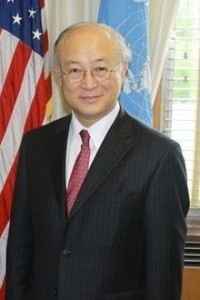

 Aletho News
