While Israel’s efforts to link Palestinian resistance to its military occupation to global terrorism are not new, it has expanded its propaganda to address Arab as well as Western audiences. By so doing, it is clearly seeking to exploit the global aversion to movements that have drifted towards extremism and terrorism while claiming to represent Islam. “Hamas is ISIS and ISIS is Hamas,” Israeli Prime Minister Benjamin Netanyahu declared at the United Nations in 2014. Yet better than anyone else, Netanyahu and the Israeli political establishment know that Hamas and Daesh are not related, as do those Arab regimes that also tar all Islamic movements with the same brush to serve their own ends. 1
Not only are Hamas and Daesh unrelated, they are bitter enemies, and Daesh has denounced Hamas as an apostate movement. Al-Shabaka Policy Analyst Belal Shobaki discusses the major ways in which Hamas differs from Daesh including its approach to jurisprudence; the position vis-a-vis the nature of the state; and relations with other religions. He makes the case that it is especially important for the Palestinian national movement to rebut the attempts to conflate Hamas with Daesh and points out the dangers of not doing so.
Serving Short-Term Political Gain
The conflation of Hamas with Daesh ignores reality on the ground. The political environment in Palestine is defined by the occupation, whereas the political environment in the Arab countries where Daesh emerged is defined by authoritarianism and repression as well as sectarian and religious conflicts, an ideal environment for the emergence of a radical ideology motivated by indiscriminate violence.
For Israel, however, the attempt to link the two may pay off regionally and internationally. Many Arabic media outlets have no qualms about referring to this terrorist organization as an “Islamic” State although it is anything but, while many Western media outlets embrace the Israeli conflation of Hamas and Daesh without scrutiny. Arab regimes are uninterested in defending the image of Hamas. Even the Palestinian Liberation Organization (PLO) does not seem concerned with defending Hamas’s international image given the political division between Fatah and Hamas.
Hamas is considered part of the Muslim Brotherhood, which is seen as a threat to authoritarian Arab regimes, particularly in the Arab Mashreq. Thus one way for Arab regimes to fight the Muslim Brotherhood is by claiming it shares common ground or is even synonymous with Daesh, as claimed by the Egyptian regime, and then using this as a justification for excluding the Muslim Brotherhood from participating in political life.
The rapid developments of the past five years in Egypt, the country that provides the only outlet for the Palestinian Gaza Strip, has pushed Hamas into its informal tunnels economy. The official Egyptian stance after Abdel Fattah Sisi’s coup against elected president Mohammad Morsi became tougher against the Gaza Strip, with claims that Hamas was cooperating with Jihadist groups in the Sinai, the same narrative promoted by Israel and its media. However, this narrative is flawed. It is too risky for Hamas to maintain a close relationship with Sinai jihadists, on the one hand, while cracking down on individuals embracing the same ideology in Gaza, on the other. Any links Hamas has established with those groups is limited to securing the needs of the enclave besieged by Israel and Egypt. This interaction is not motivated by a shared ideological identity or shared enmity towards the Egyptian regime. Indeed, Hamas has been eager to keep communication lines open with the Egyptian regime even when accusations conflating Hamas with Sinai’s Salafi Jihadi groups were made in the media. Hamas has also repeatedly said that it is keen on rebuilding the relationship with Egypt in order to ensure the legal flow of goods, services and individuals into Gaza.
It is important to refute this narrative concerning one of the largest Palestinian political movements: Excluding moderate Islamists from political life carries the danger of pushing Palestinian society towards radicalism, in which case both Fatah and Hamas will find themselves fighting takfiri groups. The ensuing discussion will demonstrate the real differences between Hamas and Daesh as well as the very real enmity between them.
Differences in Doctrine
Hamas positions itself as a centrist Islamic movement and an extension of the Muslim Brotherhood, with a rational jurisprudential authority, whereas Daesh adopts a text-based approach that deals with Islamic texts in isolation from their historical context and refuses to interpret them in line with current developments. Hence, for Daesh and other takfiri groups in general, movements like Hamas are secular and un-Islamic, since Hamas is primarily a resistance movement against the Israeli occupation and believes in a moderate Islamic authority. Moreover, Hamas does not take Islamic texts literally; it allows for ijtihad – interpretation and use of discretion. Some scholars have categorized these movements along a horizontal line with the right representing advocates of the text and the left representing advocates of reason. 2 Using this classification, the Muslim Brotherhood can be found a good way down the left of the line, while Daesh is on the far right.
Daesh characterizes Hamas and its discourse as deviant. Hamas for its part has condemned Daesh’s threats and considered these part of a smear campaign that extends beyond Palestine. When threats from Daesh and other takfiri groups materialized into action, Hamas no longer stopped at condemnations. Mahmoud al-Zahar, a prominent Hamas leader, declared “Daesh’s threats can be felt on the ground, and we are handling the situation from a security standpoint. Whoever commits a security offense shall be dealt with in accordance with the law, and whoever wants to debate intellectually shall be debated intellectually; we take this matter seriously”.
Hamas had in fact dealt decisively with a Daesh-like group. In August 2009, Abdul Latif Musa, leader of the “Jund Ansar Allah” (Soldiers of God’s Supporters) armed group, announced the creation of the Islamic Emirate in Gaza at the Ibn Taymiyyah Mosque. The group had previously been accused of destroying cafes and other venues in the Gaza Strip, pushing the Hamas government into a confrontation. Security forces, reinforced by the al-Qassam Brigades (Hamas’ military wing), encircled the Ibn Taymiyyah Mosque and, when Musa’s group refused to surrender, Hamas ended the emirate project in its infancy by killing the members of the group. Hamas was criticized for its use of violence but justified its actions by arguing that the violence that could have been perpetrated by such groups would have been much worse than that used to eradicate extremism in the Gaza Strip.
Daesh’s supporters in Gaza are far fewer than Hamas’s, mainly due to the fact that these groups have not historically contributed to resisting the occupation. Some polls suggest that 24% of Palestinians think positively of jihadist movements, but this percentage is exaggerated. When some Palestinians cheer for the jihadist groups’ hostility towards the US, it is not because they believe in these groups but rather because they see the US, with its infinite support for Israel, as being playing a destructive role.
Different Stances on Statehood
Hamas and Daesh differ in their view of the modern state, in both theory and practice. As noted above, Hamas has always allowed for ijtihad or discretion, evolving its thoughts and opinions. It is thus unfair to assess Hamas’s stance on the civil state and democracy based on the early literature of the mother movement, the Muslim Brotherhood. Hamas maintains that it has embraced new convictions in this regard and has come to fully accept democracy and the concept of the civil state. Indeed, the Muslim Brotherhood itself has evolved. Qatar-based Sheikh Yusuf al-Qaradawi, the jurisprudential authority of the Muslim Brotherhood at large, has stated on multiple occasions, including in his book “The State in Islam”, that the concept of the religious state does not exist in Islam. According to al-Qaradawi, Islam advocates for a civil state founded on respect for the people’s Islam-based opinion, and also founded on the principle of accountability and political pluralism. Although the discussion about the relationship between Islam and democracy predates the Muslim Brotherhood, it gained clarity after the 1950s, when numerous Islamic thinkers, including al-Qaradawi, the Tunisian leader and Ennahda co-founder Rached Ghannouchi and the Algerian philosopher Malek Bennabi, affirmed that Islam and democracy were not in contradiction with each other.
At the opposite end, the movement that Daesh represents rejects democracy in its entirety and considers it an apostate system of governance. Although some jihadist groups do not denounce Islamists who take part in the democratic process as apostates, they do consider their discretion flawed. Daesh views any expression of democracy such as elections as a manifestation of apostasy and any movement or individual taking part in elections as apostates. By contrast, the Muslim Brotherhood participated in elections from its earliest days, when its founder Hassan al-Banna decided to run in the Egyptian parliamentary elections that El-Wafd Party Government sought to hold in 1942. Although al-Banna could not run because the government rejected his candidacy, the Muslim Brotherhood has served in Arab parliaments and sometimes in the executive branch.
When Hamas decided not to participate in 1996 Palestinian Authority elections its position was based on a political and ideological stance towards the Oslo Accords. However, Hamas allowed its members to run in the elections as independents. When the circumstances changed and the 2005 Cairo Agreement became the governing framework for the PA elections instead of the Oslo Accords, Hamas decided to participate. It nominated many members in the movement and some independents to a Change and Reform list to run for the Legislative Council, winning the majority of votes.
By participating in the elections, Hamas has offered evidence that it is willing to function in a modern state and a democratic system. It has called for coalition governments inclusive of leftist and secular parties. Its government as well as its parliamentary list included women and its first government included Muslim and Christian ministers.
Daesh, on the other hand, has turned against all modern institutions in the areas under its control, refusing to recognize borders or national identity. It rules through chaotic and individual decisions. Although Daesh has been eager to use administrative terms derived from the Islamic tradition such as caliphate and shura (consultation), the essence of its governance contradicts the majority of unquestionable texts in the sources of Islamic legislation in many ways. For example, it does not abide by the conditions established in the Quran and sunna (the Prophet Mohammad’s teachings) to declare war or the protection of civilians and treatment of prisoners in wartime. Another example is its imposition of jizya (a tax that was levied on non-Muslim subjects), which is not supposed to be applied to the indigenous inhabitants even if they are non-Muslim. Moreover, it has attacked places of worship and assaulted the faithful in their homes, in clear violation of the Quran and sunna.
Daesh, to some extent, resembles hybrid regimes in the Third World that use modern and democratic vocabulary to describe their political process, even though they remain authoritarian in essence.
Polar Opposites in Treating the Other
The most significant difference between Hamas and Daesh is their position towards followers of other religions. During its formation, Hamas published a charter that used religious vocabulary to describe the conflict. Following severe criticism, Hamas effectively sidelined this Charter and no longer considers it an authoritative reference as some of its leaders have confirmed.
In his interview with The Jewish Daily Forward deputy head of the Hamas politburo Moussa Abu Marzouk confirmed that the Charter was marginal to the movement and not a source for its policies. He added that many members were talking about modifying it because several of Hamas’ present policies contradict it. Hamas’ politburo leaders abroad were not the only ones to disclaim the charter. Gaza-based Hamas leader Ghazi Hamad went even further in an interview with the Saudi Okaz newspaper in which he said the charter was subject to discussion and evaluation in opening up to the world. Sami Abu Zuhri, a young Hamas leader who was the movement’s spokesperson during the Second Intifada, urged in an interview with The Financial Times that focus be shifted away from the 1988 charter, and that Hamas be judged on the statements of its leaders.
Today, Hamas adopts the Quranic verse that reads: “Allah does not forbid you from those who do not fight you because of religion and do not expel you from your homes – from being righteous toward them and acting justly toward them. Indeed, Allah loves those who act justly.” This verse urges kindness and justice when dealing with people of other religions. Unlike Daesh, Hamas has applied this in practice. In addition to appointing Christian ministers to its cabinet, it has celebrated Christmas with Palestinian Christians by sending official delegations to visit during the feast. Meanwhile, Daesh has threatened the lives of those who celebrate Christmas across the world.
Some may argue that these steps are ways in which Hamas tries to beautify its authoritarian rule. However, there is little difference between Hamas’ rule and Fatah’s. The human rights violations committed by Gaza’s government cannot be considered an indication of Hamas’ resemblance to Daesh, but rather an indication of misgovernment. The political leadership of Hamas has spoken out against such practices on occasion, for example as those committed by the Ministry of the Interior under Fathi Hammad.
When some individuals were attacked by extremist groups in Gaza, Hamas and the government acted to ensure their safety and punish the aggressors, as in the case of British journalist Alan Johnston who was freed by Hamas from his radical captors and the killing of Italian solidarity activist Vittorio Arrigoni.
The movement’s position towards the Shiites is similar to that towards Christians. At a time when the Middle East is experiencing a media war between Shiites and Sunnis, Hamas refuses to denounce Shiites as apostates, and has interacted with them politically. When the relationship with Iran became strained during the Syrian crisis, the disagreement was political rather than doctrinal. Daesh, on the other hand, not only thinks of Shiites as apostates, but also all other Sunni groups that hold a different ideology, and believes they must be fought.
Even the two organizations’ treatment of the enemy differs. Hamas identifies the Israeli occupation as the enemy, while Daesh considers everyone else its enemy. Daesh has boasted of its numerous crimes against humanity in its treatment of its abductees and the civilians under its rule, including burning Jordanian pilot Muath al-Kasasbeh alive. It has attempted to legitimize its inhumane conduct by distorting or misinterpreting religious texts. Hamas paid its condolences to al-Kasasbeh’s family and condemned Daesh’s actions. Contrast Daesh’s brutality with Hamas’ treatment of the Israeli soldier Gilad Shalit during his captivity, as even the Jerusalem Postreports.
Moving Forward in Relations with Hamas
Both Hamas and Daesh are on the list of terrorist organizations in many countries, including the member states of the European Union and the United States. However, the listing of Hamas is clearly politically motivated: Unlike Daesh, Hamas has neither targeted nor called for targeting any entity other than the Israeli occupation. Hamas was added to the list of terrorist organizations following the events of September 11, 2001, even though it had nothing to do with this terrorist attack. The political nature of the position against Hamas is underscored by the fact that the General Court of the European Union issued a decision on December 17, 2014, urging the removal of Hamas from the list of terrorist organizations. The Court argued that the order to list Hamas in 2003 was based on media reports rather than solid evidence.
In addition, many European and American dignitaries that are known for their stance against terrorist organizations worldwide have met with Hamas leaders on more than one occasion. Those include European parliamentarians and former US president Jimmy Carter, who met with Ismail Haniyeh in Gaza in 2009 and Khalid Meshaal in Cairo in 2012.
The bottom line is that Israel’s attempt to exploit a chaotic Middle East by implicating Hamas as a terrorist group linked with Daesh is baseless. Hamas is ideologically, intellectually, jurisprudentially and politically different from Daesh. Media outlets that adopt the Israeli narrative hurt their professionalism and credibility.
Palestinian movements must not allow the disagreement with Hamas to justify the accusations that harm the Palestinian cause internationally and create tensions locally. Hamas must also realize that the differences between them and Daesh do not mean that its rule of Gaza is free of abuses and human rights violations, and must therefore revisit its conduct and be more careful in its political discourse. It should move beyond the approach of having one discourse for local consumption and another for global consumption since every word uttered by any Hamas leader is marketed abroad as a message from Hamas to the world.
When the Fatah-led Palestine Liberation Organization (PLO) and Arab regimes, especially in Egypt, do not oppose the efforts to link Hamas with Daesh – or, indeed, occasionally contribute to these efforts – they may “benefit” in the short-term by weakening Hamas as a political opponent. However, this carries the dangers of destabilizing Palestinian society in the medium and long-term. Excluding moderate Islamists could push Palestinian society towards radicalism, in which case both Fatah and Hamas will find themselves fighting takfiri groups.
Notes:
ISIS: The Islamic State of Iraq and Syria. Daesh is the Arabic acronym for ISIS. Some commentators use ISIL: The Islamic State of Iraq and the Levant. The group itself began to use IS in 2014.
Samir Suleiman, Islam, Demokratie und Moderene, Herzogenrath: Shaker Media, 2013, P 302. Tariq Ramadan, Muslimesin in Europa, Marburg: Medienreferat, 2001, p15.
Al-Shabaka Policy Member Belal Shobaki is assistant professor in the Department of Political Science at Hebron University, Palestine. He is a member of the American Political Studies Association. He has published on Political Islam and identity and is now working on a book on the Palestinian division. Shobaki is the former Editor-in-Chief of Alwaha Newspaper in Malaysia. He was also a Lecturer in the Department of Political Science at An-Najah National University and the Head of the studies Unit at the Palestinian Centre for Democracy and Studies.
Global sea level rose faster in the 20th century than in any of the 27 previous centuries, according to a Rutgers University-led study published today.
Moreover, without global warming, global sea level would have risen by less than half the observed 20th century increase and might even have fallen.
Instead, global sea level rose by about 14 centimeters, or 5.5 inches, from 1900 to 2000. That’s a substantial increase, especially for vulnerable, low-lying coastal areas. “The 20th century rise was extraordinary in the context of the last three millennia – and the rise over the last two decades has been even faster,” said Robert Kopp, the lead author.
The study used a new statistical approach developed over the last two and a half years by Kopp, his postdoctoral associates Carling Hay and Eric Morrow, and Jerry Mitrovica, a professor at Harvard University.
Notably, the study found that global sea level declined by about 8 centimeters [3 inches] from 1000 to 1400, a period when the planet cooled by about 0.2 degrees Celsius [0.4 degrees Fahrenheit].
A statistical analysis can only be as good as the data it’s built upon. For this study, a team led by Andrew Kemp compiled a new database of geological sea-level indicators from marshes, coral atolls and archaeological sites that spanned the last 3,000 years.
The database included records from 24 locations around the world. The analysis also tapped 66 tide-gauge records from the last 300 years.
Kopp’s collaborators Klaus Bittermann and Stefan Rahmstorf at the Potsdam Institute for Climate Impact Research in Germany used the study’s global sea-level reconstruction to calculate how temperatures relate to the rate of sea-level change. Based on this relationship, the study found that, without global warming, 20th century global sea-level change would very likely have been between a decrease of 3 centimeters [1.2 inches] and a rise of 7 centimeters [2.8 inches].
A companion report finds that, without the global warming-induced component of sea-level rise, more than half of the 8,000 coastal nuisance floods observed at studied U.S. tide gauge sites since 1950 would not have occurred.
Stefan Rahmstorf has a RealClimate post discussing the new papers.
One of the authors of the new paper, Dr. Rahmstorf, had previously published estimates suggesting the sea could rise as much as five or six feet by 2100. But with the improved calculations from the new paper, his latest upper estimate is three to four feet.
That means Dr. Rahmstorf’s forecast is now more consistent with calculations issued in 2013 by the Intergovernmental Panel on Climate Change, a United Nations body that periodically reviews and summarizes climate research. That body found that continued high emissions might produce a rise in the sea of 1.7 to 3.2 feet over the 21st century.
Roger Pielke Jr tweets: Sans spin: Climate scientist known for being wrong admits error, reduces estimate of sea level rise by 50%. IPCC was right
For thousands of years, sea level has remained relatively stable and human communities have settled along the planet’s coastlines. But now Earth’s seas are rising. Globally, sea level has risen about eight inches since the beginning of the 20th century and more than two inches in the last 20 years alone.
All signs suggest that this rise is accelerating.
NASA has been recording the height of the ocean surface from space since 1992. That year, NASA and the French space agency, CNES, launched the first of a series of spaceborne altimeters that have been making continuous measurements ever since. The first instrument, Topex/Poseidon, and its successors, Jason-1 and -2, have recorded about 2.9 inches (7.4 centimeters) of rise in sea level averaged over the globe.
Ok, some simple arithmetic. 7.4 cm over a period of 23 years equals 3.2 mm/yr. No surprise – this is the number cited by the AR5 for satellite based sea level rise estimates.
“Given what we know now about how the ocean expands as it warms and how ice sheets and glaciers are adding water to the seas, it’s pretty certain we are locked into at least 3 feet of sea level rise, and probably more,” said Steve Nerem of the University of Colorado, Boulder, and lead of the Sea Level Change Team. “But we don’t know whether it will happen within a century or somewhat longer.”
Here is the last sea level rise plot from the NASA altimeters:
IPCC AR5
I don’t really see anything new here, but the new PNAS papers and the NASA press release serve to highlight an issue that has been nagging me.
The IPCC AR5 includes the following figure of sea level rise over the last century (Figure 3.14)
Figure 3.14 18-year trends of global mean sea level rise estimated at 1-year intervals. The time is the start date of the 18-year period, and the shading represents the 90% confidence. The estimate from satellite altimetry is also given, with the 90% confidence given as an error bar. [AR5 WGI Figure 3.14]
Global sea level has been rising for the past several thousand years, owing to the retreat of glaciers from the last ice age. The key issue is whether the rate of sea level rise is accelerating owing to anthropogenic global warming. It is seen from the figure above that the rate of sea level rise during 1930-1950 was comparable to, if not larger than, the value in recent years. The challenges to determining global sea level rise, particularly over the past 100 or 1000 years, are substantial.
Somehow, the IPCC AR5 drew this conclusion, in context of Figure 3.14:
“Since the early 1970’s, glacier mass loss and ocean thermal expansion from warming together explain about 75% of the observed global sea level rise (high confidence)”
Go figure.
Other recent papers
Other recent papers that I’ve collected on the topic:
“Our analysis of the global tide-gauge record shows that the rate of GMSL rise increased (accelerated) continuously from 1.13 mm/yr in 1880 AD to 1.92 mm/yr in 2009 AD.” While Cahill et all find an acceleration in sea level rise over the past century, their inferred rate of current sea level rise (< 2 mm/yr) is significantly lower than the value of 3.2 mm/yr derived from satellite altimetry measurements.
Robust reef growth in Indian Ocean kept up with sea level rise > 20X faster in past [link] …
New paper shows sea levels dropped along west coast of North & South America from 1993-2013 [link] …
The network of tide gauges provides the only information of value for costal planning.
The worldwide naïve average of sea level is +0.24 mm/year with no acceleration.
The climate models have crucial flaws making them useless.
Planning schemes must only reflect the proven local and global historical data.
JC reflections
So, what to make of all this?
Sea level rise is the main ‘danger’ from human caused climate change (any increase in extreme weather events is hypothesized rather [than] demonstrated using historical data, with possible exception of heat waves in a few regions).
At a presentation that I made earlier this year to CEOs of small electric cooperatives, one participant was surprised by what I had to say about sea level rise – he hadn’t realized that there had been sea level rise prior to 1950. I.e., like ‘climate change’, all sea level rise has been sold as caused by humans.
Sea level has overall been rising for thousands of years; however, as the Kopp et al. paper points out, there have been century scale periods of lowering sea level in the recent millennia. It is not clear from my cursory reading as to whether meaningful decadal and multi-decadal variations in sea level can be discerned from their data.
The key issue is whether the sea level rise during the past 50 years reflect an acceleration in sea level rise. The IPCC figure 3.14 suggests that there is no acceleration, given the large rates of sea level rise in the first half of the 20th century. Until we have an understanding of variations in decadal and multi-decadal sea level rise, we can’t make a convincing argument as to acceleration.
With regards to coastal planning, I absolutely agree with the paper linked to above. Locations where sea level rise is a problem invariably have rates of sea level rise that are much greater than even the altimeter values of 3.2 mm/yr are caused by local geologic processes, land use, and or coastal/river engineering. Global values of sea level rise have essentially no use in coastal planning; rather they seem mainly relevant in terms of motivating ‘action’ on carbon mitigation policy.
Sea level will continue to rise, no matter what we do about CO2 emissions. We need creative solutions – one of my favorites remains the garbage solution.
Correctness is a set of rules and mores constraining the form of public discourse and social behaviour. There is no place in a democratic society for “correctness” of any sort, least of all a correctness regarding politics: political ideas, speech and other expression. Let us reject standards of form in our debates, exchanges, interventions and criticisms.
The goal of political life is to influence society and be influenced by it. This can only happen through free exchange between individuals, where the form and content of the expression is decided by the speaker, for the speaker’s own purposes as an individual. For example, if a speaker’s goal is to provoke, enrage, excite, or otherwise move his or her audience, it is the individual’s right to attempt to do so. (That such communication tactics may or may not be effective in achieving some desired influence is a separate matter.)
Individuals who hold views that are not the same as dominant views often say things that are perceived to be insensitive or “hurtful”. These individuals may then be sanctioned under the rubric of political correctness with punishments such as public shaming, banishment from social groups, loss of employment, criminal charges, or extravagant lawsuits. The notion that societal correctness must not be breached is so strong that public institutions are permitted to take part in the punishments through public condemnations, enforcement of laws that criminalize expression of ideas, and use of public resources including financing lawsuits or refusing to provide services to individuals who choose to confront or who run afoul of the dominant standard.
One effect of this widespread imposition of correctness is a taming of the people – like the trained house pet that waits at the open door, not stepping outside until the master attaches the leash, people become trained not to step out independently into the wilderness of ideas and expression. Whereas once we may have spontaneously expressed our emotions and spoken our minds in public, to the community, now we tiptoe around potential sensitivities and threats of repercussions for being incorrect. We are chilled to the bone.
Who or what is the master? Societal (including “political”) correctness appears to be directed by peer-group mobbing that gets amplified in the media and is tolerated and encouraged by employers, lawmakers, and courts. Employers respond to and encourage mobbing by firing targeted employees, lawmakers respond through the passing of new laws to sanction incorrect expression, and the courts apply these laws to convict and sentence correctness offenders, thus sending a message to the entire society informing individuals of the limits, beyond which mobbing can be sure to draw blood. In addition, special interest groups lead the development of new taboos or act to reinforce old ones, by influencing public opinion at all levels.
Individuals who would participate in this type of mobbing by enforcing correctness standards in their political interactions should have regard for the harmful response of power (employers, government, courts, etc.) to the movements of the mob. Power today is happy to enforce contemporary correctness standards, just as it was happy to impose other correctness standards at other times (e.g. Victorian, religious, racist, homophobic, etc.), because such enforcement of the evolving superficial status quo permits the maintenance of the structural status quo and all its essential features (wage slavery, class hierarchy, military capability for war and conquest in other territories, etc.). Importantly, tamed and trained pets don’t bite the master’s hand. Rather, trained pets learn to accept and love the master, and to defend him to the bitter end.
Societal “correctness” is a control mechanism that maintains unjust hierarchy and precludes democratic social organization. Acts of incorrect expression are vital to challenging this societal ordering, and reveal the degree to which powerful groups have control over individuals’ lives. No individual expression can be taboo, off limits or “incorrect” in a real democracy. Likewise, a population tamed by the enforcement of correctness cannot create democracy.
Israel has a population of approximately 7.8 million, or a million fewer than the state of New Jersey. It is among the world’s most affluent nations, with a per capita income similar to that of the European Union.[1] Israel’s unemployment rate of 5.8% is better than America’s 7.3%,[2] and Israel’s net trade, earnings, and payments is ranked 30th in the world while the US sits in last place at a dismal 193rd.[3]
Yet, Israel receives more of America’s foreign aid budget than any other nation.[4] The US has, in fact, given more aid to Israel than it has to all the countries of sub-Saharan Africa, Latin America, and the Caribbean combined—which have a total population of over a billion people.[5]
And foreign aid is just one component of the staggering cost of our alliance with Israel.
Given the tremendous costs, it is critical to examine why we lavish so much aid on Israel, and whether it is worth Americans’ hard-earned tax dollars. But first, let’s take a look at what our alliance with Israel truly costs.
Before the Iraq War in 2003
Direct Foreign Aid
According to the Congressional Research Service , the amount of official US aid to Israel since its founding in 1948 tops $121 billion (adjusting for inflation, $233.7 billion as of March 2013), and in the past few decades it has been on the order of $3.1 billion per year.[6] (In 2014, for example, this amounted to $8.5 million every single day.)
But this money is only part of the story. For one thing, Israel gets all of its aid money at the start of each year, rather than in quarterly installments like other countries.[7] This is significant: It means that Israel can start earning interest on the money right away – interest paid by the US since Israel invests these funds in US Treasury notes. In addition, because the US government operates at a deficit, it must borrow money in order to give it to Israel and then pay interest on it all year. Together these cost US taxpayers more than $100 million every year.
Israel is also the only recipient of US military aid that is allowed to use a significant portion annually to purchase products made by Israeli companies instead of US companies. (The costs to Americans caused by this unique perk are discussed below.)
In addition, the US gives roughly $1.6 billion per year to Egypt and Jordan in aid packages arranged largely in exchange for peace treaties with Israel. The treaties don’t include justice for Palestinians, and are therefore deeply unpopular with the local populations.[8]
On top of this, the US gives more than $400 million to the Palestinian Authority each year,[9] much of it used to rebuild infrastructure destroyed by Israel and to bolster an economy stifled by the Israeli occupation.[10] This would be unnecessary if Israel were to end the occupation and allow the Palestinians to build a functioning and self-sustaining economy.
Yet, there’s still much more to the story, because parts of US aid to Israel are buried in the budgets of various US agencies, mostly the Department of Defense. For example, since at least 2006, the American Defense budget has included between $202 and $504 million per year for missile defense programs in Israel.[11]
In all, direct US disbursements to Israel are higher than to any other country, even though Israelis only make up 0.1% of the world’s population. On average, Israelis receive 7,000 times more US foreign aid per capita than other people throughout the world, despite the fact that Israel is one of the world’s more affluent nations.[12] And that number rises significantly when one considers disbursements to Egypt, Jordan, and the Palestinian Authority and Defense spending on behalf of Israel.
Additional Ad hoc support for Israel
Dr. Thomas Stauffer, a Harvard economist and Middle East studies professor who twice served in the Executive Office of the President, wrote a comprehensive report about all components of the relationship with Israel’s cost to American taxpayers for the Washington Report on Middle East Affairs in 2003. He wrote:
“Another element is ad hoc support for Israel, which is not part of the formal foreign aid programs. No comprehensive compilation of US support for Israel has been publicly released. Additional known items include loan guarantees… special contracts for Israeli firms, legal and illegal[13] transfers of marketable US military technology, de facto exemption from US trade protection provisions, and discounted sales or free transfers of ‘surplus’ US military equipment. An unquantifiable element is the trade and other aid given to Romania and Russia to facilitate Jewish migration to Israel; this has accumulated to many billions of dollars.”[14]
Israel has often used its privileged access to US military technology against both the US government and US corporate interests. According to the Associated Press in 2002,
“In France, Turkey, The Netherlands and Finland, Israeli companies have edged such U.S. firms as Raytheon, Northrop Grumman and General Atomics out of arms deals worth hundreds of millions of dollars in recent years. The irony, experts say, is that tens of billions of U.S. tax dollars and transfers of American military technology helped create and nurture Israel’s industry, in effect subsidizing a foreign competitor.”
The AP article quoted a vice president at the Aerospace Industries Association of America, who bluntly said, “We give them money to build stuff for themselves and the U.S. taxpayer gets nothing in return.”[15]
Meanwhile, according to the Christian Science Monitor , Israel has also “blocked some major US arms sales, such as F-15 fighter aircraft to Saudi Arabia in the mid-1980s. That cost $40 billion over 10 years.”[16]
Even worse, Israeli weapons “buttress the arsenals of nations such as China that the United States considers strategic competitors, alarming US military planners,” the Associated Press article went on to report. “[In 2001] US surveillance planes flying along China’s coast were threatened by Chinese fighter jets armed with Israeli missiles… Had Chinese fighter pilots been given the order to fire, they could have brought down the US planes with Israeli Python III missiles… US defense chiefs say Israel sold China the missiles without informing the United States.”[17]
Lost jobs, trade, and standing
One of the most devastating indirect costs of the US alliance with Israel was the Arab oil boycott of 1973. The Arab states imposed the boycott in protest of U.S. support of Israel during the 1973 war, in which Arab countries attempted to reclaim lands Israel had invaded and occupied in 1967.
“Washington’s intervention triggered the Arab oil embargo which cost the U.S. doubly: first, due to the oil shortfall, the US lost about $300 billion to $600 billion in GDP; and, second, the US was saddled with another $450 billion in higher oil import costs,” wrote Stauffer in the Washington Report on Middle East Affairs.[18]
Then there’s the cost in lost jobs. “US policy and trade sanctions reduce US exports to the Middle East about $5 billion a year, costing 70,000 or so American jobs,” Stauffer estimates. “Not requiring Israel to use its US aid to buy American goods, as is usual in foreign aid, costs another 125,000 jobs.”[19]
But perhaps the most damaging cost to the US has been its loss of standing in the Arab and Muslim worlds, where US largesse towards Israel as it commits human rights violations[20] provokes deep resentment. “To many of the world’s Muslims, it places the US taxpayer on the Israeli side of its conflicts with Arabs,” observed the Associated Press article.[21]
According to Harvard professor Stephen Walt, “The 9/11 Commission reported that 9/11 plotter Khalid Sheikh Mohammed’s ‘animus toward the United States stemmed not from his experiences there as a student, but rather from his violent disagreement with US foreign policy favoring Israel.’ Other anti-American terrorists—such as Ramzi Yousef, who led the 1993 bombing of the World Trade Center—have offered similar explanations for their anger toward the United States.”[22]
There are many more potential categories of costs that are even more difficult to quantify. All in all, Stauffer estimates that Israel cost the US about $1.6 trillion between 1973 and 2003 alone—more than twice the cost of the Vietnam war.[23]
Costs since Stauffer’s study in 2003
Israel’s cost to American taxpayers has remained high since Stauffer’s 2003 study. The US currently gives Israel an average of $3 billion a year in military aid, under an agreement signed by the Bush administration to transfer $30 billion to Israel over ten years, starting in 2009.[24]
All of the other extras and costs remain and in some cases have increased since 2003. For example, “Despite a tough economic climate and expected US budget cuts—including drastic cuts to the US military budget—US lawmakers will provide $236 million in fiscal 2012 for the Israeli development of three missile defense programs,” reported Israeli newspaper Haaretz.[25]
In addition, the US government “has provided $205 million to support the Iron Dome, manufactured by Israel’s state-owned Raphael Advanced Defense Systems Ltd. The system uses small radar-guided missiles to blow up in midair Katyusha-style rockets with ranges of 3 miles to 45 miles, as well as mortar bombs… Legislation moving through the Republican-controlled US House of Representatives would give Israel additional $680 million for the Iron Dome system through 2015.”[26]
And if, as many experts believe, the US would not have invaded Iraq without intense and sustained pressure from Washington insiders who advocate actively on behalf of Israel,[27] this adds yet another dimension of staggering cost to the equation: “hundreds of billions of dollars, 4,000-plus U.S. and allied fatalities, untold tens of thousands of Iraqi deaths, and many thousands of other US, allied, and Iraqi casualties,” according to retired US foreign service officer Shirl McArthur.[28]
Nobel Prize-winning economist Joseph Stiglitz and Harvard professor Linda Bilmes put the cost of the Iraq War at over $3 trillion, and incalculably more if you take into account the opportunity costs of the resources spent on this unproductive war. For example, higher oil prices due to the war have had a devastating impact on America’s economy, and so have the surging federal debt and the servicing of that debt. Without the war, the 2008 financial crisis almost certainly would not have been as severe, and the Afghanistan war most likely would have been shorter, cheaper, and more effective.[29]
The Israel lobby and partisans are currently gunning for a war with Iran with the same zeal they showed in the run-up to the 2003 invasion of Iraq.[30] By all estimates, the costs of a war with Iran will be much higher than the Iraq war. In addition to the loss of life, analysts predict, for example, that if Iran’s oil production were taken out of the world market, gas prices would rise 25-70 percent.
If the Straits of Hormuz (straits adjacent to Iran through which 20% of the world’s oil production passes on a daily basis) were attacked or blockaded, the cost of oil would skyrocket to a level never seen before, and the economic recession or depression that followed would be nothing short of “apocalyptic,” according to Matthew Yglesias writing for Slate .[31]
Reasons and Consequences
So now we are back to the question of why America continues to pour money into a state that commits daily human rights violations, defies US strategic interests,[32] provokes rage and resentment among billions of people,[33] competes with and crowds out US interests using technology subsidized by US taxpayers, and sells America’s military secrets to its enemies.[34]
The answer is simple and summed up well by professors Stephen Walt and John Mearsheimer in their ground-breaking article in the London Review of Books , “The Israel Lobby,”[35] and their book The Israel Lobby and US Foreign Policy .[36]
“Why has the US been willing to set aside its own security and that of many of its allies in order to advance the interests of another state?” the article asks. “One might assume that the bond between the two countries was based on shared strategic interests or compelling moral imperatives, but neither explanation can account for the remarkable level of material and diplomatic support that the US provides.
“Instead, the thrust of US policy in the region derives almost entirely from domestic politics, and especially the activities of the ‘Israel Lobby.’ Other special-interest groups have managed to skew foreign policy, but no lobby has managed to divert it as far from what the national interest would suggest, while simultaneously convincing Americans that US interests and those of the other country—in this case, Israel—are essentially identical.”[37]
AIPAC, the American Israel Public Affairs Committee, is consistently ranked in the top two most powerful lobbies in Washington.[38] And it is only one arm of the much larger, multi-faceted, and well-financed Israel lobby.[39]
According to Congressman Jim Moran, “AIPAC is very well organized. The members are willing to be very generous with their personal wealth. But it’s a two edged sword. If you cross AIPAC, AIPAC is unforgiving and will destroy you politically. Their means of communications, their ties to certain newspapers and magazines, and individuals in the media are substantial and intimidating. Every [Congress] member knows it’s the best-organized national lobbying force.”[40]
Senator Joseph Lieberman proudly stated, “Any attempt to pressure Israel, to force Israel to the negotiating table by denying Israel support, will not pass in Congress… Congress will act against any attempt to do that.”[41]
It’s true: The US Congress, along with the executive branch, overwhelmingly support virtually any action or wish of the Israeli government, no matter how at odds with US national interest or security,[42] primarily because of the power of the Israel lobby.[43]
Even when two AIPAC employees were indicted on espionage charges in 2005, and it was determined that they had obtained classified US government information illegally and passed it to Israeli agents, the charges were quietly dropped on technicalities.[44] AIPAC fired both employees and issued a statement that they were fired because their actions did not comport with AIPAC standards.[45] One of the fired employees, Steven Rosen, filed a lawsuit for defamation, claiming his actions were, in fact, common practice at AIPAC.[46]
When Israel attempted to sink a U.S. Navy ship, the USS Liberty , in 1967, killing 34 Americans and injuring over 170, it still failed to put a dent in aid to Israel.[47] Indeed, aid quadrupled the following year.[48]
Though Congressmen receive payments and support from the lobby in exchange for their loyalty, the American taxpayer is left footing the bill. As detailed above, the total cost has run from a bare minimum of $121 billion since 1948 (the cost of foreign aid alone) to $1.6 trillion or more, factoring in Defense appropriations, oil crises, the sinking of the USS Liberty , the heightened risk of terrorism, lost trade and co-opted technology, and countless other factors. If the Iraq war and the increased risk of a war with Iran are factored in, the cost skyrockets even higher.
Critics point out how much brighter our future would be if we had invested these billions or trillions in veteran rehabilitation and care, education, job creation, social security, housing, environmental clean-up and prevention, roads, bridges, health care, and scientific and health research. Or if Americans had simply held onto their tax dollars and used them as they saw fit, in our own economy. If some of the higher estimates are closer to the mark, our support for Israel could easily have covered the $700 billion TARP bailout with a great deal left over for massive stimulus spending and/or tax breaks.
If Israel were using these funds for a good purpose, one could debate whether the price was worth it. But Israel uses most of the money to prolong a 47-year military occupation (which regularly involves gross violations of international law),[49] commit egregious human rights violations,[50] and destroy billions of dollars worth of Palestinian homes and infrastructure[51] (resulting in still more U.S. tax money being sent to Palestinians to rebuild demolished homes, hospitals, and schools), while building illegal, Jewish-only settlements on Palestinian land.[52]
It makes the prospect of peace ever more distant, creates dangerous hostility to the US, placing Americans in peril, and puts the US Congress in violation of the Arms Export Control Act,[53] all for the sake of campaign contributions.
There is no good reason to keep throwing good money after bad in a failed, ill-founded policy. It’s long past time for a fundamental rethinking of the American government’s blank check to Israel.
#
This report was produced by If Americans Knew analysts, particularly Pamela Olson, a President’s Scholar at Stanford University 1998-2002 with a major in Physics, a minor in Political Science, and 1600 GRE scores. Before coming to IAK, Olson lived and worked in the West Bank; worked as a researcher in Moscow, Siberia, and China; and was a research analyst at the Institute for Defense Analysis. She is the author of Fast Times in Palestine.
This analysis updates the groundbreaking 1998 work by Richard Curtiss, “The Cost of Israel to U.S. Taxpayers,” published in the Washington Report on Middle East Affairs. Mr. Curtiss, following military service in World War II, served for 30 years as a career Foreign Service Officer. He received the U.S. Information Agency’s Superior Honor Award and the Edward R. Murrow award for excellence in Public Diplomacy, USIA’s highest professional recognition. Upon retirement, Mr. Curtiss co-founded and the American Educational Trust, which produces the Washington Report on Middle East Affairs. He is also the author of two books on U.S.-Middle East relations. A more extensive bio can be read here.
(Particularly noteworthy is the subsection of this report entitled, “Special Benefits for Israel.)
[8] US Department of State, “State and USAID – FY 2013 Budget,” February 13, 2012. http://www.state.gov/r/pa/prs/ps/2012/02/183808.htm Most of this money goes to elites rather than the general population, adding to the resentment about these policies.
[10] “Sustaining Achievements in Palestinian Institution-building and Economic Growth,” World Bank, September 18, 2011. http://unispal.un.org/pdfs/WBank09-2011_AHLCReport.pdf Quote from the report: “Ultimately, in order for the Palestinian Authority to sustain the reform momentum and its achievements in institution-building, remaining Israeli restrictions must be lifted.” See also: Dan Murphy, “Amid Palestinian statehood push, a grim World Bank report on the West Bank, Gaza,” Christian Science Monitor, September 14, 2011. http://www.csmonitor.com/World/Backchannels/2011/0914/Amid-Palestinian-statehood-push-a-grim-World-Bank-report-on-the-West-Bank-Gaza Quote from the article: “The World Bank says that recent economic growth in Gaza and the West Bank has been almost entirely thanks to foreign aid, that a slowing of foreign aid delivery has presented the PA with a possible fiscal crisis, and that Israeli policies continue to stand in the way of sustainable economic improvement in the territories.”
[13] ‘Illegal transfers’ refers to several instances in which Israel has been accused of violating the Arms Export Control Act, which prohibits the use of US military assistance for purposes other than legitimate self-defense. For example, during Israel’s invasions of Lebanon in 1982 and 2006, the Israeli air force dumped tens of thousands of cluster bomblets over wide civilian areas, resulting in horrific and long-lasting civilian casualties with dubious military utility. That’s not even to begin to touch on daily Israeli violations of human rights in the Palestinian territories. Despite overwhelming evidence of Israeli violations of international law using US-supplied weapons, the US Congress has done little to comply with its own laws against funding such violations.
[24] Shirl McArthur, “A conservative estimate of total direct US aid to Israel: more than $130 billion,” Washington Report on Middle East Affairs, November 2008. http://ifamericansknew.org/stat/130bill.html
[27] John Mearsheimer and Stephen Walt, “The Israel Lobby,” London Review of Books , March 23, 2006. http://www.lrb.co.uk/v28/n06/john-mearsheimer/the-israel-lobby See also: Stephen J. Sniegoski, “The Transparent Cabal: The Neoconservative Agenda, War in the Middle East, and the National Interest of Israel,” Ihs Press, September 1, 2008.
[28] Shirl McArthur, “A conservative estimate of total direct US aid to Israel: more than $130 billion,” Washington Report on Middle East Affairs, November 2008. http://ifamericansknew.org/stat/130bill.html
[36] John Mearsheimer and Stephen Walt, The Israel Lobby and US Foreign Policy, Farrar, Straus and Giroux, August 2007.
[37] John Mearsheimer and Stephen Walt, “The Israel Lobby,” London Review of Books , March 23, 2006. http://www.lrb.co.uk/v28/n06/john-mearsheimer/the-israel-lobby An earlier book by former Congressman Paul Findley, They Dare to Speak Out: People and Institutions Confront Israel’s Lobby, first exposed this in 1985. Findley and others founded the Council for the National Interest to try to counter this.
[38] Jeffrey Birnbaum, “Washington’s Power 25: which pressure groups are best at manipulating the laws we live by?” CNN Money , December 8, 1997. http://money.cnn.com/magazines/fortune/fortune_archive/1997/12/08/234927/index.htm Other top contenders include the American Association of Retired Persons, with over 40 million members, and the National Rifle Association.
[47] The findings of the Independent Commission of Inquiry into the Israeli Attack on the USS Liberty , the Recall of Military Rescue Support Aircraft while the Ship was Under Attack, and the Subsequent Cover-up by the United States Government can be read at http://ifamericansknew.org/us_ints/ul-commfindings.html
[53] The Arms Export Control Act prohibits the use of US military assistance for purposes other than legitimate self-defense. Despite overwhelming evidence of Israeli violations of international law using US-supplied weapons (a few of them outlined in citations above), the US Congress has done little to comply with its own laws against funding these violations.
Washington insiders were abuzz over a revelation that Bernie Sanders had once advocated abolishing the CIA. Blasting Sanders for his ancient argument, the Clinton campaign forgot to mention that many illustrious US leaders have shared the same intention.
While campaigning for the US Senate in 1974, a 33-year-old Sanders called the Central Intelligence Agency “a dangerous institution that has got to go,” describing it as a tool of US corporate interests accountable to no one “except right-wing lunatics who use it to prop up fascist dictatorships.”
This is according to a story in Politico, which called Sanders an “extreme leftist” and prominently featured a quote from one of Hillary Clinton campaign advisers – who also happens to be the former chief of staff to a CIA director.
“Abolishing the CIA in the 1970s would have unilaterally disarmed America during the height of the Cold War and at a time when terrorist networks across the Middle East were gaining strength,” the paper quoted Jeremy Bash, former chief of staff to Leon Panetta. Panetta was CIA director between 2009 and 2011 and Bill Clinton’s chief of staff in 1994-97. “If this is a window into Sanders’ thinking, it reinforces the conclusion that he’s not qualified to be commander in chief.”
Arguing that the CIA was a vital US weapon at the time does not match up with historical facts, however. The Agency was famously caught off-guard by the Cold War’s sudden and peaceful resolution – an end in which it played no part.
“We should not gloss over the enormity of this failure to forecast the magnitude of the Soviet crisis,” former CIA Director Stansfield Turner wrote in Foreign Affairs in 1991. “Yet I never heard a suggestion from the CIA, or the intelligence arms of the departments of Defense or State, that numerous Soviets recognized a growing, systemic economic problem.”
One of the CIA’s many dubious Cold War activities was to support Islamist rebels in Afghanistan, among them international volunteers that included a young Osama bin Laden.
Wanting to dismantle the CIA was hardly a radical notion in 1974, Jon Schwarz of the Interceptpointed out. After the agency’s fiasco with the Bay of Pigs invasion of Cuba in 1961, President John F. Kennedy said he would like to “splinter the CIA into a thousand pieces and scatter it into the winds.” At the same time, the State Department proposed stripping the agency of its covert powers.
Following JFK’s assassination in 1963, former president Harry Truman wrote that he would “like to see the CIA be restored to its original assignment as the intelligence arm of the President… and that its operational duties be terminated or properly used elsewhere.”
In his 1969 memoir, Present at the Creation, Truman’s Secretary of State, Dean Acheson, wrote that he had the “gravest forebodings” about the CIA when it was established, and warned the president that “as set up neither he, the National Security Council, nor anyone else would be in a position to know what it was doing or to control it.”
While that may sound like ancient history, there is the matter of Daniel Patrick Moynihan, the Democratic Senator from New York, who also called for abolition of the CIA and even sponsored a bill in 1995 to that effect. Hillary Clinton would be elected to Moynihan’s seat in 2000, and praised him upon his death in 2003 as a “man of passion and understanding about what really makes this country great,” Schwarz notes.
Mere months after Bernie Sanders made his “extremist” call for the elimination of the CIA, US lawmakers set up congressional committees to rein in runaway intelligence agencies. The Pike Committee on the House side and the Church Committee on the Senate side worked to tighten oversight on the CIA, NSA, and other parts of the US intelligence apparatus, which had, until then, been operating unchecked.
When asked by Wolf Blitzer in January if she was “the establishment,” Hillary Clinton replied: “I just don’t understand what that means. He’s been in Congress, he’s been elected to office a lot longer than I have.” Several weeks later, her Democratic primary opponent Sen. Bernie Sanders made the case in a debate that the issue was who had the support of more powerful elected officials, arguing that Clinton has the support of “more governors, mayors, members of the House.”
Clinton framed the notion of “the establishment” as consisting solely of political bodies of elected officials. Sanders simply argued that a better indicator of the establishment is one’s power and influence within political circles.
As part of the “two for the price of one” that Bill Clinton promised during his rise to the Presidency, Hillary is forced to hide from her role in the creation of the neoliberal New Democrats, the dominant faction of the party. During their joint reign in the White House, the Clintons steered the party far to the right with their draconian criminal justice measures, assault on welfare, liberalization of trade, and deregulation of banking. Their cronies continue to staff the highest ranks of the party and the Obama administration.
Clinton, in a desperate piece of deflection, resorted to playing the gender card: “Senator Sanders is the only person who I think would characterize me, a woman running to be the first woman president, as exemplifying the establishment.” This fatuous identity politics is meant to distract from her decades-long tenure at the top of the political system and collusion with those who exercise control over it. Of course, as Bernie points out, Hillary most represents and enjoys the support of the Democratic faction of the political establishment.
But framing the issue as simply a matter of party politics and the electoral system misses the point. Elected officials are merely the public face of the establishment. The broader establishment is the elite class that determines economic policy.
There is no building that says “Establishment” on the door, but there is a century-old institution made up of wealthy and influential representatives of business, Wall Street, corporate law, academia and government. It is a creation of the elite ruling class to ensure their control over shaping policy for their own benefit. Their decisions result in funneling money – and, hence, power – into the hands of a small percentage of capitalists who exercise control over the political process in a positive feedback loop.
In their book Imperial Brain Trust, Laurence Shoup and William Minter write that: “The Council on Foreign Relations is a key part of a network of people and institutions usually referred to by friendly observers as ‘the establishment.’ ” [1]
The Council was founded after World War I in response to growing domestic social tensions and labor unrest. Socialism was gaining in popularity among the American public in an economic environment marred by exploitative working conditions and skyrocketing inequality.
The Council’s mission was to carry out long-term planning for a national agenda. The agenda was meant to undermine a domestic-oriented program that would involve collective decision making to achieve self-sufficiency, and thereby reduce the country’s dependence on foreign resources, trade, and other governments.
Some of the many multinationals that subscribed to the CFR’s Corporation Service included General Motors, Exxon, Ford, Mobil, United States Steel, Texaco, First National City Bank and IBM. [2]
“The Council, dominated by corporate leaders, saw expansion of American trade, investment, and population as the solution to domestic problems. It thought in terms of preservation of the status quo at home, and this involved overseas expansion,” Shoup and Minter write. [3]
This imperialist agenda was achieved through manufacturing the consent of the masses (what they called “public enlightenment”), as well as developing foreign policies and ensuring government officials supported and executed these policies.
The Council has been remarkably successful in its mission. It has achieved a monopoly over foreign policy planning, and become thoroughly integrated with the government that carries out policy prescriptions. Entire administrations have drawn their foreign policy officials from the ranks of the Council. There is a steady two-way flow of personnel between the Council and government.
Both Bill and Chelsea are current members of the CFR. While Hillary herself is not a member, she is no doubt influenced by her immediate family’s ties to the Council. Additionally, her role as Secretary of State involved close collaboration with the Council, as she made clear in a 2009 speech at the Council’s office in Washington:
“I am delighted to be here in these new headquarters. I have been often to – I guess – the mothership in New York City. But it’s good to have an outpost of the Council right here down the street from the State Department. We get a lot of advice from the Council, so this will mean I won’t have as hard a go to be told what we should be doing, and how we should think about the future.” One of many people whose career was launched by his association with the Council was Henry Kissinger. In the late 1950s, he was appointed the director of a study group on nuclear weapons, in collaboration with several of the Council’s directors. The result was a book authored by Kissinger, Nuclear Weapons and Foreign Policy.
Kissinger went on to serve as possibly the most influential foreign policy official in history under Richard Nixon (and later Gerald Ford), as both Secretary of State and National Security Adviser. He helped carry out war crimes when he transmitted President Nixon’s order “anything that flies on anything that moves” to General Alexander Haig, directing a massive, secret bombing campaign of Cambodia hidden from Congress and the American public.
Kissinger’s tenure also saw him intimately involved with the military coup led by General Pinochet to overthrow and kill democratically-elected President Salvador Allende in Chile in 1973; the invasion by Indonesia of East Timor in 1975 and the subsequent genocide against the native East Timorese; the South African invasion of Angola in 1975 and attempted installation of a puppet ruler amenable to the apartheid regime; and the Dirty War in Argentina in which leftist opposition members were killed an disappeared.
Rather than being subjected to prosecution, or even suffering a loss of prestige, Kissinger has seen his reputation rise in the decades following his genocidal actions, whose strategy was in line with the designs peddled by the Council.
Clinton wrote that “Kissinger is a friend, and I relied on his counsel when I served as secretary of state.” She noted that they share “a belief in the indispensability of continued American leadership in service of a just and liberal order.”
Clinton’s abstract and idealistic rhetoric exemplifies the bipartisan, imperialist agenda formulated and propagated by the Council on Foreign Relations. The humanitarianism is a guise for the pursuit of United States political and economic hegemony across the world. The people who belong to this elite club have internalized the imperialist worldview that the U.S. is an “indispensable nation” that upholds “a just and liberal” world order, and use this belief to rationalize their Machiavellian exertions of power abroad.
The establishment is not made up of any one party, gender, or government organization. It is made up of people who are involved, directly or peripherally, in formulating and carrying out the plans of a tiny elite class – plans that ignore the 99 percent of the Americans in whose names they act, and the billions of people whose lives their decisions impact. There is no one whose social relationships and professional career typifies this more than Hillary Rodham Clinton.
References
[1] Shoup, Laurence H. and William Minter. Imperial Brain Trust: The Council on Foreign Relations & United States Foreign Policy. Lincoln, NE: Authors Choice Press, 1977/2004. (pg. 9)
A report on war crimes committed by Kiev’s army and militia in eastern Ukraine is now available in English. It’s compiled by Russia’s Investigative Committee and covers 54 criminal cases.
The report, entitled ‘The Tragedy of South-Eastern Ukraine: The White Book of Crimes’, was initially published last year in Russian and edited by Investigative Committee Chairman Aleksandr Bastrykin.
Some 2,500 volumes of evidence collected for the book include testimonies of over 100,000 witnesses.
“The book provides evidence of international and transnational crimes committed on the territory of Ukraine, collected by Russia’s Investigative Committee dealing with the relevant criminal proceedings, as well as records of international organizations on the matter and comments of scholars specializing in international law,” said committee spokesman Vladimir Markin.
Wednesday’s presentation of the book in English was aimed at attracting the attention of the international public to the problem of combating international crimes in Ukraine. Representatives of 14 foreign states, as well as the International Committee of the Red Cross and the International Organization for Migration were invited to take part.
“The presentation highlighted the discoveries made by the Investigative Committee during its probe into the war crimes and other offences against the peace and security of the people in Ukraine, including the attack on the Russian Embassy in Kiev,” Markin added.
During the presentation, the Committee exposed those involved in the alleged crimes, as well as the sources they based the report on. Among other issues, they raised the question of transferring the collected evidence to the international justice authorities, so that they could decide whether Kiev should be brought to justice.
Markin stressed that the electronic versions of both Russian and English editions of the publication will be available on the official website of the Investigative Committee in the nearest future.
The agency dealing with the war crimes in Donbass was created as part of Russia’s Investigative Committee in 2014. It works closely with all departments that operate in areas where the majority of refugees from the southeast of Ukraine arrive in Russia.
Kiev’s “special operation” in the east of Ukraine aimed at suppressing the protest movement in the Donbass Region has been in progress since the middle of April 2014.
The operation brought about numerous civilian casualties and the general destruction of local infrastructure: according to the UN figures for December 2015, more than 9,000 people died in the conflict and some 20 thousand more were injured. Over 1.3 million lost their homes, as stated in the previous UN report published in August.
A George Washington University professor has overtly suggested that Israel should “flatten Beirut” — Lebanon’s capital with around 1 million people — in order to allegedly destroy the missiles of Lebanon-based resistance group Hezbollah.
Professor Amitai Etzioni, the prominent American scholar who teaches international relations — and who has taught at a variety of prestigious US universities, including Columbia, Harvard and Berkeley, and who served as a senior advisor in President Jimmy Carter’s administration — made this proposal in an op-ed in Haaretz, the leading English-language Israeli newspaper.
The newspaper, also known as “The New York Times of Israel” represents the liberal wing of Israel’s increasingly far-right politics.
The author wrote a few op-eds that held blunt and aggressive titles; the latest of which originally used the headline, “Should Israel Flatten Beirut to Destroy Hezbollah’s Missiles?” but then was modified to “Should Israel Consider Using Devastating Weapons against Hezbollah Missiles?”
Etzioni cites Israel’s chief of staff, who claims that most of Hezbollah’s missiles are in private homes, an accusation that Israel alleges against all resistance groups in the region to justify Israel’s attacks on civilian areas. But this claim, according to sources, is to justify any Israeli attack on civilian areas, adding that “it has been proven numerous occasions that there were no weapons in the civilian areas Israel bombed in Gaza for instance.”
Etzioni suggests that there can be many Israeli casualties in case Israeli soldiers take part in raids on the alleged houses, explaining “I asked two American military officers what other options Israel has. They both pointed to Fuel-Air Explosives (FAE). These are bombs that disperse an aerosol cloud of fuel which is ignited by a detonator, producing massive explosions. The resulting rapidly expanding wave flattens all buildings within a considerable range.”
Etzioni concludes his piece implying Israel has no other option but to bomb the city of Beirut. “In this way, one hopes, that there be a greater understanding, if not outright acceptance, of the use of these powerful weapons, given that nothing else will do,” he pointed out.
Such claims are similar to the ones Israel used during its 2006 aggression on Lebanon, in which it justified killing large numbers of civilians and dropping over a million cluster bombs by dubiously claiming innocents were being used as human shields.
The article triggered the fury of several Lebanese authors and activists who know the truth is otherwise. “I’m just speechless. It sounds ISIS-like, just eradicating an entire community of people,” wrote Kareem Chehayeb, a Lebanese journalist and founder and editor of the website Beirut Syndrome.
Also, Belén Fernández published an article responding to Etzioini’s op-ed, titled “No, Israel Should Not Flatten Beirut.” In which she pointed out “that Israel has already flattened large sections of Lebanon, in Beirut and beyond.”
She recalls visiting a young man in a south Lebanon village near the Israeli border who “described the pain in 2006 of encountering detached heads and other body parts belonging to former neighbors, blasted apart by bombs or crushed in collapsed homes.”
Etzioni is considered to be one of the prominent American scholars; he was among the 100 most-cited American intellectuals. He has also served as the president of the American Sociological Association. Etzioni served in the Haganah — the army that formed Israel after violently expelling three-quarters of the indigenous Palestinian population — from 1946 to 1948, and then served in the Israeli military from 1948 to 1950.
Hezbollah, the Islamic Resistance group in Lebanon, on the contrary to the claims of Etzion, does not involve civilians and civilian areas in war. The resistance movement does not justify deliberate attacks on civilian areas in wars and does not overpass ethics of war.
Also today, the same group that has been inscribed on the US and Europe black list is the same group that has been protecting the Syrian civilians and fighting a pre-emptive war to prevent Lebanon from being trapped.
In 2014, an anonymous European intelligence officer had said in an interview with al-Akhbar newspaper that “Hezbollah is fighting a battle against terrorism on behalf of the world, so it must be supported, at least in this confrontation”.
“I can say today that the resistance fighters are defending Europe,” he added.
It seems that Nigerians have to fear not only the extremist group Boko Haram, but also official soldiers who have proved to carry out extrajudicial killings, where the soldiers act as merciless as insurgents that have been spreading death and destruction in the African country.
According to the Associated Press, farmers and villagers across Nigeria are being arrested upon allegations that they belong to the extremist group Boko haram. The stunning part of the story is that many of these detained people disappear and do not return.
According to the source, Nigerian soldiers detained a teacher and two middle-aged farmers in Duhu village. Some residents, who knew the men, insisted they did not belong to the extremist group, and marched to a nearby military base to demand their release.
The military denied detaining elementary school teacher Habu Bello and farmers Idrisa Dele and Umaru Hammankadi even though several villagers told the news agency they watched as the men were taken away by uniformed soldiers.
“If you have a problem with someone, you can influence the military to pick them up and then you will never hear about them again,” human rights lawyer Sunday Joshua Wugira told AP from his offices in the northeastern city of Yola, where police are investigating the January killings of three brothers from the Fulani tribe.
In one act of terror, APreported that a teenager said she was captured last year by Boko Haram fighters who attacked her village and killed her father.
“Soldiers arrived to hunt down extremists, but interrogated my three brothers instead. Vigilantes then seized and killed them,” she said.
The girl did not only suffer from Boko Haram’s terror, but even worse from the terror of the Nigerian soldiers as well. The 16-year old girl was kidnapped by Boko Haram at 16 and raped in captivity; she was freed in November when soldiers attacked the extremist camp where she was being held. She tried to return to her home village, but had to flee again because vigilantes threatened to kill her unborn child, calling it a “terrorist baby,” she said.
“I don’t have any figures, but I can confirm to you that there have been a series of complaints about extrajudicial killings,” Duhu district leader Mustapha Sanusi said.
Since 2011, the military has been responsible for the deaths of some 8,000 detainees who were shot, starved or tortured, which counts more than a third of the estimated 20,000 people killed during the 6-year-old insurgency.
The APreport also said that refugees panicked in January when they found the trussed-up body of a refugee with his head bashed in at the Shettima Ali Monguno Teachers Village camp on the outskirts of Maiduguri.
“We now fear more for our safety because we cannot tell who is good or bad among us,” said one young refugee, insisting on anonymity for safety. “Our camp is well fenced and secured, yet one of us was murdered over the night.”
“People are living in fear and believe that at the end of the day they will never get justice,” said lawyer Wugira, who underlined that he has been offering free services yet due to this fear most disappearances go unchallenged.
CIA-linked private “security” companies are fighting in Yemen for the US-backed Saudi military campaign. Al-Qaeda-affiliated mercenaries are also being deployed. Melding private firms with terror outfits should not surprise. It’s all part of illegal war making.
Western news media scarcely report on the conflict in Yemen, let alone the heavy deployment of Western mercenaries in the fighting there. In the occasional Western report on Al-Qaeda and related terror groups in Yemen, it is usually in the context of intermittent drone strikes carried out by the US, or with the narrative that these militants are “taking advantage” of the chaos “to expand” their presence in the Arabian Peninsula, as reported here by the Washington Post.
This bifurcated Western media view of Yemen belies a more accurate and meaningful perspective, which is that the US-backed Saudi bombing campaign is actually coordinated with an on-the-ground military force that comprises regular troops, private security firms and Al-Qaeda type mercenaries redeployed from Syria.
There can be little doubt in Syria – despite Western denials – that the so-called Islamic State (IS, formerly ISIS/ISIL)) jihadists and related Al-Qaeda brigades in Jabhat al-Nusra, Jaish al-Fateh, Ahrar ash-Sham and so on, have been infiltrated, weaponized and deployed for the objective of regime-change by the US and its allies. If that is true for Syria, then it is also true for Yemen. Indeed, the covert connection becomes even more apparent in Yemen.
Last November, the New York Timesconfirmed what many Yemeni sources had long been saying. That the US-backed Saudi military coalition trying to defeat a popular uprising was relying on mercenaries supplied by private security firms tightly associated with the Pentagon and the CIA.
The mercenaries were recruited by companies linked to Erik Prince, the former US Special Forces commando-turned businessman, who set up Blackwater Worldwide. The latter and its re-branded incarnations, Xe Services and Academi, remain a top private security contractor for the Pentagon, despite employees being convicted for massacring civilians while on duty in Iraq in 2007. In 2010, for example, the Obama administration awarded the contractor more than $200 million in security and CIA work.
Erik Prince, who is based primarily in Virginia where he runs other military training centers, set up a mercenary hub in the United Arab Emirates five years ago with full support from the royal rulers of the oil-rich state. The UAE Company took the name Reflex Responses or R2. The NY Times reported that some 400 mercenaries were dispatched from the Emirates’ training camps to take up assignment in Yemen. Hundreds more are being trained up back in the UAE for the same deployment.
This is just one stream of several “soldiers of fortune” going into Yemen to fight against the uprising led by Houthi rebels, who are in alliance with remnants of the national army. That insurgency succeeded in kicking out the US and Saudi-backed president Abed Rabbo Mansour Hadi in early 2015. Hadi has been described as a foreign puppet, who presided over a corrupt regime of cronyism and vicious repression.
Since last March, the Saudis and other Persian Gulf Arab states have been bombing Yemen on a daily basis in order to overthrow the Houthi-led rebellion and reinstall the exiled Hadi.
Washington and Britain have supplied warplanes and missiles, as well as logistics, in the Saudi-led campaign, which has resulted in thousands of civilian deaths. The involvement of Blackwater-type mercenaries – closely associated with the Pentagon – can also be seen as another form of American contribution to the Saudi-led campaign.
The mercenaries sent from the UAE to Yemen are fighting alongside other mercenaries that the Saudis have reportedly enlisted from Sudan, Eritrea and Morocco. Most are former soldiers, who are paid up to $1,000 a week while serving in Yemen. Many of the Blackwater-connected fighters from the UAE are recruited from Latin America: El Salvador, Panama and primarily Colombia, which is considered to have good experience in counter-insurgency combat.
Also among the mercenaries are American, British, French and Australian nationals. They are reportedly deployed in formations along with regular troops from Saudi Arabia, Qatar, Bahrain and the UAE.
In recent months, the Houthi rebels (also known as Ansarullah) and their allies from the Yemeni army – who formed a united front called the Popular Committees – have inflicted heavy casualties on the US-Saudi coalition. Hundreds of troops have been reportedly killed in gun battles in the Yemeni provinces of Marib, in the east, and Taiz, to the west. The rebels’ use of Tochka ballistic missiles has had particularly devastating results.
So much so that it is reported that the Blackwater-affiliated mercenaries have “abandoned the Taiz front” after suffering heavy casualties over the last two months. “Most of the Blackwater operatives killed in Yemen were believed to be from Colombia and Argentina; however, there were also casualties from the United States, Australia and France,” Masdar News reports.
Into this murky mix are added extremist Sunni militants who have been dispatched to Yemen from Syria. They can be said to be closely related, if not fully integrated, with Al-Qaeda or IS in that they profess allegiance to a “caliphate” based on a fundamentalist Wahhabi, or Takfiri, ideology.
These militants began arriving in Yemen in large numbers within weeks of Russia’s military intervention in Syria beginning at the end of September, according to Yemeni Army spokesman Brigadier General Sharaf Luqman. Russian air power immediately began inflicting severe losses on the extremists there. Senior Yemeni military sources said that hundreds of IS-affiliated fighters were flown into Yemen’s southern port city of Aden onboard commercial aircraft belonging to Turkey, Qatar and the UAE.
Soon after the militants arrived, Aden residents said the city had descended into a reign of terror. The integrated relationship with the US-Saudi coalition can be deduced from the fact that Aden has served as a key forwarding military base for the coalition. Indeed, it was claimed by Yemen military sources that the newly arrived Takfiri militants were thence dispatched to the front lines in Taiz and Marib, where the Pentagon-affiliated mercenaries and Saudi troops were also assigned.
It is true that the Pentagon at times wages war on Al-Qaeda-related terrorists. The US airstrike in Libya on Friday, which killed some 40 IS operatives at an alleged training camp, is being trumpeted by Washington as a major blow against terrorism. And in Yemen since 2011, the CIA and Pentagon have killed many Al-Qaeda cadres in drone strikes, with the group’s leader being reportedly assassinated last June in a US operation.
Nevertheless, as the broader US-Saudi campaign in Yemen illustrates, the outsourcing of military services to private mercenaries in conjunction with terrorist militia is evidently an arm of covert force for Washington.
This is consistent with how the same groups have been deployed in Syria for the purpose of regime change there.
The blurring of lines between regular military, private security contractors with plush offices in Virginia and Abu Dhabi, and out-and-out terror groups is also appropriate. Given the nature of the illegal wars being waged, it all boils down to state-sponsored terrorism in the end.
Finian Cunningham (born 1963) has written extensively on international affairs, with articles published in several languages. Originally from Belfast, Northern Ireland, he is a Master’s graduate in Agricultural Chemistry and worked as a scientific editor for the Royal Society of Chemistry, Cambridge, England, before pursuing a career in newspaper journalism. For over 20 years he worked as an editor and writer in major news media organizations, including The Mirror, Irish Times and Independent. Now a freelance journalist based in East Africa, his columns appear on RT, Sputnik, Strategic Culture Foundation and Press TV.
Maidhc Ó Cathail: Do you see Cologne, 2015 as a turning point or the beginning of the end for European civilization?
Jean Bricmont: I am not sure what European civilization means, but if it survived the two World Wars, it will survive Cologne 2015. One should not exaggerate what happens with the refugees. I am of two minds about that. On the one hand, I don’t think it is such a big deal; what are a few million refugees among 500 million Europeans? On the other hand, polls show that a majority of people in European countries do not want to “welcome” more refugees and I think it is their right to do so (even if personally I don’t think it is such a big deal).
What I call the moral left wants to force the population to be altruistic with respect to the refugees. But the population who is never consulted on the issue of refugees and who is constantly asked to make sacrifices because “there is no money” understandably does not accept this moral discourse.
Maidhc Ó Cathail: How is what you wrote in Humanitarian Imperialism related to the current refugee crisis?
Jean Bricmont: Well, the same people who encouraged “humanitarian” interventions and “support” for armed insurrections abroad, that have led to perpetual wars, generating a constant flow of refugees, are now demanding that the population of our countries “welcome the refugees”. They first generate chaos there, then they applaud chaos here. It cannot last forever. One can see signs of widespread popular revolt against that. Now, I am not optimistic about the way this revolt will go, because, since the left has been almost totally won over to the cause of humanitarian interventions and its corollary of welcoming the refugees, this revolt will almost certainly benefit mostly the (far) right.
Maidhc Ó Cathail: Do you believe that guilt over the Holocaust is the driving force behind Germany’s decision to accept over a million refugees?
Jean Bricmont: It was not “Germany” that made that decision but Mrs. Merkel, to the consternation of many and perhaps most Germans. Her personal motives are unclear. For a minority of Germans who actively welcome the refugees, the Holocaust is no doubt a factor. But the younger generations, all over Europe, are fed up with this artificial guilt (how can anyone be guilty of events that occurred before their birth?). So,also in Germany, there is a lot of negative feelings with respect to the refugees.
Maidhc Ó Cathail: Do you think that one can be against US wars and Israeli occupation and at the same time have reservations about Muslim immigration to Europe?
Jean Bricmont: Yes, of course. But I am very reluctant to see this immigration (as several people do) as a “plot” from the US and Israel to “Islamize” Europe. For one thing, the Zionists here are divided: it is true that some of them are for more open borders, but others are afraid of the “Islamisation” of Europe, since they know that Muslims are not exactly fond of the “Jewish state”. I don’t believe such Islamisation takes place, but I think one should be pragmatic about immigration. We will never have really open borders, unlike what some of the far left demands (otherwise we would really be quickly overwhelmed and a far right reaction would occur to stop that), nor will we have completely closed ones. It is only a question of degree. The problem is that some of our “elites” live in a dream world where more globalization is always viewed as good and the wishes of the population are despised and ignored. That creates the risk of a dangerous backlash.
MAIDHC Ó CATHAIL is a widely published writer and political analyst. In addition to having written a monthly column for Beo!, his work has been published by Antiwar.com, Arab News (Saudi Arabia), Consortium News, Forward Magazine (Syria), Journal of Turkish Weekly, Khaleej Times (UAE), Ma’an News Agency (Palestine), Middle East Monitor, Palestine Chronicle, Ron Paul Institute for Peace and Prosperity, RT, Tehran Times, The Nation (Pakistan), The Unz Review, Washington Report on Middle East Affairs and many more.
Butchered by “Healthcare” is Robert Yoho’s plain-spoken account of how American medicine stopped being a profession and became an industry. 341 pages. Over a thousand references. Thirty-eight chapters.
“Screening Tests Are Useless”, on tests that find diseases that would never have hurt you. “The FDA Protects the Big Drug Companies”, on an agency funded by the companies it regulates. “The Journals’ Sins Are the Editors’ Sins”, on ghostwritten studies and captured peer review. “Opioids and ‘Pain Management’”, on how a generation was prescribed its way into addiction. “Prozac and Relatives” and “Antipsychotics Are Disastrous”, on what psychiatry does to adults and children. “Surgery: Money Before Patients”. “Failed Cancer Treatments”. “Futile CPR and Overprescribing”. “Billing Scams & Specialty Warfare”. “Hospitals Are Sharks”. Each with a Patient Tips section at the end on how to survive it.
If you have ever walked out of a doctor’s office with a prescription you didn’t ask for, or watched a parent put through a treatment that made them worse, this is the book you want on your shelf before the next appointment. … Full review
This site is provided as a research and reference tool. Although we make every reasonable effort to ensure that the information and data provided at this site are useful, accurate, and current, we cannot guarantee that the information and data provided here will be error-free. By using this site, you assume all responsibility for and risk arising from your use of and reliance upon the contents of this site.
This site and the information available through it do not, and are not intended to constitute legal advice. Should you require legal advice, you should consult your own attorney.
Nothing within this site or linked to by this site constitutes investment advice or medical advice.
Materials accessible from or added to this site by third parties, such as comments posted, are strictly the responsibility of the third party who added such materials or made them accessible and we neither endorse nor undertake to control, monitor, edit or assume responsibility for any such third-party material.
The posting of stories, commentaries, reports, documents and links (embedded or otherwise) on this site does not in any way, shape or form, implied or otherwise, necessarily express or suggest endorsement or support of any of such posted material or parts therein.
The word “alleged” is deemed to occur before the word “fraud.” Since the rule of law still applies. To peasants, at least.
Fair Use
This site contains copyrighted material the use of which has not always been specifically authorized by the copyright owner. We are making such material available in our efforts to advance understanding of environmental, political, human rights, economic, democracy, scientific, and social justice issues, etc. We believe this constitutes a ‘fair use’ of any such copyrighted material as provided for in section 107 of the US Copyright Law. In accordance with Title 17 U.S.C. Section 107, the material on this site is distributed without profit to those who have expressed a prior interest in receiving the included information for research and educational purposes. For more info go to: http://www.law.cornell.edu/uscode/17/107.shtml. If you wish to use copyrighted material from this site for purposes of your own that go beyond ‘fair use’, you must obtain permission from the copyright owner.
DMCA Contact
This is information for anyone that wishes to challenge our “fair use” of copyrighted material.
If you are a legal copyright holder or a designated agent for such and you believe that content residing on or accessible through our website infringes a copyright and falls outside the boundaries of “Fair Use”, please send a notice of infringement by contacting atheonews@gmail.com.
We will respond and take necessary action immediately.
If notice is given of an alleged copyright violation we will act expeditiously to remove or disable access to the material(s) in question.
All 3rd party material posted on this website is copyright the respective owners / authors. Aletho News makes no claim of copyright on such material.
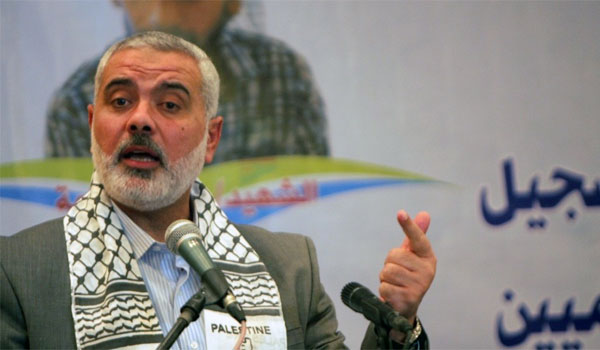


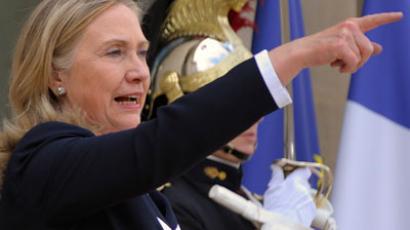

 Butchered by “Healthcare” is Robert Yoho’s plain-spoken account of how American medicine stopped being a profession and became an industry. 341 pages. Over a thousand references. Thirty-eight chapters.
 Aletho News

