Weir’s fascinating history focuses on how the State of Israel came into existence through a cynical using of the United States and how it was defended from American critics who saw the support for Israel as violating US principles and damaging US interests.
The significance of the 1917 Balfour Declaration, the British “gentleman’s agreement” between the British government and Lord Rothschild that pledged British support for a Jewish homeland, has not been understood by many for the quid pro quo that it represented. The agreement, which occurred when it appeared that Germany was winning WW I, was that Zionists would work to get the United States involved in the war if Britain would deliver Palestine as a Jewish homeland. The reason for the American involvement in the war and the American contribution to the arrangement have not been widely understood: the Balfour Declaration (as well as the later British Mandate) were drafted in both Britain and the US, including by U.S. Supreme Court Justice Louis Brandeis.
Germany had no inkling of this deal until the post-war 1919 Paris Peace Conference, which Zionists attended to ensure that Britain would come through with its part of the agreement.
Even before Britain washed its hands of Palestine, Zionists recognized that they needed the support of the United States for Israel to survive and thrive, so the U.S. became the focus of propaganda and political pressure. Harry Truman, the US President who recognized the State of Israel immediately after it declared itself a state, had received a then-staggering $2 million from a Zionist donor during what had appeared to be a losing presidential campaign. State Department leaders were against supporting Israel because it damaged U.S. relations with Arab countries and, more importantly, violated important American principles of self-determination and justice. Elected leaders, vulnerable to political pressure and access to campaign funding, were not able to maintain such America-first integrity.
Weir has documented various little-known Zionist efforts to support the creation of their state. The activities — basically bribes, lies, subterfuge, threats and violence– included:
Zionist leaders’ “mixed reaction” to Nazism, with some seeing that the convergent goals would benefit a Jewish state that required a Jewish population;
Secret American Zionist clubs (including the elite Parushim with Felix Frankfurter) which pledged to work for Israel behind the scenes;
Creating the myth that a refuge was needed for Jews (including falsifying anti-Semitism in Germany and Poland and, more importantly, sabotaging western countries’ efforts to open their doors to Jewish refugees after WW II in order to ensure that Jews had few choices of refuge outside of Israel); and
Zionists’ role in the creation of Christian Zionism and the Scofield Reference Bible.
Weir ends her short history of Israel’s creation by documenting some key examples of how Israel-firsters were able to destroy the careers — if not the lives — of prominent Americans in government, journalism and academia who warned of the loss of American credibility in supporting a state that was based on religious discrimination.
Weir keeps her book focused on the early history of Israel, ignoring highly significant later events, particularly those concerning Senator William Fulbright: his uncovering of Jewish charity fraud that recycled charitable donations into U.S. propaganda, his attempts, with JFK, to force the main Zionist organization to register as an agent of a foreign government and the loss of Fulbright’s Senate seat to the then-unheard of Dale Bumpers.
The main messages from Weir’s history are that the Jewish community has not legitimately needed a homeland- refuge from anti-Semitism and that Americans must take back their country by insisting that their elected officials place the interests of the United States before those of Israel.
US President Barack Obama recently said Washington will keep “approximately 9,800” troops in Afghanistan for two more years after 2014 but a report says an “invisible army” of US officials and intelligence personnel will remain in the country well in the future.
“Together with our allies and the Afghan government, we have agreed that this is the year we will conclude our combat mission in Afghanistan,” Obama said Tuesday during an appearance in the White House Rose Garden, referring to America’s 13-year war in Afghanistan, which is the longest war in US history.
“At the beginning of 2015, we will have approximately 9,800 US servicemembers in different parts of the country,” he added.
Writing for Foreign Policy magazine, however, Phillip Carter said on Wednesday that the “dirty secret about Obama’s Afghan plan is that tens of thousands of American civilians will be on the ground long after the troops have left.”
The “invisible army” of US civilians who will remain in Afghanistan for an unknown duration include intelligence agents, contractors, diplomats, and civilian government officials.
While Obama said on Tuesday that “by the end of 2016, our military will draw down to a normal embassy presence in Kabul,” what remains unclear is the extent of US operations under the auspices of agencies like the US Agency for International Development (USAID), which was recently in the headlines for the covert creation of a text-based social network to stir political unrest in Cuba.
US foreign service officers in Afghanistan will work “alongside scores more from USAID, the Justice Department, the Department of Agriculture” and “a clandestine force reportedly including hundreds of personnel from the CIA and other agencies,” wrote Carter.
During a speech at the United States Military Academy at West Point, New York, on Wednesday, Obama made it clear that there are some differences between his foreign policy and that of his predecessor George W. Bush, saying he would rely on allied or indigenous troops more than on US forces.
He said his foreign policy strategy “expands our reach without sending forces that stretch our military too thin.”
With everyone’s attention focused on the European elections or President Barack Obama’s speech at West Point or the Ukraine, a story by Eric Schmitt in The New York Times on Tuesday may not have caught your attention. I believe, however, that it provides an insight into some of the major problems of American foreign policy.
What Mr. Schmitt reports is that the U.S. has set up covert programs to train and equip native teams patterned on their instructors, the U.S. Army Delta Force, in several African countries. The program was advocated by Michael A. Sheehan who formerly was in charge of special operations planning in the Department of Defense and is now, according to Mr. Schmitt, holder of the “distinguished chair at West Point’s Combating Terrorism Center.”
Mr. Schmitt quotes him as saying, “Training indigenous forces to go after threats in their own country is what we need to be doing.” So far allocated to this effort, Mr. Schmitt writes, is $70 million, and the initial efforts will be in Libya, Niger, Mali and Mauritania.
How to do this, according to the senior U.S. officer in Africa, Major General Patrick J. Donahue II, is complex: “You have to make sure of who you’re training. It can’t be the standard, ‘Has the guy been a terrorist or some sort of criminal?’ but also, what are his allegiances? Is he true to the country or is he still bound to his militia?”
So let me comment on these remarks, on the ideas behind the program, its justification and the history of such efforts. I begin with a few bits of history. (Disclosure: I am in the final stages of a book that aims to tell the whole history, but the whole history is of course much too long for this note.)
Without much of the rhetoric of Mr. Sheehan and General Donahue and on a broader scale, we have undertaken similar programs in a number of countries over the last half century. Iran, Turkey, Indonesia, Guatemala, Egypt, Iraq, Thailand, Chad, Angola to name just a few. The results do not add up to a success almost anywhere.
Perhaps the worst (at least for America’s reputation) were Chad where the man we trained, equipped and supported, Hissène Habré, is reported to have killed about 40,000 of his fellow citizens. In Indonesia, General Suharto, with our blessing and with the special forces we also had trained and equipped, initially killed about 60,000 and ultimately caused the deaths of perhaps 200,000. In Mexico, the casualties have been smaller, but the graduates of our Special Forces program have become the most powerful drug cartel. They virtually hold the country at ransom.
Even when casualties were not the result, the military forces we helped to create and usually paid for carried out the more subtle mission of destroying public institutions. If our intention is to create stability, the promotion of a powerful military force is often not the way to do it. This is because the result of such emphasis on the military often renders it the only mobile, coherent and centrally directed organization in societies lacking in the balancing forces of an independent judiciary, reasonably open elections, a tradition of civil government and a more or less free press.
Our program in pre-1958 Iraq and in pre-1979 Iran certainly played a crucial role in the extension of authoritarian rule in those countries and in their violent reactions against us.
General Donahue suggests that we need to distinguish among the native soldiers we train and empower those who are “true to the country.” But how? We supported Hissène Habré so long that we must have known every detail of his life. He is now on trial as war criminal. General Suharto has never been charged (nor have those Americans who gave him a “green light”) for his brutal invasion of East Timor. Both probably believed that they met General Donahue’s definition of patriotism.
And in Mali, our carefully trained officers of the Special Forces answered what they thought was both patriotic and religious duty by joining the insurgency against the government we (and we thought they) supported. We have a poor record of defining other peoples’ patriotism.
And, in the interest of more urgent objectives, we have been willing to support and fund almost anyone as long as we think he might be of value. General Manuel Noriega, our man in Panama, went on to spend 22 years in an American prison after we invaded his country and fought the soldiers we had trained.
Indeed, we have a poor record of even knowing who the people we train are. After the Turkish army carried out one of its coups in the 1960s, when I was the member of the Policy Planning Council responsible for the Middle East, I asked the appropriate branch of the Defense Department who were the new leaders, all of whom had been trained in America, often several times during the years. The answer was that no one knew. Even in army records, they were just Americanized nicknames.
And, more generally, our sensitivity to the aspirations, hopes and fears of other people is notoriously crude or totally lacking. Growing out of the Cold War, we thought of many of them as simply our proxies or our enemies.
Thus, we found Chad not as a place with a certain population but just as a piece of the Libyan puzzle, and today we think of Mali in the same way. Now we are talking of training “carefully selected” Syrian insurgents to overthrow Bashar al-Assad. Do we have any sense of what they will overthrow him for?
Beyond these, what might be considered “tactical” issues are “strategic,” legal and even moral considerations. I leave aside the legal and moral issues — such as what justification we have to determine the fate of other peoples — as they do not seem very persuasive among our leaders.
But just focus on the long-term or even middle-term results of the new policy: the most obvious is that we meddle in and take some responsibility for the politics of an array of countries in which we have little direct interest. And often with the obvious danger of a deeper, more expensive and more painful result. We are close to this commitment in Syria.
Less obvious is that our activities, no matter how carefully differentiated, will be seen to add up to an overall policy of militarism, support of oppressive dictatorships, and opposition to popular forces. They also meld into a policy of opposition to the religion of over a billion people, Islam. And they do so at great expense to our expressed desires to enable people everywhere, including at home, to live healthier, safer and decent lives.
I end with a prediction: in practically every country where Mr. Sheehan’s and General Donahue’s program is employed, it will later be seen to have led to a military coup d’etat.
~
William R. Polk is a veteran foreign policy consultant, author and professor who taught Middle Eastern studies at Harvard. President John F. Kennedy appointed Polk to the State Department’s Policy Planning Council where he served during the Cuban Missile Crisis. His books include: Violent Politics: Insurgency and Terrorism; Understanding Iraq; Understanding Iran; Personal History: Living in Interesting Times;Distant Thunder: Reflections on the Dangers of Our Times; and Humpty Dumpty: The Fate of Regime Change.
The response of much western commentary to the Russia China agreements has been scepticism that they can ever burgeon into an outright partnership because of the supposedly long history of mutual suspicion and hostility between the two countries. The Economist for example refers to the two countries as “frenemies”.
To see whether these claims are actually justified I thought it might be useful to give a short if rather summary account of the history of the relationship between the two countries.
Official contacts between China and Russia began with border clashes in the 1680s which however were settled in 1689 by the Treaty of Nerchinsk, which delineated what was then the common border. At this time Beijing had no political or diplomatic links with any other European state save the Vatican, which was informally represented in Beijing by the Jesuit mission. The Treaty of Nerchinsk was the first formal treaty between China and any European power.
The Treaty of Nerchinsk was basically a pragmatic border arrangement. It was eventually succeeded by the Treaty of Kyakhta of 1727, negotiated on the initiative of the Kangxi Emperor and of Peter the Great, who launched the expedition that negotiated it shortly before before his death.
The Treaty of Kyakhta provided for a further delineation of the common border. It also authorised a small but thriving border trade. Most importantly, it also allowed for the establishment of what was in effect a Russian diplomatic presence in Beijing in the form of an ecclesiastical settlement there. Russia thereby became only the second European state after the Vatican to achieve a presence in Beijing. It did so moreover more than a century before any of the other European powers.
Russia was of course the only European power at this time to share a common border with China (a situation to which it has now reverted since the return to China of Hong Kong). It is also notable that the Treaty of Kyakhta happened on the initiative of Peter the Great. Peter the Great’s decision to launch the expedition that ultimately led to the Treaty of Kyakhta shows that even this supposedly most “westernising” of tsars had to take into account Russia’s reality as a Eurasian state.
For the rest of the Eighteenth Century and the first half of the Nineteenth Century relations between the Russian and Chinese courts remained friendly though hardly close. St. Petersburg was the only European capital during this period to host occasional visits by the Chinese Emperor’s representatives. During the British Macartney mission to Beijing of 1793 the senior Manchu official tasked with negotiating with Macartney had obtained his diplomatic experience in St. Petersburg. As a result of these contacts at the time of the Anglo French expedition to Beijing in 1860 Ignatiev, the Russian diplomat who acted as mediator between the Anglo French expedition and the Chinese court, could call on the services of skilled professional interpreters and was in possession of accurate maps of Beijing whilst the British and the French had access to neither. Russian diplomatic contacts with the court in Beijing during this period do not seem to have been afflicted with the protocol difficulties that so complicated China’s relations with the other European powers and which contributed to the failure of the Macartney mission. This serves as an indicator of the pragmatism with which these contacts were conducted.
This period of distant but generally friendly relations ended with the crisis of 1857 to 1860 when Russia used the Chinese court’s preoccupation with the Taiping rebellion and China’s difficult relations with the western Europeans culminating in the Anglo French expedition of 1860 to secure the annexation of the Amur region. The Chinese continue to see the third Convention of Beijing of 1860 which secured the Amur territory for Russia as an “unequal treaty”. They have however accepted its consequences and formally recognised the border (which was properly speaking part of Manchu rather than Chinese territory). At the time it must have been resented. However it is probably fair to say that Russia would have been seen in China as a marginally less dangerous aggressor during this period than the western powers Britain and France (especially Britain) if only because China’s relations with these two countries were much more important.
As the Nineteenth Century wore on relations between Russia and China seem to have improved, with Russia, undoubtedly for self-interested reasons, playing an important role in the Three Intervention that forced Japan to moderate its demands on China following China’s defeat in the Sino Japanese war of 1895. Russian policy of supporting China and the authority of the Chinese court against the Japanese however fell by the wayside when Russia forced the Chinese court in 1897 to grant Russia a lease of the Chinese naval base of Port Arthur. This was much resented in China and damaged Russia’s image there.
Russia also became drawn into the suppression of the anti-foreign 1900 Boxer Rising, an event which destabilised the Manchu dynasty and which led to a short lived Russian occupation of Manchuria to suppress the Boxers there. This is not the place to discuss the diplomacy or the reasons for the conflict which followed, which is known as the Russo-Japanese war of 1904 to 1905. Suffice to say that the ground war was fought entirely on Chinese territory and ended in stalemate (though with the balance starting to shift in favour of the Russians), that I know of, no good English account of the war or of the events that preceded it, that the war was precipitated entirely by a straightforward act of Japanese aggression and that the popular view that the war was preceded and/or provoked by Russian economic and political penetration of Korea or plans to annex Manchuria are now known to have no basis in fact.
A radical improvement in Russian-Chinese relations took place following the October 1917 revolution caused by the decision of the new Bolshevik government to renounce the extra territorial privileges Russia had obtained in China as a result of the unequal treaties. The USSR became the strongest supporter during this period of Sun Ya-tsen’s Chinese nationalist republican movement and of the Guomindang government in Nanjing that Sun Ya-tsen eventually set up. Sun Ya-tsen for his part was a staunch friend and supporter of the USSR. Though many are aware of the very close relationship between the USSR and China in the 1950s few in my experience know of the equally strong and arguably more genuine friendship between their two governments in the 1920s.
In the two decades that followed the USSR became China’s strongest international supporter in its war against Japanese aggression, a war which has defined modern China and of which the outside world knows lamentably little. During this period the USSR had to balance its support for China’s official Guomindang led government that was supposedly leading the struggle against the Japanese with its support for the Chinese Communist Party (originally the leftwing of the Guomindang movement) with which the Guomindang was often in armed conflict. The USSR also had to balance its support for China with its need to avoid a war in the east with Japan at a time when it was being threatened in the west by Nazi Germany and its allies. The skill with which the government of the USSR performed this difficult feat has gone almost wholly unrecognised.
Following the defeat of Japan in 1945 the USSR’s military support was (as is now known) crucial though obviously not decisive to the Chinese Communist Party’s victory in the civil war against the Guomindang, which led to the establishment in 1949 of the People’s Republic. A decade of extremely close political, military and economic relations followed during which the two countries were formally allies. As is now known this relationship in reality was always strained and eventually broke down in part because of mutual personal antagonism between the countries’ two leaders, Khrushchev and Mao Zedong, but mainly because of Chinese anger at the USSR’s failure to support a war to recover Taiwan and above all because of China’s refusal as the world’s most populous country and oldest civilisation to accept a subordinate position to the USSR in the international Communist movement. The rupture was made formal by Khrushchev’s decision in 1960 to withdraw from China the Soviet advisers and economic assistance that had been sent there. Supporters of sanctions may care to note that on the two occasions Russia has used sanctions (against Yugoslavia in 1948 and against China in 1960) they backfired spectacularly on Russia resulting in entirely negative consequences for Russia.
The Sino-Soviet rupture of 1960 resulted in a decade and a half of very strained relations. An attempt to restore relations to normal following Khrushchev’s fall in 1964 was wrecked, possibly intentionally, by the Soviet defence minister Marshal Malinovsky who encouraged members of the Chinese leadership to overthrow Mao Zedong through a coup similar to the one that had overthrown Khrushchev. Relations with the USSR during this period also increasingly became hostage to Chinese internal politics with Mao and his supporters during the period of political terror known as the Cultural Revolution routinely accusing their opponents of being Soviet agents. This period of difficult relations eventually culminated in serious border clashes in 1969, an event that panicked the leadership of both countries and which led each of them to explore alignments against each other with the Americans.
This period of very tense relations basically ended in 1976 with the death of Mao Zedong who shortly before his death is supposed to have issued an injunction to the Chinese Communist party instructing it to restore relations with the USSR. Once the post Mao succession disputes were resolved with the victory of Deng Xiaoping a process of outright rapprochement began the start of which was formally signaled in the USSR by Leonid Brezhnev in a speech in Tashkent in 1982 which he made shortly before his death. By 1989 the process of rapprochement was complete allowing Gorbachev to visit Beijing in the spring of that year when however his visit was overshadowed by the Tiananmen disturbances.
Since then there has been a steady strengthening of relations. Gorbachev refused to involve the USSR in the sanctions the western powers imposed on China following the Tiananmen disturbances. Yeltsin, despite the strong pro-western orientation of his government, remained a firm advocate of good relations with China and worked to build on the breakthrough achieved in the 1980s. In 1997, in a speech in Hong Kong, Jiang Zemin already spoke of Russia as China’s key strategic ally. In 1998 the two countries acted for the first time openly in concert on the Security Council to oppose the US bombing of Iraq (“Operation Desert Fox”). Subsequently both countries strongly opposed the US led attacks on Yugoslavia in 1999 and on Iraq in 2003.
Since then their cooperation in political, economic and security matters has intensified. Whilst their relations have had their moments of difficulty (eg. over Russian complaints of illicit Chinese copying of weapon systems) and the development of their economic relations has lagged well behind that of their political relations (inevitable given the disastrous state of the Russian economy in the 1990s) it is difficult to see on what basis they can be considered “frenemies”.
The reality is that Russia and China have for obvious reasons of history, culture and above all geography faced through most of their history in different directions: China towards Asia (where it is the supreme east Asian civilisation) and Russia towards Europe. That should not however disguise the fact that their interaction has been very prolonged (since the 1680s), – longer in fact than that of China with any of the major western powers – and generally peaceful and mostly friendly. Periods of outright hostility have been short lived and rare. Despite sharing the world’s longest border all-out war between the two countries has never happened. On the two occasions (in the 1680s and 1960s) when it briefly appeared that it might, both drew back and eventually sought and achieved a compromise. For China Russia’s presence on its northern border has in fact been an unqualified benefit, stabilising and securing the border from which the greatest threats to China’s independence and security have traditionally come.
Western perceptions of the China Russia relationship are in my opinion far too heavily influenced by the very brief period of the Sino Soviet conflict of the 1960s and 1970s. Across the 300 or so years of the history of their mutual interaction the 15 or so years of this conflict represent very much the anomaly not the rule. Given this conflict’s idiosyncratic origins in ideological and status issues that are (to put it mildly) extremely unlikely to recur again, to treat this conflict as representing the norm in China’s and Russia’s relations with each other seems to me frankly farfetched. The past is never a safe guide to the future. However on the basis of the actual history of their relations, to argue that China’s and Russia’s strategic partnership is bound to fail because of their supposed long history of suspicion and conflict towards each other is to argue from prejudice rather than fact.
David Attenborough was my favorite wildlife cinematographer and each year I fed my students numerous clips to make biology and ecology come alive. Researching the plight of the polar bears, I began to worry that “my hero” had decided to use his spectacular wildlife videos to promote catastrophic climate change.
The first example that raised my suspicions was his portrayal of polar bears feeding on walruses, with a narration suggesting it was a new behavior desperately driven by climate change. But for us ecologists who know better: shame on you David Attenborough. He ignored documented wildlife history and cherry-picked a dramatic scene to promote climate fear.
First view this older BBC video pitting polar bears against walrus. Notice how many bears are converging on the walrus herd and that they are coming from the land. Then view Attenborough’s “new and improved video” that puts a very misleading slant on polar bears and walruses.
If you want to read historical facts about walruses and polar bears, I suggest reading Francis H. Fay’s 1982 “Ecology And Biology Of The Pacific Walrus, Odobenus rosmarus, Divergens Illiger.” In the 1950s, Fay was concerned that the walrus was headed for extinction due to over-hunting for ivory and blubber so Fay set out to document everything there was to know about walruses.
In his tome, Fay published early 1900 observations by Russian researchers who admired the polar bears’ varied and clever tactics for hunting walrus.
“The walruses on Peschan Island are frequently bothered by bears, which creep up to them under cover of uneven terrain and of driftwood, of which there usually is an abundance, along the shore. Sometimes the bears dig pits in the sand or make a pile in front of themselves in order to hide from the walruses. We saw a bear in a pit dug in the driftwood within 50 m of the herd, where it watched for a long time. Suddenly, it leaped from its concealment and plunged along the flat terrain toward the walruses. The animals, upon seeing the running bear, rushed into the water, and when the bear reached those on shore, only a few large males remained, and these gradually pivoted into the water, threatening with roars and swinging tusks. The bear in his misfortune was unable to decide whether or not to enter the water and only brandished his paws helplessly and growled in discontent. Not infrequently, in the confusion, the adult walruses crush some young; possibly, at the time of the attack, the bears hope to profit from such accidentally crushed or abandoned young.”
Anyone familiar with the scientific literature knows polar bears have been hunting walruses since recorded history and most certainly before that time. More recently researchers reporting to the Polar Bear Specialist Group meeting speculated that hunting walruses on land was likely to be a behavior that has allowed bears to survive the lack of sea ice that was far more common through out the Holocene Optimum.
For example, Wrangel Island is both home of one of the largest known polar bear denning areas in the Arctic as well as the location of several traditional walrus land haul-outs each summer. Because walruses often get trampled at these haul-outs, bears eagerly supplement their diet by feeding on the trodden carcasses. In addition, polar bears will wait at these haul outs anticipating the summer wave of walrus herds that typically come ashore and then dine on weak or young walruses. Seasoned bears know to avoid a healthy bull.
In 2007 the 2nd greatest decrease in Arctic sea ice was observed in the waters surrounding Wrangel Island. That summer researchers observed the greatest number of polar bears on the island. However, contrary to the less ice-means-starving-bear theory, there were no signs of increased nutritional stress. Quite the opposite.
Anticipating the seasonal haul-out of walruses, the bears concentrated along the beaches where they were easily observed by researchers who determined that less than 5% of the Wrangel Island bears were designated skinny or very skinny. That compared very favorably to the 7 to 15% of skinny bears observed in previous years with heavier ice. Furthermore researcher determined that not only did 29% of all bears look “normal”, the remaining 66% were fat or very fat. Those polar bear experts wrote, “Under certain circumstances, such as were observed on Wrangel Island in 2007, (Ovsyanikov and Menyushina 2008, Ovsyanikov et al., 2008), resources available in coastal ecosystems may be so abundant that polar bears are able to feed on them more successfully than while hunting on the sea ice.”
With that scientific background, view Attenborough’s rendition and ask yourself if he is objectively narrating the video. He ignores the bears and walruses’ natural history to suggest polar bears have only recently attacked walruses out of desperation. Attenborough suggests the lone bear had been desperately swimming for days trying to reach the island. However, without a radio-collar on the bear, one must wonder if Attenborough is using creative license. And why is Attenborough “serendipitously“ set up in this location to film this event??? Is it a traditional walrus hunting spot and not the rare event his video suggests?
Researchers have documented instances of younger bears who have not mastered hunting walrus that resulted in injury, but it is a matter of a younger bears evolving experience. Attenborough marries an uncommon hunting failure to climate change. Playing sad music, he suggests that bears only attack walruses as an unnatural last resort; suggesting that, in essence, it is a climate change driven act that is suicidal and doomed to increase.
To my increasing dismay, my former wildlife hero seems to be plunging more deeply into climate propaganda. Attenborough has a new series on Discovery called Africa but it might as well be called “Let’s Push Climate Fear“.
Take for instance his video segment, shown below, on Green Turtles. He accurately tells us that unlike humans who determine gender via the X and Y chromosomes, Green Turtles (as well as several other reptiles) determine the next generation’s gender based on the temperature of the developing eggs. Researchers realized this when trying to save endangered sea turtles from depredation and dug up their eggs to “safely” incubate them. Fearing that buried eggs at the bottom of the pile had not benefited equally from the sun’s warmth, the eggs were laid out evenly on trays so all could incubate at the same temperature. The result was uni-sex baby turtles.
However, turtles have been around since the dinosaurs and their temperature-gender system has been completely successful throughout monumental periods of climate change, massive extinctions, and epochs with far warmer temperatures than today. Attenborough should tell his audience that micro-climates are far more critical to their success as well as informing the public that temperatures drop off dramatically with depth in the sand. Nonetheless he warns that due to global warming, female turtles will soon have great difficulty finding a male. Shameful propaganda Sir David!
* Author Jim Steele is Director emeritus Sierra Nevada Field Campus, San Francisco State University.
Literature cited
Fay, F. (1982) Ecology and Biology of Odobenus rosmarus the Pacific Walrus, divergens. US. Department of the Interior, Fish and Wildlife Service, North American Fauna, No. 74.
Ovsyanikov N.G., and Menyushina I.E. (2008) Specifics of Polar Bears Surviving an Ice Free Season on Wrangel Island in 2007. Marine Mammals of the Holarctic. Odessa, pp. 407-412.
Over the years, one of the most important issues I have dealt with repeatedly for the Palestinian people is Jerusalem. For example, my friend Michael Saba and I launched an initiative to prevent the United States Government from illegally moving the United States Embassy from Tel Aviv to Jerusalem.
In order to forestall this abomination, I prepared Memoranda of Law on the U.S.-Israel Land- Lease and Purchase Agreement of 1989 that would enable the construction of this U.S. Jerusalem “Embassy,” which I sent to Congressman Lee Hamilton, who was then Chairman of the Subcommittee on Europe and the Middle East of the Committee on Foreign Affairs of the U.S. House of Representatives.
These Memoranda were published in American-Arab Affairs. The Israel Lobby and its supporters in Congress are still attempting to pressure the United States government to move the U.S. Embassy from Tel Aviv to Jerusalem. Of course this would be a political, legal, and diplomatic disaster.
To be sure, there would certainly be no problem under international law and practice for the United States government to move its Embassy from Tel Aviv to Jerusalem as part of a comprehensive Middle East peace settlement whereby this Embassy would be simultaneously accredited to Israel and Palestine, with Jerusalem being recognized as the shared Capital of both States. Why and how this can be done is fully explained elsewhere in this book. Years ago the PLO had already approved my proposal set forth herein for this “Final Status of Jerusalem.” But Israel wants Jerusalem for itself. And the United States has never been solomonic when it comes to Palestine and the Palestinian people.
Many categorical statements have emanated from the Israeli government about the yet-to-be-negotiated final status of Jerusalem. Indeed, Jerusalem was said to have been the stumbling block that led to the breakdown of the Camp David II negotiations in the summer of 2000, though the negotiating situation was far more complicated than that. A brief review of the historical record can shed some light upon Jerusalem’s legal status, and thus point the way towards an ultimate solution for this most Holy City in the estimation of the three monotheistic faiths: Islam, Judaism, Christianity.
The Legal Status of Jerusalem
On September 25, 1971, then-Ambassador George H.W. Bush, speaking as U.S. Representative to the United Nations, delivered a formal Statement on Jerusalem before the UN Security Council explaining the official position of the United States government with respect to the City of Jerusalem.1 Therein, Ambassador Bush expressly repeated and endorsed a December 1969 Statement by U.S. Secretary of State William Rogers: “We have made clear repeatedly in the past two and one-half years that we cannot accept unilateral actions by any party to decide the final status of the city.”
Ambassador Bush then specifically repeated and endorsed a 1969 statement made before the Security Council by his predecessor, Charles Yost, criticizing Israeli occupation policies in East Jerusalem in the following terms:
“The expropriation or confiscation of land, the construction of housing on such land, the demolition or confiscation of buildings, including those having historic or religious significance, and the application of Israeli law to occupied portions of the city are detrimental to our common interests in the city.” Ambassador Bush then reaffirmed Yost’s prior statement that the United States government considers East Jerusalem to be “occupied territory and hence subject to the provisions of international law governing the rights and obligations of an occupying Power.”
Succinctly put, these latter obligations can be found in the Fourth Geneva Convention of 1949, which expanded upon and improved—but did not displace— the 1907 Hague Regulations on Land Warfare. The United States government is a party to both the Fourth Geneva Convention and The Hague Regulations, and Israel is bound by the terms of both treaties as well.
Previously, Ambassador Yost had continued his 1969 statement in the following language: 2
… Among the provisions of international law which bind Israel, as they would bind any occupier, are the provisions that the occupier has no right to make changes in laws or in administration other than those which are temporarily necessitated by his security interests, and that an occupier may not confiscate or destroy private property. The pattern of behavior authorized under the Geneva Convention of 12 August 1949 and international law is clear: the occupier must maintain the occupied area as intact and unaltered as possible, without interfering with the customary life of the area, and any changes must be necessitated by the immediate needs of the occupation. I regret to say that the actions of Israel in the occupied portion of Jerusalem present a different picture, one which gives rise to understandable concern that the eventual disposition of East Jerusalem may be prejudiced and that the private rights and activities of the population are already being affected and altered.
My Government regrets and deplores this pattern of activity, and it has so informed the Government of Israel on numerous occasions since June 1967. We have consistently refused to recognize those measures as having anything but a provisional character and do not accept them as affecting the ultimate status of Jerusalem.
Then, Ambassador Bush continued his 1971 Statement as follows:
We regret Israel’s failure to acknowledge its obligations under the fourth Geneva Convention as well as its actions which are contrary to the letter and spirit of this Convention. We are distressed that the actions of Israel in the occupied portion of Jerusalem give rise to understandable concern that the eventual disposition of the occupied section of Jerusalem may be prejudiced. The Report of the Secretary General on the Work of the Organization, 1970-71, reflects the concern of many Governments over changes in the face of that City. We have on a number of occasions discussed this matter with the Government of Israel, stressing the need to take more fully into account the sensitivities and concerns of others. Unfortunately, the response of the Government of Israel has been disappointing.
All of us understand… that Jerusalem has a very special place in the Judaic tradition, one which has great meaning for Jews throughout the world. At the same time Jerusalem holds a special place in the hearts of many millions of Christians and Muslims throughout the world. In this regard, I want to state clearly that we believe Israel’s respect for the Holy Places has indeed been exemplary. But an Israeli occupation policy made up of unilaterally determined practices cannot help promote a just and lasting peace any more than that cause was served by the status quo in Jerusalem prior to June 1967 which, I want to make clear, we did not like and we do not advocate reestablishing.
Ambassador Bush then concluded his 1971 statement on Jerusalem by supporting what would later that day become Security Council Resolution 298 (1971), which provided in its most significant parts as follows:
1. Reaffirming the principle that acquisition of territory by military conquest is inadmissible,
2. Deplores the failure of Israel to respect the previous resolutions adopted by the United Nations concerning measures and actions by Israel purporting to affect the status of the City of Jerusalem;
3. Confirms in the clearest possible terms that all legislative and administrative actions taken by Israel to change the status of the City of Jerusalem, including expropriation of land and properties, transfer of populations and legislation aimed at the incorporation of the occupied section, are totally invalid and cannot change that status;
4. Urgently calls upon Israel to rescind all previous measures and actions and to take no further steps in the occupied section of Jerusalem which may purport to change the status of the City or which would prejudice the rights of the inhabitants and the interests of the international community, or a just and lasting peace;
Security Council Resolution 298 (1971) became yet another violated resolution in “a long Train of Abuses and Usurpations“by Israel that were never enforced by the Security Council.3
In any event, the Statements made by Bush and Yost have always represented the United States government’s official position on the numerous illegalities surrounding Israel’s conquest, occupation and illegal annexation of East Jerusalem since 1967. The comments on East Jerusalem that Bush made later in 1990 as U.S. President were to the same effect: 4
The President. Well, I’m not sure there was equivocation. My position is that the foreign policy of the United States says we do not believe there should be new settlements in the West Bank or in East Jerusalem. And I will conduct that policy as if its firm, which it is, and I will be shaped in whatever decisions we make to see whether people can comply with that policy. And that’s our strongly held view. We think it’s constructive to peace—the peace process—if Israel will follow that view. And so, there are divisions in Israel on this question, incidentally. Parties are divided on it. But this is the position of the United States and I’m not going to change that position.
Yost’s 1969 Statement, Bush’s 1971 Statement, and his 1990 comments are fully consistent with and indeed required by Article 1 of the Fourth Geneva Convention, which requires the United States government not only to respect but also to ensure respect for the terms of this Convention by other parties such as Israel “in all circumstances”. As treaties, both the Fourth Geneva Convention and the Hague Regulations are deemed to be the “supreme Law of the Land” by Article VI of the United States Constitution. Contrary to the public suggestions made in the United States by the Israel Lobby and its supporters, the United States government is under legal obligation to support the vigorous application of the international laws of belligerent occupation to produce the termination of all illegal Israeli practices in Jerusalem as well as in the West Bank and Gaza Strip, together with the Golan Heights—including and especially illegal Israeli settlers and settlements.
The Political Problem of Jerusalem
For similar reasons, the United States government has never recognized Israel’s conquest and annexation of West Jerusalem as valid or lawful, either. That is why the U.S. Embassy to Israel still remains in Tel Aviv, not Jerusalem.
Nevertheless, the pro-Israel lobby in the United States and its beneficiaries in the U.S. Congress have systematically attempted to pressure successive U.S. Presidents into recognizing Jerusalem as the capital of Israel, even though such an act would inflame public opinion throughout the Muslim world—over 57 states and 1 billion people, a sixth of all humanity—against the United States. Such an act of formal diplomatic recognition would be a legal, political and diplomatic disaster that would prevent a peace agreement between Israel and Palestine and thus preclude a comprehensive Middle East peace settlement between Israel and the surrounding Arab states. Perhaps that is the Israel Lobby’s intention.
Undaunted, the U.S. Israel Lobby has continued apace bribing, threatening, and intimidating members of the U.S. Congress and the President to move incrementally towards an awesome “clash of civilizations” between the United States and the Muslim world over Jerusalem as forecast by Harvard’s Samuel Huntington.5 No point would be served here by reviewing the sordid history of the U.S. Israel Lobby’s efforts to move the U.S. Embassy from Tel Aviv to Jerusalem since that saga has recently been recounted elsewhere.6
Suffice it to say that the U.S. Israel Lobby procured passage by Congress of the so-called Jerusalem Embassy Act in 1995.7 Among other outrages too numerous to analyze here, section 3 of this statute provided in relevant part as follows:
STATEMENT OF THE POLICY OF THE UNITED STATES
(2) Jerusalem should be recognized as the capital of the State of Israel; and
(3) The United States Embassy in Israel should be established in Jerusalem no later than May 31, 1999.
Article 1, Section 10, Clause 1 of the United States Constitution has historically been interpreted to mean that such acts of diplomatic recognition are to be performed by the President. In deference thereto, Congress employed the word “should” instead of “shall” in the statute.
Nevertheless, in section 3(b) thereof Congress did wield its well-recognized constitutional “power of the purse” to cut State Department funding for “Acquisition and Maintenance of Buildings Abroad” unless and until “the United States Embassy in Jerusalem has officially opened.” But section 7 of the Statute permits the President to waive this fiscal sanction every six months on the grounds that “such suspension is necessary to protect the national security interests of the United States.” So far that is what President Clinton and President Bush Jr. have consistently done.
Dissatisfied with Congressional support which, while submissive to Zionist demands, had not yielded changes in actual U.S. policy, the Israel lobby proceeded to procure the passage of an even more strictly tailored piece of legislation that in a nutshell requires the U.S. President to recognize Jerusalem as the capital of Israel on official U.S. government documents, once again upon pain of fiscal sanctions—so-called “paper recognition”.8 While President Bush Jr. stated that he will ignore this requirement on the grounds that it is unconstitutional—infringing upon the President’s constitutional power to perform such acts of diplomatic recognition—there was such an uproar throughout the Muslim world over this “paper recognition” of Jerusalem as being the capital of Israel by the United States Congress that the Arab TV Network Al Jazeera invited this author to appear live by satellite on their evening news program for Thursday, 17 October 2002 in order to critique this statute under U.S. constitutional law and under international law, as well as to explain how this statute fits within the overall conduct of U.S. foreign policy toward the Middle East and the Muslim world. In further reinforcement of the deleterious effects that changes in U.S. policy on Jerusalem have on U.S. interests—as opposed to those of Israel—on 29 October 2002 CNN reported that a U.S. diplomat had been murdered the previous day in Amman, Jordan because of this statute’s recognition of Jerusalem as the capital of Israel.
Clearly, it is doubtful that the Israel Lobby will be satisfied with Bush Jr.’s statement that he will ignore Congress’s “paper recognition” of Jerusalem as the capital of Israel. But it is not clear that President Bush Jr. will really honor his pubic commitment to ignore this legislation. The battle for Jerusalem will continue in Washington, DC as well as in the streets of Palestine, Israel, and elsewhere.
A Solution for Jerusalem
The 1947 United Nations Partition Plan for the Mandate of Palestine called for the creation of an international trusteeship for the City of Jerusalem that would be administered as a corpus separatum apart from both the Jewish state and the Arab state contemplated therein. Today, however, it would not be necessary to go so far as to establish a separate United Nations trusteeship for the City of Jerusalem alone under Chapter XII of the UN Charter. Rather, all that would be necessary would be the withdrawal of the Israeli army from the City of Jerusalem, with a United Nations peacekeeping force to be substituted in its place. This UN force would maintain security within the City of Jerusalem while the provision of basic services to all the inhabitants could be enhanced, especially for the Palestinians.
The simple substitution of a UN peacekeeping force for the Israeli army would have the virtue of allowing both Israel and Palestine to continue making whatever claims to sovereignty they want with respect to the City of Jerusalem.
Thus, Israel could continue to maintain that Jerusalem is the sovereign territory of Israel, its united capital, and shall remain so, one and undivided, forever. The Israeli Knesset could remain where it is, in territory designated as a capital district, and the Israeli flag could be flown anywhere throughout the City of Jerusalem.
Likewise, the State of Palestine could maintain that Jerusalem is its sovereign territory and capital and shall remain so, one and undivided, forever. Palestine would be entitled to construct a parliament building and capital district within East Jerusalem. The Palestinian flag could also be flown anywhere within the territorial confines of the City of Jerusalem. Both Israel and Palestine would be entitled to maintain ceremonial honor guards, perhaps armed with revolvers, at their respective capital districts. But no armed troops from either Israel or Palestine would be permitted within Jerusalem.
The residents of Jerusalem would be citizens of either Israel, or Palestine, or both, depending upon the respective nationality laws of the two states involved. Residents of Jerusalem would be issued a United Nations identity card to that effect, which would give them and only them the right to reside within the City of Jerusalem. Nevertheless, all citizens of the State of Palestine would be entitled to enter Jerusalem through UN checkpoints at the eastern limits of the city. Likewise, all citizens of the State of Israel would be entitled to enter Jerusalem at UN checkpoints located at the western limits of the city. Yet, mutual rights of access for their respective citizens to the two States through Jerusalem would be subject to whatever arrangements could be negotiated between the government of Israel and the government of Palestine as part of an overall peace settlement. The myriad of other complex issues related to Jerusalem and its inhabitants would be progressively negotiated in good faith between the governments of Palestine and Israel under the auspices of the United Nations Organization.
In addition, both Israel and Palestine would have to provide assurances to the United Nations Security Council that religious pilgrims (Muslims, Christians, and Jews) would be allowed access through their respective territories in order to visit and worship at the holy sites in the City of Jerusalem. Some type of UN transit visa issued by the UN peacekeeping force should be deemed to be sufficient for this purpose by both governments. Of course this right of transit could not be exercised in a manner deleterious to the security interests of the two States.
Thus, Jerusalem would become a free, open, and undivided city for pilgrimage and worship by people of the three monotheistic faiths from around the world. Neither Israel nor Palestine would have to surrender whatever rights, claims, or titles they might assert to the city. Security would be maintained by the United Nations peacekeeping force. The city of Jerusalem would remain subject to this UN regime for the indefinite future.
If a comprehensive Middle East peace settlement were to be negotiated along these lines, then it would be perfectly appropriate under international law for the United States government to move its Israeli Embassy from Tel Aviv to Jerusalem. There the U.S. Embassy could be simultaneously accredited to the State of Palestine as well as to the State of Israel. The same could be done by all other states in the international community. The presence of these embassies in Jerusalem under such circumstances would permit both Israel and Palestine to claim that the entire international community has now recognized Jerusalem as its capital.
Conclusion
There are many other historical precedents that could be drawn upon to produce a mutually acceptable arrangement for Jerusalem: e.g., the Free City of Danzig, the Vatican City State, the District of Columbia, United Nations Headquarters in New York City, etc. So determining the final status of the city of Jerusalem is not and has never been an insuperable obstacle to obtaining a comprehensive Middle East peace settlement—despite Israeli rhetoric and propaganda to the contrary. If the will for peace were there on the part of the Israeli government, then creative lawyers on each side can devise an artful arrangement for the city of Jerusalem that would allow both peoples to claim victory while achieving peace.
In fact, several years ago I drafted a formal proposal similar to the above-described solution for consideration by the PLO. A high-level PLO official informed me that this proposal was acceptable to the PLO. So far, it has proved to be unacceptable to Israel, which continues to stubbornly insist that Jerusalem shall remain its “sole”, “undivided” and “eternal” capital despite all the rules of international law to the contrary and the fact that in the Oslo Agreement of 13 September 1993, Israel expressly agreed in writing to negotiate over the final status of Jerusalem with the PLO. You do not expressly agree to negotiate with your adversary over “your”, “sole”, “undivided”, “eternal” “capital” if it is really yours ! The time has long past for Israel to put aside its relentless rhetoric and propaganda about Jerusalem, and negotiate in good faith with the Provisional Government of the state of Palestine over the ultimate disposition of Jerusalem. The Palestinians have repeatedly demonstrated their will for peace. So far, the Israeli government has only demonstrated its will to power. But when it comes to Jerusalem—Jews, Muslims, and Christians: “Can’t we all get along?” I sincerely believe we can.
For a list of Security Council Resolutions against Israel as of 1995, see Paul Findley, Deliberate Deceptions 187-94 (1995). See also Paul Findley, They Dare To Speak Out (1989).
26 Weekly Comp. Pres. Doc. 357 (Mar. 3 1990).
Samuel P. Huntington, The Clash of Civilizations and the Remaking of World Order (1996).
See Walid Khalidi, The Ownership of the U.S. Embassy Site in Jerusalem (2000).
Jerusalem Embassy Act of 1995, Pub. L. No. 104-45, 109 Stat. 398 (1995).
THE NEW AMERICAN CENTURY is a history of neoconservatism and its influence on US Foreign Policy in the Middle East during the first decade of the twenty-first century.
Written after years of extensive research, THE NEW AMERICAN CENTURY contains over 550 pages, including more than 1200 footnotes and some 120 pages of bibliography. The book has been meticulously researched with every aspect of the history fully supported with primary evidence, much of it from the neoconservatives themselves.
The book is a must for all those interested in the history of neoconservatism, the recent history of Israel and conflict between the West and Islam in the Middle East during the first ten years of the NEW AMERICAN CENTURY.
Despite being originally written as a successful doctoral thesis, the book avoids academic jargon and uses plain easy to understand language
It details the rise of neoconservative influence within the US government particularly from the Reagan era through to the presidency of George W. Bush, when neoconservative power reached its zenith. It details the strong connections neoconservatives have with right-wing Israeli Zionism and the way in which neoconservatives were able to manipulate American power to benefit the Greater Israel cause. The book details how various interests including the Military Industrial Complex, the American religious right, US big business and US/Israeli Zionists converged into a coalition under George W. Bush and his administration that set out to determine the future history of the Middle East in such a way as to benefit Israel and the economic interests of the US.
Currently available in fully searchable PDF format for just AUD$12-00 via PayPal or direct through the author Damian Lataan.
At the moment the book is not available in hard copy though maybe in the future.
A Turkish man who was injured in Israel’s 2010 deadly attack on a Gaza-bound flotilla has died after four years in a coma.
Ugur Suleyman Soylemez was left comatose after Israeli soldiers opened fire on the Turkish-flagged Mavi Marmara. The 51-year-old man passed away on Friday.
Relations between Israel and Turkey soured in 2010 after the attack on the Freedom Flotilla in international waters in the Mediterranean Sea on May 31.
Nine Turkish activists on board the ship died and about 50 other people who were part of the team on the six-ship convoy were injured.
The Tel Aviv regime has apologized and offered to pay compensation to the families of the victims in a gesture to end the row.
Meanwhile, on Thursday, Turkey’s Humanitarian Relief Foundation (IHH) said it would reject any offer by Israel to pay compensation for the Mavi Marmara attack in exchange for dropping a court case.
Ugur Yildirim, a lawyer for the IHH, said the aid agency had gained information that Ankara and Tel Aviv were about to finalize a compensation agreement to settle the dispute over the fatal incident.
Yildirim warned Ankara against the compensation agreement, describing such a deal as “a clear violation of global law principles.”
Turkish and Israeli Officials have not commented on the report yet.
In February, Turkish Prime Minister Recep Tayyip Erdogan said no compensation agreement could be reached without a written commitment by Israel to lift its restrictions on the besieged Gaza Strip.
Russian Foreign Minister Sergei Lavrov slammed the west over the current situation in Ukraine, saying that the West triggered the crisis by its megalomania.
In a speech at a security conference in Moscow organized by the Russian Defense Ministry, Lavrov said that the Ukrainian crisis is a natural result of the West’s expansion of its influence eastwards at the expense of Russian interests.
The turbulence in Ukraine is reminiscent of the violence and bloodshed that Europe experienced in the 20th century, Lavrov told the conference.
“The European continent, which brought two global military catastrophes in the last century, is not demonstrating an example to the world of peaceful development and broad cooperation,” he said, adding that the situation wasn’t accidental, but rather “a natural result of the developments over the past quarter of a century.”
“Our Western partners rejected a truly historic chance to build a greater Europe in favor of border lines and the habitual logic of expanding the geopolitical space under their control to the East,” Lavrov stressed.
“This is de facto a continuation of a policy of containing Russia in a softer wrapping,” he added.
“If we sincerely want to help the Ukrainian people overcome this crisis, it’s necessary to abandon the notorious zero-sum games, stop encouraging xenophobic and neo-Nazi sentiments and get rid of dangerous megalomania,” the top Russian diplomat said.
World Wars I and II created watershed moments in the lives of Western intellectuals, defined here as those who are guided by their intellect and critical thinking and who understand various aspects of the world mainly through ideas and theories which they express through writing, teaching and other forms of public address.
Just how were they to respond to the call of patriotic duty that seduced the vast majority of citizens to support acts of mass slaughter? What constituted a proper response is often debated. How most of them did respond is a matter of historical record.
During the world wars most intellectuals on all sides of the conflicts uncritically lent their talents to their government’s war efforts. Some did so as propagandists and others as scientists. Some actually led their nations into the fray, as was the case with President Woodrow Wilson.
Wilson held a doctorate from Johns Hopkins University, had taught at Cornell, Bryn Mawr and Wesleyan, and became president of Princeton University. Eventually he was elected President of the United States and, having taken the nation to war, sanctioned the creation of a massive propaganda machine under the auspices of the “Committee on Public Information.” He also supported the passage of the Sedition Act of 1918 to suppress all anti-war sentiments.
Wilson never experienced combat, but another intellectual, the British poet Siegried Sassoon, did so in the trenches of the Western front. After this experience he wrote, “war is hell and those who initiate it are criminals.” No doubt that was his opinion of the intellectual President Woodrow Wilson.
In 1928, the French philosopher and literary critic Julien Benda published an important book, The Betrayal of the Intellectuals. In this work Benda asserted that it is the job of the intellectual to remain independent of his or her community’s ideologies and biases, be they political, religious or ethnic. Only by so doing could he or she defend the universal practices of tolerance and critical thinking that underpin civilization.
Not only were intellectuals to maintain their independence, but they were also obligated to analyze their community’s actions and, where necessary, call them into question.
However, as the memory of the intellectuals’ complicity in World War I faded, so did the memory of Benda’s standard of behavior. By World War II it held little power against the renewed demands of national governments for citizens to rally around the flag.
Thus, in that war, with even greater atrocities being committed, most intellectuals either supported the slaughter or remained silent. Some became fascists, others communists, and all too many once more lent their talents to propaganda machines and war industries in all the fighting states.
As a result, the debate over the proper role of the intellectual in relation to power and ideology continues to this day. It is not a question that needs a world war to be relevant. There are any number of ongoing situations where nationalism, ethnicity or religious views spark intolerance and violence. And with each of them the intellectuals, particularly those whose home states are involved, have to make the same age-old choice: Do they follow Woodrow Wilson’s path or that of Julian Benda?
Fate of the Jewish Intellectual
This problem has recently been raised in reference to the seemingly endless Palestinian-Israeli conflict. On April 14, Eva Illouz, a professor of sociology at Hebrew University, published an article in the Israeli newspaper Haaretz entitled, “Is It Possible to Be a Jewish Intellectual?”
In this piece, she sets forth two opposing positions: one is the Zionist/Israeli demand for the primacy of “ahavat Israel,” or the “love of the Jewish nation and people” – the claim that all Jews have a “duty of the heart” to be loyal to the “Jewish nation.” The other position is that of the lone intellectual (here her model is the philosopher Hannah Arendt), whose obligation is to maintain the “disinterested intelligence” necessary to, if you will, speak truth to power.
Illouz explains that Zionists have a “suspicion of critique” and use “the memorialization of the Shoah” (the Holocaust) and “ahavat Israel” to mute it, adding: “The imperative of solidarity brings with it the injunction to not oppose or express publicly disagreement with official Jewish bodies.”
It is within this context that she can ask if it is still possible to be a Jewish intellectual, at least as portrayed by Julien Benda. Illouz’s conclusion is that it has become exceedingly difficult to be so, particularly in the diaspora communities, where the demands for Jewish solidarity are particularly “brutal.”
Illouz is unhappy with this situation. While she feels the allure of “ahavat Israel,” she ultimately supports the position of the independent-mindedness of Benda’s thinker. She insists that the “contemporary Jewish intellectual has an urgent task … to unveil the conditions under which Jewish solidarity should or should not be accepted, debunked or embraced. In the face of the ongoing, unrelenting injustices toward Palestinians and Arabs living in Israel, his/her moral duty is to let go, achingly, of that solidarity.”
Primacy of Group Solidarity
While the portrayal of the intellectual as a thinker insisting on and practicing the right of critical thinking about society and its behavior is an ancient one (consider Socrates here), such behavior is not common in practice. This, in turn, calls Benda’s notion of a proper intellectual into question.
Thus, the description of an intellectual offered at the beginning of this essay (which is in line with common dictionary definitions) does not reference any particular direction of thought. For instance, in practice there is nothing that requires an intellectual to think about societal or government behaviors, much less take a critical public position on such matters.
And, no doubt, there are many very talented minds who, deeply involved in aesthetic matters or certain branches of scientific, linguistic, literary or other pursuits, do not involve themselves with issues of the use or abuse of power.
In addition, one might well be judged an intellectual and be a supporter or even a perpetrator of criminal policies and actions. Woodrow Wilson might fall within this category, as might Henry Kissinger, Condoleezza Rice and many others.
Indeed, from a historical perspective most people of high intellect have sought to serve power and not critique or question it. This is quite in line with the fact that most non-intellectuals accept the word of those in power as authoritative and true.
According to Eva Illouz, this reflects the primacy of group solidarity over truth. She is correct in this judgment. That, no doubt, is why the independent-minded, outspoken intellectuals demanding moral integrity and responsibility from those in power are so rare, be they Jewish or gentile.
A Canadian proposal that calls for a nuclear waste storage facility less than a mile away from the Great Lakes is coming under heavy fire from Michigan lawmakers and environmental groups, who are now attempting to stop the project.
Under a plan crafted by energy supplier Ontario Power Generation (OPG), the company would construct a “deep geologic repository” (DGR), which would feature waste storage sites more than 2,200 feet underground to store nearly 53 million gallons of both low- and intermediate-level nuclear waste. The location of the proposed site, however – in Kincardine, Ontario, just three-quarters of a mile away from Lake Huron – has drawn criticism from numerous groups who fear potential contamination.
The fact that Lake Huron is connected to all the other Great Lakes via waterways has also drawn concern, since the five bodies of water make up the largest collection of freshwater lakes on the Earth and provide drinking supplies to tens of millions of Americans and Canadians.
According to the Detroit News, lawmakers from both sides of the aisle have continued criticizing the plan, and are now proposing legislation that calls on the federal government to get involved. In addition to requesting that President Obama stake out a position on the issue, state Senate and House members are asking Secretary of State John Kerry to officially ask the International Joint Commission – established to mediate disputes over the Great Lakes – to rule on the matter.
The legislation would also “stop the importation of radioactive waste into Michigan from Canada.”
“Building a nuclear waste dump less than a mile from one of the largest freshwater sources in the world is a reckless act that should be universally opposed,” Michigan Rep. Dan Lauwers (R-Brockway Township) said in a statement Monday, as quoted by the Huffington Post.
While lawmakers continue to get involved in the situation – Michigan’s Senators in Washington have also urged the State Department to bring the IJC into the debate – environmental groups have come out against the plan.
“Burying nuclear waste a quarter-mile from the Great Lakes is a shockingly bad idea — it poses a serious threat to people, fish, wildlife, and the lakes themselves,” said Andy Buchsbaum, regional executive director for the National Wildlife Federation’s Great Lakes Regional Center, in a statement to the Detroit News.
Notably, the proposed plan has garnered the support of most Kincardine residents and other neighboring communities, many of whom have jobs within the nuclear industry.
For its part, OPG has maintained that its facility would be a safe place to store radioactive material such as rags, mop heads, paper towels, clothing, and more. According to the Associated Press, the low-level material the company plans to bury beneath the earth would decay in 300 years, while the intermediate-level material – described as “resins, filters, and used reactor components” – would take more than 100,000 years to decay.
Despite the company’s confidence, however, one former OPG scientist recently looked at the plan and came away unconvinced, saying the radioactivity of the materials that would be buried has been “seriously underestimated.” Dr. Frank Greening wrote to the Canadian panel charged with reviewing the proposal, arguing the material is sometimes 100 times more radioactive than estimated. In some cases, the material is 600 times more radioactive.
“My first feeling was, look, you messed up the most basic first step in establishing the safety of this facility, namely, how much radioactive waste they’re going to be putting in the ground, you admit you got that wrong, but now you’re telling me that everything else is okay,” Greening told Michigan Radio, according to Huffington Post. “You can’t just fluff off this error as one error. It raises too many questions about all your other numbers. And I’m sorry, I now have lost faith in what you’re doing.”
Asked about Greening’s findings, OPG spokesman Neal Kelly told the Toronto Star the facility would still be safe even if the evidence bears out.
“Some of his points are valid, and were already under review within OPG for future revisions to the waste inventory,” he said, adding the DGR’s design is “very, very conservative… The safety case would still be strong, even if these factors were to bear out.”
To considerable media fanfare, the National September 11 Memorial Museum held a dedication ceremony on Thursday, May 15 and plans to open its doors to the general public this coming Wednesday, May 21.
The new museum pledges itself to “demonstrating the consequences of terrorism on individual lives and its impact on communities at the local, national, and international levels”—and if 9/11 hasn’t already been elevated to the status of a full-blown religion in America, this should do it once and for all.
The new 9/11 religion will be devoted to endlessly remembering the events of 9/11 (“Never forget!”), and its main center of worship will be—where else?—“Ground Zero.” Ah, but the vast majority of the museum is not above ground, but rather below it. This was done so that visitors may “be in the very space where the Twin Towers once stood,” and also “because federal preservation law mandated that those remnants be publicly accessible.”
In some respects you could think of the new religion as an offshoot of the holocaust religion, and should you doubt the analogy, consider that the museum houses a 2,500 square foot repository in which are now stored the unidentified human remains—mostly bags of pulverized bone—of more than a thousand 9/11 victims…or…that no less than the president of the United States, along with the mayor of New York, have pronounced the ground upon which the museum sits to be “sacred.”
“A lot of family members have agreed that this is the right approach,” said Mayor Bill de Blasio, referring to the decision to store human remains on the site. “I’m confident this is being done respectfully after a lot of consultation with family members, and in a way that really dignifies this moment and the sacred ground we’re discussing.”
Consider also that, according to the museum’s website, “The National September 11 Memorial & Museum has partnered with the New York City Department of Education and the New Jersey Commission on Holocaust Education to develop a robust set of 9/11 lessons for K-12 classrooms.” It sounds almost like they’re planning to teach the kids the holocaust and 9/11 in the same lesson.
Built at a cost of $700 million, the museum features two “core” exhibition areas, both underground and located at the “archaeological heart of the World Trade Center site.” The exhibition halls are in proximity to what are known as the “Survivors’ Stairs,” and are packed with exhibits, including “artifacts, photographs, audio and video tapes” and much, much more.
But the possibility that Israel may have been one of the principle perpetrators behind the 9/11 attack doesn’t seem to be in the mix anywhere. At least there’s no mention of it on the official website, so if you do plan to visit the museum (admission $24), I wouldn’t count on seeing any exhibits on the luck of Larry Silverstein, the five dancing Israelis, Urban Moving Systems or its activities as a Mossad front operation, or a vast body of other evidence pointing to Israeli involvement in the attacks.
You will, however, should you show up on May 25—that’s four days after the main opening—get to attend a program entitled “9/11 Conspiracy Theories: Why They Exist and What Role They Play in Society,” featuring talks by Kathryn Olmstead and Michael Barkun. Both are noted academics, and both have authored books on the subject of conspiracy theories.
In fact, the 9/11 religion, as a main tenet of its faith, seems very much devoted to espousing the grandest conspiracy theory of them all—i.e. the official government narrative as determined by the 9/11 Commission, whose executive director, Philip Zelikow, is reportedly an Israeli/US dual citizen.
In that narrative, of course, we have 19 hijackers outwitting the intelligence agencies of the West, winging past NORAD defenses, ramming planes into the Twin Towers and the Pentagon, and accomplishing all this with relatively little flight training. And in case you should happen to forget, the 9/11 Museum seems quite intent on reminding you—these people were Muslims. One of the museum exhibits is to be a film entitled “The Rise of Al Qaeda,” which has set off a controversy (more about which below).
The 9/11 Memorial Museum consists of both the museum itself, as well as the 9/11 Memorial. The latter is located on the grounds above and around the museum, and its prominent features are two cascading reflection pools, each nearly an acre in size, bordering which the names of 9/11 victims are set in bronze.
The director of the museum is Alice Greenwald, while the CEO of the nonprofit overseeing both the museum and the memorial is Joseph Daniels. And then there is Clifford Chanin, who serves as the museum’s education director. Together the trio seems to be heavily involved in the day-to-day administration of the enterprise, and further they seem to be the three officials most often mentioned or quoted by the media.
In addition, all three—Chanin, Greenwald, and Daniels—are listed as having helped host a conference of the Council of American Jewish Museums that took place in March of 2013, while Chanin himself participated in one of the event’s panel discussions—entitled “Handle With Care: Sensitive Issues Surrounding Cultural Property”—along with Gabriel Goldstein, of Yeshiva University Museum, and Richard Freund, of the University of Hartford.
Chanin, by the way has also served as curator of the Legacy of Absence collection for the Illinois Holocaust Museum and Education Center, and reportedly also founded the Legacy Project, described as a nonprofit group “dedicated to documenting contemporary responses—in visual art, literature, film and public debates about memory—to historical traumas around the world.”
As you may imagine, obsessing over the holocaust— “in visual art, literature, film…” etc.—is a central preoccupation of the Legacy Project, but it seems Chanin has carried the same template into his work with the 9/11 Museum. On the official museum website, you can find an artists registry featuring a variety of artwork—from music and poetry to visual arts—with a 9/11 theme, plus information about the artists who created them.
One artist so featured is Lana Sokolov, an Israeli vocalist, choir conductor, and composer, who has a CD out entitled “Jewish Love Songs.” Ms. Sokolov is described as having been “active on the music scenes of Israel, Russia, and the US for the last 17 years,” and you can click here to watch a music video of her 9/11 song, “On That Day.”
Is there a continuum through all this? If Israelis were behind, or had a hand in, the destruction of the Twin Towers, then would it perhaps stand to reason that Israelis would also be behind (and profit from) the construction of the memorial built upon the same spot in their place?
The architect who designed the 9/11 Memorial, including its two pools, is Michael Arad, an Israeli/US dual national who previously served in the Israeli military. Reportedly Arad was chosen on the basis of having entered a competition, held back in 2003, in which contestants were invited to submit their designs for a 9/11 memorial. His design was selected out of a total of 5,201 entries, it was divulged.
“When I was in the Army, the unit I served in, you could never stop,” said Arad, speaking of his time served in the Israeli Army, which was during the first Intifada. “It was a volunteer unit, and there was a fairly high rate of attrition. The people stayed through are the people who were either great at it or the people who just didn’t know how to stop. And I fell into that second category.”
By all counts, Arad has an explosive temper, and he frequently clashed not only with other architects on the project, but also with the Lower Manhattan Development Corporation, the government agency overseeing the task. Especially rocky, it seems, was his relationship with architect Daniel Libeskind, who is also Jewish.
Libeskind drew up what has been referred to as the “ground zero master plan,” and it seems an habitual source of friction between the two men was Arad’s “significant departures,” in his own design for the memorial, from Libeskind’s overall master plan for the entire 16-acre site. (Two other architectural firms also involved in the project were Davis Brody Bond and Snøhetta, and reportedly there was considerable bickering between Arad and the rest).
Perhaps the old adage about “two Jews and three opinions” is applicable here. But whatever the case, it seems the national memorial to the events of September 11 has been “hijacked,” in a manner of speaking, apparently in an effort to shape national perceptions—not only as they pertain to the substance and meaning of the tragic episode (tragic for the entire world), but also as to the character and distinctive traits of those purportedly behind the attacks.
As mentioned above, one of the museum exhibits is a film entitled “The Rise of Al Qaeda,” a short documentary—less than seven minutes long—but one over which there has been considerable controversy.
While it has not yet been made available to the general public, the video, narrated by NBC anchor Brian Willams, was screened before an interfaith advisory group, whose members have criticized it as inflammatory toward Muslims.
Their reactions are reported in an April 23, 2014 New York Times article, while two members of the group also registered their concerns in a letter to Greenwald, a letter which can be accessed in PDF form here.
As you know, many members of the Interfaith Advisory Group have expressed reservations about the narrative script for the documentary. Following our group’s request for a second viewing of the documentary and for a meeting with you, we expressed our concerns that, given the content of the video, museum visitors who do not have a very sophisticated understanding of the issues could easily come away equating al-Qaeda with Islam generally. We continue to posit that the video may very well leave viewers with the impression that all Muslims bear some collective guilt or responsibility for the actions of al-Qaeda, or even misinterpret its content to justify bigotry or even violence toward Muslims or those perceived to be Muslim (e.g., Sikhs). Equally troubling is Brian William’s narrative juxtaposed to the English translations. All American sources, news quotations and narrative are recorded in “Media English”, whereas translations from Middle Eastern sources were recorded in English or broken English with a heavy Middle Eastern accent.
The writers of the above are Peter Gudaitis, of New York Disaster Interfaith Services, and the Rev. Chloe Breyer, of the Interfaith Center of New York. According to the Times, they and other members of the group had been invited to take a pre-opening tour of the museum, to walk through and view its exhibits, and for the most part, says the Times, their impressions were favorable—that is, until they saw the film.
“As soon as it was over, everyone was just like, wow, you guys have got to be kidding me,” Gudaitis said.
Objections centered around the film’s use of such words as “Islamist” and “jihadist” without sufficient elaboration, possibly leaving the impression that Muslims in general condone terrorism. It was at this point that Gudaitis and Breyer wrote their letter to Greenwald—and yes, they did receive a reply from museum officials, but according to the Times, it was an unintentional one:
The response from the museum was immediate, though accidental: Clifford Chanin, the education director, inadvertently sent the group an email intended solely for the museum’s senior directors, indicating he was not overly concerned.
“I don’t see this as difficult to respond to, if any response is even needed,” he wrote.
A Muslim member of the interfaith group was so incensed over the matter he resigned from the panel.
“The screening of this film in its present state would greatly offend our local Muslim believers as well as any foreign Muslim visitor to the museum,” said Shiekh Mostafa Elazabawy, imam of Masjid Manhattan. “Unsophisticated visitors who do not understand the difference between Al Qaeda and Muslims may come away with a prejudiced view of Islam, leading to antagonism and even confrontation toward Muslim believers near the site.”
But the film has also been defended by Bernard Haykel, a professor of Near Eastern studies at Princeton University, who supposedly “vetted” the script.
“The critics who are going to say, ‘Let’s not talk about it as an Islamic or Islamist movement,’ could end up not telling the story at all, or diluting it so much that you wonder where Al Qaeda comes from,” said Haykel, whose father is a Lebanese Christian and whose mother is Jewish.
Gudaitis and Breyer, in their letter, suggested some re-editing prior to the museum’s opening, or, should that not be possible, a disclaimer, placed either at the front of the film or in the room where it is shown, reading:
“This video in no way intends to imply that the vast majority of Muslims agree with or support the attacks perpetrated by the members of al-Qaeda. Most Muslim leaders and Muslim organizations worldwide have disavowed the ideology and actions of Al Qaeda. The Museum’s documentation of Al-Qaeda-inspired terrorism should not be mistaken for any implicit or explicit justification for racial, religious or ethnic profiling.”
But their suggestion was rejected. You can go here to watch a video of Chanin interviewed by Megyn Kelly on Fox News and insisting that, “The film will be shown as we’ve developed it.”
The issue of the storage of human remains at the museum has also stirred up a controversy. Museum officials assert that the decision was made in conjunction with the family members of 9/11 victims, and that it was handled respectfully… but not all the families are in agreement on that matter.
On Saturday, May 10, in a ceremony that had all the flavor of a religious rite, the remains were transported from the medical examiner’s office, where they were stored in the past, to the museum, to be housed in the special, 2,500 foot repository. Accompanied by blinking red lights, the procession was a solemn one, with more than 7,900 bags of bones and other remnants of the deceased victims being carried in three large, flag-draped containers.
According to one report, officials have stressed that “the remains will not be part of the museum’s exhibit and that their lost relatives’ bones will not be subjected to ghoulish gawking by strangers.” Nonetheless, the procession was met with a protest by a group of family members, many of them wearing black ribbons tied around their mouths. One of the protesters, Jim Riches, is quoted at length in a report at Voice of Russia.
“He was the hero before 9/11 and he was the hero after 9/11,” said Riches, speaking of his son, a 29-year-old firefighter who died in the attack and whose remains are among those that have yet to be positively identified by DNA sample.
Riches said the families were never polled to find out what they thought about the placement of the remains. He said many families wanted the remains above ground in a place that could be visited at any time, not one that closes at night like the museum will. “People have to pay 24-dollars to go pay their respects; it’s ridiculous”, he said.
Riches called the museum “a cash cow”. He said the nonprofit that runs the museum has paid their top executive and director close to half-a-million dollars a year. He said he thinks it’s “double what people from the National Park Service would bring in to do the same job at other national memorials like Pearl Harbor, Gettysburg and Shankesville.
“These guys are thinking of this as a revenue generating tourist attraction rather than being a memorial to our loved ones that would tell the story of what happened that day. We’re outraged,” he said.
You can also go here to access a website put up by the family members.
The dedication ceremony, held last Thursday, was attended in the main by dignitaries, family members (though presumably not the same ones protesting), and the media. On hand to deliver a speech was Obama, who at one point referred to the museum as a “sacred place of healing and of hope.”
But is it really? What are we to make of this museum, its architectural finesses, and its $700 million aggrandizement of a national tragedy? How do we interpret the stubborn refusal to change the “Rise of Al Qaeda” video or to at least put up the altogether reasonable disclaimer requested by the interfaith group? The museum seems very much to have been built, at least in part, with the intention of buttressing the official 9/11 narrative.
“In the battle for the American mind, reinforcements are often needed to stem the tide of truth,” writes Kenny, of the blog Kenney’s Sideshow, in a post on the museum put up on the day of the dedication ceremony.
And that may be an apt way of looking at it. The official 9/11 narrative is unraveling. Increasing numbers of people all over the world, including here in the US, have come to realize that it simply does not hold water. Perhaps, then, “reinforcements” were put in place, $700 million worth, in an effort to keep the whole artifice from falling apart at the seams.
The events of 9/11 gave birth to something truly monstrous. Nearly 3,000 people lost their lives that day in New York, but it is a number relatively miniscule compared to the millions who perished in the wars which were fought afterward and which still go on to this day. At this point perhaps all one might do is ask the perennial question: Who benefited? The official mission of the 9/11 Memorial Museum, as defined on its website, is to “bear solemn witness” to the attacks, and also to “honor” the victims. Yet I wonder if this man…
…would feel himself so honored had he known that one day, in his memory, rising up in place of the building from which he plummeted, would arrive what could perhaps be thought of as a festival of the victorious posing itself as a canto to the dead. They say that in such moments as this, captured in the frame above, your whole life passes in front of your eyes. And truly I can only believe that at some point on the way down, free-falling past the office windows one by one, there came over him a sense of heightened consciousness, a moment of consummate awareness, of celestial, perhaps even omniscient realization, when the question mark in his mind turned into… an exclamation point!
By Tim Kirby | Strategic Culture Foundation | November 14, 2026
Did Vladimir Putin just wake up one day on the wrong side of the bed and decide to invade Ukraine in February of 2022 or is there a lot more to this single decision that has been reshaping the 21st century geopolitical landscape?
Obviously, from the way that I just posed the question you can see that I am on the side that views the causes for the war in Ukraine to be very deep, long-term, historical and consciously nefarious, and most importantly, not from within the halls of the Kremlin. So it was a pleasure to take a look at the book “Boiling Point, How America Brought War to Ukraine” by author Stephen Kinzer, who like myself, also believes that the real reasons behind military conflicts around the world are not what CNN and the BBC have been telling you. The main thesis of this book was stated clearly by its creator; the war “may have been illegal, but it was definitely not unprovoked.” … continue
This site is provided as a research and reference tool. Although we make every reasonable effort to ensure that the information and data provided at this site are useful, accurate, and current, we cannot guarantee that the information and data provided here will be error-free. By using this site, you assume all responsibility for and risk arising from your use of and reliance upon the contents of this site.
This site and the information available through it do not, and are not intended to constitute legal advice. Should you require legal advice, you should consult your own attorney.
Nothing within this site or linked to by this site constitutes investment advice or medical advice.
Materials accessible from or added to this site by third parties, such as comments posted, are strictly the responsibility of the third party who added such materials or made them accessible and we neither endorse nor undertake to control, monitor, edit or assume responsibility for any such third-party material.
The posting of stories, commentaries, reports, documents and links (embedded or otherwise) on this site does not in any way, shape or form, implied or otherwise, necessarily express or suggest endorsement or support of any of such posted material or parts therein.
The word “alleged” is deemed to occur before the word “fraud.” Since the rule of law still applies. To peasants, at least.
Fair Use
This site contains copyrighted material the use of which has not always been specifically authorized by the copyright owner. We are making such material available in our efforts to advance understanding of environmental, political, human rights, economic, democracy, scientific, and social justice issues, etc. We believe this constitutes a ‘fair use’ of any such copyrighted material as provided for in section 107 of the US Copyright Law. In accordance with Title 17 U.S.C. Section 107, the material on this site is distributed without profit to those who have expressed a prior interest in receiving the included information for research and educational purposes. For more info go to: http://www.law.cornell.edu/uscode/17/107.shtml. If you wish to use copyrighted material from this site for purposes of your own that go beyond ‘fair use’, you must obtain permission from the copyright owner.
DMCA Contact
This is information for anyone that wishes to challenge our “fair use” of copyrighted material.
If you are a legal copyright holder or a designated agent for such and you believe that content residing on or accessible through our website infringes a copyright and falls outside the boundaries of “Fair Use”, please send a notice of infringement by contacting atheonews@gmail.com.
We will respond and take necessary action immediately.
If notice is given of an alleged copyright violation we will act expeditiously to remove or disable access to the material(s) in question.
All 3rd party material posted on this website is copyright the respective owners / authors. Aletho News makes no claim of copyright on such material.

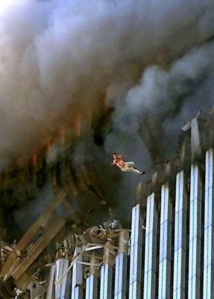

 Aletho News

