Nasrallah: Saudis want freedom in Syria but in Saudi a tweet gets you 1000 lashes
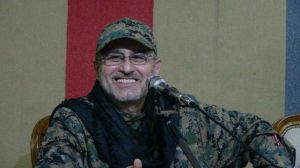
Mustafa Badreddine
American Herald Tribune | May 21, 2016
The leader of the Lebanese resistance movement Hezbollah, Seyyed Hassan Nasrallah, heaps praise on the movement’s military commander Mustafa Badreddine, who was killed in Syria last week, saying he was a front-runner in the fight against Israel.
“Badreddine played a key role alongside [his predecessor] Imad Mughniyeh… in the 2006 war against Israel before assuming several responsibilities including the dismantling of Israeli spy networks,” Nasrallah said in a televised speech on Friday.
Nasrallah was speaking to mark one week after Badreddine was killed.
He said Badreddine was tasked with overseeing Hezbollah’s security and military units in Syria since Takfiri militants initiated a war there in 2011.
Hezbollah fighters are combating alongside the Syrian government forces against a range of terrorist groups operating in the war-torn Arab country, including Daesh and the al-Qaeda-affiliated al-Nusra Front.
The Hezbollah leader said Badreddine was initially directing the Syria operation from Lebanon, but later “insisted” on traveling to Syria to oversee in person the sensitive operation.
Nasrallah said Hezbollah was against Badreddine’s presence in Syria as the group knew of the media controversy that would arise of his involvement in the war.
He noted that Badreddine’s presence in Syria helped Hezbollah prevent the fall of the country “into the hands of Takfiris and their American masters and spies in the region.”
The 55-year-old Hezbollah commander led Hezbollah’s military wing which is helping the Syrian government drive out foreign-backed Takfiri terrorists from Syria.
Badreddine also directed military operations against the Israeli invasion of Lebanon and was a frequent target of attempts by Tel Aviv, Washington and its allies to assassinate or capture him.
He was the cousin and brother-in-law of Imad Mughniyeh, who was assassinated by Israel in 2008.
He said Hezbollah has not entirely ruled out Israel of having a hand in Badreddine’s killing, but the group has not found any clues during the probe that could directly hint at Israel’s role.
Nasrallah denied speculations raised in some Arab media that Hezbollah did not assign blame on Israel for Badreddine’s killing because it wanted to escape responsibility for retaliation, saying throughout 34 years of confrontation with Israel, the regime in Tel Aviv has never doubted the genuineness of Hezbollah pledges for carrying out such retaliations.
“Our history is a proof that when we vow to retaliate we honor our pledges,” Nasrallah said, adding that Hezbollah would not stand on ceremony to openly blame Israel for perpetrating a crime when the evidence exists.
Nasrallah said Badreddine’s murder came at the hands of Takfiri groups and was orchestrated by those actively seeking to undermine the resistance front, including the United States.
He said, however, that the death of the commander would not lead to Hezbollah withdrawing from Syria. “Badreddine’s blood will push us to a bigger presence in Syria… We will remain in Syria and more leader will go into Syria,” Nasrallah said.
Else in his speech blasted Al-Saud’s calls for « democracy » in Syria and said:
The Saudi regime wants early parliamentary and presidential elections in Syria. But Saudi Arabia from its very inception as a nation-state until now has never had elections on its own soil. There is a ‘king’ and a ‘royal’ family and a dictatorship. Does anyone dare open his mouth against the regime in Saudi Arabia?! If someone dares to post two lines on Twitter, the ‘royal’ family goes crazy and sentences him to 1,000 lashes. What kind of Islam is this?! What sort of religion is this?! This is the ugliest form of hypocrisy!
Nasrallah continued, “This is not about freedom or democracy or elections or constituons! This is about the Syrian government not kneeling! This is about #Syria refusing to be a tool of American-Zionist hegemony. This is because Syria holds on to Resistance, refuses to betray Iran, defends Palestine, demands the return of the Golan Heights and maintains its sovereignty. This is because Syria is still a bastion of Arabism. Mark my words, if Bashar al-Assad was to say right now that he’d become a slave of the US-‘Israeli’ project, the war against Syria would be over tomorrow.”
Hizbollah Secretary Genral concluded his speech by saying: “I say to you with all confidence, throughout our 34 years, we have witnessed worse circumstances than what we’re dealing with today. And with our loyalty, steadfastness and commitment to the ongoing march on our path of Resistance, we shall overcome this new phase as well. In this battle, we are advancing and achieving victories. The Americans, the Zionists and Al-Saud said they’d gobble up #Syria five years ago, but yet Syria still stands today! This is because of the sacrifices of our martyrs. Indeed, Sayyed Mustafa’s blood and the blood of all our martyrs is the fuel which contributes to driving us to victory in this historic defense of the Ummah. Therefore our decision about continuing this fight is a simple one. I say to all of you who propagandized we’d leave Syria because of Sayyed Mustafa’s martyrdom – The martyrdom of any of our commanders has never made us leave any battle. Quite to the contrary, their martyrdoms will only make us increase our presence in Syria. We will be in Syria in greater numbers and different forms until victory. This is how we honor our martyrs and bring defeat to the US-Zionist-Takfiri-Saudi project. This project will fall; this project will be destroyed. I vow to you once more, Syria will never become the tool of our enemies and they will never get control of our region!”
Three civilians killed in new Saudi strikes in Yemen
Press TV – May 21, 2016
At least three Yemeni civilians have lost their lives and several others sustained injuries in new Saudi airstrikes against Yemen.
Saudi jets attacked two trucks loaded with bags of cement in the Hardin neighborhood of the southern Yemen port city of Mokha, situated 346 kilometers (214 miles) south of the capital, Sana’a, on Friday evening, killing three people and injuring five others, Yemen’s Arabic-language al-Masirah satellite television network reported.
Local sources said the trucks had made a stopover in the area where they were targeted on their way to the city of Ta’izz.
Eyewitnesses said charred body parts were strewn about the area, noting that the death toll would further increase as some of the injured are in a critical condition.
Saudi fighter jets also flew over several areas in the provinces of Ta’izz, Ma’rib and Amran, but there were no immediate reports of attacks.
Separately, a woman lost her life when Saudi warplanes conducted an airstrike in Sahar district of the northwestern Yemeni province of Sa’ada on Friday.
Another Saudi aerial raid against Qa’atabah district in Yemen’s southern province of Dhale left a woman injured.
Moreover, militiamen loyal to former President Abd Rabbuh Mansur Hadi lobbed a barrage of mortar shells against a position of Ansarullah fighters in al-Wazi’iyah district of Ta’izz Province on Friday, but no casualties were reported.
Elsewhere in al-Mansura district of the southern province of Aden, unidentified armed men fatally shot a pro-Hadi commander.
Moreover, there are reports that clashes have broken out between Hadi loyalists and Takfiri terrorists in the port city of Aden, with both sides exchanging heavy gunfire.
Saudi Arabia launched its military aggression against Yemen on March 26, 2015, in a bid to bring former President Abd Rabbuh Mansur Hadi —a staunch ally of Riyadh who resigned from the presidency — back to power and undermine the Houthi Ansarullah movement.
More than 9,400 people have been killed and at least 16,000 others injured since the onset of the aggression.
The Saudi strikes have also taken a heavy toll on the country’s facilities and infrastructure, destroying many hospitals, schools, and factories.
Last week, UN-brokered peace talks between delegates from Ansarullah movement and the Saudi-backed former Yemeni government in Kuwait were suspended after the latter declared its withdrawal from the talks.
Abdulmalek al-Mikhlafi, a representative of the pro-Hadi delegation, blamed Yemen’s Houthi Ansarullah movement and allies of torpedoing the talks, saying they have backtracked on their commitments.
The development came as UN Special Envoy for Yemen Ismail Ould Sheikh Ahmed had said he was optimistic about achieving a settlement for the conflict in Yemen.
CrossTalk: Universal Justice?
RT | May 20, 2016
The American legal system is rapidly transforming itself with the expressed purpose of replacing much of international law. Be it within the realm of trade and banking, criminal prosecutions and even sports. The Americanization of law supplants the United Nations and the sovereignty of every state on the planet.
CrossTalking with Joe Lauria, Daoud Khairallah, and Toby Cadman.
‘Clinton as president is danger to world peace’ – French National Front party leader
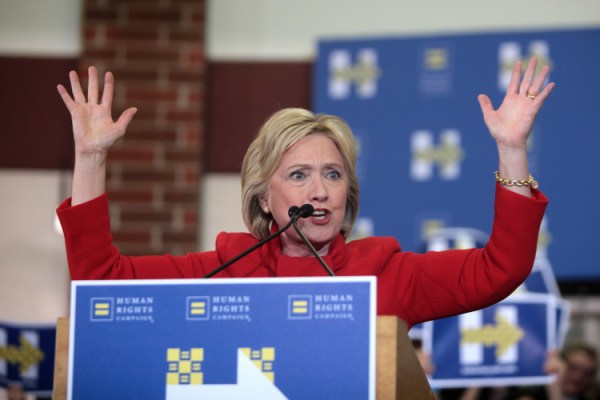
Photo credit – Gage Skidmore on Flickr
RT | May 20, 2016
Hillary Clinton winning the White House would constitute “a danger for the world peace,” as she would continue to drag Europe into her “destructive policy” of conflicts, Marine Le Pen, leader of the French National Front party, told RT.
While declining to endorse any of the US presidential front-runners, Le Pen said she believes there is one that would definitely not benefit France.
“There is a candidate who appears a lot more dangerous for France than the others – that’s Hillary Clinton,” the head of the National Front told RT France in an exclusive interview. “I’m not American so I don’t need to make a choice. But… in the interests of France, Hillary Clinton is probably the worst choice out there.”
Le Pen sees the Democratic frontrunner as being so “dangerous” because of Clinton’s career as US Secretary of State, in which she worked “hand in hand with the full spectrum of American decisions” that eventually “plunged the world objectively into chaos.”
“I think if she was elected she would continue this policy, a destructive policy, a policy of conflict, a policy of imprisonment of Europe in blinded Atlanticism,” Le Pen said. “I think it’s a danger for world peace.”
In December, Le Pen, who herself hopes to win France’s 2017 presidential elections, criticized Republican frontrunner Donald Trump for proposing to ban almost all Muslims from entering the United States.
“Seriously, have you ever heard me say something like that?” Le Pen said in one of her interviews, presumably in response to being compared with Trump. “I defend all the French people in France, regardless of their origin, regardless of their religion.”
The US media has repeatedly drawn comparisons between Marine Le Pen and Trump. The New York Times called the real estate mogul turned GOP frontrunner “America’s Marine Le Pen”. Bloomberg has also referred to Le Pen as “Europe’s own Donald Trump.”
While Marine Le Pen hasn’t explicitly named a “preferable” candidate for US president, her father has.
Jean-Marie Le Pen, retired long-time leader and founder of the French National Front, made headlines in February by endorsing Trump in a tweet, in which he said that if he was an American, he “would vote Donald Trump.”
Read more:
Nuland’s Visit to Moscow: Has the US Arch Neocon Lost Her Bearings?
Sputnik – 18.05.2016
US Assistant Secretary for European and Eurasian Affairs Victoria Nuland has wrapped up her visit to Moscow. According to officials, Nuland came to the Russian capital to discuss the situation in east Ukraine. Adding his two cents about the real purpose of the visit, analyst Gevorg Mirzayan suggested that the secretary may have lost her bearings.
On Wednesday, Kremlin spokesman Dmitri Peskov explained the official reason for Nuland’s visit, saying that the two sides discussed the situation in the war-torn eastern Ukrainian region of Donbass, with the US sharing ‘first-hand information’ and looking “to establish a sort of working exchange mechanism” outside the Normandy format, which doesn’t include Washington.
In his own commentary on the visit, Expert Magazine columnist Gevorg Mirzayan clarified, saying that Nuland’s main official goal “is to spur the negotiating process on the Donbass and, in particular, on the holding of local elections in the Donetsk and Lugansk People’s Republics, one of the most important measures of the Minsk peace agreements.”
“At first glance, of course, it seems like Nuland came to the wrong city,” the analyst noted. “After all, it’s not Moscow that’s sabotaging the holding of elections in the Donbass, but Kiev. One of the key challenges for Ukrainian authorities is not to recognize the situation in the Donbass as a civil war. This is why Kiev comes out against the fulfillment of the political articles of the Minsk agreement, and its most important aspect: direct negotiations between Ukrainian authorities and the leaders of the breakaway republics.”
For now, Mirzayan writes, Kiev’s argument that the DPR and LPR leaders Alexander Zakharchenko and Igor Plotnitsky are not democratically elected, and therefore politically illegitimate, carries some weight. “However, after elections take place, Kiev will have to carry deal with the legitimate representatives of the Donbass,” and this is something Ukrainian authorities are desperately looking to avoid.
Speaking to Expert, former Ukrainian lawmaker Oleg Tsaryev emphasized that once elections are held, if the conflict between Kiev and the Donbass continues, “it will fall under the definition of a civil war, and Kiev’s actions will be treated as a war crime.” Therefore, he said, “if the Americans really wanted to ensure the implementation of the agreements, Victoria Nuland would be sitting in Kiev, and speaking in an unyielding tone to its lawmakers, faction heads and oligarchs. Washington has many tools at its disposal: the threat of prohibiting elites from entering the EU, the threat of halting foreign bank lending, the confiscation of property and the seizure of accounts abroad.”
Therefore, Mirzayan notes, “it’s entirely possible that Nuland came to Moscow to offer to exert such pressure on Kiev in exchange for some concessions from the Russian side – on Ukraine, Syria or some other issue. The US is attempting to convince the Kremlin that it must ensure Kiev’s complaisance; after all, the lifting of anti-Russian sanctions depends on the implementation of the Minsk agreements.”
“However, it’s also possible that Nuland will leave Moscow empty-handed, or with a minimum compensation. Because in reality, all she is offering is to ensure a vote in Ukraine’s parliament, while the parties have to not only negotiate on the adoption of the law, but also its contents.”The current bill submitted to the Ukrainian parliament is out of sync with the Minsk agreements, according to the analyst. “But Ukrainian authorities and their Western partners could make it so that further discussions were held about its passing, rather than further changes to the bill. And then, if Kiev gave way and accepted the current version of the bill, it would be perceived as a maximum concession, and the Kremlin would have a difficult time requesting corrections.”
The same thing might happen with the electoral law, the analyst warns. “Those familiar with the document say that it has rather sensible requirements.”
“There are four main positions in this law,” Opposition Bloc lawmaker Yuriy Boyko told Expert. “The election must be in accordance with Ukrainian legislation, Ukrainian media must be given access, electoral commissions must be formed and the elections must take place with the oversight of international observers.”
However, Mirzayan notes, “the real question is how these requirements would be implemented.” For their part, the analyst suggests, Ukrainian officials and analysts have openly said that the law would be deliberately designed to include a whole a series of nuances making it unacceptable to representatives from the breakaway regions.
This, according to Ukrainian political analyst Mikhail Pogrebinsky, “would enable Ukraine, at the Normandy format level, with the participation and support of the United States, to say that we are fulfilling our part of the agreement, but the Donbass is not, and therefore no elections will ever be held.”
For its part, Mirzayan notes, Moscow “does not find this scenario to be acceptable. If the Minsk agreement cannot be implemented in full, the Kremlin may find it advantageous to simply freeze the situation until a new, more pragmatic government emerges in Kiev. Right now, time is on Russia’s side, and the attitudes of the European and even American elites toward Ukraine are changing, and becoming more inclined to seek compromise with Russia.”
Furthermore, “the situation in Ukraine itself is also changing, and not just economically but politically as well. President Petro Poroshenko recently succeeded in consolidating his power, and now controls the cabinet of ministers, the parliament, the prosecutor general and the security forces. The Americans either could not or did not want to interfere, and in the short term this is his victory.””However, in the medium term, such a concentration can be problematic.” After all, “Poroshenko no longer has a lightning rod in the form of [former Prime Minister] Yatsenyuk, who could be blamed for all the country’s economic problems and dismissed. Poroshenko has become personally responsible for everything that happens in the country, while his opponents, removed from power and its privileges, have received a carte blanche to make a name for themselves by criticizing the government and the president.”
“And this is not even mentioning the fact that the population is very tired of the revolutionary enthusiasm of the authorities and the parliament. The majority of Ukrainians have not forgotten about Crimea. However, if they begin to perceive the Donbass as a real civil war, new authorities will be fully capable of resolving the conflict in the spirit of Minsk-2. This is the same thing that Russia seeks, and is something it can achieve without making significant concessions to Victoria Nuland.”
Naturally, Mirzayan emphasizes, “the Kremlin will also have to work very hard to ensure that the conflict remains frozen. The authorities in Donbass have long and persistently sought to hold local elections,” warning that if Brussels and Washington could not force Kiev to fulfill their obligations under the Minsk agreements, they would hold elections independently.
“And while formally such elections would not contradict the Minsk agreements (they simply wouldn’t be recognized), they would create a negative sentiment around the Russian position. This is exactly what Kiev wants, and what Moscow wants to avoid on the eve of a serious dialogue with the EU about the future of the anti-Russian sanctions,” the analyst concludes.
Read more:
Nuland Starts Moscow Visit by Meeting ‘Young Leaders’
Nuland Warns Donbas to Ensure Elections are Held Within Minsk Accord
OSCE: East Ukraine’s Donbass Showing Signs of ‘Frozen Conflict’
‘Saudi Arabia providing banned chemical munitions to Nusra Front’
Press TV – May 19, 2016
A senior European official says Saudi Arabia is providing members of the al-Qaeda-affiliated Nusra Front with internationally-banned chemical weapons.
Secretary General of the European Department for Security and Information (DESI) Haitham Abu Said the terrorists regularly use the munitions in their attacks against Syrian civilians.
Abu Said said Wednesday that the ammunition are being supplied to the extremists monthly under a plan drawn up in Bulgaria, and sneaked into Syria through militant-held areas on the border with Jordan.
Abu Said further noted that Nusra Front terrorists have on a number of occasions used weapons containing chemical agents against Syrians, most recently in the strategic northwestern province of Aleppo.
He added that international organizations have recorded several such incidents in the past.
The remarks come as the Russian Defense Ministry said that several trucks, carrying improvised chemical weapons, have been transported to Aleppo from neighboring Idlib.
“The arms are said to contain chlorine-based toxins,” the ministry said in a statement.
On May 3, Director General of the Organization for the Prohibition of Chemical Weapons (OPCW) Ahmet Uzumcu said that the Takfiri Daesh terrorist group might have already used chemical weapons both in Iraq and Syria.
Uzumcu said fact-finding teams from The Hague-based watchdog had discovered evidence that suggest the use of sulfur mustard in attacks in the two crisis-hit Arab countries.
“Although they could not attribute this to Daesh… there are strong suspicions that they may have used” chemical weapons, Uzumcu said.
On April 7, 23 people were killed and over 100 others injured in a chemical attack by Daesh terrorists against members of the Kurdish People’s Protection Units (YPG) in the city of Aleppo.
Videos posted online purportedly show yellow gas rising over Sheikh Maqsood neighborhood in Aleppo, some 355 kilometers (220 miles) north of Damascus.
The development came only three days after al-Ikhbariyah Syria satellite television network reported that Daesh had fired a barrage of rockets, carrying mustard gas, at a Syrian military airport in the eastern city of Dayr al-Zawr.
According to a report by the Syrian-American Medical Society, Daesh has carried out more than 160 attacks involving “poisonous or asphyxiating agents, such as sarin, chlorine, and mustard gas” since the beginning of the Syrian conflict in 2011.
At least 1,491 people have been killed in the chemical attacks.
In August 2013, hundreds of people were also killed in a chemical attack in the Ghouta suburb of Damascus. According to reports, the rockets used in the assault were handmade and contained sarin.
Crosstalk: Syria Lessons
RT | May 18, 2016
The Obama administration again says it supports the peace process to end the Syrian proxy war. However, there is still the demand for a political transition defined by Washington. And this demand is backed up by threats. Has this conflict entered a new stage for Syria and the region?
CrossTalking with Mohammad Marandi, Richard Weitz, and Kevork Almassian.
‘Tony Blair lied on Iraq and will be exposed by Chilcot report’ – Corbyn
RT | May 18, 2016
Former Prime Minister Tony Blair’s lies about weapons of mass destruction and his secret war pact with former US President George W Bush will be exposed by the Chilcot Inquiry, Labour Party leader Jeremy Corbyn has said.
Sir John Chilcot is due to finally release his long-delayed report on the legality of the 2003 Iraq invasion on July 6, seven years after the inquiry was commissioned.
Corbyn made the remarks on Tuesday in a speech at the London School of Economics to honour the late Ralph Miliband, a Marxist scholar and father of Corbyn’s predecessor, Ed Miliband.
While Corbyn supported some of the domestic achievements of Blair’s “New Labour,” he argued it had stuck too closely to its neoliberal, Thatcherite ideological roots.
Addressing Blair’s Iraq legacy, Corbyn warned: “The Chilcot report will come out in a few weeks’ time and tell us what we need to know, what I think we already know: There were no weapons of mass destruction, there was no ability to attack within 45 minutes and a deal had been done with Bush in advance.”
Corbyn took a leading role in opposing the 2003 invasion both inside and outside parliament.
Asked if Blair should be tried for war crimes, Corbyn said: “If he’s committed a war crime, yes. Everyone who’s committed a war crime should be.
“I think it was an illegal war, I’m confident about that, indeed [former UN Secretary General] Kofi Annan confirmed it was an illegal war, and therefore [Blair] has to explain to that.”
“Is he going to be tried for it, I don’t know. Could he be tried for it? Possibly,” Corbyn added.
Some MPs are trying to revive a campaign to have Blair prosecuted for his part in the war, either at an international tribunal or by a special parliamentary impeachment process.
Although rare, parliament can impeach a current or former official. It would involve a member of the Commons presenting evidence in the manner of a parliamentary motion, and if carried, it would then move to the House of Lords. If it was also passed by the Lords, the impeachment process would resemble a conventional trial.
The last time parliament attempted to impeach anyone, however, was in 1806, according to the BBC.
Scottish National Party (SNP) MP Alex Salmond said Monday that, rather than parliamentary impeachment, he favored Blair being brought before the International Criminal Court (ICC) in The Hague.
However, the ICC has said it is not yet able to exercise jurisdiction over international “crimes of aggression” – the offense often connected with Blair’s role in Iraq.
The ICC will rule on whether to extend its powers to try suspects of aggression on January 1, 2017.
Lawmaker: US Actions Against Iran Breach All Norms of International Law
Sputnik — 16.05.2016
Washington’s actions against Tehran have been breaching all norms of international law for decades, the adviser to the Iranian parliament speaker, Hossein Sheikholeslam, told Sputnik Persian in an interview.
On Sunday, media reported that Iranian lawmakers passed a motion obligating the government to seek compensation from the United States for damages incurred for the decades of coup attempts and sanctions.
“We cannot remain silent and we will file a lawsuit with the International Court of Justice in The Hague for such illegal actions. In addition, we also intend to sue Washington for all the crimes committed by the US against Iran since the 1953 coup. Staged by the US special services, it led to the torture and murder of scores of innocent Iranian citizens,” Sheikholeslam said.
The lawmaker cited a spate of US moves against Iran, including Washington’s role in killing hundreds of Iranians during the 1979 Revolution and the 1988 downing of an Iranian A300 airliner by the US missile cruiser Vincennes over the Persian Gulf.
“All of these are none other than US crimes against the Iranian people, which are out of line with previously signed international agreements. So Washington should be taken to court for all of these [transgressions], which is why we decided to lodge a relevant lawsuit,” he added.
The vote on the bill and the interview came after the US Supreme Court’s April ruling in favor of the 2012 US Congress legislation allowing victims of alleged Iran-sponsored terrorist attacks and their families to collect $2 billion in restitution from the Central Bank of Iran.
Featured Video

Seyed M. Marandi: US-Iran War Inevitable: Kuwait and Bahrain May Fall
or go to
Aletho News Archives – Video-Images
From the Archives
Oil and the Israel Lobby
Reknowned economist M. Shahid Alam offers this excellent critique of Noam Chomsky’s defective analysis of the relative influence of Oil versus the Israel lobby over US foreign policy: … continue
Blog Roll
 Aletho News
- ICC ignored ‘very well-documented’ NATO crimes – ex-Libyan minister
- SNSC secretary dismisses US response to Iran’s conditions as ‘inadequate’
- Sanaa says Taiz roads open, secure for residents, warns Saudi forces
- Iraqi resistance group urges Saudi leadership to admit defeat, lift Yemen siege
- Trump’s Retreat: How Al-Aqsa Flood Took Down the US Empire
- Israel’s Military Actions in Lebanon Grossly Violate International Law — Lavrov
- Seyed M. Marandi: US-Iran War Inevitable: Kuwait and Bahrain May Fall
- Leaders Condemn Ansarallah Attack on Saudi Arabia While Ignoring Illegal War Against Yemen
- Leaked: Britain’s Covert Iraqi Psyops Network
- Yemeni Armed Forces Warn Airlines Against Using Saudi Airports, Exempt Mecca and Medina
- If Americans Knew
- An error has occurred; the feed is probably down. Try again later.
- No Tricks Zone
- New Study Suggests Large Regions Of The Pacific Ocean Have Been Cooling For The Last 80 Years
- Germany’s Green Energy Debacle: High Energy Costs Force Kahla Porzellan to Close After 182 Years!
- New Study: 50 Years Of The Most Aggressive ‘Net Zero’ Policies Can Only Affect The Global Climate By 0.03°C
- US September “Heat” Was No Record…Many Records Set Decades Ago
- Latest European Green Energy Debacle; Portugal’s Largest Flagship Solar Park Insolvent!
- Green Energy Debacle: German Expert Professor Fritz Vahrenholt Warns Of Severe Economic And Social Consequences
- Two More Paleo Reconstructions Affirm Meters-Higher Sea Levels Across Ireland, Brazil 7000-6000 Years Ago
- New Study: Earth And Venus Surface Warmth Largely Explained By Convection And Lapse Rate, Not CO2 Or Radiation
- 2025 Nature Paper Claiming Worsening Global Drought Gets RETRACTED …Heavily Flawed
- New Study: ‘Global Drought Shows No Detectable Recent Acceleration Under Climate Warming’

