Russia regrets that a number of countries, including those trying to position themselves as global leaders, have yet to ratify the Comprehensive Nuclear-Test-Ban Treaty, the Russian President said Monday.
Moscow calls on world leaders to join the treaty and prohibit nuclear explosive tests, Vladimir Putin stressed.
“The unwillingness of these countries to become full parties to the treaty is cause for serious regret, especially given the fact that some of them claim to be leaders and to practically hold special powers in dealing with global security issues. We again call on their leaders to show real political will and join CTBT as soon as possible,” Putin said in a statement.
The Comprehensive Nuclear-Test-Ban Treaty was adopted by the UN General Assembly in September 1996.
All five nuclear weapons states as recognized by the Treaty on the Non-Proliferation of Nuclear Weapons — the United States, China, Russia, France and the United Kingdom, are signatories to the treaty.
The treaty, aiming to create a legally binding prohibition on nuclear explosive tests for all its parties, will enter into force when China, Egypt, India, Iran, Israel, North Korea, Pakistan and the United States ratify it.
As the possibility of a new threat against democracy looms over Brazil in the form of an unlawful impeachment against leftist President Dilma Rousseff, Brazilians remember a coup that kicked off a brutal 20-year-long military dictatorship. Similar military coups would follow in Bolivia, Chile, Uruguay, and Argentina. Together with the support of the U.S. government and Paraguay, under General Alfredo Stroessner, the region would organize Operation Condor, a political repression and terror campaign to suppress opposition to their governments.
The following is an excerpt from the Brazil chapter of the book “Latin America’s Turbulent Transitions: The Future of 21st Century Socialism,” by Roger Burbach, Michael Fox, and Federico Fuentes (Zed Books, 2013).
In 1964, the Brazilian military dictatorship rolled in like a bad dream. President Joao Goulart fled to Uruguay, and with him went the hopes of progressive reforms. The first of 17 military decrees, or Institutional Acts, were issued.
Institutional Act 5, decreed by military president Artur da Costa e Silva on December 13, 1968, suspended habeas corpus and disbanded Congress. Inspired by the 1959 Cuban Revolution, and insurgent guerrilla movements in Argentina, Colombia, Guatemala, Peru, Uruguay, and Venezuela, Communist Party militants went underground and formed armed movements against the dictatorship, including the National Liberation Alliance and the Popular Revolutionary Vanguard, which would later become the Revolutionary Armed Vanguard Palmares or VAR-Palmares.
Dissidents were tracked down, arrested, imprisoned, tortured, disappeared, or worse. According to the 2007 report from the Brazilian government’s Special Commission on Murders and Political Disappeared entitled “The Right to Memory and the Truth,” 475 people were disappeared during the 20-year-long military dictatorship. Thousands were imprisoned and roughly 30,000 were tortured. More than 280 different types of torture were inflicted on “subversives” at 242 clandestine torture centers, by hundreds of individual torturers.
Current Brazilian President Dilma Rousseff was at the time a student activist who became active in the VAR-Palmares (among other guerrilla groups). She was captured by the Brazilian military on January 16, 1970, tortured, and imprisoned for two and a half years, for participating with the guerrillas. Within a few years the armed resistance to the Brazilian dictatorship had been largely eliminated.
Meanwhile U.S.-Brazilian relations became tighter than ever, as the United States worked to turn Brazil into a “success story” in the fight against communism. According to a five-and-a-half-year, 5,000-page investigation into the human rights violations of the dictatorship, entitled “Brasil Nunca Mais” (Brazil Never Again), CIA agents, such as U.S. officer Dan Mitrione, actively trained hundreds of Brazilian military and police officers in torture techniques, or what they called the “Scientific Methods to Extract Confessions and Obtain the Truth.” Several documented accounts reveal that Mitrione tested his techniques on street kids and homeless beggars from the streets of Belo Horizonte. Many of these techniques would be replicated across the region through the U.S.-sponsored Plan Condor, as Brazil’s neighbors also fell to military dictatorships.
This was the direction that the United States hoped the region would turn. Internationally, the military dictatorship broke off relations with Cuba and the Soviet block, and steered the country back into the U.S. sphere of influence (Cuba-Brazilian relations wouldn’t be resumed until 1986).
“Never had there been such ideological convergence with the United States,” wrote the former Brazilian Ambassador to the United States (1991–93), Ruben Ricupero, “not just in the perceived continuity and Cold War dangers, but in the acceptance of North American leadership and the feeling among Brazilian leaders that this was an inseparable and defining element in the internal struggle against communist subversion.”
Domestically, encouraged by the United States, Brazil liberalized its economy, pushed to increase exports, and opened up for foreign investment, but the economic model didn’t stick. Military President Costa e Silva steered the country back towards the import substitution model that would carry through the rest of the dictatorship. Meanwhile, ideologically, Brazilian military leaders continued their fight against the communist threat that would often place them even further to the right than U.S. officials.
Parliament has been deceived by the Conservative government on the scope and details of Britain’s unauthorized drone assassination program, according to a new report by the human rights NGO Reprieve.
The authors argue in the opening commentary that the “revelations in this report demonstrate that parliament has been misled” and that current scope of investigation into the issue is too “narrow.”
Published Sunday, the report makes a number of startling assertions. It claims the kill list – also known as the Joint Prioritized Effects List (JPEL) – conflates drug enforcement and counterterrorism.
It also says UK police units have helped the US military find targets for assassination and that unrepresentative examples of die-hard extremists are being cited to mask the human impact of drone warfare.
War on everything
The investigation warns that under the auspices of the UK’s targeted killing policy the ‘War on Terror’ is being merged with the ‘War on Drugs,’ with people other than suspected terrorists being killed by drones.
It alleges there may have been up to 50 Afghan drug traffickers on the list since 2009 and that UK police officers working for the Serious and Organised Crime Agency (SOCA) worked with electronic intelligence agency GCHQ and Britain’s Joint Narcotics Analysis Centre to pick out targets.
Skewed
Reprieve’s study claims the UK government has used particularly extreme examples to justify its drone policy, in the same way that the death penalty in the US has been justified by pointing to the most extreme killers.
It cites the example of Prime Minister David Cameron’s announcement on September 15, 2015, when he said that a UK drone strike had killed jihadist Reyaad Khan in Syria. Reprieve claims this was used to spin the reality of drone warfare.
“History teaches us that it has always been easiest for advocates of the death penalty to sell their case to some by highlighting the face of a serial killer who is captured on film committing his atrocities,” the report says.
This, the NGO claims, is not reflective of the demographic most profoundly affected by drone warfare, instead arguing that drones are “far from the marvelously precise killing machines” they are marketed as. It claims up to nine innocent children have been killed in pursuit of a “High Value Target.”
Medieval
The report warns against assassination as a tool of policy. It lauds those Conservative politicians who criticized Tony Blair’s government for “complicity” in the US torture program, but adds “if this government now seeks to drag the UK back to medieval times with an assassination project, it is only right that it should be fully discussed with parliament and the public.”
Eight activists are standing trial at Stratford Magistrates Court for disrupting the world’s biggest arms fair, held in London, where deadly merchandise was marketed to repressive regimes such as Saudi Arabia, Bahrain and Azerbaijan.
The campaigners blocked the road leading to the Defence & Security Equipment International (DSEI) in Stratford, London, last September, preventing tanks and weaponry from entering.
The defendants are using a defense of necessity, insisting their actions were justified because they intended to prevent greater crimes taking place around the world.
These include: “The sale of weapons to internally repressive regimes, including Bahrain and Saudi Arabia; the sale of weapons to countries imminently at war and overtly complicit in ongoing war crimes in Yemen, Kurdistan and Palestine; the sale of weapons to regimes that have been widely accused of arming ISIS [Islamic State or IS]; the promotion for sale of weapons that are designed specifically for torture or banned under international law for their capabilities concerning the mass indiscriminate killing of civilians.”
The DSEI arms fair is held every two years in London, and is regularly attended by representatives from repressive regimes. It has also previously provided a platform for weapons dealers to illegally promote arms that are used for torture.
Last September’s event featured stalls from more than 1,500 exhibitors, including arms giants Lockheed Martin, BAE systems, Finmeccanica and others.
Protestors sought to disrupt the fair by locking their bodies together to block access roads outside the Excel Centre, where the fair was held. Several were arrested.
Some protestors, such as Vyara Gylsen – who was arrested after writing a slogan on a military vehicle with a washable marker pen – have since seen criminal charges against them dropped.
The defendants in court this week include Isa Al Aali, a Bahraini activist who was tortured during the Arab Spring uprising in Bahrain.
Green Party activists Angela Ditchfield and Tom Franklin are also among the eight appearing in court.
“The government is supporting and facilitating the sale of weapons that are being used to kill ordinary people, from the West Bank to Yemen and Sudan,” Franklin, 57, of York, said.
“This week we will put the arms trade in the dock and highlight the crimes that the government and the companies at DSEI are complicit in. Arrest arms dealers, not peace campaigners.”
The defendants will be supported by expert witnesses, including former South African MP Andrew Feinstein, who resigned from parliament in 2001 in protest at the government’s refusal to investigate a £5 billion (US$7.12 billion) arms deal.
Amnesty International UK’s Oliver Sprague, who heads up the charity’s arms Control and Policing division, will also give oral evidence, as will Bahrain Institute for Rights and Democracy director Sayed Ahmed, who seeks to improve accountability in the repressive Gulf state.
The Democratic Party establishment seems determined to drag Hillary Clinton’s listless campaign across the finish line of her race with Bernie Sanders and then count on Republican divisions to give her a path to the White House. But – if she gets there – the world should hold its breath.
If Clinton becomes President, she will be surrounded by a neocon-dominated American foreign policy establishment that will press her to resume its “regime change” strategies in the Middle East and escalate its new and dangerous Cold War against Russia.
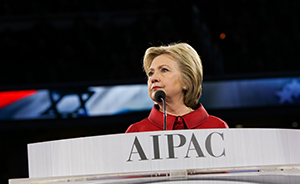
Hillary Clinton (Photo credit: AIPAC)
If Bashar al-Assad is still president of Syria, there will be demands that she finally go for the knock-out blow; there will pressure, too, for her to ratchet up sanctions on Iran pushing Tehran toward renouncing the nuclear agreement; there are already calls for deploying more U.S. troops on Russia’s border and integrating Ukraine into the NATO military structure.
President Clinton-45 would hear the clever talking points justifying these moves, the swaggering tough-guy/gal rhetoric, and the tear-jerking propaganda about evil enemies throwing babies off incubators, giving Viagra to soldiers to rape more women, and committing horrific crimes (some real but many imagined) against defenseless innocents.
Does anyone think that Hillary Clinton has the wisdom to resist these siren songs of confrontation and war, even if she were inclined to?
President Barack Obama, who – for all his faults – has a much deeper and subtler intellect than Hillary Clinton, found himself so battered by these pressures from the militaristic Washington “playbook” that he whined about his predicament to The Atlantic’s Jeffrey Goldberg, himself a neocon war hawk.
The Washington foreign policy establishment is now so profoundly in the hands of the neocons and their “liberal interventionist” sidekicks that the sitting President presumably couldn’t find anyone but a neocon to give those interviews to, even as he complained about how the U.S. capital is in the hands of warmongers.
Given this neocon domination of U.S. foreign policy – especially in the State Department bureaucracy, the major media and the big think tanks – Clinton will be buffeted by hawkish demands and plans both from outside of her administration and from within.
Already key neocons, such as the Brookings Institution’s Robert Kagan, are signaling that they expect to have substantial influence over Clinton’s foreign policy. Kagan, who has repackaged himself as a “liberal interventionist,” threw his support to Clinton, who put him on a State Department advisory board.
There is also talk in Washington that Kagan’s neocon wife, Assistant Secretary of State for European Affairs Victoria Nuland, another Clinton favorite and the architect of the “regime change” in Ukraine, would be in line for a top foreign policy job in a Clinton-45 administration.
Neocons Back in Charge
So, Clinton’s election could mean that some of the most dangerous people in American foreign policy would be whispering their schemes for war and more war directly into her ear – and her record shows that she is very susceptible to such guidance.
At every turn, as a U.S. senator and as Secretary of State, Clinton has opted for “regime change” solutions – from the Iraq invasion in 2003 to the Honduras coup in 2009 to the Libyan air war in 2011 to the Syria civil war since 2011 – or she has advocated for the escalation of conflicts, such as in Afghanistan and with Iran, rather than engaging in reasonable give-and-take negotiations.
Though her backers tout her experience as Secretary of State, the reality was that she repeatedly disdained genuine diplomacy and was constantly hectoring President Obama into adopting the most violent and confrontational options.
He sometimes did (the Afghan “surge,” the Libyan war, the Iran nuclear stand-off) but he sometimes didn’t (reversing the Afghan escalation, finally negotiating a nuclear deal with Iran after Clinton left, rejecting a direct U.S. military assault on the Syrian government, and working at times with the Russians on Iran and Syria).
In other words, Obama acted as a register or brake restraining Clinton’s hawkishness. With Clinton as the President, however, she would have no such restraints. One could expect her to endorse many if not all the harebrained neocon schemes, much as President George W. Bush did when his neocon advisers exploited his fear and fury over 9/11 to guide him into their “regime change” agenda for the Middle East.
The neocons have never given up their dreams of overthrowing Mideast governments that Israel has put on its enemies list. Iraq was only the first. To follow were Syria and Iran with the idea that by installing pro-Israeli leaders in those countries, Israel’s close-in enemies – Lebanon’s Hezbollah, Hamas and other Palestinian militant groups – could be isolated and crushed.
After Bush’s Iraq invasion in 2003, Washington’s neocons were joking about whether Iran or Syria should come next, with the punch line: “Real men go to Tehran!” But the Iraq War wasn’t the “cakewalk” that the neocons had predicted. Instead of throwing flowers at the U.S. troops, Iraqis planted IEDs.
As it turned out, a lot of “real men” and “real women” – as well as “real children” – died in Iraq, including nearly 4,500 American soldiers and hundreds of thousands of Iraqis.
So the neocon timetable took a hit but, in their view, only because of Bush’s incompetent follow-through on Iraq. If not for the botched occupation, the neocons felt they could have continued rolling up other troublesome regimes, one after another.
Professionally, the neocons also escaped the Iraq disaster largely unscathed, continuing to dominate Washington’s think tanks and the op-ed pages of major American news outlets such as The Washington Post and The New York Times. Barely missing a beat, they set about planning for the longer haul.
An Obama Mistake
Although they lost the White House in 2008, the neocons caught a break when President-elect Obama opted for a Lincoln-esque “team of rivals” on foreign policy. Instead of reaching out to Washington’s marginalized (and aging) foreign policy “realists,” Obama looked to the roster of the neocon-dominated establishment.
Obama recruited his hawkish Democratic rival, Sen. Hillary Clinton, to be Secretary of State and kept Bush’s Defense Secretary Robert Gates. Obama also left in place most of Bush’s military high command, including neocon favorite, General David Petraeus.
Obama’s naïve management strategy let the neocons and their “liberal interventionist” pals consolidate their bureaucratic control of Washington’s foreign policy bureaucracy, even though the President favored a more “realist” approach that would use America’s power more judiciously — and he was less enthralled to Israel’s right-wing government.
The behind-the-scenes neocon influence became especially pronounced at Clinton’s State Department where she tapped the likes of Nuland, a neocon ideologue and an adviser to Vice President Dick Cheney, to become the department’s spokesperson and put her on track to become Assistant Secretary of State for European Affairs (although the appointment wasn’t finalized until after Clinton left in 2013).
The neocon/liberal-hawk bias is now so strong inside the State Department that officials I know who have gone there reemerge as kind of “pod people” spouting arrogant talking points in support of U.S. intervention all over the world. By contrast, I find the CIA and the Pentagon to be places of relative realism and restraint.
Perhaps the best example of this “pod people” phenomenon was Sen. John Kerry, who replaced Clinton as Secretary of State and suddenly became the mouthpiece for the bureaucracy’s most extreme war-like rhetoric.
For instance, Kerry advocated a retaliatory bombing campaign against Syria’s military in August 2013, ignoring the intelligence community’s doubts about whether President Bashar al-Assad’s regime was responsible for a sarin-gas attack outside Damascus.
Instead of listening to the intelligence analysts, Kerry fell in line behind the neocon-driven “group think” pinning the blame on Assad, the perfect excuse for implementing the neocons’ long-delayed Syrian “regime change.” The neocons didn’t care what the facts were — and Kerry fell in line. [See Consortiumnews.com’s “What’s the Matter with John Kerry?”]
But Obama didn’t fall in line. He listened when Director of National Intelligence James Clapper told him that there was no “slam dunk” evidence implicating the Syrian military. (Ultimately, the evidence would point to a provocation carried out by Islamic extremists trying to trick the U.S. military into intervening in the war on their side.)
Obama also got help from Russian President Vladimir Putin who persuaded President Assad to surrender all his chemical weapons (while Assad still denied any role in the sarin-gas attack). Putin’s assistance infuriated the neocons who soon recognized that the Obama-Putin cooperation was a profound threat to their “regime change” enterprise.
Targeting Ukraine
Some of the smarter neocons quickly identified Ukraine as a potential wedge that could be driven between Obama and Putin. Carl Gershman, president of the National Endowment for Democracy, called Ukraine “the biggest prize” and a potential first step toward driving Putin from power in Russia.
It fell to Assistant Secretary of State Nuland to shepherd the Ukraine operation to fulfillment as she plotted with U.S. Ambassador to Ukraine Geoffrey Pyatt how to remove Ukraine’s pro-Russian President Viktor Yanukovych. Nuland and Pyatt were caught in an intercepted phone call discussing who should take over.
“Yats is the guy,” Nuland said referring to Arseniy Yatsenyuk who indeed would become the new prime minister. Nuland and Pyatt then exchanged ideas how to “glue this thing” and how to “midwife this thing.” This “thing” became the bloody Feb. 22, 2014 coup ousting elected President Yanukovych and touching off a civil war between Ukrainian “nationalists” from the west and Ukraine’s ethnic Russians in the east.
As the “nationalists,” some of them openly neo-Nazis, inflicted atrocities on ethnic Russians, Crimea voted by 96 percent to leave Ukraine and rejoin Russia. Resistance to the new Kiev regime also arose in the eastern Donbas region.
To the State Department – and the mainstream U.S. news media – this conflict was all explained as “Russian aggression” against Ukraine and a “Russian invasion” of Crimea (although Russian troops were already in Crimea as part of the Sevastopol naval base agreement). But All the Important People agreed that the Crimean referendum was a “sham” (although many polls have since confirmed the results).
When citizen Clinton weighed in on the Ukraine crisis, she compared Russian President Putin to Hitler.
So, today the neocon/liberal-hawk Washington “playbook” – as Obama would call it – calls for massing more and more U.S. troops and NATO weapons systems on Russia’s border to deter Putin’s “aggression.”
These tough guys and gals also vow to ignore Russia’s warnings against what it views as military threats to its existence. Apparently “real, real men” go to Moscow (perhaps riding a nuclear bomb like the famous seen from “Dr. Strangelove.”).
Ian Joseph Brzezinski, a State Department official under President George W. Bush and now a foreign policy expert for the Atlantic Council, a NATO think tank, has co-authored an article urging NATO to incorporate Ukrainian army units into its expansion of military operations along Russia’s border.
“High-level Ukrainian national security officials have urged the international community to be bolder in its response to Russia’s provocative military actions,” wrote Brzezinski (son of old Cold Warrior Zbigniew Brzezinski) and Ukrainian co-author Markian Bilynskyj.
“The deployment of a battle tested, Ukrainian infantry company or larger unit to reinforce the defense of NATO territory in Central Europe would be a positive contribution to the Alliance force posture in the region.”
Following the Playbook
This kind of tough-talking jargon is what the next President, whoever he or she is, can expect from Official Washington. From Obama’s interview in The Atlantic, it’s clear that he feels surrounded and embattled by these warmongering forces but takes some pride in resisting – from time to time – the Washington “playbook.”
But how would President Hillary Clinton respond? When she appeared before the American Israel Public Affairs Committee on March 21 – at a moment when it appeared she had all but nailed down the Democratic nomination – Clinton showed what you might call her true colors, fawning over how loyal she would be to Israel and promising to take the very cozy relationship between the U.S. and Israel “to the next level.”
By reviewing Clinton’s public record, one could reasonably conclude that she is herself a neocon, both in her devotion to Israel and her proclivity toward “regime change” solutions. She also follows the neocon lead in demonizing any foreign leader who gets in their way. But even if she isn’t a full-fledged neocon, she often bends to their demands.
The one possible deviation from this pattern is Clinton’s personal friendship with longtime adviser Sidney Blumenthal, who was an early critic of the neoconservatives as they emerged as a powerful force during the Reagan administration. Blumenthal and his son Max have also dared criticize Israel’s abusive treatment of the Palestinians.
However, the Israel Lobby appears to be taking no chances that Sidney Blumenthal’s voice might be heard during a Clinton-45 administration. Last month, a pro-Zionist group, The World Values Network, bought a full-page ad in The New York Times to attack Blumenthal and his son and declared that “Hillary Clinton must disavow her anti-Israel advisors.”
Though Clinton might not publicly disassociate herself from Sidney Blumenthal, the preemptive strike pushed him further toward the margins and helped clear the path for the Kagan/Nuland faction to rush to the center of Clinton’s foreign policy.
Indeed, Clinton’s primary focus if she gets elected is likely to be ensuring that she gets reelected. As a traditional politician, she would think that the way to achieve reelection is to stay on the good side of the Israeli leadership. Along those lines, she promised AIPAC that, as President, she would immediately invite Prime Minister Benjamin Netanyahu to the White House.
So, what would happen if Clinton takes the U.S.-Israeli relationship “to the next level”? Presumably that would mean taking a super-hard line against Iran over last year’s nuclear deal. Yet, already Iran is questioning whether its acceptance of extraordinary constraints on its nuclear program was worth it, given the U.S. unwillingness to grant meaningful relief on economic sanctions.
A belligerent Clinton approach – decrying Iran’s behavior and imposing new sanctions – would strengthen Iran’s hard-line faction internally and might well lead to Iran renouncing the agreement on the grounds of American bad faith. That, of course, would please the neocons and Netanyahu by putting the “bomb-bomb-bomb Iran” option back in play.
A Stunning Reversal
Clinton may have viewed her AIPAC speech as the beginning of her long-awaited “pivot to the center,” but afterwards she suffered a string of primary and caucus defeats at the hands of Sen. Bernie Sanders, most by landslide margins.
Besides those stunning defeats, Clinton’s campaign clearly has an “enthusiasm gap.” Sanders, the 74-year-old “democratic socialist” from Vermont, draws huge and excited crowds and wins younger voters by staggering percentages. Meanwhile, Clinton confronts polls showing high negatives and extraordinary public distrust.
If she gets the Democratic nomination, she may have little choice but to engage in a fiercely negative campaign since — faced with the lack of voter enthusiasm — her best chance of winning is to so demonize her Republican opponent that Democrats and independents will be driven to the polls out of fear of what the crazy GOP madman might do.
Right now, many Clinton supporters see her as the “safe” — not exciting — choice, a politician whose long résumé gives them comfort that she must know what’s she’s doing. African-American voters, who have been her most loyal constituency, apparently feel more comfortable with someone they’ve known (who has also served in the Obama administration) than Sanders who is unknown to many and is seen as someone whose ambitious programs appear less practical than Clinton’s small-bore ideas.
But a look behind Clinton’s résumé, especially her reliance on “regime change” and other interventionist schemes in the Middle East and Eastern Europe, might give all peace-loving voters pause. [See Consortiumnews.com’s “Is Hillary Clinton ‘Qualified’?”]
Savvy neocons, like Robert Kagan, have long understood that Clinton could be their Trojan Horse, pulled into the White House by Democratic voters. Kagan toldThe New York Times, “I feel comfortable with her on foreign policy. If she pursues a policy which we think she will pursue it’s something that might have been called neocon, but clearly her supporters are not going to call it that; they are going to call it something else.”
The same Times article noted that Clinton “remains the vessel into which many interventionists are pouring their hopes.” However, if she is that “vessel” carrying a neocon foreign policy back into the White House, this “safe” choice might prove dangerous to America and the world.
Investigative reporter Robert Parry broke many of the Iran-Contra stories for The Associated Press and Newsweek in the 1980s. You can buy his latest book, America’s Stolen Narrative, either in print here or as an e-book (from Amazon and barnesandnoble.com).
The troubled director of one of the most prestigious university colleges in the world has become mired in controversy since it emerged that she invited the new Israeli ambassador in London for tea. Controversial Mark Regev had been in the job less than two days when he sent out a tweet boasting about his invitation to the School of Oriental and African Studies (SOAS) from his old friend Baroness Valerie Amos.
Within hours of the news breaking, students, academics and leading student societies showed their displeasure by signing letters and issuing condemnatory statements; demands for an apology were also made as a demonstration took place on the steps of the prestigious central London institution. Graffiti is now being seen around the SOAS campus accusing the director of being “complicit”.
Tea with Amos was probably more of a “friends reunited” affair for Australian-born Regev; the baroness played a key role ahead of the Iraq war for another mutual friend, Tony Blair. The three have met on overseas trips, including at least one organised by Labour Friends of Israel when Blair was Middle East Peace Envoy.
Apart from the smug tweet from Regev, the full content of his conversation with Amos has yet to be revealed. There can be little doubt, though, that the activities of the powerful boycott, divestment and sanctions (BDS) movement at SOAS were touched upon.
Baroness Amos has so far claimed that she summoned the Israeli ambassador to her office to explain the poor treatment of a SOAS student by Israel, but a source on the campus said that this was a weak excuse that no one is buying. “A university director does not have the power or influence to bring an ambassador to heel like that,” I was told, “never mind ‘summons’ him to her office. This was tea with an old friend.”
It is an open secret that Regev, once the mouthpiece and apologist of the Israeli war machine as Prime Minister Benjamin Netanyahu’s spokesman, is under orders to smash the BDS movement in Britain because it is proving to be among the most troublesome in the global campaign against Israel. MEMO revealed recently that the media department at the Israel Embassy in London has a military-style wall chart and map of the UK pinpointing the most active campus BDS movements and Palestinian societies.
Amos first came to prominence in 2003 when she was appointed as international development secretary by Blair when he was prime minister; she got the job after the resignation of Clare Short over the Iraq war. As a foreign office minister, she had a key role ahead of that conflict when she was pressed into action to canvas African leaders in the run-up to the disastrous invasion and its aftermath, travelling to Cameroon, Angola and Guinea to urge their governments to support the United States and Britain in the UN Security Council.
Her appointment as director of SOAS raised eyebrows last year, and within four weeks the baroness was forced to write to staff and students denying that she had backed proposals to slash a third of the institution’s courses. The row, which saw students staging a sit-in and the Students’ Union passing a vote of no confidence in the executive board, was described as a “misunderstanding” by a spokesperson at the university.
Now it appears that there has been another “misunderstanding” over tea in her office with Regev. There are widespread and growing calls for her to apologise over the meeting, as well as accusations that Amos has violated the principles of the BDS movement, which SOAS students, academics and staff voted to support in a campus referendum in March 2015. Almost three-quarters voted in support of a boycott of Israeli universities.
So far more than a dozen student societies have written to Baroness Amos to condemn the Regev meeting, which they called “an act of normalisation with Israel”. These include the Palestine, Yemen, Kurdish, Iraqi, Feminist, Labour, MENA and Syria societies at the college. MEMO has been given sight of a letter signed by scores of academics expressing to Amos their “dismay” after reading Mark Regev’s Twitter feed boasting that he’d had “a good meeting” with her.
“We are alarmed by this meeting because Mark Regev is not an ordinary ambassador paying you a courtesy visit,” they wrote. “He is not only the ambassador of the world’s longest military occupation since World War II. He is also the man who, in front of world media, including UK media, justified Israel’s 2006 war-criminal aggression on Lebanon and its repeated war-criminal onslaughts on Gaza, including those of 2008-9, 2012 and 2014. He did so in his capacity as spokesman for the Israeli government, and thus is indelibly connected to these war crimes in public perception.”
Although Amos responded to critics by saying that she was merely following up on the detention of a SOAS research student by Israel, the academics were not impressed. “Indeed,” they added, “we can provide you with a list of SOAS community members who were maltreated by the Israeli authorities for the purpose of follow up.”
Furthermore they expressed their “regret” that such a meeting with a person like Regev could take place in the director’s office, given the fact that it came against the backdrop of the Israeli media’s vilification of SOAS students and staff. “The Israeli media have published misleading reports of our events that were critical of Israel’s oppressive practices. This is primarily due to the vast majority of 73 per cent of staff and students at SOAS who voted for a boycott of occupation-related Israeli institutions.”
The academics said that they felt that the meeting exposed a lack of understanding and respect for staff and students at the university who “have consistently taken a stance against Israel’s illegal occupation of Palestinian territory.”
Before signing-off the letter, the SOAS academics reinforced the understanding that Regev is, based on his past record, not “welcome at SOAS, and we are sure that, had his visit been announced, a vast mobilisation would have occurred to block him from entering our premises. We hope that such an affront to the SOAS community will never be repeated.”
One gets the feeling that the next time Regev and Amos are reunited it will be at Israel’s London Embassy, without announcements being made on Twitter or selfies taken by the BDS map. It will, by default, become part of the shadowy world of the pro-Israel lobby in Britain.
Visiting US Secretary of State John Kerry will not offer any apologies to the people of Hiroshima over the 1945 atomic bombing of the Japanese city, a senior US official says.
Kerry arrived in Hiroshima on Sunday and is reportedly arranging for a trip by President Barack Obama as the first US president to visit the city, as part of his trip to Japan for a G7 summit in late May.
“If you are asking whether the secretary of state came to Hiroshima to apologize, the answer is no,” a senior US official told reporters Sunday, on condition of anonymity.
“If you are asking whether the secretary and I think all Americans and all Japanese are filled with sorrow at the tragedies that befell so many of our countrymen, the answer is yes,” he noted.
Kerry and a number of other foreign ministers are slated to visit Peace Memorial Park as well as a museum dedicated to the obliteration of the city by an American atomic bomb on August 6, 1945.
The bombing killed nearly 140,000 people and was shortly followed by another US atomic bombing on the port city of Nagasaki, killing about 70,000 people three days later.
Kerry was visiting the memorial to “recognize the huge loss of life” during the war, said State Department spokesman Mark Toner.
“It is also an acknowledgement that since the end of World War II that the United States and Japan have become the closest of friends and strong allies,” he added.
Attending the two-day G7 gathering was also on Kerry’s agenda, where he will be discussing with other leaders “urgent international political and security concerns and to speak with one, clear voice on concrete actions needed.”
Diplomats from nuclear-armed Britain and France, as well as Canada, Germany, Italy and Japan will also partake in the G7 meeting.
Kerry’s trip to Japan comes after a visit to Afghanistan where he met with Afghan President Ashraf Ghani on Saturday.
The former chief judge that presided over Saddam Hussein’s trial told RT in an exclusive interview how the tribunal, which was dependent on the US, lacking in legitimacy, and overshadowed by the killing of lawyers, sentenced the Iraqi strongman to death.
In November of 2006, Saddam Hussein was sentenced to death by hanging three years after a US-led “coalition of the willing” invaded Iraq, removing him from power as the country’s leader. The hanging itself was carried out at the US’ Camp Justice military base – an act that has been criticized by a number of governments and described by rights groups as cruel and unfair.
The tribunal leading to the death sentence was also regarded by many as a “political show” and “vengeful action,” with international law experts questioning its legitimacy and fairness.
Former Chief Judge Rizgar Amin, who oversaw the trial of Hussein and seven former members of his government, shared details regarding the notorious trial with RT. Amin, the only judge whose name was made public at the trial’s opening in October of 2005, resigned in January of 2006 following pressure from the government to speed up the proceedings, according to Reuters.
“The trial was, to a larger extent, of a political nature. Ruling circles as well as various political forces had impact on it,” he said.
Amin pointed out that the Iraq Special Tribunal (IST), which conducted the trial, had been created in 2003 by the Coalition Provisional Authority (CPA), a body set up by the occupying forces to administer the country following the US invasion.
The CPA operated on Iraqi soil as a Pentagon division. It had executive, legislative, and judicial authority in the defeated country, and the Authority’s head, Lewis Paul Bremer, was the de-facto governor of Iraq until mid-2004. His first decrees disbanded the Iraqi army and ruling Ba’ath party, and created an Iraqi Governing Council. Its members were handpicked by Bremer from groups and persons that welcomed the 2003 invasion.
“The United States’ role has been instrumental to create and finance the trial,” Amin added. “They also provided it with everything necessary to operate. Even trial-related expenses have been adopted by Iraqi Governing Council.”
Dependence on the US-led occupation authority wasn’t the only factor influencing the trial’s impartiality and fairness. “To my utmost regret, I must admit that the trial of Saddam Hussein had been victor’s justice, rather than manifestation of principles it used to serve. A thirst for revenge dominated the hearings.”
Apart from the spirit of the trial, the competence of the judges and the statutes authorizing the tribunal have been called into question by international observers. Human Rights Watch said in 2003 that the law did not require the tribunal’s judges and prosecutors to have experience in complex criminal cases, such as that of Saddam Hussein, nor did it require that guilt be proven beyond a reasonable doubt, which is regarded a cornerstone of any criminal trial.
The ability of the defense counsel to vigorously represent their clients without fear of reprisal or retaliation, another key issue for any fair trial, was also missing. “In theory, according to a law on court proceedings, lawyers’ rights have to be ensured, but unfortunately, it was not the case in reality,” Amin said.
“As we know, [Saddam Hussein’s] chief lawyer was abducted and killed after the first hearing. Other lawyers have been intimidated or even murdered. The lawyers’ security was inadequate which made fairness of the court’s judgments doubtful.”
On June 21, 2006, Khamis al-Obeidi, Saddam Hussein’s defense counsel, was abducted from his home in Baghdad and shot dead. Lawyers representing other defendants were either abducted, found dead, or forced to flee the country for their lives.
Despite the entire trial falling into disarray, the judges sentenced Saddam to death by hanging on November 5, 2006. As Chief Judge Ra’uf Abdel Rahman, who had replaced Judge Amin, read the verdict aloud, a defiant Saddam shouted, “Long live the people! Long live the Arab nation! Down with the spies!”
According to media reports, he was executed by hanging on December 30, 2006 at approximately 6 am local time at Camp Justice, a US military base in the northern part of Baghdad. Even the execution time violated the law. “Pursuant to Article 290 of Iraq’s Criminal Procedure Code, death penalty cannot be carried out on official holidays, as well as holidays relating to religion of an indicted person,” Judge Amin said.
Saddam was executed on the first day of an important Sunni Islamic holiday, Eid ul-Adha, “obviously a breach of the above article,” Amin added, and “a mandatory 30-day period between final verdict and execution – set out in Article 27 of the Code – was not respected”.
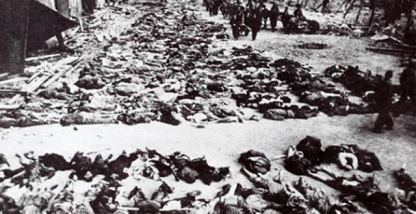
Palestinians on Saturday marked the 68th anniversary of the massacre of more than 100 Palestinians civilians carried out by Zionist paramilitary groups in the village of Deir Yassin in 1948 prior to the establishment of Israel.
Deir Yassin has long been a symbol of Israeli violence for Palestinians because of the particularly gruesome nature of the slaughter, which targeted men, women, children, and the elderly in the small village west of Jerusalem.
The number of victims is generally believed to be around 107, though figures given at the time reached up to 254, out of a village that numbered around 600 at the time.
The Deir Yassin massacre was led by the Irgun group, whose head was future Israeli Prime Minister Menachem Begin, with support from other paramilitary groups Haganah and Lehi whose primary aim was to push Palestinians out through force.
Records of the massacre describe Palestinian homes blown up with residents inside, and families shot down as they attempted to flee.
The massacre came in spite of Deir Yassin resident’s efforts to maintain positive relations with new Jewish neighbors, including the signing of pact that was approved by Haganah, a main Zionist paramilitary organization during the British Mandate of Palestine.
An Israeli psychiatric hospital now lies on the ruins of Deir Yassin, the remainder of which was reportedly bulldozed in the 1980s to make way for Jewish housing and incorporated as a neighborhood of Jerusalem. Streets of the neighborhood hold names of Irgun militiamen who carried out the massacre.
The massacre was one of the first in what would become a long line of attacks on countless Palestinian villages, part of a broader strategy called Plan Dalet by Zionist groups to strike fear into local Palestinians in hopes that the ensuing terror would lead to an Arab exodus, to ensure only Jews were left in the “Jewish state.”
Thus the attack on Deir Yassin took place a month before the UN Partition Plan was expected to be carried out, and was part of reasons later given by neighboring Arab states for their intervention in Palestine.
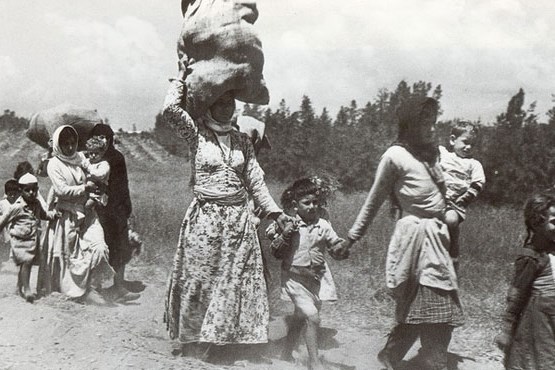
The combination of forced expulsion and flight that the massacres — what would later become known among Palestinians as the Nakba, or catastrophe — precipitated left around 750,000 Palestinians as refugees abroad. Today their descendants number more than five million, and their right to return to Palestine is a central political demand.
Former Secretary of State Hillary Clinton has dismissed Sen. Bernie Sanders questioning her qualifications to be President as “silly” – and looking at her résumé alone, she’d be right – but there is also the need to judge her performance in her various jobs.
What is troubling about Clinton’s record is that she has left behind a trail strewn with failures and even catastrophes. Indeed, her highest profile undertakings almost universally ended in disaster – and a person’s record should matter when voters are deciding whether to entrust him or her with the most powerful office on earth.
In other words, it’s not just a question of her holding one prestigious job or another; it’s also how well she did in those jobs. Otherwise, you have a case of the Peter Principle Squared, not just letting someone rise to the level of his or her incompetence, but in Clinton’s case, continuing to get promoted beyond her level of incompetence.
So, looking behind Clinton’s résumé is important. After all, she presents herself as the can-do candidate who will undertake small-scale reforms that may not move the needle much but are better than nothing and may be all that’s possible given the bitterly divided Congress.
But is Hillary Clinton really a can-do leader? Since she burst onto the national scene with her husband’s presidential election in 1992, she has certainly traveled a lot, given many speeches and met many national and foreign leaders – which surely has some value – but it’s hard to identify much in the way of her meaningful accomplishments.
Clinton’s most notable undertaking as First Lady was her disastrous health insurance plan that was concocted with her characteristic secrecy and then was unveiled to decidedly mixed reviews. Much of the scheme was mind-numbing in its complexity and – because of the secrecy – it lacked sufficient input from Congress where it found few enthusiastic supporters.
Not only did the plan collapse under its own weight, but it helped take many Democratic members of Congress with it, as the Republicans reversed a long era of Democratic control of the House of Representatives in 1994. Because of Hillary Clinton’s health-care disaster, a chastened Democratic Party largely took the idea of providing near-universal health-insurance coverage to Americans off the table for the next 15 years.
In Clinton’s next career as a senator from New York, her most notable action was to enthusiastically support President George W. Bush’s Iraq War. Clinton did not just vote to authorize the war in 2002, she remained a war supporter until 2006 when it became politically untenable to do so, that is, if she had any hope of winning the Democratic presidential nomination against anti-war Sen. Barack Obama.
Both in her support for the war in the early years and her politically expedient switch – along with a grudging apology for her “mistake” – Clinton showed very little courage.
When she was supporting the war, the post-9/11 wind was at Bush’s back. So Clinton joined him in riding the jingoistic wave. By 2006, the American people had turned against the war and the Republican Party was punished at the polls for it, losing control of Congress. So it was no profile-in-courage for Clinton to distance herself from Bush then.
Not Learning Lessons
Still, Clinton seemed to have learned little about the need to ask probing questions of Bush’s team. In November 2006, she completely misread Bush’s firing of Defense Secretary Donald Rumsfeld and replacing him with ex-CIA Director Robert Gates. Serving on the Senate Armed Services Committee, Clinton bought the conventional wisdom that Gates’s nomination meant that Bush was winding down the Iraq War despite warnings that it actually meant the opposite.
If Clinton had done any digging, she could have discovered that Rumsfeld was dumped not because of his warmongering but because he backed his field generals – George Casey and John Abizaid – who wanted to rapidly shrink the U.S. military “footprint” in Iraq. But Bush and his neocon advisers saw that as effectively an admission of defeat, so they got rid of Rumsfeld and recruited the more malleable Gates to front for their planned escalation or “surge.”
Not only did Consortiumnews.com spell out that reality in real time, but it also was explained by right-wing pundit Fred Barnes in the neocon Weekly Standard. As Barnes wrote, Gates “is not the point man for a boarding party of former national security officials from the elder President Bush’s administration taking over defense and foreign policy in his son’s administration. … Rarely has the press gotten a story so wrong.”
Barnes reported instead that the younger George Bush didn’t consult his father and only picked Gates after a two-hour face-to-face meeting at which the younger Bush got assurances that Gates was onboard with the neocon notion of “democracy promotion” in the Middle East and shared Bush’s goal of victory in Iraq. [The Weekly Standard, Nov. 27, 2006]
But the mainstream press — and much of Official Washington — loved the other storyline. A Newsweek cover pictured a large George H.W. Bush towering over a small George W. Bush. Embracing this conventional wisdom, Clinton and other Senate Armed Services Committee members brushed aside the warnings about Gates, both his troubling history at the CIA and his likely support for a war escalation.
In his 2014 memoir, Duty, Gates reflects on his 2006 nomination and how completely clueless Official Washington was. Regarding the conventional wisdom about Bush-41 taking the reins from Bush-43, Gates wrote about his recruitment by the younger Bush: “It was clear he had not consulted his father about this possible appointment and that, contrary to later speculation, Bush 41 had no role in it.”
Regarding the mainstream news media’s wrongheaded take on his nomination, Gates wrote: “There was a lot of hilarious commentary about a return to ‘41’s’ team, the president’s father coming to the rescue, former secretary of state Jim Baker pulling all the strings behind the scenes, and how I was going to purge the Pentagon of Rumsfeld’s appointees, ‘clean out the E-Ring’ (the outer corridor of the Pentagon where most senior Defense civilians have their offices). It was all complete nonsense.”
Though Gates doesn’t single out Hillary Clinton for misreading the significance of his nomination, Gates wrote: “The Democrats were even more enthusiastic, believing my appointment would somehow hasten the end of the war. … They professed to be enormously pleased with my nomination and offered their support, I think mainly because they thought that I, as a member of the Iraq Study Group [which had called for winding down the war], would embrace their desire to begin withdrawing from Iraq.”
In other words, Hillary Clinton got fooled again.
Surging for Surges
Once installed at the Pentagon, Gates became a central figure in the Iraq War “surge,” which dispatched 30,000 more U.S. troops to Iraq in 2007. The “surge” saw casualty figures spike. Nearly 1,000 additional American died along with an untold number of Iraqis. And despite another conventional wisdom about the “successful surge” it failed to achieve its central goal of getting the Iraqis to achieve compromises on their sectarian divisions.
Yet, the mainstream press didn’t get any closer to the mark in 2008 when it began cheering the Iraq “surge” as a great success, getting spun by the neocons who noted a gradual drop in the casualty levels. The media honchos, many of whom supported the invasion in 2003, ignored that Bush had laid out specific policy goals for the “surge,” none of which were achieved.
In Duty, Gates reminds us of those original targets, writing: “Prior to the deployment, clear benchmarks should be established for the Iraqi government to meet during the time of the augmentation, from national reconciliation to revenue sharing, etc.”
Those benchmarks were set for the Iraqi government to meet, but the goals were never achieved, either during the “surge” or since then. To this day, Iraq remains a society bitterly divided along sectarian lines with the out-of-power Sunnis again sidling up to Al Qaeda-connected extremists and even the Islamic State.
But Clinton didn’t have the courage or common sense to recognize that the Iraq War “surge” had failed. After Obama appointed her as Secretary of State – as part of a naïve gesture of outreach to a “team of rivals” – Clinton fell back in line behind Official Washington’s new favorite conventional wisdom, the “successful surge.”
In the end, all the Iraq War “surge” did was buy President Bush and his neocon advisers time to get out of office before the failure of the Iraq War became obvious to the American public. Its other primary consequence was to encourage Defense Secretary Gates, who was kept on by President Obama as a gesture of bipartisanship, to conjure up another “surge” for Afghanistan.
In that context, in Duty, Gates recounts a 2009 White House meeting regarding the Afghan War “surge.” He wrote: “The exchange that followed was remarkable. In strongly supporting the surge in Afghanistan, Hillary told the president that her opposition to the surge in Iraq had been political because she was facing him in the Iowa primary [in 2008]. She went on to say, ‘The Iraq surge worked.’
“The president conceded vaguely that opposition to the Iraq surge had been political. To hear the two of them making these admissions, and in front of me, was as surprising as it was dismaying.” Obama’s aides disputed Gates’s suggestion that the President indicated that his opposition to the Iraq “surge” was political, noting that he had always opposed the Iraq War. The Clinton team never challenged Gates’s account.
In other words, having been an Iraq War hawk when it mattered – from 2002-06 – Hillary Clinton changed direction when that was politically expedient, apologizing for her “mistake,” but then returned to her enthusiasm for the war by accepting the benighted view that the “surge worked.”
Clinton’s enthusiasm for “surges” also influenced her to side with Gates and General David Petraeus, a neocon favorite, to pressure Obama into a “surge” for Afghanistan, sending in an additional 30,000 troops on a bloody, ill-fated “counterinsurgency” mission. Again, the cost in American lives was about 1,000 soldiers but their sacrifice did little to shift the war’s outcome.
Winning Praise
Again and again, Hillary Clinton seemed incapable of learning from her costly errors – or perhaps she just understands that the politically safest course is to do what Washington’s neocon-dominated foreign policy establishment wants done. That way you get hailed as a serious thinker in the editorial pages of The Washington Post and at the think-tank conferences.
Virtually all the major columnists and big-name pundits praised Clinton’s hawkish tendencies as Secretary of State, from her escalating tensions with Iran to tipping the balance of the Obama administration’s debate in favor of a “regime change” mission in Libya to urging direct U.S. military intervention in Syria in pursuit of another “regime change” there.
On the campaign trail, Clinton seeks to spin all these militaristic recommendations as somehow beneficial to the United States. But the reality is quite different.
Regarding Iran, in 2010, Secretary Clinton personally killed a promising initiative sponsored by Brazil and Turkey (at President Obama’s request) to get Iran to swap much of its low-enriched uranium for radiological medical tests. Instead, Clinton followed the path laid out by Israel and the neocons, ratchet up pressure on Iran and keep open the “bomb-bomb-bomb Iran” option.
It is noteworthy that the diplomatic agreement with Iran to restrain its nuclear program and to give up much of its low-enriched uranium required Clinton’s departure from the State Department in 2013. I’m told that Obama understood that he needed to get her out of the way for the diplomacy to work.
But Clinton’s signature project as Secretary of State was another war of choice, this time the “regime change” in Libya resulting in the grisly murder of Colonel Muammar Gaddafi in 2011 and the descent of Libya into a failed state beset with terrorism, including the killing of Ambassador Christopher Stevens and three other U.S. diplomatic personnel in Benghazi on Sept. 11, 2012, and more recently the emergence of the Islamic State.
Clinton and her “liberal interventionist” allies sold the Libyan war as a “responsibility to protect” mission – or R2P – but the propaganda about Gaddafi’s supposed plans for “genocide” against the Libyan people was wildly exaggerated and fit with a long and sorry pattern of U.S. officials deceiving the U.S. public. [For more details, see Consortiumnews.com’s “Covering Up Hillary’s Libyan Fiasco.”]
Taking Credit
According to all accounts, Obama was on the fence about the wisdom of joining European nations in undertaking the Libyan “regime change” and it was Secretary Clinton who tipped his decision toward going to war. The U.S. military then provided the crucial technological infrastructure for the war to go forward. Without the U.S. involvement, the “regime change” in Libya wouldn’t have happened.
As the conflict raged, Clinton’s State Department email exchanges revealed that her aides saw the Libyan war as a chance to pronounce a “Clinton doctrine,” bragging about how Clinton’s clever use of “smart power” could get rid of demonized foreign leaders like Gaddafi. But President Obama seized the spotlight when Gaddafi’s government fell.
But Clinton didn’t miss a second chance to take credit on Oct. 20, 2011, after militants captured Gaddafi, sodomized him with a knife and then murdered him. Appearing on a TV interview, Clinton celebrated Gaddafi’s demise with the quip, “we came; we saw; he died.”
However, with Gaddafi and his largely secular regime out of the way, Islamic militants expanded their power over the country. Many, it turned out, were terrorists, just as Gaddafi had warned. Some were responsible for killing Ambassador Stevens.
Over the next five years, Libya – a once prosperous North African country – descended into anarchy with dozens of armed militias and now three competing governments jockeying for power. Meanwhile, the Islamic State expanded its territory around the city of Sirte and engaged in its signature practice of beheading “infidels,” including a group of Coptic Christians slaughtered on a beach.
Yet, on the campaign trail, Clinton continues to defend her instigation of the Libyan war, disputing any comparisons between it and the Iraq War by rejecting any “conflating” of the two. Yet, the two disasters – while obviously having some differences – do deserve to be conflated because they have many similarities. Both were wars of choice justified by false and misleading claims and having terrible outcomes.
Clinton’s rejection of “conflating” the two wars has another disturbing element to it, the suggestion that she is incapable of extracting lessons from one situation and applying them to another. That inability to analyze, engage in self-criticism, and thus avoid repeating the same mistakes may indeed be a disqualifying characteristic for someone seeking the U.S. presidency.
So, is Hillary Clinton “qualified” to be President of the United States? While her glittering résumé may say one thing, her record – a litany of misjudgments, miscalculations and catastrophes – may say something else.
Investigative reporter Robert Parry broke many of the Iran-Contra stories for The Associated Press and Newsweek in the 1980s. You can buy his latest book, America’s Stolen Narrative, either in print here or as an e-book (from Amazon and barnesandnoble.com).
Scores of pro-Palestinian activists in the UK have demonstrated outside the headquarters of an arms manufacturing company, accusing it of benefiting from Israel’s deadly crackdown against Palestinians.
The protesters gathered in front of the UK headquarters of aerospace manufacturer Thales, in Crawley, on Friday and expressed their anger against the company’s partnership with Israel’s Elbit Systems to develop a surveillance drone, nicknamed Watchkeeper, used by the regime against Palestinians.
The rally was held by the Sussex Stop Arming Israel campaign and was supported by other human rights groups, including the Inminds. The main messages of the protest were “Stop Arming Israel” and “Thales profits from Israeli war crimes.”
“Thales UK has a billion pound contract with Israel’s largest arms company Elbit Systems to develop a fleet of drones. Human Rights Watch has documented [the drones] as being used by Israel to deliberately target Palestinian civilians in Gaza,” said Inminds chair Abbas Ali.
“It’s sickening that Elbit markets this killer drone as being extensively ‘field tested’ in ‘real life’ situations — using the slaughter of Gaza’s people as a marketing ploy to gain a competitive advantage,” he added.
The Watchkeeper drone, which is produced through a joint venture dubbed UAV Tactical Systems, is modeled on Elbit’s Hermes 450, a UAV that has been used in action by the Israeli military. According to the Sussex group, the drone is developed under a contract awarded by the UK’s Ministry of Defense.
Thales UK is a subsidiary of the French company Thales, and is currently considered as the UK’s second largest military company.
Tel Aviv is under fire by rights groups for its indiscriminate attacks against Palestinian civilians. In one instance of Israel’s brutality, at least 2,140 Palestinians, including 557 children, lost their lives during the regime’s offensive against the Gaza Strip in the summer of 2014.
The aggression also left 11,100 Palestinians wounded, including 3,374 children and 2,088 women, and displaced over 170,000 others.
Al-Qaeda has made major financial gains as a result of the war in Yemen, running its own mini-state and pocketing $100 million in looted bank deposits and revenue from running the country’s largest port, a Reuters investigation has revealed.
The group’s deep pockets and increased power are down to the Saudi-led intervention in Yemen, which has reportedly helped it become stronger than at any time since its emergence almost 20 years ago.
Al-Qaeda in the Arabian Peninsula (AQAP) has a major presence in Mukalla, a city of 500,000 people, where it runs the third largest port in Yemen. As part of its port “management,” the group operates speedboats manned by armed fighters who impose fees on ship traffic.
Yemeni government officials and local traders estimate that the group earns up to US$2 million every day in taxes on goods and fuel coming into the port. In addition, it is believed the group has managed to extort $1.4 million from the national oil company.
The group also looted Mukalla’s central bank branch, gaining an estimated $100 million, according to two senior Yemeni security officials.
The economic empire of Mukalla was described to Reuters in detail by more than a dozen diplomats, Yemeni security officials, tribal leaders, and residents.
AQAP has abolished taxes for local residents in Mukalla, and group members have integrated themselves with southern Yemenis who have felt marginalized by their northern counterparts for years. The group has also made propaganda videos in which they have boasted about paving local roads and stocking hospitals.
In doing so, the group has managed to win over many locals.
“I prefer that Al-Qaeda stay here, not for Al Mukalla to be liberated,” said one 47-year-old resident. “The situation is stable, more than any ‘free’ part of Yemen. The alternative to Al-Qaeda is much worse.”
AQAP has managed to expand its territory by using many of the tactics used by Islamic State (IS, formerly ISIS/ISIL). It boasts 1,000 fighters in Mukalla alone, and controls 600km (373 miles) of coastline. The group also claimed responsibility for the 2015 Charlie Hebdo attack, which left 12 people dead at the satirical magazine’s Paris office.
‘Easier to expand’
According to a senior Yemeni government official, AQAP’s expansion is due to the Saudi-led coalition in Yemen, which is supported by the US.
The coalition, which has been bombing Houthi rebels since March 2015, sides with the exiled President Abd Rabbuh Mansur Hadi, while the Houthis are aligned with former President Ali Abdullah Saleh, who resigned in 2012 following a popular uprising against his rule.
The official told Reuters that the war has “provided a suitable environment for the… expansion of Al-Qaeda.”
He said the withdrawal of government army units from their bases in the south allowed AQAP to acquire “very large quantities of sophisticated and advanced weapons, including shoulder-fired missiles and armed vehicles.”
In addition, the coalition’s pre-occupation with fighting the Houthis “made it easier for Al-Qaeda elements to expand in more than one area,” the official said. “And this is why Al-Qaeda has today become stronger and more dangerous.”
But despite claims that the intervention has made it easier for AQAP to expand, a recent statement from the Saudi embassy in Washington stated that the campaign had “denied terrorists a safe haven in Yemen.”
Still, AQAP continues to grow and prosper amid a civil war which has so far led to the deaths of 6,000 people. Among the death toll are 3,218 civilians, according to the UN Human Rights Office. An additional 5,778 civilians have been injured in the violence.
By Stephen Sniegoski | My Catbird Seat | June 12, 2010
The claim that Israel serves as a valuable ally for the United States is made by both pro-Zionists and much of the anti-war and anti-Zionist Left that is influenced by Noam Chomsky. As a result of the Gaza flotilla massacre, which has caused a world-wide uproar against Israel, the value of Israel to the United States is being publicly questioned in more mainstream foreign policy forums. … continue
This site is provided as a research and reference tool. Although we make every reasonable effort to ensure that the information and data provided at this site are useful, accurate, and current, we cannot guarantee that the information and data provided here will be error-free. By using this site, you assume all responsibility for and risk arising from your use of and reliance upon the contents of this site.
This site and the information available through it do not, and are not intended to constitute legal advice. Should you require legal advice, you should consult your own attorney.
Nothing within this site or linked to by this site constitutes investment advice or medical advice.
Materials accessible from or added to this site by third parties, such as comments posted, are strictly the responsibility of the third party who added such materials or made them accessible and we neither endorse nor undertake to control, monitor, edit or assume responsibility for any such third-party material.
The posting of stories, commentaries, reports, documents and links (embedded or otherwise) on this site does not in any way, shape or form, implied or otherwise, necessarily express or suggest endorsement or support of any of such posted material or parts therein.
The word “alleged” is deemed to occur before the word “fraud.” Since the rule of law still applies. To peasants, at least.
Fair Use
This site contains copyrighted material the use of which has not always been specifically authorized by the copyright owner. We are making such material available in our efforts to advance understanding of environmental, political, human rights, economic, democracy, scientific, and social justice issues, etc. We believe this constitutes a ‘fair use’ of any such copyrighted material as provided for in section 107 of the US Copyright Law. In accordance with Title 17 U.S.C. Section 107, the material on this site is distributed without profit to those who have expressed a prior interest in receiving the included information for research and educational purposes. For more info go to: http://www.law.cornell.edu/uscode/17/107.shtml. If you wish to use copyrighted material from this site for purposes of your own that go beyond ‘fair use’, you must obtain permission from the copyright owner.
DMCA Contact
This is information for anyone that wishes to challenge our “fair use” of copyrighted material.
If you are a legal copyright holder or a designated agent for such and you believe that content residing on or accessible through our website infringes a copyright and falls outside the boundaries of “Fair Use”, please send a notice of infringement by contacting atheonews@gmail.com.
We will respond and take necessary action immediately.
If notice is given of an alleged copyright violation we will act expeditiously to remove or disable access to the material(s) in question.
All 3rd party material posted on this website is copyright the respective owners / authors. Aletho News makes no claim of copyright on such material.


 Aletho News
