US drone strikes kill 17 Afghan civilians: Paper
Press TV – April 8, 2016
US airstrikes in Afghan province of Paktika have killed at least 17 civilians, local officials and elders say, rejecting official American and Afghan claims that only militants had been killed.
They were killed during three drone strikes carried out by the US in the area of Nematabad on Wednesday, former Afghan senator Hajji Muhammad Hasan said, quoted by The New York Times.
The first raid struck a vehicle carrying a local elder, Hajji Rozuddin, who was on his way to mediate a land dispute in a tribe with four bodyguards and seven other people, the report said.
“Hajji Rozuddin was strongly anti-Taliban,” said Hasan. “He carried bodyguards because the Taliban were trying to kill him.”
“The car was completely destroyed, and there was little of the bodies left,” he said.
Soon after the attack, another strike killed two people who had come to help recover the bodies from the truck after the first attack, said Hasan.
A third attack also killed three other civilians on top of a small hill. They were trying “to see what had happened and why the previous two men had not returned already,” he explained.
Governor Shaista Khan Akhtarzada also confirmed that an investigation team had determined that “the people killed were civilians.”
The US military had said on Thursday that two Wednesday airstrikes in Paktika killed 14 militants.
“There was no evidence to indicate that there were any civilian casualties at all,” Charles Cleveland, a spokesman for the United States military in Afghanistan, said.
Cleveland claimed that most of the “just under a hundred” US strikes in Afghanistan from January 1 to March 31 were focused on Daesh militants in eastern Nangarhar Province.
Officials and residents said that such airstrikes have been relatively rare in Paktika in recent months, even as the United States has intensified its air operations elsewhere in the country.
In January, US President Barack Obama authorized American forces to target Daesh terrorists emerging in Nangarhar.
Although Taliban leaders have warned Daesh against “waging a parallel insurgency in Afghanistan,” the Takfiri group has been trying to expand its outreach there and is reported to have between 1,000 to 3,000 terrorists on its payroll.
Afghanistan is gripped by insecurity 14 years after the United States and its allies attacked the country as part of Washington’s so-called war on terror.
US-Turkey-Saudi Arabia Arm Terrorists With Surface-to-Air Missiles in Syria
Sputnik – April 7, 2016
On Tuesday, Islamist rebels shot down a Syrian plane, the second such incident in less than a month, and captured the pilots. Inquiries are being made at the highest level as to how the al-Nusra Front, a branch of al-Qaeda in Syria, has come into possession of advanced Western surface-to-air missiles.
Loud & Clear’s Brian Becker sat down with Institute of Islamic Thought director Zafar Bangash on Thursday to discuss the developing situation in Syria and whether access to this weaponry will undermine Syrian air superiority.
Where are al-Qaeda affiliates getting these advanced weapons?
“According to the information that has emerged, it was al-Nusra Front, a branch of al-Qaeda in Syria,” explained Bangash. He speculated that the missiles were sold to the extremist group by Turkey and paid for by Saudi Arabia, in a continuing effort to overthrow the Assad regime. He suggested that the Americans have a hand in it as well, saying, “the United States has always been involved in providing these weapons, even if not directly.”
The plane shot down on Tuesday was over Aleppo, an al-Nusra and Daesh stronghold. Why is that significant?
“Aleppo is the only major city that has been under the control of al-Nusra or Daesh,” explained Bangash. “The Syrian Army was making progress along with Hezbollah fighters and Iran’s revolutionary guards backed by the Russian Air Force and have been inching towards Aleppo.”
Bangash elaborated that the capture of Aleppo by rebel forces is significant, due to it being the largest city in Syria, and formerly the country’s financial hub. “It is even larger than Damascus, so obviously the terrorist groups and their backers will put up a tough fight not to lose it,” said Bangash.
Does terrorist access to anti-aircraft technology deprive the Syrian army of air supremacy?
“Not completely. I don’t think it will prove a game-changer because Russia is still there,” said Bangash. “These terrorists can cause some damage and some threat to the Syrian air force, and I am sure that the Syrian air force will change their tactics.”
Nonetheless, Russia’s continued presence in the fight against extremist militants will continue to keep rebel groups on their heels as allied forces march towards Aleppo. “Russian air force planes carried out a number of operations last week,” said Bangash. “Further, per the ceasefire agreement between Russia and the US, the terrorist groups were specifically excluded from the ceasefire, so Russia has no obligation whatsoever to avoid attacking these groups.”
Has the US presence in Syria benefitted the extremist organizations?
“Yes,” said Bangash who explained that, since 2005, the Americans along with Saudi Arabia and Turkey have had their eyes on ousting Assad from controlling Syria. “If the Syrian people don’t want Assad, that is for the Syrian people to decide, it isn’t for the United States or any other country to decide.”
He said that he “thinks it is very clear that the US wants to bring down the government of Bashar al-Assad, and that is why the Americans are talking about increasing their special forces in Syria.” Bangash said that the US presence has never been welcomed by the Syrian government. “They have not been given permission by the Syrian government and that is in violation of international law and the UN Charter.”
In contrast, Bangash says that the Russian government came in to maintain the stability of the current Syrian regime, and prevent the country from becoming a failed state, similar to Libya following the ouster of Muammar Gadhafi. “Russia went there with permission of the legitimate government, but the US is there illegally,” he stressed.
Nagorno-Karabakh and the Passover Feast: Hollywood’s Glorification of the Arms Trade

David Packouz (L) and Efraim Diveroli
By Richard Edmondson | Fig Trees and Vineyards | April 7, 2016
From Ukraine to North Africa to the Middle East, and most recently in the Caucasus with the outbreak of hostilities between Azerbaijan and Armenia, death and destruction are on the prowl in multiple wars, while at the same time international laws governing armed conflict are rapidly being cast onto the rubbish heap.
Many of these wars have been instigated by powers outside the countries in which they are being fought, and the tide of violence threatening to engulf the world now is unprecedented in history. You would think that at such a time, Hollywood would have better taste than to make a movie glorifying the arms trade.
But of course, you would be wrong.
Scheduled for release in August, “War Dogs” is based on the real life story of Efraim Diveroli and David Packouz, two twenty-something Jews who got involved in the arms trade and ended up bidding on Pentagon contracts, in the process scoring deals to supply weapons, ammo, and other military equipment to forces the US was arming in both Iraq and Afghanistan.
Their story was told in a 2011 Rolling Stone article which detailed their passion for money-making, recreational drug use, and their predilection for shady business dealings. “Packouz and Diveroli met at Beth Israel Congregation, the largest Orthodox synagogue in Miami Beach,” the story informs us, and then goes on to describe how they landed some lucrative contracts, including one worth $300 million, all while operating a small company known as AEY, a shell company Diveroli’s father had set up. All of this was in the years 2005-2007.
For decades, weapons had been stockpiled in warehouses throughout the Balkans and Eastern Europe for the threat of war against the West, but now arms dealers were selling them off to the highest bidder. The Pentagon needed access to this new aftermarket to arm the militias it was creating in Iraq and Afghanistan. The trouble was, it couldn’t go into such a murky underworld on its own. It needed proxies to do its dirty work — companies like AEY. The result was a new era of lawlessness…
One evening, Diveroli picked Packouz up in his Mercedes, and the two headed to a party at a local rabbi’s house, lured by the promise of free booze and pretty girls. Diveroli was excited about a deal he had just completed, a $15 million contract to sell old Russian-manufactured rifles to the Pentagon to supply the Iraqi army. He regaled Packouz with the tale of how he had won the contract, how much money he was making and how much more there was to be made….
Diveroli, by the way, is the nephew of celebrity rabbi Shmuley Boteach, a staunch supporter of Israel and author of several books, including one entitled “Kosher Sex”–a book in which he “breaks down sexual taboos” while pioneering “a revolutionary approach to sex, marriage, and personal relationships, drawing on traditional Jewish wisdom.” Boteach has also run inflammatory ads in the New York Times defending Israel, and in 2012 was bankrolled by Las Vegas casino magnate Sheldon Adelson in an unsuccessful campaign for Congress.
So in other words, while Boteach was doing the TV talk show circuit advising Americans how to improve their sex lives, his nephew Diveroli was finding his niche in the “murkey underworld” of arms trafficking.
Above all, Diveroli cared about the bottom line. “Efraim was a Republican because they started more wars,” Packouz says. “When the United States invaded Iraq, he was thrilled. He said to me, ‘Do I think George Bush did the right thing for the country by invading Iraq? No. But am I happy about it? Absofuckinglutely.’ He hoped we would invade more countries because it was good for business.”
The big $300 million deal they landed found them purchasing stocks of Chinese-made ammunition in the Balkans and transporting them to Afghanistan, but a US embargo against Chinese weapons meant the whole thing had to be carried out clandestinely. The ammo was repackaged in cardboard boxes with no Chinese lettering. But some of the ammo was quite old, a number of the crates were infested with termites, and the two ended up being indicted for fraud and pleading guilty. And now we have a forthcoming Hollywood movie about their endogamic escapades.
It’s tempting to dismiss “War Dogs” as just another piece of Hollywood trash, but of course it comes as millions are coping with the destruction of homes and lives in the bogus war on terror and as whole nations are being torn apart. In Syria, the US has aligned itself with so-called “moderate” rebels, equipping them with vast stocks of weapons, many of which have ended up in the hands of ISIS, while in Yemen, we have assisted Saudi Arabia in an air campaign which, as of January 2016, had resulted in 2,795 killed and 5,324 wounded. At least 62 civilians were killed by coalition airstrikes in December alone, reports the UN, which was more than twice the number killed in the previous month. Many others have been left homeless.

A girl drinks from a leaking street pipe in Yemen, where millions now have no access to drinking water
But this hasn’t stopped the US from continuing to fuel the fire, so to speak. According to Defense News, the State Department has facilitated $33 billion worth of weapons sales to its Arab Gulf allies since May of 2015. The weapons–including anti-armor missiles, attack helicopters, and ballistic missile defense capabilities–have been sold to the six countries that make up the Gulf Cooperation Council, or GCC. These would of course be some of the same countries that have been supplying arms to ISIS while also carrying out war crimes in Yemen.
“In addition, the U.S. government and industry also delivered 4,500 precision-guided munitions to the GCC countries in 2015, including 1,500 taken directly from U.S. military stocks — a significant action given our military’s own needs,” said David McKeeby, a spokesman with the State Department’s Bureau of Political-Military Affairs.
How much of this ordnance may have ended up in the hands of not-so-moderate terrorists is unclear, but in December of 2015, Amnesty International published a report entitled “Taking Stock: The Arming of the Islamic State,” which found that the terrorist army “now deploys a substantial arsenal of arms and ammunition, designed or manufactured in more than 25 countries.”
A lot of this was looted or captured from poorly secured Iraqi military stocks, says the report, but illicit weapons transactions also seem to have played a considerable role in building up the ISIS arsenal–and some of the “chain of custody” evidence cited in the report, including a cache of weapons transferred from Croatia to the Free Syrian Army, sounds almost eerily similar to the sort of shady weapons trafficking operation run by Packouz and Diveroli.
Of course there is the old adage about art imitating life, and, on some level the fact that Hollywood would make a film about two Jews and then go on to entitle it “War Dogs” is perhaps not surprising. This, keep in mind, coming at a time when evidence of Israel’s support for terrorists in Syria is as clear as the hand in front of your face. And of course who could forget the lovable Victoria Nuland and her famous “f**k-the-EU” comment, mouthed off at a time when her State Department was busy engineering a coup in Ukraine?
In fact, efforts by Zionist Jews to create instability and instigate wars are getting to be about as common as fireflies on a summer night. They’re not always easy to spot, but you know they’re out there because they occasionally involuntarily light up, as when someone like Nuland gets caught in a taped phone conversation.
And now it looks like certain fireflies have moved into the Caucasus where they seem to be taking advantage of a long-simmering dispute between Azerbaijan and Armenia over the region of Nagorno-Karabakh. On April 2, intense fighting broke out followed by a series of charges, counter-charges, claims and counterclaims, made by both sides. According to the Armenians, it started with an offensive launched by Azerbaijani troops using tanks and artillery. Azerbaijan, on the other hand, insists it was responding to large-caliber weapons fire from inside the ethnic Armenian-controlled Nagorno-Karabakh area. So who is telling the truth? Or are both sides lying?
Hard to say for sure, but a couple of knowns are worth mentioning: A) Armenia is closely allied with Russia, and, B) Azerbaijan, too, has ties, including trade ties, with Russia, but it also is closely aligned with Turkey and maintains extensive trade relations with Israel. And the trade with Israel has been especially heavy in the area of military procurement.
Israeli drones, anti-aircraft and missile defense systems have been supplied to Azerbaijan in the wake of a $1.6 billion agreement struck between the two countries in 2012. Israeli companies are also active in the Azerbaijani telecommunications, agriculture, water supply medical technology, and energy sectors. That makes for a lot of sayanim on the ground inside a relatively small country.
Perhaps no surprise, then, that Armenian forces shot down an Israeli drone on April 2–the very day hostilities broke out.
The ThunderB drone is known for its light weight, 62 pounds, and its long flying time–25.5 hours–on a single tank of fuel. It is made by an Israeli company known as BlueBird, which reportedly may be about to be purchased by Elbit Systems.
And then on Tuesday came news of yet another Israeli drone spotted over Nagorno-Karabakh–this one believed to be a Harop drone, made by Israeli Aerospace Industries. The Harop is also known as a “suicide drone” in that rather than firing a missile at a target it simply becomes the missile itself, ramming the target and destroying it.
According to Gordon Duff, senior editor at Veterans Today, the key to understanding the Armenian-Azerbaijani conflict is to recognize “that Azerbaijan is a client state of Israel and the CIA.” He adds that Azerbaijan has as well become “the regional operating center for Google Idea Groups,” which he refers to as the “shadow CIA.”
Google Ideas was formed in 2010. At that time Google CEO Eric Schmidt tapped the State Department’s Jared Cohen to direct the new venture, dubbed as a “think/do tank.” In late 2015, Google was reorganized under a parent company called Alphabet, Inc., and in February of this year Google Ideas was rebranded as “Jigsaw”–although it is still run by Cohen and still affiliated with Google.
Cohen, by the way, is also an adjunct senior fellow at the Council on Foreign Relations, and during his years with the State Department (2006-2010) he worked closely with Condoleezza Rice and Hillary Clinton, and became a strategic advisor in US policy toward Iran. Jigsaw’s mission is to “use technology to tackle the toughest geopolitical challenges, from countering violent extremism to thwarting online censorship to mitigating the threats associated with digital attacks,” says Schmidt.
Sounds nice, but a purview of Jigsaw’s website–fittingly kind of creepy and dark-looking–suggests that virtually all of the “activists” it has provided support to seem to be from countries with governments the US seeks to overthrow. And indeed, in 2012 Wikileaks released a cache of emails concerning Cohen’s activities in the Middle East, including one, apparently written by Cohen himself, in which he discusses efforts to stir up trouble in Iran:
I wanted to follow-up and get a sense of your latest thinking on the proposed March trip to UAE, Azerbaijan, and Turkey. The purpose of this trip is to exclusively engage the Iranian community to better understand the challenges faced by Iranians as part of one of our Google Ideas groups on repressive societies. Here is what we are thinking: Drive to Azerbaijan/Iranian border and engage the Iranian communities closer to the border (this is important because we need the Azeri Iranian perspective).
So here, it seems, we have Cohen basically setting up shop on the Iran-Azerbaijan border. It should be noted that both Azerbaijan and Armenia border Iran, while Azerbaijan also shares a border with Russia. A conflict breaking out in this region could easily spill over into Russia or Iran–both of which have called for the two warring parties to adhere to a 1994 ceasefire agreement.
But of course, such a spillover would advance certain geopolitical interests. For one thing, it would pose a dilemma for Russia at a time when it is engaged in Syria. Sergei Zheleznyak, vice speaker of the Russian state Duma, has voiced the view that a “third force” is behind developments in Nagorno-Karabakh. According to the Russian News Agency Tass :
“It is clear that the force that continues to fan the flames of war in the Middle East, Central Asia and the Caucasus dissatisfied with the peacekeeping and counter-terror success of Russia and our allies in Syria is interested in the speedy exacerbation of the protracted conflict in the Nagorno-Karabakh region,” the parliamentarian wrote on his Facebook page on Saturday.
According to Zheleznyak, “neither Azerbaijan nor Armenia essentially need this exacerbation now.” He noted that “there is every likelihood that this provocation has been organized by a third force,” adding that “information on its presence is beginning to leak out.” In view of this, he drew attention to the fact that “at night in the mountains it is enough to have a few trained armed persons who know the opposing sides’ balance of forces to provoke them to open reciprocal ‘reprisal’ fire.”
Most people probably assumed Zheleznyak, in talking about a “third force,” was referring to Turkey–and certainly Turkey’s downing of a Russian jet in Syria factors into the equation. But another element that perhaps figures even more prominently is the “clash of civilizations” that hardcore Zionists have long salivated over the thought of.
We might theorize that ISIS was created with a two-fold objective: one was to break apart Syria and bring about the overthrow of Bashar Assad, while the other was to jockey into existence a clash of civilizations between Christians and Muslims. In both of these objectives it has failed. Assad is still standing, and while the rise of ISIS certainly inflamed anti-Muslim sentiments in the West, it has not resulted in the all-out war between Christianity and Islam that would have played so well into the hands of the Jewish state.
But where the ISIS plan failed, the conflict in the Caucasus could well succeed. Armenia is predominantly a Christian state, while Azerbaijan is mostly Muslim. A war between these two could galvanize public opinion in the region along religious lines. Regional political alignments and the history of the Armenian genocide are also to be considered. Turkey, though sharing a border with Armenia, has openly sided with Azerbaijan. Russia, on the other hand, has remained officially neutral. However, an RT report filed April 5 shows journalist Murad Gazdiev reporting from inside Armenian Karabakh trenches.

Armenian Genocide–young girls crucified on crosses
So where is Israel in all of this? Officially it doesn’t seem to be saying much about it, but in May of 2015, the Jewish Daily Forward published an article entitled, “Why Israel’s Alliance with Azerbaijan is so Shortsighted.” The writer, Christopher Atamian, takes the Jewish state to task over its refusal to recognize the Armenian genocide as well as for its lucrative arms contract with Azerbaijan, a country he refers to as an “authoritarian regime that is fueling regional conflict.”
“This is the same country that attempted to wipe out the entire Armenian population of Nagorno Karabakh in 1991 before losing a bloody war against the Armenians,” he adds.
What he leaves unspoken, of course, is that Israel’s refusal to recognize the Armenian genocide is tantamount to holocaust denial. More than 1.5 million Armenians were massacred from the years 1915 to 1922, and the Jewish state’s silence on the matter became a particularly hot-button issue last year on the genocide’s 100th anniversary.
Zheleznyak, the Duma vice speaker, seems for his own part to be offering sage advice to both parties in the current conflict, noting that Russia’s president as well as its government agencies “urge Armenia and Azerbaijan to cease fire and not to allow to draw them into someone else’s insidious game, as long as it is still possible.”
“As long as it’s still possible” is of course the key question. The more people die, the further recede the possibilities of the regional players not getting trapped or caught up in the “insidious game”–and the greater grow the chances of the conflict’s becoming the parabolic curve that ignites World War III.
Should that come to pass, maybe Diveroli and Packouz will vie for ringside seats–although it doesn’t appear they’ll especially want to sit next to each other. According to the article in Rolling Stone, the two had a major falling out.
“Listen, dude, if you f**k me, I’m going to f**k you,” one of them warned during an argument over money.
“Whatever,” replied the other.
One wonders why they didn’t name the movie “War Pigs” rather than “War Dogs.” Perhaps it wouldn’t have been kosher enough.
In the past year in Israel we’ve seen an arson attack on a Palestinian home which left a mother, father and their 18-month-old baby dead; we have seen a video of Jewish settlers dancing and celebrating the attack by stabbing a photo of the baby; we have observed continued expropriation of Palestinian land in the West Bank, including one of the biggest land grabs in recent years–579 acres near the Dead Sea; and more recently we have seen a second video showing an Israeli soldier executing a wounded Palestinian with a gunshot to the head.
The execution video showed Israeli soldier Elior Azaria pump a bullet into the head of 21-year-old Abdul Fattah Sharif, as he lay on the ground wounded and barely moving. The murder took place on Purim, the Jewish holiday which celebrates the massacre of thousands of Gentiles, as told of in the Book of Esther. The next holiday on the Jewish calendar is Passover, coming up on April 22-23. The significance of Passover is laid out in twelfth chapter of Exodus:
On that same night I will pass through Egypt and strike down every firstborn–both men and animals–and I will bring judgement on all the gods of Egypt. I am the Lord. The blood will be a sign for you on the houses where you are; and when I see the blood I will pass over you. No destructive plague will touch you when I strike Egypt.
This is a day you are to commemorate; for the generations to come you shall celebrate it as a festival to the Lord–a lasting ordinance… And when your children ask you, ‘What does this ceremony mean to you?’ then tell them, ‘It is the Passover sacrifice to the Lord, who passed over the houses of the Israelites in Egypt and spared our homes when he struck down the Egyptians.’
It seems that both Purim and Passover are in essence celebrations of the deaths of non-Jews. Suppose Gentiles observed holidays each year in which we celebrated Jewish deaths? What do you suppose would be said of it?
Whatever one’s views of Judaism may be (there are some admirable sentiments expressed in the Old Testament as well as some repellent ones), Zionism has morphed from the simple idea of a homeland for a specific group of people into a supremacist ideology that has had appalling consequences–not only for its victims but also even for its adherents, dehumanizing them to a degree never thought imaginable.
Zionism is the great Passover feast that has become a celebration of war.
20 years since the Qana massacre and Naftali Benet is Education Minister

By Miko Peled | American Herald Tribune | April 7, 2016
Naftali Bennet, Israel’s minister of education was the first public official to come out in support of Elor Azaria, the Israeli soldier who executed Abdel Fatah Alsharif as he lay wounded in Hebron. Bennet was critical of the government of which he is a member for not standing up for the soldier. I was listening to the interview with Bennet on Israeli television where he made the argument that the government and the press judged the soldier harshly and prematurely. Then he said something I never thought I’d hear.
“Maybe the soldier did make a mistake; you know I also made a mistake. During Grapes of Wrath, Operation Grapes of Wrath I was apparently mistaken and a very difficult thing happened.” A very difficult thing happened. Interesting choice of words and interesting timing: It is exactly twenty-years since the massacre in Qana village in Southern Lebanon, a massacre for which Bennet was responsible. He then went on to explain that, “in my case, I received the full backing of the commanding general and the army chief of staff.” In fact he was backed by the entire chain of command going all the way up to the Prime Minister (and Nobel laureate), Shimon Peres.
Bennet was talking about the shelling by Israeli forces of the UN compound in the southern Lebanese village of Qana. It took place on April 18, 1996 when hundreds of local Lebanese were seeking shelter at the compound. Of the 800 Lebanese civilians who had taken refuge in the compound, a reported 106 were killed and 116 were injured. The attack occurred amid fighting between the Israeli army and Hezbollah during operation “Grapes of Wrath.” There was evidence that an Israeli drone was spying on the compound before the shelling, making the argument that this may have been an error, unlikely at best. Clearly all levels of the IDF command knew that the compound was there and that it served as shelter for refugees escaping the fighting. The building was clearly marked as a UN compound and was even marked on the Israeli maps. Bennet who was commander of an Israeli army reconnaissance unit called for massive artillery shelling of the site.

The BBC described the massacre as: “one of the deadliest single events of the whole Arab-Israeli conflict.” Robert Fisk who reported from the site wrote, “Not since Sabra and Chatila had I seen the innocent slaughtered like this.”
Fisk’s descriptions of what he saw are not for the weak at heart but must be read and remembered. Over and over we hear the phrase “never again,” yet Israel commits one heinous massacre after another and gets away with it, usually absolved by the US. In this case the main culprit is known, he admits his responsibility and yet not only did he go unpunished, he is unrepentant and is now in charge of the Israeli ministry of education. How ironic. Again Fisk’s description, “The Lebanese refugee women and children and men lay in heaps, their hands or arms or legs missing, beheaded or disemboweled. There were well over a hundred of them […] The Israeli shells had scythed through them as they lay in the United Nations shelter, believing that they were safe under the world’s protection. Like the Muslims of Srebrenica, the Muslims of Qana were wrong.” And Fisk continues, “Now the Israelis are stained again by the bloodbath at Qana, the scruffy little Lebanese hill town where the Lebanese believe Jesus turned water into wine.”
Naftali Bennet was quoted as saying that he had killed many Arabs in his time and feels no remorse, and in his view “a soldier in the battlefield can not commit murder.” In a speech in the Knesset Bennet said he killed many terrorists during his military service and he wishes he had killed more. Bennet never saw an Arab he did not consider to be a terrorist, and therefore fair game. “Arabs are murdering Jews every day,” he said as he defended the execution in Hebron. An important piece of information that is completely ignored is that another soldier shot Abdel Fatah first, even though he was unarmed and his hands were raised, and only later did Elor Azaria execute him. Bennet called the scene as a “battle ground” and the shooting perfectly legitimate because according to him “Viscous Palestinian terrorists are coming out every day to kill Jews.”
The result of Bennet’s call for the shelling in Qana, according to Fisk, was “The blood of all the refugees ran quite literally in streams from the shell-smashed UN compound […] in which the Shiite Muslims from the hill villages of southern Lebanon – who had heeded Israel’s order to leave their homes – had pathetically sought shelter.” Once the news of the shelling had got out, relatives started arriving from other parts of Lebanon to look for loved ones. Their grief and anger were forceful, “we had suddenly become not UN troops and journalists but Westerners, Israel’s allies” Fisk writes, and he continues, “one bearded man with fierce eyes stared at us, his face dark with fury: […] “I would like to be made into a bomb and blow myself up amid the Israelis” the man cried.
The story of the Qana massacre was brought up during the Israeli elections of 2015, because Bennet was the head of one of the parties running. Claims were made that the “incident” was evidence that he had “poor judgment.” Today, twenty years and countless massacres later a man who knowingly brought about the gruesome killing of countless innocents is in charge of educating Israeli children and is defending the execution of a young Palestinian. And yet, the one man that everyone is calling a terrorist is one who committed no act violence at all: the young Abdel Fatah Alsharif, may he rest in peace.
Saudi Air Force struck Yemeni marketplace with US bombs – Report

RT | April 7, 2016
Two bombs dropped by the Saudi Arabian Air Force on a crowded marketplace in Yemen on March 15 were American-made, claims Human Rights Watch (HRW). The UN estimates the death toll to be at least 97 dead, among them 25 children.
HRW examined the bomb blast fragmentations found at the site and determined they came from a US-made “GBU-31 satellite-guided bomb, which consists of a US-supplied MK-84 2,000lb bomb mated with a JDAM satellite guidance kit, also US-supplied,” HRW’s report says.
Since the beginning of the airstrikes of the Saudi-led anti-Houthi coalition in March 2015, there have been 12 airstrikes inflicted on marketplaces throughout Yemen.
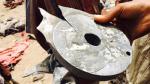 HRW calls on to the US to stop selling weapons to Saudi Arabia until Riyadh ends unlawful airstrikes.
“One of the deadliest strikes against civilians in Yemen’s year-long war involved US-supplied weapons, illustrating tragically why countries should stop selling arms to Saudi Arabia,” said Priyanka Motaparthy, emergency researcher at HRW.
Mastaba, a village in Yemen’s northern Hajja governorate, some 45km from the Saudi border, was attacked at noon. Two bombs were dropped successively with a short period. The first blasted right in front of a complex of shops and a restaurant, the second exploded a short while later near the entrance to the market, within the crowd fleeing the airstrike, HRW reports.
The airstrike in Mastaba reportedly also killed 10 Houthi rebel fighters, making the attack absolutely unprecedented in military-to-civilian death ratio, causing “disproportionate loss of civilian life, in violation of the laws of war.”
The UN children’s agency UNICEF put the death toll of Mastaba airstrikes even higher, proclaiming 119 people among dead, 22 children included.
Out of two local hospitals, a clinic supported by Doctors Without Borders (MSF) received 45 wounded civilians from the market.
Since March 2015, the conflict in Yemen has claimed lives of about 6,300 people, over a half of them civilians, according to the UN estimates. Most of the people killed in Yemen died in Saudi-led coalition air strikes.
The next day after the deadly airstrike, the Saudi military spokesman for the coalition, General Ahmad al-Assiri, said the coalition attacked “a militia gathering,” saying though, that the airstrike site had been known as a place to buy qat, a mild stimulant plant widely chewed in Yemen, which means the coalition knew the airstrike hit a commercial area.
On March 18, al-Assiri told Reuters that targeting Mastaba site the coalition used reconnaissance information from Yemeni forces loyal to ousted President Abdu Rabbu Mansour Hadi and that the Houthis “deceived people by saying it was a market.”
A Few Black Caucus Members Have Some Questions About Israel
A Black Agenda Radio commentary by Glen Ford | April 6, 2016
Black Georgia Congressman Hank Johnson has written a letter that puts him in the cross-hairs of the Israel lobby – and he’s managed to bring eight other members of the House with him, including three colleagues from the Congressional Black Caucus. Johnson teamed up with Vermont Senator Patrick Leahy, a longtime – and usually very lonely – critic of Israel’s treatment of Palestinians. The senator is the author of the Leahy Law, which requires the United States to cut off military aid “to any unit of the security forces of a foreign country if the Secretary of State has credible information” that the unit has “committed a gross violation of human rights.” Congressman Johnson believes this language applies to Israel and to military and police units in Egypt. Together, the two countries account for more than 75 percent of total U.S. military assistance to foreign states: $3.1 billion a year to Israel, and $1.5 billion to Egypt. Israeli Prime Minister Benjamin Netanyahu is demanding that the U.S. increase its annual gift to the Zionist State’s military to $4.5 billion.
Congressman Johnson’s letter urges Secretary of State John Kerry to do as the Leahy Law requires, and make a determination if Israel and Egypt have engaged in gross violations of human rights. The letter calls Kerry’s attention to specific cases of extrajudicial killings of Palestinians and the use of torture by Israeli security forces, and it cites the Egyptian military regime’s 2013 massacre of as many as a thousand unarmed civilians at Rab’aa Square, which Human Rights Watch describes as “the world’s largest killing of demonstrators in a single day in recent history.”
In addition to Senator Leahy, Hank Johnson convinced eight other House Democrats to sign his letter, including Black Caucus members Andrè Carson, of Indiana, Eddie Bernice Johnson, of Texas, and Eleanor Holmes Norton, the congressional Delegate from Washington, DC.
The crimes of Egypt’s military regime have shocked the world, but Washington has no problem with mass murder, which is why the Egyptian military has been a U.S. client for the past 40 years.
And, there is, of course, not a chance in hell that Secretary of State Kerry will certify that Israel is a gross human rights violator – despite the fact that the entire history of the apartheid Zionist state is an affront to the very notion of civilization. Just two weeks ago, an Israeli soldier was caught on video cold-bloodedly shooting a wounded and helpless Palestinian in the head. A poll showed 66 percent of Israeli Jews have good feelings about the soldier’s behavior, and 57 percent don’t even want the government to investigate the murder. This is the kind of barbaric society that is bred by apartheid – a society that should be recognized as inherently evil by every member of the Congressional Black Caucus. But, only three Black congresspersons joined Hank Johnson in questioning why the U.S. spends billions to arm the last apartheid state on Earth. In 2014, every single Black congressperson, including Hank Johnson, voted in support of Israel even as it was slaughtering more than 2,000 Palestinians in Gaza. Four signatures on a letter will never erase the shame they have brought upon Black America through their support for the most racist regime in the world.
Glen Ford can be contacted at Glen.Ford@BlackAgendaReport.com
Execution of Palestinian Exposes Israel’s Military Culture
By Jonathan Cook | Palestine Chronicle | April 3, 2016
Nazareth – It might have been a moment that jolted Israelis to their senses. Instead the video of an Israeli soldier shooting dead a young Palestinian man as he lay wounded and barely able to move has only intensified the tribal war dance of the Israeli public.
Last week, as the soldier was brought before a military court for investigation, hundreds of supporters protested outside. He enjoys vocal support too from half a dozen cabinet ministers, former army generals, rabbis and – according to opinion polls – a significant majority of the Israeli Jewish public.
It is worth reflecting on this generous act of solidarity.
It is hard to dispute the main facts. On March 24 two Palestinians – Abdel Fattah Al Sharif and Ramzi Qasrawi, both aged 21 – were shot during an attack on soldiers manning a checkpoint in the occupied city of Hebron in the West Bank.
Ten minutes later, the 19-year-old soldier at the center of the investigation arrived. Qasrawi was dead and Al Sharif was lying in the road wounded. Other soldiers milled around, close by.
At that point, the soldier – who cannot be named because of a gag order – approached Al Sharif, aimed his gun at the young man’s head and pulled the trigger.
All of this was captured on video, as was a trail of blood that leaked from Al Sharif’s head seconds later.
This was not a killing in the fog of war; it was a cold-blooded execution. As Amnesty International noted, such an act constitutes a war crime.
And yet, for most Israelis the soldier is the victim of this story. Some 57 per cent oppose an investigation, let alone prosecuting or jailing him. Some 66 per cent describe his behavior in positive terms, and only 20 per cent think criticism is warranted. Only a tiny 5 per cent believe the killing should be judged “murder”.
Should this video and the aftermath serve just one purpose, it is to open a window on the rotten state of the Israeli body politic.
The incontestable evidence of Al Sharif’s execution is challenging Israeli Jews to maintain the deception, among themselves and to outsiders, that the institutions of their tribal, ethnic state have any abiding commitment to universal values and human rights.
For decades Israel has trumpeted its army as uniquely “moral”. The claim was always risible. But in an era of phone cameras, hiding the systematic crimes of a belligerent occupying power has proved ever harder.
The past six months has seen a wave of desperate attacks by Palestinians – mostly improvised, using knives and cars – to end the occupation. Some 190 Palestinians have been killed in this period.
A number of the incidents have been captured on film. In a shocking proportion, Palestinians – including children – have been shot dead even when they posed no threat to Israeli soldiers or civilians. In military parlance, this is called “confirming the kill”.
The latest video is distinctive not only because the evidence is so indisputable but because it exposes Israel’s wider military culture.
When the soldier took his shot, his comrades registered not the least surprise that their prisoner had just been executed. This looked suspiciously like an event that had played out many times before: standard operating procedure.
Back in December Sweden’s foreign minister, Margot Wallstrom, spoke out against the Israeli army’s trigger-happy attitude. She was lacerated by Israeli prime minister Benjamin Netanyahu and barred from entering Israel.
Last week a letter from 10 US senators – written before the Hebron killing – was made public, echoing Wallstrom’s concerns. Netanyahu was again indignant, saying his soldiers were not “murderers”.
Wallstrom was concerned that, by refusing to investigate or condemn obvious examples of summary executions, Israeli officials were sending a message to their soldiers and the wider Israeli public that they condoned such acts.
It is therefore hardly surprising that most Israelis feel this soldier is being singled out. His crime was not executing a Palestinian – that happens all the time – but being caught on film doing so. That was nothing more than bad luck.
The Israeli public did not reach this conclusion by accident. They have been schooled in a tribal idea of justice from a young age. Palestinians are not viewed as fully human or deserving of rights.
That attitude has only intensified of late. Politicians from across the ideological spectrum have urged soldiers, police and armed settlers to kill any Palestinian who raises a hand against a Jew. The incitement has grown intense, and no one – from Netanyahu down – has spoken against it.
In fact, quite the reverse. The few Israeli organisations trying to protect Palestinian rights have come under concerted assault.
Breaking the Silence, a group helping Israeli soldiers turn whistle-blowers, was recently accused by the defense minister of “treason”. Israel is busy bullying and silencing the messengers, whether foreign diplomats or its own soldiers.
Netanyahu has left no doubt where his sympathies lie. Last week his office issued a press release highlighting that he had called the father of the soldier to commiserate with him.
Rabbis too are contributing to the mood music of this war dance.
As supporters feted the Hebron soldier as a hero, one of the country’s two highest religious authorities, Yitzhak Yosef, the Sephardic chief rabbi, ruled that Israel’s non-Jews – some 2 million Palestinian citizens – should either agree to become servants to Jews or face expulsion to Saudi Arabia.
Two weeks earlier he told soldiers they were under a religious obligation to kill anyone who attacked them.
Note something else revealing about the Hebron soldier. He was serving in the medical corps. Although his job was to save lives, he believed his greater duty – in the case of Palestinians – was to terminate life.
He is no aberration. The other Israeli medics at the scene – including those affiliated with, and supposedly obligated by, the code of the Red Cross – can be seen ignoring al-Sharif, despite his life-threatening wounds, and clustering instead around a lightly injured Israeli soldier. Palestinian and Jewish life are patently not equal to these medics.
Many recent videos tell a similar story. In November an Israeli ambulance drove past 13-year-old Ahmed Manasra, leaving him untreated, as he lay bleeding from a serious head wound after his involvement in a stabbing attack in occupied East Jerusalem.
And then there are Israel’s legal authorities.
Israeli media reported last week that the justice ministry had failed even to open an investigation into a policeman suspected of executing a Palestinian man following an attack last month near Tel Aviv, even though the moment was caught on camera.
In the case of the Hebron soldier, the military court is already refashioning the soldier as the victim. In imposing a gag order preventing his identification, they have suggested to ordinary Israelis he is equivalent to a rape victim.
Last week the prosecutors showed the pressure was getting to them – as it doubtless will later to the military judge – when they downgraded their accusations from murder to manslaughter. The army officer who presided over the hearing has already effectively freed the soldier, restricting him to his unit’s base.
The Israeli public understand that this soldier is being investigated for appearance’s sake, only because the evidence is there for all the world to see.
He may not be a victim, but he is a scapegoat. He acted not just on his own initiative but in accordance with values shared by his unit, by the army command, by most Israeli politicians, by many senior rabbis, and by a significant majority of the Israeli public.
We should judge him harshly, but it is time to extend that censure beyond the lone soldier.
Those who over many decades sent him and hundreds of thousands of others to enforce an illegal, belligerent occupation and taught them to view Palestinians as lesser beings are at least as guilty.
– Jonathan Cook won the Martha Gellhorn Special Prize for Journalism. His latest books are “Israel and the Clash of Civilisations: Iraq, Iran and the Plan to Remake the Middle East” (Pluto Press) and “Disappearing Palestine: Israel’s Experiments in Human Despair” (Zed Books).
Seoul Human Rights Film Festival cancels Israeli participation
Palestinian Information Center | April 3, 2016
The Boycott, Divestment and Sanctions (BDS) Movement has achieved another success after it managed to convince organizers of the Seoul Human Rights Film Festival to reject the participation of an Israeli film in the event.
Organizers of the festival sent a message to the producer of the Israeli film, “Third Person,” affirming that it canceled the participation of the film and would send back the registration fee.
“We have met with Palestinian activists and BDS activists and we discussed the participation of your film in the Seoul Human Rights Film Festival, which is an organization active in the field of human rights,” the message read.
“The topic of the film is very important, but we are working with anti-war organizations and thus we have decided to adopt the viewpoint of BDS,” it added.
Third Person is a film produced by an Israeli channel and about people who are intersex and living in Israel.
Obama Campaigned on Peace, But Brought Death and War Worldwide
Sputnik – 02.04.2016
 Barack Obama campaigned on a promise to scale back US military engagement in the Middle East and to keep America’s soldiers from getting bogged down in never-ending regional civil wars. President Obama has kept park of that campaign promise, with America’s troop presence abroad reduced. But US military engagement, as a whole, has increased significantly, through the use of unmanned drones and the deployment of troops in combat and security situations in more countries than in 2009.
Obama’s White House ended the previous administration’s Operation Iraqi Freedom and Operation Enduring Freedom — combat missions in Iraq and Afghanistan that continued to fester following George W. Bush’s attempts at regime change in Baghdad and the bombing of mountains into submission around Kabul. Today, despite recent reports that the Defense Department has understated the US troop presence in Iraq, troop levels in each country are down.
Nonetheless, Obama followed up his acceptance of the Nobel Peace Prize by expanding US military actions to nearly every country in the Middle East and North Africa, while reviving a Cold War posture toward Russia and China.
For instance, during the so-called Arab Spring, the US undertook a military campaign against Libyan dictator Muammar al-Qaddafi, leading to the leader being deposed and killed in the streets. The ousting of Qaddafi turned the once thriving country into a hotbed for Daesh extremists and today Libya is largely considered a failed state.
Under Obama, the US has expanded drone wars in Pakistan, Somalia, Yemen, Afghanistan, Libya and Syria with limited results and many civilian deaths.
Reports by the Bureau of Investigative Journalism suggest that the majority of US drone strikes result in civilian casualties, but under Obama these casualties have been defined away by invoking a macabre redefining of the “kill box” – anybody within a certain proximity to targeted victim is deemed a combatant.
The US today now finds itself performing aggressive joint military exercises with the South Koreans, seen as dress rehearsals for a full-scale invasion of North Korea — a nuclear capable country. American and NATO forces are posted along the Russian border in Norway to prepare for potential offensive actions against Moscow justified by the fantasy of Russian military aggression in Europe. US forces are now fighting in not only Iraq and Afghanistan, but also in Syria, Libya, and Yemen.
The paradox of the Obama Administration is how a president who campaigned on getting us out of war in Iraq and Afghanistan has now committed the US to the escalation of several recent wars.
Obama is no dove, and the world is no safer. With unmanned drone use increasing overseas, perpetual war has never been rebranded so effectively.
Featured Video

Saudi Led Destruction of Yemen’s heritage
or go to
Aletho News Archives – Video-Images
From the Archives
Israel: Strategic Ally or Liability?
By Stephen Sniegoski | My Catbird Seat | June 12, 2010
The claim that Israel serves as a valuable ally for the United States is made by both pro-Zionists and much of the anti-war and anti-Zionist Left that is influenced by Noam Chomsky. As a result of the Gaza flotilla massacre, which has caused a world-wide uproar against Israel, the value of Israel to the United States is being publicly questioned in more mainstream foreign policy forums. … continue
Blog Roll
 Aletho News
- Here’s what Trump’s latest U-turn really means for Russia and Ukraine
- The Houthis Are Not an Iranian Proxy
- Europe’s Energy Hypocrisy, Russian LNG Profits and US Dependence
- ICC ignored ‘very well-documented’ NATO crimes – ex-Libyan minister
- SNSC secretary dismisses US response to Iran’s conditions as ‘inadequate’
- Sanaa says Taiz roads open, secure for residents, warns Saudi forces
- Iraqi resistance group urges Saudi leadership to admit defeat, lift Yemen siege
- Trump’s Retreat: How Al-Aqsa Flood Took Down the US Empire
- Israel’s Military Actions in Lebanon Grossly Violate International Law — Lavrov
- Seyed M. Marandi: US-Iran War Inevitable: Kuwait and Bahrain May Fall
- If Americans Knew
- Israeli occupation forces using social media surveillance unit to target hundreds of Palestinians in the West Bank
- Israel’s New – and Terrifying – Security Doctrine
- Israeli Attacks Kill Five in Gaza, Including a four-year-old and a woman
- Air Force Major Who Called for Trump’s Impeachment Held in Solitary Confinement
- It’s a Genocide, I’m Into It’: Seinfeld Mocks Protest over Palestinian Children Killed
- Universities fire dozens amid pressure from Zionist billionaires
- Gaza’s buildings are collapsing on top of us. But there’s nowhere else to shelter
- Israel kills four-year-old Gaza child – Daily Update
- After Oct 7, IDF policy allowed civilian casualties for even the lowest-ranking targets
- Israel’s Destruction of Southern Lebanon Intensified After the Cease-Fire
- No Tricks Zone
- New Study Suggests Large Regions Of The Pacific Ocean Have Been Cooling For The Last 80 Years
- Germany’s Green Energy Debacle: High Energy Costs Force Kahla Porzellan to Close After 182 Years!
- New Study: 50 Years Of The Most Aggressive ‘Net Zero’ Policies Can Only Affect The Global Climate By 0.03°C
- US September “Heat” Was No Record…Many Records Set Decades Ago
- Latest European Green Energy Debacle; Portugal’s Largest Flagship Solar Park Insolvent!
- Green Energy Debacle: German Expert Professor Fritz Vahrenholt Warns Of Severe Economic And Social Consequences
- Two More Paleo Reconstructions Affirm Meters-Higher Sea Levels Across Ireland, Brazil 7000-6000 Years Ago
- New Study: Earth And Venus Surface Warmth Largely Explained By Convection And Lapse Rate, Not CO2 Or Radiation
- 2025 Nature Paper Claiming Worsening Global Drought Gets RETRACTED …Heavily Flawed
- New Study: ‘Global Drought Shows No Detectable Recent Acceleration Under Climate Warming’

