US refuses to free ‘near death’ Gitmo hunger striker weighing 33 kg
RT | August 15, 2015
A prisoner of US military detention facility in Guantanamo Bay may soon starve to death, as after more than eight years of force-feeding his body is said to be unable to take the nutrients he is pumped with. The DoD opposed the ailing man’s release.
Tariq Ba Odah, a Saudi resident of Yemeni descent, was captured in Pakistan and held in Guantanamo facility since 2002. In 2009 he was cleared for release by the Obama administration, but remains in US custody. In 2007 he went on a hunger strike to protest his indefinite detention without charges. After more than eight years without taking food voluntarily, he weighs less than 34 kilograms and may soon die, his lawyer says.
“Common sense dictates that Mr. Ba Odah is starving because his body is failing to properly absorb and process the liquid calories and nutrients he is being force fed. No other conclusion is viable unless one presumes the government intends to maintain him at just 56 percent of his ideal body weight while he is on hunger strike,” Omar Farah, his lawyer provided by the Center for Constitutional Rights (CCR), wrote in a legal memorandum.
The CCR sought to secure Ba Odah’s transfer on humanitarian grounds through a US federal court. But the habeas corpus petition has been opposed by the Department of Justice, which late on Friday submitted a filing opposing it. The filing was kept under seal, which is “rare and unnecessary,” as CCR’s Wells Dixon told the Guardian newspaper
Ba Odah’s lawyer Farah said the rights group was “deeply disappointed by this secret filing.”
“It is a transparent attempt to hide the fact that the Obama administration’s interagency process for closing Guantánamo is an incoherent mess, and it is plainly intended to conceal the inconsistency between the administration’s stated intention to close Guantánamo and the steps taken to transfer cleared men. The administration simply wants to avoid public criticism and accountability,” he said.
An anonymous US official confirmed the assessment to the British newspaper, saying the government wants to avoid embarrassment rather than protect classified information by sealing the motion. The source added that hardliners in the Pentagon, who consider hunger striking a form of warfare, would not allow Ba Odah’s struggle for release to be unchallenged. Otherwise it would encourage other hunger strikers and make the DoD appear suffering a substantive defeat, the reasoning goes.
The US mishandles the hunger strike issue at Guantanamo bay, a problem that is far from being unique to that facility, RT was told by Scott Allen, professor of medicine at the University of California, who was part of a task force that examined force feeding procedures that are carried out at detention centers.
“The key mistake that the Department of Defense has made in its approach to hunger strikes is that it thinks of them too often collectively,” he said. “If they are concerned about the life of this individual, which is what they had stated the goal was all along, they need to focus on his case and his case alone and develop a plan that would preserve his life and his dignity.”
President Barack Obama made shutting down Guantanamo Bay prison a campaign issue during his first campaign, but failed to deliver on the promise. The latest move by his administration is to speed up transfer of roughly half of the prison’s 116 inmate population to other countries and have the rest relocated into high security prisons on US soil.
The plan was criticized by rights groups, including the American Civil Liberties Union, which said it fails to address the wider issue with keeping people detained for decades without charges in a denial of core western values.
Ukraine Bans Human Rights Watchdog Book
By Alexander Dyukov | International Information Group on Crimes against the Person | August 12, 2015
The report ‘Massive Human Rights Violations during the Civil Conflict in Ukraine 2013-2014′ is included in the list of books banned by Ukraine for import into the country. The Russian-language book and report is the annual report of the International Information Group on Crimes against the Person (IGCP). The principle author of the report and the coordinator of the ICGP is Alexandr Dyukov, who lives in Russia.
The list of 38 banned books was prepared and issued by the State Committee for Television and Radio Broadcasting of Ukraine. It was published on the official page of the Customs Service of Ukraine on Facebook on August 7. “We present a list of books banned from importing to Ukraine in order to prevent informational war attacks and misinformation, the spread of anti-humanism, fascism, xenophobia and separatism, encroachment on the territorial integrity and the state system stipulated by the Constitution of Ukraine,” says the report of the Customs Service of Ukraine.
Massive Human Rights Violations during the Civil Conflict in Ukraine 2013-2014 was published at the end of June 2015. The book presents facts concerning crimes against the person and violations of civil rights and freedoms committed during the civil conflict in Ukraine. It contains summarized information about violations of the international norms of human rights by state authorities, non-state organisations and armed groups in Ukraine. At the same time, the publication lists violations of human and civil rights committed by all parties of the conflict.
“Our final report shows that large-scale human rights violations acquired a systematic character long ago,” says Alexandr Dyukov. “All parties of the conflict neglect human rights. Within the so-called anti-terror operation, the Ukrainian military regularly commit crimes which are, in fact, war crimes, such as murders, tortures, abductions and unselective attacks on civilians and infrastructure.
“These crimes have a systematic character with a certain involvement of the state authorities, thus they can be qualified both as war crimes and crimes against humanity. The information revealed in our publication gives a clear confirmation of this.”
Mr. Dyukov is not surprised with the ban of the book in Ukraine. “Let me remind you that in May, the Ukrainian Parliament officially announced the refusal of Ukraine to fulfil the undertaken international duties to protect human rights,” says Alexandr Dyukov. “After all, it’s a logical decision. Violations of basic human rights in modern Ukraine are not only daily life routine but also an element of the state structure. Consequently, collecting and spreading information about these violations is a seditious and anti-state act. However, we hope that due to the new ban, more people will learn about our book. Fortunately, there are no borders in the Internet.”
At the moment, the IGCP team is working on the English version of its report. The Russian-language version can be read and downloaded here. It is 344 pages long.
The International Information Group on Crimes against the Person (IGCP) was established in February 2014 as an international civil initiative. The group aims at collecting information about political and other crimes against the person committed in Ukraine since February 22, 2014, as well as informing people in Ukraine, the European Union and the Russian Federation about them.
IGCP is coordinated by Alexandr Dyukov, a Russian historian and head of the Historical Memory Foundation.
‘Radicalizing radicals’: US military aid landing in hands of ISIS
RT | August 13, 2015
Foreign powers are meddling within Syrian political affairs not to defeat ISIS as they claim, but to get rid of a regime they don’t approve of to replace it by God knows what, Catherine Shakdam from the Beirut Centre for Middle East Studies told RT.
RT: The rebels and government forces are fighting not only each other but Islamic State [IS, formerly ISIS/ISIL] at the same time. How is this multiple-front conflict affecting attempts to prevent terrorism?
Catherine Shakdam: That’s the main problem. It’s not just that they are fighting each other. I think that there are very different goals as to what foreign powers are trying to achieve in Syria. And for now when it comes to the US for example all Washington seems to want to do is to neutralize and get rid of President Bashar Assad in Syria rather than really fight IS. That’s the main problem. We have foreign powers meddling within Syrian political affairs not to defeat IS as they claim, but rather to get rid of a regime that they do not approve of to replace it by God knows what, because they created a situation and a power vacuum which would essentially allow for Islamist radicals to take over Damascus and I don’t think that anyone would want that.
RT: Iran and Turkey brokered a 48 hour ceasefire between the Insurgents, Assad’s army and Hezbollah. How significant is their diplomatic intervention? Could this move be helpful in resolving the crisis long-term?
CS: There is a real effort here to try to breach differences and to look towards. I’m hoping, diplomacy will actually pave the way for a resolution rather than resort to military intervention. That’s the message that is coming out of Iran and Russia as well. They are all trying to calm the situation, defuse it and try to find a way which would be acceptable for everyone. I think that if indeed the fight of IS takes precedence over everything else then there is no reason why a diplomatic solution could not take place.
The problem is until now Washington’s intent on getting rid of the Syrian president, even though it’s not really their business to decide whether the Syrian people should have him as a president or not. It’s really up to the Syrians to decide for themselves. That’s the main problem – we see foreign powers trying to decide what people should do or shouldn’t do in this case.
RT: The US and its allies are stepping up their support for so-called moderate rebel groups. How could that change what’s happening in your country?
CS: Whenever I hear the US or even Britain talking about supporting moderate Islamists in Syria or anywhere else I tend to cringe. Who are those moderates really? We know those moderates are not so moderate after all. Most of the military aid which actually landed in Syria or even in Iraq landed in the hands of the likes of IS and that’s a worry, because what we are seeing is radicalization of the radicals. And whenever you attempt to fuel, by adding more military power to the situation which is already unacceptable and very volatile, you are making the problem worse here. And they are not trying to go after the ideology, what they are trying to do is militarize the ideology of terror which is of course very dangerous and it’s leading people to wonder who it is that they are serving and who it is they are really trying to support and help because the assistance is going to ISIS as far as I can see.
READ MORE: Ousting Assad militarily would enable ISIS to seize Syria – Lavrov
No room for anti-Israel commentary in Canadian politics
By Hadani Ditmars | RT | August 13, 2015
It would seem the height of Orwellian doublespeak to eliminate a political candidate for calling a war crime a war crime. And all the more so if you’re a leading member of Canada’s New Democratic Party.
And yet that’s exactly what happened this week when Nova Scotian Morgan Wheeldon, an NDP candidate for the riding of Kings-Hants, was forced to step down when a Conservative troll found a statement on his Facebook page from 2014 calling Israel’s bombardment of Gaza a “war crime.”
I suppose that party brass doesn’t read much Orwell, or UN reports on actual Israeli war crimes in Gaza – but perhaps it should become required reading.
Especially if you set yourself up as the main ‘progressive’ opponent to the ruling Conservative Party, whose leader Stephen Harper carries on what is surely the creepiest political ‘bromance’ with Israeli Prime Minister Benjamin Netanyahu bar none.
And yet in last week’s televised leaders debates it was clear that while the two parties differ on the controversial Harper backed C-51 ‘anti-terror legislation’ the NDP and the Conservatives were duking it out for the pro-Israel vote. When Harper needled him, NDP leader Thomas Mulcair responded that “Israel has no better friend than the NDP.” It seems he was correct.
The damning out-of-context statement on Wheeldon’s Facebook page in the wake of Israel’s 2014 bombing of Gaza that killed over 2,200 Palestinians was this:
“One could argue that Israel’s intention was always to ethnically cleanse the region — there are direct quotations proving this to be the case. Guess we just sweep that under the rug. A minority of Palestinians are bombing buses in response to what appears to be a calculated effort to commit a war crime.”
While the UN itself has accused Israel of war crimes during ‘Operation Protective Edge’, the NDP cried foul, stating:
“Our position on the conflict in the Middle East is clear, as Tom Mulcair expressed clearly in the debate. Mr. Wheeldon’s comments are not in line with that policy and he is no longer our candidate.”
So that’s that then. Call a war crime a war crime on your personal Facebook page, and there’s no room for you in Canada’s ‘progressive’ party.
What has happened to Canada, and for that matter to the NDP? Their take-no-prisoners approach to criticism of Israeli actions in Gaza and the West Bank has recent precedents, and they all lead back to Thomas Mulcair.
In 2008, Mulcair led a caucus revolt against then leader Jack Layton when he criticized the Harper government’s decision not to participate in the United Nations Conference on Racism on the grounds that its mention of certain Israeli violations of international law was ‘anti-Semitic’.
Mulcair successfully muzzled NDP criticism of the January 2009 Israeli bombardment of Gaza, which killed 1,400 civilians, as well as the subsequent Israeli attack on the Gaza Flotilla, which killed nine.
And in 2010, Mulcair joined forces with the Conservatives and the Liberals in calling for the ouster of long time MP Libby Davies, (who has since resigned from politics) as NDP House Leader after her comments to a journalist that occupation of Palestine had begun in 1948.
While the NDP’s position is more than apparent to keen observers (as author Yves Engler notes, even NDP pioneer Tommy Douglas was an ardent Zionist), it’s odd that Israel has suddenly become an election issue in Canada in the midst of recessionary times.
Is freedom of speech completely dead in Canada? Can no one criticize Israeli war crimes without fear of repercussions?
It would seem that only Elizabeth May, leader of the tiny but scrappy Green Party, is free to speak her mind on foreign policy issues. Her candid comments have helped the Green Party usurp the NDP’s former role of ‘unofficial opposition’ to the ruling Conservatives. And indeed, after Paul Manly was barred from running for the NDP on the grounds that his comments about Israel incarcerating his aging father John Manly (captured with other crew members of a ship bearing aid to besieged Gaza) were of concern to the party executive, he joined the Green Party.
The general mood of muzzling any dissent against Israel would seem at odds with Canada’s allies. Comparing the situation here to say that of the UK – where Labour MP’s were asked to vote in favor of a Palestinian state, the prime minister was forced (via growing public opposition) to resign as patron of the Jewish National Fund and Senior Foreign Office Minister Baroness Sayeeda Warsi chose to resign over the government’s policy on Gaza – makes Canada look backward at best.
In an international context, it would now appear that Canada has the least control of any G7 country over its own foreign policy. Perhaps even less than in the US where tax dollars go more directly to maintaining the Israeli occupation of Palestine. Bizarrely, no matter who wins the upcoming election, Canada’s Middle East policy now seems to be firmly based on Likudist agendas.
Hadani Ditmars has been reporting from Iraq since 1997 and is the author of Dancing in the No Fly Zone. Her next book Ancient Heart is a political travelogue of historical sites in Iraq.www.hadaniditmars.com
Former Guatemalan Dictator Released from Psychiatric Hospital
teleSUR | August 12, 2015
Former Guatemalan dictator Efrain Rios Montt was released from a psychiatric hospital Tuesday, after undergoing seven days of tests that effectively delayed his retrial for charges of genocide and crimes against humanity.
Attorney Jaime Hernandez, who is part of Rios Montt’s defense team, confirmed that psychiatrists had finished their assessment of the 89-year-old retired-general and submitted their final report to the Public Ministry, about one week earlier than planned.
The court must now wait until Aug 18 when it will hear testimony from the doctors who examined Rios Montt and the ministry to determine whether he is physically and mentally fit to face the severe charges.
Rios Montt is accused of killing at least 1,771 Guatemalans in the Mayan area of Ixil, committing 1,400 human rights violations, and displacing tens of thousands of indigenous people during his 1980’s dictatorship.
His military regime marked one of the bloodiest periods of Guatemala’s 36-year civil war (1960-1996).
In May 2013, Rios Montt was found guilty of genocide and crimes against humanity for thousands of human rights abuses, but the historic verdict and accompanying 80-year prison sentence were overturned just 10 days later, purportedly due to errors in process.
In July, the courts ordered that Rios Montt be admitted to a psychiatric hospital to undergo tests, after defense lawyers presented a report that declared him mentally unfit to face a re-trial, saying he is not capable of comprehending the charges against him or of defending himself.
The court order was the latest in a long string of delays and procedural setbacks for the retrial of the former-general, which was supposed to begin in January. Next week the courts will make the final decision whether or not to finally proceed with the retrial.
Britons sign petition, urging Netanyahu’s arrest
Press TV | August 10, 2015
 People in Britain have been signing a petition that calls on the government to arrest Israeli Prime Minister Benjamin Netanyahu upon his arrival in the UK next month.
The petition entitled “Benjamin Netanyahu to be arrested for war crimes when he arrives in London” is available at a petitions website set up by the UK government and parliament.
“Benjamin Netanyahu is to hold talks in London this September. Under international law, he should be arrested for war crimes upon arrival in the UK for the massacre of over 2,000 civilians in 2014,” the petition reads.
More than 26,000 people had signed the petition until GMT 1100 on Monday with the number of signatures dramatically on the rise.
The British government is expected to respond to the demand as all petitions that get more than 10,000 signatures should be seen into, according to law.
Rules governing the petition site also stipulate that any petition that receives in excess of 100,000 signatures must be considered by the UK parliament for debate.
The deadline for signing the petition is on February 7, 2016. … Full article
Exposing Nixon’s Vietnam Lies
By James DiEugenio | Consortium News | August 10, 2015
 Richard Nixon spent years rebuilding his tattered reputation after he resigned from office in disgrace on Aug. 9, 1974. The rehabilitation project was codenamed “The Wizard.” The idea was to position himself as an elder statesman of foreign policy, a Wise Man. And to a remarkable degree – through the sale of his memoirs, his appearance with David Frost in a series of highly rated interviews, and the publication of at least eight books after that – Nixon largely succeeded in his goal.
There was another aspect of that plan: to do all he could to keep his presidential papers and tapes classified, which, through a series of legal maneuvers, he managed to achieve in large part. Therefore, much of what he and Henry Kissinger wrote about in their memoirs could stand, largely unchallenged.
It was not until years after his death that the bulk of the Nixon papers and tapes were opened up to the light of day. And Kissinger’s private papers will not be declassified until five years after his death. With that kind of arrangement, it was fairly easy for Nixon to sell himself as the Sage of San Clemente, but two new books based on the long-delayed declassified record – one by Ken Hughes and the other by William Burr and Jeffrey Kimball – undermine much of Nixon’s rehabilitation.
For instance, in 1985 – at the peak of President Ronald Reagan’s political power – Nixon wrote No More Vietnams, making several dubious claims about the long conflict which included wars of independence by Vietnam against both France and the United States.
In the book, Nixon tried to insinuate that Vietnam was not really one country for a very long time and that the split between north and south was a natural demarcation. He also declared that the Vietnam War had been won under his administration, and he insisted that he never really considered bombing the irrigation dikes, using tactical nuclear weapons, or employing the strategy of a “decent interval” to mask an American defeat for political purposes.
Nixon’s Story
In No More Vietnams, Nixon said that after going through a series of option papers furnished to him by National Security Advisor Henry Kissinger, he decided on a five-point program for peace in Vietnam. (Nixon, pgs. 104-07) This program consisted of Vietnamization, i. e., turning over the fighting of the war to the South Vietnamese army (the ARVN); pacification, which was a clear-and-hold strategy for maintaining territory in the south; diplomatic isolation of North Vietnam from its allies, China and the Soviet Union; peace negotiations with very few preconditions; and gradual withdrawal of American combat troops. Nixon asserted that this program was successful.
But the currently declassified record does not support Nixon’s version of history, either in the particulars of what was attempted or in Nixon’s assessment of its success.
When Richard Nixon came into office he was keenly aware of what had happened to his predecessor Lyndon Johnson, who had escalated the war to heights that President Kennedy had never imagined, let alone envisaged. The war of attrition strategy that LBJ and General William Westmoreland had decided upon did not work. And the high American casualties it caused eroded support for the war domestically. Nixon told his Chief of Staff Bob Haldeman that he would not end up like LBJ, a prisoner in his own White House.
Therefore, Nixon wanted recommendations that would shock the enemy, even beyond the massive bombing campaigns and other bloody tactics employed by Johnson. As authors Burr and Kimball note in their new book Nixon’s Nuclear Specter, Nixon was very much influenced by two modes of thought.
First, as Vice President from 1953-61, he was under the tutelage of Secretary of State John Foster Dulles and President Dwight Eisenhower, who advocated a policy of nuclear brinksmanship, that is the willingness to threaten nuclear war if need be. Dulles felt that since the United States had a large lead in atomic weapons that the Russians would back down in the face of certain annihilation.
Nixon was also impressed by the alleged threat of President Eisenhower to use atomic weapons if North Korea and China did not bargain in good faith to end the Korean War. Nixon actually talked about this in a private meeting with southern politicians at the 1968 GOP convention. (Burr and Kimball, Chapter 2)
Dulles also threatened to use atomic weapons in Vietnam. Burr and Kimball note the proposal by Dulles to break the Viet Minh’s siege of French troops at Dien Bien Phu by a massive air mission featuring the use of three atomic bombs. Though Nixon claimed in No More Vietnams that the atomic option was not seriously considered (Nixon, p. 30), the truth appears to have been more ambiguous, that Nixon thought the siege could be lifted without atomic weapons but he was not against using them. Eisenhower ultimately vetoed their use when he could not get Great Britain to go along.
Playing the Madman
Later, when in the Oval Office, Nixon tempered this nuclear brinksmanship for the simple reason that the Russians had significantly closed the gap in atomic stockpiles. So, as Burr and Kimball describe it, Nixon and Kissinger wanted to modify the Eisenhower-Dulles brinksmanship with the “uncertainty effect” – or as Nixon sometimes called it, the Madman Theory. In other words, instead of overtly threatening to use atomic bombs, Nixon would have an intermediary pass on word to the North Vietnamese leadership that Nixon was so unhinged that he might resort to nuclear weapons if he didn’t get his way. Or, as Nixon explained to Haldeman, if you act crazy, the incredible becomes credible:
“They’ll believe any threat of force that Nixon makes because it’s Nixon. I call it the Madman Theory, Bob. I want the North Vietnamese to believe I’ve reached the point where I might do anything to stop the war. We’ll just slip the word to them that ‘for God’s sake you know Nixon is obsessed about communism. We can’t restrain him when he’s angry — and he has his hand on the nuclear button.’”
Nixon believed this trick would work, saying “Ho Chi Minh himself will be in Paris in two days begging for peace.”
Kissinger once told special consultant Leonard Garment to convey to the Soviets that Nixon was somewhat nutty and unpredictable. Kissinger bought into the concept so much so that he was part of the act: the idea was for Nixon to play the “bad cop” and Kissinger the “good cop.”
Another reason that Nixon and Kissinger advocated the Madman Theory was that they understood that Vietnamization and pacification would take years. And they did not think they could sustain public opinion on the war for that long. Secretary of Defense Melvin Laird and Secretary of State William Rogers both thought they could, their opinions were peripheral because Nixon and Kissinger had concentrated the foreign policy apparatus in the White House.
Playing for Time
Privately, Nixon did not think America could win the war, so he wanted to do something unexpected, shocking, “over the top.” As Burr and Kimball note, in 1969, Nixon told his speechwriters Ray Price, Pat Buchanan and Richard Whalen: “I’ve come to the conclusion that there’s no way to win the war. But we can’t say that, of course. In fact we have to seem to say the opposite, just to keep some degree of bargaining leverage.”
In a phone call with Kissinger, Nixon said, “In Saigon, the tendency is to fight the war for victory. … But you and I know it won’t happen – it is impossible. Even Gen. Abrams agreed.”
These ideas were expressed very early in 1969 in a document called NSSM-1, a study memorandum – as opposed to an action memorandum – with Kissinger asking for opinions on war strategy from those directly involved. The general consensus was that the other side had “options over which we have little or no control” which would help them “continue the war almost indefinitely.” (ibid, Chapter 3)
Author Ken Hughes in Fatal Politics agrees. Nixon wanted to know if South Vietnam could survive without American troops there. All of the military figures he asked replied that President Nguyen van Thieu’s government could not take on both the Viet Cong and the regular North Vietnamese army. And, the United States could not help South Vietnam enough for it to survive on its own. (Hughes, pgs. 14-15)
As Hughes notes, Nixon understood that this bitter truth needed maximum spin to make it acceptable for the public. So he said, “Shall we leave Vietnam in a way that – by our own actions – consciously turns the country over to the Communists? Or shall we leave in a way that gives the South Vietnamese a reasonable chance to survive as a free people? My plan will end American involvement in a way that will provide that chance.” (ibid, p. 15)
If the U.S. media allowed the argument to be framed like that — which it did — then the hopeless cause did have a political upside. As Kissinger told Nixon, “The only consolation we have … is that the people who put us into this position are going to be destroyed by the right. … They are going to be destroyed. The liberals and radicals are going to be killed. This is, above all, a rightwing country.” (ibid, p. 19)
Could anything be less honest, less democratic or more self-serving? Knowing that their critics were correct, and that the war could not be won, Nixon and Kissinger wanted to portray the people who were right about the war as betraying both America and South Vietnam.
Political Worries
Just how calculated was Nixon about America’s withdrawal from Vietnam? Republican Sen. Hugh Scott warned him about getting out by the end of 1972, or “another man may be standing on the platform” on Inauguration Day 1973. (ibid, p. 23) Nixon told his staff that Scott should not be saying things like this in public.
But, in private, the GOP actually polled on the issue. It was from these polls that Nixon tailored his speeches. He understood that only 39 percent of the public approved a Dec. 31, 1971 withdrawal, if it meant a U.S. defeat. When the question was posed as withdrawal, even if it meant a communist takeover, the percentage declined to 27 percent. Nixon studied the polls assiduously. He told Haldeman, “That’s the word. We say Communist takeover.” (ibid, p. 24)
The polls revealed another hot button issue: getting our POW’s back. This was even more sensitive with the public than the “Communist takeover” issue. Therefore, during a press conference, when asked about Scott’s public warning, Nixon replied that the date of withdrawal should not be related to any election day. The important thing was that he “didn’t want one American to be in Vietnam one day longer than is necessary to achieve the two goals that I have mentioned: the release of our prisoners and the capacity of the South Vietnamese to defend themselves against a Communist takeover.” He then repeated that meme two more times. The press couldn’t avoid it. (Hughes, p. 25)
Still, although Nixon and Kissinger understood they could not win the war in a conventional sense, they were willing to try other methods in the short run to get a better and quicker settlement, especially if it included getting North Vietnamese troops out of South Vietnam. Therefore, in 1969, he and Kissinger elicited suggestions from inside the White House, the Pentagon, the CIA, and Rand Corporation, through Daniel Ellsberg. These included a limited invasion of North Vietnam and Laos, mining the harbors and bombing the north, a full-scale invasion of North Vietnam, and operations in Cambodia.
Or as Kissinger put it, “We should … develop alternate plans for possible escalating military actions with the motive of convincing the Soviets that the war may get out of hand.” Kissinger also said that bombing Cambodia would convey the proper message to Moscow.
If anything shows that Kissinger was as backward in his thinking about Indochina as Nixon, this does. For as Burr and Kimball show — through Dobrynin’s memos to Moscow — the Russians could not understand why the White House would think the Kremlin had such influence with Hanoi. Moscow wanted to deal on a variety of issues, including arms agreements and the Middle East.
So far from Kissinger’s vaunted “linkage” theory furthering the agenda with Russia, it’s clear from Dobrynin that it hindered that agenda. In other words, the remnants of a colonial conflict in the Third World were stopping progress in ameliorating the Cold War. This was the subtotal of the Nixon/Kissinger geopolitical accounting sheet.
Judging Kissinger on Vietnam
Just how unbalanced was Kissinger on Vietnam? In April 1969, there was a shoot-down of an American observation plane off the coast of Korea. When White House adviser John Ehrlichman asked Kissinger how far the escalation could go, Kissinger replied it could go nuclear.
In a memo to Nixon, Kissinger advised using tactical nuclear weapons. He wrote that “all hell would break loose for two months”, referring to domestic demonstrations. But he then concluded that the end result would be positive: “there will be peace in Asia.”
Kissinger was referring, of course, to the effectiveness of the Madman Theory. In reading these two books, it is often hard to decipher who is more dangerous in their thinking, Nixon or Kissinger.
In the first phase of their approach to the Vietnam issue, Nixon and Kissinger decided upon two alternatives. The first was the secret bombing of Cambodia. In his interview with David Frost, Nixon expressed no regrets about either the bombing or the invasion. In fact, he said, he wished he had done it sooner, which is a puzzling statement because the bombing of Cambodia was among the first things he authorized. Nixon told Frost that the bombing and the later invasion of Cambodia had positive results: they garnered a lot of enemy supplies, lowered American casualties in Vietnam, and hurt the Viet Cong war effort.
Frost did not press the former president with the obvious follow-up: But Mr. Nixon, you started another war and you helped depose Cambodia’s charismatic ruler, Prince Sihanouk. And because the Viet Cong were driven deeper into Cambodia, Nixon then began bombing the rest of the country, not just the border areas, leading to the victory of the radical Khmer Rouge and the deaths of more than one million Cambodians.
This all indicates just how imprisoned Nixon and Kissinger were by the ideas of John Foster Dulles and his visions of a communist monolith with orders emanating from Moscow’s Comintern, a unified global movement controlled by the Kremlin. Like the Domino Theory, this was never sound thinking. In fact, the Sino-Soviet border dispute, which stemmed back to 1962, showed that communist movements were not monolithic. So the idea that Moscow could control Hanoi, or that the communists in Cambodia were controlled by the Viet Cong, this all ended up being disastrously wrong.
As Sihanouk told author William Shawcross after the Cambodian catastrophe unfolded, General Lon Nol, who seized power from Prince Sihanouk, was nothing without the military actions of Nixon and Kissinger, and “the Khmer Rouge were nothing without Lon Nol.” (Shawcross, Sideshow, p. 391)
But further, as Shawcross demonstrates, the immediate intent of the Cambodian invasion was to seek and destroy the so-called COSVN, the supposed command-and-control base for the communist forces in South Vietnam supposedly based on the border inside Cambodia. No such command center was ever found. (ibid, p. 171)
Why the Drop in Casualties?
As for Nixon’s other claim, American casualties declined in Indochina because of troop rotation, that is, the ARVN were pushed to the front lines with the Americans in support. Or as one commander said after the Cambodian invasion: it was essential that American fatalities be cut back, “If necessary, we must do it by edict.” (ibid, p. 172)
But this is not all that Nixon tried in the time frame of 1969-70, his first two years in office. At Kissinger’s request he also attempted a secret mission to Moscow by Wall Street lawyer Cyrus Vance. Part of Kissinger’s linkage theory, Vance was to tell the Soviets that if they leaned on Hanoi to accept a Nixonian framework for negotiations, then the administration would be willing to deal on other fronts, and there would be little or no escalation. The negotiations on Vietnam included a coalition government, and the survival of Thieu’s government for at least five years, which would have been two years beyond the 1972 election. (As we shall see, this is the beginning of the final “decent interval” strategy.)
The Vance mission was coupled with what Burr and Kimball call a “mining ruse.” The Navy would do an exercise to try and make the Russians think they were going to mine Haiphong and five other North Vietnamese harbors. Yet, for reasons stated above, Nixon overrated linkage, and the tactic did not work. But as Kissinger said, “If in doubt, we bomb Cambodia.” Which they did.
As the authors note, Nixon had urged President Johnson in 1967 to extend the bombing throughout Indochina, into Cambodia and Laos. Johnson had studied these and other options but found too many liabilities. He had even studied the blockading of ports but concluded that Hanoi would compensate for a blockade in a relatively short time by utilizing overland routes and off-shore unloading.
But what Johnson did not factor in was the Nixon/Kissinger Madman Theory. For example, when a State Department representative brought up the overall military ineffectiveness of the Cambodian bombing, Kissinger replied, “That doesn’t bother me … we’ll hit something.” He also told an assistant, “Always keep them guessing.” The problem was, the “shock effect” ended up being as mythical as linkage.
In 1969, after the failure of the Vance mission, the mining ruse, the warnings to Dobrynin, and the continued bombing of Cambodia, which went on in secret for 14 months, Nixon still had not given up on his Madman Theory. He sent a message to Hanoi saying that if a resolution was not in the works by November, “he will regretfully find himself obliged to have recourse to measures of great consequence and force.”
What were these consequences? Nixon had wanted to mine Haiphong for a long time. But, as did Johnson, he was getting different opinions about its effectiveness. So he considered massive interdiction bombing of the north coupled with a blockade of Sihanoukville, the Cambodian port that was part of the Ho Chi Minh trail apparatus on the west coast of Cambodia.
Plus one other tactic: Kissinger suggested to his staff that the interdiction bombing use tactical nuclear weapons for overland passes near the Chinese border. But the use of tactical nukes would have created an even greater domestic disturbance than the Cambodian invasion had done. Secretary of Defense Melvin Laird objected to the whole agenda. He said it would not be effective and it would create too much domestic strife.
Backing Up Threats
So Nixon and Kissinger decided on something short of the nuclear option. After all, Nixon had sent a veiled ultimatum to Hanoi about “great consequence and force.” They had to back it up. The two decided on a worldwide nuclear alert instead, a giant nuclear war exercise that would simulate actual military maneuvers in attempting to mimic what the U.S. would do if it were preparing for a nuclear strike.
As Burr and Kimball write, this was another outmoded vestige of 1950s Cold War thinking: “It was intended to signal Washington’s anger at Moscow’s support of North Vietnam and to jar the Soviet leaders into using their leverage to induce Hanoi to make diplomatic concessions.” (Burr and Kimball, Chapter 9)
It was designed to be detected by the Soviets, but not detectable at home. For instance, the DEFCON levels were not actually elevated. The alert went on for about three weeks, with all kinds of military maneuvers at sea and on land. Finally, Dobrynin called for a meeting. Kissinger was buoyant. Maybe the ploy had worked.
But it didn’t. The ambassador was angry and upset, but not about the alert. He said that while the Russians wanted to deal on nuclear weapons, Nixon was as obsessed with Vietnam as LBJ was. In other words, Dobrynin and the Soviets were perceptive about what was really happening. Nixon tried to salvage the meeting with talk about how keeping American fatalities low in Vietnam would aid détente, which further blew the cover off the nuclear alert.
Burr and Kimball show just how wedded the self-styled foreign policy mavens were to the Madman Theory. After the meeting, Nixon realized he had not done well in accordance with the whole nuclear alert, Madman idea. He asked Kissinger to bring back Dobrynin so they could play act the Madman idea better.
The authors then note that, although Haiphong was later mined, the mining was not effective, as Nixon had been warned. In other words, the Madman idea and linkage were both duds.
Nixon and Kissinger then turned to Laird’s plan, a Vietnamization program, a mix of U.S. troop withdrawals, turning more of the fighting over to the ARVN, and negotiations. The November 1969 Madman timetable was tossed aside and the long haul of gradual U.S. disengagement was being faced. Accordingly, Nixon and Kissinger started sending new messages to the north. And far from isolating Hanoi, both China and Russia served as messengers for these new ideas.
The White House told Dobrynin that after all American troops were out, Vietnam would no longer be America’s concern. In extension of this idea, America would not even mind if Vietnam was unified under Hanoi leadership.
Kissinger told the Chinese that America would not return after withdrawing. In his notebooks for his meeting with Zhou En Lai, Kissinger wrote, “We want a decent interval. You have our assurances.” (Burr and Kimball, Epilogue)
Timing the Departure
But when would the American troops depart? As Ken Hughes writes, Nixon at first wanted the final departure to be by December of 1971. But Kissinger talked him out of this. It was much safer politically to have the final withdrawal after the 1972 election. If Saigon fell after, it was too late to say Nixon’s policies were responsible. (Fatal Politics, p. 3)
Kissinger also impressed on Nixon the need not to announce a timetable in advance. Since all their previous schemes had failed, they had to have some leverage for the Paris peace talks.
But there was a problem. The exposure of the secret bombing of Cambodia began to put pressure on Congress to begin to cut off funding for those operations. Therefore, when Nixon also invaded Laos, this was done with ARVN troops. It did not go very well, but that did not matter to Nixon: “However Laos comes out, we have got to claim it was a success.” (Hughes, p. 14)
While there was little progress at the official negotiations, that too was irrelevant because Kissinger had arranged for so-called “secret talks” at a residential home in Paris. There was no headway at these talks until late May 1971. Prior to this, Nixon had insisted on withdrawal of North Vietnamese troops from South Vietnam.
But in May, Kissinger reversed himself on two issues. First, there would be no American residual force left behind. Second, there would be a cease-fire in place. That is, no withdrawal of North Vietnamese troops. As Kissinger said to Nixon, they would still be free to bomb the north, but “the only problem is to prevent the collapse in 1972.” (ibid, pgs. 27-28) The Decent Interval strategy was now the modus operandi.
And this strategy would serve Nixon’s reelection interests, too. As Kissinger told Nixon, “If we can, in October of ’72 go around the country saying we ended the war and the Democrats wanted to turn it over to the communists … then we’re in great shape.” To which Nixon replied, “I know exactly what we’re up to.” (ibid, p. 29) Since this was all done in secret, they could get away with a purely political ploy even though it resulted in the needless deaths of hundreds of thousands of soldiers and civilians. All this was done to make sure Nixon was reelected and the Democrats looked like wimps.
Kissinger understood this linkage between the war’s illusionary success and politics. He reminded Nixon, “If Cambodia, Laos and Vietnam go down the drain in September of 1972, they they’ll say you went into those … you spoiled so many lives, just to wind up where you could have been in the first year.” (ibid, p. 30)
In fact, the President’s February 1972 trip to China was directly related to the slow progress on Vietnam. Kissinger said, “For every reason, we’ve got to have a diversion from Vietnam in this country for awhile.” To which Nixon replied, “That’s the point isn’t it?” (ibid, p.32)
A Decent Interval
In preparations for China, Kissinger told Zhou En Lai that Nixon needed an interval of a year or two after American departure for Saigon to fall. (ibid, p. 35) He told Zhou, “The outcome of my logic is that we are putting a time interval between the military outcome and the political outcome.” (ibid, p. 79)
But aware of this, Hanoi made one last push for victory with the Easter Offensive of 1972. Remarkably successful at first, air power managed to stall it and then push it back. During this giant air operation, Nixon returned to his Foster Dulles brinksmanship form, asking Kissinger, should we “take the dikes out now?”
Kissinger replied, “That will drown about 200,000 people.”
Nixon said, “Well no, no … I’d rather use a nuclear bomb. Have you got that ready?”
When Kissinger demurred by saying Nixon wouldn’t use it anyway, the President replied, “I just want you to think big Henry, for Christ’s sake.” (Burr and Kimball, Epilogue)
The American press took the wrong message from this. What it actually symbolized was that Saigon could not survive without massive American aid and firepower. (Hughes, p. 61) But even with this huge air campaign, the Pentagon figured that the north could keep up its war effort for at least two more years, even with interdiction bombing.
The political ramification of the renewed fighting was that it pushed the final settlement back in time, which Nixon saw as a political benefit, a tsunami for his reelection.
Nixon: “The advantage, Henry, of trying to settle now, even if you’re ten points ahead, is that that will ensure a hell of a landslide.”
Kissinger: “If we can get that done, then we can screw them after Election Day if necessary. And I think this could finish the destruction of McGovern” [the Democratic presidential nominee].
Nixon: “Oh yes, and the doves, which is just as important.”
The next day, Aug. 3, 1972, Kissinger returned to the theme: “So we’ve got to find some formula that holds the thing together a year or two, after which — after a year, Mr. President, Vietnam will be a backwater… no one will give a damn.” (Hughes, pgs. 84-85)
All of this history renders absurd the speeches of Ronald Reagan at the time: “President Nixon’s idealism is such that he believes the people of South Vietnam should have the opportunity to live under whatever form of government … they themselves choose.” (Hughes, p. 86) While Reagan was whistling in the dark, the Hanoi negotiator Le Duc Tho understood what was happening. He even said to Kissinger, “reunification will be decided upon after a suitable interval following the signing.”
Kissinger and Nixon even knew the whole election commission idea for reunification was a joke. Kissinger called it, “all baloney. … There’ll never be elections.” Nixon agreed by saying that the war will then resume, but “we’ll be gone.” (ibid, p. 88)
Thieu’s Complaint
The problem in October 1972 was not Hanoi; it was President Thieu. He understood that with 150,000 North Vietnamese regulars in the south, the writing was on the wall for his future. So Kissinger got reassurances from Hanoi that they would not use the Ho Chi Minh Trail after America left, though Kissinger and Nixon knew this was a lie. (ibid, p. 94)
When Thieu still balked, Nixon said he would sign the agreement unilaterally. How badly did Kissinger steamroll Thieu? When he brought him the final agreements to sign, Thieu noticed that they only referred to three countries being in Indochina: Laos, Cambodia and North Vietnam. Kissinger tried to explain this away as a mistake. (Hughes, p. 118)
When Kissinger announced in October 1972 that peace was at hand, he understood this was false but it was political gold.
Nixon: “Of course, the point is, they think you’ve got peace. . . but that’s all right,. Let them think it.” (ibid, p. 132)
Nixon got Senators Barry Goldwater and John Stennis to debate cutting off aid for Saigon. This got Thieu to sign. (ibid, p. 158)
In January 1973, the agreement was formalized. It was all a sham. There was no lull in the fighting, there were no elections, and there was no halt in the supplies down the Ho Chi Minh Trail. As the military knew, Saigon was no match for the Viet Cong and the regular army of North Vietnam. And Thieu did not buy the letters Nixon wrote him about resumed bombing if Hanoi violated the treaty.
But Nixon had one more trick up his sleeve, which he pulled out as an excuse for the defeat in his 1985 book, No More Vietnams. He wrote that Congress lost the “victory” he had won by gradually cutting off aid to Indochina beginning in 1973. (Nixon, p. 178)
It’s true that the Democratic caucuses did vote for this, but anyone can tell by looking at the numbers that Nixon could have sustained a veto if he tried. And, in fact, he had vetoed a bill to ban American bombing in Cambodia on June 27 with the House falling 35 votes short in the override attempt.
Rep. Gerald Ford, R-Michigan, rose and said, “If military action is required in Southeast Asia after August 15, 1973, … the President will ask congressional authority and will abide by the decision that is made by the House and Senate.”
The Democrats didn’t buy Ford’s assurance. So Ford called Nixon and returned to the podium to say Nixon had reaffirmed his pledge. With that, the borderline Republicans joined in a shut-off vote of 278-124. In the Senate the vote was 64-26. (Hughes, p. 165)
Having Congress take the lead meant that Nixon did not have to even think of revisiting Vietnam. He could claim he was stabbed in the back by Congress. As Hughes notes, it would have been better for Congress politically to double the funding requests just to show it was all for show.
As Hughes writes, this strategy of arranging a phony peace, which disguised an American defeat, was repeated in Iraq. President George W. Bush rejected troop withdrawals in 2007 and then launched “the surge,” which cost another 1,000 American lives but averted an outright military defeat on Bush’s watch. Bush then signed an agreement with his hand-picked Iraqi government, allowing American troops to remain in Iraq for three more years and passing the disaster on to President Barack Obama.
Hughes ends by writing that Nixon’s myth of a “victory” in Vietnam masks cowardice for political courage and replaces patriotism with opportunism. Nixon prolonged a lost war. He then faked a peace. And he then schemed to shift the blame onto Congress.
As long as that truth is masked, other presidents can play politics with the lives hundred of thousands of innocent civilians, and tens of thousands of American soldiers.
At Nixon’s 1994 funeral, Kissinger tried to commemorate their legacy by listing their foreign policy achievements. The first one he listed was a peace agreement in Vietnam. The last one was the airing of a human rights agenda that helped break apart the Soviet domination in Eastern Europe. These two books make those declarations not just specious, but a bit obscene.
~
James DiEugenio is a researcher and writer on the assassination of President John F. Kennedy and other mysteries of that era. His most recent book is Reclaiming Parkland.
Sweden’s NATO Champions ‘Forget to Warn People of Nuclear Apocalypse’
Sputnik – 09.08.2015
A chorus of powerful voices in Sweden has recently urged the country to join NATO but they failed to mention that the bloc embraces a preemptive nuclear strike doctrine which could possibly lead to a nuclear apocalypse, warned a Swedish affiliate of International Physicians for the Prevention of Nuclear War.
“NATO is a military alliance with nuclear weapons as a cornerstone,” Swedish Physicians against Nuclear Arms wrote in the Dagens Nyheter newspaper.
The alliance itself described these armaments as a core component of its deterrence and defense capabilities.
“As long as nuclear weapons exist, NATO will remain a nuclear alliance,” the bloc reiterated in 2012. Moreover, the organization’s hands are not tied by the no first use (NFU) policy, which it has repeatedly refused to adopt.
Five European nations, according to the Swedish medical group, host US nuclear forces. Should Sweden join the bloc, it could become the next country to welcome them and it will also have to accept NATO’s preemptive nuclear strike doctrine.
Research has shown that even a limited nuclear war could threaten survival of millions.
A team at the Department of Meteorology of the Stockholm University studied climate implications of a fictional nuclear war between India and Pakistan, who possess less than 1 percent of world’s nukes. The colder temperatures caused by a nuclear explosion in their simulations would lead to crop failures and food shortages across the northern hemisphere.
Swedish Physicians against Nuclear Arms urged the government to commit to an initiative aimed at eliminating nuclear weapons worldwide. The organization believes that this goal is attainable and several major steps in this direction have already been taken.
The figures seem to support this view. For instance, the number of missiles with nuclear warheads has been reduced by 75 percent since 1986, the group said.
Featured Video
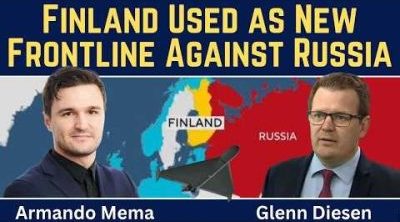
Armando Mema: Finland Used as New Frontline Against Russia
or go to
Aletho News Archives – Video-Images
New Documentary
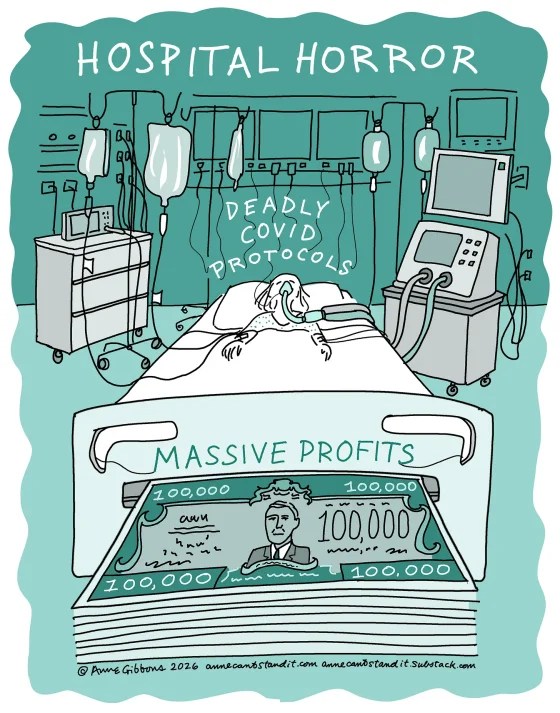
Hospital Horror
Documented in the film,“Bad Medicine”
Blog Roll
 Aletho News
- Poland and Bulgaria put brakes on Ukraine weapons funding
- Russia Reaffirms Its Support for Sovereignty, Territorial Integrity of Lebanon – Russian MFA
- Araghchi: Failure to punish aggressors against Iran endangers all nations
- Iran tells UN Security Council to stop reversing roles of ‘aggressor and victim’
- Disgraced neocons Feith & Libby: stop whining about ‘endless war’
- CENTCOM rejects Israeli claims of preparations for new Iran attacks
- Your Shopping Bag Runs Through Hormuz
- Armando Mema: Finland Used as New Frontline Against Russia
- Gestapo 2.0? Germany grants spy agencies sweeping new powers
- Franco-Palestinian group seeks court ban on Israeli real estate fair in Paris
- If Americans Knew
- An error has occurred; the feed is probably down. Try again later.
- No Tricks Zone
- New Study: Barents Sea Temperatures Were Warmer And Sea Ice Less Extensive In The 1700s Than Today
- German Authorities Start Initiative To Evaluate Public Register For Climate “Disinformation” Spreaders!
- Zonal Asymmetry of Temperature Change in the Antarctic Circumpolar Current
- New Study: The Net Fossil Fuel Contribution To Rising Atmospheric CO2 Has Been Zero For 500 Years
- Germany’s Green Energy Transition Becoming Increasingly Expensive…Another 6 Trillion Euros!
- Sudden Stratospheric Warming, Powerful El Niño Combination May Lead To Extreme Europe Cold, Energy Crisis!
- Two New Studies Find Thwaites Glacier Melt Cannot Be Driven By Human Activity Or A Warming Ocean
- E-Cars Reduce CO2 Emissions By Only 41% Compared To Internal Combustion Engine Vehicles
- Predictions Made By Renowned Climate Professor Over Past Decades Have Been Proven To Be Poor
- New Study Suggests Large Regions Of The Pacific Ocean Have Been Cooling For The Last 80 Years

