Lessons from Libya’s Destruction
Tortilla Con Sal | July 9, 2015
Later this month the outcome is expected of the completely unjust and incompetent show trials held in Libya over the last year or so of around 200 former officials of the Libyan Jamahiriya. If that outcome is reported at all in North American and European media, its real meaning will be completely hidden in self-serving apologetics for NATO’s destruction of Libya in 2011.
The same psy-warfare framework that justified NATO’s campaign of terrorist aggression will falsely present the show trials’ outcome as rough justice dealt out to individuals who deserve no better.
That outcome should put on high alert anyone defending the countries of the Bolivarian Alliance of the Americas against very similar psychological warfare and terrorist subversion supported by NATO governments of the US and its allies. Not for nothing did Hugo Chávez and Daniel Ortega speak out in defense of Muammar al Gaddhafi and Libya against NATO’s terrorist war. They had already learned long ago the very same lessons to have emerged more recently from the utterly depressing human, moral and political catastrophe of Libya’s destruction.
In 2013, a study by a distinguished Harvard University academic acknowledged that the failure in Libya of the US government’s ostensible avowed policy in Libya and in North and West Africa was based on serial falsehoods. That fact-based, acerbic policy criticism from a source generally supportive of US government foreign policy should give much pause for thought. Along with support for Libya from outstanding revolutionary leaders like Ortega, Chavez and Nelson Mandela it amounts to a categorical indictment of received Western opinion about Libya which, across virtually the entire Western political spectrum, sided either openly or indirectly with NATO’s 2011 war.
No one genuinely concerned to defend progress towards an equitable, peaceful multi-polar world based on mutual respect between sovereign, autonomous nations and peoples should underestimate or forget the horror of what NATO did to Libya. Tens of thousands were killed and wounded in attacks by the bombers and helicopters of many NATO countries. Millions were displaced or forced into exile. Cities like Sirte and Bani Walid were devastated. Schools, universities, hospitals, factories producing food products and other essential civilian infrastructure were targeted and severely damaged or destroyed.
The destruction of Libya marked the categorical abandonment of whatever vestigial moral authority may still have remained to the European Union and its member governments.
It demonstrated in the most humiliating way the impotence and irrelevance of the African Union.
It put hard questions about the anti-imperialism of the Iranian and Syrian governments as well as highlighting the race supremacism of the governments of the Arab League and the already damaged integrity of the Palestinian authorities.
Almost all of them quickly recognized the overtly racist renegade Libyan CNT junta. For their part, the then governments of Russia and China weakly accepted NATO country assurances about the defensive nature of the air exclusion zone.
The only governments to emerge with any real credit from the destruction of Libya were the governments of the ALBA countries and a few African governments like Zimbabwe.
Countries like Cuba, Venezuela, Argentina, Nicaragua, Bolivia and Ecuador have all been victims of comprehensive disinformation campaigns of demonization and caricature, although perhaps not so extreme as the final campaign against Libya’s Jamahiriya and Muammar al Gaddhafi.
It is worth considering the basic component of that disinformation war against Libya. What is sometimes called 4th generation warfare is as old as warfare itself. Like Athens versus Sparta, or Rome versus Carthage the fundamental objective of NATO governments and their allies is to make their chosen target seem Other, creating a despised, outcast doppelganger anti-image of the West’s own phony self-image.
So Libya’s Jamahiriya was tagged as undemocratic by hypocritical Western governments, most of whom came to power with around just 20% to 25% of the vote of their electorates, thanks overwhelmingly to elite corporate funding. Libya’s democratic process was one that recognized its society’s contradictions and attempted continual self-renewal.
By contrast, the Western corporate oligarchies offer virtually meaningless periodic elections obfuscated by public relations and organized on a yes-or-yes basis to favor politicians groomed and bankrolled by their countries’ anti-democratic elites. Muammar al Ghaddafi was labeled a dictator even though his policy initiatives were not infrequently rejected within Libya’s system of popular congresses.
In 2009, during a policy conflict between Muammar al Gaddhafi and pro-Western so-called reformers, these could not get their way in Libya’s popular assemblies so they chose staging a violent putsch to achieve the regime change their Western government backers wanted. Venezuela’s experience has been almost identical, although, to date, the country has avoided the kind of coup d’état and subsequent NATO driven war that destroyed Libya Libya was portrayed as a systematic human rights violator.
But Libya’s response to the constant terrorist attacks and subversion it suffered from the very start of its Revolution in 1969 was no different to that of any Western government faced with a similar threat. The British government tortured and murdered alleged subversives all through the Irish war, colluding with sectarian paramilitary death squads. The same pattern of torture and extrajudicial murder also consistently marked the Spanish authorities’ campaign against Basque separatists. Guantanamo’s torture camp symbolizes the brutality and illegality of the US government’s response to terrorist threats.
Libya’s Jamahiriya probably conformed as closely to international human rights norms in relation to fighting terrorism as the three Western governments that led NATO’s war of destruction. Human rights protection in Libya was certainly superior to Western allies like Turkey, Egypt, Israel, Saudi Arabia, Qatar or the other quasi-feudal Gulf State tyrannies.
All the pretexts for the Western assault on Libya’s legitimate government were completely bogus. In any case, as Gerald Perreira points out, the fundamental objective achieved by the destruction of Libya was to shut down the decisive impetus towards African integration led by Muammar al Gaddhafi.
CNT leaders like Mustafa Abdul Jalil were Arab supremacists who fiercely resisted the Pan-African policies advocated by Muammar al Gaddhafi. Arab supremacism, phony neoliberal reformism and the treachery of repressive human rights abusers like Mahmoud Jibril made a lethal reactionary cocktail perfectly suited to ruthless NATO government manipulation. On cue, Western corporate and alternative media presented the corrupt political project of these viciously reactionary elements as a “revolution”, part of the absurdly hyped “Arab Spring”. As if NATO country governments, dedicated to the service of their countries’ corporate elites, have ever promoted genuine democracy or comprehensive human rights around the world.
From Ukraine and Greece, to Yemen and Syria, to Haiti and Honduras, what the Western powers and their allies want is access to natural resources, control of strategically important territories and decisive advantages for their trade and finance. Destroying Libya effectively removed a real threat to Western control and domination in Africa.
Currently, the NATO country elites’ political sales staff, for the moment President Obama, Prime Minister Cameron, President Hollande and Chancellor Merkel, are battering Greece into submission. But those leaders and their allies are using economic and psychological warfare to attack many other targets, not just Greece. They do so against Venezuela and other stubbornly independent countries around the world.
That is why the leaders of Argentina, Cuba, Ecuador, Nicaragua and Venezuela very publicly welcomed the No vote in the Greek referendum. Unlike Libya, in their different regions Syria and Venezuela are part of regional alliances backed at long last by firm leaders in Russia and China, strong enough to face down any likely economic or military threat from the United States and its allies.
But it would be a mistake to forget Libya. Defending the people of Libya represents an important self-defense measure against Western predators in their global psychological warfare assault on the free, anti-imperialist world.
As a leading force in that free world, ALBA country governments should urgently consider challenging the governments of North America and Europe to protect the thousands of political prisoners in Libya who have been tortured and denied due process.
The ALBA country governments and their allies have infinitely more moral and political authority than Western leaders to speak out in defense of fundamental human rights. They should make outspoken use of that authority now to expose the sadism and hypocrisy of Western governments in Libya, Syria, Yemen and elsewhere.
In Libya, they may perhaps yet help to save the lives of as many as 200 former officials of the Libyan Jamahiriya at risk from quasi-judicial murder by the West’s corrupt terrorist proxies in a country they have devastated with merciless cynicism.
UN Srebrenica Resolution Shows Double Standards Justifying Russian Stand
Sputnik – 09.07.2015
WASHINTON — Russia was justified by the evidence in its decision to veto a UN Security Council Resolution on Wednesday that sought to condemn Serbia for genocide over the Srebrenica massacre 20 years ago, US experts told Sputnik.
“After the bruising and pointless campaign to shame Turkey over an Armenian genocide this past year, here we are again in the political game of outrage and finger pointing,” historian and political analyst Dr. Gilbert Doctorow, a board member of the Committee on East-West Accord, told Sputnik on Wednesday.
Up to 8,000 Bosniak Muslims, mainly men and boys, in and around the town of Srebrenica were killed by units of the Army of Republika Srpska under the command of general Ratko Mladic.
Doctorow acknowledged that Srebrenica was an atrocity carried out during a time of war. But he pointed out that it was not an act of genocide nor was it a part of any planned and orchestrated campaign of total extermination.
“Yes, Srebrenica was a war crime, and let things stand there,” the Columbia professor said.
However, Doctorow added, “Calling it genocide cheapens the term by two orders of magnitude and serves only to raise tensions in the UN by those who want to discredit it to justify unilateralism.”
Michael Averko, a New York-based foreign policy analyst and regular contributor to Eurasia Review told Sputnik that Allied bombing campaigns against Germany and Japan killed vastly more civilians, including women and children, than the number of male prisoners killed at Srebrenica.
However, the US and British strategic bombing campaigns are never described as attempted genocides, he said.
“In these World War II examples, men, women and children were killed,” the analyst wrote. “The Srebrenica massacre in question involved Muslim males, with the Muslim nationalist [Alija] Izetbegovic regime recognizing ages 16-64 as worthy for armed service.”
Averko also pointed out that critics who focus on condemning the Serbs for Srebrenica are silent about the documented earlier killings of Serbs by Bosnian Muslims and Croats in the 1992-95 war.
“There was an earlier massacre of Serbs in the Srebrenica area, carried out by forces under the command of Nasir Oric,” he wrote.
Averko also accused the administration of President Barack Obama of double standards in its continued refusal to condemn Turkey for the World War I massacre of 1.5 million Christian Armenians as genocide.
“It is absurd for the US UN Ambassador Samantha Power to bash Russia for not recognizing Srebrenica as genocide,” he said. “The Armenian genocide more aptly fits the definition of genocide than Srebrenica. [Yet] the US government doesn’t formally recognize what happened to the Armenians as genocide.”
According to US military historian R.J. Rummel in his September 2003 online article “Was World War II American Urban Bombing Democide?” US and British bombing campaigns killed 410,000 Germans and 337,000 Japanese, including the 165,000 who died in the atomic bombing of Hiroshima and Nagasaki.
NSA leaked Turkish officials false flag war talk: Report
Press TV – July 8, 2015
A 2014 Turkish Foreign Ministry session, which featured high-level Turkish officials discussing how Turkey could start a war with Syria, was reportedly recorded and leaked by the US National Security Agency (NSA).
German weekly magazine Focus attributed the leakage to the NSA, reporting on the security meeting among former Turkish Foreign Minister Ahmet Davutoğlu, National Intelligence Organization (MİT) head Hakan Fidan, Foreign Ministry Undersecretary Feridun Sinirlioğlu and Deputy Chief of General Staff Gen. Yaşar Güler.
President Recep Tayyip Erdogan, who was prime minister at the time, banned the video-sharing website YouTube after the leakage, which caught Fidan saying he would send four men from Syria to attack Turkey to “make up a cause of war.” Güler is heard saying in response, “What you’re going to do is a direct cause of war.”
Currently serving as Turkish prime minister, Davutoğlu said on July 3 that his country would not hesitate to launch a military intervention in Syria in case of what he referred to as a potential threat to Turkey’s “security.”
The Turkish newspaper Hürriyet Daily also reported last Sunday that the Turkish military had called on all troop commanders stationed along its border with Syria to be present at a meeting aimed at discussing a possible intervention in the crisis-hit country.
Erdogan has accused Syrian Kurds of trying to establish a state in Syria’s north, saying Ankara will leave no stone unturned to prevent such an establishment near its borders.
Ankara has long been engaged in a conflict with the Turkish Kurdistan Workers’ Party (PKK), which has been seeking an autonomous Kurdish region inside Turkey since the 1980s.
Turkey has also been one of the main supporters of the militancy against Syrian President Bashar al-Assad, with reports showing that Ankara actively trains and arms militants operating in Syria.
Israel arming, providing recruits for Takfiri militants in Syria: Report

Israeli soldiers speaking with foreign-backed militants near the Israeli occupied Golan heights in Syria
Press TV – July 9, 2015
A recent report has disclosed that the Israeli regime has been providing recruits as well as military equipment to Takfiri militant groups operating inside Syria in a bid to overthrow the government of President Bashar al-Assad.
Classified documents and files lately obtained by unknown hackers from the computers of Israeli military officials suggest that the Tel Aviv regime hired Syrian and Lebanese nationals to facilitate the transfer of weapons to anti-Damascus terrorists, Lebanon-based and Arabic-language newspaper al-Akhbar reported on Thursday.
The report said that Israeli agents even notified foreign-sponsored militants of the locations that Western military aircraft were to bombard in Syria as part of the US-led coalition against the ISIL terrorist group long before the aerial assaults were conducted.
It also pointed to the close liaison between Israeli authorities and high-profile ISIL commanders.
Syria’s official SANA news agency reported on May 23 that a wounded 27-year-old Takfiri militant had been taken to the Baruch Padeh Medical Center in the northern Israeli settlement of Poriya, located approximately 6 kilometers (3.7 miles) south of the coastal Israeli city of Tiberias, for treatment.
The report added that the Israeli medical center has accepted and treated nearly 175 anti-Syria Takfiris ever since foreign-sponsored militancy broke out in Syria in March 2011.
According to the documents from Israeli hospitals, until last September, Israel’s military had paid USD 10 million from its budget for the treatment of the terrorists injured during clashes with Syrian government forces.
The documents further revealed that a total of 398 injured militants had also been treated at Galil Hospital in Israel’s northern coastal city of Nahariya in the past couple of years. Another hospital in the city of Safed had provided treatment for hundreds of other Takfiri terrorists.
Damascus says Tel Aviv and its Western and regional allies are aiding Takfiri militant groups operating inside Syria.
The Syrian army has repeatedly seized huge quantities of Israeli-made weapons and advanced military equipment from the foreign-backed militants inside Syria.
The conflict in Syria, which started in March 2011, has reportedly claimed more than 230,000 lives up until now.
Ukraine unrecognized republics demand international tribunal on Kiev actions
RT | July 8, 2015
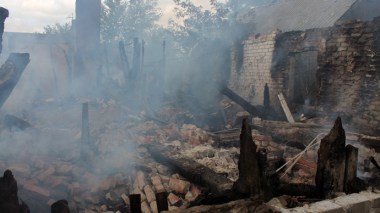
The heads of the Ukrainian unrecognized Donetsk and Lugansk republics have asked the United Nations Security Council to establish an international tribunal to investigate and prosecute those responsible for waging civil war in eastern Ukraine.
“Donetsk People’s Republic [DNR] and Lugansk [LNR] People’s Republic are addressing the UN Security Council with a plea to establish an international tribunal for legal prosecution of those responsible for violation of the International Humanitarian Law and crimes against humanity in Ukraine,” the DNR head, Aleksandr Zakharchenko, and LNR head Igor Plotnitsky said at a joint press conference.
Those found responsible should be brought to trial, they stressed.
The heads of the unrecognized republics are calling for the leaders of Russia, the US, China, Great Britain and France to consider this proposal at the next UNSC session.
“Expecting your soonest reply to the proposal,” Plotnitsky said.
Aleksandr Zakharchenko said Kiev’s operation in Donbass is “a direct violation of the Geneva convention.”
The military operation in eastern Ukraine began in spring last year after residents in the Donetsk and Lugansk regions refused to recognize the coup-imposed government in Kiev.
On February 12, in Minsk, peace negotiations between the two sides resulted in a second ceasefire agreement. The first was signed in summer 2014 and was violated practically immediately. The current ceasefire is also being violated on a frequent basis. Shelling in the self-proclaimed Donetsk and Lugansk People’s Republics happens every other day, with both sides pointing the finger at each other.
Aleksandr Zakharchenko said the prosecutors’ offices of both republics have collected copious evidence of war crimes committed by Kiev troops.
“There is a considerable volume of evidence of the Ukrainian National Guards’ involvement in torture and killing of civilians. Dozens of mass graves have been found on territory that was occupied by Ukrainian troops,” Zakharchenko said.
The DNR and LNR also have evidence of Ukrainian troops using weapons prohibited by the international arms conventions, including cluster and phosphorous bombs.
Since the beginning of 2015 an estimated 1,212 civilians, including 25 children, have died in shelling incidents.
Israeli Minister to Decide on Deportation of Palestinian MPs
Ma’an – July 7, 2015
The Israeli Minister of the Interior was given 30 days by the Supreme Court on Monday to reach a final decision on the possible deportation from East Jerusalem of three Palestinian lawmakers and a former Palestinian Authority Jerusalem affairs minister.
Monday’s hearing was a follow-up to a previous hearing in the same court on May 5, 2015 that discussed the possibility of revoking the Jerusalem residency rights of officials Muhammad Abu Teir, Ahmad Attun, Muhammad Tutah and Khalid Abu Arafeh.
While Abu Arefeh formerly served as the PA’s minister of Jerusalem affairs, the other three are members of Palestine’s parliament, the Palestinian Legislative Council.
All four live in occupied East Jerusalem.
The Israeli Ministry of the Interior has been threatening to deport the lawmakers and former minister since Hamas won Palestinian legislative elections in 2006.
The pretext for the ruling is disloyalty to the Israeli state, the lawmakers said last year.
The four were initially detained along with other lawmakers and, after their release, Israeli police seized their identity documents.
The permanent residency status of 107 Palestinian residents of East Jerusalem was revoked in 2014, adding to the 14,309 revoked by Israel since 1967.
America’s Endless Air Wars
By Nicolas J S Davies | Consortium News | July 6, 2015
U.S. Central Command’s latest figures on its aerial bombardment of Iraq and Syria reveal that this is the heaviest U.S. bombing campaign since President George W. Bush’s “Shock and Awe” campaign against Iraq in 2003. In the campaign’s first ten months from August 2014 to May 2015, the U.S. and its allies conducted 15,245 air strikes, or an average of 51 air strikes per day.
This is only the latest campaign in a 15-year global air war, largely ignored by U.S. media, in which the United States and its allies have conducted at least 118,000 air strikes against other countries since 2000. The 47,000 air strikes conducted in the 6 ½ years since President Barack Obama took office are only a small reduction from the 70,000 in eight years of the Bush administration, and the current campaign will easily make up that deficit if it continues at this intensity until Obama leaves office.

Afghanistan has been the most heavily bombed country, with at least 61,000 air strikes since 2001. That includes 24,000 bombs and missiles in the first year of the war and a relentless bombing campaign that struck Afghanistan with another 29,000 bombs and missiles between 2007 and 2012, a slow motion version of “Shock and Awe.” That was an average of 13 air strikes per day for six full years, two years under Bush and four under Obama. The heaviest bombardment was in October 2010, with 1,043 air strikes that month, but that total is now eclipsed every month by the new campaign in Iraq and Syria.
Iraq had already suffered about 34,000 air strikes since 2000 before the latest campaign began. There were at least 800 air strikes in the “No Fly Zone” bombing campaign to destroy Iraq’s air defenses between 2000 and 2002; 29,200 air strikes in “Shock and Awe” in 2003, a campaign whose planners compared it to a nuclear attack; and another 3,900 during the U.S. occupation, peaking with 400 strikes in January 2008 as remaining centers of armed resistance were obliterated by air strikes, Spectre gunships and heavy artillery in the climax of the “Surge.”
But until the new campaign in Iraq and Syria, the seven-month NATO-Gulf Cooperation Council bombing of Libya was the heaviest bombardment since “Shock and Awe”, with 7,700 air strikes in seven months, or 36 air strikes per day. NATO and its Arab monarchist allies plunged Libya into intractable chaos and violence, exposing “regime change” as a euphemism for “regime destruction.”
NATO’s destruction of Libya spurred Russia to finally draw the line on its 20-year acquiescence to Western aggression and military expansion. Since then, the U.S. and its allies have persisted in their “regime destruction” policy in Syria and Ukraine, threatening strategically important Russian naval bases in Tartus and Sevastopol, what has evolved from an asymmetric war on a series of relatively defenseless countries into full-blown 1950s-era nuclear brinksmanship.
Drones have played a growing role in the U.S. air war, but they still account for only a fraction of total U.S. and allied air strikes, several thousand out of 118,000 air strikes in 15 years.
None of these figures include Israeli air strikes against Palestine, the current Saudi-led bombing of Yemen, or French operations in West Africa, as I haven’t found comparable figures for those campaigns, but they must add many thousand more air strikes to the real total.
Keeping the People in the Dark
In a recent article, Gareth Porter reported that the Pentagon is seriously opposed to putting more “boots on the ground” in Iraq or Syria, but that the generals and admirals are prepared to keep bombing them more or less indefinitely as the political path of least resistance for themselves and the White House. This may indeed be the “safe” course for a politically-driven administration and a Pentagon that is always thinking of its public image and its future funding.
But it depends on keeping the public in the dark about several critical aspects of this policy. First, there is little public resistance to this policy mainly because few Americans know that it’s happening, let alone understand the full scale of the bloodshed and devastation perpetrated in our names for the past 15 years.
The second thing the Pentagon doesn’t want you to think about is the deceptive role of “precision” weapons in U.S. propaganda. Considering how accurate these weapons really are in relation to the huge numbers of them raining down on country after country, it is not surprising that they have killed or wounded millions of civilians and destroyed hundreds of thousands of homes and civilian infrastructure, as we see in photographs and video of the ruins of Fallujah, Sirte or Kobani.
A direct hit with a single 500- or 1,000-pound bomb will cause death, injury and destruction up to hundreds of feet from its point of impact, so even accurate air strikes inevitably kill and maim civilians and destroy their homes. But whatever proportion of these 118,000 bombs and missiles have actually missed their targets have wreaked completely indiscriminate death, injury and destruction.
Rob Hewson, the editor of Jane’s Air Launched Weapons, estimated that 20 to 25 percent of the “precision” weapons used in “Shock and Awe” in 2003 missed their targets. Another one third of the bombs and missiles used in “Shock and Awe” were not “precision” weapons to begin with.
Even the Pentagon has not claimed a quantum leap in its “precision” weapons technology since 2003, so it is likely that at least 15 percent are still missing their targets, adding daily to a massive and mounting toll on innocent civilians.
As Hewson told the Associated Press in 2003, “In a war that’s being fought for the benefit of the Iraqi people, you can’t afford to kill any of them. But you can’t drop bombs and not kill people. There’s a real dichotomy in all of this.”
Body Count, a recent report published by Physicians for Social Responsibility, confirmed previous estimates of well over a million people killed in America’s wars since 2000. This and previous studies document the horrific results of what Hewson and other experts understand only too well, that “you can’t drop (100,000) bombs and not kill (hundreds of thousands of) people.”
Another element in the Pentagon’s shaky propaganda house of cards is its effort to obscure what bombs and missiles actually do to their victims. Americans watch the Islamic State beheading videos on TV or YouTube but we never see videos of people decapitated or children dismembered by the bombs our taxes are paying for. But our bombs behead people too.
Apologists claim that U.S. bombing is morally superior to the “terrorism” of America’s enemies, because the U.S. killing and beheading of civilians is “unintentional” rather than “deliberate.” The late Howard Zinn, a former U.S. Air Force bombardier and later a history professor, responded to this claim in a letter to the New York Times in 2007:
“These words are misleading because they assume that an action is either ‘deliberate’ or ‘’unintentional.’ There is something in between, for which the word is ‘inevitable.’ If you engage in an action, like aerial bombing, in which you cannot possibly distinguish between combatants and civilians (as a former Air Force bombardier, I will attest to that), the deaths of civilians are inevitable, even if not ‘intentional.’
“Does that difference exonerate you morally? The terrorism of the suicide bomber and the terrorism of aerial bombardment are indeed morally equivalent. To say otherwise (as either side might) is to give one moral superiority over the other, and thus serve to perpetuate the horrors of our time.”
Millions of ‘Enemies’
In fact, U.S. armed forces are waging war on millions of people for whom becoming combatants in a war would be the last thing they would ever consider if we had not brought our war to their doorsteps. The Center for Civilians in Conflict recently interviewed hundreds of local people who have participated as combatants in conflicts in Bosnia, Libya, Gaza or Somalia. It found that their motivations were almost entirely defensive, to protect themselves, their families, their communities or their countries.
When military forces attack or invade a country, many ordinary people feel compelled to take up arms to defend themselves and their homes. When the forces that put them in this unbearable predicament in the first place treat their efforts to defend themselves as a legal “green light” to target them with force and call them “terrorists,” they are driven to join better organized armed resistance movements that offer them protection in numbers and an effective way to fight back.
The essential first step to breaking the escalating spiral of violence is to force the aggressors, in this case the United States and its allies, to cease their aggression, including their state sponsorship of armed groups or “terrorists” in the affected countries. Then legitimate diplomatic initiatives can begin the difficult work of resolving the complex political and humanitarian problems caused by U.S.-led aggression and beginning to restore peace and security.
In his 1994 masterpiece, Century of War, the late Gabriel Kolko documented that war was the catalyst for all the major political revolutions of the Twentieth Century. While the working people of the world have otherwise failed to “rise up” as Marx predicted, the one thing that has reliably driven them to do so is the horror of war.
The war that the United States is waging today is proving no different. Armed resistance is spreading throughout the affected countries, spawning new ideologies and movements that defy the conceptual frameworks and limited imagination of the U.S. officials whose actions gave birth to them.
U.S. leaders of all stripes, military or civilian, Democrat or Republican, still fail to grasp what Richard Barnet concluded in 1973 as he studied the U.S. defeat in Vietnam, “at the very moment the number one nation has perfected the science of killing, it has become an impractical instrument of political domination.”
The last 15 years of war have served to confirm Barnet’s conclusion. After 118,000 air strikes, millions of casualties, trillions of dollars squandered, and country after country plunged into chaos, the U.S. has failed to gain political control over any of them.
But our complacent leaders and their self-satisfied advisers blunder on, debating who to threaten or attack next: Russia? China? Iran? Which “threat” provides the best pretext for further U.S. military expansion?
As Gabriel Kolko observed, because of “inherent, even unavoidable institutional myopia, … options and decisions that are intrinsically dangerous and irrational become not merely plausible but the only form of reasoning about war and diplomacy that is possible in official circles.”
But U.S. war-making is not just dangerous and irrational. It is also a crime. The judges at Nuremberg defined aggression, attacking or invading other countries, as the “supreme international crime, differing only from other war crimes in that it contains within itself the accumulated evil of the whole.” The UN Charter goes one step further and prohibits the threat as well as the use of force.
Benjamin Ferencz, the only surviving member of the prosecution team at Nuremberg, is a fierce critic of illegal U.S. war-making. In response to U.S. war crimes in Vietnam, he dedicated the rest of his life to establishing an International Criminal Court (ICC) that could prosecute senior officials of any government who commit aggression and other war crimes.
Ferencz is hailed as the founding father of the ICC, but his vision of “Law Not War” remains unfulfilled as long as his own country, the United States, refuses to recognize the jurisdiction of either the ICC or the International Court of Justice (ICJ).
By rejecting the jurisdiction of international courts, the U.S. has carved out what Amnesty International has called an “accountability-free zone,” from which it can threaten, attack and invade other countries, torture prisoners, kill civilians and commit other war crimes with impunity.
Nuremberg ‘Exemption’?
U.S. government lawyers enjoy the privilege, unique in their profession, of issuing legally indefensible but politically creative legal cover for war crimes, secure in the knowledge that they will never be forced to defend their opinions before an impartial court.
Ben Ferencz very graciously wrote a preface to my book, Blood On Our Hands: the American Invasion and Destruction of Iraq, and he spoke at an event with me and David Swanson in 2011, just before his 91st birthday. Ben talked about Nuremberg and the ICC, and he compared U.S. justifications for its “preemptive” illegal war-making to the defense offered by SS Gruppenfuhrer Otto Ohlendorf at Nuremberg.
As Ben explained, “That Ohlendorf argument was considered by three American judges at Nuremberg, and they sentenced him and twelve others to death by hanging. So it’s very disappointing to find that my government today is prepared to do something for which we hanged Germans as war criminals.”
If we do not hold American war criminals accountable for their crimes, and accept the jurisdiction of international courts to do so if we do not, how else can we serve notice on those who come after them that they must never do this again?
Argentina, Guatemala and other countries in Latin America are prosecuting and jailing mass murderers like Videla and Rios Montt who once took for granted that they could kill with impunity. America’s masters of war should not assume that we will fail to bring them to justice.
As for the collective responsibility we all share for the crimes committed by our country and our armed forces, we must be prepared to pay substantial war reparations to our millions of victims and the countries we have destroyed. We could start by paying the reparations ordered by the International Court of Justice when it convicted the United States of aggression against Nicaragua in 1986, and the $3.3 billion promised by President Nixon to repair at least some of the U.S. bomb damage in Vietnam.
These would be concrete steps to tell the rest of the world that the United States was finally ready to abandon its failed experiment in “the science of killing,” to be bound by the rule of law, and to start cooperating in good faith with the rest of humanity to solve our common problems.
~
Nicolas J S Davies is the author of Blood On Our Hands: the American Invasion and Destruction of Iraq. He also wrote the chapters on “Obama at War” in Grading the 44th President: a Report Card on Barack Obama’s First Term as a Progressive Leader.
Gaza war anniversary: ‘Aggressive’ UK police arrest 8 at Israeli arms factory protest

RT | July 6, 2015
Staffordshire Police have been accused of making a “heavy-handed” intervention during a protest outside an Israeli arms factory organized to mark the anniversary of last year’s Gaza conflict.
At least eight people were arrested Monday during the demonstration outside a factory in Shenstone, which is owned by a subsidiary of Israeli defense contractor Elbit Systems.
An activist with London Palestine Action, speaking in personal capacity, told RT that the demonstration was meant to be a “fun, creative” experience, but was met with “aggressive [and] forceful police tactics.”
Campaigners estimate 200 people attended the protest near Birmingham, which was the site of a similar blockade in August 2014.
The protest was timed to mark the one-year anniversary of start of the Gaza conflict. Activists held a memorial service for the 2,200-plus Palestinian victims, 490 of whom were children.
Protests were also held in Tamworth and Broadstairs in the UK, and Melbourne in Australia.
Shenstone protesters targeted the UAV Engines factory where engines for Hermes, one of Israel’s primary armed drones, are manufactured.
Drones owned by the Israeli Defense Force (IDF) may have been used in attacks that resulted in civilian deaths and violated international law, according to reports by Human Rights Watch and The Guardian.
A variety of campaign groups including War on Want, Campaign Against the Arms Trade and the Palestine Solidarity Campaign united under the umbrella movement “Block the Factory” to organize the day of action.
Protesters posted videos on Twitter indicating a heavy police presence. At one point, a police officer is seen dragging a man holding a megaphone out of a crowd and arresting him.
Speaking to RT, activist Alex Levan, 31, said organizers had intended the protest to be peaceful.
“There were lots of police from early on,” he said. “They were very rough, they manhandled protestors, [and] they were very heavy-handed.”
“The idea was to reclaim the space around the factory and to turn it into a real festival environment, a creative activist environment with workshops, with a family space, with arts and crafts.”
“But the police were heavy-handed, they’ve made at least 10 arrests, but there will probably be more. These were completely unprovoked arrests, these were peaceful protests,” he added.
“But we did spend the majority of the day, from the early hours of the morning, blocking the factory.”
The protest succeeded in halting factory production for the day.
Activists called on the British government “to initiate an immediate two-way arms embargo – to stop arming Israel and to stop buying weapons from Israel.”
The Hermes, which is partly produced in the UK, carries two Spike-MR (medium range) missiles, which are produced by Israeli firm Rafael Advanced Defense Systems.
It can stay airborne for up to 24 hours at altitudes of up to 18,000 feet (5,486 meters) and is equipped with optical, infrared and laser sensors that enable it to identify and track targets.
Human Rights Watch claim to have found evidence Spike missiles were used against two Red Cross ambulances during Israel’s conflict in Lebanon in 2006.
Six medical workers and three patients were injured in the attack. The Geneva Convention forbids armed forces from targeting medical staff or hospitals.
Staffordshire Police Chief Inspector Steve Smith said: “At Tamworth this morning, a number of individuals climbed onto the roof of a factory building as part of a protest. All seven voluntarily came off the roof. Police officers then directed them to leave the area under public order legislation. No arrests were made.
“At Shenstone, a number of protesters locked themselves to fencing and others blocked the road. A civil injunction is in place around this location so police have the power to arrest anyone breaching this injunction.
“So far eight people, seven men and one woman, have been arrested on suspicion of breaching a high court injunction.”
Nuclear Deal-Making in Vienna and Tehran
By Kaveh L. Afrasiabi | Iran Diplomacy | July 5, 2015
The latest reports from Vienna indicate that the negotiators from Iran and the “5 +1” nations, i.e., UN Security Council’s Permanent Powers plus Germany, have reached a tentative deal and are only inches away from turning it into the final agreement.
According to a source close to the Iran negotiation team, as of July 4th, there were still some residual issues regarding the sanctions, the Additional Protocol, and what is referred to as the “Possible Military Dimension (PMD),” but none of these at this stage is going to “break the deal” and are expected to be resolved in the next few days.
One of the reasons for the rapid progress of the Vienna talks has to do with the important Tehran visit of the head of International Atomic Energy Agency (IAEA), which was reportedly successful in closing the gaps between Iran and the agency, which has repeatedly confirmed the absence of any evidence of diversion of nuclear material in Iran and, yet, insisted that it is unable to verify the complete peacefulness of Iran’s civilian program in light of the PMD issues.
From Iran’s vantage point, however, the PMD has been exploited as a license to access Iran’s military secrets, which is why it was important for Mr. Amano to meet with Iranian leaders last week and reach a new understanding on the future scope of IAEA’s inspection access. Certainly, the U.S.’s unreasonable demand for inspections “anytime, anywhere,” is unacceptable and by now the Americans have realized it and retreated from what could have been a deal-breaker.
On the issue of sanctions, Iran has rightly insisted on the concept of simultaneity, so that the other side will not have the luxury of playing with delays after Iran’s fulfillment of its obligations. With respect to the timeline for the removal of sanctions, there would be a UN Security Council resolution that would render moot the existing sanctions resolutions on Iran. By all indications, this is a tremendous diplomatic victory for Iran, thus short cutting a potentially arduous and lengthy process.
Henceforth, with the imminent announcement of a final agreement in Vienna, the stage is set for a tremendous breakthrough in a nuclear stalemate that has blocked normal relations between Iran and the West. In addition to releasing the potential for rapid growth in market relations between the two sides, the final nuclear agreement also carries the seed of “linkage” to anti-terrorism, deemed as a “common threat” by Iran’s lead negotiator, foreign minister Javad Zarif, who has exhorted the West to wrap up the nuclear talks so that both sides can focus on a hitherto missing comprehensive strategy to defeat the growing menace of terrorism, reflected in the on-going barbaric atrocities of the self-declared Islamic State (Daesh).
In terms of the reaction by the conservative Arab bloc led by Saudi Arabia, the final nuclear deal ought to bring a new sense of realism to Riyadh, which has been led astray by a senseless, even genocidal, unilateral war on Yemen, which must be brought to an end for the sake of millions of suffering people in Yemen as well as regional stability. Some of the Persian Gulf Cooperation Council states such as UAE are eyeing to rip huge economic benefits from the lifting of Iran sanctions and, therefore, it is futile for Saudi Arabia to continue with its anti-deal approach that is bound to put it at odds with some PGCC member states.
Israel, on the other hand, is expected to continue with its current negative campaign against the deal, hoping that the U.S. Congress would ruin it, yet even the Republican opponents of the deal have recently conceded that they lack the votes to override a presidential veto. Hopefully, the nuclear deal will spawn a new era of attention on Israel-Palestinian issue, which has been quietly festering and requires serious global focus, which has to some extent been deflected so far due to the Iran nuclear crisis.
While it remains to be seen what a final nuclear agreement would look like in the technical details, it is a sure bet that it will be complex, multi-layered, and fully dependent on the faithful implementation by both sides, which is why a special dispute resolution commission will be handling the issues of potential non-compliance. A similar panel set up by the 2013 Geneva Agreement was highly successful in this regard and has thus set a positive precedent. One of Iran’s informal complaints during the timeline of the Geneva agreement has been, however, that the U.S. had officially agreed to certain provisions, such as the lifting of restrictions on shipping insurance, and yet would send envoys to Europe to discourage the Europeans from entering into new contracts with Iran. Such “double dealings” with Iran must stop after a final deal is signed, which will sound the death knell for the unjust sanctions regime on Iran.
Saudi fighter jets target Yemen, killing at least 10
Press TV – July 6, 2015
Saudi fighter jets have once again targeted various areas in war-torn Yemen, killing at least 10 people in the Arab country.
At least 7 people were killed on Sunday night after Saudi warplanes pounded residential areas in the town of al-Ma’ala in Yemen’s southwestern Aden Province, the country’s al-Masirah television reported.
Another two people lost their lives in airstrikes carried out against the al-Zamah district in the northwestern Yemeni city of Sa’ada.
Saudi planes also bombarded Yemen’s coast guard base in the town of al-Makha in the southwestern province of Ta’izz, killing one person.
A school in the town of Midi in the northwestern province of Hajjah was also targeted in air raids.
In the Yemeni capital, Sana’a, Saudi jets reportedly pounded the houses of tribal chiefs and businessmen loyal to the Houthi Ansarullah movement in addition to the Republican Guard Academy.
In a retaliatory attack, the Yemeni army backed by Popular Committees targeted the al-Radif military base in Saudi Arabia’s southwestern city of Jizan with six missiles.
Saudi Arabia has been bombarding different areas in Yemen since March 26 without any authorization from the United Nations and heedless of international calls for the cessation of its deadly airstrikes against the impoverished country.
Over 2,600 Yemeni people have been killed and at least 11,000 others injured in the conflict in Yemen since March 19, according to the UN.
Local Yemeni sources put this number at more than 4,500.
Featured Video

Armando Mema: Finland Used as New Frontline Against Russia
or go to
Aletho News Archives – Video-Images
New Documentary
Hospital Horror
Documented in the film,“Bad Medicine”

Blog Roll
 Aletho News
- US rewrites history to dodge blame for illegal war on Iran: Foreign Ministry spokesperson
- TURBO CANCER DATA from Ontario, Canada (OHIP Insurance Billing Data)
- Iran warns France not to fall for Israeli false-flags operations
- Poland and Bulgaria put brakes on Ukraine weapons funding
- Russia Reaffirms Its Support for Sovereignty, Territorial Integrity of Lebanon – Russian MFA
- Araghchi: Failure to punish aggressors against Iran endangers all nations
- Iran tells UN Security Council to stop reversing roles of ‘aggressor and victim’
- Disgraced neocons Feith & Libby: stop whining about ‘endless war’
- CENTCOM rejects Israeli claims of preparations for new Iran attacks
- Your Shopping Bag Runs Through Hormuz
- If Americans Knew
- An error has occurred; the feed is probably down. Try again later.
- No Tricks Zone
- New Study: Barents Sea Temperatures Were Warmer And Sea Ice Less Extensive In The 1700s Than Today
- German Authorities Start Initiative To Evaluate Public Register For Climate “Disinformation” Spreaders!
- Zonal Asymmetry of Temperature Change in the Antarctic Circumpolar Current
- New Study: The Net Fossil Fuel Contribution To Rising Atmospheric CO2 Has Been Zero For 500 Years
- Germany’s Green Energy Transition Becoming Increasingly Expensive…Another 6 Trillion Euros!
- Sudden Stratospheric Warming, Powerful El Niño Combination May Lead To Extreme Europe Cold, Energy Crisis!
- Two New Studies Find Thwaites Glacier Melt Cannot Be Driven By Human Activity Or A Warming Ocean
- E-Cars Reduce CO2 Emissions By Only 41% Compared To Internal Combustion Engine Vehicles
- Predictions Made By Renowned Climate Professor Over Past Decades Have Been Proven To Be Poor
- New Study Suggests Large Regions Of The Pacific Ocean Have Been Cooling For The Last 80 Years

