The United States has informed Syria that it will conduct airstrikes against the Islamic State (IS) for three years, Syrian Foreign Minister Walid Muallem said Saturday.
“They [the United States and its allies] said they will strike for three years. They informed us but this doesn’t mean they have our acceptance,” Muallem said.
Earlier in September, the United States announced the formation of an international coalition aimed at fighting IS militants. Washington and its allies have already conducted a number of airstrikes on IS positions both in Syria and Iraq.
The United States has been carrying out airstrikes against the IS on the Syrian territory without any formal permission from Damascus.
Russian Foreign Minister Sergei Lavrov said Friday that the coalition should seek consent of the countries, in which the airstrikes are conducted.
Hundreds of American protesters, angered by Israel’s recent deadly assault on the Gaza Strip, gathered at the Port of Oakland to block an Israeli ship from unloading its cargo.
Workers with the International Longshore and Warehouse Union (ILWU) refused to unload the Zim Shanghai as about 200 activists picketed outside several of the port’s gates on Saturday morning.
The cargo ship is managed by Israel’s largest shipping firm, Zim Integrated Shipping Services.
About 50 police officers were also present at the port.
The protesters said they would continue with their “Block the Boat” campaign.
They said Israeli authorities must be held responsible for the deaths of more than 2,100 Palestinians during the recent 50-day war on Gaza.
“I think it was a big victory today for those who are opposed to the policies of Israel in Gaza,” said Steve Zeltzer, an organizer of the protest.
Similar actions were taken in August, when protesters blocked Israeli-owned ship Zim Piraeus for five days, forcing it to leave for Los Angeles with most of its cargo unloaded.
Longshore workers refused to cross picket lines to unload Zim Piraeus in August.
Protesters on Saturday said they hoped to achieve the same outcome.
“We ask the ILWU to carry on its long historical tradition of opposing injustice and honoring community picket lines. Let’s keep the pressure on and continue this tradition of labor blockades against oppression,” the “stop ZIM action committee” said in a statement.
The Yellow Book: The first document from the secret archives of the Army of El Salvador during the civil war comes to light September 28, 2014, International Right to Know Day
A 1980s-era document from the archives of El Salvador’s military intelligence identifies almost two thousand Salvadoran citizens who were considered “delinquent terrorists” by the Armed Forces, among them current President Salvador Sánchez Cerén, a former guerrilla leader. Other individuals listed include human rights advocates, labor leaders, and political figures, many known to have been victims of illegal detention, torture, extrajudicial execution, forced disappearance, and other human rights abuses.
Called the Libro Amarillo or Yellow Book, the report is the first-ever confidential Salvadoran military document to be made public, and the only evidence to appear from the Salvadoran Army’s own files of the surveillance methods used by security forces to target Salvadoran citizens during the country’s 12-year civil war. Now the Yellow Book has been posted on-line, along with related analysis and declassified U.S. documents, through a collaboration between the National Security Archive, the University of Washington Center for Human Rights and the Human Rights Data Analysis Group (HRDAG).
According to the document’s introduction, the Yellow Book, dated July 1987, was compiled by the Intelligence Department (C-II) of the Estado Mayor Conjunto de la Fuerza Armada Salvadoreña (EMCFA, Joint Staff of the Armed Forces). It consists of a systematic list with 1,915 entries on targeted individuals, 1,857 identified by name, along with corresponding photographs, and notes on their alleged connections to suspect organizations including unions, political parties, and rebel groups of the Farabundo Marti National Liberation Front (FMLN). A hand-written note on its cover page indicates the report was intended to aid security forces in identifying the opposition. “Use it,” the note says, “Make copies of the photographs and put them on your bulletin board so you will know your enemies.”
Although analysis of the Yellow Book continues, preliminary research makes clear that some of the individuals listed in it were killed or disappeared and never seen again; others were captured, tortured, and later released. Under the direction of HRDAG Executive Director Patrick Ball, researchers cross referenced names listed in the Yellow Book with four historical databases of reports of human rights violations collected from 1980-1992. This process found 273 names in the Yellow Book, or 15%, that matched reports of killings or extrajudicial executions; 233 or 13% matching reports of forced disappearance; 274 or 15% matching reports of torture; and 538 or 29% matching reports of detention or arrest. In total, at least 43% of names listed in the Yellow Book correspond with these historical human rights databases. View the full report here.
A former U.S. military source who served in El Salvador during the 1980s, who declined to be named, has stated that the Yellow Book appears to be an authentic product of Salvadoran military intelligence, one of many related documents created to track and register perceived threats. The original document, a photocopy of an unknown master copy, was donated to a Salvadoran civil society organization by an individual who claimed to have found it in a house during a move. […]
The appearance of the Yellow Book challenges years of stonewalling by El Salvador’s army and security forces about their role in the bloody civil war that left at least 75,000 civilians dead, and an estimated 8,000 missing or disappeared, according to the United Nations. The refusal of the Salvadoran government to release its official records was especially frustrating to the UN Truth Commission, established in 1992 by the peace accords. While the commission had access to survivor testimonies, evidence gathered from exhumations, published human rights reports, and thousands of declassified U.S. documents made available by the National Security Archive, its repeated requests to the Salvadoran government for access to state archives were ignored. The Yellow Book’s posting today is in recognition of International Right to Know Day, celebrated around the world to promote the right of all citizens to have access to information about their governments.
The publication of the Yellow Book also comes at a time when the Salvadorans are re-evaluating the history of human rights abuses committed during the conflict. Organizations such as the Human Rights Institute of the Central American University (IDHUCA), Asociación Pro-Búsqueda, and others have presented dozens of criminal complaints for crimes against humanity related to torture, forced disappearance, extrajudicial executions, and massacres, and are calling on the government to release the historical records of the security forces for a full accounting of the past.
In this charged climate, in which prominent organizations seeking justice have been shuttered and attacked, human rights advocates await a decision by the Supreme Court, which is reviewing the amnesty law passed in 1993, guaranteeing impunity for perpetrators of grave human rights violations. If the law is nullified or found unconstitutional by the Court, a major roadblock to accountability will be lifted. As a record of the Salvadoran state’s surveillance and persecution of its own citizens, the Yellow Book may serve as evidence in future claims for justice.
Astounding events over the last several weeks have once again put U.S. torture in the spotlight. Evidence of spying by the CIA on Senate staffers investigating the Agency provoked an unprecedented apology from CIA director John Brennan, calls for his removal, and a response from President Obama at his August 1st press conference.
The backdrop is the long delayed but pending public release of the summary of the over 6000 page investigative report of the Senate Intelligence Committee on CIA torture. The investigation was initiated over five years ago. The report was approved by the committee 20 months ago and approved for release 5 months ago. As we move into autumn, the date of its official release is still in question.
I. The CIA
The CIA has done everything possible to undermine any investigation into its secret rendition, detention and interrogation program. There have been several facets to the CIA’s defensive strategy:
The Senate report will purportedly accuse the CIA of lying to the public and to Congress. That will be unsurprising to anyone who knows the long history of the CIA, first revealed in detail by the Church Committee in 1975. Secrecy and lying have been an Agency hallmark. The pre-9/11 history of CIA involvement with torture in Latin America and Southeast Asia is just one example.
In 2005, the CIA destroyed videotape evidence of interrogations involving torture. In 2009, the it orchestrated a media campaign warning of the consequences for national security of a criminal investigation, capped by a letter to Obama from seven former directors of the CIA warning that the extremely limited, preliminary investigation of CIA personnel who went “beyond guidance” would severely compromise the Agency. (The investigation eventually closed with no criminal charges filed.)
When the Senate committee began its work, the CIA insisted investigators use a special CIA facility for the review of documents. It then monitored Senate staff computers, read staffers’ emails and removed a damning internal report. Brennan denied that the CIA had spied on the Senate staff, calling the allegations “beyond reason” but in late July the CIA’s Inspector General’s investigation confirmed it. In March, the CIA countered the charges of spying along with a referral to the Justice Department by asking the DOJ to open an investigation of illegal behavior of committee staff. In response, Diane Feinstein, the normally hawkish chair of the Senate committee, gave an unprecedented, angry speech on the Senate floor about CIA bullying.
Further, CIA officials have publicly accused the committee of bias and the Agency will write a dissent that will be appended to the report. Not least, the CIA can virtually dictate redactions. It is extraordinary that the very agency being investigated by the Senate has the power to redact the Senate’s report of its investigation. The CIA’s redaction review took months and has now moved to the center of a controversy between Feinstein and the White House (which coordinated, participated in and approved the redaction process). Feinstein asserted that the proposed redactions “eliminate or obscure key facts that support the report’s findings and conclusions.” She further said that she will not make the report public “until these redactions are addressed to the committee’s satisfaction.”
II. The President
At a news conference on August 1st, President Obama was asked about Brennan. First, Obama expressed “full confidence” in Brennan, referring to CIA spying on the Senate staff as a matter that “CIA personnel did not properly handle …” and “some very poor judgment was shown.” Given the enormous implications for a functioning democracy of the CIA’s unlawful misconduct, Obama’s language seems mild.
Second, the president acknowledged “we did some things that were wrong.” “We tortured some folks.” These comments were qualified by “in the immediate aftermath of 9/11.” Some commentators laud the president for using the word “torture” but others point out that his language actually minimized what happened. From 2002 to 2009, hundreds of people were tortured and hundreds more subjected to cruel, inhuman and degrading treatment. There have been over 100 deaths of people in detention, many likely to be a direct result of torture. The torture and abuse went on for years. (I leave aside here continuing accusations of U.S. personnel being involved in torture since 2009.)
Third, Obama then claimed to “understand what happened.” His explanation emphasized “how afraid people were after the Twin Towers fell,” “people did not know whether more attacks were imminent,” and national security officials felt “enormous pressure.” He told us that we should “not … feel too sanctimonious in retrospect,” given that officials had a “tough job.” This framing is a version of the fall-back position accompanying the more assertive claims that “enhanced interrogation” kept America safe. Whether or not torture was ineffective; whether or not it was, as the president said, “contrary to our values”; and whether or not it was illegal, in the end it was, Obama is suggesting, understandable—that is, excusable under the circumstances.
After all, Obama asserted, the acts in question were committed by “real patriots”—i.e., right-minded people who simply acted out of love of country. The implication is that the torture is pardonable and that it would be ungrateful to criticize patriots for anything more than misjudgment under extraordinary circumstances. The logic of this nationalist rhetoric is to place off limits the harder questions about what happened and why: Why did state institutions routinely operate outside the law, lie to Congress, destroy evidence, and adopt a “by any means necessary,” “gloves-off” approach to problems of national security? Whether CIA operatives or presidents, patriots cannot be held accountable for committing war crimes. For love of country, let’s just move on. As Andrew Sullivan put it, “We tortured. It was wrong. Never mind.”
Next, Obama—again using the word “torture” and saying that “we crossed a line”–called on the country “to take responsibility for that so that hopefully we don’t do it again in the future.” Certainly. Yet, the president might have been more explicit that the line crossed was not only moral; it was legal—and no amount of Office of Legal Counsel “guidance” (based on radically distorted interpretations of what is legally permissible) or even immunities provided by Congress can alter that fact. Moreover, the “we” who “crossed a line” remains purposefully vague. After all, specific officials crossed that line, acting through the CIA, the military, the executive branch, and with possible complicity by individual members of Congress.
Finally, what does Obama mean when he urges the “country” to take responsibility? Remember it was the same Obama who in 2009 urged the country to “look forward rather than look backward,” who refused to pursue criminal accountability or even a bipartisan commission of inquiry. It is the same Obama who appears to be supporting a redaction process that Feinstein says undermines the conclusions of the report. Obama’s statement that the country should take responsibility is contradicted by his own actions.
Obama is right that Americans should grapple with their government’s use of torture. Too many Americans have chosen simply to look the other way. However, the president has not fulfilled his own responsibility to exercise moral leadership. The task of getting to the real truth of U.S. torture is difficult. To own up to the moral and criminal failure of our national leaders is even more challenging. Meaningful accountability is impossible without genuine soul-searching among leaders in government, media and in civil society. The Senate torture report is a necessary step in that direction.
III. The Report
I offer five reasons why the Senate report is important:
1) To date, there has been no official report focusing on the CIA’s central role in carrying out the Bush-Cheney administration’s adoption of torture post-9/11. Although the Senate Intelligence Committee’s report will be compromised by the continued suppression of the full report, by extensive redactions, and by an inevitably limited analysis, it will be the most significant government report to date on U.S. torture. Torture will once again be given national prominence in the media.
This has not happened since 2009, a pivotal year in “the torture debate” when a series of shocking revelations unsettled the normal timidity of the media establishment. Then, editors provided space for opinions highly critical of Bush and Cheney’s interrogation program along with views defending the policies. Anxieties swelled among perpetrators and their defenders about how far Obama might go in revealing the full scope of the torture program or who might be held accountable and how. In a highly charged partisan atmosphere, Republican hawks, led by Cheney, attacked the new president’s change of torture policy and warned of serious consequences that would follow attempts to hold perpetrators accountable.
As it turns out, perpetrators had little to worry about. After changing torture policy, Obama quickly signaled that accountability was off the table and he remained largely silent in face of the barrage of justifications from Cheney and conservative media commentators. This silence allowed Cheney and his supporters to shape the narrative. Since 2009, there have been only a few brief moments—at least within the U.S media–where the torture issue resurfaced, most prominently concerning continuing claims that “enhanced interrogation” was effective in keeping America safe from another terrorist attack. At the very least, the Senate report will provide a refutation of this argument, although the CIA and defenders of the Bush-Cheney program will mount a vigorous counter-attack. The debate over the efficacy of torture is crucial.
2) Torture is a high crime under international and domestic law. Whether or not the Senate report names the crime or recommends legal solutions (not likely; leaks suggest that the report doesn’t even use the word “torture”), the truth of government lawlessness will be laid before the public and will re-energize calls for legal accountability for officials at the top of the political, military and CIA chain of command. Human rights organizations will recall that the legal prohibition of torture as reaffirmed in the UN Convention Against Torture (ratified by the U.S.) permits no exceptions whatsoever.
They will also remind Americans that their government is under legal obligation to investigate and prosecute those who authorized and carried out torture. They will emphasize that failure to assign responsibility for past wrongful acts creates a climate of impunity and that the rule of law means nothing if state crimes are exempted.
3) The Senate torture report will also present an opportunity for commentators to ask critical questions about threats to liberal democracy inherent to a national security state. Already critics are making parallels between the rogue behavior of the CIA and the NSA’s Orwellian, “collect it all” surveillance. The truth is that post-9/11 was not the first time that the security agencies (CIA, FBI, NSA, Special Forces, and other components of the secret state) have deliberately disregarded, or have been ordered by a president to disregard, legal and moral restraints. Open government groups are now citing the CIA’s conduct in relation to the Senate committee and its report as exhibit A in their case against unaccountable government agencies and how national security and presidential authority are used to justify the twin abuses of excessive secrecy and evasions of congressional or judicial oversight. Just as Watergate era revelations led to the Church Committee hearings and reforms, the renewal of the torture debate will raise fundamental questions about the dangers of unaccountable security agencies and the requirements for reassertion of democratic control.
4) Most commentators have focused on the substantial partisan differences over the use of torture and the struggle between those who are fighting for the release of the report with few redactions and those who want to bury it. These differences are politically significant. Which side prevails may shape public attitudes toward torture for years to come. However, I want to suggest another dimension. Powerful forces on both sides of the partisan divide want the torture issue to disappear altogether. Many military, security and political elites recognize that U.S. torture, approved at the highest levels of government, created an unsurpassed crisis of legitimacy for the country. Their foremost objective is to restore that legitimacy.
Arguably, this is the principal reason why Obama issued his executive order rejecting torture in 2009 (I believe that McCain would have likely done the same). It is why the new president counseled amnesia about torture and why he refused to initiate criminal investigations or even a commission of inquiry. It is why he has fallen mostly silent about the issue of torture. The U.S. relies on an image that it conducts its wars humanely and in accordance with international law. Brutality and illegality belong to the enemy. Occasionally, however, the brutal and unlawful exercise of state violence becomes public knowledge. The inhumanity of violence “shocks the conscience.” Legitimacy crises follow. For the U.S., the Abu Ghraib photos were a disaster but the disaster kept growing with a cascade of revelations that included documentation of torture of prisoners in Guantanamo, Iraq, Afghanistan and CIA kidnapping, renditions, and torture in secret prisons. The reverberations are still being felt.
In 2014, national security elites in both political parties, including those who disagree about the permissibility of “enhanced interrogation,” are worried that the Senate report will further aggravate the prolonged crisis of legitimacy caused by U.S. torture—a crisis made worse by the government’s refusal to undertake criminal proceedings and support civil suits, and partisan politics resulting in continuing indefinite detention at Guantanamo prison camp and military commission trials that admit torture as evidence. Most Americans are still unfamiliar with the grizzly details of what their government authorized and which high officials did the authorizing. Globally, especially in the Middle East, the report will likely reactivate multiple resentments; and it may reinforce dismay among allies.
National security elites will disagree about the efficacy of torture and other aspects of the report, but they will be united in wanting to forestall public disclosure and critical examination of America’s use of coercive power, past and present. Torture, after all, is not the only inhumane use of state violence; nor is U.S. torture solely an aberration of the Bush-Cheney years. For the national security elite as a whole, the history of state violence is better left buried or forgotten and dissident voices about current inhumane operations ignored. Above all, the use of violence as an instrument of policy must remain unencumbered.
For these reasons, even though the CIA will be rebuked by liberal Democrats and perhaps some legislative reforms will be attempted, calls for accountability will continue to be opposed. For national security elites, the release of the Senate report summary will be treated as the end of the story—time to turn the page to narratives more consistent with the myth of American Exceptionalism. This closure will be opposed by some, especially by those who understand that post-9/11 torture was not a one-off event and that torture shares characteristics with other forms of state violence.
5) If torture is not wrong, nothing is wrong. If torture is not wrong, any degradation of human beings in the name of national security is permitted. The logic of torture not only reflects but also promotes acceptance of a “whatever it takes” paradigm of military power. Once torture is accepted, anything goes.
Yet, the opposite is also possible. It is not a big jump from abhorrence of torture to revulsion to what other forms of military violence do to human beings. If the U.S. adoption of torture has shattered the myth of American humane warfare, other aspects of military policy that contravene that myth may come under greater scrutiny. I do not underestimate the power of nationalist blindness to the suffering of “enemy” others or the misleading language of “precision targeting,” “accidental” civilian casualties and “collateral damage;” but, there are simply too many examples of both global and domestic responses to the inhumane violence of war to be ignored. In fact, threats to legitimacy stemming from that violence, as I have contended, are a principal concern of national security elites.
If a “by any means necessary” paradigm of national power is the problem rather than officials working under “enormous pressure” in a terrorist emergency, the Senate report–in criticizing claims of efficacy and CIA malfeasance—will fall short. Nonetheless, the report will lay bare a core contradiction for any state that relies on violence as an instrument of foreign policy: the clash between an inhumane logic of war that resists moral and legal restraint and humane responses to the terrible consequences of that logic. The best hope for modifying unrestrained violence emerges directly from such a response.
Thus, with the release of the Senate report, human rights and other civic organizations, dissenting journalists, religious organizations, the newly radicalized legal profession, and humane people everywhere have an opportunity to work against the semi-coerced silencing of critical debate not only about torture but also about the link between torture, militarism and all inhumane acts of war.
Rob Crawford is Professor of Interdisciplinary Arts and Sciences University of Washington, Tacoma.
Congress has fled town to avoid voting for or against a new war. Many of the big donors to Congressional campaigns would want Yes votes. Many voters would want No votes, if not immediately, then as soon as the panic induced by the beheading videos wears off, which could be within the next month. Better to just avoid displeasing anyone — other than people who notice you running away.
The standard for legal-ish cosmopolitan respectability in the U.S. now has become getting five kings and dictators to say they are on your side as you start bombing a new country.
But the British Parliament is still at the level of believing an actual vote by a legislature is appropriate. Do Americans remember that their beloved founding fathers put war powers in the hands of the legislature because of the ugly history of royal wars in Britain? Times have changed.
But if we want to actually comply with the law, we have to admit that neither Parliament nor Congress has the power to legalize attacking Syria. This is because both the U.S. and the U.K. are parties to the United Nations Charter, which bans war with very narrow exceptions — exceptions that have not been in any way met.
And if you want to get really serious about laws, the Kellogg-Briand Pact has never been repealed, the U.S. and U.K. are parties to it, and it bans all war without exception.
Now, you can interpret the Kellogg-Briand Pact to allow self-defense because the right to military self-defense, even when it’s unlikely to actually work, is just so obvious to your way of thinking. And the U.N. Charter explicitly allows military self-defense. But here’s the problem: There’s nothing defensive about attacking Syria, and President Obama himself described it as “offense” in an interview with Chuck Todd on NBC.
Another word for “offense” is aggression, which the Nuremberg tribunal called “essentially an evil thing . . . the supreme international crime, differing only from other war crimes in that it contains within itself the accumulated evil of the whole.”
Asked about Congress’s responsibilities on Tuesday, Senator Tim Kaine (D., Va.) claimed that presidents could fight defensive wars without Congress but needed Congressional authorizations for offensive ones. In fact, offensive wars are not legal by any common understanding. Asked, then, about international law, at an event at the Center for American Progress, Kaine reportedly said that bombing Syria, as distinct from Iraq, was “complicated” and that he was not sure “how they would do that, perhaps using principles of self-defense or defending Iraq against other threats. I think we’ll find out more about what the administration says about that after the UN General Assembly,” he said.
Only in America. Only the White House gets to invent legal rationale for blatant crimes, with the law makers and enforcers prepared to accept the rationale before they hear it.
Prior to the U.N. meeting, U.S. Ambassador Samantha Power wrote to the U.N. arguing that it is legal for the United States to attack Syria because it is legal for Iraq to defend itself. By this logic, if Canada experienced a violent rebellion, it would be legal for China to attack the United States.
It’s fun to pretend that the rule of law doesn’t matter to you because you have all the weapons. It’s fun to take two-month vacations from Washington. Just don’t count on everyone voting you back next year.
The US Department of Defense says it is considering the possibility of imposing a no-fly zone over northeastern Syria to deny the Syrian military the ability to launch airstrikes there, reports say.
Turkey has requested the US to establish a buffer zone along the Turkish-Syrian border to protect foreign-sponsored militants and civilians.
US Defense Secretary Chuck Hagel and Gen. Martin E. Dempsey, the chairman of the Joint Chiefs of Staff, said on Friday, “We’ve discussed all these possibilities and will continue to talk about what the Turks believe they will require.”
Dempsey added that “a buffer zone might at some point become a possibility.”
The US and its allies have been continuously bombing the ISIL terrorist group in northeastern Syria since Tuesday; but the Pentagon is indicating that it may decide to prevent the Syrian military from targeting anti-government militants in the same region.
Fighter aircraft from Saudi Arabia, Jordan, Qatar, Bahrain and the United Arab Emirates have taken part in the airstrikes in Syria.
The ISIL terrorists, who were initially trained by the CIA in Jordan in 2012 to destabilize the Syrian government, control large parts of Syria’s northern territory. ISIL sent its fighters into Iraq in June, quickly seizing vast expanse of land straddling the border between the two countries.
Syria has been gripped by deadly unrest since 2011. According to reports, the United States and its regional allies – especially Qatar, Saudi Arabia, and Turkey – are supporting the militants operating inside the country.
According to the United Nations, more than 190,000 people have been killed and millions displaced due to the turmoil that has gripped Syria for over three years.
Palestinian residents in the buffer zone along the eastern borders of the Gaza Strip suffer the loss of their homes and source of income in every Israeli escalation.
Palestinian farmer Mohamed Qudih, 60, and his wife Sabiha, 59, lost their house, which was destroyed by the Israeli occupation during the ground invasion in the Khan Younis village of Khuza’a. They also lost their farm, which included around 50 olive and date trees and okra crops.
“I was surprised when I saw the rubble of my house,” Qudih told local Palestinian news agency Quds Net. “I was also surprised to see around 50 olives trees and date palms were uprooted and the okra crop was crushed.”
Qudih’s farm is 800-metres away from the Gaza-Israeli border. “We suffer so much as the Israeli occupation always razes the farms adjacent and near its borders,” he said.
He added: “We are always in danger while working or staying in our farms as the Israeli border troops in the military towers always fire live bullets and tanks and bulldozers move on the ground when they feel anything approaching the borders.”
Iyad Qudih, 40, whose farm is 500-metres from the border, had a similar story: “I came back to my farm to find no sign of my house and all the trees and crops were damaged.”
Mu’taz Al-Najjar, 19, tends to his family’s farm which is 450-metres from the border. He hopes the buffer zone is cancelled in order for his family to freely access their entire farm and benefit from it. He called for the representatives of the Palestinian fighters to the indirect talks with the Israelis in Cairo to stick to this demand.
“This will help hundreds of farmers access all areas of their farms and thus more farmers will have work and agriculture produce will increase,” he said.
Khuza’a is located to the east of Khan Younis, a Palestinian city in the south of the Gaza Strip. It is located on 4,000 Dunams (1,000 acres) of land and is home to 14,000 Palestinians, most refugees.
The Israeli occupation razed a large number of Palestinian houses in the neighbourhood during the latest war on Gaza and wrecked most of its farms and empty lands.
Today the US – backed by “moderate” Arab states like Saudi Arabia, UAE, Qatar and Jordan – started bombing territory in another sovereign state, Syria, without a UN Security Council resolution or a plausible argument that it is acting in self-defence. That makes it a crime of aggression, defined at Nuremberg as “the supreme international crime differing only from other war crimes in that it contains within itself the accumulated evil of the whole.”
In a sign that Obama’s war on ISIS in Syria could quickly be extended into a war against Syrian president Bashar Assad, Israel downed a Syrian jet inside Syria this morning with a US-funded Patriot missile. According to Israel, the Syrian plane had passed 800 metres into its territory before heading back into Syria, during what the Israeli media say was a sortie against “rebels” operating close to the Israeli border (that’s right – the people Obama is currently bombing but whose injuries are being mended in Israeli hospitals).
Of course, we only have Israel’s word for it that the plane briefly crossed into Israeli [claimed] territory, but watch to see how completely the western media will assume Israel’s story to be the only valid account.
Let’s assume for a second that Israel’s claim is true. Even the Israeli media, presumably echoing the Israeli military, believe the plane was not threatening to attack Israel in any way, and it must have been over Israeli [claimed] territory for seconds, or maybe fractions of a second. But the plane was shot down in Syria because Israeli military “policy stipulates that any plane that breaches its territorial authority must be downed to avoid security risk”. Decoded, that means Syria has to be taught a lesson about who is boss. Israel, remember, has flown over Syrian and Lebanese territory on a regular basis.
The other, strong possibility is that Israel has been told by the US to help keep Syrian skies free of Syrian planes while the US goes about its business breaking international law. See how much play that gets in western media reporting.
CORRECTION:
It has been pointed out to me that actually the Haaretz article implies that when the Syrian plane reportedly crossed into “Israeli territory” it was most likely passing briefly over the Golan – that is, Syrian territory occupied by Israel since 1967.
I appreciate the correction. It exposes an additional layer of misinformation in this whole story.
50 years after the US military intervention in the Vietnam War, the weapons it used continue to harm the local population. Unexploded mines still take lives and the consequences of “Agent Orange” claim new victims. A defoliant used by the US Air Force to destroy forests where Vietcong guerrilla fighters were taking cover, “Agent Orange” is highly toxic to humans. The chemical not only severely harmed the health of those immediately exposed to it, but also led to birth defects in subsequent generations. Its impact is still being felt in Vietnam, where it is estimated that around 5 million people are suffering from its damaging effects. They call it their “orange pain.”
Gaza, Occupied Palestine – The Democracy and Workers’ Rights Center field teams have documented full or partial damages to 75 kindergartens and day-care centers caused during the 51 day Israeli offensive against the Gaza Strip this summer.
DWRC’s field workers conducted field visits to all the kindergartens that suffered damages and collected information through filling questionnaires and affidavits from kindergarten owners in the five Gaza governorates, with a particular focus on eastern areas, where these damages were concentrated.
Among the 75 kindergartens and day-care centers that suffered damages, 12 were fully destroyed and 63 partially damaged by shelling and bombing. They are distributed as follows: 10 are located in the North Gaza governorate, 17 in the Gaza governorate, 17 in the Middle Gaza governorate, 21 in Khan Younis governorate, and 10 in Rafah governorate. These kindergartens employ 629 female workers, including educators, administrators and cleaning agents, and they used to care for and provide pre-school education to 12,671 children.
The owners of some of the kindergartens have undertaken repairs at their own cost in order to reopen them and others have relocated to alternative premises near their original location, while a third group has been unable to open their kindergartens or day-care centers to this day.
The Democracy and Workers’ Rights Center strongly condemns Israeli attacks on educational institutions and calls upon the international community to hold the Israeli occupying power accountable for crimes committed during its latest military offensive against the Gaza Strip. The Center stresses the need ensure special care and protection for children under all circumstances as stipulated in international human rights law and humanitarian law, and declarations on the rights of the child. DWRC also emphasizes the urgent need to rehabilitate damaged kindergartens and day-care centers, and compensate their owners as soon as possible due to the society’s need for their essential services.
Early childhood education in the occupied Palestinian territory is provided by private sector or NGOs, and receives no subsidies from the government. 99% of the workers in the sector are women, most of them paid well below the monthly minimum wage of 1450 NIS. It is a sector that has already suffered greatly from high poverty and unemployment rates, particularly in the Gaza Strip, since it largely depends on the capacity of families to pay for its services.
For further information or to access detailed data about the damages incurred by kindergartens and day-care centers, please contact us at extr@dwrc.org
Officials in Washington are inadvertently providing some insight into the strange logic of their nebulous war against the Islamic State, also known as ISIS and ISIL, in contradictory and puerile statements about whether the military action should be called a war, or perhaps something else.
Backtracking on an earlier statement that the action against ISIS is simply a “counterterrorism operation,” Secretary of State John Kerry clarified in an interview on Sunday that it is, in fact, a “war.”
“In terms of al-Qaeda, which we have used the word ‘war’ with, yeah, we are at war with al-Qaeda and its affiliates,” Kerry said on CBS’s “Face the Nation.”
“And in the same context if you want to use it, yes, we are at war with ISIL in that sense. But I think it’s a waste of time to focus on that,” Kerry said, adding that there’s “kind of tortured debate going on about terminology.”
On one hand, Kerry may be right that these semantic arguments are something of a distraction, since the debate should be more properly focused on whether the policies of airstrikes are effective, legal, moral and justified, not whether they are called a “war” or a “counterterrorism operation.”
On the other hand, the very fact that we are having this public dispute about which of our military actions qualify as “wars,” which ones are “counterterrorism operations,” and which ones are just run-of-the-mill bombing campaigns should sound the alarm that our political culture of perpetual war is out of control, having reached a bizarre and perilous point about which Americans are increasingly confused and the Constitution is ill-equipped to handle.
Indicative of this strange new normal was a poll released Sept. 4 revealing that few Americans actually know which countries the U.S. is currently bombing. Only about one third of Americans, according to the YouGov survey, knew that the U.S. has not yet conducted strikes in Syria, while 30 percent thought that it has, and the remainder admitted they were unsure.
At the same time, just a quarter of Americans knew that the U.S. military has carried out strikes in Somalia and Pakistan during the past six months, and only 16 percent were aware of strikes in Yemen.
It’s hard to imagine another country on earth in which the citizens could be so confused about which countries were currently being bombed by their government, but then again, no other country on earth is bombing so many other countries so regularly.
When it comes to the strikes targeting ISIS, when administration officials are not arguing about what to call the operation, they seem to be crafting flimsy legal foundations for the strikes by dusting off the 2001 and 2002 Authorizations for the Use of Military Force.
These rationales have not been terribly convincing, with the New York Times pointing out that the 2001 law applied specifically to the perpetrators of the 9/11 attacks and al-Qaeda more broadly, but since ISIS is not affiliated with al-Qaeda, the law clearly doesn’t apply to the current situation.
“The fact that al-Qaeda has disavowed ISIS, deeming it too radical, does not seem to prevent the administration from ignoring the logic of the law,” the Times noted.
Meanwhile, the U.S. government has not even bothered to provide a justification for the strikes under international law.
It has instead asserted without elaboration that borders present no constraints to U.S. military action. “We are lifting the restrictions on our air campaigns,” a senior administration official told reporters during a recent background briefing. “We are dealing with an organization that operates freely across a border, and we will not be constrained by that border.”
Under international law, however, borders most certainly do pose constraints. The sanctity of borders is enshrined in the UN Charter in fact, which states, “All Members shall refrain in their international relations from the threat or use of force against the territorial integrity or political independence of any state, or in any other manner inconsistent with the Purposes of the United Nations.”
One reason for the administration’s silence regarding the international legal basis for the possible use of force against ISIS in Syria is that none exists, since the Bashar al-Assad regime has not consented to the use of force in its territory.
As John Bellinger writes at Lawfare, “This will leave the administration to cobble together a variety of international legal rationales.” Some of these might include the argument that ISIS is part of al-Qaeda and therefore part of the U.S. armed conflict, or perhaps some sort of co-belligerency theory, or perhaps collective self-defense.
“Ultimately,” Bellinger speculates, “the administration may choose not to articulate an international legal basis at all, and instead to cite a variety of factual ‘factors’ that ‘justify’ the use of force, as the Clinton administration did for the Kosovo war. But it would be much preferable for the administration to provide legal reasons.”
This is especially true considering the fact that the administration has recently been waving around “international law” as a rallying cry to confront and isolate Russia over its alleged meddling in eastern Ukraine in recent months. As Secretary of State John Kerry said following the Russian annexation of Crimea last spring, “What has already happened is a brazen act of aggression, in violation of international law and violation of the UN Charter.”
President Obama touted principles of international law in a speech last May at West Point at which he emphasized the importance of the U.S. setting the standard for upholding legal principles and international norms. “American influence is always stronger when we lead by example,” he said. “We cannot exempt ourselves from the rules that apply to everyone else.”
Now that international law is being cast aside by the United States, it is Russia who is emerging as one of the strongest critics of the threatened actions against the territorial integrity of Syria. Moscow said Thursday that air strikes against militants in Syria without a UN Security Council mandate would be an act of aggression.
“The U.S. president has spoken directly about the possibility of strikes by the U.S. armed forces against [ISIS] positions in Syria without the consent of the legitimate government,” Foreign Ministry spokesman Alexander Lukashevich said.
“This step, in the absence of a UN Security Council decision, would be an act of aggression, a gross violation of international law.”
Then there is the fundamental issue of whether the war – or counterterrorism operation – would even achieve its stated goals of degrading ISIS and eliminating the threat that it allegedly poses to U.S. security.
The morning after President Obama made his case to the American people as to why the nation’s security depends on decisive military action against ISIS, the New York Times again called into question the administration’s strange logic with a front-page story announcing that “American intelligence agencies have concluded that [ISIS] poses no immediate threat to the United States,” but that attacking the group could lead to substantial blowback.
“Some American officials,” according to the Times, “warn of the potential danger of a prolonged military campaign in the Middle East, led by the United States, and say there are risks that escalating airstrikes could do the opposite of what they are intended to do and fan the threat of terrorism on American soil.”
As Andrew Liepman, a former deputy director at the National Counterterrorism Center who is now a senior policy analyst at the RAND Corporation, explained: “It’s pretty clear that upping our involvement in Iraq and Syria makes it more likely that we will be targeted by the people we are attacking.”
So, on just about every front, the case for war seems to defy all logic. But at the same time, so too does the entire premise of perpetual war. Perhaps that is what the administration hopes we forget as we debate the proper terminology for this particular operation.
This site is provided as a research and reference tool. Although we make every reasonable effort to ensure that the information and data provided at this site are useful, accurate, and current, we cannot guarantee that the information and data provided here will be error-free. By using this site, you assume all responsibility for and risk arising from your use of and reliance upon the contents of this site.
This site and the information available through it do not, and are not intended to constitute legal advice. Should you require legal advice, you should consult your own attorney.
Nothing within this site or linked to by this site constitutes investment advice or medical advice.
Materials accessible from or added to this site by third parties, such as comments posted, are strictly the responsibility of the third party who added such materials or made them accessible and we neither endorse nor undertake to control, monitor, edit or assume responsibility for any such third-party material.
The posting of stories, commentaries, reports, documents and links (embedded or otherwise) on this site does not in any way, shape or form, implied or otherwise, necessarily express or suggest endorsement or support of any of such posted material or parts therein.
The word “alleged” is deemed to occur before the word “fraud.” Since the rule of law still applies. To peasants, at least.
Fair Use
This site contains copyrighted material the use of which has not always been specifically authorized by the copyright owner. We are making such material available in our efforts to advance understanding of environmental, political, human rights, economic, democracy, scientific, and social justice issues, etc. We believe this constitutes a ‘fair use’ of any such copyrighted material as provided for in section 107 of the US Copyright Law. In accordance with Title 17 U.S.C. Section 107, the material on this site is distributed without profit to those who have expressed a prior interest in receiving the included information for research and educational purposes. For more info go to: http://www.law.cornell.edu/uscode/17/107.shtml. If you wish to use copyrighted material from this site for purposes of your own that go beyond ‘fair use’, you must obtain permission from the copyright owner.
DMCA Contact
This is information for anyone that wishes to challenge our “fair use” of copyrighted material.
If you are a legal copyright holder or a designated agent for such and you believe that content residing on or accessible through our website infringes a copyright and falls outside the boundaries of “Fair Use”, please send a notice of infringement by contacting atheonews@gmail.com.
We will respond and take necessary action immediately.
If notice is given of an alleged copyright violation we will act expeditiously to remove or disable access to the material(s) in question.
All 3rd party material posted on this website is copyright the respective owners / authors. Aletho News makes no claim of copyright on such material.
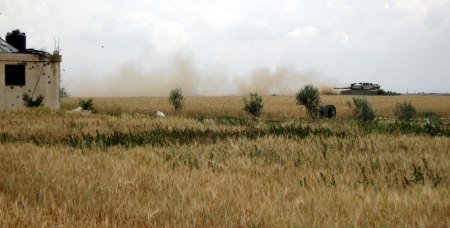


 Officials in Washington are inadvertently providing some insight into the strange logic of their nebulous war against the Islamic State, also known as ISIS and ISIL, in contradictory and puerile statements about whether the military action should be called a war, or perhaps something else.
 Aletho News

