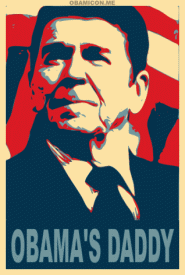
 Nothing like starting out your day with a laugh — and today I have Matthew Lynch (“12 Reasons Why Obama is One of the Greatest Presidents Ever,” Huffington Post, November 15) to thank for it.
About half of Lynch’s points boil down to, “Obama is for x, because he makes speeches talking about x all the time.” He starts out with the best one of all:
“Unlike the many presidents who preceded him, he cares about what is best for the greater good. He truly does represent The People. His actions have always been motivated by a sincere desire to do what is best for the majority, even if it meant losing ground with the wealthy, influential or powerful minority.”
Um, yeah. That’s why he adopted a Republican “universal healthcare” proposal to require everybody to buy private health insurance — and give taxpayer money to the ones who can’t afford it. That should be popular with “The People,” all right — at least those who own stock in insurance companies. That’s why he quietly promised the drug companies he wouldn’t use Medicare’s bargaining power to negotiate lower drug prices. That’s why Joe Biden conducts copyright enforcement policy out of Disney’s corporate headquarters and the administration backs draconian copyright legislation dictated in secret by proprietary content industries.
Among my favorite other howlers:
“2. He is for civil rights. He has consistently spoken on behalf of the disenfranchised, the underdog and the most controversial members of society …”
Yeah, I know he said a lot of stuff about gay marriage and ending Don’t Ask Don’t Tell. But he refused to actually stop prosecuting gays in the military before the law was repealed, or to put enforcement on the back burner, even when he was fully capable of using his executive authority to do so.
And notice Lynch doesn’t say “civil liberties.” Obama said a lot of stuff about them, too — back in 2008. Since then he’s expanded unconstitutional wiretapping, run interference for the telecoms that help out with it and given amnesty to people who systematically ordered and engaged in torture. Holding war criminals accountable would be “divisive,” you see. He owes the late Nuremberg defendants an apology — they were only following orders, too.
4. Healthcare. I think we already covered that.
“5. He is for the middle class. Here are just a few of the comments made by President Barack Obama in recent months …”
A lot of presidents were for a lot of stuff, if you stick to reading their collected speeches. In practice, Obama’s farm policies are written by ADM and Monsanto, and the office of Secretary of the Treasury is permanently reserved for Goldman-Sachs alumni, just as under his predecessors.
Obama’s actual economic policy is classic Hamiltonianism: Responding to technologies of abundance that reduce the need for capital and labor by using Rube Goldberg mechanisms to artificially prop up the demand for those inputs — even if it means giving people tax breaks for throwing stuff away and replacing it. The stomach-churning irony is that most of the same greenwashed Whole Foods liberals who applaud this also condemn planned obsolescence and the Military-Industrial Complex, which were designed to accomplish exactly the same result. The proper approach to technologies of abundance is to make sure their benefits are fully internalized by workers and consumers, by ceasing to enforce monopolies, artificial scarcities and rents of all kind. If it takes only fifteen hours of labor a week to produce our standard of living, it should only take fifteen hours of labor to enjoy that standard of living. But that would annoy Obama’s Big Business friends.
My favorite, though, is this:
“10. He is for peace. Let us never forget that Barack Obama was awarded the Nobel Peace Prize in 2009 …”
Yeah, he uses that Peace Prize as a paperweight to hold down his drone kill list. Obama didn’t end the war in Afghanistan — he transformed it into a remote-control video game war in which wedding parties can be massacred at the push of a button. And of course, Lynch can’t resist throwing in a mention of the Zero Dark Thirty crap about killing Bin Laden.
I can’t help picturing someone fifty years ago breathlessly gushing “I love JFK because he’s the Peace President” — while ignoring the Bay of Pigs, the Diem assassination and Green Berets in Vietnam.
Lynch’s points, edited for substance, are basically on the same level as a guy in a bar decked out in Full Cleveland thirty years ago saying “I feel comfortable with Reagan.” Obama’s the Reagan of moderate center-left NPR liberals who shop at Whole Foods. If you’re satisfied with the image of peace and social justice, while government in substance continues to serve the same powerful interests, keep right on voting — that’s what it’ll get you.
November 20, 2013
Posted by aletho |
Deception, Economics, Mainstream Media, Warmongering, Militarism, Progressive Hypocrite, Timeless or most popular, War Crimes | Huffington Post, Joe Biden, Monsanto, Nobel Peace Prize, Obama, United States |
Leave a comment
The US Ambassador to the United Nations Samantha Power is leading from the front in criticizing the recent election of China and Russia to the Geneva-based Human Rights Council, the United Nations’ top rights body.
Concerns about human rights records in China and Russia are highlighted on a regular basis in western media. One cannot argue much with the fact that they have both struggled in this area.
The US, however, is not well placed to criticize or sermonize. Severe human rights violations are rampant in the US prison system. According to Pew Research, imprisonment rate (per capita) in the US is almost 50 percent higher than Russia’s and 320 percent higher than China’s.
The racist and arbitrary application of the death penalty is on historic record. African Americans are six times more likely to be incarcerated than a white person and non-white Latinos are almost three times more likely to be incarcerated, says the Pew Center.
America’s privatized health care system exclusively for the wealthy is an equal disgrace.
While critiquing China and Russia, the US has supported and is supporting some of the worst human rights violators in the world: Saudi-Arabia and Uzbekistan to name but a few. It has and is supporting the overthrow of democratically elected leaders all over the world. And, then there is Guantanamo and the drone attacks.
What’s noteworthy is that the US has not objected to other notorious human rights violators becoming members of the UN Human Rights Commission in the past.
Among the rights bodies, the US-based HRW (Human Rights Watch) has called the election “troubling” calling the new entrants ‘negative players”. I think, HRW has done outstanding work in some countries and written pro-US, biased reports in others.
Incidentally, Ms. Power, the US delegate to the UN HR Commission, had also written a eulogy for Richard Holbrooke, the man who made a career out of covering up US supported massacres in East-Timor and elsewhere and highlighting massacres by official US enemies.
She works in the same vein, much ado about human rights abuses by official enemies, apologetic about US and US-sponsored atrocities.
Being selective about human rights violations does not make the world a better place; it makes matters worse, since it sends out a clear message to the tyrants of the world. “Be on our side and do whatever you please, as long you take care of our interests, otherwise you are toast … “.
However, it would be unfair to point fingers to the US exclusively. The US is indeed not alone with its “selective indignation”.
France, UK, any EU-member state, China, Russia, Israel, they are all faithful followers of the same doctrine that divides human rights atrocities in three technical categories:
1) Human rights abuses (real ones and invented ones) committed by our official enemies: they are ‘human rights abuses’.
2) Human rights abuses committed by ourselves, our allies, our friends: they are retaliation, surgical strikes, slightly excessive responses, tactical mistakes based on incomplete information, lack of democratic culture (ours), our enemies placing their children at military target sites, etc etc … the list of excuses is endless. After all, we are ‘the good guys’.
3) Human rights abuses committed somewhere by someone where we have no interests, where we do not care, they are relegated to small print on the back pages, ‘violent clashes’, ‘a culture of internecine violence‘, … or ignored completely.
I am not inventing anything here. Edward Herman and Noam Chomsky analyzed the political instrumentalisation of human rights already in 1979 in their seminal books ‘The Political Economy of Human Rights, Volume I. The Washington Connection and Third World Fascism and Volume II. Postwar Indochina & The Reconstruction of Imperial Ideology. Their case studies may be somewhat outdated, but their analysis still applies today.
It comes down to this. Our terrorism is not ‘terrorism’. Their terrorism is ‘terrorism’. We may from time to time make mistakes, judgment errors, exaggerate, but our intentions are always good, by imperial definition.
The reaction of the US to the Russian and Chinese accession to the UN HR Commission fits perfectly into that mold.
Is there a way out? Mass media not perpetuating this mythology but exposing it for the sham it is would be a start. Unfortunately and as much as it pains me to admit, today that is hardly the case.
Does this mean one should refrain from exposing human rights abuses? Certainly not. When doing so, just apply the same standards of judgment to all human rights abuses everywhere. That’s how you get credibility and real impact.
November 16, 2013
Posted by aletho |
Civil Liberties, Deception, Ethnic Cleansing, Racism, Zionism, Mainstream Media, Warmongering, Subjugation - Torture, Timeless or most popular, War Crimes | China, HRW, Human rights, Human Rights Watch, Richard Holbrooke, Russia, Samantha Power, Saudi Arabia, United States |
Leave a comment
Israel has agreed to return organs of dead Palestinians harvested by its forensic pathologists during autopsies, Palestinian Civil Affairs Minister Hussein al-Sheikh told Ma’an news agency on Wednesday.
Head of Israel’s Abu Kabir forensic institute, Jehuda Hiss, had admitted harvesting organs from dead bodies without the permission of their families.
“We started to harvest corneas … Whatever was done was highly informal. No permission was asked from the family,” Hiss said in an interview with an American academic in 2000. The interview was released in 2010 and part of it was aired by Israel’s Channel 2 TV.
The Channel 2 report said forensic experts harvested bones, corneas, heart valves and skin from dead Israeli soldiers, citizens, Palestinians and even foreign workers.
The Israeli army admitted to organ harvesting but said the practice was no longer performed. “This activity ended a decade ago and does not happen any longer,” the military told Channel 2.
In the interview, Hiss described how his doctors would mask the removal of corneas from bodies. “We’d glue the eyelid shut,” he said. “We wouldn’t take corneas from families we knew would open the eyelids,” Associated Press reported.
The Palestinian official said Israel will “soon be returning some of the organs,” Ma’an reported.
November 16, 2013
Posted by aletho |
Deception, Timeless or most popular, War Crimes | Abu Kabir Forensic Institute, Israel, Yehuda Hiss |
Leave a comment
After the Aug. 21 chemical weapons incident in Syria, a number of senior U.S. intelligence analysts disagreed with the Obama administration’s rush to judgment blaming the Syrian government, but their dissent on this question of war or peace was concealed from the American people.
The administration kept the dissent secret by circumventing the normal intelligence process and issuing on Aug. 30 something called a “Government Assessment,” posted at the White House press office’s Web site and fingering the Syrian regime of President Bashar al-Assad as the guilty party.
Normally, such an important issue – a possible U.S. military engagement – would be the focus of a National Intelligence Estimate, but that would also cite the disagreements expressed within the intelligence community. By avoiding an NIE, the Obama administration was able to keep the lid on how much dissent there was over the Assad-did-it conclusion.
Once the “Government Assessment” was issued, Secretary of State John Kerry was put forward to present the case for launching a military strike against Syria, an attack that was only averted because President Barack Obama abruptly decided to ask congressional approval and then reached a diplomatic agreement, with the help of the Russian government, in which the Syrian government agreed to dispose of its chemical weapons arsenal (while still denying that it was responsible for the Aug. 21 attack).
Although war was averted, the Obama administration’s deception of the American public – by pretending that there was a government-wide consensus regarding Syrian government guilt when there wasn’t – was reminiscent of the lies and distortions used by President George W. Bush to trick the nation into war with Iraq over bogus WMD claims in 2003.
The behavior of the rest of Official Washington and the mainstream U.S. news media also shows that little has changed from a decade ago. Obvious indications of a deception were ignored and the few voices who raised the alarm were treated with the same mocking contempt that greeted skeptics of Bush’s case for invading Iraq.
Writers for Consortiumnews.com were among the few in the American media who noted the glaring flaws in the Obama administration’s case, including its refusal to release any of its supposed proof to support its conclusions and the curious absence of Director of National Intelligence James Clapper from the public presentation of the administration’s casus belli.
The reason for keeping the DNI on the sidelines was that he otherwise might have been asked if there was a consensus in the intelligence community supporting the administration’s certitude that Assad’s regime was responsible. At that point, Clapper would have had to acknowledge the disagreement from rank-and-file analysts (or face the likelihood that they would speak out).
Inspectors’ Doubts
Similarly, it appears that on-the-ground inspectors for the United Nations had their own doubts about the Syrian government’s responsibility, especially since Assad’s regime had allowed a UN team into Damascus on Aug. 18 to investigate what the regime claimed was evidence of rebels using chemical weapons.
It never made sense to some of these inspectors that Assad – just three days later – would launch a chemical weapons attack on the outskirts of Damascus just a few miles from the hotel where the UN inspectors were staying. Assad would have known that the Aug. 21 incident would mean serious trouble for his government, very possibly drawing the U.S. military into the Syrian civil war on the side of the rebels.
The UN inspectors also failed to find Sarin or other chemical agents at one of the two sites that they subsequently examined near Damascus, and they inserted a qualification in their report about apparent tampering at the one area where Sarin was found.
However, instead of noting the many holes in the U.S. “Government Assessment” and the UN report, the mainstream U.S. news media simply joined the rush to judgment, hyping dubious claims from both U.S. government officials and non-governmental organizations favoring U.S. military intervention in Syria.
The New York Times and other major news outlets that swallowed Bush’s false claims about Iraq WMD a decade ago also began reporting Obama’s dubious assertions about Syria as flat fact, not as issues in serious dispute. As I wrote on Oct. 25, one typically credulous Times story accepted “as indisputable fact that the Syrian government was behind the Aug. 21 attack on a suburb of Damascus despite significant doubts among independent analysts, UN inspectors and, I’m told, U.S. intelligence analysts.”
New details of the rebellion among the intelligence analysts have just been reported by former CIA officer Philip Giraldi for the American Conservative magazine. According to Giraldi’s account, a “mass resignation of a significant number of analysts” was threatened if the Obama administration issued an NIE without acknowledging their dissent.
A “hurriedly updated” NIE had reflected the Syrian government’s suspected use of chemical weapons against rebels and civilians, “while conceding that there was no conclusive proof,” Giraldi wrote, adding:
“There was considerable dissent from even that equivocation, including by many analysts who felt that the evidence for a Syrian government role was subject to interpretation and possibly even fabricated. Some believed the complete absence of U.S. satellite intelligence on the extensive preparations that the government would have needed to make in order to mix its binary chemical system and deliver it on target was particularly disturbing.
“These concerns were reinforced by subsequent UN reports suggesting that the rebels might have access to their own chemical weapons. The White House, meanwhile, considered the somewhat ambiguous conclusion of the NIE to be unsatisfactory, resulting in considerable push-back against the senior analysts who had authored the report.”
Demands from Above
When Obama’s National Security Council demanded more corroborative evidence to establish Syrian government guilt, “Israel obligingly provided what was reported to be interceptions of telephone conversations implicating the Syrian army in the attack, but it was widely believed that the information might have been fabricated by Tel Aviv, meaning that bad intelligence was being used to confirm other suspect information, a phenomenon known to analysts as ‘circular reporting,’” Giraldi wrote.
“Other intelligence cited in passing by the White House on the trajectories and telemetry of rockets that may have been used in the attack was also somewhat conjectural and involved weapons that were not, in fact, in the Syrian arsenal, suggesting that they were actually fired by the rebels.
“Also, traces of Sarin were not found in most of the areas being investigated, nor on one of the two rockets identified. Whether the victims of the attack suffered symptoms of Sarin was also disputed, and no autopsies were performed to confirm the presence of the chemical.
“With all evidence considered, the intelligence community found itself with numerous skeptics in the ranks, leading to sharp exchanges with the Director of Central Intelligence John Brennan and Director of National Intelligence James Clapper. A number of analysts threatened to resign as a group if their strong dissent was not noted in any report released to the public, forcing both Brennan and Clapper to back down.”
The Obama administration’s “solution” to this analyst revolt was to circumvent the normal intelligence process and issue a white paper that would be called a “Government Assessment,” declaring the Syrian government’s guilt as indisputable fact and leaving out the doubts of the intelligence community.
While this subterfuge may have satisfied the institutional concerns of the intelligence community – which didn’t want another Iraq-War-style violation of its procedural protocols on how NIEs are handled – it still left the American people vulnerable to a government deception on a question of war or peace.
Yes, there was no scene comparable to the positioning of CIA Director George Tenet behind Secretary of State Colin Powell as he delivered his deceptive Iraq War speech to the UN Security Council on Feb. 5, 2003. Both Clapper and Brennan were absent from the administration’s testimony to Congress, leaving Secretary Kerry to do most of the talking with Defense Secretary Chuck Hagel and Joint Chiefs of Staff Chairman Martin Dempsey bracketing Kerry as mostly silent wing men.
And, yes, one could argue that the Obama administration’s hyping of its case against the Assad regime had a happy ending, the Syrian government’s agreement to eliminate its entire CW arsenal. Indeed, most of the grousing about the Syrian outcome has come from neocons who wanted to ride the rush to judgment all the way to another regime-changing war.
Dogs Not Barking
But Americans should be alarmed that a decade after they were deceived into a disastrous war in Iraq based on bogus intelligence – and the complete breakdown of Official Washington’s checks and balances – a very similar process could unfold that brought the country to the brink of another war.
Besides the disturbing fact that the Obama administration refused to release any actual evidence to support its case for war, there was the gullibility (or complicity) of leading news outlets in failing to show even a modicum of skepticism.
The New York Times and other major news organizations failed to note the dogs not barking. Why, for instance, was there no NIE? Why were the U.S. government’s top intelligence officials absent from public presentations of what amounted to an intelligence issue? It shouldn’t have required a Sherlock Holmes to sniff out the silenced intelligence analysts.
When a government leader refuses to reveal any of his supposed proof for a claim and conceals the professionals who don’t agree with his claim, any reasonably savvy person should draw the conclusion that the government leader doesn’t really have a case.
Though some Americans may cite the work of a few Web sites, like our own Consortiumnews.com, as having challenged the misguided conventional wisdom on Syria as we also did on Iraq, they should not draw too much comfort from this. After all, our readership is tiny when compared to the many sources of misinformation being disseminated to the broad American public.
The dangerous reality is that the United States remains vulnerable to the kinds of stampedes in judgment that can end up crushing people around the world.
[Here is some of our earlier reporting on the Syrian crisis: “A Dodgy Dossier on Syrian War”; “Murky Clues From UN’s Syria Report”; “Obama Still Withholds Syria Evidence”; “How US Pressure Bends UN Agencies.”]
Investigative reporter Robert Parry broke many of the Iran-Contra stories for The Associated Press and Newsweek in the 1980s. You can buy his new book, America’s Stolen Narrative, either in print here or as an e-book (from Amazon and barnesandnoble.com).
November 15, 2013
Posted by aletho |
Deception, False Flag Terrorism, Mainstream Media, Warmongering, Progressive Hypocrite, Timeless or most popular, War Crimes, Wars for Israel | Bashar al-Assad, George W. Bush, John Kerry, National Intelligence Estimate, Obama, Syria, United States |
Leave a comment

Notwithstanding France’s simultaneously arrogant and craven grandstanding over Iran’s Arak heavy water reactor, the main reason for the failure of last week’s nuclear talks between the Islamic Republic and the P5+1 was the Obama administration’s imperious refusal to acknowledge Tehran’s right to enrich uranium under international safeguards. On this point, we want to highlight a recent post by Dan Joyner on Arms Control Law, titled, “Scope, Meaning and Juridical Implication of the NPT Article IV(1) Inalienable Right.”
Dan opens with a favorable reference to our recent post on the issue, see here; he then focuses on how to interpret the NPT Article IV(1) right to peaceful nuclear energy—a subject he has already written about at some length. He usefully inserts an excerpt from his excellent 2011 book, Interpreting the Nuclear Nonproliferation Treaty, Interpreting the Nuclear Nonproliferation Treaty Pages 79-84. This excerpt lays out Dan’s argument that the right to peaceful use of nuclear technology should be interpreted as “a full, free-standing right of all NNWS [non-nuclear-weapon states] party to the treaty, and not as a contingent right, contrary to the interpretation of some NWS [nuclear-weapon states].” After elaborating this basic point, Dan continues:
“The question of the scope of this right is one that continues to be debated. I have looked to the Lotus principle in international law (see the excerpt from my book) to show that the lawfulness of NNWS’, and in fact all states’, indigenous nuclear fuel cycle activities can be shown to derive from the absence of any prohibition of these activities in international law. This observation will, I have argued, serve to legally justify the full nuclear fuel cycle of activities within a NNWS, subject only to the positive requirements of Articles II and III of the NPT—i.e. no manufacture of nuclear explosive devices, and the conclusion of a safeguards agreement with the IAEA.
The question of just what exactly is the nature and scope of the right recognized in Article IV(1) of the NPT, and what are its juridical implications (e.g. in tension with the UN Security Council’s order in Resolution 1696 for Iran to cease uranium enrichment), is a subject that I have been thinking/researching about recently… These questions actually raise some very deep issues of international law, and analyzing them properly requires serious work… But let me say this here.
Article IV(1) of the NPT states that “Nothing in this Treaty shall be interpreted as affecting the inalienable right of all the Parties to the Treaty to develop research, production and use of nuclear energy for peaceful purposes without discrimination and in conformity with Articles I and II of this Treaty.” In my view, the recognition by over 190 states parties to the NPT that all states have such an inalienable right, which I interpret to include all elements of the full nuclear fuel cycle including uranium enrichment, strongly suggests that the right to peaceful nuclear energy research, production and use is one of the fundamental rights of states in international law. In my view, both fundamental and acquired rights of states should be understood to create in third parties, both states and international organizations, a legal obligation to respect those rights.
This means that other states and international organizations are under an international legal obligation not to act in serious prejudice of states’ rights. In the case of fundamental rights, this reciprocal obligation is of a jus cogens order, meaning that all states and international organizations are under a jus cogens order legal obligation not to act to seriously prejudice the fundamental rights of other states. When states or international organization do act in serious prejudice of a state’s fundamental rights, that action is an internationally wrongful act, and implicates the international responsibility of the acting state or international organization.
According to this analysis, UN Security Council Resolution 1696, which commands Iran to cease uranium enrichment, constitutes a violation of international law, at least as to this particular command, and is void of legal effect (See Article 25 of the UN Charter).
Note that the often heard rebuttal to this argument, which references Article 103 of the UN Charter, is in fact erroneous and inapplicable. Article 103 of the UN Charter provides that “In the event of a conflict between the obligations of the Members of the United Nations under the present Charter and their obligations under any other international agreement, their obligations under the present Charter shall prevail.” My analysis, which is based on the recognition of a fundamental right of states in international law, and the juridical implication of an obligation in other states and international organizations to respect that right, is unaffected and unanswered by this provision, which merely recognizes that in the case of a conflict between UN member states’ international legal obligations under the Charter, and their obligations deriving from other sources, the Charter obligations trump. It does not speak to the legal obligations of the Security Council as an organ of an international organization. Nor does it speak at all to conflicts between the obligations of the UN Charter, and the rights of states in international law. So again, Article 103 of the UN Charter is inapposite and inapplicable to this question.”
Dan’s work on these issues is both breathtakingly clear and, as far as we are concerned, definitive. (For more of his analysis on the illegality of Security Council resolutions calling on Iran to suspend uranium enrichment, we refer everyone to his brilliant article, “The Security Council as Legal Hegemon,” published last year in the Georgetown Journal of International Law, see here.)
More immediately, Dan’s work underscores an important reality: the Obama administration’s hegemonically abusive refusal to recognize Iran’s right to safeguarded enrichment is not just diplomatically and strategically counter-productive—it is illegal.
November 13, 2013
Posted by aletho |
Progressive Hypocrite, Timeless or most popular, War Crimes, Wars for Israel | Iran, NPT, Treaty on the Non-Proliferation of Nuclear Weapons |
Leave a comment
A former Mossad director opposed to the assassination of world leaders says the case of Iranian President Mahmoud Ahmadinejad is different.
Meir Amit, who died in July at the age of 88, shared some of “his fears for the future of the Middle East” in an interview published by The Media Line.
Amit, who directed some of the most notorious Mossad operations while he was the organization’s chief, said he viewed Iran’s nuclear activities as a path leading to World War III.
“I look at the situation as World War III,” he said.
“Namely, all the Muslims, all over the world, are united. Unfortunately, the Western world is not united. Russia is not cooperating, China is not cooperating. Israel is just a small thing in the picture. We have to look at that as a global war and act accordingly,” Amit added.
He went on to talk about his familiarity with the political structure of Iran, explaining that he had been sent on special missions to the country in the 1960′s while Israel maintained ties with Iranian leaders.
“At that time we had very good relations with Iran. I was meeting the Shah once a month. We were sitting and chatting and appraising the situation,” Amit said.
The former Mossad chief added that while he did not advocate the assassination of political figures, he believed otherwise in the case of the Iranian president.
“Personally I am against assassinating leaders and all my life I was against it when I was head of Mossad. But Ahmadinejad has crossed the line. With all he is doing on the nuclear front, saying Israel should be wiped off the map and arranging a conference on the Holocaust where he said it never happened. From my point of view, he is somebody who shouldn’t be with us,” Amit said.
The remarks were disclosed as earlier, Iran’s former intelligence minster Gholam-Hossein Mohseni-Eje’i said Israel, in collaboration with Iranian terrorist groups, planned to assassinate President Ahmadinejad.
“The Zionist regime had met with the MKO on the sidelines of the Sharm el-Sheikh meeting in Egypt and in Paris to assassinate Mr. Ahmadinejad,” Mohseni-Ejeie was quoted by Fars News Agency as saying earlier in July.
The terrorist group had, however, set conditions for carrying out the assassination, the minister added. “They had asked that the US and the West remove their name from their blacklists.”
November 12, 2013
Posted by aletho |
Ethnic Cleansing, Racism, Zionism, Timeless or most popular, War Crimes | Iran, Israel, Mahmoud Ahmadinejad, Meir Amit, Middle East, Mossad |
Leave a comment
As usual on Veteran’s Day, we are urged to honor our “heroes” and salute their martial courage, while ignoring the murderous imperial role they play in “fighting for their country.”
This really cannot be done. A professional army is by definition an organized band that kills on command. This can only be justified on the grounds that its mission is purely defensive, designed to repel invasion of the national territory the troops are sworn to protect and defend.
But this is hardly the role of the U.S. armed forces today, when Washington maintains hundreds of major military bases around the world, and thousands of smaller military installations, all of them dedicated to maintaining an economic and political status quo increasingly protested by popular majorities seeking a freer, more democratic world. In short, in spite of its multicultural and bi-gender facade, the U.S. military is an anti-democratic force. And there is nothing heroic about suppressing democracy.
Yes, our troops often display spectacular physical courage under fire. But so did soldiers defending Nazism and Communism, Japanese soldiers defending a brutal empire, and Confederate soldiers fighting to preserve chattel slavery. We do not ordinarily consider these soldiers heroes, no matter how great their martial courage, because we rate the missions they were sent on as illegitimate or evil.
We cannot have it both ways. If military service is value neutral, then it does not matter what cause soldiers fight for, we must salute their courage under fire. But if the value of physical courage is inextricably bound up with the legitimacy of the mission a soldier is sent on, then we must withhold hero status from imperial soldiers who fight – not to defend us from evil – but merely to preserve and extend the hegemony of empire. In the latter case, their bravery is stained and diminished by the ignoble cause they have been commanded to serve.
Actually, these days a soldier does not even have to demonstrate physical courage to be designated a hero. Cheap praise is heaped on our soldiers merely for being in the military, quite apart from anything they may do on a field of battle. This is directly related to a steady decline in public support for imperial military missions, which the architects of empire resist by equating anti-war sentiment with hostility to soldiers. “Support our troops” actually means “support the mission,” no matter how illegitimate.
This we must not do. The grotesque barbarity displayed at Abu Ghraib – hardly ancient history – was neither heroic, nor accidental. In fact, it was deliberately sanctioned policy, extensively pre-tested by Israel, to associate all resistance to foreign invasion with sexual humiliation. In short, it was an attempt to make legitimate heroism impossible for Iraqis, to stain public memory of resistance with images of utter disgrace. To invoke “support our troops” in this context is to embrace complete moral degeneracy.
A better option would be to widely publicize and critique the civilian leaders who craft such policies, and degrade our troops in the name of honoring them. “Support our troops – dispatch Donald Rumsfeld to jail,” should have been a national slogan years ago. Today, we have just as much reason to call for the same for Barack Obama – our first African-American president, who overthrew a Libyan government with the highest standard of living in Africa, leaving the country to the mercy of murderous and plundering gangs.
Service? Honor? Respect? What have any of these words to do with the role of the U.S. military in the world today? What is honorable about occupying Afghanistan in the service of a government so corrupt it makes the Taliban seem preferable? How is respect cultivated by mass murder of civilians by drones? What kind of “service” is involved in establishing an international network of torture centers in defiance of international law and basic morality?
Yes, let’s honor our troops, not by continuing the atrocities that degrade them, but by abolishing the imperial military and developing a real national defense policy to replace it.
November 11, 2013
Posted by aletho |
Militarism, Progressive Hypocrite, Subjugation - Torture, Timeless or most popular, War Crimes | Afghanistan, Donald Rumsfeld, Iraq, Israel, Obama, Support our troops, United States, United States Armed Forces, Veterans Day |
Leave a comment
The Palestinian issue has been uniting all Muslims for 65 years. Syrian rebels succeeded in their mission – they made the world forget about the Palestinian issue.
The militants pulled Palestinians out of refugee camps; they are killing them or using these people as human shields. And the media are silent about it, while the Syrian opposition keeps screaming about the “oppressive Assad regime.”
It’s been a year since Syrian rebels raided the largest Palestinian refugee camp in Syria – Yarmouk, near Damascus. Up until recently it was the duty of Israeli soldiers to persecute Palestinians, now this is done by Syrian rebels with their Muslim slogans. The media are not saying anything about it.
What is the life of Palestinians like, now that the Syrian conflict made them refugees again?
‘Nobody is helping us – neither Europe, nor the UN’
Abu-Badr, head of Beirut’s Bourj al-Barajneh refugee camp People’s Committee, gathered representatives of all Palestinian parties. They all keep regular contacts with camps in Syria.
A year after Palestinian camps and Palestinians were attacked, the heads of these organizations are saying that the Syrian war is a staged conflict, and its goal is to distract everybody from the Palestinian problem.
A total of 760,000 Palestinian refugees lived in Syria before the war, and about 550,000 in Lebanon. Palestinians had equal rights in Syria, and virtually no rights in Lebanon. For example, they were not allowed to work in 72 professional capacities.
Abu-Badr says, “There are over 1,000 Palestinian families from Syria in our camp. Nobody is helping us – not Europe, not the UN. The Red Cross came twice. The refugees are renting housing on their own.”
To rent a place to live is a big problem for a Palestinian, especially at the camp. And to pay rent, they have to find a job, which is extremely difficult in Lebanon.
He says that according to the authorities, there are about 120,000 Palestinian refugees from Syria living south of Tripoli. So every tenth refugee is a Palestinian.
Turkey and Jordan don’t accept Palestinians.
Kafar is a young mother of two. She used to live in Syria’s Yarmouk with her family. Now she is struggling to survive in Bourj al-Barajneh in Lebanon.
She fled Yarmouk at the end of 2012, when the rebels took over the camp and made it their foothold to carry out attacks on Damascus.
Yarmouk is one of the largest Palestinian camps in Syria. Before the war it had 150,000 residents, which was almost one-quarter of all Palestinian refugees in Syria. The camp is very close to the Damascus city limits, and there were subdivisions where regular Syrians lived.
Refugee camps are extraterritorial places. Police and army are not allowed there, the residents don’t have citizenship, they don’t vote and don’t serve in the army. Camps are self-governed by representatives of all Palestinian political parties. Unlike all other countries, Syria allowed refugees to leave camps and enjoy all rights and freedoms.
A Syrian family named Lakud brought the fighters to Yarmouk. Palestinians didn’t support the rebels then, and they are not supporting them now. Some parts of the camp are still controlled by the opposition.
A human shield for militants
Kafar recalls: “The entire camp left in a snap back then, when armed militants entered it. They were inside, shooting bullets into the air – they always act the same way. They ordered the residents to leave having placed their orders on different websites and having sent emails. Nobody stayed there.”
In December 2012, some started trying to come back. There are even a few families that decided to stay in the camp, hoping it would get better soon. Kafar says all the houses have been looted – they have taken everything, including electrical wires.
She says the militants were shooting those Palestinians who went out to take part in demonstrations. They wouldn’t let people return to their homes, but in case they did come back home, they couldn’t leave their houses again.
“If the militants went away, we would come back. Sometimes we can contact those inside the camp. They tell us about the blockade – they feel like they live in a cage, they lack food. There is no escape – they are kept as a human shield for the militants,” Kafar says.
She tells us about her relative who went to find her children, but ended up as a hostage in the camp.
“The militants won’t let you come in, but if one has entered – he would be kept there by force. They have established checkpoints. They deprive the people of food and beat the women who try to sneak inside, bringing something to their relatives to eat,” Kafar says.

A handout picture released by the Syrian Arab News Agency (SANA) on May 15, 2013, shows protestors crying after unidentified armed groups opened fire on demonstrators as they marched in the Syrian capital Damascus in support of the right to return of Palestinian refugees who fled their homes or were expelled during various conflicts. (AFP/SANA)
Hitting a woman in public is considered absolutely unlawful among Muslims. But Kafar says that the militants in Yarmouk have their own vision of everything.
“We are not afraid of war, but they won’t even feed the people. The al-Nusra militants are tall, wear long beards and look like foreigners. Probably, there are Syrians among them but none of my relatives have ever seen one,” Kafar says.
One blanket for five
Palestinians from Syria in Lebanon are in even more dire straits.
“They humiliate us – we are constantly being insulted,” the woman tells us.
She is showing us around her tiny apartment with two rooms and a kitchen. The ceiling leaks when it rains.
“The rent is $300. If I don’t find money by Sunday, we’ll have to leave for Syria.”
Apart from the rent, they pay $70 for water.
Her father-in-law was killed. Her mother-in-law returned to Syria and now lives with their relatives there.
“I’ll go to Syria and wait there until I can come back home. Staying here is humiliating,” Kafar says.
Her husband takes up any job he can, be it a laborer, carrier or loader.
They have no warm clothes – all their belongings were stolen in Yarmouk. This family doesn’t belong to any group. They got help from different organizations such as Hamas, the Popular Front or some voluntary organizations. But it can hardly be called help – it is more like a mere pittance.
“They gave us one blanket for five people. But we are living creatures,” Kafar says, showing us a thin grey synthetic blanket. She thinks it looks like a cloth that is used to wrap a dead body when burying it.
The family has no money to buy food. They sometimes receive help from neighbors, who share their food with them. I saw them bring some bread and crisps.
‘In Syria, Palestinians are treated better than brothers’
Kafar complains about how the refugee work is organized.
“They distribute some humanitarian aid, but the process is humiliating to us every step of the way. There is fighting in Syria, but Palestinians are respected there. And here they call us Syrian dogs.”
“We had a good life under Assad, not lacking anything. We will go back and live in Syria, even if we have to live in tents. Syrians treat us as equal, they help us,” says Kafar.
In the last year they received help twice – from Hamas and from people from Qatar – about $300 per family, which is less than one dollar a day. But not everybody gets even these payments. There are lists of those who suffer the most in these camps.
She tells us how the process of distributing this aid works.
“A family gets a check for $150 from Qatar. But there wasn’t enough for everybody on the list. So people are humiliated even more. The place where these checks are given is near Beirut, you have to take a taxi to get there and spend half of the money on the ride. They give food stamps for certain food items, which can only be bought in one supermarket. And this store is also far away.”
“You can’t buy meat with these food stamps. Do they think children can go for a year without meat?” the woman asks.
“We are convinced that Syria will welcome us back. They loved us there, treated us like brothers, even better than brothers. We lived better than Syrians themselves,” Kafar says.
She knows that the Lebanese have closed the border for Palestinian refugees. So they can’t go anywhere.
“They accepted us in Syria. When we lost everything, they took care of us. They asked us what we needed. Six blankets? Food? They gave us everything. They didn’t blame us, even though life was difficult for everyone.”
She thinks her family made a mistake when it moved to Lebanon. “We were told life would be good here. Now we regret the decision.”
Her husband came six months earlier, he thought they would be safe here while there is fighting.
‘There is no Palestinian issue for Syrian rebels’
“We Palestinians have played no part in Syria’s distress. We didn’t participate in street protests, and our people did not join the rebels,” says Kafar. She admits to having heard that some Palestinians have, in fact, taken up arms against the Syrian government. But she is certain that is a rare exception.
“Those people must have been seduced by money, or befuddled with drugs, and with false promises. Only the poorest and the most destitute of the Palestinians have gone to fight for money, and it took them 18 months to get that desperate.
“Such people have nothing to eat, so they join the rebels hoping to make some money to sustain their families, and then desert at the first opportunity.”
“We cannot admit to supporting the regime, for fear of being killed on the spot. Those rebels do not consider the Palestinian issue to be of primary importance. There is no Palestinian issue for the rebels at all,” says Kafar.
Every night, the inhabitants of Bourj al-Barajneh go to sleep fearing that al-Nusra militants may descend on the Palestinian refugee camp and start asserting their rule, the way they did at Yarmouk. There is talk that al-Nusra men were spotted recently inside Nahr al-Barrid, another Palestinian camp. Since then, the People’s Committee instituted vigilante patrols across the entire camp.
“Our people control every in and out,” Kafar tells us. “They keep watch at night to make sure no strangers come upon us as we sleep. That’s how it happened in Yarmouk.”
The Syrian army has also set up checkpoints guarding the entrance to each camp.
‘They butchered a family to make the others serve as a human shield’
Yarmouk was not the only Palestinian camp captured and cleared of refugees by insurgents. Moreover, no one can assess the number of Palestinians killed in the process.
A Palestinian woman named Gusun was forced to flee camp Duma near Damascus on September 23, 2012, together with her husband, their three kids, and her husband’s brother.
“There were plenty of olive groves next to our camp. We lived in peace for a long time, until the fighting drew close to our camp. Then, rebels started taking shelter in our camp, hiding in our houses during firefights, and shooting through our windows. And we found ourselves between the hammer and the anvil. So one day, we slipped out at five in the morning and ran away through the olive grove,” Gursun tells me.
“The rebels had killed many people in our camp unflinchingly. They butchered a married couple who were my husband’s kin – they cut their throats, so that the other Palestinians would stay in the camp and serve as their human shield, while the government was commanding us to flee.”
Gusun went back to check on Duma some four months ago.
“I found my home thoroughly looted, its roof smashed,” she recalls. “And the FSA and al-Nusra are still entrenched in the camp.”
“Once their men spotted me at Duma, they came up and questioned me to make sure I was from that camp. They let me go, but they kept watching me. Later, when I went out to a grocery store, I noticed a car tailing me. Then I got scared and ran away from the camp,” says Gusun.
“The rebels I saw were tall and fair-skinned. There are some who don’t speak Arabic, and there are some who do. People have also told me there are black rebels, but I have never seen one. Some rebels wear black vests, some wear masks, some wear short pants, and others wear normal trousers. There are many fair-skinned men among them, those are foreigners.
“When we walked around the camp, we would try not to look them in the face, for fear that they might do us harm,” Gusun says.
‘Palestinians, get out of Syria’
The world’s mainstream media, who have closely followed the insurgency and its war on Assad, have proven squeamish when it comes to covering the way rebels treat Palestinians. In the spring of 2011, they would refute news reports that opposition activists wave Israeli flags and chant anti-Palestinian slogans at their rallies.
This stands to reason: two years ago, the Palestinian issue was still the No. 1 concern for the Muslim world, and an anti-Palestinian stance would have done serious harm to the rebels’ reputation. All the more so as Egyptian revolutionaries at Tahrir Square had been pronouncedly pro-Palestinian, despising Hosni Mubarak for his support for the Israeli blockade of the Gaza Strip.
The women at Bourj al-Barajneh are perplexed at the world’s ignorance of how Syrian insurgents really feel about Palestinians.
“At the onset of the revolution, slogans were like, ‘Carrots belong with carrots and cabbage with cabbage, and this is no land for Palestinians’,” says Gusun, who is shocked that no media have ever reported that the Syrian rebels had initially been against the Palestinians.
“Under these slogans, the armed rebels marched along the streets, angered by the local Palestinians’ reluctance to turn against the regime,” says Gusun.
“In about a year and a half, some Palestinians were in this way or another made to join the rebels. But that didn’t change much the rebels’ opinion of the Palestinians,” remarks Gusun, adding that even now the Palestinians on the side of the rebels are few and far between.
She can’t understand the reason why the Lebanese are treating Palestinians like that. After all, Syria did give shelter to 1 million Lebanese and Palestinian refugees after the 2006 Israeli attack.
“During the 2006 war we welcomed the Palestinians like family. But now we are being treated as outsiders.”
At that time, all the refugees from Lebanon found home, food and clothes straight on arrival.
Gusun was lucky to have found a job, and so was her husband. “I had to work as a cleaning lady. I’d never done anything like that before. But we had to survive somehow. The UN gives only $30 once every four months.’
It was crucial for the sponsors of the anti-Syrian campaign to shift the focus of one and a half billion Muslims from Palestine to the war against Assad. And their mission almost succeeded.
The issue of Palestine used to bring everyone together: Communists and atheists, the Sunni and the Shia, Christians and Muslims, left- and right-wingers, anti-globalists and nationalists. Now the war in Syria has torn them all apart.
Fast forward two years, there are no more rallies against the occupation of Jerusalem, no ships trying to break through the Gaza Strip and the West Bank blockade. In the meantime, this blockade has grown even tougher after the military coup in Egypt, with the abuse of Palestinians in the West Bank escalating into ethnic cleansing.
The sponsors of the war repeatedly tried to get Palestinians to back intervention into Syria. But their efforts failed: from Hamas to the Palestinian Islamic Jihad to the Popular Front to Fatah, not a single Palestinian organization has ever supported the campaign.
Nadezhda Kevorkova is a war correspondent who has covered the events of the Arab Spring, military and religious conflicts around the world, and the anti-globalization movement.
November 11, 2013
Posted by aletho |
Subjugation - Torture, Timeless or most popular, War Crimes, Wars for Israel | Human rights, Palestine refugee camps, Palestinian refugee, Syria, Yarmouk, Yarmouk Camp |
Leave a comment
On Saturday, October 16, US Congressmen Matt Salmon (R-AZ) and Albio Sires (D-NJ) from the House’s Foreign Affairs Western Hemisphere subcommittee wrote a letter to Secretary of State John Kerry using vague, fear-mongering rhetoric to delegitimize a potential left-wing victory in the upcoming presidential elections in Honduras and El Salvador, where the left candidates are leading in the polls. Explicitly denigrating two of the three leading Salvadoran candidates, Salmon and Sires exposed themselves as mouthpieces for the right-wing Nationalist Republican Alliance (ARENA) party, which has mounted an escalating smear campaign against its opposition in both El Salvador and the US.
In the letter—which was then republished in El Salvador—the congressional duo question the “democratic credentials” of both Honduran presidential candidate Xiomara Castro de Zelaya, wife of former President Manuel Zelaya ousted in the 2009 US-backed coup d’état, and Salvador Sánchez Cerén, the leftist candidate for the Farabundo Martí National Liberation Front (FMLN) in El Salvador, accusing them of being allies of late Venezuelan president Hugo Chávez. The congressmen also call out Salvadoran right-wing UNITY coalition candidate Tony Saca as corrupt, clearly demonstrating their preference for ARENA—the only other leading party in the race. In a particularly troubling gesture, they call for “heightened security to ensure that all candidates abide by the democratic rules of the game,” and tacitly request greater participation of the National Democratic Institute (NDI) and the International Republican Institute (IRI)— US institutions notorious for undermining democratic elections in the region.
This is not the duo’s first effort to intervene in the democratic process in El Salvador. In April, Salmon and Sires published a letter implying—falsely—that $300 million in US development aid from the Millennium Challenge Corporation was at risk because the US-backed Public-Private Partnership Law had not yet been approved by the Salvadoran legislature. Now, in questioning the democratic legitimacy of both Xiomara Castro and Sánchez Cerén, Sires and Salmon are setting the stage to delegitimize any leftist electoral victory from the US, and throwing their weight behind the ARENA party in El Salvador.
This is the same tactic recently employed by ultra-conservative lobbyist Otto Reich in his public comments against the FMLN, and was promptly followed by the November 4 publication of an article in the Spanish-language edition of the Miami Herald interviewing several ARENA party leaders claiming that Saca had made an agreement with the FMLN to divide the right-wing and bring socialism to El Salvador. The stakes are high in the upcoming presidential elections in Honduras and El Salvador, and ARENA and its allies are hard at work prevent any electoral outcome that conflicts with their vast economic interests in the region.
… The electoral contest takes place in the context of a Salvadoran social movement to end the impunity of war criminals who have thus far escaped justice due to a 1993 amnesty law whose constitutionality is now under examination by the Supreme Court of El Salvador. The issue has become especially intense since October 1, 2013, when the Catholic Archdiocese of San Salvador shut down the most important human rights archives in the country, Tutela Legal, and dismissed the employees, placing the very documents that would be used in war crimes tribunals at risk of being compromised. [3] These actions have provoked international solidarity with the thousands of Salvadorans, including those in the Salvadoran diaspora, who are at work recuperating the historical memory of the country and seeking justice for the more than 70,000 citizens killed during the war as well as the survivors of torture and other war crimes. …
November 10, 2013
Posted by aletho |
Deception, Subjugation - Torture, War Crimes | El Salvador, Farabundo Martí National Liberation Front, Honduras, International Republican Institute, IRI, Latin America, National Democratic Institute, NDI, Salvador Sánchez Cerén, Sánchez Cerén, Xiomara Castro |
Leave a comment
Iran was once a great power, and though invaded by Greeks, Arabs, Turks, and Mongols and exploited by imperialist powers in the modern era, it has continued to assert its national identity and its people have developed a special sensitivity to interference with its sovereign rights. This concern on the part of Iran does not represent some overwrought sensitivity but is actually a realistic assessment of its history over the past century, as this article will delineate. While professing idealistic principles in international relations, European powers ignored these principles in their violations of Iran’s sovereign rights, which in at least one case led to human suffering on par with the most tragic events of the twentieth century.
(In the outside world Iran was known as “Persia” until 1935, although people within the country used the term “Iran.” This article will use the term “Iran” except when using actual names or quoting from other sources.)
During the nineteenth century, Russia and Britain competed for power and influence in Central Asia, in what was known as the Great Game. Needless to say, it was neither great nor a game for those countries, such as Iran, which were treated like pawns on a chessboard by the two great powers. By the turn of the twentieth century, Russia had come to dominate the northern part of Iran while Britain dominated the south. The two powers formalized this division in the Anglo-Russian Convention of 1907, which segmented Iran into three parts—a Russian zone in the north, in which Russia was to have exclusive political and economic control; a British zone in the southeast, in which Britain had the sole right to exercise political and economic control; and a neutral “buffer” zone in the rest of the country, in which both the British and the Russians shared power.
This agreement was intended to put an end to open conflict between the two powers and establish stability in the country. With the dramatic rise in power of Germany in Europe, which was also starting to penetrate Central Asia, Britain and Russia realized that it was necessary if not to completely put away their rivalry, then at least to lessen tensions. This development, however, did not bode well for Iranian sovereignty since the formal division made it appear that the imperial control would be lasting.
This foreign domination essentially meant that the resources of Iran were under the control of the two imperial powers and that the purpose of whatever economic development took place was primarily for the benefit of those powers and not the Iranian state or people. The central government in Tehran did not even have the power to select its own ministers without the approval of the British and Russian consulates.
While Iran had traditionally been an absolute monarchy, revolutionary agitation in 1905 forced the Shah to allow for a relatively free press and accept a constitution reducing his power. The elected parliament, the Majlis, would formally have considerable power, although in actuality government decisions had to be amenable to the two dominant powers who essentially controlled what took place within their respective zones and heavily influenced developments elsewhere in the country.
Both Britain, with some qualifications, and Russia looked negatively on this new liberal political body, preferring to deal with a small number of people who could more easily be coerced or bribed to advance their imperialist goals, which very likely went against public opinion in Iran that shaped the new parliamentary body. Although the imperial powers could, if they exerted themselves, overcome opposition from the Majlis, it did make things more troublesome.
In 1911, Iran’s nascent constitutional government appointed an American, E. Morgan Shuster, anoted lawyer, civil servant, and financial expert, to help organize the country’s finances, which were in a perilous situation at that time due largely to heavy indebtedness to Russia and Britain. While his proposed reforms were embraced by the Iranians, they were vehemently opposed by the two European powers who feared that these might serve to reduce Iranian dependence on them.
Almost immediately upon arriving in Iran, Shuster became involved in a dispute with Russia over customs policy, in which he requested, and was given, plenary powers by the parliament. At Russia’s behest, backed up by its moving troops to Tehran (which was within the Russian zone), he was ultimately forced to leave Iran in January 1912. Upon his return to the United States, he wrote a heated indictment of Russian and British exploitation of Iran, titled “The Strangling of Persia,” which he dedicated to “The Persian People.” In a much-quoted passage, Shuster summed up the malicious impact of the two Great Powers thus: “[I]t was obvious that the people of Persia deserve much better than what they are getting, that they wanted us to succeed, but it was the British and the Russians who were determined not to let us succeed.”
As bad as it was for Iran at the beginning of the twentieth century, things would become infinitely worse during World War I. Hoping to avoid entanglement in the war, Iran declared its neutrality on November 1, 1914. (The British and Russians had entered the war against Germany and Austria two months earlier.) Nevertheless, the country became a battleground between Russia and Britain (who were allies), and Turkey (a German ally) and its local Muslim supporters. And when the Turks were not in the country, the two European powers were involved in fighting against tribes and groups of nationalists who were stirred into action by the war and the occupiers’ wartime depredations.
According to historian Mohammed Gholi Majd: “World War One was unquestionably the greatest calamity in the history of Persia, far surpassing anything that happened before. It was in WWI that Persia suffered its worst tragedy in its entire history, losing some 40% of its population to famine and disease, a calamity that was entirely due to the occupation of Persia by the Russian and British armies, and about which little is known. Persia was the greatest victim of WWI: no country had suffered so much in absolute and relative terms. As I have shown in another study there are indications that 10 million Persians were lost to starvation and disease. Persia was the victim of one of the largest genocide [sic] of the twentieth century. (Majd, “Persia in World War I and Its Conquest by Great Britain,” 2003, pp. 3-4)
What caused a famine of such horrific proportions? The Russians and, even more so, the British used Iran as a base for their war effort; and Majd finds the British to be principally responsible for the famine. Local transportation, land and river, was taken over by the British for the movement of war materials, which meant that farmers had a difficult time marketing their produce inside Iran. At the same time, significant amounts of food were purchased or confiscated by the British to supply British troops, both within Iran and in the Middle East region as a whole. Moreover, Britain prohibited Iran from importing food from its neighbors—India and Mesopotamia (Iraq), where grain was plentiful–and from the United States. The British used various reasons, including the alleged sabotage of an oil pipeline, to justify the withholding of most oil revenue to the Iranian government (Iran had recently become a major oil producer) during the war years, which reduced the ability of Iran to purchase food. (Majd, “The Great Famine & Genocide in Iran: 1917-1919,” Second Edition, Chapters 5-7.)
It seems unlikely, however, that the British intentionally sought to commit genocide against the Iranian population, as Majd sometimes implies, but rather that the British were solely concerned about their own war effort, pursuing it at the expense of the Iranian people, who died off in the process. But there is no need to debate British intent, or their degree of culpability, to illustrate the point that Iran endured appalling suffering from the actions of other countries during World War I. The same could be said if the death figures Majd provides are excessive and did not actually exceed Holocaust-like levels, though Majd’s analysis of population statistics, which indicate a huge decline in population between 1910 and 1920, seems to substantiate his numbers. (Majd, “Great Famine & Genocide in Iran: 1917-1919,” pp. 77-87)
Furthermore, Majd does show that other observers noted that Iranian civilians perished as a result of the war in massive numbers, if not necessarily in the astronomically high numbers that Majd arrives at. A report submitted by the Iranian delegation to the General Assembly of the League of Nations, dated December 6, 1920, states: “At the beginning of the war of 1914-1918, the Persian government, anxious to continue its historic traditions, solemnly declared its neutrality . . . . Despite her neutrality, Persia has been a battlefield during the world cataclysm. Her richest provinces in the north and north-east have been ravaged, divided and disorganized by the Turco-Russian forces. Many are the ruins which cover Persian territory from Makou (a town lying in the extreme north of Persian province Azerbaijan), to the very south. Towns and villages have been pillaged and burned, and hundreds of thousands of men were compelled to say a lasting farewell to their beloved homes and to find death from hunger and cold far from their native provinces. At Teheran, a city of about 500,000 inhabitants, 90,000 persons died of famine for want of bread; since the big lines of communication were cut by the invaders. All the governments which followed each other during the war were faced with insurmountable difficulties which arose from the violation of Persian neutrality. The food providing provinces of Persia –such as Mazenderan, Gilan, Azerbaijan, Hamadan and Kirmanshahan— which were rich in corn, rice and other cereals, were unable to produce anything, owing to the lack of labour and the want of security: famine, that pitiless scourge, ruled over the greater part of the country and spread ruin and death among its people . . . . It is with deep emotion that we mention the high figure of our loss in man-power—a cruel loss of 300,000 men, massacred by the sword of the invader.” (Majd, “Great Famine & Genocide in Iran: 1917-1919,” p. 8)
In his 1934 biography of the British Foreign Secretary, Lord Curzon, Harold Nicolson, who had served as a British diplomat in Iran during the 1920s, wrote:“Persia, during the war, had been exposed to violations and sufferings not endured by any other neutral country.” (Majd, “Great Famine & Genocide in Iran,” p. 8, quoted from Nicolson, “George Curzon: The Last Phase,” 1934, p. 129)
In a memorandum of August 13, 1941, the Chief of the Division of Near Eastern Affairs at the U.S. Department of State, Wallace Smith Murray, wrote: “During the late World War, despite Iran’s declared neutrality, she was invaded by both the Great Powers, which resulted in untold misery to the Persian people. It is estimated that during the famine of 1917-1918, caused by the chaotic conditions of the country, approximately one third of the population perished.” (Majd, “Great Famine & Genocide in Iran,”p. 8). In a note to Secretary of State Cordell Hull, dated August 21, 1941, which includes Iran’s reply to the Anglo-Russian ultimatum of August 16, 1941, the Iranian minister to Washington, Mohammad Schayesteh, wrote: “The Iranians remember with sorrow the great misfortunes of the last war, the unbelievable number of the population which died as a result of famine and epidemics caused by foreign interference in Iran.” (Majd, “Great Famine & Genocide in Iran,”pp. 8-9)
That virtually no one in the United States, and much of the overall West, would know about the famine in Iran is quite understandable. Britain controlled the news about the war and most of the American elite that shaped the news tended to be Anglophile. Once America entered the war, Britain was an ally. And World War I was considered a great moral crusade. It was the war to make the world safe for democracy; it was the war to save civilization. It was, in short, a Manichean war of good versus evil. Atrocities —real, exaggerated, or imagined– could only be attributed to members of the Central Powers. Thus, Germans supposedly engaged in the raping of nuns, the crucifixion of priests and the bayoneting of babies in their invasion and occupation of Belgium. And much was made of the Turks engaging in mass murder against the Armenians—an atrocity that has, in recent decades, been de-emphasized and debated in the United States as Turkey has become an American ally.
As the partisanship of World War I died down, no one in the United States really knew or cared much about the strange, faraway country of Iran. And Britain remained a close ally of America’s in the fight against the Axis and during the Cold War. Today as the American government and an American media (both heavily influenced by the Israel lobby) have presented U.S. war policy in the Middle East in a good versus evil dichotomy, the depiction of Iran as the victim at any time in its history would not mesh with current policy needs.
With the revolution in Russia in March 1917, the provisional government of Alexander Kerensky would forswear all concessions made to Tsarist Russia in Iran. The armistice agreement between Bolshevik Russia and the Central Powers was concluded on December 15, 1917, which included the provision that Russia would evacuate its forces from Iran, which did take place. (Martin Sicker, “The Bear and the Lion: Soviet Imperialism and Iran,”1988, p. 29.) With the fall of the Central Powers in November1918, however, Bolshevik Russia would state that the terms of the Brest-Litovsk Treaty, which ended Russia’s war with those countries, were null and void, though continuing to profess that it did not have designs on Iran. Some of its actions, however, as we shall see, would soon belie this pledge of non-interference.
With Soviet Russia’s official departure, Britain was now by default the overwhelmingly dominant foreign influence in Iran. By virtue of this monopoly power and bribery, Britain was able to get the Iranian government to sign the Anglo-Iranian Agreement of 1919, which essentially would make Iran a protectorate of Britain. In return for a loan of two million pounds for the development of Iran’s railroad system (and also financial inducements to leading government officials), the treaty would give Britain a monopoly over the supply of arms, military training, infrastructure construction, and advisers for Iran. It also would have the sole right to develop a committee to revise the Iranian tariff–which would, of course, be to Britain’s advantage. Influenced by popular outcries by all segments of the Iranian population, the Majlis refused to ratify the treaty. Nonetheless, the British acted as if the treaty were in effect, as they shaped the Iranian army and developed a tariff law that favored British imports.
It should be pointed out that, during this period of British dominance, Soviet Russia, though pulling out its troops and officially renouncing the imperialist concessions held by the Tsarist government, did not lack interest in Iran. The new Bolshevik government, with its professed belief of world revolution, sought to spread radical revolution to Asia, including Iran, which was illustrated by the First Congress of the Peoples of the East, which was held in Baku, capital of Azerbaijan Soviet Socialist Republic, in September 1920.
After the collapse of Tsarist Russia, an Azerbaijan Democratic Republic came into being on May 28, 1918 in what had been part of the Russian Empire. It would be invaded by Soviet Russia on April 25, 1920 and in three days would be under the complete control of Moscow, though Soviet Russia retained the fiction that although Azerbaijan had become a Soviet state, it had remained independent.
The Baku Congress brought together Communists and radical nationalist forces in Asia and discussed a united effort between the two groups in support of national revolutions against foreign imperialism, though the Communists saw this as a necessary stage for the ultimate sovietization of these lands. Iran, in large part because of its proximity to the Indian subcontinent, was seen by a number of Russian Bolshevik thinkers as the key to the spread of radical revolution in Asia. For example, Konstantin Troyanovsky, in his book “Vostok i Revolutsiya” (“The East and the Revolution”), published in 1918, wrote: “The Persian revolution may become the key to the revolution of the whole Orient, just as Egypt and the Suez Canal are the key to English domination in the Orient . . . . The political conquest of Persia . . . is what we must accomplish first of all. This precious key to all other revolutions in the Orient must be in our hands, come what may.” (Quoted in Shireen Hunter, “Islam in Russia: The Politics of Identity and Security,” 2004, 316-17)
Soviet policy toward Iran thus would essentially run on two tracks. One track, reflecting the Communist’s official repudiation of traditional Western imperialism, consisted of establishing good official state-to-state relations between the Soviet government and the Iranian government, in which the latter was formally treated as an equal, sovereign nation. The other track involved support for the revolutionary nationalist movements in northern Iran closest to Soviet Russia, the most important of which was the Persian Socialist Soviet Republic (widely known as the Soviet Republic of Gilan) in the Iranian province of Gilan, which lasted from June 1920 until September 1921.
The densely forested mountainous region of Gilan and Mazanderan provinces along the shores of the Caspian Sea had been beyond the control of the Iranian government for some time. It was here that the Jangal (Jungle or Forest) movement arose, which was anti-Western, pan-Islamic, socially radical and fought against both the foreign occupiers and the Iranian government in Tehran. It was led by a charismatic land owner and Muslim cleric, Mirza Kouchek Khan.
The Soviet conquest of what had been the Russian portion of Azerbaijan would serve as a springboard for moving into northern Iran. The Soviet army, which had departed Iran in 1919, would reappear there in 1920 at about the same time as preparations were being made for the Baku conference. The reason given for this military action was to apprehend the remnants of the counterrevolutionary White army of Admiral Deniken, which had fled Russia after being defeated in the Russian Civil War and found sanctuary under British protection in the Gilan port city of Enceli on the Caspian Sea, which was not yet under the control of the Jingali secessionists. Claiming that the White army remained a threat to Soviet Russia, the Soviet army attacked. Facing a much superior force, the British retreated and the Whites once again fled. The Soviet army then would move through Gilan province and link up with Kouchek Khan’s Jingali.
Soviet Russia provided arms and soldiers to help Kouchek Khan in his revolutionary endeavor. By the end of 1920, his military force was so successful that it was preparing to march on Tehran. (Ervand Abrahamian, “Iran between Two Revolutions,” 1982, p. 116)
Faced with this threat from the military forces of the Soviet Republic of Gilan, with its large Soviet Russian contingent, along with discontent and rebelliousness in other parts of the country, a crisis feeling developed in Tehran among Iranian supporters of the national government and the British. Concerned about the weakness of the existing Iranian government and its seeming inability to suppress Soviet-backed revolutionaries, the British supported a coup d’état by a military officer named Reza Khan who entered Tehran on February 21, 1921 with a force of 3000 soldiers and seized control of the government, assuring the Shah that he took this action to protect the monarchy from revolution.
Meanwhile, in the Soviet Republic of Gilan, strong differences arose between the non-Communist Jangali and the Iranian Communist Party, causing Mirza Kouchek Khan to quit the government and withdraw with his group back into the forest. The Communists now were in charge and, influenced by ideologues from Soviet Russia, tried to establish a full-scale dictatorship of the proletariat that soon alienated much of the local population.
However, at this time higher level officials in Moscow, including Lenin, saw this open support for revolutionary action in northern Iran as premature and counterproductive to the long-term success of world revolution. They were especially interested in improving state-to-state relations with non-communist states in order to strengthen Soviet Russia; for example, the Soviets were negotiating a loan from Britain, which could be undermined by such overt revolutionary action. (Sicker, p.43)
This new position of the Soviet Union and that of the new government of Iran under Reza Shah harmonized and they made a treaty of friendship, as the latter nullified the highly unpopular 1919 treaty with Britain (which had never been ratified by the Majlis). In the Soviet-Iranian Treaty of 1921, the Soviet Union pledged to withdraw its military forces from Gilan and officially cancelled the Iranian debt and concessions to the Tsarist regime. As quid pro quo, Iran guaranteed that its territory would not be used for attacks on the Soviet state.
From the Iranian perspective, there was one discordant note in this otherwise favorable treaty, for it granted Soviet Russia the right to intervene in Iran if it considered events there to be threatening to its own national security. Obviously, this could be used by Soviet Russia not only to defend itself from counterrevolutionary threats but for offensive reasons as well. The possibility that the Soviets might use this provision to justify an attack on Iran was disturbing to members of the Iranian government and they demanded an explanation from the Soviet government, but they were willing to accept an unwritten, oral response that the Soviet Union would not intervene unless there were some overt military threat to its security. (Sicker, p. 44-45)
Lacking the critical support from the Red Army, the Soviet Republic of Gilan fell to the military forces of the Iranian government. And after the fall of the Gilan, the Communist Party of Iran would follow the Soviet party line and support the strengthening of the central government in Tehran, which was now perceived as being beneficial to the Soviet Russia. (Abrahamian, “Iran between Two Revolutions,” p.128). In 1923, for example, while Reza was Prime Minister, the Comintern had praised him for “his progressive and anti-imperialist orientation.” (Quoted in Sicker, p. 47) Though an anti-Communist, Reza, as a nationalist, temporarily served Soviet interests because he sought to reduce British influence in southern Iran and the Persian Gulf—and the Soviet Union then regarded Britain as its primary foe. Moreover, heavy trade existed between the Soviet Union and Iran, with the Soviets being Iran’s major trading partner until 1939. But while the Soviet Union put aside its interest in Iranian territory for the present, it had not been abandoned and would resurface during World War II.
In voiding the (never ratified) Anglo-Iranian Agreement of 1919, the Iranian government placated the British by requesting that British advisers remain behind to help reorganize the Iranian army and civilian administration. Moreover, the Anglo-Persian Oil Company (APOC), which was partly owned by the British government and a major provider of oil for the British Navy, still controlled the oil industry in southern Iran. This was about as much influence as Britain could expect to exercise since being deeply in debt from World War I, the British government, pursuing a policy of economic austerity, removed its troops from Iran in 1921.
Reza Khan gradually consolidated his power, ultimately proclaiming himself monarch in 1926 under the name Reza Shah Pahlavi. Reza Shah sought to establish a modern, centralized state, with Kemal Atatürk’s Turkey serving as a model. His programs helped to bring about improvements in agriculture, public health, education, transportation and industry and women’s rights while curtailing the power of the Islamic religious leaders. In achieving these ends, however, Reza Shah exercised ruthless, dictatorial powers, turning Iran into a despotic state.
In regard to foreign relations, Reza Shah sought a modern industrial third party state to serve as an economic counterweight to the Soviet Union and Britain, both of whom he regarded as threats to Iranian sovereignty, despite the existence of treaties of amity. His first choice was the United States, but it did not show much interest. After that he looked to Germany, which had shown interest in Iran since the first decade of the twentieth century.
Nazi Germany responded positively. Germany certainly sought profitable commercial relations with any country, especially one open to large scale investment such as Iran. Furthermore, Iran could provide the oil which Germany desperately needed. Moreover, economic connections could be used to enhance German political and military interests. Iran provided a strategic location from which German agents could stir up oppressed Muslim and other Third World nationalities under the control of the Soviet and British empires. Consequently, by the eve of World War II, Germany had become Iran’s largest trading partner. And an influx of German technicians and consultants had entered the country.
On September 4, 1939, three days after the war commenced, Iran officially declared its neutrality. And five days after Nazi Germany’s invasion of the Soviet Union on June 21, 1941, Iran reaffirmed its neutrality in the conflict.
Nonetheless, Soviet and British troops invaded Iran on August 25, 1941, on the grounds that Iran was harboring German agents. Reza Shah appealed to U.S. President Franklin Roosevelt under the idealistic Atlantic Charter, which Roosevelt (and Churchill) piously claimed would be the basis for the future world order, and which included such ideals as the protection of smaller and weaker countries from the powerful. The U.S., however, failed to respond positively to the Shah’s request and, without any outside support, the limited resistance put forth by Iran was overwhelmed by Soviet and British forces in less than a week.
Shortly after the invasion, Reza Shah, being perceived as pro-German, was pressured to abdicate and was replaced by his son Mohammed, only 21 years old, and a constitutional monarchy was reestablished. Political parties were allowed to operate and a multitude of parties arose reflecting various segments of the Iranian population. The removal of Reza Shah “unleashed pent-up social grievances” that could not be expressed during his reign. (Ervand Abrahamian, “Iran between Two Revolutions,”1982, p. 169) However, while elections took place, Iranian government officials were not allowed to interfere with the rule of the occupying powers.
While using the alleged existence of numerous German agents to justify the invasion, Britain and the Soviet Unionhad decided to occupy Iran for multiple reasons. Iran was a major producer of oil, which the Allies wanted to exploit and concomitantly prevent Germany from accessing. Furthermore, in a region seething with anti-colonial passions, Allied control of Iran would serve to protect India, which was an indispensable cog in the British Empire. And most importantly, Iran provided a secure conduit for sending vital war supplies to the beleaguered Soviet Union, which had very few other access routes, and none as viable.
Although Britain and Russia guaranteed Iran’s sovereignty, they took over most significant functions of the country, many of which had heretofore been in private hands. First, they exercised control of all political institutions in their respective zones. And important economic activities —such as banking, oil production, and transportation— fell under their dominion. Furthermore, the occupying powers commandeered food products, fuel, and other essentials, causing famine in the land—though nothing comparable to the human catastrophe that took place duringWorld War I. Once again, Iran was being used as a mere instrument for the interests of foreign countries.
Now it might be assumed that the Allies were fighting for the universal interests of all humanity (the “Good War” concept), and that this took precedence over Iranian sovereignty and its rights as a neutral—that Iran should have willingly acquiesced to this greater good. But it needs to be pointed out that the United States never accepted this concept when it was a weak country and the great powers of that day violated American neutral rights in order to purportedly advance some higher principles. The United States was not even willing to accept a curtailment of its right to trade with belligerents, much less accede to an occupation by foreign countries.
For example, republican France in the 1790s saw itself fighting for the rights of mankind and expected support (though not demanding direct military involvement) from its fellow republic, the United States, in its war of survival against the monarchical powers of Europe; but no such support was forthcoming, even though the two countries had a formal “perpetual” alliance concluded during the American Revolutionary War, in which France had played a major role in bringing about American independence. Instead, the United States, emphasizing its rights as a neutral, continued to trade with monarchical Britain and ultimately fought an undeclared naval war with France —the Quasi-War, 1798-1800— because of French naval efforts to interfere with that wartime trade.
Similarly, during the Napoleonic wars, Britain presented itself as fighting for ordered liberty and the independence of other countries against Napoleon’s tyrannical effort to control Europe, but the United States claimed the right to trade with France, opposing British naval interference, and ultimately going to war with Britain in 1812 — a war that lasted until the end of 1814— thus from the British perspective, aiding Napoleon.
The Tehran Conference (28 November to 1 December 1943), which was the first of the major World War II conferences in which the leaders of the three main Allied powers –Joseph Stalin, Franklin D. Roosevelt, and Winston Churchill— met together, focused on the broad issues of the war and the future peace, but also included a declaration that they all shared a “desire for the maintenance of the independence, sovereignty, and territorial integrity of Iran.”
Stalin, however, had somewhat different plans for Iran. As the German threat to the Soviet Union receded, the Soviets virtually sealed off the northernprovinces from officials from Britain, the United States, and even Iran. After 1942 no member of the foreign media was allowed to enter the Soviet zone to report on conditions there. Moreover,the Soviet Union gave open support to the Communist Party of Iran, which used the press to promote pro-Soviet propaganda, a considerable proportion of which attacked the Iranian government in Tehran. It would justify its control of Iranian territory by citing the 1921 treaty with Iran that gave it the right to intervene in Iran in order to protect its own security. (Sicker,pp. 61-80)
When the war ended, the U.S. and Britain would withdraw their troops from Iran, but Soviet forces would remain. Moreover, the Soviet Union was organizing separatist movements in its northern zone that could be used to declare independence and join the Azerbaijan SSR.
“Decree of the CC CPSU Politburo to Mir Bagirov CC Secretary of the Communist Party of Azerbaijan, ‘Measures to Organize a Separatist Movement in Southern Azerbaijan and Other Provinces of Northern Iran’” July 06, 1945, History and Public Policy Program Digital Archive,
“Secret Soviet Instructions on Measures to Carry out Special Assignments throughout Southern Azerbaijan and the Northern Provinces of Iran in an attempt to set the basis for a separatist movement in Northern Iran.,” July 14, 1945, History and Public Policy Program Digital Archive,
Thus, the Soviets installed the Communist Cafer Pisaveri as the head of the secessionist Autonomous Republic of Azerbaijan, which declared its independence on December 12, 1945. Pisaveri had played a role in the Republic of Gilan of the post-World War I years and later found refuge in the Soviet Union during part of the interwar period. (Sicker, pp. 70-71) Pisaveri was Communist and, despite anAzeri nationalist inclination, saw therevolutionary government in Azerbaijan as the first step toward Communist revolution throughout the rest of Iran. (M. Reza Ghods, “Iran in the Twentieth Century,” 1989, p. 172)
Also supported by the Soviet Union, a Kurdish independence movement emerged in the region around the town of Mahabadin northwestern Iran, and in December 1945, a Kurdish Peoples Republic was established there under Soviet auspices. (p.71, Sicker) The Kurdish Peoples Republic’s emphasis was on Kurdish nationalism rather than on Communism with the establishment of Kurdish as the national language. Although there was redistribution of unoccupied land, the republic lacked the social radicalism that would loom large in the Autonomous Republic of Azerbaijan.
Although these secessionist regimes had substantial support from their inhabitants, at least in their early stages, archival evidence shows that the Soviet Union was directly behind the development of these governments and was necessary for their perpetuation.
“New Evidence on the Iran Crisis 1945-46,”
It should be observedthat the Soviet Union was following its usual modus operandi toward the two secessionist states. In most of central and eastern Europe occupied by the Red Army after World WarII, Communist regimes and societies were not established immediately but came into being by a gradual process, so that this would not indicate the lack of Soviet control of the two secessionist states nor the Soviet Union’s ultimate goal of sovietization.
The United States and Britain started to become deeply disturbed by the Soviet actions in northern Iran and supported efforts on the part of the Iranian government to reestablish its control in those break-away areas. However, when Iranian military forces tried to move into Azerbaijan and Kurdistan, they were blocked by Soviet forces.
On January 19, 1946, Iran lodged a complaint to the newly-established United Nations Security Council that the Soviet Union was aiding the Azeri and Kurdish secessionists and thus was illegally interfering in Iran’s internal affairs. The Soviet Union responded that it was simply acting in accord with the Soviet-Iranian Treaty of 1921, which gave it the right to intervene if there were threats coming from Iran, and thus it was legal for its military to remain there to protect Azerbaijan’s petroleum, which, it claimed, was endangered.
After lengthy negotiations, the Iranian government and the Soviet Union made a sweeping agreement in which the Soviets would receive a 51% share of the petroleum in northern Iran in exchange for the withdrawal of its troops from Iran. The agreement also stated that the Soviets would establish joint petroleum companies with Iran and accept the secessionist uprisings as strictly Iranian domestic matters in which it would not interfere. The oil agreement, however, would not be put into effect until after its approval by the Iranian Majlis.
Believing that it had received what it wanted, the Soviet Union started to withdraw its troops from Iran on May 9, 1946. Without Soviet military support, the secessionist regimes, against which large-scale popular rebellions had broken out, surrendered to the Iranian government in December 1946. (M. Reza Ghods, “Iran in the Twentieth Century,” 1989, p. 175)
During this time period, elections took place in Iran and the newly-elected Majlis wasn’t able to come together effectively until 1947 to vote on the oil agreement with the Soviet Union. The U.S. government, fearful of Soviet control of Iranian petroleum, informed Iran that if it would reject the petroleum agreement, and the Soviet Union then pressured and made threats against it, America would come to its defense. With this pledge of protection, the Majlis refused to ratify the Soviet oil agreement on October 22, 1947 by the overwhelming vote of 102 to 2.
The Soviet Union essentially accepted this decision, although not without strong threats and some minor hostile acts toward Iran. The reason for Stalin not doing more is beyond the purview of this essay. But it can be briefly stated that Stalin, at that time, apparently did not want to intensify anti-Soviet feeling in the United States or Iran, because of the negative impact this would have on other objectives deemed more important than the petroleum agreement, and that the ultimate unpopularity of the secessionist governments in northern Iran would have made their restoration much more difficult than their initial creation.
The history of the twentieth century has clearly illustrated that Iran has been forced to relinquish its sovereign rights in order to serve the needs and desires of other, more powerful nations, often couched in the name of some universal good, and that it has suffered severely as a consequence. It is thus understandable why Iran would resist this approach at the present, and expect to have the same rights as those who would try to place restrictions on theirs, with the United States and Israel being the major countries currently taking this anti-Iranian stance. Furthermore, while the past suffering of Jews is continually mentioned in the West and is often used to justify special privileges for Israel —for instance, its right to have a Jewish supremacist state and nuclear weapons— the past suffering of Iran caused by other countries is completely ignored and thus plays no part in international decision-making today. Simple justice would seem to dictate that the United States change its current approach and allow all countries to have the same sovereign rights as guaranteed by international law—no more and no less.
November 10, 2013
Posted by aletho |
Corruption, Militarism, Subjugation - Torture, Timeless or most popular, War Crimes | Britain, Iran, Middle East, Russia, United States, World War I |
Leave a comment
Peter Beinart’s new book, The Crisis of Zionism, tries hard—really, really hard—to distinguish between what he calls “non-democratic Israel”, i.e. the occupation and settlements, and “democratic Israel”, which seems somehow in his and other liberal Zionists’ brains as immune from the theft, murder, and grinding ethnic cleansing of the big-o Occupation.
It’s a charming but silly, ahistorical attitude. The fiction of “democratic Israel”, based on a solid Jewish demographic majority, was artificially constructed via violent as well as legalistic ethnic cleansing of Palestine.
Consider this story, as recounted by a Jewish soldier present at the time of the massacres in al-Duwayima, Palestine, 1948:
“I wish to submit to you an eyewitness report given to me by a soldier who was in al-Duwayma on the day following its occupation… The man is one of us [member of the United Workers’ Party (MAPAM)]…
“He opened his heart to me because there are not many hearts these days that are willing to listen. He arrived in al-Duwayma immediately after its occupation. The conquering army was the 89th battalion… They killed some 80–100 Arabs, women and children. The children were killed by smashing their skulls with clubs. There was not a single house without dead. The second wave of the army consisted of the battalion of the soldier who gave this eyewitness report… In the village there remained Arab women and men who were put in houses without food or drink. Then the sappers came to blow up the houses. One officer order a sapper to put the two old women into the house he was about to blow up. The sapper refused, and said that he would obey only such orders as were handed down to him by his immediate commander. So the officer ordered his own soldiers to put the women in, and the atrocity was carried out. Another soldier boasted he had raped an Arab women and then shot her. Another Arab woman with a day-old baby was employed in cleaning jobs in the yard… She worked for one or two days in the service, and then she was shot, together with her baby…
Cultured and well-mannered commanders who are considered good fellows… have turned into low murderers, and this happened not on the storm of the battle and blind passion, but because of a system of expulsion and annihilation. The fewer Arabs that remain the better.”
Quoted by Eyal Kafkafi, ‘A Ghetto Attitude in the Jewish State’, Davar, 6 September 1979, as cited by Uri Davis in Apartheid Israel: Possibilities for the Struggle Within.
This is why when Israeli right-wingers flyer Jerusalem with ads saying “All of Israel is a settlement”, they are way more precise and honest than is Beinart about the brutal history of Zionism. The difference between the land-obsessed colonialism, ethnic cleansing and violence of “democratic” and “non-democratic” Israel is merely the pace at which the crime is committed.
This is why the artificial distinction between “democratic” and “nondemocratic” Israel can only exist through a historical amnesia that “liberal Zionists” seem far more willing to make—surprise!—than Palestinians.
November 9, 2013
Posted by aletho |
Book Review, Ethnic Cleansing, Racism, Zionism, Timeless or most popular, War Crimes | Crisis of Zionism, Israel, Palestine, Peter Beinart, Zionism |
Leave a comment
Occupied Palestine – The Palestinian Centre for Human Rights (PCHR) expresses deep concern over the deterioration of humanitarian conditions of the civilian population due to the aggravation of the electricity crisis in the Gaza Strip.
On Friday morning, 01 November 2013, the operation of the Gaza power plant was totally stopped due to the lack of fuel required for its operation. PCHR is deeply concerned that the current crisis may impact the access of 1.7 million Palestinians to vital services, including the supply of drinking water, and that this crisis may result in the suspension of work in some vital sectors, such as health, sanitation and education.
According to PCHR’s follow-up of the chronic power crisis in the Gaza Strip, the Palestinian Energy Authority in Gaza announced that the operation of the Gaza Power plant was totally stopped on Friday morning, 01 November 2012. The Energy Authority claimed that its counterpart in Ramallah stopped the fuel supplies required to operate the power plant and its requested taxes on the price of fuel. However, the Energy Authority in Gaza announced its inability to pay taxes on the price of the industrial fuel. On the other hand, the Energy Authority in Ramallah refused to provide any new fuel supplies required for operating the power plant resulting in the total lack of fuel and the shutdown of the plant.
The shutdown of the Gaza plant power has left serious consequences on the humanitarian conditions of the Gaza Strip’s population due to the deficit in daily needs of power in Gaza. The Electricity Distribution Company (GEDCO) in Gaza was forced to increase the hours of power outages on houses and vital facilities from 8 to 12 hours daily. Thus, the schedule, which is applied, based on which power will be distributed for six hours and then cut off for 12 hours resulting in further deterioration in humanitarian conditions of the Gaza Strip’s population. It should be mentioned that the power plant was providing around 65 megawatts during the years of its reparation and rehabilitation after being targeted and destroyed by Israeli forces in June 2006. The power plant had worked since June 2012 to produce around 100 megawatts. The Gaza Energy Authority stated that the electricity is provided to the Gaza Strip as follows: 120 megawatts from Israel and 27 megawatts supplied by Egypt.
The Gaza power plant has been suffering from a significant decrease in fuel supplies required for its operation coming from Egypt through tunnels under the Egypt-Gaza border, as the supplies have almost completely stopped for around 2 months. As a result, the Energy Authority in Gaza purchased fuel from Israel through its counterpart in Ramallah. At that time, the Palestinian Authority (PA) in Ramallah exempted fuel purchases from taxes. However, the Energy Authority in Ramallah demanded its counterpart in Gaza to pay the taxes on the fuel supplies due to the PA’s current financial crisis. The Energy Authority in Gaza refused to pay those taxes claiming that it cannot afford paying them.
PCHR has been following the power crisis consequences in the Gaza strip since the power plant stopped operating after Israeli forces targeted and destroyed it in June 2006 resulting in catastrophic impacts on the power supplies in the Gaza Strip. PCHR has been also following the impacts of the ongoing Palestinian political split, whose two parties failed to find solutions that take into account the best interests of Palestinian civilians in Gaza and stop the deterioration of humanitarian conditions and provide of their electrical power needs and fuel required to operate the Gaza plant power. PCHR is deeply concerned over further deterioration of civilians’ humanitarian conditions as the power crisis has affected all civilians’ daily life needs and violated their right to access to basic and necessary services, including access to health facilities and to treatment, access to educational institutions, including schools and universities, and access to water services, including drinking water in homes and all other vital services.
Through continuous follow-up of the effects of the aggravation of the power crisis, PCHR has observed serious deterioration of the humanitarian situation from which the residents of Gaza are suffering:
· About 1, 7 million inhabitants of the Gaza Strip are facing deficiencies in all walks of their daily life, which have affected their basic needs, including health services, access to water, environmental health services and ability to meet the educational needs of school and university students.
· The deterioration of health conditions in the health facilities of the Gaza Strip due to inability to compensate the shortage of electricity for long hours on one hand, and their inability to provide fuel needed to run the alternative generators in these facilities on the other hand, in addition to breakdown of many machines and medical equipment at hospitals and health facilities of the Gaza Strip.
· Hundreds of patients in the hospitals of the Gaza Strip face serious health risks as the medical equipment are not run regularly, especially in the intensive care units and other medical units like heart and kidney units.
· Local bodies, including municipalities and village councils, are unable to provide alternative fuel to ensure the workflow of their vital facilities serving the population of the Gaza Strip, including water and sanitation facilities. Citizens’ complaints started to resound because of their inability to get water in their houses, especially in high buildings.
· Different bakeries in the Gaza Strip said that they partially stopped working due to the long hours of power outage and the shortage of the fuel needed to run the machines. One can notice overcrowding for long hours in front of bakeries in order to get the basic needs.
· Educational facilities in universities and educational institutions are suffering serious disorder, which led to the inactivity of many educational laboratories and the postponement of some educational assignments due to electricity shortage and lack of alternative power sources. The aggravation of electricity crisis has coincided with the mid-term exams that started about a week ago in the schools and universities of the Gaza Strip. The majority of governmental schools is still without electricity and cannot provide the students with alternatives.
· Hundreds of institutions and associations in the Gaza Strip had to postpone their activities and programs due to the electricity shortage all day and their inability to provide alternative power sources to run their machines and equipment.
· The suffering of the population of the Gaza Strip has seriously aggravated, especially those living in high buildings and who depend on elevators in the ascending and descending from their apartments. Dozens of residents, including elderly people and patients with chronic diseases have been greatly affected.
PCHR is following the power crisis in the Gaza Strip with grave concern and:
1. Calls on all concerned parties, including the Palestinian government in Ramallah, the Palestinian government in Gaza and the Electricity Distribution Company in Gaza to make efforts to provide the fuel needed to run the power plant and ensure its workflow with no cessation;
2. Warns of the serious consequences of the stoppage of the power plant on all vital sectors, including the basic services for about 1, 7 million Palestinians living in the Gaza Strip, like drinking water supplies, disruption of health facilities, including hospitals and medical centers, in addition to the sewage plants and educational sectors.
3. Calls on the international community to pressure Israel, the occupying power according to international humanitarian law, to lift the illegal closure imposed on the Gaza Strip since June 2007, to fulfill their legal commitments towards the civilian population of the Gaza Strip and to ensure access to all the medicines, food, and basic services, including fuel supplies needed to run the Gaza Power Plant.
November 9, 2013
Posted by aletho |
Ethnic Cleansing, Racism, Zionism, War Crimes | Egypt, Gaza, Israel, Palestine, Palestinian Centre for Human Rights, Palestinian National Authority, PCHR, Zionism |
Leave a comment
 Nothing like starting out your day with a laugh — and today I have Matthew Lynch (“12 Reasons Why Obama is One of the Greatest Presidents Ever,” Huffington Post, November 15) to thank for it.
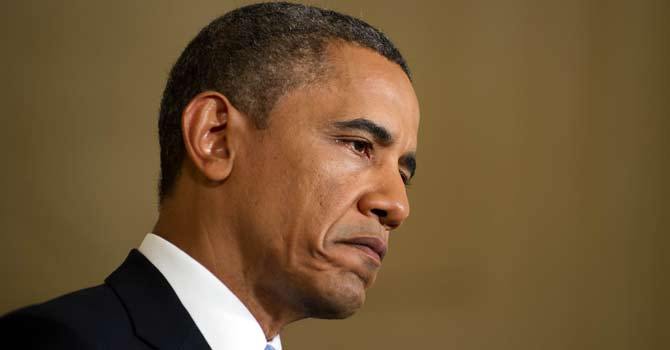
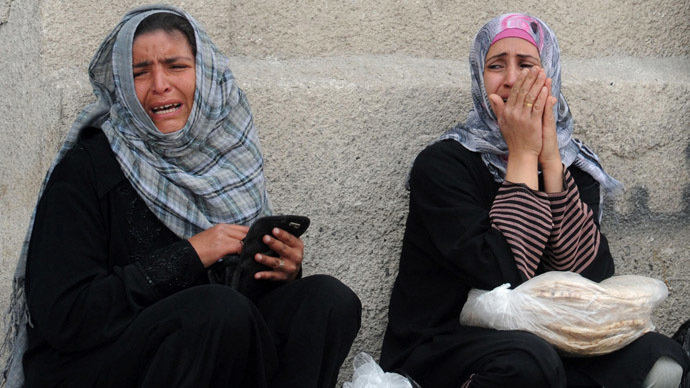

 Aletho News

