Agent Orange Justice presents an extraordinary international exhibition and art auction for the innocent children being born now with horrific birth defects in Vietnam.
NSW governor Marie Bashir will open the exhibition on August 7 from 6pm, at the Mori Gallery, 168 Day St, Sydney.
Celebrated actor Kate Mulvany, a second-generation Agent Orange survivor, will recite extracts from The Seed, her autobiographical award-winning play about the daughter of an Australian Vietnam Veteran.
Agent Orange Justice helps children in Vietnam who suffer terrible birth defects as a result of this harmful chemical, which was used in the Vietnam War. To this day, the chemical remains in the soil.
The exhibition’s curator Carol Dance said: “We are overwhelmed by the support we’ve had by some of our best-known and prize-winning artists who have generously donated their work. And, over 30 contemporary works on paper have been sent from Vietnam specifically for the exhibition. More than 80 works will be sold by silent auction. All proceeds will go directly to facilities caring for children in Vietnam who are Agent Orange affected.”
Artists include Dobell and Archibald Prize winners and artists represented in national galleries and international collections. Some of the artists include Suzanne Archer, Elizabeth Cummings, Euan Macleod, Reg Mombassa, George Gittoes, Pamela Griffith, Mai Nguyen-Long, Susan Norrie, Peter O’Doherty, Bruce Petty, Larry Pickering, Alan Moir and Wendy Sharpe.
After the August 7 opening the exhibition continues over August 8 to 11, from 11am to 8pm.
Reacting to the immediate Israeli accusations that Iran was behind the blast that killed Israeli tourists in Burgas, Bulgaria, Foreign Ministry spokesman, Ramin Mehmanparast, insisted, “The Islamic Republic of Iran, which itself is the biggest victim of terrorism, considers any act that endangers the lives of innocent people in order to fulfill illegitimate political objectives as inhumane and strongly condemns it.”
The official IRNA news agency quoted Mehmanparast as saying, “The Zionist regime, which had a direct role in the assassination of our country’s nuclear scientists, is leveling baseless accusations to divert global attention to its own terrorist nature.”
Despite incessant allegations – devoid of evidence, of course – of Iranian culpability, the BBCreports that Bulgarian Prime Minister Boiko Borisov has consistently “declined to back Israeli claims that Iran and the Lebanese militant group Hezbollah played a role.”
A bogus story in the Times of Israel which claimed that Iranian President Mahmoud had gloated over the Burgas bus bombing has been successfully debunked by both myself and BBC Persian correspondent Bahman Kalbasi. Still, it may be illuminating to consider the differences between the actual Iranian response to the terrorist attack in Bulgaria that took the lives of Israeli vacationers and the Israeli response to the multiple murders of Iranian scientists on the streets of Tehran, often when they have been accompanied by members of their family, going to work, or dropping their children off at nursery school.
The targeted killings of Iranian professors and scientists have widely been considered to be the work of Mossad, either on its own or in conjunction with Iranian terrorist organizations. Yet, in response to the murders, the Israeli government has never issued an official denial of responsibility.
On January 11, 2012, the day 32-year-old Mostafa Ahmadi-Roshan was murdered in his car, Israel’s top military spokesman, Brigadier General Yoav Mordechai, posted on his Facebook page: “I don’t know who settled the score with the Iranian scientist, but I certainly am not shedding a tear.”
What possible “score” could be settled by killing a man who works at a nuclear facility that is fully safeguarded and monitored by the IAEA remains a mystery, especially considering that – as a Reuters Special Report affirmed earlier this year – “[t]he United States, European allies and even Israel generally agree on three things about Iran’s nuclear program: Tehran does not have a bomb, has not decided to build one, and is probably years away from having a deliverable nuclear warhead.”
Responding to the murder of Ahmadi-Roshan, married and the father of a young son, Time Magazinequoted a “senior Israel official” who smiled and said, “Yeah, one more. I don’t feel sad for him.”
Confronted with the claim that Israel was responsible for the targeted killing, an anonymous Israeli official toldThe Washington Post, “It is not our policy to comment on this sort of speculation when it periodically arises.”
During an interview with CNN shortly after Ahmadi-Roshan’s killing, Israeli President Shimon Peres was also asked about Israel’s involvement. He replied dismissively: “Not to the best of my knowledge.”
Meanwhile, Mickey Segal, a former director of the Israeli military’s Iranian intelligence department, said, “Many bad things have been happening to Iran in the recent period. Iran is in a situation where pressure on it is mounting, and the latest assassination joins the pressure that the Iranian regime is facing.”
Ahmadi-Roshan’s murder came the day after IDF Chief Benny Gantz reportedly told a Knesset panel that 2012 would be a “critical year” for Iran, not least of all because of “things that happen to it unnaturally.”
Now imagine if any of these statements had come from Iranian officials about Israel this past week. And think what we’d be hearing if Iran’s Foreign Ministry had yet to issue a statement about the Burgas bombing, with the claim that it is not Iran’s “policy to comment on this sort of speculation.” Still, Iran’s denials are dismissed as yet another instance of devious Persian duplicity, while Israel’s smug silence is simply ignored, or even admired.
Of course, while denial doesn’t mean absolution and silence isn’t necessarily complicity, the double standards of international expectation, obligation, and suspicion when it comes to Israel and Iran remain as stark as ever.
July 25, 2012 – Addressing a United Nations Security Council meeting today, Iran’s U.N. Ambassador Mohammad Khazaee stated, “It’s amazing that just a few minutes after the terrorist attack, Israeli officials announced that Iran was behind it,” adding, “We have never and will not engage in such a despicable attempt on [the lives of] innocent people.”
Khazaee even suggested that Israel itself was behind the bombing. “Such terrorist operation could only be planned and carried out by the same regime whose short history is full of state terrorism operations and assassinations aimed implicating others for narrow political gains,” he said. “I could provide… many examples showing that this regime killed its own citizens and innocent Jewish people during the last couple of decades.”
While such an allegation is surely reactionary and hyperbolic (the result, one can assume, of a frustrating week of unfounded and unsubstantiated accusations), it is nevertheless grounded in the fact that Israel hasengaged in falseflag operations many times before.
On Tuesday, July 24, Israeli television broadcast one of the first new advertisements that promote and call for the “construction of the alleged Jewish Temple” on the ruins of the al-Aqsa mosque which Israelis seek to destroy.
The new ad shows an Israeli family spending a day at the beach: the father is reading news about the new Egyptian president Mohammad Mursi, and his children are building the temple in the sand. The message conveyed the idea that children are completing what their parents couldn’t do.
Then the father notices the temple, throws the newspaper on the ground and the camera zooms onto the picture of Mursi. Israelis try to show with the ad that even after the election of Mursi as a President, Israel will not be halted or prevented from building the temple.
It’s worth mentioning that the Temple Israel Board of Trustees group expressed more than once their concerns about electing Mursi the President of Egypt. In their opinion it may hinder Israel’s rights to build the temple.
It appears obvious that the group has started a psychological war against President Mursi.
Russia accused the US on Wednesday of justifying terror in Syria, as it said that the West was spurring further bloodshed in the crisis-hit country.
Foreign Minister Sergei Lavrov told reporters that Washington’s failure to condemn the July 18 blast that killed top security officials meant it was justifying terror.
“This is quite an awful position, I cannot even find the words to make clear how we feel,” Lavrov said, adding: “This is directly justifying terrorism. How can this be understood?
Lavrov expressed bewilderment at calls on Russia to clarify its position on Syria, saying Moscow’s policy was crystal-clear and it was the West whose actions were contradictory.
He criticized the US ambassador to the United Nations Susan Rice, saying she had argued that the attacks in Damascus meant the UN Security Council had to agree to a sanctions resolution against Syria last week that Russia later vetoed.
“In other words, to say it in plain Russian, this means ‘we (the United States) will continue to support such terrorist acts for as long as the UN Security Council has not done what we want’,” Lavrov said.
WEST SURRING BLOODSHED IN SYRIA
For his part, Russian Deputy Foreign Minister Gennady Gatilov said statements made by some Western leaders urging to end the conflict in Syria outside the UN Security Council framework were wrong and “a step aside from our common positions.”
During an interview with Itar-Tass news agency, Gatilov said: “We agreed that all foreign players will act in one direction – in the work with the government and with the opposition. We believe that viable decisions backing political settlement can be taken only in the UN Security Council.”
The international community would exert “proper influence” on both sides of the Syrian conflict only if it spoke with one voice and acted in coordination, Gatilov said, adding some Western partners’ intention to circumvent the UN would make no progress in the current difficult situation.
Meanwhile, Gatilov slammed those Western countries trying to spur “further bloodshed” from the opposition. “This upset us greatly, we take this as a step aside from the consensus obtained by the Geneva agreements,” the diplomat said.
Does anyone recall this statement: “If I may say so, this is not a court set up to bring to book Prime Ministers of the United Kingdom or Presidents of the United States”?
Those words are from none other than the late Former UK Foreign and Commonwealth Secretary, Robin Cook, live on television.
He had been asked in an interview if the UK did not fear prosecution by the International Criminal Court (ICC) for its actions during and after the invasions of Iraq and Afghanistan.
How much more bluntly can it be put? With such a plain explanation from such a powerful man, no one should bother about why the US and its European buddies are not prosecuted for their massive crimes against humanity in the decade that the ICC has been in existence.
But let us side-track a little.
Do we ever pause to consider the fact that the total membership of the ICC consists of just one-third of the world’s population?
We are often told that two-thirds of the members of the United Nations have ratified the Rome Statute that set up the ICC.
But this two-thirds of the UN membership, if we look at the populations of their countries, consist just 33 percent of the world’s population.
In essence, the ICC is made up of a group of small countries.
One analysis – as reported elsewhere in this paper – represents a minority of the world’s population despite the claim to being an “international” institution.
Says one analyst, “When you start down the list of the world’s largest countries, the first four, and six of the top 10, are not members of the Court.
“In addition, very significant regions of the world — Asia, the Middle East and North Africa — are woefully underrepresented in the Court’s membership.
“How do you create a significant international institution without the involvement of strategic powers such as China, India, Russia, Israel, Egypt, Pakistan, and the United States (a list that includes three of the five permanent members of the UN Security Council)?”
What we have then, in the ICC, is a minority court set up for the express purpose of not touching the leaders of the UK and the US, and imposing the will of these same untouchables on the rest of the world.
And while Robin Cook’s – and by extension the UK governing establishment’s ‑ attitude to the ICC is frankly disconcerting, more alarming is that of the United States.
Throughout the 1990s, the US Congress passed several resolutions supporting the creation of an international criminal court but one which provides safeguards to protect Americans from prosecution.
In between Monica Lewinsky and other shenanigans, Bill Clinton was involved in the negotiations leading to 1998 Rome Statute, which in turn led to the ICC’s creation on July 1, 2002.
But Clinton’s participation ‑ true to form – was to try and ensure an outcome that would not result in Americans being tried in an international court.
Clinton said, “I will not and do not recommend that my successor submit the treaty to the Senate … until our fundamental concerns are satisfied.”
His successor was to be George W Bush. And Bush’s reaction to the ICC was typical of the gung-ho cowboy with a nuclear arsenal who invaded Iraq because of non-existent weapons of mass destruction.
He not only declined to put the Rome Statue before the US Senate, he went a step further and – together with that dyed-in-the-wool rightwing Senator called Jesse Helms ‑ initiated what is known as the American Service-members’ Protection Act.
This law is also referred to as the Hague Invasion Act, and with good cause.
The Hague Invasion Act is an amendment to the National Defence Authorisation Act and its stated purpose is “to protect United States military personnel and other elected and appointed officials of the United States government against criminal prosecution by an international criminal court to which the United States is not party”.
The law gives the US President authority to use “all means necessary and appropriate to bring about the release of any US or allied personnel being detained or imprisoned by, on behalf of, or at the request of the International Criminal Court”.
This means the US can and will bomb The Hague in Holland – where the ICC is housed – if any American is brought before that court.
So there you have it: a minority court that survives at the mercy of the US and the UK is supposed to be responsible for maintaining global law and order.
Stephen Asiimwe, writing for the New Vision newspaper of Uganda ahead of the court’s 10th anniversary on July 1, 2012 said: “ICC will continue to pick the weak people, take them to The Hague and hang them.”
And Africa, as divided and lily-livered as we are, will not do anything about it, In fact, a la Joyce Banda, we will tell fellow Africans that they are not welcome in our countries if they are indicted by this minority court.
Not surprising at all.
Geoffrey Robertson, a prominent UK lawyer and a Queen’s Counsel, said at the time of the ICC’s inception,
While reading the text of Obama Statement on Shootings in Colorado, one line struck this writer as quite astounding:
“We may never understand what leads anybody to terrorize their fellow human beings like this. Such violence, such evil is senseless. It’s beyond reason.”
The President may have realized afterward that since he has been ordering the shooting of thousands in a half-dozen countries, the words “evil, senseless, beyond reason” could easily reflect back on himself. A later Obama statement on the massacre in a Colorado movie house did not contain the words “evil,” “senseless,” “violence beyond reason.”
In any case, history books, in some future, probably not too distant, day will deplore Obama’s pathetic 9/11 excuse for increasing and extending a ten-year-old military occupation war in dirt poor Afghanistan, killing, and killing easily, young and old Afghani, who are fighting invaders of their nation as they have always done. And perhaps one day independent investigative journalism will reveal whose instructions Obama was following from within that “financial element” that FDR confided “has owned the government since the days of Andrew Jackson.”1
Historians will denounce his shameful exceeding of his executive powers under the Constitution, to have assassinated even American citizens without trial, and ridicule the pack of lies he offered in sick defense of his frightening Hellfire and Predator drones murdering intentionally and collaterally while menacing all citizens in some of the most poverty-stricken populations on earth. Historians will judge his character by his once infamous joking about using a drone on his daughters boyfriends — “they’ll never know what hit them.”2
Very possibly, scholars will chronicle a time when Americans were no longer kept in ignorance by a commercial media blackout of the last year of Martin Luther King Jr.’s life, when King called his country “the greatest purveyor of violence in the world” and condemned US wars as all meant to maintain “unjust overseas predatory investments.”3 Such a time might well arrive in the racing era of instant world-wide personal communication while Barack Obama is still alive and prosecutable for crimes against humanity, or in his own words of 2012, “for violent, evil, senseless and beyond reason, terrorizing fellow human beings.” With the recording of his words, Obama would have difficulty pleading insanity.
On 11 July 2012, The Independent’s Andrew Buncombe reported on US Secretary of State Hilary Clinton’s visit ‘to the scene of one of the darkest episodes of US foreign policy’ – Laos, where she ‘saw first-hand the aftermath of America’s “secret war” in which about two million tons of bombs were dropped on the country’. ‘For its population’, Buncombe explained, ‘it is the most heavily bombed place on earth’ where ‘about 30 per cent of the ordnance remains unexploded’. Such a ratio is undoubtedly alarming, and should raise questions which as yet go unanswered.
To begin, we should ask if such bombing constitutes a war crime. That the ‘580,000 bombing raids over Laos’ carried out by the US military between 1964 and 1975 – each bomb of which ‘contain[s] up to 600 smaller bomblets’, and from which ‘an estimated 50,000 people’ have been killed ‘since the end of the war’ (‘many of them children’) – were ‘part of a secret mission to cut off supply routes for North Vietnamese forces’ during the Vietnam war, surely fails to justify the destruction. In his report, Buncombe does not mention, for example, that most of those killed during the raids were innocent and defenceless peasants. T D Allman reported the Plain of Jars in 1971 as ’empty and ravaged’ by saturation bombing which was ‘used in an attempt to extinguish all human life’1. At the very least, the methods employed in the ‘secret mission’ should raise questions about the motives behind the war as a whole. Of course, no such thoughts are expressed. Needless to say, the notion that the merciless destruction wrought by the United States against Laos and/or Vietnam, may be tantamount to a war crime, does not arise.
Regardless, all of this is forgivable, it seems, because Secretary of State Clinton ‘vowed that Washington would do more to help those still suffering from the legacy of America’s Cold War actions’. Indeed, ‘Reports say the US has already spent around £43m to help Laos clear unexploded bombs and will spend another £9m this year’. The intention in citing these figures appears to be to imply that the US has already made a substantial, perhaps charitable, effort. Certainly, £52m from a superpower which happens to be one of the richest nations in the world is undoubtedly more than enough compensation for nine years of bombing, and anyone who thinks otherwise is obviously ungrateful or insane; most likely both. After all, how much did the two million tons of bombs cost? Reports such as Allman’s (cited above) beg the question as to why vows of ‘help’ by US administration officials are taken at face value. Clearly, the most basic review of US foreign policy indicates that such actions are not necessarily of primary concern.
It is conceded that Clinton ‘is seeking to counter growing Chinese influence in the region . . . [and that she] also discussed . . . investment opportunities’. The ‘four-hour visit to Laos, en route to Cambodia’ was, then, not entirely selfless. Still, it was ‘the first US Secretary of State visit to the South-east Asian nation since 1955’ – a fact which must bring significant comfort to the 50,000 killed and ‘maimed by decades-old ordnance’. Indeed, the visit was not the easiest for Clinton, who described it as a ‘painful reminder of the legacy of the Vietnam war era’. A 20 year old Laotian who lost his sight and both his hands on his 16th birthday, after picking up a cluster bomb which subsequently ‘blew up in his face’, spoke ‘in faltering English’, of ‘So many survivors without help’, adding that ‘Their life is very, very hard’. Is it this difficulty of life for innocent victims of ‘America’s Cold War actions’ which determines the past in Laos to ‘always [be] with us’, as Clinton herself exclaimed? Perhaps it is this same past that discouraged high-ranking US officials from visiting the country over the past 57 years. Maybe they simply could not afford the trip, given the £43m they were to spend up until today? Perhaps it was the 30 per cent of unexploded ordnance which was such a turn off?
We may ask what other ‘secret mission[s]’ were conducted during the Vietnam war by the United States; who else is still ‘suffering from the legacy of America’s Cold War actions’? Let us take Cambodia, another stop on Clinton’s tour. It too was bombed covertly – illegally, from the mid-1960s to the early 1970s, slaughtering hundreds of thousands. It has subsequently been argued that the bombing campaign was in a large part responsible for the mass recruitment to the Khmer Rouge. In a study of US Air Force files released some years ago, Ben Kiernan and Taylor Owen write:
Civilian casualties in Cambodia drove an enraged populace into the arms of an insurgency that had enjoyed relatively little support until the bombing began, setting in motion the expansion of the Vietnam War deeper into Cambodia, a coup d’état in 1970, the rapid rise of the Khmer Rouge, and ultimately the Cambodian genocide.
The study demonstrated, not only that the bombing of Cambodia began in 1965 under the Johnson administration, as opposed to 1969, under Nixon, as originally believed, but that the country was subjected to more bombs than the total tonnage of ordnance dropped by the Allies in the Second World War, including the bombs dropped on Hiroshima and Nagasaki. Indeed, it was relentless and indiscriminate. Reporting on the release of transcripts of Henry Kissinger’s telephone conversations during his time in office, the New York Times described how, in one conversation in 1970, whilst Kissinger was National Security Advisor, then-President Richard Nixon ‘became especially angry . . . with what he considered the lackluster bombing campaign . . . in Cambodia’, labeling it, the Washington Post noted ‘a disgraceful performance’ in which the US Air Force was ‘farting around doing nothing’, and ordered an escalation in the campaign. ‘Mr. Kissinger’, explained the NYT, ‘immediately relayed the order: “A massive bombing campaign in Cambodia. Anything that flies on anything that moves.”‘2 In their study, Kiernan and Owen in fact quote a US official who stated at the time that ‘We [US officials] had been told, as had everybody…that those carpet-bombing attacks by B-52s were totally devastating, that nothing could survive’.
It should be noted that despite the horrifying consequences which continue to devastate Laotian life, ‘the US has not signed an international convention against using such munitions as were used. Recall that these are bombs which ‘contain up to 600 smaller bomblets’, and whose use has killed some 50,000 people, ‘many’ of whom have been children. When, in the 1970s, the US Air Force radio station in Laos was closed, it signed off with the following message: ‘Good-by [sic] and see you next war’.3 It should be noted, also, that the CIA dropped into Laos millions of dollars of forged Pathet Lao currency, whilst the US Information Agency launched a propaganda campaign including radio programs, films, wall newspapers, leaflet drops and a magazine whose circulation was 43,000 – the circulation of the largest newspaper was 3,300.4 The Guardian reported in 1971 that:
ample evidence exists to confirm charges that the Meo villages that do try to find their own way out of the war-even if it is simply by staying neutral and refusing to send their 13-year olds to fight in the CIA army-are immediately denied American rice and transport, and ultimately are bombed by the US Air Force.5
Buncombe’s Independent report ignores not only details of the United States’ ‘secret war’ against Laos, but also the wider historical context – that is, the fate of other countries against which it waged similar destruction. No mention is made, for example, of the extensive drug trafficking networks established during these years – for which Air America served as a front – that provided the CIA with mercenary armies, as well as covert finance, with which to conduct these ‘secret war[s]’; more often than not at the expense of the native societies, who were subsequently left in the hands of enriched, heavily-armed gangsters, drug kingpins, tribal warlords and the like.6 By ignoring facts such as those outlined above, the report effectively rewrites the history of the countries at hand, erasing both the complicity, and responsibility, of the United States in the turbulent and catastrophic events that have left the countries in the state they are now found by officials – decades later, it should be stressed. It is telling that the dramatic and violent crimes mentioned can be so easily sidelined. That such horror can be written off as ‘America’s Cold War actions’, while its actual implications are seemingly unworthy of even cursory comment, should give us pause.
References
1. Cited in Edward S. Herman and Noam Chomsky, Manufacturing Consent: The Political Economy of the Mass Media, c.1988 (London: Vintage, 1994), p. 258.
3. Cited in William Blum, Killing Hope: US Military & CIA Interventions since World War II (London: Zed Books, 2003), p. 145.
4. Blum, Killing Hope, 2003, pp. 144, 142.
5. Cited in Blum, Killing Hope, 2003, p. 144.
6. See Alfred W. McCoy, The Politics of Heroin: CIA Complicity in the Global Drug Trade, Afghanistan, Southeast Asia, Central America, Colombia (Chicago: Lawrence Hill Books, 2003, revision of 1972 edition).
Banning cluster bombs but then allowing Canadian pilots to drop them, Canadian soldiers to transport them and Canadian commanding officers to order them into the battlefield makes no sense, says the man who negotiated Canada’s participation in the Convention on Cluster Munitions.
Former arms treaty negotiator Earl Turcotte, who led Canada’s effort to negotiate the Convention on Cluster Munitions, is warning Canada has misrepresented its signature on the 2010 treaty by proposing enabling legislation with very wide exceptions.
“It certainly, I think, misrepresents the position that we and other like-minded countries took during the negotiations,” Turcotte told The Catholic Register. “I expect Canada is going to get raked over the coals, and deservedly so at this point.”
Canada signed the international treaty in Oslo, Norway, on Dec. 3, 2008 — one of the first nations to do so. It took until April 26 for the government to table legislation that would ratify that signature. According to the Department of Foreign Affairs media relations staff it took more than three years because “Canadian officials needed to finalize the necessary documentation for cabinet’s decision.”
For the sake of interoperability with American forces, the enabling legislation allows Canadian commanders on joint operations with U.S. forces to order American soldiers to use cluster bombs, allows Canadian pilots on secondment with American forces to drop cluster bombs, allows Canadian forces to transport the weapons into the field of battle. While most of the 111 countries that have ratified the treaty have banned investment in companies that produce cluster bombs, Canada has not. The enabling legislation also does not ban transport of cluster munitions through Canadian airspace or territory.
When Turcotte learned the contents of the bill he quit his job with foreign affairs to dedicate his time to persuading Parliament to seriously revise Bill S-10. Turcotte and the NGO Mines Action Canada have launched a petition asking Parliament to “make it clear that no Canadian should ever be involved in the use of cluster munitions for any reason, anywhere, at any time, for anyone.”
Banning cluster bombs, which have killed and maimed hundreds of thousands of civilians and very few soldiers, has been a cause close to the Vatican’s heart. The Holy See was part of a core group of countries that steered the Oslo process which produced the treaty — a role Canada had assumed a decade earlier with the anti-personnel land mines treaty.
Pope Benedict XVI has spoken several times about the immorality of cluster bombs. When the Convention entered into force in 2010, Benedict exhorted all states to comply with the treaty.
“The international community has demonstrated wisdom, foresight and the capacity to pursue a meaningful result in the field of disarmament and international human rights,” he said Aug. 1, 2010. “The logic of peace is stronger than the logic of war, which in every case must have as an insurmountable limit the protection and preservation of the civil population and particularly the most vulnerable people.”
“The moral issue is that if you’ve got a ban, a complete ban, and you’ve signed a treaty that says you support the concept of a complete ban, then how can you morally justify coming back and say ‘Yes, we ban this, but…’ ” said Mines Action Canada executive director Paul Hannon. “You can’t have it both ways. It’s morally ambiguous. You want to ban something and you want to help somebody use it.”
The exceptions in Bill S-10 are based on Article 21 of the Convention — an article that Turcotte himself wrote. Article 21 was intended to allow NATO countries to continue to work with U.S. forces. The United States, Israel, Pakistan, North Korea, China and Russia are the major non-signatory states.
“The scope of the exceptions was very narrow,” said John Seibert, executive director of Project Ploughshares, an ecumenical think tank on defence and disarmament issues.
“This is a wide open door… It really defeats the primary purpose of the treaty.”
“The Prohibiting Cluster Munitions Act fully implements Canada’s commitments to the Convention, and strikes a good balance between humanitarian obligations while preserving our national security and defence interests,” the foreign affairs media department told The Catholic Register in an e-mail. “Canada’s position is based on Canada’s own humanitarian and security and defence requirements.”
The media lines from the government are illogical, according to Turcotte.
“This makes no military sense and no moral sense,” he said. “Whether it’s a sin of commission or a sin of omission, when one is using a weapon with full knowledge that it is going to cause extensive collateral damage both at the time of use and also post-conflict because of the high dud rate, then as far as I’m concerned that’s an abrogation of our responsibilities under military law, let alone humanitarian law.”
One academic study found that 98 per cent of all recorded casualties from cluster munitions have been civilians. The Geneva Conventions require soldiers to ensure civilians are not targeted, said Turcotte.
Asked whether cluster munitions are immoral, foreign affairs answered: “They have been used in approximately 34 countries and territories to date, often with devastating impact on civilians due to their wide-area effect and to sub-munitions failing to explode.”
Hannon believes the Department of National Defence never wanted the treaty and won out in interdepartmental lobbying over the enabling legislation.
“Then they just got carried away and started saying not only would clusters be allowed to be used but we would assist in using them. I think they’re playing, they’re twisting around legal definitions and creating a legal pretzel,” Hannon said.
Fifty Years of US Targeted ‘Kill Lists’: From the Phoenix Program to Predator Drones
By DOUG NOBLE | July 19, 2012
“A broad-gauged program of targeted assassination has now displaced counterinsurgency as the prevailing expression of the American way of war.” – Andrew Bacevich [1]
This spring the US drone killing program has come out of the closet. Attorney General Eric Holder publicly defended the drone killing of an American citizen [2], while Obama’s counter terrorism czar John Brennan publicly explained and justified the target killing program [3]. And a New York Times article by Jo Becker and Scott Shane chronicled Obama’s personal role in vetting a secret “Kill List.” [4]
This striking new transparency, the official acknowledgment for the first time of a broad-based US assassination and targeted killing program, has resulted from the unprecedented and controversial visibility of drone warfare. Drones now make news every day, and those of us who have been protesting their use for years have heightened their visibility in the public eye, forcing official acknowledgment and fostering worldwide scrutiny. This new scrutiny focuses not only on drone use but also, and perhaps more importantly, on the targeted killing itself – and the “kill lists” that make them possible.
This new exposure has set off a firestorm of reaction around the globe. Chris Woods of the Bureau of Investigative Journalism told Democracy Now! “The kill list got really heavy coverage … newspapers have all expressed significant concern about the existence of the kill list, the idea of this level of executive power.” [5] A Washington Post editorial noted that “No president has ever relied so extensively on the secret killing of individuals to advance the nation’s security goals.” [6] Becker and Shane of the Times pronounced Obama’s role “without precedent in presidential history, of personally overseeing the shadow war …” [7] And former president Jimmy Carter insisted, in a recent editorial in The New York Times, “We don’t know how many hundreds of innocent civilians have been killed in these [drone] attacks, each one approved by the highest authorities in Washington. This would have been unthinkable in previous times.” [8]
Really?
In fact, US assassination and targeted killing, with presidential approval, has been going on covertly for at least half a century. Ironically, all this drone killing now offers us a new opportunity: to pry open the Pandora’s box hiding long-held secrets of covert US assassination and targeted killing, and to expose them to the light of day. What we would find is that the only things new in the latest, more publicized revelations about kill lists and assassinations are the use of drones, the president’s hands-on approach in vetting targets, and the global scope of the drone killing.
Those of us in the Upstate Coalition to Ground the Drones, Code Pink and other groups protesting US drones for years have correctly focused on the use of drones as illegal, immoral and strategically counterproductive. We have abhorred the schizophrenic ease of remote killing, the uniquely frightening horror of a drone strike, and the unavoidable (even intentional) killing of countless civilian “terrorist suspects” in “signature strikes.” We have also warned of the proliferation of drones in countries around the globe and of their procurement by US police forces and border patrols, for surveillance and “non-lethal” targeting.
But drones are not the only, or even the most important, concern. It’s the targeted killing itself, past and present. In this article I start to unravel what the latest demands for transparency should lead us to investigate fully: the fifty year history of US assassination and targeted killing that has resulted, quite directly, in the present moment. Those who are mortified by the latest revelations of Obama’s kill list have much to learn from a more comprehensive, historical perspective on US killing around the globe. Who knows: Perhaps someone in Congress might even be prodded to do what Senators Fulbright and Church did in years past: hold hearings on this continuing execration taking place in our name. Until then, what follows is an introduction to this ongoing horror story.
Section 1 of this article briefly reviews the lethal history of the US Phoenix Program in Vietnam, the original source of subsequent US counter terrorist tactics and strategies. Section 2 revisits briefly the well-worn history of US kill lists and assassinations in Latin American countries, followed by the somewhat less-well-known history of US kill lists and assassinations in countries on other continents. Section 3 traces the direct legacy of Phoenix, even its explicit resurrection by the key architects of the US targeted killing programs in Iraq and Afghanistan, and in a growing number of “countries we are not at war with.”
One point of clarification and definition. It is well known that in recent history the US has orchestrated assassination attempts, both successful and unsuccessful, on major world leaders. Examples include: Lumumba under Eisenhower, Castro and Diem under Kennedy, Gaddhafi under Reagan, Saddam Hussein under Bush, and Allende under Nixon. [9] The term “assassination” is typically restricted to such killings of political leaders, and President Ford’s executive order banning assassination applies only to the assassination of foreign heads of state. [10] The focus of this article is different. Here we discuss the US-generated kill lists used over the last half century, under direct presidential authority, for the targeted killing of thousands of civilians suspected of being or harboring terrorists/ insurgents, from Vietnam to Guatemala, from Indonesia to Iraq, right up to the present day.
The Phoenix Program
The US Phoenix Program was a secret, large scale counter terrorist effort in Vietnam. Developed in 1967 by the CIA, the Phoenix Program, called Phung Hoang by the Vietnamese, aimed a concerted effort to “neutralize” the Vietcong Infrastructure (VCI) consisting of South Vietnamese civilians suspected of supporting North Vietnamese or Viet Cong soldiers. The euphemism “neutralize” meant to kill or detain indefinitely. Then CIA Director William Colby, while insisting in 1971 Congressional hearings that “the Phoenix program is not a program of assassination,” nonetheless conceded that Phoenix operations killed over 20,000 people between 1967 and 1972. [11]
Phoenix targeted civilians, not soldiers. Operations were carried out by “hunter-killer teams” consisting both of US Green Berets and Navy Seals and by South Vietnamese Provincial Reconnaissance Units (PRUs), units of mercenaries set up for assassination and “counter terror.” A Newsweek article in January 1970 described Phoenix as “a highly secret and unconventional operation that counters VC terror with terror of its own.” [12] Robert Kaiser of the Washington Post reported Phoenix being called “an instrument of mass political murder…sort of Vietnamese Murder Inc.,” designed to terrorize the civilian population into submission.” [13]
Until 1970 the computerized VCI blacklist was a unilateral American operation. After the devastating 1968 Tet offensive, South Vietnamese President Thieu declared: “The VCI must be eliminated…and will be defeated by the Phoenix program.” [14] Phoenix became a ruthless “bounty hunting” program to eliminate the opposition. [15] The US and South Vietnamese created a list of tens of thousands of suspects for assassination. These names were centralized and distributed to Phoenix coordinators. From 1965-68 U.S. and Saigon intelligence services maintained an active list of Viet Cong cadre marked for assassination. The program for 1969 called for “neutralizing” 1800 a month.
The VCI blacklist became corrupted by officers inserting their personal enemies’ names to get even. Due process was nonexistent. Names supplied by anonymous informers showed up on blacklists. [16] CIA Director Colby admitted in 1971 that the blacklists had been “inaccurate.” [17] Few senior VCI leaders were caught in the Phoenix net. Instead its victims were typically innocent civilians. A Pentagon-contract study found that, between 1970 and 1971, ninety-seven per cent of the Vietcong targeted by the Phoenix Program were of negligible importance. [18] By 1973, Phoenix generated 300,000 political prisoners in South Vietnam. Military operations such as My Lai used Phoenix intelligence; in fact, the My Lai massacre, hardly an isolated incident, was itself a Phoenix operation. [19]
Apologists have offered rationales for Phoenix that sound eerily similar to those used to defend current drone attacks. Phoenix was typically referred to as a “scalpel” replacing the “bludgeon” of search and destroy, aerial bombardment or artillery barrages. Alternatively, it was called a precision “rifle shot rather than a shotgun approach to target key political leaders … and activists in VCI.” [20] Military historian Dale Andrade explains, “Both SEALS and PRUs killed many VCI guerrillas – that was war. They also inevitably killed innocent civilians – that was regrettable….but [Phoenix] operations were much more discerning than the massive affairs launched by conventional …forces. That fact was often lost in the rhetoric of assassination and murder …”[21]
Phoenix was created, organized, and funded by the CIA. Quotas were set by Americans. Informers were paid with US funds. The national system of identifying suspects, the elaboration of numerical goals and their use as measures of merit, was designed and funded by Americans. One former US Phoenix soldier conceded, “It was “heinous,” far worse than the things attributed to it.” [22]
Kill Lists from Phoenix to Latin America
The US intelligence community formalized the lessons of the Phoenix Program in Vietnam by commissioning Project X, the Army’s top-secret program for transmitting Vietnam’s lessons to South America. [23] By the mid-1970s, the Project X materials were going to armies all over the world. These were textbooks for global counterinsurgency and terror warfare. These included a murder manual, “Psychological Operations in Guerrilla Warfare,” which openly instructed in the assassination of public officials, and was distributed to the Nicaraguan Contras. Another manual, “Human Resource Exploitation Training Manual,” was used widely in Honduran counterrorism efforts.
Use of the Project X material was temporarily suspended by Congress and the Carter administration for probable human rights violations, but the program was restored by the Reagan administration in 1982. By the mid-1980s, according to one detailed history, “counterguerrilla operations in Colombia and Central America would thus bear an eerie but explicable resemblance to South Vietnam.” [24]
What follows is a brief sketch of the widespread application of US-promulgated Phoenix-derived reigns of terror, kill lists, and death squads throughout Latin America and beyond. Much of this is familiar territory to many activists and scholars, and is merely the tip of the iceberg, but it merits review as a backdrop for the current context of kill lists and targeted assassination. [25]
US KILL LISTS AND ASSASSINATION IN LATIN AMERICA
The U.S. Army’s School of Americas (SOA), started in 1946, trained mass murderers and orchestrated coups in Peru, Panama, Argentina, Ecuador, Bolivia, Guatemala, El Salvador, and Mexico. The SOA trained more than 61,000 Latin American officers implicated in widespread slaughter of civilian populations across Latin America. From 1966-1976 the SOA trained hundreds of Latin American officers in Phoenix-derived methods. Between 1989-1991 the SOA issued almost 700 copies of Project X handbooks to at least ten Latin American countries, including Bolivia, Colombia, Peru, Venezuela, Guatemala, and Honduras. In 2001, SOA was renamed Western Hemisphere Institute for Security Cooperation (WHISC), but peace activists know it as School of Assassins. [26]
The CIA trained assassination groups such as Halcones in Mexico, the Mano Blanca in Guatemala, and the Escuadron de la Muerte in Brazil. In South America, in 1970-79, Operation Condor, the code-name for collection, exchange and storage of intelligence, was established among intelligence services in South America to eradicate Marxist activities. Operation Condor promoted joint operations including assassination against targets in member countries. In Central America, the CIA-supported death toll under the Reagan presidency alone exceeded 150,000. The CIA set up Ansesal and other networks of terror in El Salvador, Guatemala (Ansegat) and pre-Sandinista Nicaragua (Ansenic).
Honduran death squads were active through the 1980s, the most infamous of which was Battalion 3–16, which assassinated hundreds of people, including teachers, politicians, and union leaders. Battalion 316 received substantial CIA support and training, and at least 19 members graduated from the School of the Americas.
In Colombia, about 20,000 people were killed since 1986 and much of U.S. aid for counternarcotics was diverted to what Amnesty International labeled “one of the worst killing fields.” The US State Department also supported the Colombian army in creating a database of subversives, terrorists and drug dealers.
In Bolivia, Amnesty International reported that from 1966-68 between 3,000 and 8,000 people were killed by death squads. The CIA supplied names of U.S. and other foreign missionaries and progressive priests.
In Ecuador, the CIA maintained what was called the lynx list, aka the subversive control watch list of the most important left-wing activists to arrest. In Uruguay. Every CIA station maintained a subversive control watch list of most important left wing activists. From 1970-72 the CIA helped set up the Department of Information and Intelligence (DII), which served as a cover for death squads, and also co-ordinated meetings between Brazilian and Uruguayan death squads.
In Nicaragua, the US provided illegal funds to the Contras, and Marine intelligence helped maintain a list of civilians marked for assassination when Contra forces entered the country.
In Chile, 1970-73, CIA-created unions organized CIA-financed strikes leading to Allende’s overthrow and subsequent suicide. By late 1971 the CIA was involved in the preparation of lists of nearly 20,000 middle-level leaders of people’s organizations, scheduled to be assassinated after the Pinochet coup.
In Haiti, U.S. officials with CIA backgrounds in Phoenix-like program activities coordinated with the Ton-Ton Macoute, “Baby Doc” Duvalier’s private death squad, responsible for killing at least 3,000 people.
For over thirty years the US military and the CIA helped organize, train, and fund death squad activity in El Salvador. From 1980-93, at least 63,000 Salvadoran civilians were killed, mostly by the government directly supported by the U.S. The CIA routinely supplied ANSESAL, the security forces, and the general staff with electronic, photographic, and personal surveillance of suspected dissidents and Salvadorans abroad who were later assassinated by death squads. US militray involvement in El Salvador allowed “the lessons learned in Vietnam to be put into practice … assisting an allied country in counterinsurgency operations.” [27]
In Guatemala, as early as 1954, the U.S. Ambassador, after the CIA-orchestrated overthrow of the Arbenz government, gave to the new Armas government lists of radical opponents to be assassinated. Years later, throughout Guatemala’s 36-year civil war, Washington continuously to supported the Guatemalan military’s excesses against civilians, which killed 200,000 people.
US Assassination Programs Exported to Other Countries
In Indonesia, 1965-66, the US embassy and the CIA provided the Indonesian military with lists of the names of PKI militants, which were used by Suharto to crush the PKI regime. This resulted in “one of the worst episodes of mass murder of the twentieth century,” with estimates as high as one million deaths. [28]
In Thailand, in 1976, the new junta used CIA-trained forces to crush student demonstrators during coup; two right-wing terrorist squads suspected for assassinations tied directly to CIA operations.
In Iran, the CIA launched a coup installing the shah in power and helped establish the lethal secret police unit SAVAK. [29] The CIA and SAVAK then exchanged intelligence, including information and arrest lists on the communist Tudeh party. Years later, in 1983, the CIA gave the Khomeni government a list of USSR KGB agents and collaborators operating in Iran, which the Khomeni regime used to execute 200 suspects and close down the communist Tudeh party.
In the Philippines, in 1986, Reagan increased CIA involvement in Philippine counterinsurgency operations, carried out by more than 50 death squads. In 2001, before 9/11, the Bush administration sent a unit of SOF to the Philippines “to help train Philippine counter terrorist forces fighting against Muslim separatists” within groups like Abu Sayyaf. After 9/11 US-Filipino cooperation was stepped up and the ongoing separatist conflict was cast, to the benefit of both sides, as “the second front in the war on terror.”[30] In Feb, 2012, a US drone strike targeting leaders of Abu Sayyaf and other separatist groups killed 15 people, the first use of killer drones in Southeast Asia. [31]
A “global Phoenix Program”: drone targets worldwide
“A global Phoenix program … would provide a useful start point” for “a new strategic approach to the Global War on Terrorism.”
–David Kilcullen [32]
IRAQ
Despite the US-perpetrated counter terrorist slaughter in Latin America and elsewhere in the 1970s-1990s, the US Special Forces debacle in Mogadishu in 1993, popularized in the film Black Hawk Down, severely impacted US willingness to use Special Forces in counter terrorist missions for the next decade. But then, after 9/11, things changed drastically. On September 17, 2001, President Bush signed a secret Presidential finding authorizing the C.I.A. to create paramilitary teams to hunt, capture, detain, or kill designated terrorists almost anywhere in the world. The pressure from the White House, in particular from Vice-President Dick Cheney, was intense, and in the scramble, a search of the C.I.A.’s archives turned up – the Phoenix Program. [33]
In July , 2002, Defense Secretary Donald Rumsfeld sent an order for a plan to make sure that special forces could be authorized to use lethal force ‘in minutes and hours, not days and weeks.’” [34] Rumsfeld prompted Bush to authorize the military to “find and finish” terrorist targets. Here he was referring to “the F3EA targeting cycle” used in anti-infrastructure operations by Special Operations Forces. F3EA, an abbreviation of find, fix, finish, exploit, analyze, utilizes comprehensive intelligence to “find a target amidst civilian clutter and fix his exact location . . . . enabling surgical finish operations … to catch a fleeting target.” [35]
Lt General William (Jerry) Boykin, Delta commander in Mogadishu, deputy undersecretary for Defense for Intelligence and a key planner of the Special Forces offensive in Iraq, announced, “We’re going after these people. Killing or capturing them … doing what the Phoenix program was designed to do, without all the secrecy.” [36]
Back in 1963, the CIA had supplied lists of communists to the Baath party coup so that communists could be rounded up and eliminated. [37] Now, forty years later, it was the Baathists’ turn to be rounded up by Special Forces and CIA and executed. After the 2003 invasion of Iraq, the U.S. military notoriously developed a set of playing cards to help troops identify the most-wanted members of Saddam Hussein‘s government, mostly high-ranking Baath Party members. Less well-known was the secret targeted killing of thousands of Baathist civilians by US Special Forces.
Seymour Hersh wrote in 2003 that “The Bush Administration authorized a major escalation of the Special Forces covert war in Iraq. … Its highest priority [being] the neutralization of the Baathist insurgents, by capture or assassination. [38] A former C.I.A. station chief described the strategy: “The only way we can win is to go unconventional. We’re going to have to play their game. Guerrilla versus guerrilla. Terrorism versus terrorism. We’ve got to scare the Iraqis into submission.” [39] The US even hired thousands of contract killers previously responsible for US-sponsored extra-judicial killings and death squad activity in Latin America. The operation—called “preëmptive manhunting” by one Pentagon adviser—had, according to Hersh, “the potential to turn into another Phoenix Program.” [40]
Global Phoenix
In 2009, the Office of the Secretary of Defense sponsored a paper by the National Defense Research Institute entitled “The Phoenix Program and Contemporary Counterinsurgency.” The paper notes, “The persistent insurgencies in Iraq and Afghanistan have generated fresh interest among military officers, policymakers, and civilian analysts in the history of counterinsurgency. The Phoenix Program in Vietnam—the U.S. effort to improve intelligence coordination and operations aimed at identifying and dismantling the communist underground—is the subject of much renewed attention.” [41]
The paper continues, “As the United States and its allies shift their focus to Afghanistan and weigh counterinsurgency alternatives for that country, decisionmakers would be wise to consider how Phoenix-style approaches might serve to pry open Taliban and Al-Qaeda black boxes.” [42]
Two key architects of the current Phoenix-style global counterinsurgency efforts by the US are David Kilcullen and Michael Vickers. David Kilcullen has been counterinsurgency advisor to two former Middle East commanders, General Stanley McChrystal (formerly head of Special Operations) and General David Petraeus, now CIA Director. Michael G. Vickers, made famous in the book and film Charlie Wilson’s War about the CIA’s anti-Soviet Afghan campaign of the 1980s, is currently Under Secretary of Defense for Intelligence, wielding such vast authority over the US war on terror that, according to a Washington Post profile, Pentagon colleagues refer to as his “take-over-the-world-plan.” [43]
Kilcullen wrote in a much-quoted 2004 paper entitled “Countering Global Insurgency” that “Counterinsurgency campaigns in Afghanistan and Iraq have reawakened official and analytical interest in the Phoenix Program.” He proposed that “a global Phoenix program … would provide a useful start point” for “a new strategic approach to the Global War on Terrorism,” one which would focus on “interdicting links … between jihad theatres, denying sanctuary areas, … isolating Islamists from local populations and … disrupting inputs” from others. [44]
Vickers issued a Phoenix-style directive in December 2008 to “develop capabilities for extending U.S. reach into denied areas and uncertain environments by operating with and through indigenous foreign forces or by conducting low visibility operations.” “It’s not just the Middle East. It’s not just the developing world. It’s not just non-democratic countries – it’s a global problem. Threats can emanate from Denmark, the United Kingdom, you name it.” [45] According to a Washington Post profile, “the most critical aspect of Vicker’s plan targeting al-Qaeda-affiliated networks around the world involves US Special Forces working through foreign partners to uproot and fight terrorism.” [46] US military and Special Operations forces would “pay indigenous fighters and paramilitaries who work with them in gathering intelligence, hunting terrorists, fomenting guerrilla warfare or putting down an insurgency.” [47]
Pentagon colleagues have said of Vickers, “he tends to think like a gangster.” [48] Pentagon press secretary Geoff Morrell revealed that getting Bin Laden in Pakistan was Vicker’s “baby,” and “more than anyone else in the department, he drove the issue.” [49] 2011 New York Times Vickers summarizes his strategy this: “You make a deal with the devil to defeat another devil.”[50] “I just want to kill those guys.” [51] A 2011 Such is the megalomaniacal mission underlying the US global war on terror, its kill lists and worldwide program of targeted assassination.
Killer Drones Revisited
“Engaging in any assassination blurs the line between the good guys and the bad.” It is also “a proclamation of weakness and an admission of failure.”
–John Jacob Nutter, The CIA’s Black Ops [52]
The purpose of this article is to reframe the current attention on killer drones and Obama’s “kill list” within an historical perspective. The goal here is not to discourage the escalating protest against killer drones or against Obama’s targeted assassination program around the globe. As stated at the outset, the unprecedented visibility of these nefarious activities and of the outraged public response to them is precisely what is needed at this time. This heightened awareness also affords a perfect opportunity to revisit the extraordinary history of US assassination and targeted killing that has led directly and explicitly to these activities.
Focus on the drones alone will not be sufficient. For even the major counter terrorist mastermind David Kilcullen himself, an avid proponent of the global targeted killing program, has argued against the use of drones. In a 2009 New York Times editorial he argues that “The goal should be to isolate extremists from their communities; [they] must be defeated by indigenous forces…Drone strikes make this harder, not easier.” He adds, “The use of drones displays every characteristic of a tactic – or, more accurately, a piece of technology – substituting for a strategy, [with minimal understanding] of the tribal dynamics of the local population. This creates public outrage and a desire for revenge.” [53]
Scholar Maria Ryan, in a 2011 article entitled “War in Countries We Are Not at War With,” writes: “In 2006 the Pentagon announced that it had sent small teams of Special Operations troops to US embassies to gather intelligence on terrorism in Africa, South East Asia and South America…There is, then, a covert side to the Global War on Terrorism that is not visible and not currently knowable in the absence of whistleblowers, leaks, or things gone wrong.” [54]
The heightened public attention paid to drone killing might very well, in time, lead to some welcome success in curtailing their use. But too narrow a focus on the US deployment of Predator and Reaper drones might also distract us from other forms of Phoenix-derived targeted killing still being perpetrated globally – and covertly – by our Assassination Nation.
Doug Noble is an activist with Occupy Rochester NY and Rochester Against War.
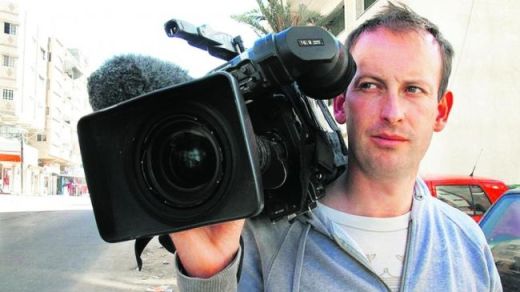
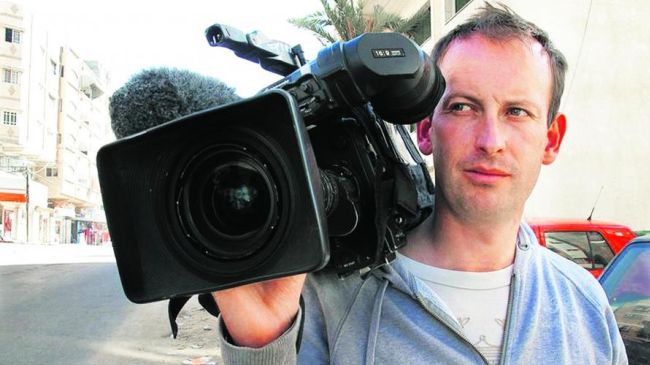
French journalist Gilles Jacquier, who lost his life in central Syria earlier this year, was killed by the Syrian opposition’s mortar fire, a report says.
“This investigation was carried out by French intelligence and based on a ballistic study carried out in the area. According to my contact, the mortar fire came from the Sunni rebel zone,” wrote Georges Malbrunot, a member of the editorial board of Le Figero, in the French newspaper.
This is while Western reports have put the blame on Damascus, saying Jacquier was killed by a Syrian army shell.
On January 11, Jacquier, 43, was killed in the central Syrian city of Homs.
The Western journalists were on a government-authorized trip to the city at the time of the attack.
Gilles Jacquier, working for France 2 TV, was the first Western reporter to die since the beginning of the unrest in Syria in mid-March 2011. He had covered conflicts in Iraq, Afghanistan and Kosovo.
The Syrian government had previously blamed armed groups for the attack.
Syria has been experiencing unrest since mid-March 2011. Many people, including large numbers of security forces, have been killed in the turmoil.
While the West and the Syrian opposition accuse the government of killing protesters, Damascus blames ”outlaws, saboteurs and armed terrorist groups” for the unrest, insisting that it is being orchestrated from abroad.
Britain has admitted that Kenyan prisoners were tortured and sexually abused under the UK rule in Kenya, local media reported.
For the first time ever, British ministers were forced to issue a public confession admitting that atrocities were carried out ‘at the hands of the colonial administration’.
The admission came via a Whitehall lawyer addressing three elderly Kenyans who had gone to the High Court in London to demand damages and an apology.
Now in their 80s, one of them told the court how he had been brutally castrated in a British detention camp during the Mau Mau rebellion – Britain’s bloodiest colonial war.
If the trio win their case, it would open the door to up to 20,000 Kenyan survivors of the Mau Mau purge to sue Britain for millions of pounds, using no-win, no-fee lawyers.
The Foreign Office is contesting the case because it officially denies liability and maintains the Kenyans have left it too late to make claims.
Yesterday, each of the three claimants walked slowly to the witness stand to deliver their graphic testimony.
But before Guy Mansfield, the Foreign Office’s QC, cross-examined them, he said: “I wish to make it clear that the British government does not dispute that each of you suffered torture and other ill-treatment at the hands of the colonial administration.”
The Mau Mau uprising began in 1952 to end British colonial rule. Britain initially dismissed reports of unrest, but later declared a state of emergency – introducing the death penalty for Mau Mau members. The violence ended in 1956, but the state of emergency was only revoked in 1960.
By Tim Kirby | Strategic Culture Foundation | November 14, 2026
Did Vladimir Putin just wake up one day on the wrong side of the bed and decide to invade Ukraine in February of 2022 or is there a lot more to this single decision that has been reshaping the 21st century geopolitical landscape?
Obviously, from the way that I just posed the question you can see that I am on the side that views the causes for the war in Ukraine to be very deep, long-term, historical and consciously nefarious, and most importantly, not from within the halls of the Kremlin. So it was a pleasure to take a look at the book “Boiling Point, How America Brought War to Ukraine” by author Stephen Kinzer, who like myself, also believes that the real reasons behind military conflicts around the world are not what CNN and the BBC have been telling you. The main thesis of this book was stated clearly by its creator; the war “may have been illegal, but it was definitely not unprovoked.” … continue
This site is provided as a research and reference tool. Although we make every reasonable effort to ensure that the information and data provided at this site are useful, accurate, and current, we cannot guarantee that the information and data provided here will be error-free. By using this site, you assume all responsibility for and risk arising from your use of and reliance upon the contents of this site.
This site and the information available through it do not, and are not intended to constitute legal advice. Should you require legal advice, you should consult your own attorney.
Nothing within this site or linked to by this site constitutes investment advice or medical advice.
Materials accessible from or added to this site by third parties, such as comments posted, are strictly the responsibility of the third party who added such materials or made them accessible and we neither endorse nor undertake to control, monitor, edit or assume responsibility for any such third-party material.
The posting of stories, commentaries, reports, documents and links (embedded or otherwise) on this site does not in any way, shape or form, implied or otherwise, necessarily express or suggest endorsement or support of any of such posted material or parts therein.
The word “alleged” is deemed to occur before the word “fraud.” Since the rule of law still applies. To peasants, at least.
Fair Use
This site contains copyrighted material the use of which has not always been specifically authorized by the copyright owner. We are making such material available in our efforts to advance understanding of environmental, political, human rights, economic, democracy, scientific, and social justice issues, etc. We believe this constitutes a ‘fair use’ of any such copyrighted material as provided for in section 107 of the US Copyright Law. In accordance with Title 17 U.S.C. Section 107, the material on this site is distributed without profit to those who have expressed a prior interest in receiving the included information for research and educational purposes. For more info go to: http://www.law.cornell.edu/uscode/17/107.shtml. If you wish to use copyrighted material from this site for purposes of your own that go beyond ‘fair use’, you must obtain permission from the copyright owner.
DMCA Contact
This is information for anyone that wishes to challenge our “fair use” of copyrighted material.
If you are a legal copyright holder or a designated agent for such and you believe that content residing on or accessible through our website infringes a copyright and falls outside the boundaries of “Fair Use”, please send a notice of infringement by contacting atheonews@gmail.com.
We will respond and take necessary action immediately.
If notice is given of an alleged copyright violation we will act expeditiously to remove or disable access to the material(s) in question.
All 3rd party material posted on this website is copyright the respective owners / authors. Aletho News makes no claim of copyright on such material.



 Aletho News

