President Obama, before he was a President or a Senator, was a constitutional law professor. He should know the law.
And yet in the increasingly dangerous show-down over Pakistan’s arrest and detention of Lahore consular contract “security official” Raymond Davis, who is charged with two counts of murder for the shooting deaths of two young Pakistanis on January 27, the president has grossly misstated what international law is with respect to the immunity from prosecution of diplomatic and consular officials.
As the president put it a few days ago at a press conference:
“With respect to Davis, our diplomat in Pakistan, we’ve got a very simple principle here that every country in the world that is party to the Vienna Convention on Diplomatic Relations has upheld in the past and should uphold in the future. If our diplomats are in another country, then they are not subject to that country’s local prosecution. We respect it with respect to diplomats who are here. We expect Pakistan, that’s a signatory should recognize Davis as a diplomat, to abide by the same convention.”
US State Dept. has one rule on immunity for consular officials here, another for our guys overseas
The Vienna Convention on Diplomatic Relations of 1961 that the president mentions, and to which the State Department keeps referring when telling Pakistani and American journalists that Davis must be released from jail, is really not even the relevant document. Davis is not a diplomatic employee. He stated himself to police that he is “only a consultant at the Lahore Consulate”. Whether even that statement is true or not, the point is that his legal status would then be determined in accordance with the later treaty, the Vienna Convention on Consular Relations of 1963.
And as that document states, in Article 41:
Consular officers shall not be liable to arrest or detention pending trial, except in the case of a grave crime and pursuant to a decision by the competent judicial authority.
Murder would, of course, constitute such a “grave crime.”
Perhaps police and prosecutors in Lahore, when they arrested Davis and jailed him pending a court hearing on his legal status vis-a-vis possible immunity from prosecution for the crime of murder (and possibly also espionage, which is a charge reportedly also being considered), were following some kind of protocol of Pakistan’s Department of Foreign Affairs–something akin to the US State Department’s legal advice to American police and judicial authorities.
Because here’s what the US State Department says regarding the immunity claims of diplomatic and consular officials of foreign governments in the US:
International law, to which the United State is firmly committed, requires that law enforcement authorities of the United States extend certain privileges and immunities to members of Foreign diplomatic missions and consular posts. Most of the privileges and immunities are not absolute and law enforcement officers retain their fundamental responsibility to protect and police the orderly conduct of persons in the United States.
Ahem.
The document goes on to state:
Diplomatic immunity is not intended to serve as a license for persons to flout the law and purposely avoid liability for their actions.
The State Department guidance document notes that the staff of embassies are afforded the highest level of privileges and immunities in the host country (ambassadors and their immediate subordinates, such as the charge d’affaires) have virtually total immunity from detention and prosecution. But it goes on to state that it is another thing altogether when it comes to consular officials. Here the document states:
There is a common misunderstanding that consular personnel have diplomatic status and are entitled to absolute immunity.
Hmmmm. Sounds like what Obama is suffering just such a misunderstanding.
But as the State Department tells American law enforcement personnel:
Consular officers..have only official acts or functional immunity in respect of both criminal and civil matters and their personal inviolability is quite limited. Consular officers may be arrested and detained pending trial…if their offense is a felony and the arrest is made pursuant to a decision by a competent judicial authority.
The document also makes it clear that it is not up to the arrested consular official’s home country to determine whether the person is properly being held for trial:
No…diplomatic mission or consulate is authorized to determine whether a given set of circumstances constitutes an official act. This is an issue that may only be resolved by the court with subject matter jurisdiction over the alleged crime.
Only (a) court, in the full light of all the relevant facts, determines whether the action complained of was an official act.
Clearly then, the President and the State Department are factually wrong to insist that Davis must be released from jail. Pakistani judicial authorities in Lahore are doing exactly what the police and courts in the US would do with State Department blessing if a similar incident occurred involving a foreign country’s consular employee here in America.
Raymond Davis may never face trial for the execution-style slaying of two Pakistanis, who appear not to have been robbers threatening him, as claimed by the US, but rather Pakistani intelligence agents who were tailing him, suspecting him of being a spy, but if he is released without facing a judicial hearing, or if that hearing is less than a thorough evidentiary proceeding, it will be not because of the Vienna Conventions, but because of the intense pressure, diplomatic, military and economic, being brought to bear on the Pakistani government by the US, which has dispatched Congressional representatives and senators and the Secretary of State, and now the President, to send the message: Let him go or else!
They might want to reconsider.
The president, the secretary of state and myriad government flaks and Congressional stooges like Rep. Daryl Issa and Sen. John Kerry aren’t just insulting Americans’ intelligence with this “absolute immunity” nonsense. They are insulting the Pakistani people.
At this point, if Davis is sprung because of US pressure, the anger that has led Pakistanis to take to the street by the thousands over this case, demanding that Davis face justice for his actions, could well explode in a revolution that will make Egypt’s People Power uprising a distant memory.
Argentina’s foreign ministry has issued a press release stating that it will be making a formal protest over undeclared weapons and drugs brought into the nation at Ezeiza last Thursday.
A manifest provided by the US did not list war materiel and drugs which were seized by Argentine authorities.
Among the confiscated materiel were communications interception equipment, encrypted communications equipment, sophisticated GPS devices, high power rifles, a machine gun and narcotics as well as a full trunk of expired pharmaceuticals including stimulants. All boxes had the stamp of the 7th Army Airborne Brigade based in North Carolina.
The Argentine government estimates the value of the goods and the C17 transport expenses to exceed $2 million.
The unreported contents also included an odd brochure with the phrase “I am a United States soldier. Please report to my embassy I have been arrested by the country.” translated into fifteen languages.
US documents described the shipment as intended for an Argentine government approved Federal police training course.
Argentina reiterated that it does not wish for the internal security practices of Rio’s favelas or El Salvador’s gangs to be the model for the Argentine nation.
The Argentine government will be suspending the police training program.
Argentina’s ambassador to the US described the situation as “a shameful embarrassment” before returning the cargo to North Carolina.
It is noted that any Argentine, civilian or military, who attempted to smuggle weapons and drugs into the US would be arrested immediately.
###
Spanish language source:
La Argentina “formulará una protesta” formal ante los Estados Unidos por el intento de ingresar de forma ilegal “material camuflado” en un avión militar que llegó a Ezeiza el jueves pasado, tal como informó ayer Página/12. Según un comunicado de prensa difundido anoche por Cancillería, entre el material que se incautó tras la inspección “hay desde armas hasta diferentes drogas” que no habían sido declaradas en el manifiesto… lea mas
VETERANS OF the Israel Defense Force (IDF) have opened a new front for psychological warfare operations (what Zionists call hasbara) in the U.S., speaking on college campuses in an effort to “humanize” the IDF and deflect attention from its institutional responsibility for war crimes against the Palestinian people.
Approximately 50 activists mobilized by the Western Massachusetts Coalition for Palestine (WMCP) disrupted his presentation, using tactics modeled after protests staged earlier in the semester at the University of Michigan and Arizona State University.
The hasbara offensive in Western Massachusetts opened this spring with a thinly disguised recruitment pitch for the IDF delivered by Sgt. Benjamin Anthony, the self-described founder of Our Soldiers Speak, at Hampshire College on Thursday, February 3.
Sgt. Anthony’s talk was sponsored by the David Project, which has a history of circulating Islamophobic propaganda; the Hasbara Fellowships, which is linked to the Israeli Ministry of Foreign Affairs and the international arm of Aish HaTorah, an extremist settler group in Israel that has erected a one-ton model of the “Third Temple” close to the Western Wall in Jerusalem as a warning of “what’s to come” for Muslims living in the city; and Stand With Us, a group actively involved in “pink-washing” Israel and whose members recently pepper-sprayed members of Jewish Voice for Peace during a meeting.
Hampshire College Students for Justice in Palestine, supported by the WMCP and other local social justice organizations, mobilized to confront Sgt. Anthony and make clear that apologists for Israeli racism and oppression are not welcome on our campuses or in our communities.
A film representation of our protest inside the auditorium is not available, for reasons explained in the open letter that follows.
The protest at Hampshire underscores the urgency of developing tactical flexibility, studying the tactics and tendencies of hasbara organizations as they emulate the Pentagon in “perception management,” and creatively seeking ways to communicate our principled solidarity with the demand of the Palestinian people for self-determination.
Mark Clinton, a professor of political science at Holyoke Community College, shares an open letter he sent to the interim president of Hampshire College about a recent protest of a speech given by a member of the Israel Defense Force.
– – – – – – – – – – – – – – – –
An open letter to Marlene Gerber Fried, interim president of Hampshire College
February 6, 2011
Dear Dr. Gerber Fried,
On Thursday, February 3, I attended the so-called lecture delivered by Sergeant Benjamin Anthony, an Israeli Defense Force (IDF) reservist, at Hampshire College.
I was so shocked–and I do not shock easily–by the role that members of Hampshire’s administration appeared to play in facilitating Sgt. Anthony’s hate-mongering recruitment pitch for the IDF that my conscience will not let me rest until I register my discontent with you.
If I had any doubts about the need to send you this open letter, they vanished after I read your letter of Friday, February 4, to the Hampshire College community, which a friend shared with me after I had written the first draft of my letter to you.
Your letter, which purports to represent an event you did not attend, is clearly based on “reports” from members of your own administrative team and, perhaps, supporters of Sergeant Anthony who were in attendance.
I hope you will forgive me if I tell you frankly that I was struck by its injudicious absence of the investigatory and critical spirit I would expect from a philosopher.
It is, I think, compelling evidence of the soul-deadening burden of overseeing an administrative apparatus.
At the outset, I must say that if the objective of Hampshire’s administration in its “facilitation” of Sergeant Anthony’s appearance was that of allowing Hampshire students and community members who attended a small taste of the oppression that Palestinians experience on a daily basis, I believe that you succeeded.
– – – – – – – – – – – – – – – –
THE EVENT began late, and one entrance to the auditorium was closed for no apparent reason. When those of us waiting there to enter inquired why we could not use what appeared to be a perfectly functional doorway, we were given no answer.
After waiting what seemed an interminable period in the lobby, people were finally allowed to enter the auditorium in single file while security guards counted us.
I kept nervously fingering my wallet, expecting at any moment to be asked for my identification papers, especially as I have a rather full beard and was wearing a keffiyeh as an expression of solidarity with the Palestinian people.
Given what transpired as the event began, I am somewhat surprised in retrospect that I was not refused admission to the auditorium because I was “disrespectfully” attired. Members of Hampshire’s administration began the event by enjoining the audience to listen respectfully and warning them sternly that anyone who disrupted or filmed the lecture would be removed from the auditorium.
At the same time we were informed rather peremptorily that Sergeant Anthony’s private security team would be filming the event.
I could not help but wonder why Hampshire College was so interested in protecting Sergeant Anthony’s privacy as he delivered a public lecture (I recognized him instantly, by the way, since his photograph is widely available on the Internet) while having no discernible interest whatsoever in protecting the privacy of anyone who had a strong enough stomach or a weak enough heart to sit “respectfully” while he spewed his hate-filled bilge over the audience.
To hear Sergeant Anthony tell it, the IDF is the victim of a mainstream media that can only be motivated by anti-Semitism, which apparently was intended to explain why they actually covered the IDF’s violently disproportional attacks on Lebanon in 2006, on Gaza in 2008-2009, and on the Gaza Freedom Flotilla last year.
While I wondered how Sergeant Anthony would attempt to explain that same media’s overwhelming silence regarding the quotidian violence and oppression of the Israeli occupation of Palestine and how I could manage to hold my peace, a young man whom I happened to be sitting behind rose and in a calm, loud voice observed that Israel’s occupation of Palestine de-legitimized Israel.
A member of your administration hurried over to inform the young man that if he did not stop disrupting the event, security would remove him from the auditorium.
As this warning was delivered, supporters of Sergeant Anthony and, presumably, Israeli aggression, shouted invectives at the young man.
I know it probably wasn’t respectful, but I could not resist asking the member of your administrative team if he was going to warn these members of the audience that they too would be removed.
I am certain that he heard me since he glared at me with what I could only interpret as contemptuous hostility and then turned on his heel without warning anyone else about their disruptive behavior.
– – – – – – – – – – – – – – – –
TO ME, the message was crystal clear: anyone who dared express dissent during Sergeant Anthony’s verbal barrage would be charged with disruption and cleared from the room, while it was open season for audience members who vocally supported Sergeant Anthony; they could say anything they pleased to the dissidents.
That Sergeant Anthony’s supporters reached roughly the same conclusion would appear to be indicated by the fact that one of them felt empowered to refer to a dissident in the audience as a “faggot” without reproach by any member of your administration.
It took another student rising and informing the homophobe that he too was a “faggot” and that the use of that word to characterize another human being was unacceptable to shame the homophobe sufficiently that he left the auditorium.
For those of us who did leave the auditorium of our own volition–and in the interests of full disclosure, I was one of the people who participated in an organized walkout during the “lecture,” walking in front of Sergeant Anthony and showing him the name of a Palestinian child killed during Operation Cast Lead (I guess that was why he needed a private security force–to protect him from exposure to the facts on the ground that disclose the unmistakable evidence of Israeli war crimes and discredit Israel’s attempt to maintain its master narrative of the fabled Israeli purity of arms)–Hampshire security announced that no right of return existed.
This rule, apparently created on the spur of the moment, was applied inflexibly, much to the surprise of people who had left for such a perfectly innocent reason as the need to use the restrooms.
The security guard enforcing this rule at the one functional entrance to the auditorium not only refused to give his name when one young man asked for it, he also conspicuously covered his name badge with one hand while engaging in this refusal, keeping it covered for several minutes.
Hampshire’s chief of security finally appeared and spoke to the group who had gathered in and around the stairwell adjoining the entrance, addressing us with what I can only describe as contemptuous hostility (I know that the phrase is redundant, but I cannot think of a better one.)
The security chief did finally inform us, “His name is Officer Erickson.”
He refused to answer any other questions, however.
In short, your administrative team and security officers did not so much provide neutral facilitation for Sergeant Anthony’s “lecture” as protection for a thug who had brought his own bullies with him, creating an atmosphere of intimidation.
I think it is a credit to Hampshire students expressing solidarity with the Palestinian people that they steadfastly displayed the courage of their convictions, and I am proud to be associated with them.
I have spent a great deal of time describing my observations of the fundamental procedural unfairness with which the event was conducted because there is actually nothing to say about the intellectual substance of the so-called lecture.
It was simply, as I observed in my opening paragraph, a hate-mongering recruitment pitch for the IDF, as I am sure you can assure yourself if you ask Sergeant Anthony to provide you with an unedited copy of the filmic record his security team made of the event.
In closing, I do have one question, however.
If Hampshire College does indeed intend to provide its students and members of the Pioneer Valley Community with all “sides” to contested issues of public discourse, when may I expect to receive an invitation to attend a recruitment speech by a member of Hamas that Hampshire’s administration will facilitate as subserviently as it did the appearance of Sergeant Anthony?
Sincerely,
Mark Clinton, Ph.D., professor of Political Science, Holyoke Community College
(for identification purposes only)
What remains of a plastics factory after it was bombed by Israel earlier this week. (Rami Almeghari)
“I still cannot believe my eyes as I see the machines of our new factory, scattered to all corners,” said Rabah al-Hatto as he surveyed the rubble of his recently-established plastic water tank factory in northeast Gaza, which was bombed by Israeli warplanes early yesterday. “What have I and the twenty workers here done to find ourselves jobless?” al-Hatto told The Electronic Intifada.
The factory was due to start distributing its products in the local market in two weeks. “I am completely shocked,” the trim-bearded al-Hatto said. “I never imagined that the factory in which I and my partners invested all our money and energy, would become rubble.” As he spoke, al-Hatto was surrounded by workers, friends, reporters and a field worker from a human rights group.
“Yesterday [Tuesday] afternoon, we left the factory to go home. Just before 1am on Wednesday morning I heard Israeli warplanes bombing the area, but I did not imagine it was the factory. Later in the morning, I came to work to find our machines and the ceiling torn apart,” Bashar al-Wehaidi, a technician in the factory, told The Electronic Intifada. “Everything in this 1,200 square meter building was hit.”
Israeli air strikes early Wednesday hit a number of sites in northern Gaza, injuring eight persons, according to medical sources. Three men, three women and two children were hit by debris and shrapnel that struck area homes. The Israeli attacks also destroyed a medical storage building and damaged a school.
Near to where owner Rabah al-Hatto was seated on a chair at his factory site, there was a large truck badly damaged by the Israeli bombing and a heap of aluminum and iron bars on the ground.
“Please look! Please look! A modern truck has been struck before it even traveled the streets of Gaza to distribute our products. Why?” al-Hatto asked. Commenting on Israeli claims that the attack was in retaliation for several rockets fired from Gaza at Israel, al-Hatto said, “Oh my God! What kind of a response is this!”
Now in his early forties, al-Hatto told The Electronic Intifada the story behind his factory. “A year ago, my brother, other partners and I decided to build this factory,” he said. “I used to work as a steelworker, but with the lack of steel due to the Israeli blockade, I decided to invest all my savings in manufacturing plastic water tanks.”
Al-Hatto estimates the losses to him and his partners from the Israeli attack to be $300,000, as well as the incomes for the twenty now jobless workers and their families.
Bashar al-Wehaidi, the now unemployed technician, said that the attack was a complete injustice by Israel. “We have been working tirelessly over the past year in order for this important facility to see the light. May God compensate us such a great loss,” he said.
In the vicinity of the factory, which is located in the al-Qerem neighborhood in the northeast of the Gaza Strip, there are a number of other facilities hit in the Israeli attack. Among them are a large medical storage building, a primary school for 600 students, as well private homes. The school’s ceiling and windows were damaged, forcing the administration to suspend classes until further notice.
According to the Gaza-based health ministry, the al-Qerem medical storage facility was hit by a missile fired from an F-16 fighter jet, causing enormous damage.
“The attack on this store constitutes a flagrant Israeli occupation violation of the Fourth Geneva Convention for the protection of civilian persons in time of war, as well as other relevant world health conventions,” Dr. Munir al-Bursh, chief of Gaza’s medical stores with the Gaza health ministry, told The Electronic Intifada at his office in Gaza City on Wednesday.
The bombed facility is one of nine storage sites run by the Gaza health ministry according to al-Bursh, who estimates the losses from the Israeli attack at $400,000.
“This is a great loss, in light of the four-year-long Israeli blockade,” Dr. al-Bursh said. “Recently we have listed 183 drugs that our stores are lacking as Israel continues to delay deliveries through the crossings into Gaza.”
Israeli army sources said on Wednesday that their latest air strikes on Gaza were in response to five homemade rockets that landed in southern Israel causing no injuries and minor property damage.
Rami Almeghari is a journalist and university lecturer based in the Gaza Strip.
In the night of February 13-14, 1945, the ancient and beautiful capital of Saxony, Dresden, was attacked three times, twice by the RAF and once by the USAAF, the United States Army Air Force, in an operation involving well over 1,000 bombers. The consequences were catastrophic, as the historic city centre was incinerated and between 25,000 and 40,000 people lost their lives.[1] Dresden was not an important industrial or military centre and therefore not a target worthy of the considerable and unusual common American and British effort involved in the raid. The city was not attacked as retribution for earlier German bombing raids on cities such as Rotterdam and Coventry, either. In revenge for the destruction of these cities, bombed ruthlessly by the Luftwaffe in 1940, Berlin, Hamburg, Cologne and countless other German towns big and small had already paid dearly in 1942, 1943, and 1944. Furthermore, by the beginning of 1945, the Allied commanders knew perfectly well that even the most ferocious bombing raid would not succeed in “terrorizing [the Germans] into submission,”[2] so that it is not realistic to ascribe this motive to the planners of the operation. The bombing of Dresden, then, seems to have been a senseless slaughter, and looms as an even more terrible undertaking than the atomic obliteration of Hiroshima and Nagasaki, which is at least supposed to have led to the capitulation of Japan.
In recent times, however, the bombing of countries and of cities has almost become an everyday occurrence, rationalized not only by our political leaders but also presented by our media as an effective military undertaking and as a perfectly legitimate means to achieve supposedly worthwhile objectives. In this context, even the terrible attack on Dresden has recently been rehabilitated by a British historian, Frederick Taylor, who argues that the huge destruction wreaked on the Saxon city was not intended by the planners of the attack, but was the unexpected result of a combination of unfortunate circumstances, including perfect weather conditions and hopelessly inadequate German air defenses.[3] However, Taylor’s claim is contradicted by a fact that he himself refers to in his book, namely, that approximately 40 American “heavies” strayed from the flight path and ended up dropping their bombs on Prague instead of Dresden.[4] If everything had gone according to plan, the destruction in Dresden would surely have been even bigger than it already was. It is thus obvious that an unusually high degree of destruction had been intended. More serious is Taylor’s insistence that Dresden did constitute a legitimate target, since it was not only an important military centre but also a first-rate turntable for rail traffic as well as a major industrial city, where countless factories and workshops produced all sorts of militarily important equipment. A string of facts, however, indicate that these “legitimate” targets hardly played a role in the calculations of the planners of the raid. First, the only truly significant military installation, the Luftwaffe airfield a few kilometres to the north of the city, was not attacked. Second, the presumably crucially important railway station was not marked as a target by the British “Pathfinder” planes that guided the bombers. Instead, the crews were instructed to drop their bombs on the inner city, situated to the north of the railway station.[5] Consequently, even though the Americans did bomb the station and countless people perished in it, the facility suffered relatively little structural damage, so little, in fact, that it was again able to handle trains transporting troops within days of the operation.[6] Third, the great majority of Dresden’s militarily important industries were not located downtown but in the suburbs, where no bombs were dropped, at least not deliberately.[7]
It cannot be denied that Dresden, like any other major German city, contained militarily important industrial installations, and that at least some of these installations were located in the inner city and were therefore wiped out in the raid, but this does not logically lead to the conclusion that the attack was planned for this purpose. Hospitals and churches were also destroyed, and numerous Allied POWs who happened to be in the city were killed, but nobody argues that the raid was organized to bring that about. Similarly, a number of Jews and members of Germany’s anti-Nazi resistance, awaiting deportation and/or execution, were able to escape from prison during the chaos caused by the bombing,[8] but no one claims that this was the objective of the raid. There is no logical reason, then, to conclude that the destruction of an unknown number of industrial installations of greater or lesser military importance was the raison d’être of the raid. The destruction of Dresden’s industry – like the liberation of a handful of Jews – was nothing more than an unplanned “by-product” of the operation.
It is frequently suggested, also by Taylor, that the bombing of the Saxon capital was intended to facilitate the advance of the Red Army. The Soviets themselves allegedly asked their western partners during the Yalta Conference of February 4 to 11, 1945, to weaken the German resistance on the eastern front by means of air raids. However, there is no evidence whatsoever that confirms such allegations. The possibility of Anglo-American air raids on targets in eastern Germany was indeed discussed at Yalta, but during these talks the Soviets expressed the concern that their own lines might be hit by the bombers, so they requested that the RAF and USAAF would not operate too far to the east.[9] (The Soviets’ fear of being hit by what is now called “friendly fire” was not unwarranted, as was demonstrated during the raid on Dresden itself, when a considerable number of planes mistakenly bombed Prague, situated about as far from Dresden as the Red Army lines were.) It was in this context that a Soviet general by the name of Antonov expressed a general interest in “air attacks that would impede enemy movements,” but this can hardly be interpreted as a request to mete out to the Saxon capital – which, incidentally, he did not mention at all – or to any other German city the kind of treatment that Dresden received on February 13-14. Neither at Yalta, nor at any other occasion, did the Soviets ask their Western Allies for the kind of air support that presumably materialized in the form of the obliteration of Dresden. Moreover, they never gave their approval to the plan to bomb Dresden, as is also often claimed.[10] In any case, even if the Soviets would have asked for such assistance from the air, it is extremely unlikely that their allies would have responded by immediately unleashing the mighty fleet of bombers that did in fact attack Dresden.
In order to understand why this is so, we have to take a close look at inter-Allied relations in early 1945. In mid- to late January, the Americans were still involved in the final convulsions of the “Battle of the Bulge,” an unexpected German counter-offensive on the western front which had caused them great difficulties. The Americans, British, and Canadians had not yet crossed the Rhine, had not even reached the western banks of that river, and were still separated from Berlin by more than 500 kilometers. On the eastern front, meanwhile, the Red Army had launched a major offensive on January 12 and advanced rapidly to within 100 kilometers of the German capital. The resulting likelihood that the Soviets would not only take Berlin, but penetrate deep into Germany’s western half before the war ended, greatly perturbed many American and British military and political leaders. Is it realistic to believe that, under those circumstances, Washington and London were eager to enable the Soviets to achieve even greater progress? Even if Stalin had asked for Anglo-American assistance from the air, Churchill and Roosevelt might have provided some token assistance, but would never have launched the massive and unprecedented combined RAF-USAAF operation that the bombing of Dresden revealed itself to be. Moreover, attacking Dresden meant sending hundreds of big bombers more than 2,000 kilometers through enemy airspace, approaching the lines of the Red Army so closely that they would run the risk of dropping their bombs by mistake on the Soviets or being fired at by Soviet anti-aircraft artillery. Could Churchill or Roosevelt be expected to invest such huge human and material resources and to run such risks in an operation that would make it easier for the Red Army to take Berlin and possibly reach the Rhine before they did? Absolutely not. The American-British political and military leaders were undoubtedly of the opinion that the Red Army was already advancing fast enough.
Towards the end of January 1945, Roosevelt and Churchill prepared to travel to Yalta for a meeting with Stalin. They had asked for such a meeting because they wanted to make binding agreements about postwar Germany before the end of the hostilities. In the absence of such agreements, the military realities in the field would determine who would control which parts of Germany, and it looked very much as if, by the time the Nazis would finally capitulate, the Soviets would be in control of most of Germany and thus be able to unilaterally determine that country’s political, social, and economic future. For such a unilateral course of action, Washington and London themselves had created a fateful precedent, namely when they liberated Italy in 1943 and categorically denied the Soviet Union any participation in the reconstruction of that country; they did the same thing in France and Belgium in 1944.[11] Stalin, who had followed his allies’ example when he liberated countries in Eastern Europe, obviously did not need or want such a binding inter-allied agreement with respect to Germany, and therefore such a meeting. He did accept the proposal, but insisted on meeting on Soviet soil, namely in the Crimean resort of Yalta. Contrary to conventional beliefs about that Conference, Stalin would prove to be most accommodating there, agreeing to a formula proposed by the British and Americans and highly advantageous to them, namely, a division of postwar Germany into occupation zones, with only approximately one third of Germany’s territory – the later “East Germany” – being assigned to the Soviets. Roosevelt and Churchill could not have foreseen this happy outcome of the Yalta Conference, from which they would return “in an exultant spirit.”[12] In the weeks leading up to the conference, they expected the Soviet leader, buoyed by the recent successes of the Red Army and enjoying a kind of home-game advantage, to be a difficult and demanding interlocutor. A way had to be found to bring him down to earth, to condition him to make concessions despite being the temporary favourite of the god of war.
It was crucially important to make it clear to Stalin that the military power of the Western Allies, in spite of recent setbacks in the Belgian Ardennes, should not be underestimated. The Red Army admittedly featured huge masses of infantry, excellent tanks, and a formidable artillery, but the Western Allies held in their hands a military trump which the Soviets were unable to match. That trump was their air force, featuring the most impressive collection of bombers the world had ever seen. This weapon made it possible for the Americans and the British to launch devastating strikes on targets that were far removed from their own lines. If Stalin could be made aware of this, would he not prove easier to deal with at Yalta?
It was Churchill who decided that the total obliteration of a German city, under the noses of the Soviets so to speak, would send the desired message to the Kremlin. The RAF and USAAF had been able for some time to strike a devastating blow against any German city, and detailed plans for such an operation, known as “Operation Thunderclap,” had been meticulously prepared. During the summer of 1944, however, when the rapid advance from Normandy made it seem likely that the war would be won before the end of the year, and thoughts were already turning to postwar reconstruction, a Thunderclap-style operation had begun to be seen as a means to intimidate the Soviets. In August 1944, an RAF memorandum pointed out that “the total devastation of the centre of a vast [German] city…would convince the Russian allies…of the effectiveness of Anglo-American air power.”[13]
For the purpose of defeating Germany, Thunderclap was no longer considered necessary by early 1945. But towards the end of January 1945, while preparing to travel to Yalta, Churchill suddenly showed great interest in this project, insisted that it be carried out tout de suite, and specifically ordered the head of the RAF Bomber Command, Arthur Harris, to wipe out a city in Germany’s east.[14] On January 25 the British Prime Minister indicated where he wanted the Germans to be “blasted,” namely, somewhere “in their [westward] retreat from Breslau [now Wroclaw in Poland].”[15] In terms of urban centres, this was tantamount to spelling D-R-E-S-D-E-N. That Churchill himself was behind the decision to bomb a city in Germany’s east is also hinted at in the autobiography of Arthur Harris, who wrote that “the attack on Dresden was at the time considered a military necessity by much more important people than myself.”[16] It is obvious that only personalities of the calibre of Churchill were able to impose their will on the czar of strategic bombing. As the British military historian Alexander McKee has written, Churchill “intended to write [a] lesson on the night sky [of Dresden]” for the benefit of the Soviets. However, since the USAAF also ended up being involved in the bombing of Dresden, we may assume that Churchill acted with the knowledge and approval of Roosevelt. Churchill’s partners at the top of the United States’ political as well as military hierarchy, including General Marshall, shared his viewpoint; they too were fascinated, as McKee writes, by the idea of “intimidating the [Soviet] communists by terrorising the Nazis.”[17] The American participation in the Dresden raid was not really necessary, because the RAF was undoubtedly capable of wiping out Dresden in a solo performance. But the “overkill” effect resulting from a redundant American contribution was perfectly functional for the purpose of demonstrating to the Soviets the lethality of Anglo-American air power. It is also likely that Churchill did not want the responsibility for what he knew would be a terrible slaughter to be exclusively British; it was a crime for which he needed a partner.
A Thunderclap–style operation would of course do damage to whatever military and industrial installations and communications infrastructure were housed in the targeted city, and would therefore inevitably amount to yet another blow to the already tottering German enemy. But when such an operation was finally launched, with Dresden as target, it was done far less in order to speed up the defeat of the Nazi enemy than in order to intimidate the Soviets. Using the terminology of the “functional analysis” school of American sociology, hitting the Germans as hard as possible was the “manifest function” of the operation, while intimidating the Soviets was its far more important “latent” or “hidden” function. The massive destruction wreaked in Dresden was planned – in other words, was “functional” – not for the purpose of striking a devastating blow to the German enemy, but for the purpose of demonstrating to the Soviet ally that the Anglo-Americans had a weapon which the Red Army, no matter how mighty and successful it was against the Germans, could not match, and against which it had no adequate defenses.
Many American and British generals and high-ranking officers were undoubtedly aware of the latent function of the destruction of Dresden, and approved of such an undertaking; this knowledge also reached the local commanders of the RAF and USAAF as well as the “master bombers.” (After the war, two master bombers claimed to remember that they had been told clearly that this attack was intended “to impress the Soviets with the hitting power of our Bomber Command.”)[18] But the Soviets, who had hitherto made the biggest contribution to the war against Nazi Germany, and who had thereby not only suffered the biggest losses but also scored the most spectacular successes, e.g. in Stalingrad, enjoyed much sympathy among low-ranking American and British military personnel, including bomber crews. This constituency would certainly have disapproved of any kind of plan to intimidate the Soviets, and most certainly of a plan – the obliteration of a German city from the air – which they would have to carry out. It was therefore necessary to camouflage the objective of the operation behind an official rationale. In other words, because the latent function of the raid was “unspeakable,” a “speakable” manifest function had to be concocted.
And so the regional commanders and the master bombers were instructed to formulate other, hopefully credible, objectives for the benefit of their crews. In view of this, we can understand why the instructions to the crews with respect to the objectives differed from unit to unit and were often fanciful and even contradictory. The majority of the commanders emphasized military objectives, and cited undefined “military targets,” hypothetical “vital ammunition factories” and “dumps of weapons and supplies,” Dresden’s alleged role as “fortified city,” and even the existence in the city of some “German Army Headquarters.” Vague references were also frequently made to “important industrial installations” and “marshalling yards.” In order to explain to the crews why the historical city centre was targeted and not the industrial suburbs, some commanders talked about the existence there of a “Gestapo headquarters” and of “a gigantic poison gas factory.” Some speakers were either unable to invent such imaginary targets, or were for some reason unwilling to do so; they laconically told their men that the bombs were to be dropped on “the built-up city centre of Dresden,” or “on Dresden” tout court.[19] To destroy the centre of a German city, hoping to wreak as much damage as possible to military and industrial installations and to communication infrastructures, happened to be the essence of the Allied, or at least British, strategy of “area bombing.”[20] The crew members had learned to accept this nasty fact of life, or rather of death, but in the case of Dresden many of them felt ill at ease. They questioned the instructions with respect to the objectives, and had the feeling that this raid involved something unusual and suspicious and was certainly not a “routine” affair, as Taylor presents things in his book. The radio operator of a B-17, for example, declared in a confidential communication that “this was the only time” that “[he] (and others) felt that the mission was unusual.” The anxiety experienced by the crews was also illustrated by the fact that in many cases a commander’s briefing did not trigger the crews’ traditional cheers but were met with icy silence.[21]
Directly or indirectly, intentionally or unintentionally, the instructions and briefings addressed to the crews sometimes revealed the true function of the attack. For example, a directive of the RAF to the crews of a number of bomber groups, issued on the day of the attack, February 13, 1945, unequivocally stated that it was the intention “to show the Russians, when they reach the city, what our Bomber Command is capable of doing.”[22] Under these circumstances, it is hardly surprising that many crew members understood clearly that they had to wipe Dresden from the map in order to scare the Soviets. A Canadian member of a bomber crew was to state after the war to an oral historian that he was convinced that the bombing of Dresden had aimed to make it clear to the Soviets “that they had to behave themselves, otherwise we would show them what we could also do to Russian cities.”[23]
The news of the particularly awful destruction of Dresden also caused great discomfort among British and American civilians, who shared the soldiers’ sympathy for the Soviet ally and who, upon learning the news of the raid, likewise sensed that this operation exuded something unusual and suspicious. The authorities attempted to exorcize the public’s unease by explaining the operation as an effort to facilitate the advance of the Red Army. At an RAF press conference in liberated Paris on February 16, 1945, journalists were told that the destruction of this “communications centre” situated close to “the Russian front” had been inspired by the desire to make it possible for the Russians “to continue their struggle with success.” That this was merely a rationale, concocted after the facts by what are called “spin doctors” today, was revealed by the military spokesman himself, who lamely acknowledged that he “thought” that it had “probably” been the intention to assist the Soviets.[24]
The hypothesis that the attack on Dresden was intended to intimidate the Soviets explains not only the magnitude of the operation but also the choice of the target. To the planners of Thunderclap, Berlin had always loomed as the perfect target. By early 1945, however, the German capital had already been bombed repeatedly. Could it be expected that yet another bombing raid, no matter how devastating, would have the desired effect on the Soviets when they would fight their way into the capital? Destruction wreaked within 24 hours would surely loom considerably more spectacular if a fairly big, compact, and “virginal” – i.e. not yet bombed – city were the target. Dresden, fortunate not to have been bombed thus far, was now unfortunate enough to meet all these criteria. Moreover, the British American commanders expected that the Soviets would reach the Saxon capital within days, so that they would be able to see very soon with their own eyes what the RAF and the USAAF could achieve in a single operation. Although the Red Army was to enter Dresden much later than the British and the Americans had expected, namely, on May 8, 1945, the destruction of the Saxon capital did have the desired effect. The Soviet lines were situated only a couple of hundred of kilometers from the city, so that the men and women of the Red Army could admire the glow of the Dresden inferno on the nocturnal horizon. The firestorm was allegedly visible up to a distance of 300 kilometers.
If intimidating the Soviets is viewed as the “latent,” in other words the real function of the destruction of Dresden, then not only the magnitude but also the timing of the operation makes sense. The attack was supposed to have taken place, at least according to some historians, on February 4, 1945, but had to be postponed on account of inclement weather to the night of February 13-14.[25] The Yalta Conference started on February 4. If the Dresden fireworks had taken place on that day, it might have provided Stalin with some food for thought at a critical moment. The Soviet leader, flying high after the recent successes of the Red Army, would be brought down to earth by this feat of his allies’ air forces, and would therefore turn out to be a less confident and more agreeable interlocutor at the conference table. This expectation was clearly reflected in a comment made one week before the start of the Yalta Conference by an American general, David M. Schlatter:
I feel that our air forces are the blue chips with which we will approach the post-war treaty table, and that this operation [the planned bombing of Dresden and/or Berlin] will add immeasurably to their strength, or rather to the Russian knowledge of their strength.[26]
The plan to bomb Dresden was not cancelled, but merely postponed. The kind of demonstration of military potency that it was supposed to be retained its psychological usefulness even after the end of the Crimean conference. It continued to be expected that the Soviets would soon enter Dresden and thus be able to see firsthand what horrible destruction the Anglo-American air forces were able to cause to a city far removed from their bases in a single night. Afterwards, when the rather vague agreements made at Yalta would have to be put into practice, the “boys in the Kremin” would surely remember what they had seen in Dresden, draw useful conclusions from their observations, and behave as Washington and London expected of them. When towards the end of the hostilities American troops had an opportunity to reach Dresden before the Soviets, Churchill vetoed this: even at that late stage, when Churchill was very eager for the Anglo-Americans to occupy as much German territory as possible, he still insisted that the Soviets be allowed to occupy Dresden, no doubt so they could benefit from the demonstration effect of the bombing.
Dresden was obliterated in order to intimidate the Soviets with a demonstration of the enormous firepower that permitted bombers of the RAF and the USAAF to unleash death and destruction hundreds of kilometers away from their bases, and the subtext was clear: this firepower could be aimed at the Soviet Union itself. This interpretation explains the many peculiarities of the bombing of Dresden, such as the magnitude of the operation, the unusual participation in one single raid of both the RAF and USAAF, the choice of a “virginal” target, the (intended) enormity of the destruction, the timing of the attack, and the fact that the supposedly crucially important railway station and the suburbs with their factories and Luftwaffe airfield were not targeted. The bombing of Dresden had little or nothing to do with the war against Nazi Germany: it was an American British message for Stalin, a message that cost the lives of tens of thousands of people. Later that same year, two more similarly coded yet not very subtle messages would follow, involving even more victims, but this time Japanese cities were targeted, and the idea was to direct Stalin’s attention to the lethality of America’s terrible new weapon, the atomic bomb.[27] Dresden had little or nothing to do with the war against Nazi Germany; it had much, if not everything, to do with a new conflict in which the enemy was to be the Soviet Union. In the horrible heat of the infernos of Dresden, Hiroshima and Nagasaki, the Cold War was born.
Notes
[1] Frederick Taylor. Dresden: Tuesday, February 13, 1945, New York, 2004, pp. 354, 443-448; Götz Bergander, Dresden im Luftkrieg. Vorgeschichte, Zerstörung, Folgen, Weimar, 1995, chapter 12, and especially pp. 210 ff., 218-219, 229;
[2] See for example the comments made by General Spaatz cited in Randall Hansen, Fire and fury: the Allied bombing of Germany, 1942-45, Toronto, 2008, p. 243.
[8] Eckart Spoo, “Die letzte der Familie Tucholsky,” Ossietzky, No. 11/2, June 2001, pp. 367-70.
[9] Taylor, p. 190; Groehler, pp. 400-401. Citing a study about Yalta, the British author of the latest study of Allied bombing during World War II notes that the Soviets “clearly preferred to keep the RAF and the USAAF away from territory they might soon be occupying,” see C. Grayling, Among the Dead Cities: Was the Allied Bombing of Civilians in WWII a Necessity or a Crime?, London, 2006, p. 176.
[10] Alexander McKee. Dresden 1945: The Devil’s Tinderbox, London, 1982, pp. 264-265; Groehler, pp. 400-402.
[11] See e.g. Jacques R. Pauwels, The Myth of the Good War: America in the Second World War, Toronto, 2002, p. 98 ff.
[12] Ibid., p. 119.
[13] Richard Davis, “Operation Thunderclap,” Journal of Strategic Studies, 14:1, March 1991, p. 96.
[14] Taylor, pp. 185-186, 376; Grayling, p. 71; David Irving. The Destruction of Dresden, London, 1971, pp. 96-99.
[15] Hansen, p. 241.
[16] Arthur Travers Harris, Bomber offensive, Don Mills/Ont., 1990, p. 242.
[17] McKee, pp. 46, 105.
[18] Groehler, p. 404.
[19] Ibid., p. 404.
[20] The Americans preferred “precision bombing,” in theory if not always in practice.
[21] Taylor, pp. 318-19; Irving, pp. 147-48.
[22] Quotation from Groehler, p. 404. See also Grayling, p. 260.
[23] Cited in Barry Broadfoot, Six War Years 1939-1945: Memories of Canadians at Home and Abroad, Don Mills, Ontario, 1976, p. 269.
[24] Taylor, pp. 361, 363-365.
[25] See e.g. Hans-Günther Dahms, Der Zweite Weltkrieg, second edition, Frankfurt am Main, 1971, p. 187.
[26] Cited in Ronald Schaffer. “American Military Ethics in World War II: The Bombing of German Civilians,” The Journal of Military History, 67: 2, September 1980, p. 330.
[27] A. C. Grayling, for example, writes in his new book on Allied bombing that “it is recognized that one of the main motives for the atomb-bomb attacks on Hiroshima and Nagasaki was to demonstrate to the Russians the superiority in weaponry that the United States had attained…In the case of Dresden something similar is regrettably true.”
Israeli aircraft carried out a number of air raids on the Gaza Strip early on Wednesday 9 February, destroying a medical aid warehouse in Gaza City. The raids began shortly after midnight, hitting several places across the Strip, from Jabaliya in the north to the Rafah border with Egypt in the south.
Fires raged through the early hours of the morning as fire-fighters and volunteers tried to salvage medical supplies and aid. The carpenter’s workshop adjacent to the warehouse was also affected by the bombing.
The press spokesperson for the Emergency Services, Abu Adham, said that eight civilians were injured by the Israeli bombs, including two children and three women. The casualties were taken to the Kamal Adwan Hospital in northern Gaza. Abu Adham pointed out that there is already an acute shortage of medicines and medical supplies in the Gaza Strip due to the ongoing Israeli blockade of the territory. In his assessment, the airstrike targeted the medical warehouse in an attempt to subdue further the civilian population. Israeli F-16 fighter-bomber aircraft also fired two missiles in an empty landfill south-east of Gaza City; no casualties were reported. Two men were injured in the south of the Gaza Strip.
A leaked secret memorandum from the Dutch Ministry of Foreign Affairs suggests the government is seeking to ensure Israeli and other foreign officials who may be pursued for war crimes can visit the Netherlands without fear of arrest or legal accountability.
The memo, which was leaked to the Dutch media television station KRO reveals that Foreign Minister Uri Rosenthal sought advice on possibilities for the state to prevent prosecution of foreign government officials who visit the Netherlands (“Minister Rosenthal wil vervolging buitenlandse politici in Nederland tegen gaan,” 26 January 2011).
Rosenthal sought advice from the ministry’s legal department after Indonesian President Susilo Bambang Yudhoyono canceled his state visit to the Netherlands last October following imminent legal action linked to his alleged role in crimes against humanity. However, it was clear that Yudhoyono could not be prosecuted because of his diplomatic immunity as president.
Rosenthal’s request for advice on the matter may have been triggered by concerns about future visits by Israel officials. Several high-ranking Israeli officials have within the past year canceled planned visits to European countries fearing arrest in connection with allegations of war crimes and crimes against humanity in Gaza, documented in the UN-commissioned Goldstone report.
In its memo, the Department of Legal Affairs writes that diplomatic immunity is the only guarantee against criminal prosecution. In order to get around this limitation, the memo proposes the option of a new “generic” law to protect foreign politicians from prosecution in the Netherlands.
Another option would be a short-term agreement with a state to grant immunity to a specific person for a limited period. This would carry the publicity risk that “the Netherlands protects a war criminal,” the officials who authored memo wrote.
Yet another possibility the Dutch officials consider is that the state could take over an invitation to a foreign official issued by a private party, thus providing the foreign official with a form of state protection and indicating that such a visit is important to the foreign relations of the Netherlands. Previous court cases have shown, the memo notes, that “judges are sensitive to the argument that the judiciary should exercise restraint in cases that affect foreign relations.”
This was “astonishing advice,” Menno Kamminga, Professor of international law and director of the Maastricht Centre for Human Rights, told KRO television. “The Netherlands is bound by various treaties to prosecute violators of human rights; you cannot try to evade this unilaterally with a new law,” Kamminga said.
A key case that shows the relevance of the potential effect of the foreign ministry memo if its recommendations are implemented, involved legal action by a Palestinian who alleged he was tortured by Danny Ayalon, a former head of the Israeli secret service, and now deputy Israeli foreign minister.
Liesbeth Zegveld, attorney and professor in international humanitarian law, lodged a complaint to the public prosecutor when Ayalon visited the Netherlands at the invitation of the Dutch Zionist group Centre for Documentation and Information on Israel (CIDI) in May 2008.
Zegveld told Radio 1 in the Netherlands: “It was clear that Ayalon had no diplomatic immunity. The public prosecutor was interested in the case but needed to formally ask advice of the Ministry of Foreign Affairs on the immunity of Ayalon. Although we reminded the ministry that the time was limited, they sent their advice one day after he left the country. Indeed, the advice was that Ayalon had no immunity. That is exactly the atmosphere that breathes from the memo. It all happens behind the scenes.” The tactic of using such delays to buy time is described in the memo (“Rosenthal wil vervolging buitenlandse politici in Nederland tegengaan“, 27 January 2011).
Zegveld pointed out that under the leaked memo’s recommendations, the Ministry of Foreign Affairs could have given official cover to CIDI’s invitation of Ayalon by inviting him for “a cup of tea at the ministry.” Ayalon’s visit would thus have become an official visit to the Netherlands, and judges would presumably have deferred to the government in the case of any legal proceeding against him. As Zegveld explained, “This has nothing to do with immunity. It is about influencing the judiciary with means that are not available to the other party. It is contrary to the interest of preventing impunity.”
The foreign ministry memo was leaked about three months after a right-wing minority coalition government was installed with the support of the PVV (Party for Freedom) led by Islamophobic demagogue Geert Wilders. Wilders, a staunch supporter of Israel, visited the country in December and voiced support for the views of settler leaders who say Israel should should annex the occupied West Bank and that Jordan should be the Palestinian state.
The coalition negotiated an agreement with Wilders which commits the government to “invest in the relationship with the State of Israel.” In this way, Israel received exclusive treatment: it is the only country that is mentioned.
The special relationship with Israel came under the spotlight after the Israeli organization NGO Monitor began a defamation campaign against The Electronic Intifada last November. Dutch Foreign Minister Rosenthal responded immediately with a fierce attack on the Dutch donor organization ICCO for its support to the publication and has since threatened to cut government funding to ICCO and other civil society organizations that deviate from his policies toward Israel.
Articles calling for boycott, divestment and sanctions have been a particular thorn in Rosenthal’s side. He told the Dutch newspaper de Volkskrant on 11 December 2010 that “We [the government] want to resist Israel bashing, we want to invest in the relationship with Israel.”
Moreover, Rosenthal’s attack on ICCO is striking because the support of the Dutch government to donor organizations is outside his area of authority. Ben Knapen, Minister of Development Cooperation and a former chief editor of the Dutch daily NRC Handelsblad, is responsible for funding to organizations like ICCO and has remained silent on the matter.
The leaked foreign ministry legal memo also repeatedly points out the publicity risks of offering protection to suspects of international crimes by stretching possible immunity beyond presidents of states, prime ministers and ministers of foreign affairs.
This means that despite the attacks on their independence from the Dutch government, Dutch civil society and politicians can still send a clear signal to Rosenthal: the Netherlands has to comply with its international obligations to hold alleged suspects of war crimes to account, no matter their origin or the identity of their victims.
Adri Nieuwhof is a consultant and human rights advocate.
Computer programmers talk of garbage in, garbage out. While perhaps not precisely the right word for the data given and used by the Turkel Commission, the analogy holds reasonably well.
Turkel has heard from some of the great and the bad of Israel and looked at documents from Israeli sources but has only listened to two persons who were actually at the raid; both were passengers on the Mavi Marmara. True, there have been submissions from 38 soldiers who were interviewed by a go-between, while another 58 provided written evidence. But none has dared to appear before the commission in public nor were any identified by name, lest a future trip to Europe or even South America is cut short by the long arm of international law. (Only the BBC “Panorama” programme presenter Jane Corbin has met any of these soldiers so far. Going down to the docks after dark she met Lieutenant A, Sergeant Y and Captain R. Hiding from the daylight and the truth like pimps or drug dealers on the run, they represent the true face of the most shameful army in the world, skulking with the rats in the docklands.)
Turkel has complained that no other witnesses from the flotilla would appear, but omitted to explain why it was 11 weeks before the captain of the Mavi Marmara had been asked to attend, and three-and-a-half months before the Turkish embassy was asked to help provide witnesses. British nationals were asked only on 21 October to provide a synopsis in order that the commission might consider whether to call them as witnesses. They were given four days in which to do this, after Turkel had taken more than 16 weeks to make the demand. Their lawyer described it as a calculated snub … not a genuine effort to welcome their evidence. Nationals from other countries appear to have been ignored altogether. Arab-Israeli Member of the Knesset Hanin Zoabi has said she was also not given the opportunity to testify, telling Ynet News on 23 January: “The commission purposely and intentionally failed to summon the civilian and the only witness to see what happened out of fear her testimony would damage the harmony of the report.”
Turkel Commission vs UN fact-finding mission
There are now two reports on the subject. The first by the UN Human Rights Council (UNHRC) Fact-Finding Mission which was not allowed to meet any Israeli nor permitted access to any Israeli documents that were not in the public domain. However, it did interview 112 witnesses from the flotilla and received written statements from others. On 27 September it reported that grave violations of human rights law and international humanitarian law had been committed by Israeli personnel. In contrast the Israeli commission has heard only two first-hand accounts, and has relied on all-Israeli hearsay evidence and second-hand testimony along with official Israeli documents in order to conclude that “overall the actions undertaken were lawful and in conformity with international law”’
One can try to make excuses for Turkel. Perhaps the commission made a mistake when it wrote that the cargo ship Tali had weapons on board when it tried to reach Gaza in February 2009. (A contemporary account in the Israeli newspaper Haaretz quoted an Israeli military spokesperson saying there were no weapons on board.) Perhaps they were naïve to believe the Military Attorney-General’s perjurious story that the MV Dignity was in accidental collision with an Israeli gunboat (instead of the cruiser being rammed at speed three times). Maybe they had seen only the current Ministry of Foreign Affairs graph of missiles fired from the Gaza Strip and not the previous one which had accurately shown that only 12 rockets were fired from the Strip for the four months between the beginning of July and 4 November 2008.(Nevertheless, they blamed Gazan militants for the breakdown of the ceasefire in December 2008, ignoring reports by Amnesty International that the ceasefire effectively ended when Israeli forces killed six Palestinian militants on 4 November.)
Ignoring expert testimony
But one can no longer suspend disbelief when Turkel refuses to believe its own ears. On 13 October three delegates from Physicians for Human Rights-Israel with experience of working in Gaza appeared before the commission. From among these detailed personal testimonies the commission heard that:
CT and MRI machines for oncology have been denied entry as dual-use technology despite not being connected to any source of radioactive isotopes.
A broken MRI scanner in Shifna hospital cannot be sent away to be repaired.
The crossings policy is causing grave damage to the provision of a minimally adequate medical response to the Gazan population.
It is not correct to say that medications entered Gaza freely before the flotilla.
It is not correct to say that beyond the dual-use items there was entry for essential medical equipment.
Dr Mustapha Yassin said that he is no longer allowed to take kneecaps into Gaza for orthopaedic surgery (as he has done previously) and that in consequence these operations are no longer possible.
Ran Yaron also told the commission:
Since September 2007, as a result of the Israeli cabinet’s declaration of Gaza as a hostile entity, we have been witness to a worsening of the crossings policy and to a deterioration in the functioning of the health system in Gaza.
Nonetheless, Turkel’s report states in section 82, p.87:
No evidence was presented before the commission to the effect that Israel prevents the passage of medical supplies apart from those included in the list of materials whose entry into the Gaza Strip is prohibited for security reasons.
Footnote 303 adds:
Civilian Policy Regarding Gaza Strip – Regarding the Claims of Human Rights Organizations, Dated 31.10.2010, supra note 217, Appendix A; More accurately, the restrictions stem from three sources – the instructions of the Israeli Ministry of Health, the instructions of the Israeli Ministry of Industry and Commerce, and the supervisory orders on defence export.
There was not much hope then that the commission would look at data from other independent organizations concerned about the state of Gaza’s economy and infrastructure. For example, Gisha, an Israeli organization that challenges restrictions on Palestinian movement, has reported power outages of up to 12 hours a day, and six hours a day on average; the freezing of thousands of spare parts for the electricity and water networks in Israeli and West bank warehouses; and the lack of desalination for drinking water contaminated by seawater and a sewage system near to collapse. The UN Office for the Coordination of Humanitarian Affairs (OCHA) told the UNHRC Mission that “Abject poverty” among refugees has tripled since the imposition of the blockade from 100,000 to 300,000 and 61 per cent of households are food insecure. The International Commission for the Red Cross has written of the dire situation in Gaza in which the population suffers from unemployment, poverty and warfare while the quality of the health care system has reached an all-time low.
A myopicTurkel Commission merely reported:
…considerable evidence was presented to the commission to show that Israel allows the passage of objects essential for the survival of the civilian population and that it provides humanitarian aid as required by the rules of international humanitarian law in those areas that human rights organizations identify as a source of concern.
Basically it would have us believe that the blockade is not responsible for any of Gaza’s problems, although it does quote Professor Shabtai Rosenne (who was a member of the commission until his death in September) that crippling an enemy’s external trade was a legitimate objective of armed conflict. The professor was, however, writing in 1946. Three years later, in 1949, the Fourth Geneva Convention was adopted and such policies were outlawed. Turkel it would seem needs to update its knowledge to accommodate developments in international law over the last 60 years.
The rationale continues that the blockade is a legal means of safeguarding Israel’s security since it has not caused starvation or prevented the passage of objects essential to survival or the passage of medical supplies. In this respect, Turkel finds it regrettable that the Israeli legal system is not recognized internationally as the instrument for satisfying the rule of law. This, of course, is the same system whose Supreme Court declared in 2005 that the opinion of the International Court of Justice (with regard to the apartheid wall) was not legally binding in Israel.
In concluding this section, Turkel considered Israeli announcements for easing the blockade but declared itself unable to assess the effects. However, a scathing report published jointly by 25 charities on 30 November 2010 – Dashed Hopes: Continuation of the Gaza Blockade – had no such misgivings. It described how there had been a failure to accelerate imports of construction materials which had prevented reconstruction projects and impacted severely on education within the Strip. The easing had also had no effect on exports or on movement for Palestinians through the Israeli crossings. The report called for an immediate unconditional and complete lifting of the blockade.
Section B of the Turkel Commission’s report covers the raid, overstating the violence encountered by the commandos while denying any wrongdoing on their part. It is true that Turkish militants prepared for a fight and cut bars from the ships railings against the orders of the captain. Nor has it been disputed that soldiers were badly roughed up, pushed over the side of the upper deck and taken captive. The reasons have never been given. Turkel has suggested it may have been a deliberate attempt to capture the soldiers, and that this amounted to an act of combat. What happened afterward is difficult to discern. The soldiers’ accounts, which are exaggerated and unreliable, say that they were frequently beaten and only had minimal medical attention. The reporter Şefik Dinç confirms that they were beaten while in custody.
Other photographs clearly show that Murat Akinan, having helped to subdue one of the soldiers, then led him downstairs to the doctor and remonstrated with a photographer trying to film him. The medical team had very little equipment and the doctor was unable to stitch up the soldier’s cut on his head because he did not have a needle and thread. The level of violence versus the level of protection that the soldiers were subject to is difficult to assess. It appears there may have been some mistreatment, but that genuine attempts were also made to treat them well. Many of those who later suffered in Israeli custody have told of much worse treatment.
Turkel’s report is Israel’s submission to UN Secretary-General Ban Ki-Moon’s Panel of Inquiry, which is due to resume its deliberations in New York by the middle of February. It was supposed to have been submitted in September at the same time as one from Turkey. The Turkish submission was presented on time but Turkey agreed to keep the report suppressed while the Israeli report was still in preparation. In the meantime, a copy was made available to Israel. Israel’s report was also supposed to have remained confidential but instead has been released with much publicity but without the courtesy of giving the Turks an advance copy.
Turkish report
Naturally angered, Turkey has released interim copies of their report, which have not been widely reported in the Western media. The three parts of it can be accessed here:
The report describes the shooting of two passengers from the first helicopter before any commando attempted to exit the helicopter, along with the deaths of nine people, most of whom suffered multiple gunshot wounds. It also refers to the humiliation, abuse and torture of the passengers during their detention on the ship and at Ashdod. Property was unlawfully seized and evidence tampered with or destroyed. Israel had also cleaned the bodies of those killed and cleaned up the Mavi Marmara in order to hamper meaningful forensic investigations. The report considers that the blockade violates international law and that the ships carrying humanitarian cargo should have been exempt from attack under international law. It concludes by calling for reparations from Israel for its violations of its international obligations.
There will be much for the UN Panel to consider and they are likely to be severely hampered by a lack of expertise in international law. They may conclude that the actions of some of the Turkish charity IHH personnel were provocative but it is to be hoped that that they will be able to distinguish between the facts of the severe hardship suffered in Gaza that Turkish nationals went to alleviate and the fabrications that have been regurgitated by Turkel.
Justice for George W’s torture violations jumped much closer this weekend. Ex-President George W Bush was supposed to fly to Switzerland to speak in Geneva February 15. But his speech was cancelled over the weekend because of concerns about protests and efforts by human rights organizations asking Swiss prosecutors to charge Bush with torture and serve him with an arrest warrant.
Two things made this possible. Switzerland allows the prosecution of human rights violators from other countries if the violator is on Swiss soil and George W admitted he authorized water boarding detainees in his recent memoir. Torture is internationally banned by the Convention Against Torture.
The European Center for Constitutional and Human Rights, the International Federation for Human Rights, and the US-based Center for Constitutional Rights prepared criminal complaints with more than 2500 pages of supporting material to submit to the Swiss prosecutor. These criminal complaints were signed by more than 60 human rights organizations world wide and by the former UN Special Rapporteur on Torture, the former UN Special Rapporteur on Independence of Judges and Lawyers, and Nobel Peace Prize recipients Shirin Ebadi and Perez Esquivel.
Amnesty International, which has repeatedly called for criminal investigation of torture by GWB, sent Swiss prosecutors a detailed legal and factual analysis of President Bush’s criminal responsibility for torture.
While some traditionalists in the human rights community scoff at the notion that GWB and others will ever be held accountable for their violations, experts disagree.
“Nobody – from those who administered the practices to those at the top of the chain of command – is under a shield of absolute immunity for the practices of secret detention, extraordinary rendition and torture,” Martin Scheinin, UN special rapporteur on human rights and professor of public international law at the European University Institute told The Guardian. “Legally this case is quite clear. Bush does not enjoy immunity as a former head of state, and he has command responsibility for the decisions that were taken.”
Similar efforts to prosecute former President Bush, former Bush lawyers Attorney General Alberto Gonzales, Federal Appeals Court Judge Jay Bybee, John Yoo, William J. Haynes II, David Addington, and Douglas J Feith are proceeding in Spain.
All of these international efforts to seek justice for the human rights violations committed by the Bush administration are possible only because the US has refused to prosecute – another disappointment by the Obama administration.
Ironically, February 7 is the ninth anniversary of the date when GWB unilaterally decided that the Geneva Conventions did not apply to enemy combatants. GWB denied, as most facing criminal charges do, that the possibility of prosecution was involved at all in the decision to cancel his trip.
The human rights community promised to pursue Bush and the other human rights violators whenever they leave the US. Katherine Gallagher and Claire Tixiere, the lead lawyers authoring the 2500 page criminal case in Geneva stated: “The reach of the Convention Against Torture is wide – this case is prepared and will be waiting for him wherever he travels next. Torturers – even if they are former presidents of the United States – must be held to account and prosecuted. Impunity for Bush must end.”
US-led forces have killed two Afghan civilians and seriously injured another one in Afghanistan’s southern Helmand province, a foreign company announces.
The Central Asia Development Group (CADG) said Monday that the foreign forces killed two Afghan employees of the Singapore-based engineering firm last week.
CADG added that another Afghan civilian hired by the company was injured by “friendly fire” from US-led security forces on February 3.
“On February 3, 2011, a CADG vehicle, carrying four of CADG’s Afghan national staff were caught in kinetic activity between ISAF (International Security Assistance Force) forces and insurgent forces on Highway 1 near Spin Masjid Bazaar, near Gereshk in Helmand Province,” CADG spokesman Matthew Goldthwaite told AFP.
“As a result of this exchange, two of the passengers were killed, one passenger was seriously wounded (and) the fourth passenger was unharmed,” Goldthwaite added.
“CADG was informed that ISAF have accepted responsibility for this incident… We believe it’s friendly fire,” he went on to say. ISAF has not yet commented on the incident.
US-led coalition forces and NATO troops in Afghanistan have been frequently criticized for the increase in civilian casualties caused by their military operations in the war-torn country.
More than 2,400 civilians lost their lives in violence across Afghanistan in 2010, marking the deadliest year for ordinary Afghans, a human rights watchdog said last week.
Civilian casualties have long been a source of friction between the Afghan government and 150,000-strong US-led foreign forces.
The loss of civilian lives at the hand of foreign forces has dramatically heightened anti-American sentiments in Afghanistan, causing thousands of Afghans to protest against US-led military presence in the Asian country.
Vietnam rarely makes the news these days, but there was a recent item about a journalist who died after being doused in his sleep with a chemical, then set on fire. The BBC implied that he may have been retaliated against for reporting on official misconduct.
Investigating corruption and abuse of power, Hoang Hung made plenty of enemies in high places. His best known article is about how officials in Long An, after receiving bribes from developers, kicked hundreds of farmers off their lands to make way for golf courses. After his death, a colleague quoted Hoang Hung, “We’re soldiers on the media battlefield. We must dare to speak the truth, dare to fight for social justice in spite of harassment from many quarters.” Fifty years old at his death, Hoang Hung was too young to participate in the Vietnam War. His father, however, was a Vietcong who died in battle.
The Vietnamese Communists won the war so they could eventually open the country to Capitalist sweat shops and golf courses. No wonder Hoang Hung was pissed. To make room for a rich man’s game, hundreds of Vietnamese became landless. Though Vietnam is smaller than California, it has more than twice the population. The deltas and coastline are packed with people. There, even a lawn is an alien concept, and as popular as soccer is, there are few grass fields. Vietnamese grow rice and vegetables, not grass. The last thing Vietnam needs is golf courses, but of course they aren’t built for the locals.
According to George Carlin, America doesn’t need these vast, high maintenance fields either. From a 1992 skit, “It is time to reclaim the golf courses from the wealthy and turn them over to the homeless […] Think of how big a golf course is. The ball is that fucking big! What do these pinheaded pricks need with all that land? There are over 17,000 golf courses in America. They average over 150 acres apiece. That’s 3 million plus acres, 4,820 square miles. You could build two Rhode Islands and a Delaware for the homeless on the land currently being wasted on this meaningless, mindless, arrogant, elitist, racist […] and a boring game.”
In any case, whoever killed Hoang Hung was a pro. The assassin knew that he tended to work late and often slept in his second floor home office. Waiting until the lights were out, the killer managed to climb onto the balcony without being detected just after midnight. He then entered the darkened room where his target was sound asleep inside the mosquito netting. After the attack, there were photos published in the Vietnamese press of the scorched bed and the near-naked victim lying in the hospital, where he suffered for ten days before dying. Make no mistake about this: Hoang Hung was killed as a warning to other journalists. Make too much noise and you will be roasted alive like this man.
In the 60’s, South Vietnamese monks immolated themselves to protest against the government. Their action was effective because it was a horrendous spectacle. It was visual. At the same time, South Vietnam’s best novelist, Nhat Linh, also committed suicide in protest, but he did it by ingesting poison in private. Whereas the image of a burning monk has become iconic, Nhat Linh’s death caused no international ripple whatsoever. It wasn’t visual. There is nothing to show.
Everywhere now, not least America, writers are becoming more invisible by the day, in any case. With so much mass media all the time, it would not matter if an American writer became a living torch in Times Square. They’d just hose his ashes into the gutter and point the camera at the naked cowboy. The Vietnamese Communists have also figured out that serious writers are mostly irrelevant in this cultural climate. They used to lock up poets—one, Nguyen Chi Thien, was imprisoned for a total of twenty-seven years—but now they pretty much leave poets alone. Though many are still blocked from publishing, poets are no longer jailed. To imprison a poet is to shine a spotlight on him. No one pays attention to poets anyway, no matter what they write. From the perspective of tyranny, it would be foolish to flesh out this nothingness.
Journalists, however, are a different story. They can still reach the masses. America has solved this problem by consolidating her media outlets. With countless newspapers and TV stations, there seems to be many voices speaking, but nearly all are manipulated by the same puppet master. As everyone sits in the dark, the spotlight is fixed on a tiny ring where there’s much flailing over next to nothing. Should anyone still manage to get out of line, however, America can always snuff him out, just like the Vietnamese did. Invading Iraq, we bombed the office of Al Jazeera and shelled the Palestine Hotel, killing three journalists. We also arrested Al Jazeerra’s al Sami al-Hajj and kept him in Guantanamo for six years without charge. In 2005, an American tank shot at a car carrying Italian journalist, Giuliana Sgrena, injuring her and killing intel agent, Nicola Calipari.
On the American fringe, independent voices are free to write as they please, but even the best among them can only appear in little read webzines. Many write almost exclusively on their own blogs. Needless to say, they have almost no impact on the general public. In too late late capitalism, those who seek to tell the truth don’t need to be burnt. They are already being drown out by nonsense.
There have been many critical examinations of New York Times articles on this website, and I’ve had my share of such posts to the point where it has gotten tiresome. But there is literally an endless supply of material. A particularly irksome error appears in today’s paper, in an article by Isabel Kershner on the shocking (!) finding of the Turkel Commission that Israel acted legally in killing nine passengers on the Mavi Marmara. While the Times article is worthy of more in-depth analysis, there is one whopper that stands out above all others:
Israel imposed its maritime blockade on Gaza in January 2009 during its military offensive against Hamas, the Islamic militant group that controls Gaza. The commission justified the blockade on security grounds, citing a need ‘to prevent weapons, terrorists and money from entering the Gaza Strip, and the need to prevent the departure of terrorists.’
Note how the first sentence is presented as objective fact, that the blockade was imposed in January 2009 during Israel’s attack, thereby supporting the Commission’s claim in the second sentence that the purposes of the blockade were solely military. Anyone paying minimal attention to the Gaza siege knows full well that Israel had been punishing the entire civilian population by severely curtailing the availability of basic goods since at least 2006, including by land or sea. Prior to 2009, there had been several attempts to bring in such civilian goods by sea, with mixed success; some ships were allowed to pass and others were stopped, or even rammed by the Israeli Navy, like the Dignity in late December, 2008.. Where did Kershner get her starting date for the naval blockade? From the Turkel Commission Report itself, which stated in par. 5 of its Summary:
After the Hamas terrorist organization seized control of the Gaza Strip in June 2007, the Government adopted various measures. On January 3, 2009, during Operation ‘Cast Lead,’ Israel imposed a naval blockade on the coastline of the Gaza Strip. . . the Government of Israel imposed the naval blockade on the Gaza Strip for military-security reasons, which mainly concerned the need to prevent weapons, terrorists, and money from entering the Gaza Strip, and the need to prevent the departure of terrorists and additional threats from the Gaza Strip by sea. The naval blockade was not imposed in order to restrict the transfer of humanitarian supplies to the Gaza Strip or to disrupt the commercial relations of the Gaza Strip. . . .
The naval blockade was imposed on January 3, 2009? What was it called before that date? What transformed an existing “blockade” of land and sea into some other type of “naval blockade” or vice versa? How could Kershner buy the nonsense that the naval blockade was implemented as late as January, 2009, with the goal of keeping weapons out of Gaza? This is not a trivial mistake, but a truly profound one. Israel’s long-standing policy of deliberately restricting a civilian population’s access to food, water, medicines, fuel, books and toys is generally viewed by all but the most cold-hearted as sadistic and cruel, not to mention illegal. There is a vast difference in public perception between keeping out arms and keeping out such basic necessities. In the wake of the Mavi Marmara murders, there was a thoroughly dishonest but reasonably successful campaign to re-cast the blockade as one that was designed to keep out military supplies only. It’s no surprise that the Turkel Commission continued in this effort, but how could Kershner forget what had been a continuing news story for three years before Cast Lead? Of course, if Kershner’s amnesia could have been cured had she glanced at the Ha’aretz article on the Turkel Commission, which accurately records: “The Turkel Commission also determined that Israel’s three-and-a-half year blockade of the Gaza Strip does not break international law.”
This is the way lies become history. This is why so many believe that there were thousands of rockets launched from Lebanon against Israel in 1982 and again in 2000-2006, prompting the two “wars”; that Arafat initiated the Second Intifada of terrorism to win with violence what he failed to win through negotiations; that Israel’s siege of Gaza was to keep out weapons. Every time these factoids are repeated in the newspaper of record and similar MSM outlets, they become more ingrained in the collective memory. Even if Kershner did not deliberately lie, she was inexcusably lazy and careless in simply repeating a critical misrepresentation by the Turkel Commission, rather than accurately reporting an undisputed fact.
Dr. Tom Dooley, whose best-selling book “Deliver Us From Evil” helped create a favorable climate of opinion for U.S. intervention in South Vietnam, has long been linked to legendary CIA officer Edward G. Lansdale and his black operations in Vietnam between 1954 and 1955. But the real story about Dooley’s influential book, which has finally emerged from more recent scholarly research, is that it was engineered by an official of the U.S. Navy’s Pacific Command, Capt. William Lederer.
Lederer is best known as the co-author, with Eugene Burdick, of the 1958 novel “The Ugly American,” which was turned into a 1963 movie starring Marlon Brando. Far more important, however, is the fact that from 1951 through 1957 Capt. Lederer was on the staff of the commander in chief of the U.S. Pacific Fleet (CINCPAC), Adm. Felix Stump. … continue
This site is provided as a research and reference tool. Although we make every reasonable effort to ensure that the information and data provided at this site are useful, accurate, and current, we cannot guarantee that the information and data provided here will be error-free. By using this site, you assume all responsibility for and risk arising from your use of and reliance upon the contents of this site.
This site and the information available through it do not, and are not intended to constitute legal advice. Should you require legal advice, you should consult your own attorney.
Nothing within this site or linked to by this site constitutes investment advice or medical advice.
Materials accessible from or added to this site by third parties, such as comments posted, are strictly the responsibility of the third party who added such materials or made them accessible and we neither endorse nor undertake to control, monitor, edit or assume responsibility for any such third-party material.
The posting of stories, commentaries, reports, documents and links (embedded or otherwise) on this site does not in any way, shape or form, implied or otherwise, necessarily express or suggest endorsement or support of any of such posted material or parts therein.
The word “alleged” is deemed to occur before the word “fraud.” Since the rule of law still applies. To peasants, at least.
Fair Use
This site contains copyrighted material the use of which has not always been specifically authorized by the copyright owner. We are making such material available in our efforts to advance understanding of environmental, political, human rights, economic, democracy, scientific, and social justice issues, etc. We believe this constitutes a ‘fair use’ of any such copyrighted material as provided for in section 107 of the US Copyright Law. In accordance with Title 17 U.S.C. Section 107, the material on this site is distributed without profit to those who have expressed a prior interest in receiving the included information for research and educational purposes. For more info go to: http://www.law.cornell.edu/uscode/17/107.shtml. If you wish to use copyrighted material from this site for purposes of your own that go beyond ‘fair use’, you must obtain permission from the copyright owner.
DMCA Contact
This is information for anyone that wishes to challenge our “fair use” of copyrighted material.
If you are a legal copyright holder or a designated agent for such and you believe that content residing on or accessible through our website infringes a copyright and falls outside the boundaries of “Fair Use”, please send a notice of infringement by contacting atheonews@gmail.com.
We will respond and take necessary action immediately.
If notice is given of an alleged copyright violation we will act expeditiously to remove or disable access to the material(s) in question.
All 3rd party material posted on this website is copyright the respective owners / authors. Aletho News makes no claim of copyright on such material.
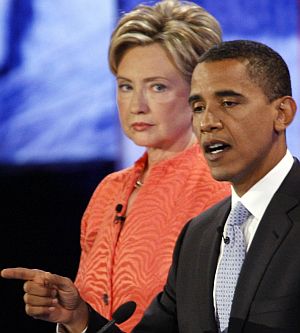 And yet in the increasingly dangerous show-down over Pakistan’s arrest and detention of Lahore consular contract “security official” Raymond Davis, who is charged with two counts of murder for the shooting deaths of two young Pakistanis on January 27, the president has grossly misstated what international law is with respect to the immunity from prosecution of diplomatic and consular officials.

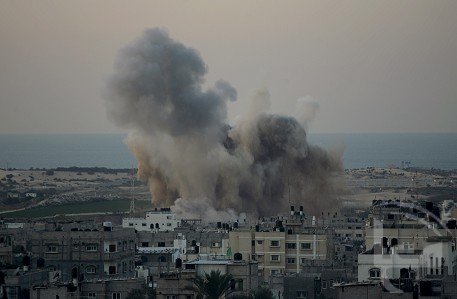
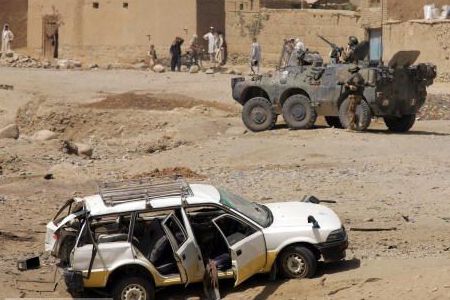

 Aletho News

