The Arabs are transparently displaying their crossover to multi-alignment in a US-led Middle Eastern war
By M. K. BHADRAKUMAR | Indian Punchline | October 12, 2024
Reuters reported on Friday quoting three sources in the Persian Gulf that the regional states are lobbying Washington to stop Israel from attacking Iran’s oil sites as “part of their attempts to avoid being caught in the crossfire.” The exclusive Reuters report singled out Saudi Arabia, the United Arab Emirates and Qatar as also refusing to let Israel fly over their airspace for any attack on Iran.
These moves come after a diplomatic push by Iran to persuade its Sunni Gulf neighbours to use their influence with Washington. Saudi Arabia has drawn the bottom line to the Biden Administration that it is determined to pursue the track of normalisation with Iran that began with the rapprochement brokered by China in March 2023. This affirmation, well into the Iranian-Saudi détente’s second year, puts paid to any residual hope that Arab states may eventually join a ‘coalition of the willing’ against Iran.
The big picture here is that the Gulf states are positioning themselves to be among the key contributors to the ongoing power diffusion in their region — and globally. Tehran and Riyadh have found ways to responsibly share the neighbourhood. Suffice to say, the Arab world is already in the post-US and post-West era.
Now, this also signals Riyadh’s unease about Israel continuing its war on Gaza and Saudi frustration with the US for refusing to pressure Israeli Prime Minister Benjamin Netanyahu’s government into accepting a ceasefire.
Iran’s Foreign Minister Abbas Araqchi was in Riyadh on Wednesday and was received by Crown Prince Mohammed bin Salman. The Saudi readout said they discussed bilateral relations and regional developments as well as the “efforts exerted towards them.” The meeting was attended by Saudi Defense Minister Prince Khalid bin Salman, Foreign Minister Prince Faisal bin Farhan bin Abdullah and Minister of State and National Security Advisor Dr. Musaed bin Mohammed Al-Aiban.
Araqchi also held talks with Prince Faisal. “Discussions focused on relations and explored ways to strengthen them across various fields,” the Saudi report said. Only the previous day, Prince Khalid had spoken with his American counterpart Defence Secretary Lloyd Austin.
The Saudi Press Agency reported Tuesday that the two defence ministers “discussed the latest regional and international developments, efforts to de-escalate tensions in the region, and ways to ensure regional security and stability.”
Clearly, the Saudis are on the ball, quite aware that they can assume a pivotal role in restoring calm and preventing the spillover of the conflict into the region. The ground beneath the Israel-Iran standoff is shifting in systemic terms.
The military implications are profound when the Gulf States close their airspace to Israel (and the US) for operations against Iran. The Israeli jets will now have to take a circuitous route via the Red Sea and circumvent Arabian Peninsula to approach Iranian airspace, which of course will necessitate mid-air refuelling and all that it entails in such a sensitive operation that may have to be undertaken repeatedly. In a ‘missile war,’ Iran may prevail.
How far the coordinated move by the Persian Gulf States to get the US to de-escalate the situation will work remains to be seen, as it depends largely on Netanyahu mellowing, of which there are no signs. Nonetheless, President Joe Biden did his part by calling Netanyahu on Wednesday. But the White House readout neatly sidestepped the main talking point between them.
It stands to reason, though, that the call from Biden did have some effect on Netanyahu. The New York Times reported that Israel’s security cabinet convened on Thursday during which Netanyahu discussed with senior ministers “the overall plan for Israel’s retaliation.”
The results of the meeting were not released. And Times concluded its report by taking note that “analysts still say neither side appears interested in all-out war.” Indeed, the Gulf states’ anxiety has become a key talking point between the US officials and Israeli counterparts.
After the call from Biden, Netanyahu asked Defence Minister Gallant who was scheduled to visit Washington to stand down. Meanwhile, the US Central Command chief General Michael Kurilla came to Israel for “a situational assessment.” Lloyd Austin followed through on Thursday with a call to with Israeli defence minister Yoav Gallant but the focus was on Lebanon. No doubt, the Biden administration is pulling many strings in Tel Aviv.
Netanyahu is known to be a realist himself. The point is, Tehran is explicit that Tel Aviv will pay a heavy price for any further hostile action. The warning will be taken seriously as Israeli military and intelligence — indeed, Netanyahu himself — have just had a preview of Iran’s deterrent capability.
Second, the price of oil has already begun going up and that is something Candidate Kamala Harris wouldn’t want to see happening.
Third, as for nuclear facilities, Iran has dispersed them to all parts of the country and the critical infrastructure is buried deep in the bowels of mountains that are hard to reach.
To be sure, Iran’s missile strike on October 1 carried also showed that it has superb intelligence to know what to target, where and when. In a tiny country like Israel, it is difficult to hide — although Tehran may not stoop so low as to decapitate opponents.
Suffice to say, all things taken into account, a terrible beauty is born in the Middle East: How far will the US go to rescue Israel?
The beginning of an alignment of the Arab states, as evident this week, refusing to be part of any form of attack on Iran and the signs of ‘Islamic solidarity’ bridging sectarian divides — these are, quintessentially, to be seen as tipping points. This is the first thing.
Secondly, this isn’t going to be a short, crisp war. Colonel Doug Macgregor, an astute US combat veteran in the Gulf War and former advisor to the Pentagon during the Trump administration and a noted military historian, aptly drew the analogy of the Thirty Years’ War in Europe (1618-1648), which began as a battle among the Catholic and Protestant states that formed the Holy Roman Empire but evolved in time and became less about religion and turned into a political struggle, more about which group would ultimately govern Europe, and ultimately changing the geopolitical face of Europe.
To quote from a 2017 essay by Pascal Daudin, an ICRC veteran who was deployed in major conflict situations such as Pakistan, Afghanistan, Lebanon, Iraq, Iran, Central Asia, Caucasus, Saudi Arabia and the Balkans, the Thirty Years’ War turned into “a complex, protracted conflict between many different parties –- known in modern parlance as State and non-State actors. In practice, it was a series of separate yet connected international and internal conflicts waged by regular and irregular military forces, partisan groups, private armies and conscripts.” (here)
True, a Middle Eastern War in the current setting already has combatants, bystanders and onlookers who, as the conflict evolves into a latter-day Crusade, are bound to jump in — such as Turkey and Egypt.
It will most certainly exhaust Israel — and vanquish the US presence in the Middle East — although a protracted war may prompt an intellectual upheaval that would ultimately bring about the Enlightenment to the region, as the Thirty Years’ War did to Europe.
Kamala Harris Isn’t Listening to U.S. Intelligence on Iran

By Ted Snider | The Libertarian Institute | October 10, 2024
Who is “America’s greatest adversary?”
That is the question 60 Minutes asked Vice President Kamala Harris. “I think there’s an obvious one in mind, which is Iran,” was her answer. She gave two reasons for her verdict: “Iran has American blood on their hands” and “what we need to do to ensure that Iran never achieves the ability to be a nuclear power, that is one of my highest priorities.” All three claims are strange.
That Iran is America’s greatest adversary comes as a surprise after the United States has spent the past two and a half years comparing Russian President Vladimir Putin to Adolf Hitler and painting him as bent on the conquest of Europe. The U.S. has spent in the neighborhood of $175 billion helping Ukraine fight Russia.
As early as 2018, the U.S. National Defense Strategy ranked China as the “primary concern in US national strategy.” Throughout the Biden-Harris administration, the focus has been on “growing rivalry with China [and] Russia,” as the Interim National Security Guidance of 2021 put it. It was China, and not Iran, that was considered “the only competitor potentially capable of combining its economic, military, and technological power to mount a sustained challenge” to the American-led system. In 2021, it was Russia and China that the National Intelligence Council flagged as “rising revisionist powers,” while the 2022 National Defense Strategy named China “the most comprehensive and serious challenge to U.S. national security” and called Russia an “acute threat.”
Up until the moment Harris answered the question, the United States had seen Russia and China as America’s greatest adversaries.
Harris did not specify the American blood Iran had on its hands. But her quick description erases the historical record of the second partner in the bloody dance. The history of Iranian blood on American hands traces from the 1953 coup in Iran, which the CIA has formally acknowledged it helped plan and execute, to cyber attacks on Iran’s civilian Natanz nuclear enrichment site, and the 2020 assassination of Iranian general Qasem Soleimani.
Harris’ third, and strangest, claim is that one of her highest priorities is to “ensure that Iran never achieves the ability to be a nuclear power.” But Harris knows that Iran is not pursuing the ability to be a nuclear power. At the same time the vice president was prioritizing blocking Iran from building a nuclear bomb, CIA Director William Burns was telling a security conference, “No, we do not see evidence today that the supreme leader has reversed the decision that he took at the end of 2003 to suspend the weaponization program.”
Burns added, “We don’t see evidence today that such a decision [to build a bomb] has been made. We watch it very carefully.” He said that, if Iran were to make such a decision, “I think we are reasonably confident that–working with our friends and allies–we will be able to see it relatively early on.”
This is not the first time Burns has made this intelligence assessment clear. In February 2023, Burns said, “To the best of our knowledge, we don’t believe that the supreme leader in Iran has yet made a decision to resume the weaponization program that we judge they suspended or stopped at the end of 2003.”
And, as Harris knows, it is not Burns or the CIA alone that assesses that Iran is not in pursuit of a nuclear bomb. The 2022 U.S. Department of Defense’s Nuclear Posture Review concludes that “Iran does not today possess a nuclear weapon and we currently believe it is not pursuing one.”
Iran never was pursuing one. The founder of the Islamic Republic of Iran, Ayatollah Ruhollah Khomeini, consistently ruled that nuclear weapons go against Islamic morality. The current supreme leader of Iran, Ayatollah Ali Khamenei, has consistently reiterated that ruling. Khamenei has insisted that “from an ideological and fiqhi [Islamic jurisprudence] perspective, we consider developing nuclear weapons as unlawful. We consider using such weapons as a big sin.” In 2003, Ayatollah Khamenei issued a fatwa that declared nuclear weapons to be forbidden by Islam.
And Khamenei was neither going rogue nor the exception. “There is complete consensus on this issue,” Grand Ayatollah Yusef Saanei, one of the highest-ranking clerics in Iran, has said. “It is self- evident in Islam that it is prohibited to have nuclear bombs. It is eternal law, because the basic function of these weapons is to kill innocent people. This cannot be reversed.”
In 2015, Iran agreed to the JCPOA nuclear agreement. Eleven consecutive International Atomic Energy Agency reports verified that Iran was completely and consistently in compliance with their commitments under the agreement prior to the United States illegally and unilaterally pulling out of the agreement in 2018. Despite promises by the Biden-Harris administration to return to diplomacy with Iran, they never have. Instead, despite Iran’s expressions of willingness to return to diplomatic negotiations, the State Department has said that negotiations with Iran are “not our focus right now” and that “It is not on our agenda… we are not going to waste our time on it.”
In July 2024, Masoud Pezeshkian was elected president of Iran. Pezeshkian is a reformist who has called for direct negotiations with the United States on improving relations and returning to the JCPOA nuclear agreement. But, in a July 8 press briefing, when National Security Communications Advisor John Kirby was asked if “the U.S. is now ready to resume nuclear talks, other talks, or make any diplomatic moves with Iran in light of this new president,” he answered, “No, we’re—we’re not in a position where we’re willing to get back to the negotiating table with Iran just based on the fact that they’ve elected a new president.”
Unphased, in his September 24 speech to the United Nations General Assembly, Pezeshkian said that “we have the opportunity…to enter a new era” and declared that Iran is “ready to engage with JCPOA participants” and that “[i]f JCPOA commitments are implemented fully and in good faith, dialogue on other issues can follow.”
Contrary to the vice president’s assertion that “ensur[ing] that Iran never achieves the ability to be a nuclear power… is one of [her] highest priorities,” the Biden-Harris administration has stubbornly refused to take the easiest and surest road to that end by honoring its promise to “offer Tehran a credible path back to diplomacy.”
It is strange and concerning that after encouraging and supporting two and a half years of war with Russia in Ukraine, that Harris considers, not Russia, but Iran to be America’s “greatest adversary.” It is also disturbing that Harris deletes America’s role in coups, sabotage, and assassinations in Iran from history. And it is alarming that Harris wants to stop Iran from acquiring a nuclear bomb, seemingly unaware that her military-intelligence community is telling her that they are not attempting to acquire a bomb, while showing no inclination for returning to the nuclear diplomacy with Iran that was already working.
American Neocons Get Their Iran War as Congress Sleeps
By Ron Paul | October 7, 2024
Over the weekend, the Commander of the US Central Command (CENTCOM), General Michael Kurilla, arrived in Israel to “coordinate” with the Israeli military and plan a military strike against Iran. Think about that for a moment: one of the highest-ranking officers in the US military is planning a war in a foreign country against another foreign country which will be fueled by American weapons, American intelligence, and American tax dollars.
Did that foreign country – Iran – attack the United States or threaten Americans? No, it did not. What did Iran do to warrant a CENTCOM commander bringing the weight of the US military into play to plan a war – possibly WWIII? It retaliated against Israeli airstrikes including the assassination of a Hamas leader, Ismail Haniyeh, in Tehran.
It was the Israeli missile attack on Tehran – an unprecedented event – that set off this chain of escalation, but few would know it from media coverage. This war fever between Israel and Iran not only has nothing to do with us, but our increasing involvement actually hurts our national interests in the region.
After a deadly and futile three-year proxy war against Russia in Ukraine, the last thing we need is another war in the Middle East, especially against Iran. But make no mistake, war is what we are getting. This Administration has even offered to “compensate” Israel with even more weapons and diplomatic support if they hit targets of the US choosing and avoid others in Iran.
Imagine if China sent military officials to Iran to pay Tehran to make sure some US targets were struck and others avoided. Would we consider it Iran’s war against us, or China’s war against us? Both?
Has Congress declared war on Iran or even authorized the war? No. Has this Administration explained to us why Americans suffering after the catastrophic Hurricane Helene are on their own because we need to spend billions on a war that is none of our business? No. The neocons have wanted this war for decades and for them it’s always America last.
This war will make us less free, less safe, and much poorer. There will be no benefits at all, only downside.
Will the Biden/Harris Administration greenlight Israel taking out Iran’s oil production and other energy facilities? That would mean the average American already suffering under high inflation and an economic downturn would be paying orders of magnitude higher for not just gasoline, but everything. Consider the cost of shipping and trucking and every aspect of our lives that depends on world energy prices. It would be an economic calamity for Americans for the benefit of a foreign country. This is what they call patriotism?
We are sleepwalking into a catastrophic war, lulled into compliance by non-stop media propaganda. More billions will be drained from our economy and many more innocent lives will be lost in this madness. Almost a quarter of a century later we still have not learned the lessons of 9/11. When we go abroad wreaking havoc and destruction on foreign populations who have not harmed us we create enemies who will seek revenge. We harm ourselves. And we risk blowback. The time to oppose this impending war is NOW!
Iran to destroy all Israel gas fields, power plants at once if Tel Aviv makes mistake: Deputy IRGC chief
Press TV – October 4, 2024
Iran will simultaneously destroy all of Israel’s energy facilities if the regime attempts any new aggression against Iran, warns IRGC’s deputy-in-command.
General Ali Fadavi told the Lebanese television channel Al-Mayadeen on Friday that the Israeli regime will risk its existence if it attacks Iran.
“If the occupying entity makes a mistake, we will target all its energy resources, power plants, refineries, and gas fields.”
He pointed out that Iran is a large and vast country with many economic centers, while Israel has only three power stations and several refineries.
“We can strike them all at once,” the general asserted.
Iran launched Operation True Promise II late Tuesday in response to the Israeli assassination of late Hamas leader Ismail Haniyeh in Tehran in April and also the assassination of late Hezbollah chief Sayyed Hassan Nasrallah along with Iranian military advisor, Brigadier General Abbas Nilforoushan in September.
Iran fired around 200 ballistic missiles at Israel during that operation, saying 90 percent of them hit their targets.
The Israeli regime has vowed to respond to that attack, with some Zionist officials calling for attacks on Iran’s nuclear energy sites, oil fields, and other scientific and economic infrastructure.
Iran has warned to attack the regime’s infrastructure if it wants to respond to the Iranian retaliation.
‘Israel to receive a devastating response’
Meantime, commander of the Iranian Army Major General Abdolrahim Mousavi told Al-Mayadeen on Friday that the Israeli regime would receive a “severe and devastating response” if it engaged in uncalculated actions.
“We have exercised restraint and patience in the past, but we are ready to deliver a precise and destructive blow at the right time,” he said.
He noted that Iran would respond more forcefully than the level of aggression shown by its enemies if they made a mistake at any level.
West Asian crisis prompts Biden to break ice with Putin
By M. K. BHADRAKUMAR | Indian Punchline | October 5, 2024
The US president Joe Biden sprang a surprise during a press gaggle with reporters outside the White House on Thursday when he essentially didn’t rule out a potential meeting with his Russian counterpart Vladimir Putin at the upcoming summits of the Group of 20 or the Asia-Pacific Economic Cooperation. Biden sort of signalled, ‘Barkis is willing.’ As he put it, “I doubt that Putin will show up.”
As these White House gaggles generally go, Biden deliberately chose to respond to the TASS correspondent who asked the question, who of course knew that Biden knew that a trip by Putin to the Western Hemisphere to attend the G20 summit in Rio de Janeiro, Brazil, on November 18-19 is under active consideration in the Kremlin.
Biden and Putin have a lot to talk about but what adds up is that Biden signalled his interest in a conversation just a day after the massive Iranian missile strike against Israel, which came as a bolt from the blue and dramatically upended the legacy of his presidency.
Don’t be surprised if the Middle East crisis dominates a Biden-Putin summit in Rio de Janeiro — that is, if such a meeting takes place. The Ukraine war is coasting inexorably toward a Russian victory. Biden’s interest lies in making sure somehow that Ukraine’s capitulation — and NATO’s humiliation — get carried over to January 20. But Putin must cooperate. This is one thing.
Meanwhile, what causes sleepless nights for Biden is the situation in the Middle East, which may cascade uncontrollably toward a regional war. Here, Putin is not the problem but can be the solution. This needs some explaining.
To be sure, policy differences have arisen between Biden and Netanyahu which is only to be expected given their sense of priorities respectively as politicians. It may seem the current crisis in the US-Israeli relationship is rather severe but how much of it is for the optics or, how little of it is for real is the moot point. Certainly, even a transition from war to a new diplomatic order is currently not in the cards.
However, the US and Israel are also joined at the hips. There is no question that Biden is allowing seamless assistance to flow to Israel in its war effort and for keeping its economy afloat. And the US is blocking all moves in the UN Security Council calling for a ceasefire, which means that peacemaking efforts cannot even begin.
Iran’s missile attack on Israel, in this context, needs to be put in perspective. Rather than an act of belligerence, it can be seen as a coercive measure to force Israel to abandon its ground operation in Lebanon. President Masoud Pezeshkian has disclosed that Iran exercised utmost restraint so far to stop Israeli atrocities only because of pleas by Western leaders that negotiations leading to a potential ceasefire in Gaza were at a crucial stage. But the West didn’t keep its promise leaving Iran no option but to act.
Passivity or inaction in the face of Israel’s relentless rampage against the Palestinian population aimed at ethnic cleansing created a distressing situation for Iran as the saviour of oppressed Muslims. Besides, Iran’s entire strategy of deterrence came under challenge too.
Biden is today like a cat on a hot tin roof. A Middle Eastern war is the last thing he wants. But he has no control over Netanyahu who is already plotting the next move on the escalation ladder. As for Iran, its sense of exasperation over western perfidy and moral bankruptcy is palpable. The US’ credibility has suffered a severe beating all across the West Asian region.
Enter Putin. On the Middle Eastern chessboard, Russia’s role assumes great importance. Russia-Iran relations touch an unprecedented level today. Russian statements have become highly critical of Israel in recent years. Russia has openly kept contacts with the groups constituting the Axis of Resistance.
Russian diplomacy is moving with a ‘big picture’ in mind to bring the Israeli-Palestinian conflict to the centre stage of international politics. In the past year, security consultations between Moscow and Tehran notably intensified. Some reports have appeared about Russia transferring advanced military equipment to strengthen Iran’s air defence capabilities.
Significantly, Russia was the only country that Iran informed in advance about its missile strike against Israel. According to the well-known US podcast Judge Napolitano: Judging Freedom (below), the Russian naval fleet in the East Mediterranean downed 13 Israeli missiles last week near Lebanon.
Apparently, a frantic Netanyahu has been trying to reach Putin on phone for the past few days but the call is yet to materialise. On the diplomatic track too, Russia has underscored the highest importance it attaches to the relations with Iran.
Clearly, the US senses the imperative to engage with Russia. What may be acceptable can be proportional strikes by the two West Asian protagonists, couched in carefully calibrated media campaigns. For example, targeted attacks on individual military installations, which would save face for Israel and avoid a major war — it’s a preferable scenario for Iran too, because it avoids unnecessary risks and preserves the trump cards for a game that promises to be long drawn out.
In the final analysis, what matters is the US-Israeli intentions. The Financial Times cited Israeli sources to the effect that the game plan is to inflict maximum damage to Iran’s economy so as to trigger the latent ‘protest potential’ of Iranian society. The Israeli hope is apparently that a credible regime change agenda will find resonance in Washington and attract US intervention.
Anyway, Biden’s move to engage with Putin suggests that a US military intervention is to be ruled out. On the other hand, the historic Russian—Iranian security pact, which is expected to be signed during the forthcoming BRICS summit in Kazan, Russia, on October 20-22, gives Iran vastly more strategic depth to negotiate with the West.
Russia’s own interest lies in boosting Iran’s defence capability and pressing ahead with broad-based bilateral cooperation anchored on the economic agenda in the conditions under sanctions while on a parallel track advancing Iran’s integration into Moscow’s Greater Eurasia project. In short, Russia is uniquely placed today as a stakeholder in a stable and predictable Iran at peace with itself and the region.
Russian Foreign Minister Sergey Ryabkov told reporters in Moscow Thursday, “We are in the closest contact with Iran on the current situation. We share a wonderful experience of cooperation in various fields. I think this is the moment when our relations are particularly important.” By the way, President Pezeshkian received the visiting Prime Minister of Russia Mikhail Mishustin on Monday, September 30 in Tehran just hours ahead of the launch of the Iranian ballistic missiles against Israel.
At a meeting of the UN Security Council dedicated to West Asian developments, Russia’s Permanent Representative to the UN Vasily Nebenzya stated on Wednesday, “As part of its mandate to maintain international peace and security, the UN Security Council must compel Israel to immediately cease hostilities. You and I also should make every effort to create conditions for a political and diplomatic settlement. In this context, we take note of Tehran’s signal that it is not willing to whip up confrontation any further.”
Interestingly, the Kremlin spokesman Dmitry Peskov lost no time to pick up the threads of Biden’s remark on a meeting with Putin. He said on Friday, “There have been no talks on this issue and as of today, at this moment, there are no prerequisites for it. However, the president has repeatedly stated that he remained open for all contacts.”
Collapsing Empire: Iran Throws Down Gauntlet
By Kit Klarenberg | Global Delinquents | October 4, 2024
On October 1st, Iran launched scores of missiles at the Zionist entity, in response to the murder of Hezbollah leader Hassan Nasrallah, among many brazen provocations and escalations targeting the Resistance in recent months. Voluminous footage of key Israeli infrastructure, including military and intelligence sites, being comprehensively flattened by the Islamic Republic’s inexorable onslaught has circulated widely, amply contradicting predictable claims emanating from Tel Aviv and Washington that the blitzkrieg was successfully repelled by Western air defence systems.
It is the largest, most devastating attack on the Zionist entity in its 76-year history. The full impact is not yet apparent. While US officials worriedly warned hours in advance they possessed “indications” Iran was preparing to attack Israel, the incursion’s timing, scale, and severity caught all concerned by surprise. Washington dispatching thousands more troops across West Asia in the days prior, explicitly in Israel’s defence, was evidently no deterrent to Tehran.
That deployment came replete with a supposedly rock-solid Pentagon pledge to come to the rescue should the Islamic Republic seek to repeat the historic, wide-ranging drone and rocket barrage to which it subjected the Zionist entity in April. Department of Defense apparatchiks boldly declared they and Tel Aviv alike were “even better prepared for a new Iranian attack” than last time round. The ease with which Israel’s purportedly impregnable Iron Dome was bested exposes this braggadocio as hopeless hubris at best, dangerous delusion at worst.
The Islamic Revolutionary Guard Corps is ever-cautious, and has acted with extraordinary restraint since the 21st century Holocaust erupted in Gaza. Some analysts have interpreted this implacable self-control, and Tehran’s lack of immediate backlash against acts such as the audacious assassination of Hamas leader Ismail Haniyeh on Iranian soil, as not merely rigid reluctance to escalate into all-out war with Israel and its Western backers, but an inability to respond at all. Tel Aviv’s unprecedented October 1st battering should dispel any such inference.
Senior Israeli politician Yair Golan, who returned to Israeli Occupation Force (IOF) service following October 7th, has branded Iran’s latest assault a “declaration of war” against the Zionist entity. Notorious Benny Gantz boasts Tel Aviv “has capabilities that were developed for years to strike Iran, and the government has [our] full backing to act with force and determination.” Meanwhile, IOF spokesperson Daniel Hagari declares, “there was a serious attack on us and there will be serious consequences.”
The IRGC appears to have calculated such threats and pronouncements will be as empty and meaningless as the Pentagon’s pledge to be “better prepared” for a future Iranian strike. At the very least, the Islamic Republic fears no Anglo-Israeli retaliation to its latest broadside. That may mean Tehran has grounds to believe the balance of power in the region, and in any future large-scale conflict with the Zionist entity and West, has irrevocably tipped in favour of the Resistance.
Eerily, a little-noticed report published September 19th by the Jewish Institute for National Security of America (JINSA), a powerful and shadowy Zionist lobby organisation, inadvertently reached this same conclusion. It laid out in forensic detail how the Empire will be on the defence, and at grave disadvantage, in all-out hot war with Iran. Along the way, a blueprint for Resistance victory was plainly sketched. With Tehran having thrown down a gauntlet on October 1st, we could now be seeing that plan being put into action.
‘Gaining Overmatch’
Titled U.S. Bases in the Middle East: Overcoming the Tyranny of Geography, JINSA’s report was authored by former CENTCOM commander Frank McKenzie, who oversaw the Empire’s disastrous retreat from Afghanistan. It appraises the viability, value, and force projection capabilities of current US military installations throughout West Asia, focusing on Bahrain, Jordan, Kuwait, Qatar, Saudi Arabia, and UAE. The findings are stark, calling for an immediate overhaul of American basing across the region:
“Our current basing structure, inherited from years of haphazard decision-making, and driven by divergent operational and political principles, has yielded installations that are not optimally situated for the most likely threats of today and the future in the region.”

Despite mentioning “threats” in plural, JINSA’s sole focus is the Islamic Republic. While a myriad of issues with the Empire’s modern day positioning throughout West Asia are identified, the “most important” conclusion drawn is that Washington’s “current basing array detracts from our ability to deter Iran and fight them effectively in a high-intensity scenario.” McKenzie is nonetheless at pains to portray Tehran as somewhat feeble and vulnerable:
“The Iranians have no army that can be deployed as an invading force. They have a small and ineffective navy, and in practical terms, no air force. Their missile and drone force, though, is capable of gaining overmatch against many of its neighbors… they can deploy more attacking missiles and drones than can be defended against.”
As such, JINSA notes, “a theater-level war with Iran would be a war of missiles and drones,” and Tehran’s April 13th attack on Israel was a “comprehensive demonstration of Iranian operational design.” The IRGC sought to overwhelm the Zionist entity’s air defences and radar systems with waves of low-cost drones and cruise missiles, to “make it difficult for Iron Dome or Patriot to engage the ballistic missiles that followed.”
McKenzie correctly forecast that the April strike would “probably remain the basic template for large-scale Iranian attacks.” He appraised the effort – “at least conceptually” – as “a sound one,” from which “there are lessons for all to learn.” The most pressing and “obvious” takeout was, “for the defenders of the Gulf, it will be a war of strike aircraft, tankers, and air and missile defense… and here is the problem”:
“These aircraft are largely based at locations along the southern coast of the Arabian Gulf… an artifact of planning against Russian incursions in the 1970s, and the Iraq and Afghanistan campaigns of the early decades of this century. They are close to Iran, which means they have a short trip to the fight… but that is also their great vulnerability. They are so close to Iran that it takes but five minutes or less for missiles launched from Iran to reach their bases.”
The “thousands of short-range missiles” Iran possesses are also a key negative “factor”, offering “no strategic depth.” While an F-35 fighter jet “is very hard to hit in the air… on the ground it is nothing more than a very expensive and vulnerable chunk of metal sitting in the sun.” Refuelling and rearming facilities on US bases in West Asia “are also vulnerable, and they cannot be moved.” Most damagingly of all:
“These bases are all defended by Patriot and other defensive systems. Unfortunately, at such close range to Iran, the ability of the attacker to mass fires and overwhelm the defense is very real.”
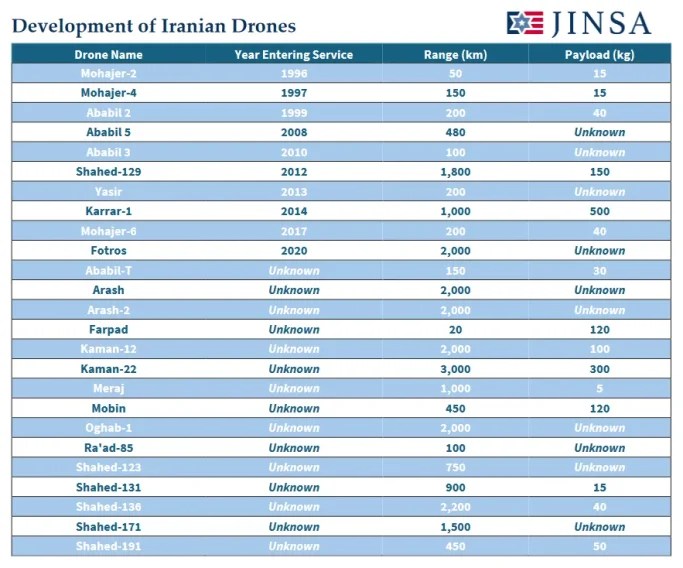
In closing his roadmap to Tehran’s victory, McKenzie bitterly laments, “it is hard to escape the conclusion that our current basing structure is poorly postured for the most likely fight that will emerge.” The Empire “will not be able to maintain these bases in a full-throated conflict, because they will be rendered unusable by sustained Iranian attack.” Imperial overreach in West Asia has now fallen victim to “the simple tyranny of geography.” And all along, the Islamic Republic has been taking rigorous notes:
“The Iranians can see this problem just as clearly as we do, and that is one of the reasons why they have created their large and highly capable missile and drone force.”
‘Nothing But Force’
For all the JINSA report’s doom and gloom, McKenzie does express some optimism – of the most fantastical, self-deceived kind. For one, he suggests Iran cannot threaten the Empire’s “carrier-based aviation” capabilities. Still, he concedes “there aren’t enough carriers, and therefore naval aviation will probably not be the central weapon in a fires war with Iran.” The former CENTCOM chief also conveniently overlooks AnsarAllah’s recent crushing defeat of the US Navy during Operation Prosperity Guardian, which unambiguously exposed the redundancy of US aircraft carriers altogether.
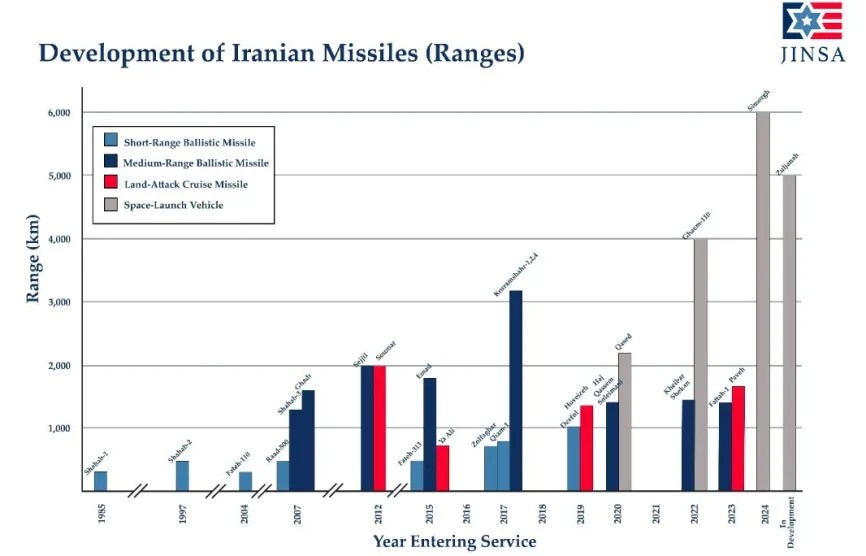
Elsewhere, McKenzie declares that the Empire “needs to move aggressively to develop basing alternatives that demonstrate that it is prepared to fight and prevail in a sustained high-intensity war” with Tehran, and therefore “overcome unfavorable basing geography.” One radical solution proposed by the JINSA report is to “consider basing in Israel”. US military presence in Tel Aviv has already been slowly growing over recent years. While largely unacknowledged and downplayed, it has proven incredibly controversial every step of the way.
In September 2017, the IOF announced the arrival of America’s first permanent military installation in the Zionist entity. Such was the backlash domestically and regionally, officials in Washington raced to deny this was the case, prompting a major cleanup of IOF websites referencing the site. Any move to create a fully-fledged US base in Israel, explicitly for war-fighting purposes, would inevitably spark even greater outcry, and be considered as a major escalation by the Resistance, demanding a drastic response.
Such an eventuality undoubtedly didn’t occur to the former CENTCOM chief. His analysis is hazardously unsound and fallacious in other areas too. On top of Israel’s “geographic advantages”, he praises Tel Aviv’s “powerful, proven air and missile defense capability.” It was this “competence”, combined with “US and allied assistance, and the cooperation and assistance of Arab neighbors”, that ensured Iran’s April strike on the Zionist entity was a “failure”, McKenzie muses.
He appraises this group effort, which supposedly prevented Iran from delivering decapitation strikes against the Zionist entity’s military and intelligence structure, as “in every measurable way… a remarkable success story.” If McKenzie’s view was shared by the Pentagon, this may explain why the US was so caught off guard by, and ill-prepared for, Tehran’s recent bludgeoning of Israel. Far from an embarrassing cataclysm, the April effort was a spectacular success, which exposed Israel’s fatal weaknesses, and reshaped West Asia forever.
Far from wanting to deliver a death blow, the Islamic Republic sought to deliver a measured, well-advertised show of strength, while avoiding further escalation, and a wider response. In the process, the IRGC demonstrated that if it wished, in future its missiles could successfully bypass the Iron Dome, and would wreak immense destruction. Then, a “new equation” was spelled out by a Corps Commander:
“If from now on the Zionist regime attacks our interests, assets, personalities, and citizens, at any point we will attack against them.”
That message was evidently not received in corridors of power in Brussels, London, Tel Aviv, and Washington. This is apparent from JINSA’s report, which states “events of the past two months clearly show that Iran can be deterred from undertaking irresponsible and deadly attacks in the region,” in reference to a lack of retaliation to the Zionist entity’s provocations during this time. It seems the finest Western military minds fell into the trap of believing no response was forthcoming from Tehran, because there couldn’t and wouldn’t be.
Fast forward today, and the question of whether the battlefield primacy of the Resistance in West Asia will finally be comprehended by their adversaries, in light of October 1st, remains an open one. As Russian military strategist Igor Korotchenko once observed, “this Anglo-Saxon breed understands nothing but force.”
Iran’s oil production nears pre-sanctions levels: Report
The Cradle | October 4, 2024
Iran’s oil production is running at almost full capacity despite US sanctions, amid Israeli threats to target Tehran’s oil infrastructure in an expanded regional war, Bloomberg reported on 4 October.
The Islamic Republic’s oil output has reached 3.4 million barrels per day, just a few hundred thousand barrels below a previous high of 3.9 million.
After US President Donald Trump withdrew the US from the JCPOA nuclear deal in 2018 and reimposed sanctions on Iran, Tehran’s production dropped as low as two million barrels per day.
Iran now sells much of its oil to China at reduced prices, as Beijing has been willing to ignore US sanctions seeking to block the sales.
“Iran is having success exporting thanks to a willing customer in China, the increased sophistication of illicit transportation channels, and the relatively low interest in the US to take action,” said Henning Gloystein and Greg Brew, analysts at Eurasia Group. “There’s a risk that Israel strikes Iranian oil facilities.”
According to Bloomberg, Tehran’s increased sales to China have taken place with the “tacit approval” of the White House, as US President Joe Biden and his advisors have eased sanctions enforcement to keep gasoline prices low.
In August 2023, before the wars in Gaza and Lebanon began, Bloomberg reported that “months of secretive diplomacy” between the US and Iran “have yielded progress on prisoner exchanges, the unblocking of frozen assets, and possibly even Iran’s enrichment of uranium. They also seem to have produced an informal arrangement on oil flows.”
Israel reportedly threatened to bomb Iran’s nuclear or oil facilities following Tehran’s large-scale missile attack on Israel.
Iran fired as many as 400 ballistic missiles at Israel on 1 October in retaliation for its killing of Hamas leader Ismail Haniyeh in Tehran in July and Hezbollah leader Hassan Nasrallah in Beirut on 27 September.
In an off-the-cuff remark to a reporter, Biden said that his administration has been “discussing” possible Israeli plans to attack Iran’s oil industry in retaliation for the Iranian attack.
Bloomberg added that world oil prices jumped five percent on Thursday after Biden’s comment.
With 100 flights, Starmer pursues Sunak’s policy of spying on Gaza
Al Mayadeen | October 3, 2024
The British Labour administration has ordered 100 surveillance flights over Gaza to help “Israel’, Declassified UK reported. Since Keir Starmer took over on July 5, there has been an average of more than one daily flight.
Despite halting 30 arms export licenses for “Israel” last month, alleging “a clear risk” that the weapons would be used in a “serious violation” of international law, the espionage flights have continued unabated.
Although the Ministry of Defense (MoD) declined to provide information, Declassified independently discovered planes departing from Akrotiri, Britain’s massive airbase on Cyprus, to fly over Gaza under Starmer’s supervision.
In August, the Labour Party’s first month in power, the Royal Air Force (RAF) performed 42 missions over Gaza.
Pro-Palestine and anti-war demonstrators took to the United Kingdom’s Royal Air Force Akrotiri Airbase in Cyprus to denounce the UK’s implicit backing of the Israeli violations and aggression in Gaza and Lebanon.
On Monday evening, Starmer dispatched a massive A400M military cargo jet from Akrotiri to Tel Aviv. The jet can transport 116 fully equipped soldiers and 81,600-pounds of cargo.
Again on Tuesday evening, the UK sent Typhoon fighters from Cyprus to defend “Israel” from Iranian rockets.
Surveillance alleged to be for captive rescue ops
The UK planes are thought to have captured up to 500 hours of film of Gaza, carried out by the Shadow R1, an intelligence, surveillance, target acquisition, and reconnaissance (ISTAR) aircraft.
Earlier this month, Liberal Democrat MP Mike Martin, a former British army officer who fought in Afghanistan, questioned the military if “UK intelligence is passed to Israel for the purposes of military targeting.”
Labour’s armed forces minister, Luke Pollard, reacted, stating the surveillance planes were “solely tasked to support hostage rescue.”
In addition, an Israeli insider told The New York Times that a covert British espionage team was sent to “Israel” early in its operation on Gaza.
The UK team “adds value” to its intelligence activities, he said, adding that Britain provides intelligence that “Israel can collect on its own.” There is no proof that the new Labour administration brought this surveillance crew back from “Israel”.
The surveillance flights began immediately after Labour gained control, with 11 flights in its first week in power.
Despite no flights taking off between September 10 to 17 following Labour’s suspension of some weaponry transfers to”Israel”, they quickly continued.
Over the last week, more than one plane has flown over Gaza for almost five hours every day from Cyprus.
After Labour seized control in July, 23 British planes flew over Gaza, followed by 42 in August and 33 in September. An additional two flights took off on Tuesday, October 1.
According to a representative for the Ministry of Defense, the UK’s focus is to release captives only.
“Our mandate is narrowly defined to focus on securing the release of the hostages only, including British nationals, with the RAF routinely conducting unarmed flights since December 2023 for this sole purpose.”
In a discussion immediately following the announcement, five different MPs questioned Conservative defense secretary Grant Shapps if he would share footage from the planes with the ICC if it revealed evidence of war crimes. He always delivered evasive answers.
Nevertheless, the Ministry of Defense stated last week that “in line with our international obligations, we would consider any formal request from the International Criminal Court to provide information relating to investigations into war crimes.”
J.D. Vance, Israel Firster
By Adam Dick | Peace and Prosperity Blog | October 2, 2024
Donald Trump likes to talk about how he puts America first. Last night, Trump’s presidential race running mate J.D. Vance made it clear that Vance has other priorities. In answer to the first question of the vice-presidential debate, Vance asserted that his allegiance is to Israel first. Indeed, he suggested that America does not even come in second.
Here is how Vance responded to debate moderator Margaret Brennan’s question of if Vance would “support or oppose a preemptive strike by Israel on Iran”:
Now, you asked about a preemptive strike, Margaret, and I want to answer the question. Look, it is up to Israel what they think they need to do to keep their country safe, and we should support our allies wherever they are when they are fighting the bad guys. I think that’s the right approach to take with the Israel question.
Vance here supports the US acting as Israel’s devoted servant in support of whatever “fighting” Israel decides to pursue against Iran. According to Vance, the decision-making is all at the discretion of the Israel government. The US just tags along, providing unwavering support.
Note also the use of the plural “allies” by Vance. To how many other foreign governments is Vance supporting US servitude to advance their fights against “bad guys”? Is Vance for America third, twelfth, twenty-fifth? Who knows? What is his current list of allies that he puts before America?
Iran missile attack: what we learned last night
Mindless march to World War 3 may have hit a brick wall yesterday
Alex Krainer’s TrendCompass | October 2, 2024
During the night of 2nd October 2024, Iran unleashed their operation “True Promise 2,” launching between 200 and 400 ballistic missiles into Israel. As the video footage coming from Israel has shown, many of these missiles reached their targets inflicting extensive damage on the ground. Apparently, some offshore gas platforms were also struck. Claims and counterclaims are a bit all over the place at the moment: Israelis have claimed that the Iranian attack failed and that most of the missiles were intercepted. Netanyahu’s aide Hananya Naftali even tweeted a “BRAVO” to Israel’s aerial defence systems for intercepting “nearly all the missiles.”
But the footage from last night gives a very different impression; it corroborates those who claimed that many missiles hit their targets. A few of the videos also confirm that the Iranians do indeed possess hypersonic missiles. We also know now that these have a long range and seem accurate enough. This lesson alone could be a game changer.
Why hypersonic missiles are a game changer
Hypersonic missiles can’t be intercepted. The most advanced Western air defence systems can shoot down incoming projectiles flying at up to mach 3. So far as the Patriot Missiles are concerned, their success rate is very poor even at that. Nothing in Western powers’ arsenal can defend against hypersonic missiles and this certainly got the Pentagon’s attention. The implication is that all US Navy assets and military bases in the Middle East are defenceless, and that Iran has the capability to strike them.
During yesterday’s attack, two U.S. destroyers in the eastern Mediterranean launched twelve SM-3 ballistic missile interceptor rockets, their most advanced air defence system. The problem is that the current production rate of SM-3s is down to zero! Thus, even if SM-3s are effective, Western air defence systems are not for the long haul and will deplete rapidly in case of further escalation.
At the same time, Iran has many thousands of missiles ready. Here’s what CSIS says about Irans’ arsenal:
“Iran possesses the largest and most diverse missile arsenal in the Middle East, with thousands of ballistic and cruise missiles, some capable of striking as far as Israel and southeast Europe. For the past decade, Iran has invested significantly to improve these weapons’ precision and lethality. Such developments have made Iran’s missile forces… a credible threat to U.S. and partner military forces in the region.”
Hezbollah can shoot 3,000 missiles a day?
Then there’s Hezbollah. According to a 130-page report titled, “The Most Deadly War of All,” compiled by a group of six Israeli think-tanks and based on three years of research and the opinions of over 100 Israeli defence experts and IDF commanders, war on Hezbollah would be, as the report’s title suggests, the most deadly war of all for Israel. According to the report, Hezbollah would be capable of launching 2,500 to 3,000 missiles per day, a combination of long-range precision guided and unguided rockets.
The barrages would be launched toward specific targets in Israel with the potential of destroying the Iron Dome air-defence capability. IDF’s reserves of Iron Dome and David’s Sling interceptor missiles would likely be depleted within a few days from the start of a full-scale war with Hezbollah, leaving Israel exposed to thousands of missiles and drones launched by Hezbollah. This all could result in thousands of casualties and widespread panic among the settlement populations (already an estimated 200,000 settlers have abandoned their settlements in the north of Israel since the start of hostilities).
Not to mention, both Iran and Hezbollah have been preparing for this outbreak for over two decades now, and the Iranians now promised a much more painful strike if Israel decides to escalate further. Western powers won’t be able to stem the tsunami that Netanyahu is working to unleash, any more than the Operation Prosperity Guardian in the Red Sea has been able to restrain the Ansarallah in Yemen. But therein lies the good news, I think.
The good news, inshallah!
Certain political factions in Israel and in the West have been working overtime to provoke a major war and draw in both Iran and the United States. Some of the pro-Israel voices are utterly rapturous about the prospect; the things they say sound utterly deranged and surreal. It’s as though they convinced themselves that Israel is somehow endowed with superpowers and that it can instantly turn anyone they wish into a smoldering heap of ashes. They also seem to think that by killing Hassan Nasrallah, Israel eliminated Hezbollah. They ignore the fact that Hezbollah is a very extensive military and political organization. If the Israelis bombed the Vatican tomorrow and killed the pope, that wouldn’t be the end of Catholic Church.
Indeed, very childish and dangerous delusions gripped the most fanatical cohort of Israel supporters and saner heads must by now be aware of the extremely reckless adventure they’re dragging us all into. If a wider war erupts, all of US, UK and NATO assets in the Middle East are sitting ducks and will be destroyed or expelled from the region.
Furthermore, an interruption of crude oil traffic from the Persian Gulf would inflict a devastating blow to G7 economies at a time when they least need it. In addition, all of this could be hitting the proverbial fan just ahead of the elections, and they haven’t even managed to assassinate Trump yet! It is all reckless in the extreme; the odds of victory (which is yet to be defined) are slim to none, while a cataclysmic failure is nearly certain.
I may be succumbing to wishful thinking myself, but I believe that we will shortly see leaders in the West pull hard on the handbrake and effect the quickest 180 degree turn yet! In the end, perhaps they will arrive at the calculation that sacrificing Benjamin Netanyahu and allowing Israel a break so they can sober up and reassess their predicament is a much better deal than following the unhinged fanatics and committing a collective suicide. We’ll know soon enough. Who knows, maybe we can avoid World War 3.
Featured Video

Iran FM Araghchi: “Hormuz Will No Longer Be the Same”
or go to
Aletho News Archives – Video-Images
From the Archives
Sam Husseini: The entire US establishment helped lie their way into the Iraq war
By Slava Zilber | American Herald Tribune | October 14, 2019
Sam Husseini is a senior analyst with the Institute for Public Accuracy, independent journalist and contributor to The Nation and FAIR.
Slava Zilber: Sam, three years ago, you appeared on Talk Nation Radio with David Swanson and spoke about the case of the GCHQ whistleblower Katharine Gun. You pointed out that the people involved in the spying on the UN and the people authorizing the Iraq War were not held accountable:
“Virtually everybody who went along with the war, whether it is Kerry or Clinton, of course, the Bush administration themselves has falsified their own records in terms of why, what they did, when they did, why they did it, to the extent that they’ve been scrutinised at all.”
You also address it in a recent article. And recently, Joe Biden has been lying about his position on the Iraq War. How can such an important issue escape meaningful scrutiny? … continue
Blog Roll
 Aletho News
- The Mecca Pact Courts Iran: Containment Comes Full Circle
- Oman FM: Persian Gulf states, Iran, Iraq should form security pact excluding US
- Trump peddles fresh falsehoods, claims Iran ‘started the war’ as US aggression drags on
- Ukraine quagmire? Yes, but it’s for NATO, not Russia
- US intelligence hypes Chinese, Russian space threats while accelerating its own military buildup in orbit
- Iran FM Araghchi: “Hormuz Will No Longer Be the Same”
- EU facing trillion-euro debt hole while seeking more cash for Kiev
- How US, Europe, Persian Gulf states exhausted missile stockpiles, splurged billions to defend Israel
- Up in arms… Koreans reject U.S. empire’s plan to make South Korea the next Ukraine
- Iran, Turkey, Pakistan, Saudi Arabia could advance region-led security framework in Tehran: FM spox
- If Americans Knew
- ‘There are no dreams here’: How Israel’s outgoing gov’t remade the West Bank
- Netanyahu, Katz Blocked IDF Plan to End Hebron Raids, Allow Locals to Return
- Mamdani’s NYPD is poised to sign a three-year, $750,500 no-bid contract with Israeli surveillance firm
- Israel Votes Today: What the Election Means for Americans and How Netanyahu’s Rivals Differ
- DAILY UPDATE: Latest essential news on Palestine, Israel, & region
- Israeli media analysis: 2 Paths to War With Iran Loom Over Israel’s Election
- Diaspora Jewish leaders stress Israel ties — no matter the outcome of tomorrow’s elections
- Israeli forces kill 14 in Gaza as UN commission says genocide continues
- The Israeli elections have become a fight over October 7, but only Zionist opinions are allowed
- 9 Things You May Not Know About Israel’s Election
- No Tricks Zone
- Sudden Stratospheric Warming, Powerful El Niño Combination May Lead To Extreme Europe Cold, Energy Crisis!
- Two New Studies Find Thwaites Glacier Melt Cannot Be Driven By Human Activity Or A Warming Ocean
- E-Cars Reduce CO2 Emissions By Only 41% Compared To Internal Combustion Engine Vehicles
- Predictions Made By Renowned Climate Professor Over Past Decades Have Been Proven To Be Poor
- New Study Suggests Large Regions Of The Pacific Ocean Have Been Cooling For The Last 80 Years
- Germany’s Green Energy Debacle: High Energy Costs Force Kahla Porzellan to Close After 182 Years!
- New Study: 50 Years Of The Most Aggressive ‘Net Zero’ Policies Can Only Affect The Global Climate By 0.03°C
- US September “Heat” Was No Record…Many Records Set Decades Ago
- Latest European Green Energy Debacle; Portugal’s Largest Flagship Solar Park Insolvent!
- Green Energy Debacle: German Expert Professor Fritz Vahrenholt Warns Of Severe Economic And Social Consequences

