Who Is GOP Mega-Donor Miriam Adelson & What Does She Want?
Glenn Greenwald | October 17, 2024
This is a clip from our show SYSTEM UPDATE, now airing every weeknight at 7pm ET on Rumble.
You can watch the full episode for FREE here: https://rumble.com/v5ixvbh-system-upd…
Now available as a podcast! Find full episodes here: https://linktr.ee/systemupdate_
Join us LIVE on Rumble, weeknights at 7pm ET: https://rumble.com/c/GGreenwald
Become part of our Locals community: https://greenwald.locals.com/
Follow Glenn:
Twitter:  / ggreenwald
Instagram:  / glenn.11.greenwald
Follow System Update:
Twitter: / systemupdate_
Instagram: / systemupdate__
TikTok:  / systemupdate__
Facebook:  / systemupdate.tv
LinkedIn:  / systemupdate
US pledges $5.2bln of taxpayer money to develop Israeli air defenses
Al Mayadeen | October 21, 2024
The United States will work on providing the Israeli regime with a special emergency aid package of $5.2 billion, aimed at augmenting Israeli air defense systems, Israeli media reported on Monday.
The Director General of the Israeli Security Ministry, Major General (Res.) Eyal Zamir, and Under Secretary of Defense for Acquisition and Sustainment, Williamn La Plante, engaged in an exchange of letters to implement the emergency aid package.
According to Israeli media, the funds will be allocated to developing, enhancing, and expanding the Iron Dome, David Sling, and Iron Beam systems.
The $5.2 billion will be part of the broader package approved by the US administration and Congress of $8.7 billion. The remaining $3.5 billion will be allocated to the Israeli Procurement Mission in the US, which will use the vast funds to make purchases on the behalf of Israeli occupation forces.
US rushes to patch up Israeli air defense systems
The Israeli regime has one of the world’s densest networks of air defense systems, a significant portion of which has been financed by the US.
Moreover, the US has recently deployed a Terminal High Altitude Area Defense (THAAD) system in Israeli-occupied territories, aimed at further bolstering Israeli air defense capabilities. This comes after the embarrassing performance of Israeli air defenses against Iran’s ballistic missile strike, which was conducted on October 1, 2024.
Moreover, Israeli air defenses have struggled against low-budget one-way attack drones launched by the Axis of Resistance. Most recently, a swarm of drones penetrated Israeli-occupied territories, traveling a 70 km distance from the Palestinian-Lebanese border.
One of the drones was seen flying right past an Israeli Apache attack helicopter, before impacting the residence of Israeli Prime Minister Benjamin Netanyahu in Caesarea.
Democratic Congressman Josh Gottheimer Demands Tougher Sanctions on Yemen
Yemen Threatens US With Quagmire Worse Than ‘Hell of Vietnam’
By Ilya Tsukanov – Sputnik – 21.10.2024
The Yemeni militia began a stream of drone and missile attacks targeting merchant ships suspected of ties to Israel last November, and started attacking US and British warships in January amid a Pentagon-led effort to “degrade” its capabilities through airstrikes. Nearly one year and $5 billion later, the US operation has yet to achieve its goals.
Democratic Congressman Josh Gottheimer has called on colleagues from both parties in the Senate to ramp up the US sanctions regime against Yemen’s Ansar Allah (Houthi) militia, urging lawmakers to act amid the Biden administration’s inaction on proposed tougher restrictions.
“In recent months, the Houthis, as part of Iran’s Axis of Evil, have escalated their attacks, launching drones and ballistic missiles directly at Israel,” Gottheimer wrote in a letter to Senate Majority leader Chuck Schumer and Minority leader Mitch McConnell on Monday, with the ‘Axis of Evil’ rhetoric an apparent throwback to the early 2000s Bush-era term which culminated in the invasion of Iraq.
“Despite this escalation, the State Department reaffirmed their decision not to reimpose the [Foreign Terrorist Organization] designation on the Houthis. This is deeply troubling, and underscores the need for Congressional action. Currently, a similar version of this bill exists in the Senate, with bipartisan support,” Gottheimer, a member of the House select committee on intelligence, and one of the Democratic Party’s most steadfastly pro-Israel House lawmakers, added.
“The Houthis have been targeting ships they believe are destined for Israel using ballistic missiles, drones, and even hijacking vessels by boarding them from a helicopter,” Gottheimer wrote, pointing out that “since March 14th, there have been more than 77 reported attacks on ships in the Red Sea by Houthi rebels. The Houthis’ indiscriminate targeting threatens the more than 117,000 ships that travel through the Bab el Mandeb Strait annually and has forced thousands of ships belonging to companies such as AP Moller-Maersk, Hapag-Lloyd, CMA CGM, and BP to reroute their vessels away from the Red Sea and delay the delivery of goods key to the international supply chain.”
“The Houthis have forged alliances with anti-democratic, authoritarian regimes that violate the values our two nations strive to promote and uphold,” the lawmaker added.
“Recently, the Houthis reached an agreement with [Russia and China] pledging not to target Russian or Chinese vessels. This new alignment potentially bolsters the Houthis militarily and grants significant economic advantages to Russia and China at the expense of our economies and national security,” the letter claimed.
The Biden administration partially reimposed Trump-era sanctions on the Houthis in January, re-adding the group to the Treasury’s ‘Specially Designated Global Terrorist’ listing, which allows for the blocking of any assets designated persons or entities may have in the United States by the Treasury. In the case of the Houthis, the restrictions appear to be largely symbolic, with most of the movement’s leadership believed to be entrenched in Yemen and never setting foot in the United States.
The White House has yet to re-list the Houthis under its ‘Foreign Terrorist Organization’ (FTO) sanctions, citing humanitarian concerns, including access to food and medicines, and fears of a repeat of the dramatic humanitarian crisis Yemen suffered in the wake of a US-backed Gulf coalition’s blockade of the country after the Houthi revolution. Those opposed to the designation fear that reinstating it would worsen Yemen’s humanitarian crisis, while doing little to impact the Houthis’ military capabilities.
Since the Houthis began their campaign of attacks on ships in the Red Sea in solidarity with Palestinian late last year, the US has spent nearly $5 billion on deployments in support of Israel in the Middle East, including billions on a flagging military campaign against the militia. According to a recent calculations by Brown University’s Costs of War Project, the US has spent $2.4 billion on costs associated with operating carrier strike groups and other missions against the Yemeni militia, plus $50-$70 million for additional combat pay to officers and troops.
US-UK attacks have done little to ease tensions, with the Houthis instead ramping up their shipping attacks, and missile and drone attacks on Israel directly – including a July drone strike in Tel Aviv which slammed into a building 100 meters from a US consulate, and a missile attack earlier this month which slipped past Israeli missile defenses and landed in central Israel.
On Monday, Jamal Ahmed Ali Amer, foreign minister of the Houthi-led National Salvation Government, commented on rumors of suspected US plans to launch a invasion of the strategic Yemeni port city of al-Hudaydah, warning that “if [the US] acts rashly” and proceeds with the operation, “the hell of Vietnam will be just a walk in the park.”
Why Should We Fight Wars for Ukraine and Israel?
By Ron Paul | October 21, 2024
When you take on the role of the world’s policeman, don’t be surprised when countries who cannot fight their own wars call “911.” That is exactly what is happening to the United States on two fronts and it is bankrupting our country, depleting the military that should serve our own national interest, and threatening to drag the US into World War III.
Last week, Ukraine’s “president” Vladimir Zelensky publicly presented his “Victory Plan.” It was delusional: immediate NATO Membership for Ukraine, NATO strikes against incoming Russian missiles, and permission to use Western long-range missiles for strikes deep into Russia including Moscow and St. Petersburg.
The real intent was not hard to understand. Ukraine is on the verge of losing its war with Russia and is desperate to draw the United States military into the fight. There were numerous opportunities to avoid this bloody war but at every step the Ukrainian leadership listened to western neocons (like Boris Johnson) and decided to keep fighting Russia down to the last Ukrainian.
But now that they are nearly down to the last Ukrainian, they are calling on us to step in and fight the country with the most nuclear weapons on earth – Russia – in a battle that could not be more unrelated to our actual interests.
Washington’s answer should be simple but firm: “No more weapons, no more money. You’re on your own. Make peace.”
Would the US be mortally wounded if the people in Eastern Ukraine were allowed to secede from Kiev and join Russia? Would anyone except the Russia-obsessed neocons in DC think tanks even notice?
Likewise with Israel. Tel Aviv has, in response to the October 7, 2023 Hamas attack, launched a war to annihilate Palestinians from Gaza, invade and occupy southern Lebanon, degrade the military of Iraq and Syria, and take on Iran. But the Israeli military has nowhere near the capacity to fight so many wars on so many fronts, so it has increasingly demanded US involvement in the conflicts. Already the US has provided some $23 billion in additional military aid to Israel and has employed US military assets in the region to shoot down missiles and provide increased weapons and intelligence.
But it’s still not enough for Israel. To fight Iran, with its significant military capabilities, Israel appears desperate to drag the US military into the battle. The stationing of one or perhaps two THAAD air defense systems, each with 100 US troops to operate them, is part of that effort. These 100-200 US troops are illegally engaged in combat, but what’s worse is that they are being used as a tripwire. US and Israeli leaders understand that they will be considered legitimate targets for any additional Iranian missile attack, but as soon as American troops start getting killed in Israel there will be a massive push for further US involvement. Imagine the mainstream media war propaganda if such a terrible thing happens.
That is no way to use members of the US armed services. It is the opposite of supporting our troops.
Washington’s response to Israel trying to drag us into its war with Iran should be just like with Ukraine: “No more weapons, no more money. You’re on your own. Make peace.” That is what a pro-America foreign policy looks like. Our Founders understood it very well and wrote about it often. It’s called “non-intervention.”
Use of B-2 bombers against Yemen shows US panic: Yemeni source
Al Mayadeen | October 17, 2024
A senior Yemeni military source pointed out on Thursday that the use of B-2 Spirit bombers against Yemen reflects American panic over the potential loss of its aircraft in Yemeni airspace, and its fear of Yemen acquiring unexpected aerial capabilities.
Speaking to Al Mayadeen, the source stated that the British and American weapons and aircraft used to strike Yemen will not be able to neautralize the Yemeni army’s strategic capabilities, which are constantly being developed and enhanced.
“Yemen will not stop; it will continue to support Gaza and Lebanon, and the escalation will have catastrophic consequences for the Americans, the British, and their allies, and we believe they are aware of this,” the source further stressed.
The airstrikes did not target weapon depots or affect the military’s arsenal in terms of quantity and quality, with Al Mayadeen’s correspondent confirming that the aggression targeted mountains, a small communication network in Saada, and empty camps.
Additionally, the source indicated that “these strikes came after a painful blow received by the American enemy in the Red Sea, following the targeting of its commercial ships with missiles and drones that accurately hit their targets.”
US-UK aggression serves the Zionist lobby
Regarding the aggression being a means to satisfy the “Zionist lobby”, the source clarified that “the American and British failure to protect the [Israeli occupation] entity is evident, and they resort to targeting Yemen unsuccessfully. It is clear that their assessment and calculations are incorrect, and their aggression against Yemen is futile.”
Three Paths to a Wider War in the Middle East
By Ted Snider | The Libertarian Institute | October 17, 2024
“We’re going to do everything we can to keep a wider war from breaking out,” U.S. President Joe Biden promised when war erupted in Gaza. But that foreign policy legacy is in tatters. War has spread from Gaza to Lebanon and has arrived at the doorstep of Iran. There is a real danger that the war could continue to spread.
On October 1, Iran demonstrated its capability to evade Israel’s air defense systems and deliver ballistic missiles to their targets in Israel. Since then, Hezbollah has demonstrated the ability to evade Israel’s air defense systems with slower moving drones.
Israel has promised a response that “will be lethal, precise and above all, surprising.” Iran has promised that if that happens, their “retaliation will be stronger than the previous one.” In a limping effort to still contain the war, rather than withhold American supplied weapons from Israel if they hit targets in Iran the United States deems too escalatory, the U.S. promised to reward Israel with a “compensation package” of comprehensive diplomatic and weapons protection if they restrained from striking those targets.
Those ballistic missile and drone demonstrations may have made the added protection seem desirable. On October 9, Israeli Prime Minister Benjamin Netanyahu told Biden that Israel will not strike nuclear or oil facilities in Iran in the current round of retaliations, targeting, instead, only military facilities. U.S. officials believe that calibration could make further escalation less likely.
But even if Israel avoids hitting nuclear enrichment and oil production sites, military strikes, sabotage or assassinations could still bring the risk of a wider war. That wider war could happen in three ways.
The first is that Iran has promised to retaliate if Israel retaliates, and that promise did not specifically restrict itself only to strikes on nuclear and oil facilities. Iran could still feel the need to respond to significant strikes on missile launchers, missile or drone factories or warehouses, military bases or to assassinations of high ranking military or political leaders. That response is promised to be “decisive and regretful” and more severe than the October 1 one and would surely lead to further escalation. Israel has not promised that they will not strike nuclear or oil facilities the next time.
The second is that the Israeli defense against any Iranian retaliation to strikes on Iranian military facilities could draw the United States into a war with Iran. Upon receipt of the Israeli promise not to strike excessively escalatory sites, the Biden administration delivered on its promised “compensation package.” That package featured an advanced missile defense system called a Terminal High Altitude Area Defense system, or THAAD, which is intended to help Israel defend against ballistic missiles.
But the really controversial part of the package is that the THAAD will be accompanied by around 100 U.S. troops who will be operating it. That means that American troops will be inserted directly in the conflict and could be on the ground in Israel shooting down Iranian missiles. That, from Iran’s perspective, could place the United States at war with Iran and could put American assets in the region in Iran’s targets. It also creates the possibility of U.S. troops being killed in Israel.
The third is that, though it is far from certain, as in Ukraine, the United States risks getting drawn into a conflict with Russia. Iran is now a full member of the Russia and China-led international multipolar organizations BRICS and the Shanghai Cooperation Organization. At the upcoming BRICS summit later this month, Iran is expected to sign a comprehensive strategic partnership with Russia. On October 11, Russian President Vladimir Putin held talks with Iranian President Masoud Pezeshkian, and on September 30, the day before the Iranian strikes on Israel, Russian Prime Minister Mikhail Mishustin was in Tehran. And The New York Times reports that “Iran has requested advanced air-defense systems from Russia as it prepares for a possible war with Israel” and that “Russia has started delivering advanced radars and air-defense equipment.”
Despite the Biden administration’s confidence that it could contain the war in Gaza from becoming a wider war, both events and America’s response to those events, have raised the risk of a wider war.
The Zionist lobby wins, but the U.S. loses
Deployment of American troops into the Middle East shows how the pro-Israel lobby profoundly influences American foreign policy
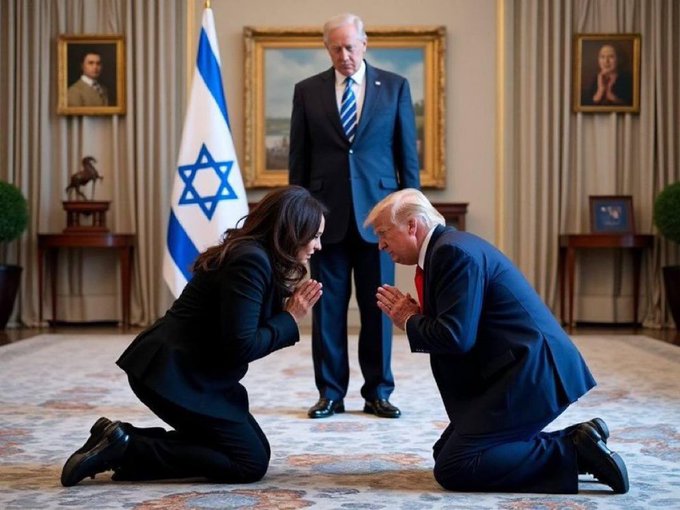
By Lucas Leiroz | Strategic Culture Foundation | October 15, 2024
The U.S. has apparently made the decision to intervene directly in the large-scale conflict currently taking place in the Middle East. According to recent reports, American military units, including auxiliary groups and special forces, are being sent to Israel to more effectively support Tel Aviv’s forces in their land-to-air operations.
The main reason for the U.S. intervention is to support the IDF in air defense operations, and there is an official statement that there is no intention to use U.S. troops on direct combat lines. However, these claims have no practical credibility, since what we are seeing in the Middle East is a progressive escalation.
Previously, direct American assistance was limited to the naval front. Now, specialized troops are already operating air defense systems on “Israeli” soil. Soon, it is quite possible that there will be direct American combat involvement both in Gaza and on the border with Lebanon, since Washington clearly does not have the ability to impose limits on Israel.
The arrival of American troops in Israel at this time is highly significant because the Zionist occupation is going through one of the most difficult moments in its recent history. Israel failed to achieve any of its strategic objectives with the genocidal operation in the Gaza Strip, having killed thousands of civilians, but failed to defeat Hamas and free the prisoners of war. Now, after suffering a humiliation during the recent Iranian attack on Zionist military and strategic bases, Israel is carrying out a disastrous invasion of Lebanon, where it suffers from Hezbollah’s high qualification in guerrilla and attrition warfare – in addition to Israeli cities being increasingly easy targets for the Shiite militia’s missiles and drones.
It is fair to say that Israel is facing more difficulties now than at any other time in its military history. Tel Aviv is exhausting its defense and intelligence resources without achieving any meaningful objective, falling into a trap from which it will certainly not escape without profound changes in its state structure – if not its actual ceasing of existence as a state.
It would be naive to think that Pentagon strategists are unaware of this type of situation. Despite American propaganda encouraging Israel, senior American defense officials certainly know that entering Israel is strategic suicide for the United States, which is why the Pentagon’s recent decision seems even more irrational. However, it is important to understand that not all decisions made by a state are based on strategic sense and rationality, and that several factors influence it, such as historical and ideological ties and, above all, the stimulus of various lobbies.
Contrary to what many experts say, the reality of U.S.-Israeli ties cannot be understood by taking Washington as the main agent of relations. Israel seems to have much more influence on American politics than Washington has in Tel Aviv. It is no coincidence that, despite Democrats and Republicans disagreeing on many issues, they continue to agree on Israel, with support for Zionism being absolute among all American politicians.
In fact, what the decision to send American military personnel to Israeli soil reveals is that it is the Zionist lobby that really controls the main strategic decisions of the United States. Joe Biden and his main allies have made it clear several times that they are not willing to directly support Israel in a major regional war in the Middle East. With elections coming up and major domestic problems in the United States, all Washington wants to do is to resolve its own issues and avoid military engagement. However, American decision-makers do not seem to have enough strength to neutralize the influence of the Zionist lobby, giving in on several important issues, even though all strategic sense advises something different to be done.
In the end, it is possible to say that once again the Zionist lobby has won the American political game. It remains to be seen how long the U.S. will be able to resist the pressure from this same lobby for [increased] direct intervention.
Placing THAAD in Israel is High-Stakes Poker Game the US Risks Losing: Here’s Why
By Ilya Tsukanov – Sputnik – 14.10.2024
Pentagon spokesman Pat Ryder confirmed on Sunday that President Biden and Pentagon chief Austin had signed off on the deployment of a US Terminal High-Altitude Area Defense (THAAD) anti-missile battery and associated crew in Israel. The decision is fraught with a broad spectrum of risks for Washington. Here’s why.
THAAD’s deployment in Israel “underscores the United States’ ironclad commitment to the defense of Israel, and to defend Americans in Israel, from any further ballistic missile attacks by Iran. It is part of the broader adjustments the US military has made in recent months, to support the defense of Israel and protect Americans from attacks by Iran and Iranian-aligned militias,” Ryder assured in Sunday’s press release.
Tehran has made clear that it has no illusions about the deployment’s purpose. Iranian Foreign Minister Abbas Araghchi emphasized Sunday that along with its delivery of record quantities of weaponry to Israel, Washington is “now also putting the lives of its troops at risk by deploying them to operate US missile systems.”
“While we have made tremendous efforts in recent days to contain an all-out war in our region, I say it clearly that we have no red lines in defending our people and interests,” Araghchi warned, referencing Tehran’s commitment to respond to any further aggression by Tel Aviv following the retaliatory Iranian ballistic missile attack on Israeli military and intelligence sites on October 1.
Iranian media, meanwhile, have warned that the presence of the THAAD in Israel will make no difference in Tehran’s military strategy – with Iranian missiles proving capable of puncturing Israel’s sophisticated, mulitlayered air and missile defense shield, and able to do so again if necessary if and when the US missile defense system is deployed.
A PressTV explainer published Monday pointed to footage released late last week purportedly showing a Raytheon X-band radar like the one that’s part of the THAAD system being knocked out in an Iranian precision strike ahead of the broader missile barrage on October 1. If authenticated, the footage would help explain why – as footage posted to social media and satellite images appear to show – dozens of Iranian missiles managed to reach their target without interference from Israeli air defenses.
The explainer pointed out that Iran’s Kheibar Shekan (lit. ‘Castle Buster’ or ‘Fortress Buster’) series missiles “easily penetrated Israel’s much-touted air defenses,” including the David’s Sling and Arrow-3 interceptors, on October 1, and offered details on how they could pull off a similar triumph against THAAD.
“The Kheibar Shekan-1 evaded the Arrow-3 system, which operates only outside the atmosphere, by flying below its engagement envelope. By the time it came within range of the Arrow-2 system, it was already flying too low to be effectively intercepted,” the analysis indicated. Evasive maneuvering “allowed it to easily defeat David’s Sling,” the outlet added.
And while THAAD’s ability to engage targets at lower altitudes may potentially make it more effective against the Kheibar Shekan-1, the Kheibar Shekan-2’s longer range (1,800 km vs 1,450 km, respectively) and “more aerodynamic glide vehicle allows it to ‘trade’ its extended range for low-altitude gliding, keeping it below the THAAD system’s engagement envelope, particularly at altitudes below 35 km. This enables the missile to bypass THAAD entirely and effectively and reach its target,” the PressTV report noted.
The explainer pointed out that even the Kheibar Shekan-1 stands a chance of defeating THAAD if it targets sites “near the edge” of the American system’s range. That’s not to mention the fact that THAAD, while advanced, is also extremely costly, which means “limits [to] the number of available interceptors, especially compared to the sheer volume and size of Iran’s ballistic missile arsenal,” which could theoretically just saturate Israeli/US defenses.
Losing prestige associated with the THAAD would pose serious military and geopolitical risks for Washington, not only given the dangers associated with the loss of American troops’ lives if Iran struck the missile defense system itself, but the loss of prestige associated with the $1 billion piece of American military equipment proving helpless against an adversary. The US and its allies have already faced a reality check regarding the much-touted ‘superiority’ of their weapons in the proxy war against Russia in Ukraine. An Iranian strike overwhelming America’s most sophisticated and pricey missile defense system could drive the final nail into the coffin of global attitudes about the supremacy of Western arms, including among its allies.
Geopolitical Risks, Domestic Risks
Then there are risks to the Biden administration’s foreign and domestic policy.
“The Americans deployed THAAD as part of preparation for an Iranian response to an upcoming Israeli attack,” Yeghia Tashjian, political analyst, regional and international affairs cluster coordinator at the Issam Fares Institute for Public Policy and International Affairs, American University of Beirut, told Sputnik.
The THAAD plans signal that the US is now firmly “stuck” in the war in the Middle East, even though this is “something that most probably the Biden administration doesn’t want,” Tashjian explained, saying he wouldn’t be surprised if the US military deployment in Israel now expands further.
The White House has every reason to want to avoid further involvement, the observer stressed, pointing to the upcoming presidential elections and the power of the Arab voting bloc, crucial for Democrats in the swing state of Michigan, not to mention the general lack of public interest in US involvement in a new misadventure in the Middle East.
As far as US foreign policy goals are concerned, an escalation of the Mideast crisis could delay further US and NATO arms deliveries to Ukraine, Tashjian pointed out, highlighting the recent cancelation of a planned Ramstein Format meeting on Ukraine aid.
“The West cannot fight on multiple fronts,” the observer emphasized, pointing out that besides Gaza, Lebanon and Ukraine, the US may soon have its hands full against a rising China, and see a new escalation in long-standing tensions in the Korean Peninsula.
A War Not Meant to Be Won?
The US would prefer a “managed conflict” between Israel and Hezbollah or Israel and Iran, Tashjian believes. Washington’s ability to achieve this goal is another matter, since Israeli Prime Minister Benjamin Netanyahu “is not in favor of managing this war or even engaging in a ceasefire,” but prolonging it and getting the US directly involved, the observer said.
“The main intention of Israel is to involve the Americans directly into this war, because Netanyahu has made it clear that he wants to change and establish a ‘new Middle East’. And in this attempt, he needs American, British and other European help because he cannot fight on multiple fronts and especially against Iran,” which proved on October 1 that it “has capabilities to attack and inflict some damage against Israel. Israel does not want to feel vulnerable or alone in its fight against Iran,” Tashjian summed up.
CIA personnel land in Lebanon, ramp up intel gathering to support Israel’s war

Photo credit: US Embassy Beirut
The Cradle | October 14, 2024
The CIA has sent additional agents to Lebanon and has increased its communications with Lebanese military, security, and political officials in an effort to obtain information about Hezbollah, and may have played a role in Israel’s recent attempt to assassinate a Hezbollah political leader, Al-Akhbar reported on 14 October.
Three senior officials in the official security services acknowledged that Western parties, primarily the US, have initiated intensive daily communication with all Lebanese military and security forces since the outbreak of the open war between Lebanon and Israel, Al-Akhbar editor Ibrahim al-Amin wrote.
The officials told Amin that the content of the communications had nothing to do with obtaining information about threats to western interests. Instead, they wish to obtain information about changes in Hezbollah’s political and military leadership structure after the recent assassination of the party’s secretary-general, Hassan Nasrallah.
US intelligence officials were very interested in whether Hezbollah leaders are “still communicating with the military, security and executive forces in Lebanon after the war, with questions about the form and content of the communication,” one official told Amin.
The same official revealed that a security team of 15 CIA officers arrived at Beirut airport last Thursday, 10 October, and moved in a convoy of armored cars without license plates to the headquarters of the American embassy in Awkar.
He explained that the team “joined the work cell based in one of the embassy wings in Beirut, to help manage the Beirut station, which includes 12 main officers, in addition to others with different specialties, including recruiting and managing agents, collecting information through technical means, and analyzing data.”
Another official told Amin that a new director for the CIA’s Beirut station, Sherry Baker, had been appointed and that Baker had previously participated in meetings with Lebanese security officials during visits to Washington.
The official said he knew of “five working visits by Lebanese officers of various levels to the United States, who held meetings with American intelligence officials at their headquarters in Langley.”
In this context, Amin reports that these contacts between the CIA and Lebanese security officials may have played a role in Israel’s recent attempt to assassinate a Hezbollah political leader, Wafiq Safa.
On 10 October, Israeli airstrikes leveled a residential building in central Beirut, killing 22 people. Israel stated that Safa was the target of the attack. However, they were unsuccessful in killing him.
One of the three officials revealed to Amin that just prior to the assassination attempt, the leadership of Hezbollah had asked Safa, in his capacity as head of the resistance movement’s Liaison and Coordination Committee, to communicate with a number of Lebanese security officials on matters related to the ongoing war.
The official explained that “the contacts took place despite the fact that the resistance knew that the mere occurrence of the phone call would constitute a security threat to Safa.”
These fears were confirmed when Israel carried out the bombing in Beirut and leaked news that the target was Safa.
The same official said that Hezbollah “estimates that American intelligence had a direct role in the attempt to assassinate Safa” and that “the operation was carried out based on information provided by the Americans.”
The official stated that the US wanted to kill Safa, who has no military role in Hezbollah, as part of a campaign launched by the US Ambassador to Beirut, Lisa Johnson, who recently “called on Lebanese political and non-political forces to begin working to establish the stage of “post-Hezbollah Lebanon.”
Do They Want American Troops to Die?
By Dan McAdams | Ron Paul Institute | October 14, 2024
Biden administration mismanagement—or worse—from day one of the latest Israeli multi-front war in the Middle East has led us to where we are today, at the brink of an all-out regional war with some 40,000 U.S. troops and multiple U.S. military bases in the region with targets on their back.
Biden’s blank check to Israel after the attacks of October 7, 2023, to launch multiple wars against its neighbors and carry out the mass murder of Palestinian civilians in Gaza has drawn the U.S. right into the middle of a bubbling cauldron of [World War III]. And rather than take a sober look at actual U.S. national security interests, Biden and his neocon incompetents are busy adding fuel to the fire hanging on to the pipe dream that they could do what they failed to do so many times before: remake the Middle East in their neocon image.
According to an article in Politico this past week, while Biden administration officials publicly urged restraint and a reduction in violence, they privately were working with the Israeli government to encourage a widening of Israel’s military operations to include its northern neighbor, Lebanon. Two top Biden administration officials, Amos Hochstein and Brett McGurk, urged Israeli Prime Minister Benjamin Netanyahu to shift Israel’s military focus from the already-flattened Gaza northward to Lebanon.
As Politico reports:
“Behind the scenes, Hochstein, McGurk and other top U.S. national security officials are describing Israel’s Lebanon operations as a history-defining moment—one that will reshape the Middle East for the better for years to come.”
Where have we heard this kind of “let’s do war to re-shape the Middle East” argument before? As Wikileaks reminds us, appearing before the U.S. Congress in 2002 and urging the U.S. to attack Iraq, Netanyahu himself promised that “If you take out Saddam, Saddam’s regime, I guarantee you that it will have enormous positive reverberations on the region.”
Yeah, Bibi. How’d that work out for us?
So why is it that 22 years later senior U.S. officials are echoing Netanyahu’s bogus 2002 lies to draw the U.S. into another “history-defining” catastrophe in the Middle East? For Hochstein it might be that he is not the unbiased “honest broker” we need to keep us out of unnecessary war. After all, as The New York Times reminds us, Hochstein was born in Israel, had/has Israeli citizenship, and even served in the Israeli Defense Forces!
Now he is serving as President Biden’s top advisor for the Middle East—a position where it is critical to bring no personal biases to the table.
This should not automatically disqualify him from the position, of course, but just as with concerns over Victoria Nuland and Antony Blinken’s Ukrainian background, neocons pushing for war in the “old country” from which they should have left old allegiances behind should raise a few eyebrows.
McGurk is similarly compromised, as he is another Victoria Nuland/Zelig-like character [creature] who has spent his career weaseling into Republican and Democratic administrations as an “expert,” while his actual expertise comprises solely his adherence to the neocon ideology of all war all the time. He was on board for [George W.] Bush’s “remaking of the Middle East” to [Barack] Obama’s fake “Arab Spring to remake the Middle East” to [Donald] Trump’s “trash the Iran deal to remake the Middle East.”
The guy is a loser who has been wrong his whole career, with a trail of failures that would sink a normal person. But like the Energizer Bunny he just keeps on ticking and ticking toward yet another disaster.
As Politico goes on to note, the Hochstein/McGurk plan to urge Israeli attacks on Lebanon was not widely accepted among actual experts in the administration:
“The decision to focus on Hezbollah sparked division within the U.S. government, drawing opposition from people inside the Pentagon, State Department and intelligence community who believed Israel’s move against the Iran-backed militia could drag American forces into yet another Middle East conflict.”
Of course there is built into the Politico article the assumption that Hochstein and McGurk were at all concerned about “dragging American forces” into Israel’s regional war. In fact, their intent was the opposite. They no doubt yearned to draw the U.S. government into Israel’s regional war.
Which brings us to where we are today, with the Biden Administration committing more U.S. weapons systems and more U.S. military personnel to serve on the ground in Israel in its war against Gaza, Syria, Lebanon, Iraq, and Iran. All at once. How’s that for neocon ambition?
As Pentagon Press Secretary Patrick Ryder announced [yesterday]: “At the direction of the President, @SecDef authorized the deployment of a Terminal High-Altitude Area Defense (THAAD) battery and associated crew of U.S. military personnel to Israel to help bolster Israel’s air defenses.”
With today’s [October 13] news that Lebanon successfully counter-attacked Israel—hitting an Israeli military base and taking out dozens of IDF soldiers—it appears certain that President Biden and his neocon-dominated foreign policy team are setting up U.S. military members to be killed in Israel to manufacture consent for a full-on US war against all of Israel’s enemies in the region.
They want American soldiers killed in Israel because they know the enormous propaganda value, particularly among a U.S. population that is increasingly against U.S. involvement in Israel’s wars and in favor of ending them instead.
With Kamala tanking in the eyes of a voting public increasingly unappetized by wilted word salads, an old-fashioned war might be just what the Biden brigades are cooking up to pull their chestnuts out of the fire.
With their track record of failure, it is time for those of us who are sane to be very, very worried.
This is going to get really bad really fast if we cannot get the attention of a slumbering—or worse—Congress.
US troops will deploy to Israel – Pentagon
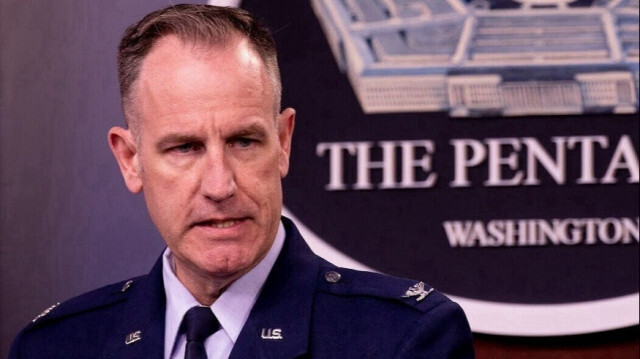
RT | October 13, 2024
The US has ordered the deployment of a THAAD air defense system to Israel, along with a crew of American service members to operate it, Pentagon Press Secretary Maj. Gen. Pat Ryder announced on Sunday. The move marks the first deployment of US combat troops on Israeli soil since the Israel-Hamas war began last year.
According to Ryder, the THAAD battery “and associated crew of US military personnel” will be stationed in Israel “to help bolster Israel’s air defenses following Iran’s unprecedented attacks against Israel on April 13 and again on October 1.”
US President Joe Biden, who the White House previously said had “no plans or intentions to put US boots on the ground in combat,” ordered the deployment, Ryder stated.
The THAAD, or Terminal High Altitude Area Defense system, is a mobile anti-ballistic missile system designed to detect and intercept ballistic missiles during their descent stage. It fires a non-explosive projectile at eight times the speed of sound, relying on kinetic energy to destroy incoming missiles.
A THAAD battery consists of 95 soldiers and six truck-mounted launchers capable of firing a total of 48 interceptors.
The US deployed a THAAD battery to Saudi Arabia after the Israel-Hamas war began last October, and to Israel on a training exercise in 2019. However, neither the system nor the American troops who operate it have been sent to Israel since the current conflict began.
While American soldiers took part in a brief aid mission off the coast of Gaza earlier this year, they did not set foot in the Palestinian enclave.
The deployment comes as Israel prepares its response to an Iranian missile attack on October 1, in which around 200 ballistic missiles were fired at Israeli military targets. Tehran maintains that the strike was a “legitimate” response to Israel’s assassination of Hamas leader Ismail Haniyeh in Tehran and Hezbollah leader Hassan Nasrallah and a senior Iranian general in Beirut.
Israel is widely expected to target Iran’s oil or nuclear infrastructure, although the US has advised West Jerusalem against either choice. Whatever form the Israeli response takes, Iran has vowed to retaliate. Earlier this week, a source in Tehran told RT that this retaliation would be “proportionate.” Should West Jerusalem target Iran’s oil infrastructure, Tehran will respond by striking Israel’s oil refineries. Attacks on other infrastructure, such as power plants or nuclear facilities, will likewise prompt retaliatory strikes on corresponding installations in Israel, the source explained.
Hours before Ryder’s announcement, Iranian Foreign Minister Seyed Abbas Araghchi warned that the US is putting the “lives of its troops at risk by deploying them to operate US missile systems in Israel.”
“While we have made tremendous efforts in recent days to contain an all-out war in our region, I say it clearly that we have no red lines in defending our people and interests,” Araghchi added.”
Exposing US Foreign Policy in Middle East | Gary Vogler Interview
Counter Currents | October 12, 2024
Gary Vogler, who spent eight years working with the Pentagon’s Iraq oil team and even briefly served as the country’s oil minister, joins host and former CIA analyst Larry Johnson to discuss the following issues:
- Role of oil in Iraq War
- US occupation of Syrian oil fields
- Israel’s oil dependence vulnerability
Featured Video

Iran FM Araghchi: “Hormuz Will No Longer Be the Same”
or go to
Aletho News Archives – Video-Images
From the Archives
Sam Husseini: The entire US establishment helped lie their way into the Iraq war
By Slava Zilber | American Herald Tribune | October 14, 2019
Sam Husseini is a senior analyst with the Institute for Public Accuracy, independent journalist and contributor to The Nation and FAIR.
Slava Zilber: Sam, three years ago, you appeared on Talk Nation Radio with David Swanson and spoke about the case of the GCHQ whistleblower Katharine Gun. You pointed out that the people involved in the spying on the UN and the people authorizing the Iraq War were not held accountable:
“Virtually everybody who went along with the war, whether it is Kerry or Clinton, of course, the Bush administration themselves has falsified their own records in terms of why, what they did, when they did, why they did it, to the extent that they’ve been scrutinised at all.”
You also address it in a recent article. And recently, Joe Biden has been lying about his position on the Iraq War. How can such an important issue escape meaningful scrutiny? … continue
Blog Roll
 Aletho News
- Oman FM: Persian Gulf states, Iran, Iraq should form security pact excluding US
- Trump peddles fresh falsehoods, claims Iran ‘started the war’ as US aggression drags on
- Ukraine quagmire? Yes, but it’s for NATO, not Russia
- US intelligence hypes Chinese, Russian space threats while accelerating its own military buildup in orbit
- Iran FM Araghchi: “Hormuz Will No Longer Be the Same”
- EU facing trillion-euro debt hole while seeking more cash for Kiev
- How US, Europe, Persian Gulf states exhausted missile stockpiles, splurged billions to defend Israel
- Up in arms… Koreans reject U.S. empire’s plan to make South Korea the next Ukraine
- Iran, Turkey, Pakistan, Saudi Arabia could advance region-led security framework in Tehran: FM spox
- Netizens condemn Japanese drama for projecting Japan’s wartime atrocities onto Chinese characters
- If Americans Knew
- An error has occurred; the feed is probably down. Try again later.
- No Tricks Zone
- Sudden Stratospheric Warming, Powerful El Niño Combination May Lead To Extreme Europe Cold, Energy Crisis!
- Two New Studies Find Thwaites Glacier Melt Cannot Be Driven By Human Activity Or A Warming Ocean
- E-Cars Reduce CO2 Emissions By Only 41% Compared To Internal Combustion Engine Vehicles
- Predictions Made By Renowned Climate Professor Over Past Decades Have Been Proven To Be Poor
- New Study Suggests Large Regions Of The Pacific Ocean Have Been Cooling For The Last 80 Years
- Germany’s Green Energy Debacle: High Energy Costs Force Kahla Porzellan to Close After 182 Years!
- New Study: 50 Years Of The Most Aggressive ‘Net Zero’ Policies Can Only Affect The Global Climate By 0.03°C
- US September “Heat” Was No Record…Many Records Set Decades Ago
- Latest European Green Energy Debacle; Portugal’s Largest Flagship Solar Park Insolvent!
- Green Energy Debacle: German Expert Professor Fritz Vahrenholt Warns Of Severe Economic And Social Consequences

