Iran responds to US military moves with more firepower
RT | August 6, 2023
Iran has beefed up the weaponry of its naval forces, arming them with such tools as additional drones and precision missiles with ranges up to 1,000 kilometers (620 miles), amid rising tensions with the US over shipping traffic through the world oil market’s most crucial bottleneck.
The Iran Revolutionary Guard Corps (IRGC) Navy officially took possession of the new gear at a ceremony on Saturday, state-run media outlets reported. The systems include reconnaissance and combat drones, as well as electronic warfare equipment, truck-mounted missile launchers, and hundreds of cruise and ballistic missiles.
The announcement came after reports earlier this week that US military officials had drawn up unprecedented plans to place armed troops on commercial trips in the Strait of Hormuz. Just last month, the Pentagon announced deployments of additional fighter jets and naval assets to the Persian Gulf region in response to “alarming events,” such as Iranian seizures of commercial vessels.
Brigadier General Abolfazi Shekarchi, a spokesman for the Iranian military, denounced Washington’s proposed deployment of troops on private ships. “What do the Persian Gulf, the Gulf of Oman and the Indian Ocean have to do with America?” he told Iran’s Tasnim news agency. “What is your business here?”
About 20% of the world’s oil supplies, or one-third of all seaborne crude shipments, go through the Strait of Hormuz, the narrow passage that connects the Persian Gulf to the Gulf of Oman and the Arabian Sea. Tehran typically accuses the operators of detained ships of shipping violations, such as oil smuggling. Some of the vessels have only been released after other countries free detained Iranian tankers.
The new missiles give the IRGC Navy better accuracy and longer range than it previously had available, commander Alireza Tangsiri said. “The cruise missiles can attack several targets simultaneously, and the commands can be altered after takeoff,” he added.
US-Iran tensions have risen since Washington pulled out of the Iran nuclear deal in 2018. Efforts to revive the agreement, known officially as the Joint Comprehensive Plan of Action (JCPOA), have failed, despite the change in US leadership when Joe Biden succeeded Donald Trump as president in January 2021.
US forced Saudi Arabia, UAE to freeze investments in Syria
The Cradle | August 2, 2023
All promises of humanitarian aid and investment in Syria by Gulf countries such as the UAE and Saudi Arabia have been frozen as a result of US warnings and threats, Lebanese daily Al-Akhbar reported on 2 August.
“All the Emirati and Saudi promises to help Syria and activate investment in it on several levels remained words on tongues and ink on paper, and none of them were translated into reality,” Arab diplomatic sources told Al-Akhbar.
According to the sources, the UAE “underestimated the ability of US sanctions to prevent” these investments and aid transfers from materializing.
“It became clear that US sanctions and warnings … by the Americans to Emirati and Saudi officials … have already managed to thwart any new investment attempts in Syria … There are Emirati investment projects that already exist in Syria, but work in them has been frozen, under the pretext of the unstable security conditions,” the newspaper cites the sources as saying.
Following the 6 February earthquake that devastated Turkiye and Syria, an Arab embrace of Damascus was initiated – with a number of Arab states, including most notably Saudi Arabia, restoring diplomatic ties with the government of Bashar al-Assad.
While this initially carried the hope of facilitating a swift end to the Syrian crisis and a reconstruction of the country, US sanctions and political pressure campaigns against normalizing with Assad have stalled such hopes.
US lawmakers have even introduced legislation aimed at targeting countries that normalize ties with the Syrian government.
On 31 July, Syrian Foreign Minister Faisal Mekdad accused western leaders of threatening to sanction Arab states to stop the normalization of ties with Syria. However, he added that “our Arab brothers will not submit to western blackmail,” stressing that there are talks with Arab nations “far from US influence.”
As some Arab states remain adamant about opposing Syria, such as Qatar, others, including Iraq, have continued to push for its full reintegration into the regional fold.
Despite US attempts to drive a wedge between Baghdad and Damascus, as Al-Akhbar describes, the two states have continued close cooperation in several fields.
As part of Iraqi Prime Minister Mohammed Shia al-Sudani’s recent visit to Syria and meeting with Assad, many things were discussed, including increased energy cooperation to combat severe shortages caused by US occupation.
While the US is systematically obstructing the Arab rapprochement with Damascus, its occupation forces in the country are reportedly preparing for new military action – coinciding with preparations being made by Iran-backed resistance groups.
According to Al-Akhbar, the US is attempting to strengthen its Kurdish proxy, the Syrian Democratic Forces (SDF) – as well as other factions and extremist armed groups who are being trained inside the US base in Syria’s southeastern Al-Tanf region.
“The declared goal [is] occupying the city of Al-Bukamal to cut off the road between Damascus and Baghdad,” the report reads, thereby obstructing access “to the Iranian depth.”
However, this US “move will be an opportunity for the … the axis to pounce on the American forces in the Syrian desert and expel them from this sensitive area.”
The newspaper adds that there are “military preparations” – most likely jointly coordinated by Syria, Iran, and Russia – in the Badia desert region and in Suwayda, “can be considered preparation for a ground attack on the US Al-Tanf base, perhaps preceded by an attack with drones and ballistic missiles.”
As the threat of such an attack looms over the US occupation, Washington has been significantly reinforcing its occupation in Syria recently.
An anonymous US military official recently said that there is a jointly coordinated Russian-Iranian campaign being waged with the aim of pressuring Washington’s troops to withdraw from Syria.
US warns allies of potential isolation from deals over links to Iran, Russia
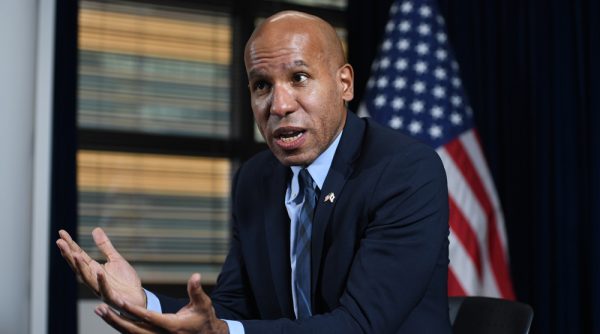
Brian Nelson, U.S. Treasury Undersecretary for Terrorism and Financial Intelligence
Press TV – July 29, 2023
The administration of US President Joe Biden has warned that Washington’s allies will face a “reputation risk” and potential isolation from lucrative deals in case of having links to the Islamic Republic of Iran and Russia.
Brian Nelson, the Treasury’s undersecretary for Terrorism and Financial Intelligence, raised the alarm in a meeting with Kenya’s President William Ruto on Friday.
He claimed that Iran and Russia were “isolated economically.”
“What we see is again of course Iran and Russia are isolated economically and either they are looking for partners and they are looking for new channels to have economic relationships,” Nelson claimed.
“From our perspective, that potentially creates a reputation risk and creates also a financial risk such that we are having a direct conversation about those risks that are associated with the expansion of economic relationship, which is a conversation not only are we having here but with countries around the world and we know that clearly is what Russia and Iran are seeking,” he added.
In what is construed as Washington’s direct interference in its allies’ affairs, Nelson warned them to be wary of the two countries’ economic reputation.
The warning comes as Iranian President Ebrahim Raeisi embarked on an African tour earlier in the month, which took him to Kenya, Uganda and Zimbabwe at the official invitation of his counterparts from the three host countries.
Heading a high-ranking delegation, Raeisi forged new alliances and discussed possible avenues for the improvement of trade and political ties.
Raeisi stressed the need for enhancing relations with African countries, saying that the states are gifted with abundant natural resources and mines, and enjoy many potentials and areas for closer cooperation.
Iranian Foreign Ministry spokesman Nasser Kana’ani described Raeisi’s continental tour as “a new turning point” which could bolster economic and trade ties with African nations.
A total of 21 documents on cooperation in different areas were signed during the three-state tour to Africa.
Washington sanctions 14 Iraqi banks in new anti-Iran ‘crackdown’
The Cradle | July 20, 2023
The US Treasury Department and the Federal Reserve Bank of New York have barred 14 Iraqi banks from conducting transactions in US dollars as part of a “sweeping crackdown” to stop Iran and other sanctioned nations from acquiring the greenback, the Wall Street Journal (WSJ) reported on 19 July.
US officials say the new sanctions were issued after discovering “information” showing the banks “engaged in money laundering and fraudulent transactions, some of which may have involved sanctioned individuals and raised concerns that Iran could benefit.”
“We have strong reason to suspect that at least some of these laundered funds could end up going to benefit either designated individuals or individuals who could be designated,” a senior US official told the WSJ.
The banks targeted by the punitive measures are small institutions reportedly “heavily involved” in US dollar transactions.
According to Iraq’s Shafaq News, the targeted banks include the Islamic Advisor for Investment and Finance, the Islamic Qartas for Investment and Finance, Al Mustashar Islamic Bank, Elaf Bank, Erbil Bank, the International Islamic Bank, Trans-Iraq Bank, Mosul Bank, Al-Rajeh Bank, Sumer Commercial Bank, Trust International Islamic Bank, the World Islamic Bank, and Zain Iraq Islamic Bank.
The sanctions came only one day after the US State Department issued a new 120-day sanctions waiver to allow Baghdad to deposit payments for Iranian natural gas into non-Iraqi banks in response to criticism that the White House is responsible for recent power cuts at the height of Iraq’s blistering hot summer.
Since 2003, all Iraqi oil revenues have been paid into an account with the US Federal Reserve. Although Iraqis formed a sovereign government after the US invasion and occupation of their state, Iraq is still restricted from opening accounts for its oil earnings outside the US.
Given its dominance of the global financial system, Washington can control all funds of Iraq’s Central Bank through threats or sanctions, even though these funds are not deposited exclusively in US banks. Furthermore, Iraq’s oil funds, which in 2022 amounted to more than $90 billion, remain in one single account in New York Fed – the institution that two years ago unilaterally blocked Afghanistan from accessing its foreign reserves, plunging the nation into an unparalleled crisis.
Last November, the US Treasury cut off four Iraqi banks from access to dollars and imposed tight controls on wire transfers, sending the economy reeling.
To negate the effect of these unilateral measures, Baghdad has been looking to move trade away from the greenback and, in May, banned the use of the US dollar for both personal and business transactions.
Earlier this month, the commercial advisor to the Iranian embassy in Iraq, Abd al-Amir Rabihawi, revealed that Baghdad proposed that the two nations switch trade payments to the Iraqi dinar to combat US economic coercion.
Washington unable to sell stolen Iranian oil: Report
The Cradle | July 19, 2023
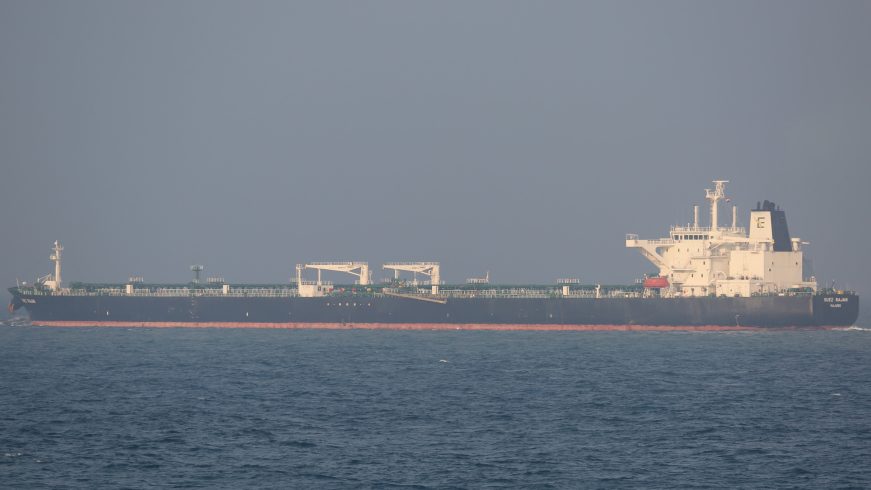
Oil firms in the US are “reluctant” to unload a shipment of stolen Iranian oil sitting in a Greek tanker off the coast of Texas, saying they are “too worried about Iranian reprisal” to touch the cargo, sources familiar with the matter told the Wall Street Journal (WSJ).
“Companies with any exposure whatsoever in the Persian Gulf are literally afraid to do it,” a Houston-based energy executive told the US outlet, adding that companies fear “the Iranians would take retribution against them.”
“I don’t know if anybody’s going to touch it,” another executive at a shipping company told the WSJ.
Washington illegally seized the Marshall Islands-flagged Suez Rajan supertanker in April of this year in what was described by the Pentagon as “a sanctions-enforcement operation.” Washington also charged the ship’s owner with “sanctions evasion” and directed the stolen cargo to the waters 65 miles off Galveston’s coast in the US.
According to the WSJ, the Suez Rajan came under Washington’s radar after an anti-Iran organization – the New York-based United Against Nuclear Iran (UANI) – provided information about the ship’s cargo to government officials. Furthermore, lawyers representing the families of victims of the 11 September attacks, “whom US courts have given the right to claim compensation from [Tehran],” filed a lawsuit against one of the ship’s former owners.
But while the US coast guard has given the all-clear to unload the shipment, companies that manage those transfers do not want any involvement in what Tehran has described as “maritime piracy.”
“That vessel’s emblematic of a much bigger drama that’s playing out about how we deal with Iranian threats,” a former US official told the WSJ.
The “drama” playing out between Washington and Tehran has seen the former eagerly try to restart talks with the Islamic Republic to “deescalate tensions” and possibly reach a new nuclear deal. But despite these diplomatic overtures from the White House, in recent weeks, the Pentagon has significantly bolstered its military presence in the Persian Gulf to confront “Iranian threats.”
Washington accuses Tehran of attempting to “hijack” foreign-flagged vessels traveling through the Strait of Hormuz and the Gulf of Oman. At the same time, Iran says the US navy protects “fuel smugglers” and ships involved in hit-and-run incidents.
“We categorically reject [Washington’s] baseless allegations of hijacking foreign oil tankers by Iran,” a representative for Iran’s mission to the UN told the WSJ. “Iran insists on the security and stability of the Persian Gulf and Strait of Hormuz. However, if oil tankers violate harmless passage, pollute the environment, or smuggle Iranian fuel, Iran does not hesitate to address those irregularities and infringements based on its laws as well as relevant international obligations.”
Joe Biden invites Israel Prime Minister to Washington
MEMO | July 17, 2023
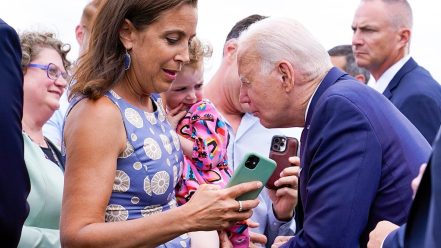
US President Joe Biden has invited Israeli Prime Minister, Benjamin Netanyahu, to Washington for an official visit, a statement from the Prime Minister’s office said on Monday, Reuters reports.
The move marks a shift in US – Israeli relations as most Israeli prime ministers had already received an invitation to the White House this far into their terms.
The two leaders shared a “long and warm” conversation, the Israeli statement said, focused on curbing threats from Iran and its proxies and strengthening the alliance between the two countries.
Netanyahu told the US President he would try to form a “broad public consensus” on controversial legislation in Israel that would see its highest court stripped of much of its powers.
US-led coalition’s jets violated Syrian airspace several times in past day: Russia
Press TV – July 17, 2023
Russia says the US-led military coalition’s fighter jets violated Syria’s airspace in the strategic al-Tanf region several times during the past day, amid repeated calls by Damascus for the expulsion of Washington’s occupation forces from the country.
Rear Admiral Oleg Gurinov, deputy chief of the Russian Center for Reconciliation of the Opposing Parties in Syria, said at a press briefing on Sunday that the al-Tanf airspace is where international air routes pass.
“A pair of the coalition’s F-16 fighter jets, and one MC-12W spy plane violated Syria’s airspace in the al-Tanf area, across which international air routes run, five times during the day,” he said.
Gurinov added that during the past 24 hours, twelve cases of violations of the de-confliction protocols of December 9, 2019 by the US-led coalition drones were recorded, warning that such actions create risks of air accidents with civilian planes.
He further said a shelling attack on the positions of government troops in Syria’s Idlib and Latakia de-escalation zone has injured a Syrian soldier.
The latest development comes as an unnamed Pentagon official declared earlier in the day that the US announced considering military options to address “Russian aggression in the skies over Syria.”
The unknown official further voiced the US’s rising concerns about “growing ties between Iran, Russia, and Syria across the Middle East.”
The official also claimed that “Russia is beholden to Iran for its support in the war in Ukraine, and Tehran wants the US out of Syria” to extend aid to Lebanon’s Hezbollah resistance movement “and threaten Israel.”
Such claims by Washington officials come as the US military is illegally occupying Syria with nearly 1,000 troops and has seized the country’s oil fields in cooperation with local anti-Damascus militants and terrorist groups while stealing its crude supplies and transferring them across the border to its bases in Iraq.
In 2014, the US and its allies invaded Syria under the pretext of fighting Daesh. The Takfiri terrorist group had emerged as Washington was running out of excuses to extend its regional meddling or enlarge it in scale.
Russia, alongside Iran, has been helping Syrian forces in battles across the conflict-plagued country, mainly providing aerial support to ground operations against foreign-backed terrorists.
Damascus maintains that the unauthorized US deployment aims to plunder the country’s natural resources.
Russia – which together with Turkey is carrying out joint patrols in northern Syria – has established special “de-confliction” zones where the US-led coalition can operate.
Mike Pence, Other Prominent Hawks Back Regime Change in Iran at MEK Rally in Paris
By Connor Freeman | The Libertarian Institute | July 3, 2023
Former Vice President Mike Pence participated in a rally outside Paris led by the exiled Iranian terrorist cult, the Marxist-Islamist Mujahideen-e-Khalq headed by Maryam Rajavi, and their political front the National Council of Resistance of Iran (NCRI), over the weekend.
Pence, a current GOP presidential hopeful, along with a host of other prominent hawks, including British ex-Prime Minister Liz Truss as well as former CIA director and Secretary of State Mike Pompeo, made calls for regime change in Tehran and railed against engagement with the Islamic Republic. Pence said “One of the biggest lies the ruling regime has sold to the world is that there is no alternative.” He added “no oppressive regime can last forever.”
Truss declared “[authoritarian] regimes have been emboldened as the free world has not done enough. I will never give up hope for a free and democratic Iran… Democracy is under threat around the world. Now is the time to turn our backs on accommodation and appeasement.”
Pompeo chimed in via video link, proclaiming any deal with Iran over its nuclear energy program would be a “calamity for the Iranian people and the world.” Per the NCRI, also in attendance at the event were former NATO Supreme Allied Commander General Wesley Clark and erstwhile US Senator Joseph Lieberman.
These condemnations of diplomacy come as the White House is reportedly making some efforts to de-escalate tensions with Iran in an attempt to secure an interim nuclear deal. The new “understanding” could see Iran cap its enrichment of uranium at 60% purity in exchange for some limited sanctions relief.
Tehran has previously pledged not to enrich beyond this upper limit, which is still well below the 90% required for weapons-grade uranium. Iran took this step, for leverage at the negotiating table, after Israel attacked its Natanz uranium enrichment facility in April 2021 causing an explosion, damaging centrifuges, and power outages.
A Western official recently told Reuters that Washington is seeking this alternative agreement because Israel may launch a military assault against Iran, a potential escalation which the Joe Biden administration until now had repeatedly green-lighted.
In May, The Intercept reported that – according to the Discord Leaks – even the CIA is unsure whether Israel is truly preparing to unilaterally launch a war against Iran. Such a conflict would spread violently across the region and quickly draw in the United States.
During previous years, Israel and the MEK cult, who are trained, funded, and armed by the Mossad, have collaborated on the extrajudicial executions of several Iranian nuclear scientists. By likely working with the terrorist group, Tel Aviv assassinated the Iranian scientist, Mohsen Fakhrizadeh, outside of Tehran in November 2020.
Both Israel and the MEK were suspected in the May 2022 murder of a senior Islamic Revolutionary Guard Corps commander, Col. Hassan Sayyad Khodaei. Later, a US official confirmed to CNN that Israel was behind the hit. The latter killing touched off an unprecedented wave of assassinations in the country which targeted members of the IRGC and Iran’s aerospace industry.
Moreover, investigative journalist Gareth Porter has reported extensively on how the MEK and Mossad forged documents used to cultivate the propaganda narrative behind the phantom Iranian nuclear weapons program which Israel alleges was once headed by Fakhrizadeh.
The MEK lacks any support inside Iran, particularly after having murdered dozens of Iranian officials and allied with Saddam Hussein’s forces during the Iran-Iraq war. Nevertheless, Pence once dubbed the group a “perfectly qualified and popularly supported alternative” to the Islamic Republic.
Similarly, in 2017, ultra-hawk John Bolton told an MEK rally “There is a viable opposition to the rule of the ayatollahs, and that opposition is centered in this room today… The behavior and objectives of the regime are not going to change, and therefore the only solution is to change the regime itself.”
Bolton among other US political figures like Rudy Giuliani are paid handsomely for speaking at the terrorist cult’s events. “Estimates are in the range of $30,000 to $50,000 per speech. Bolton is estimated to have received upwards of $180,000 to speak at multiple events for [MEK]. His recent financial disclosure shows that he was paid $40,000 for one speech at an [MEK] event last year,” The Guardian reported in 2018.
As foreign policy analyst and Antiwar.com contributing editor Daniel Larison has written, “This is a group that has American blood on its hands, and it routinely abuses its own members. It is an oppressive and fanatical organization, and it would be a nightmare if it ever managed to gain power over a larger population. There is a reason it has sometimes been likened to the Khmer Rouge.”
The group’s base headquarters in Albania was recently raided by security police for unsanctioned activity being carried out at the camp in contravention of a US-mediated deal. The agreement had allowed the MEK to relocate to the Balkan country as they were no longer welcome in Iraq once Hussein was removed from power after the US invasion.
However, according to Responsible Statecraft, the cult was reportedly using “their presence in Albania as a base for political activities, including, at the very least, cyber-attacks directed against third countries (presumably Iran) and mass online trolling and harassment of the group’s many opponents.” The outlet also notes that, post Saudi-Iran rapprochement, Rajavi’s funding may be drying up as well. As Riyadh was long suspected of being one of the MEK’s major benefactors.
Israel backs down on threats to bomb Iranian nuclear sites
The Cradle | July 1, 2023
Israel is not planning to attack Iran’s nuclear sites, Prime Minister Benjamin Netanyahu’s national security adviser said on 30 June, as indirect talks between Tehran and Washington regarding the nuclear issue have continued in recent weeks.
Asked whether an Israeli decision on a preemptive strike against Iran was any closer, Tzachi Hanegbi said:
“We are not getting closer because the Iranians have stopped, for a while now, they are not enriching uranium to the level that, in our view, is the red line.”
Hanegbi added: “But it can happen. So we are preparing for the moment.”
For several decades, Israel and the US have accused Iran of being “weeks away” from building a nuclear weapon. However, Iran says its nuclear industry is for peaceful purposes, including energy, and has stressed that Islam forbids pursuing weapons of mass destruction.
Hanegbi said it was still unclear what would come of the US-Iran talks. Still, he insisted that if an agreement is signed between Israel’s primary sponsor and main enemy during the indirect talks that began in Oman, this will not obligate Israel to abide by it.
Last week, Netanyahu said at a cabinet meeting that Israel opposes any interim agreement between the US and Iran regarding the latter’s nuclear program.
Israel opposed the 2015 Joint Comprehensive Plan of Action (JCPOA), and celebrated when Donald Trump withdrew from the deal in 2018.
The deal limited Iranian uranium enrichment to 3.67 percent. After the US withdrew from the agreement, Iran began enriching to 60 percent, which is still far from the 90 percent needed for use in a nuclear weapon.
“We also tell [the US] that even… ‘mini agreements,’ in our opinion, do not serve our goals, and we oppose those as well,” Netanyahu recently stated.
At the same time, US National Security Adviser Jake Sullivan reportedly accused Israeli officials of leaking information about the indirect US-Iran talks while complaining that the leaked information was inaccurate.
This included claims that the Biden administration seeks to reach an informal deal with Iran limiting its nuclear enrichment to bypass getting approval from Congress.
According to the New York Times, the US seeks an agreement that would include a pledge by Tehran not to enrich uranium beyond 60 percent purity, to better cooperate with UN nuclear inspectors, to stop attacks on US forces in Iraq and Syria, to avoid providing Russia with ballistic missiles, and to release three American-Iranians held in the Islamic Republic.
In exchange, the US would release billions in seized Iranian funds, commit not to impose additional sanctions, and not take action against Iran in international forums such as the UN and IAEA.
Iran takes Canada to court for violating sovereign immunity
The Cradle | June 29, 2023
Iran has filed a legal case against Canada at the International Court of Justice (ICJ) under the pretext of violating Iran’s sovereign state immunity by designating the country as a “sponsor of terror.”
The Hague-based court confirmed in a statement that Iran launched the case against Canada on 26 June.
A statement on the official website of the Iranian government said that Canada presented these accusations under “false and wrongful” pretenses.
In the press release by the ICJ, Iran contends that “Canada has adopted and implemented a series of legislative, executive, and judicial measures against Iran and its property [since 2012] in breach of its international obligations.”
Iran argues that “as a sovereign state, it is entitled to sovereign immunities from jurisdiction and from enforcement under customary international law” and requests the Court to adjudge and declare that “by failing to respect the immunities of Iran and its property, Canada has violated its international obligations towards Iran.”
In 2021, a Canadian court awarded 107 million Canadian dollars ($84m) to the families of six victims who were killed when Iranian forces shot down a Ukraine International Airlines flight near Tehran in January 2020, which was labeled an “act of terrorism” by Ontario judge Edward Belobaba.
Iranian officials have said the shooting of the plane was an accident caused by “human error” in operating a surface-to-air defense system due to being on “high alert” following retaliatory strikes on US bases for the killing of Top Iranian General Qassem Soleimani.
In May of 2021, the spokesman for the Iranian Foreign Ministry Saeed Khatibzadeh described the application of Canadian judicial procedures as a “quite political approach,” saying: “the Canadian court, following the US courts, first identifies the accused, then resorts to any relevant or irrelevant information in public sources, especially cyberspace, to find a reason for its biased and predetermined mentality.”
Canada listed Iran as a “sponsor of terror” in 2012 and broke diplomatic ties as relations frayed over Tehran’s support for Bashar al-Assad’s regime in Syria, its nuclear program, and its stance on Israel.
On 13 March, 2012, Canada amended section 6 of the State Immunity Act (SIA) to remove the immunity from the jurisdiction of a foreign State listed by Canada as a supporter of terrorism, the application for the legal case states.
Following the amendment, section 6.1 of the SIA provides that “a foreign state that is set out on the list referred to in subsection (2) is not immune from the jurisdiction of a court in proceedings against it for its support of terrorism on or after January 1, 1985.”
The ICJ was set up after World War II to resolve disputes between UN member states. Its judgments are final but can take years.
EU to renew Iran sanctions under defunct nuclear deal: Report
The Cradle | June 29, 2023
European officials recently informed Iran that they plan to renew EU ballistic missile sanctions set to expire in October, according to sources in the know that spoke with Reuters.
The renewal will be conducted under the parameters of the defunct Joint Comprehensive Plan of Action (JCPOA), which officials say Iran “violated” by moving forward with developing its nuclear energy program after the US unilaterally exited the deal in 2018 and reimposed crushing sanctions.
Other reasons the EU is giving for renewing the sanctions are Russia’s use of Iranian drones in Ukraine and “the possibility of Iran transferring ballistic missiles to Moscow.”
“The Iranians have been told quite clearly [of plans to keep the sanctions], and now the question is what, if any, retaliatory steps the Iranians might take and [how] to anticipate that,” a western diplomat told Reuters on condition of anonymity.
The decision to uphold the sanctions would be the first significant instance of the E3 group of nations — France, Germany, and the UK — not abiding by the terms of the nuclear deal.
EU mediator Enrique Mora, who co-ordinates talks to restore the 2015 deal, raised the issue of keeping the sanctions when he met Iranian nuclear negotiator Ali Bagheri Kani in Doha on 21 June, but the latter reportedly refused to discuss the matter, according to an unnamed Iranian official who spoke with Reuters.
“Maintaining sanctions, in any capacity and form, will not hinder Iran’s ongoing advancements,” the Iranian official is quoted as saying. “It serves as a reminder that the west cannot be relied upon and trusted.”
Since 2017, the Islamic Republic has significantly advanced with its ballistic missile and satellite launch programs. The country last month made waves by revealing a hypersonic missile with a potential 2,000-km range.
This progress, on top of Tehran’s enrichment of uranium at 60 percent purity and a China-brokered détente with Saudi Arabia, set off alarms in the west and pushed Washington to begin ‘de-escalation talks‘ with Iran.
Featured Video

Trita Parsi: Middle East Unraveling — Are We on the Path to World War?
or go to
Aletho News Archives – Video-Images
New Book
Trans agenda is ‘normalization of sadism’ – US author

RT | September 23, 2026
The US Democratic Party has embraced a transgender agenda that amounts to “the normalization of sadism,” author A.J. Rice has said, warning that radical trans policies would return if the party is allowed to regain power.
Speaking to RT’s America First host Scotty Nell Hughes about his new book, ‘The Curse of the Bearded Lady: How the Trans Mafia Whacked American Sanity’, Rice argued that activists have gained significant influence in schools, medicine, and corporate America while people who questioned the agenda have faced pressure to stay silent.
The author described the “trans mafia” as the sprawling network of people and institutions that have helped the movement gain influence. He singled out parts of academia, wealthy backers, and corporations, and stated that providers of transition-related treatment also have a financial incentive to keep young people in their care indefinitely.
Rice argued that the consequences of these policies ultimately fall on children who are being drawn toward gender-affirming medical treatments and on girls who are expected to share locker rooms or compete in sports with biological males.
He noted that while voters rejected the Democrats’ approach to gender in 2024, the party, which has been “captured by madness,” has since only doubled down and is seeking what is effectively “the normalization of sadism.” … Full report
Blog Roll
 Aletho News
- German chemicals giant reveals details of downsizing
- Refaat Al-Areer Was The Canary In The Coal Mine In Israel’s War On The Truth
- Israeli election committee bars candidate from Knesset race over Gaza war opposition
- French-Lebanese man files war crimes complaint over Israeli attacks
- Mahan Air Flight Lands in China Despite US Threat against Iranian Airlines
- US eyes $10bn fund to rebuild war-battered Gulf infrastructure
- Trump meets Rodríguez near Maduro’s prison as Venezuela’s oil flows to US
- Trita Parsi: Middle East Unraveling — Are We on the Path to World War?
- Iran FM meets with US envoy on UN meeting’s sidelines at American side’s insistence: Report
- Qatar PM calls for Gulf security framework with Iran, says war must be ‘wake-up call’
- If Americans Knew
- Caught on Tape: AIPAC CEO Boasted of Controlling Trump’s National Security Officials
- Why Hamas Attacked Israel in October 2023 – Israeli professor Ilan Papé
- They see them, then kill them: Israeli quadcopters track, deliberately target civilians in Gaza
- Winter could turn Gaza’s treacherous, war-damaged buildings into deathtraps
- Majority of Democratic Voters Want to Prosecute Both Biden and Trump Administration Officials Over Gaza
- As Gaza languishes, world leaders gather at the UN – Daily Update
- Sanctions are collective punishment: immoral and self-defeating
- Phosphorus Munitions Fired by Israel Burn Groves, Orchards in Southern Lebanon
- Israel Carries Out New Ceasefire Violations Across Gaza
- AI – Emphasis on the ‘I’: Israel Is Funding AI Chatbot Propaganda
- No Tricks Zone
- New Study: Earth And Venus Surface Warmth Largely Explained By Convection And Lapse Rate, Not CO2 Or Radiation
- 2025 Nature Paper Claiming Worsening Global Drought Gets RETRACTED …Heavily Flawed
- New Study: ‘Global Drought Shows No Detectable Recent Acceleration Under Climate Warming’
- Economic Masterminds: German Socialists Suggest Taxing Productivity Gains Stemming From Using AI
- The South China Sea Has Not Been Cooperating With The Climate Change Narrative
- Energy Crisis: Germany Enters Heating Season With Historically Low Gas Reserve Fill Levels
- New Study: The Antarctic Ice Sheet Gained Mass From 2020-2024 Due To Staggering Snow And Ice Accumulation
- Study: Ocean Heating Rates From Thousands Of Years Ago ‘Dwarf’ Modern Ocean Heating Rates
- Climate Extremists Target, Attack Large-Scale Power Grid Infrastructure In Germany!
- New Study: Antarctic Ice Melt Has Contributed Less Than 1 Centimeter To Sea Level Rise In The Last 30 Years

