Pakistan reaches ‘complete ceasefire’ with local Taliban faction
RT | November 8, 2021
Pakistan’s government has agreed a total ceasefire with the banned Tehreek-i-Taliban Pakistan (TTP) group, Information Fawad Chaudhry has announced, noting that talks leading to the move were facilitated by authorities in Kabul.
Speaking on Monday, Chaudhry told reporters that “a complete ceasefire” agreement has been reached and further talks were taking place to ensure a lasting peace. “The talks will focus on state sovereignty, national security, peace, social and economic stability in the areas concerned,” he said, according to local media.
The minister described the move as a “positive development” and said that it would help achieve peace after a long period of conflict, adding that the Taliban, which now rules over Afghanistan, facilitated the talks.
In October, Prime Minister Imran Khan told Turkey’s TRT World that some factions of the TTP were looking for reconciliation and were speaking with the government. “There are different groups that form the TTP and some of them want to talk to our government for peace. So, we are in talks with them. It’s a reconciliation process,” Khan stated.
It had previously been suggested by Pakistan’s President Arif Alvi that a conditional amnesty for TTP members could be granted if they surrendered their weapons, accepted the state constitution, and refrained from any criminal activity.
Reuters, citing sources, reported on Saturday that the TTP had requested certain prisoners be released as a prerequisite for peace talks.
Despite being weakened by a 2014 Pakistani military campaign which drove the TTP out of its stronghold in North Waziristan, the group still has an estimated 4,000-5,000 fighters, many based across the border in Afghanistan, and has been continually involved in bloody incidents.
The TTP is an ideological twin to the Afghan Taliban and wishes to establish its interpretation of Sharia – a hard-line form of Islamic governance – in Pakistan.
NATO, Not Russia, Perpetuates Cold War Logic… It is a Relic Best Ignored
Strategic Culture Foundation | October 22, 2021
It was the end of an era this week when Russia announced that it was severing diplomatic links with the North Atlantic Treaty Organization. For the past 30 years since the dissolution of the Soviet Union, the Russian Federation has engaged with the US-led military bloc in a bid to establish partnership and secure peace.
The incipient detente culminated in the NATO-Russia Founding Act in 1997 which demarcated certain boundaries for peaceful coexistence. Those boundaries were subsequently flouted as NATO doubled its members over the ensuing years to stand at the current membership of 30 countries, including states that share a border with Russia.
There was also established in 2002 a NATO-Russia Council which in principle provided a forum for dialogue between delegations hosted in the Belgian capital Brussels where NATO has its headquarters.
But the truth is initial promises of partnership have waned. For several years now, at least since the 2014 Ukraine crisis, NATO’s relations with Russia have been characterized more and more with an imperious attitude of lecturing Moscow over a litany of alleged transgressions. These allegations are more accurately described as slanders because they are never substantiated beyond bald accusation.
Russia is routinely accused of posing a threat to Europe and plotting to sabotage Western democracies. This week the NATO defense ministers held a summit in which it was breathlessly claimed that Russia is becoming an even greater threat to the transatlantic alliance. On the back of that hysterical claim, NATO has now moved to implement a “master plan” to “defend” Europe from a “potential Russian attack on multiple fronts”.
Reality check. Moscow has repeatedly stated that it has no intent of aggression towards the United States, NATO, Europe or anyone else for that matter. Despite this categorical assurance, the Western bloc has persisted in talking up tensions with Russia.
It is the United States that has abrogated several arms-control treaties and introduced new missile systems into Europe. It is NATO that is encroaching on Russia’s territory. Reality is turned on its head by Western accusations.
Indeed there have been conflicts over Georgia in 2008 and ongoing in Ukraine. But in each case, there are substantial grounds for laying the blame of these conflicts on NATO. How did the coup d’état in Kiev happen in 2014, who supported it? And why did the people of Crimea vote in a constitutional referendum to secede from Ukraine to join the Russian Federation with which they have centuries of shared history and culture?
In any case, if there were proper partnership and dialogue between NATO and Russia then such concerns and disputes could have been appropriately aired and discussed in the assigned forum. But the fact is there was never any genuine attempt at dialogue by NATO. Russia has become an object of harangue and hostility. The supposed partnership envisaged some three decades ago became a travesty. Instead of dialogue and debate there was simply disdain. Instead of equality there was vilification, opprobrium, and sensationalized smears without the slightest due process afforded to Russia (the Skripals, Navalny, Novichok, electoral interference, cyberattacks, shooting down a Malaysian airliner, and so on and so on, like an old skipping vinyl record incapable of moving on.)
The supposed diplomatic channels were nothing but echo chambers for NATO propaganda talking points, rather than being used as a means to resolve misapprehensions through mutual dialogue and presentation of evidence.
As the Russian foreign ministry noted this week in explaining the severance of diplomatic ties, it is NATO that systematically destroyed relations and “chose the Cold War logic”.
Alexander Grushko, Russia’s deputy foreign minister, commented that normal relations were not possible amid unfriendly steps taken by NATO “sliding into Cold War schemes”.
The last straw was the expulsion earlier this month by NATO of Russian diplomats from the NATO forum in Brussels. The Russian staff were accused of being “undeclared spies” allegedly working for military intelligence. No evidence was provided, as usual, by the accusers. It was the familiar high-handed approach of fait accompli and Russia “guilty until proven innocent”.
Everyone recognizes that relations between the Western states and Russia are at their lowest since the end of the former Cold War. Thus it may be put to Moscow that it is being reckless to close down channels of communication at this precarious time.
Russia has not ruled out pursuing a more productive relationship in the future. It has said, however, that it is up to NATO to make the first move towards improving relations. Until then, henceforth, any communications can be submitted through Russia’s ambassador to Belgium.
It is our view that Russia has made the correct call to drop diplomatic channels with NATO. Russia will pursue bilateral relations with individual nations as it does already, for example, with the United States on the vital issues of arms control and cybersecurity. NATO has proven to be incapable of progressive negotiations owing to an organizational “groupthink” that is encumbered with Russophobia and Cold War ideology.
By engaging directly with individual nations, it may be more productive for mutual understanding to be advanced because the noise of “groupthink” and of competing group negativity is removed.
Unfortunately, it has to be noted that the original purpose of NATO when it was formed in 1949 was rooted in Cold War hostility towards the Soviet Union. Such animosity has not abated even though the Soviet Union no longer exists.
Fundamentally, NATO is an organization in search of enemies in order to justify the militarism that is essential for the functioning of Western capitalism. There is a pivotal contradiction between NATO and today’s emerging world of multipolar cooperation and peaceful development. Its disgraceful, diabolical destruction of Afghanistan alone debars that organization from having any progressive role in today’s world.
Russia is right to disabuse the illusion of “partnership” with NATO. It is a relic of Cold War hostility that belongs in a war museum not in a modern forum for diplomacy.
Who gains from a sectarian war in Afghanistan?
By Finian Cunningham | RT | October 19, 2021
Two bombings in as many weeks causing hundreds of casualties at Shia mosques in Afghanistan raises fears of a sectarian war erupting in the Central Asian country.
The surge in atrocities comes at a challenging time for the new Taliban government which is trying to establish international recognition as the legitimate authorities of Afghanistan. Much of the Taliban claim to rule relies on assurances that it would bring stability and security following the historic withdrawal of all US troops on August 31.
The Taliban – like the majority of Afghanistan’s 38 million population – is mainly of Sunni muslim faith. It has every incentive, however, to protect the lives of the minority Shia community. The bomb massacres at the two mosques in the northern city of Kunduz on October 8 and Kandahar, in southern Afghanistan, on October 15 were claimed by the ISIS affiliate group, Islamic State-Khorasan Province (ISIS-K).
This same group carried out the attack at Kabul airport on August 28 killing 13 US troops and over 160 Afghan civilians. It is officially designated as an enemy by Washington as well as by the Taliban. But is there a case of “my enemy’s enemy might be useful”?
The Taliban have vowed to root out ISIS-K and other Al-Qaeda-affiliated extremists. They all share an ultra-conservative profession of Sunni Islam, but it is not in the interests of the Taliban to see Afghanistan descend into a sectarian war when it is trying to mobilize national reconstruction after 20 years of war against the United States and other occupying NATO forces.
ISIS-K and other Al-Qaeda affiliates are also known by other terms, including Daesh, Takfiri or Wahhabi. They view Shia as heretics and liable to be put to death. Their cult-like theology put them in a different category from the Taliban who are rational players committed to national development.
But the surge in sectarian killings in Afghanistan has bigger geopolitical connotations.
A conference in Moscow planned for October 20 will bring together regional countries to chart a way forward for Afghanistan’s reconstruction. Attending the summit will be senior Chinese government officials and Taliban representatives. While the group is listed as a terrorist organization in Russia and banned, its delegation has been invited to Moscow to discuss the situation in the region.
Beijing has offered investment of billions of dollars to help Afghanistan recover from years of war devastation. The Taliban, for their part, have welcomed the “fraternal” contribution from China.
All regional countries have much to gain if Afghanistan can harness stability and economic development. The country’s prodigious mineral wealth and its strategic geographical location for transport and energy links make Afghanistan a potential linchpin in China’s Belt and Road Initiative and more generally Eurasian economic integration.
Russian President Vladimir Putin has expressed deep concern about the growing presence of terrorists in Afghanistan and a potential spread of extremism to the neighboring former Soviet republics.
China has also legitimate security concerts over threats posed by thousands of Uighur Islamists who have been engaged in terrorist violence in Afghanistan and Syria. Beijing has been assured by the Taliban that Kabul will not provide a safe haven for Uighur terrorists to launch attacks into its neighboring western province of Xinjiang.
In the first Shia mosque bombing on October 8, ISIS-K reportedly named one of its suicide bombers as a Uighur member.
The geopolitical significance seems clear. The surge in violence in Afghanistan is aimed at preventing the country from creating a stable government and to stifle a postwar reconstruction from cooperation with regional partners, in particular China.
In contrast to the overtures from Beijing, Moscow, Iran, Pakistan and others, the United States has sought to throw obstacles in the way of Afghanistan’s new Taliban government. Of course, revenge over Washington’s shameful retreat from the country is to be expected.
But Washington’s freezing of Afghanistan’s foreign reserves estimated at $10 billion as well as cutting off international finance from the World Bank and International Monetary Fund at a time when the country is facing an acute humanitarian crisis goes beyond vengeance. There seems to be a calculated agenda to consign Afghanistan to a fate of permanent failed state and to ensure that it won’t become a thriving part of the Eurasian model. In short, vindictive sabotage.
This then begs the question of whether the US has some clandestine role in supporting ISIS-K and its sectarian war agenda?
Speaking about the Shia mosque bombings, Iran’s President Ebrahim Raesi has openly accused the United States of sponsoring the growth of Daesh terror groups in Afghanistan with the purpose of inciting sectarian conflict.
Hezbollah leader Sayyed Hassan Nasrallah said the atrocities demonstrated that the objective of ISIS-K was to embroil Afghanistan in religious civil war and he also accused the American CIA as being responsible for the bloodshed. He claimed that the US has transported Daesh militants from Syria and Iraq to Afghanistan for a new phase of dirty war.
The collusion between US military intelligence and Islamist extremists has been spotlighted elsewhere. Former Afghan President Hamid Karzai claimed in 2017 that the Pentagon had assisted the infiltration of his country with ISIS brigades.
In 2018, the Russian government said it recorded transport of ISIS militants across Afghanistan with the use of “unidentified helicopters”.
We also know that massive supplies of weaponry and finances were funneled by the Pentagon to jihadi terror groups in Syria under the guise of arming “moderate rebels”.
During its occupation of Iraq, the US is documented to have used a counterinsurgency policy known as the Salvador Option in which pseudo-gangs led by American special forces deliberately incited sectarian violence as a way to manage political interests. The British authorities deployed similar dirty war tactics during the conflict in Northern Ireland and in other colonial-era campaigns.
With all of these things in view, it bears asking the question: is sectarian war in Afghanistan being fomented by powers who do not want to see the country prospering in a peaceful and stable Eurasian region led by China and Russia?
Finian Cunningham is an award-winning journalist. For over 25 years, he worked as a sub-editor and writer for The Mirror, Irish Times, Irish Independent and Britain’s Independent, among others.
Taliban say special forces to provide security for Shia mosques
Press TV – October 16, 2021
The Taliban say their forces will be tasked with providing security at Shia mosques in in the southern city of Kandahar, in the wake of a “brutal attack” on Friday prayers, which killed at least 60 worshippers.
The head of Kandahar’s police, Maulvi Mehmood, said on Saturday that Shia mosques had so far been guarded by local volunteer forces with special permission to carry weapons. But after the Friday attack on the Bibi Fatima mosque, the Taliban would take charge of its protection.
“Unfortunately, they could not protect this area and in future we will assign special security guards for the protection of mosques and Madrasas,” Mehmood said. He made the remarks as hundreds of people gathered on Saturday to bury the victims of the Friday bomb attack.
According to religious authorities, the toll from the bombing had reached 60. Health officials say the casualties could rise further as “some of the wounded are in a critical condition and we are trying to transfer them to Kabul.”
The massacre came just a week after another Shia mosque in Afghanistan’s northern city of Kunduz was targeted in a bombing during Friday prayers, leaving at least 150 people dead and over 200 others injured.
Both tragedies were claimed by a local affiliate of the Daesh Takfiri terrorist group, which has a long history of attacking Afghanistan’s Shia minority.
UN Secretary-General Antonio Guterres condemned the killings as a “despicable attack” and demanded those using violence to restrict Afghans’ religious freedom be brought to justice.
The Friday attack was the fourth since the Taliban took power in mid-August. The Taliban first ruled Afghanistan from 1996 to 2001, when the United States invaded the country and toppled the Taliban-run government on the pretext of fighting terrorism following the September 11 attacks in the US.
Political commentator Edward Corrigan told Press on Friday that “somebody is trying to provoke a sectarian war between the Shias and the Sunnis.”
“Who is going to benefit from that is the ultimate question,” Corrigan asked. “There is evidence that the British, the Americans, and the Israelis have been setting up bombs trying to provoke a conflict between the Shias and the Sunnis.” He further noted that US occupation of Afghanistan as well as the messy withdrawal of foreign troops from the country in August was clearly a big part of the problems that the Afghans are facing now.
Chinese Uyghur responsible for suicide bombing; Taliban and Turkey accuse CIA of creating ISIS-K
By Eric Striker | National Justice | October 14, 2021
Afghanistan’s ISIS-K has identified the suicide bomber behind last weeks gruesome suicide attack on a Shiite mosque, “Muhammad al-Uyghuri,” a member of China’s Uyghur population that the United States has in recent years claimed is being oppressed by Beijing.
The bombing in Afghanistan’s Kunduz province killed up to 80 people and injured 143 others and represents a drastic escalation in ISIS-K’s war on the Taliban’s rule.
Both the Taliban and even NATO ally Turkey are publicly accusing the CIA and US government of creating ISIS-K to destabilize the region.
It is rare for ISIS to identify the ethnicity of its suicide bombers. Experts believe the decision was made to recruit Uyghurs in China and inspire them to commit similar attacks.
According to a statement made by Turkish Foreign Minister Mevlut Cavusoglu last Saturday, his nation holds credible intelligence showing that the CIA and US military were covertly transporting members of ISIS out of Syria and unleashing them in Afghanistan. It is believed that thousands of Chinese Uyghur jihadists, who developed a close relationship with Washington under former Secretary of State Mike Pompeo, fought with and beside ISIS in Syria.
ISIS-K has officially declared war on the Taliban, citing its diplomatic overtures towards China and Iran. Ahmad Yasir, a Taliban spokesman in Qatar, has also said that his government has evidence that ISIS-K is an American intelligence operation and will be releasing it in the future. The Taliban has held that the ISIS-K problem is manageable because the group has no local contacts or popular support in Afghanistan.
Numerous governments have blamed the US for the sudden resurrection of ISIS in Central Asia. Last May, Iran provided reports and testimony, including from former US allies in the Afghan government, revealing that CIA aircraft was transporting jihadists out of Syria and Iraq and into Afghanistan.
The cruel acts this latest iteration of the terrorist group has performed in the last two years has made it such a pariah that even Al Qaeda has vowed to fight against them. Last year, ISIS-K was identified as the group that committed a suicide bombing targeting a maternity ward in Kabul that slaughtered dozens of mothers in labor and newborn babies.
A piece published yesterday by analyst Julia Kassem theorizes that ISIS-K is part of an American geopolitical operation that seeks to drag China into a costly Afghan quagmire. The large number of jihadists belonging to China’s Uyghur population, who come from the Xinjiang province, that have spread throughout Central Asia and the Middle East create a risk of terrorism against Chinese economic ambitions in the region.
Colonel Lawrence Wilkerson, former Chief of Staff to Colin Powell, has written and spoken extensively about discussions inside the Pentagon regarding the use of the CIA to penetrate Xinjiang to destabilize China.
The goal would not only be to create chaos in the Chinese mainland, but also to encourage and support terrorist groups that target the Chinese Belt and Road Initiative (BRI) in neighboring countries. The Taliban has shown significant interest in joining the BRI since taking power.
Neo-conservative writers in America have started calling for a military re-entry into Afghanistan to address the supposed threat of ISIS-K. The Taliban is adamantly opposed to the idea.
Little is known about ISIS-K other than many of its members were interned in the US’ Bagram Air Base and released during the withdrawal.
This follows a pattern in the history of ISIS, which was reportedly created at Camp Bucca in Iraq under the supervision of US forces. The Pentagon has claimed that ISIS was created by inmates who radicalized one another at the camp under the noses of US personnel because they did not speak Arabic and had no idea what the inmates were talking about.
Taliban, Iran conclude bilateral economic deals
MEMO | October 6, 2021
Afghanistan and Iran yesterday concluded “important” bilateral economic and trade agreements, a spokesman for the Taliban said.
Zabihullah Mujahid, who is also acting deputy minister of information and culture in the interim Afghan government, said in a statement that a meeting was held between Afghan and Iranian officials “with the aim of strengthening economic ties and providing necessary facilities for trade issues between the two countries”.
According to the statement, the two sides have decided to increase working hours to facilitate the flow of goods at the Islam Qala-e-Dogharoon border, reviewing existing tariffs on goods and services, as well as launching discussions on fuel supplies.
Last year, Iran’s exports to Afghanistan amounted to about $4 billion while Afghan exports to Iran ranged between $40-$50 million only.
The statement added that a Taliban delegation will visit Tehran to meet officials from the Iranian Oil Ministry.
The two sides also agreed that Iran would build roads in eight Afghan provinces in order to improve trade and transportation within the next month.
Taliban reinforces warning to US not to use drones in Afghan airspace
By Lucas Leiroz | September 29, 2021
The US, which recently withdrew its troops during the Taliban’s takeover of Kabul, apparently is still active in the Central Asian country. Clandestine operations involving drones allegedly aimed at combating Daesh K agents have caused controversy in the region in recent days. The Taliban emphatically affirms that it will not tolerate a foreign presence and that it will fight American drones in the same way it fights terrorists, while Washington insists on a “global police” posture and says that it will continue to use drones against the Daesh K.
In late August, a drone strike by the US military against Daesh K militants caused outrage in the Taliban. The de facto government in Kabul repudiated the American measure not only because Washington disrespected Afghan sovereignty by carrying out incursions into the country after its participation in the war ended, but mainly because the operation was a complete disaster, resulting in the death of ten civilians, including seven children and a humanitarian NGO agent. In fact, the terrorists were not affected by the American operation, which only killed innocent people and caused massive humanitarian damage.
In response, the Taliban warned that Washington would suffer consequences for its interventionist stance if there were new drone operations in Afghan territory. The group emphasized the fact that operating in Afghan airspace without prior authorization from the local government is an international crime and can be responded with military action. Considering that the Taliban is currently the group that controls Afghanistan, establishing a real government, although not internationally recognized, Washington should ask the Taliban for authorization to act in the region. Without this authorization, there is a crime of territorial invasion.
On Tuesday, the Taliban published a new statement reaffirming its authority over the entire Afghan territory and prohibiting unauthorized foreign military actions in the country. The group also highlighted the clauses of the Doha peace agreement, signed by Washington in 2020, which established non-intervention as one of the prerequisites for the future of the Afghan issue. In the statement, we can read: “The United States has recently violated all international law and its commitments to the Islamic Emirate in Doha, Qatar, and Afghanistan’s sacred airspace is being occupied by US drones. These violations must be corrected and prevented (…) We will call on all countries, especially the United States, to abide by their international commitments and laws in order to prevent any negative consequences”.
Previously, the US government had stated that last month’s attack was not the last and that new actions in Afghan territory using military drones were about to take place. Apparently, there is an understanding on the part of Washington that the end of the participation in the Afghan war does not imply the end of “security measures” against targets identified as terrorists, which is quite contradictory. The mentality of acting as “global police” is so strongly rooted in US security policy that the country simply believes it really has the right to invade other states’ airspace and does not consider it an international crime.
The increase in the activities of terrorist groups has influenced this scenario because these terrorist organizations’ actions “justify” to Western public opinion the “need” for new interventions in Afghanistan. The largest of these groups is Daesh K itself, a Central Asian branch of ISIS, which operates heavily in Afghanistan and Pakistan and has been involved in terrible episodes of violence since the Taliban’s takeover. The group has established itself as the number one enemy of the new government, operating several attacks against civilians with the objective of generating social chaos and preventing the Taliban from consolidating in power.
Washington sees this fact as evidence that the West needs to remain involved in Afghan internal disputes and, with no possibility of sending human military personnel, considering the recent withdrawal, the American government mobilizes drones to carry out the attacks. However, it is clear that the Taliban has strength enough to deal with this situation without international coalitions. The Taliban’s military potential is far greater than the power of the former Afghan government – it is not by chance that the former government collapsed within a few days. In addition, a substantial portion of the American military apparatus passed into the hands of Afghan leaders after the seizure of Kabul, resulting in a Taliban far stronger than any terrorist group currently present in Afghan territory.
Considering this scenario, the American “concern” seems unnecessary. The US has no right to intervene in Afghanistan unless the Taliban itself requests it. The group appears to have enough strength to resolve its disputes with other terrorist organizations – and even if the Taliban were weaker than Daesh K, other countries would need authorization to operate in Afghan territory. The US government is visibly invading the airspace of another sovereign state and needs to be punished internationally for it.
Lucas Leiroz is a research fellow in international law at the Federal University of Rio de Janeiro.
Where Was All The Investigative Journalism On US Airstrikes The Last 20 Years?
By Caitlin Johnstone | September 18, 2021
The Pentagon has finally admitted to the long-obvious fact that it killed ten Afghan civilians, including seven children, in an airstrike in Kabul last month.
In an article with the obscenely propagandistic title “Pentagon acknowledges Aug. 29 drone strike in Afghanistan was a tragic mistake that killed 10 civilians,” the New York Times pats itself on the back for its investigative journalism showing that the so-called “ISIS-K facilitator” targeted in the strike was in fact an innocent aid worker named Zemari Ahmadi:
“The general acknowledged that a New York Times investigation of video evidence helped investigators determine that they had struck a wrong target. ‘As we in fact worked on our investigation, we used all available information,’ General McKenzie told reporters. ‘Certainly that included some of the stuff The New York Times did.’”
Indeed, the Pentagon only admitted to the unjust slaughter of civilians in this one particular instance because the mass media did actual investigative journalism on this one particular airstrike. This is an indictment of the Pentagon’s airstrike protocol, but it’s also an indictment of the mass media.
This after all comes out following a new Byline Times report which found that “at least 5.8 to 6 million people are likely to have died overall due to the War on Terror – a staggering number which is still probably very conservative.”
It also comes out two months after whistleblower Daniel Hale was sentenced to nearly four years in prison for leaking secret government information about America’s psychopathic civilian-slaughtering drone assassination program.
It also comes a few months after a Code Pink report found that the US and its allies have been dropping an average of 46 bombs per day in the so-called War on Terror for the last twenty years.
Do you remember seeing an average of 46 news reports a day on bombings conducted by the US and its allies? Do you remember even reading about one single US bombing per day in the mainstream news? I don’t. The US power alliance has for decades been continuously raining explosives from the sky on impoverished people in the Global South and the mainstream news reports on almost none of those instances, much less launches an in-depth investigation into whether each one killed who the military claims they killed.
The difference between the August 29 airstrike and the thousands which preceded it in America’s post-9/11 wars was that this one was politicized. The Biden administration ordered it to look tough on terrorism after the Kabul airport attack (most of the fatalities from which were probably due to panicked gunfire from US and/or allied troops), amidst a withdrawal for which Biden was being aggressively slammed by plutocratic media outlets eager to paint ending US wars as a bad thing that everyone should oppose.
The Pentagon doesn’t care that it snuffed out innocent lives in an airstrike; it does that all the time and its officials would do it a lot more if that’s what it took to secure their futures as lobbyists, consultants, board members and executives for defense industry corporations after they retire from the military. And the mass media don’t care either; they only cared about this one particular highly politicized airstrike during a withdrawal from a military engagement the mass media vehemently opposed.
“Pentagon acknowledges Aug. 29 drone strike in Afghanistan was a tragic mistake that killed 10 civilians.” Can you believe that headline? Not “admits” but “acknowledges”. Not “killed children while targeting an aid worker based on flimsy evidence” but “was a tragic mistake”. How many times did New York Times editors rewrite this? Imagine if this had been a Russian airstrike.
Think about all the murder victims we’d have known about if the news media had done its job and used their immense resources to investigate them as journalists should over the last twenty years. Think about how much harder it would have been for the war machine to inflict these evils upon the world if they had. Instead it’s been left to obscure bloggers and indie journalists to question these actions using scant resources and shoestring budgets.
They’ve shown that they can do these investigations into the validity of US airstrikes, and they’ve shown that they’ve spent two decades choosing not to. The mass media manipulators who provide cover for mass military murder by journalistic malpractice and negligence are just as complicit in these depraved acts of human butchery as the people firing the weapons and the officials giving the orders.
Who represents Afghanistan: Genuine activists vs ‘native informants’
By Ramzy Baroud | MEMO | September 22, 2021
Scenes of thousands of Afghans flooding the Kabul international airport to flee the country as Taliban fighters were quickly consolidating their control over the capital, raised many questions, leading amongst them: who are these people and why are they running away?
In the US and other Western media, answers were readily available: they were mostly ‘translators‘, Afghans who ‘collaborated’ with the US and other NATO countries; ‘activists’ who were escaping from the brutality awaiting them once the Americans and their allies left the country, and so on.
Actually, the answer is far more complex than that offered by Western officials and media, which ultimately – although inaccurately – conveyed the impression that NATO armies were in Afghanistan to safeguard human rights, to educate women and to bring civilization to a seemingly barbaric culture.
Though political dissent is a basic human right, there is a clear and definitive line between the legitimate right to challenge one’s government/regime and willingly collaborating with another – especially when that collaboration can have dire consequences on one’s own people.
In the United States and Europe, there are thousands of political dissidents from many parts of the world – from South America, the Middle East, East Asia, and others – who are, sadly, used as cheerleaders for political and military interventions, either directly by certain governments, or indirectly, through lobby and pressure groups, academic circles and mainstream media.
These individuals, often promoted as ‘experts’, appear and disappear whenever they are useful and when their usefulness expires. Some might even be sincere and well-intentioned when they speak out against, for example, human rights violations committed by certain regimes in their own home countries, but the outcome of their testimonies is almost always translated to self-serving policies.
Thousands of Afghans – political dissidents, NATO collaborators, students, athletes and workers seeking opportunities – have already arrived in various western capitals. Expectedly, many are being used by the media and various pressure groups to retrospectively justify the war on Afghanistan, as if it was a moral war. Desperate to live up to the expectations, Afghan ‘activists’ are already popping up on western political platforms, speaking about the Taliban’s dismal record of human rights and, especially, women’s rights.
But what is the point of appealing to the western moral consciousness after 20 years of a NATO-led deadly invasion that has cost Afghanistan hundreds of thousands of innocent people?
In Afghanistan, an alternative narrative is evolving.
On September 11, hundreds of Afghan women protested in Kabul University, not against the Taliban, but against other Afghan women who purport to speak from western capitals about all Afghan women.
“We are against those women who are protesting on the streets, claiming they are representative of women,” one of the speakers said, AFP reported.
While AFP made a point of repeating that the women protesters have “pledged” their commitment to “all Taliban’s hardline policies on gender segregation”, emphasising how they were all covered “head to toe,” the event was significant. Among many issues, it raises the question: who represents Afghan women, those who left or those who stayed?
A large banner held by the protesters in Kabul read: “Women who left Afghanistan cannot represent us.”
The truth is no one represents Afghan women except those who are democratically-elected by Afghan society to represent all sectors of that society, women included. Until real democracy is practiced in Afghanistan, the struggle will continue for real freedom, human rights, equality and, obviously, representation.
This fight can only take place within an organic, grassroots Afghan context – whether in Afghanistan or outside of the country – but certainly not through Fox News, the BBC or US Senate hearings.
The late Palestinian-American scholar, Professor Edward Said, repeatedly warned of the pseudo reality painted by the ‘native informants’ – supposed political dissidents recruited by western governments to provide a convenient depiction of the reality in the Middle East and elsewhere, as a moral justification for war. The consequences, as the 2003 Iraq war and invasion have demonstrated, can be horrific.
Said challenged a particular ‘native informant’, the late Fouad Ajami, a Lebanese academic, whose ideas about the Iraqi enthusiasm for the US war, though proved disastrously wrong, were used by George W. Bush and others as proof that the impending war was destined to be a ‘cakewalk‘.
Ajami’s ideas were long discredited, but the political machinations that still prefer ‘native informants’ to genuine human rights defenders and good scholarship remain in place. Many of the Afghan escapees are sure to be strategically placed through the same channels, which continue to promote interventions and sanctions as sound policies.
The war in Afghanistan has ended, hopefully for good, but the conflict on who represents the people of that war-torn country remains unresolved. It behooves the Taliban to deliver on its promises regarding equal representation and political plurality, otherwise there are may others abroad who will be ready to claim the role of legitimate representation.
In the Middle East, in particular, we have already witnessed this phenomenon of the west-based ‘legitimate’ democratic representations. Ultimately, these ‘governments-in-exile’ wrought nothing but further political deception, division, corruption, and continued war.
War-torn Afghanistan – exhausted, wounded and badly needing a respite – deserves better.
That no one will resign for killing Kabul children shows American empire’s true face

Seven children, including Jamshid Yousoufi’s two-year-old daughter Sumaya, died in the American strike, which killed ten civilians in total. © RT
By Nebojsa Malic | RT | September 18, 2021
While finally admitting the “righteous” drone strike against ISIS-K terrorists actually killed civilians and children, the Pentagon won’t punish anyone, because these things aren’t considered war crimes when the US does it.
General Kenneth McKenzie, head of the US Central Command, offered “profound condolences” on Friday to the families of 10 people – seven of them children – killed in the August 29 drone strike in Kabul. It was ordered in “earnest belief that it would prevent an imminent threat to our forces,” but “it was a mistake and I offer my sincere apology,” he said.
McKenzie then did what the Pentagon does best: he put up a powerpoint presentation, explaining how US “intelligence” came to the conclusion that 43-year-old aid worker Zemari Ahmadi going to and from work in his white Toyota was really an Islamic State Khorasan (ISIS-K) terrorist plotting a car-bombing of the Kabul airport.
What he did not do, however, is resign or promise anyone else involved in this atrocity would do the same – or even be reprimanded, counseled, or otherwise disciplined. One might think someone ought to, considering that they killed children.
That’s not how the Pentagon works, though. For two weeks, the US military lied about the drone strike, and the corporate press ran with it.
McKenzie’s CENTCOM initially claimed that the vehicle was an “imminent threat” to the airport and the ongoing airlift, and that there were no civilian casualties. Then they said there might have been civilian casualties, but blamed that on the supposed secondary explosions.
“We know that there were substantial and powerful subsequent explosions resulting from the destruction of the vehicle, indicating a large amount of explosive material inside that may have caused additional casualties,” CENTCOM spokesman Captain Bill Urban said on August 29.
Literally none of this was true.
According to a New York Times investigation published on September 10, what the US thought was a suspicious compound turned out to be the office of a US-funded food charity, where Ahmadi had worked for 14 years. The suspicious bags and containers loaded into his white Toyota? Laptop cases and jugs of water he was bringing home.
Ahmadi had even applied for a visa to emigrate into the US, as one of the “special immigrants” the Kabul airlift was ostensibly trying to evacuate. Someone gave the order, however, and a Hellfire missile obliterated him, his car, and seven children that came to greet him.
The last US flight out of Kabul departed just before midnight on August 30. President Joe Biden addressed the nation the following day, calling the airlift an “extraordinary success.” The day after, Defense Secretary Lloyd Austin and Chairman of the Joint Chiefs of Staff General Mark Milley faced reporters at the Pentagon, patting themselves on the back for a job well done.
Asked about the drone strike, Milley described it as “righteous” and said it killed an ISIS-K “facilitator.”
“Were the[re] others killed? Yes. Who are they? We don’t know,” he said, seeming more interested in talking about his own anger and pain over the war that just ended.
Twelve days later, on Monday after the Times investigation was made public, Pentagon spokesman John Kirby was still insisting that the Kabul strike had prevented an “imminent attack” against the airport and the US forces there. It wasn’t until Friday afternoon, when Washington traditionally releases all the bad news, that McKenzie popped up on the screen at the Pentagon briefing room and delivered his “oops.”
Except this isn’t an “oops.” It’s a war crime. They killed children.
Ahmadi and the children were killed because the White House had to look tough after the August 26 suicide bombing at the Kabul airport killed 13 US troops and 170 Afghans, and demonstrate “over the horizon” capabilities it claimed to have. McKenzie had to look like the withdrawal wasn’t a humiliation. Milley had to look competent – just like when he reassured China in January that “the American government is stable and everything is going to be OK,” while working with the Democrats to sideline President Donald Trump and prepare DC for Biden, according to a book widely quoted on Tuesday.
Resign? Of course not. Besides, Milley said he did nothing wrong, and Biden declared “complete confidence” in him.
Thing is, Joe and Ken and Mark and everyone else involved up and down that chain of command killed children.
Worse yet, they had to have known it right away. Local media reported the civilian casualties immediately, followed by outlets like CNN. RT interviewed the survivors days before the Times investigation was published. Is anyone seriously suggesting the New York Times had the resources and capability that the infinitely better-funded Pentagon and the CIA did not? Or were they too busy studying critical race theory and purging domestic “deplorables” to pay attention to which white Toyota they were blowing up in Kabul? Don’t they all look alike, anyway?
They. Killed. Children.
It’s not even the first time, either. According to the ‘Drone Papers’ published in October 2015 and detailing US drone strikes in Afghanistan, Somalia, Yemen and elsewhere, up to 90% of casualties at one point were innocents – but the military classified them as terrorists anyway.
The man who revealed this, Daniel Hale, was sent to prison for 45 months back in July.
The man who blew the whistle on the CIA’s torture program, John Kiriakou, likewise ended up behind bars. WikiLeaks’ Julian Assange is still stuck in an English oubliette, a decade after exposing US war crimes in Iraq. Meanwhile, the generals and politicians who murder children and commit other war crimes – they get medals and promotions, fawning book accounts, lush retirements in “defense” industries. And power, of course.
That’s how the empire works. Always has been, even as its child-murdering leaders talk about “defending democracy” and “rules-based international order” and “human rights for women and girls.”
Tell that to two-year-old Malika Ahmadi and Sumaya Yousoufi, whom you killed on August 29 in Kabul. I hope their ghosts haunt you for the rest of your miserable lives.
Nebojsa Malic is a Serbian-American journalist, blogger and translator, who wrote a regular column for Antiwar.com from 2000 to 2015, and is now senior writer at RT. Follow him on Telegram @TheNebulator
Featured Video
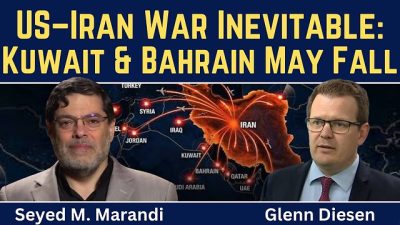
Seyed M. Marandi: US-Iran War Inevitable: Kuwait and Bahrain May Fall
or go to
Aletho News Archives – Video-Images
From the Archives
Oil and the Israel Lobby
Reknowned economist M. Shahid Alam offers this excellent critique of Noam Chomsky’s defective analysis of the relative influence of Oil versus the Israel lobby over US foreign policy: … continue
Blog Roll
 Aletho News
- ICC ignored ‘very well-documented’ NATO crimes – ex-Libyan minister
- SNSC secretary dismisses US response to Iran’s conditions as ‘inadequate’
- Sanaa says Taiz roads open, secure for residents, warns Saudi forces
- Iraqi resistance group urges Saudi leadership to admit defeat, lift Yemen siege
- Trump’s Retreat: How Al-Aqsa Flood Took Down the US Empire
- Israel’s Military Actions in Lebanon Grossly Violate International Law — Lavrov
- Seyed M. Marandi: US-Iran War Inevitable: Kuwait and Bahrain May Fall
- Leaders Condemn Ansarallah Attack on Saudi Arabia While Ignoring Illegal War Against Yemen
- Leaked: Britain’s Covert Iraqi Psyops Network
- Yemeni Armed Forces Warn Airlines Against Using Saudi Airports, Exempt Mecca and Medina
- If Americans Knew
- After Oct 7, IDF policy allowed civilian casualties for even the lowest-ranking targets
- Israel’s Destruction of Southern Lebanon Intensified After the Cease-Fire
- The Last-Minute Decision That Gave Israel Its Name
- The American Conservative: How Trump Made the World Go Nuclear
- Meet the US generals and admirals advancing Israeli policy
- Opinion: Why news organizations should boycott Israel
- The Israeli witch hunt of Sami Abu Shehadeh exposes the lie of the ‘Jewish and democratic’ state
- No state has a ‘right’ to exist – least of all Israel
- Testimonies about Gaza’s civilian death toll expose Israel’s atrocities – Daily Update
- How Israel Conquered the Latin American Right
- No Tricks Zone
- Germany’s Green Energy Debacle: High Energy Costs Force Kahla Porzellan to Close After 182 Years!
- New Study: 50 Years Of The Most Aggressive ‘Net Zero’ Policies Can Only Affect The Global Climate By 0.03°C
- US September “Heat” Was No Record…Many Records Set Decades Ago
- Latest European Green Energy Debacle; Portugal’s Largest Flagship Solar Park Insolvent!
- Green Energy Debacle: German Expert Professor Fritz Vahrenholt Warns Of Severe Economic And Social Consequences
- Two More Paleo Reconstructions Affirm Meters-Higher Sea Levels Across Ireland, Brazil 7000-6000 Years Ago
- New Study: Earth And Venus Surface Warmth Largely Explained By Convection And Lapse Rate, Not CO2 Or Radiation
- 2025 Nature Paper Claiming Worsening Global Drought Gets RETRACTED …Heavily Flawed
- New Study: ‘Global Drought Shows No Detectable Recent Acceleration Under Climate Warming’
- Economic Masterminds: German Socialists Suggest Taxing Productivity Gains Stemming From Using AI

