The War in Afghanistan is Killing More People Than Ever
By Edward Hunt | Lobe Log | June 20, 2018
Seventeen years into the war in Afghanistan, the longest war in U.S. history, violence has never been worse. In 2017, more than 20,000 Afghans died, a new record.
The dead include an estimated 10,000 Afghan security forces, 10,000 Taliban forces, and 3,438 civilians. Although there is no reliable data on Afghan casualties available to the public, reports published by the Costs of War Project at Brown University indicate that the annual death toll for the Afghan population has never been higher than it was in 2017.
For civilians, the last four years of the war have been the deadliest, with more than 3,400 civilians killed each year from 2014-2017, according to data from the United Nations and the Costs of War Project.
“We are concerned that we will see greater harm this year unless necessary steps are taken by all parties to prevent civilian casualties,” said Tadamichi Yamamoto, the UN Secretary General’s special representative for Afghanistan.
The record violence comes as the Trump administration has intensified the war against the Taliban. Although President Trump repeatedly indicated before he was president that he opposed the war and wanted to end it, he has instructed U.S. military forces to take more aggressive action.
“In Afghanistan, I’ve lifted restrictions and expanded authorities for commanders in the field,” Trump acknowledged last year. The new approach, according to Brigadier General Lance Bunch, means that “the gloves are off.” U.S. military forces are now looking for “any opportunity to target the enemies of Afghanistan wherever we find them in the theater.”
With the new authorities, the U.S.-led coalition has been waging a more aggressive war. In 2017, U.S. forces tripled the number of airstrikes against enemy forces. They also helped Afghan security forces intensify offensive operations against the Taliban.
“In the last year, we’ve seen offensive operations, kind of unprecedented over the last few years, by the Afghan security forces,” U.S. General John Nicholson, the commander of coalition forces in Afghanistan, has commented.
Administration officials acknowledge that they expected the Taliban to respond to the increase in military pressure with more violence. “And so we anticipated this,” Secretary of Defense James Mattis has said. In March, State Department official Alice Wells remarked that “it will not come as a surprise if we see more terrorist tactics addressed at urban audiences.”
The increase in violence has been devastating for the Afghan people. According to the UN Assistance Mission in Afghanistan, which tracks civilian casualties, more than 3,400 Afghan civilians have died and more than 6,800 Afghan civilians have been injured in each of the past four years of the war.
Afghan officials quietly acknowledge that about 10,000 Afghan security forces died last year, a significant increase from previous years. Fearing that the publication of the numbers could undermine morale and hinder ongoing recruitment efforts in Afghanistan, the U.S. military has begun censoring the records.
Although U.S. and Afghan officials estimate that about 10,000 Taliban forces were killed in 2017, Gen. Nicholson has said that “enemy casualty rates have been much higher.” Either way, last year’s combined death toll for Afghan combatants is about 20,000 people.
Despite the record death toll, the Trump administration remains committed to its strategy. “Progress and violence coexist in Afghanistan,” Secretary Mattis recently commented.
The U.S. military’s primary objective is to bring at least 80 percent of the Afghan population under the control of the Afghan government. According to a classified study, the Afghan government might prevail in the war if it achieves this goal. “The focus of our military operations is on increasing and expanding population control by the government of Afghanistan,” General Joseph Votel, the commander of U.S. Central Command, told Congress earlier this year.
The Trump administration’s approach is failing. Not only are record numbers of Afghans dying, but the Afghan government has been losing control of the population. In its latest report to Congress, the Special Inspector General for Afghanistan Reconstruction confirmed that the Afghan government’s control has dropped from 69 percent in August 2016 to 65 percent in January 2018.
Last year, the U.S. intelligence community largely predicted the failures. Director of National Intelligence Daniel Coats told the Senate Armed Services Committee that “the political and security situation in Afghanistan will almost certainly deteriorate through 2018 even with a modest increase in military assistance by the United States and its partners.”
Former Secretary of Defense Chuck Hagel has said that the war has reached a new low. “After 17 years in Afghanistan the situation is worse than it’s ever been,” Hagel commented earlier this year.
Perhaps the best hope for Afghanistan now lies with a growing Afghan peace movement, which has been calling for an immediate ceasefire and talks to end the war. Not only has it succeeded in getting Afghan President Ashraf Ghani to announce a temporary ceasefire, but the Taliban announced its own ceasefire, leading to a few days of peace and celebrations throughout the country.
“I think President Ghani is responding to and indeed reflecting the desire of a wide cross-section of Afghans… in desiring to see a reduction in violence and a way forward to an end to the conflict,” a senior State Department official said.
The Afghan government plans to maintain the ceasefire for the immediate future, despite the recent decision by Taliban officials to resume fighting.
Edward Hunt writes about war and empire. He has a PhD in American Studies from the College of William & Mary.
ISIL Blast Kills Dozens Celebrating Afghanistan Ceasefire
Al-Manar | June 17, 2018
The ISIL Takfiri group has claimed responsibility for a suicide bombing that killed at least 36 people and wounded 65 others in the eastern Afghan province of Nangarhar.
The group’s Amaq website said the attack on Saturday targeted “a gathering of Afghan forces” in Nangarhar, but gave no details.
According to Attaullah Khogyani, the provincial governor’s spokesman, the attack happened in Rodat district, some 25km from Jalalabad.
Civilians, security forces and Taliban members were among the casualties as people celebrated Eid Al-Fitr, marking the end of the Muslim holy month of Ramadan.
The attack came as Afghan President Ashraf Ghani announced the government’s extension of a ceasefire with the Taliban, without giving a timeframe.
In a televised address to the nation, Ghani called for the Taliban to also extend the truce, which is due to expire on Sunday after both sides agreed to halt hostilities for Eid.
Ghani also said that in the spirit of Eid and the ceasefire, the attorney general’s office had released 46 Taliban prisoners.
The Taliban had announced a ceasefire for the first three days of Eid, which started on Friday, promising not to attack Afghan security forces for the first time since the 2001 US invasion.
That came after Ghani said that security forces would temporarily cease operations against the Taliban for eight days, starting last Tuesday – though he warned that operations against other fighters, including ISIL group, would continue.
Governors in Helmand, Kandahar and Zabul said both sides had adhered to the ceasefire.
At least 10 dead as blast hits meeting of Taliban & Afghan forces during landmark ceasefire
RT | June 16, 2018
At least 10 people were killed as an explosion rocked a meeting of Taliban and Afghan security forces, which gathered during an unprecedented ceasefire for the Eid holiday, in the eastern province of Nangarhar, officials said.
Casualties include Taliban and civilians, Attaullah Khogyani, spokesman for the provincial governor of Nangarhar, said.
The timing of the bombing appears to be significant. On Saturday, Taliban members entered the Afghan capital, Kabul urging people to come forward and take selfies with them. The unusual move reportedly occurred elsewhere in the country, as photos and videos on social media showed Taliban fighters giving hugs to locals and Afghan forces across several provinces.
Afghan President Ashraf Ghani addressed the nation, saying the truce between the government and the Taliban will be extended.
The government freed at least 46 Taliban prisoners amid the ceasefire, the president’s office confirmed, as cited by Reuters. Ghani’s office urged the militant group to extend their ceasefire, saying that the government is waiting for their response.
Earlier in June, the Taliban made a surprising statement announcing the suspension of hostilities with the government forces for three days to mark the Muslim holiday of Eid. This is the first time that the Taliban has ever extended an offer of this kind to Kabul.
The ceasefire came two months after the group announced its annual spring offensive, as they vowed to target the “American invaders.” Heavy clashes repeatedly broke out across a number of Afghan provinces, with casualties inflicted among Afghan soldiers and police officers.
The militants attacked a number of cities across the country, seizing large quantities of weapons and equipment.
‘Civilians deaths increased due to rise in use of US assassination drones’
Press TV – June 9, 2018
Delegation of authority to field level military commanders to use “US assassination drones” has resulted in a surge in the number of innocent civilians being killed.
Media sources reported recently that US President Donald Trump has delegated to battlefield commanders the authority to order lethal drone strikes.
The authority to call for assassination drone strikes was limited to the White House or Washington security officials when Trump’s predecessors, namely, George Bush and Barack Obama were in office.
Trump’s decision to delegate the decision-making process to the military resulted in the number of drone strikes increasing, and in turn, the number of innocent civilians getting killed going up, according to Michael Burns, a political and military analyst in New York.
Burns made the remarks in an interview with Press TV on Friday while commenting on the US military’s illegal extrajudicial killings by using assassination drones in some Muslim states, and now planning to expand the practice to other regions across the globe.
“The reason it [the use of assassination drones] has increased so substantially is because more decision-making authority is being given to military commanders to use these systems.”
Burn says the increase in the use of drones aims to project US military power worldwide.
“The increase in the use of drones — which are officially known as ‘unmanned aerial systems’ to mask their vicious ability — to project power in other regions of the world has increased substantially under the Trump administration.”
The analyst also links the increase in the use of drone systems to other reasons including the cost-effectiveness of the weapon compared to other means available to the US government to project its military power across the globe.
Afghan Taliban announce three-day ceasefire for Eid holiday for 1st time
RT | June 9, 2018
Taliban militants in Afghanistan have announced they will suspend hostilities with the government forces for three days to mark the Muslim holiday of Eid. Foreign forces in Afghanistan are excluded from the truce, however.
The announcement comes after Afghan President Ashraf Ghani on Thursday declared his own unconditional, week-long ceasefire against the Taliban, but not against other militant groups. The armistice will coincide with Eid celebrations at the end of the fasting month of Ramadan, which comes next Thursday.
Ghani’s ceasefire comes after the recommendation from a group of Islamic clerics, and it will last until June 20. The Taliban have not specified when their ceasefire will begin or end, Reuters reports.
This is the first time that the Taliban have ever extended an offer of this kind to the Afghan government, while Ghani previously declared an unconditional truce in 2014.
The Taliban, an Islamic fundamentalist militant group, are estimated to control 30 to 50 percent of Afghan territory, and they have a presence in up to 70 percent. US-led foreign combat troops withdrew from the country in 2014, but foreign personnel still remain there in training and support capacities. Airstrikes by the US have been continuing, though, and have risen sharply under President Donald Trump, as did the civilian casualties they caused.
Afghan President Ghani has been pushing for peace with the Taliban. In April, he suggested that the group should run in parliamentary elections as a legitimate political party.
The Taliban previously disapproved of the idea of holding direct talks with the Afghan government, insisting on negotiating with the US first. In February, the Taliban published an open letter to the “American people” and “peace-loving congressmen,” urging US troops to withdraw and calling for negotiations with US officials. However, Washington believes the conflict should be settled through direct talks between the insurgents and Afghan officials.
It was reported in late May that the Taliban held secretive talks with Afghan officials to discuss the prospects of a ceasefire. The talks, according to the US commander in Afghanistan, General John Nicholson, featured international organizations and foreign representatives. The Taliban denied the reports, calling them “a false claim” by the US side.
Drones, Murder and the Universal Declaration of Human Rights at 70: the Cases of Reyaad Khan and Abdul Raqib Amin
By T.J. Coles | CounterPunch | May 30, 2018
The Universal Declaration of Human Rights (UDHR) is 70 this year. But you wouldn’t know it from the impact it’s had on human lives. For example, Donald Trump has sharply increased drone attacks, especially in Yemen and Somalia, with virtual silence from Western media. Article 11 of the UDHR states: “(1) Everyone charged with a penal offence has the right to be presumed innocent until proved guilty according to law in a public trial at which he has had all the guarantees necessary for his defence.”
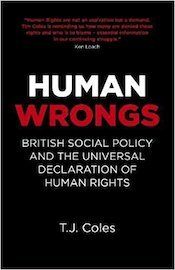 As I document in my new book Human Wrongs (Iff Books), the alleged terror suspects blown apart by drone operators are not even charged let alone given the chance to plead their innocence in a national or international court: and that’s quite apart from the women, children and babies (“collateral damage”) that happen to be nearby when the Hellfire missiles are launched.
In Britain, the age-old common law, presumption of innocence, faced a slight setback in the so-called “war on terror.” Since US drone operators murdered Afghan civilians in the first-ever lethal drone strike in 2002 (followed by Yemenis in the same year), the US has murdered about 2,500 people with drones alone. Providing targeting information and communications links, the UK plays a significant role, all in violation of the principles of the UDHR.
The UN Special Rapporteur on Extrajudicial Execution, Philip Alston, writes: “A State killing is legal only if it is required to protect life (making lethal force proportionate) and there is no other means, such as capture or nonlethal incapacitation, of preventing that threat to life (making lethal force necessary).” So, a person in Afghanistan, for example, cannot be lawfully slain by a British drone operator on the pretence that the person is about to pose an imminent threat to the UK, unless for instance the person is about to give an order over the phone let’s say to, for instance, a terror cell in Briton, instructing it to detonate a bomb. Needless to say, this is a ludicrous scenario in the real-world.
Murdering Its Own
The British state murdering “its own people” is nothing new. In the 1970s, the Ministry of Defence waged a dirty war in Northern Ireland. Units from the Military Reaction Force (MRF) murdered Protestants and Catholics as a part of strategy of tension. Northern Irish persons murdered and/or shot by MRF operatives include:Patrick McVeigh (shot in the back), John and Gerry Conway (travelling to a fruit stall), Aiden McAloon and Eugene Devlin (travelling in a taxi), Joe Smith, Hugh Kenny, Patrick Murray and Tommy Shaw (drive-by shootings) and Daniel Rooney and Brendan Brennan (walking on a road).
The British government does in fact possess the proverbial license to kill. It is a “license” granted to itself and one not grounded in international law. Targeted killings (murder) hitherto depended on the authorization of the Secretary of State. The Intelligence Services Act 1994, Section 7(1), frees intelligence operatives from liability in acts of killing abroad, “if the act is one which is authorised to be done by virtue of an authorisation given by the Secretary of State.”
In the case of Reyaad Khan and Abdul Raqib Amin, the killings were not carried out by MI6 (which is covered by the Intelligence Services Act 1994), but by the Royal Air Force. In 2015, the government started murdering Britons allegedly suspected of involvement in terrorism, making no attempt to apprehend them and put them on trial, as international law requires.
In August 2015, Reyaad Khan and Abdul Raqib Amin, were travelling in a vehicle in Raqqa, Syria. RAF drone operators ended their lives. Then-PM David Cameron told Parliament that Khan was the target (murdered) and Amin was killed alongside him (manslaughter). A third unidentified, alleged Islamic State fighter was killed with them, though the third person was not “identified as a UK national.” By implication, the third person’s life is not important, hence no details emerged.
Cameron claimed the killings were “an act of self-defence,” because Khan was: “involved in actively recruiting ISIL sympathisers and seeking to orchestrate specific and barbaric attacks against the west, including directing a number of planned terrorist attacks right here in Britain, such as plots to attack high profile public commemorations.”
But Cameron also revealed that Khan was not a threat to the UK: “there was nothing to suggest that Reyaad Khan would ever leave Syria.” If Cameron is to be believed, Khan was issuing instructions to terror cells in the UK. But if this is the case, it therefore becomes a matter for the British police.
Changing Stories
The pretext for the murder was later changed by the UK’s Permanent Representative to the UN, Matthew Rycroft, who wrote that the killings were somehow justified in the “collective self-defence” of Iraq, where Britain is supposedly helping the government to defeat ISIS. The trouble is that Khan was not in Iraq when he was killed. Inverting international legal norms, Secretary of State for Defence, Michael Fallon, “who authorised the lethal drone strike” (Press and Journal ), appealed to Article 51 of the UN Charter, the right of collective and/or individual self-defence. Attorney General Jeremy Wright’s advice has not been published, indicating that the killings are violations of domestic and international law.
It later transpired that the RAF is working its way through a “kill list” of alleged British terror suspects fighting with ISIS in Iraq and Syria. Both jets and drones are used; the latter are controlled by operators in RAF Waddington, Lincolnshire. “When we know where they are we kill them,” said a Ministry of Defence spokesperson. The “kill list” revelations prompted Lord Macdonald, former Director of Public Prosecutions, to co-sign a letter to PM May, calling for the release of the government’s Intelligence and Security Committee report into the murder of Reyaad Khan and names of other targeted suspects.
Lucy Powell MP and Kirsten Oswald MP, both co-chairs of the informal All-Party Parliamentary Group, called for a debate on Britain’s use of targeted murder. Defence Secretary Fallon who authorized the murder of Khan claimed that by February 2017, 85 Britons had been killed in Syria, but it wasn’t clear if this meant as part of the RAF’s kill list.
T. J. Coles is a postdoctoral researcher at Plymouth University’s Cognition Institute and the author of several books, including Fire and Fury (Clairview Books ) and Human Wrongs (Iff Books ).
Illegal foreign presence in Syria serves to revive terrorism front: Iranian official
Press TV – April 25, 2018
Iran’s top security official says the illegitimate military presence of certain countries in Syria is meant to put the Takfiri terrorists, who have suffered defeat in the region, back on their feet.
Secretary of Iran’s Supreme National Security Council Ali Shamkhani made the remarks on Tuesday during a meeting with his Russian counterpart, Nikolay Patrushev, in Sochi, where he is to attend a security conference of senior officials from more than 100 countries.
“Through their illegitimate military presence in Syria, some countries have only further complicated the circumstances on the ground there, and are practically taking steps towards the reinforcement of the defeated front of Takfiri terrorism,” he said.
The two officials discussed a wide range of issues, including bilateral anti-terror cooperation, insecurity in Afghanistan, and the threat facing the region from the relocation of terrorists to the Central Asian country following their defeat in Syria and Iraq.
Shamkhani also spoke in condemnation of an April 9 Israeli strike against the T-4 airbase in central Syria, which killed more than a dozen people, including seven Iranian military advisors.
He said the attack on the people, who are in Syria for anti-terrorism military advisory assistance at the request of the legal government, “exposed the identity of the real supporters of terrorists.”
The official also condemned a recent coordinated attack by the US, the UK, and France against Syria, saying the strikes showed the West is seeking out excuses to damage the standing mechanisms for finding a political solution to the crisis in the Arab country.
The Russian official, for his part, said the conference in Sochi is meant to explore ways to replace militarism and violence with dialog and understanding.
Some countries, he added, resent successful Iran-Russia cooperation, and have launched “full-scale and suspicious” efforts at hurting their ties.
Patrushev said the US is continuously trying to deliver economic and political blows to Iran and Russia to restrict their joint efforts to restore stability to the region, adding, however, that Washington will fail to achieve its goal.
Iran and Russia have been both assisting Syria in its counter-terrorism offensive and mediating, together with Turkey, a diplomatic process to help restore calm to the Arab country.
On the contrary, the United States and its allies have been launching attacks on Syria since 2014, claiming they seek to root out Daesh without getting the Syrian government’s approval or a UN mandate.
The US and its allies have defied the Damascus government’s call to leave Syrian soil despite the collapse of the Takfiri terror group late last year.
In recent months, Russia has on various occasions reported that the US military is allowing Daesh members to leave its former strongholds in the Middle East to Afghanistan, where the terrorists have carried out bloody acts of violence.
Iran has also censured the US for supporting Daesh, with Leader of the Islamic Revolution Ayatollah Seyyed Ali Khamenei saying in January that Washington has been transferring Daesh to Afghanistan to rationalize its military presence in the region.
Russia backs Iran deal
Elsewhere in his remarks, the Russian official condemned Washington for failing to stay committed to its obligations under the 2015 nuclear deal.
The Russian Federation decisively backs the preservation and implementation of the deal and believes that Iran should be able to enjoy the benefits of the accord, officially called the Joint Comprehensive Plan of Action (JCPOA).
War Deaths, and Taxes
By John Laforge | CounterPunch | April 6, 2018
Are the federal taxes coming out of your wages and due this week killing you? Sadly what’s rhetorical for US tax payers is gravely literal for people of eight countries currently on the shooting end of the US budget.
This year at least 47% of federal income taxes goes to the military (27%, or $857 billion, for today’s bombings and occupations, weapons, procurement, personnel, retiree pay & healthcare, Energy Dept. nuclear weapons, Homeland Security, etc.); and 20%, or $644 billion, for past military bills (veterans’ benefits — $197 billion; and 80% of the interest on the national debt — $447 billion).
A ceasefire, drawdown and retreat from the country’s unwinnable wars would reduce this tax burden, and didn’t the president promise to end the foreign “nation-building” that’s breaking the bank? Of course, that was a Trump promise, so:
Seven US airmen were killed on March 15 when a US Pave Hawk helicopter crashed in western Iraq, with 5,200 soldiers and as many contract mercenaries fighting there.
When VP Mike Pence visited Afghanistan last December he said with perfect meaninglessness: “we are here to see this through.” About 11,000 US soldiers are currently seeing it, and the Pentagon will be sending thousands more this spring. US bombing runs have almost tripled since the Obama/Trump handover, and Pence claimed “we’ve put the Taliban on the defensive” — but during Pentagon chief Jim Mattis’s visit the Taliban shot dozens of rockets at the Kabul airport where the general’s plane was parked.
The 16-year-old war in Afghanistan is now broadly understood to be militarily unwinnable, so a ceasefire and withdrawal would be a quick way to save billions of tax dollars. But US B-52s bombers flying from Minot Air Base in North Dakota are still creating new terrorists every day; the 3,900 US bombs and missiles exploded on the country in 2017 caused countless of civilian casualties.
In Syria, dozens of Russian soldiers were killed Feb. 7 and 8 by US-led forces fighting near Al Tabiyeh. Master Sgt. Jonathan J. Dunbar was killed by an IED blast March 29 in Manbij. The US now has about 2,000 soldiers at war in Syria, and in January then Sec. of State Rex Tillerson promised they will be there long after the war with the Islamic State is over. Although Trump said March 29, “we’ll be coming out of Syria, like, very soon,” Pentagon officials leaked news April 2 that dozens of additional troops will be sent in the coming weeks, CNN reported. The United States’ World War could hardly be more confounding or self-defeating as US ally Turkey has begun bombing US-supported Kurdish fighters inside Syria.
In Pakistan January 25, the Ministry of Foreign Affairs charged that remote-controlled US bombing had targeted an Afghan refugee camp, worsening relations with that government even beyond Trump’s cutoff of “security aid.”
Saudi Arabian aircraft, refueled en route by US tanker aircraft, have killed 4,000 civilians in Yemen, according to UN estimates. Suspending arms sales to the Saudis would end its war and begin to alleviate the Saudi-made humanitarian disaster in Yemen, and a cease-fire and stand-down would allow for the urgent relief required to prevent famine.
An end to today’s US bombing and/or military occupation of eight countries — Syria, Pakistan, Afghanistan, Iraq (all ongoing), Somalia (bombed Apr. 1), Libya (8 airstrikes since Jan. 2017), Niger (Oct. 4 battle, four dead; 500 US soldiers in country, now with armed drones), and Yemen (127 bomber & drone strikes in 2017) — would save billions, save lives, slow the wartime creation of terrorists, and reduce anti-US sentiment everywhere. In January, an extensive Gallop survey found 70% of the people interviewed in 134 countries disapprove of US foreign policy — 80% in Canada, 82% in Mexico.
To paraphrase Dr. King, who was assassinated by the FBI 50 years ago this month (“Orders to Kill: The Truth Behind the Murder of Martin Luther King,” by William F. Pepper), “The great initiative in these wars is ours. The initiative to stop them must be ours.”
John LaForge is a Co-director of Nukewatch, a peace and environmental justice group in Wisconsin, and edits its newsletter.
US expects India to engage Pakistan in Kashmir talks
By M K Bhadrakumar | Indian Punchline | April 4, 2018
The Principal Deputy Assistant Secretary for South and Central Asian Affairs in the US State Department Alice Wells is visiting India on April 3-6. This is strictly not a ‘bilateral event’, but Ambassador Wells’ discussions with senior Indian government officials are expected to cover “regional and global issues”, according to the US state department announcement. Presumably, Afghanistan will be on top of the agenda of discussion.
Ambassador Wells has emerged as the Trump administration’s key interlocutor on the Afghan problem. A career diplomat, low-key but very effective in the absence of turf rivalries, she is able to galvanize the search for a political process in Afghanistan in such a short period of time. Ambassador Wells has succeeded in building up a good rapport with the Pakistani officials who are in a position to make or mar her project. During her extraordinarily open-ended visit (for “several days”) to Pakistan last week, Ambassador Wells was received by army chief General Qamar Javed Bajwa.
Ambassador Wells’ consultations in Delhi come at a sensitive juncture. For, no matter what the Pentagon commanders might like, President Donald Trump wants the war to end before his campaign for a second term begins and Ambassador Wells’ task is cut out for her. Delhi must understand that this is not a routine visit she is undertaking for an exchange of views with think-tankers and officials on the sidelines of the US-India-Japan trilateral taking place today. In fact, the trilateral is the sideshow.
The Taliban is tiptoeing toward the negotiating table and Ambassador Wells’ persuasiveness and diplomatic skill has made all the difference. (For the uninitiated, let me introduce to them her masterly briefing on March 9 at the US Institute of Peace in Washington – Signs of Hope for Afghan Peace Talks.)
The traffic on the diplomatic track has become dense lately since the meeting in the White House in Washington between Pakistan Prime Minister Shahid Khaqan Abbasi and the US Vice-President Mike Pence on March 17. The international conference in Tashkent on March 26-27 has served the purpose of generating a modicum of regional consensus. The Russian daily Kommersant reported quoting “sources” that although no formal invitation was extended to the Taliban to participate in the conference, “at the last minute, they expressed a desire to come to Tashkent.”
Be that as it may, Taliban was surely eavesdropping outside the conference hall and would have noticed from the Tashkent Declaration that there is not a single voice in the international community that disapproves of the Afghan government’s unconditional offer of peace talks. Ambassador Wells proceeded to Kabul after the Tashkent conference and then moved on to Islamabad last Thursday.
Interestingly, Pakistan handed over a “terror dossier” to Kabul last Thursday containing evidence of terrorist sanctuaries on Afghan soil. It is a veritable action plan for the Afghan side and their American mentors as to what Pakistan expected them to do by curbing the terrorist activities from bases within Afghanistan. And, four days later, The Pakistani Foreign Secretary Janjua, accompanied by the Director General Military Operations Maj Gen Shamshad Mirza and other senior officials travelled to Kabul for downstream talks. These talks are expected to prepare the ground for the visit by Prime Minister Abbasi’s visit to the Afghan capital on April 6. (Abbasi is proceeding from Kabul to China on a 3-day visit.)
We may expect Abbasi’s visit to Kabul on Friday to be a watershed event. It is entirely conceivable that in a not-too-distant future the Taliban may announce its formal response to the Afghan government offer for peace talks. The coming days and weeks, therefore, are of critical interest.
Meanwhile, the Afghan government announced on Sunday the dates for the long-delayed parliamentary elections and the first-ever local council elections – October 20. Of course, there is a big question mark about the feasibility of holding elections in Afghanistan in the prevailing circumstances with roughly half the country contested by insurgents.
On the other hand, it is the Taliban’s participation in these elections that can make a world of difference, giving them the legitimacy they badly need and providing the country’s democratic process the traction that it never could really acquire in the past decade or more. The US’ allies are extremely keen that the political legitimacy of the Afghan political system is enhanced. The speech made by the European Union foreign and security policy chief Federica Mogherini at the Tashkent conference was particularly notable for being a stirring call to the Taliban to rise to the momentous occasion in their country’s history.
Suffice to say, any Pakistani-Afghan consensus to put a moratorium on cross-border terrorism will be a major development. The US is actively promoting it. So is China. Pakistan can be expected to reciprocate. But we aren’t quite there, yet.
The Pakistani Foreign Ministry spokesman Mohammad Faisal told Radio Free Europe / Radio Liberty, the US government-funded media organ, that Islamabad and Washington are yet to find “common ground” on a range of issues. Faisal didn’t specify the problem areas, but it stands to reason that a principal one will be Pakistan’s tense relations with India.
Quite obviously, we should anticipate that the Trump administration hopes to bring India on board. Put differently, the Trump administration’s “regional approach” for Afghanistan demands that India-Pakistan tensions do not complicate the path of peace and reconciliation in Afghanistan.
Ambassador Wells is likely to meet with the Foreign Secretary and NSA Ajit Doval while in Delhi. Significantly, on the eve of Ambassador Wells’ departure for India on Monday, the US state department amended its designation of Lashkar-e-Taiba, identifying Milli Muslim League and Tehreek-e-Azadi-e-Kashmir as LeT affiliates, making it impossible for them to register as political parties in Pakistan.
Clearly, the Trump administration hopes that Delhi will appreciate this as friendly gesture, underscoring that Washington is receptive towards India’s genuine concerns in regional security. It doesn’t need much ingenuity to figure out that Ambassador Wells would also have taken Pakistani officials into confidence that capping the political ambitions of Hafeez Saeed can be an important confidence-building measure at this point.
Now comes the big question: How does India respond to the totality of the emergent situation surrounding Afghanistan? Sadly, the explosive violence in Jammu & Kashmir just at this juncture will make things very difficult for Delhi to rise to the occasion and optimally align the Indian foreign policies with the broader trends leading toward peace and reconciliation in Afghanistan.
On the other hand, the bottom line is that India is a stakeholder. Clearly, a leap of faith is needed. The Modi government would chaff at the very idea of holding talks with Pakistan, facilitated by Washington and under close US monitoring, when the 2019 poll is sailing into view.
But in politics and diplomacy, there may be moments when drinking from the chalice of poison is necessary – to borrow the memorable words of Iran’s Spiritual Leader Ayatollah Ruhollah Khomeini in an analogous situation in his country’s contemporary history when he allowed himself to be persuaded to agree to a ceasefire against the Iraqi aggressor who had bled his country white in the 8-year war (1980-1988.)
Given the complete policy breakdown in Jammu & Kashmir, what is the alternative? And, the crisis in J&K is only deepening; the wounds are threatening to turn gangrene.
Afghanistan admits civilians killed in Kunduz airstrike
Press TV – April 4, 2018
Afghan officials have admitted that an earlier airstrike on a gathering of Taliban militants in the northern province of Kunduz has also killed civilians, including children.
The Afghan military launched the airstrike against a Taliban religious school (madrasa) in Dasht-i Archi district outside Kunduz City on Monday while top Taliban commanders were gathered inside to plan “bloodshed and atrocities,” according to the Defense Ministry spokesman Mohammad Radmanish.
Security forces said the attack killed a total of 57 to 70 people, but local officials believe the number to be higher.
For much of Monday, the Afghan government asserted that the bombing had killed only Taliban leaders and had caused no civilian fatalities.
However, the office of President Ashraf Ghani acknowledged late Tuesday that civilians had been among the dead, too, and that the bombing would be investigated.
Abdul Matin Atefi, the provincial health director of Kunduz, said 26 bodies had arrived in hospitals and clinics, adding that officials “don’t know how many of those are civilians or Taliban, but the Taliban usually do not allow their dead or wounded to be registered in clinics.”
Naeem Mangal, the director of the regional hospital in Kunduz also said they “have received 57 wounded so far, their ages ranging from 7 to 60.” He explained that the wounds were “mostly from explosives or bombs.”
Radmanish, the Defense Ministry spokesman, meanwhile, claimed that “the wounded brought to the hospitals were hit by bullets and small-arms fire,” suggesting that the Taliban had opened fire on civilians. He said the previous day that no civilians had been in the area of the attack.
According to the United Nations figures released earlier this year, more than 10,000 Afghan civilians were killed or wounded in the Afghan conflict last year. While the main cause of civilian deaths was said to be militant bombings, the report said US airstrikes as well as government forces inflicted a rising toll.
Pentagon Accuses Iran of Meddling in Iraqi Election
Sputnik – 16.03.2018
US Defense Secretary James Mattis accused Iran on Thursday of destabilizing Afghanistan and “mucking around in Iraq’s elections” by using money to sway the vote.
“We have worrisome evidence that Iran is trying to influence, using money, the Iraqi elections. That money is being used to sway candidates, to sway votes,” he told reporters.
The Pentagon chief, who was speaking after an unannounced trip to Afghanistan, said the US military believed the amount of money funneled by Iran to Iraq ahead of the May parliamentary polls was not “insignificant.”
He also suggested that the Iranian government was “doing things” in Afghanistan that were not helpful to US attempts to end the war there, although he did not give any details.
Iraq holds parliamentary election on May 12, with Haider al-Abadi seeking another term as prime minister.
Featured Video

American Aerial Massacres in Germany
or go to
Aletho News Archives – Video-Images
From the Archives
“Democratic Institutions?” – 10 Lessons from history that will destroy your trust in the CIA
By Kit | OffGuardian | July 20, 2018
… At every corner, we are urged to simply believe what we are told. Whether it is about believing Porton Down and MI6 about “novichok”, or believing the White Helmets about Sarin, or believing the FBI about “collusion”, we are presented with no facts, just assertions from authority. Those who question those assertions are deemed “bots” at best or “traitors” at worst.
Well here, fellow traitors, are the Top Ten reasons to question anything and everything the CIA – or any intelligence agency – has ever told you. … Read full article
Blog Roll
 Aletho News
- Israel’s censor silenced 5,700 reports in 2025
- After US-Iran deal, Israeli minister threatens war on Syria ‘sooner or later’
- When the Iran War is over: Why the West Bank may be Netanyahu’s next front
- Israeli forces launch fresh ground incursions into Syria’s Quneitra, interrogate locals
- Syria ‘unwilling, unprepared’ to attack Lebanon despite US pressure: Report
- Hezbollah thwarts Israeli advances into Kfar Tebnit-Ali al-Taher
- The final war or final deal: Why the MoU?
- Iran declares victory over US
- Iran reveals full text of war-ending MoU signed with US
- Belarusian children wounded in deadly Ukrainian drone strike
- If Americans Knew
- Netanyahu’s Mouthpieces Turn on Trump, Revealing a Deeper Israeli Ingratitude
- Senate wants to force US to share sensitive intel with Israel
- Trump ended his idiotic Iran war. Good.
- Khanna Becomes First in Congress to Sign ‘Peace Pledge’ Promising to Reject AIPAC Funds
- Look who’s losing it over Trump’s Iran deal
- Israel has killed over 1,000 Gazans during 8-month “ceasefire” – Daily Update
- REVEALED: Former Top DEA Official Says Israel Spies on US Law Enforcement
- What would happen if US actually cut off military aid to Israel?
- Western Media Normalize Ethnic Cleansing of Lebanon by Viewing It Through Israel’s Eyes
- Behind the Screen, Netanyahu Is Annexing Gaza ‘Step-by-Step’
- No Tricks Zone
- New Study: Chile’s Relative Sea Level Was 3.2 Meters Higher Than Today During The Mid-Holocene
- Beyond The Pitch: Why FIFA’s World Cup Is One Of Humanity’s Best Investments
- Climate Alarmists Now Using Natural Phenomena To Support Their Claims
- New Study: Significant CO2 Fluxes From Non-Volcanic Sources Are Largely Neglected In Carbon Budgets
- Women Climate Scientists Being Harassed, Insulted By Skeptics, Claims Berkeley Earth Researcher
- Germany’s Longterm Spring Climate Data Show “No Climate Trend”
- New Study: Solar Photovoltaic, Wind Power Fail To Meet Annual Energy Demands 62% Of The Time
- Germany’s Die Welt: “Too Much Is Too Much” … Green Energies Are Cannabalizing Each Other!
- Germany’s Ecological Holocaust… Once Fairy Tale Forests Getting Cleared For Wind Turbines
- A Grand Solar Minimum Has Arrived…Global Cooling Of At Least 1°C Is Expected By The 2030s, 2040s
 Aletho News