Afghan Taliban announce three-day ceasefire for Eid holiday for 1st time
RT | June 9, 2018
Taliban militants in Afghanistan have announced they will suspend hostilities with the government forces for three days to mark the Muslim holiday of Eid. Foreign forces in Afghanistan are excluded from the truce, however.
The announcement comes after Afghan President Ashraf Ghani on Thursday declared his own unconditional, week-long ceasefire against the Taliban, but not against other militant groups. The armistice will coincide with Eid celebrations at the end of the fasting month of Ramadan, which comes next Thursday.
Ghani’s ceasefire comes after the recommendation from a group of Islamic clerics, and it will last until June 20. The Taliban have not specified when their ceasefire will begin or end, Reuters reports.
This is the first time that the Taliban have ever extended an offer of this kind to the Afghan government, while Ghani previously declared an unconditional truce in 2014.
The Taliban, an Islamic fundamentalist militant group, are estimated to control 30 to 50 percent of Afghan territory, and they have a presence in up to 70 percent. US-led foreign combat troops withdrew from the country in 2014, but foreign personnel still remain there in training and support capacities. Airstrikes by the US have been continuing, though, and have risen sharply under President Donald Trump, as did the civilian casualties they caused.
Afghan President Ghani has been pushing for peace with the Taliban. In April, he suggested that the group should run in parliamentary elections as a legitimate political party.
The Taliban previously disapproved of the idea of holding direct talks with the Afghan government, insisting on negotiating with the US first. In February, the Taliban published an open letter to the “American people” and “peace-loving congressmen,” urging US troops to withdraw and calling for negotiations with US officials. However, Washington believes the conflict should be settled through direct talks between the insurgents and Afghan officials.
It was reported in late May that the Taliban held secretive talks with Afghan officials to discuss the prospects of a ceasefire. The talks, according to the US commander in Afghanistan, General John Nicholson, featured international organizations and foreign representatives. The Taliban denied the reports, calling them “a false claim” by the US side.
Drones, Murder and the Universal Declaration of Human Rights at 70: the Cases of Reyaad Khan and Abdul Raqib Amin
By T.J. Coles | CounterPunch | May 30, 2018
The Universal Declaration of Human Rights (UDHR) is 70 this year. But you wouldn’t know it from the impact it’s had on human lives. For example, Donald Trump has sharply increased drone attacks, especially in Yemen and Somalia, with virtual silence from Western media. Article 11 of the UDHR states: “(1) Everyone charged with a penal offence has the right to be presumed innocent until proved guilty according to law in a public trial at which he has had all the guarantees necessary for his defence.”
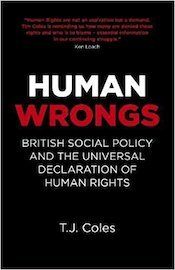 As I document in my new book Human Wrongs (Iff Books), the alleged terror suspects blown apart by drone operators are not even charged let alone given the chance to plead their innocence in a national or international court: and that’s quite apart from the women, children and babies (“collateral damage”) that happen to be nearby when the Hellfire missiles are launched.
In Britain, the age-old common law, presumption of innocence, faced a slight setback in the so-called “war on terror.” Since US drone operators murdered Afghan civilians in the first-ever lethal drone strike in 2002 (followed by Yemenis in the same year), the US has murdered about 2,500 people with drones alone. Providing targeting information and communications links, the UK plays a significant role, all in violation of the principles of the UDHR.
The UN Special Rapporteur on Extrajudicial Execution, Philip Alston, writes: “A State killing is legal only if it is required to protect life (making lethal force proportionate) and there is no other means, such as capture or nonlethal incapacitation, of preventing that threat to life (making lethal force necessary).” So, a person in Afghanistan, for example, cannot be lawfully slain by a British drone operator on the pretence that the person is about to pose an imminent threat to the UK, unless for instance the person is about to give an order over the phone let’s say to, for instance, a terror cell in Briton, instructing it to detonate a bomb. Needless to say, this is a ludicrous scenario in the real-world.
Murdering Its Own
The British state murdering “its own people” is nothing new. In the 1970s, the Ministry of Defence waged a dirty war in Northern Ireland. Units from the Military Reaction Force (MRF) murdered Protestants and Catholics as a part of strategy of tension. Northern Irish persons murdered and/or shot by MRF operatives include:Patrick McVeigh (shot in the back), John and Gerry Conway (travelling to a fruit stall), Aiden McAloon and Eugene Devlin (travelling in a taxi), Joe Smith, Hugh Kenny, Patrick Murray and Tommy Shaw (drive-by shootings) and Daniel Rooney and Brendan Brennan (walking on a road).
The British government does in fact possess the proverbial license to kill. It is a “license” granted to itself and one not grounded in international law. Targeted killings (murder) hitherto depended on the authorization of the Secretary of State. The Intelligence Services Act 1994, Section 7(1), frees intelligence operatives from liability in acts of killing abroad, “if the act is one which is authorised to be done by virtue of an authorisation given by the Secretary of State.”
In the case of Reyaad Khan and Abdul Raqib Amin, the killings were not carried out by MI6 (which is covered by the Intelligence Services Act 1994), but by the Royal Air Force. In 2015, the government started murdering Britons allegedly suspected of involvement in terrorism, making no attempt to apprehend them and put them on trial, as international law requires.
In August 2015, Reyaad Khan and Abdul Raqib Amin, were travelling in a vehicle in Raqqa, Syria. RAF drone operators ended their lives. Then-PM David Cameron told Parliament that Khan was the target (murdered) and Amin was killed alongside him (manslaughter). A third unidentified, alleged Islamic State fighter was killed with them, though the third person was not “identified as a UK national.” By implication, the third person’s life is not important, hence no details emerged.
Cameron claimed the killings were “an act of self-defence,” because Khan was: “involved in actively recruiting ISIL sympathisers and seeking to orchestrate specific and barbaric attacks against the west, including directing a number of planned terrorist attacks right here in Britain, such as plots to attack high profile public commemorations.”
But Cameron also revealed that Khan was not a threat to the UK: “there was nothing to suggest that Reyaad Khan would ever leave Syria.” If Cameron is to be believed, Khan was issuing instructions to terror cells in the UK. But if this is the case, it therefore becomes a matter for the British police.
Changing Stories
The pretext for the murder was later changed by the UK’s Permanent Representative to the UN, Matthew Rycroft, who wrote that the killings were somehow justified in the “collective self-defence” of Iraq, where Britain is supposedly helping the government to defeat ISIS. The trouble is that Khan was not in Iraq when he was killed. Inverting international legal norms, Secretary of State for Defence, Michael Fallon, “who authorised the lethal drone strike” (Press and Journal ), appealed to Article 51 of the UN Charter, the right of collective and/or individual self-defence. Attorney General Jeremy Wright’s advice has not been published, indicating that the killings are violations of domestic and international law.
It later transpired that the RAF is working its way through a “kill list” of alleged British terror suspects fighting with ISIS in Iraq and Syria. Both jets and drones are used; the latter are controlled by operators in RAF Waddington, Lincolnshire. “When we know where they are we kill them,” said a Ministry of Defence spokesperson. The “kill list” revelations prompted Lord Macdonald, former Director of Public Prosecutions, to co-sign a letter to PM May, calling for the release of the government’s Intelligence and Security Committee report into the murder of Reyaad Khan and names of other targeted suspects.
Lucy Powell MP and Kirsten Oswald MP, both co-chairs of the informal All-Party Parliamentary Group, called for a debate on Britain’s use of targeted murder. Defence Secretary Fallon who authorized the murder of Khan claimed that by February 2017, 85 Britons had been killed in Syria, but it wasn’t clear if this meant as part of the RAF’s kill list.
T. J. Coles is a postdoctoral researcher at Plymouth University’s Cognition Institute and the author of several books, including Fire and Fury (Clairview Books ) and Human Wrongs (Iff Books ).
Illegal foreign presence in Syria serves to revive terrorism front: Iranian official
Press TV – April 25, 2018
Iran’s top security official says the illegitimate military presence of certain countries in Syria is meant to put the Takfiri terrorists, who have suffered defeat in the region, back on their feet.
Secretary of Iran’s Supreme National Security Council Ali Shamkhani made the remarks on Tuesday during a meeting with his Russian counterpart, Nikolay Patrushev, in Sochi, where he is to attend a security conference of senior officials from more than 100 countries.
“Through their illegitimate military presence in Syria, some countries have only further complicated the circumstances on the ground there, and are practically taking steps towards the reinforcement of the defeated front of Takfiri terrorism,” he said.
The two officials discussed a wide range of issues, including bilateral anti-terror cooperation, insecurity in Afghanistan, and the threat facing the region from the relocation of terrorists to the Central Asian country following their defeat in Syria and Iraq.
Shamkhani also spoke in condemnation of an April 9 Israeli strike against the T-4 airbase in central Syria, which killed more than a dozen people, including seven Iranian military advisors.
He said the attack on the people, who are in Syria for anti-terrorism military advisory assistance at the request of the legal government, “exposed the identity of the real supporters of terrorists.”
The official also condemned a recent coordinated attack by the US, the UK, and France against Syria, saying the strikes showed the West is seeking out excuses to damage the standing mechanisms for finding a political solution to the crisis in the Arab country.
The Russian official, for his part, said the conference in Sochi is meant to explore ways to replace militarism and violence with dialog and understanding.
Some countries, he added, resent successful Iran-Russia cooperation, and have launched “full-scale and suspicious” efforts at hurting their ties.
Patrushev said the US is continuously trying to deliver economic and political blows to Iran and Russia to restrict their joint efforts to restore stability to the region, adding, however, that Washington will fail to achieve its goal.
Iran and Russia have been both assisting Syria in its counter-terrorism offensive and mediating, together with Turkey, a diplomatic process to help restore calm to the Arab country.
On the contrary, the United States and its allies have been launching attacks on Syria since 2014, claiming they seek to root out Daesh without getting the Syrian government’s approval or a UN mandate.
The US and its allies have defied the Damascus government’s call to leave Syrian soil despite the collapse of the Takfiri terror group late last year.
In recent months, Russia has on various occasions reported that the US military is allowing Daesh members to leave its former strongholds in the Middle East to Afghanistan, where the terrorists have carried out bloody acts of violence.
Iran has also censured the US for supporting Daesh, with Leader of the Islamic Revolution Ayatollah Seyyed Ali Khamenei saying in January that Washington has been transferring Daesh to Afghanistan to rationalize its military presence in the region.
Russia backs Iran deal
Elsewhere in his remarks, the Russian official condemned Washington for failing to stay committed to its obligations under the 2015 nuclear deal.
The Russian Federation decisively backs the preservation and implementation of the deal and believes that Iran should be able to enjoy the benefits of the accord, officially called the Joint Comprehensive Plan of Action (JCPOA).
War Deaths, and Taxes
By John Laforge | CounterPunch | April 6, 2018
Are the federal taxes coming out of your wages and due this week killing you? Sadly what’s rhetorical for US tax payers is gravely literal for people of eight countries currently on the shooting end of the US budget.
This year at least 47% of federal income taxes goes to the military (27%, or $857 billion, for today’s bombings and occupations, weapons, procurement, personnel, retiree pay & healthcare, Energy Dept. nuclear weapons, Homeland Security, etc.); and 20%, or $644 billion, for past military bills (veterans’ benefits — $197 billion; and 80% of the interest on the national debt — $447 billion).
A ceasefire, drawdown and retreat from the country’s unwinnable wars would reduce this tax burden, and didn’t the president promise to end the foreign “nation-building” that’s breaking the bank? Of course, that was a Trump promise, so:
Seven US airmen were killed on March 15 when a US Pave Hawk helicopter crashed in western Iraq, with 5,200 soldiers and as many contract mercenaries fighting there.
When VP Mike Pence visited Afghanistan last December he said with perfect meaninglessness: “we are here to see this through.” About 11,000 US soldiers are currently seeing it, and the Pentagon will be sending thousands more this spring. US bombing runs have almost tripled since the Obama/Trump handover, and Pence claimed “we’ve put the Taliban on the defensive” — but during Pentagon chief Jim Mattis’s visit the Taliban shot dozens of rockets at the Kabul airport where the general’s plane was parked.
The 16-year-old war in Afghanistan is now broadly understood to be militarily unwinnable, so a ceasefire and withdrawal would be a quick way to save billions of tax dollars. But US B-52s bombers flying from Minot Air Base in North Dakota are still creating new terrorists every day; the 3,900 US bombs and missiles exploded on the country in 2017 caused countless of civilian casualties.
In Syria, dozens of Russian soldiers were killed Feb. 7 and 8 by US-led forces fighting near Al Tabiyeh. Master Sgt. Jonathan J. Dunbar was killed by an IED blast March 29 in Manbij. The US now has about 2,000 soldiers at war in Syria, and in January then Sec. of State Rex Tillerson promised they will be there long after the war with the Islamic State is over. Although Trump said March 29, “we’ll be coming out of Syria, like, very soon,” Pentagon officials leaked news April 2 that dozens of additional troops will be sent in the coming weeks, CNN reported. The United States’ World War could hardly be more confounding or self-defeating as US ally Turkey has begun bombing US-supported Kurdish fighters inside Syria.
In Pakistan January 25, the Ministry of Foreign Affairs charged that remote-controlled US bombing had targeted an Afghan refugee camp, worsening relations with that government even beyond Trump’s cutoff of “security aid.”
Saudi Arabian aircraft, refueled en route by US tanker aircraft, have killed 4,000 civilians in Yemen, according to UN estimates. Suspending arms sales to the Saudis would end its war and begin to alleviate the Saudi-made humanitarian disaster in Yemen, and a cease-fire and stand-down would allow for the urgent relief required to prevent famine.
An end to today’s US bombing and/or military occupation of eight countries — Syria, Pakistan, Afghanistan, Iraq (all ongoing), Somalia (bombed Apr. 1), Libya (8 airstrikes since Jan. 2017), Niger (Oct. 4 battle, four dead; 500 US soldiers in country, now with armed drones), and Yemen (127 bomber & drone strikes in 2017) — would save billions, save lives, slow the wartime creation of terrorists, and reduce anti-US sentiment everywhere. In January, an extensive Gallop survey found 70% of the people interviewed in 134 countries disapprove of US foreign policy — 80% in Canada, 82% in Mexico.
To paraphrase Dr. King, who was assassinated by the FBI 50 years ago this month (“Orders to Kill: The Truth Behind the Murder of Martin Luther King,” by William F. Pepper), “The great initiative in these wars is ours. The initiative to stop them must be ours.”
John LaForge is a Co-director of Nukewatch, a peace and environmental justice group in Wisconsin, and edits its newsletter.
US expects India to engage Pakistan in Kashmir talks
By M K Bhadrakumar | Indian Punchline | April 4, 2018
The Principal Deputy Assistant Secretary for South and Central Asian Affairs in the US State Department Alice Wells is visiting India on April 3-6. This is strictly not a ‘bilateral event’, but Ambassador Wells’ discussions with senior Indian government officials are expected to cover “regional and global issues”, according to the US state department announcement. Presumably, Afghanistan will be on top of the agenda of discussion.
Ambassador Wells has emerged as the Trump administration’s key interlocutor on the Afghan problem. A career diplomat, low-key but very effective in the absence of turf rivalries, she is able to galvanize the search for a political process in Afghanistan in such a short period of time. Ambassador Wells has succeeded in building up a good rapport with the Pakistani officials who are in a position to make or mar her project. During her extraordinarily open-ended visit (for “several days”) to Pakistan last week, Ambassador Wells was received by army chief General Qamar Javed Bajwa.
Ambassador Wells’ consultations in Delhi come at a sensitive juncture. For, no matter what the Pentagon commanders might like, President Donald Trump wants the war to end before his campaign for a second term begins and Ambassador Wells’ task is cut out for her. Delhi must understand that this is not a routine visit she is undertaking for an exchange of views with think-tankers and officials on the sidelines of the US-India-Japan trilateral taking place today. In fact, the trilateral is the sideshow.
The Taliban is tiptoeing toward the negotiating table and Ambassador Wells’ persuasiveness and diplomatic skill has made all the difference. (For the uninitiated, let me introduce to them her masterly briefing on March 9 at the US Institute of Peace in Washington – Signs of Hope for Afghan Peace Talks.)
The traffic on the diplomatic track has become dense lately since the meeting in the White House in Washington between Pakistan Prime Minister Shahid Khaqan Abbasi and the US Vice-President Mike Pence on March 17. The international conference in Tashkent on March 26-27 has served the purpose of generating a modicum of regional consensus. The Russian daily Kommersant reported quoting “sources” that although no formal invitation was extended to the Taliban to participate in the conference, “at the last minute, they expressed a desire to come to Tashkent.”
Be that as it may, Taliban was surely eavesdropping outside the conference hall and would have noticed from the Tashkent Declaration that there is not a single voice in the international community that disapproves of the Afghan government’s unconditional offer of peace talks. Ambassador Wells proceeded to Kabul after the Tashkent conference and then moved on to Islamabad last Thursday.
Interestingly, Pakistan handed over a “terror dossier” to Kabul last Thursday containing evidence of terrorist sanctuaries on Afghan soil. It is a veritable action plan for the Afghan side and their American mentors as to what Pakistan expected them to do by curbing the terrorist activities from bases within Afghanistan. And, four days later, The Pakistani Foreign Secretary Janjua, accompanied by the Director General Military Operations Maj Gen Shamshad Mirza and other senior officials travelled to Kabul for downstream talks. These talks are expected to prepare the ground for the visit by Prime Minister Abbasi’s visit to the Afghan capital on April 6. (Abbasi is proceeding from Kabul to China on a 3-day visit.)
We may expect Abbasi’s visit to Kabul on Friday to be a watershed event. It is entirely conceivable that in a not-too-distant future the Taliban may announce its formal response to the Afghan government offer for peace talks. The coming days and weeks, therefore, are of critical interest.
Meanwhile, the Afghan government announced on Sunday the dates for the long-delayed parliamentary elections and the first-ever local council elections – October 20. Of course, there is a big question mark about the feasibility of holding elections in Afghanistan in the prevailing circumstances with roughly half the country contested by insurgents.
On the other hand, it is the Taliban’s participation in these elections that can make a world of difference, giving them the legitimacy they badly need and providing the country’s democratic process the traction that it never could really acquire in the past decade or more. The US’ allies are extremely keen that the political legitimacy of the Afghan political system is enhanced. The speech made by the European Union foreign and security policy chief Federica Mogherini at the Tashkent conference was particularly notable for being a stirring call to the Taliban to rise to the momentous occasion in their country’s history.
Suffice to say, any Pakistani-Afghan consensus to put a moratorium on cross-border terrorism will be a major development. The US is actively promoting it. So is China. Pakistan can be expected to reciprocate. But we aren’t quite there, yet.
The Pakistani Foreign Ministry spokesman Mohammad Faisal told Radio Free Europe / Radio Liberty, the US government-funded media organ, that Islamabad and Washington are yet to find “common ground” on a range of issues. Faisal didn’t specify the problem areas, but it stands to reason that a principal one will be Pakistan’s tense relations with India.
Quite obviously, we should anticipate that the Trump administration hopes to bring India on board. Put differently, the Trump administration’s “regional approach” for Afghanistan demands that India-Pakistan tensions do not complicate the path of peace and reconciliation in Afghanistan.
Ambassador Wells is likely to meet with the Foreign Secretary and NSA Ajit Doval while in Delhi. Significantly, on the eve of Ambassador Wells’ departure for India on Monday, the US state department amended its designation of Lashkar-e-Taiba, identifying Milli Muslim League and Tehreek-e-Azadi-e-Kashmir as LeT affiliates, making it impossible for them to register as political parties in Pakistan.
Clearly, the Trump administration hopes that Delhi will appreciate this as friendly gesture, underscoring that Washington is receptive towards India’s genuine concerns in regional security. It doesn’t need much ingenuity to figure out that Ambassador Wells would also have taken Pakistani officials into confidence that capping the political ambitions of Hafeez Saeed can be an important confidence-building measure at this point.
Now comes the big question: How does India respond to the totality of the emergent situation surrounding Afghanistan? Sadly, the explosive violence in Jammu & Kashmir just at this juncture will make things very difficult for Delhi to rise to the occasion and optimally align the Indian foreign policies with the broader trends leading toward peace and reconciliation in Afghanistan.
On the other hand, the bottom line is that India is a stakeholder. Clearly, a leap of faith is needed. The Modi government would chaff at the very idea of holding talks with Pakistan, facilitated by Washington and under close US monitoring, when the 2019 poll is sailing into view.
But in politics and diplomacy, there may be moments when drinking from the chalice of poison is necessary – to borrow the memorable words of Iran’s Spiritual Leader Ayatollah Ruhollah Khomeini in an analogous situation in his country’s contemporary history when he allowed himself to be persuaded to agree to a ceasefire against the Iraqi aggressor who had bled his country white in the 8-year war (1980-1988.)
Given the complete policy breakdown in Jammu & Kashmir, what is the alternative? And, the crisis in J&K is only deepening; the wounds are threatening to turn gangrene.
Afghanistan admits civilians killed in Kunduz airstrike
Press TV – April 4, 2018
Afghan officials have admitted that an earlier airstrike on a gathering of Taliban militants in the northern province of Kunduz has also killed civilians, including children.
The Afghan military launched the airstrike against a Taliban religious school (madrasa) in Dasht-i Archi district outside Kunduz City on Monday while top Taliban commanders were gathered inside to plan “bloodshed and atrocities,” according to the Defense Ministry spokesman Mohammad Radmanish.
Security forces said the attack killed a total of 57 to 70 people, but local officials believe the number to be higher.
For much of Monday, the Afghan government asserted that the bombing had killed only Taliban leaders and had caused no civilian fatalities.
However, the office of President Ashraf Ghani acknowledged late Tuesday that civilians had been among the dead, too, and that the bombing would be investigated.
Abdul Matin Atefi, the provincial health director of Kunduz, said 26 bodies had arrived in hospitals and clinics, adding that officials “don’t know how many of those are civilians or Taliban, but the Taliban usually do not allow their dead or wounded to be registered in clinics.”
Naeem Mangal, the director of the regional hospital in Kunduz also said they “have received 57 wounded so far, their ages ranging from 7 to 60.” He explained that the wounds were “mostly from explosives or bombs.”
Radmanish, the Defense Ministry spokesman, meanwhile, claimed that “the wounded brought to the hospitals were hit by bullets and small-arms fire,” suggesting that the Taliban had opened fire on civilians. He said the previous day that no civilians had been in the area of the attack.
According to the United Nations figures released earlier this year, more than 10,000 Afghan civilians were killed or wounded in the Afghan conflict last year. While the main cause of civilian deaths was said to be militant bombings, the report said US airstrikes as well as government forces inflicted a rising toll.
Pentagon Accuses Iran of Meddling in Iraqi Election
Sputnik – 16.03.2018
US Defense Secretary James Mattis accused Iran on Thursday of destabilizing Afghanistan and “mucking around in Iraq’s elections” by using money to sway the vote.
“We have worrisome evidence that Iran is trying to influence, using money, the Iraqi elections. That money is being used to sway candidates, to sway votes,” he told reporters.
The Pentagon chief, who was speaking after an unannounced trip to Afghanistan, said the US military believed the amount of money funneled by Iran to Iraq ahead of the May parliamentary polls was not “insignificant.”
He also suggested that the Iranian government was “doing things” in Afghanistan that were not helpful to US attempts to end the war there, although he did not give any details.
Iraq holds parliamentary election on May 12, with Haider al-Abadi seeking another term as prime minister.
US in Afghanistan to Influence Russia, Iran, China – Russian Foreign Ministry
Sputnik – March 14, 2108
The United States retains its presence in Afghanistan to exert influence on neighboring countries and regional rivals – namely, Russia, Iran and China, Russian Foreign Ministry’s Second Asian Department Director Zamir Kabulov told Sputnik in an interview.
“In our opinion, the United States is in Afghanistan primarily with the aim of controlling and influencing the political processes in its neighboring countries, and also demonstrating its power to its regional competitors, primarily China, Russia and Iran. The United States is clearly trying to achieve destabilization of Central Asia and later transfer it to Russia in order to subsequently present itself as the only defender against potential and emerging threats in the region,” Kabulov said.
According to the diplomat, Russia and other countries neighboring with Afghanistan have questions about the true goals and time frame of the US military presence in the Central Asian country.
“If the United States and its NATO allies intend to continue their destructive policy in Afghanistan, this will mean that the West is heading toward the revival of the Cold War era in this part of the world. We closely monitor the developments and are ready to respond in cooperation with our partners and other like-minded people,” Kabulov noted.
The diplomat pointed out that Washington still failed to understand that the Afghan conflict could not be resolved solely by military means, stressing that it was impossible to defeat the Taliban by force.
Moscow is puzzled by the attempts of the United States and NATO to persuade Afghanistan to replace Russian weapons and military equipment, such move leads to reduction of Afghan’s military potential, Zamir Kabulov told Sputnik in an interview.
“The course taken by the United States and NATO to persuade Kabul to replace Russia-made small arms and aircraft is surprising, as it will inevitably lead to a decrease in the combat capabilities of the Afghan armed forces and further deterioration of the situation,” Kabulov said.
The diplomat reminded that a bilateral intergovernmental agreement on Russia’s defense industry assistance to Afghanistan had entered into force in November 2016, adding that the document created the legal framework for Russian assistance in arming and equipping the Afghan security forces.
“At the moment, negotiations are underway on repairs and supplies of spare parts for the Afghan Air Force’s helicopters for various purposes, produced in Russia (the Soviet Union),” Kabulov added.
Afghanistan Parliamentary Election
The parliamentary election in Afghanistan is unlikely to take place in July in the current circumstances, Kabulov said.
“I do not think that the parliamentary elections in Afghanistan will be held in July this year as scheduled. The Taliban continue to control about half of the country’s territory, engage in hostilities, organize and carry out terrorist attacks in large cities, and, apparently, are not going to make compromises and reconciliation with the Afghan government,” Kabulov said.
Afghanistan’s Independent Election Commission (IEC) is also unlikely to accomplish all the necessary procedures before the date set for the vote, given that the commission has announced earlier that the registration of voters will complete only by early August, the diplomat noted.
Furthermore, disagreements between the presidential administration and its political opposition regarding the parameters of the upcoming elections still remain unresolved, the official noted.
“In my opinion, if elections are conducted in the current circumstances, their results will not improve the political situation in the country and confidence in the current government, will not force the armed opposition to cooperate with the government,” Kabulov added.
The diplomat also noted that the Daesh terror group posed a serious threat to holding the election.
“The Daesh jihadists pose a serious threat to the security of the conduct of elections, especially in the north and a number of eastern provinces of Afghanistan. Some polling stations in the provinces of Helmand, Uruzgan, Kunduz, Badakhshan, Faryab and Ghazni are the most problematic in terms of security, according to the IEC data. I think that, in fact, the list of problematic areas in terms of organization of voting is much longer,” Kabulov said.
Afghanistan Reconciliation Talks
Russia considers the so-called Moscow format of talks an optimal platform for the promotion of national reconciliation in Afghanistan, Zamir Kabulov noted.
“Unfortunately, the existence of a large number of international formats on the Afghan issue has not significantly contributed to the involvement of the Taliban in peace negotiations. In this regard, we consider the Moscow format of consultations launched by us in early 2017 as the optimal platform for substantive negotiations to promote national reconciliation and establish a constructive dialogue between the government of Afghanistan and the Taliban movement,” Kabulov said.
Kabulov also noted that Moscow considered the format of talks in the Afghan capital as one approach toward achieving a collective solution to the problems surrounding Afghan settlement.
“A signal of international support for the resolution of the intra-Afghan conflict through political dialogue with the government of Afghanistan has been sent to the Taliban. The Taliban ignored the recent meeting of the ‘Kabul process’ in the Afghan capital, insisting on direct talks with the United States,” the diplomat added.
In February 2017, Russia, China, Pakistan, Iran, India and Afghanistan came together in Moscow for talks to promote the national reconciliation process in Afghanistan through regional cooperation with Kabul in the leading role. Apart from the aforementioned states, the latest round in April gathered five Central Asian countries: Kazakhstan, Kyrgyzstan, Tajikistan, Turkmenistan and Uzbekistan. The United States refused to take part in the meeting.
Afghanistan has long suffered political, social and security-related instability because of the simmering insurgency, including that of the Taliban, but also because of the actions of the Daesh terror group.
The United States has been in Afghanistan for almost 17 years following the 9/11 attacks. Before his election, Trump slammed sending US troops and resources to the Central Asian country.
Time to Admit the Afghan War is ‘Nonsense’
By Jonathan Marshall | Consortium News | February 22, 2018
Whatever happened to the Donald Trump who tweeted in 2013, “Let’s get out of Afghanistan … we waste billions there. Nonsense!”
And whatever happened to the reality TV star who used to tell under-performers, “you’re fired”?
Today, as commander in chief, President Trump is indefinitely extending the Afghan war’s record as the longest in U.S. history. He’s wasting $45 billion to wage it this year alone. And he’s not even thinking of firing his huckster generals who claim that sending a few thousand more troops and stepping up the bombing will be a “game changer.”
Much like the Vietnam War, every day’s news of war from Afghanistan puts the lie to optimistic claims of a military solution. A recent BBC study concluded that Taliban forces are now active in 70 percent of the country, more than at any time since the end of 2001. Unofficial U.S. estimates of their strength have soared from about 20,000 in 2014 to at least 60,000 today.
Afghan government forces number several times as many, but—like their counterparts in the Vietnam War—they “lack the one thing the U.S. cannot provide: the will to fight a protracted campaign against a committed enemy,” in the words of Bill Roggio, editor of the Long War Journal at the hawkish Foundation for Defense of Democracies.
The Taliban have proven that no place in Afghanistan is safe from their long arm. At the beginning of February, they infiltrated a bomb-laden ambulance into Kabul, just blocks from a meeting at the Afghan Ministry of Defense with the head of the U.S. Central Command. Its blast killed more than 100 people and injured 235. It followed only days after Taliban gunmen stormed the Intercontinental Hotel in Kabul, killing at least 20 people, including four Americans.
Inspector General Finds No Progress
The latest Inspector General report on the status of “Operation Freedom’s Sentinel,” issued Feb. 18, declares that U.S. and Afghan government forces made no progress last year in expanding their control of the country or in forcing the Taliban to the peace table, one of the administration’s stated goals.
“In addition,” the report said, “there were growing concerns about whether Afghanistan will be able to hold parliamentary elections as planned in July 2018, and the country was struggling to provide assistance to nearly two-million internally displaced persons.”
The report also highlighted the lethality of Taliban operations against Afghan military and police forces, but it declined to offer numbers, noting that the U.S. military had classified them at the request of the Afghan government.
To justify its optimism, the Trump administration has touted its ostensibly new tactic of bombing drug labs to deny the Taliban revenue. The Inspector General notes that such operations were undertaken as far back as 2009, to no end:
“The United Nations reported that opium poppy cultivation in Afghanistan set a new record in 2017. Cultivated land increased 63 percent over 2016 levels and potential opium production set a new record at 9,000 tons. The United Nations stated that the Afghan government’s strategic focus on protecting population centers in 2017 might have made rural populations more vulnerable to the influence of anti-government entities who pay local farmers to grow poppy and protect farmers from government eradication efforts.”
Similarly, U.S. military operations have failed to suppress Afghanistan’s version of ISIS, which recently conducted several spectacular terror attacks in Kabul. The U.S. command made “no discernible progress” on convincing Pakistan to close its borders to insurgents. Last but not least, the Afghan government remains a mess, riven by factional fights between President Ashraf Ghani and provincial warlords.
An Incoherent Policy
Meanwhile, unaddressed by the IG is the basic incoherence of a policy of bombing the Taliban into reconciliation. On paper, Washington aims to force the Taliban to the negotiating table, acknowledging that outright victory is impossible. But only this January, President Trump told members of the UN Security Council, “we don’t want to talk with the Taliban,” and a spokesman for President Ghani said recently, “We never negotiate with groups who resort to crime and the brutal killing of people and then claim responsibility for it.”
That sounds like a policy of stalemate if ever there was one.
“For years, we have been pursuing a strategy that will not win, but at the same time, we are doing just enough to ensure that we do not entirely lose,” concedes Kevin Hulbert, former CIA station chief in Kabul. “The way forward will be determined by clarifying our objectives, which to this point, have remained ambiguous at best.”
Clarifying our objectives would certainly help, but just as important are clarity about U.S. interests and capabilities.
Ever since 9/11, policy makers have largely taken American interests for granted. Yet aside from fantasies about developing Afghanistan’s mineral wealth, it’s hard to make a serious case that American lives and treasure will be more at risk from getting out of Afghanistan than continuing an endless war. The only significant interest at stake is political: no president wants to lose such a war.
And as to capabilities, the Obama-era surge proved that even with 100,000 troops, the United States cannot win a war against committed, indigenous insurgents who enjoy unlimited funding and protected foreign sanctuaries. Unlike the United States, the Taliban have nowhere to go. They will wait us out, even if that means fighting for another 16 years.
A decade ago, a top-level policy analysis requested by President George W. Bush admitted, “The United States is not losing in Afghanistan, but it is not winning either, and that is not good enough.” Those words are as true in 2018 as they were in 2008. The situation is still not good enough, and there’s no chance of it getting any better. It’s time for President Trump to wake up and say “you’re fired!” to anyone on his team who pretends otherwise.
Jonathan Marshall is the author or co-author of five books on U.S. foreign policy and international affairs. His articles on Afghanistan include “The Goal of ‘Not Losing’ in Afghanistan,” “Blaming the Afghan War Failure on — Russia,” and “Afghanistan: President Obama’s Vietnam.”
Featured Video
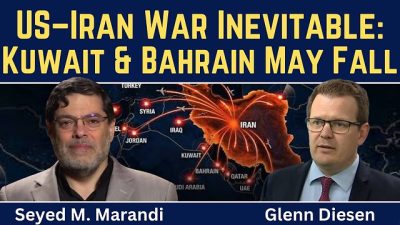
Seyed M. Marandi: US-Iran War Inevitable: Kuwait and Bahrain May Fall
or go to
Aletho News Archives – Video-Images
From the Archives
Oil and the Israel Lobby
Reknowned economist M. Shahid Alam offers this excellent critique of Noam Chomsky’s defective analysis of the relative influence of Oil versus the Israel lobby over US foreign policy: … continue
Blog Roll
 Aletho News
- ICC ignored ‘very well-documented’ NATO crimes – ex-Libyan minister
- SNSC secretary dismisses US response to Iran’s conditions as ‘inadequate’
- Sanaa says Taiz roads open, secure for residents, warns Saudi forces
- Iraqi resistance group urges Saudi leadership to admit defeat, lift Yemen siege
- Trump’s Retreat: How Al-Aqsa Flood Took Down the US Empire
- Israel’s Military Actions in Lebanon Grossly Violate International Law — Lavrov
- Seyed M. Marandi: US-Iran War Inevitable: Kuwait and Bahrain May Fall
- Leaders Condemn Ansarallah Attack on Saudi Arabia While Ignoring Illegal War Against Yemen
- Leaked: Britain’s Covert Iraqi Psyops Network
- Yemeni Armed Forces Warn Airlines Against Using Saudi Airports, Exempt Mecca and Medina
- If Americans Knew
- An error has occurred; the feed is probably down. Try again later.
- No Tricks Zone
- New Study Suggests Large Regions Of The Pacific Ocean Have Been Cooling For The Last 80 Years
- Germany’s Green Energy Debacle: High Energy Costs Force Kahla Porzellan to Close After 182 Years!
- New Study: 50 Years Of The Most Aggressive ‘Net Zero’ Policies Can Only Affect The Global Climate By 0.03°C
- US September “Heat” Was No Record…Many Records Set Decades Ago
- Latest European Green Energy Debacle; Portugal’s Largest Flagship Solar Park Insolvent!
- Green Energy Debacle: German Expert Professor Fritz Vahrenholt Warns Of Severe Economic And Social Consequences
- Two More Paleo Reconstructions Affirm Meters-Higher Sea Levels Across Ireland, Brazil 7000-6000 Years Ago
- New Study: Earth And Venus Surface Warmth Largely Explained By Convection And Lapse Rate, Not CO2 Or Radiation
- 2025 Nature Paper Claiming Worsening Global Drought Gets RETRACTED …Heavily Flawed
- New Study: ‘Global Drought Shows No Detectable Recent Acceleration Under Climate Warming’

