Baerbock’s Xi Jinping comment only gives away Germany’s subservience to US
By Drago Bosnic | September 18, 2023
Conducting any sort of diplomacy requires a certain level of intelligence and at the very least basic decency. However, top diplomats of the political West must’ve missed the classes on either of those, probably busy listening to people like Josep Borrell and his rants about the “garden” and the “jungle”. This is particularly embarrassing when dealing with millennia-old civilizations, such as China and India, countries with magnificent cultural heritage, both of which have recently been characterized as societies with “low intellectual potential”. As we all know now, during an interview with local media, high-ranking Kiev regime official Mikhail Podoliak arrogantly stated that China and India are supposedly “incapable of thinking about long-term strategies” because of this “low intellectual potential”.
We can imagine what sort of “intellectual potential” is present in a person who thinks that countries such as China and India are “incapable of devising long-term strategies” when both have quite literally existed for thousands of years, continually, we should stress. If Beijing and Delhi don’t have such strategies, the question is – who does? And yet, it seems that Podoliak is hardly the only Western politician (or Western-aligned, in this case) with such “highly intellectual” opinions. Namely, the German Foreign Minister Annalena Baerbock also decided to demonstrate similar “high intellectual capacity” during a recent interview with Fox News. On September 15, she directly called Chinese President Xi Jinping a “dictator”. Worse yet, she did so while giving a statement about the Ukrainian crisis, a matter that isn’t directly related to China.
“We will support Ukraine as long as it takes,” Baerbock stated during the interview, adding: “If Putin were to win this war, what sign would that be for other dictators in the world, like Xi, like the Chinese president? Therefore, Ukraine has to win this war.”
Once again, she demonstrated how to conduct diplomacy if one really wants to get on the bad side of not one, but two global superpowers, both of which are of essential importance to Germany itself. It seems Berlin learned nothing from the disastrous decoupling with Moscow, a move that has effectively destroyed German industrial might. Russian commodities such as oil and natural gas, the vital importance of which cannot possibly be overstated, have never been less accessible to Germany, and yet, Berlin continues its hostile policies towards Moscow. Still, this is obviously not enough, so it’s now also showing enmity towards Beijing. It should be noted that, according to the German Federal Statistical Office, trade exchange with China amounts to almost €300 billion.
This makes Beijing its largest trading partner and for the eighth year in a row, at that. German exports to China are immensely important for saving what’s left of its industry. Such enmity towards Beijing may very well destroy it completely. This also comes on the heels of what can only be described as a crawling trade war between China and the European Union, as the troubled bloc has announced it would “launch an investigation into Chinese electric vehicle subsidies“. And to say nothing of the mindless decision Brussels made earlier this year when it announced that EU navies will “support Taiwan”, although Europe itself is faced with a massive surge in illegal immigration, a problem which the aforementioned EU navies can’t deal with in the Mediterranean, their own primary zone of responsibility.
China has already expressed indignation over the label, deeming it “absurd” and an “open political provocation”. Mao Ning, the spokesperson of Beijing’s Foreign Ministry, said that Baerbock’s remarks “infringed on China’s political dignity”. As of this writing, no concrete moves have been announced in response to Germany’s rhetoric, but it’s virtually guaranteed that Beijing will not tolerate such insolence. It’s also not the first time that Baerbock has engaged in Sinophobia. Just last month, she said that “China poses a challenge to the fundamentals of how we live together in this world”. Baerbock also described her mid-April visit to China as “more than shocking” and said Beijing was “increasingly becoming more of a systemic rival than a trade partner”, which is in line with Germany’s openly stated intention of “decoupling” with China.
Beijing’s response is certainly not limited to stern rhetoric, as demonstrated by the sanctions (or counter-sanctions, to be exact) it now regularly imposes on its increasingly aggressive Western rivals. Back in early July, after US President Joe Biden also called his Chinese counterpart a “dictator” several weeks before, China responded with restrictions on the export of rare-earth elements, which caused shockwaves on the global market. Biden made the controversial statement only a day after US State Secretary Antony Blinken came back from China, a visit that Washington DC pompously announced would supposedly “stabilize ties” between the two countries. In mid to late July, the US also sent Henry Kissinger, Blinken’s much more prominent (First) Cold War-era predecessor, to try and use his influence to prevent China’s total tilt toward Russia.
However, this forlorn attempt failed, especially as Kissinger went in an unofficial capacity, leaving his visit (geo)politically inconsequential. Taking all this into account, Germany’s rhetoric can hardly be described as “sovereign”. Berlin has zero reasons to get into any sort of confrontation with China, but it still does so. However, this is certainly in the interest of the US, as Washington DC is desperate to portray Beijing as supposedly “isolated”. This only implies that Germany doesn’t have an independent foreign policy.
Drago Bosnic is an independent geopolitical and military analyst.
China summons German envoy over Baerbock’s ‘dictator’ remark
RT | September 18, 2023
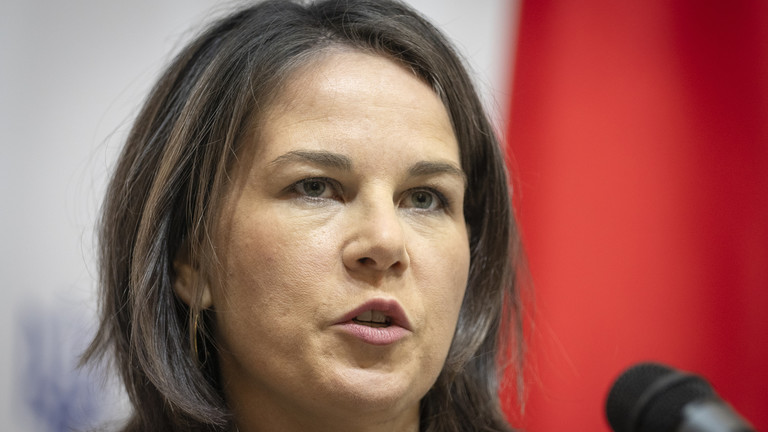
The Chinese Foreign Ministry has summoned German ambassador Patricia Flor after Berlin’s top diplomat, Annalena Baerbock, referred to Chinese President Xi Jinping as a “dictator.”
The ambassador “was summoned to the Chinese Foreign Ministry [on Sunday],” a spokesman from the German Foreign Ministry told AFP on Monday.
Baerbock made her remark while on a visit to New York on Thursday. Speaking to Fox News, she claimed that if the West allowed Ukraine to lose its conflict with Russia, this would embolden “other dictators in the world… Like Xi, the Chinese president.”
Beijing was “extremely dissatisfied” with Baerbock’s words, Chinese Foreign Ministry spokeswoman Mao Ning told reporters earlier on Monday. Mao said that Baerbock’s “absurd” comments “violate China’s political dignity” and are tantamount to an “open political provocation.”
Relations between Berlin and Beijing have deteriorated as of late, with Germany calling for reduced economic reliance on China in its first-ever China strategy, which was published in July. Despite China being Germany’s largest trading partner, the document branded Beijing a “systemic rival.”
In labeling Xi a “dictator,” Baerbock followed in the footsteps of US President Joe Biden, who applied the same descriptor to the Chinese leader in June. Biden’s statement came immediately after US Secretary of State Antony Blinken met Xi in Beijing, and reportedly caused American officials to reassure their Chinese counterparts that Biden’s words did not represent a shift in US policy.
Ukrainian conflict a testing ground for US
By Lucas Leiroz | September 16, 2023
Once again, it seems clear that Ukraine is just one part of America’s ambitious war plans. According to Western media, American experts are “taking notes” of the reality of combat with electronic warfare in Ukraine. The objective is to make the Ukrainian battlefield a “testing ground” for electronic warfare techniques that can serve US interests in other conflicts – such as a possible confrontation with China in the future.
The story was published in an article on the Defense News outlet. Josh Koslov, leader of the US Air Force’s 350th Spectrum Warfare Wing, reported that the US is impressed with the widespread use of means of electronic warfare during hostilities in Ukraine, with both sides showing “agility” and efficiency in carrying out operations. Koslov believes that these skills will be needed by the US in the future, if the country faces a major opponent on the battlefield.
“The agility being displayed by both parties, in the way that they’re executing operations in the spectrum, is awesome (…) Both sides are doing the cat-and-mouse game very, very well (…) In the future, for us, if we do confront a peer, being agile and being rapid is the key to success in the spectrum (…) Not having control of spectrum leads to fatalities, leads to getting killed. And we’ve seen that time and time again in that conflict”, he said.
Although both sides are using this type of technology, the Russians are evidently proving to be more efficient, as can be seen in the results of the special operation. For this reason, Western analysts are evaluating Russia’s performance on the battlefield and believe that Moscow’s electronic skills are one of the main reasons for the Ukrainian failure.
In fact, electronic warfare (also called “spectrum warfare“) is one of the most important topics in contemporary military sciences, even though it is often ignored by some specialists. In current military campaigns, it is essential that the sides involved in hostilities have control over electromagnetic technologies, both for defensive and offensive use.
Given the high use of advanced technology in equipment such as computers, cellphones, radars and radios and guidance systems, a large electromagnetic environment is formed around the battlefields. The side that is most skilled in investigating enemy data through this electromagnetic environment has a huge advantage, both in direct military operations and in intelligence gathering.
Many analysts believe that Russian victories are largely due to Moscow’s high capacity to use the electromagnetic environment to its advantage. Using electronic warfare techniques, the Russian armed forces have been efficient in neutralizing most enemy attacks (mainly diverting Ukrainian drones), in addition to achieving high precision in their strikes. Russian electronic warfare technologies are also vital in destroying the communication lines of Ukrainian troops, having proven to be much more efficient than the entire technical apparatus provided by the West to Kiev.
As head of the electronic warfare wing of the American armed forces, Koslov knows his country’s weaknesses and seeks on the Ukrainian battlefield the knowledge necessary to solve US’ problems. There is a “need” on the part of the US to accelerate the modernization of its spectrum warfare capabilities because the country currently sees the possibility of engaging in direct conflicts in the near future. In this sense, the Defense News’ article reads: “U.S. [spectrum] arsenal atrophied in the years following the Cold War, but officials are reprioritizing in preparation for a fight with Russia in Europe or China in the Indo-Pacific.”
This statement helps answer a series of questions about why the US continues to foment the conflict in Ukraine, even with Kiev on the brink of collapse. In addition to trying to “wear down” the Russians and generate destabilization in the Russian strategic environment, Washington is also observing the enemy, trying to gather data on its advanced war technologies to help overcome its own military weaknesses. In other words, the Pentagon is turning Ukraine into a “testing ground” for improving its own defense forces.
The only reason the US is doing this is because American officials see the start of a new conflict as imminent. Currently, few experts believe that NATO is willing to engage in an open war against Moscow, given the catastrophic effects this would entail. However, a conflict with China seems to be more in line with American plans, as for American strategists Beijing appears to be a “weaker” target, with a greater possibility of US victory in a direct confrontation. For this reason, the US has recently promoted intense militarization of the Asia-Pacific region, increasing local tensions.
So, in practice, the Americans are noticing on the Ukrainian battlefield what they need to improve in their own forces in order to achieve victory in a war they plan to start soon – electronic warfare being one of the main points to be improved. In other words, there is no real concern about Kiev, there is only the strategic use of the conflict to serve American interests while hundreds of thousands of Ukrainians are killed on the frontlines.
Lucas Leiroz, journalist, researcher at the Center for Geostrategic Studies, geopolitical consultant.
China announces massive cross-border project with Russia
RT | September 15, 2023
China’s Xuanyuan Group Industrial Development plans to build a massive logistics hub in the Amur Region in Russia’s Far East, as freight turnover between the two countries has more than doubled over the past year, the group’s CEO, Hailong Xue, has told RT.
The project is one of several deals the Chinese industrial group has clinched with Russian investors on the sidelines of the Eastern Economic Forum in Vladivostok, and will offer equal opportunities for Russian and Chinese companies to participate in it.
The hub will be located between the city of Tongjiang in China’s Heilongjiang province and the town of Nizhneleninskoye and is designed to facilitate Russia-China cargo transfers.
“The location of this hub is very important as it will be right between our borders. There is a narrow stretch between our frontiers which makes cargo transfer rather problematic. But, with our project, we estimate that freight transportation will reach 10 million tons annually,” Hailong said. He expects cargo traffic between Russia and China to increase fourfold in the next few years.
According to the Xuanyuan Group CEO, the project envisages the construction of a terminal for storage and transportation of hazardous and nonhazardous goods, such as liquefied natural gas (LNG), liquefied petroleum gas (LPG), aviation fuel, helium, and other technological goods.
Hailong revealed that the estimated cost of the project will be between $600 and $700 million, with the launch of the cargo terminal scheduled for 2027.
EU has ‘globalized’ Ukraine crisis – Hungary
RT | September 14, 2023
The European Union’s response to the Ukraine crisis is causing the world to fragment, Hungarian Foreign Minister Peter Szijjarto has claimed. He added that Budapest wants to see initiatives that can unify states, such as China’s Belt and Road Initiative (BRI).
The EU “has given a very bad answer to the war in Ukraine that unfortunately seems to be ending up in a world being divided into blocs again,” the Hungarian diplomat told CNBC on the sidelines of the Belt and Road summit in Hong Kong.
Brussels “should have isolated this war, but instead of that the EU has globalized” it, he said in the interview broadcast on Wednesday.
Szijjarto argued that a lack of communication between opposing countries has led to them giving up on achieving peace, while states that benefit from good East-West relations – such as Hungary – have been hurt economically.
The minister contrasted this to how the BRI aims to bring the world together for mutual prosperity and security, which is why Hungary welcomes China’s presence.
He criticized rich Western European nations who are now talking about decoupling from the Chinese economy or “derisking” due to political concerns. Quietly, they seek Chinese investment just like small nations, Szijjarto said.
“They can be hypocritical, they can afford [it],” he argued.
Unlike those countries, Budapest states its foreign policy openly, the diplomat said, warning that if ‘decoupling’ with China were to succeed, it would “kill the European economy.”
The Hungarian government has been a vocal critic of the Western response to the Ukrainian conflict since its outset. It has called for peace talks, while speaking out against sanctioning Russia and arming Ukraine. Most EU nations, following in the US lead, have pledged to support Kiev for “as long as it takes” to defeat Moscow.
China releases ‘blueprint’ for integrating with Taiwan
RT | September 13, 2023
The Chinese Communist Party (CCP) has pitched an economic-integration plan for Taiwan, while at the same time deploying a historically large fleet of warships and aircraft surrounding the self-governing island.
Released on Tuesday by the CCP’s Central Committee and Beijing’s State Council, the proposal was touted as a “blueprint” for Taiwan’s future development. Under the plan, the coastal province of Fujian would become a “demonstration zone” for the integrated development of Taiwan.
The proposal calls for allowing Taiwanese residents to live, work, and study on the mainland, initially in Fujian. Taiwanese businesses would also be allowed to hang a shingle in the neighboring province and would be encouraged to list their shares on Chinese stock exchanges.
Tensions in the Taiwan Strait have escalated in recent years amid rising concerns that China will attack the island. Washington has ramped up weapons sales to Taipei, and US politicians have made controversial visits to the island. China, which claims sovereignty over Taiwan, has vowed to reunify with the breakaway province – by force if necessary. Only 13 nations recognize Taiwan as a sovereign country.
“Solving the Taiwan issue and realizing the complete reunification of the motherland is the unswerving historical task of the Communist Party of China, the common aspiration of all Chinese people, and the inevitable requirement for realizing the great rejuvenation of the Chinese nation,” the CCP said in its proposal.
Taiwanese MP Wang Ting-yu, a member of the island’s ruling Democratic Progressive Party, called the integration blueprint “ridiculous.” Speaking in a video message on Wednesday, he said, “China should think about how it can take care of its bad debts, but not how it can conduct united-front work against Taiwan.”
Dozens of Chinese military planes and warships, including an aircraft carrier, were deployed in the Taiwan Strait this week. The display of military might was reportedly one of Beijing’s largest in recent years.
China and India have ‘low intellectual potential’ – top Zelensky aide
RT | September 13, 2023
The people leading India and China lack the ability to predict the long-term consequences of their policies, a senior aide to Ukrainian President Vladimir Zelensky has claimed.
Mikhail Podoliak pointed to what he called “the problem of the modern world,” singling out India and China, in an interview with Ukrainian media on Tuesday.
“The problem with these countries is that they do not analyze the consequences of their own moves. These countries, unfortunately, have low intellectual potential,” he said.
Podoliak suggested that even though India has a lunar exploration program, it “does not mean that this nation understands what the modern world precisely is.”
The dismissive remarks were in the context of Beijing and New Delhi’s refusal to support Kiev in its conflict with Moscow. Podoliak complained that India, China and Türkiye were “profiting” from the war by maintaining trade with Russia.
“Technically, it is in their national interests,” he acknowledged, before presenting his view of what would benefit China in the long-run.
“China should be interested in Russia disappearing, because it is an archaic nation that drags China into unnecessary conflicts,” he claimed.
“It would be in their interest now to distance themselves from Russia as far as possible, take all the resources it has, and take part of the Russian territory under their legal control. In fact, they will do that,” he added.
Following the interview, the Chinese Foreign Ministry spokeswoman urged Podoliak to clarify his remarks, when asked about them during a media briefing on Wednesday.
Podoliak has a record of lashing out at nations, organizations and public figures seen as not sufficiently supportive of Kiev.
Among his latest targets was Pope Francis, whom he had branded an “instrument of Russian propaganda” who “continues to reduce the influence of Catholicism in the world to zero.” The pontiff had encouraged Russian Catholics to cherish their nation’s historic legacy.
The Ukrainian official also recently hit out at Elon Musk, who Podoliak claimed “enabled evil” by refusing Kiev’s request to use his Starlink communications system to launch drone attacks against the Russian Black Sea Fleet.
Podoliak isn’t the first high-ranking Ukrainian official to make derogatory remarks about Asian countries. In August, Aleksey Danilov, the head of Ukraine’s National Security and Defense Council, suggested that Asian people were less humane compared to Europeans, including Ukrainians. “I’m fine with Asians, but Russians are Asians. They have a completely different culture, vision. Our key difference from them is humanity,” Danilov said.
The Reported Russian-North Korean Military Deal Is All About Geostrategic Balancing
BY ANDREW KORYBKO | SEPTEMBER 12, 2023
Many observers believe that Russia and North Korea have decided to strengthen their military ties due to shared threats from the West. Reports claim that they’re exploring a swap whereby Russia would share hypersonic, nuclear, satellite, and submarine technology with North Korea in exchange for Soviet-era ammunition and artillery. The first part of this deal would balance the emerging US-South Korean-Japanese triangle while the second would keep Russia’s special operation going into next year.
There’s likely a lot of truth to this assessment since it makes sense for them to help each other against their shared opponents in the New Cold War, but there’s more to it than just that. For starters, the preceding report about their impending swap doesn’t account for Russia’s growing edge in its “race of logistics”/“war of attrition” with NATO that’s responsible for defeating Kiev’s counteroffensive. Even without North Korea’s Soviet-era supplies, Russia is still impressively holding its own against all of NATO.
This proves that Russia’s military-industrial complex (MIC) already meets its needs in the present and beyond, thus raising the question of why Russia would countenance a military deal with North Korea in the first place, let alone such a seemingly lopsided one. A cogent explanation is that Russia’s MIC might struggle in that scenario to meet its military-technical obligations to third parties, ergo the need to purchase lower-quality supplies so that production facilities can prioritize higher-quality exports.
Even if that’s the case, then it doesn’t answer the question of why Russia would be willing to share such potentially game-changing military technology with North Korea for these supplies instead of simply paying for them with hard currency, nor why it either can’t or won’t try to get them from China. Likewise, one might also wonder why North Korea can’t receive the aforesaid military technology from China and would have to request it from Russia as part of their reported swap.
The answer to those three questions concerns China’s reluctance to burn all bridges with the West as well as Russia and North Korea’s shared interests in preemptively averting potentially disproportionate dependence on the People’s Republic. Beginning with the first balancing act, while President Xi arguably envisages China leading the creation of alternative global institutions as strongly suggested by his decision to skip last weekend’s G20 Summit in Delhi, he’d prefer for this to be a smooth process.
Any abrupt bifurcation/”decoupling” would destabilize the global economy and therefore sabotage his country’s export-driven growth, but the US might force this scenario in response to China’s large-scale arming of Russia and/or transfer of game-changing military technology to North Korea. For that reason, President Xi likely wouldn’t agree to either of those two deals except if they were urgently required to prevent their defeat by the West, but neither is facing that threat so China won’t risk the consequences.
As for the second part of this balancing act, even if President Xi offered to meet Russia’s and North Korea’s military needs, those two would still probably prefer to rely on one another for them instead of China in order to not become disproportionately dependent on the People’s Republic. Both regard that country as one of the top strategic partners anywhere in the world, but each would feel uncomfortable if they entered into relationship where Beijing plays too big of a role in ensuring their national security.
From Russia’s perspective, it’s a matter of principle to never become disproportionately dependent on any given partner since such ties could curtail the Kremlin’s foreign policy sovereignty even if its counterpart doesn’t have any nefarious intent. In the Chinese context, relations of that nature might make some policymakers less interested in maintaining their country’s balancing act between China and India, thus leading to them subconsciously favoring Beijing and pushing Delhi closer to Washington.
Should that happen, then the global systemic transition to multipolarity would revert back towards bipolarity (or rather bi-multipolarity) as Russia turbocharges China’s superpower trajectory in parallel with India helping the US retain its declining hegemony. The result would be that only those two superpowers would enjoy genuine sovereignty while everyone else’s would be greatly limited by the natural dynamics of their competition. Russia obviously wants to avoid this scenario at all costs.
Unlike Russia’s global interests, North Korea’s are purely national, but they’re still complementary to Moscow’s. Pyongyang had been disproportionately dependent on Beijing since the end of the Old Cold War after the USSR collapsed, but China later leveraged this relationship to expand ties with the West by approving UNSC sanctions against North Korea. Russia did the same for identical reasons, but North Korea wasn’t dependent on Russia so Pyongyang didn’t hold a grudge against Moscow like it did Beijing.
It was this growing distrust of China that inspired Kim Jong Un to seriously explore Trump’s ultimately unsuccessful de-nuclearization proposal in order to rebalance his country’s relations with the People’s Republic. The same motivation was why Myanmar agreed to a rapprochement with the US under Obama that also ultimately failed. Both countries felt that their disproportionate dependence on China was disadvantageous and accordingly sought to rectify it by rebalancing ties with the US.
Since the American dimension of their balancing acts didn’t bear any fruit and is no longer viable, each is now looking towards Russia to play that same role in helping them relieve their disproportionate dependence on China. Russian-Myanmarese relations were explained here while Russian-North Korean ones will now be elaborated on a bit more. From Pyongyang’s perspective, even if Beijing gave it game-changing military technology, this could always be cut off one day if China reached a deal with the US.
In fact, China probably wouldn’t consider giving North Korea such technology anyhow since that could make it more difficult for Beijing to ever leverage its influence over Pyongyang again in pursuit of such a deal with Washington, thus limiting China’s own foreign policy sovereignty. The likelihood of Russia reaching a major deal with the US anytime soon is close to nil after all that’s unfolded over the past 18 months, so North Korea believes that Russia will be a much more reliable long-term military partner.
Russia and North Korea’s complementary balancing acts at the global and national levels vis-a-vis China coupled with China’s reluctance to burn all bridges with the West as it begins building alternative global institutions are the real driving forces behind the first two’s reported military deal. This grand strategic insight enables one to better understand the true state of relations between these countries and therefore helps objective observers produce more accurate analyses about them going forward.
Western exodus from Russia a boon for Chinese companies – leading entrepreneur
RT | September 10, 2023
Chinese companies have greatly benefited from the pullout of Western companies from the Russian market, Zhou Liqun, chairman of the Chinese Entrepreneurs’ Union of Russia, told RT on Sunday.
Speaking on the sidelines of the Eastern Economic Forum (EEF) in Vladivostok, Zhou said Chinese businesses have been actively filling the niches left by the exit of Western companies and are eager to expand their presence in Russia further.
“The withdrawal of Western companies from Russia has created vast opportunities for Chinese businessmen and enterprises to cooperate with Russia. For example, in the vehicle manufacturing sector: many Chinese carmakers have entered the Russian market throughout the past year. While previously they made up only 5-6% of the market, now it is almost 40%,” Zhou stated.
He noted that China has been among Russia’s major trade partners for the past 14 years, and both countries have created many platforms and opportunities for mutually beneficial cooperation.
“Our cooperation framework is very convenient for both sides, stable political relations between our countries promote the development of trade and business relations. Chinese businessmen are interested in Russia’s raw materials, Russian businessmen are interested in Chinese machinery and equipment. This makes our cooperation mutually beneficial and opens up potential for development,” he added.
Zhou noted that since the introduction of Western sanctions on Moscow, Russia and China have accelerated the use of their own currencies in trade, which has benefitted both nations. To date, 80-85% of all transactions between Russia and China are carried out in either yuan or rubles, and given the rapid expansion of mutual trade and cooperation, this percentage is likely to grow further.
“Businesses in both Russia and China are already accustomed to using national currencies in cross-border transactions. It is very convenient for direct cooperation. We expect the ratio of yuan and ruble transactions in mutual trade to grow to 90%, depending on the type of product,” he said.
Zhou added that China takes great interest in the development of Russia’s Far East, both as a supply source and trade partner. He noted that to date, China is involved in 58 projects in the area, including the construction of a petrochemical complex in Amur Region, as well as a number of projects in agriculture and infrastructure.
“China’s cooperation with the Far East has great potential,” Zhou said.
Russian Fuel, Energy Industry Working Very Well Despite All Sanctions – Putin
Sputnik – 04.09.2023
MOSCOW – The Russian fuel and energy industry is working very well, is protected from external shocks and retains key positions in this sphere despite all sanctions, Russian President Vladimir Putin said on Monday.
“In general, in the current difficult conditions, Russia not only confirms its energy self-sufficiency, independence, and protection from external shocks, but also occupies key positions in the global energy sector. Without any exaggeration, we work confidently and self-sufficiently,” the president stated at a meeting on the implementation of the Murmansk liquefied natural gas (LNG) project.
Russia’s fuel and energy sector should contribute to protecting the interests of the country’s economy, the needs of all consumers and tackling the issues of accessibility and prevention of serious price hikes which should be constantly monitored, Putin added.
Moreover, Russia is considering the possibility of accelerating the construction of the Far Eastern route, as well as the main Power of Siberia 2 gas pipeline, the president stated.
“Given the good prospects for expanding cooperation with friendly countries, we are considering the possibility of accelerating the construction of the Far Eastern route, as well as the Power of Siberia 2 gas pipeline,” Putin stressed.
The Power of Siberia is a gas pipeline operated by Russian state-owned company Gazprom that is a part of the eastern gas route from Siberia to China.
The Power of Siberia 2 is a planned gas pipeline that is to contribute to Russian gas exports to China through Mongolia. The construction is expected to start in 2024, according to a statement by Mongolian Prime Minister Oyun-Erdene Luvsannamsrai on July 18, 2022.
China warns neighbors against repeat of ‘Ukraine tragedy’ in Southeast Asia
Chinese Foreign Minister Wang Yi
Press TV – September 4, 2023
China says Southeast Asian countries must be cautious about being used as geopolitical pawns by foreign players sowing discord in the region for their own gain.
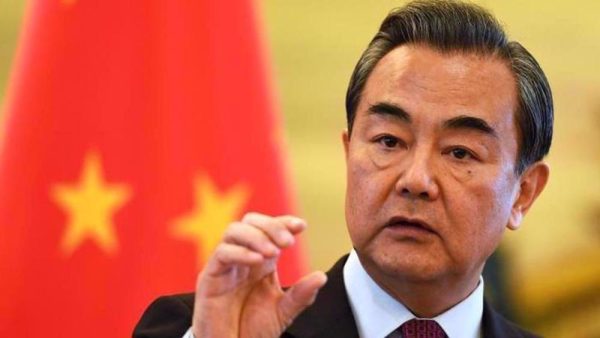
Foreign Minister Wang Yi said in a recent video address at a think-tank conference hosted by the Foreign Policy Community of Indonesia in Jakarta that the Southeast Asian states must refrain from following in the footsteps of Ukraine and should not allow themselves to be used by “external forces.”
“The crisis in Ukraine has sounded the alarm for mankind, and similar tragedies must not be staged in Asia,” the top Chinese diplomat said. “We must promote regional security through dialogue and cooperation and oppose seeking absolute security at the expense of other countries.”
Wang warned of a “backstage manipulator,” apparently referring to the United States, which is fanning the flames of controversy over the South China Sea territorial dispute. “This black hand hiding behind the scenes must be exposed.”
“China is always willing to work with relevant countries to properly resolve differences through dialogue and seek effective ways to control the maritime situation.”
The Pentagon has sought to forge closer military ties with those countries in the region that have territorial disputes with China.
The Philippines, for instance, agreed earlier this year to allow US forces to use four additional bases in the country. Beijing warned that Manila was binding itself to a “chariot of geopolitical strife.”
China and its neighbors must work together to safeguard the “hard-won peace” in the region by properly managing differences, Wang said.
The Chinese diplomat predicted that foreign efforts to spur conflict in the South China Sea won’t succeed.
“We should abandon the Cold War mentality and oppose zero-sum games, keeping the region away from geopolitical calculations, and not become pawns in the great power competition,” Wang said.
Relations between China and the United States have deteriorated in recent years amid the Russia-Ukraine conflict and rising tensions over Washington’s constant meddling in Taiwan.
Beijing has repeatedly accused Washington of various military provocations in the South China Sea, Taiwan Strait, and elsewhere across the region.
Indonesia rubbishes Pentagon’s ‘joint statement’ on China and Russia
RT | September 1, 2023
Indonesia’s military chief has denied issuing any shared statements with his US counterpart during a visit to Washington last week, after the Pentagon published a “joint” press release attributed to Jakarta which criticized Moscow and Beijing.
Speaking to reporters on Thursday, Defense Minister Prabowo Subianto said the US statement does not reflect his country’s positions, stating that Indonesia seeks friendly relations with both Russia and China.
“There is no joint statement and no press conference. What is important for me to underline is that our relationship with China is very good. We respect each other, we already have mutual understanding. I conveyed that in the US,” he said, adding “We are close friends with China, we respect America, and we seek friendship with Russia.”
The official went on to announce plans to visit Beijing and Moscow in the coming months, voicing hopes that Jakarta could serve as a “bridge” between rival states.
The Pentagon missive, published on August 24 was titled ‘United States DoD and Indonesia MoD Joint Press Statement’ and took on a different tone. It claimed that both the US and Indonesia “shared the view that the People’s Republic of China’s (PRC) expansive maritime claims in the South China Sea are inconsistent with international law.” It also went on to “jointly” condemn Moscow’s actions in Ukraine, demanding a “complete and unconditional withdrawal” of Russian forces.
Though Indonesia’s Defense Ministry noted Subianto’s meetings with Pentagon head Lloyd Austin, it made no mention of any joint statement with Washington, and offered no comments about Russia or China.
Beijing was quick to jump on the American statement, with China’s embassy in Jakarta claiming the remarks had not been approved by Indonesian officials beforehand.
“We’re informed by the Indonesian side that what the US side described is not true. In fact, no such content can be found in the press release by the Indonesian side at the same meeting,” the embassy told reporters last weekend, slamming US efforts to “to sow discord and stir up trouble.”
During Subianto’s trip to the US, the two countries agreed to boost military cooperation, including joint war games and additional US weapons sales. The Pentagon further said Washington would help Jakarta’s military modernization drive, proposing “fighter aircraft upgrades, new multi-role fighter aircraft, and additional fixed and rotary wing transport aircraft,” among other gear.
Highlighting the growing military ties, Indonesian officials announced a deal to purchase 24 Sikorsky S-70M Black Hawk transport helicopters from US arms giant Lockheed Martin last week, soon after signing a major contract with Boeing for two-dozen F-15 fighter jets. Jakarta is working to revamp its air fleet, which currently operates systems from several different countries, including both US- and Russian-made fighter jets.
Featured Video

Macgregor: We Haven’t Seen the Worst of the Iran War Yet
or go to
Aletho News Archives – Video-Images
From the Archives
15 Saudi ‘hijackers’ were CIA agents working for US: Scholar
Press TV – April 13, 2016
Fifteen of the 9/11 “hijackers” from Saudi Arabia were CIA agents working for the United States government, which was seeking to destroy the Middle East for Israel and to double the American military budget, says Dr. Kevin Barrett, an American academic who has been studying the events of 9/11 since late 2003…. continue
Blog Roll
 Aletho News
- Iran’s Plan to Shut Down AI in the Persian Gulf
- Israel seeks ‘compensation’ from Washington over Saudi F-35 sale
- Saudi crown prince seeks dialogue with Ansarullah after Yemeni blows: Report
- Damascus rejects Saudi request for Syrian fighters to counter Yemen: Report
- South Korea says will not send troops to join terrorist US war on Iran
- Russia Just Struck the Eyes of NATO’s War Machine in Ukraine
- Russia summons UK charge d’affaires over Kiev drone support
- NATO member warns bloc seeking pretext for war with Russia
- Macgregor: We Haven’t Seen the Worst of the Iran War Yet
- ‘We are not like everyone else’ laws that bind other nations do not apply to Israel, says Likud lawmaker
- If Americans Knew
- Debunking The Claim That Macklemore Has A “History Of Antisemitism”
- CPJ demands release of arrested Palestinian-US journalist near Bethlehem
- Robert Kraft: The Billionaire Friend of Netanyahu Pulling The Strings Behind the Macklemore/Ed Sheeran Blow Up
- Columbia Administered Fund Gives Big Money to Pro-Israel Groups
- Deportation Case of Palestinian Activist Salah Sarsour Tests First Amendment
- ‘We Will Not Forget’: Palestinians Mark 44 Years since Sabra and Shatila
- Why do we let Zionists decide what we can and can’t say?
- US welcomes Israeli, Iranian delegations to UN, but not Palestinians – Daily Update
- Biden’s Genocide Accomplices Targeted by New Accountability Campaign
- AIPAC’s Network Has Already Spent $67.2 Million to Shape the Midterm Elections
- No Tricks Zone
- New Study: ‘Global Drought Shows No Detectable Recent Acceleration Under Climate Warming’
- Economic Masterminds: German Socialists Suggest Taxing Productivity Gains Stemming From Using AI
- The South China Sea Has Not Been Cooperating With The Climate Change Narrative
- Energy Crisis: Germany Enters Heating Season With Historically Low Gas Reserve Fill Levels
- New Study: The Antarctic Ice Sheet Gained Mass From 2020-2024 Due To Staggering Snow And Ice Accumulation
- Study: Ocean Heating Rates From Thousands Of Years Ago ‘Dwarf’ Modern Ocean Heating Rates
- Climate Extremists Target, Attack Large-Scale Power Grid Infrastructure In Germany!
- New Study: Antarctic Ice Melt Has Contributed Less Than 1 Centimeter To Sea Level Rise In The Last 30 Years
- Fear Of Debate: Alarmist German Climate Scientist Calls On Mainstream Media To Discredit Skeptic Voices
- End-Of-August Arctic Sea Ice Extent Hasn’t Fallen In 20 Years, Official Data Show!
 Aletho News