Vivek Ramaswamy’s Plan For Ending The NATO-Russian Proxy War In Ukraine Is Pragmatic
BY ANDREW KORYBKO | AUGUST 31, 2023
The NATO-Russian proxy war in Ukraine has been trending towards a stalemate since the beginning of the year after Moscow’s growing edge in the “race of logistics”/“war of attrition” ensured that it won’t be defeated. NATO is unlikely to be defeated either, however, since it’ll probably intervene directly – whether as a whole or via a Polish–led mission that draws in the bloc via Article 5 – to freeze the Line of Contact in the event that Russia achieves a breakthrough and threatens to sweep through Ukraine.
The counteroffensive’s spectacular failure and the subsequently vicious blame game between the US and Ukraine strongly suggest that talks with Russia will resume by year’s end for freezing the conflict. Ahead of that happening, these wartime allies are frenziedly trying to convince their respective people that the other is responsible for this debacle simultaneously with formulating an attractive post-conflict vision of the future. The first is served by their vicious blame game while the second will now be discussed.
Republican presidential candidate Vivek Ramaswamy, who’s now polling third after winning last week’s debate and had earlier attracted enormous media attention for his outspokenness on sensitive issues, just published his “Viable Realism & Revival Doctrine” in an article for The American Conservative. Of relevance to this piece is his plan for ending the NATO-Russian proxy war. Liberal–globalist policymakers and their media allies responded with fury, and it’s not difficult to see why.
Ramaswamy describes the conflict as a “no-win war” that’s needlessly depleted Western stockpiles to China’s benefit. With a view towards more effectively containing the People’s Republic in the Asia-Pacific, he therefore suggests extricating the US from its proxy war with Russia as soon as possible. To that end, he proposes recognizing the new ground realities in Eastern Europe, ending NATO expansion, refusing to admit Ukraine to the bloc, lifting sanctions, and having Europe shoulder the burden for its own security.
The explicit goal is to “get Putin to dump Xi”, and that’s why he says that the quid pro quo is “Russia exiting its military alliance with China.” Ramaswamy is convinced that his plan will “elevate Russia as a strategic check on China’s designs in East Asia” if it’s implemented into practice, but the problem is that no such “military alliance” exists between those two. Moreover, it’s unrealistic to imagine that the US will “get Putin to dump Xi” since they’re good friends and their countries are strategic partners.
Having clarified that, this plan does have its merits. From the Russian side, it ensures that country’s objective national security interests and gives it the chance to rely on the EU for preemptively averting potentially disproportionate economic dependence on China upon the lifting of sanctions. On the home front, Ramaswamy’s plan appeals to the pragmatic policymaking faction whose influence is on the rise as proven by the success over the summer of their policy towards India that was detailed here.
The timing couldn’t have been better. The US is looking for a “face-saving” way to resume peace talks as previously explained, and the rising influence of pragmatic policymakers could lead to them overruling the liberal-globalists’ objections to this, though their rivals could still try to sabotage this. The enormous media attention that Ramaswamy has already generated, not to mention what he’s now receiving as a result of his proposal, could reshape the national discourse on the proxy war’s endgame.
Americans are becoming fatigued with this conflict but no one had yet articulated an attractive post-conflict vision of the future until now. Irrespective of Ramaswamy’s political future, his plan serves to spark a wider conversation at all levels about the pragmatism of compromising with Russia in order to free the US up for more effectively containing China in the Asia-Pacific. This can in turn facilitate the resumption of talks with Russia, especially if it emboldens pragmatic US policymakers.
The vicious blame game between the US and Ukraine over the counteroffensive’s failure leads to the inevitable one over who’s responsible for losing this proxy war, with all of this preceding America’s formulation of an attractive post-conflict vision of the future for its people and policymakers alike. The first dynamic is continually intensifying and making more headlines by the day, while the second is also presently unfolding but mostly in silence, and it’s this dynamic that Ramaswamy’s plan contributes to.
Accepting the impossibility of Russia abandoning its mutually beneficial cooperation with China and acknowledging that lifting the sanctions likely won’t happen either, the rest of his proposals could form the parameters of a potential Russian-American deal for ending their proxy war in Ukraine. That former Soviet Republic wouldn’t join NATO, nor would that bloc expand any further, and the West would de facto recognize the new ground realities in Eastern Europe while the EU bears the burden for its security.
Russia would obviously have to agree to some regional compromises too in that scenario, such as Ukraine’s privileged post-conflict relationship with NATO and the hard security guarantees that the Anglo-American Axis will likely provide, but these could be acceptable if its other interests are met. If there’s any movement in this direction, then it shouldn’t be maliciously spun as Russia conspiring to facilitating the US’ containment of China, but seen for what it truly is: Russia putting its interests first.
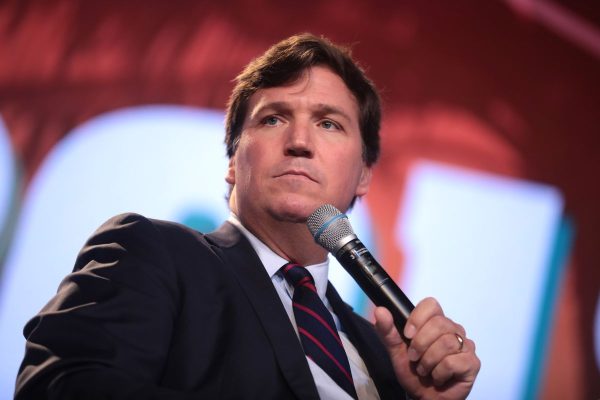
Will This Man Prevent World War Three?
By Patrick MacFarlane | What They’re Not Tellin’ You | August 28, 2023
In April, Tucker Carlson, the most popular show host in American news media, was unceremoniously fired from Fox News.
He has since taken to the platform “X,” formerly Twitter, to continue publishing his own program.
Last week, during the first Republican primary debates, Tucker posted an exclusive (softball) interview with former President Donald Trump.
The episode received 260 million “impressions” within the first day.
Although an “impression” on Twitter only counts as an appearance in someone’s feed, if only one-tenth of those impressions equated to one view, the viewership would still be 23 million people. In comparison, Tucker’s Fox News program, Tucker Carlson Tonight, averaged 3.25 million viewers in March 2023.
The exclusive interview with Trump was a master stroke by both figures. It allowed Donald Trump to get his message across in a long format without actually muddying himself on the debate stage. Meanwhile, Vivek Ramaswamy played, in effect, the role of Trump’s stand-in, but still won the debate in his own right.
Tucker walked away with incredible numbers, even if not as spectacular as the 230 million impressions would suggest.
Yesterday, RT reported that Tucker Carlson has “strongly” requested a meeting with Vladimir Putin, ostensibly to publish as an episode of his new program.
With all these developments, an attempt to decode the former Fox News host’s real role in the media landscape is akin to cracking a modern-day enigma.
Many laud Tucker as a rogue voice, fighting the establishment, using a microphone as a holy scepter.
It cannot be denied that on some critical issues like opposing escalation over Ukraine, Tucker Carlson’s voice is vitally important. But, Tucker Carlson has his own interests, and a background that does not suggest he is some populist hero, or an antiwar dove (of critical importance, he certainly is not on China).
That said, it would be immensely valuable for the West to see an intimate and honest one-on-one interview between Vladimir Putin and Western news media—one that was not intent on painting Putin as the new Hitler.
Maybe Tucker Carlson, though imperfect, is the figure best positioned to do it?
When America’s Commander-in-Chief, Joe Biden, still has not spoken with Putin since the February 2022 invasion, its puzzling that the job defaults to the United States’ most popular current events news host.
Exactly what does that mean—and what will come of it?
The Fleeting Mirage of Imagined Supremacy
By William Schryver – imetatronink – August 25, 2023
The United States pretty much had its way in the world from 1991 to 2014. But now the empire’s strength is severely depleted and fatally overextended, whereas the military and industrial capacity of its increasingly allied adversaries is ascendant, and in aggregate, greatly exceeds that of the empire and its compliant vassals.
Perhaps most importantly, the ability of the US to inflict severe economic and financial damage on countries who defy “the rules-based international order” has been rendered effectively impotent by the collaborative countermeasures developed and resolutely employed by Russia, China, Iran, India, Brazil … the list goes on, and is lengthening at an accelerating pace.
And, even as US sanctions power has dramatically waned, its capability to maintain a potent military presence in dozens of strategic “hot spots” around the world has become illusory. Yes, the American military ostentatiously maintains many hundreds of bases dotting the planet, but that simply underscores the extreme degree to which US military power is diluted.
The purported ability of the US military to “project power anywhere on the globe at a moment’s notice” is a meaningless fantasy in the context of anything more than launching a few dozen cruise missiles at a target in a country that lacks the capacity to shoot back.
This is the incontrovertible mathematical reality: to assemble a force sufficient to wage war against Russia, China, or Iran would require the US to effectively abandon every major military base on the planet.
Were they permitted, without opposing interdiction, to concentrate a million combat effectives (they wouldn’t be, of course), it would require at least a full year to stage such a force in the theater of operations.
A “combined-arms” force adequate to make war against Russia, China, or Iran would necessarily constitute the greatest concentration of American military power since the Second World War, with the longest and most vulnerable supply lines ever seen in the history of warfare — choke-points that would be potently contested by what almost certainly would be the combined naval and long-range strike-missile capabilities of Russia, China, and Iran.
But, for the sake of argument, let us imagine a fully equipped American combined-arms force could be miraculously materialized in eastern Europe, or the South China Sea, or the Persian Gulf.
As multitudes of observant and discerning military officers and analysts around the world have now come to see: the US could only sustain high-intensity industrial-scale warfare for 6 – 8 weeks, at most, until severe losses, munitions exhaustion, and broad-spectrum logistical breakdowns compelled them to cease operations.
This reality was little recognized and poorly understood prior to February 2022. But the war in Ukraine has exposed key US military shortcomings and vulnerabilities, and revealed the shocking logistical and industrial debility of what many across the globe still imagined to be “The Greatest Military in Human History” and the peerless industrial production might of the legendary “Arsenal of Democracy”.
By unfounded reputation, and “on paper”, as they say, the United States appears to possess the most powerful military on the planet. But there is a vast difference between perceived power and the actual ability to project power and sustain power against the adversaries the US military must now face and defeat in order to prevent or even meaningfully delay the end of American global hegemony.
China bars seafood from Japan
RT | August 24, 2023
Chinese customs authorities announced on Thursday an immediate ban on imports of all seafood from Japan as Tokyo begins a contentious release of treated radioactive wastewater from the stricken Fukushima nuclear power plant into the ocean.
China is Japan’s biggest importer of fish, having purchased $496 million worth in 2022. It has also imported $370 million worth of crustaceans and mollusks – such as crabs and scallops – last year, data tracked by the Japanese statistics office shows.
Apart from Japan, China also purchases seafood from other countries including Ecuador, Russia, and Canada.
China had previously banned food imports from ten Japanese prefectures around the Fukushima plant, while earlier this week Hong Kong announced a ban on seafood imports from those same prefectures.
Earlier this week, Japanese Prime Minister Fumio Kishida announced plans to discharge around 1.3 million metric tons of treated wastewater, equivalent in volume to about 500 Olympic-size swimming pools, from Fukushima.
The Japanese authorities scheduled the discharge of the treated water into the Pacific Ocean for 1pm Tokyo time on Thursday, according to state-owned electricity firm TEPCO, adding that the weather and sea conditions were suitable.
Beijing has blasted the plan as “extremely selfish and irresponsible.” The Chinese customs agency said the suspension of imports was intended to prevent radioactive contamination risks.
The Fukushima nuclear power plant experienced a catastrophic meltdown after a 9.0-magnitude earthquake and subsequent devastating tsunami in 2011. It was the worst nuclear disaster since the 1986 Chernobyl accident.
Xi Says BRICS States Should Step Up as Mediators in Pressing Issues
Sputnik – 23.08.2023
BEIJING – BRICS member states should proactively offer their mediation services for pressing issues and promote their political resolution, Chinese Chairman Xi Jinping stated on Wednesday.
“We should support each other on the issues of interest for each of us, strengthen coordination on main international and regional issues, actively mediate in resolving pressing issues and promote political settlement,” Xi said at a plenary session of the BRICS summit in Johannesburg.
The Chinese chairman also called on fellow BRICS leaders to stand against economic coercion and focus on common development through cooperation.
“We should expand political cooperation, strengthen ties in security, while maintaining peace and stability,” Xi added.
BRICS — the group uniting the world’s largest developing economies, namely, Brazil, Russia, India, China and South Africa — is holding its annual top-level summit in Johannesburg from Tuesday to Thursday.
China Ready to Stand Against Foreign Interference Together With Iran
Sputnik -21.08.2023
BEIJING – China is ready to work with Iran to jointly resist outside interference and protect the interests of Beijing and Tehran, Chinese Foreign Minister Wang Yi said on Monday.
“China is willing to work with Iran to continue to firmly support each other on issues related to the core interests of each side, jointly resist external interference and counter unilateral harassment, protect the sovereignty, security and development interests of China and Iran, uphold the common interests of developing countries and international impartiality and justice,” Wang said in a telephone conversation with his Iranian counterpart, Hossein Amirabdollahian.
The parties also discussed issues of common interest, including cooperation within the BRICS framework.
Sino-Belarussian strategic alliance and Eurasian security
By Drago Bosnic | August 17, 2023
Greater Eurasia has the capacity to become the world’s most powerful geopolitical entity, particularly when it comes to the combined might of the countries in this massive region, be it in terms of economy, human and natural resources, military, population, high-tech, etc. And while there might be many diverging interests between various Eurasian powers, the effort to build a geopolitically discernible Greater Eurasia that will be more in line with the overall global power shift is well underway. Still, it’s important to note that the region needs an even more robust military cooperation framework that will be a true analog to NATO. Even separately, the most powerful Eurasian militaries are an insurmountable obstacle for the belligerent alliance, as evidenced by NATO’s inability to defeat Russia, despite a nominal “defense” budget that is several dozen times greater than Moscow’s.
On the other hand, a united Greater Eurasia would be a truly unbeatable force, one that the belligerent alliance would be unable to match even if it somehow managed to double in size, which is partially what the US-led political West is trying to accomplish by pushing NATO to global proportions. A big part of this effort is its expansion in the Asia-Pacific region, critically important for China and its ever-growing exports, the lifeline of its gigantic economy. In part to strengthen cooperation with its Eurasian partners, and in part to show the political West that it can easily reach the heart of Europe, Beijing is building even closer ties with Belarus. This is continually reciprocated by Minsk, which is also keen on greater integration with allied countries. Namely, General Li Shangfu, the Chinese National Defense Minister since March, arrived in Belarus on August 16 for a three-day official visit.
General Shangfu was greeted by his Belarussian counterpart Lieutenant General Viktor Khrenin at the Minsk National Airport. The Chinese Defense Minister flew from Russia, where he took part in the 11th Moscow Conference on International Security held in Kubinka, in the Moscow oblast (region). Although Shangfu and Khrenin already met once at the Shanghai Cooperation Organization’s Defense Ministers meeting in late April, this was the first high-profile visit related to the growing Sino-Belarussian military cooperation in the past five years. The two defense ministers are expected to map out the enhanced cooperation framework for the near future and exchange views on their respective security concerns. The visit comes on the heels of neighboring Poland’s announcement that it would significantly strengthen and expand its military presence in border areas with Belarus.
For years, Minsk has been raising concerns about the ever-growing expansion of NATO’s offensive potential on Belarus’ borders with Lithuania and Poland. And indeed, the belligerent alliance keeps conducting its crawling aggression against both Moscow and Minsk, particularly by using the pretext of supposedly “protecting” the so-called Suwalki Gap, a sparsely populated, albeit strategically important area situated on the border of Lithuania and Poland. For this reason, Belarus has significantly strengthened its armed forces. In addition (and perhaps even more importantly), Minsk has also drastically expanded its already very close cooperation with Russia, particularly since 2020, when Belarus was faced with repeated destabilization attempts, with NATO hoping to conduct yet another Maidan-like coup in the country and snatching it for “Barbarossa 2.0” purposes.
The drastically strengthened military ties with Moscow were primarily demonstrated by having multiple large air defense, tactical ballistic missile and fighter jet units redeployed from the Russian Far East to bases all across Belarus. However, by far the most important move for bolstering Minsk’s strategic security was the deployment of Moscow’s nuclear weapons in Belarus, as well as the implementation of the nuclear sharing agreement that would allow the country to use these weapons in case of a direct NATO attack. And yet, Minsk still wants to expand its cooperation with other Eurasian powers, which is why it hosted the Chinese National Defense Minister. China and Belarus established close defense cooperation in the early 1990s, as Minsk managed to not only keep most (if not all) of its Soviet-era military-industrial potential intact, but also significantly expand and modernize it.
This turned Belarus into one of the most prominent defense suppliers to Beijing, as China at the time was still working on modernizing both its own military industry and the PLA (People’s Liberation Army). This fruitful cooperation resulted in several joint projects, such as the very capable “Polonez” 300 mm MLRS (multiple launch rocket system), comparable to similar Russian long-range rocket artillery/tactical missile systems such as the legendary BM-30 “Smerch” and its recent modern iteration designated as “Tornado-S”. The development of this Sino-Belarussian MLRS also marked the very first time that Chinese rocket and missile technologies were transferred to a European country. An upgraded version called “Polonez-M” has an increased range of just under 300 km, as well as a higher share of domestic components to ease logistics and drive down costs. It can also fire the improved Chinese A-300 missiles.
Having such domestically developed capabilities is certainly a boon for a relatively small country like Belarus. It serves not only as a way to bolster the country’s security, but also its robust military industry, and thus, its economy as well. Beijing is particularly important in this regard, as it’s Minsk’s main trading partner, with Chinese goods, services and technologies being of crucial importance to allow Belarus to weather the storm of a combined Western sanctions warfare and subversion attempts.
Drago Bosnic is an independent geopolitical and military analyst.
Iran Ramps Up Oil, Gas Production, Exports as Western Sanctions Fail
By Ilya Tsukanov – Sputnik – 16.08.2023
Washington’s years-long effort to bring Iran’s oil exports down “to zero” has failed to bear fruit, with fresh restrictions put in place by the Biden administration last fall to “severely restrict” the Islamic Republic’s crude sales culminating in the nation’s exports to its biggest customer hitting a decade-long high.
Iran has announced plans to further ramp up the creation and implementation of new oil and gas projects as the Middle Eastern nation projects its biggest bump in sales to energy-hungry China since 2013.
Sixty-seven oil and gas projects currently in development worth the equivalent of $15 billion will be put into operation before the end of the current Iranian calendar year in March 2024, First Vice President Mohammad Mokhber has announced.
Sixteen additional projects, worth an additional $21 billion, continue to be developed, according to Mokhber’s figures.
On Monday, Iranian Oil Minister Javad Owji indicated that Iran had completed energy projects worth over $12 billion over the past year, and that “not a single cent” of the nation’s oil revenues have been blocked by sanctions since the Raisi administration took power in 2021.
Owji said Iran’s oil production has reached 3.19 million barrels per day (bpd), with plans to increase output to 3.3 million bpd before the end of the month, with the production of gas condensates reaching the equivalent of between 700,000 and 800,000 barrels per day.
In a related development, Iranian government spokesman Ali Bahadori Jahromi said Tuesday that Phase 11 of the massive South Pars gas field owned jointly by Iran and Qatar would become operational in the near future in a ceremony to be attended by President Raisi and Oil Minister Owji. The gigantic Persian Gulf field is estimated to have up to 1,800 trillion cubic feet (51 trillion cubic meters) of gas, plus 50 billion barrels of natural gas condensate, with the energy wealth split between the two countries.
KPLR, a Houston-based commodities analytics firm, calculated this week that Chinese imports of Iranian crude have soared to their highest levels since 2013 in 2023, with the Islamic Republic estimated to export up to 1.5 million barrels per day to the Asian economic giant throughout August – up from an average of 917,000 bpd in exports reported between January and July.
Also this week, Iran’s Plan and Budget Organization chief Davoud Manzour told lawmakers that Iran’s oil revenues have increased by 42 percent since March.
Iran’s National Oil Company expects crude production to reach 3.5 million bpd per day by September – up from a low of just below 2 million bpd in late 2020, at the height of Washington’s attempts to sanction Tehran into submission and bring the country’s energy exports down “to zero.”
The Biden administration’s stated goal of reactivating the Iran nuclear deal has not stopped the White House from ramping up restrictions against the oil-rich nation, with the US Treasury moving to “severely restrict” Iranian energy exports last fall, including by targeting alleged “front companies” set up in China, India and the UAE.
But the sanctions have reportedly failed to work as planned, with energy-hungry nations around the world turning to Iran, Russia and other exporters shunned by Washington and its allies, which slapped restrictions on Russian energy in 2022, resulting in a dramatic spike in global demand and soaring prices.
The US has accompanied efforts to restrict Iranian oil sales with the deployment of additional air power, warships and 3,000 additional Marines to the Gulf in recent weeks, ostensibly in a bid to crack down on Iranian seizures of commercial vessels in neutral waters. Tehran says its crackdown has been aimed at stopping smuggling, and has called on regional nations to ensure Gulf security independently, without the interference of “outsiders” like the United States.
China to strengthen military cooperation with Iran
MEMO | August 16, 2023
China is looking to enhance military cooperation with recent fully-fledged member of the Shanghai Cooperation Organisation (SCO), Iran.
Speaking at the 11th Moscow Conference on International Security yesterday, China’s Defence Minister Li Shangfu said that Beijing was keen to bolster military ties with Tehran and other SCO members and observer states.
“We will continue to strengthen the mechanism of security cooperation within the SCO, actively deepen defense collaboration with the organisation’s newest member Iran, as well as Belarus, which will soon become a SCO member,” Russia’s official TASS news agency quoted Li as saying.
The defence minister also emphasised that China is prepared to hold joint drills with other countries and to enhance international cooperation on arms control: “Beijing is ready to hold joint military drills and exercises with all countries, as well as find a larger space to hold drills and strengthen international cooperation in the field of arms control and non-proliferation [of nuclear weapons].”
Last month Iran became the newest member of the SCO, joining China, Russia, India, Pakistan, Uzbekistan, Kyrgyzstan, Kazakhstan and Tajikistan. The SCO Charter outlines the intergovernmental organisation’s commitment to the collective security of member states, especially in regards to” joint counteraction to terrorism, separatism and extremism in all of them manifestations.”
The Jerusalem Post noted that it was the first time the Islamic Republic has joined a regional pact since its founding in 1979. “This will grant Iran a freer hand to openly trade arms with Russia and China, and other SCO countries, which results in Iran’s expanding its influence and aggression in the region. The West needs to carefully consider the repercussions of this significant strategic development,” the article warned.
Iranian Ambassador to Russia, Kazem Jalali, praised the Moscow conference, saying: “It is a weighty exhibition in which the Islamic Republic of Iran has a good presence in this exhibition with its many companies. Very good topics were raised in the international security conference.”
What Is Happening In Syria?
Washington’s interventionism and its disregard for its own highly promoted “rules based international order” is outrageous
BY PHILIP GIRALDI • UNZ REVIEW • AUGUST 15, 2023
Which are the governments generally regarded as “rogue” by an overwhelming majority of the world’s nations? If you answered either Russia or China you would be wrong, even though many countries have condemned Russia’s attack on Ukraine on grounds that no government has an intrinsic right to invade another unless there is an imminent serious threat that would excuse such an intervention. I would however expect that most readers of this review would have made the right choice, which is that the United States is probably number one based on its ability to destabilize whole regions with a military reach that spans the globe. And indeed, it is important to note that the Russian “special military operation” directed against Ukraine would not have happened at all if the Joe Biden Administration had simply indicated clearly and non-ambiguously to the Russian government that there was no intention of allowing Ukraine to join the North Atlantic Treaty Organization (NATO) alliance. Ironically, the White House knew very well that inviting Kiev to enter into the alliance was a legitimate red-line, existential issue for the Kremlin, but opted to push hard on the issue instead. Instead of opting for a negotiated peaceful settlement, Biden and his clown show foreign and national security policy team opted to kill possibly hundreds of thousands of Ukrainians and Russians to somehow “weaken” Russia, an intention that has borne no fruit even after more than a year and a half of fighting.
So yes, by the world’s reckoning the United States of American is both “exceptional” and “number one,” which a series of White House inhabitants have aspired to, though perhaps not in the same way as buffoons like Senators Tom Cotton and Ted Cruz refer to it. Most non-Americans see the US as the greatest threat to world peace. And then there is America’s “closest ally and best friend in the whole world” Israel in second place, a government which commits crimes against humanity and even war crimes on a nearly daily basis with absolute impunity as it is protected and defended by the very same United States, where the Jewish state runs the foremost and most powerful foreign policy lobby. It is a lobby that has inserted itself in all levels of government and which has corrupted huge majorities of politicians and both major political parties while also controlling the “message” on the Middle East promoted by the media.
Even as I write this, 41 Democratic Party politicians are spending their recess on a Lobby sponsored trip to Israel. Their leaders include the inimitable traitor 80 year old Congressman Steny Hoyer of Maryland, who is on his twenty-third trip to the country that he loves and admires beyond all others, and House Democratic Leader Hakeem Jeffries. Jeffries is on his second trip to Israel this year. He should be ashamed but, of course, isn’t. It is the largest-ever delegation of Democratic lawmakers on a tour of Israel, sponsored in this case by the American Israel Education Foundation, an affiliate of the American Israel Public Affairs Committee (AIPAC). Not to be outdone House Speaker Kevin McCarthy is leading 31 Republican Congressmen on the same mission though the groups will not mingle and the speaker will be careful to render his own obeisance separately to the Israeli leadership.
The Democrats and Republicans, will as always be unable to enunciate any good reasons for American bondage to Israel beyond bromides like “Israel has a right to defend itself,” which will be repeated over and over before the Solons head back to Washington to send billions more of US taxpayer dollars to the Jewish state. While in Israel they will be fed a special diet of “all Arabs are terrorists” and good old Steny will be nodding his head in time with the song. That is before he and his colleagues engage in crawling on their bellies before Israeli Prime Minister Benjamin Netanyahu as a sign of their total submission to his will.
If one is seeking a single example of the failure of the United States and its ally Israel to abide by the clearly mythical “rules based international order” one might well examine what is going on in Syria, where both the US and the Jewish state have been punishing the country through lethal sanctions and direct military intervention for many years with no sign that the interaction will be ending any time soon. The activity is rarely reported in the US and European media, which somehow has decided that Syrian President Bashar al-Assad is some kind of tyrant who deserves whatever he gets, even if it is dished out by “apartheid” Israel and the clueless US, which has been illegally militarily occupying roughly one third of Syria since 2015, including the areas that have producing oil facilities and good agricultural land, both of which are being exploited or stolen. Israel meanwhile has annexed the Syrian Golan Heights, which it occupied in 1967. Donald Trump gave his blessing to the illegal annexation and also gave his consent to whatever the Jewish state decides to do both with the Syrians and the Palestinians while also conniving at the nearly daily air attacks carried out by Israel against targets in both Palestine-Gaza and Syria, killing scores of local soldiers and civilians.
The US military occupation has been supplemented by an increasingly harsh series of sanctions that have effectively cut off food, medicines and other basic commodities to the Syrian people while also denying access to international banking services. Russia, which is assisting Syria at the invitation of the country’s government, has made up for some of the shortages but there is considerable suffering among the ordinary people, not the country’s leaders. The claim by Washington is that Syria has to be protected from its own “totalitarian” government and the US is there to fight terrorists, most particularly ISIS. Ironically perhaps, but Tel Aviv and Washington actually support some of the groups that many would consider to be themselves terrorists, including providing direct US aid to al-Qaeda clone Hayat Tahrir al Sham and Israeli support for ISIS to include treating wounded terrorists in Israel’s hospitals. The US air base at Al-Tanf, near the border with Iraq and Jordan, has, in fact, become a support hub for terrorist groups opposing the al-Assad government.
Sanctions on energy imports were temporarily lifted by the US and EU after the disastrous earthquakes the shook the region in February, but in June, US lawmakers introduced the Assad Regime Anti-Normalization Act of 2023 which would use secondary sanctions to penalize those countries that might be tempted to help restore services to the areas of Syria affected by both war and the impact of the quakes. Israel reportedly has exploited the opportunity provided by the natural disaster to increase its air attacks on Syrian infrastructure.
Indeed, recent history tells us that both Israel and the United States are particularly fond of occupying someone else’s land and are capable of coming up with excuses for doing so at the drop of a hat. The reasons generally sound like saying “Hey! We are the good guys who support democracy!” Repeat as necessary until the audience either goes to sleep or wanders off. The western media reporting on what is taking place in Syria can be regarded as being in the “wanders off” category.
I certainly am not the only one who has noted that the United States tends to do everything ass-backwards in its conduct of foreign policy since the time of the Clintons. That has certainly been the case in dealing with nations like Syria and Russia, where ambassadors Robert Ford and Michael McFaul were openly hostile to the respective local governments and openly sought to empower declared opponents of the countries’ leaders. Syria presumably was demonized to please Israel, beginning with the seeking to destabilize Syria through the passage of the Syria Accountability Act in 2003, even though Damascus posed no threat whatsoever to American interests. The current sanctions come at a time when Syria is continuing to struggle to rebuild after a still active twelve year civil war that destroyed much of the country’s infrastructure. US sanctions are making more difficult ongoing reconstruction efforts and are de facto largely punishing the Syrian people, with only minor impact on its government.
And sanctioning to punish Syria is bipartisan, perhaps reflecting a desire to satisfy Israeli demands. Donald Trump, who ran for president pledging to end America’s pointless wars overseas, on June 17th 2020 nevertheless initiated new sanctions against Syria and its government. US Ambassador to the United Nations Kelly Craft informed the Security Council that the Trump Administration would implement the measures to “prevent the Assad regime from securing a military victory. Our aim is to deprive the Assad regime of the revenue and the support it has used to commit the large-scale atrocities and human rights violations that prevent a political resolution and severely diminish the prospects for peace.”
Subsequently, the most recent block of sanctions was imposed through the Caesar Syria Civilian Protection Act, signed by President Trump in December 2020 after he was due to leave office, with the objective of stopping “bad actors who continue to aid and finance the Assad regime’s atrocities against the Syrian people while simply enriching themselves.” At that time, the existing US sanctions on Syria had already frozen all government assets and had also targeted companies and even individuals. The new sanctions gave the White House and Treasury the power to apply so-called “secondary sanctions” to freeze the assets of any entity or even individual, regardless of nationality, for doing any business in Syria. The threat of secondary sanctions have in fact had a major negative impact on Damascus’s remaining trading partners, to include Lebanon and Iran. Russia might also be impacted as it is involved in Syrian reconstruction.
The United States and Israel clearly hope that punitive sanctions will eventually force the starving Syrian people to rise up against the government, as some sought to do during the so-called Arab Spring in 2011. That means that a sanctions routine, much favored by both the Trump and Biden Administrations, never succeeds in compelling rogue governments to behave better because the way it works it is always really about regime change no matter how it is packaged. In the case of Syria, and contrary to the claims made by Ambassador Craft at the United Nations, the Bashar al-Assad government has already won the war in spite of US and Turkish intervention on behalf of the largely terrorist group supported insurgency. And the evidence for Syria’s having carried out “large scale atrocities and human rights violations” has mostly been manufactured by enemies of the government, to include the Hollywood and Washington think tank favorite, the White Helmets, a terrorist front group funded at least in part by western intelligence agencies, which was featured in a self-generated documentary that won a Hollywood Motion Pictures Academy Award in 2017. The film was effusively praised by the usual celebrity brain-deads including Hillary Clinton and George Clooney. It is indeed overall a very impressive piece of propaganda. The National Holocaust Museum even gave the coveted 2019 Elie Wiesel Award to the group. The White Helmets are still active in Syria in areas that are still held by the so-called rebels and they featured in a film clip just last week. They are still being funded by western governments and Israel to destabilize the government of Bashar al-Assad.
One might well ask what the US objective in continuing to promote the carnage and suffering in a Syria that poses no threat to Americans or to any vital security interests. It is similar to a question that might well be raised regarding Ukraine, which is confronting an unneeded escalation of 3,000 US military reservists to reinforce the 20,000 American soldiers that have arrived in theater since February 2022. And then there is Iran, which responded to its oil tankers being hijacked in international waters under the unilaterally imposed authority granted by US sanctions. Iran has sought to respond in kind and now the US will dispatch Marines to the Persian Gulf to ride shotgun on foreign tankers and other commercial vessels traversing the Straits of Hormuz. If Iranian vessels come too close, they will shoot to kill. It is another escalation that is asking for trouble. Why can’t the United States leave the rest of the world alone? That is perhaps the fundamental question for our times.
Philip M. Giraldi, Ph.D., is Executive Director of the Council for the National Interest, a 501(c)3 tax deductible educational foundation (Federal ID Number #52-1739023) that seeks a more interests-based U.S. foreign policy in the Middle East. Website is councilforthenationalinterest.org, address is P.O. Box 2157, Purcellville VA 20134 and its email is inform@cnionline.org.
Unscrupulous attacks on China make US nastier and nastier
Global Times | August 12, 2023
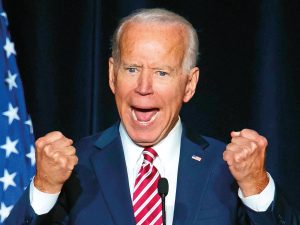
At a political fundraising event in Park City, Utah on Thursday, US President Joe Biden said China was “in trouble” because of economic and population issues and slammed China’s economic situation as “a ticking time bomb” in many cases. He also said, “When bad folks have problems, they do bad things.” The remarks have been splashed across the American media. Bloomberg described the comments as “some of his most direct criticisms yet about the US’s top geopolitical and economic rival.”
As well-known American writer Mark Twain revealed in his book Running for Governor, American elections are full of shameless tricks such as lies, fraud, smears and slander. As some activities related to the US general election are kicking off, multiple candidates are not offering good strategies in terms of national governance, but focusing a lot on attacking each other and attacking China.
As the atmosphere in American society toward China has been severely poisoned by Washington, speaking harshly about China has become one of the cheapest ways for politicians to quickly attract attention, and Biden is no exception. We need to view Biden’s shocking remarks in this context, which are of the same nature as the more intense remarks on China by Republican candidates such as Ron DeSantis and Nikki Haley. Based on past experience, as the election campaign progresses, Washington’s bottom line will sink lower and lower, and more sensational claims are likely to come out. The unscrupulous smearing and attacking of China has made the US nastier and nastier.
But it must be said that Biden is not only a candidate, but also the incumbent president of the US and the head of state of a superpower. It is highly inappropriate for him to make inflammatory statements that go against basic facts and do not match his identity. It is not difficult for us to understand that Biden’s purpose in saying these words is nothing more than to score points for his campaign, to show his tough stance toward China, and to boast about his ability to deal with “threats and challenges” from China.
From Donald Trump to the current President Biden, the US presidents, like many politicians in Washington, keep talking tough about China. But what is interesting is that Trump and Biden, who are at odds with each other on many issues, have similar tones and arguments when it comes to China, and they talk more about what China is doing better than the US and in what aspects China is about to surpass the US, so as to stimulate the sense of crisis and urgency in the US to support the White House’s strategic competition against China.
As a result, the sum of Biden’s remarks on China contain obvious contradictions. Washington just issued an “unprecedented” administrative order to curb and suppress the development momentum of China’s high-tech, then it turned around and insisted that “China is in trouble.” A stronger China is a threat in the eyes of the Americans, while a “weaker” China has become a “ticking time bomb.” What then should China do so the US can have a healthy mentality toward China? The reality is that China not only has to be blamed for the frustration of US’ development, but also bear the belittling when Washington boasts of its achievements, and finally has to be responsible for the mental disorder of the US.
Unlike the US, China never threatens other countries with force, does not form military alliances, does not export ideology, does not go to other countries’ doorsteps to provoke troubles, does not infringe on other countries’ territories, does not initiate trade wars, and does not suppress the companies of other countries for no reason. China insists on putting the development of the country and the nation on the basis of its own strength. In the face of a turbulent and changing world, China has always stood in the right direction of historical progress and has always been a positive force for world peace and development. If there are “ticking time bombs,” they are planted by the US around the world.
Some people summed up the seven laws of American diplomacy, one of which is, “If the US suspects that you have done something bad, the US must have done it itself.” This can explain the strange logic of the US that no matter if China is strong or weak, it is a threat. When the US became strong, it launched the Iraq War and the Afghan War; when it declined relatively, it began to engage in unilateralism and camp confrontation. The inner world of Washington’s politicians may be dirty, but they should not think that everyone else is like them.
Featured Video

Macgregor: We Haven’t Seen the Worst of the Iran War Yet
or go to
Aletho News Archives – Video-Images
From the Archives
15 Saudi ‘hijackers’ were CIA agents working for US: Scholar
Press TV – April 13, 2016
Fifteen of the 9/11 “hijackers” from Saudi Arabia were CIA agents working for the United States government, which was seeking to destroy the Middle East for Israel and to double the American military budget, says Dr. Kevin Barrett, an American academic who has been studying the events of 9/11 since late 2003…. continue
Blog Roll
 Aletho News
- Iran’s Plan to Shut Down AI in the Persian Gulf
- Israel seeks ‘compensation’ from Washington over Saudi F-35 sale
- Saudi crown prince seeks dialogue with Ansarullah after Yemeni blows: Report
- Damascus rejects Saudi request for Syrian fighters to counter Yemen: Report
- South Korea says will not send troops to join terrorist US war on Iran
- Russia Just Struck the Eyes of NATO’s War Machine in Ukraine
- Russia summons UK charge d’affaires over Kiev drone support
- NATO member warns bloc seeking pretext for war with Russia
- Macgregor: We Haven’t Seen the Worst of the Iran War Yet
- ‘We are not like everyone else’ laws that bind other nations do not apply to Israel, says Likud lawmaker
- If Americans Knew
- Debunking The Claim That Macklemore Has A “History Of Antisemitism”
- CPJ demands release of arrested Palestinian-US journalist near Bethlehem
- Robert Kraft: The Billionaire Friend of Netanyahu Pulling The Strings Behind the Macklemore/Ed Sheeran Blow Up
- Columbia Administered Fund Gives Big Money to Pro-Israel Groups
- Deportation Case of Palestinian Activist Salah Sarsour Tests First Amendment
- ‘We Will Not Forget’: Palestinians Mark 44 Years since Sabra and Shatila
- Why do we let Zionists decide what we can and can’t say?
- US welcomes Israeli, Iranian delegations to UN, but not Palestinians – Daily Update
- Biden’s Genocide Accomplices Targeted by New Accountability Campaign
- AIPAC’s Network Has Already Spent $67.2 Million to Shape the Midterm Elections
- No Tricks Zone
- New Study: ‘Global Drought Shows No Detectable Recent Acceleration Under Climate Warming’
- Economic Masterminds: German Socialists Suggest Taxing Productivity Gains Stemming From Using AI
- The South China Sea Has Not Been Cooperating With The Climate Change Narrative
- Energy Crisis: Germany Enters Heating Season With Historically Low Gas Reserve Fill Levels
- New Study: The Antarctic Ice Sheet Gained Mass From 2020-2024 Due To Staggering Snow And Ice Accumulation
- Study: Ocean Heating Rates From Thousands Of Years Ago ‘Dwarf’ Modern Ocean Heating Rates
- Climate Extremists Target, Attack Large-Scale Power Grid Infrastructure In Germany!
- New Study: Antarctic Ice Melt Has Contributed Less Than 1 Centimeter To Sea Level Rise In The Last 30 Years
- Fear Of Debate: Alarmist German Climate Scientist Calls On Mainstream Media To Discredit Skeptic Voices
- End-Of-August Arctic Sea Ice Extent Hasn’t Fallen In 20 Years, Official Data Show!
 Aletho News